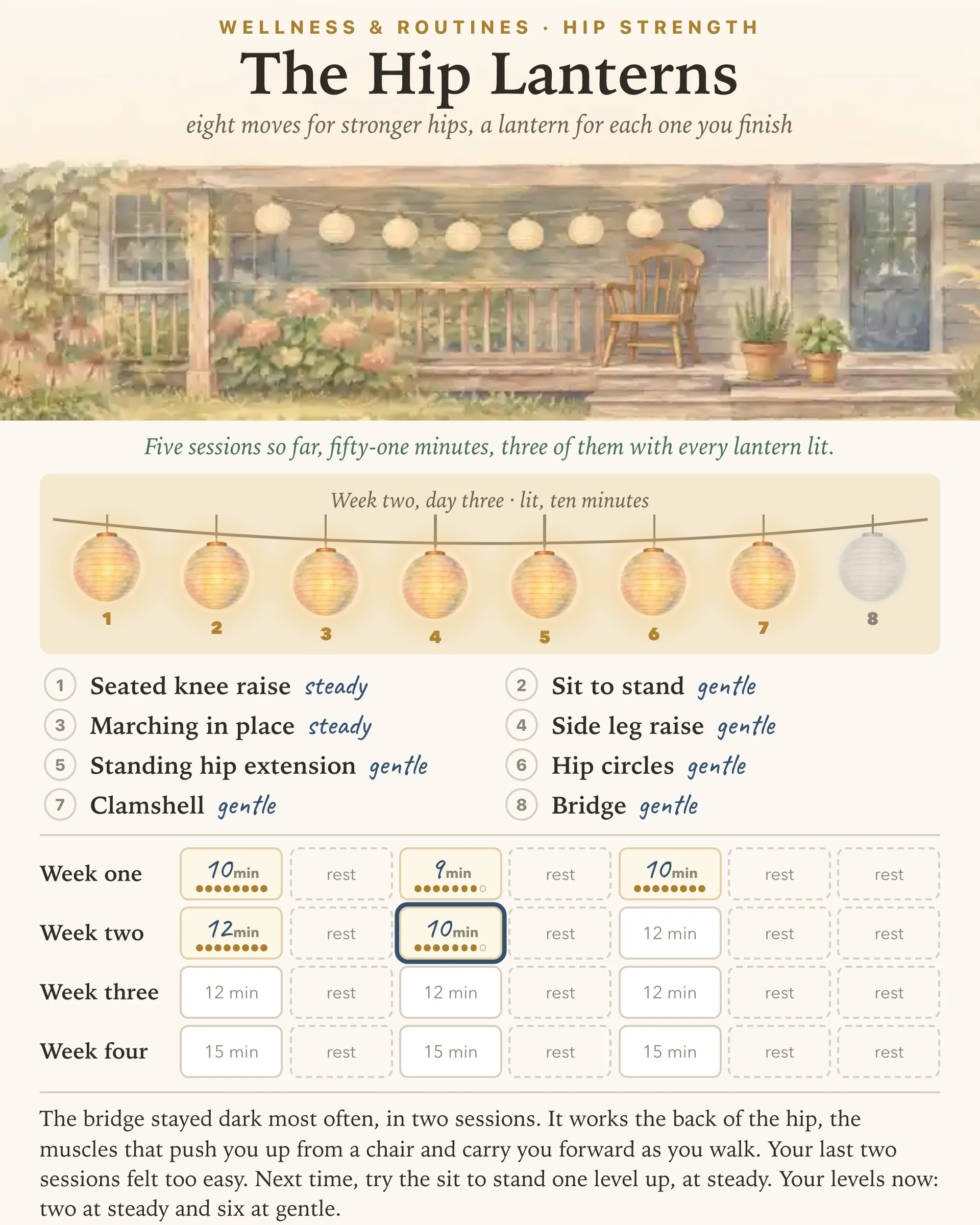
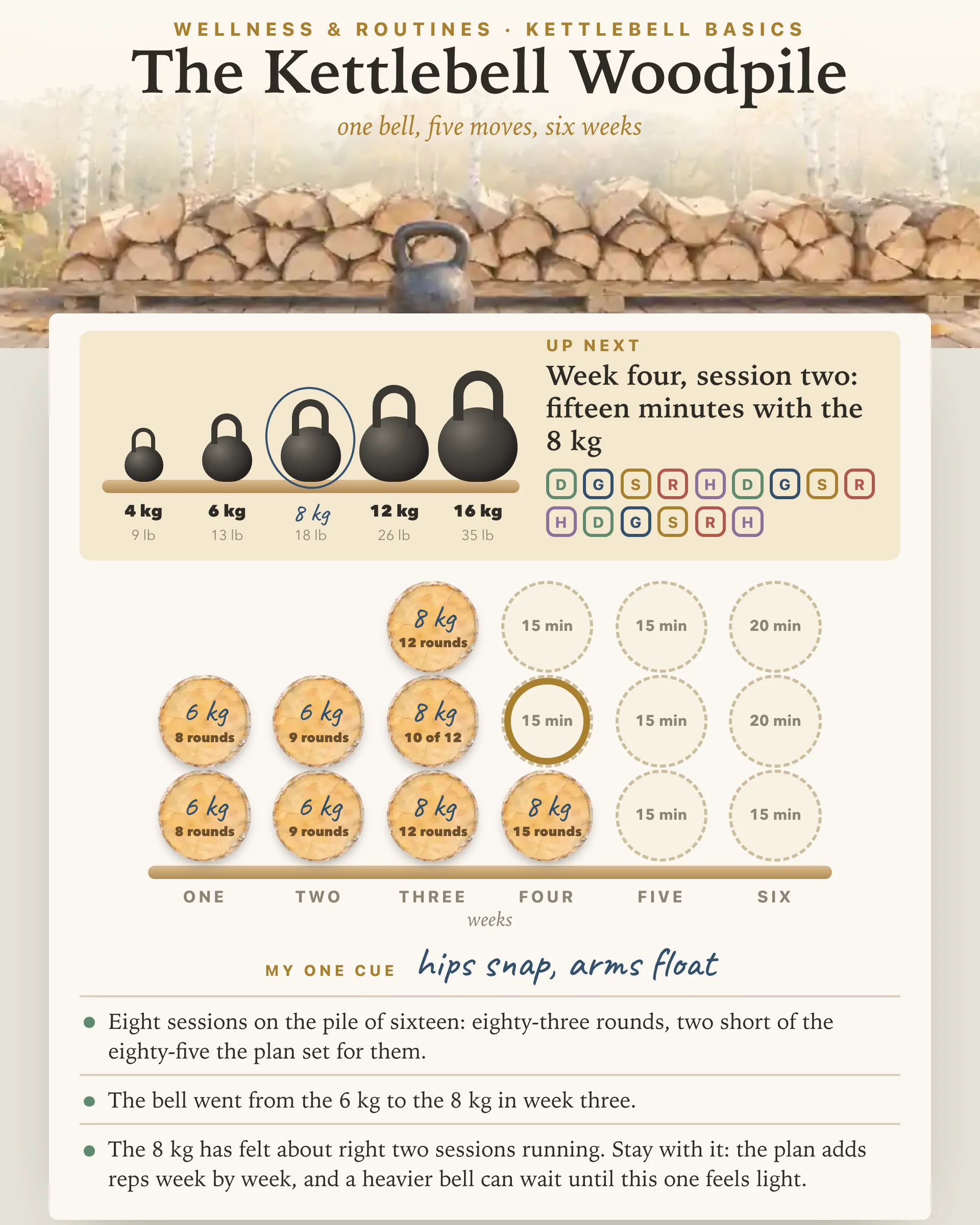
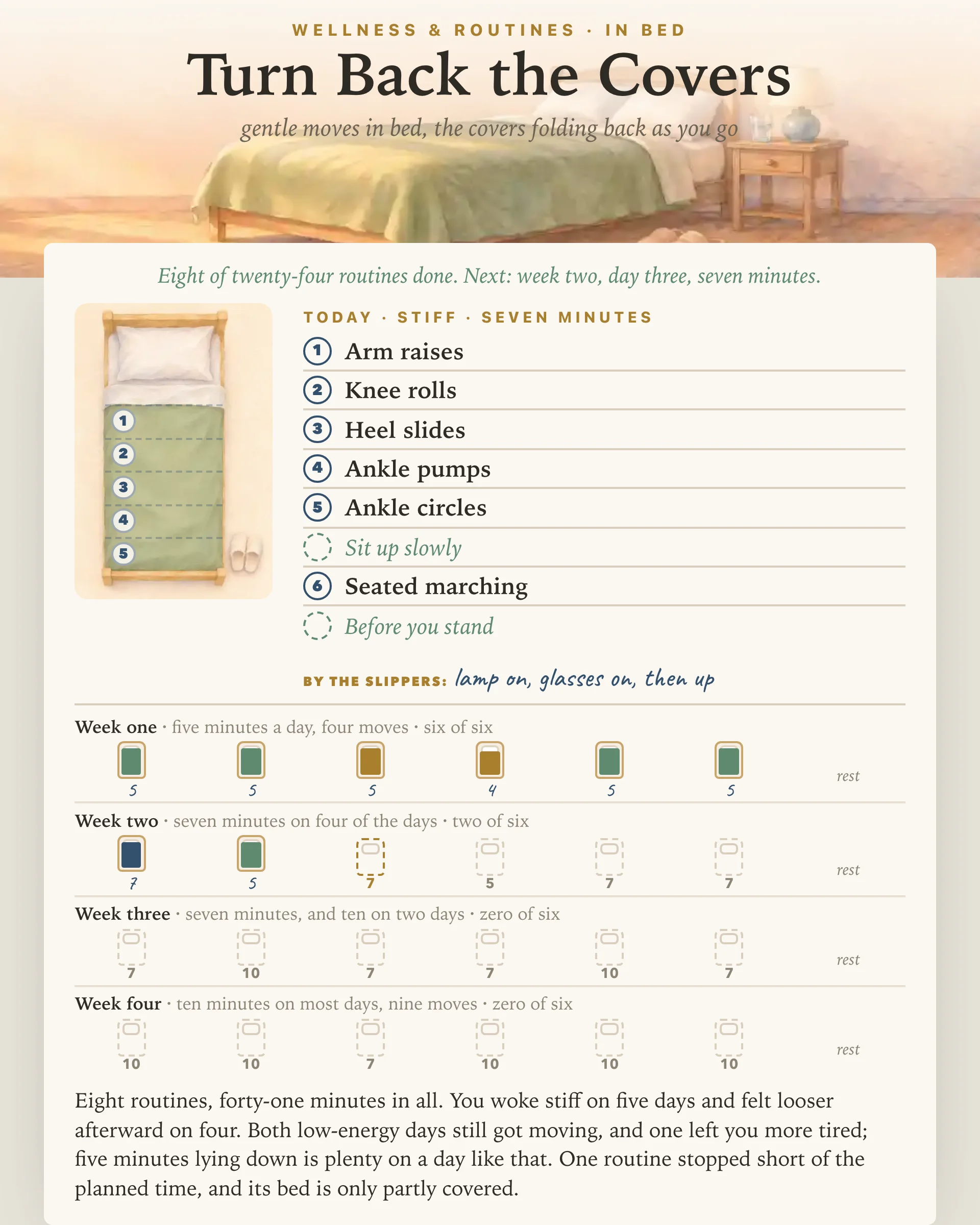
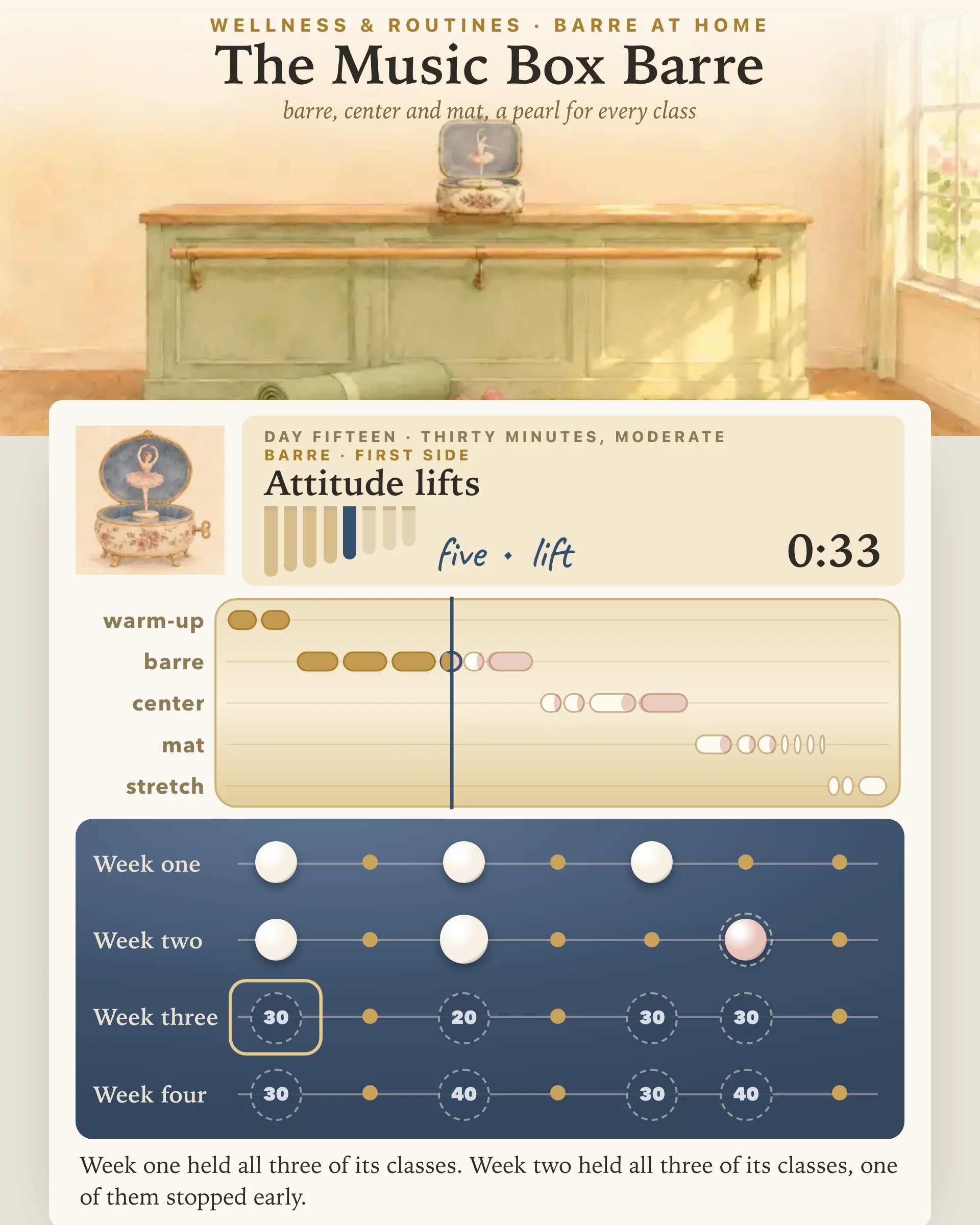
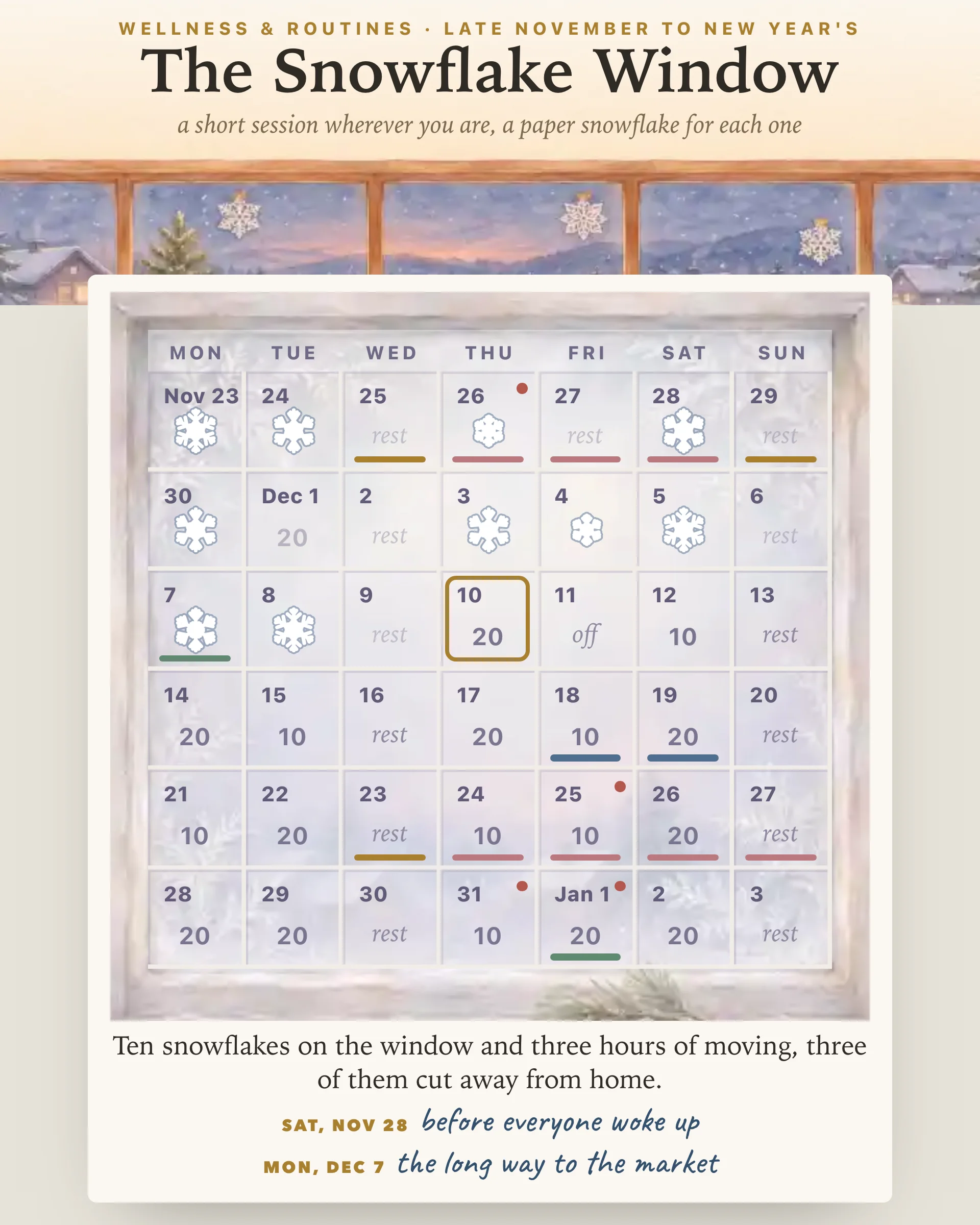
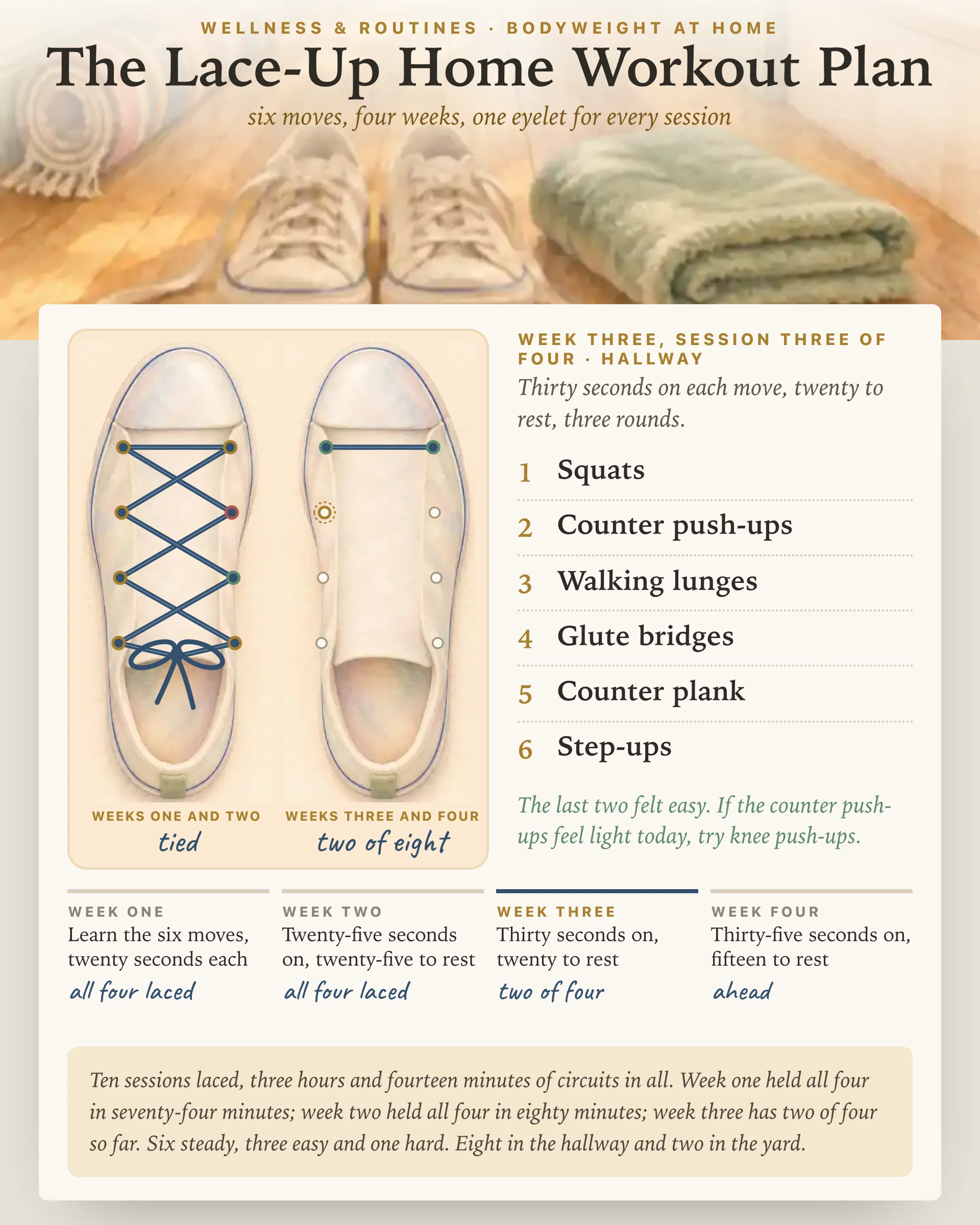
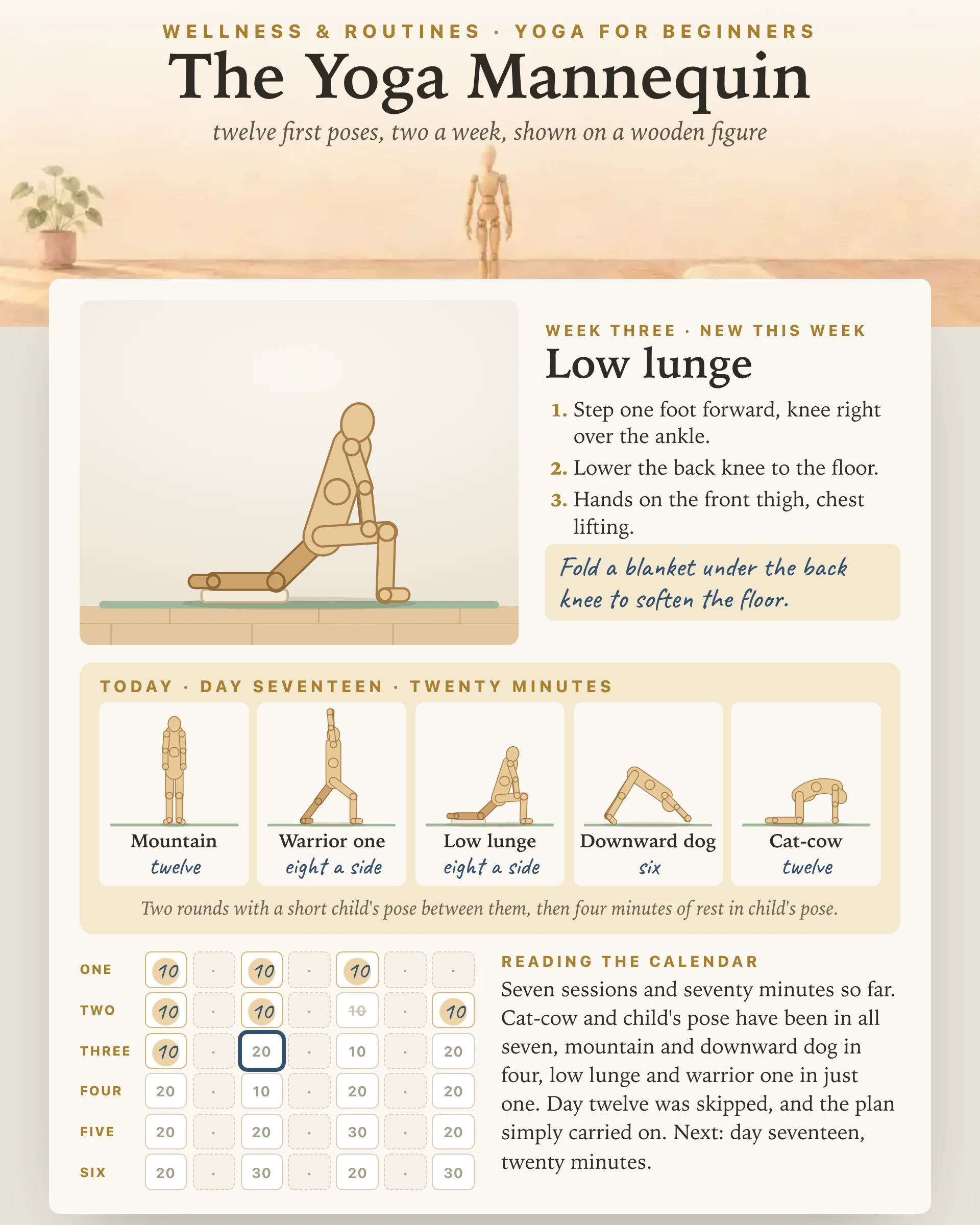
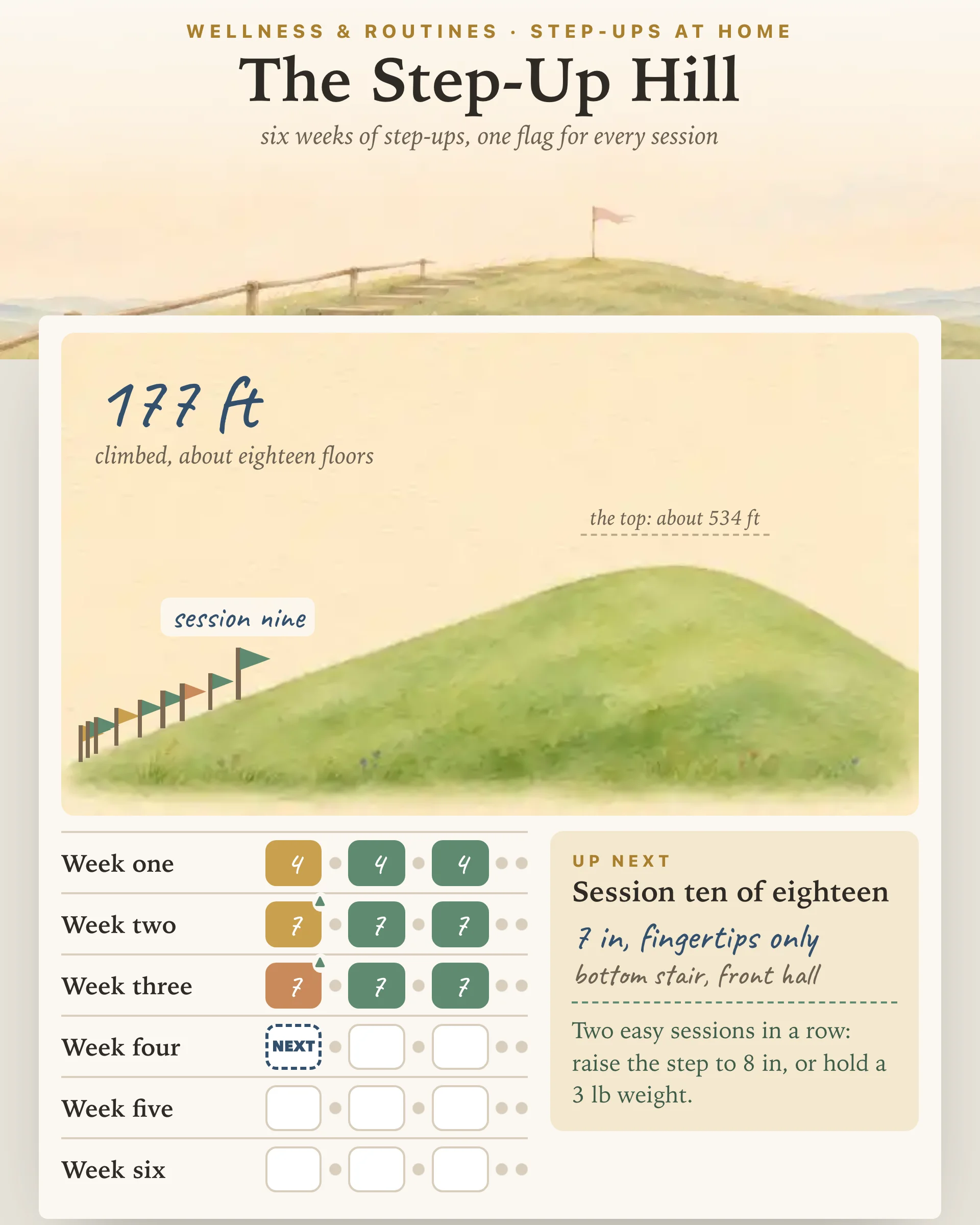
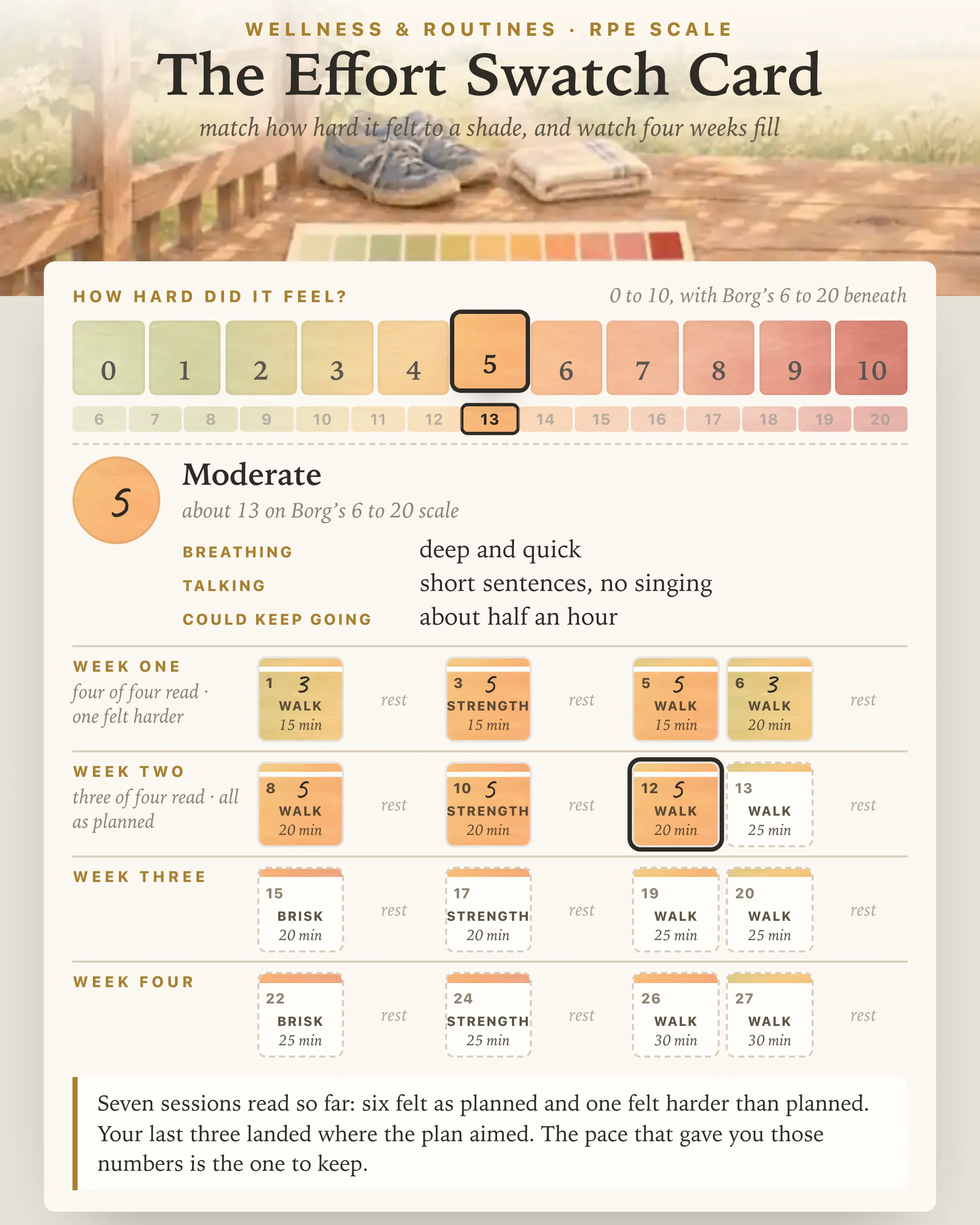
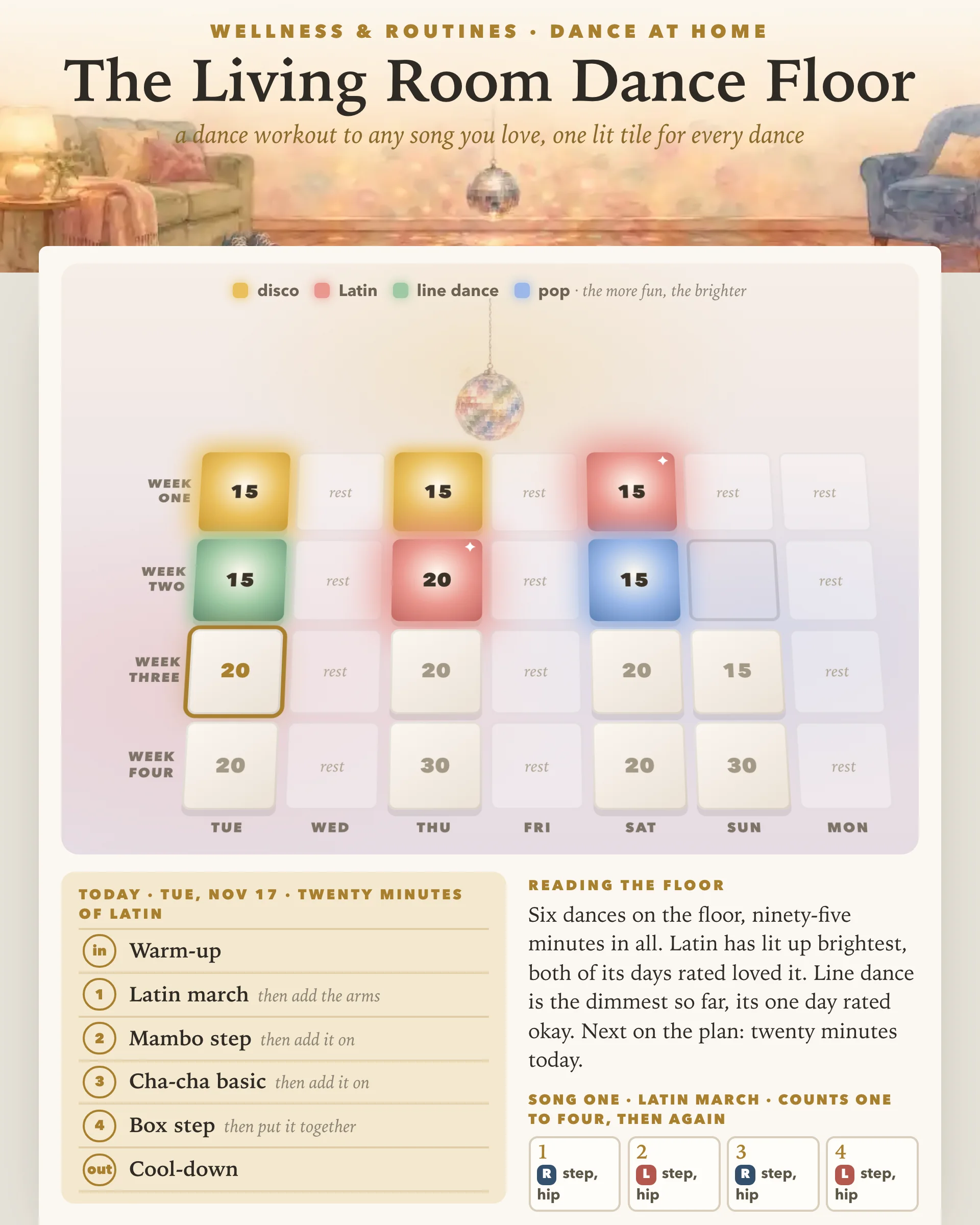
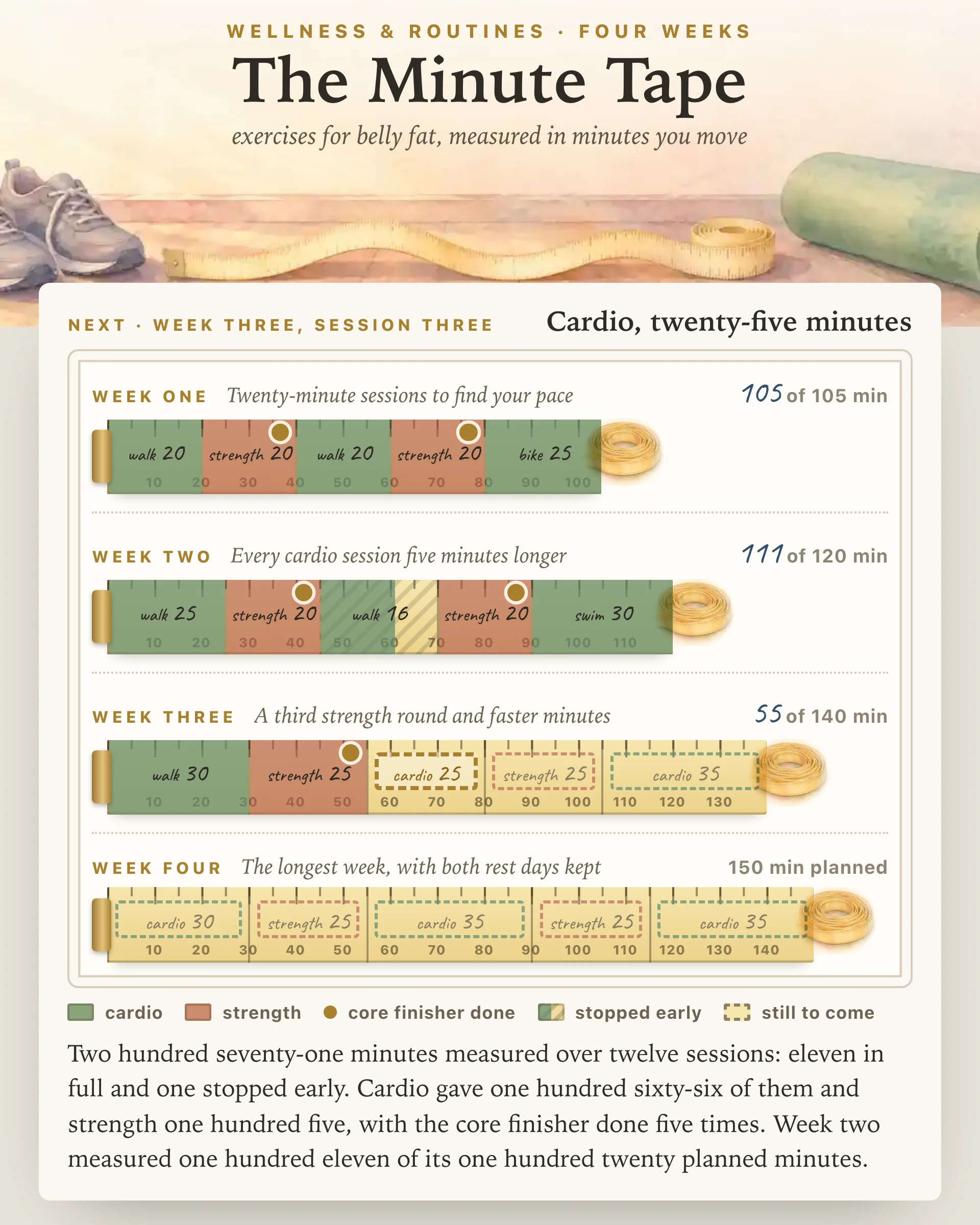
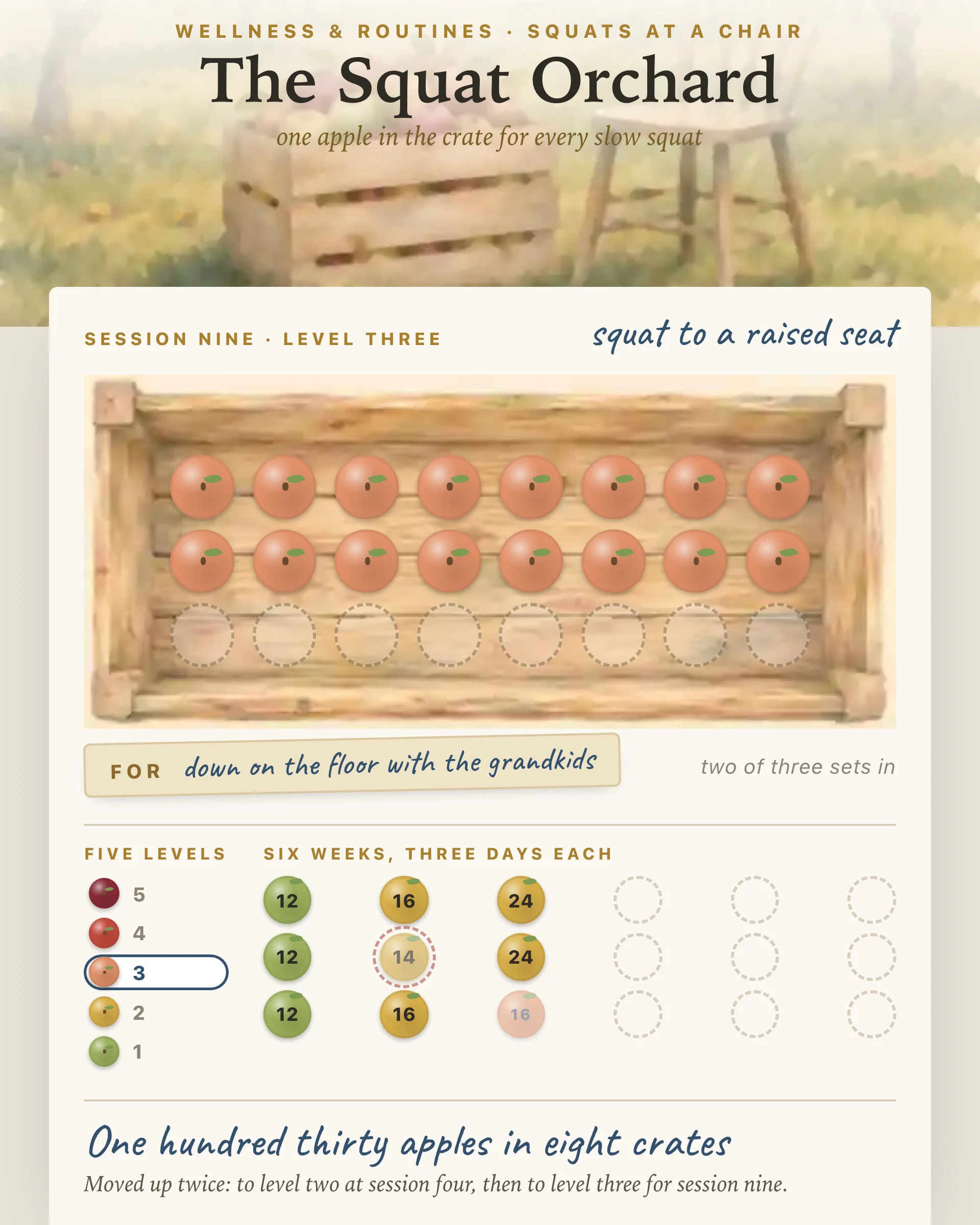
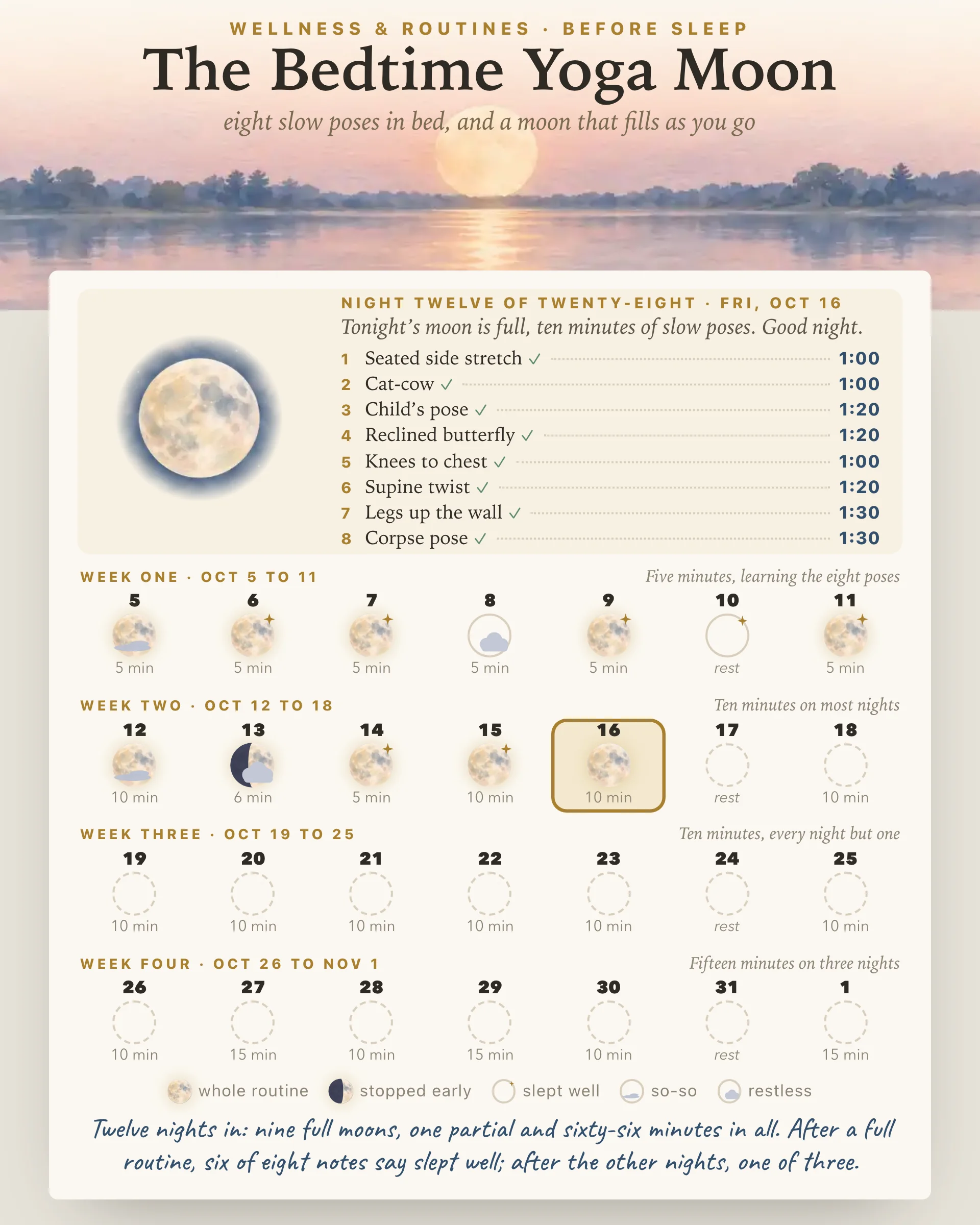
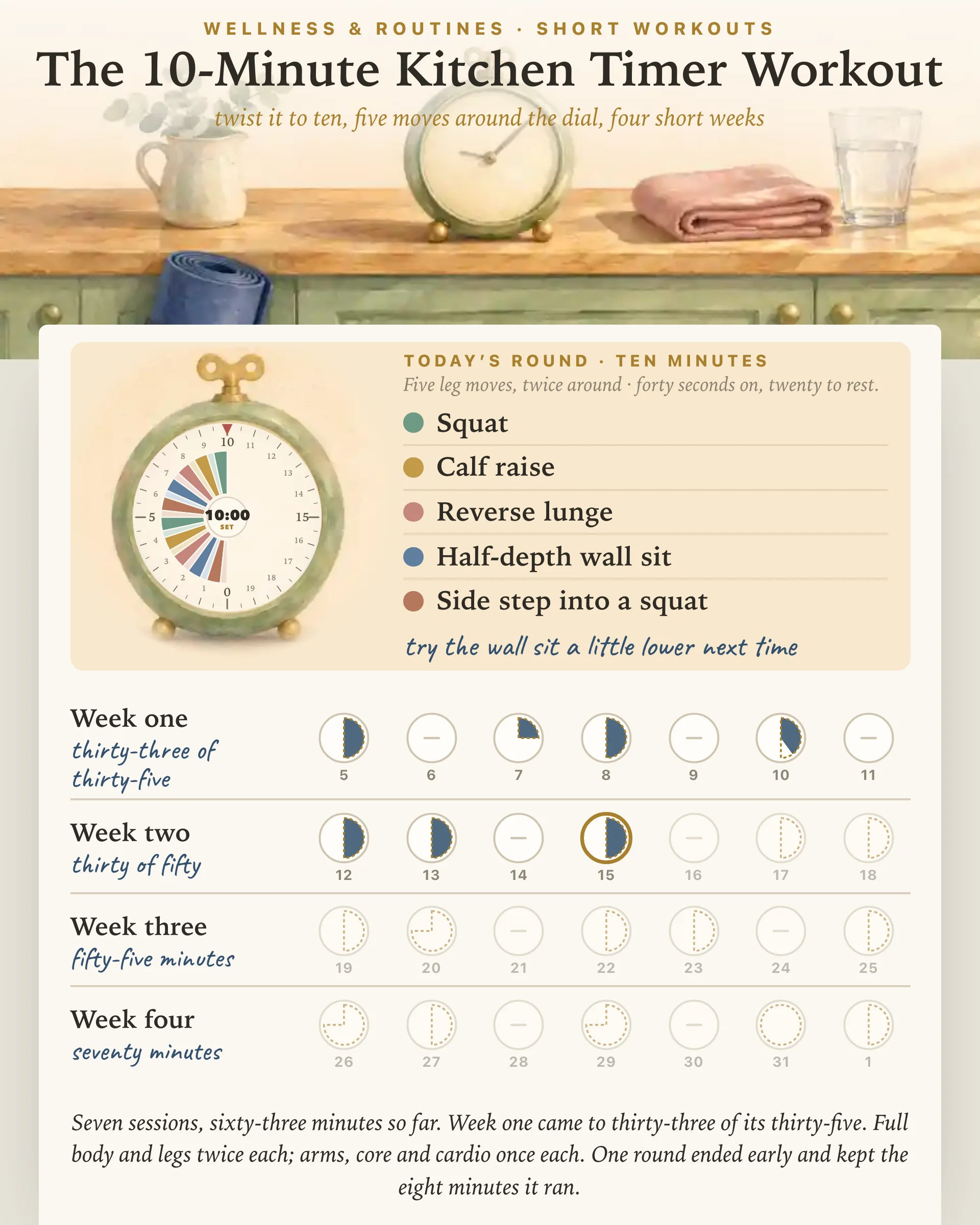
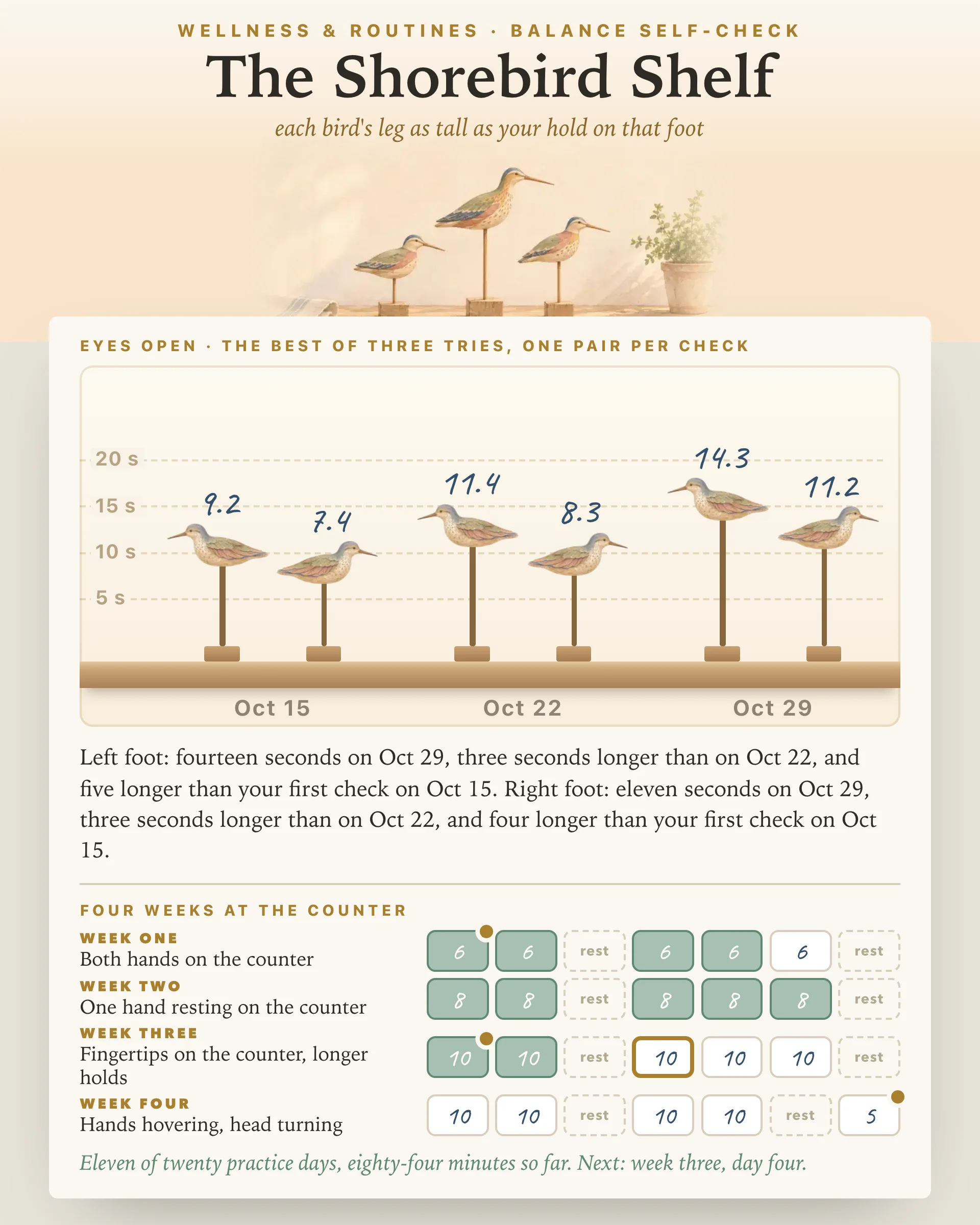
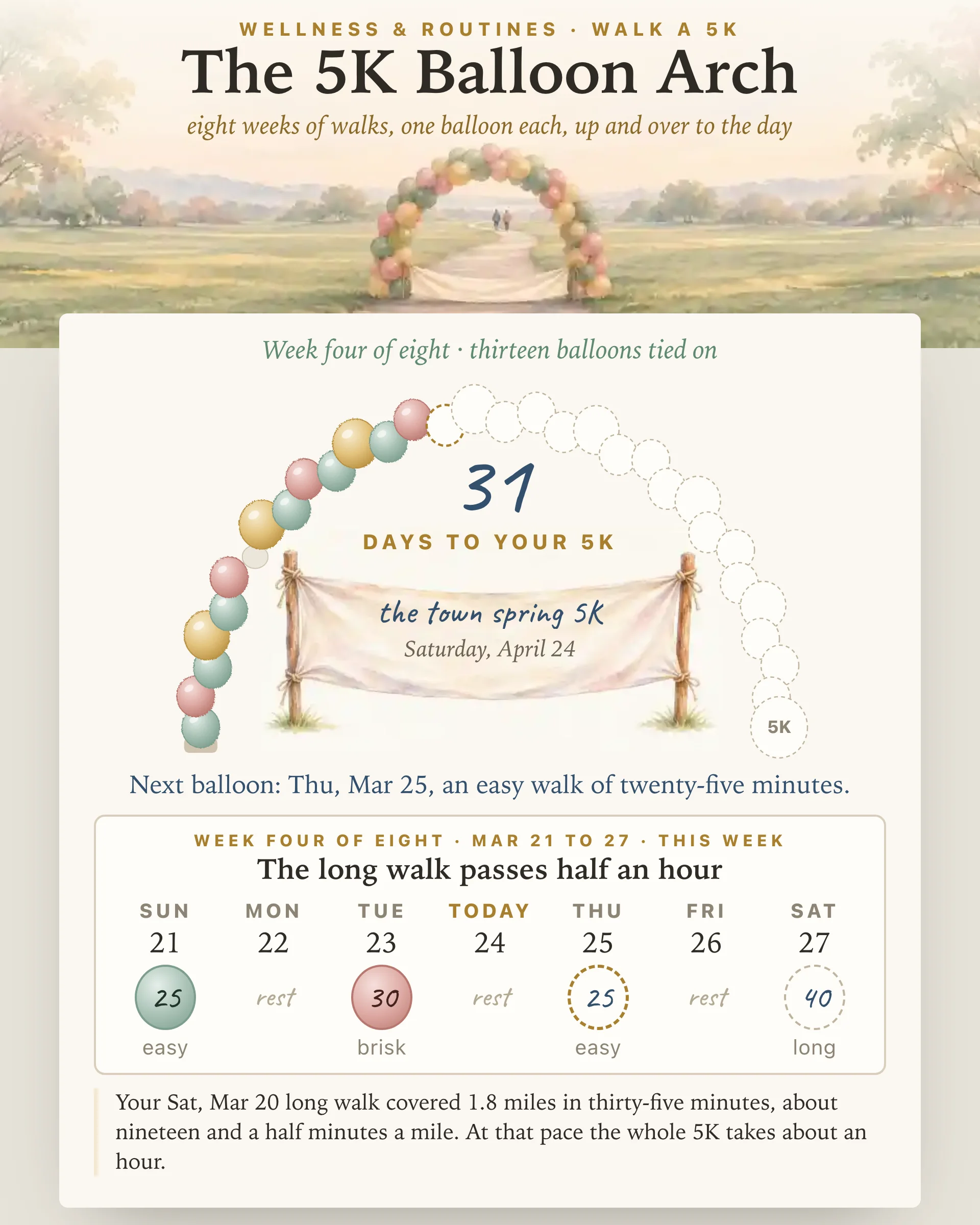
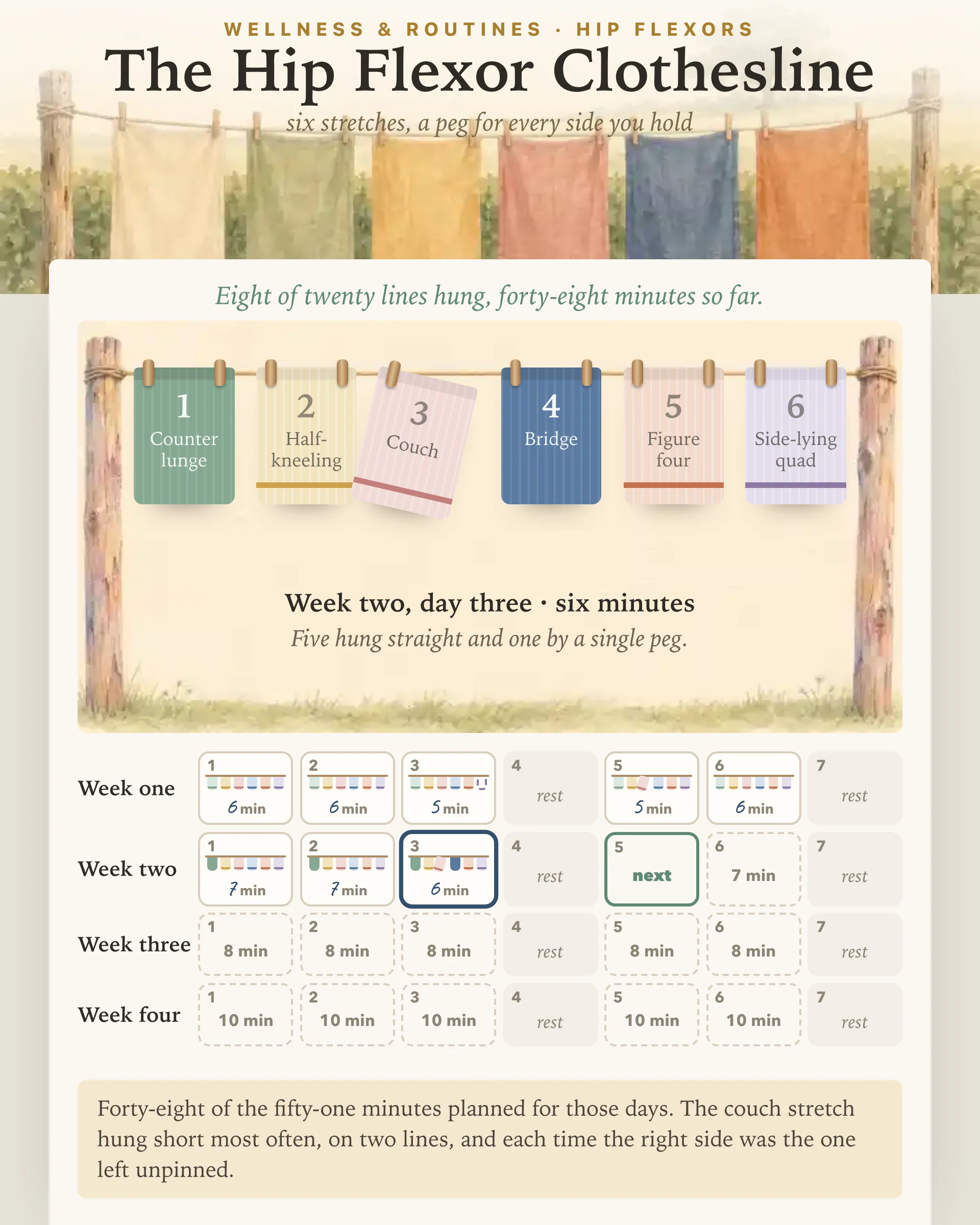
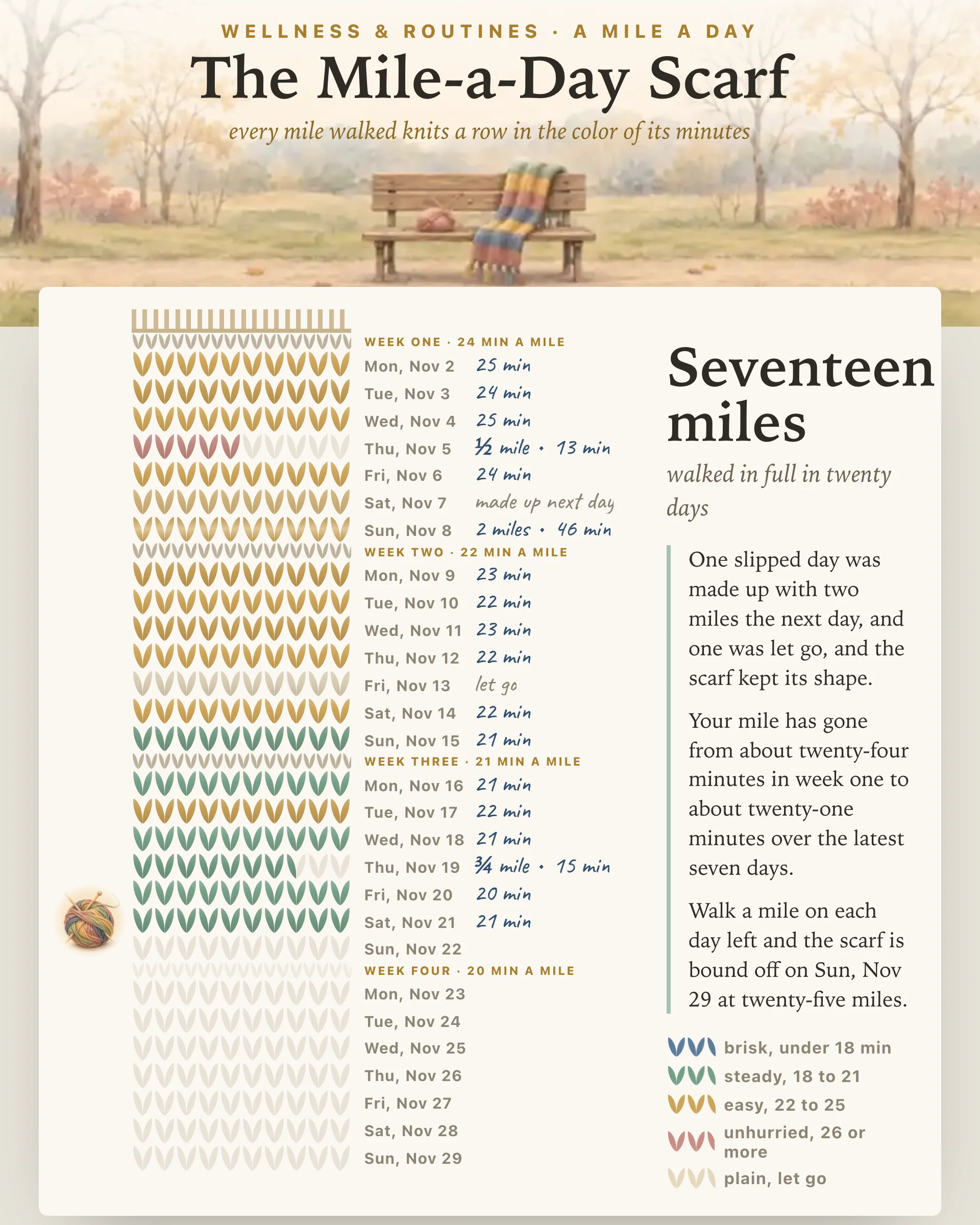
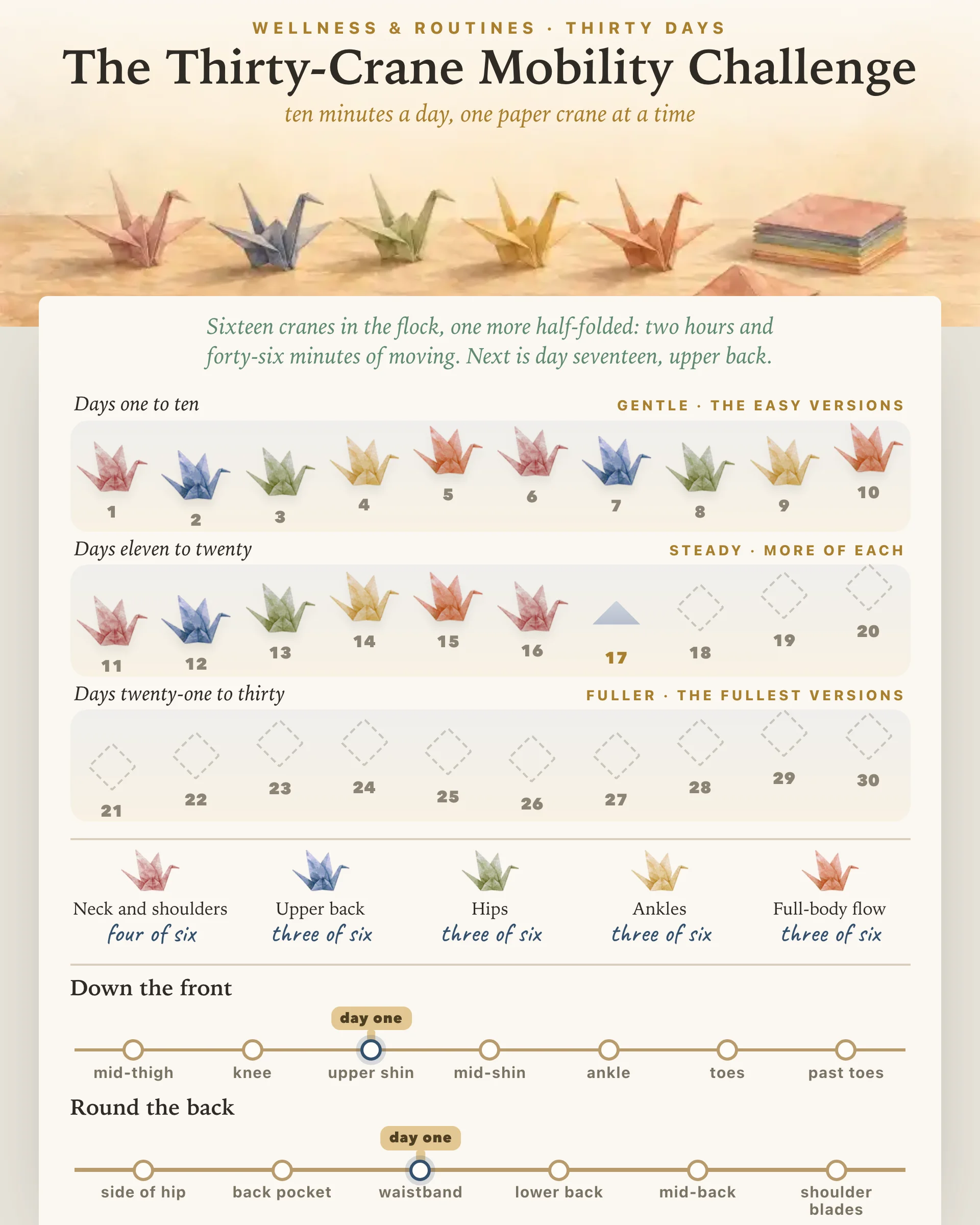
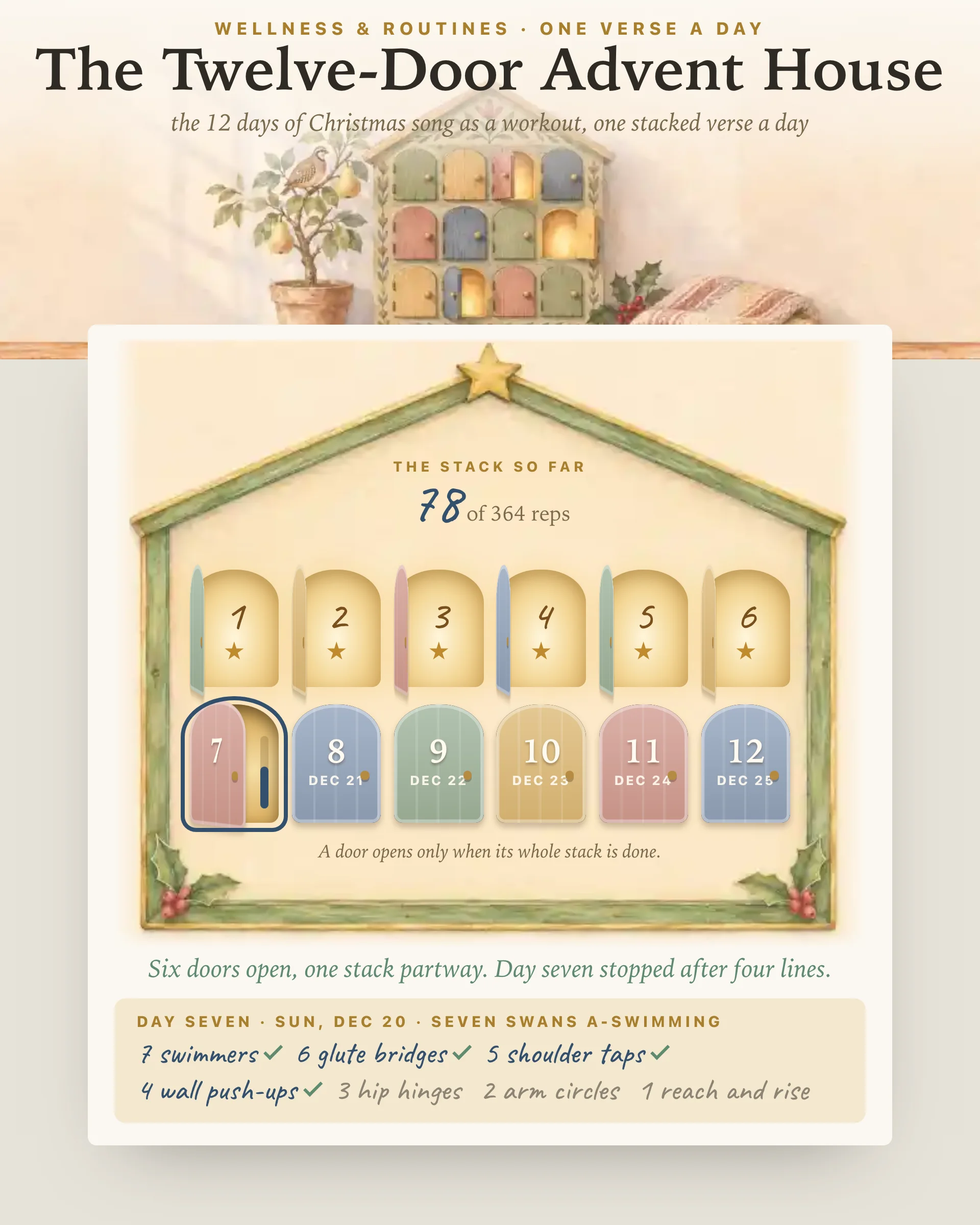
The Overwhelm Recovery ProtocolA 90-second reset for when everything feels urgent.
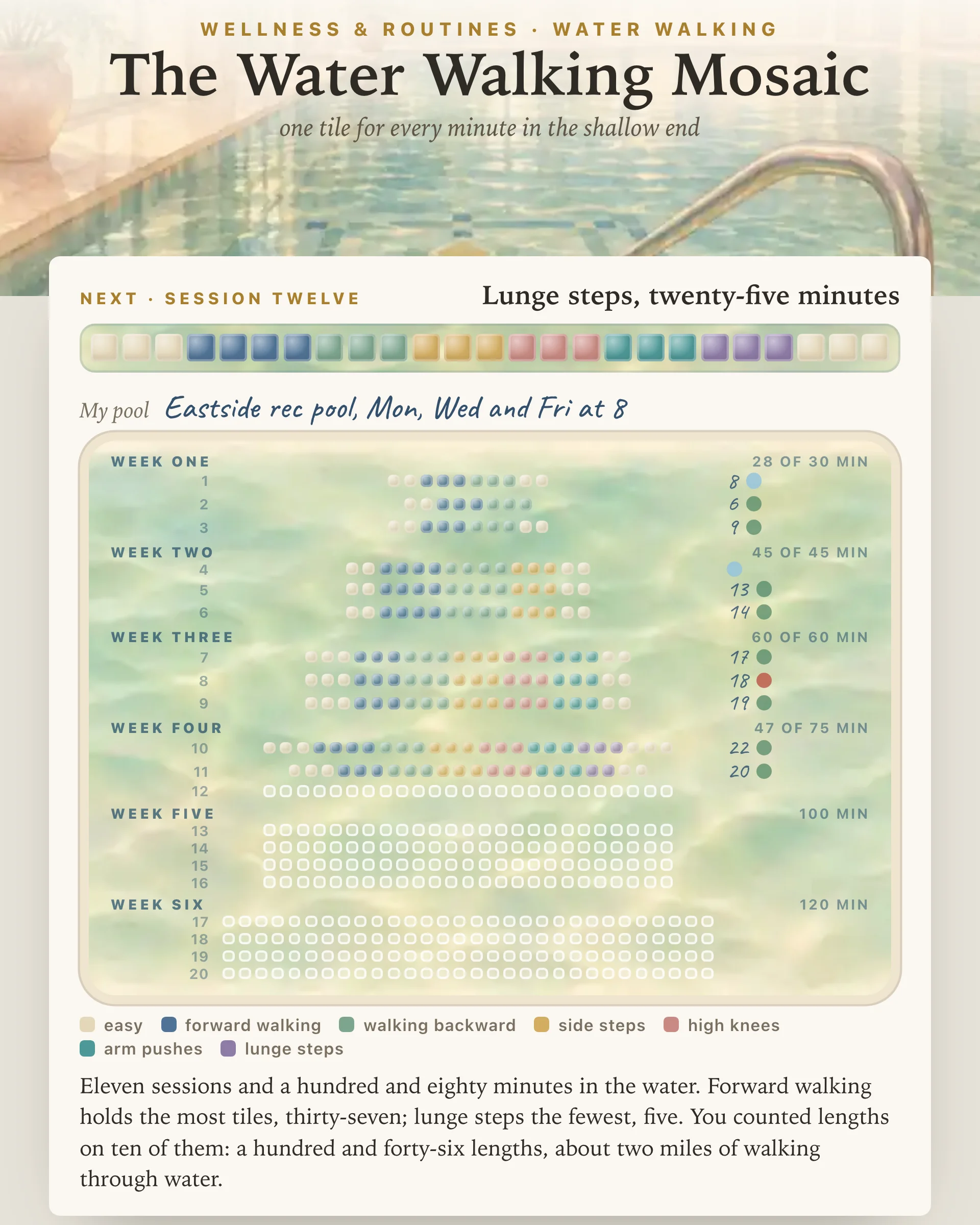
4-7-8 BreathingA guided, animated 4-7-8 breathing session: a garden at dusk breathes with you — in for four, hold for seven, out for eight — with counted phases, three rounds, and a before-and-after feel check.
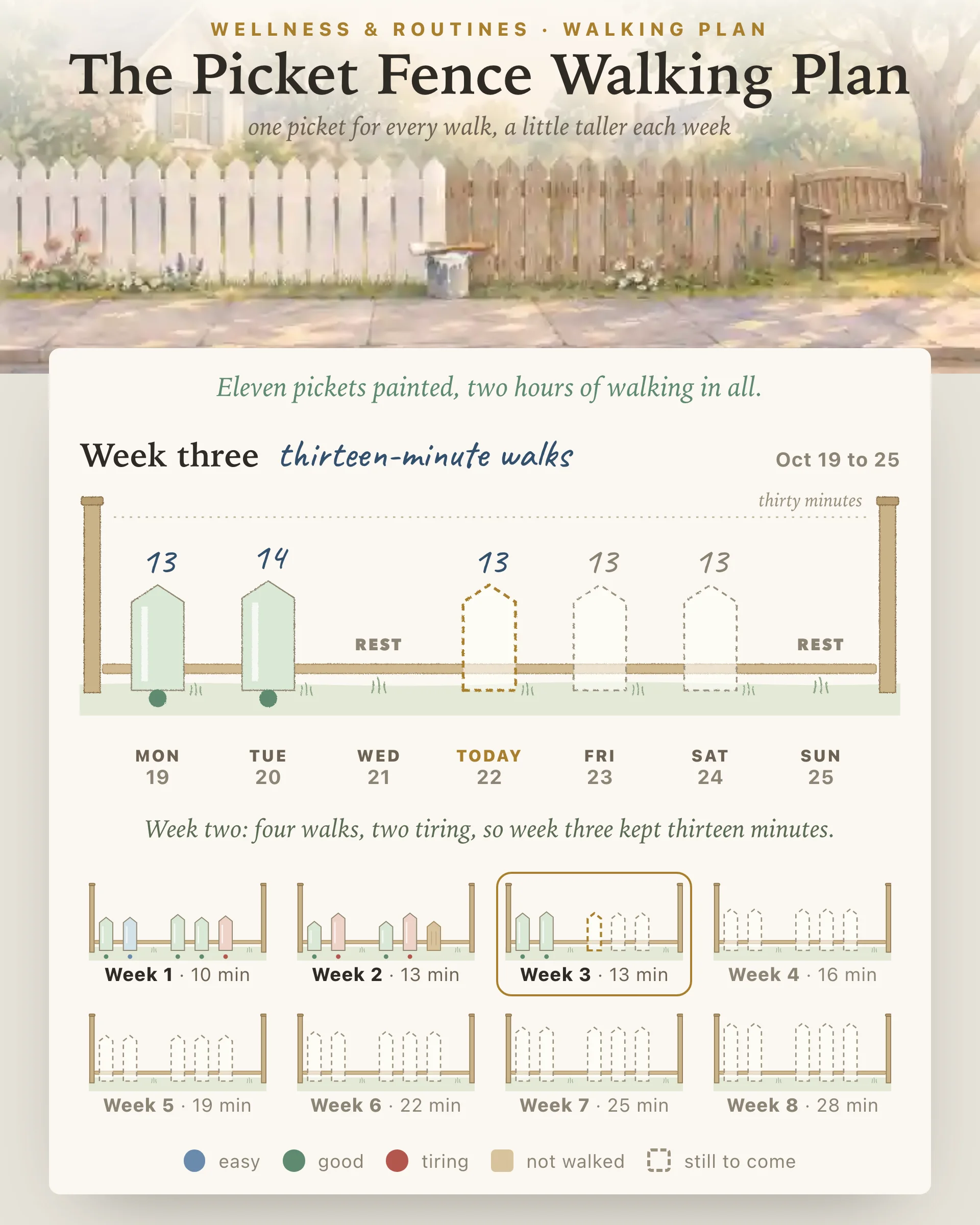
Morning PagesThree pages of unfiltered morning writing, digitized without losing the point: a full-screen page that counts your words, keeps nothing by default, and tracks only the streak.
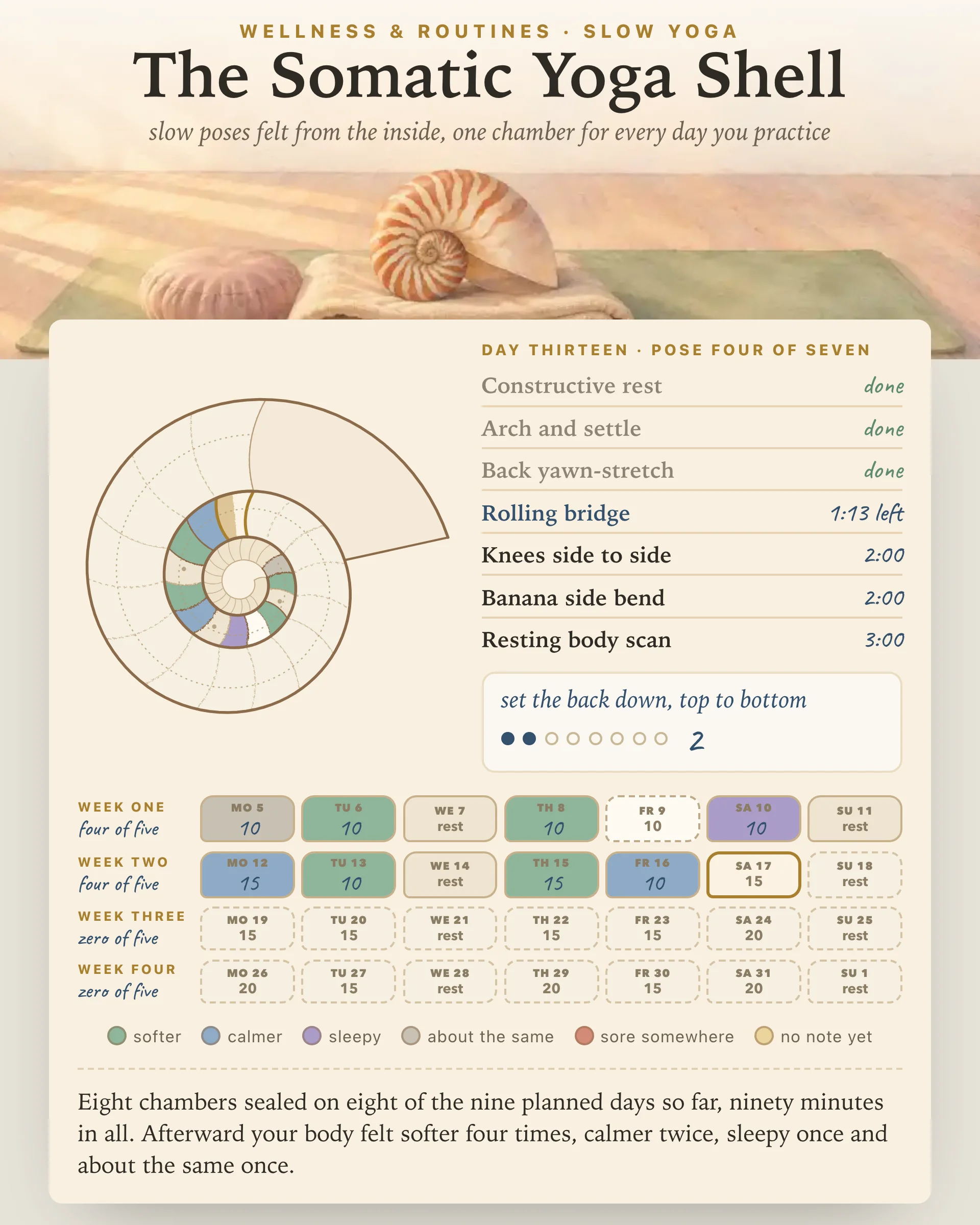
My Promise to MyselfA one-month self-contract: pick what comes first, commit to concrete actions, grant yourself grace passes, set a real stake, tie yourself to the mast — then sign it and seal it in wax.
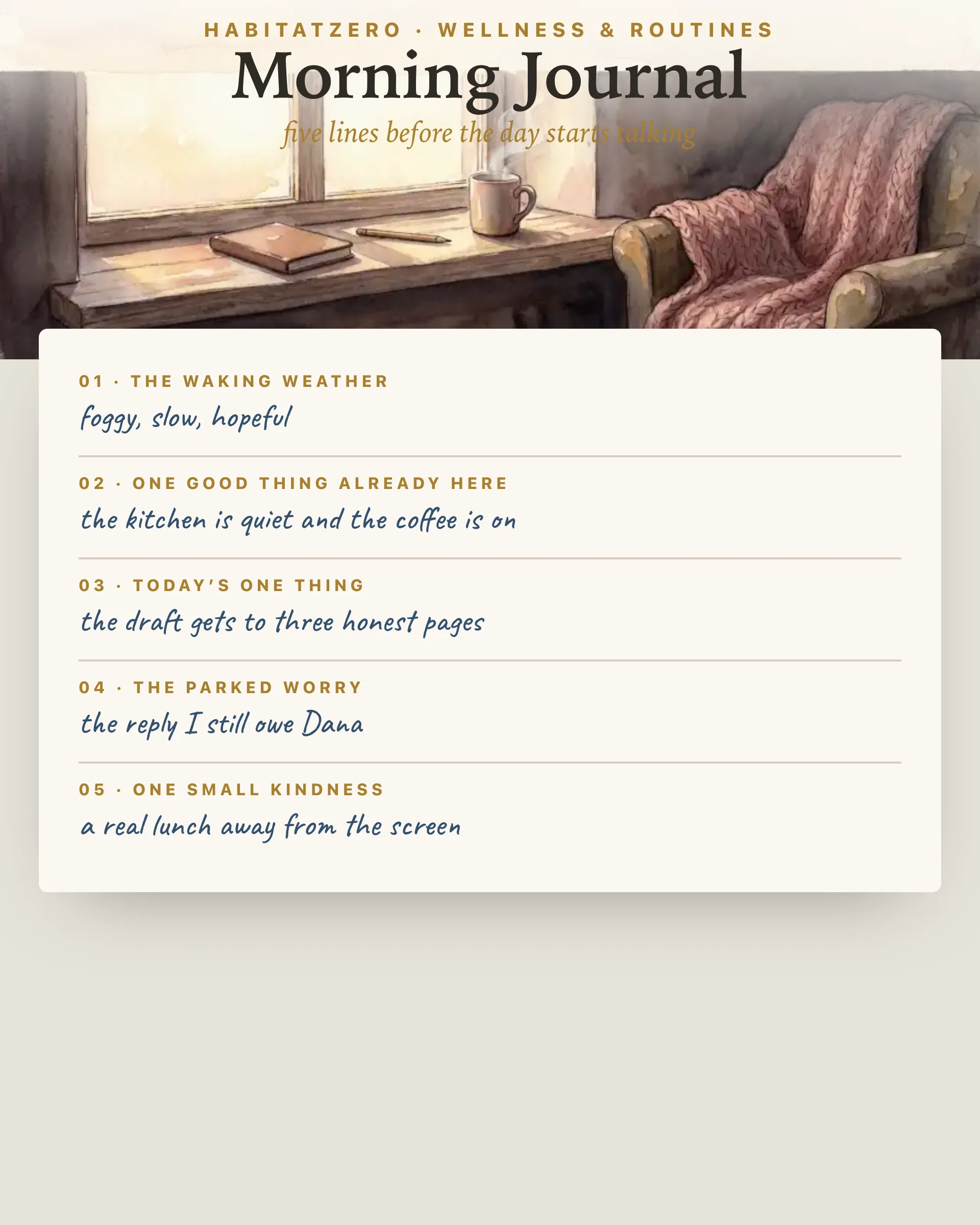
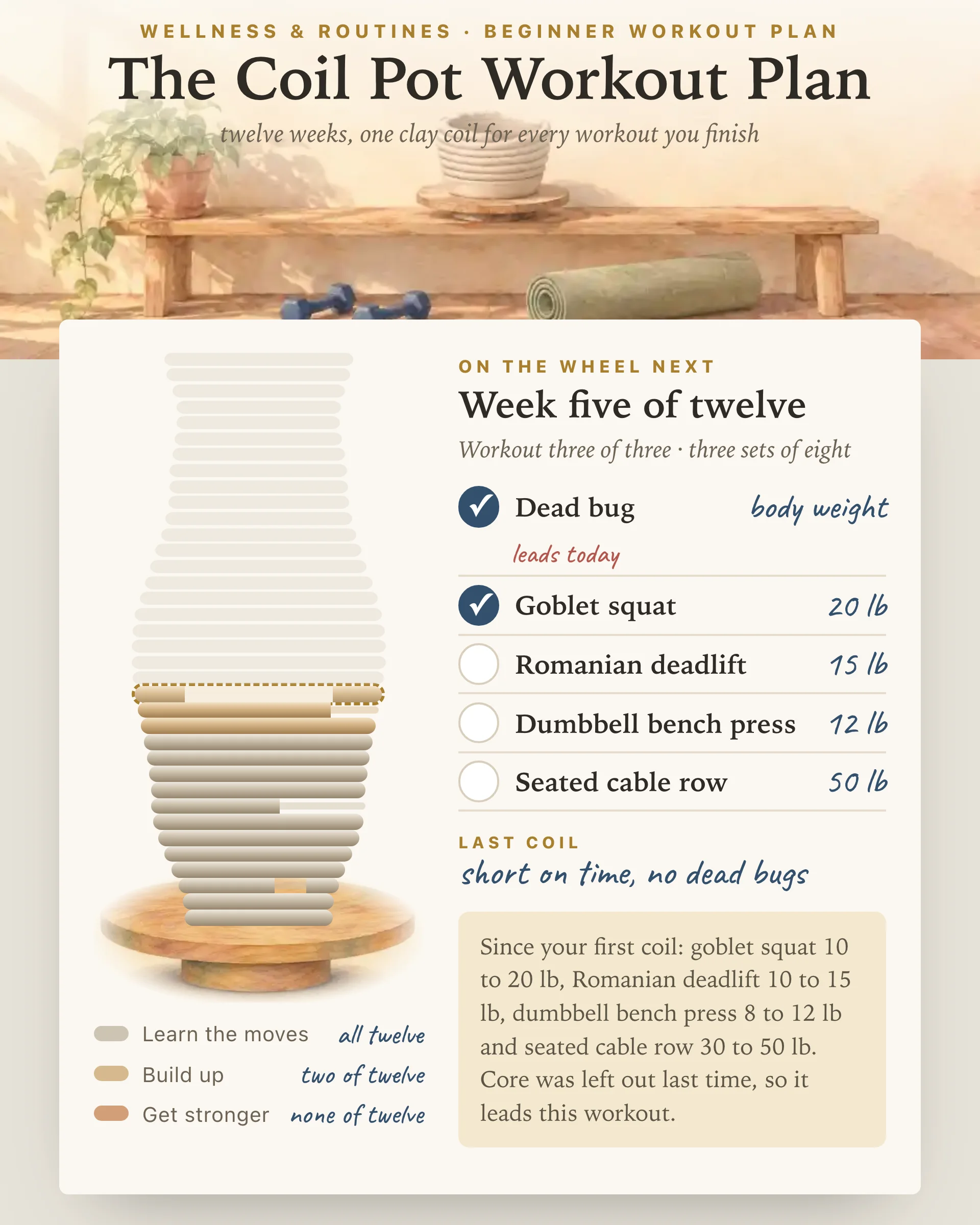
Morning JournalA guided morning journal of five fixed lines: three words for how you woke, one good thing already here, today's one thing, a parked worry, and a small kindness — closed before the day starts talking.
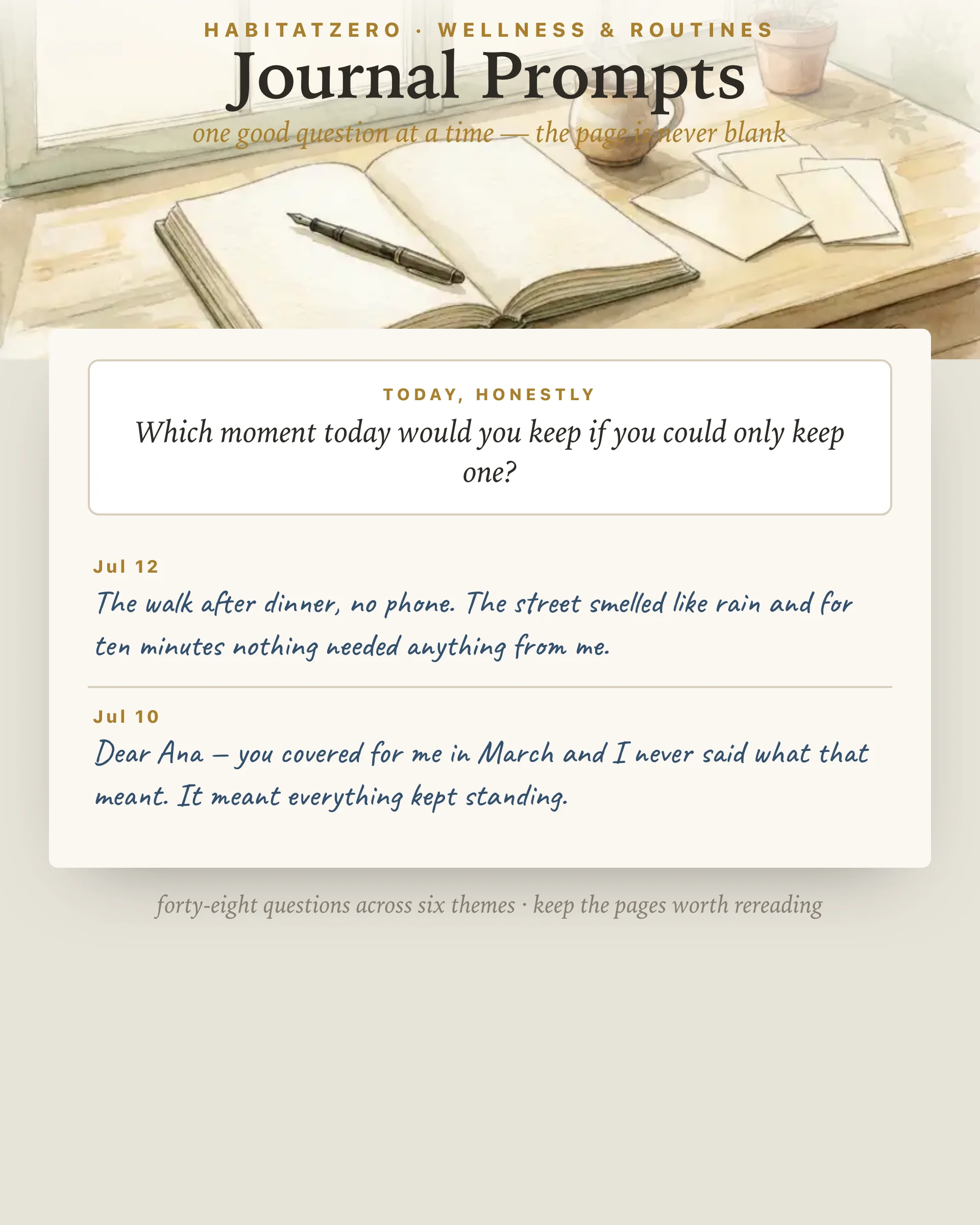
Journal PromptsA themed question deck for journaling with prompts: pick the kind of question you need, get dealt one at a time, write in your own hand, and keep only the pages worth rereading.
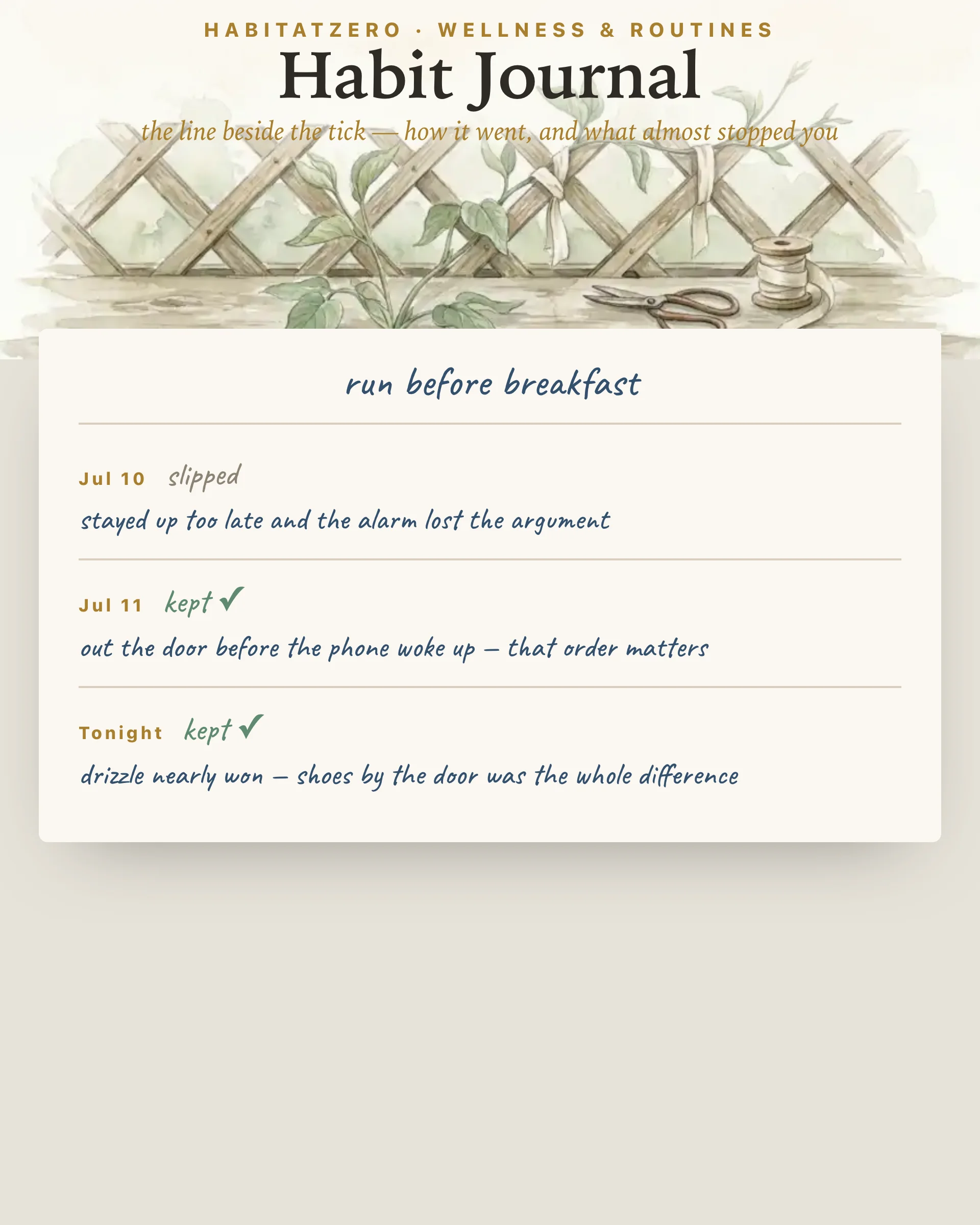
Habit JournalA habit journal for one habit at a time: mark the day kept or slipped, then write the line a grid can never hold — how it went, and what almost stopped you.
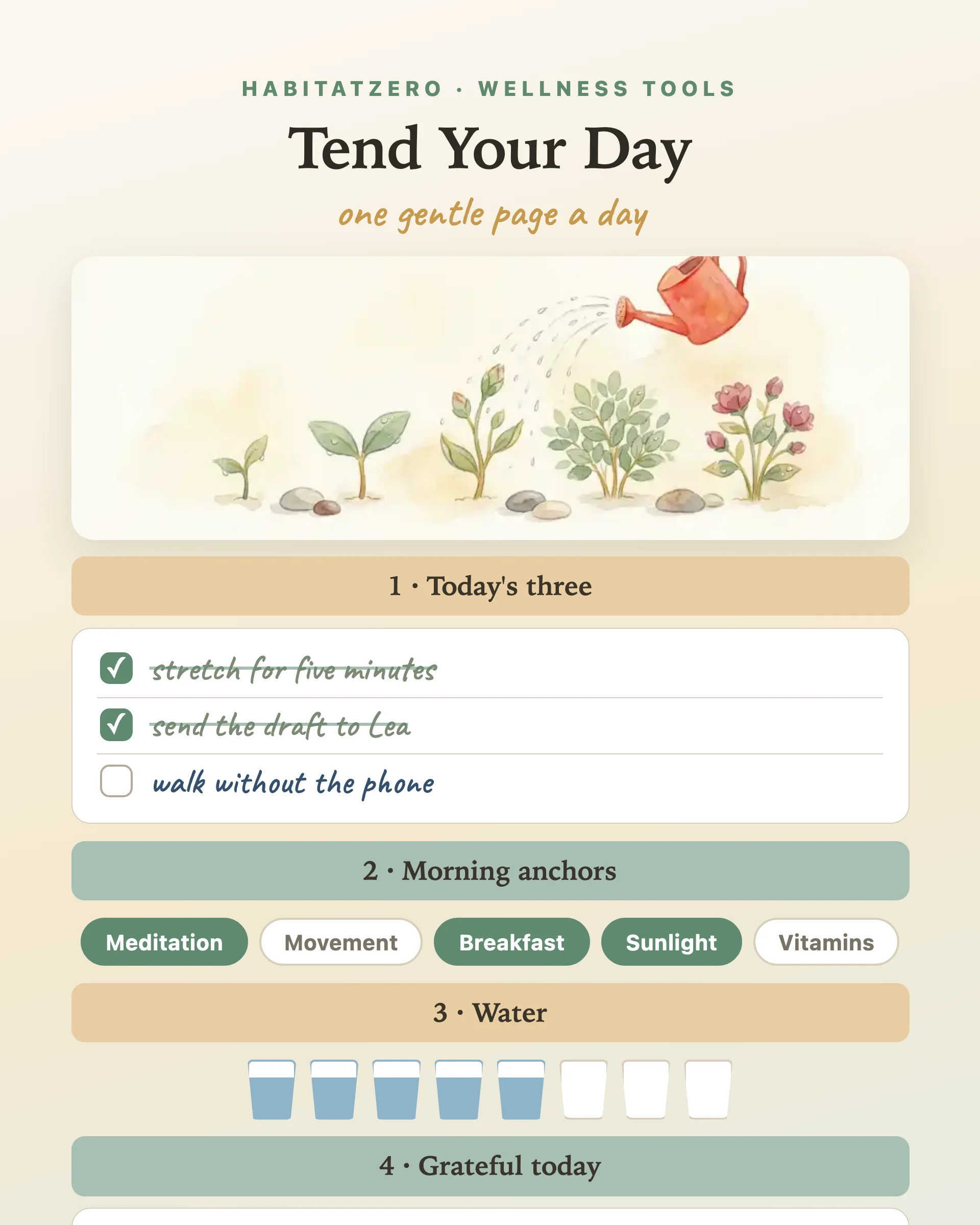
Tend Your DayA one-page daily check-in: plant three tasks, tap your morning anchors, water the day glass by glass, note what you're grateful for, and close with a mood.
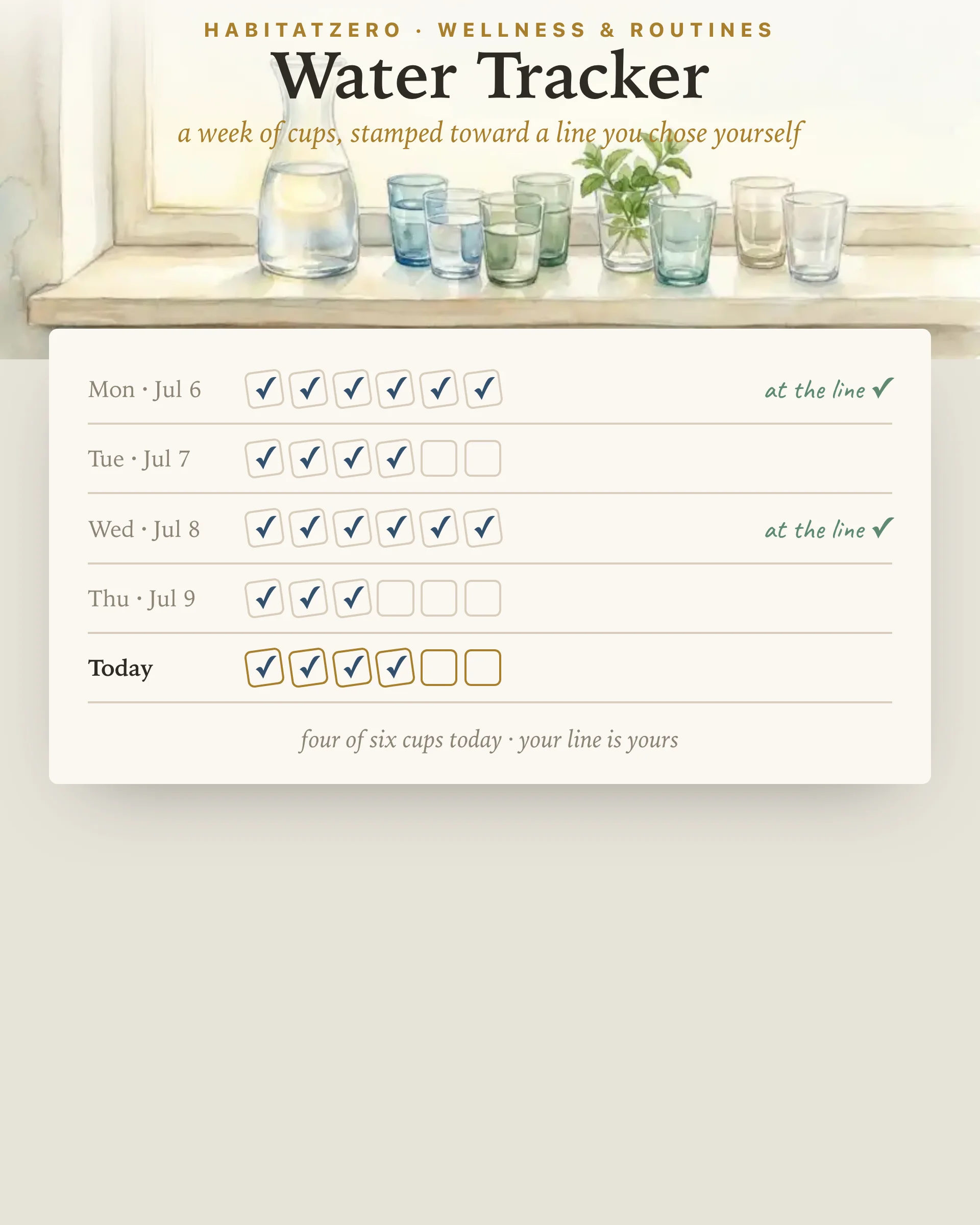
Water TrackerA water tracker without the pseudo-science: choose your own daily line, stamp cups as you finish them across a running week, and see how the week actually poured.
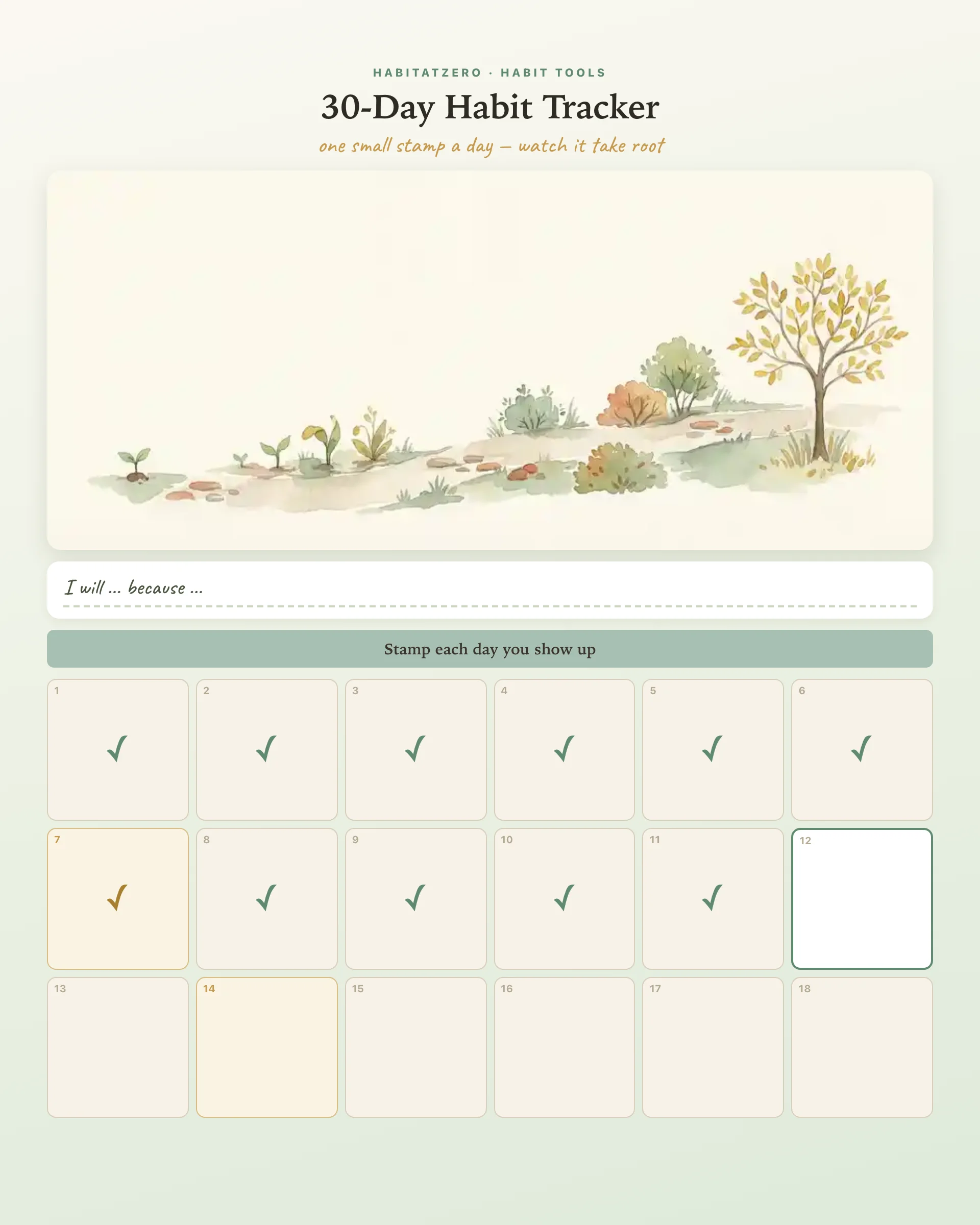
30-Day Habit TrackerA visual tracker for one habit: stamp each day you show up, watch the path grow from seedling to tree, and earn milestone badges along the way.
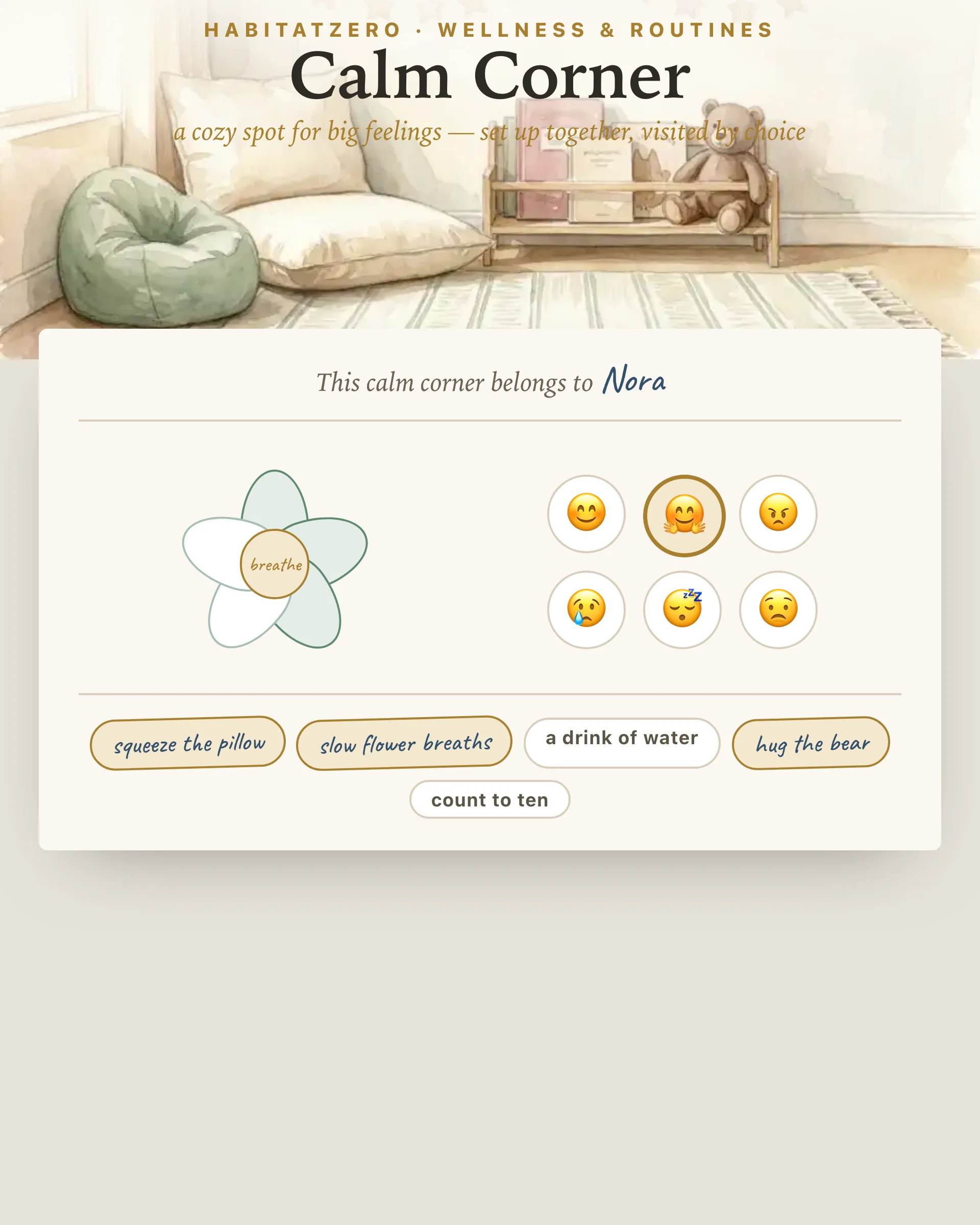
Calm CornerA printable calm corner sheet for home: a five-petal breathing flower to trace, a row of feeling faces to point at, and a what-helps-me menu you pick together — parent-set-up, kid-sized.
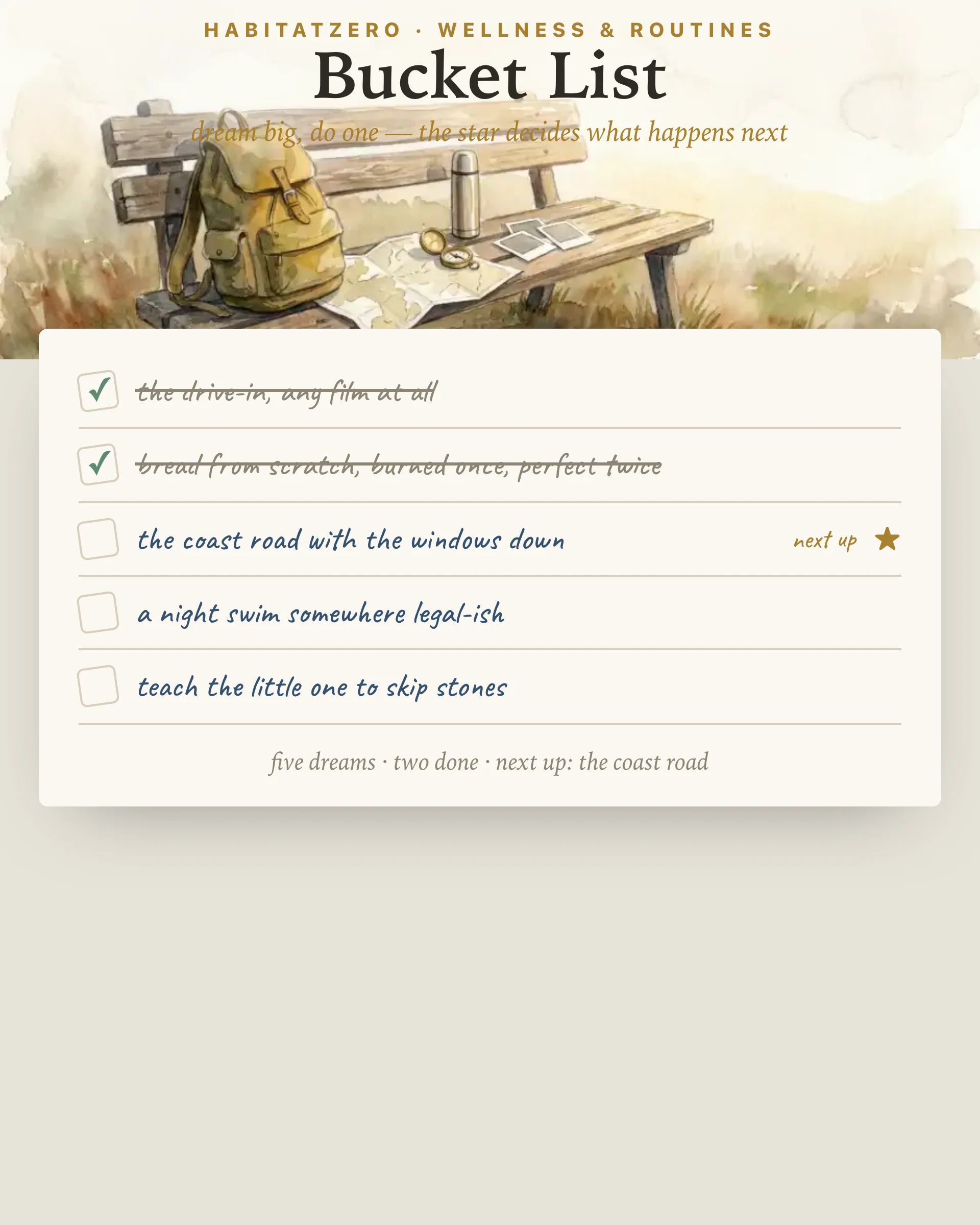
Bucket ListA bucket list that behaves like a tool: twenty dreams at most, written in your own hand, one starred as next up, and a springy stamp for the ones you actually did.
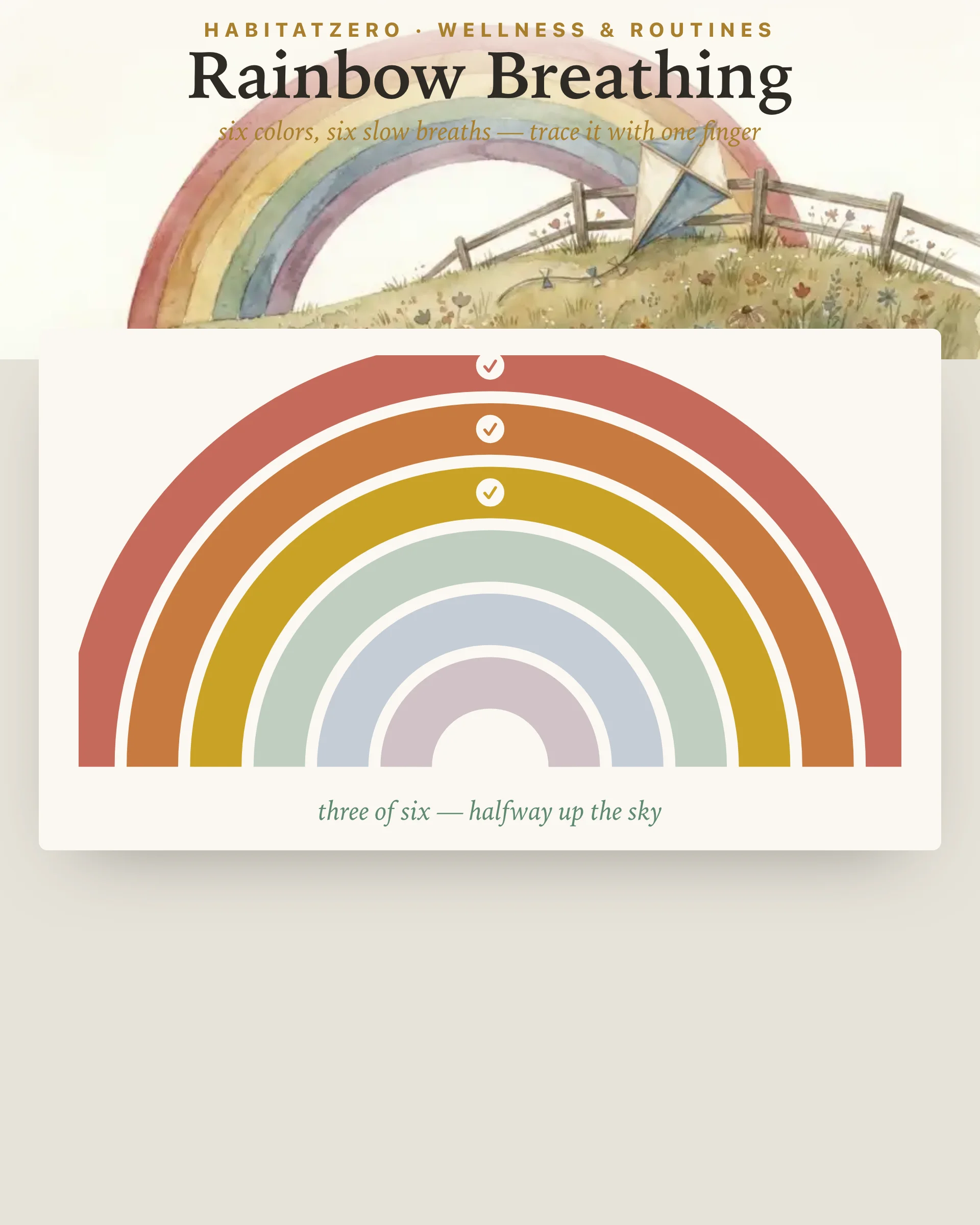
Rainbow BreathingA rainbow your child can breathe with: six traceable color bands — finger up the arc to breathe in, down the other side to breathe out, one color per pass. Print it for pure tracing, or stamp finished passes on screen.
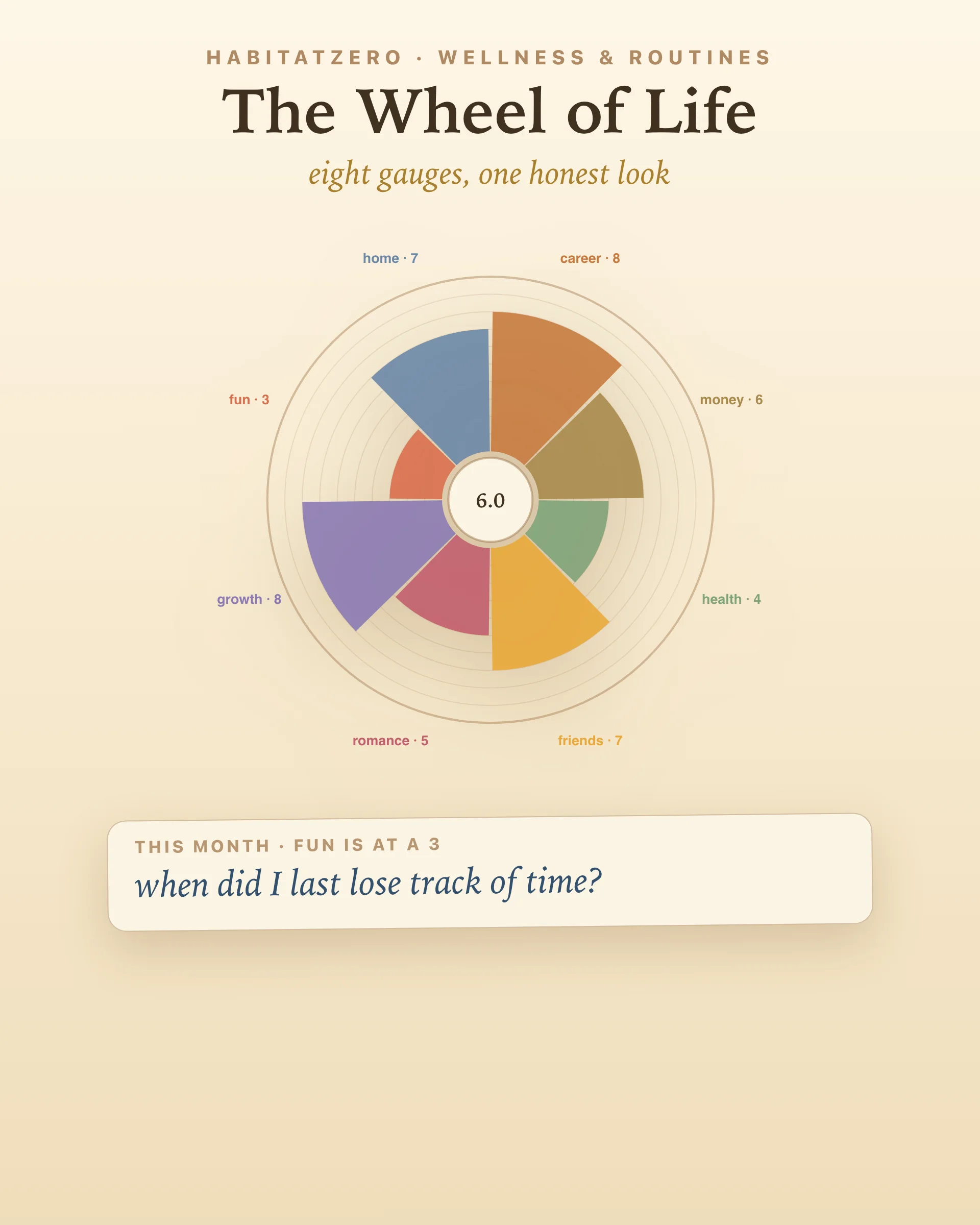
The Wheel of LifeThe classic coaching assessment, made interactive: rate eight life areas, watch your wheel take shape as you tap, and get reflection prompts for the spokes that need attention.
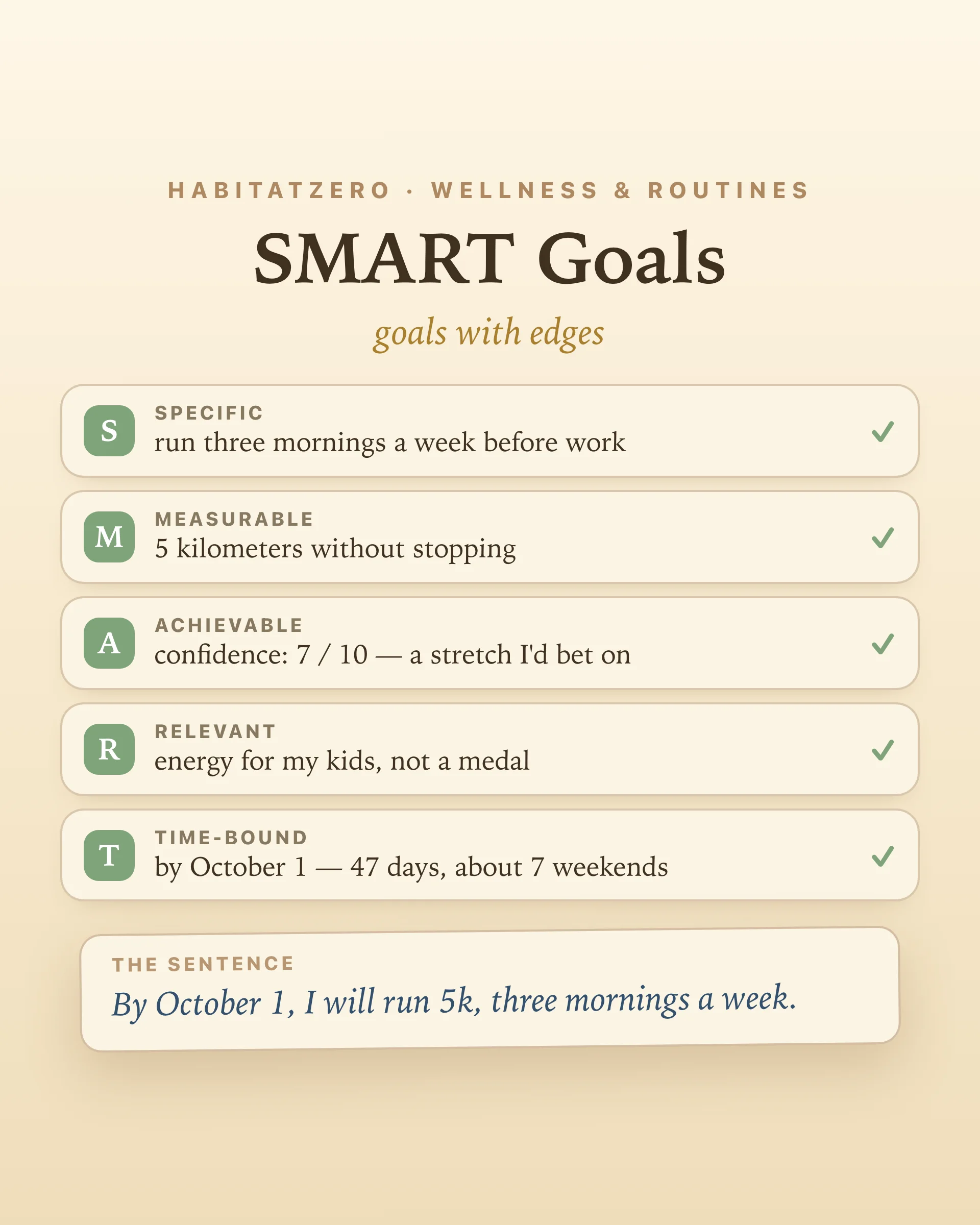
SMART Goals WorksheetTurn a fuzzy intention into a goal with edges: write it rough, pass each letter's live check — specific, measurable, achievable, relevant, time-bound — and leave with one sentence that has a number and a date.
Self-Care ChecklistA menu, not a mandate: thirty-seven small ways to look after your body, mind, heart, people, and space — with a daily and weekly view, gentle progress, and room for your own items.
8 Dimensions of WellnessSurvey the whole garden: for each of the eight named wellness dimensions — emotional, physical, occupational, intellectual, financial, social, environmental, spiritual — write where it stands and one next move, then choose the single move you'll actually make this month.
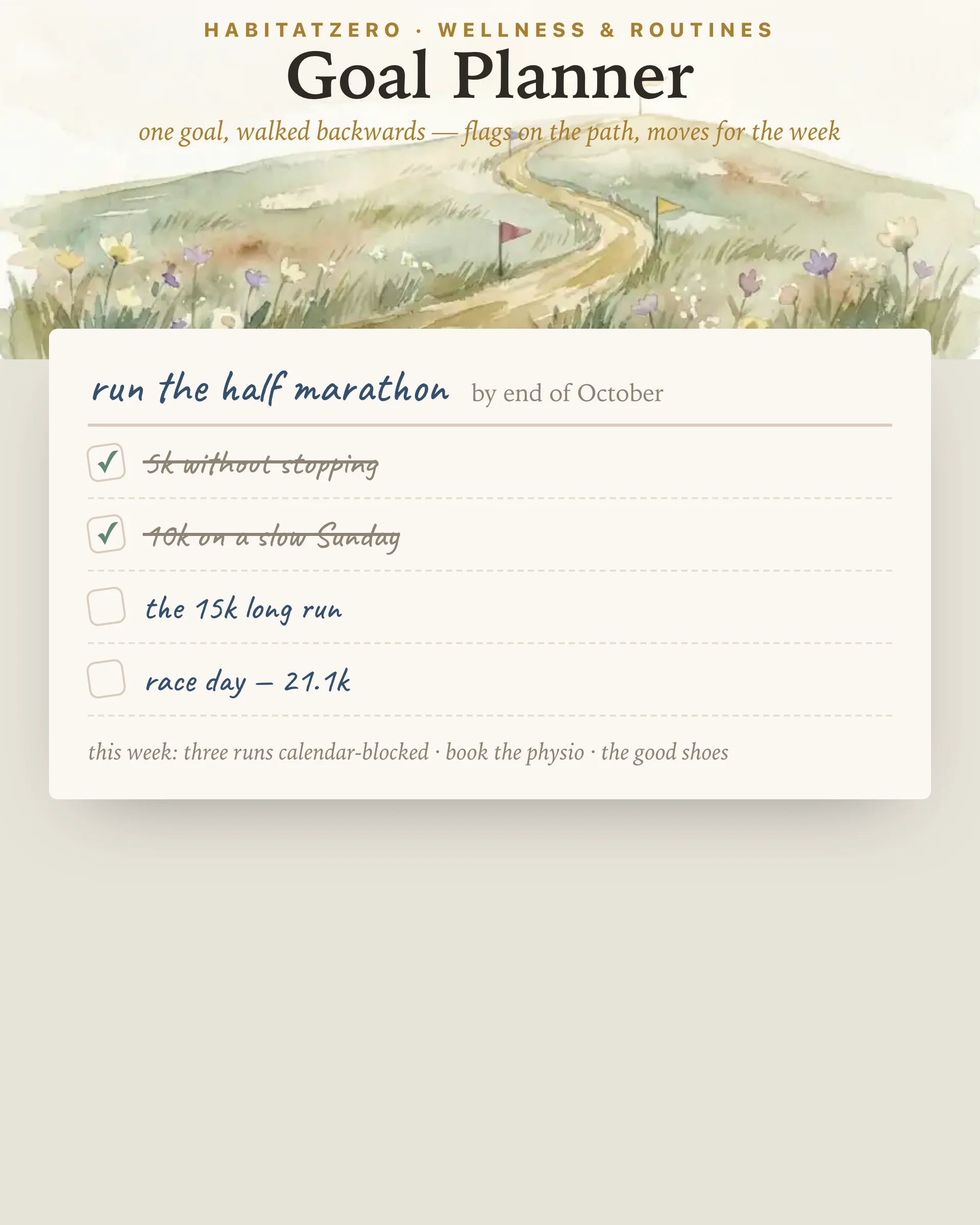
Goal PlannerOne goal, walked backwards: name what you're walking toward, plant three to five milestone flags on the path, and commit to exactly three moves this week — each one stampable, so the plan shows its progress.
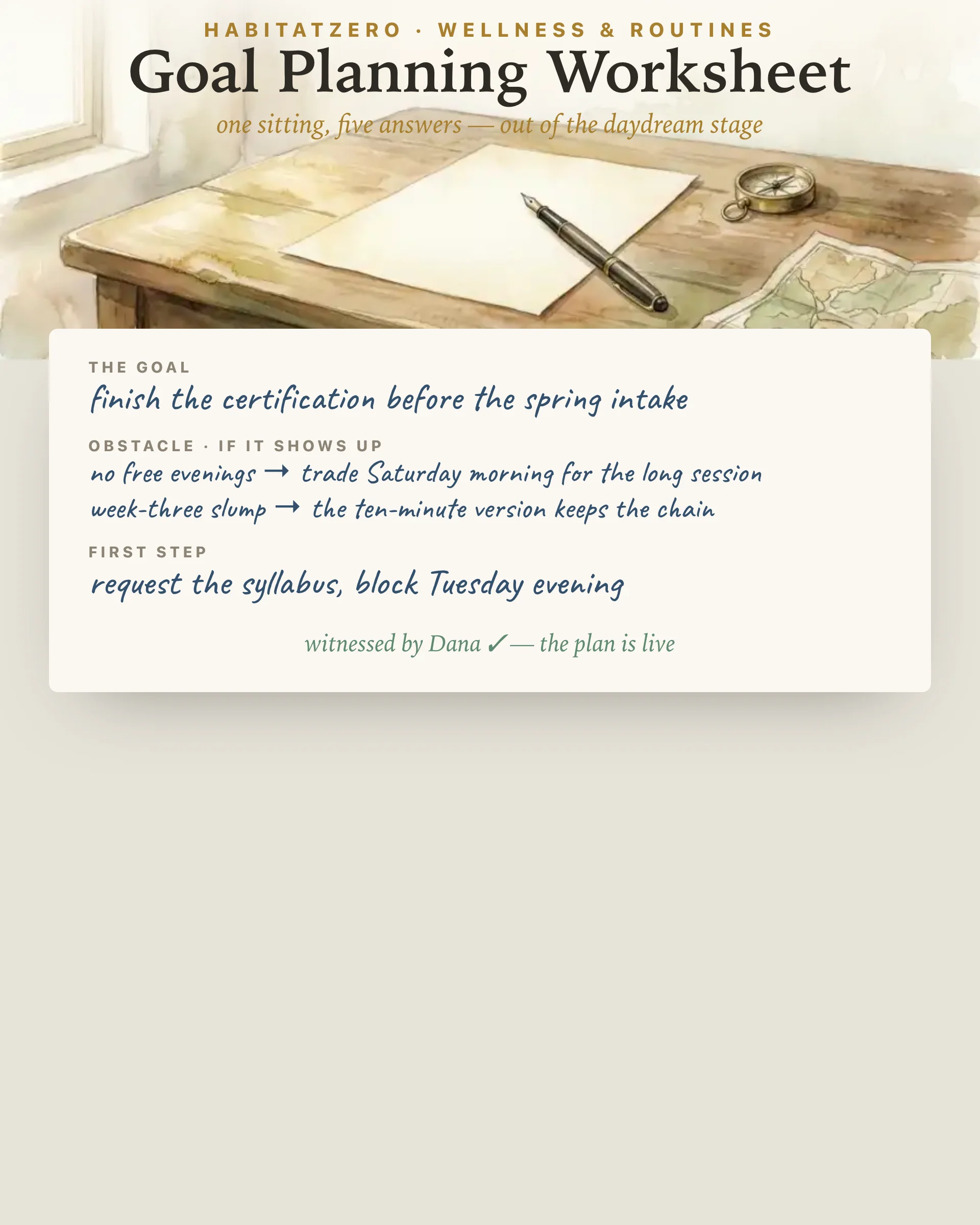
Goal Planning WorksheetFive answers in one sitting: the goal in a single honest sentence, why this season is the one, three obstacles with their if-then answers, a first step small enough for this week, and a named witness — the page that moves a goal out of the daydream stage.
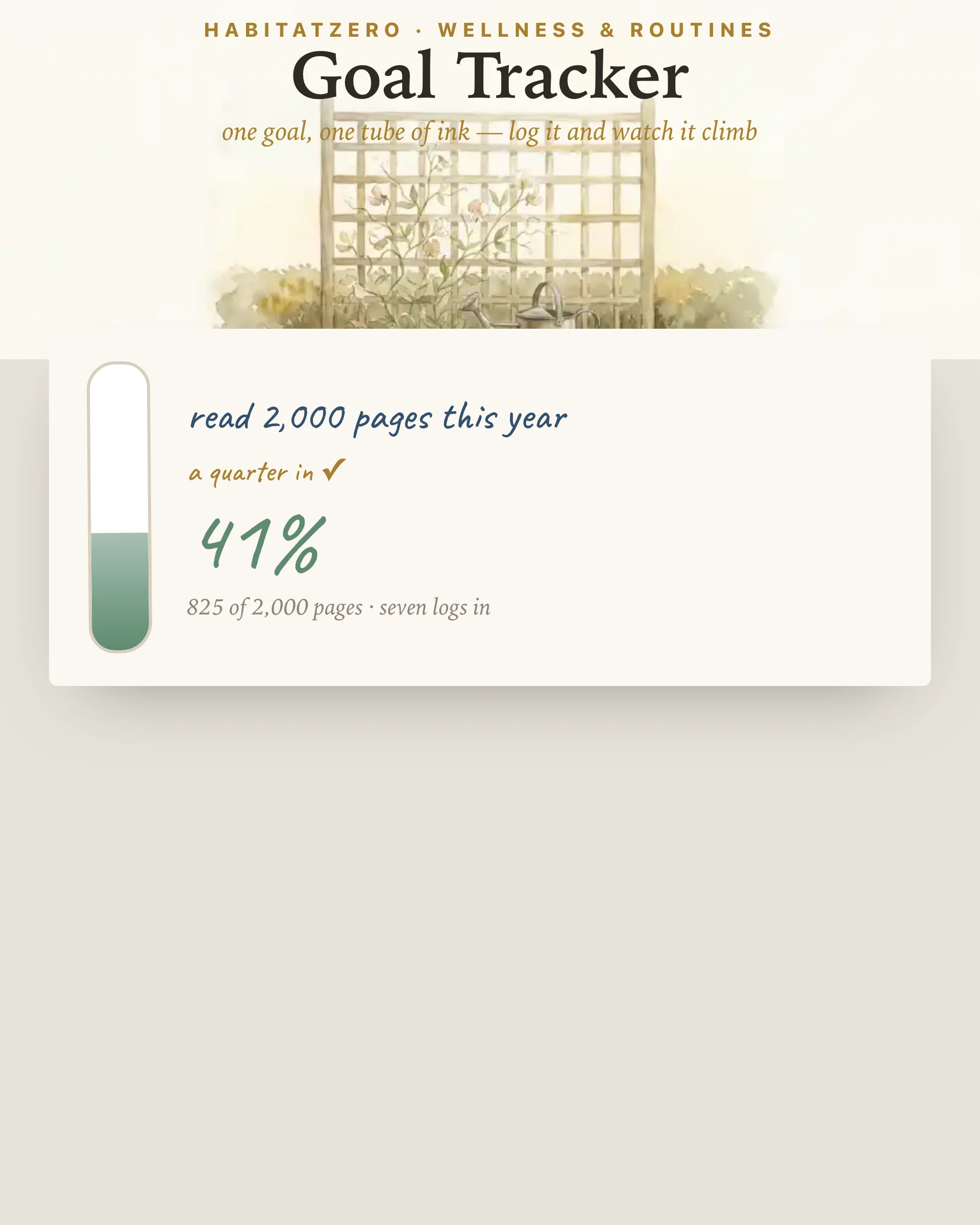
Goal TrackerOne goal, one hand-drawn thermometer: set a target, log progress whenever it happens, and watch the ink climb past the quarter marks — with every log kept in a little ledger you can amend.
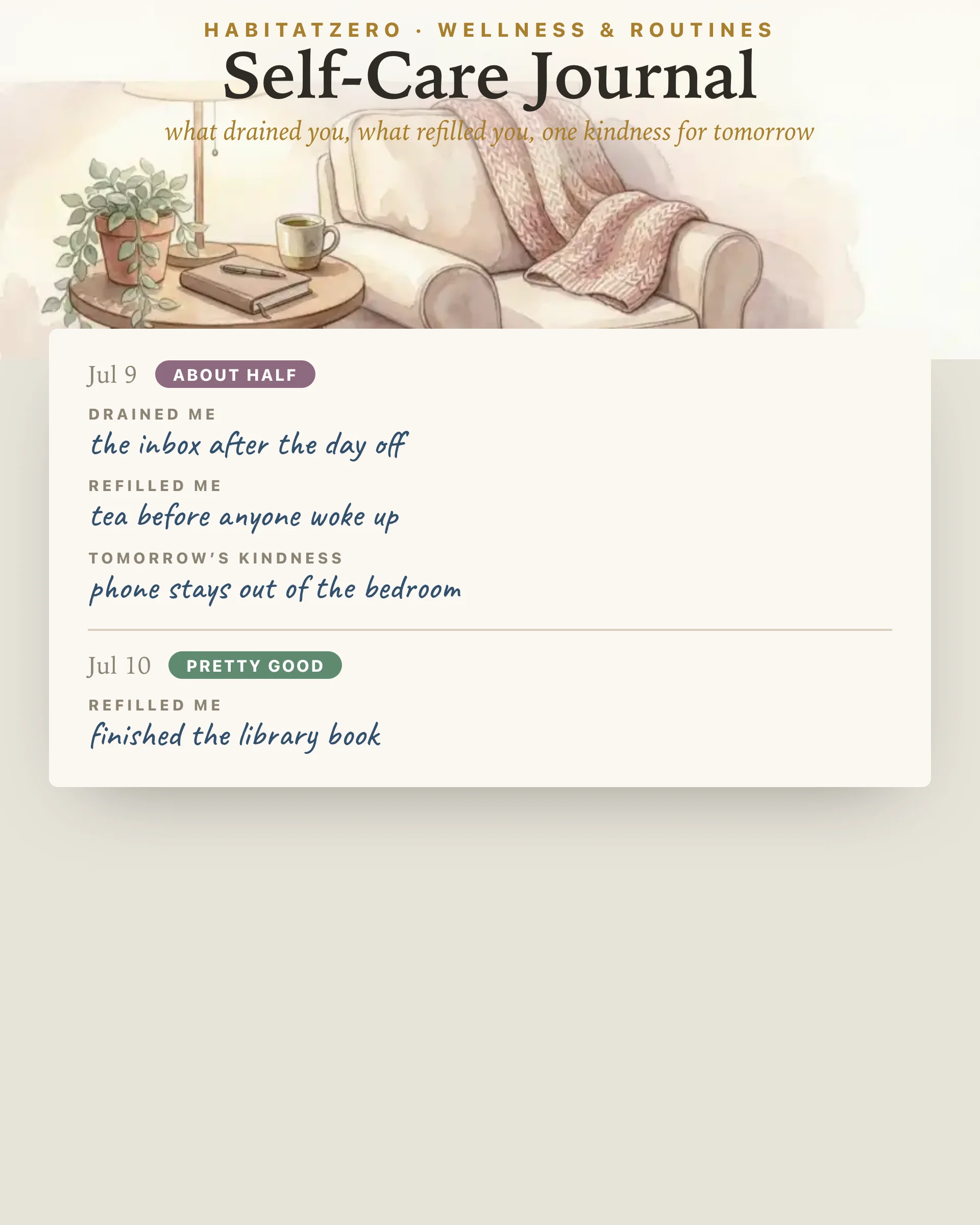
Self-Care JournalA three-minute nightly entry: rate how full your tank is, name what drained and refilled you, and promise tomorrow one kind thing — kept as a quiet thirty-entry book that shows how the week is really running.
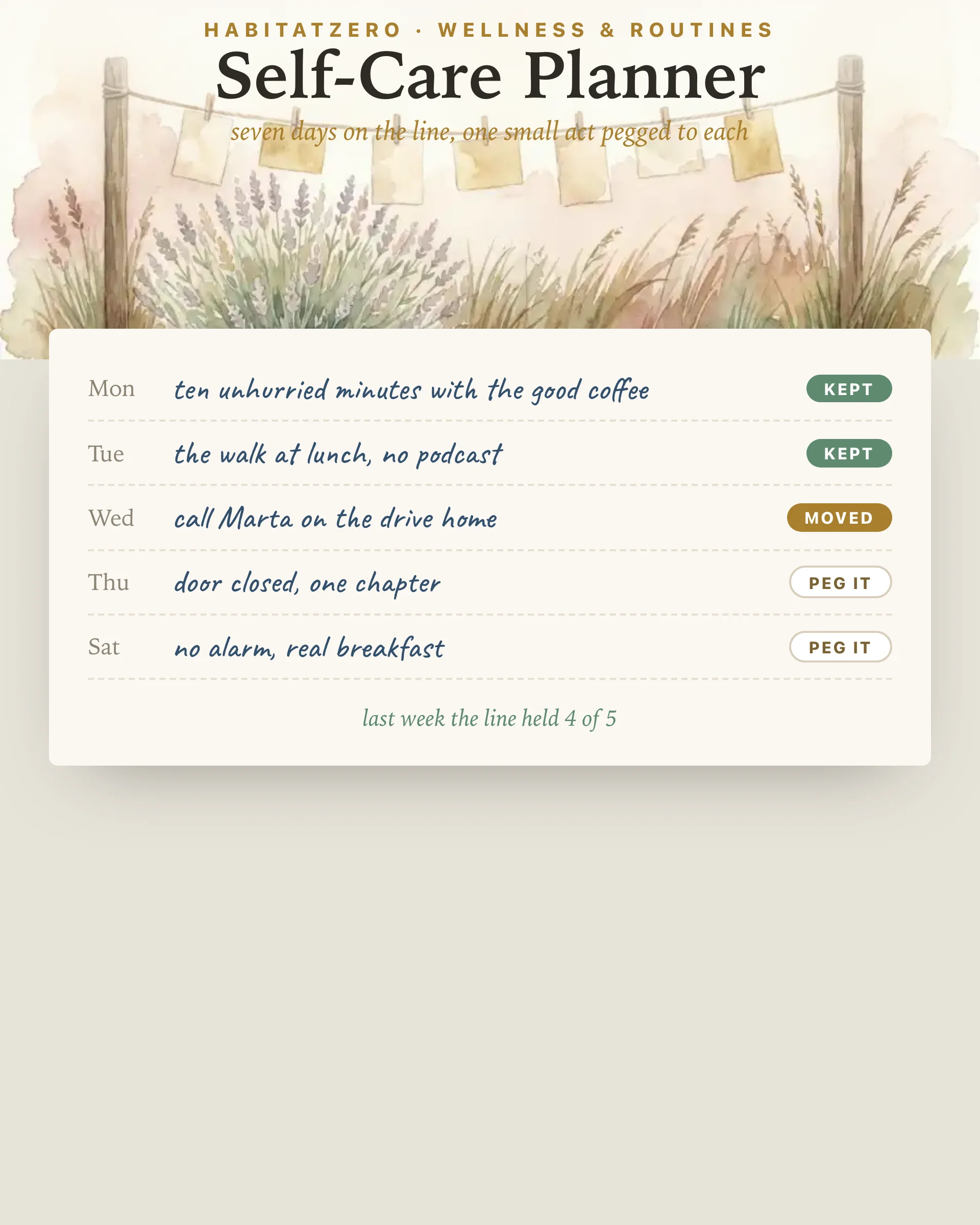
Self-Care PlannerPeg one small act of care to each day of the week — the good coffee, the lunch walk, the early night — then reconcile every peg as kept or moved before the next seven go out on the line.
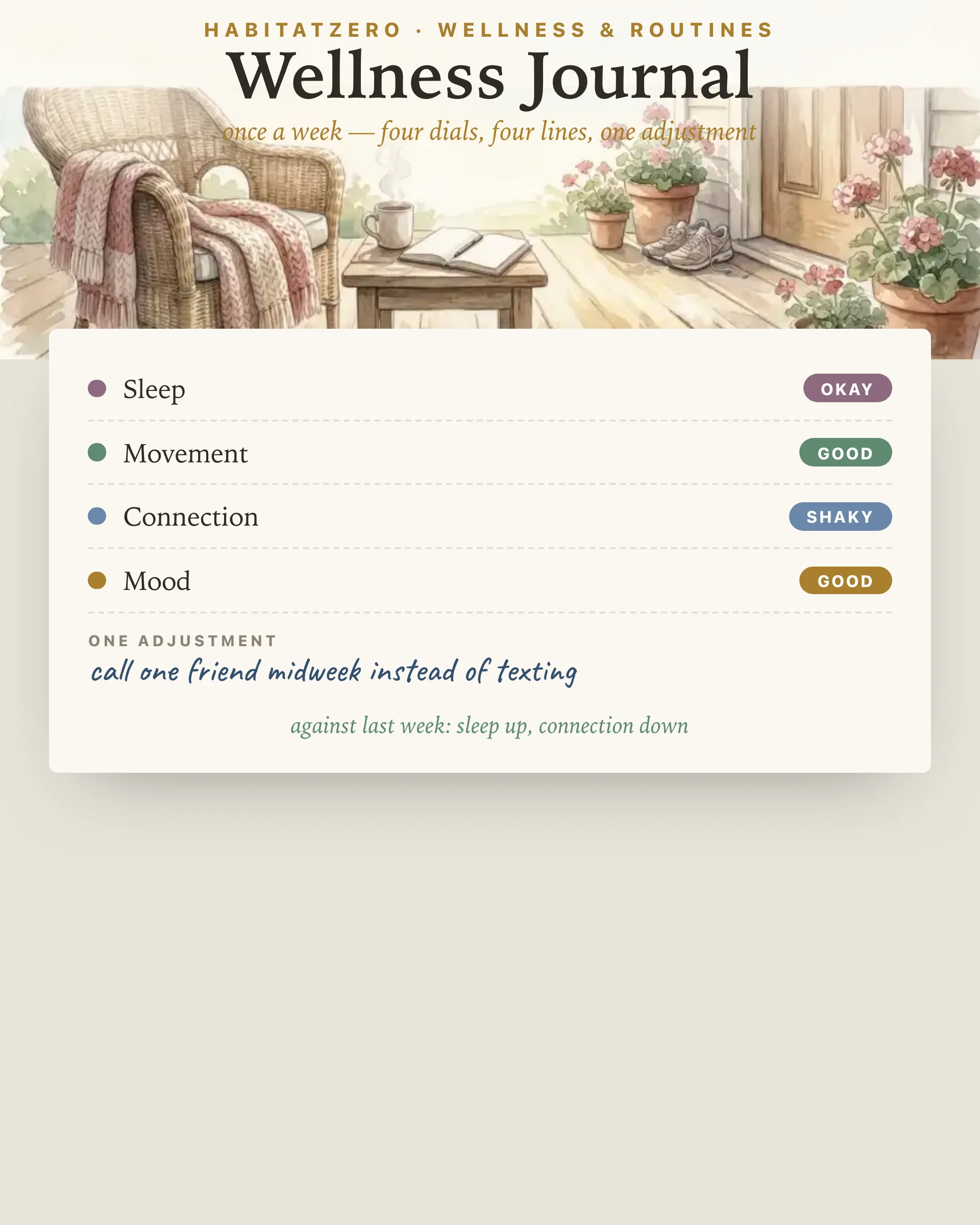
Wellness JournalA weekly whole-person review: read four dials — sleep, movement, connection, mood — write one honest line for each, choose the single adjustment aimed at the lowest dial, and keep a twelve-week record that shows which way the week moved.
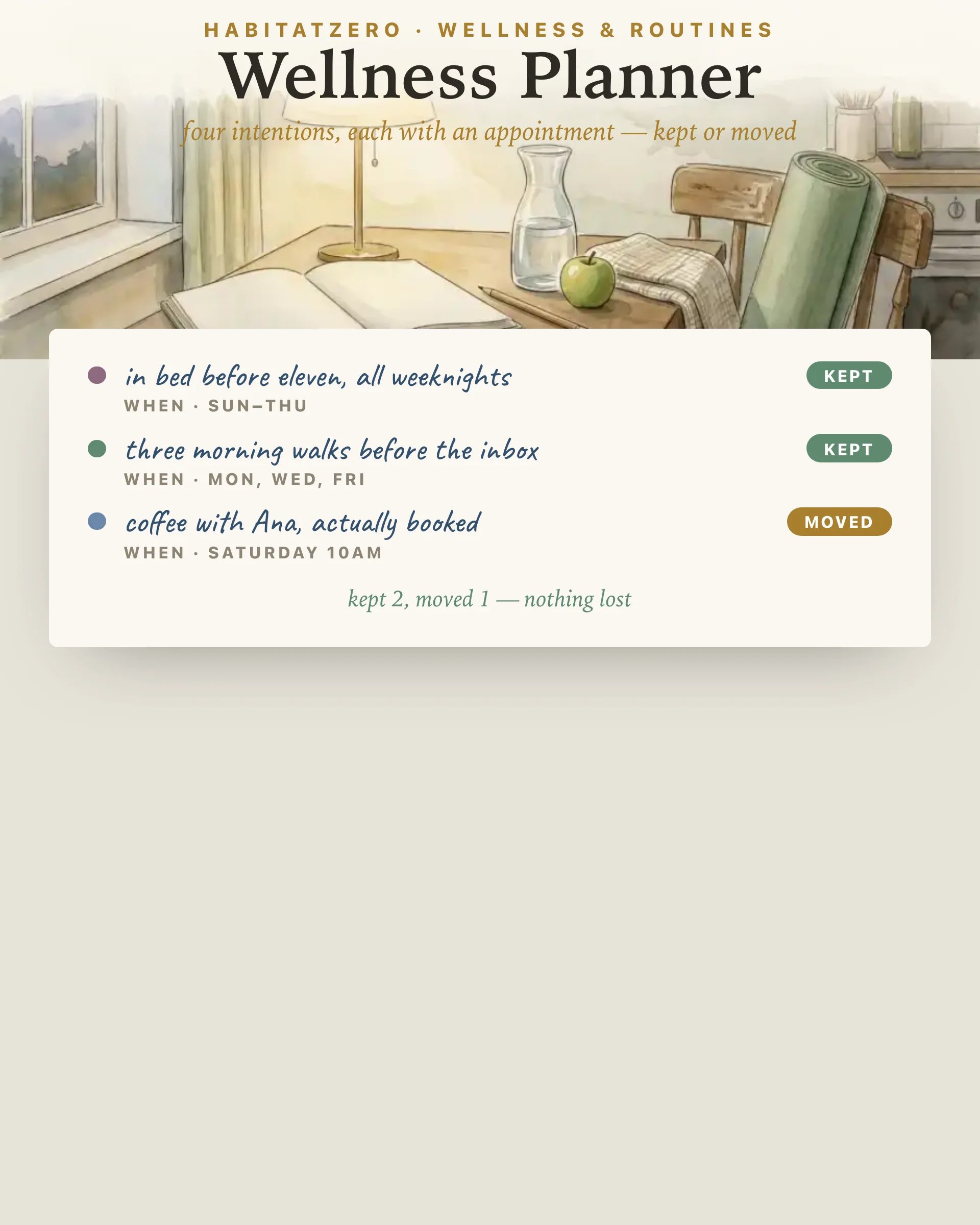
Wellness PlannerPlan the week's wellbeing before the week spends it: one intention each for sleep, movement, connection, and mood, each with an appointment — then reconcile kept or moved, so nothing quietly disappears.
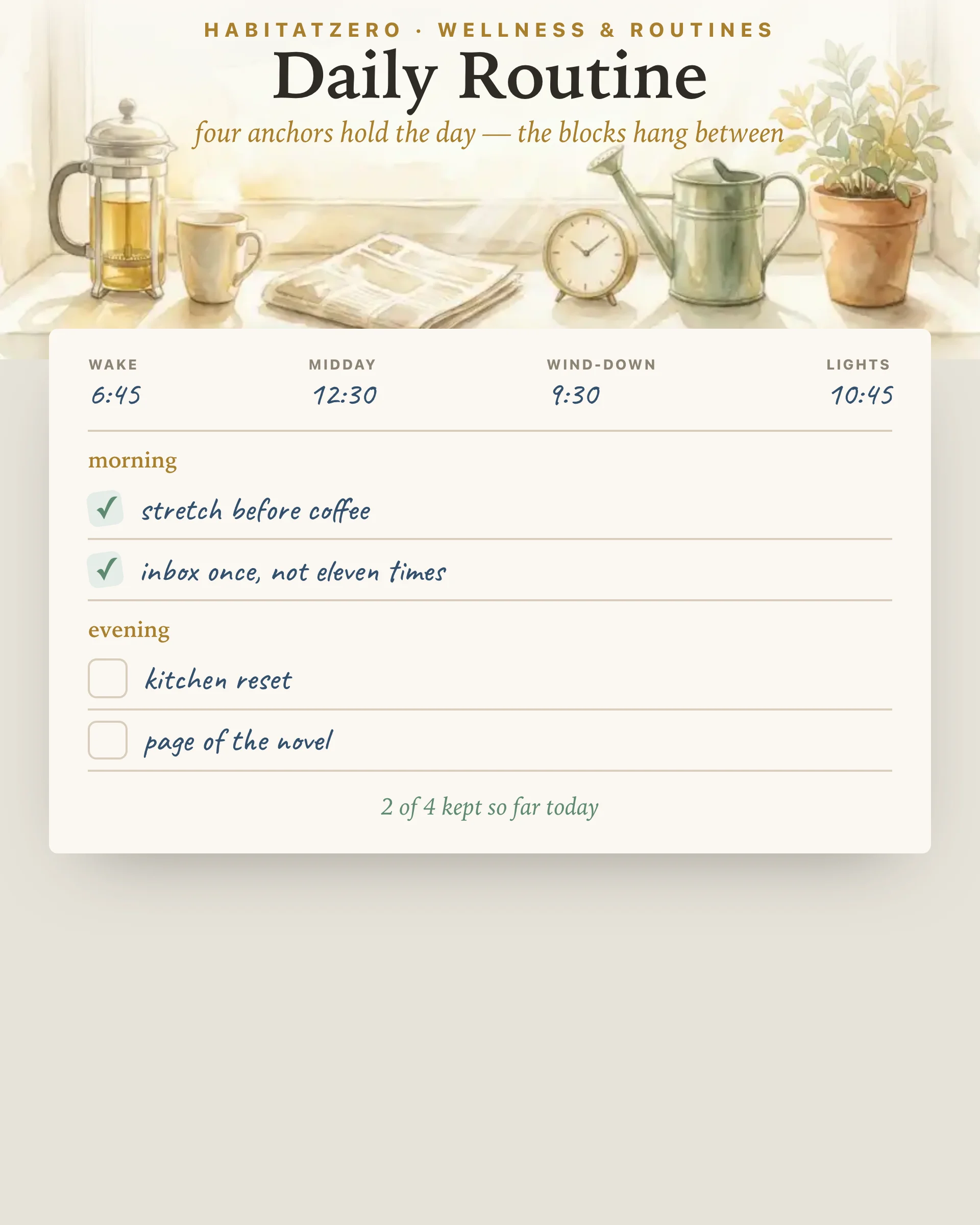
Daily RoutineFour anchor times hold the day — wake, midday, wind-down, lights out — and your routine blocks hang between them on morning, midday, and evening hooks, each with a tick to keep and a fresh-day sweep.
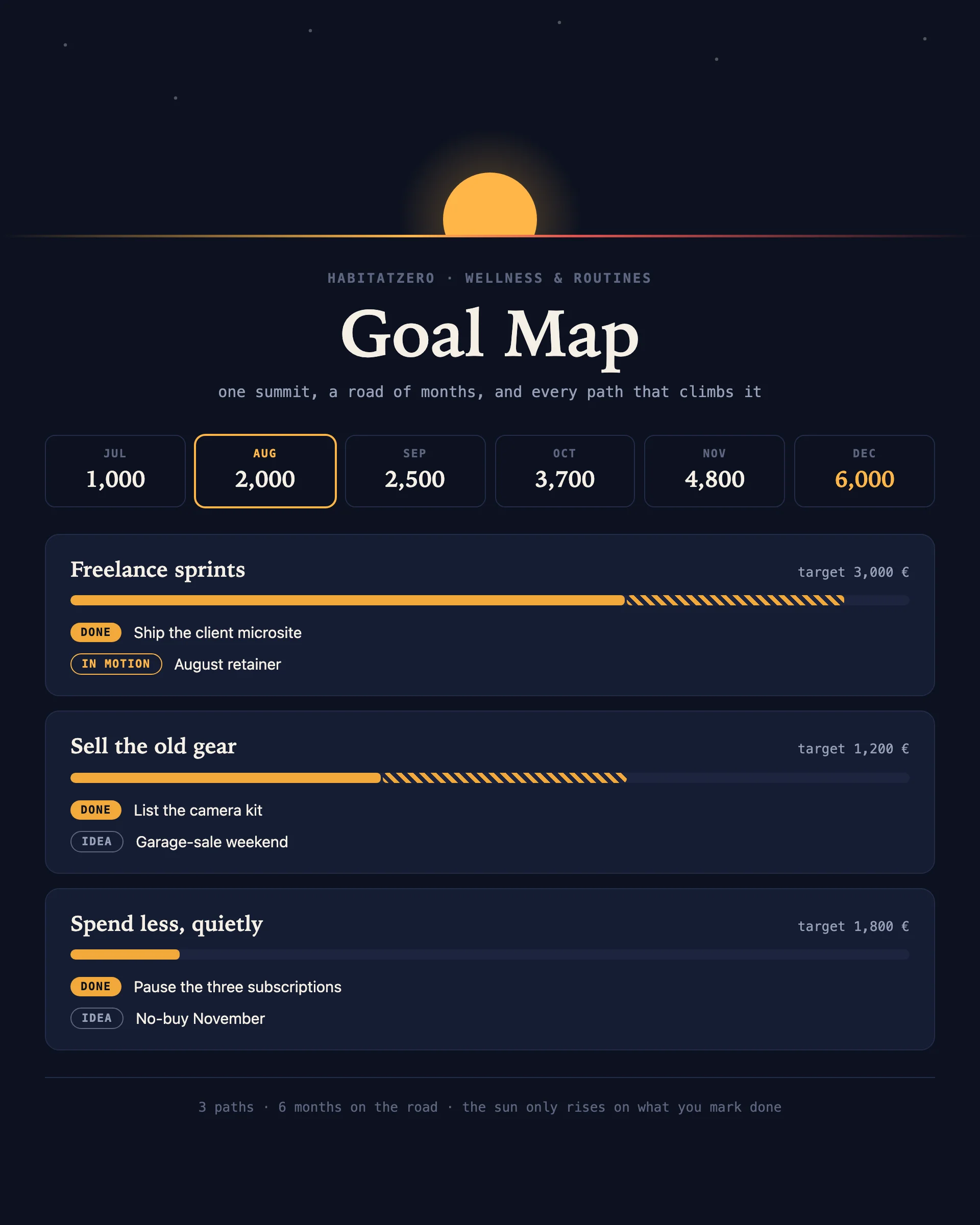
Goal MapOne big goal under a rising sun: set the summit and the deadline, let the road split into monthly milestones, and sort every path to the top into reorderable checklists.
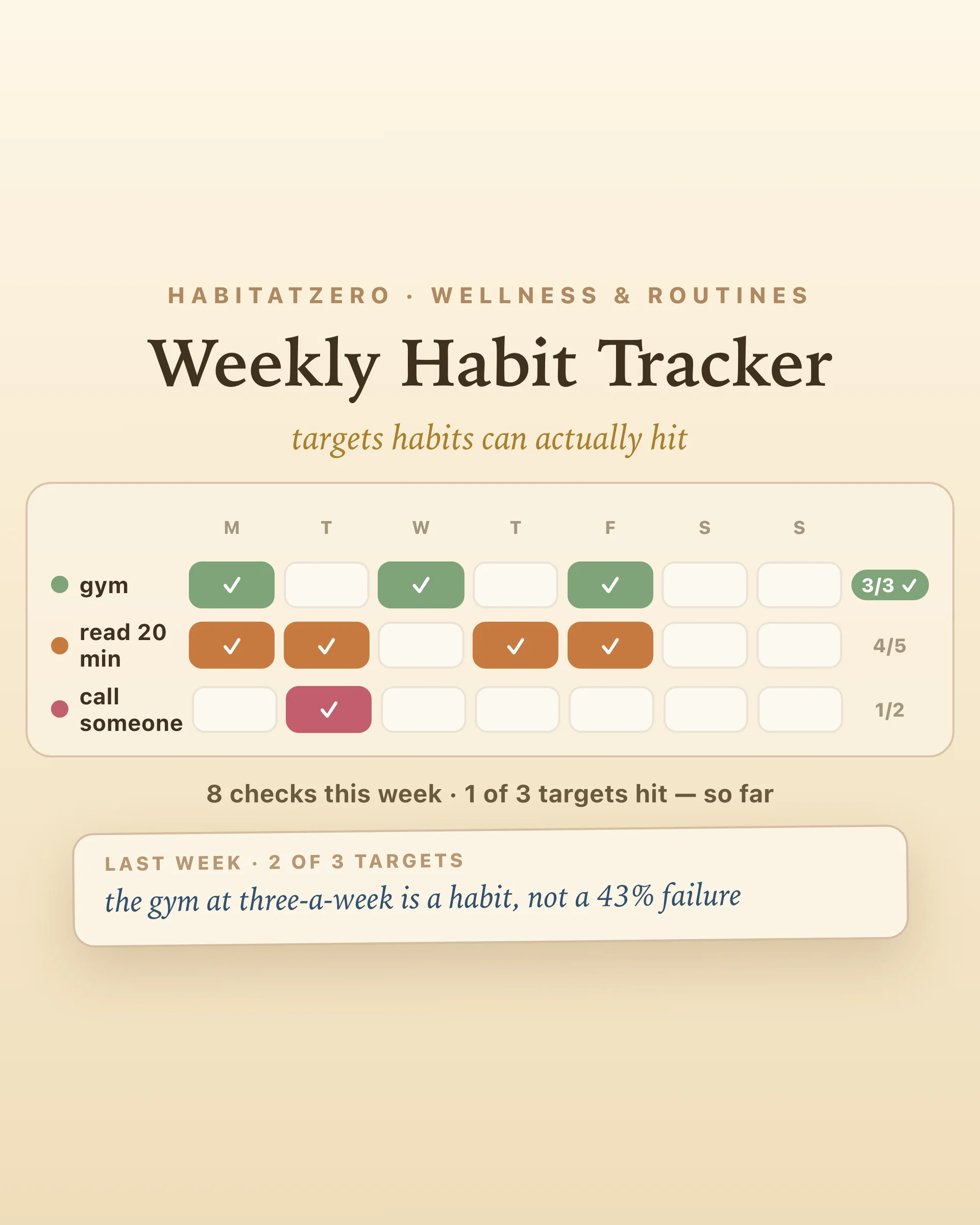
Weekly Habit TrackerAll your habits, one honest week: a tap-to-check grid with per-habit targets — because 'three times a week' is a real habit too — weekly wins, and a history that keeps the score.
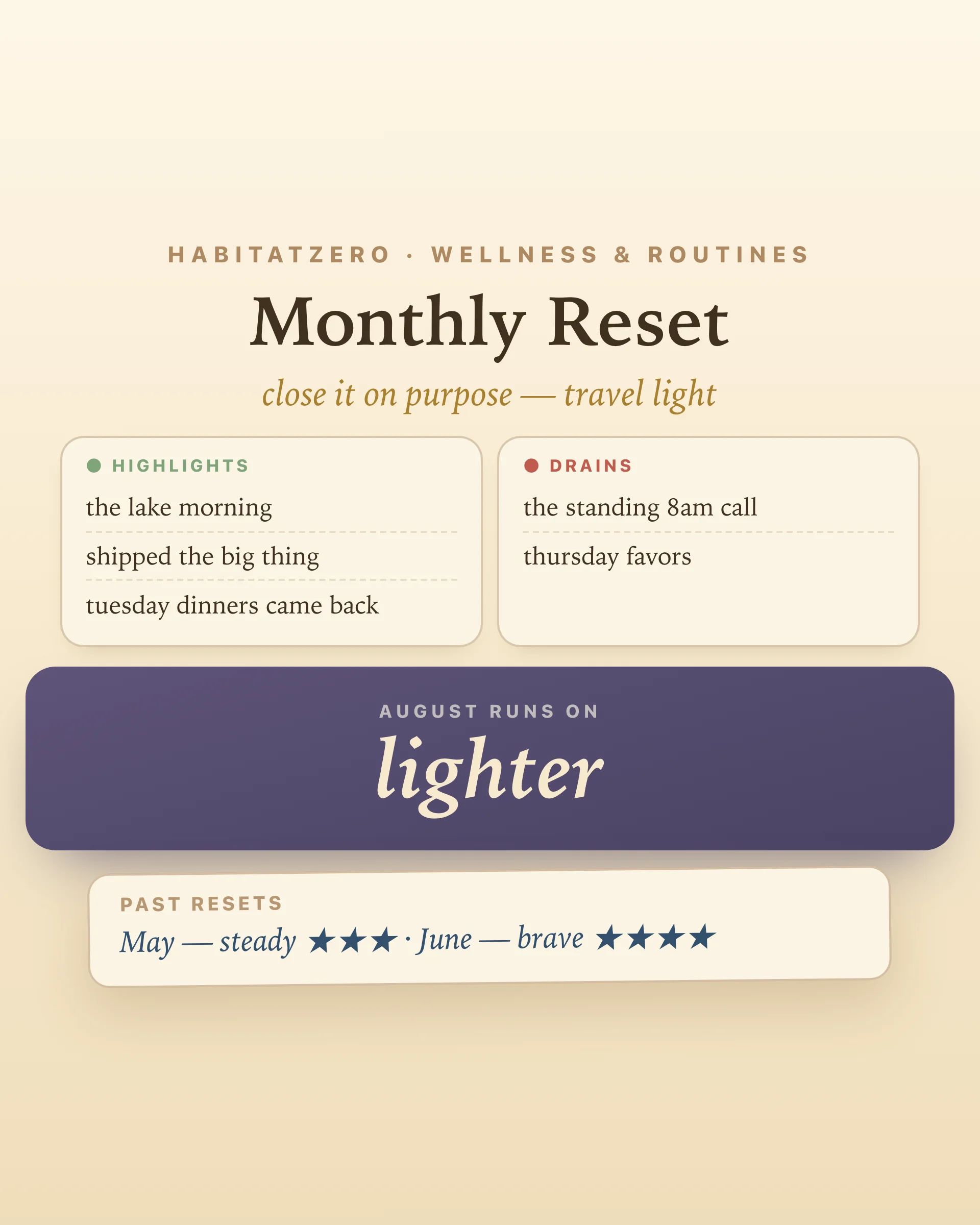
Monthly ResetTwenty minutes at the month's edge: harvest the highlights, name what drained you, pick one word for the month ahead, and set three intentions small enough to keep — then let the tool remember it all.
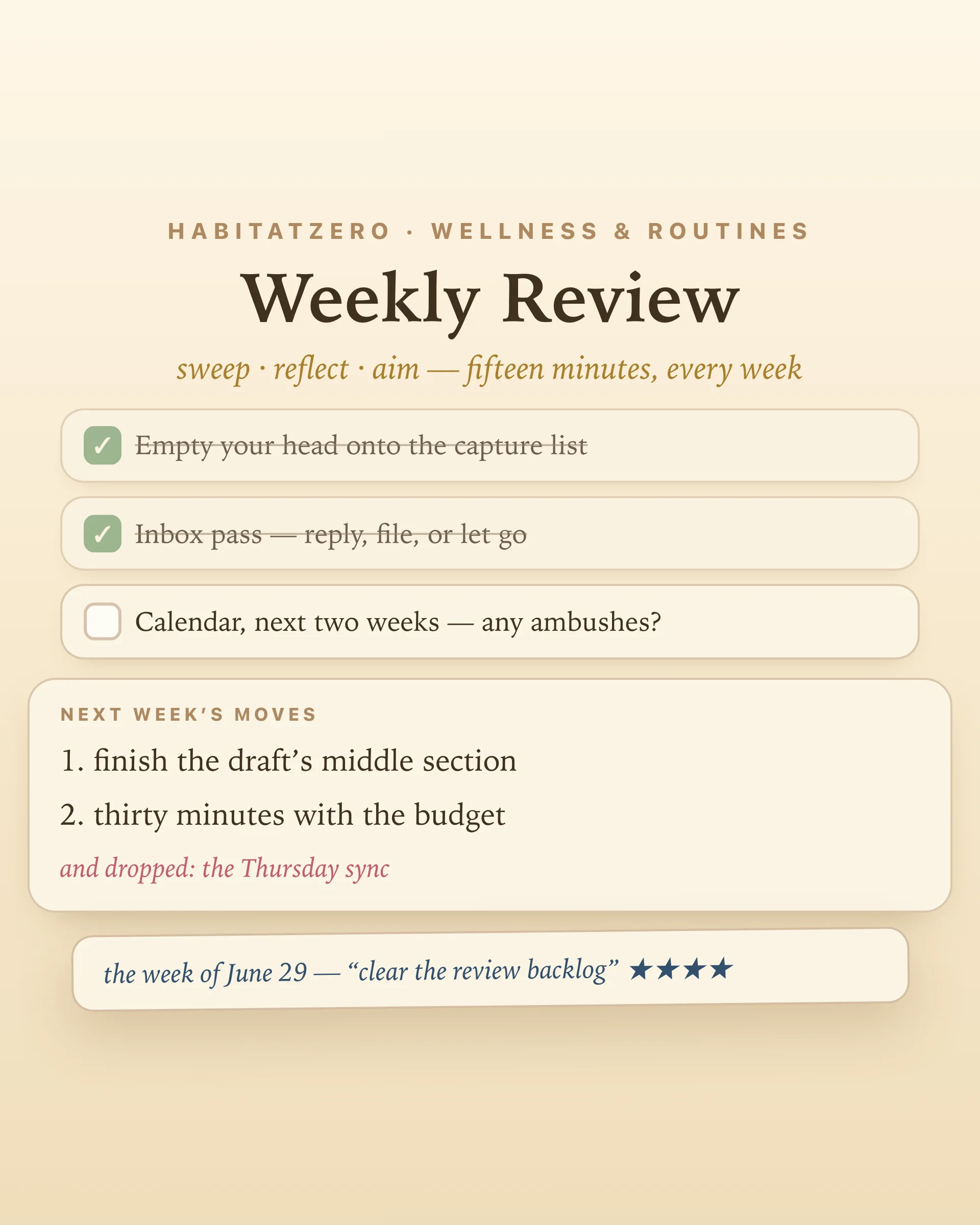
Weekly ReviewFifteen guided minutes that close the week properly: sweep every loose end onto paper, reflect on what moved and what stalled, rate the week honestly, and choose three moves for the week ahead — then let the archive keep score.
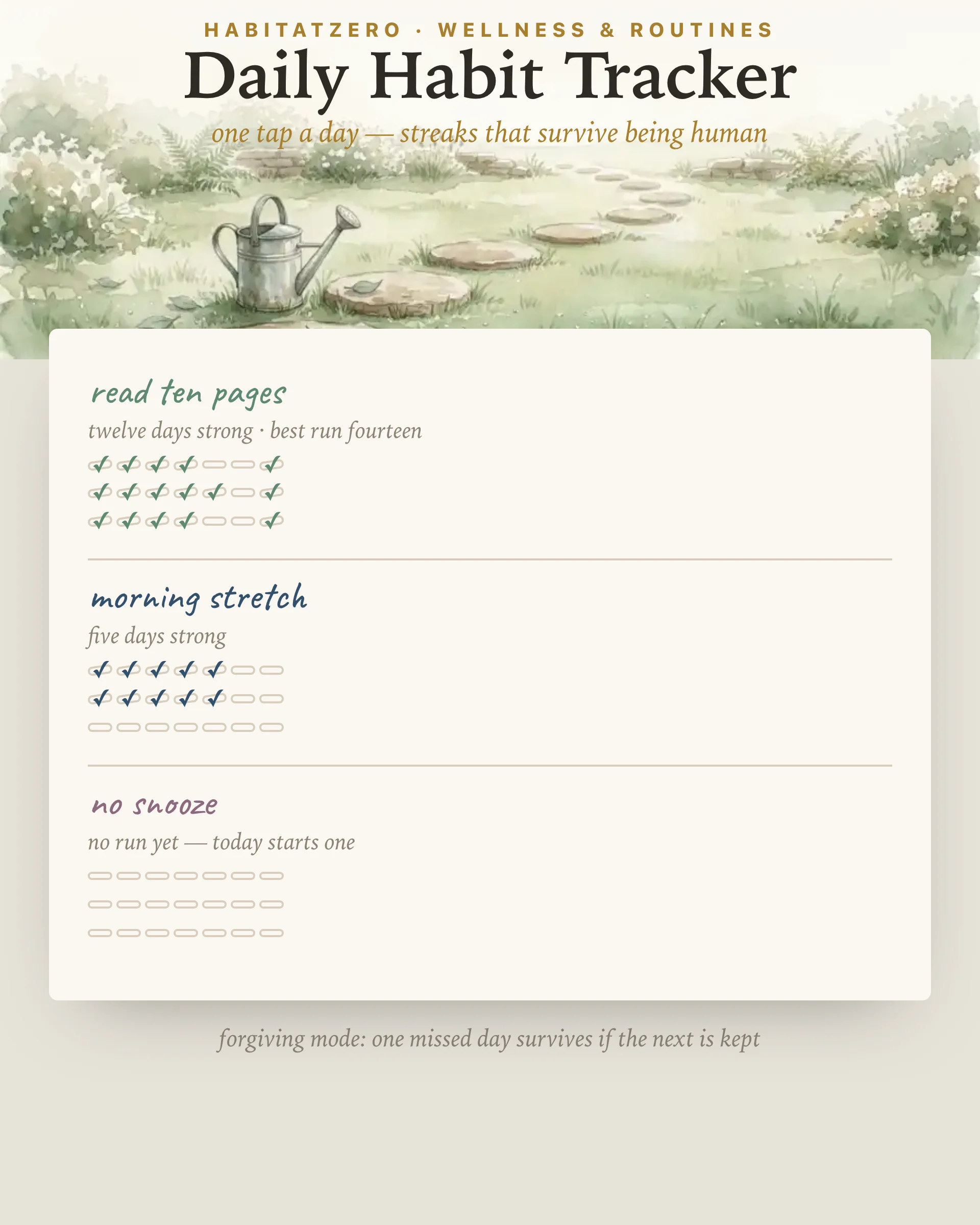
Daily Habit TrackerThe streak tracker habit apps charge for, free in the browser: a handful of daily habits, one tap each evening, a ten-week grid that fills like a garden, and a forgiving never-miss-twice mode for streaks that survive real life.
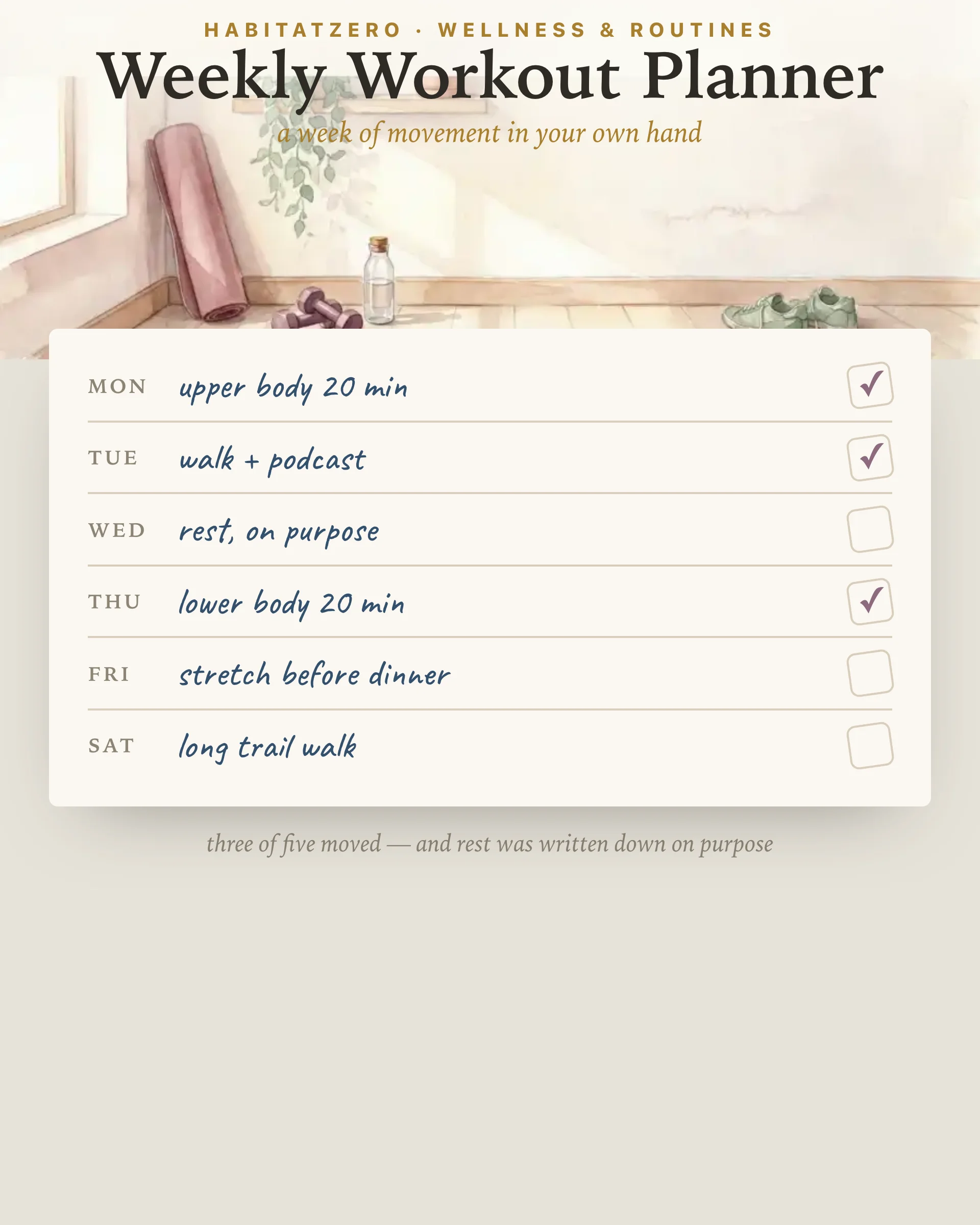
Weekly Workout PlannerA paper-feeling weekly workout planner: write the week's movement in your own handwriting, stamp the days you moved, and write rest days down on purpose so they count as plan, not failure.
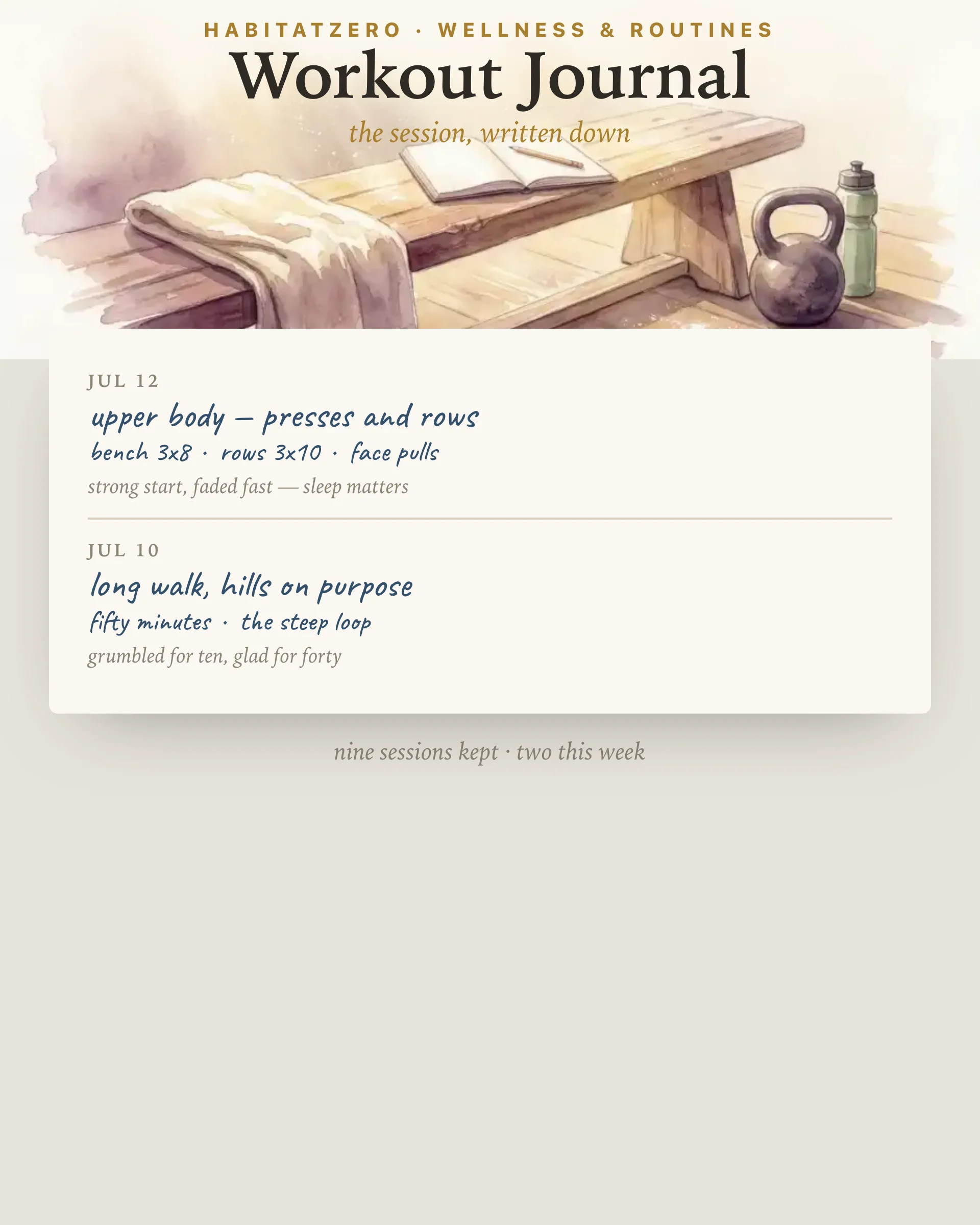
Workout JournalA session log in your own handwriting: what moved, the work, and one honest line about how it felt — logged in thirty seconds while the chalk is still on your hands, building a record that remembers your training better than you do.
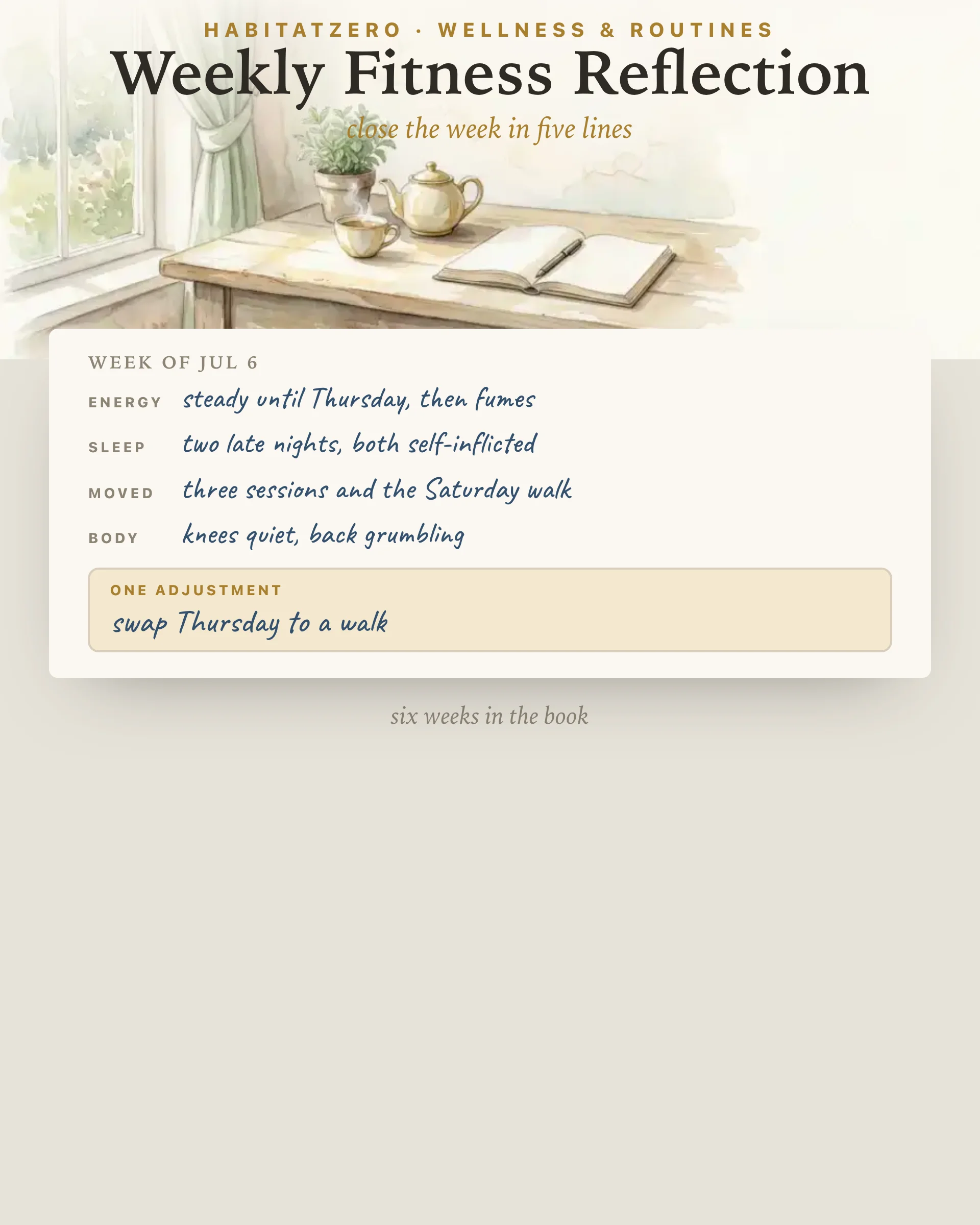
Weekly Fitness ReflectionThe review altitude of a fitness practice: once a week, five handwritten lines — energy, sleep, what moved, what the body says — and one adjustment carried into next week, kept as a running record of half a year.
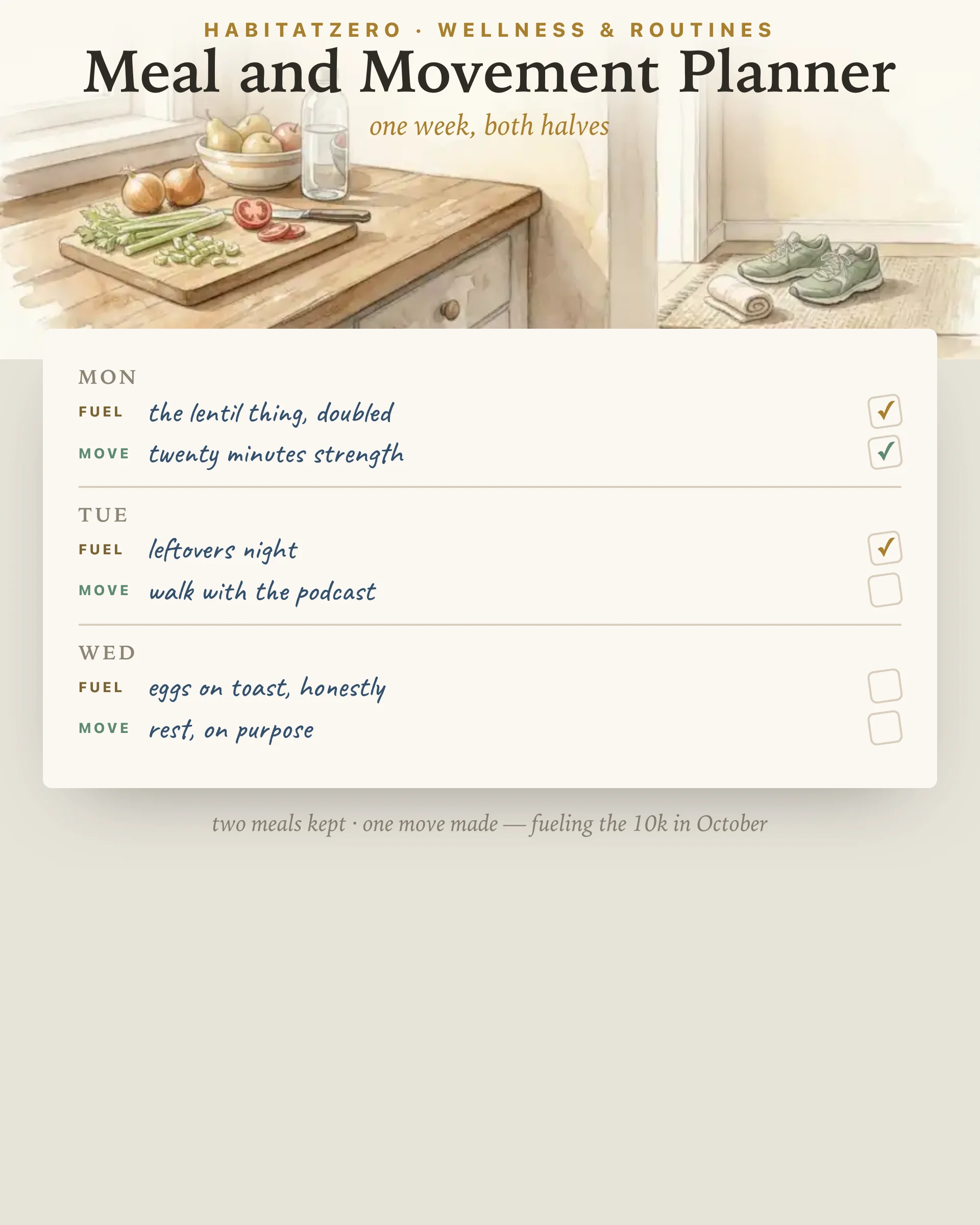
Meal and Movement PlannerThe two halves of every energy plan on one page at last: each day gets a meal line in your own words and a movement line beside it, each with its own kept stamp — because the fridge and the running shoes were always the same plan.
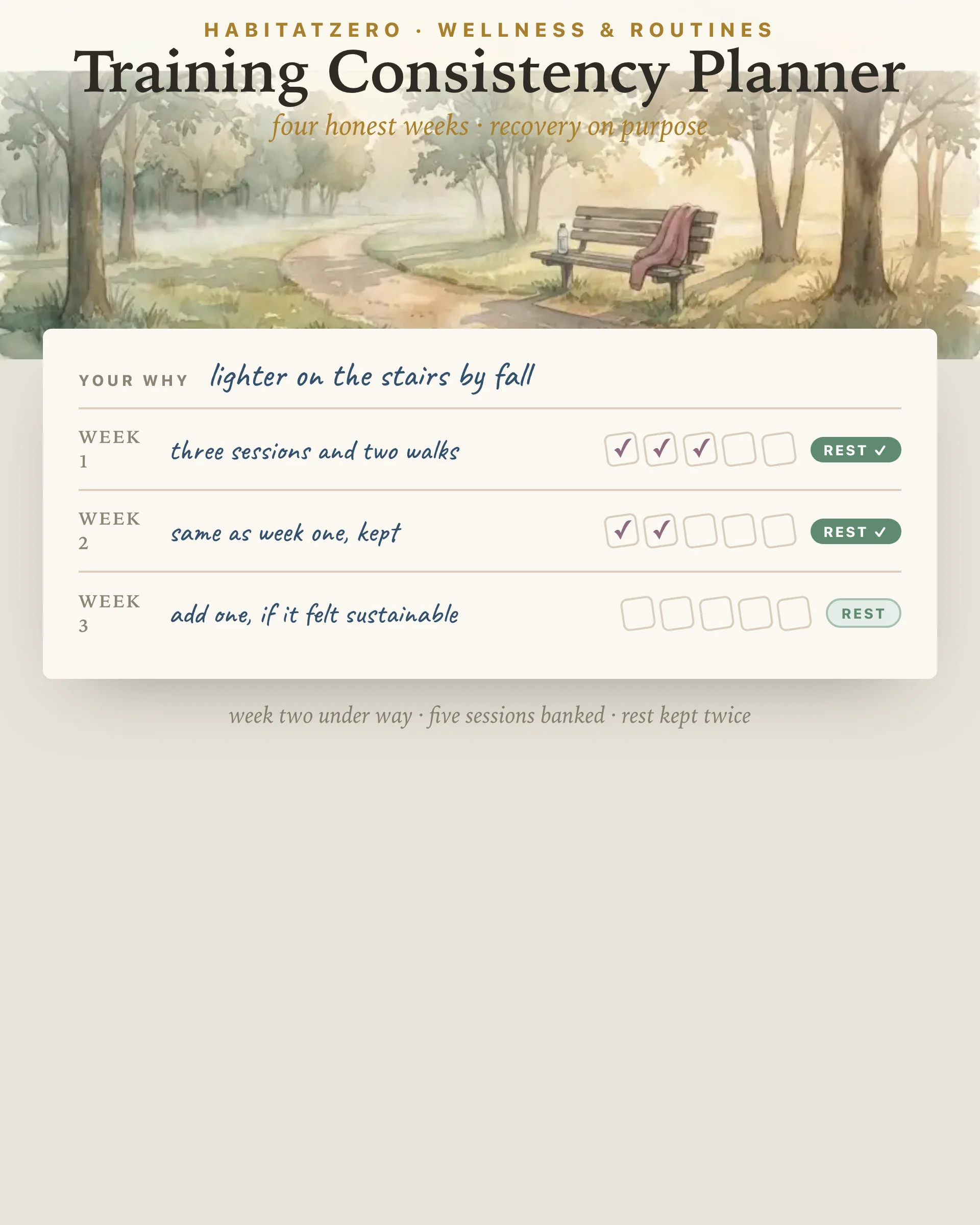
Training Consistency PlannerFour honest weeks of training built around the one lever a planner actually controls: showing up. Your reason in your own words, session stamps banked week by week, a rest promise treated as part of the program, and a structure that only grows when the last week felt sustainable.
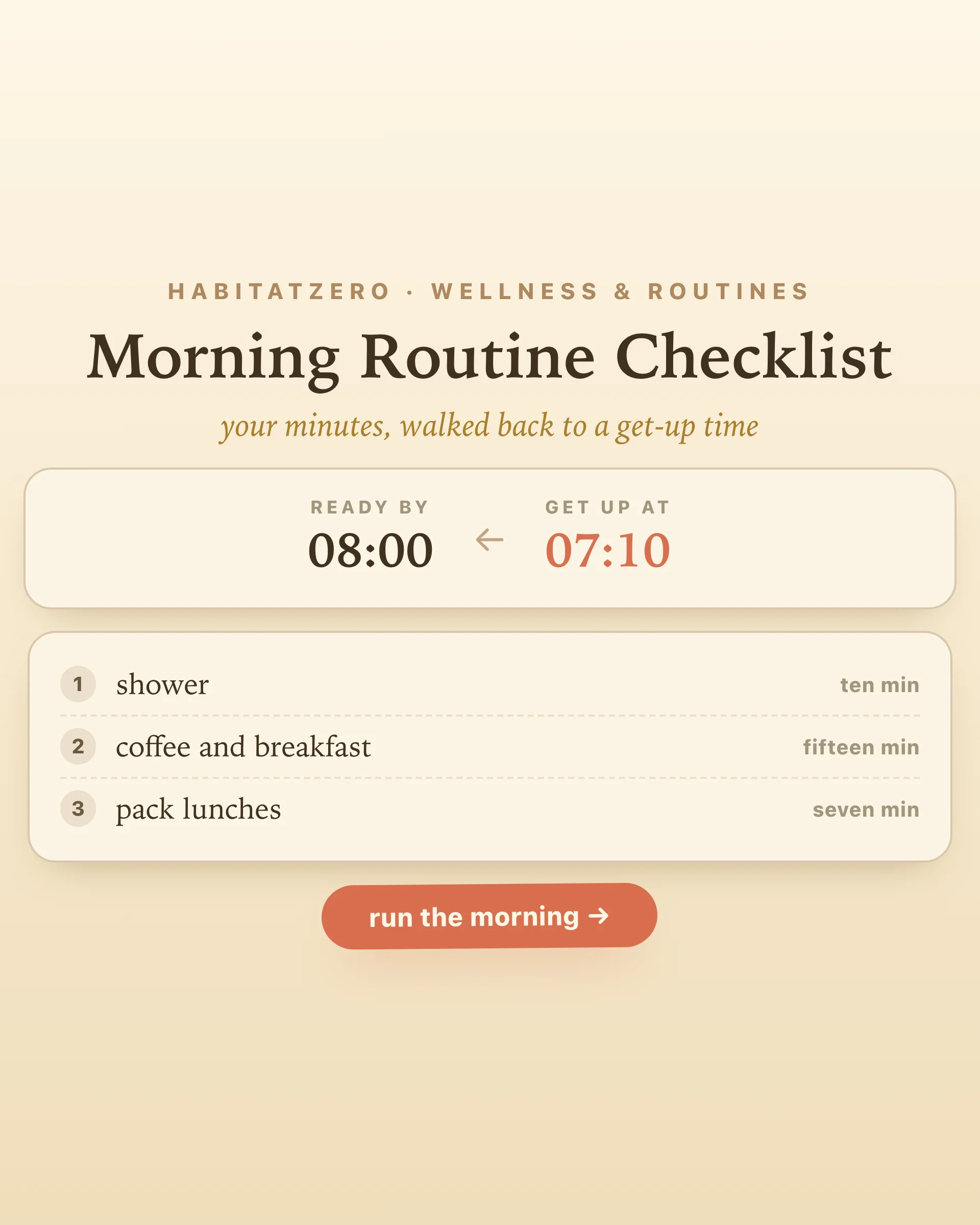
Morning Routine ChecklistList your morning steps with their minutes, watch them add up to the get-up time that actually makes your ready-by time honest — then run the routine step by step with a gentle timer that never rushes you.
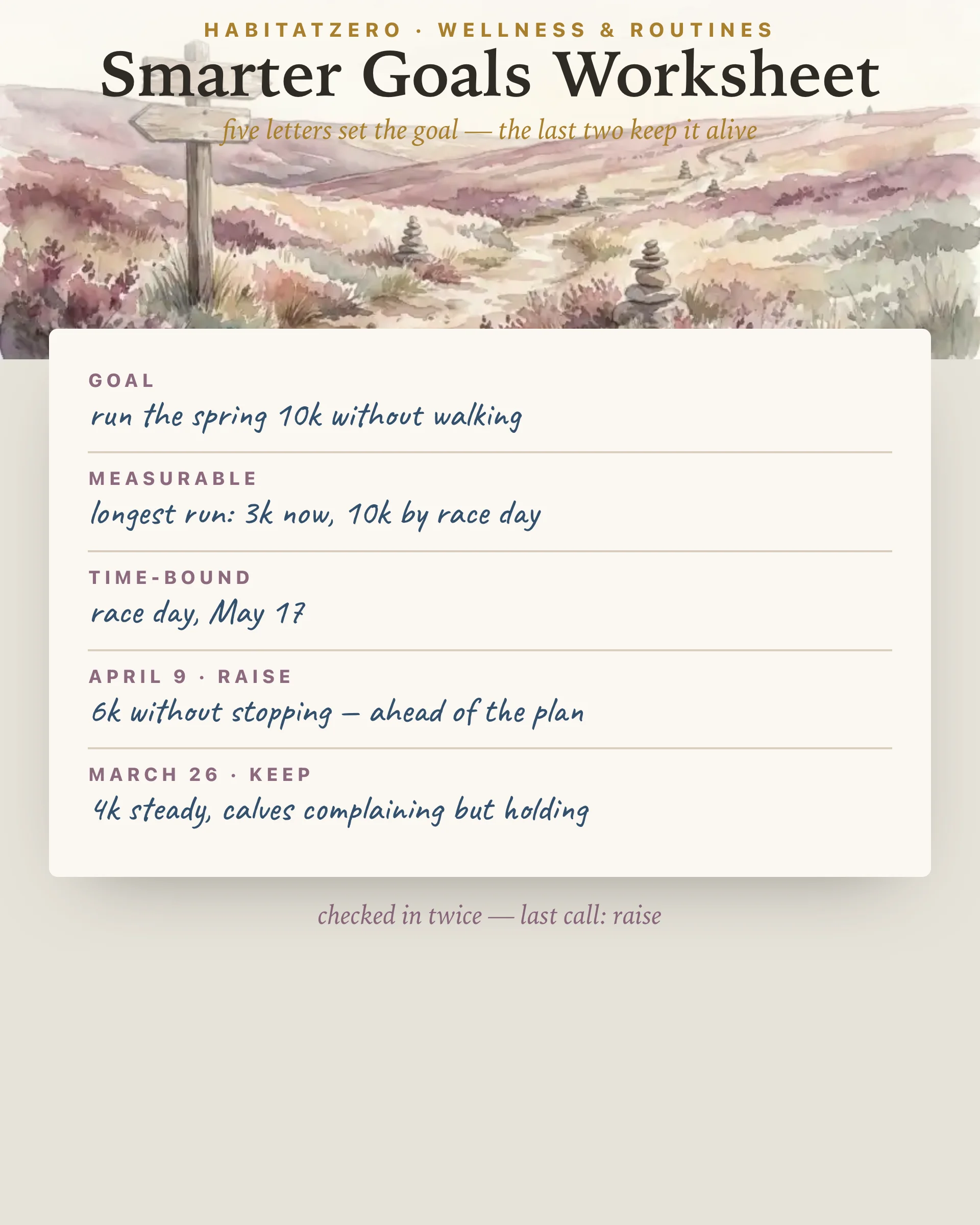
Smarter Goals WorksheetA goals worksheet that outlives the day you wrote it: walk one goal through Specific, Measurable, Achievable, Relevant and Time-bound, pick a check-in cadence, then log each Evaluate-and-Readjust call — keep, raise, lower, or pivot.
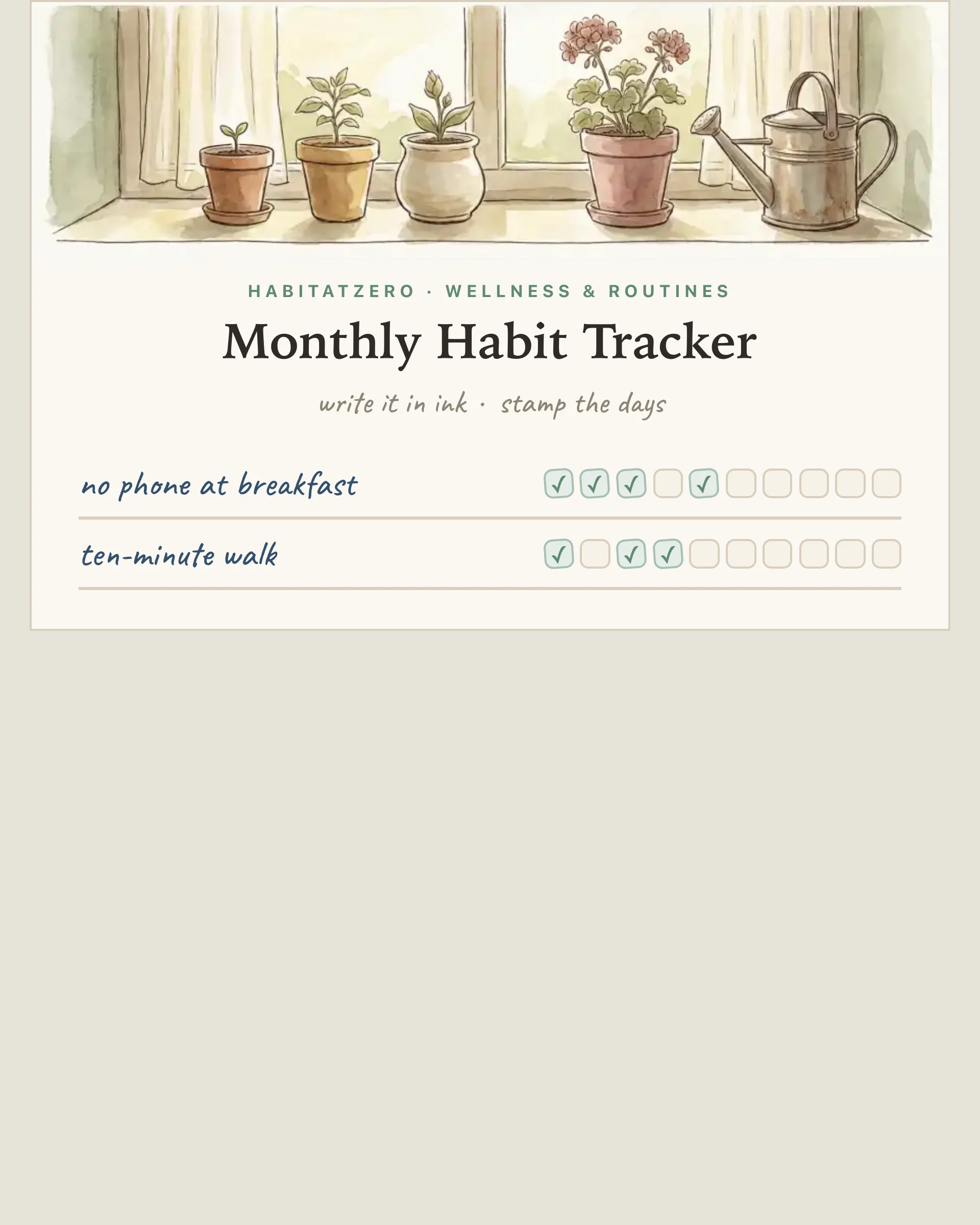
Monthly Habit TrackerA habit tracker built for paper: type your habits, name the month, and print a clean one-page grid — blank for the fridge or with your marks so far. Tick it on screen too, and let the printed page be the record.
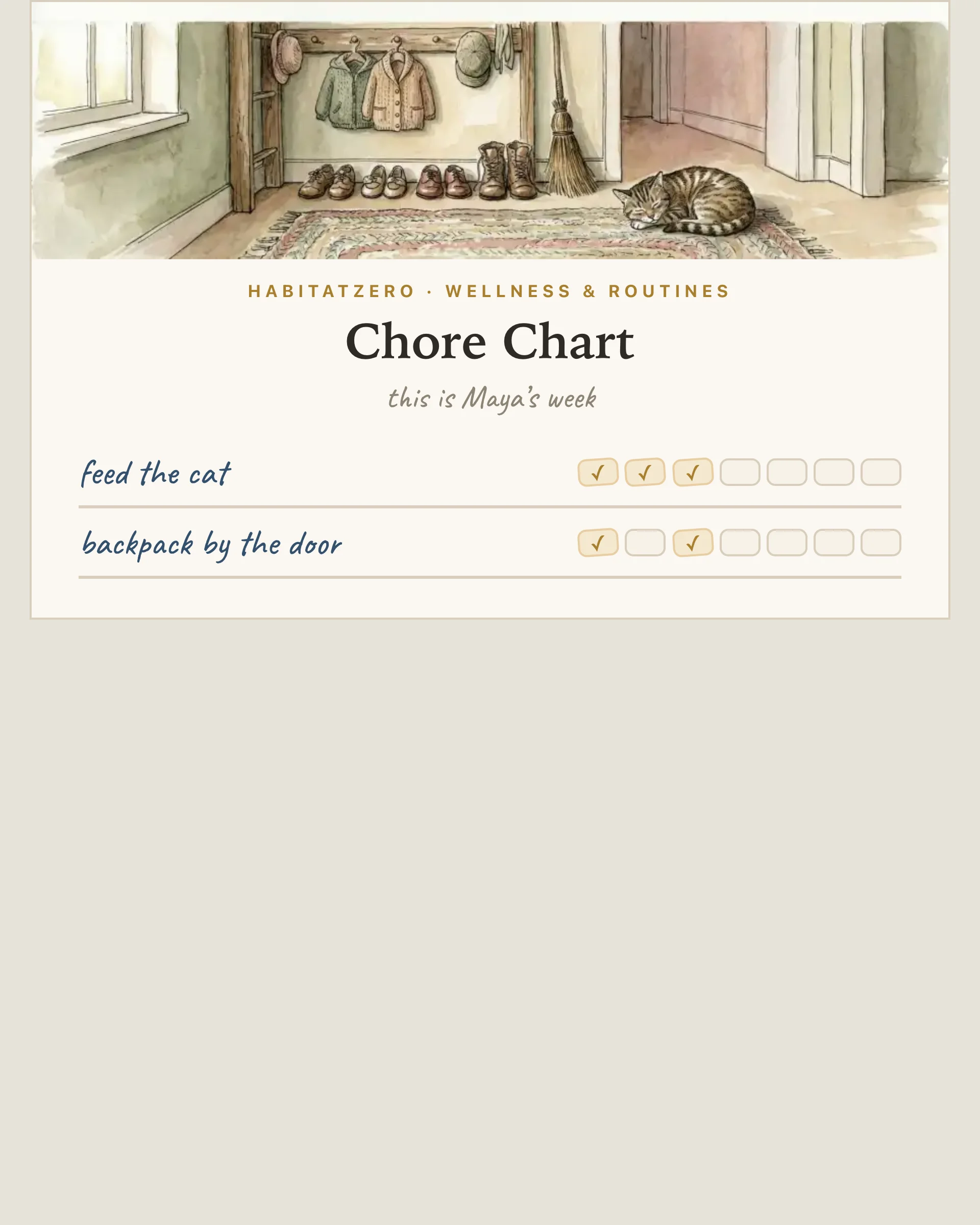
Chore ChartA chore chart you edit before you print: the child's name on top, their chores in your words, a week of checkboxes, and a reward line for when the week is full — printed clean on one page, or ticked right here.
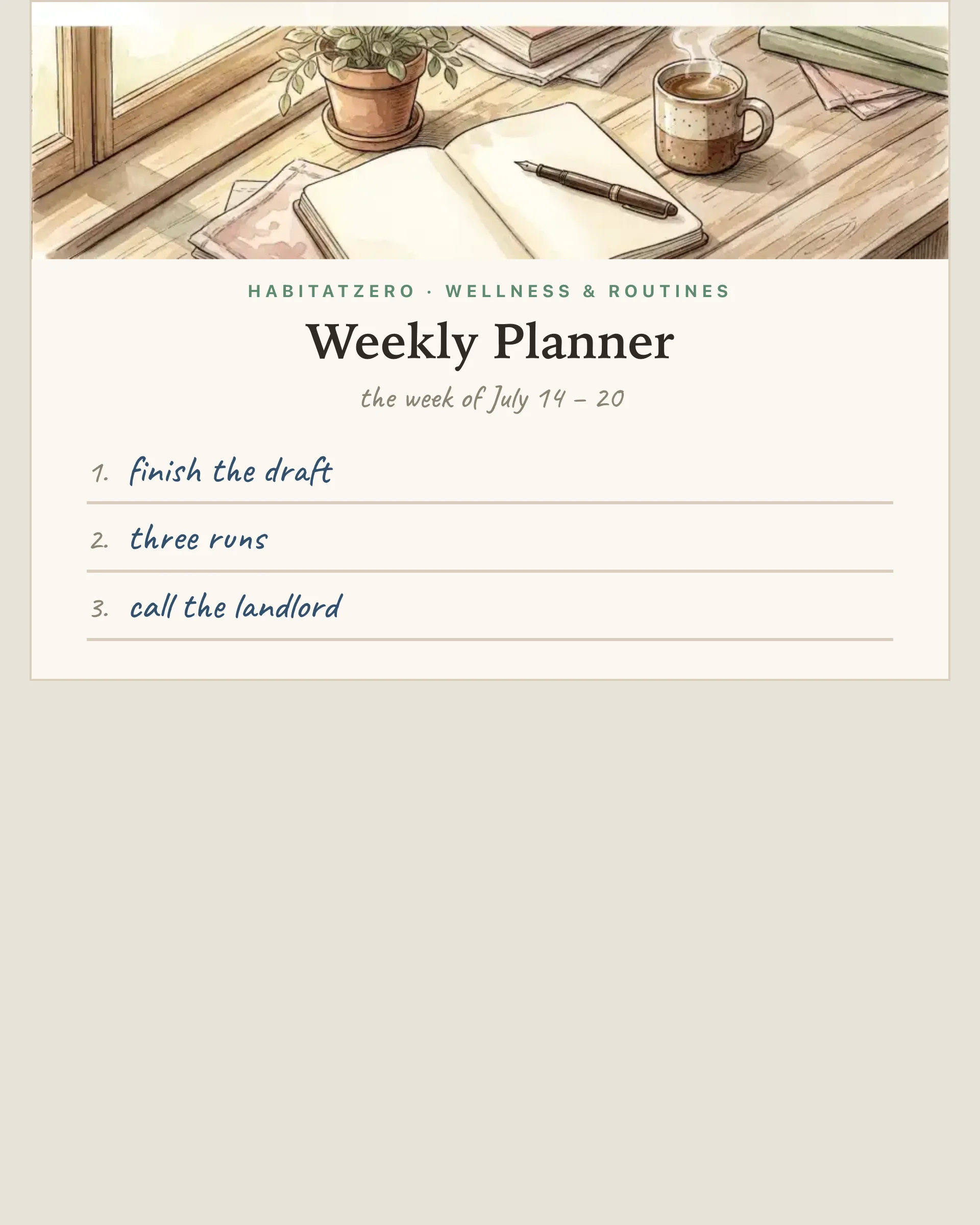
Weekly PlannerA weekly planner you type on before you print: the week's top three at the top, three ruled lines per day from Monday to Sunday, and a one-page ink-friendly layout — print it blank or with your plans on it.
Cleaning ChecklistA cleaning checklist in your home's own words: type the daily, weekly, and monthly tasks that your actual rooms need, then print one clean ink-friendly page — blank for the fridge, or with your ticks so far.
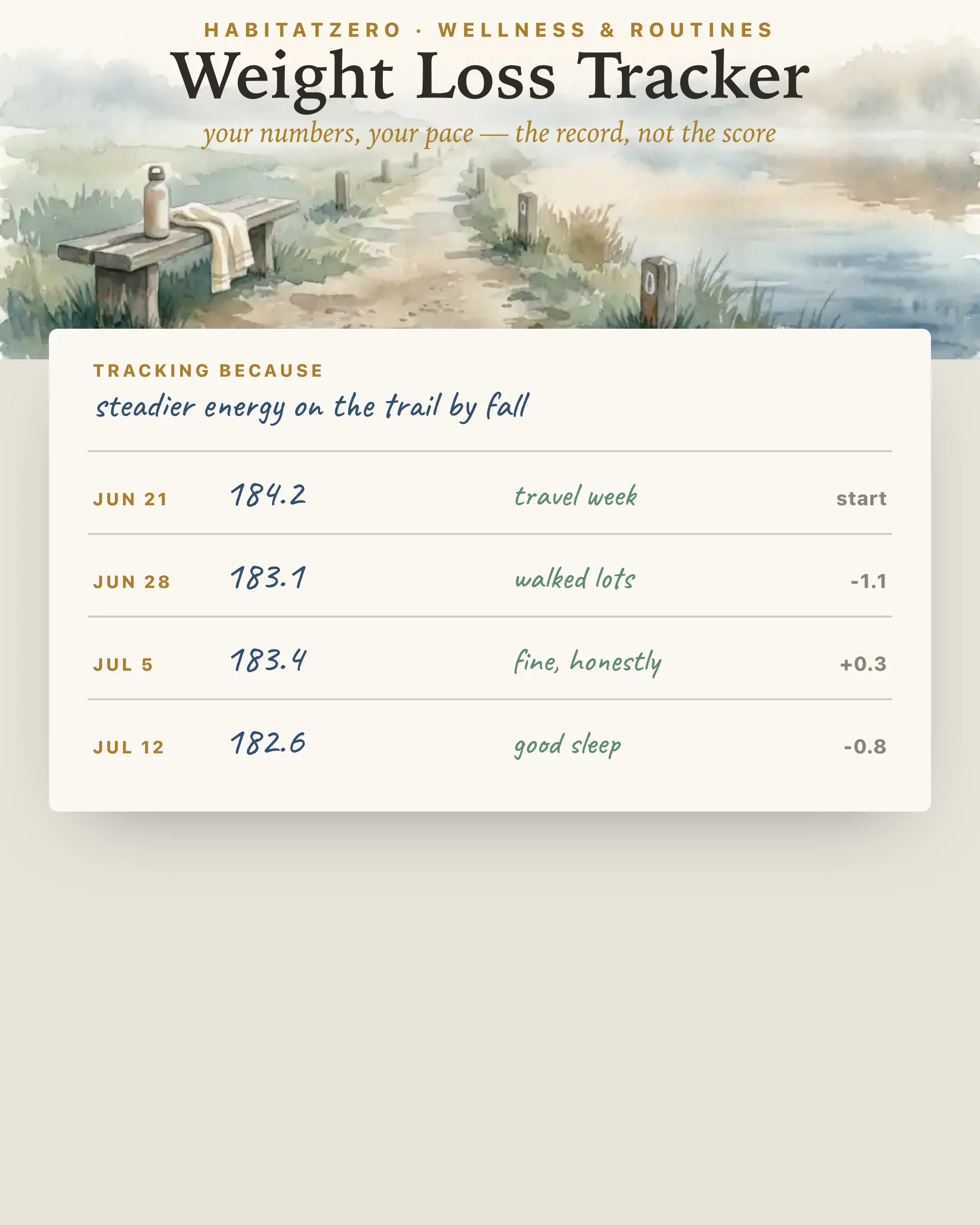
Weight Loss TrackerA clean weekly log for the number you choose to track: date, entry, and a quiet running change — built for paper, kind by design, and free of verdicts.
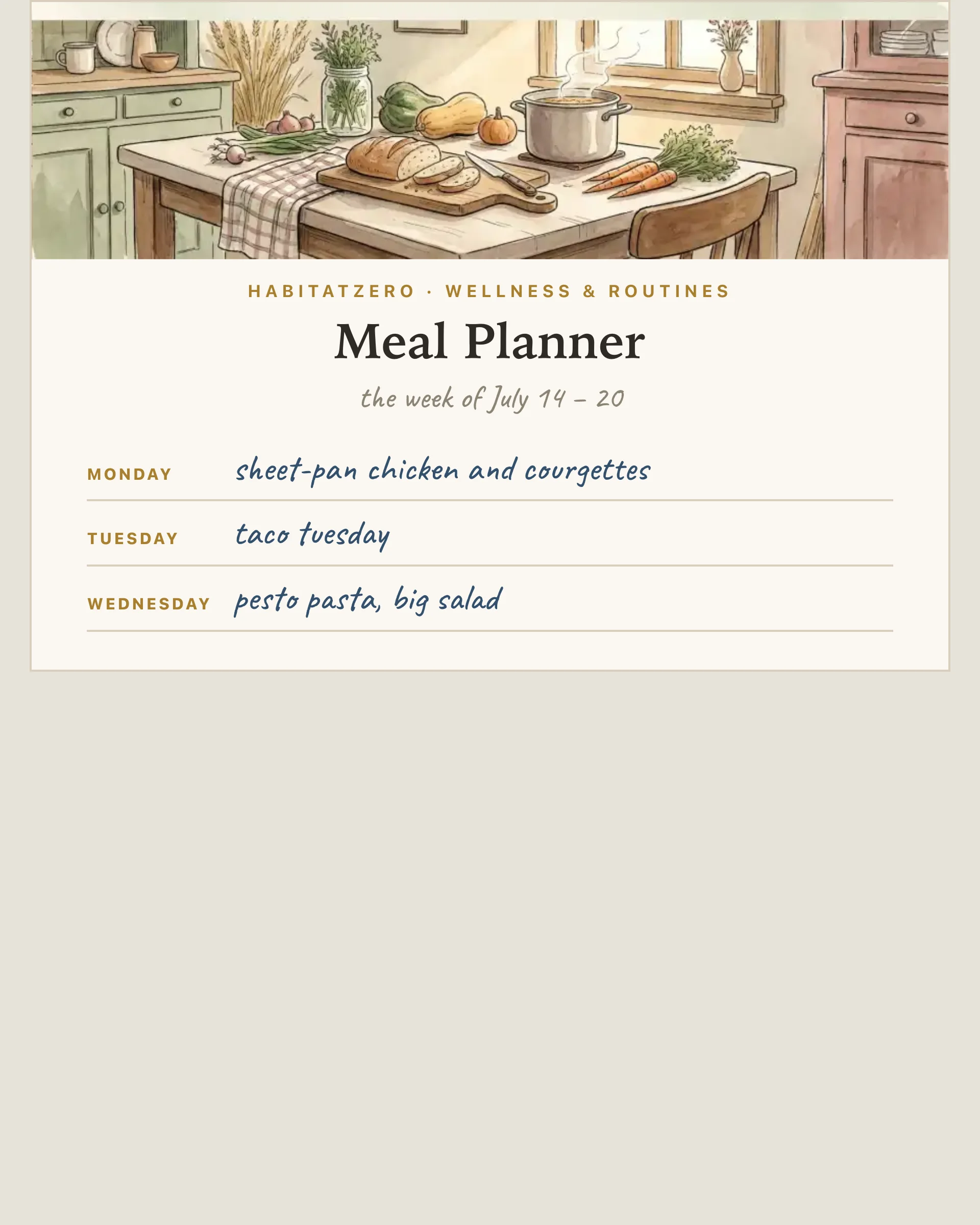
Meal PlannerA week of dinners and the grocery list that follows: type Monday through Sunday onto the page, jot the groceries in the box below, and print one clean ink-friendly sheet — planned or blank.
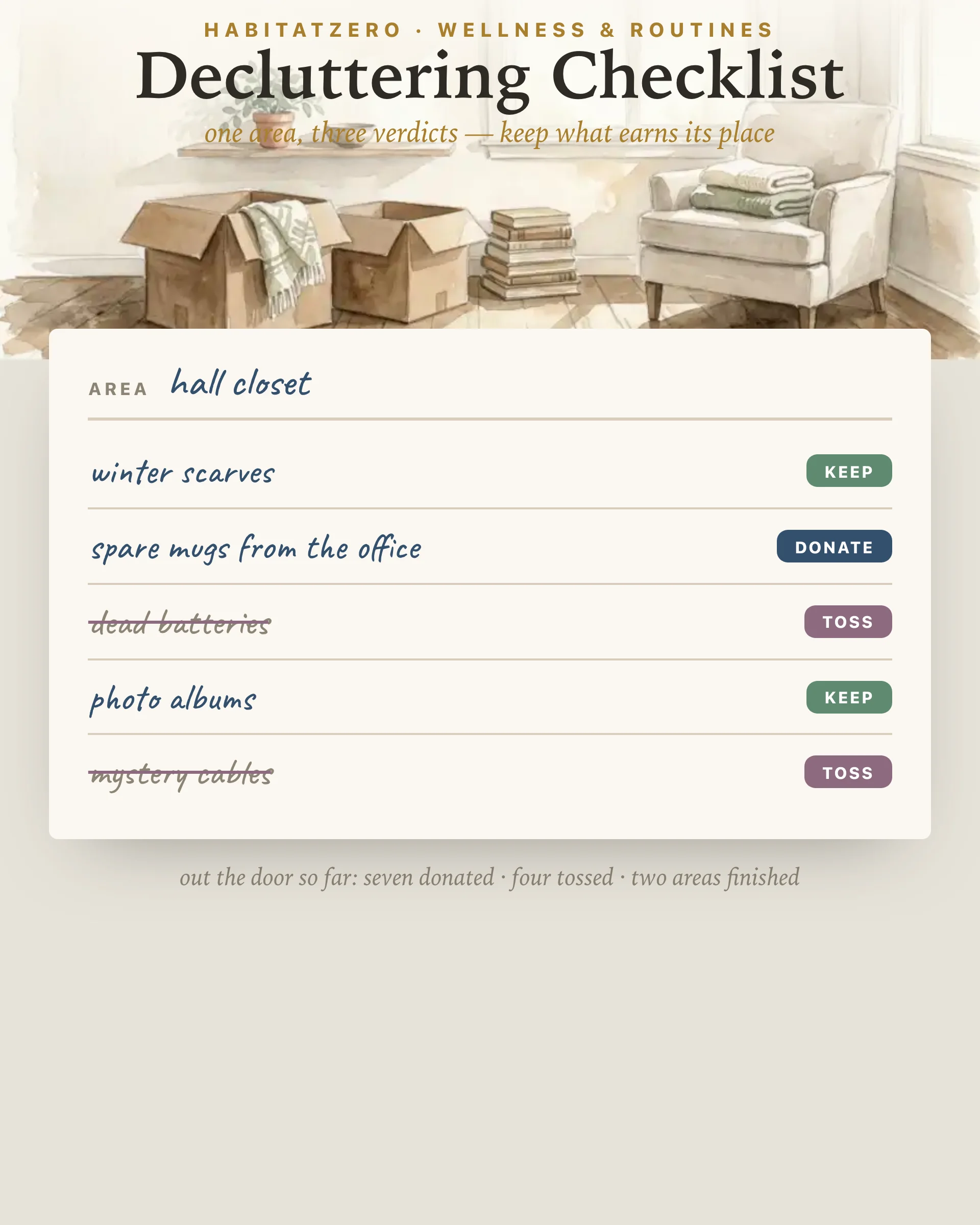
Decluttering ChecklistDeclutter the way it actually works: one small area, every item written down, and a verdict stamped on each — keep, donate, or toss. Finished areas feed a running out-the-door tally, so the whole home happens one drawer at a time.
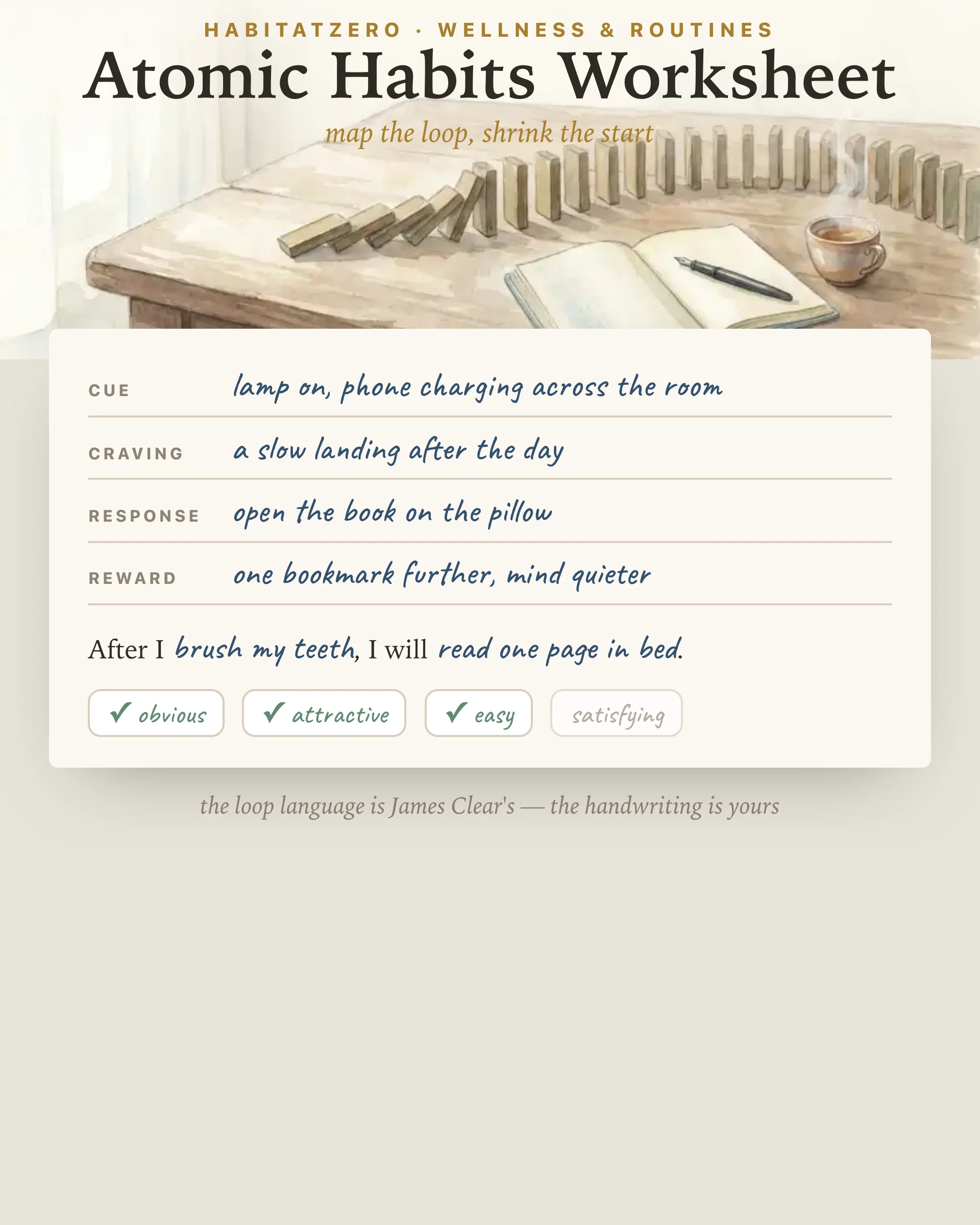
Habit Loop WorksheetOne habit, taken apart on paper: the cue, craving, response, and reward that run it, the stacking sentence that schedules it, the two-minute version that survives bad days, and the identity line that makes it yours. Method credit where due — the handwriting is all you.
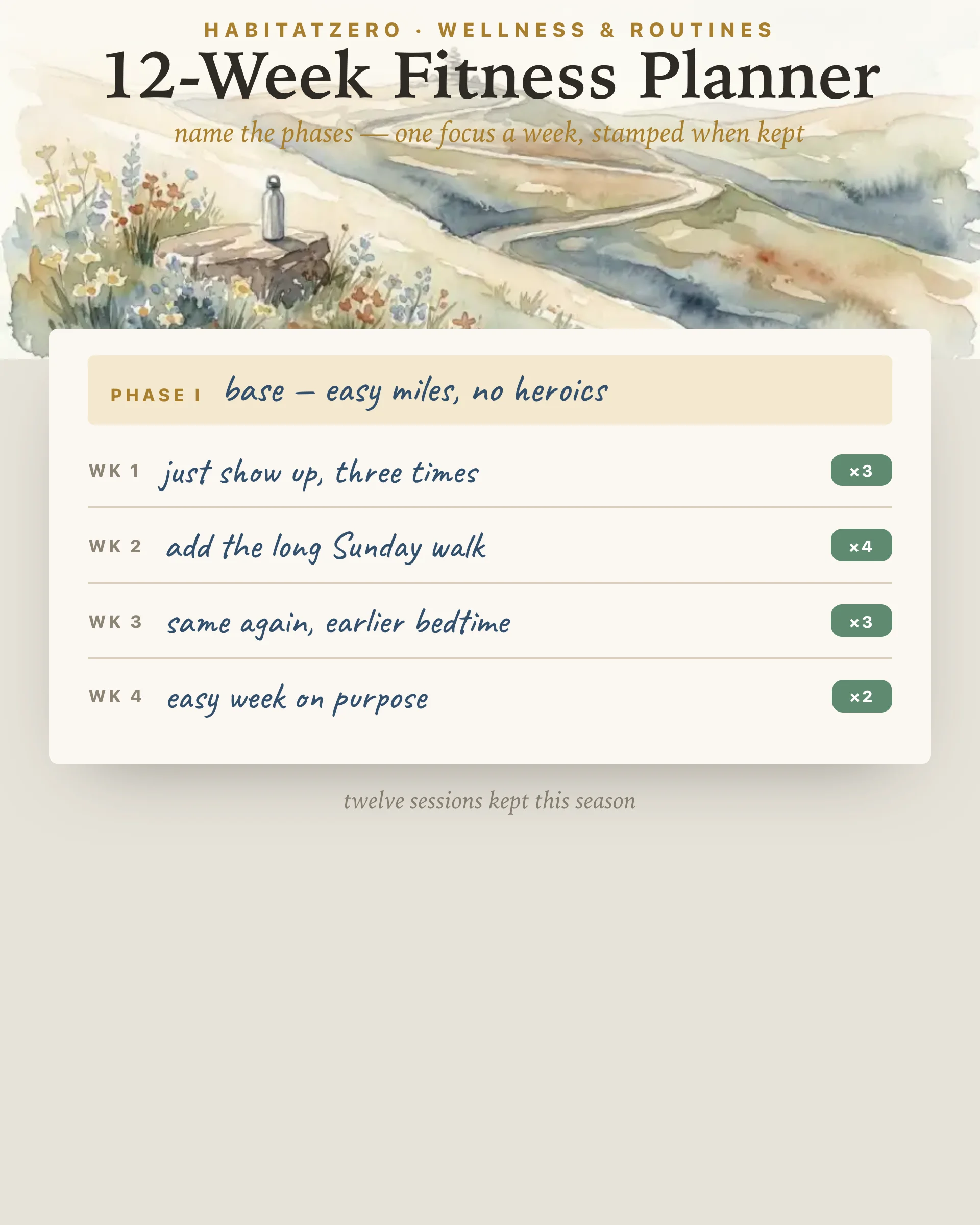
12-Week Fitness PlannerA whole training season on one sheet: twelve week-lines in three phases you name yourself — base, build, peak, or your own words. Each week gets one focus and a stamp for the sessions you actually kept, so the season tells the truth by week twelve.
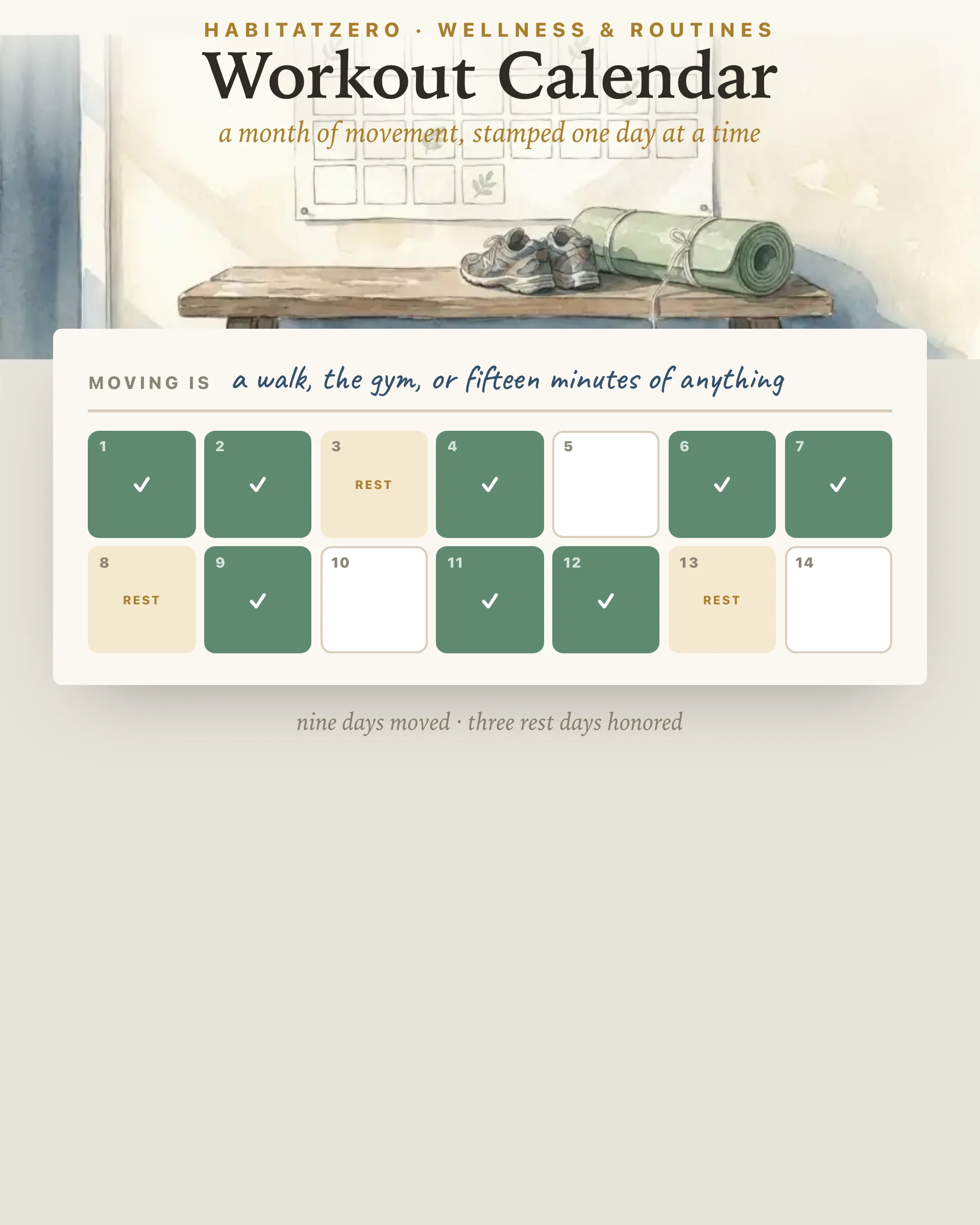
Workout CalendarOne month of movement on a single grid: thirty-one day cells, each stamped moved or rest as the month actually happens. You define what counts as moving — a walk, the gym, fifteen minutes of anything — and the calendar keeps the honest picture.
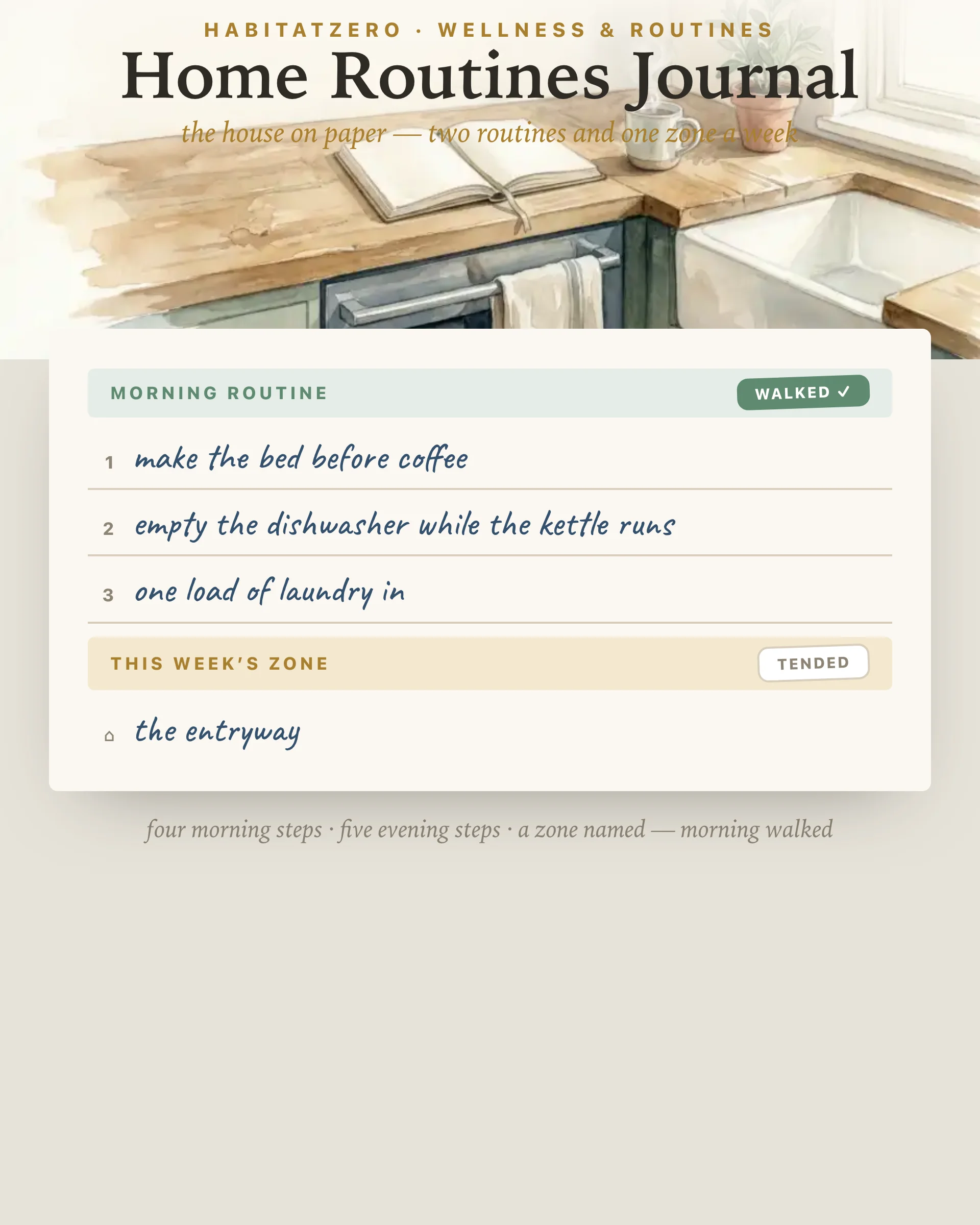
Home Routines JournalThe house on paper, in the control-journal tradition: a morning routine and an evening routine written once in five small lines each, plus one zone a week — a single area of the home that gets a few honest minutes a day. Stamps for the days you walked what you wrote.
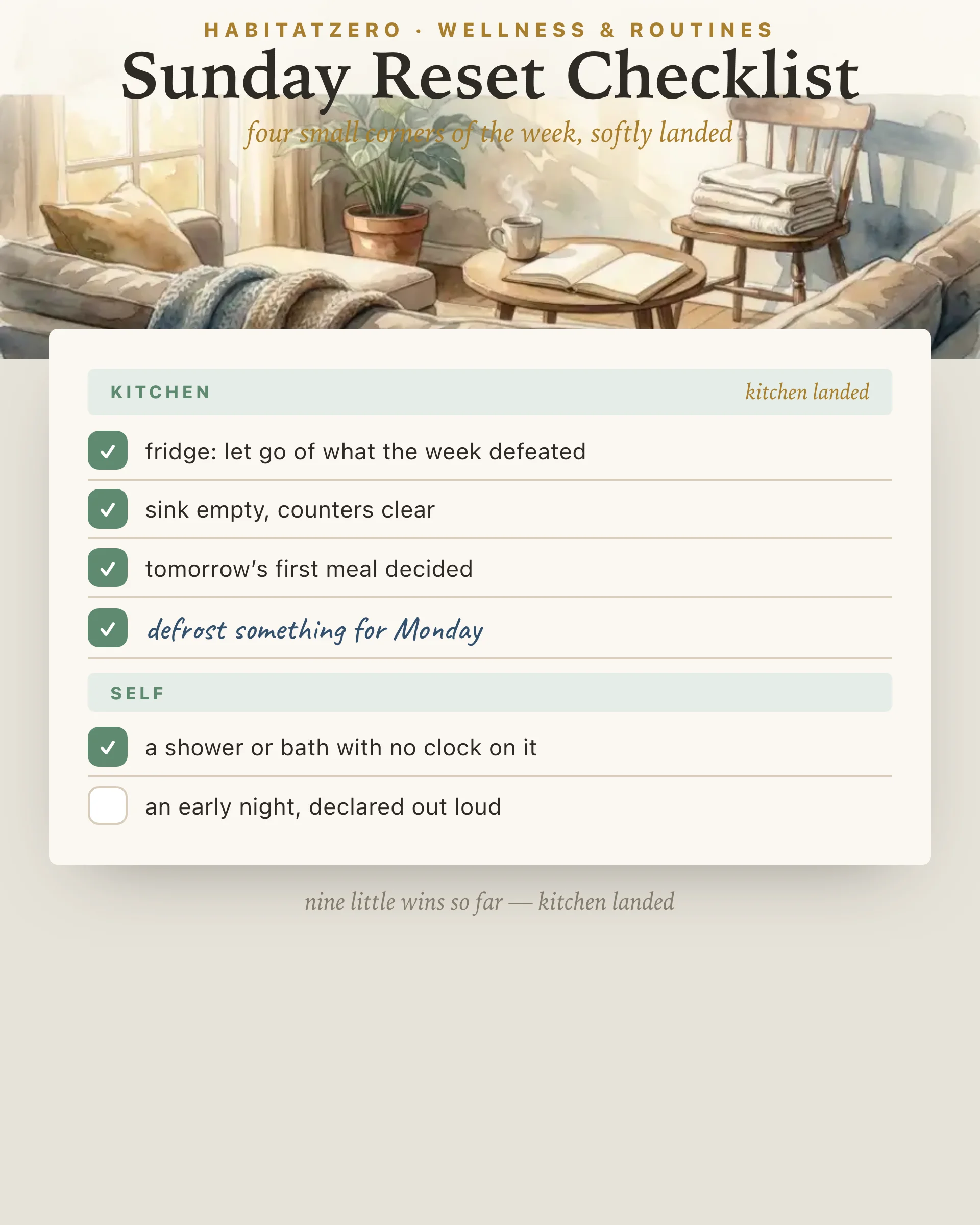
Sunday Reset ChecklistThe week, softly landed before it starts: four small sections — home, kitchen, self, and the week ahead — with four gentle ticks each and one line of your own per section. Nothing on it is homework; a half-done reset still counts, and Monday arrives already half-carried.
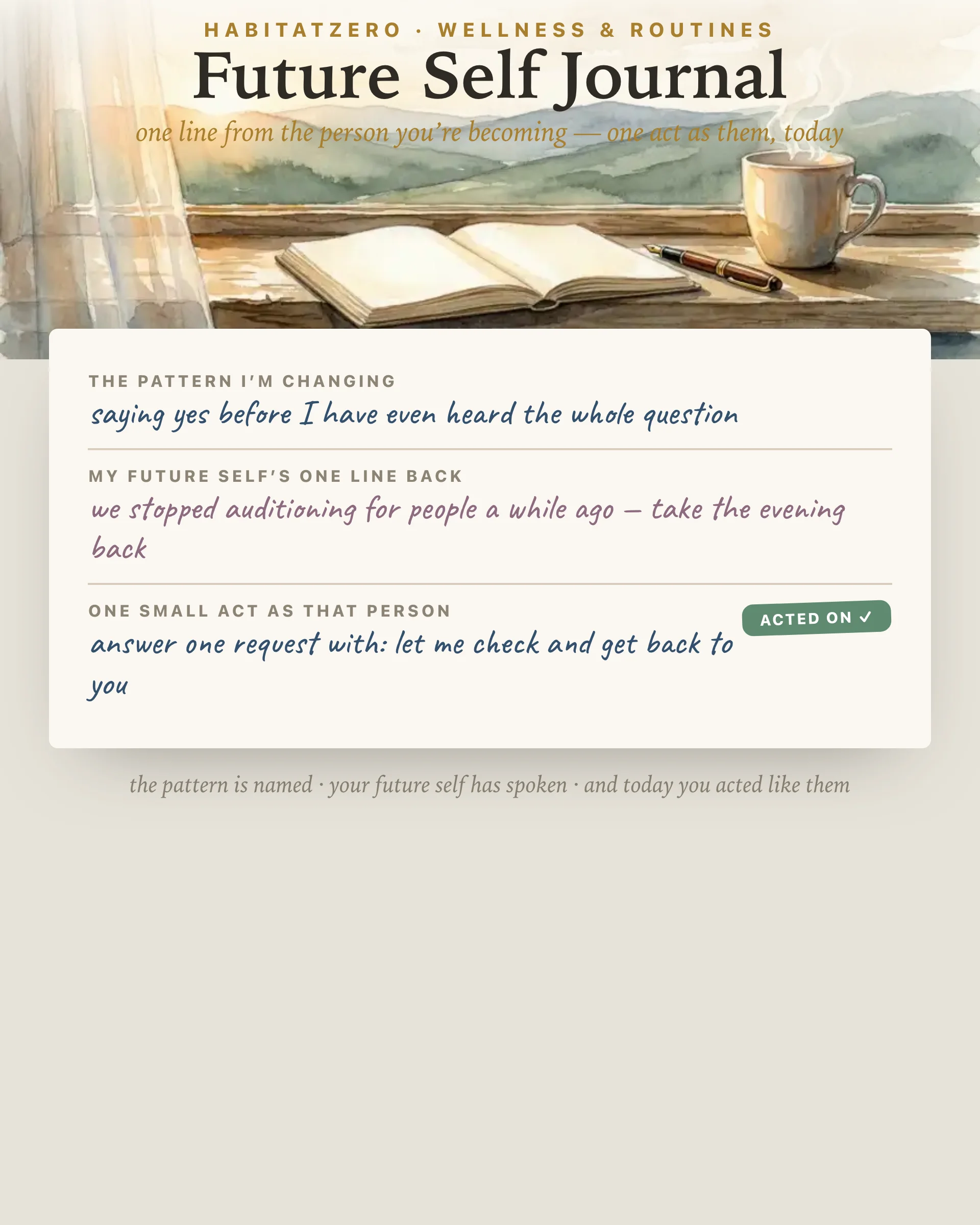
Future Self JournalThe daily future-self practice as one small page: name the pattern you are changing today, let your future self answer with one line in their voice, and do one small act as that person before midnight. Rewritten daily — the repetition is the practice.
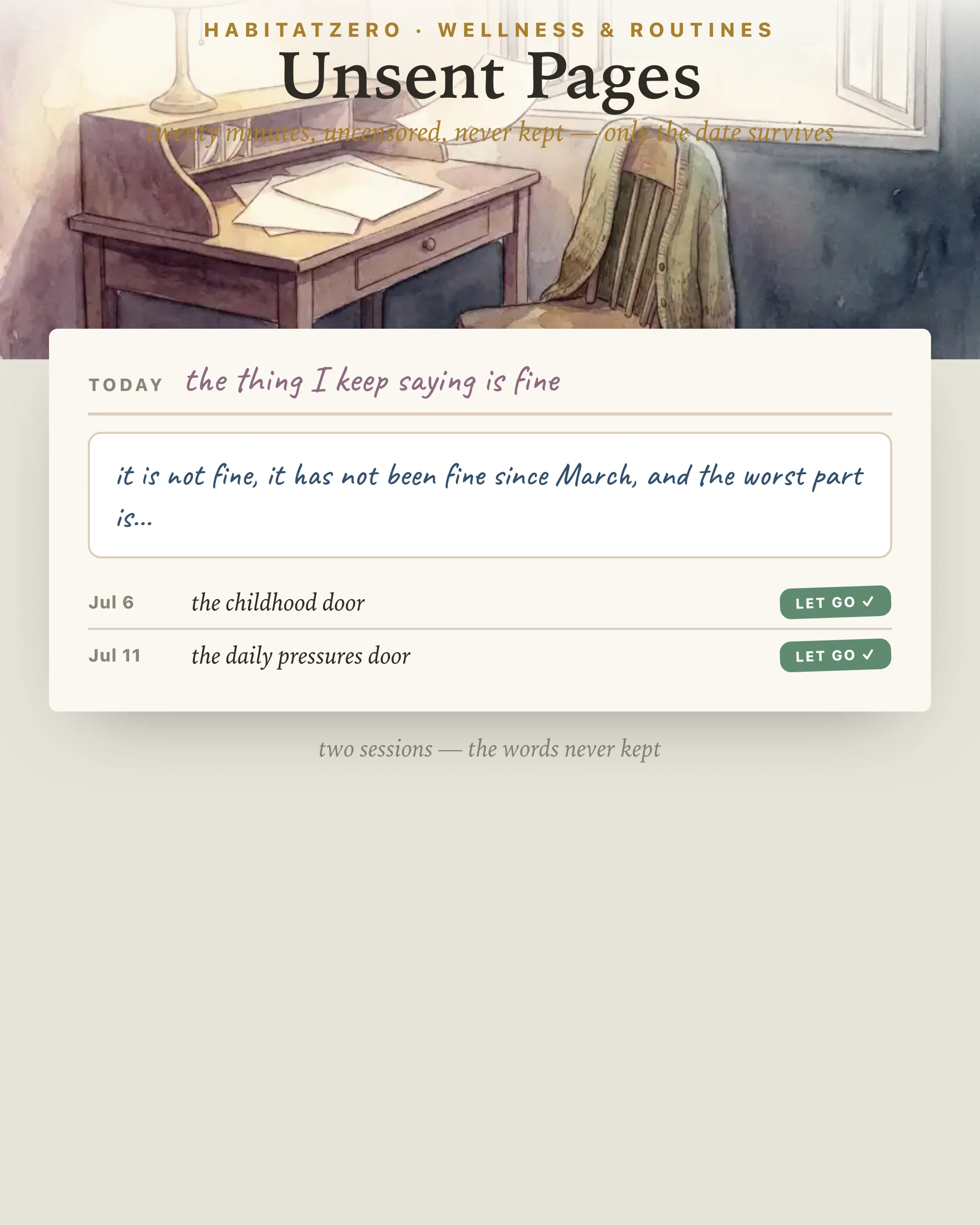
Unsent PagesPrompts from three wells — childhood, daily pressures, personality — for twenty minutes of writing nobody will ever read, including you. The pages are never saved: letting them go keeps only the date and which door you wrote through, on a quiet ledger of sessions.
Pregnancy JournalA keepsake kept in today's tense: one-line memories worth saving — the flutter, the phone call, the soup — a line for the little one from today, and a running list of the questions that belong with your midwife or doctor. No tracking, no charts; just the lines you will want back later.
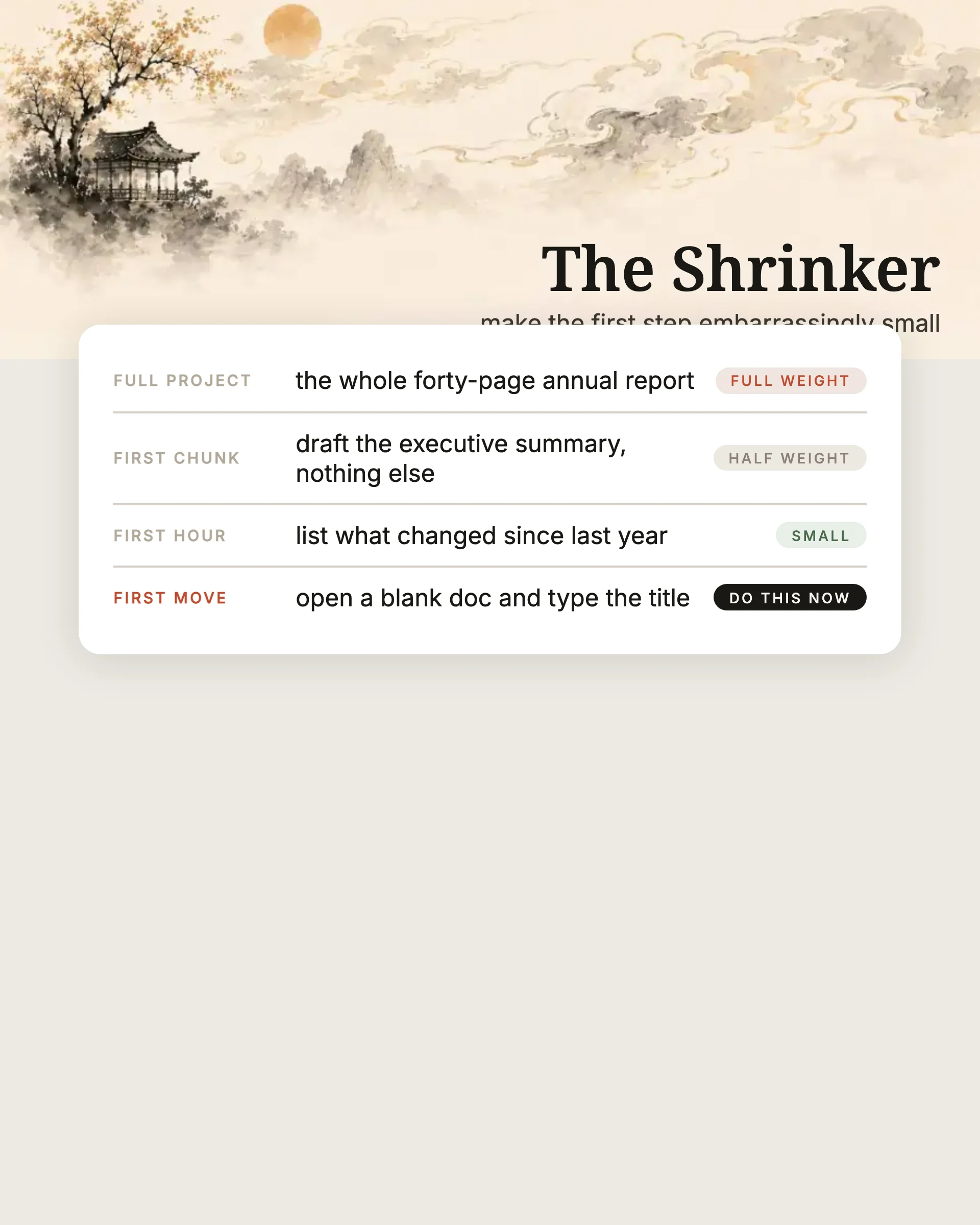
The ShrinkerFor the project that feels impossible: name it, then shrink it in four passes — the full weight, the first chunk, the first hour, and finally a first move so embarrassingly small that starting costs less than resisting. The last line is meant to be done now, not admired.
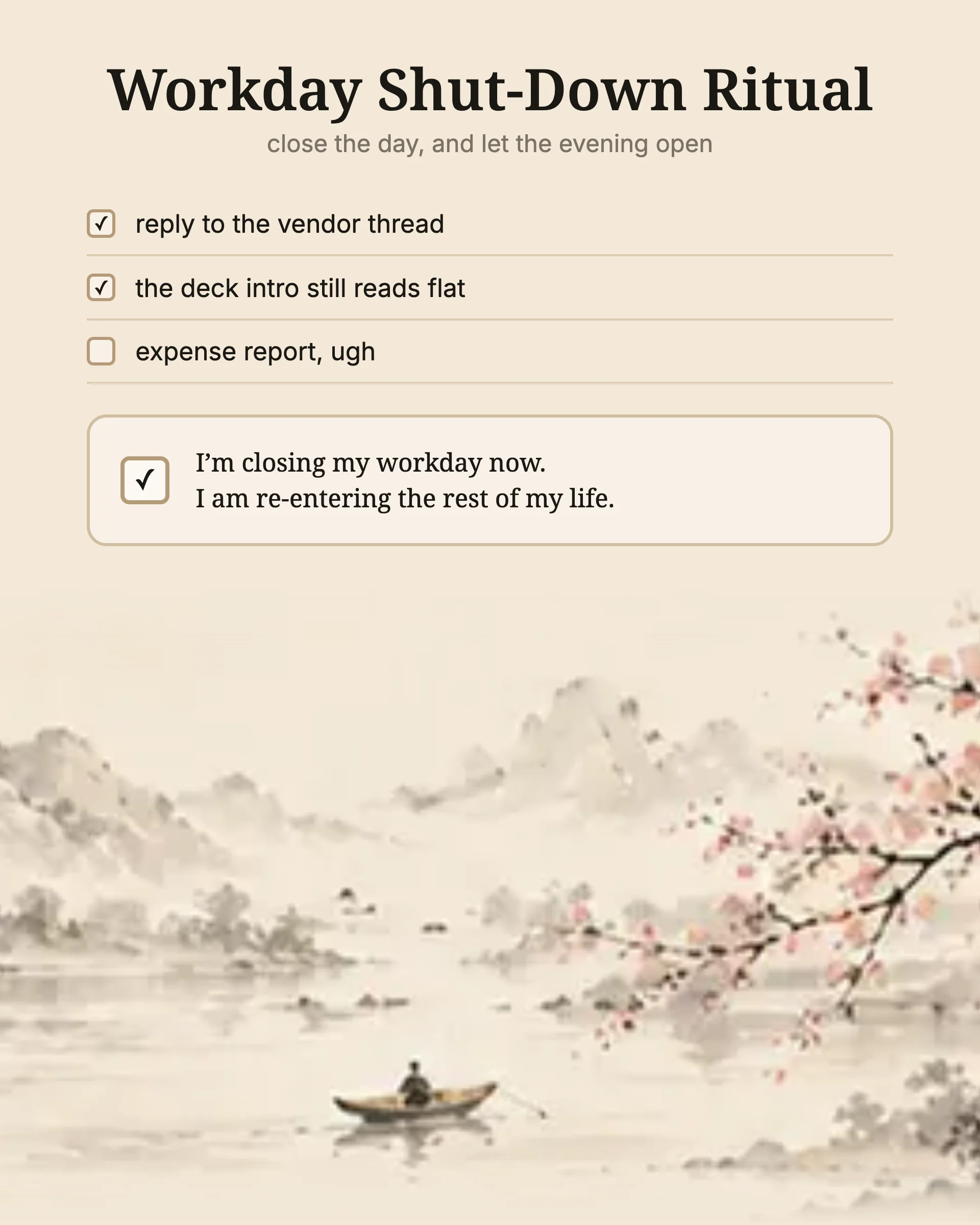
Workday Shut-Down RitualClose the day, and let the evening open: empty the open loops onto the page, keep one good thing from today, decide tomorrow's first three, and end with a declaration made out loud — the workday is closed, and the rest of your life is back on.
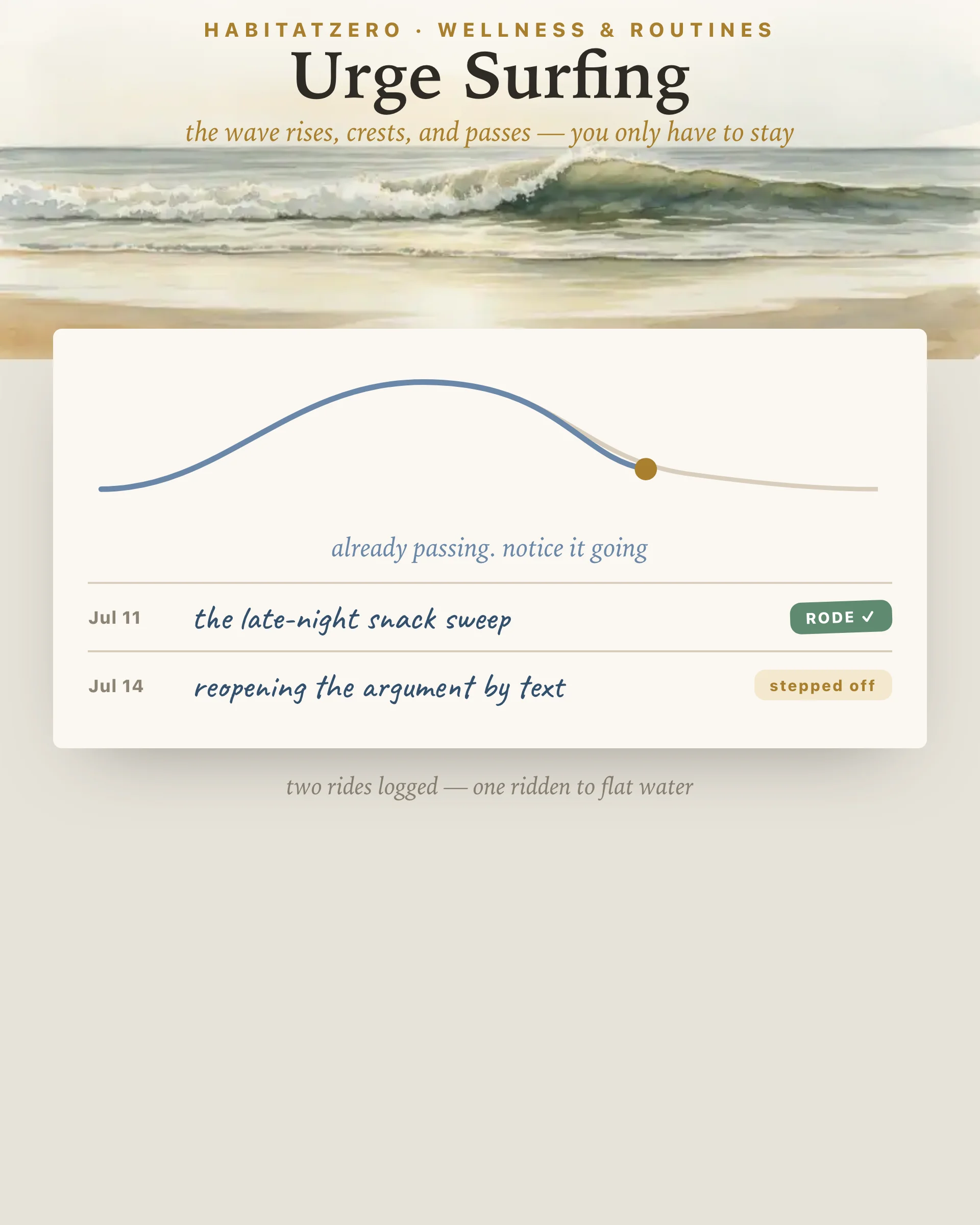
Urge SurfingThe classic ride-it-out practice as a working timer: name the urge plainly, then stay on the board for fifteen minutes while the wave rises, crests, and passes on its own — and log what you noticed when the water went flat. Stepping off counts as information, not failure.
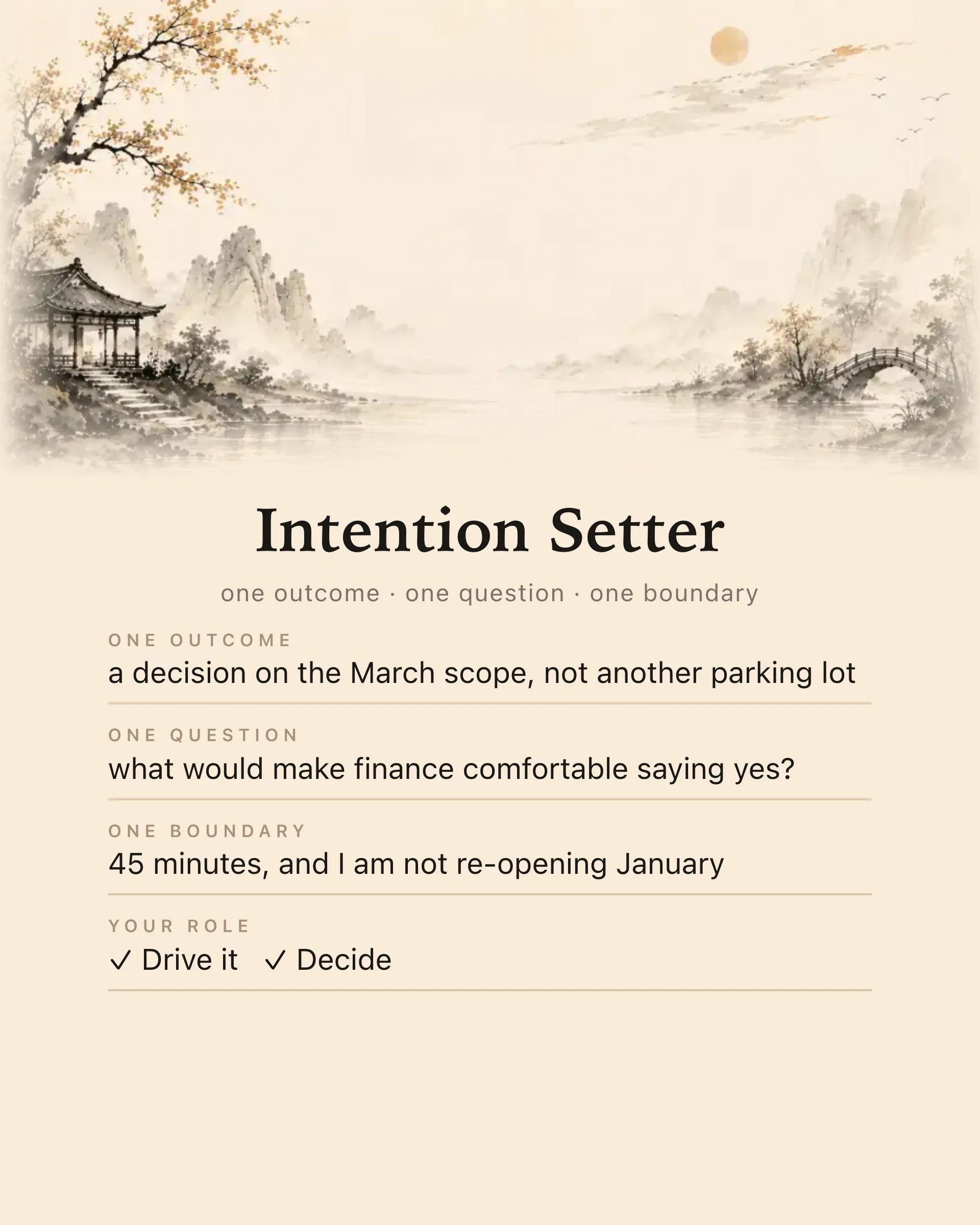
Intention SetterPick the moment — a meeting, a conversation, a work block, or the whole day — then set one outcome, one question, one boundary, and the role you mean to play in it.
Afternoon ResetA two-minute reset for a day that went sideways: name what's weighing on you, then press and hold the sun for three slow breaths. You're forgiven — the day is yours again.
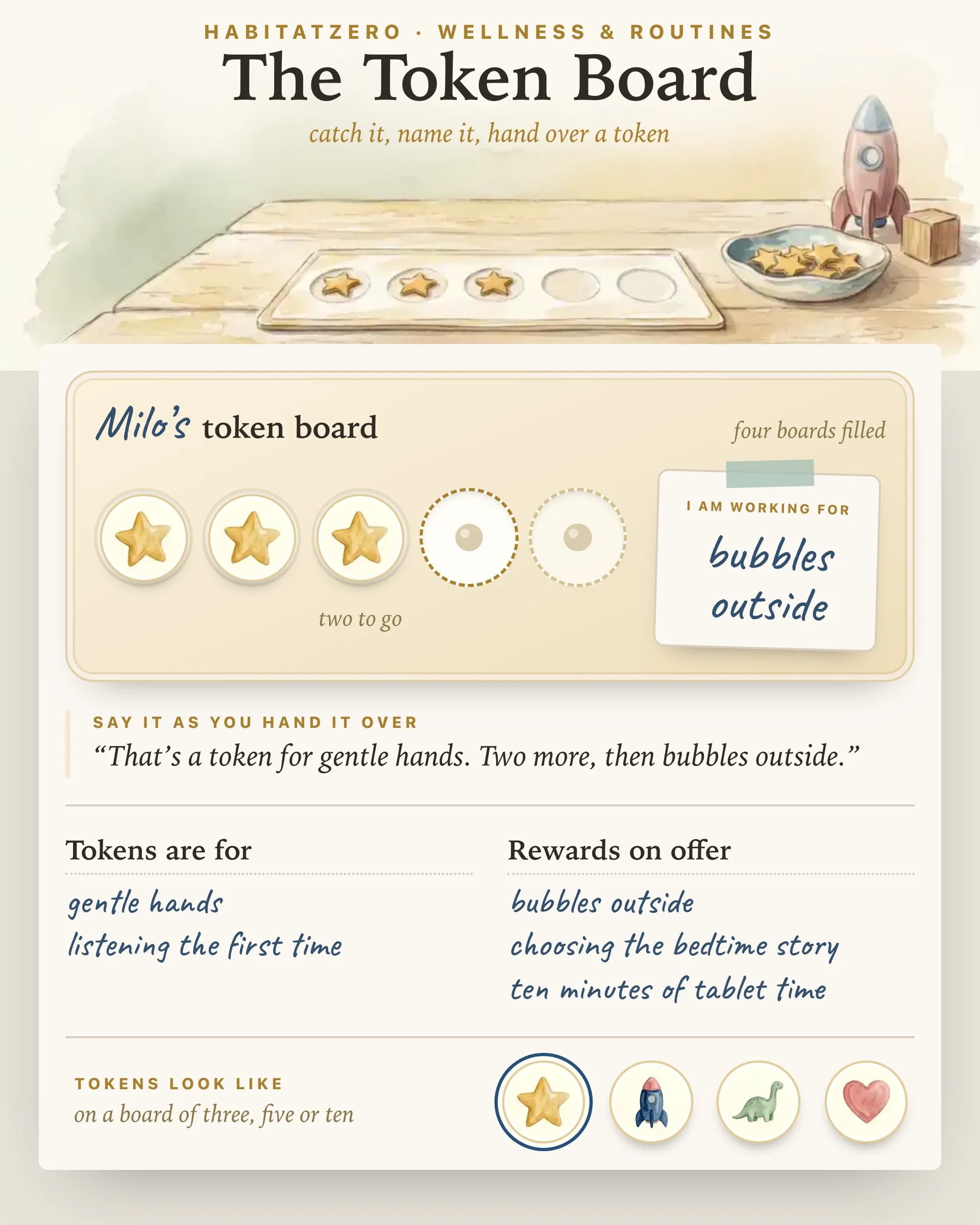
The Token BoardAgree the reward with your child, then hand over painted tokens for the behaviors you named. The board counts down in words, gives you the sentence to say with each token, and calls the reward the moment the last spot fills.
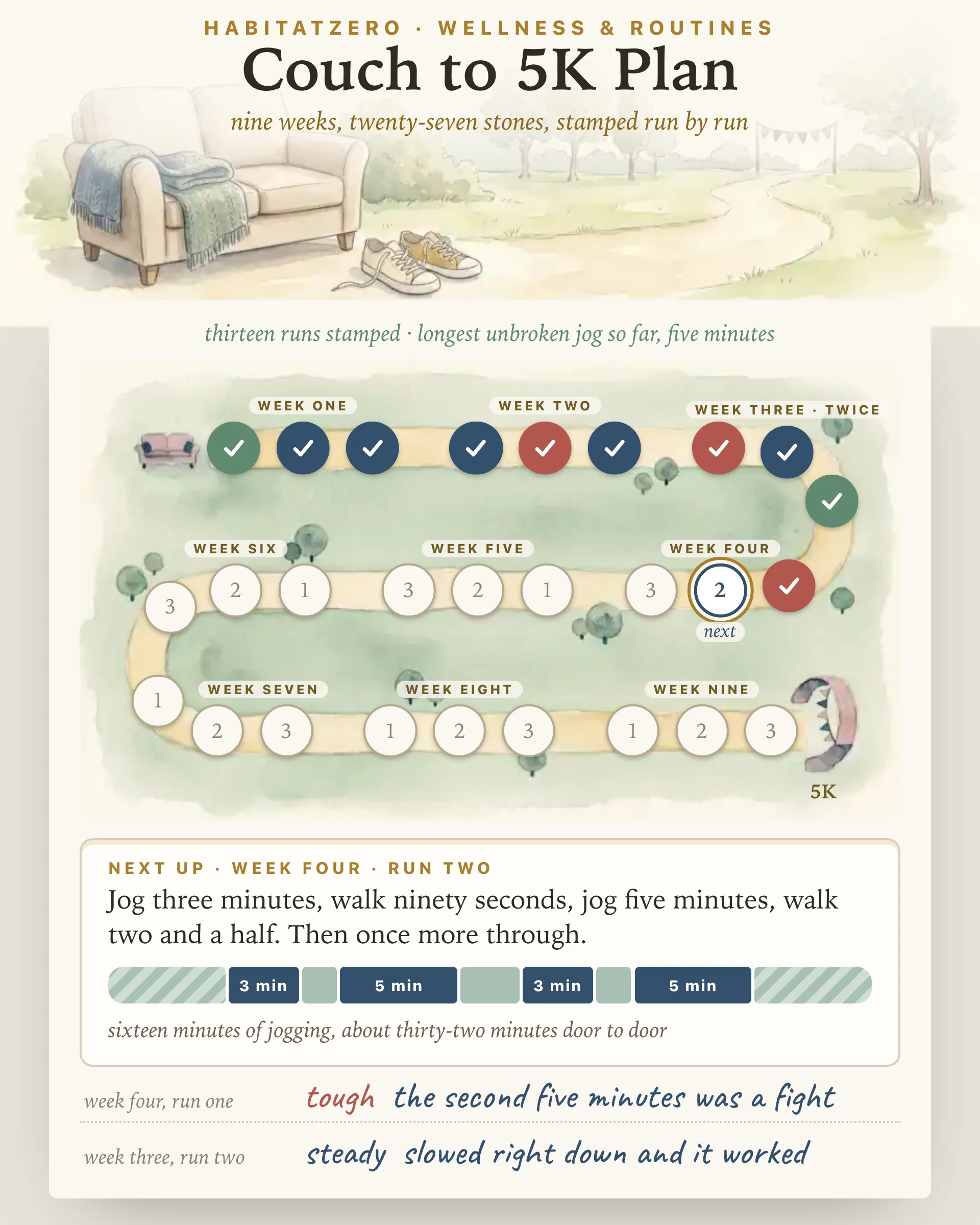
Couch to 5K PlanAll twenty-seven runs of the nine-week plan laid out as stones on a painted trail. Open the next run to see its jogs and walks drawn to scale, stamp it easy, steady or tough when you get home, and run any week again without losing what you have already done.
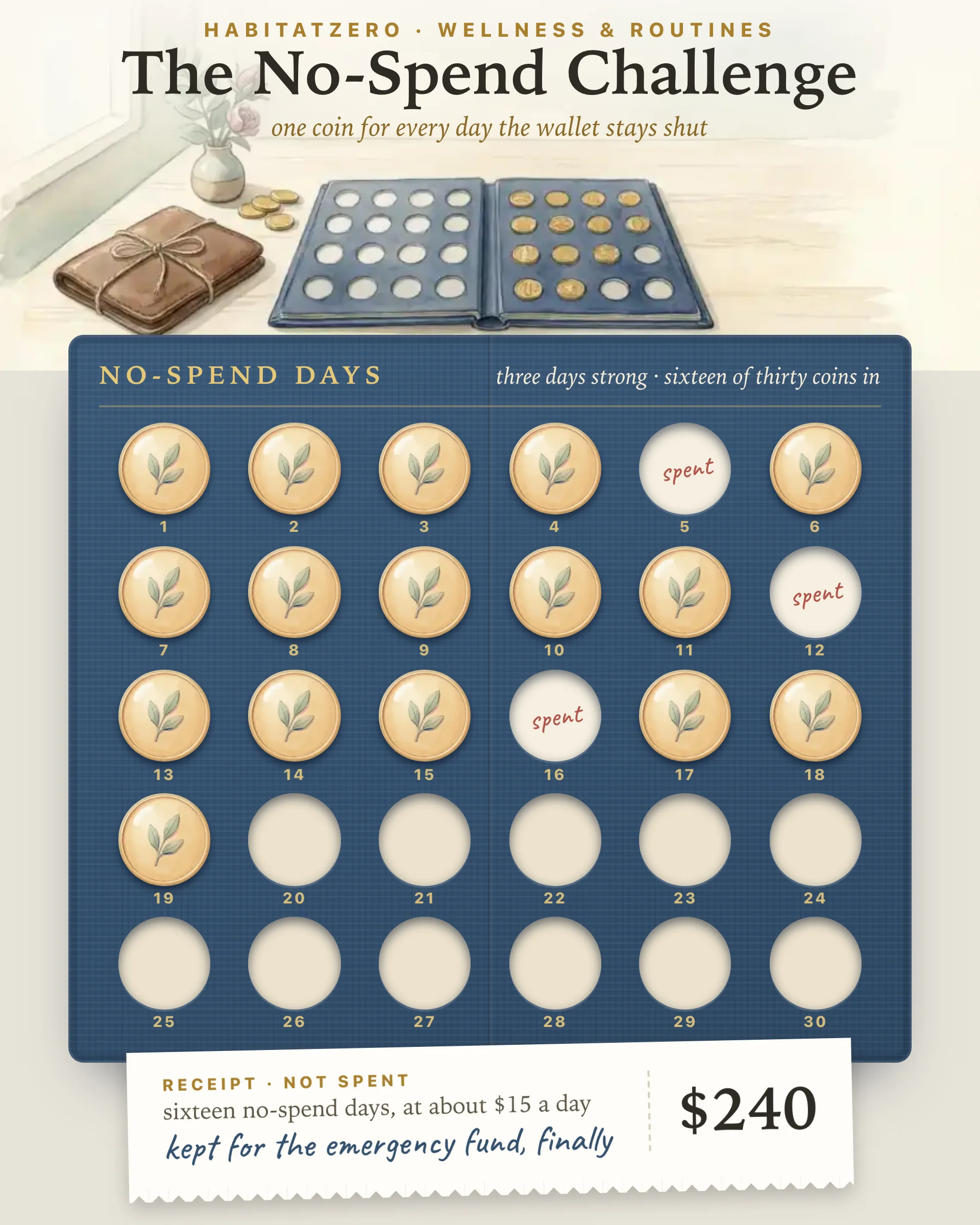
The No-Spend ChallengeA coin folder with one slot for every day of your challenge: press in a coin each day the wallet stays shut, mark a slip without losing the coins you earned, and let the receipt total what you kept and what it is for.
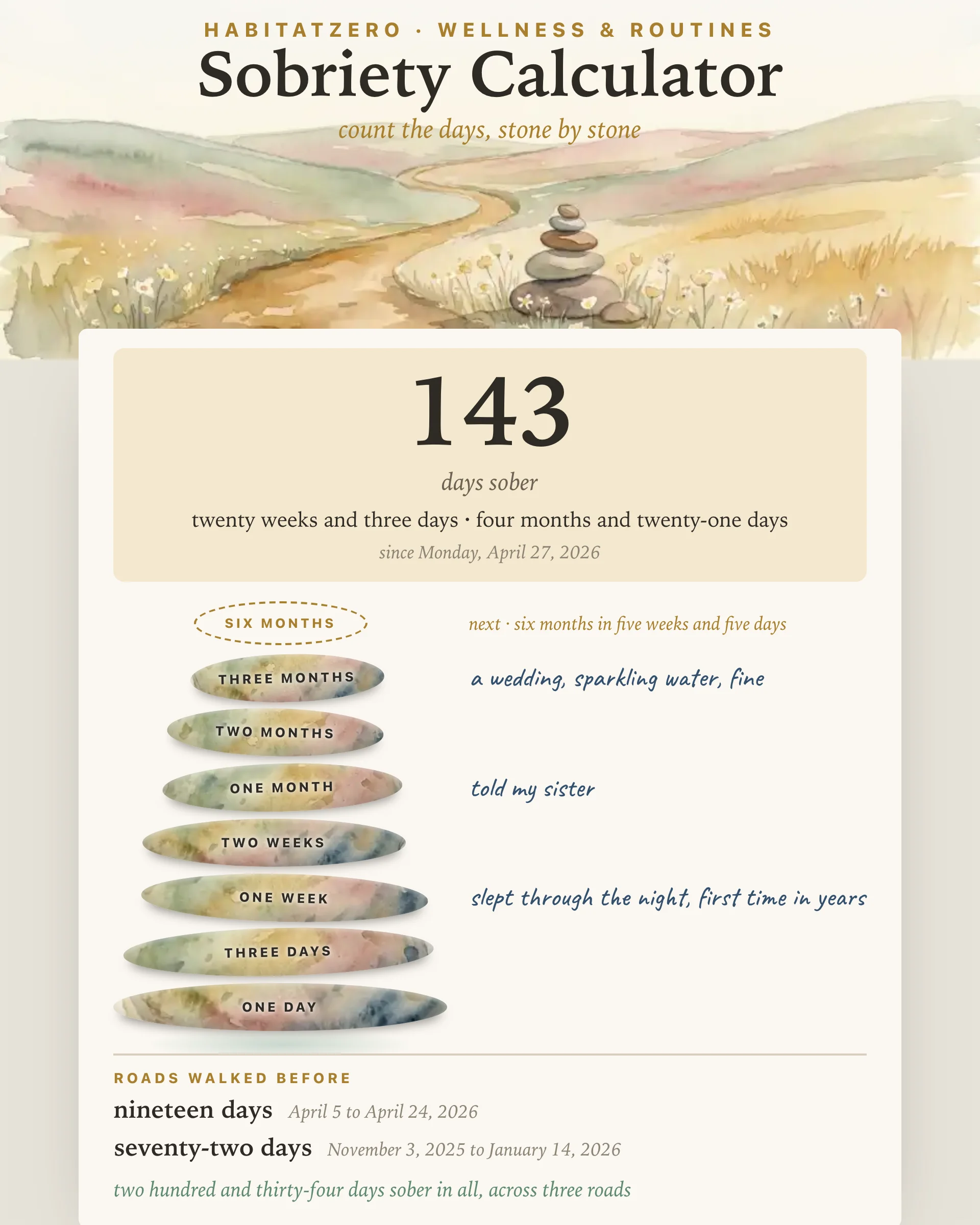
Sobriety CalculatorSet your first sober day and the page counts the days, weeks and months for you, stacks a stone on a cairn at every milestone with room for a private note, and keeps every earlier road you walked when a count has to start again.
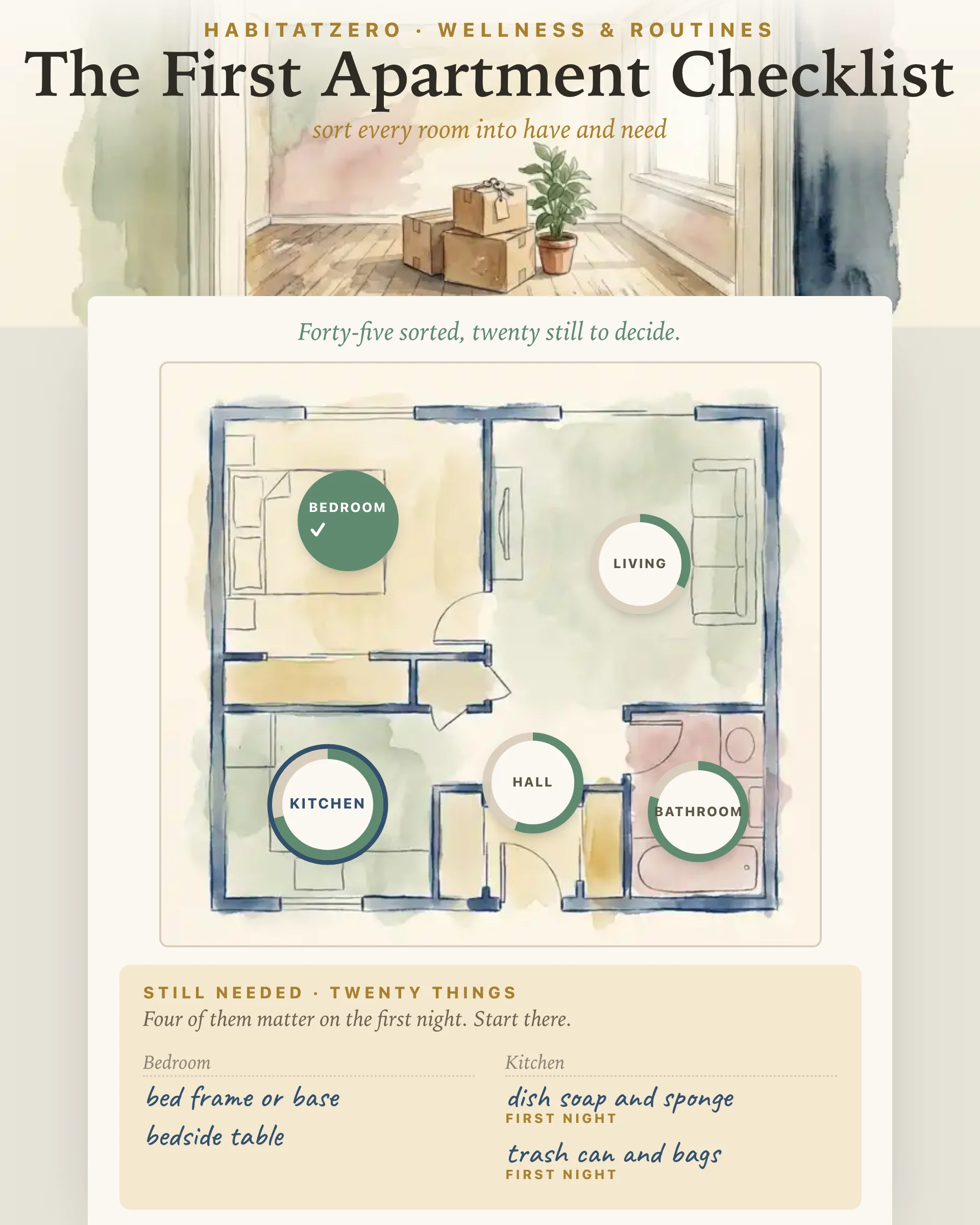
The First Apartment ChecklistA floor plan with five rooms: open each one, mark what you already have and what you still need, and the still-needed list writes itself with first-night things on top.
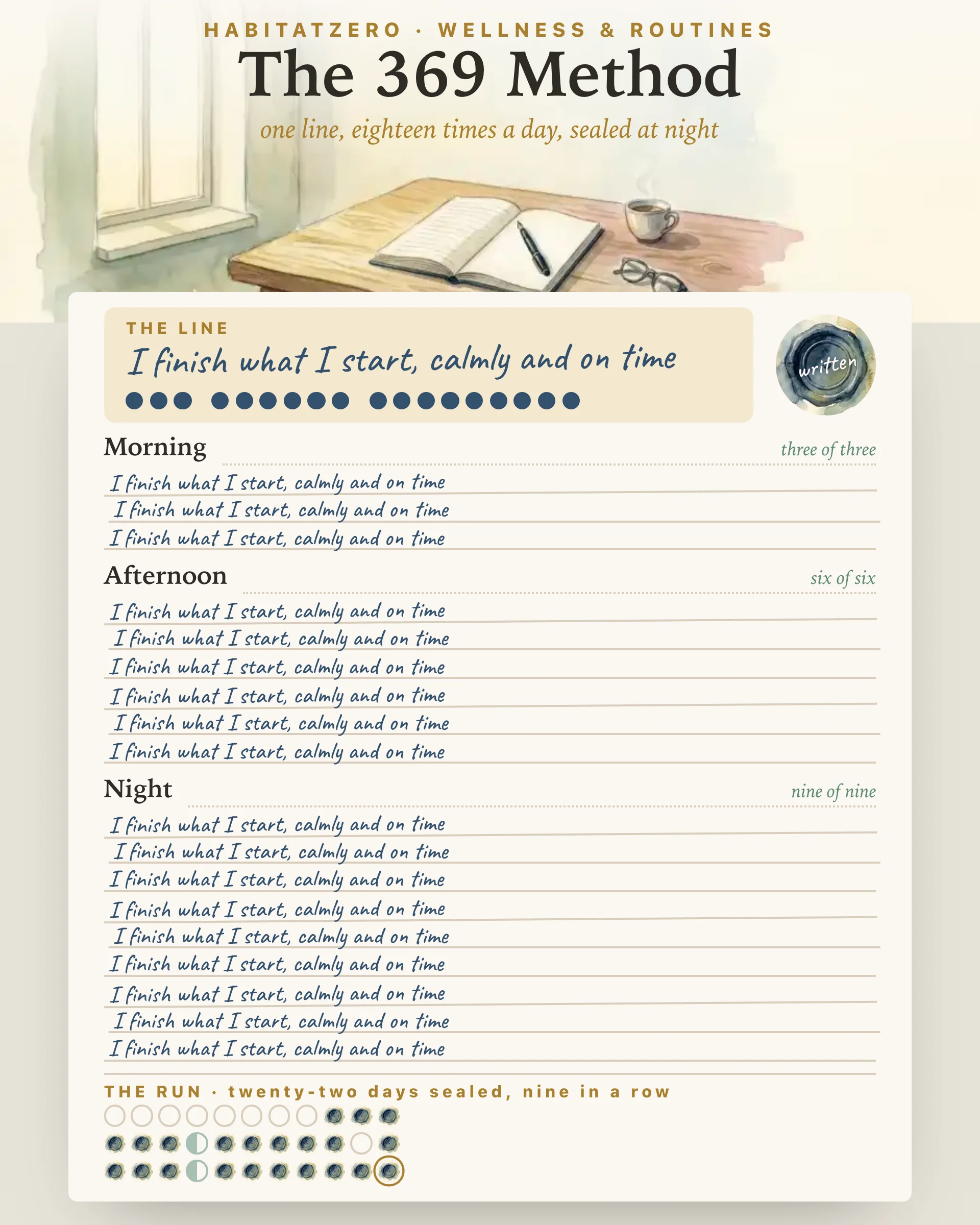
The 369 MethodChoose one line about who you are becoming and copy it three times in the morning, six in the afternoon and nine at night. The sheet only inks a faithful copy, counts the eighteen on a string of beads, and seals every finished day into a run.
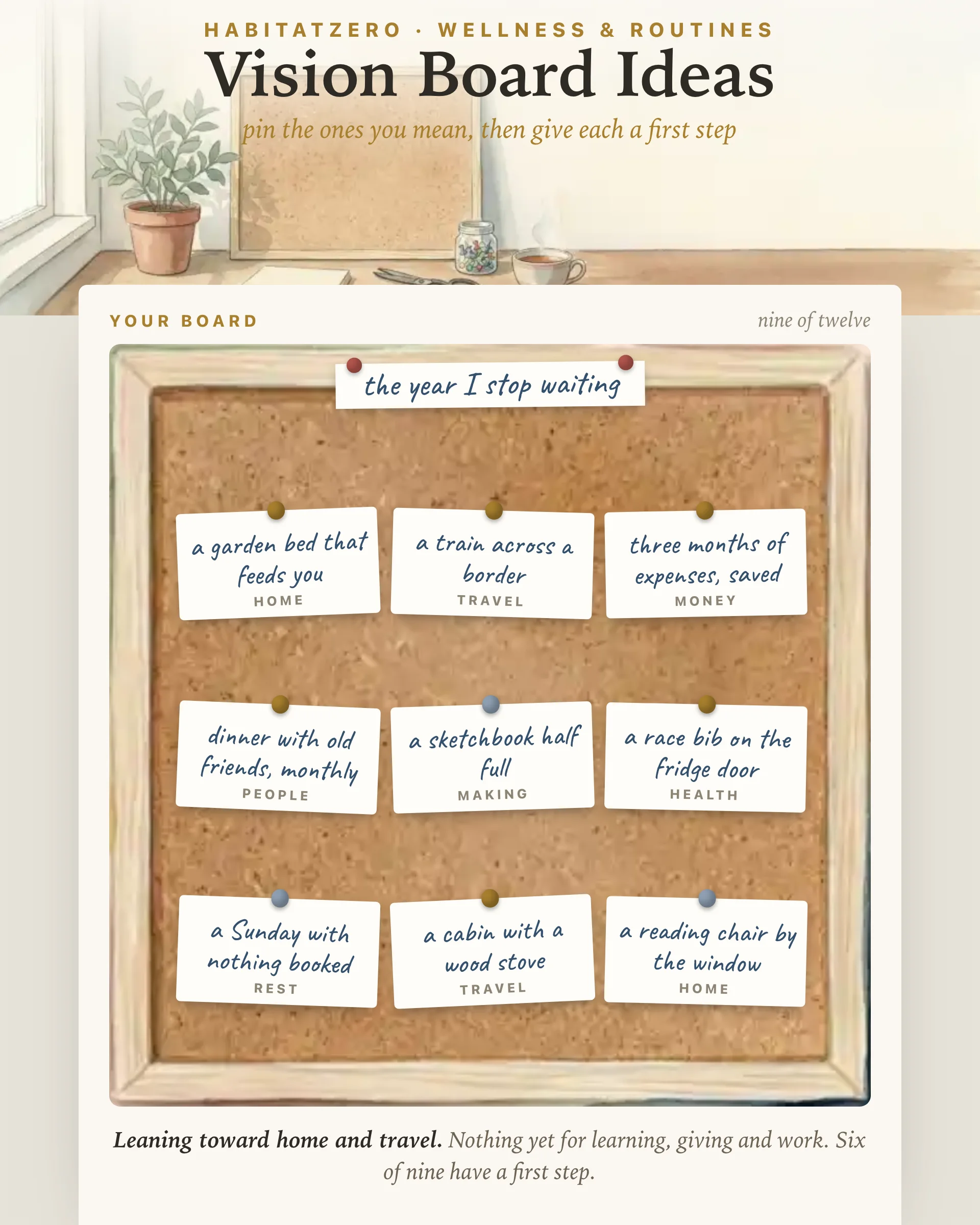
Vision Board IdeasDeal ideas by life area, mood or season, pin the ones you mean onto a cork board that reads back what it leans toward, and give every pin a first step.
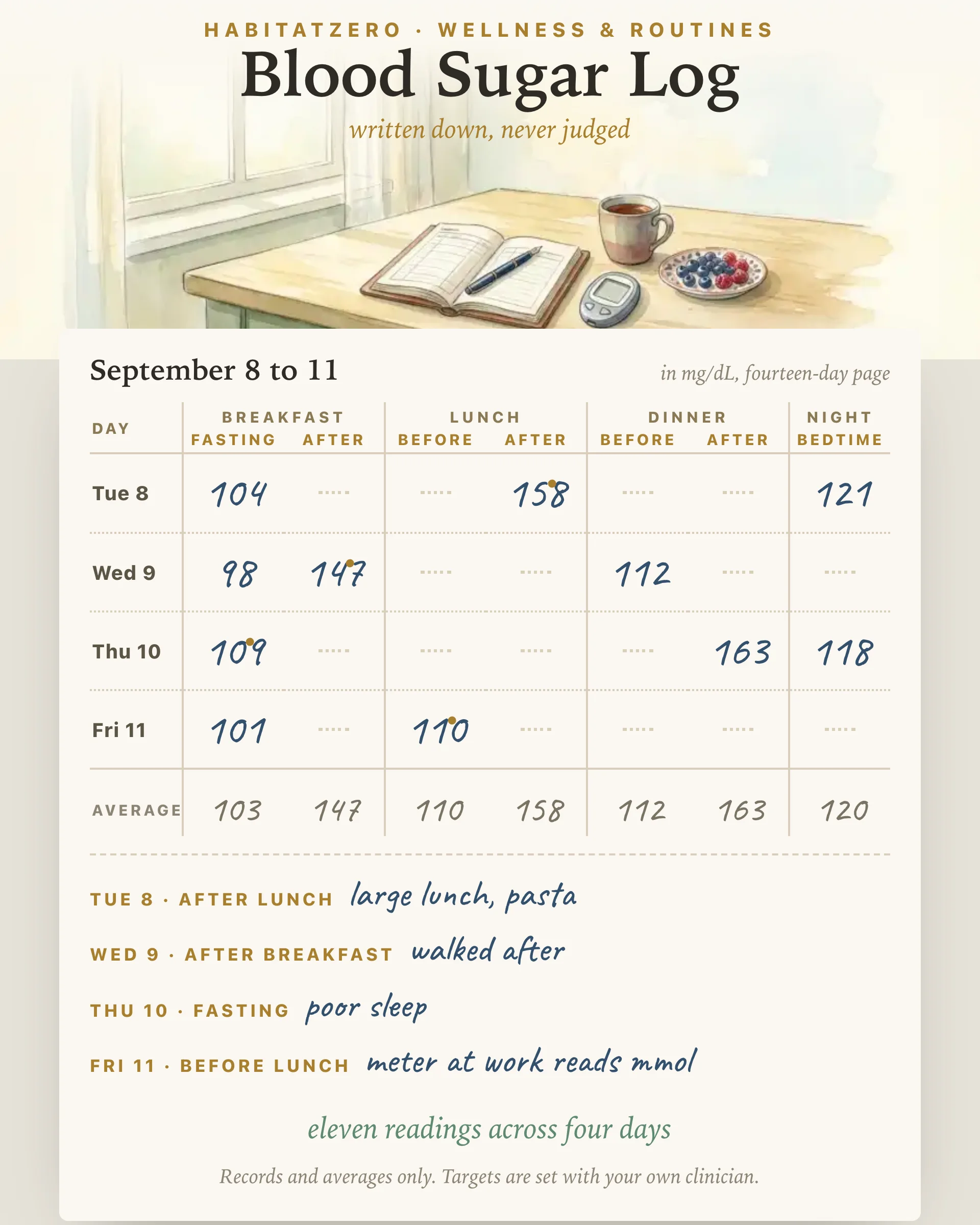
Blood Sugar LogA two-week logbook page with the seven classic columns: write each reading into its cell in mg/dL or mmol/L, keep a few words on what was around it, and let the page carry the averages to your next appointment.
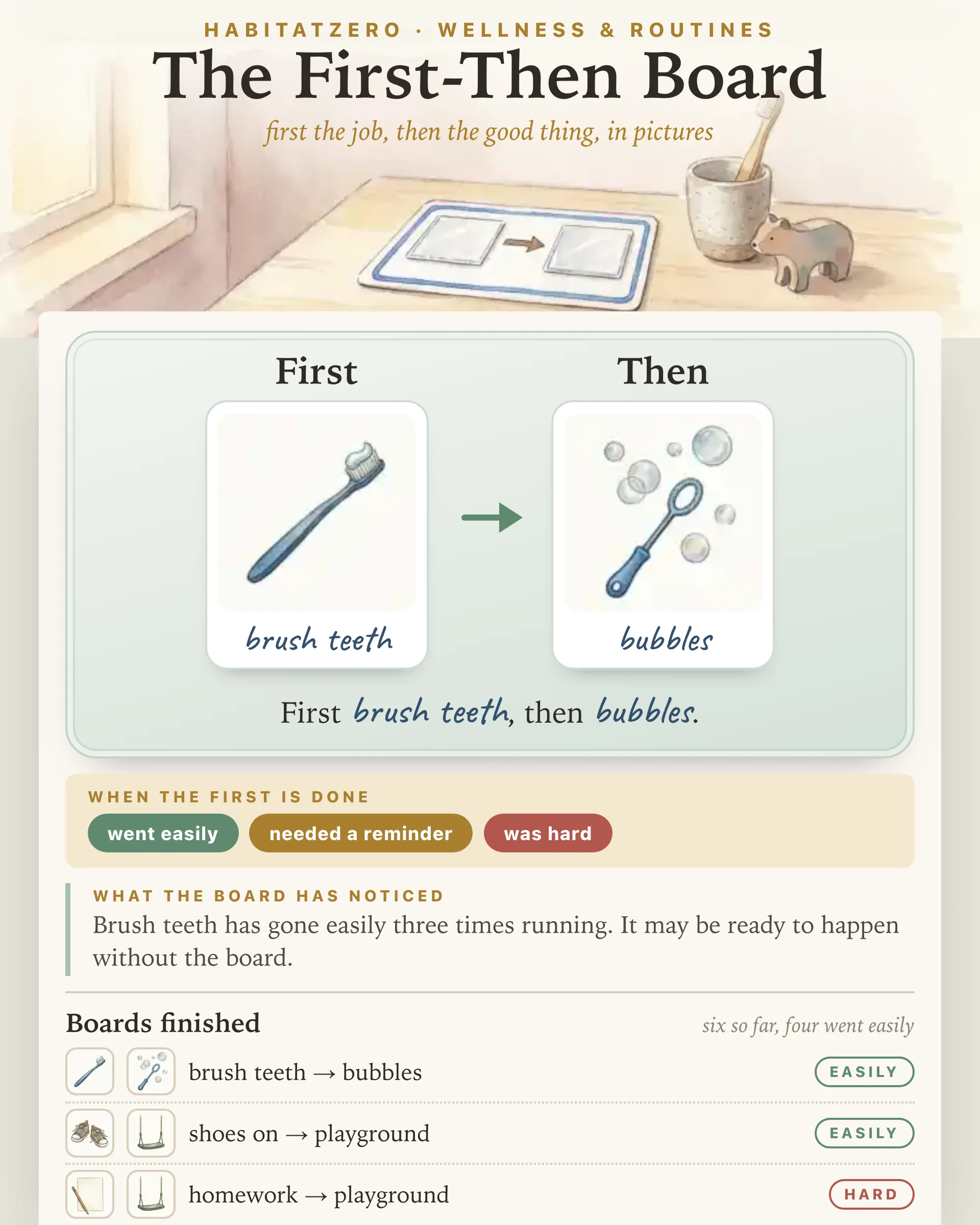
First-Then BoardPut a painted picture in each pocket, first the job and then the good thing, read the sentence out loud, mark the first done with how it went, and let the board notice which jobs have gone easily enough to come off it.
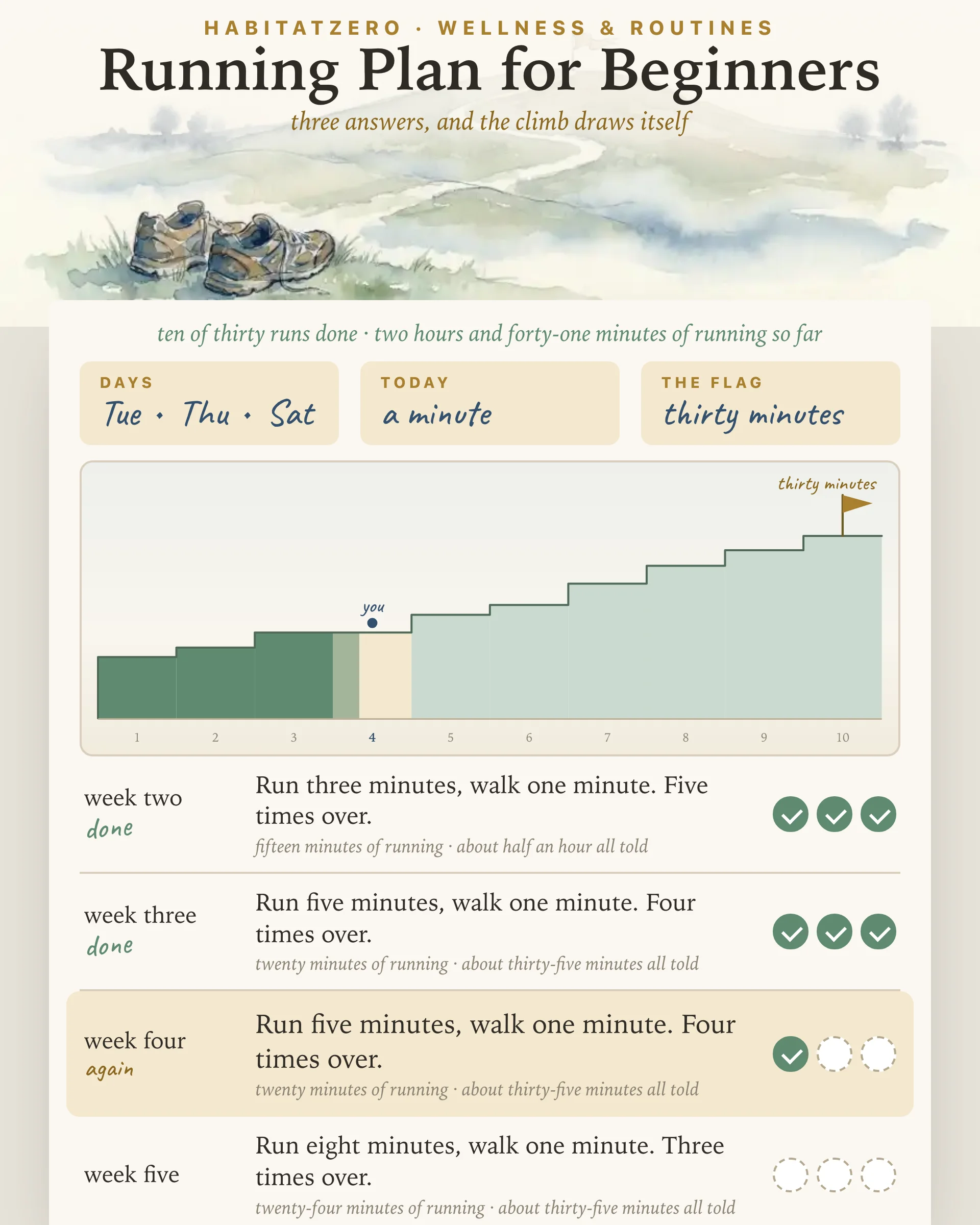
Running Plan for BeginnersTell it which days you can run, how long you can run today and where you want to end up, and it draws the weeks as a climb: walk-run intervals first, then longer unbroken runs, each one ticked off as you go. Hold any week to run it twice and the whole hill redraws around you.
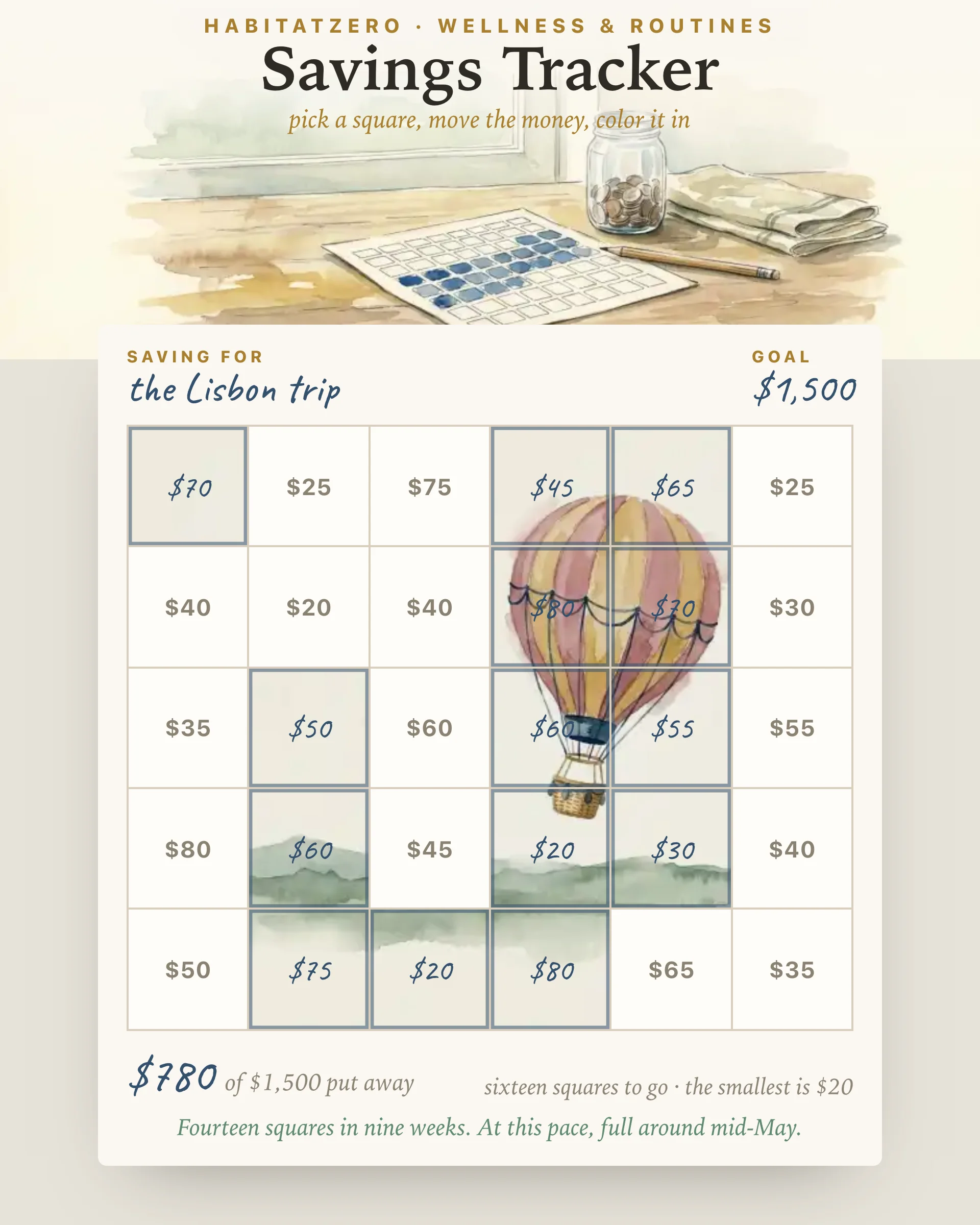
Savings TrackerA money-saving chart whose squares add up to one goal: pick a square you can afford this week, move that amount into savings, and color it in. A picture appears square by square, and the chart guesses its own finish date from your pace.
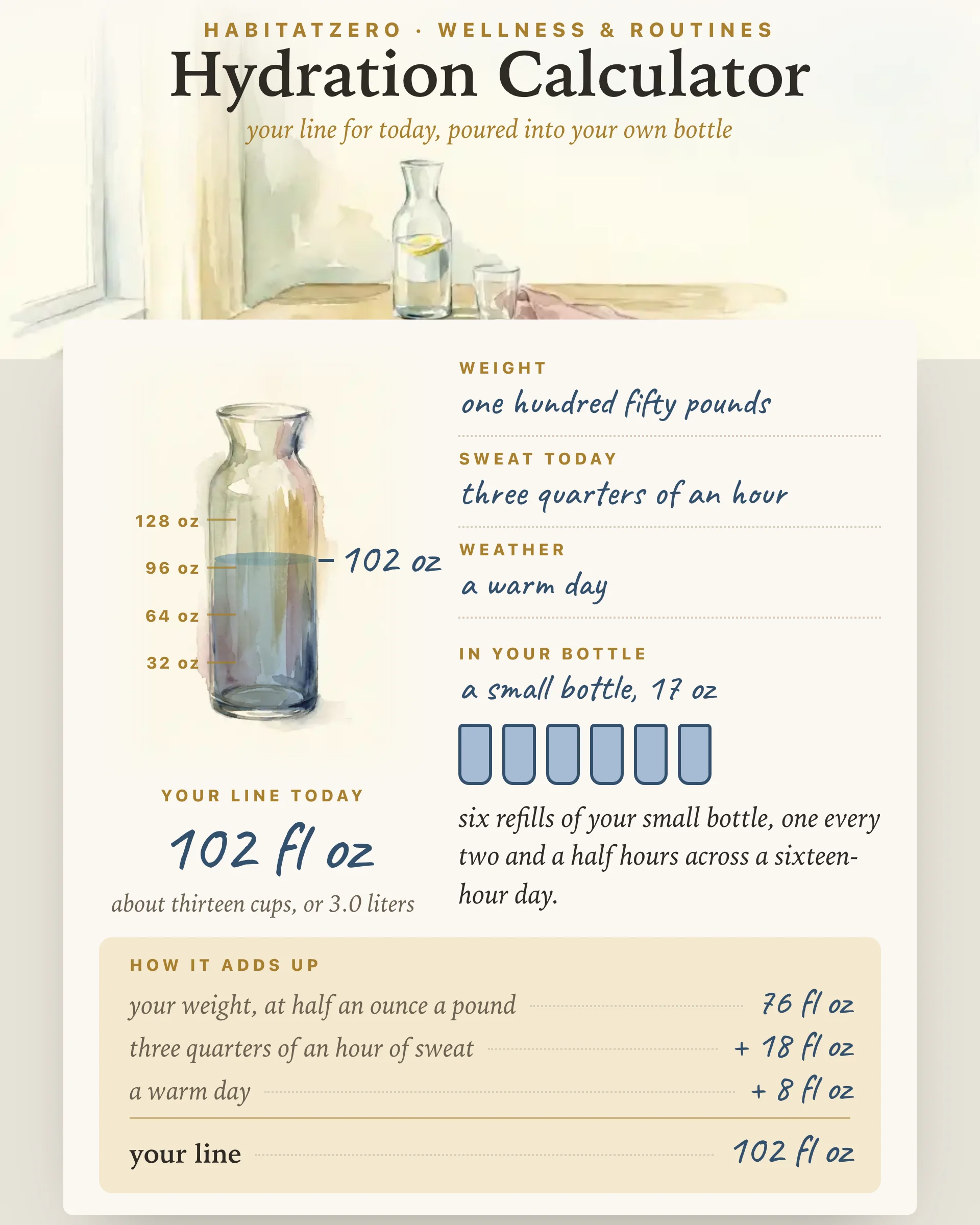
Hydration CalculatorSlide your weight and today's sweat, tap the weather, and a carafe fills to your water line for the day, then pours it into refills of the bottle you actually carry.
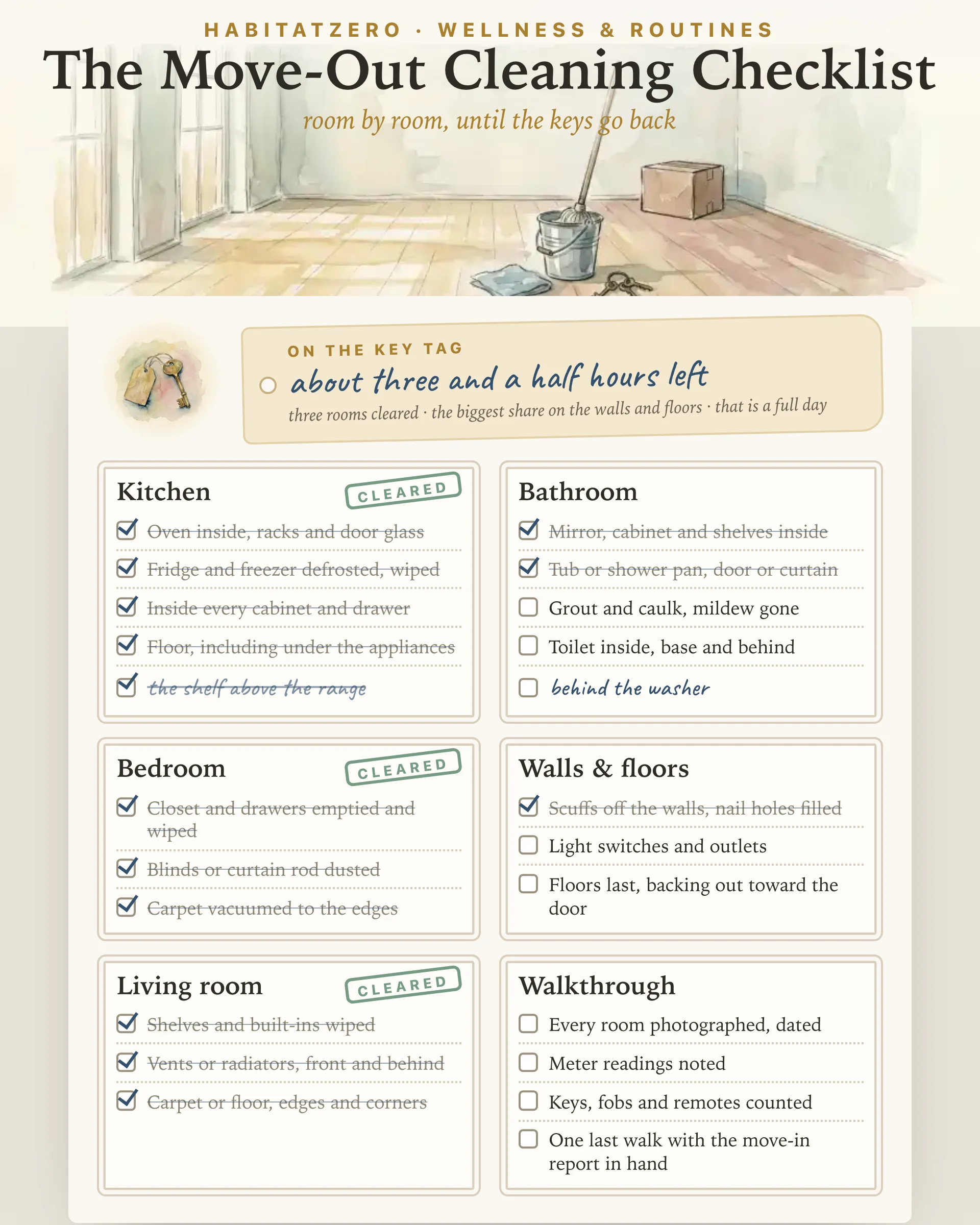
The Move-Out Cleaning ChecklistSix rooms of inspection lines, each with a rough minute weight: check them off the way a move-out inspection will look at them, watch the hours left fall on the key tag, and stamp every room cleared before you turn in the keys.
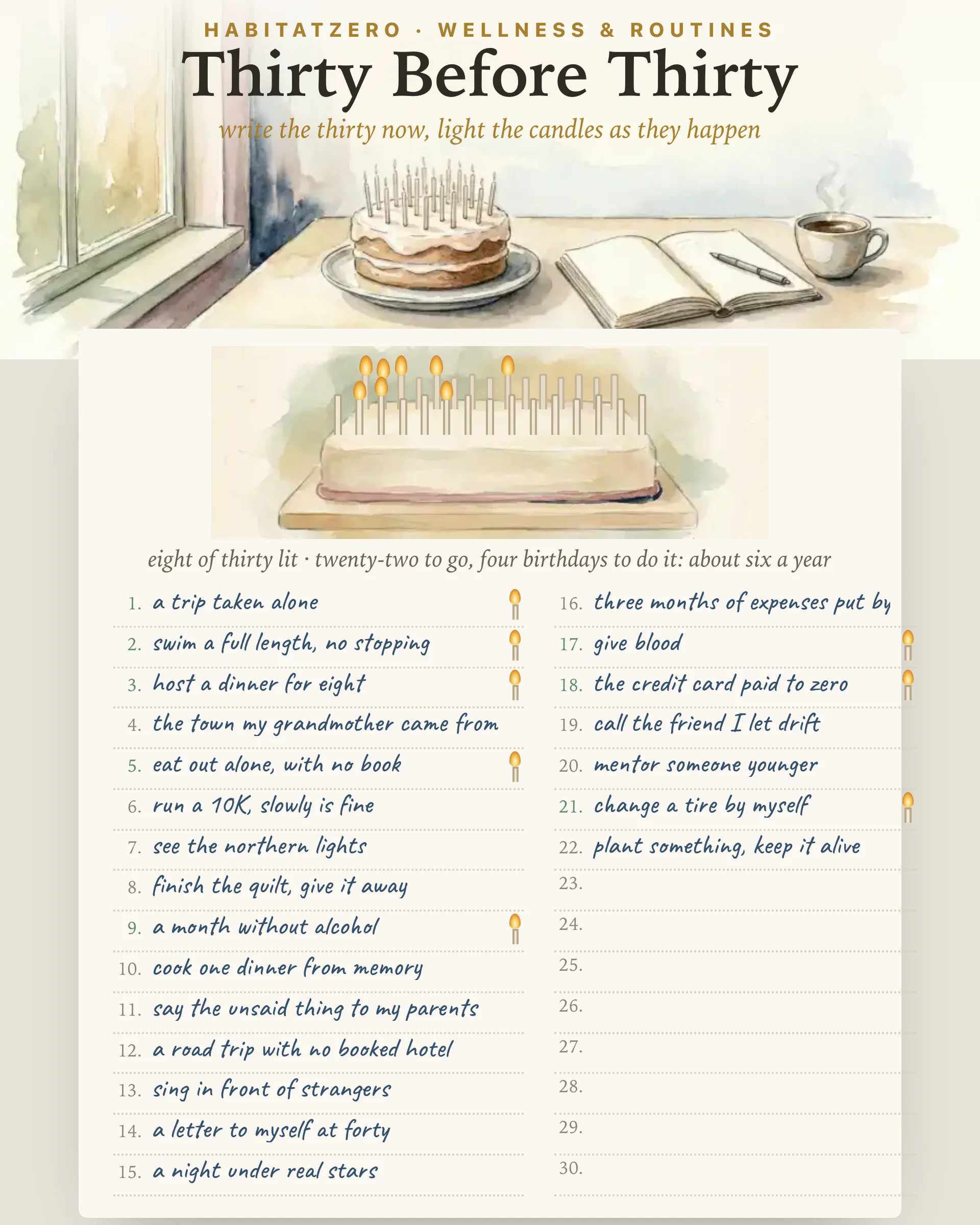
Thirty Before ThirtyThirty numbered lines and a cake with thirty candles: tap ideas from eight areas of life, let your age set the pace, and light a candle for every one you actually do.
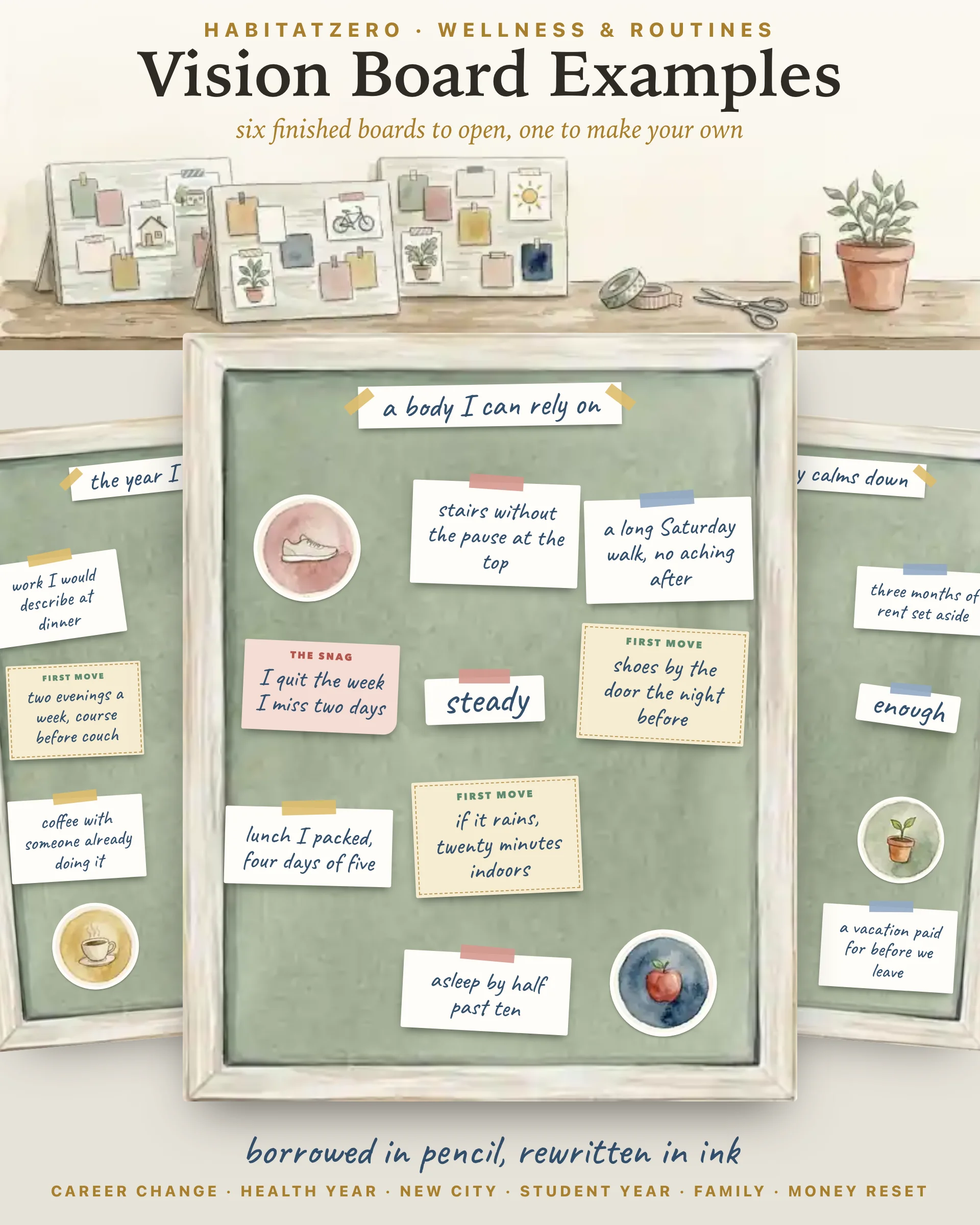
Vision Board ExamplesOpen six finished vision boards, from a career change to a money reset, then take the closest one and rewrite it card by card until the pencil has turned to your own ink.
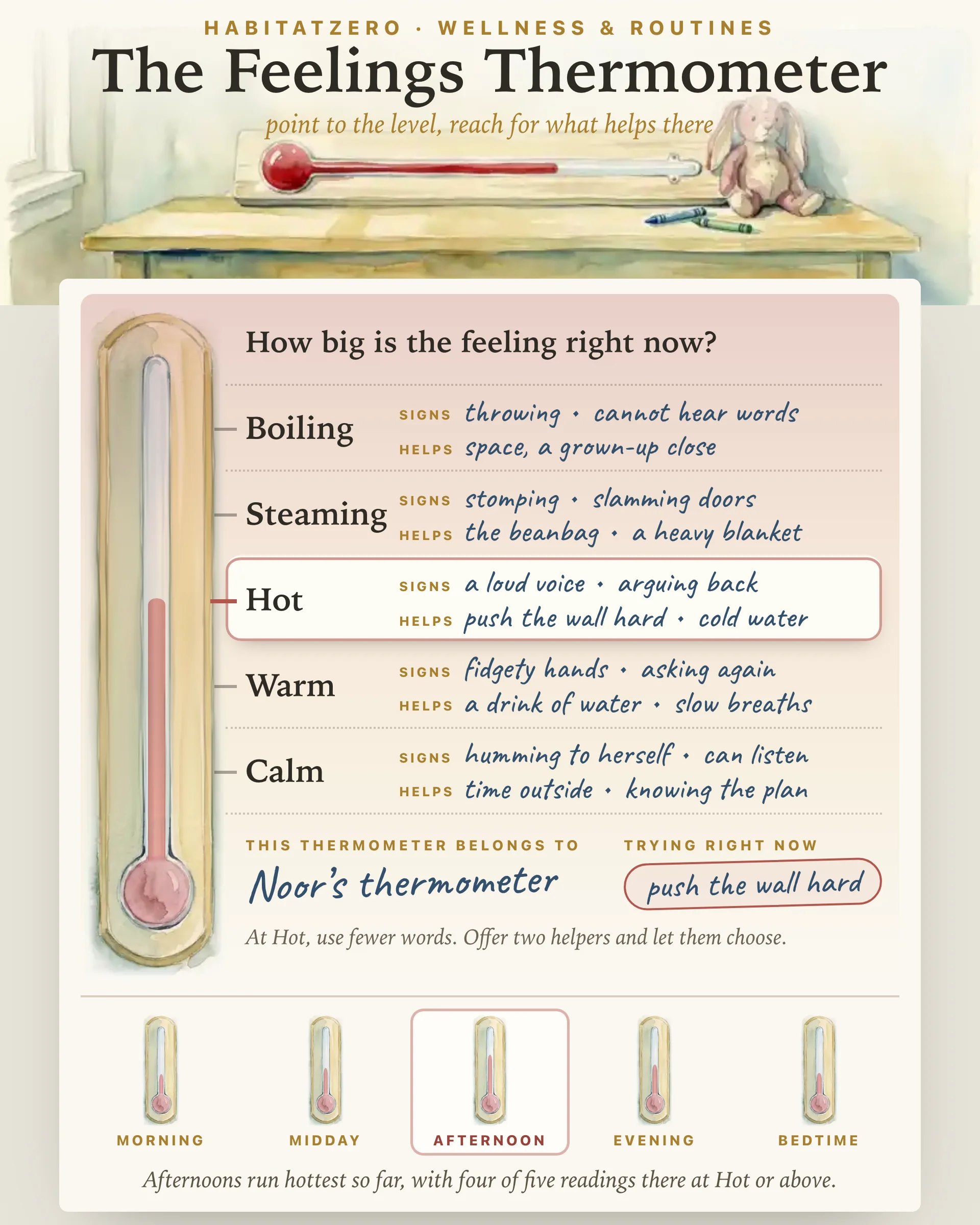
The Feelings ThermometerA painted five-level thermometer you fill in with your child: what each level looks like on them and what helps there. They point, the page hands back their own helpers, and logged readings show which parts of the day run hot.
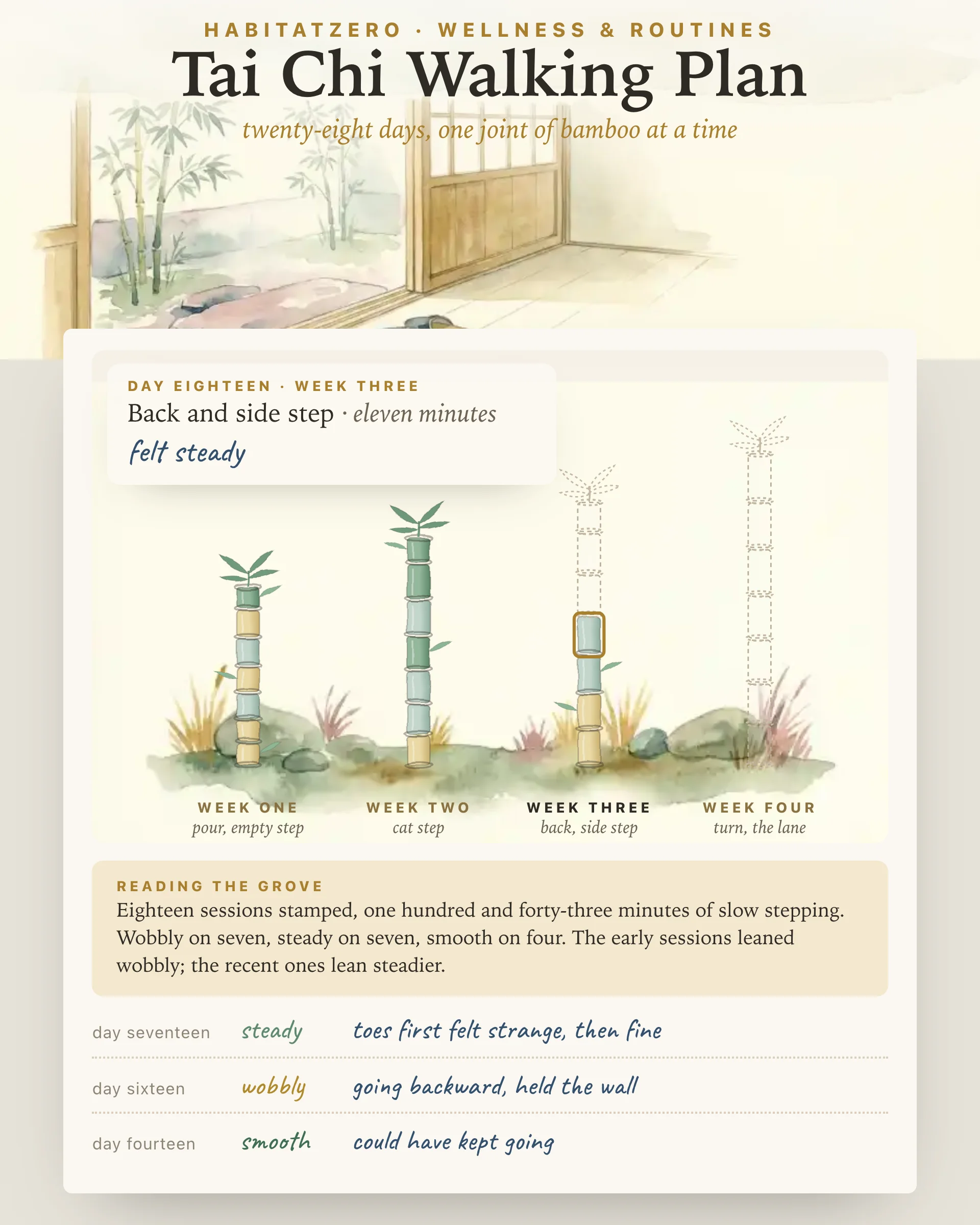
Tai Chi Walking PlanTwenty-eight days of slow, deliberate stepping taught in plain words, from pouring your weight between your legs to a full lane of cat steps, back steps, side steps and turns. Every session you stamp grows a joint of bamboo, longer for more minutes, tinted by how it felt, and a finished week puts leaves on the stalk.
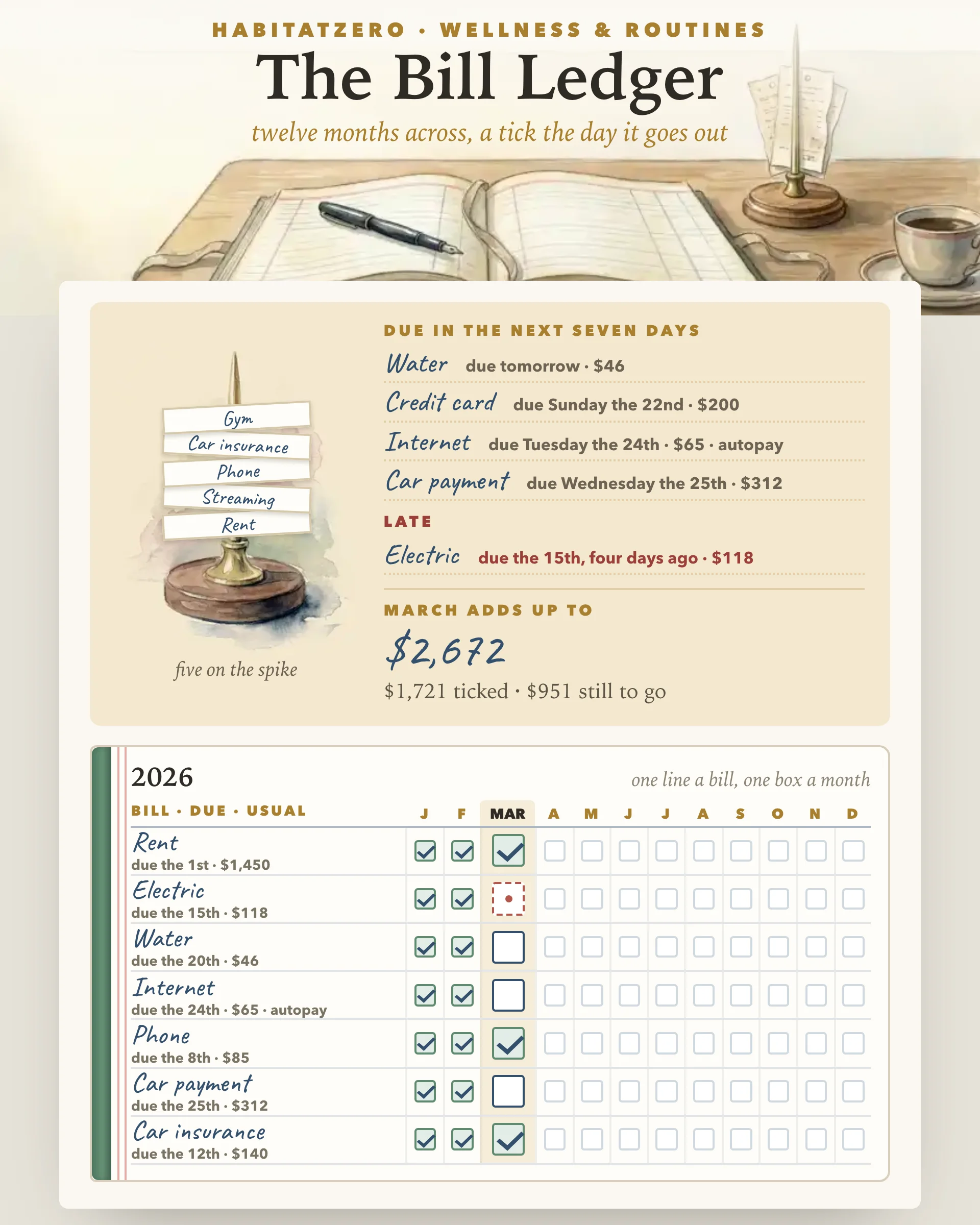
The Bill LedgerEvery recurring bill on one ledger page with its due day and usual amount, twelve months across, ticked when paid. A bill spike collects what is paid, and the page says what is due in the next seven days, what is late, and what the month adds up to.
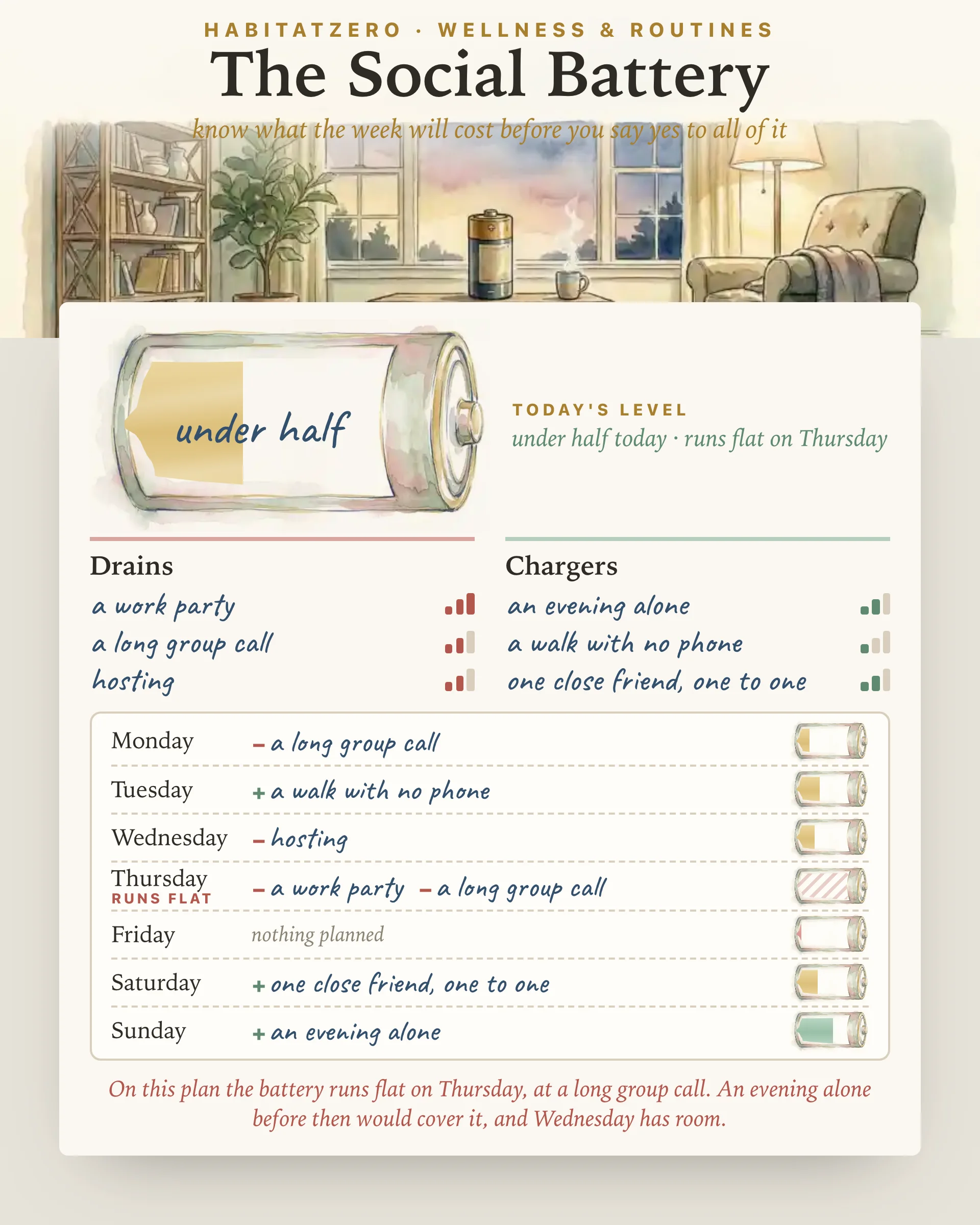
The Social BatterySet the battery to where you are today, name what drains and what charges you, then lay the week's plans against it to see where it would run flat and where a recharge needs to go. Readings teach it what each kind of plan really costs you.
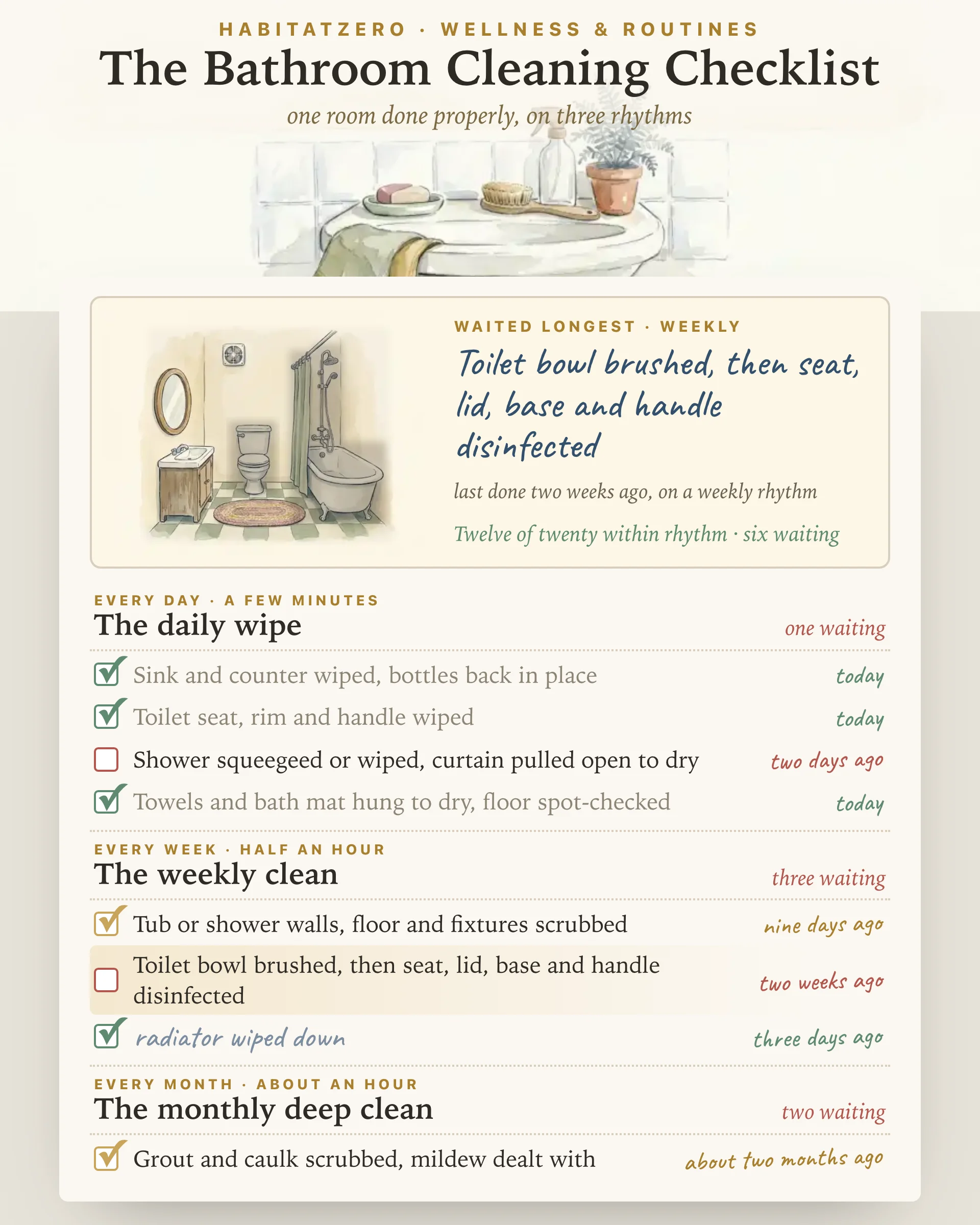
The Bathroom Cleaning ChecklistOne room done properly on three rhythms: a daily wipe, a weekly clean and a monthly deep clean. Every line remembers when it was last done, a card names what has waited longest, and a painted bathroom goes dull where a surface is waiting and bright again as you mark it done.
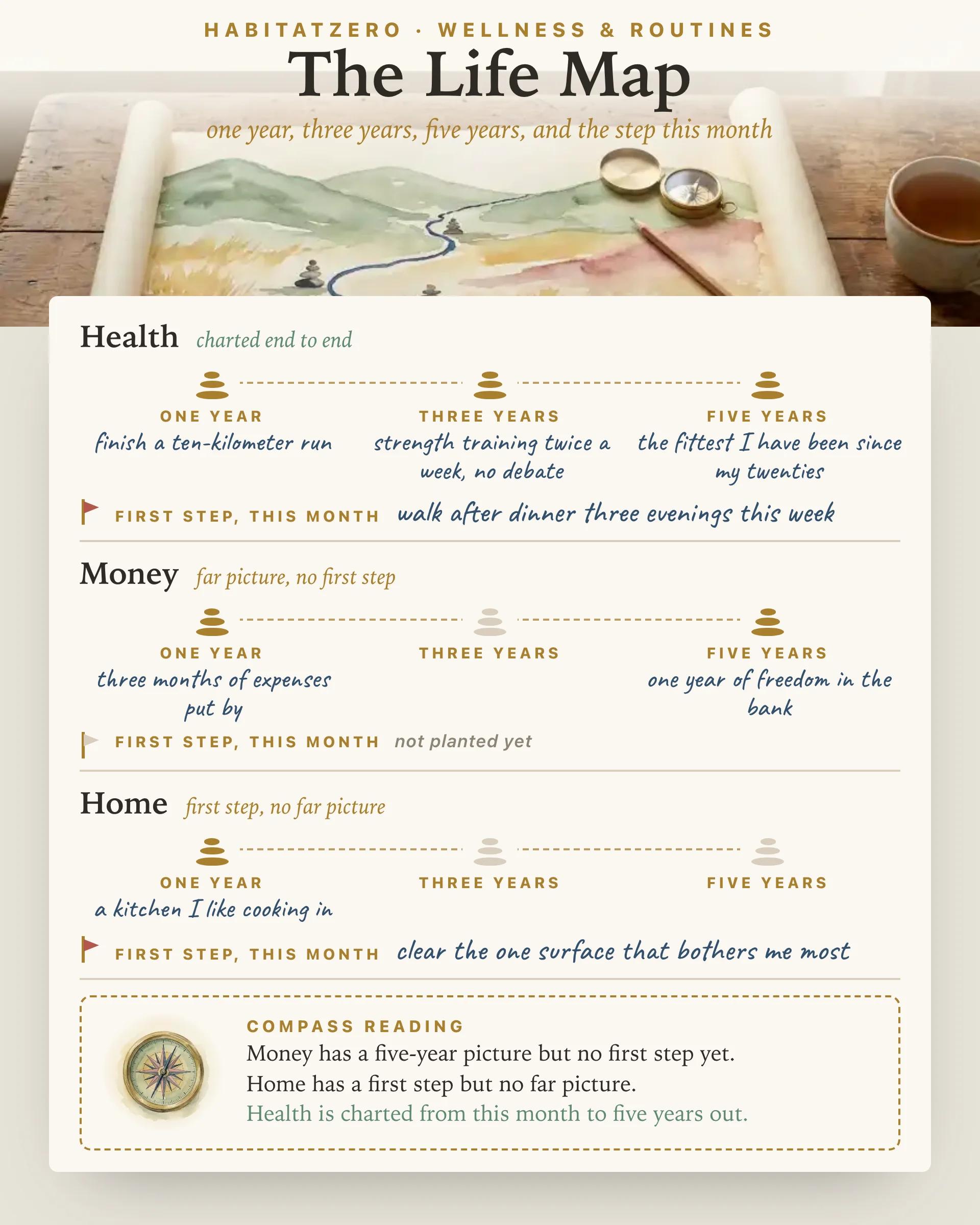
The Life MapChoose a few areas of life, mark a milestone at one, three and five years on each trail, plant this month's first step, and let the compass show which areas are only a wish and which are only a wander.
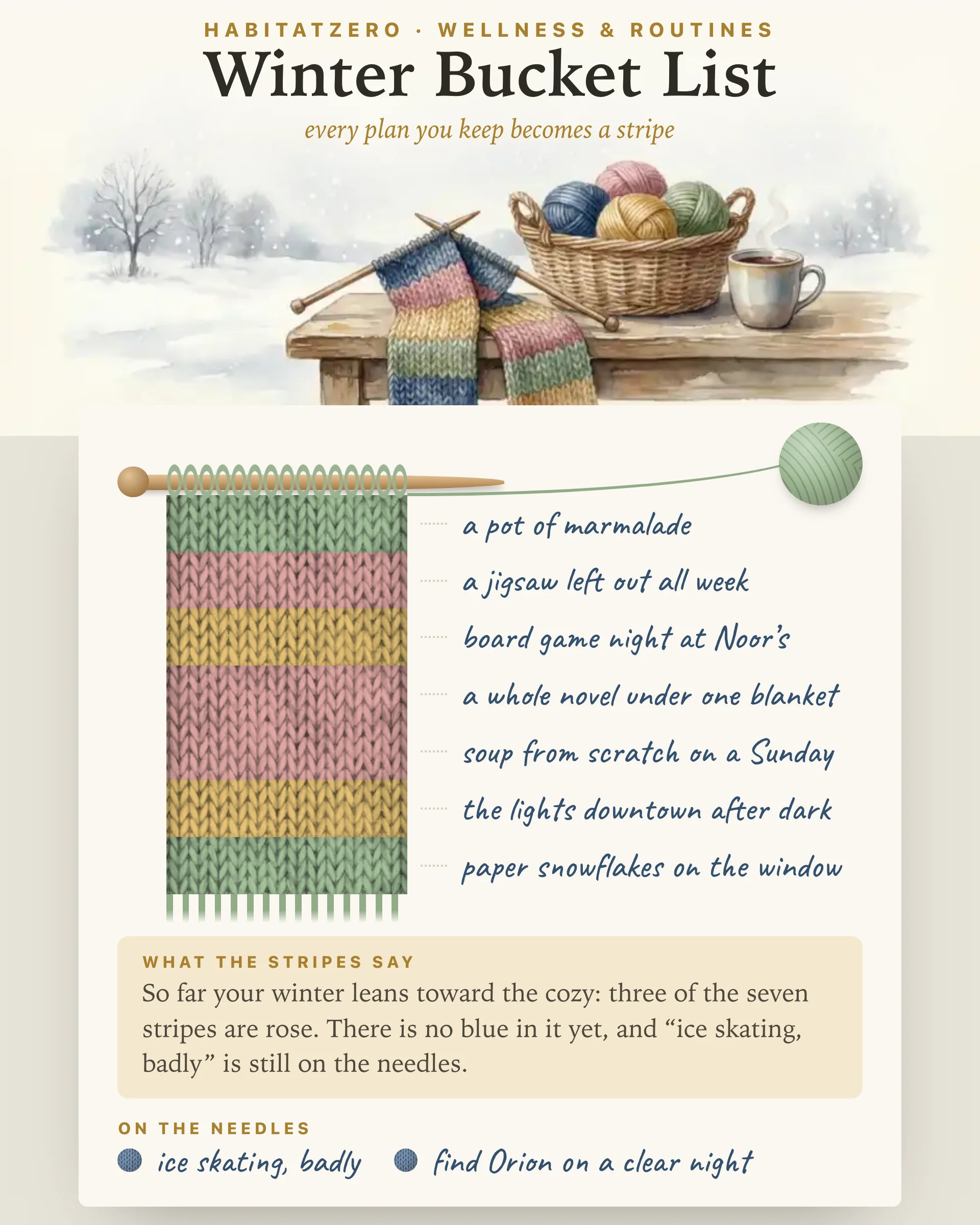
Winter Bucket ListCast on twelve small winter plans in four yarns: outdoors, cozy, together and making. Every plan you keep is knitted into a striped scarf that shows, stripe by stripe, what kind of winter you actually had.
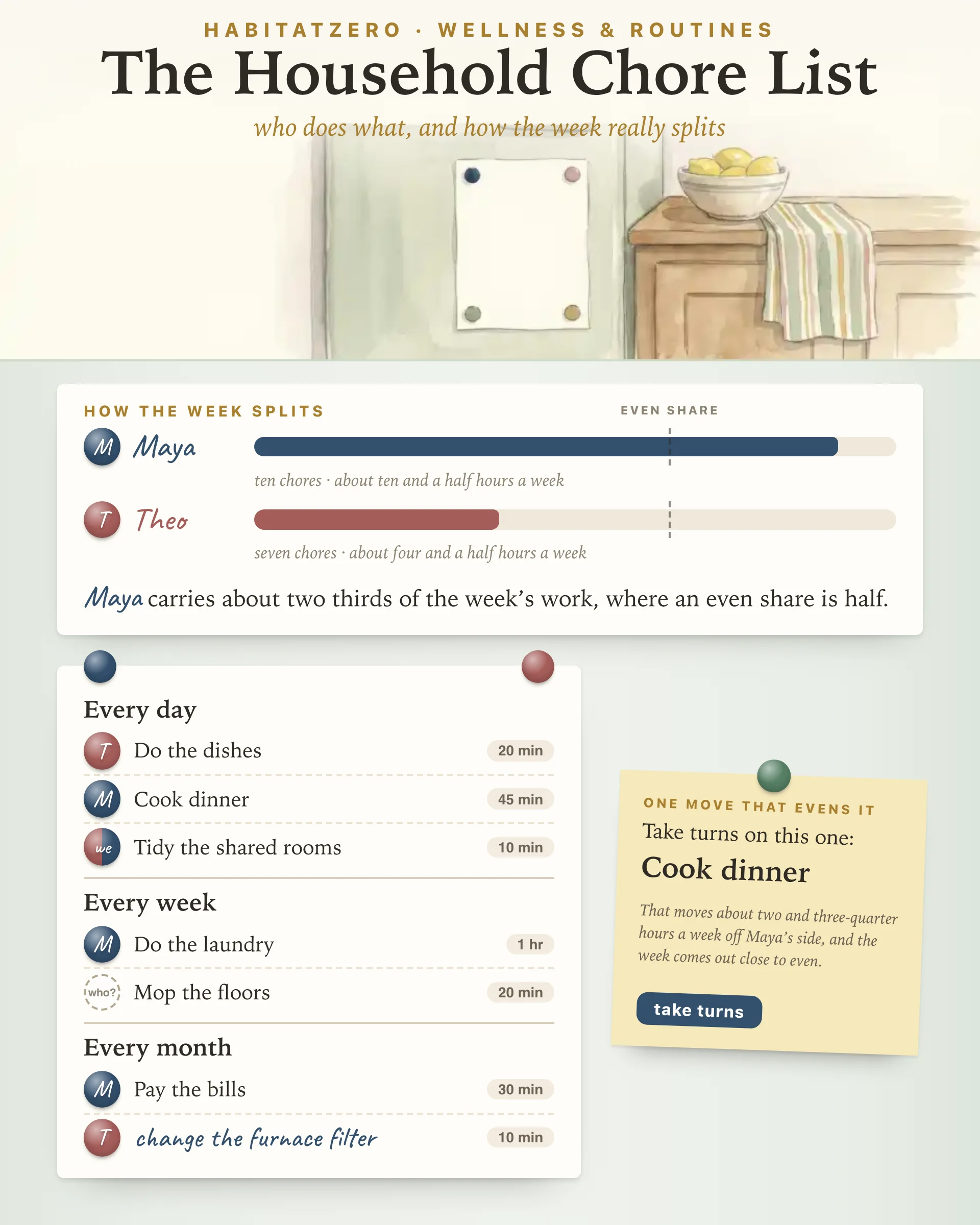
The Household Chore ListEvery chore the house needs, sorted into daily, weekly and monthly, with a magnet on each one for whoever does it. The door adds up everyone's share of the week in minutes and points to the one swap that would even it out.
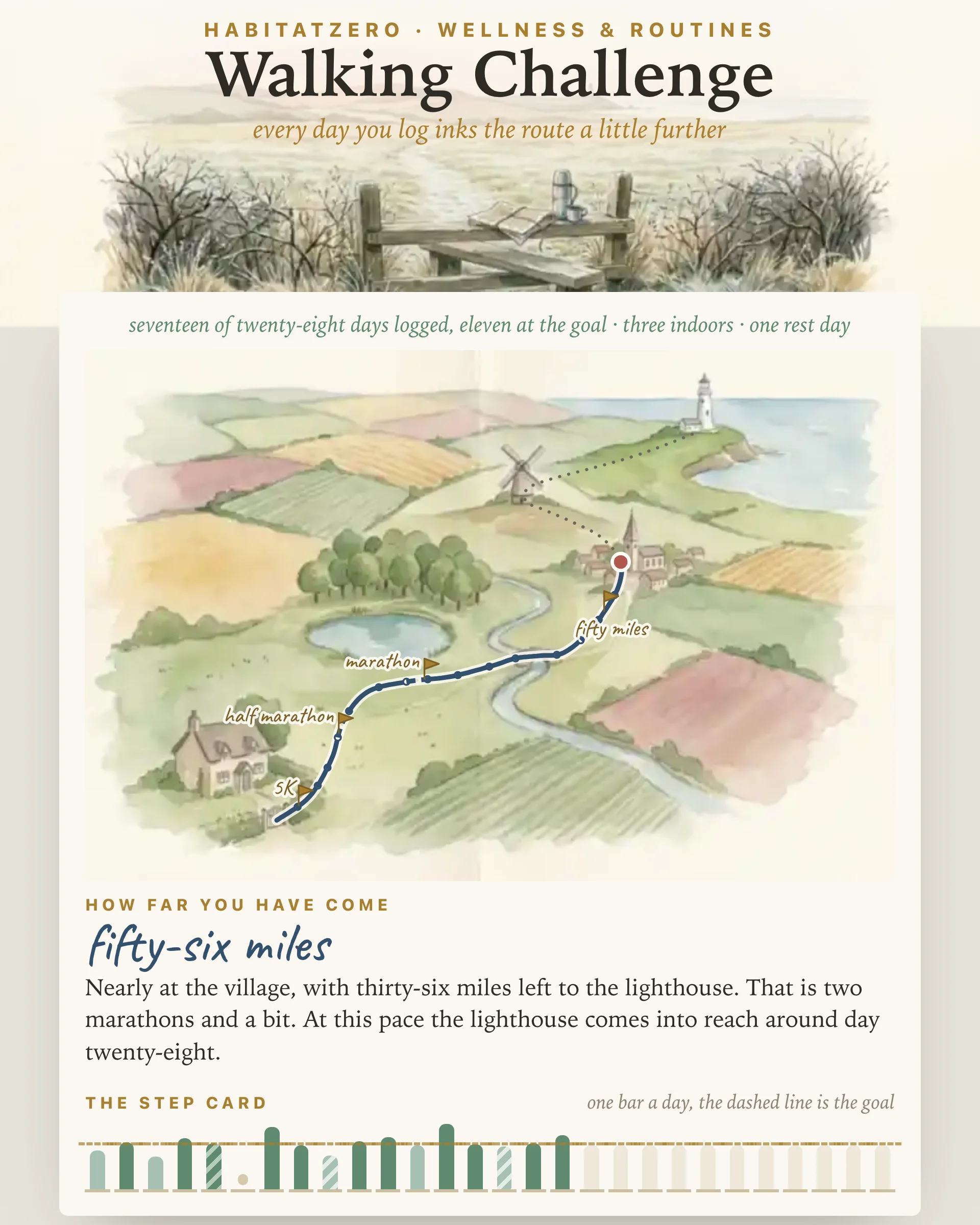
Walking ChallengeChoose fourteen, twenty-one or twenty-eight days and a daily goal in steps or minutes, and the whole challenge becomes a route on a painted map. Each day you log inks its own stretch toward the lighthouse, and the page tells you in plain words how far you have walked and where this pace will take you.
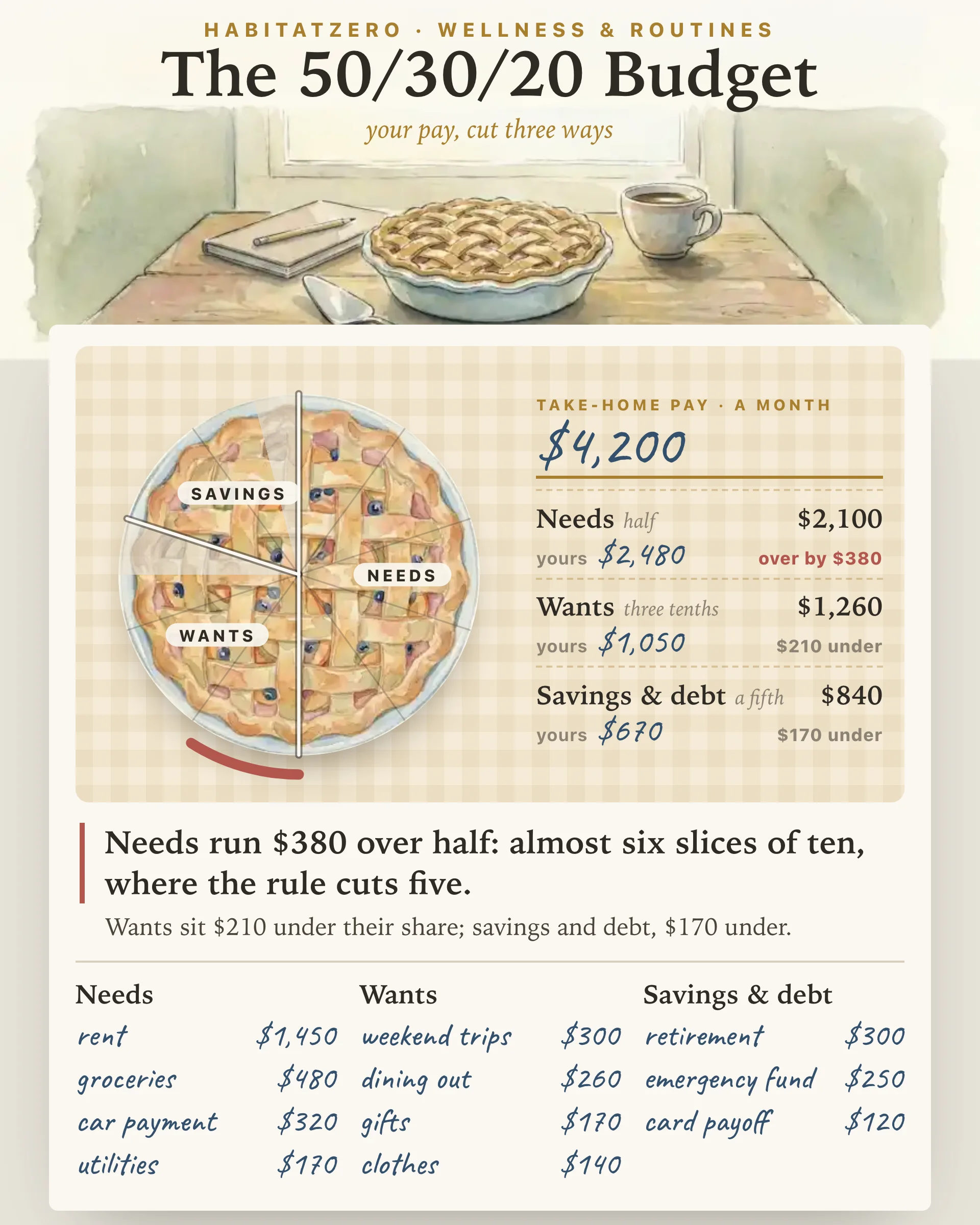
The 50/30/20 BudgetType your take-home pay and a pie cuts it into needs, wants, and savings and debt. Sort your own costs into the three and see which part runs over, and by how much.
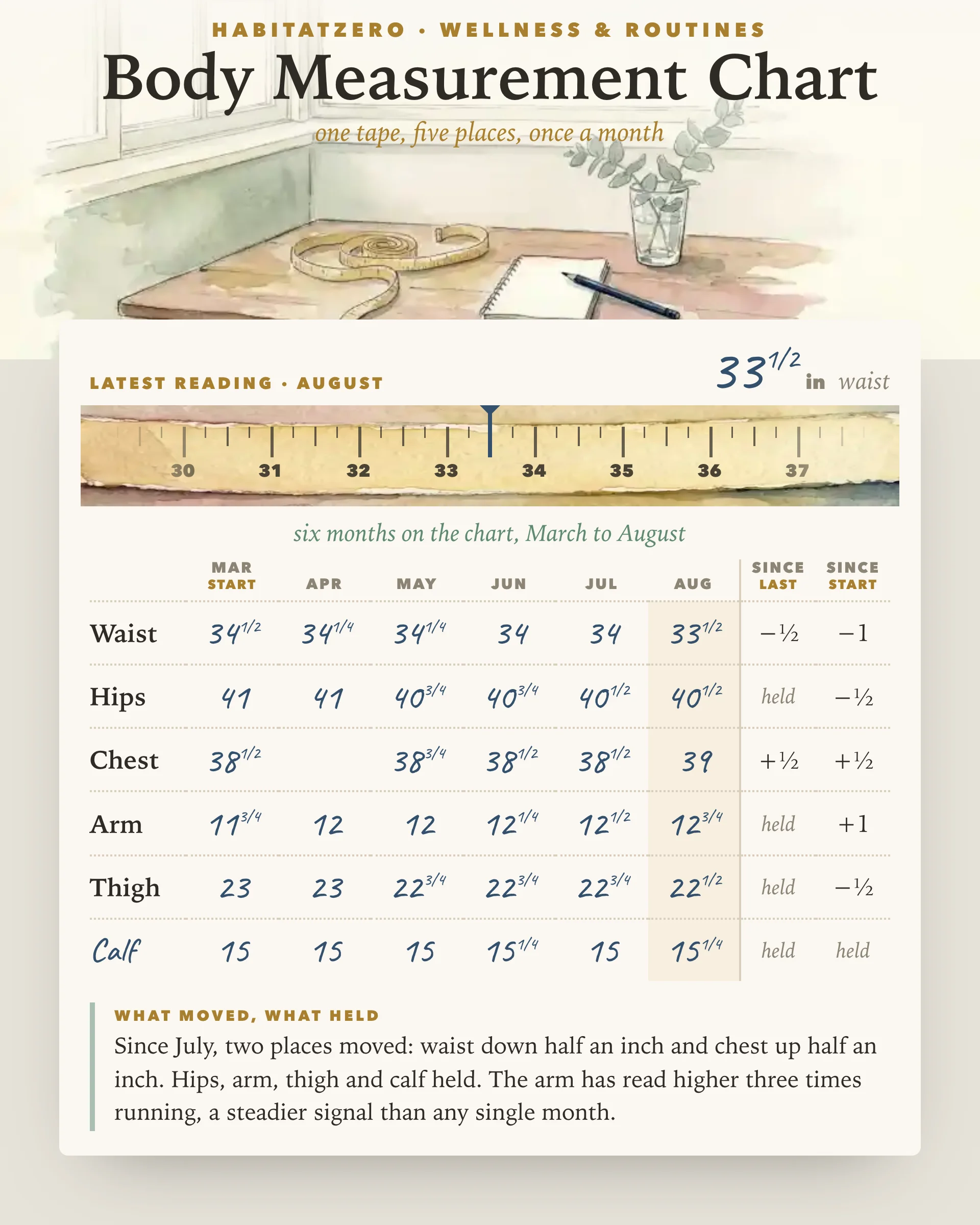
Body Measurement ChartSlide a painted tape to each month's waist, hips, chest, arm and thigh, add places of your own, and let a change column say plainly what moved and what held, in inches or centimeters.
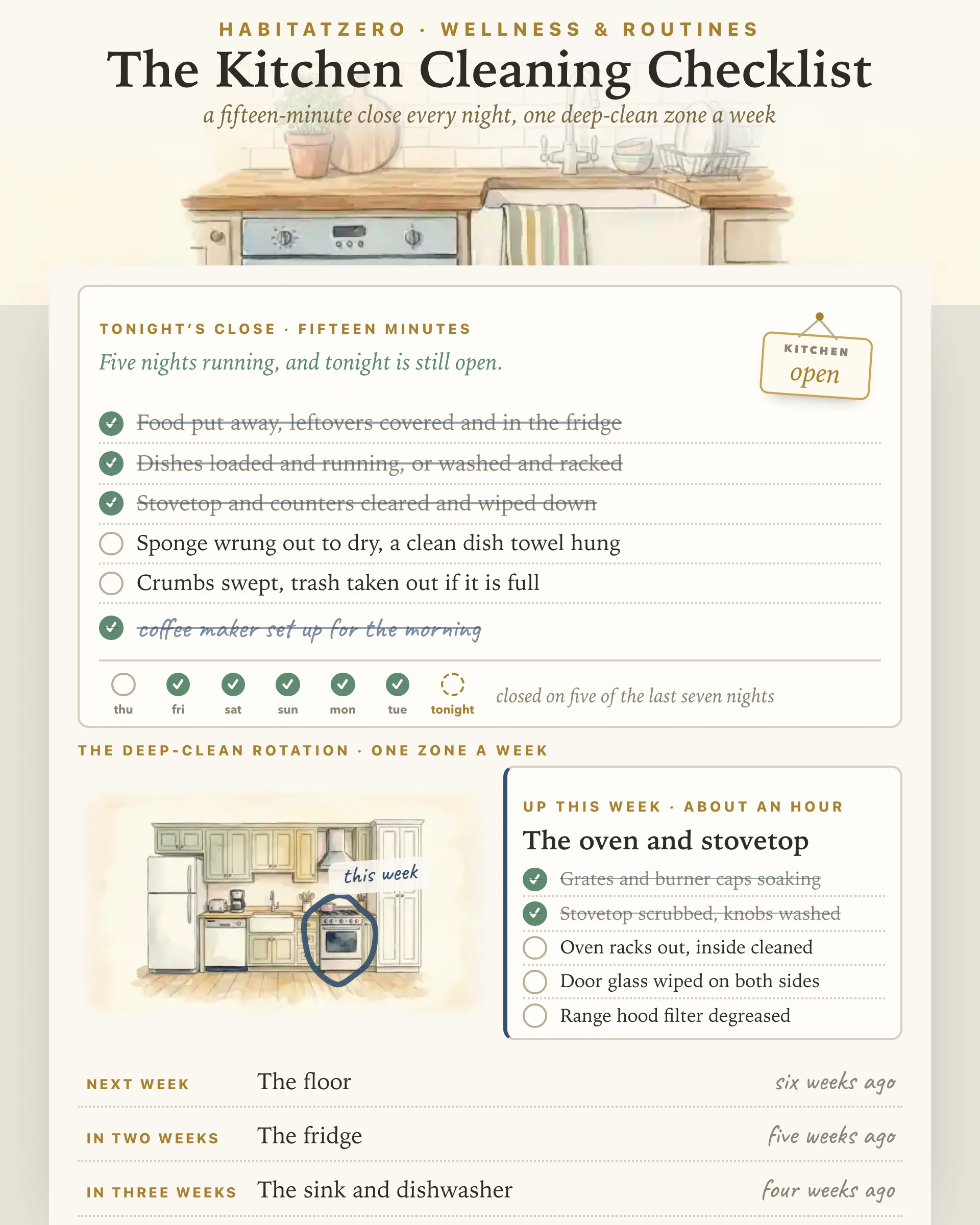
The Kitchen Cleaning ChecklistA six-line close to run after dinner, with a sign that flips to closed and a streak kept in words, plus a deep-clean rotation that circles one zone of a painted kitchen each week and remembers when every zone was last done.
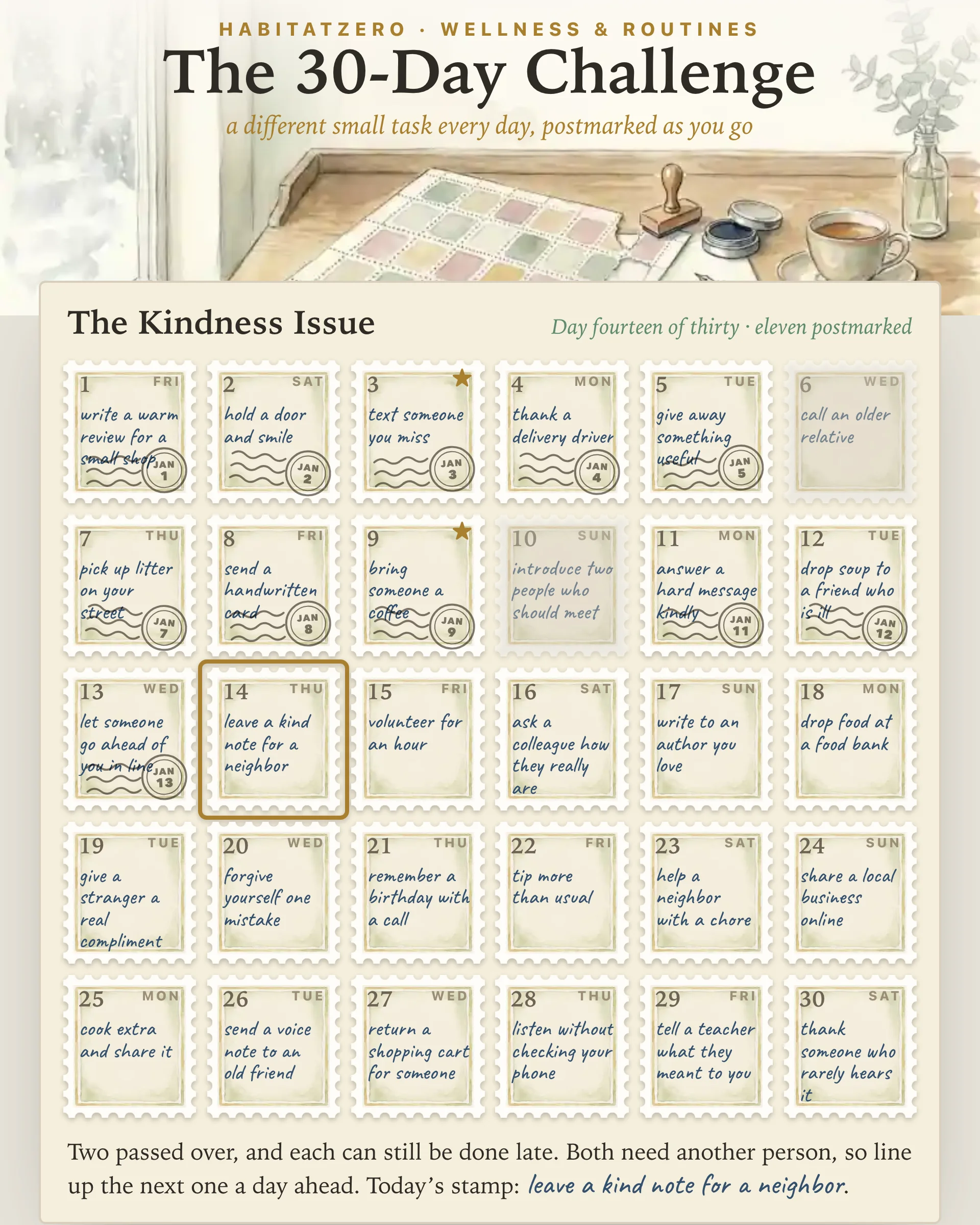
The 30-Day ChallengePick a theme and a sheet of thirty stamps deals out a different small task for every day of the month. Redraw or swap any stamp, postmark each one once it is done, and the page tells you in plain words how the month is going.
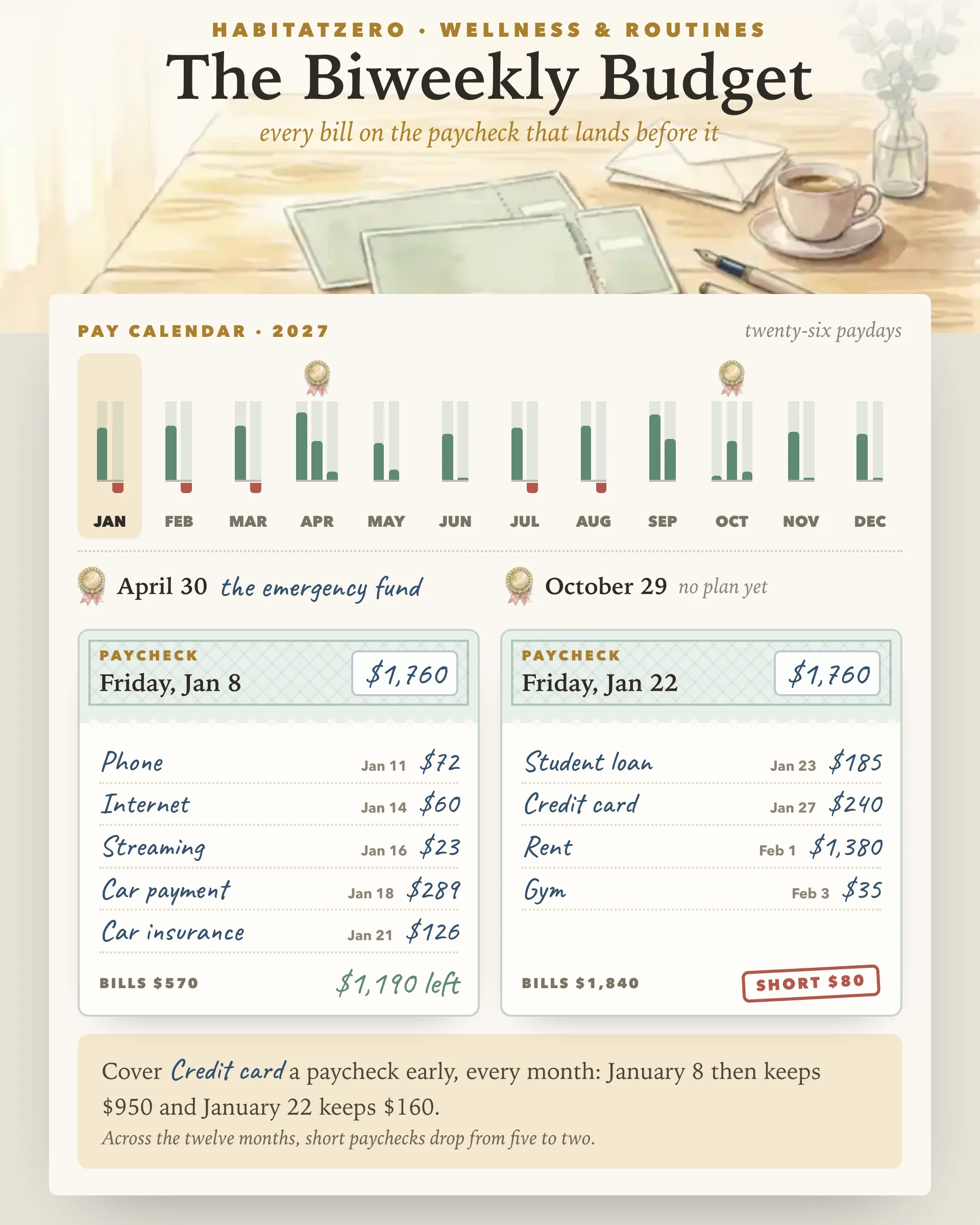
The Biweekly BudgetSet one paycheck and the day it lands, tap in your bills, and each one is filed under the paycheck that arrives before it is due. Every paycheck shows what it leaves, a short one comes with the bill to cover a paycheck early, and the months that bring a third payday get a plan.
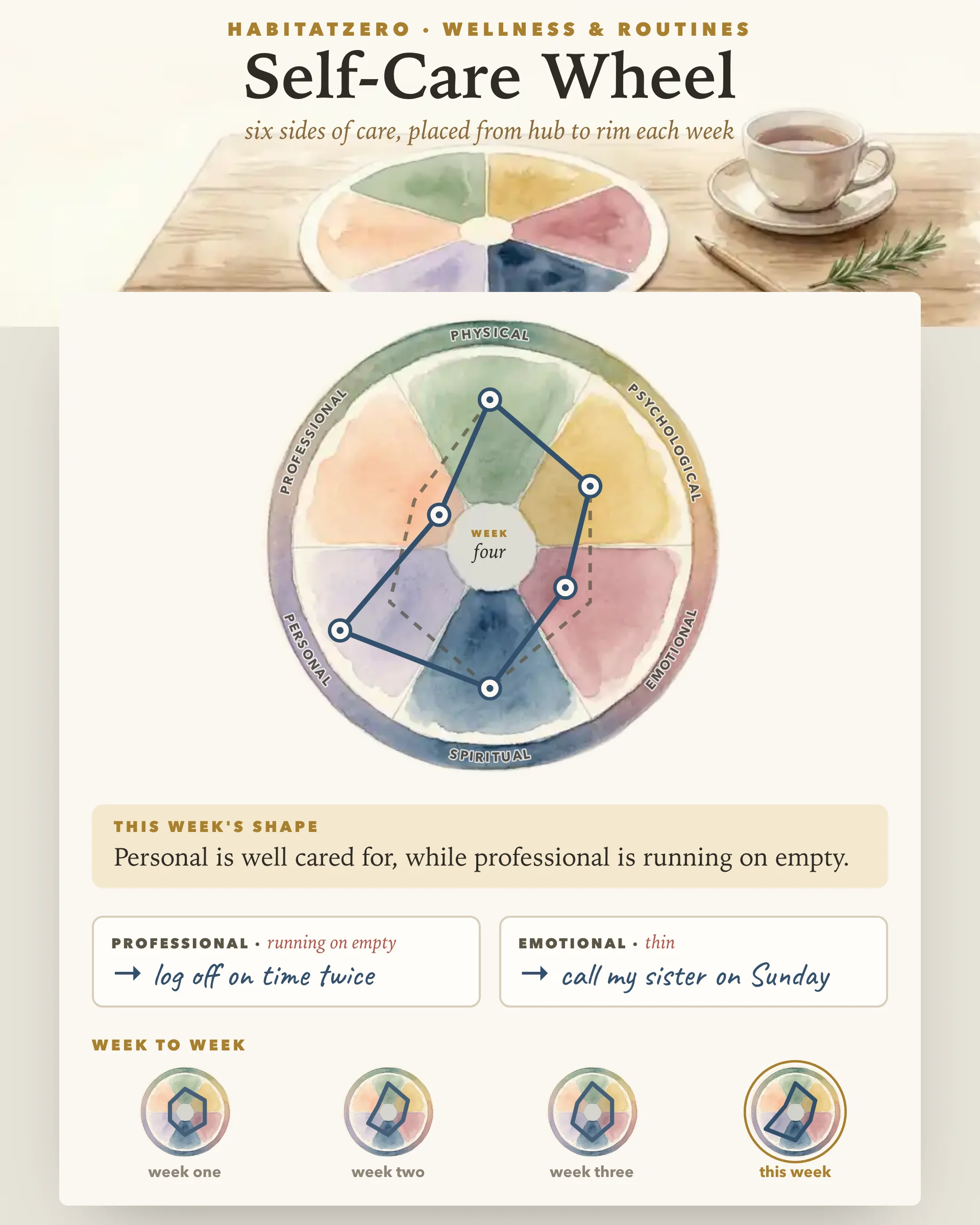
Self-Care WheelTap where each of six sides of self-care sits this week, from running on empty at the hub to well cared for at the rim. The wheel inks your shape over last week's, gives the two thinnest sides one small act each, and keeps a strip of weeks so you can watch it change.
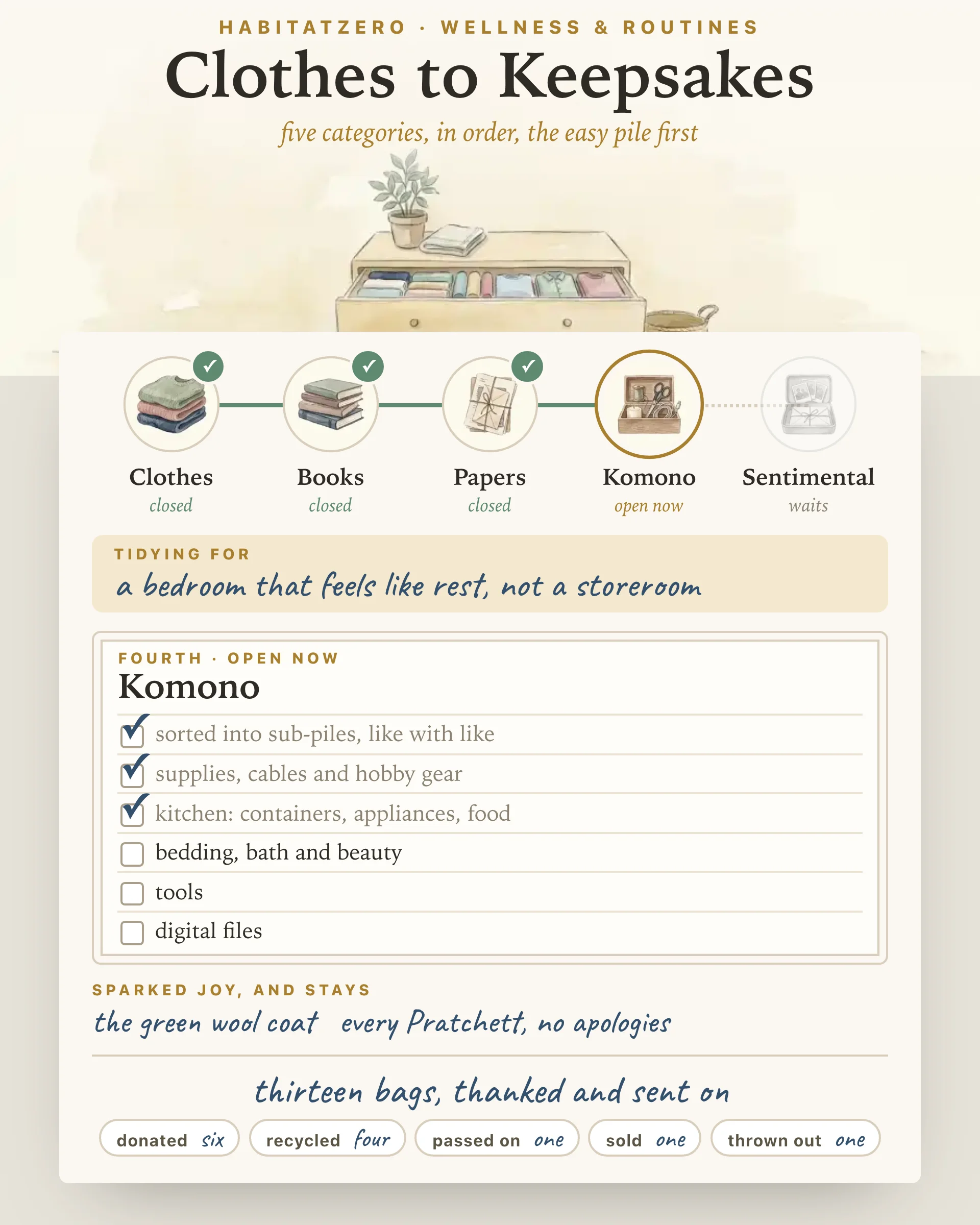
Clothes to KeepsakesWork through clothes, books, papers, komono and sentimental items in the KonMari order: tick each sub-pile, name what sparked joy and count where the rest went. Each category opens only when the one before it closes.
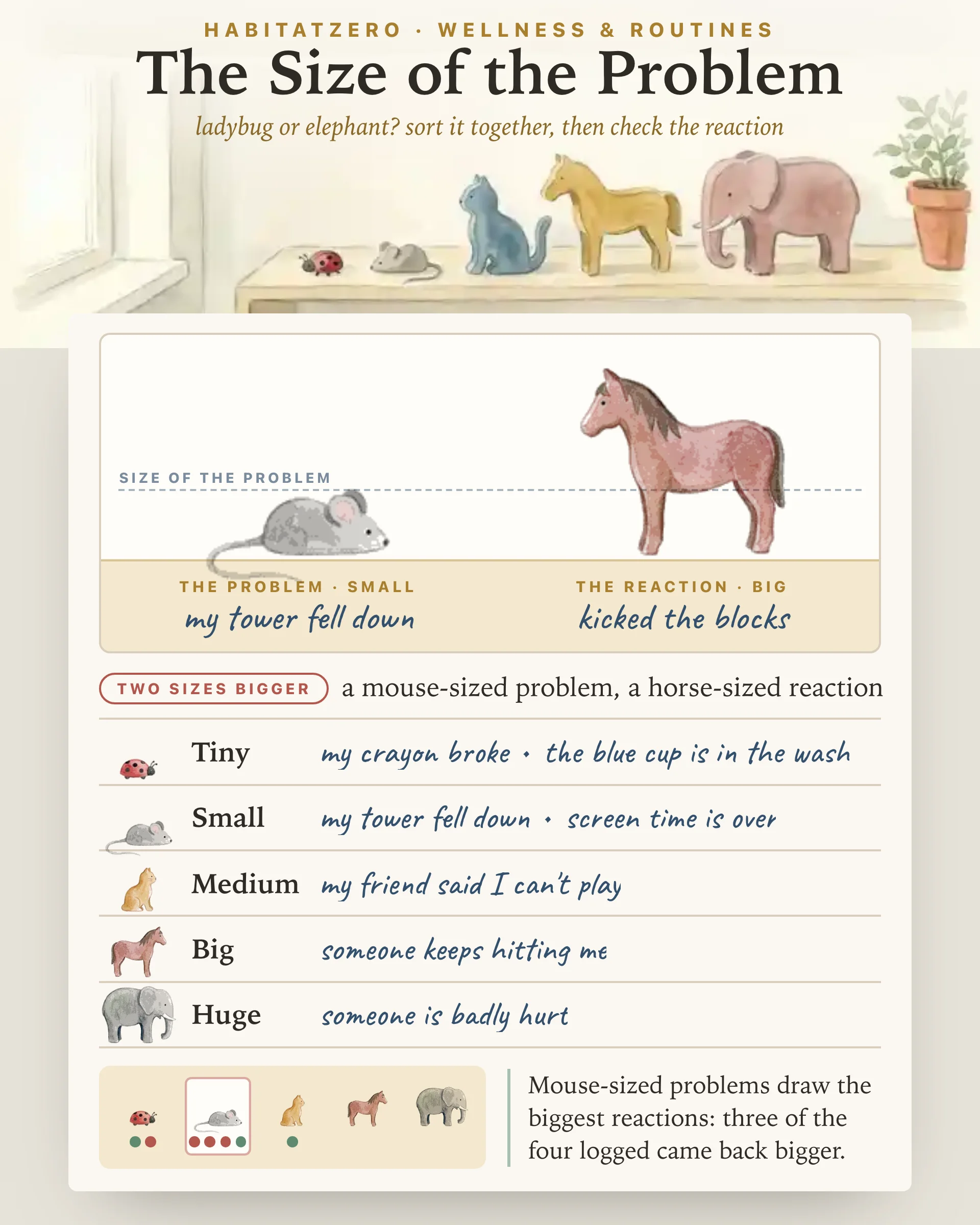
The Size of the ProblemFive painted toy animals, ladybug to elephant, become the size scale: sort everyday problems onto them with your child, match each reaction to the size it fits, and the log shows which sizes of problem draw the oversized reactions.
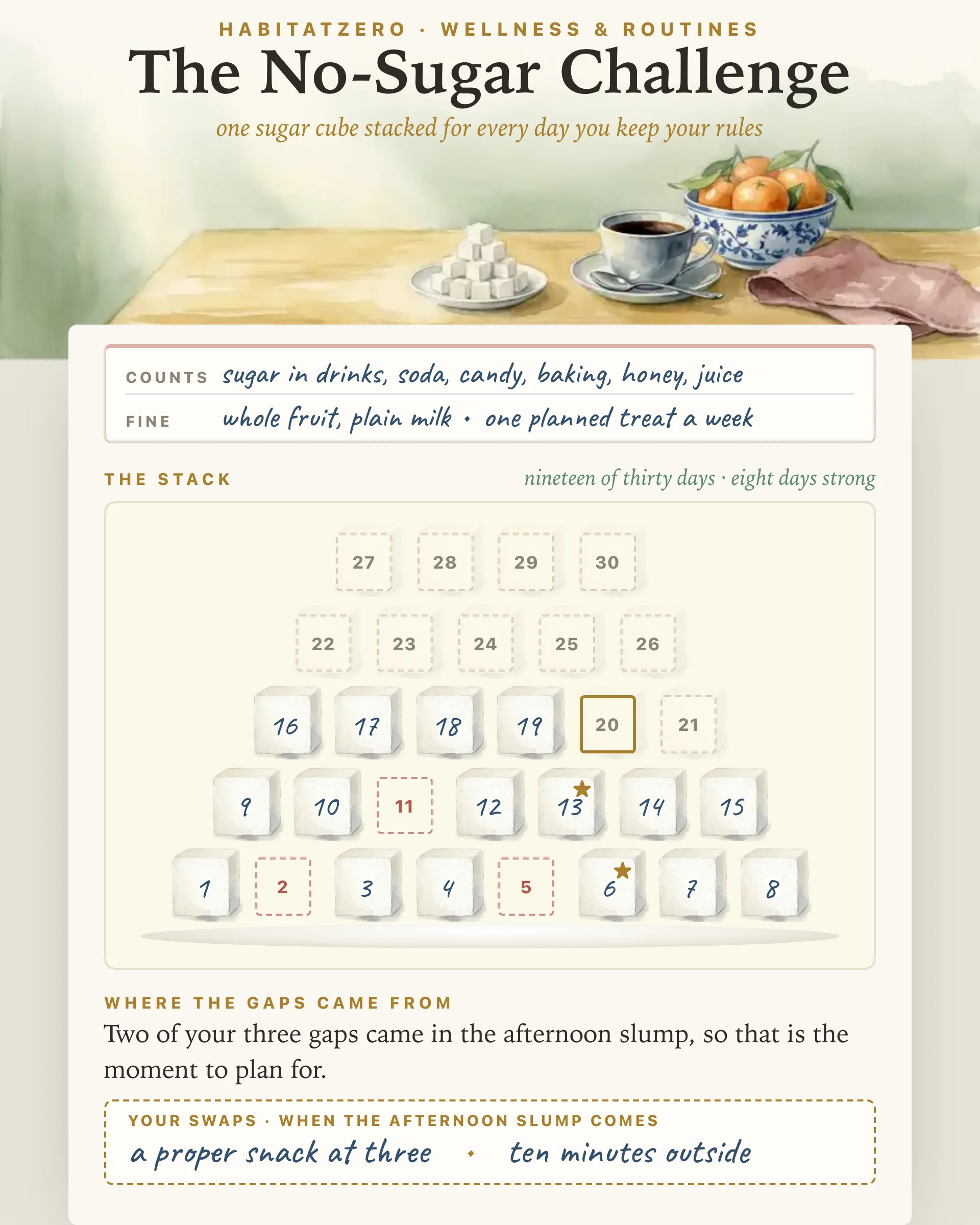
The No-Sugar ChallengeCircle your own rules for added sugar, then stack a painted sugar cube for every day you keep them. A slip leaves a gap instead of toppling anything, and once a few are in, the page names the moment behind most of them and hands you swaps for it.
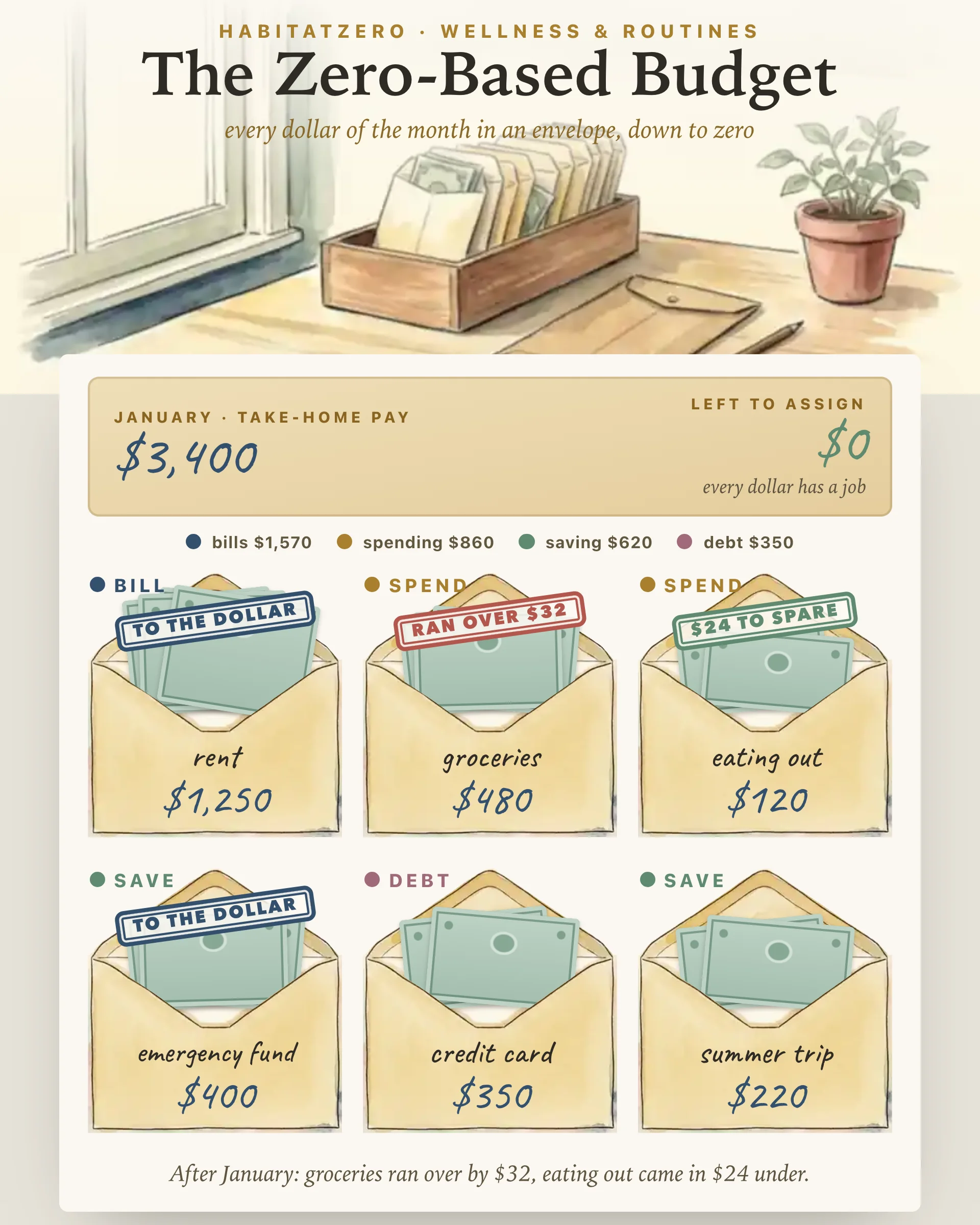
The Zero-Based BudgetType the month's take-home pay and hand it out to envelopes for bills, spending, saving and debt until the left-to-assign figure reads exactly zero. When the month closes, write what each envelope took and see which ran over, and by how much.
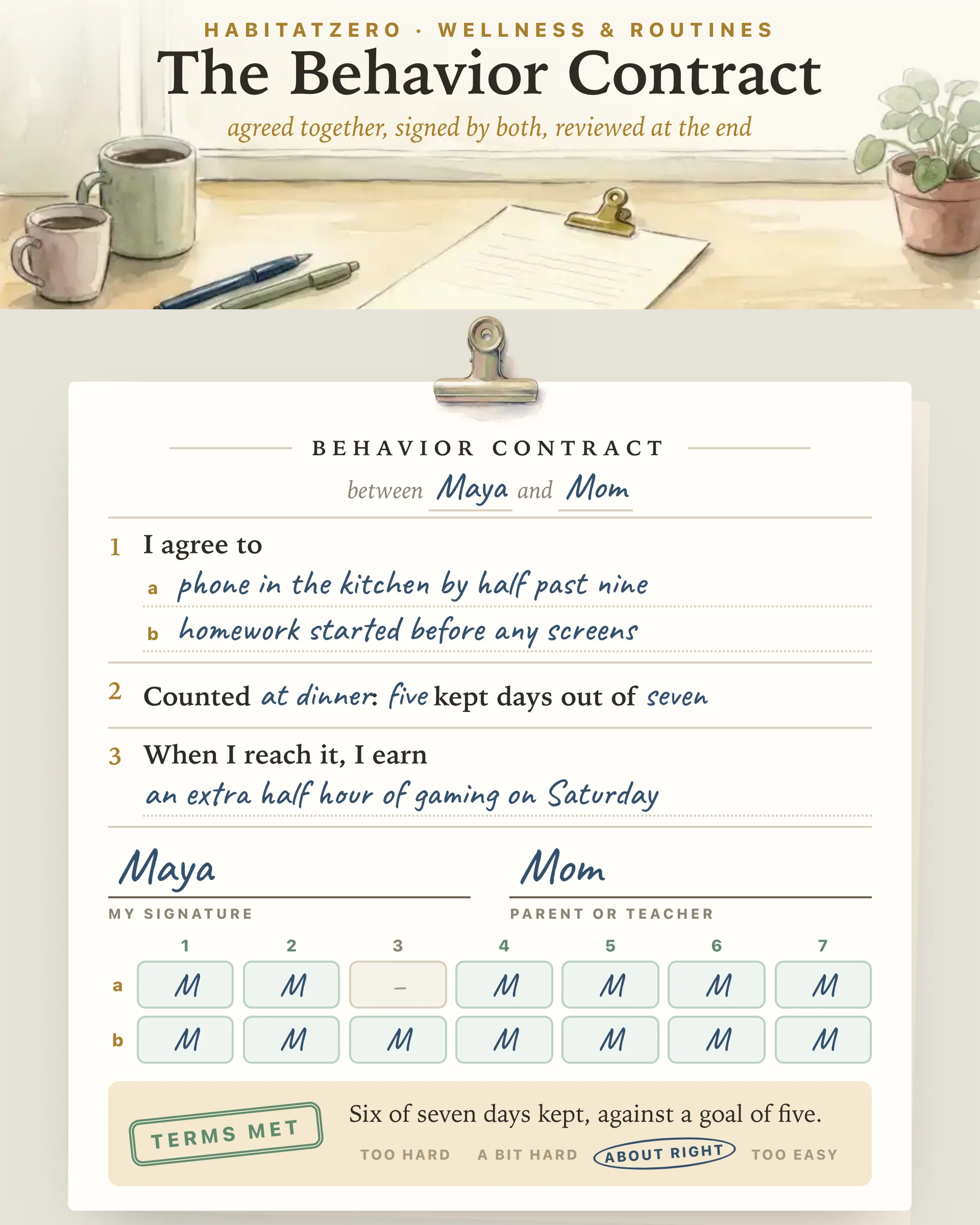
The Behavior ContractDraft a written agreement with a child or teen from tap-in clauses, both sign it by name, then mark each day against the terms. At the review it says plainly whether the terms were met and whether the next round should ask less or more.
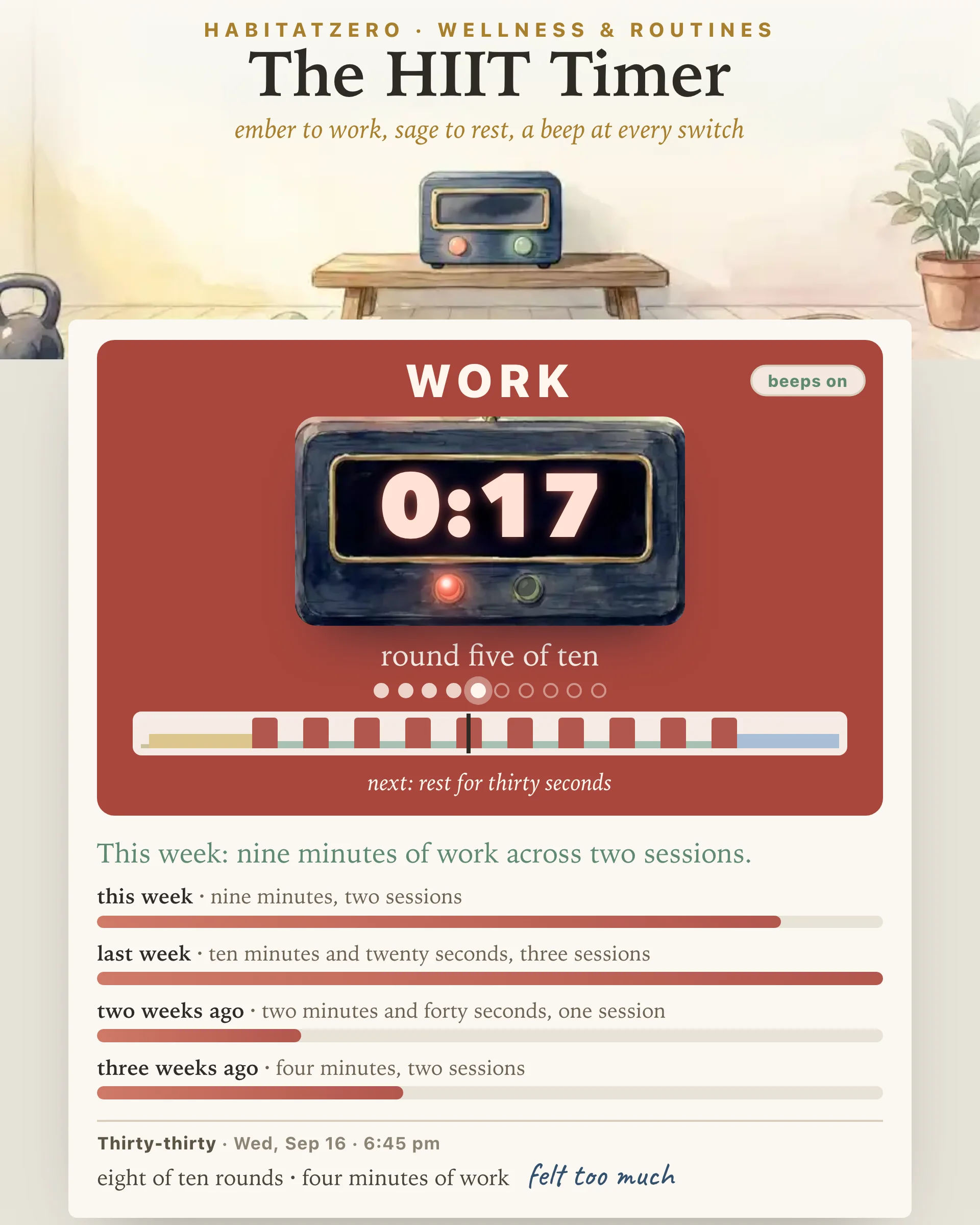
The HIIT TimerA painted gym interval clock for rounds of work and rest: pick Tabata, thirty-thirty or your own, and the whole screen turns ember to work and sage to rest, with a beep at every switch. Each session you log adds to a week of work counted in plain words.
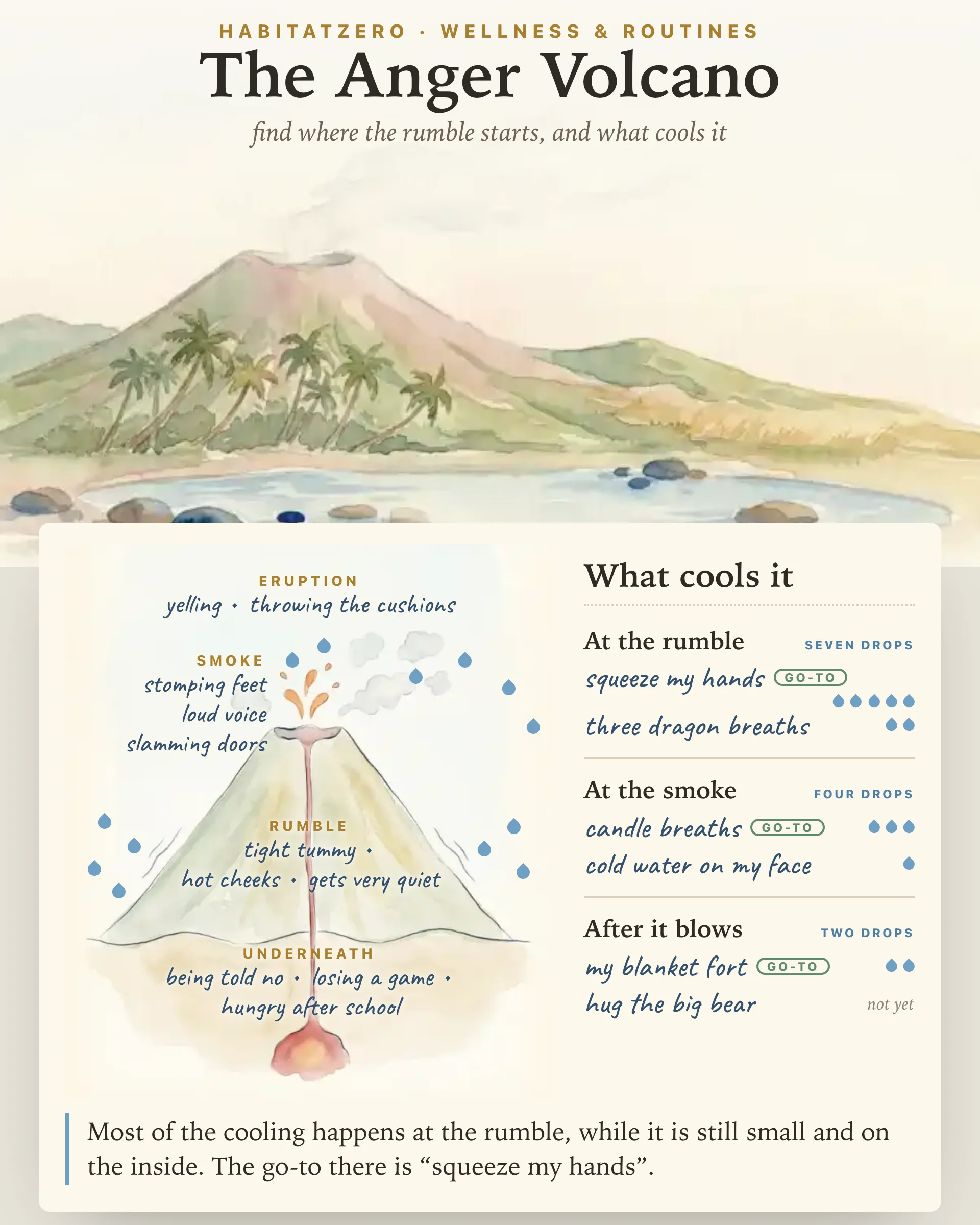
The Anger VolcanoA painted volcano you fill in with your child: what heats it up, how the rumble, the smoke and the eruption show in their body, and the cool-offs that work at each stage. Tap used it after a cool-off and the drops show where the cooling really happens.
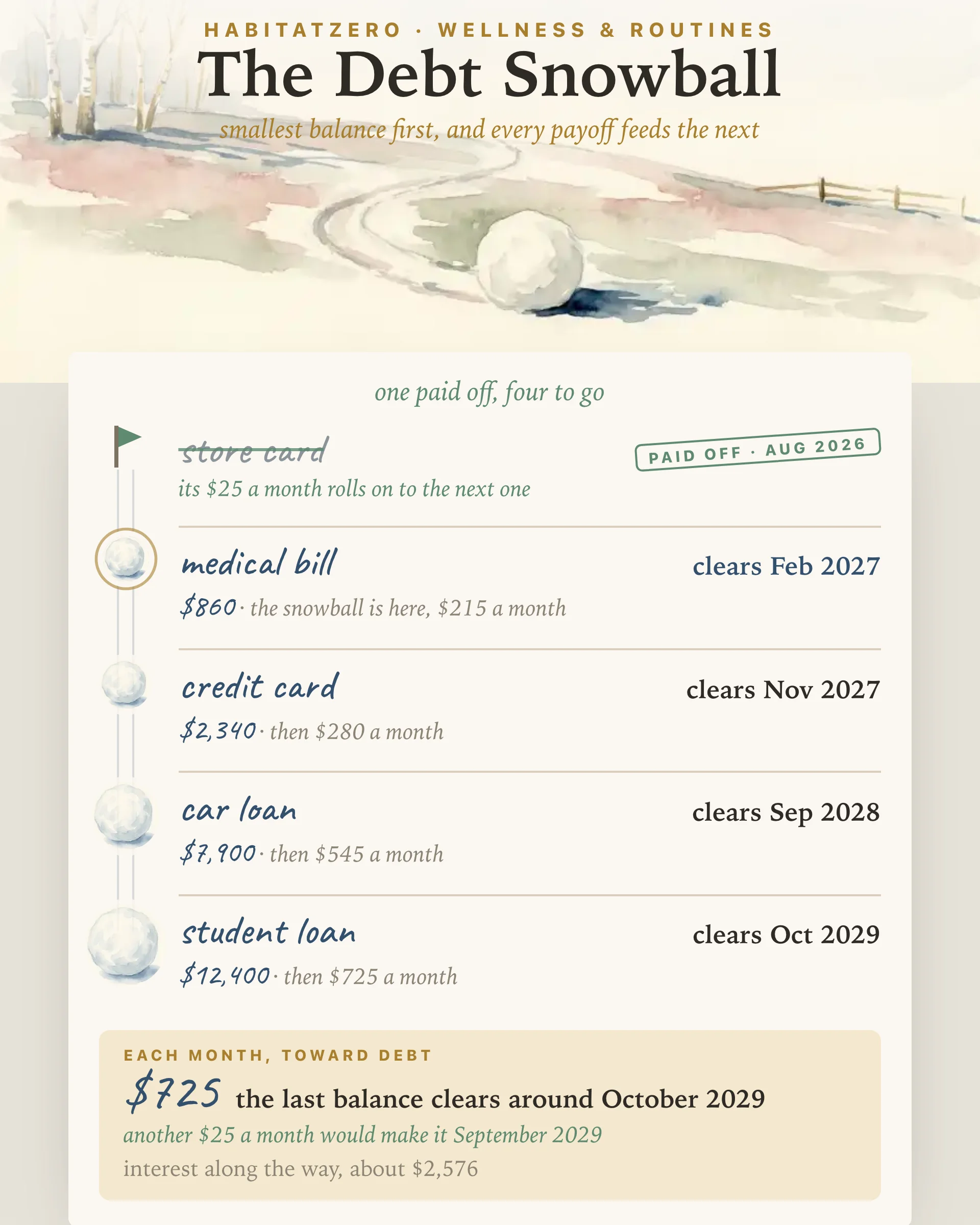
The Debt SnowballList what you owe and the sheet lines it up smallest balance first, then works out month by month when each debt clears as every paid-off payment rolls into the next. Add a little more each month and watch the dates move.
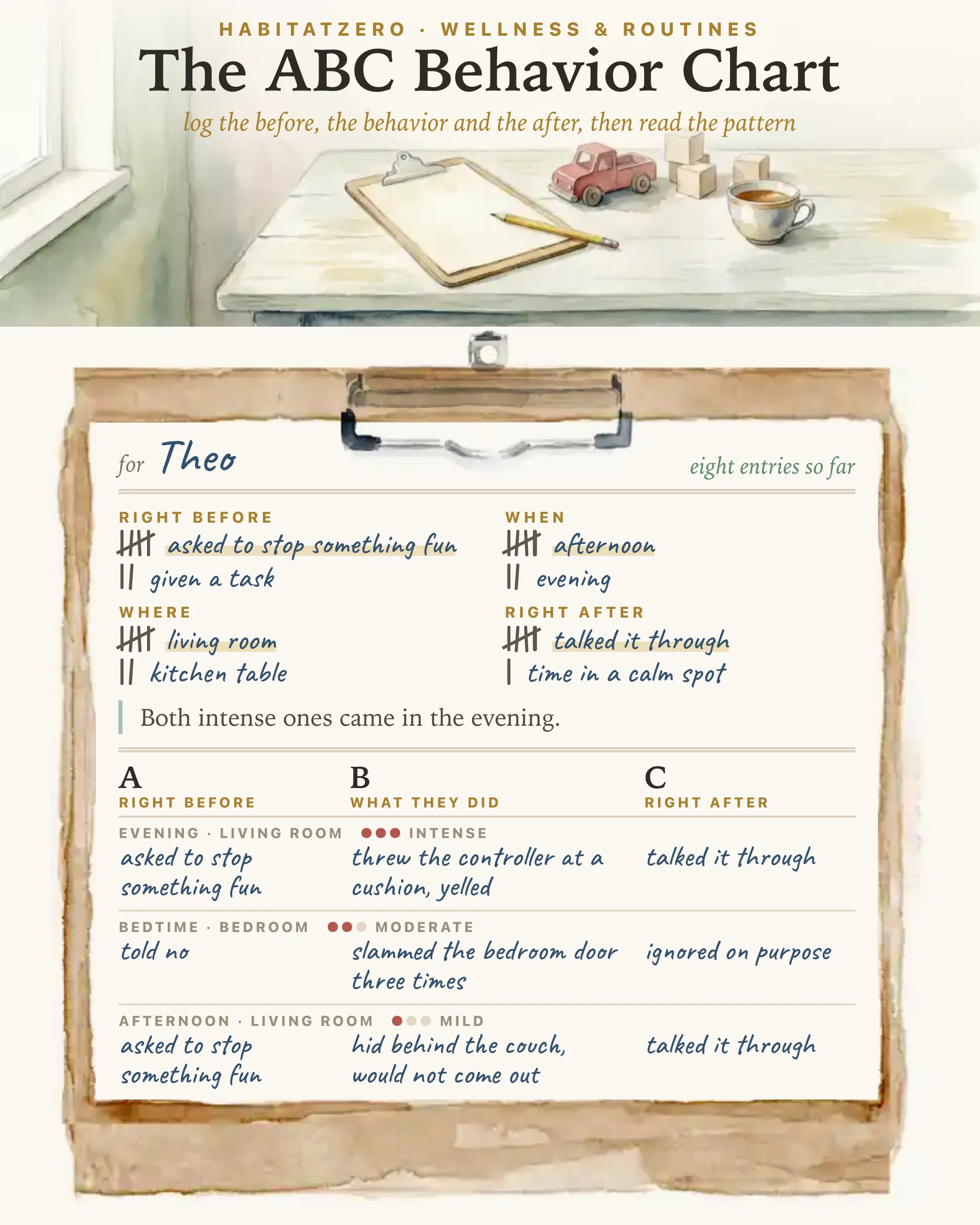
The ABC Behavior ChartA painted clipboard for logging hard moments in about a minute each: tap what came right before and right after, write what you saw, and note when, where and how intense. A few entries in, it tallies what keeps repeating, ready to show a teacher or specialist.
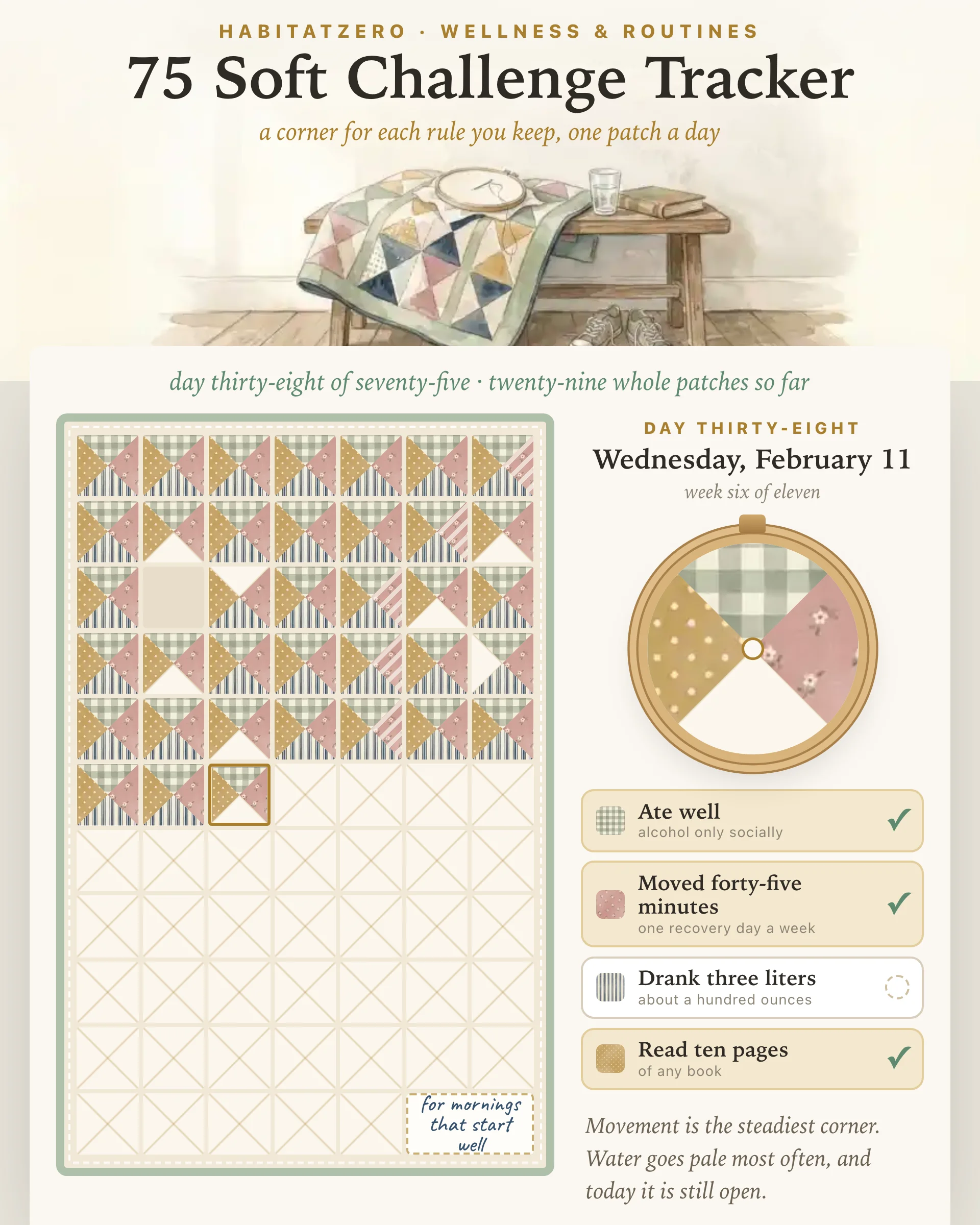
75 Soft Challenge TrackerEvery one of the seventy-five days is a quilt patch with a corner for each rule. Stitch the corners you kept, take one recovery day a week, and the growing pattern shows which rule holds steady and which one keeps going pale.
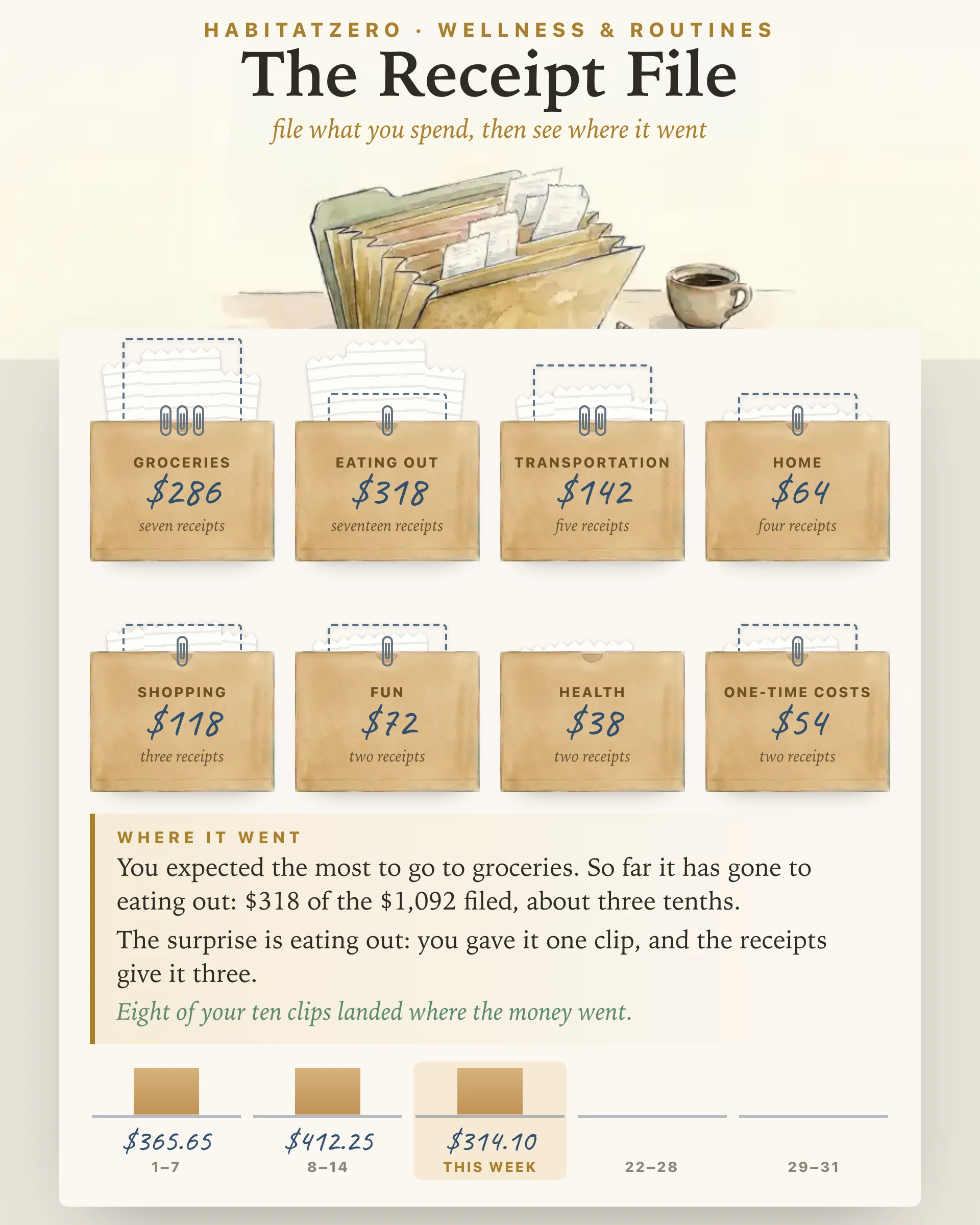
The Receipt FileFile each purchase in one of eight kraft pockets as you spend, and the page keeps the totals by pocket and by week. Clip ten guesses first, and it tells you in plain words where the month's money went against what you expected.
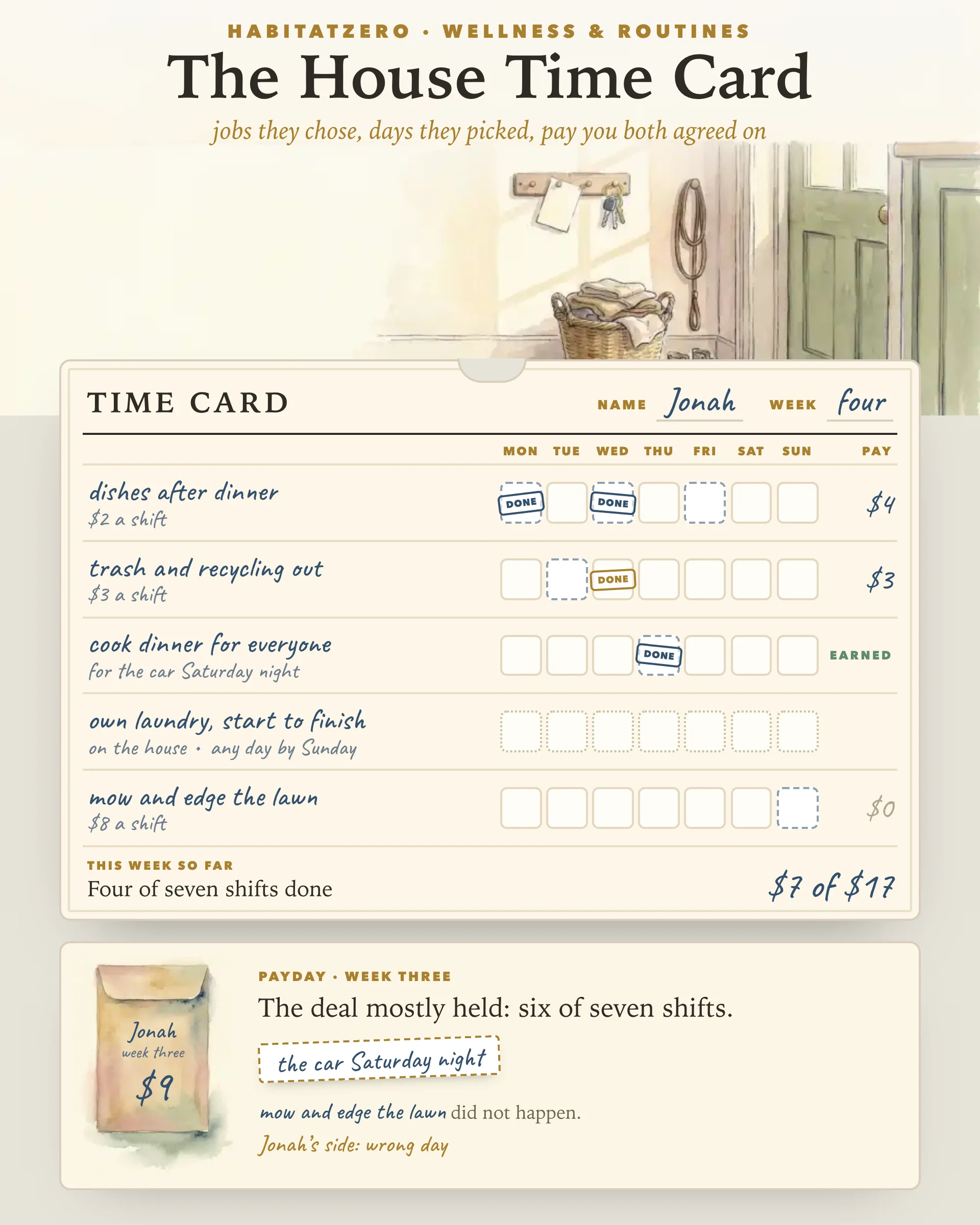
The House Time CardA chore chart your teenager helps write: they claim jobs from a board sorted by age and pick their own days, you agree on pay or a privilege for each one, and payday on Sunday adds up the week and shows which part of the deal needs changing.
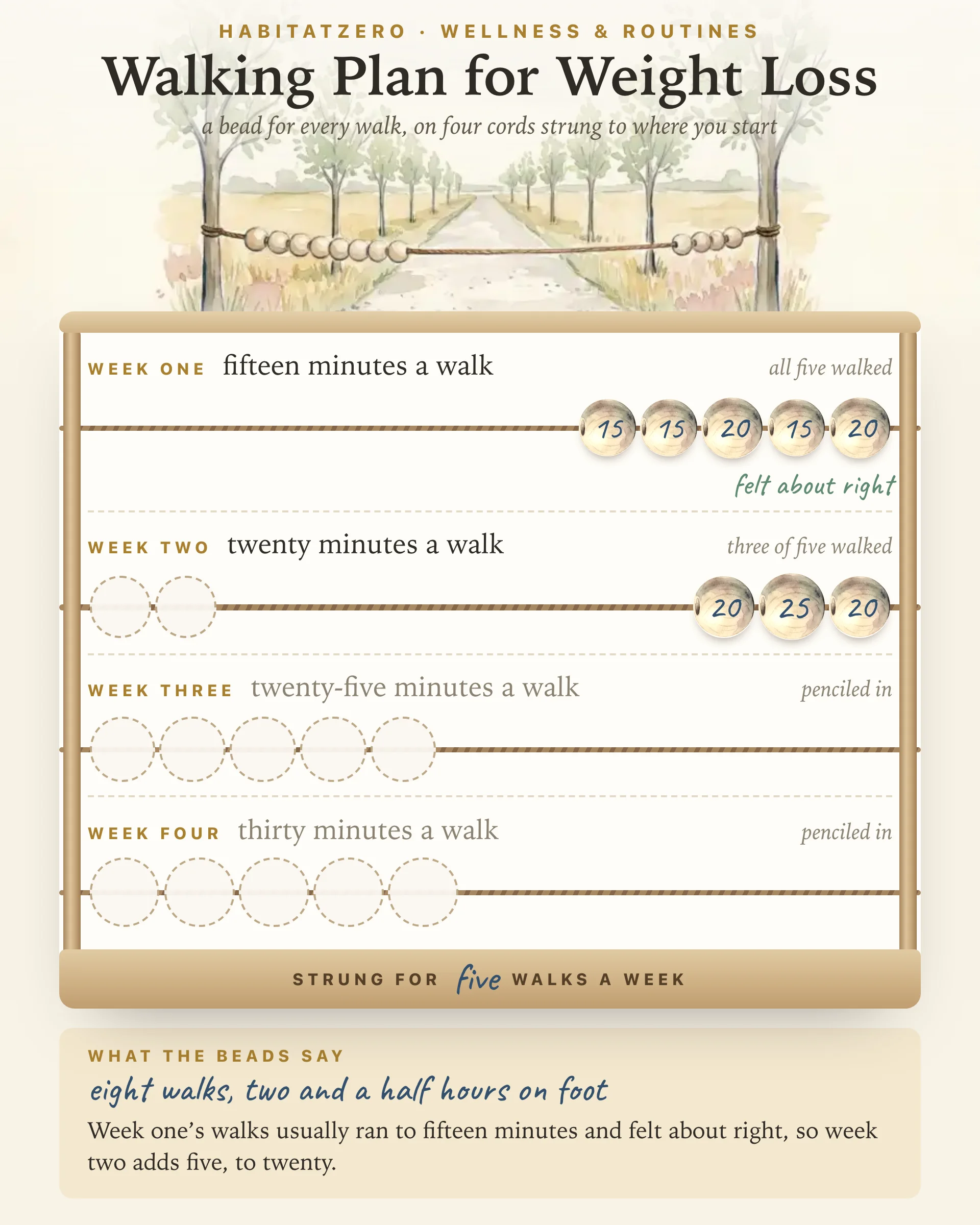
Walking Plan for Weight LossFour weeks of walks strung as four cords of wooden beads. Start at the length you can manage today, slide a bead across after every walk, and each week you rate restrings the next from the minutes you actually walked.
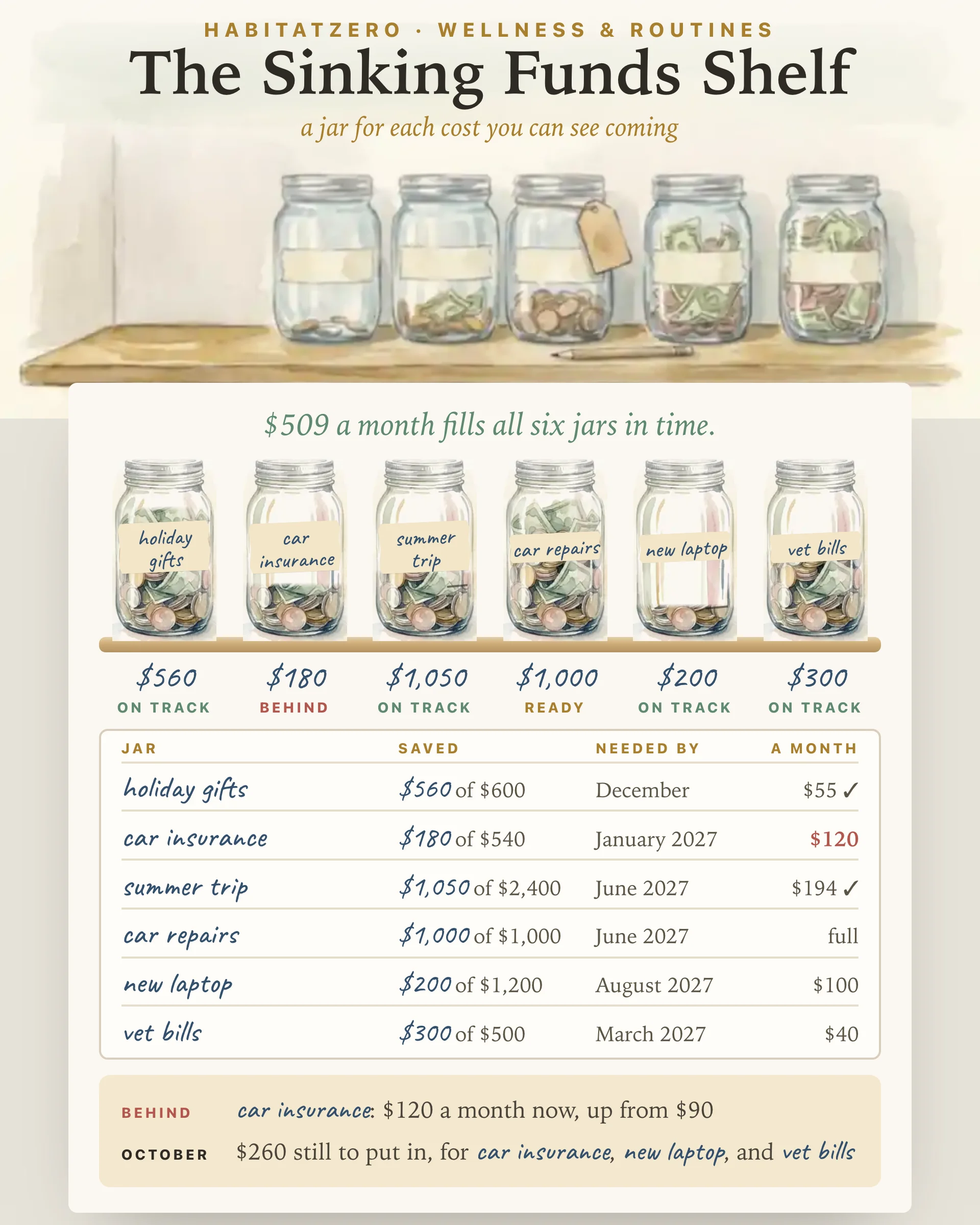
The Sinking Funds ShelfPut a jar on the shelf for each cost you can see coming, from car insurance to holiday gifts, with its price and the month it lands. Each jar works out its own monthly share from what is already in it, and the shelf says which jars are on track, which are behind, and what the month's set-aside comes to.
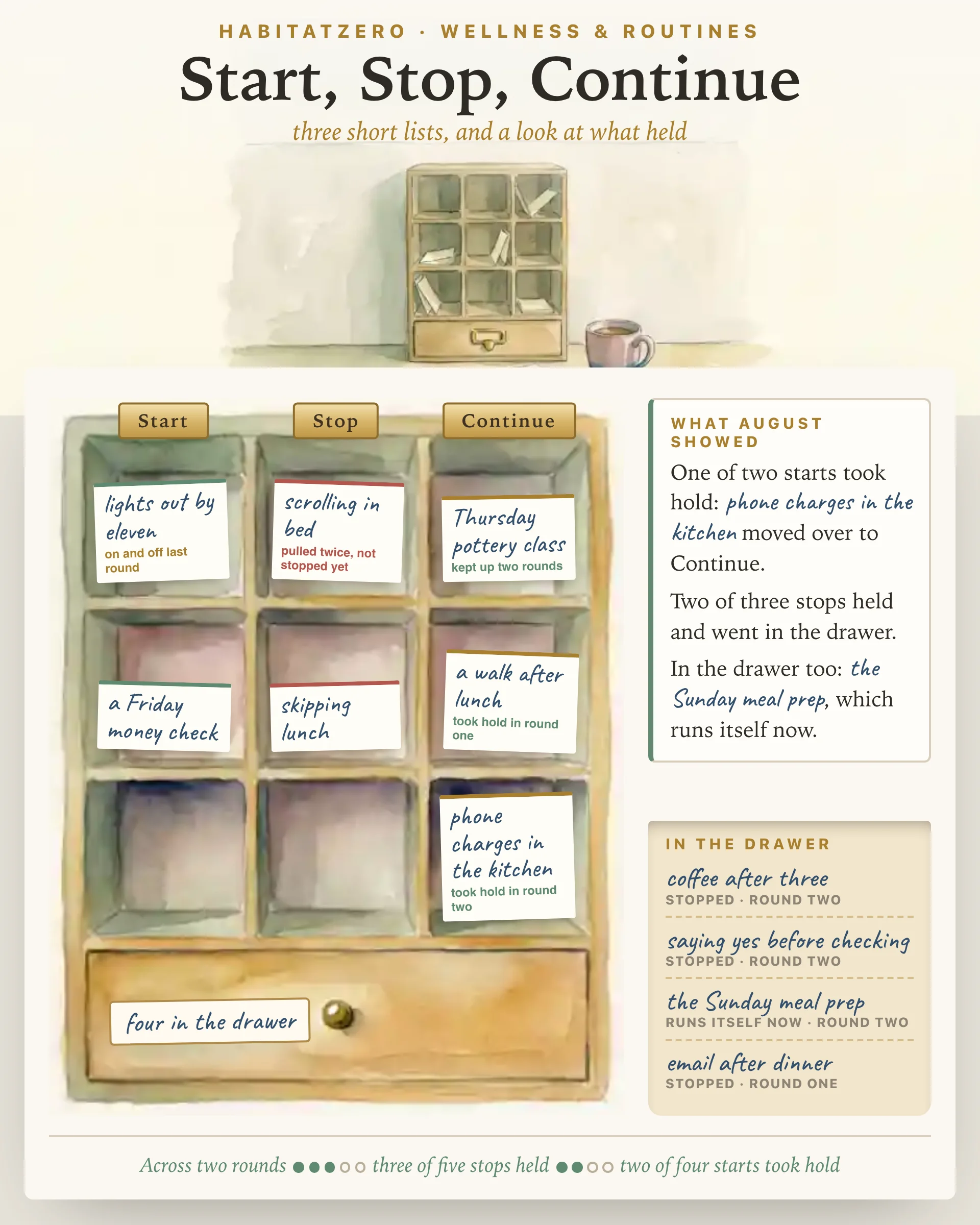
Start, Stop, ContinueLook back over a week, a month or a project and file up to three slips each under start, stop and continue. Next time, pull them: stops that held drop into the drawer, and starts that took hold move over to Continue.
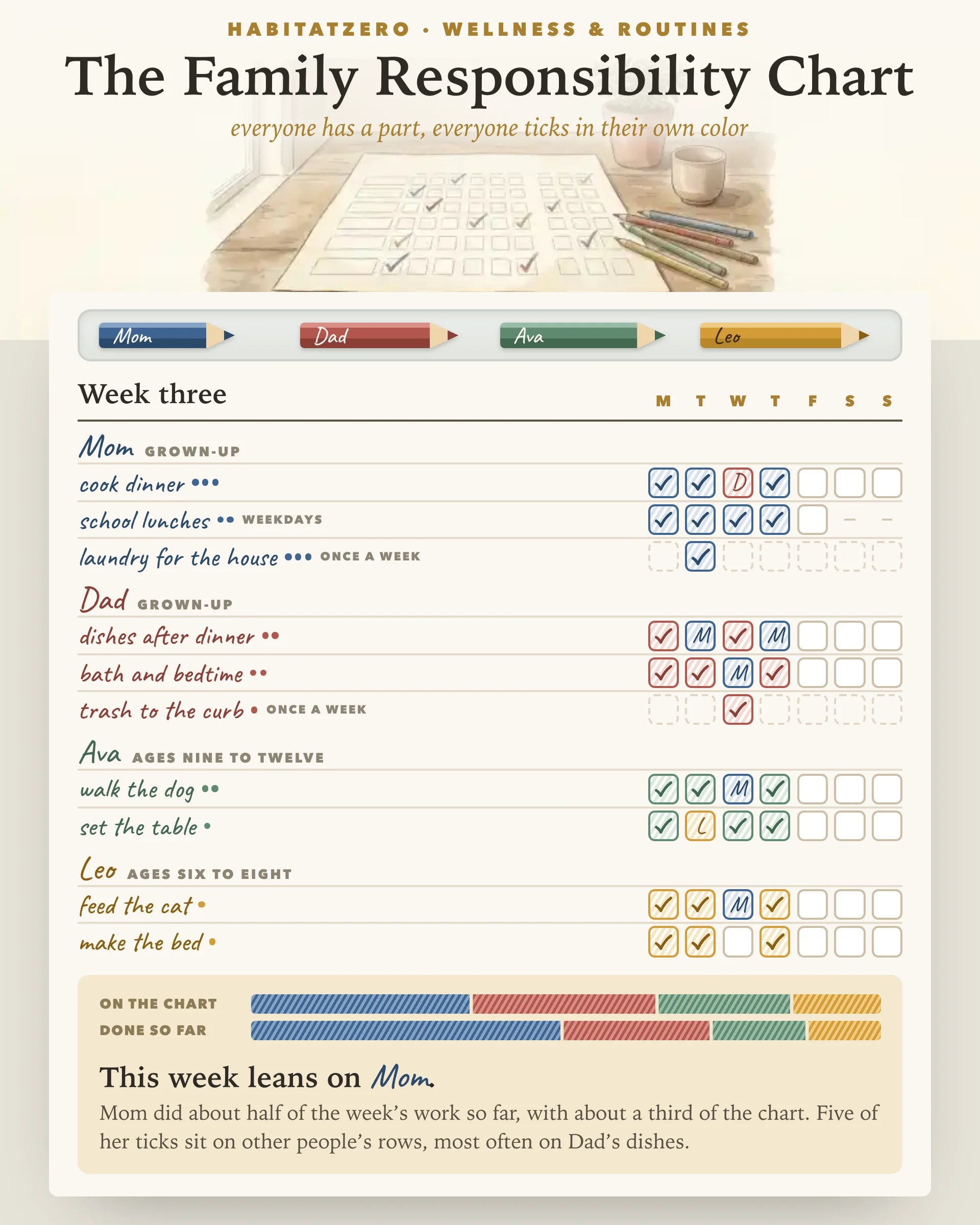
The Family Responsibility ChartGive everyone in the house, grown-ups included, a colored pencil and a few jobs sized to their age, tick the week as it happens, and see whose color is carrying the load.
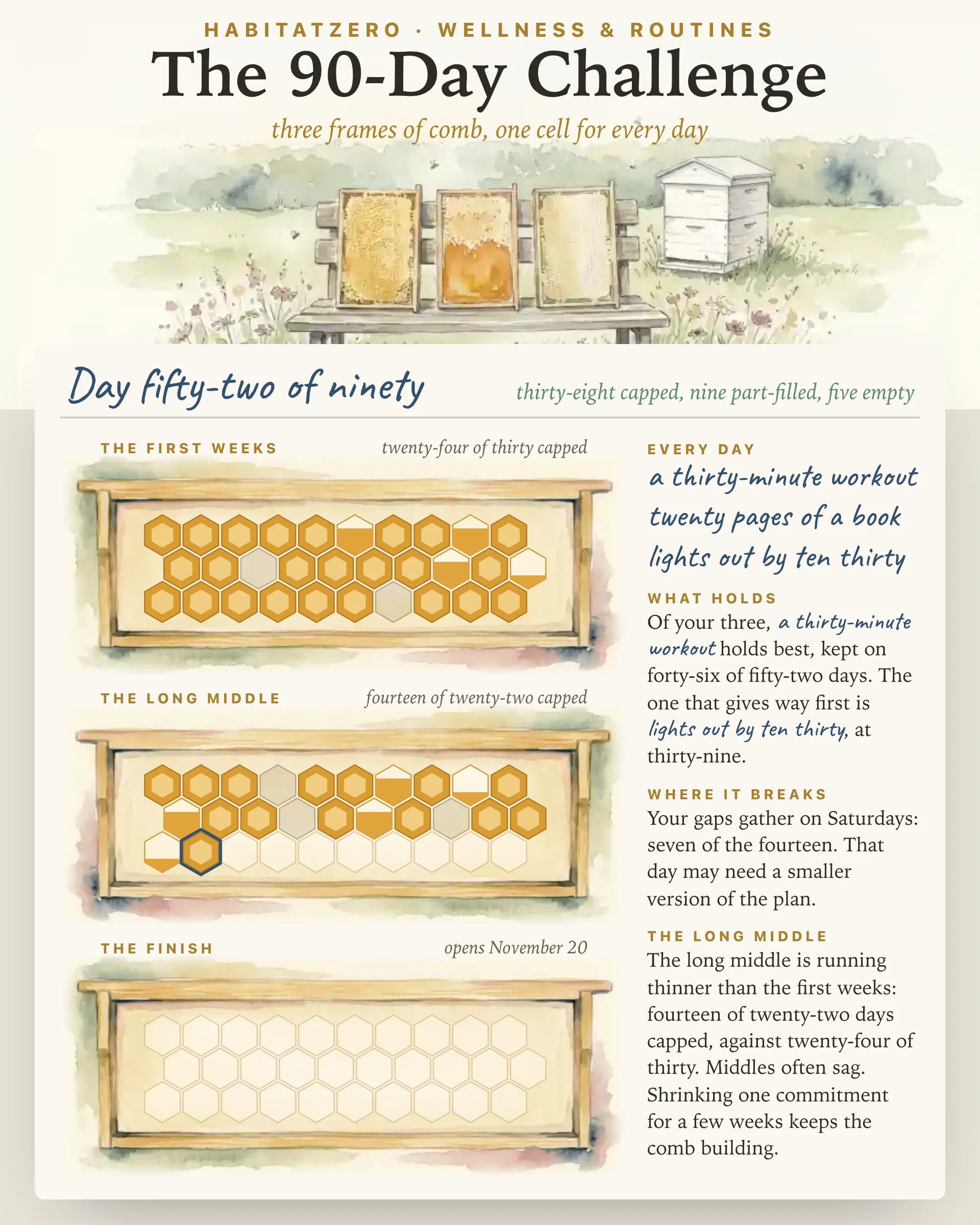
The 90-Day ChallengePick one to three things to do every day for ninety days, then fill a honeycomb cell each evening with what you kept. Three painted frames split the challenge into the first weeks, the long middle and the finish, and the page tells you which commitment holds and where your gaps gather.
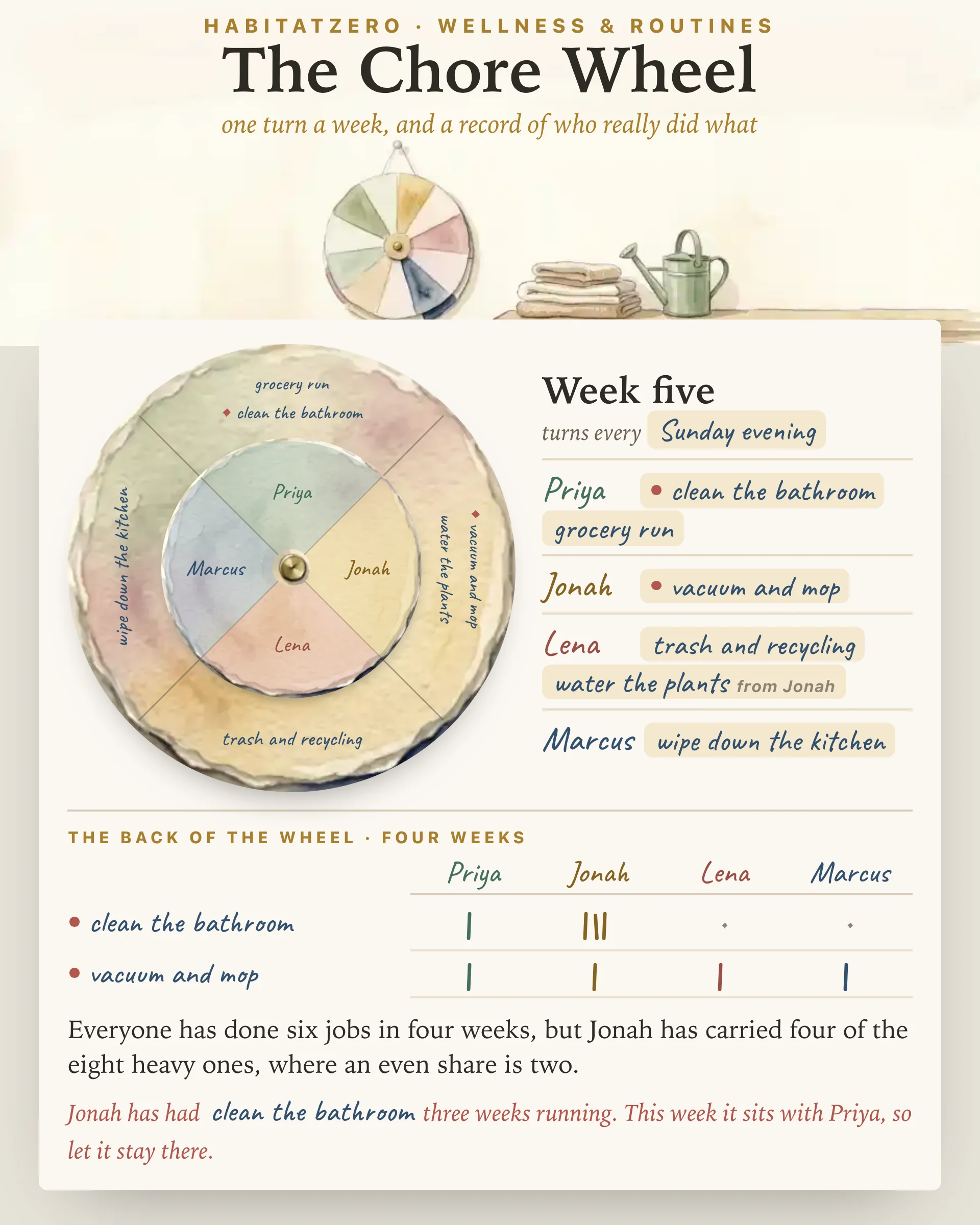
The Chore WheelNames on the inner ring, jobs around the rim, and one turn every week, with trades logged as they happen. The back of the wheel keeps count of who really did what and speaks up when the heavy jobs stop going around.
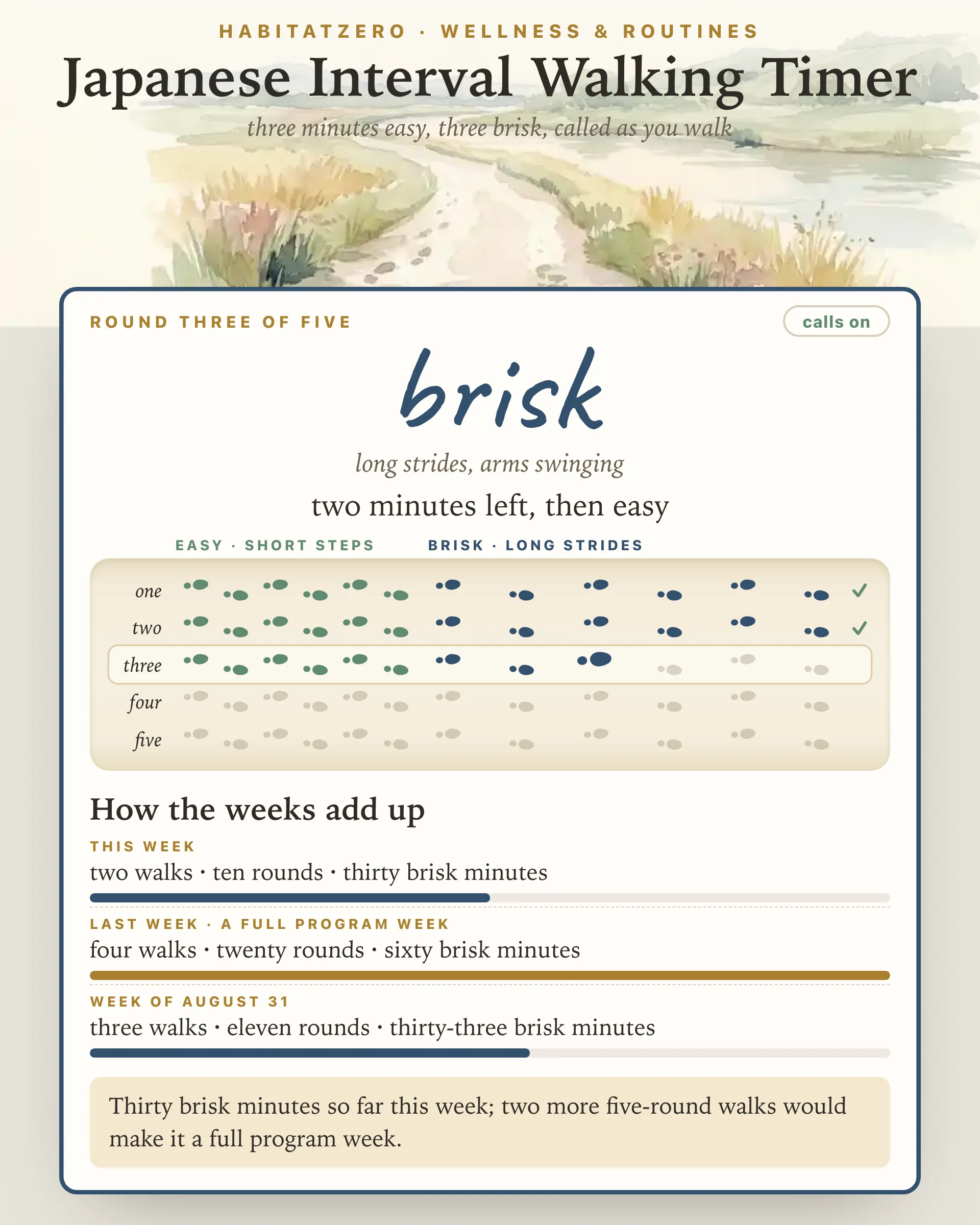
Japanese Interval Walking TimerThree minutes easy, three minutes brisk, round after round: set off and the timer calls every switch out loud while your phone rides in a pocket, inking a trail of footprints as you go. Each walk you keep adds its rounds to a week, set against the sixty brisk minutes the Shinshu University program asked for.
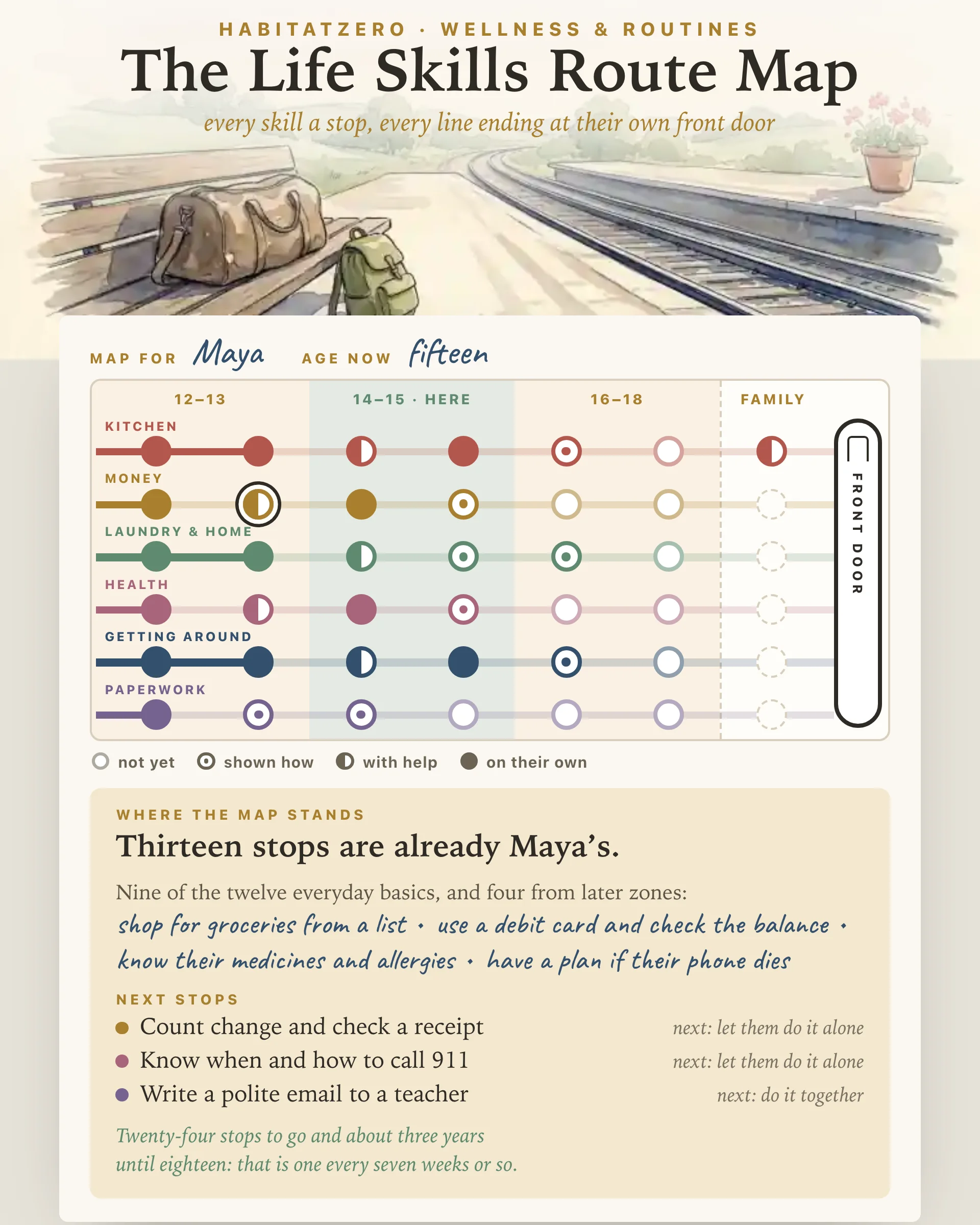
The Life Skills Route MapThirty-six life skills for teens drawn as a route map of six lines, from packing lunch to filing a first tax return. Mark each stop shown how, with help or on their own, and the map reads back what is already theirs, the next three to practice and a pace to eighteen.
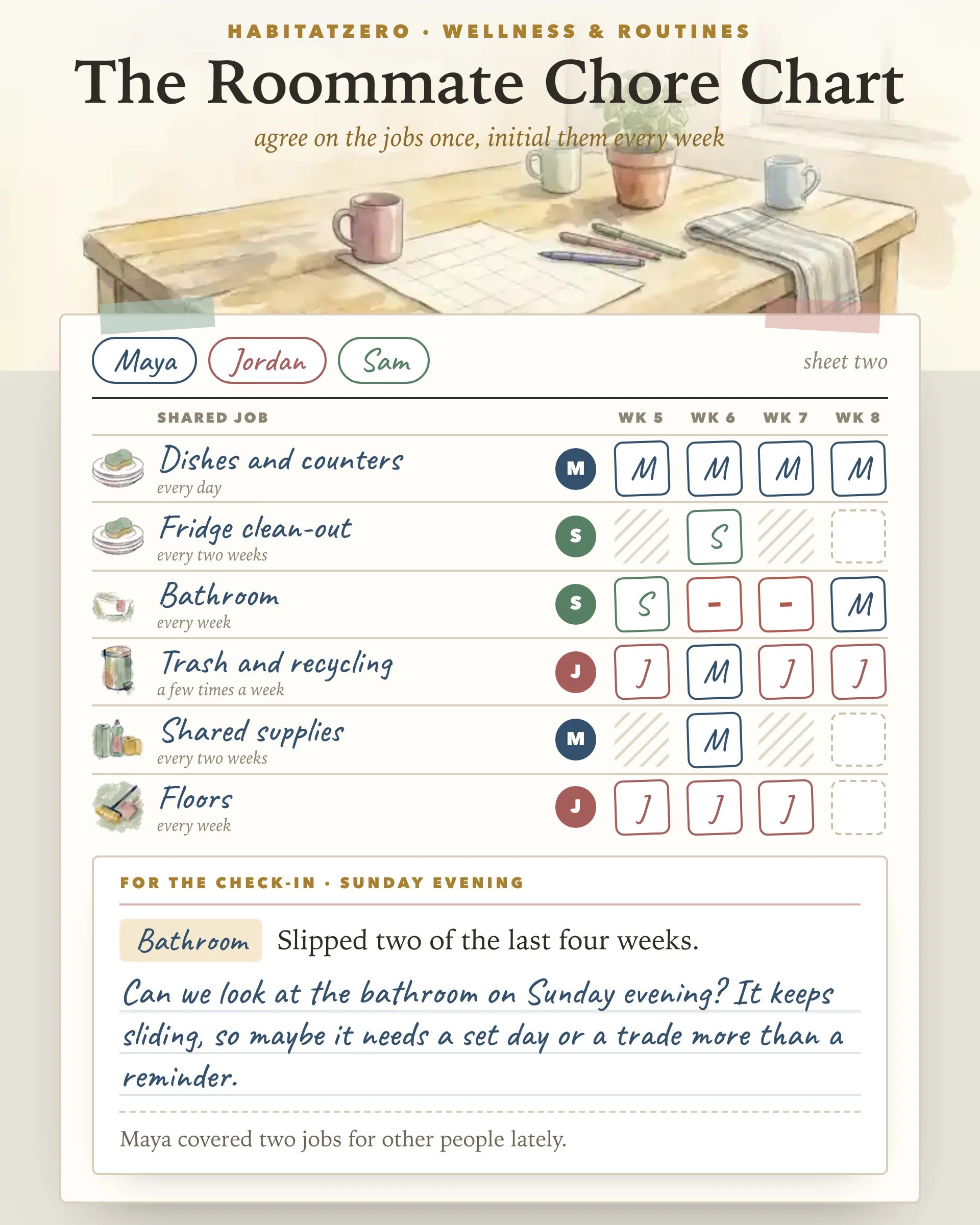
The Roommate Chore ChartAgree on the shared jobs and who takes each one, then initial the boxes as the weeks go by. A check-in card reads what slipped and who has been covering, says when it is trade week, and hands you one friendly line to raise when the house sits down.
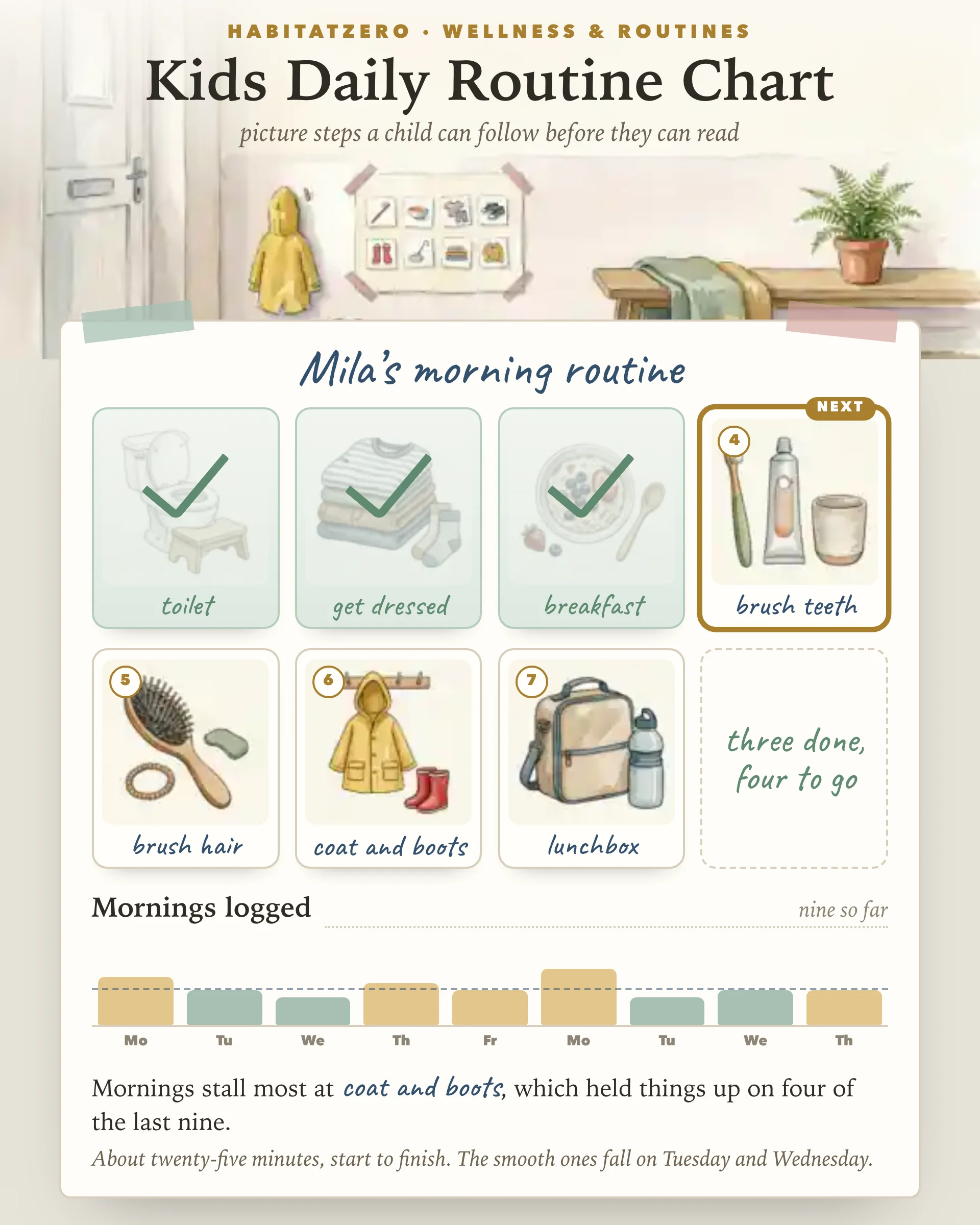
Kids Daily Routine ChartTap painted picture steps into the order your child's morning, after-school or bedtime routine really goes. Your child turns each card over as it is done, and after a few logged days the chart shows which step stalls and how long the routine really takes.
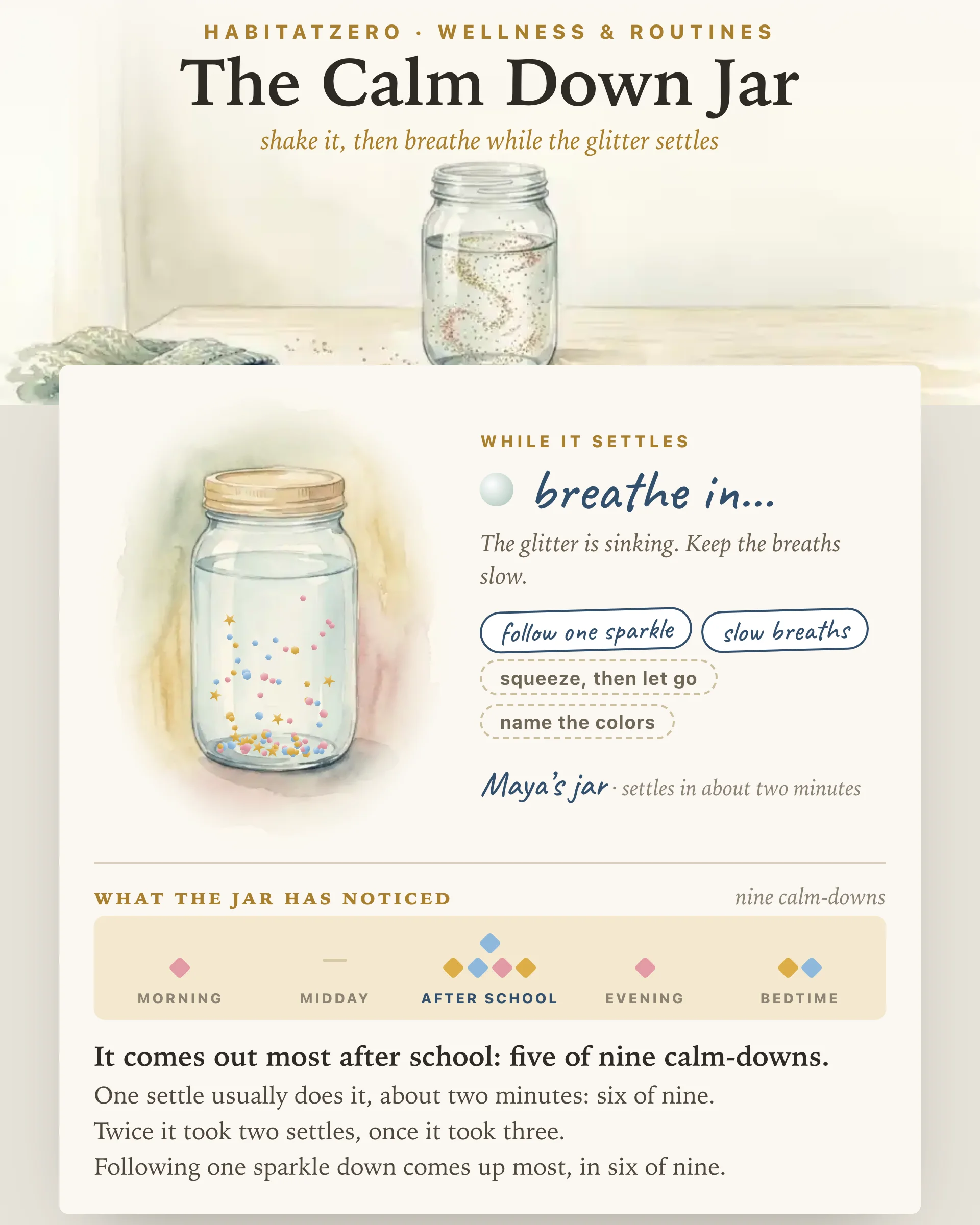
The Calm Down JarA painted glitter jar your child shakes and watches settle while breathing slowly, a log that learns when the jar helps and what they try while it falls, and a recipe card and labels to print for the real one.
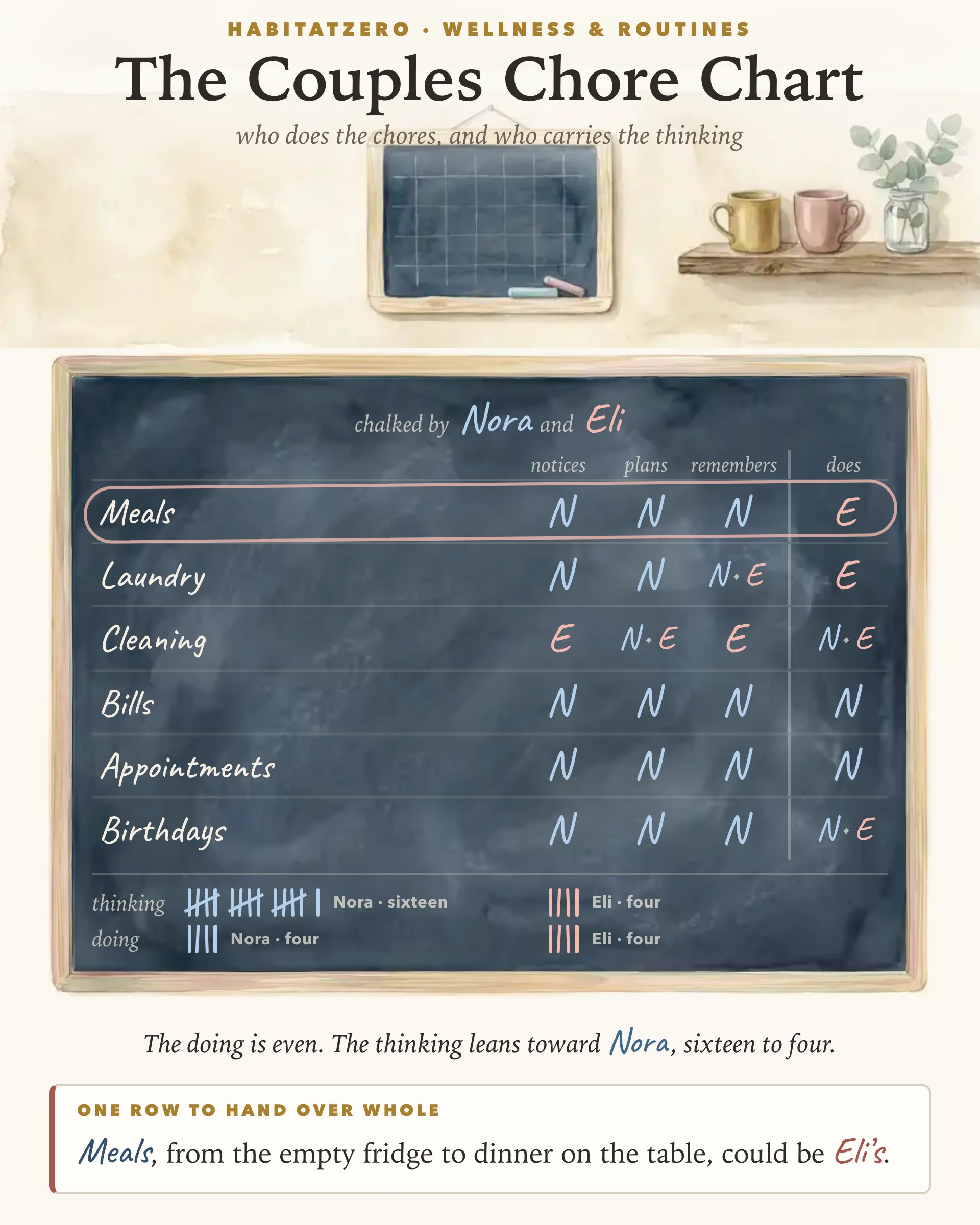
The Couples Chore ChartA kitchen slate for two: chalk in who notices, plans, remembers and does each part of running the house, then see who carries the thinking and which whole area could change hands.
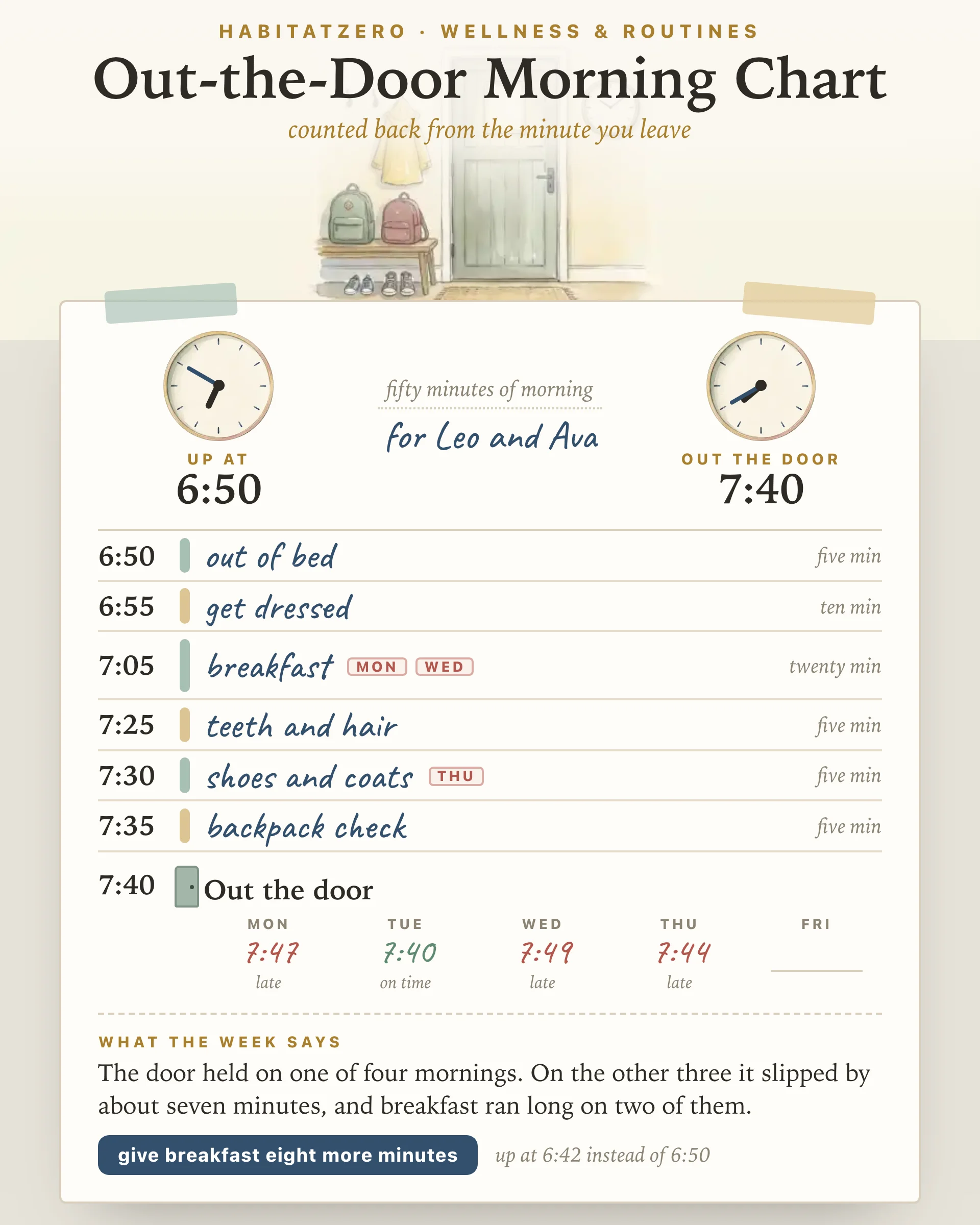
Out-the-Door Morning ChartSet the minute your family has to be out the door, tap in the school-morning steps with their real minutes, and every row shows when it should start. Log a few real mornings and the chart names the step that runs long.
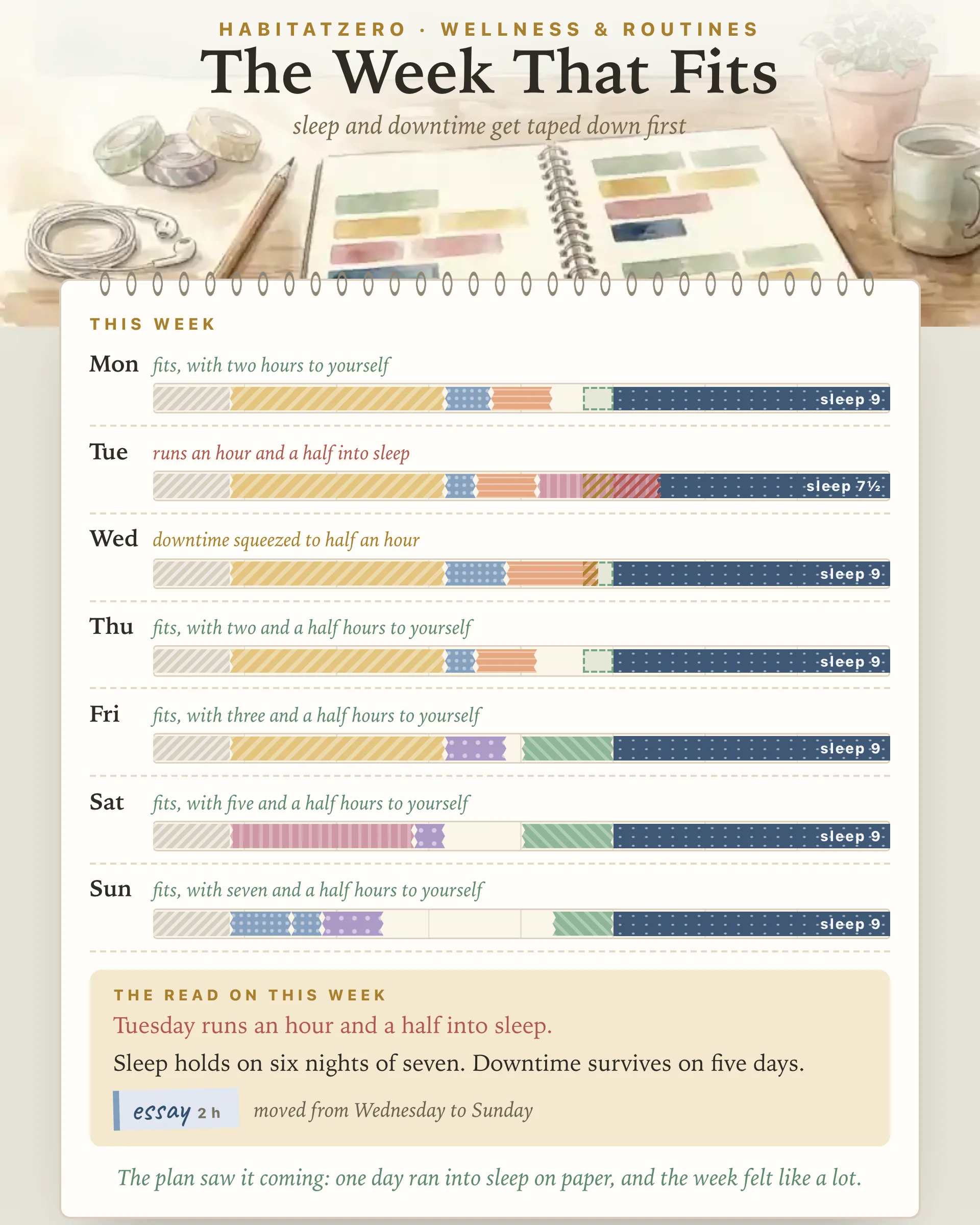
The Week That FitsA week planner for teens that shows the real load: tape school, homework, practice, shifts and plans onto each day by the hour, with sleep and downtime taped down first, and see which days run into sleep.
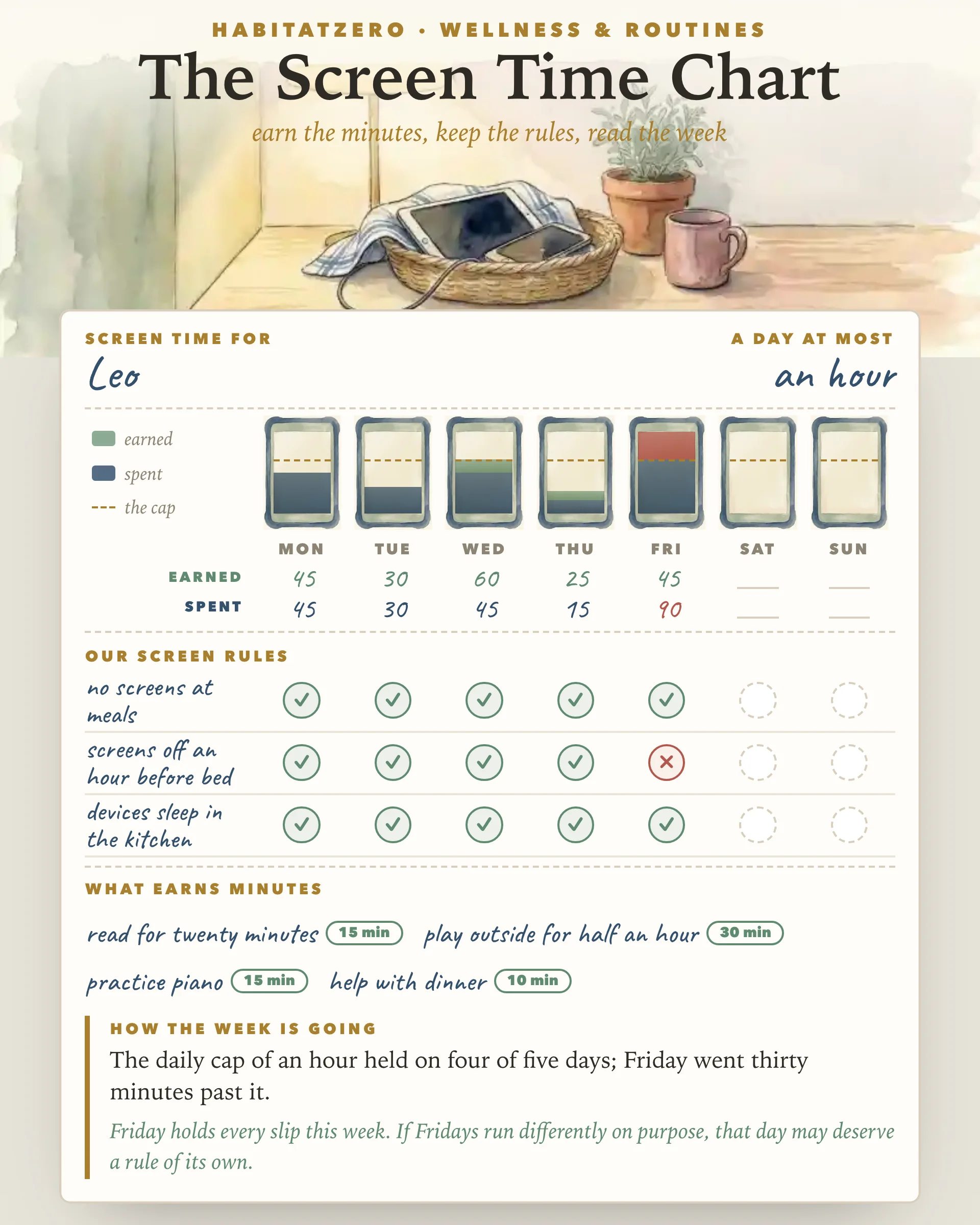
The Screen Time ChartAgree a few family screen rules and a daily cap, then let your child earn minutes from reading, play and helping out. Seven painted tablets fill as the week goes, and the chart tells you which rules held and where the cap gave way.
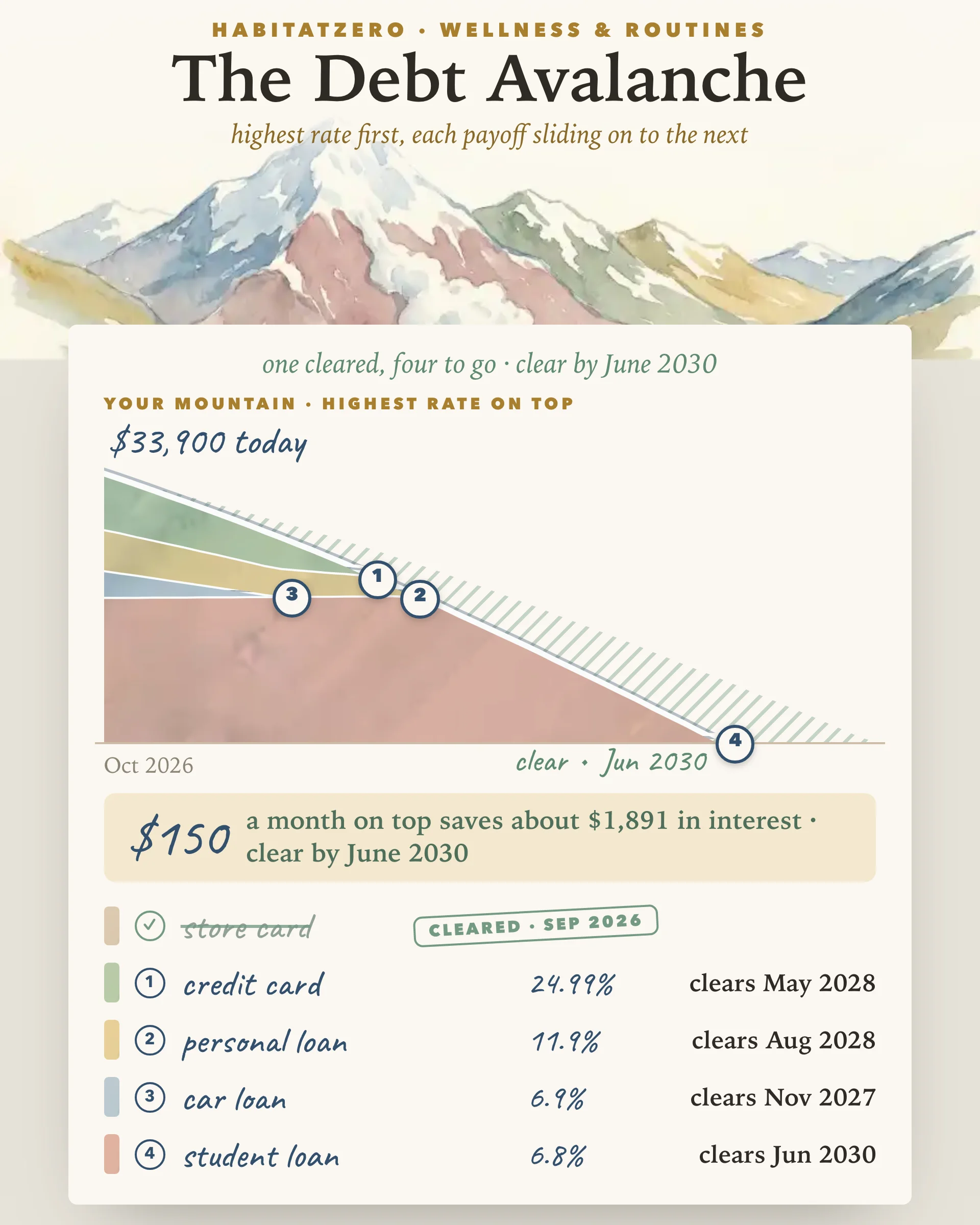
The Debt AvalancheList what you owe and the sheet stacks it highest interest rate first, then plays your plan forward month by month as each paid-off debt hands its payment to the next. Add a little each month and watch how much interest you keep.
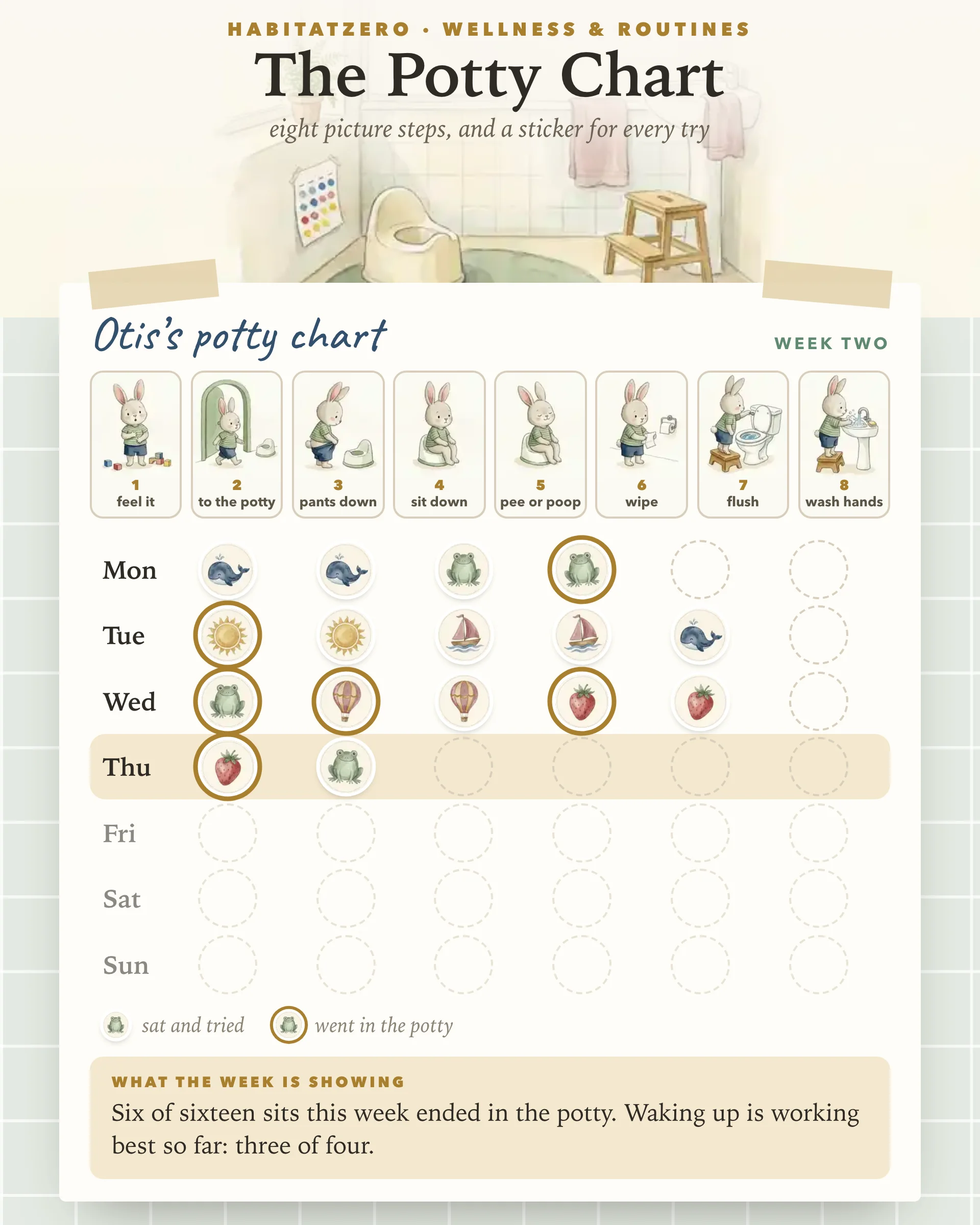
The Potty ChartA painted potty chart for toddlers: eight picture steps your child can follow, a week of sticker spots they fill with the sticker they choose, and a quiet reading that shows you which times of day are working.
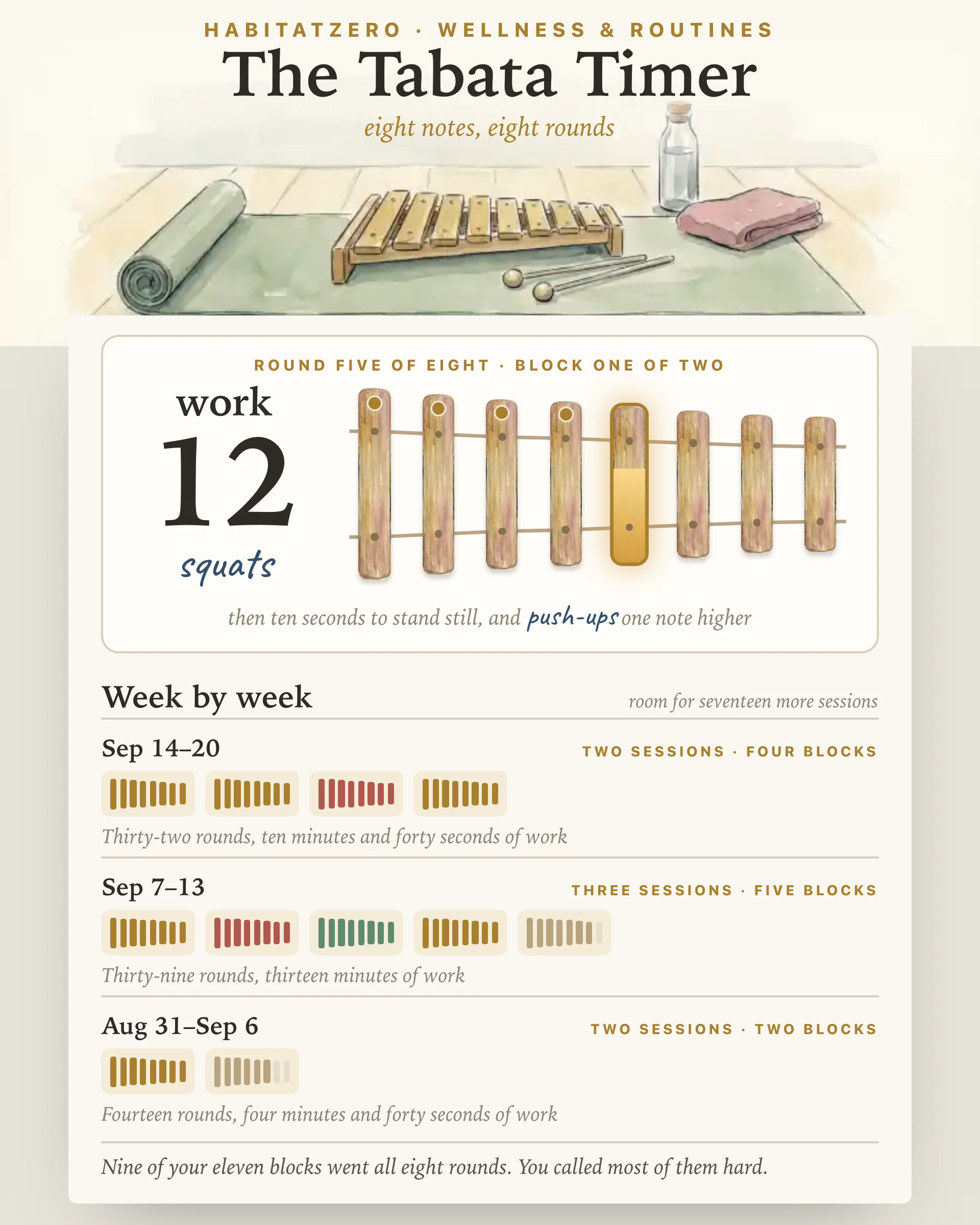
The Tabata TimerTwenty seconds on, ten off, eight rounds up a painted xylophone: every switch sounds the next note, and each block you finish lands in a weekly log of how it felt.
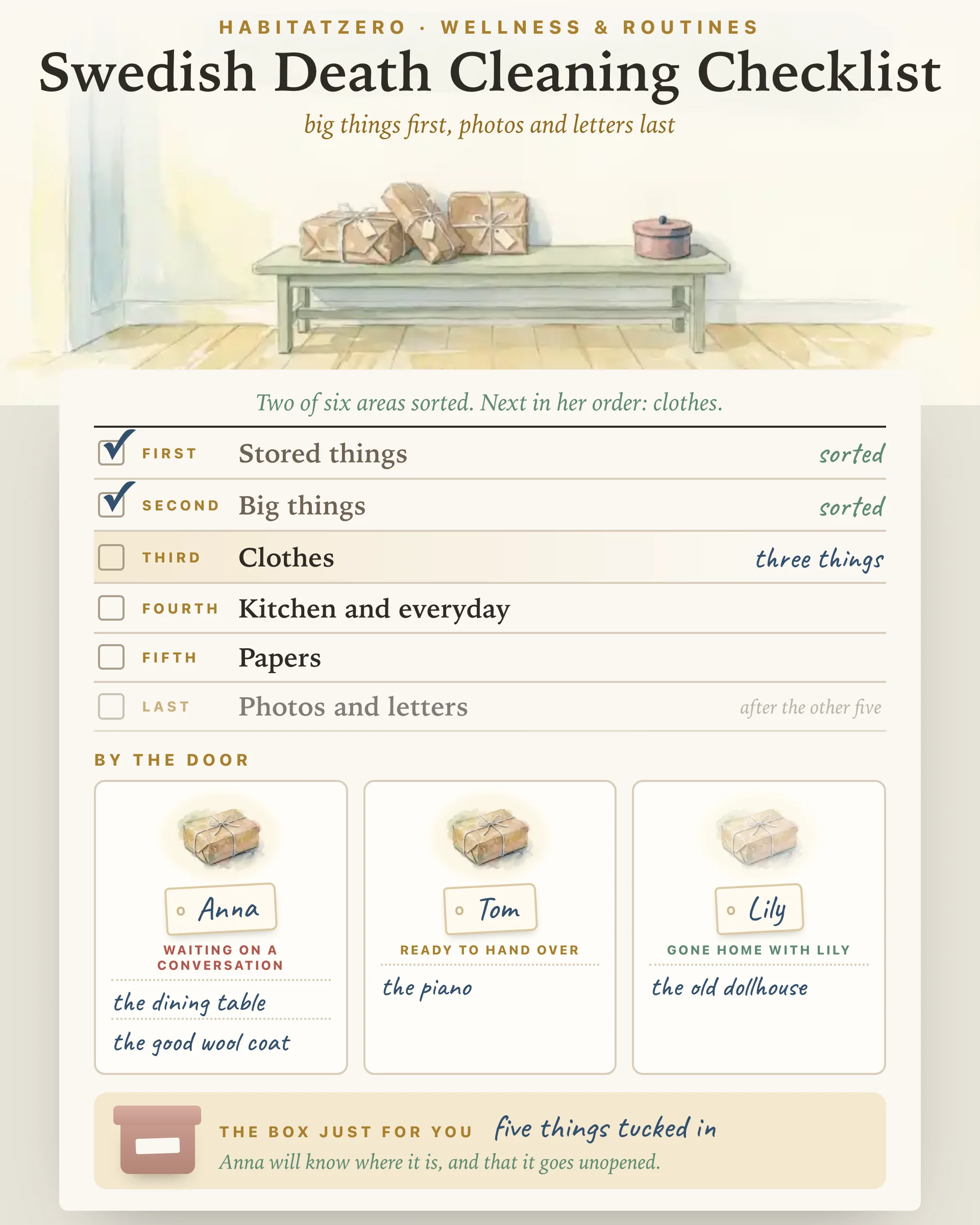
Swedish Death Cleaning ChecklistWork through your home in Margareta Magnusson’s order, from stored things to photos and letters, tagging each thing keep, give or let go. Every gift lands in a package with a name on it, marked ask first, said yes or handed over.
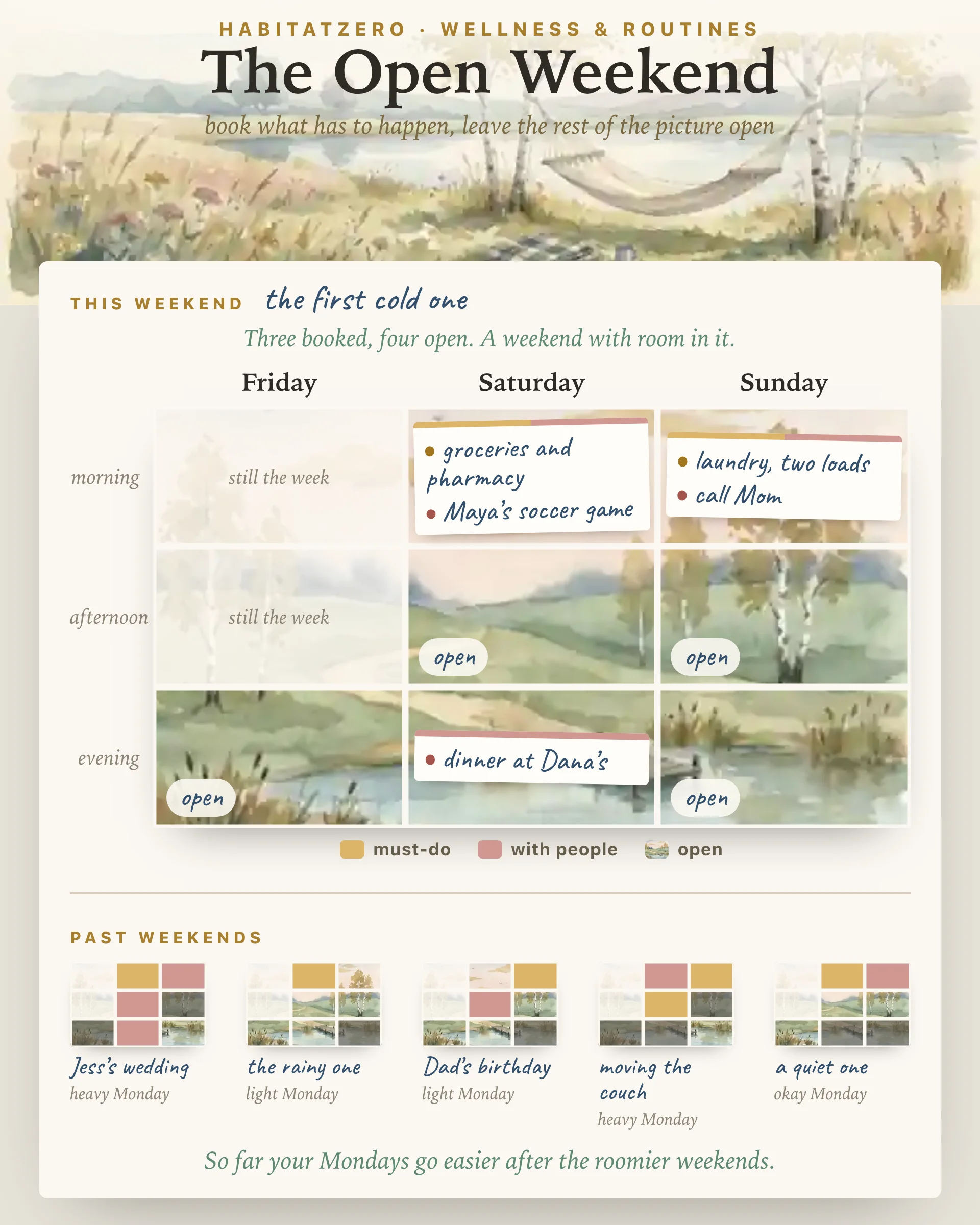
The Open WeekendPin the must-dos and the plans with people onto Friday evening, Saturday and Sunday while at least three parts of the weekend stay open, then file each weekend and see whether Monday goes easier when more of it stayed yours.
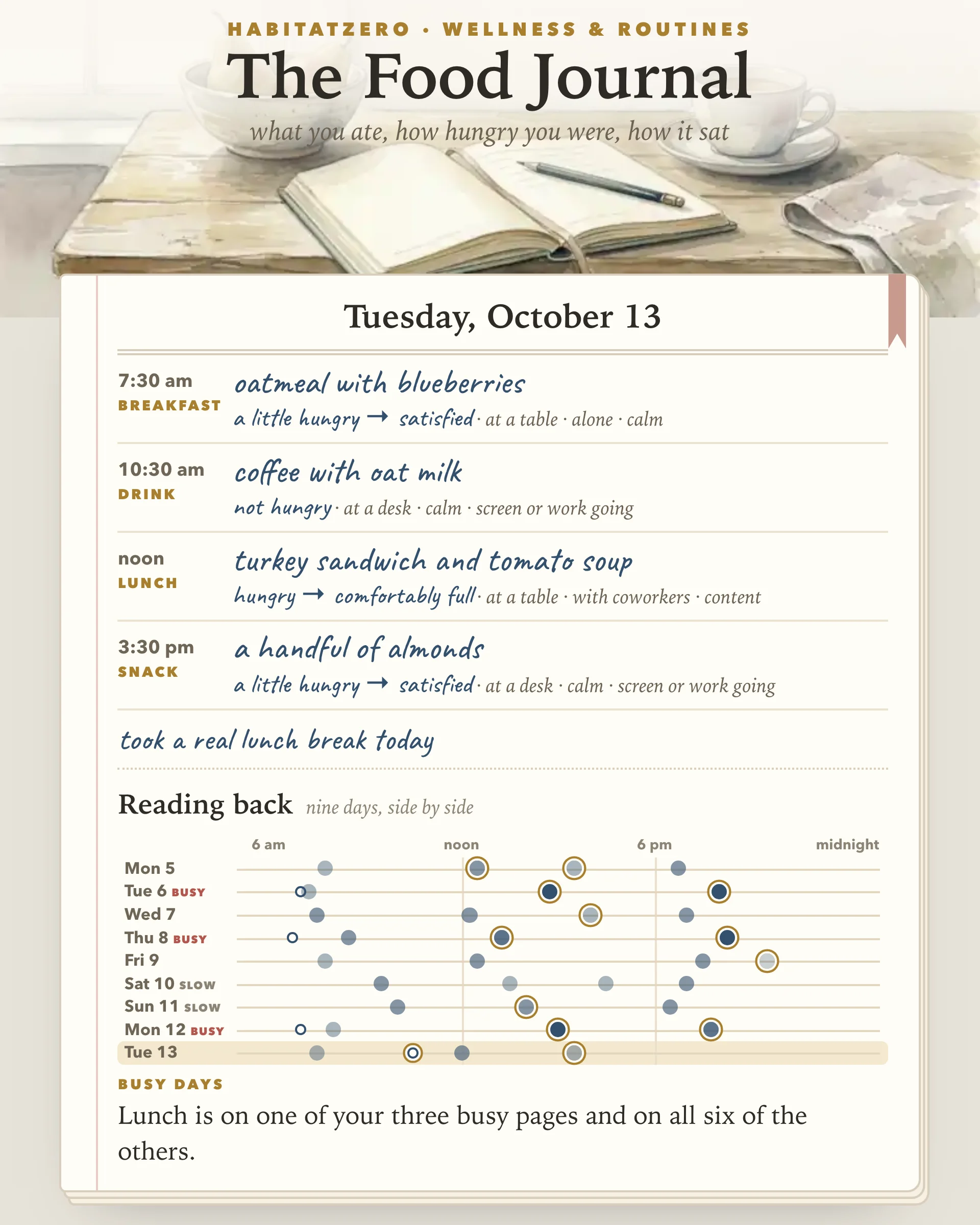
The Food JournalWrite down what you ate, how hungry you were before and how full after, where, with whom and in what mood, then let a week of pages read the patterns back to you. No calories, no good or bad foods.
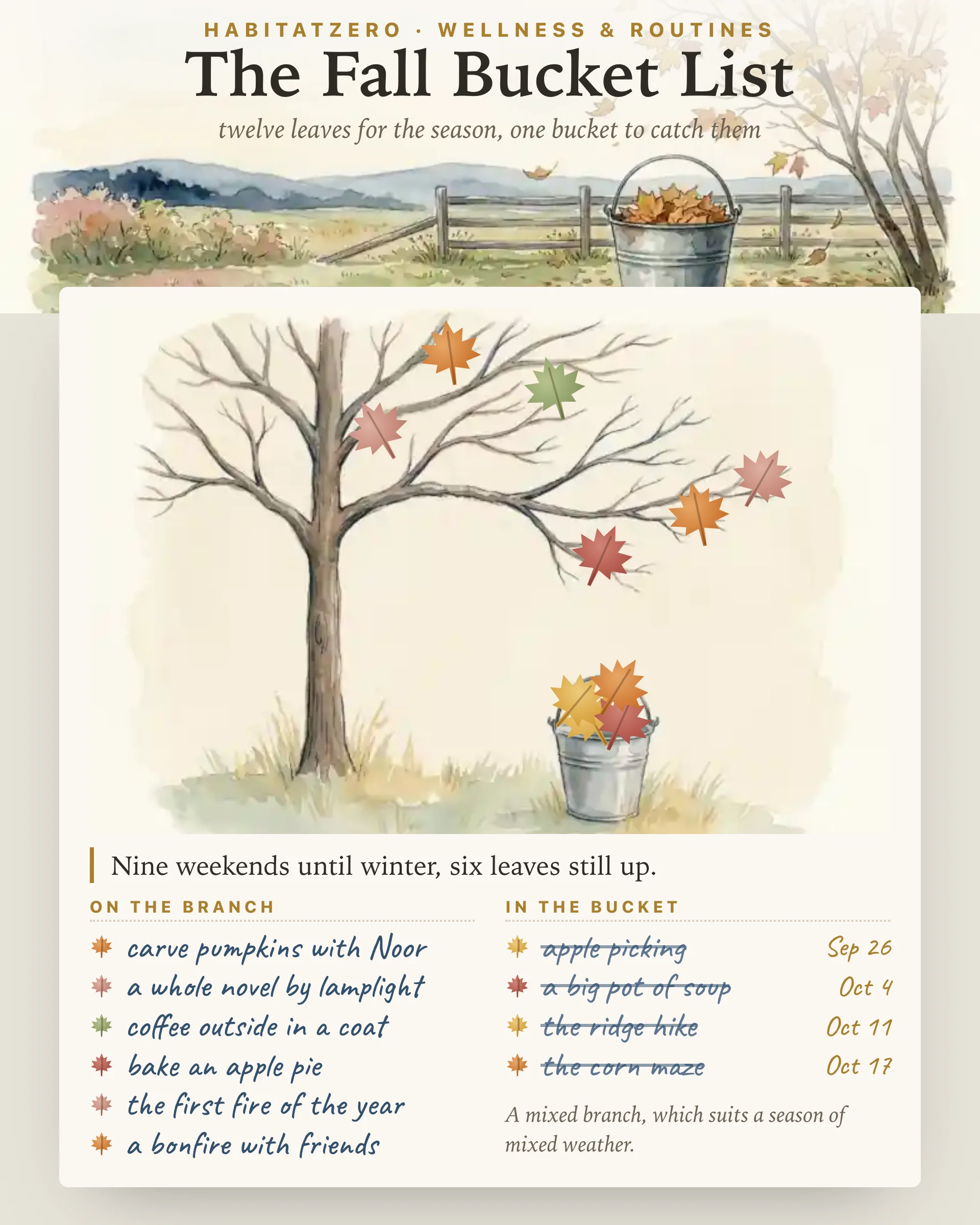
The Fall Bucket ListHang up to twelve autumn plans as leaves on a painted tree, drop each one into the tin bucket once you have done it, and let the sheet count the weekends you have left before winter.
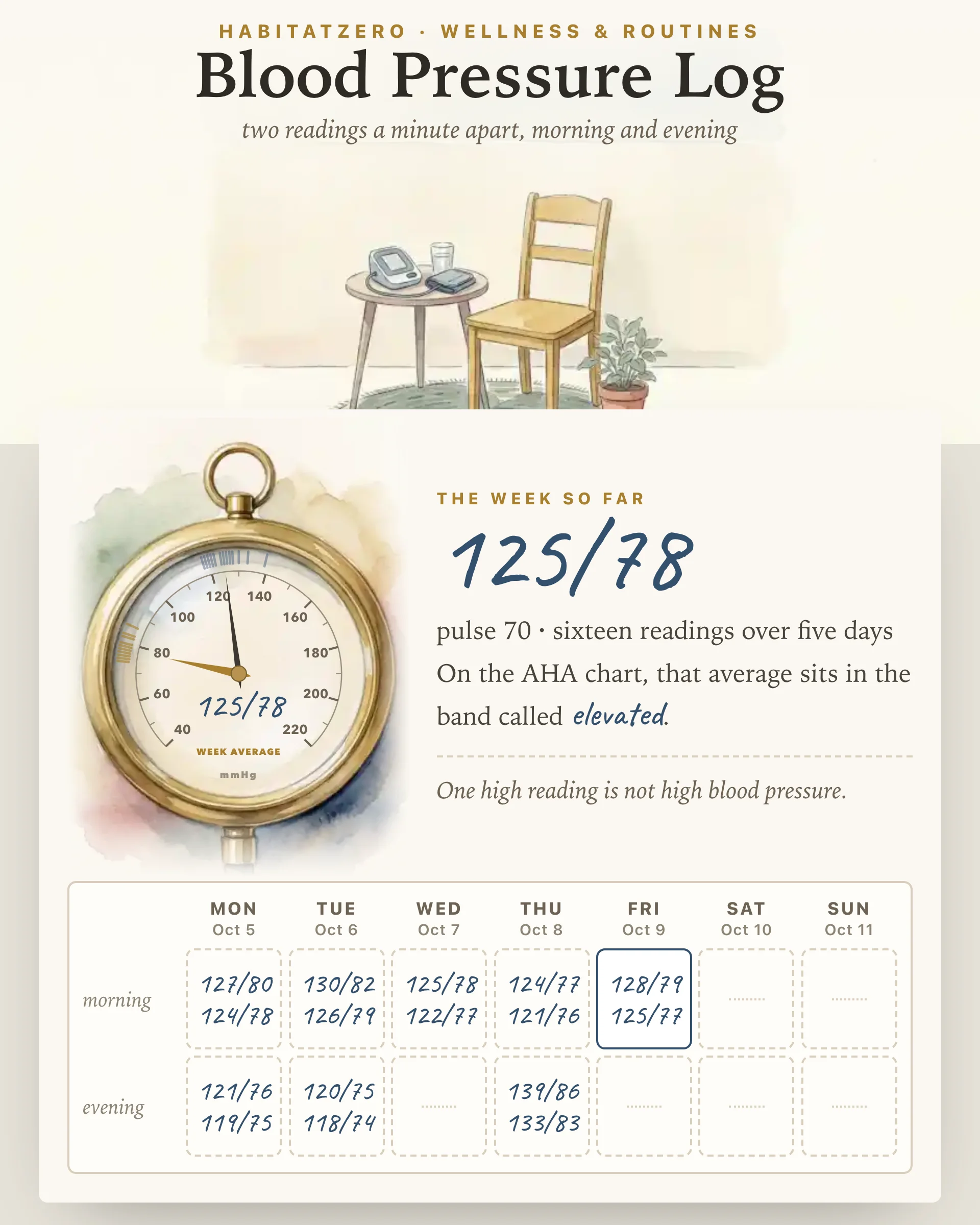
Blood Pressure LogA week of home readings, two a minute apart each morning and evening: a painted dial marks every one and settles on the week's average once there are enough, and the whole week prints as one page for your appointment.
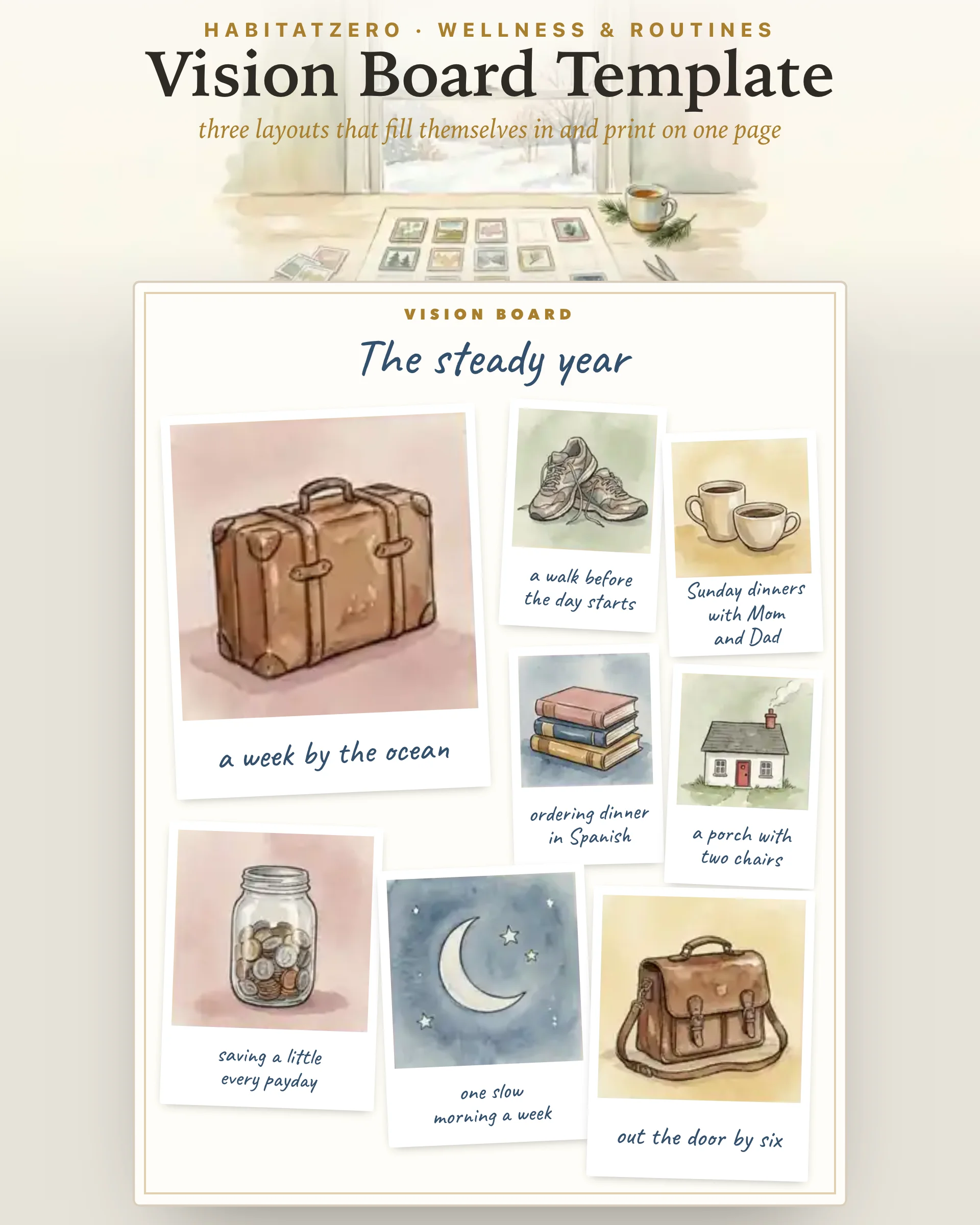
Vision Board TemplatePick a grid, a collage or a board by life area, give each painted picture a few words, and the layout fills itself into a finished vision board that prints on one letter page, filled or blank.
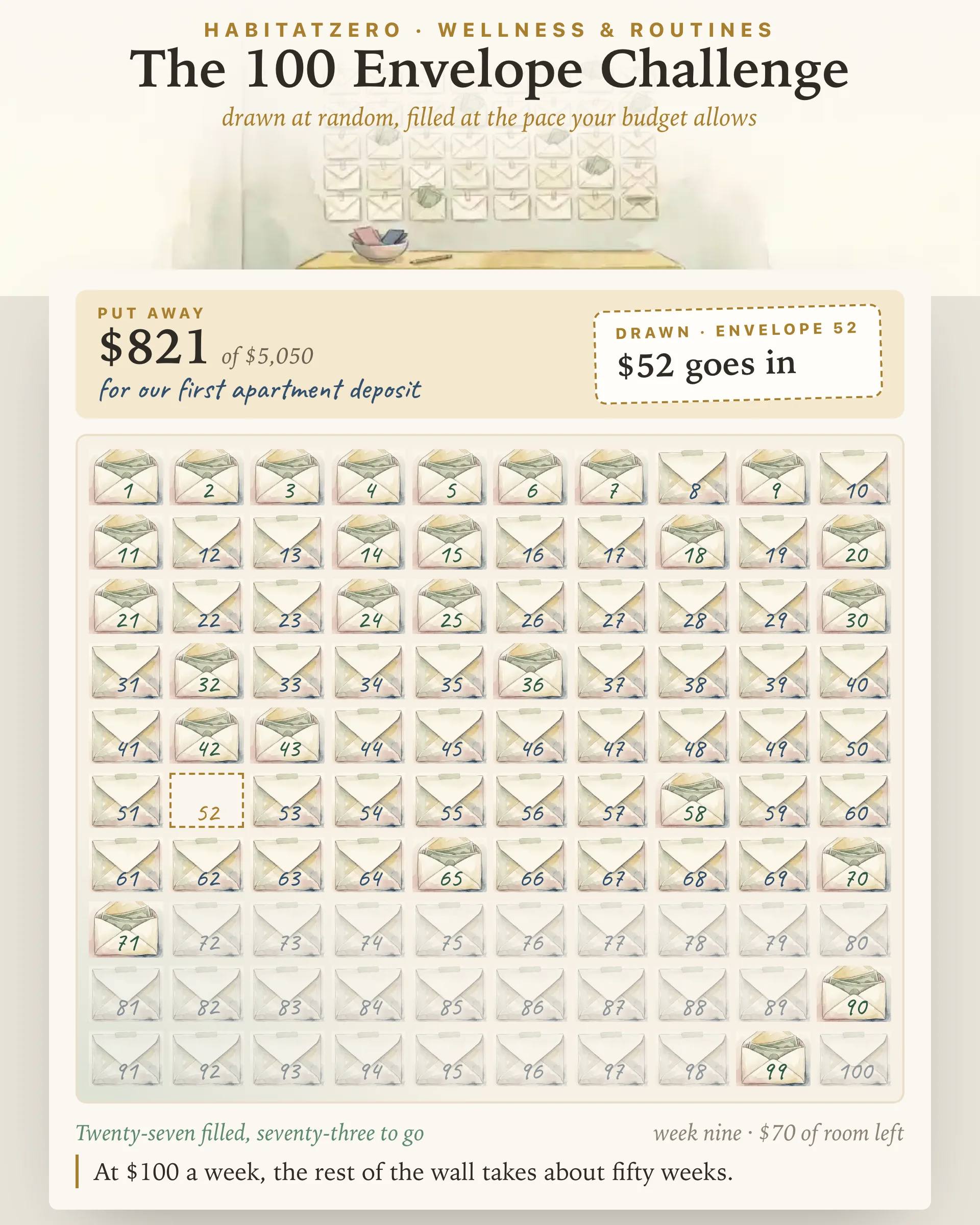
The 100 Envelope ChallengeA painted wall of one hundred numbered envelopes that draws one at random, keeps your running total, and bends to your budget: half size for $2,525, one a week, or only what fits this week.
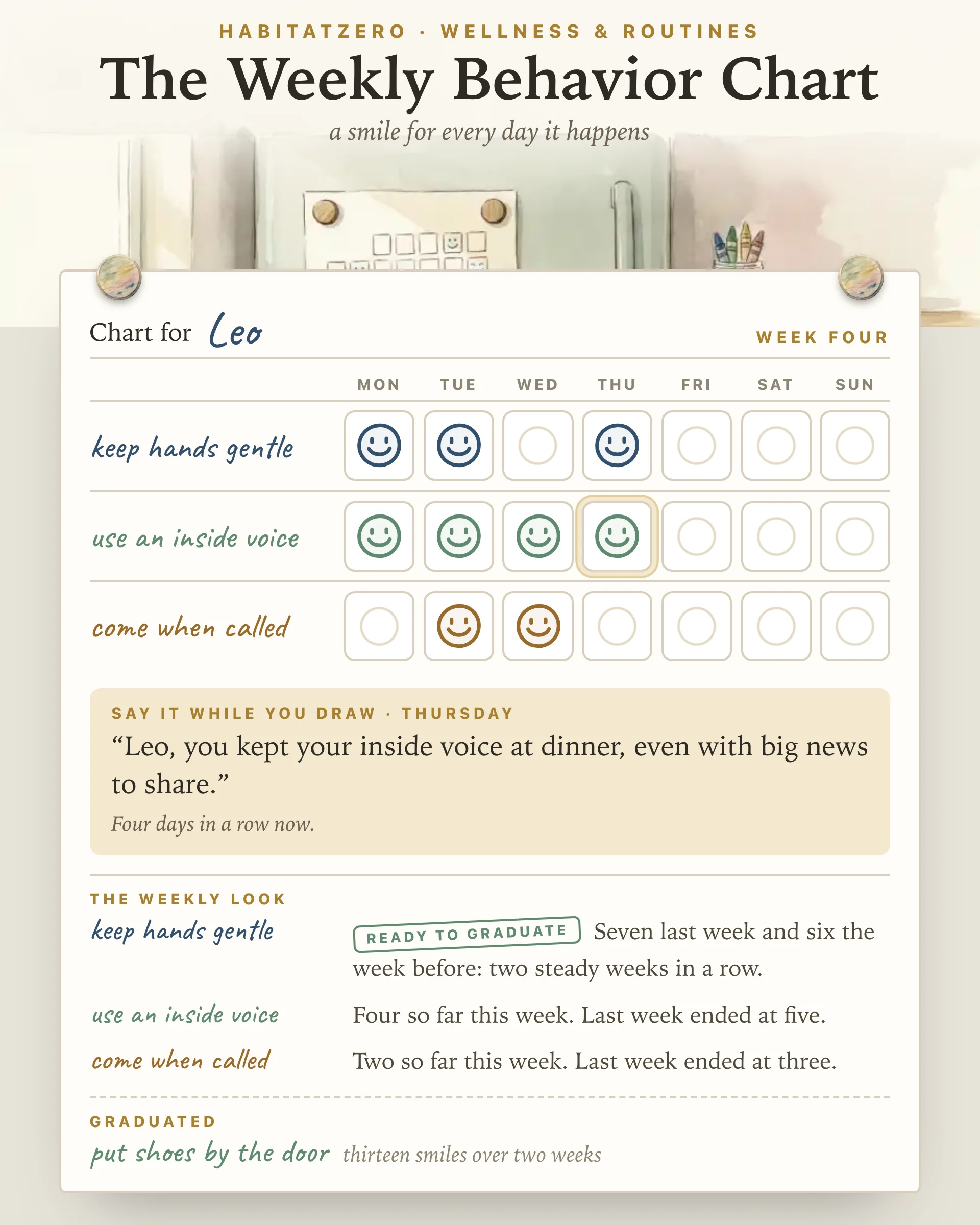
The Weekly Behavior ChartName two or three behaviors as things to do, draw a smile on each day they happen, and read out the specific praise the chart hands you. A weekly look shows which ones are steady enough to graduate off the fridge.
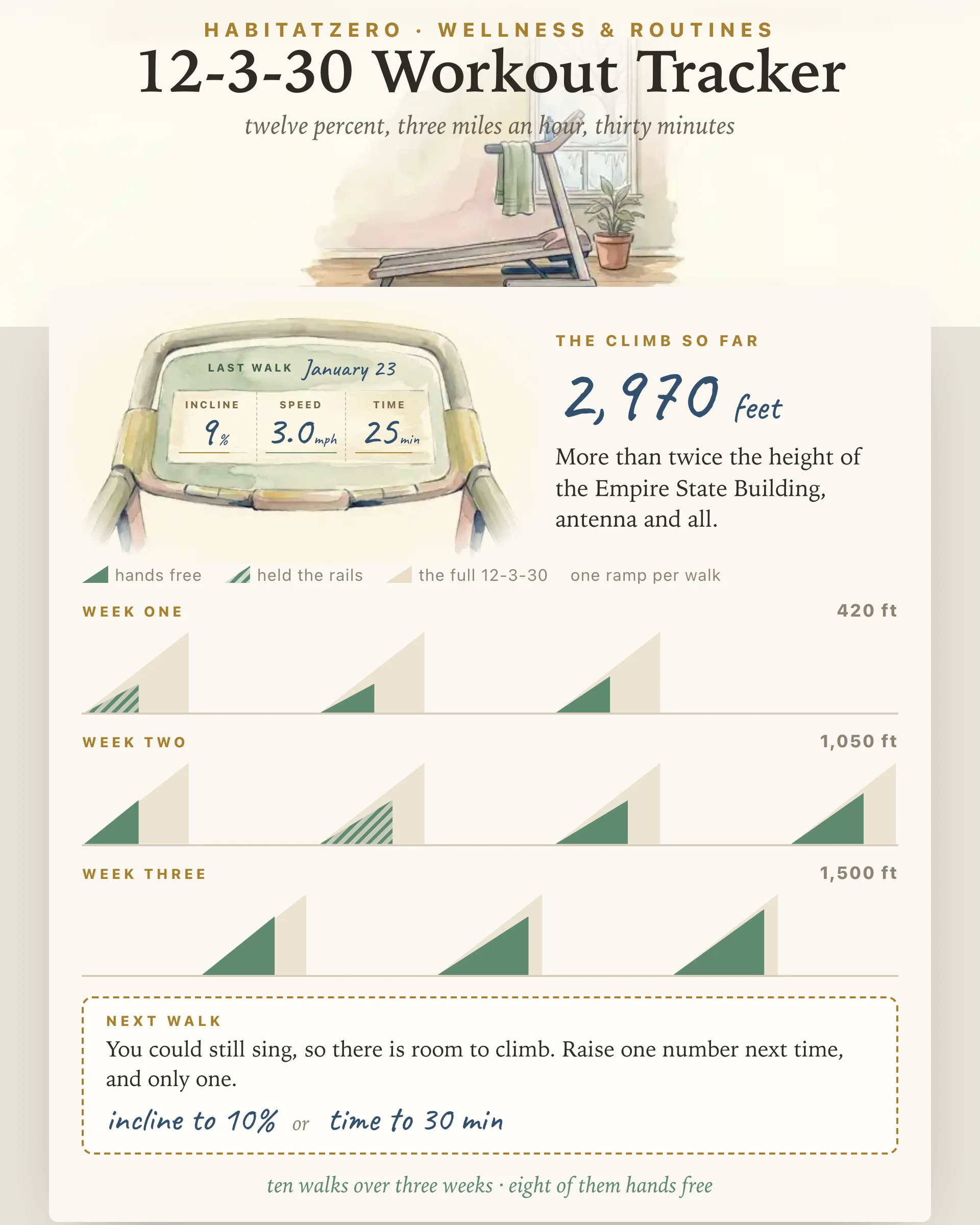
12-3-30 Workout TrackerSet incline, speed and minutes on a painted treadmill console, log each walk with a quick talk test, and see every walk drawn as a ramp against the full 12-3-30. It suggests which single number to raise next and adds up the feet you have climbed.
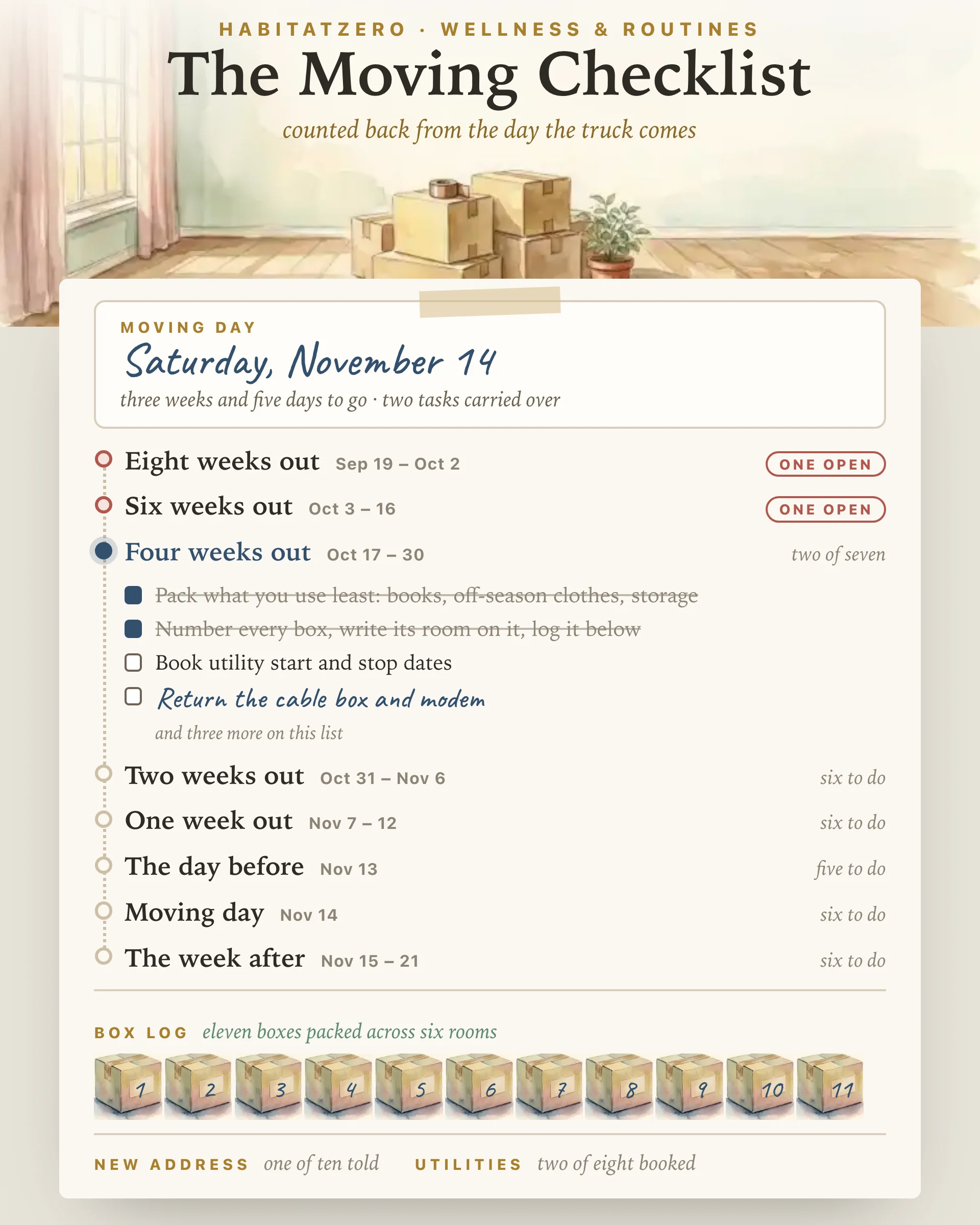
The Moving ChecklistSet your moving day and every list from eight weeks out to the week after gets real dates, with late tasks carried into this week and a numbered box log that follows each box to the new front door.
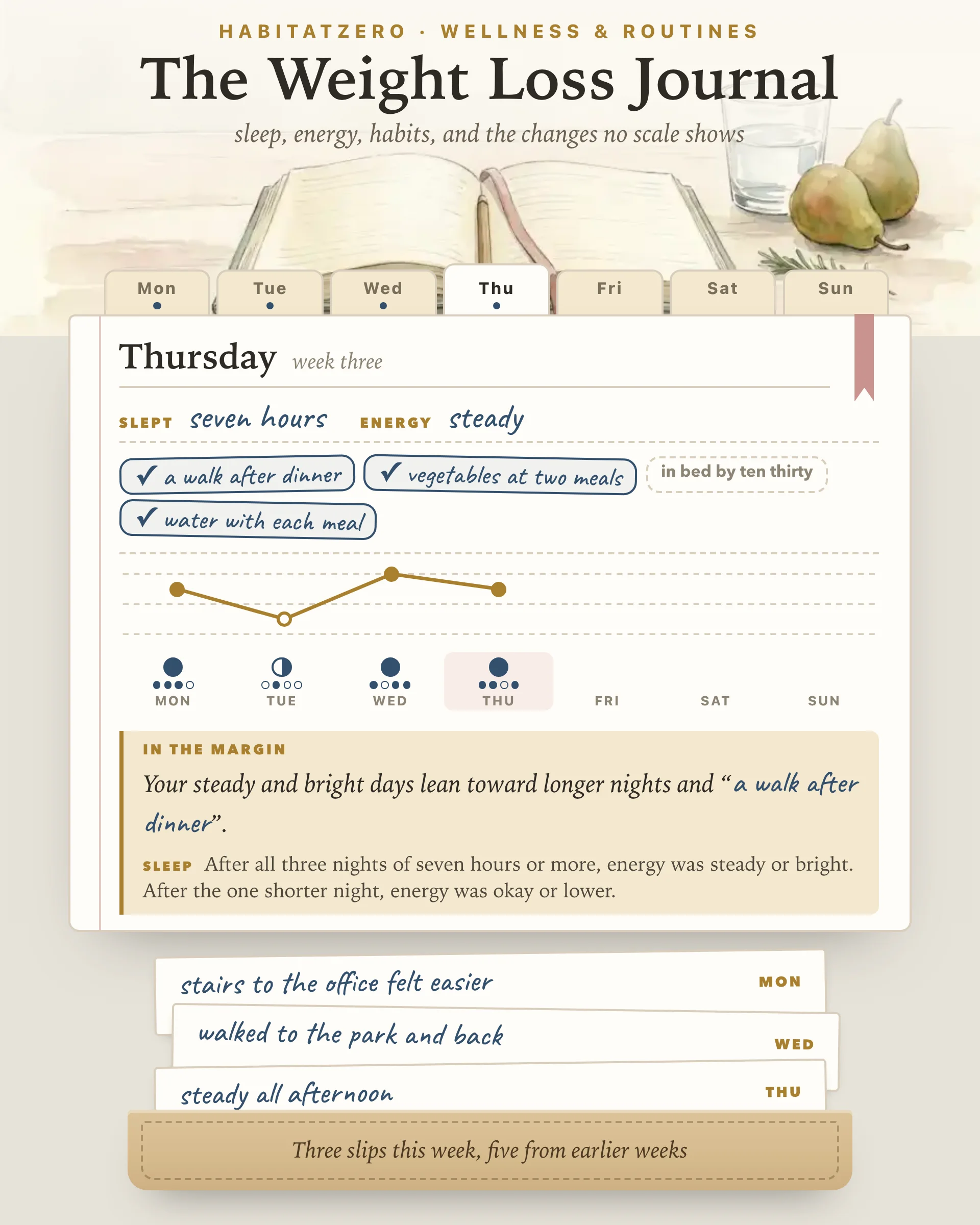
The Weight Loss JournalA page a day for sleep, energy and the habits you kept, a back pocket for the changes no scale shows, and margin notes that point out what your steadier days had in common.
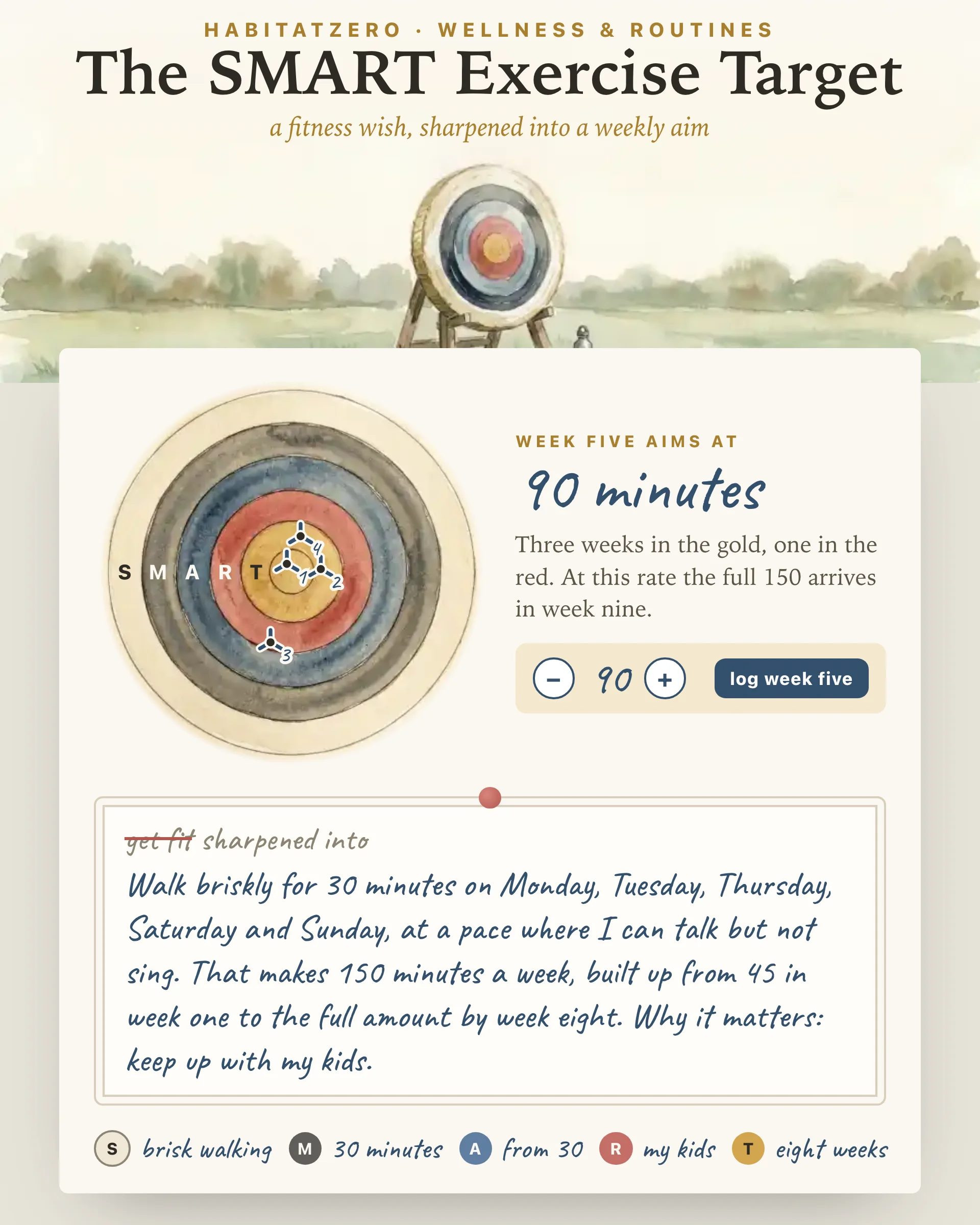
The SMART Exercise TargetSharpen a fitness wish into a SMART weekly goal on a painted archery target: each ring inks in as you answer, the page sets a gradual build-up in minutes, and every week you log lands as an arrow that moves next week's aim.
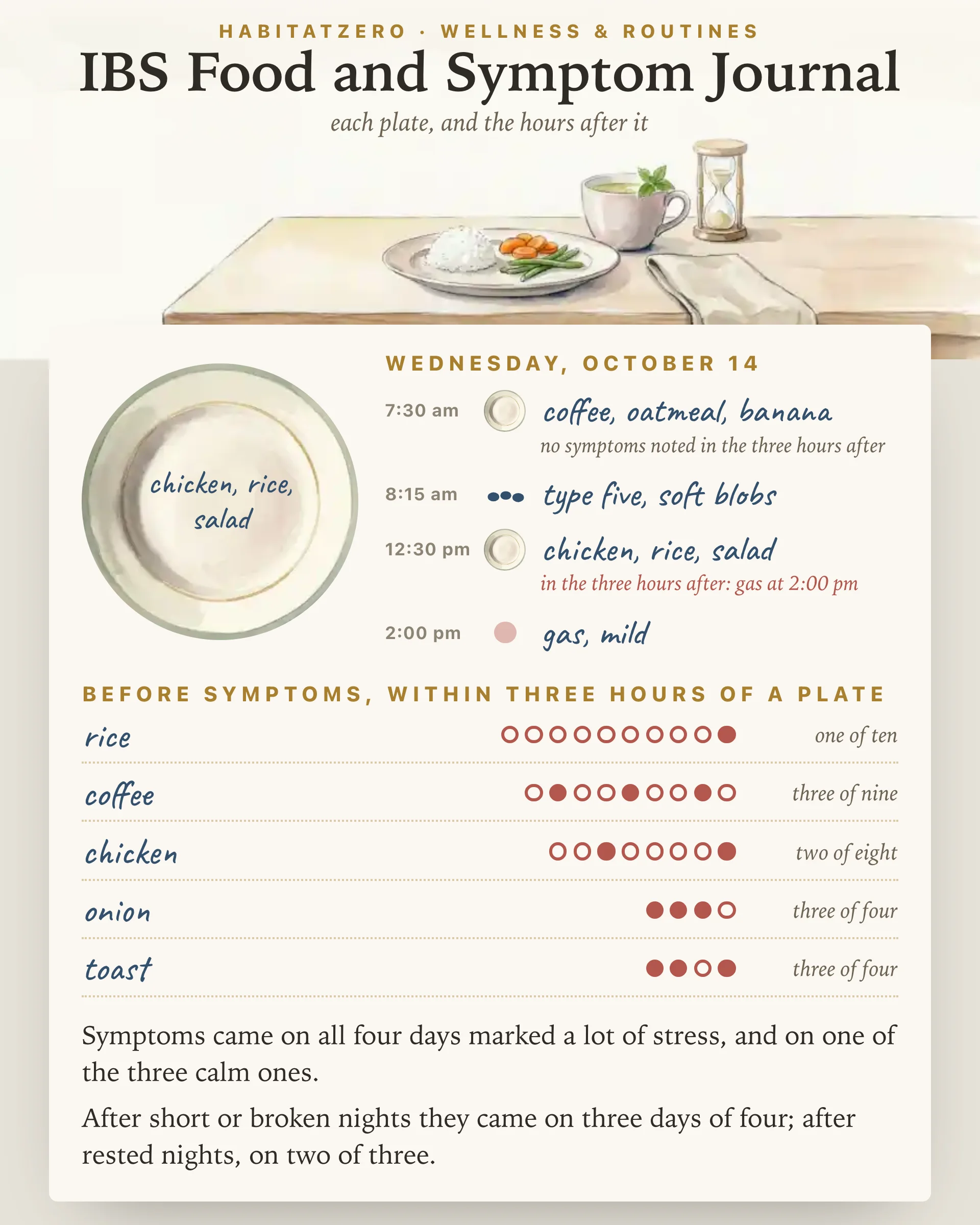
IBS Food and Symptom JournalSet each plate down at the time you ate it, note bloating, pain, urgency and Bristol stool types as they come, mark stress and sleep, and after a few weeks see which foods came before your symptoms.
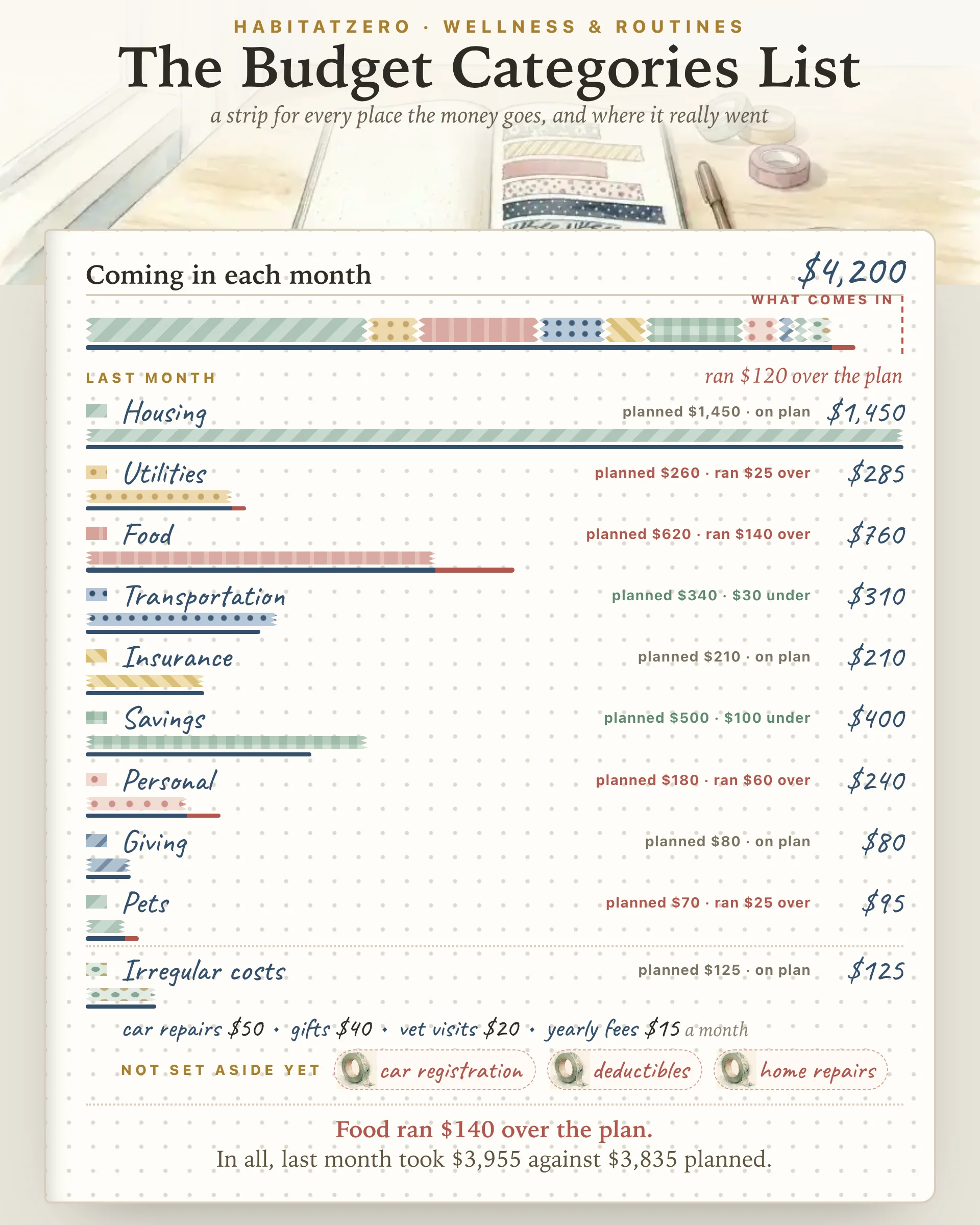
The Budget Categories ListKeep, rename and fill ten common budget categories, each one a strip of washi tape sized by its share of your take-home pay. The page flags the irregular costs your list forgot, and once you write in what last month really took, it shows where the money went against the plan.
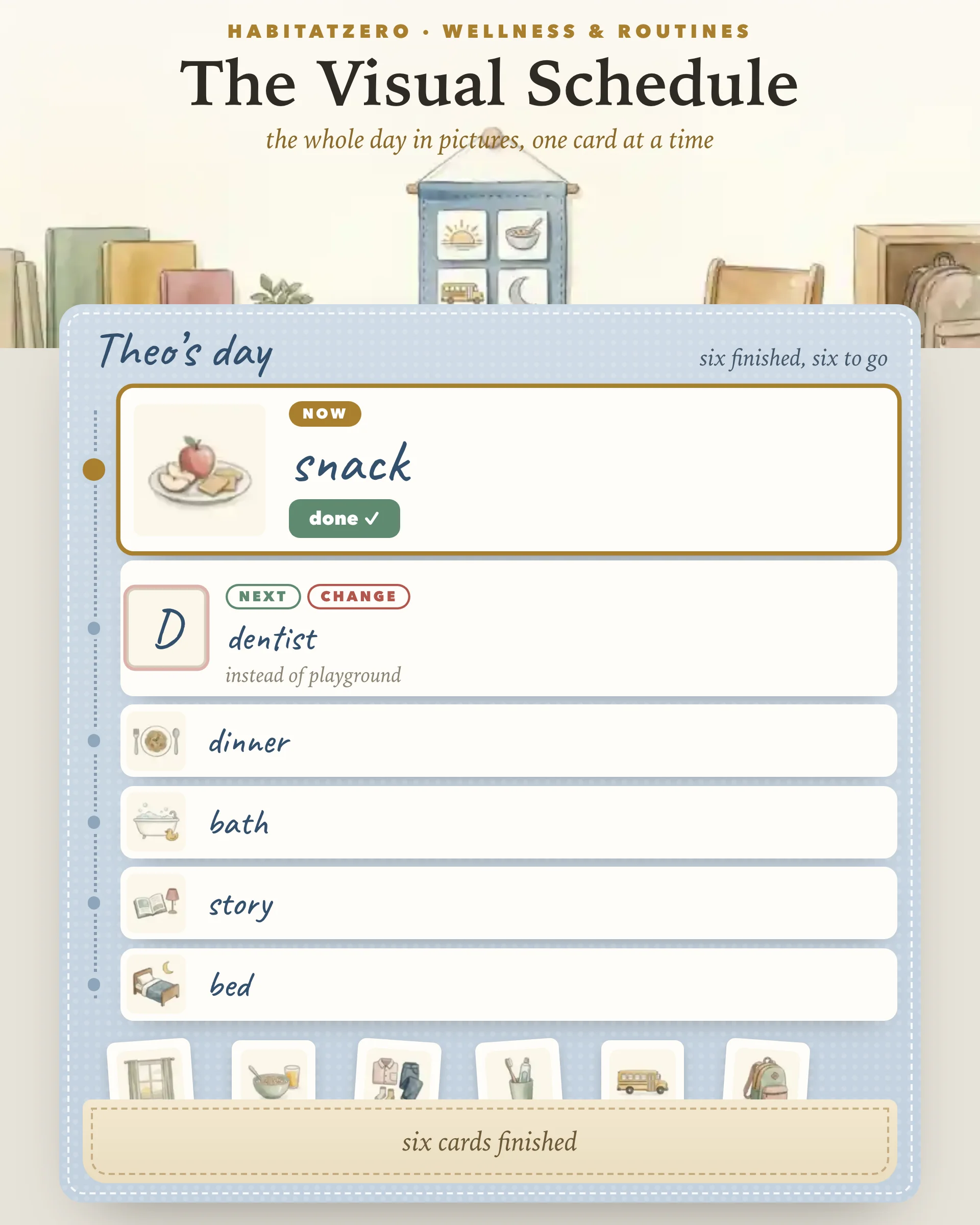
The Visual ScheduleLay painted picture cards down a felt strip in the order your child's day really runs, from waking up to bed. Each finished card drops into the pocket, the strip always shows what is happening now and what comes next, and a change of plan gets its own card for the day.
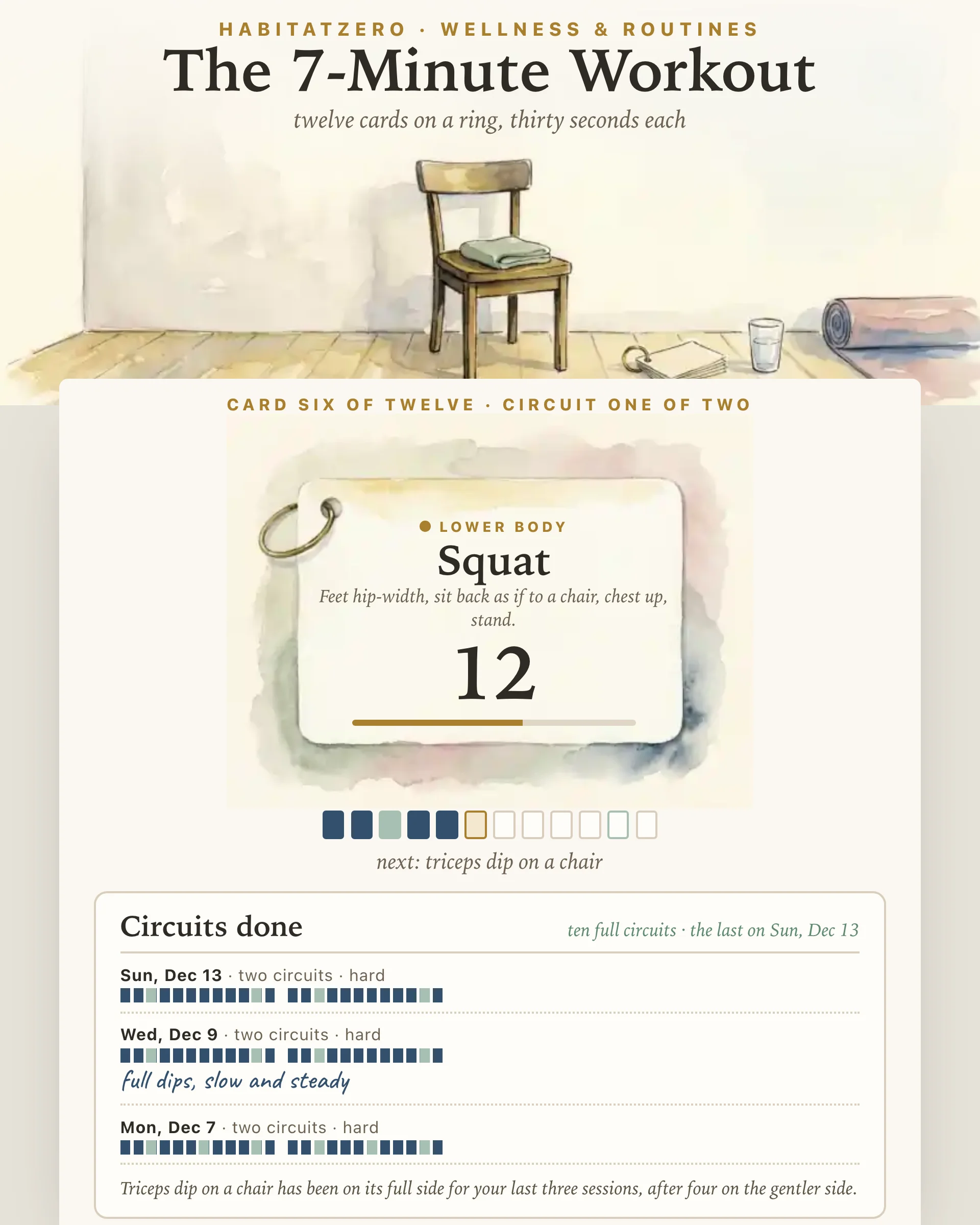
The 7-Minute WorkoutKlika and Jordan's twelve-move circuit as a deck of painted cards that flips every forty seconds: turn any card to a gentler version, run one to three circuits from the clock, and keep a log of every circuit you finish.
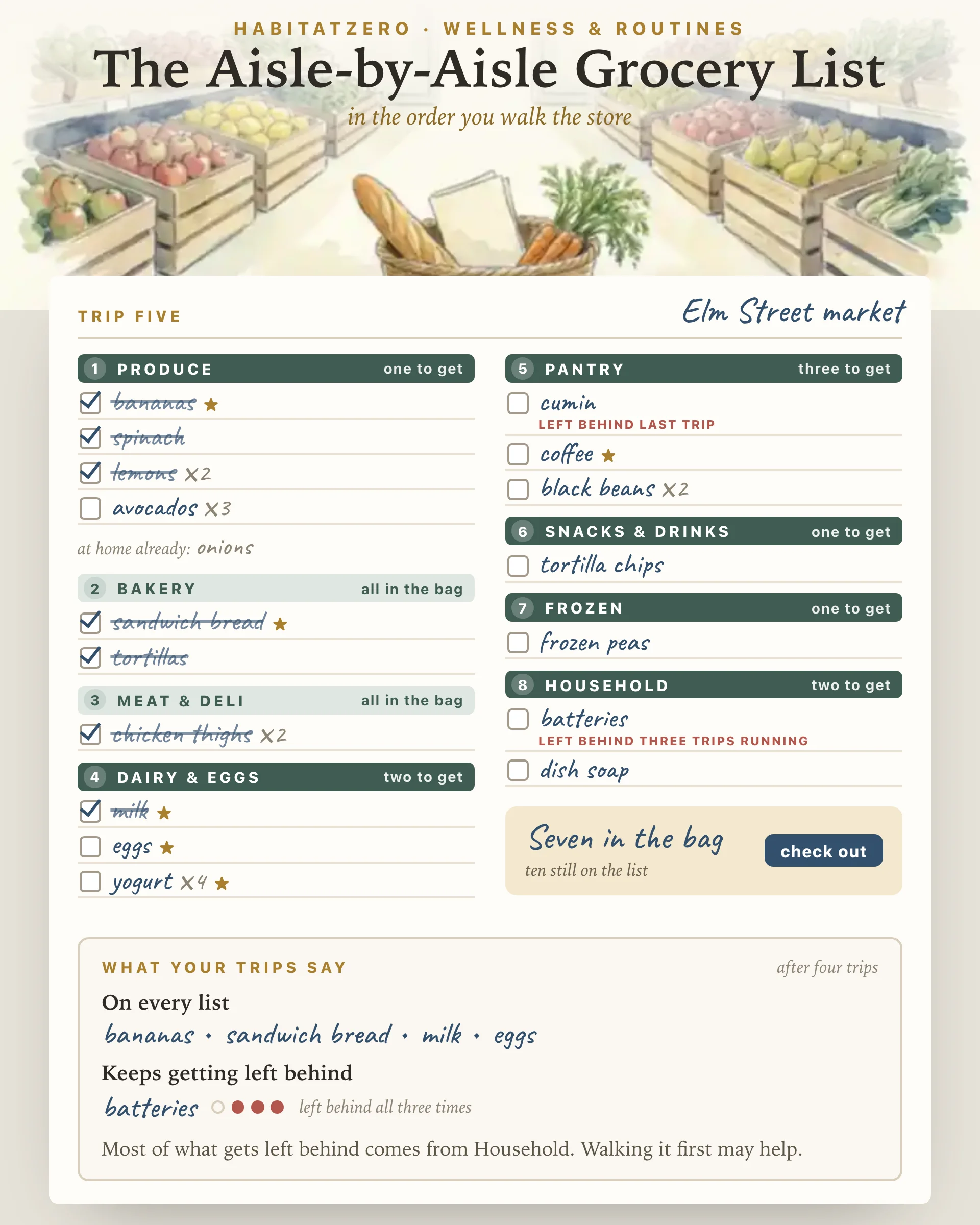
The Aisle-by-Aisle Grocery ListA grocery list sorted under store aisle signs: tap your usual items on, star the staples that return every week, check things off as you shop, and see which ones keep getting left on the shelf.
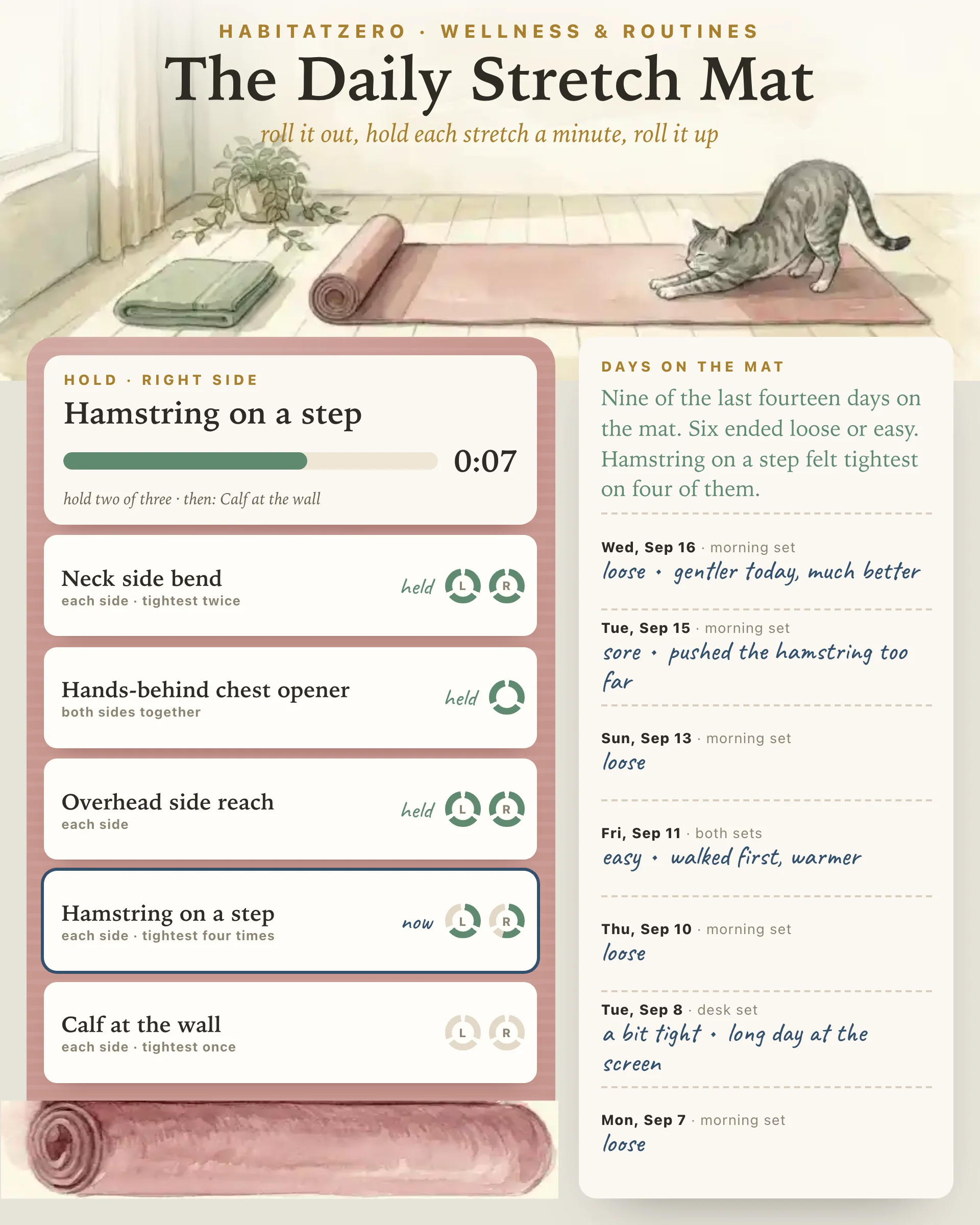
The Daily Stretch MatA short daily stretching routine laid out on a painted mat, with a morning set and a desk set you can reshape. A silent hold timer brings every stretch to about a minute, and each day you roll it up logs how your body felt and which stretch felt tightest.
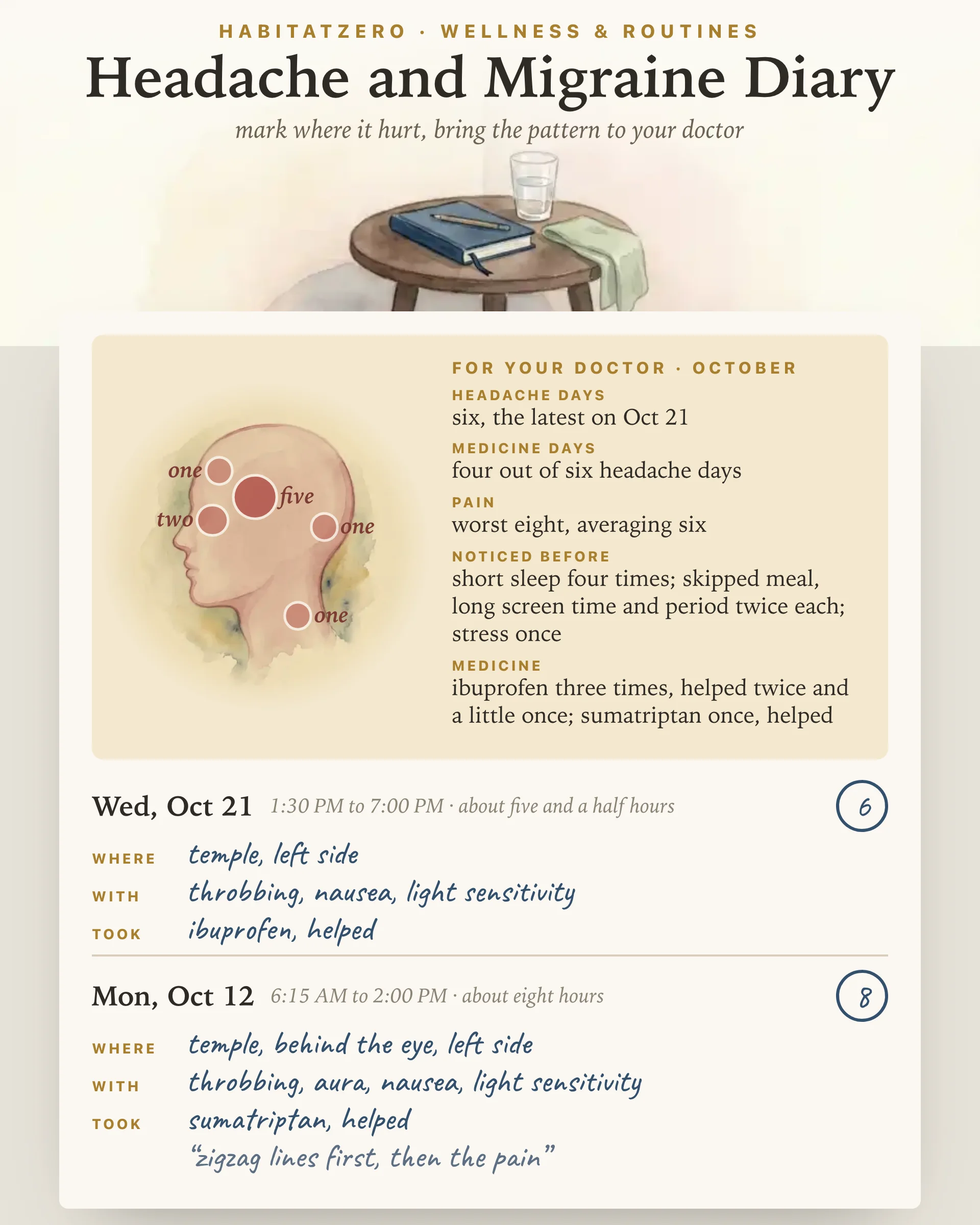
Headache and Migraine DiaryOne page per headache: tap where it hurt on a painted head, how bad it got, what came with it and what you took. The diary adds up headache days, medicine days and what helped, month by month, ready to print for your doctor.
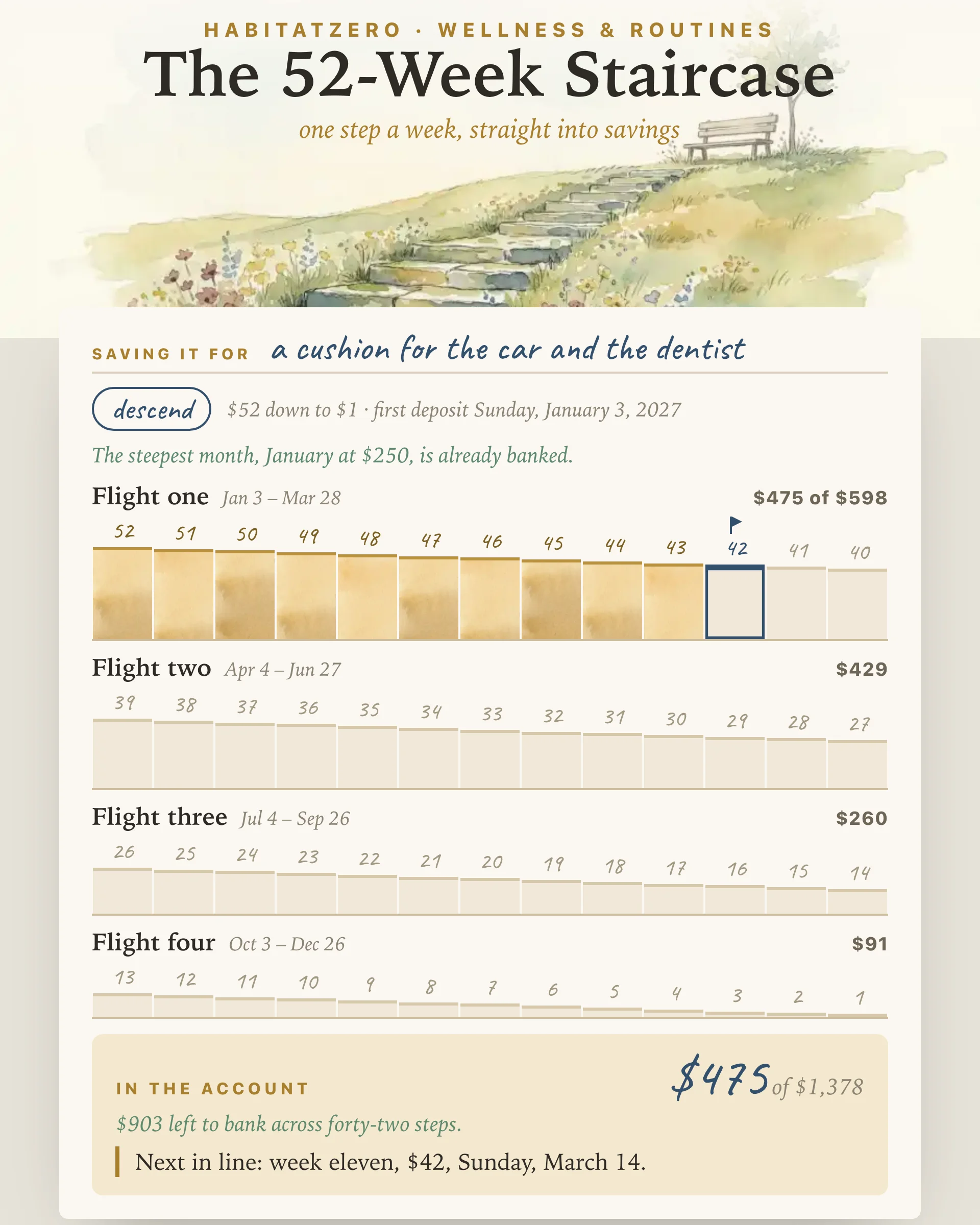
The 52-Week StaircaseChoose a staircase that climbs from $1, descends from $52 or stays level at $26.50, then bank one step a week and watch the total, what is left and your steepest month add up to the cent.
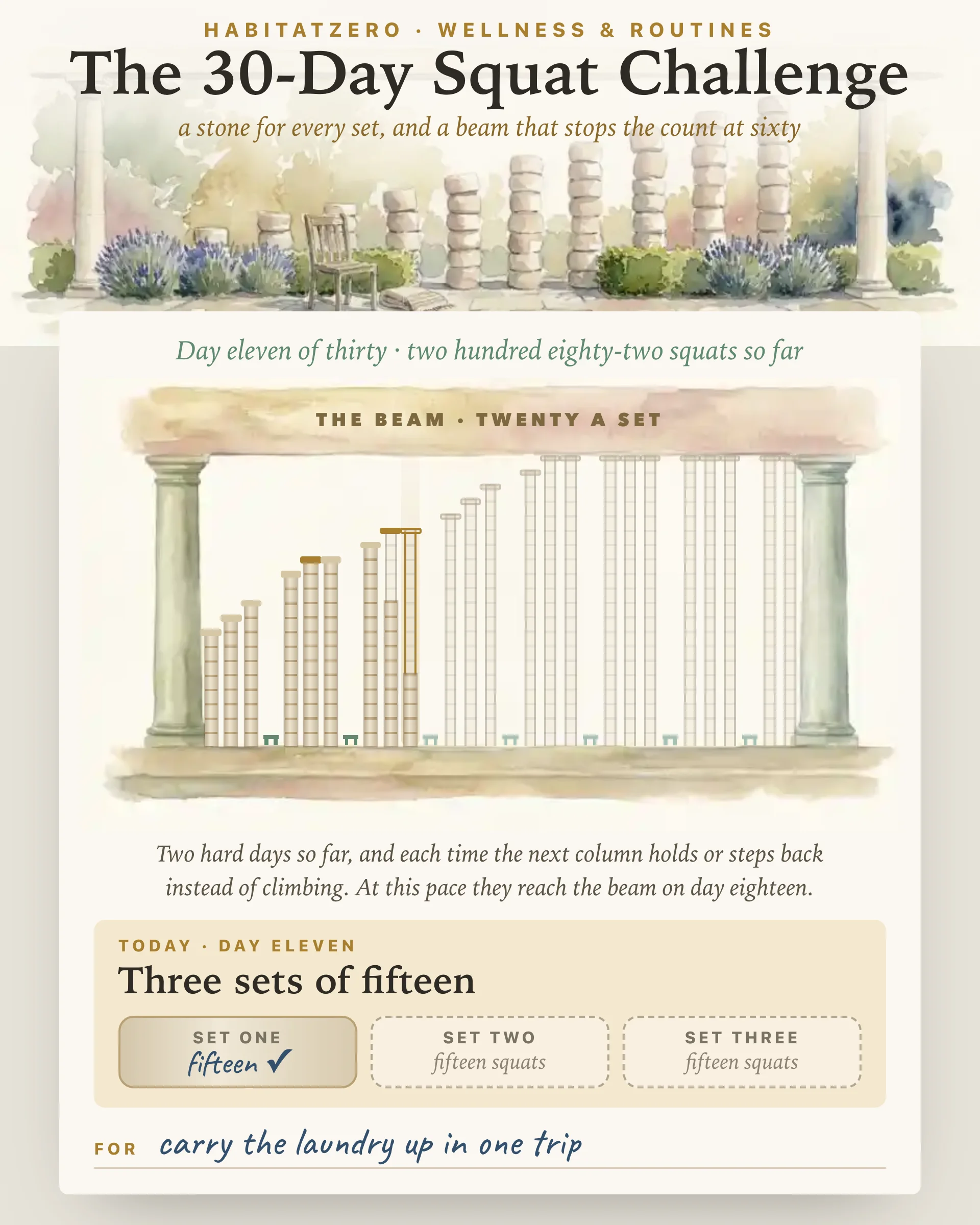
The 30-Day Squat ChallengeThirty days drawn as a colonnade: pick where you are starting, lay a stone for every set you finish, and say how much your legs had left. A good day raises the next column, a hard day holds it, pain turns tomorrow into a rest day, and a beam stops every column at sixty squats a day.
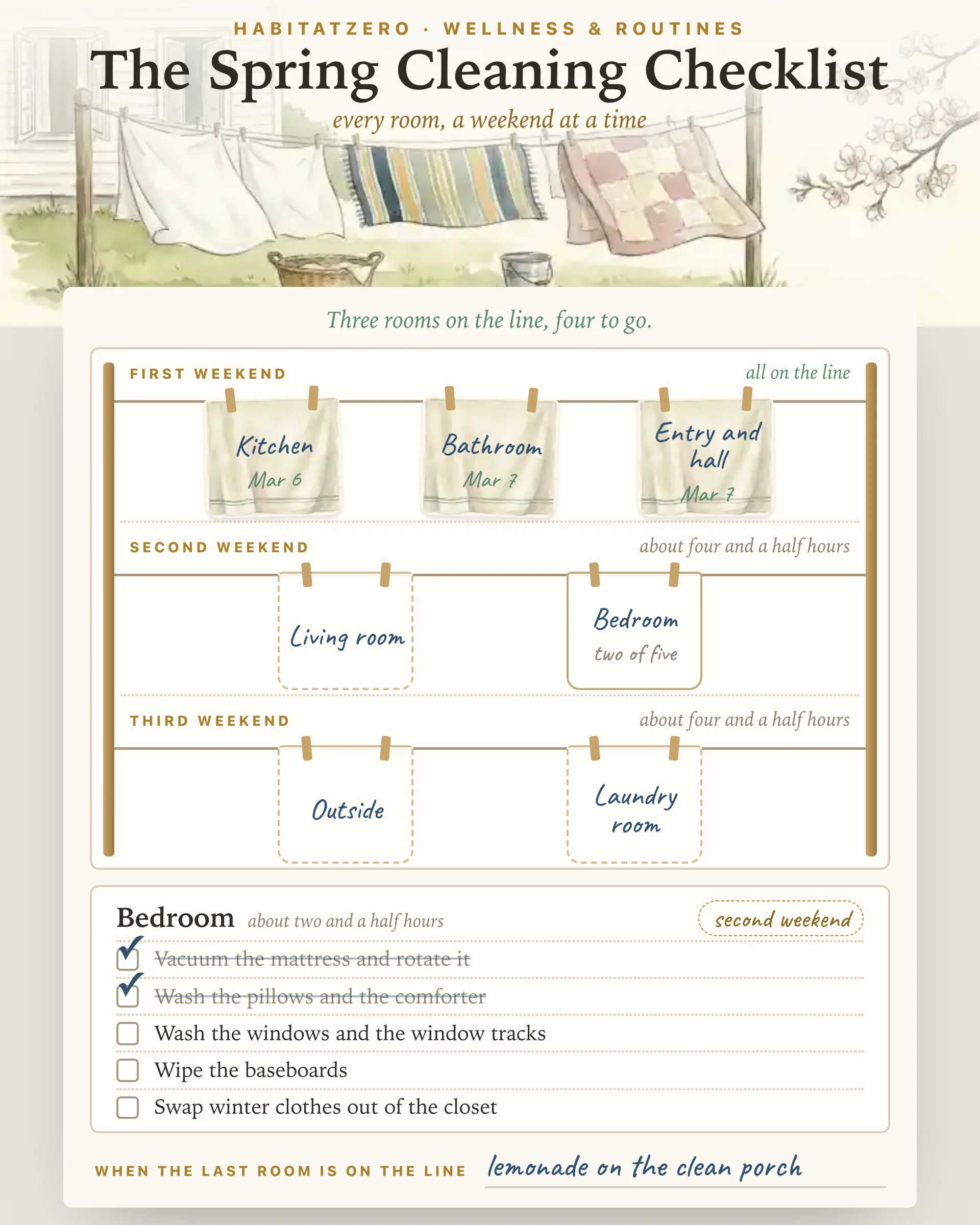
The Spring Cleaning ChecklistEvery room's once-a-year jobs, from the fridge coils to the gutters, dealt evenly over the weekends you pick by rough time. A room stays put once you start it, and when its last job is checked it is pegged on the line with the date.
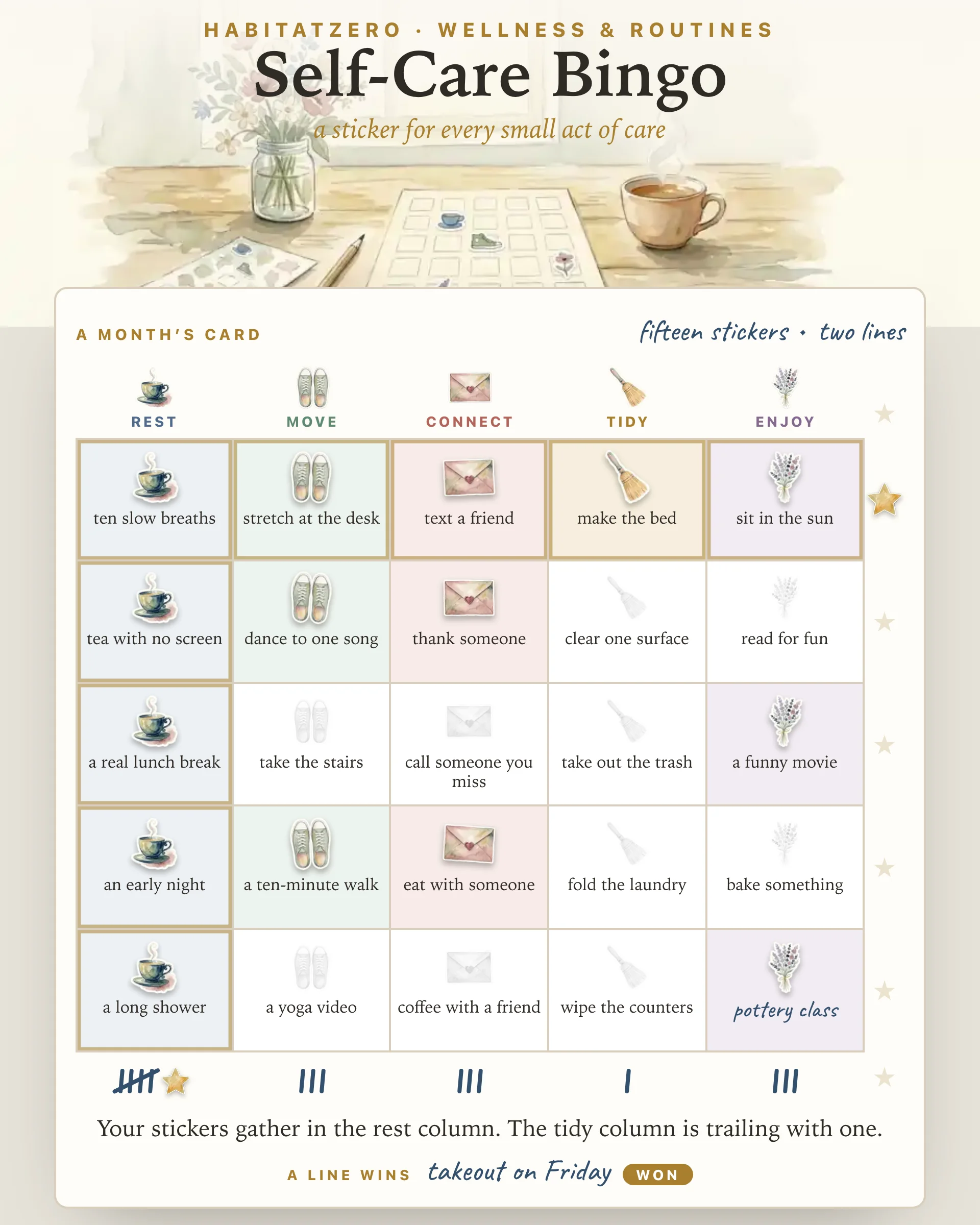
Self-Care BingoA five-by-five self-care bingo card with a column each for rest, movement, connection, tidying and fun. Add a sticker on the day you do a square, earn a gold star for every line, and let the card show which kind of care you keep skipping.
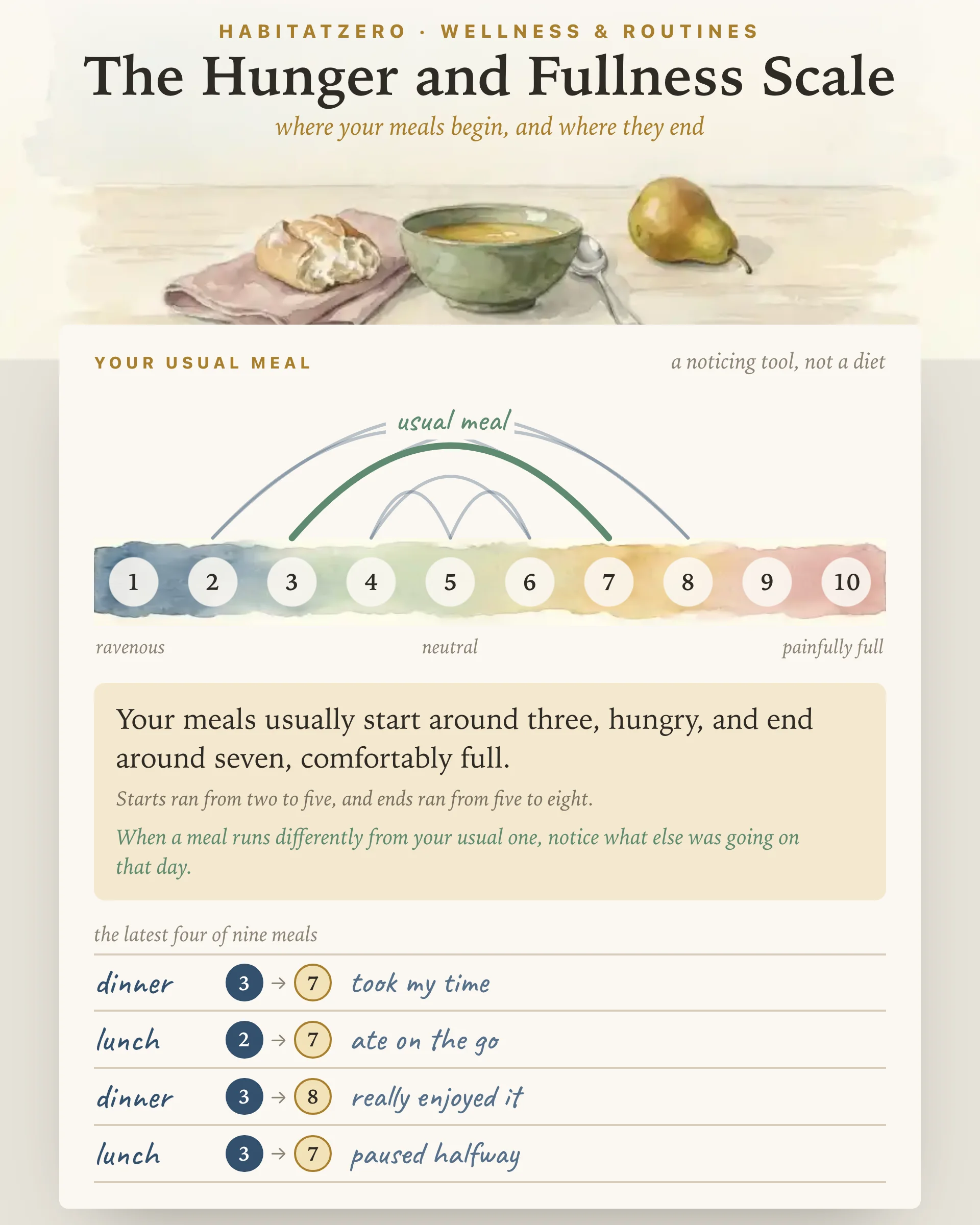
The Hunger and Fullness ScaleMark where you are on a one-to-ten hunger and fullness scale before and after each meal, and watch the scale draw where your meals usually begin and end. A noticing tool, not a diet.
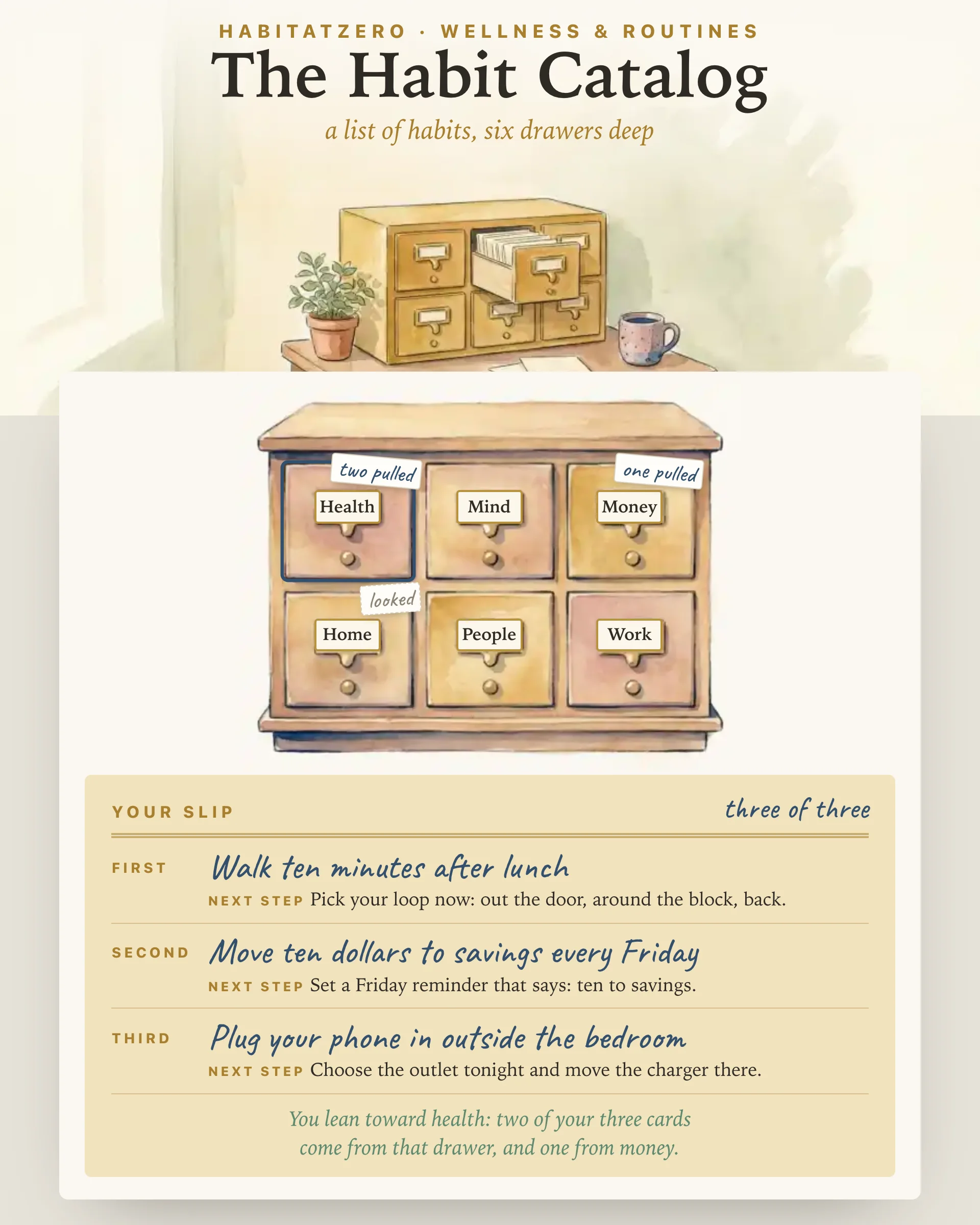
The Habit CatalogA list of habits kept like a library card catalog: open six drawers of small, specific habits and pull up to three to start. Each one lands on your slip with its next step and the tracker that fits it.
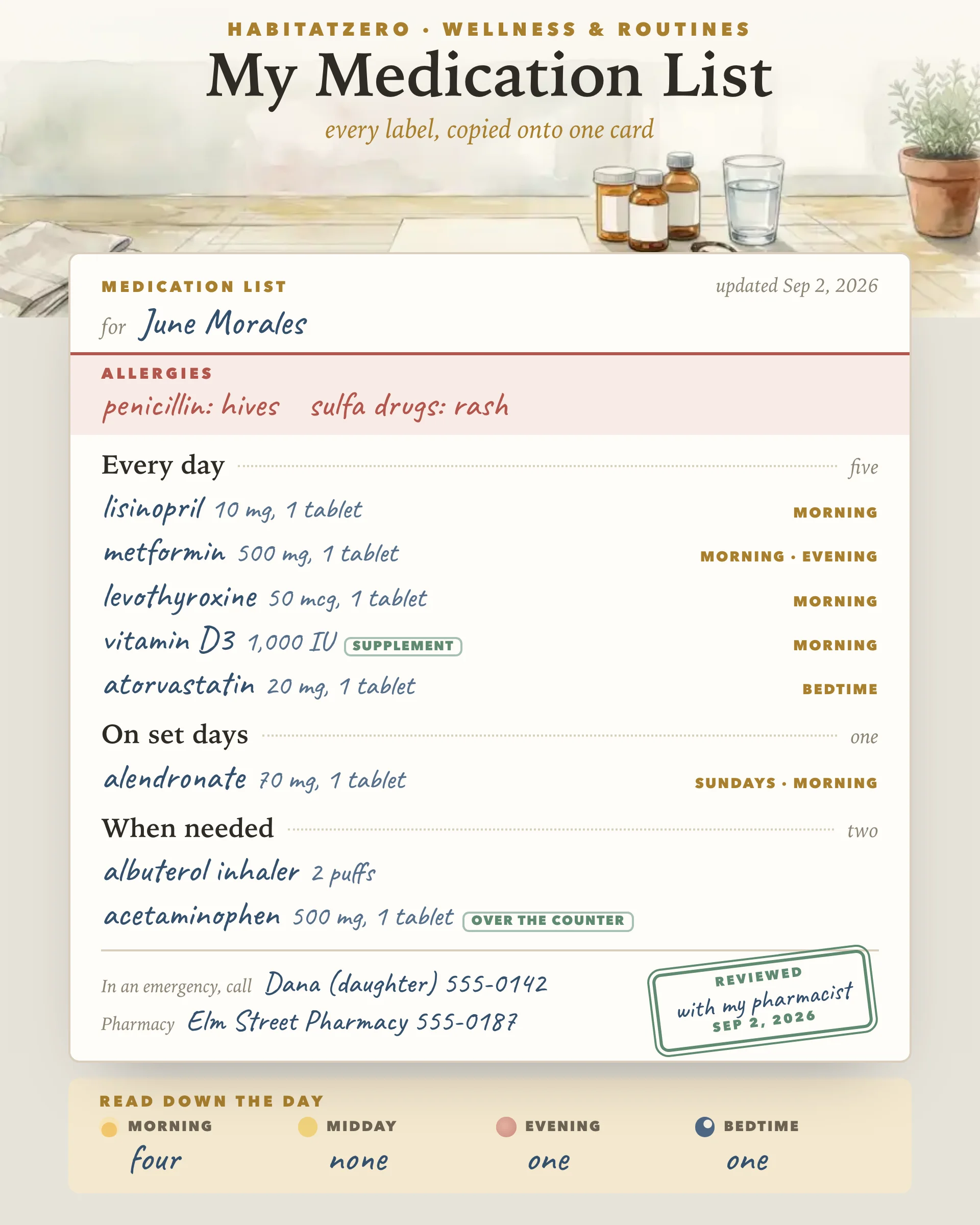
My Medication ListCopy each label onto one card with its strength, timing, purpose, prescriber and start date, beside your allergies and supplements. The card reads your day back to you, notices when it has changed since your last review, and prints for the fridge and your wallet.
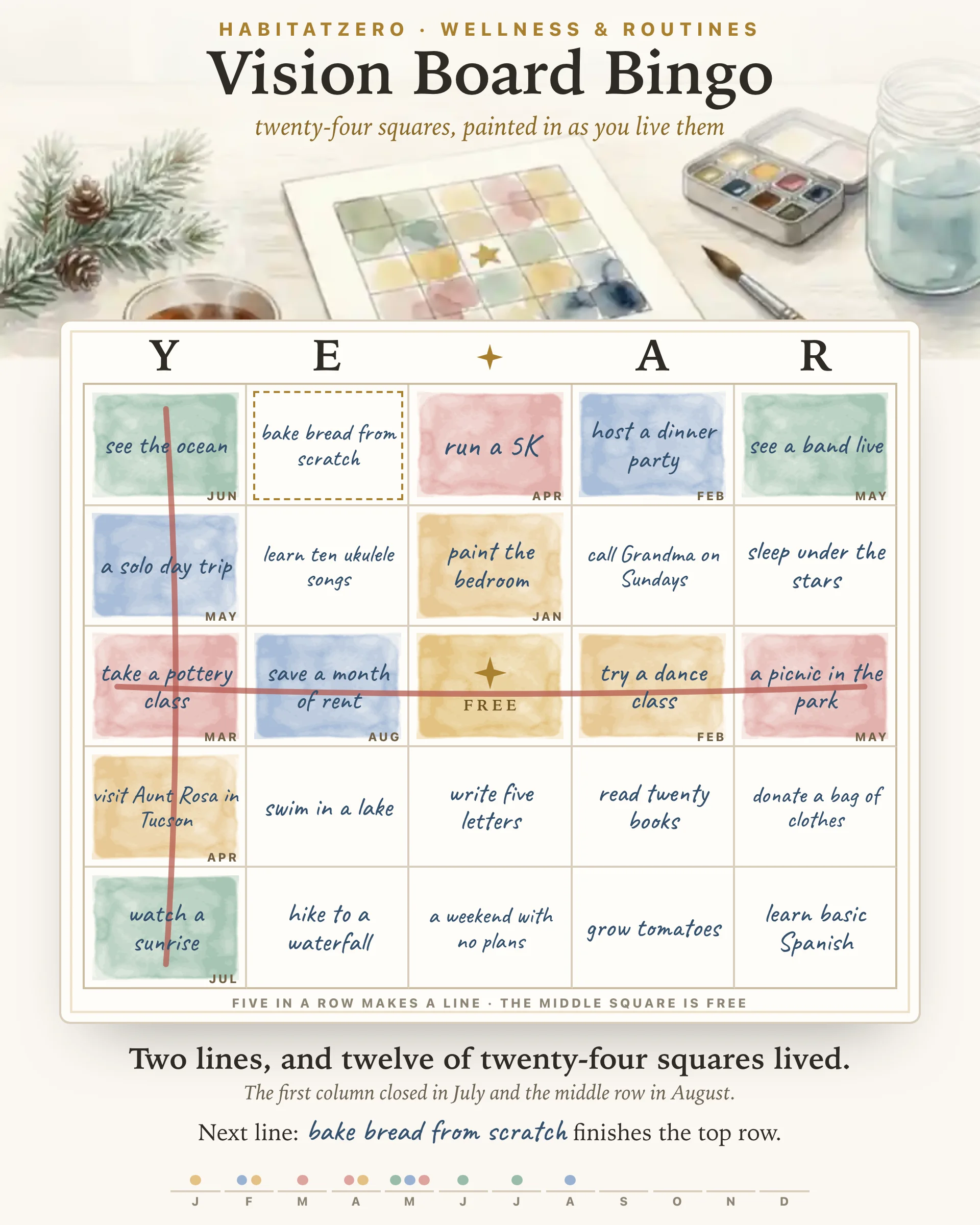
Vision Board BingoA bingo card for the year ahead: fill twenty-four squares with goals and experiences, then paint each one in as it happens and watch your lines close, month by month.
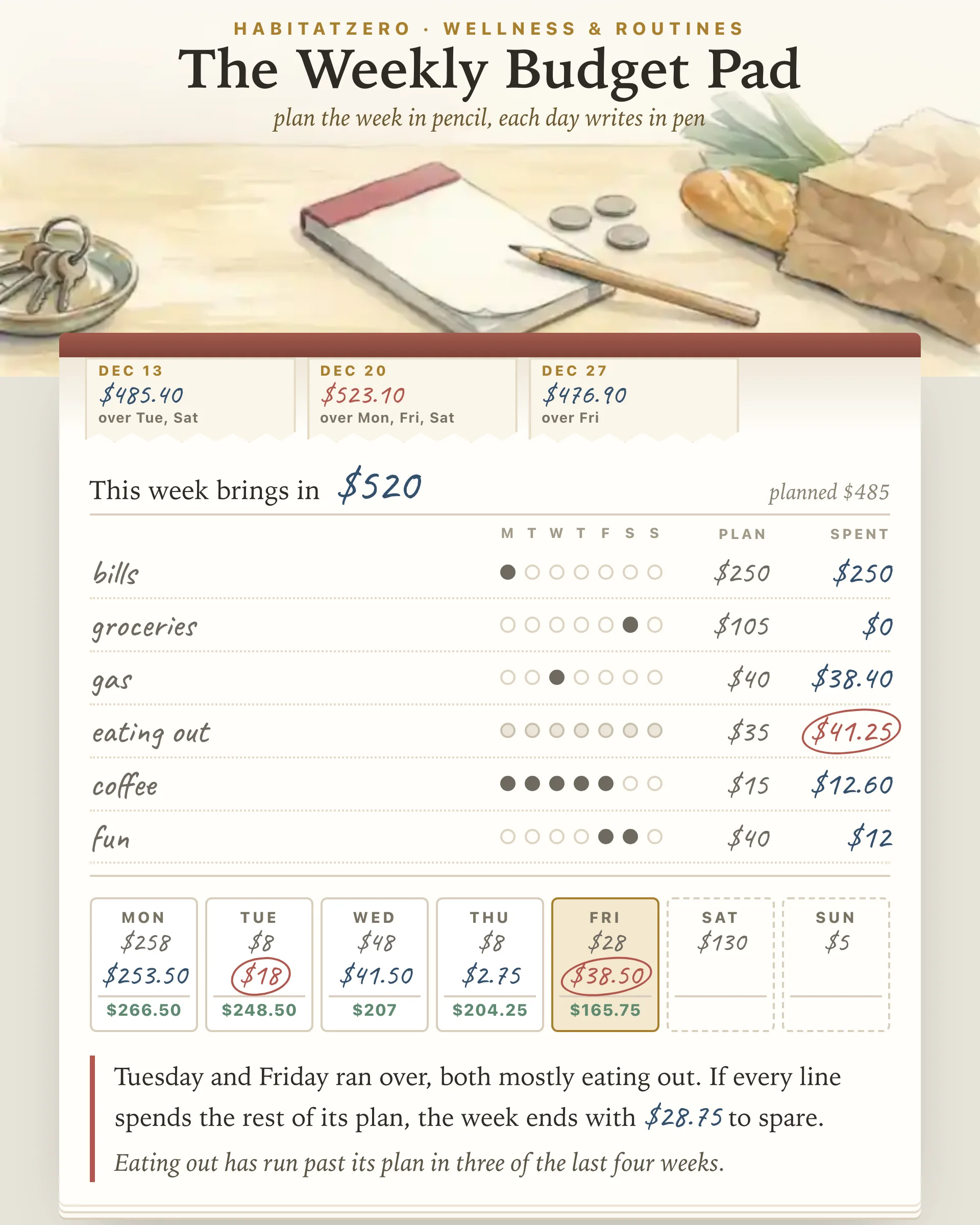
The Weekly Budget PadWrite in what the week brings in, plan each kind of spending in pencil on the days it lands, and jot every day in pen. The pad keeps what is left after each day, circles the days and lines that ran over, and saves a stub of every week you tear off.
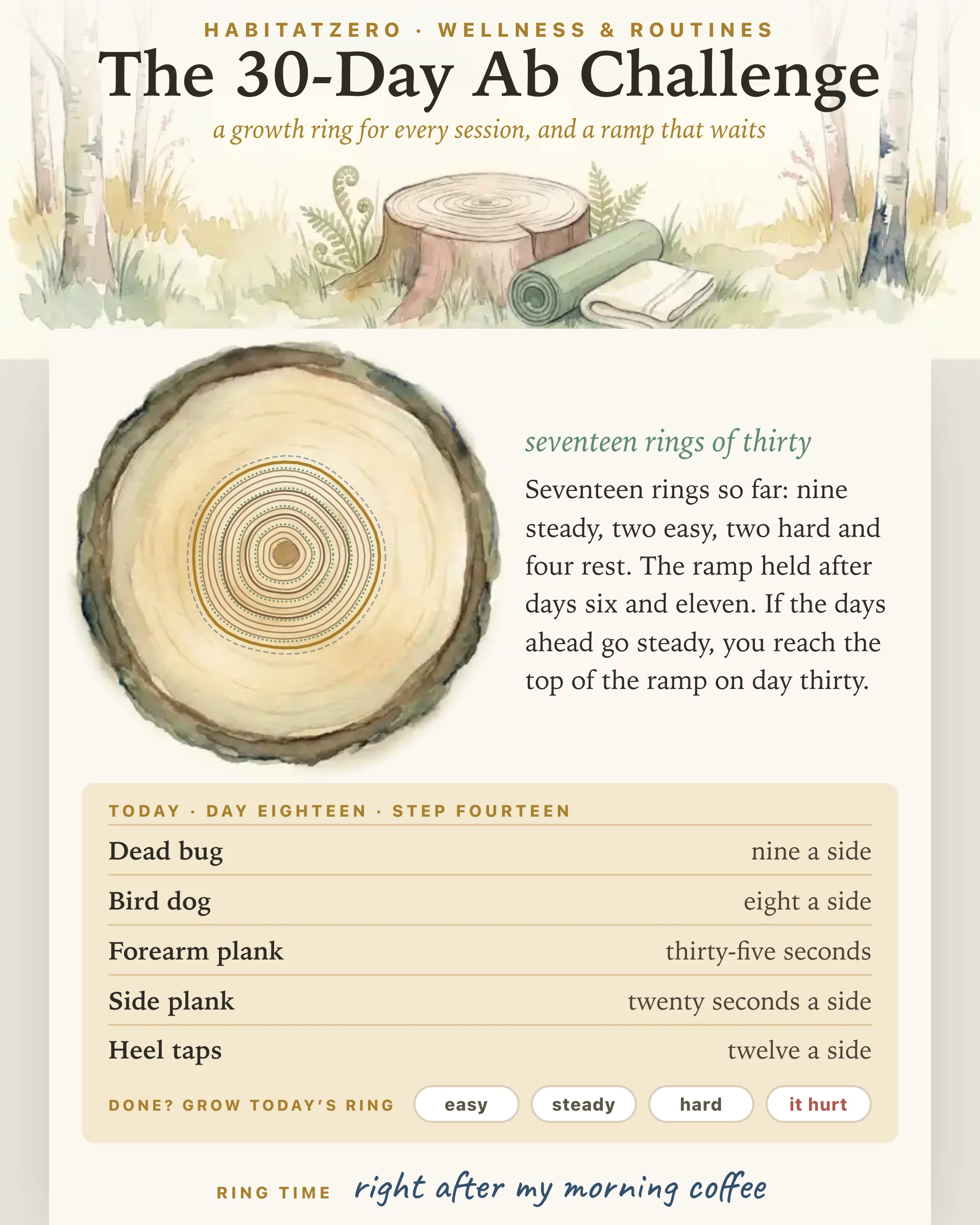
The 30-Day Ab ChallengeFive core moves on a capped ramp with a rest day every fourth day. Log each session in one tap and watch a cut log grow a ring for it, while a hard day holds the next session's doses instead of piling on more.
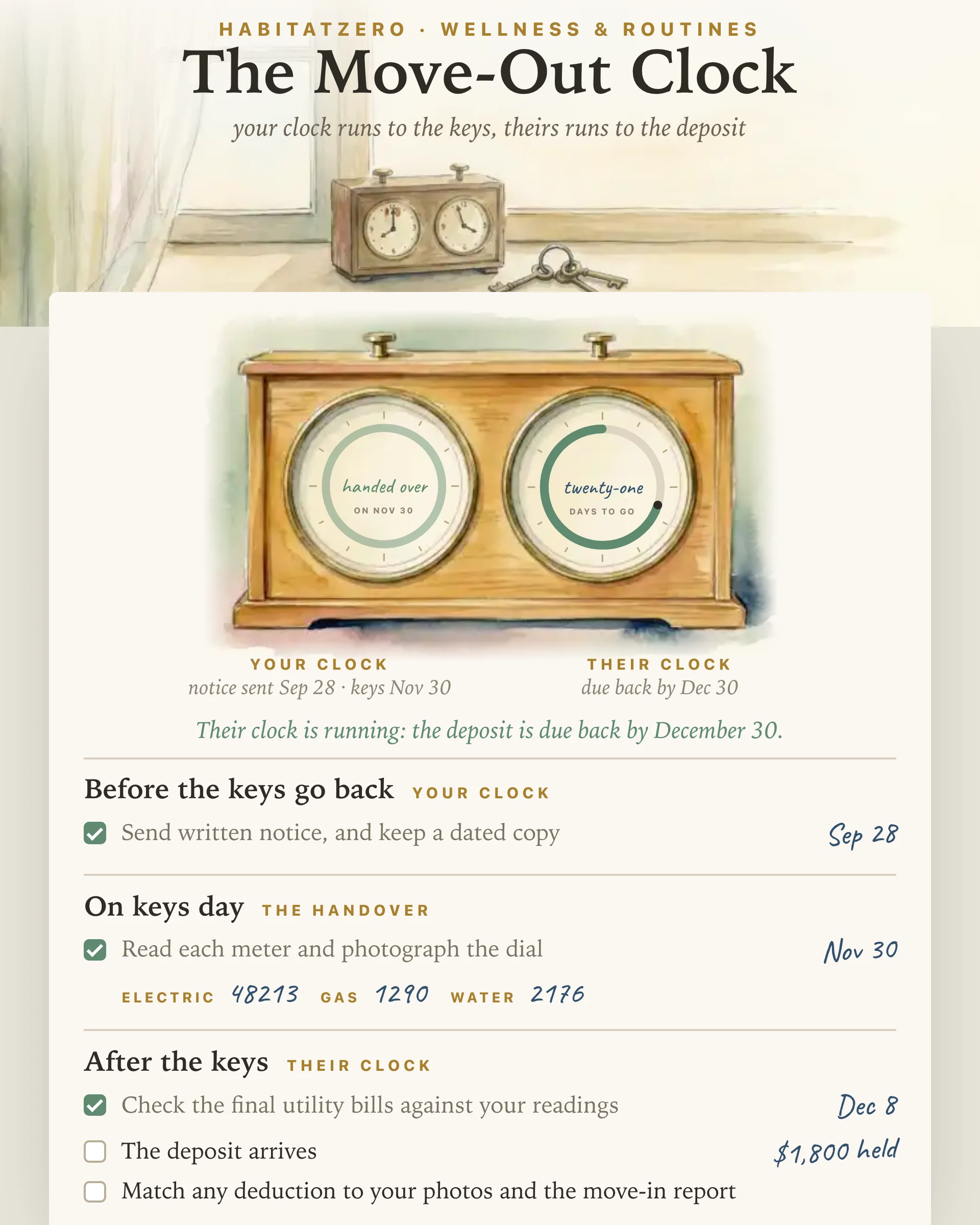
The Move-Out ClockA renter's moving out checklist on a two-faced clock: yours counts down to the day the keys go back, the landlord's counts the days until your deposit is due, and every step you check off keeps its date.
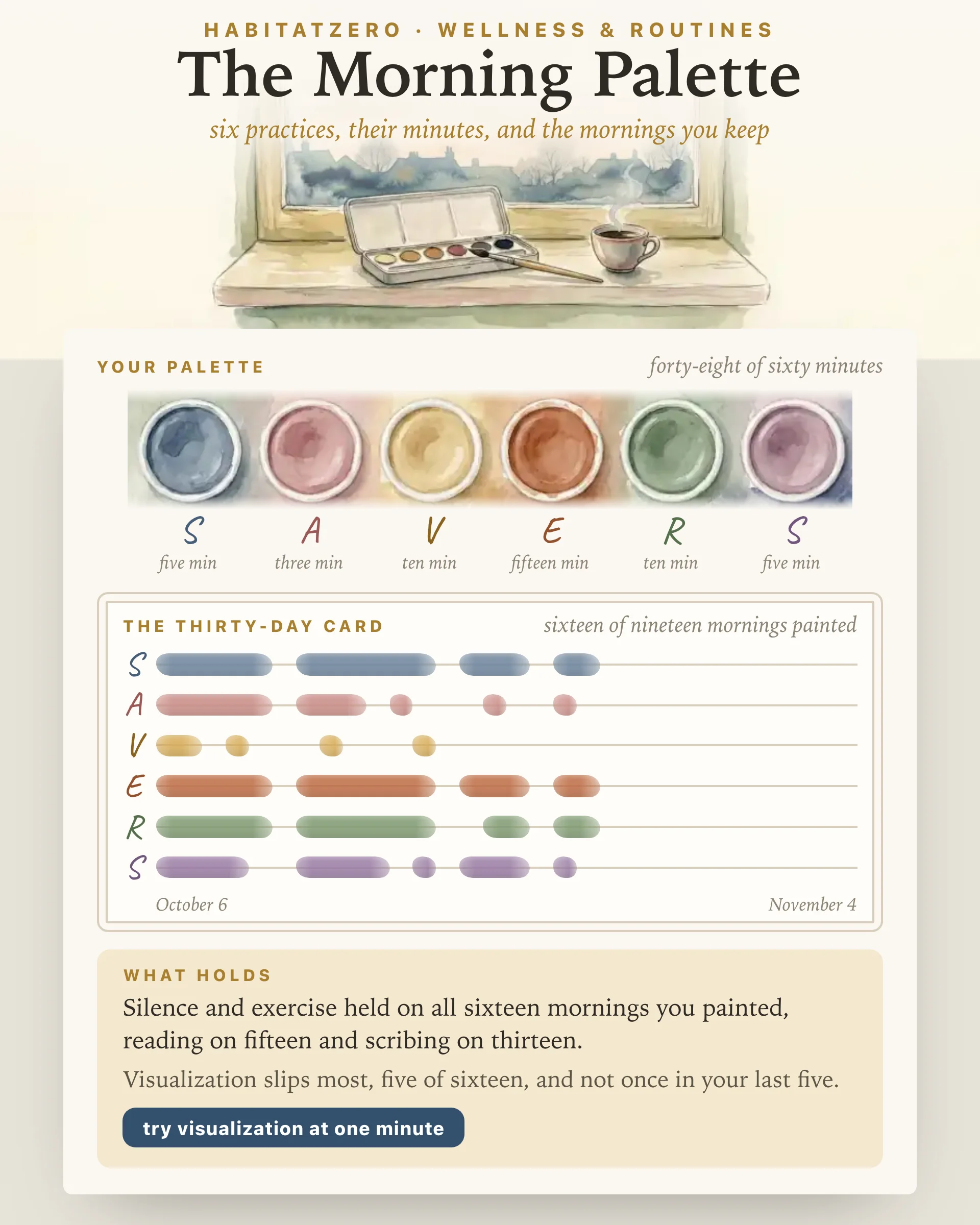
The Morning PaletteGive each of the six SAVERS practices its minutes, up to an hour in all, then paint the mornings you keep on a thirty-day card. The stripes show which practices hold and which one keeps slipping, with a smaller way back in.
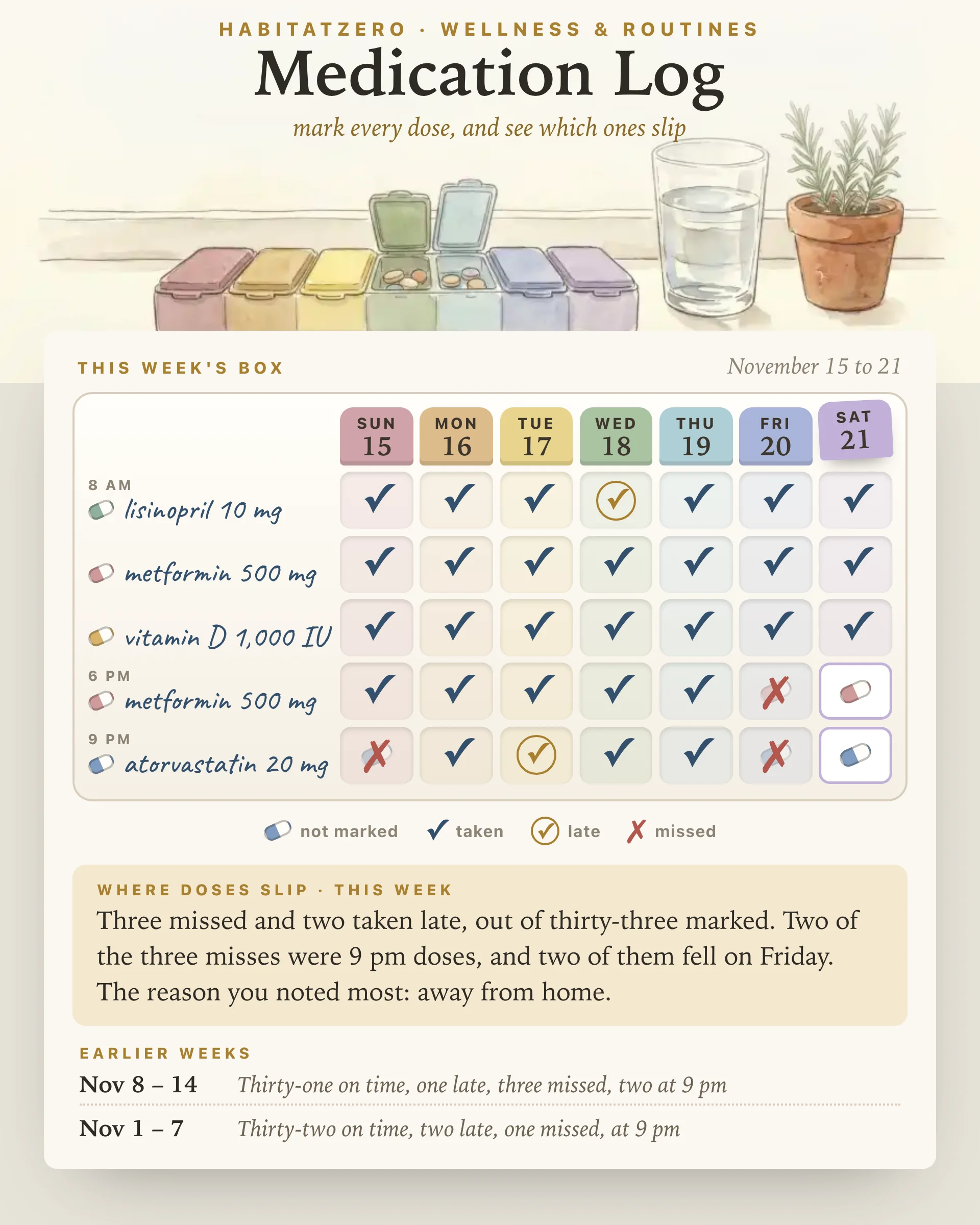
Medication LogPut each medicine and its times into a seven-lid box, then mark every dose taken, late or missed. The week reads itself back: which doses slip, on which days, and the reason you gave most.
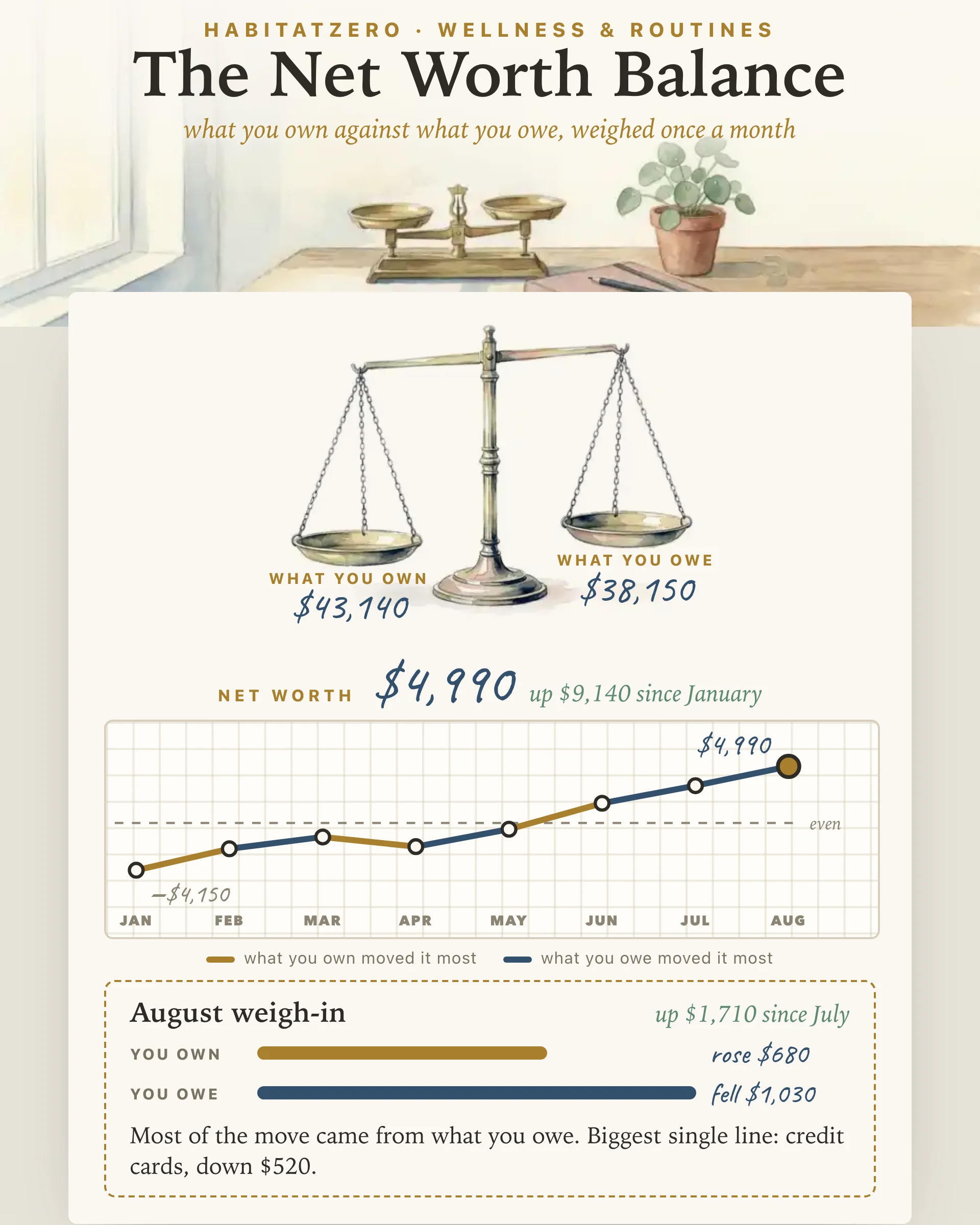
The Net Worth BalancePut what you own on one pan and what you owe on the other, from savings and retirement to car loans and cards, and watch the brass balance tip. Weigh in once a month and the line shows your net worth over time, each stretch marked by the side that moved it.
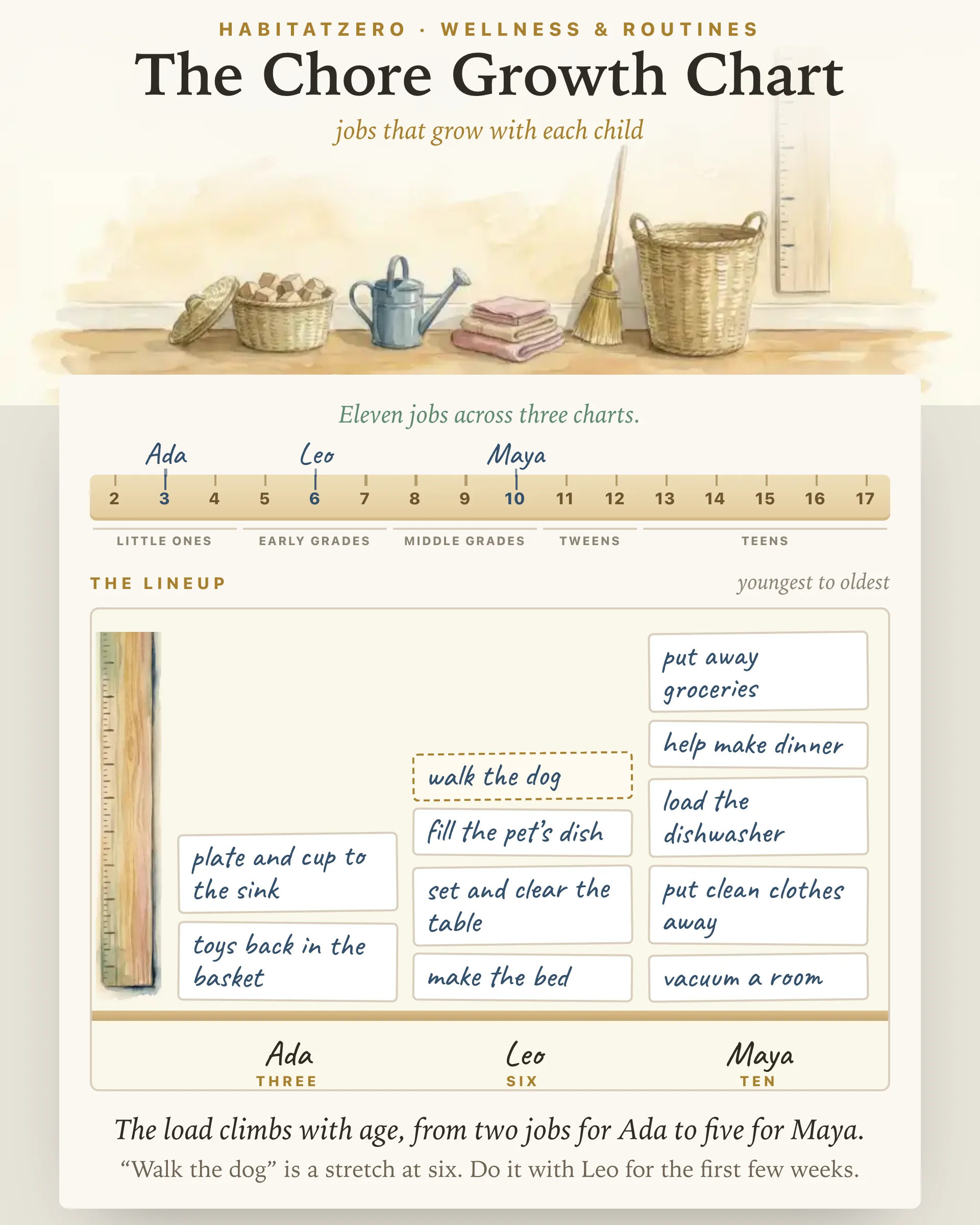
The Chore Growth ChartMark each child on an age ruler, hand out jobs that fit from toddler to teen, and see every chart stand in a lineup from youngest to oldest, so you can tell at a glance whether the load grows with them.
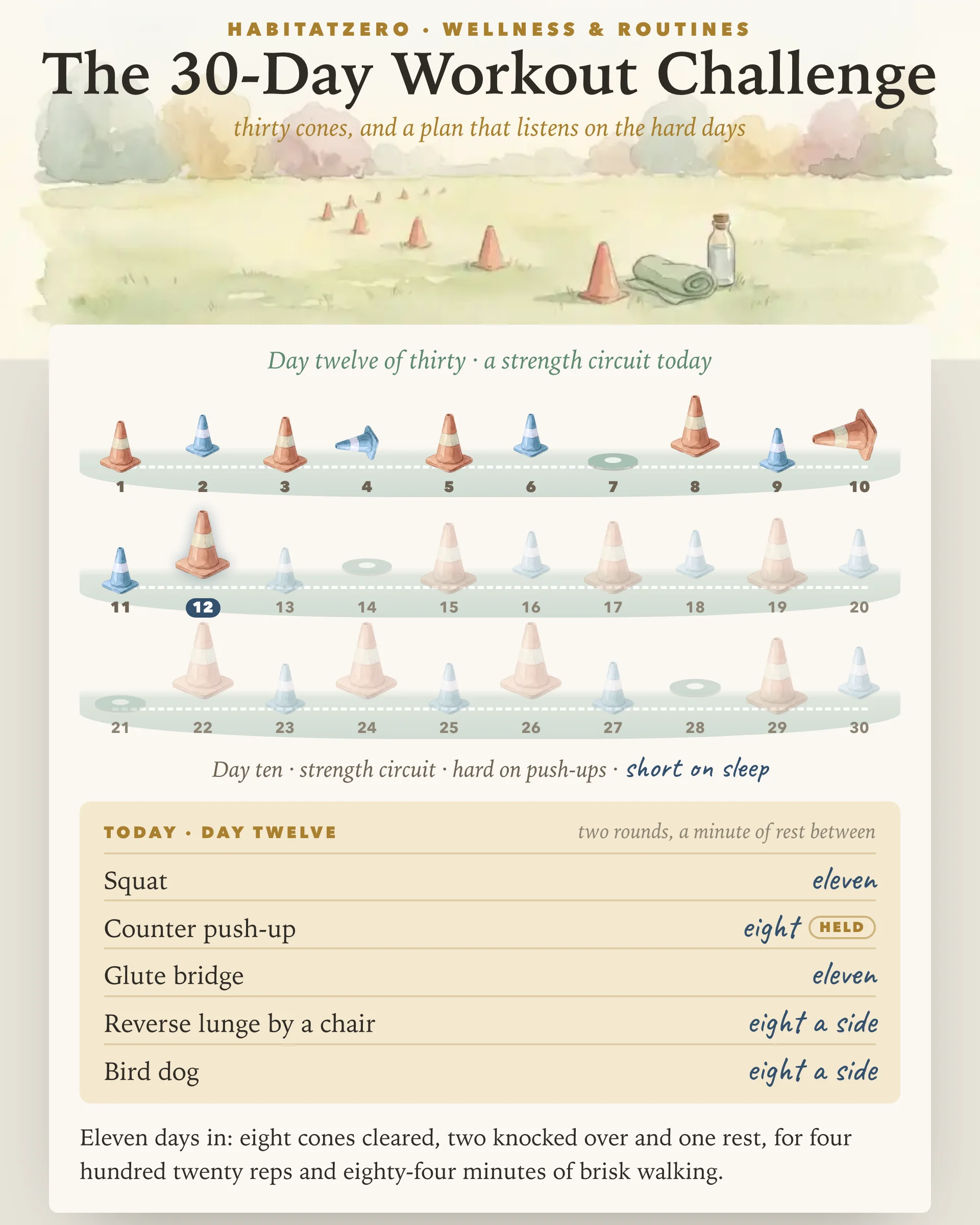
The 30-Day Workout ChallengeThirty painted cones, each a full-body strength circuit, a brisk walk or a rest, with a form cue for every move. Tap how each day went and the plan answers: a hard day knocks its cone over and holds the move that made it hard, pain turns tomorrow into rest, and every count stops at a cap.
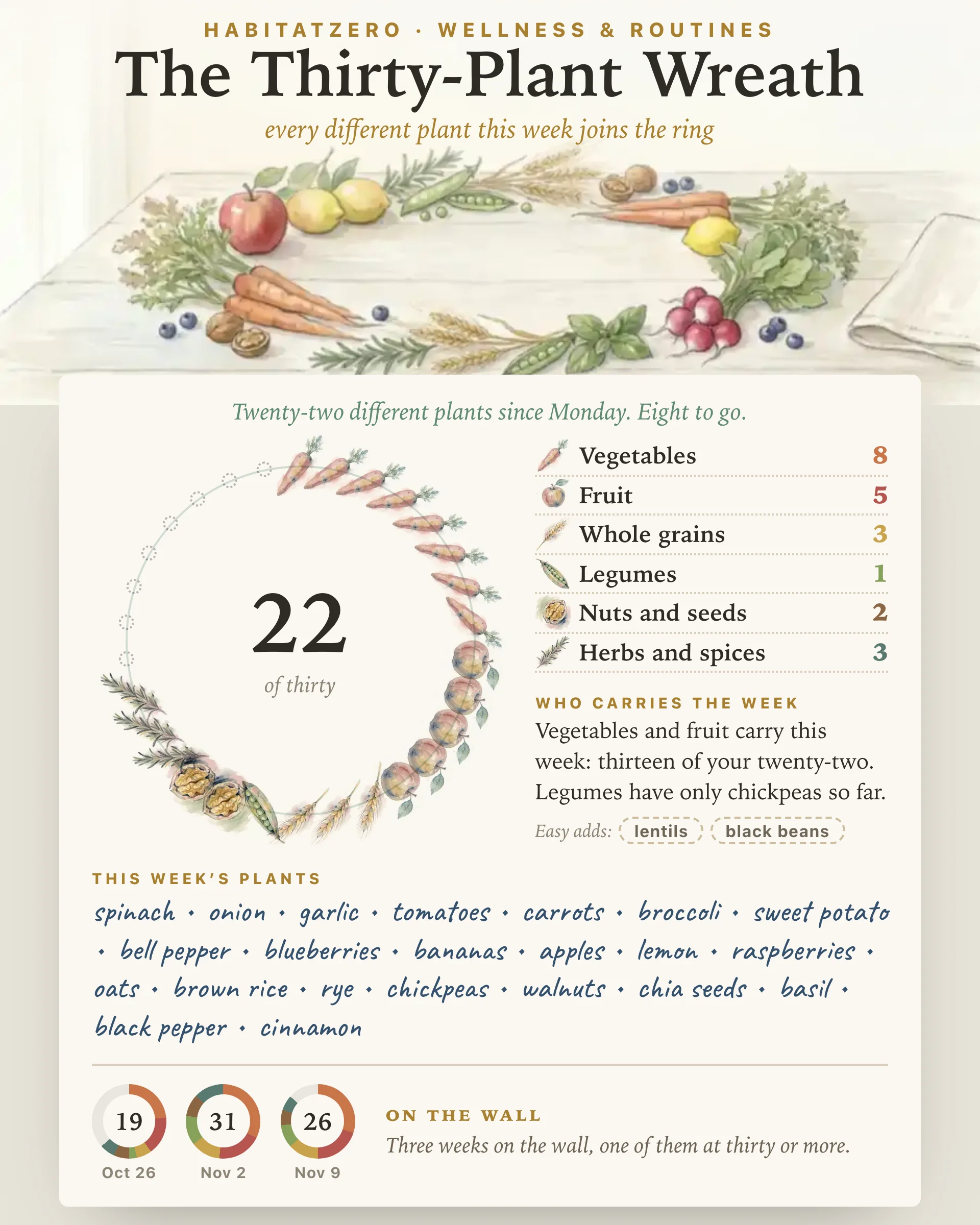
The Thirty-Plant WreathTap each different plant you eat this week and a painted token joins a wreath, sorted by food group, until thirty closes the ring. The page reads back which groups are carrying your week, offers one-tap adds from the quiet ones, and hangs every finished week on a wall.
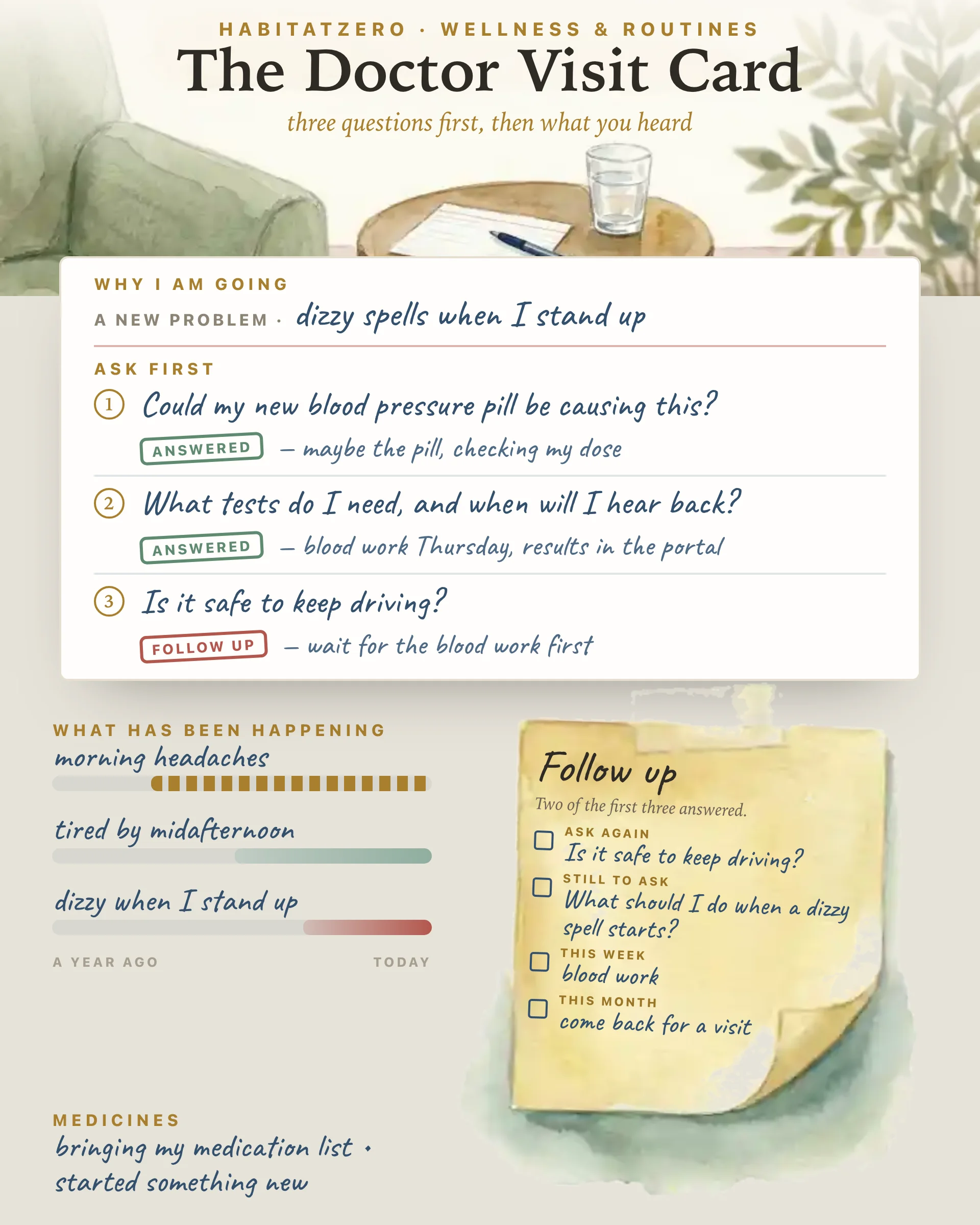
The Doctor Visit CardPut why you are going and your three most important questions at the top of one card, with symptoms and medicine changes underneath. In the room, stamp each question as it gets an answer, and the card writes your follow-up note.
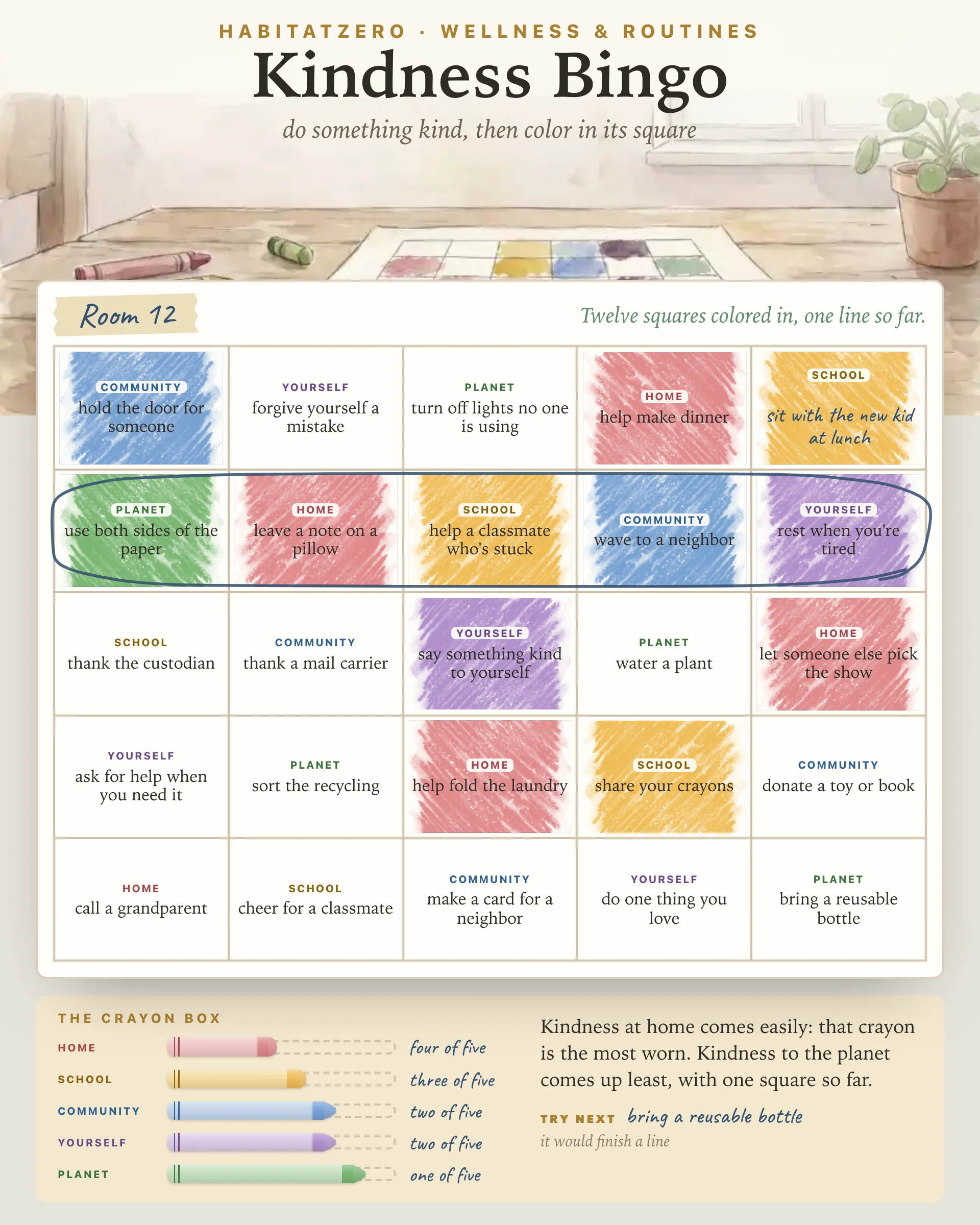
Kindness BingoA kindness bingo card for a class or a family: color in a square with its own crayon after each kind act, aim for lines and a blackout, and let the crayon box show which kinds of kindness come easily.
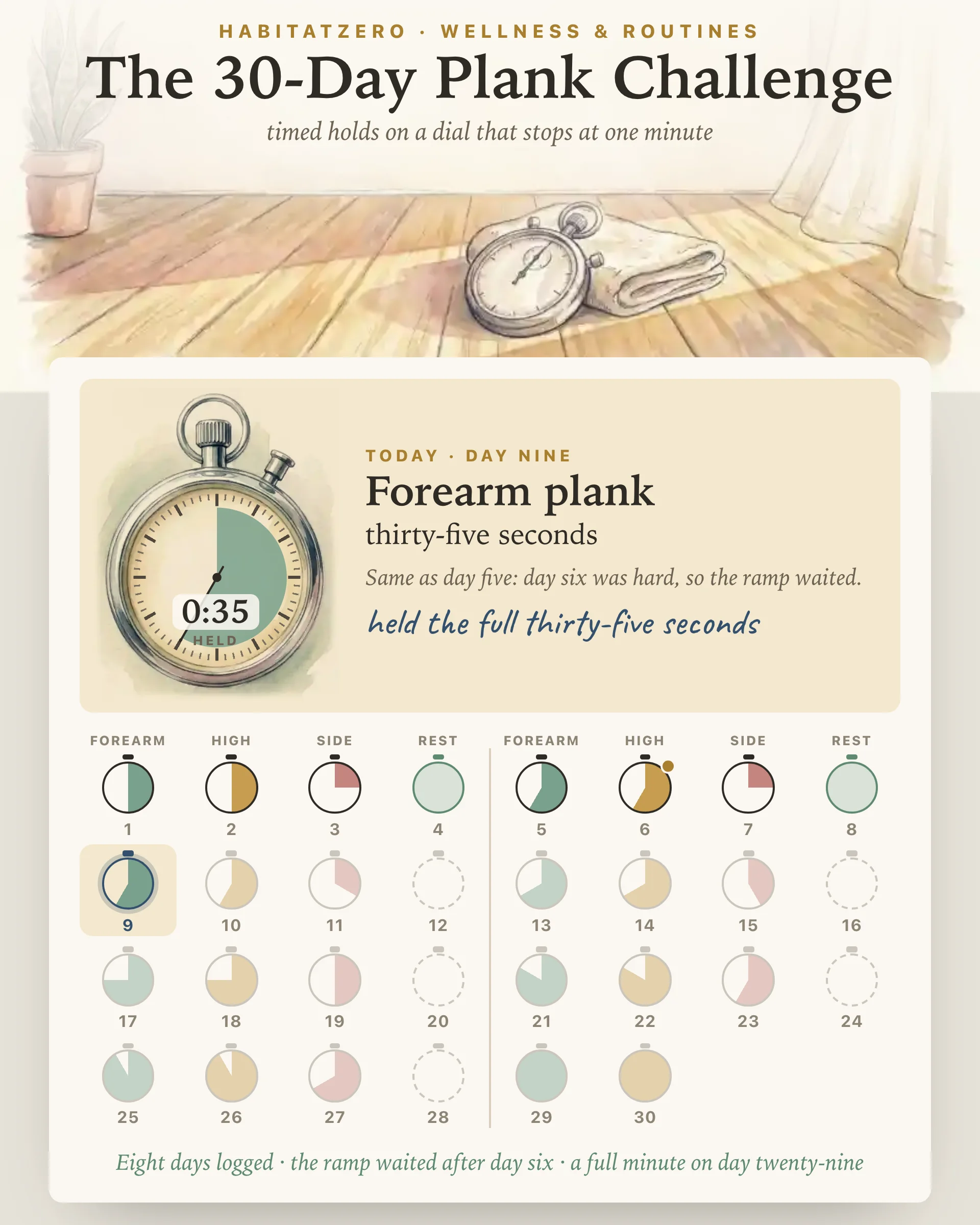
The 30-Day Plank ChallengeForearm, high and side planks on a ramp that stops at a minute, timed by a painted stopwatch that counts each hold for you. Log how every day went and the plan answers: a hard day makes the next round repeat its times, and pain turns tomorrow into rest.
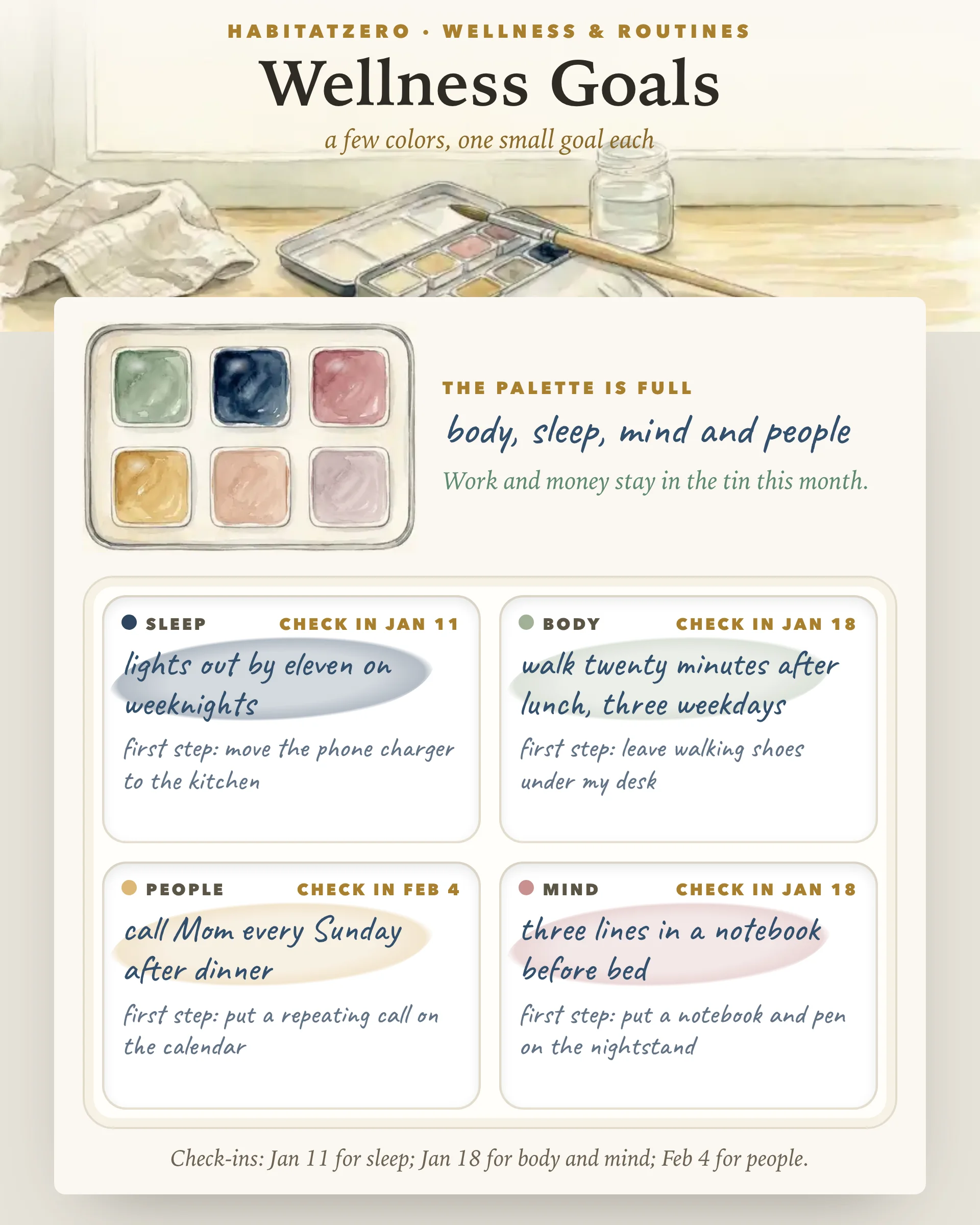
Wellness GoalsSix colors in a paint tin, one for each part of life. Give a few of them one small goal each, with a first step and a check-in day, and the palette shows which parts you chose and which stay in the tin this month.
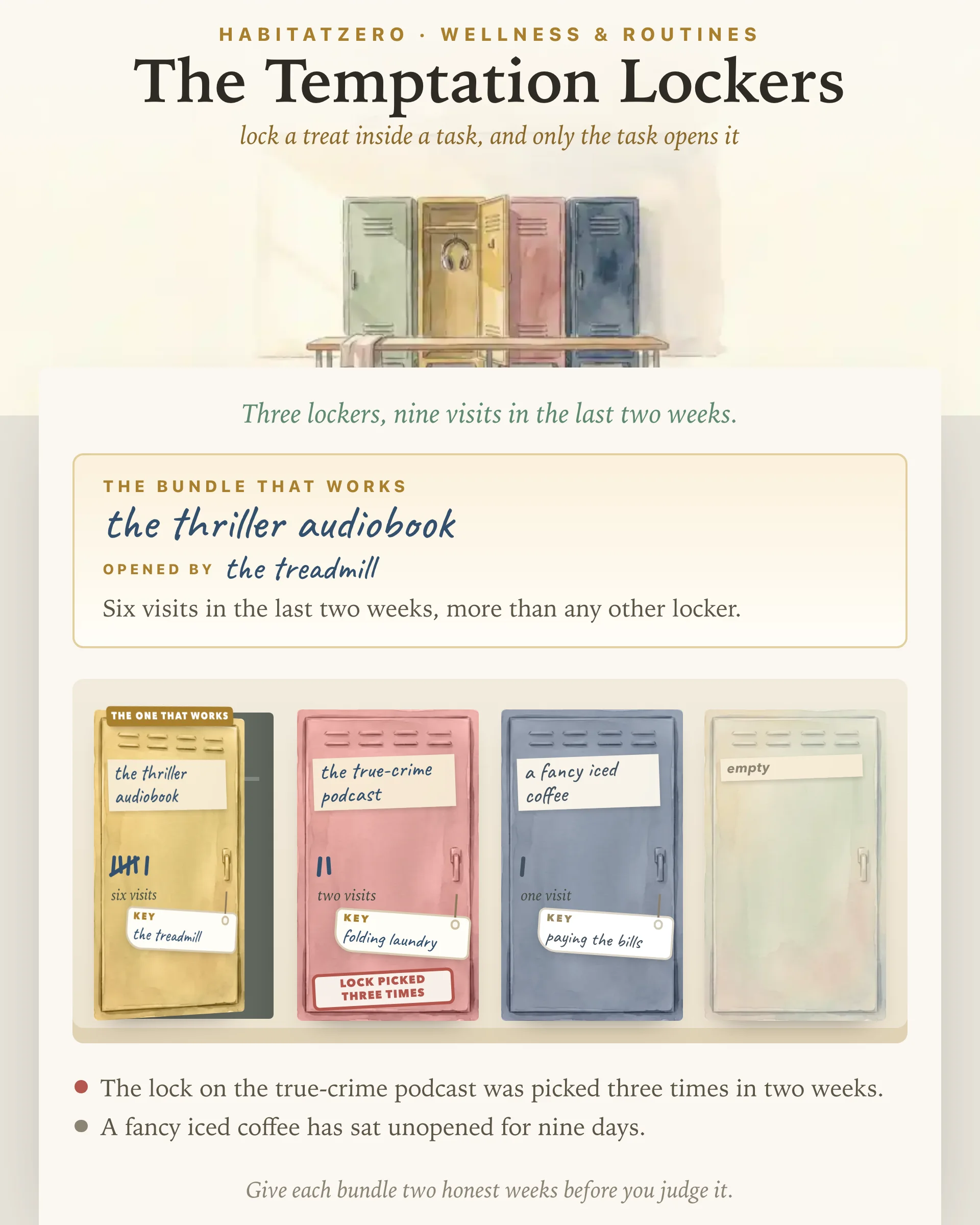
The Temptation LockersTemptation bundling you can track: lock a treat you crave inside a task you keep putting off, tap its locker on each day you do both, and let the row show which bundle keeps you coming back.
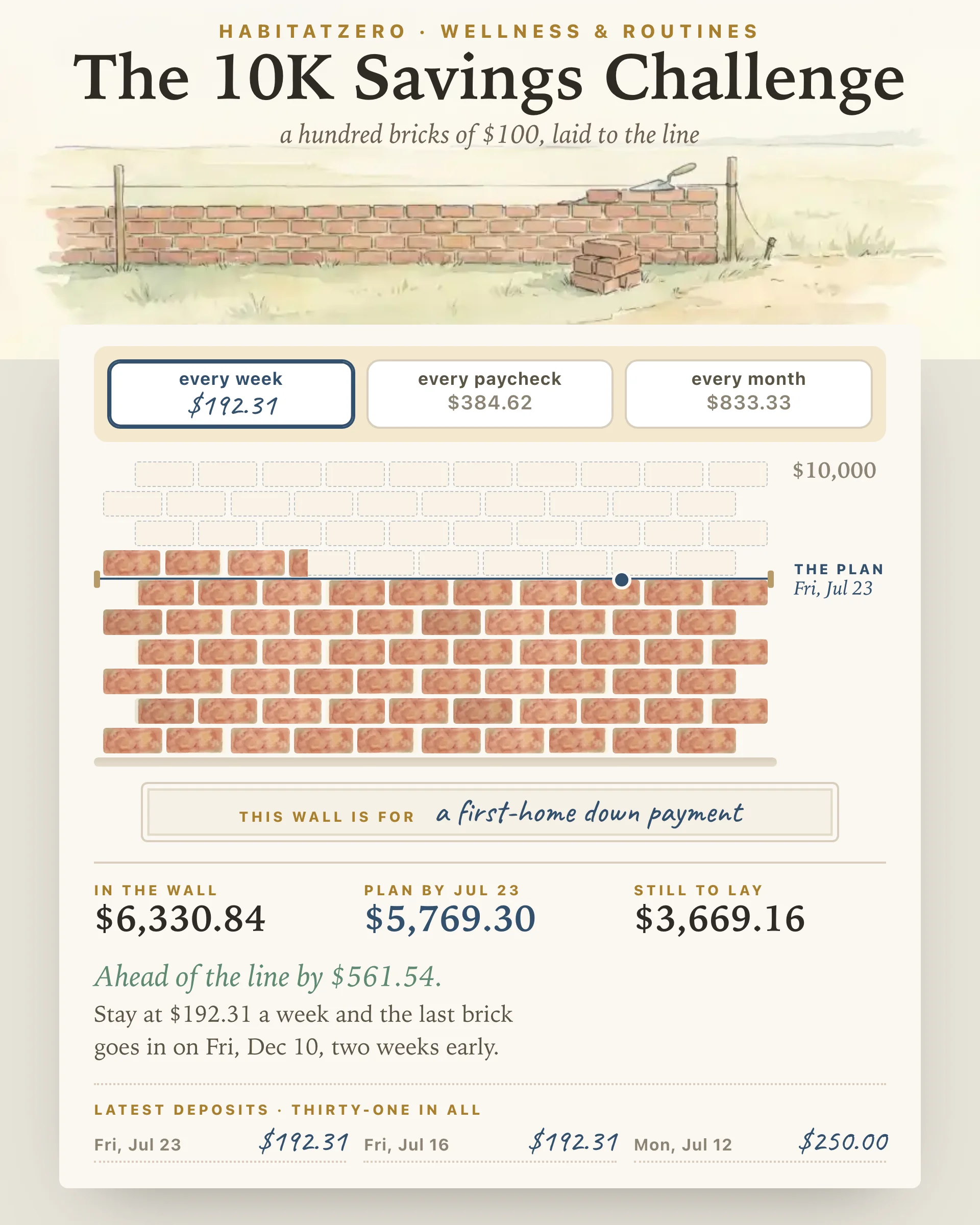
The 10K Savings ChallengeLay a hundred $100 bricks by the week, the paycheck or the month. A string marks where the plan says the wall should stand today, and the page works out what keeps your year on track.
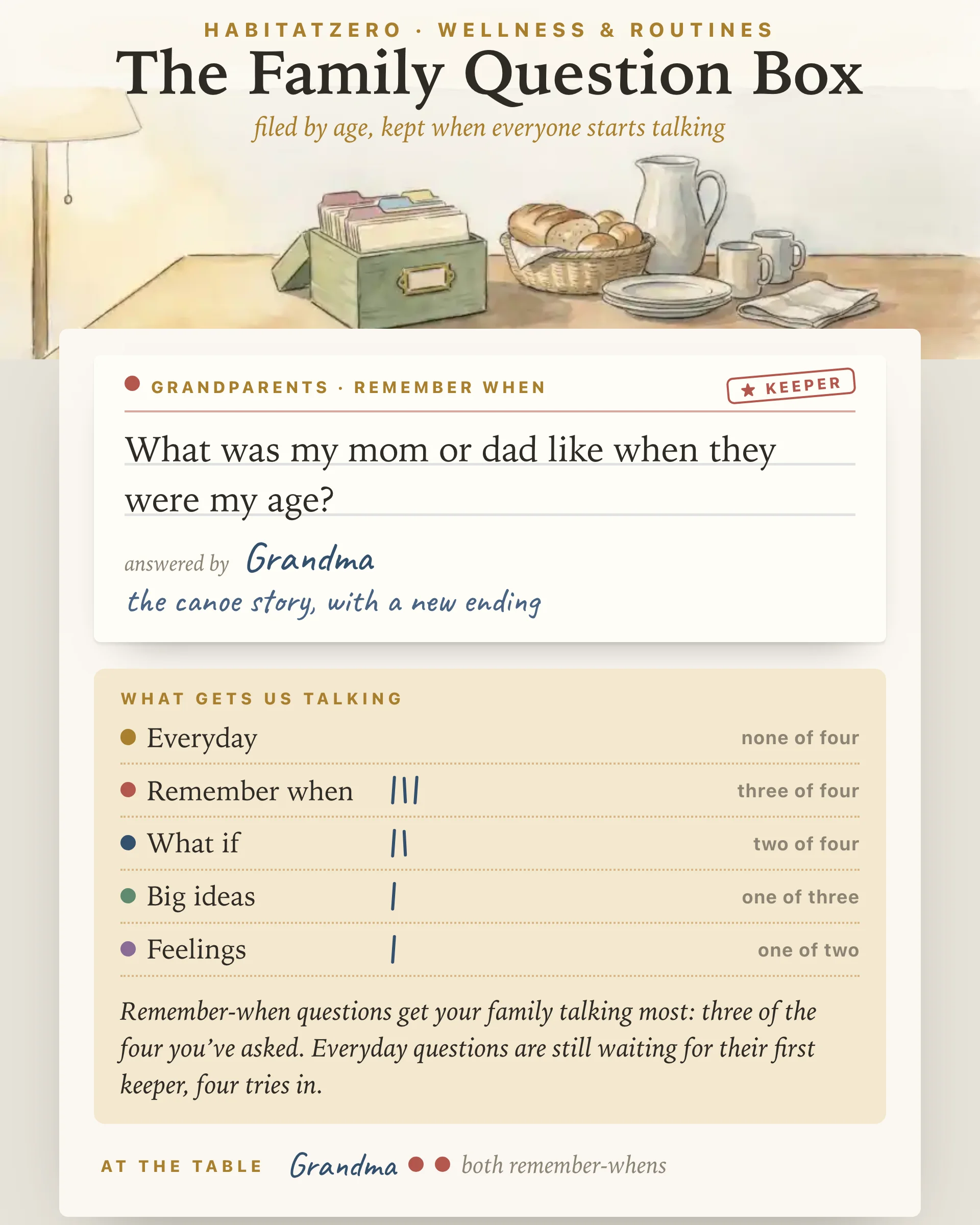
The Family Question BoxA hundred family dinner questions in a painted recipe box, filed by age from little kids to grandparents. Pull one card at a time, keep the ones that start a real conversation along with who answered, and see which kinds of questions open your family up.
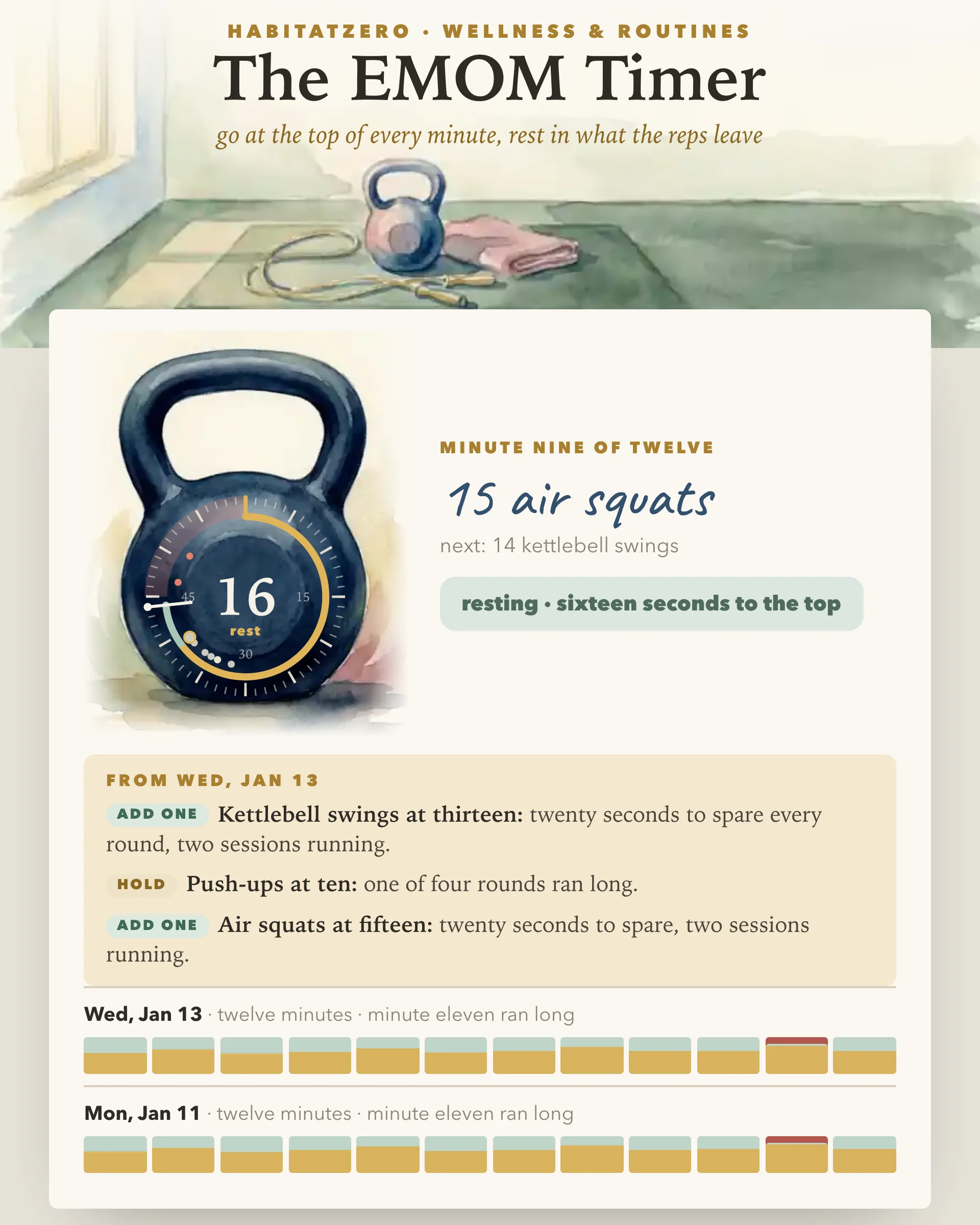
The EMOM TimerAn every-minute-on-the-minute timer on a painted kettlebell: set your moves, reps and rounds, go at the top of each minute, and tap when the reps are in. Each session you log shows which rounds ran long and whether to add a rep or hold.
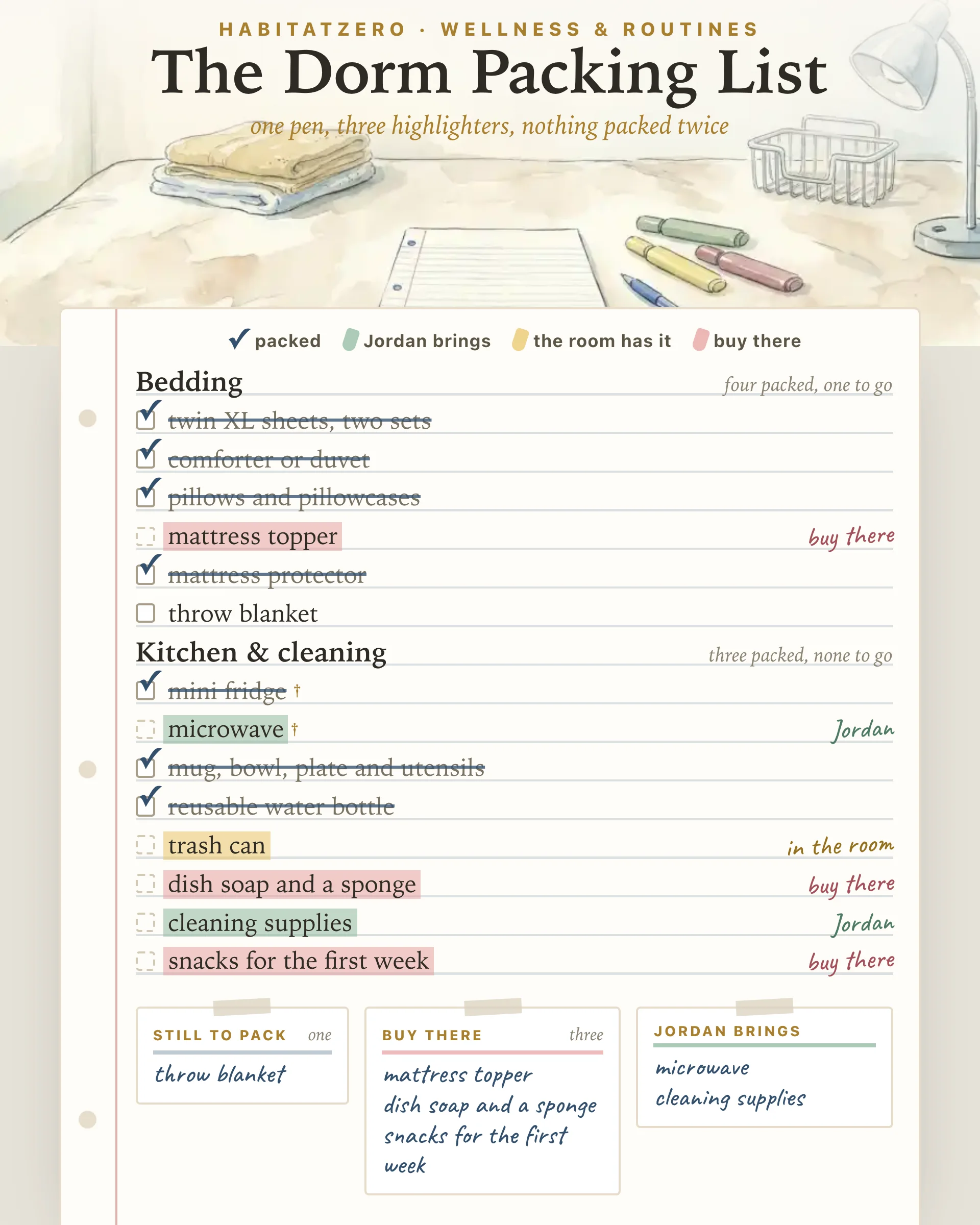
The Dorm Packing ListA college-ruled dorm list you mark with one pen and three highlighters: check off what is packed, flag what the room, your roommate or a store near campus will cover, and watch what is left sort itself into short slips that print.
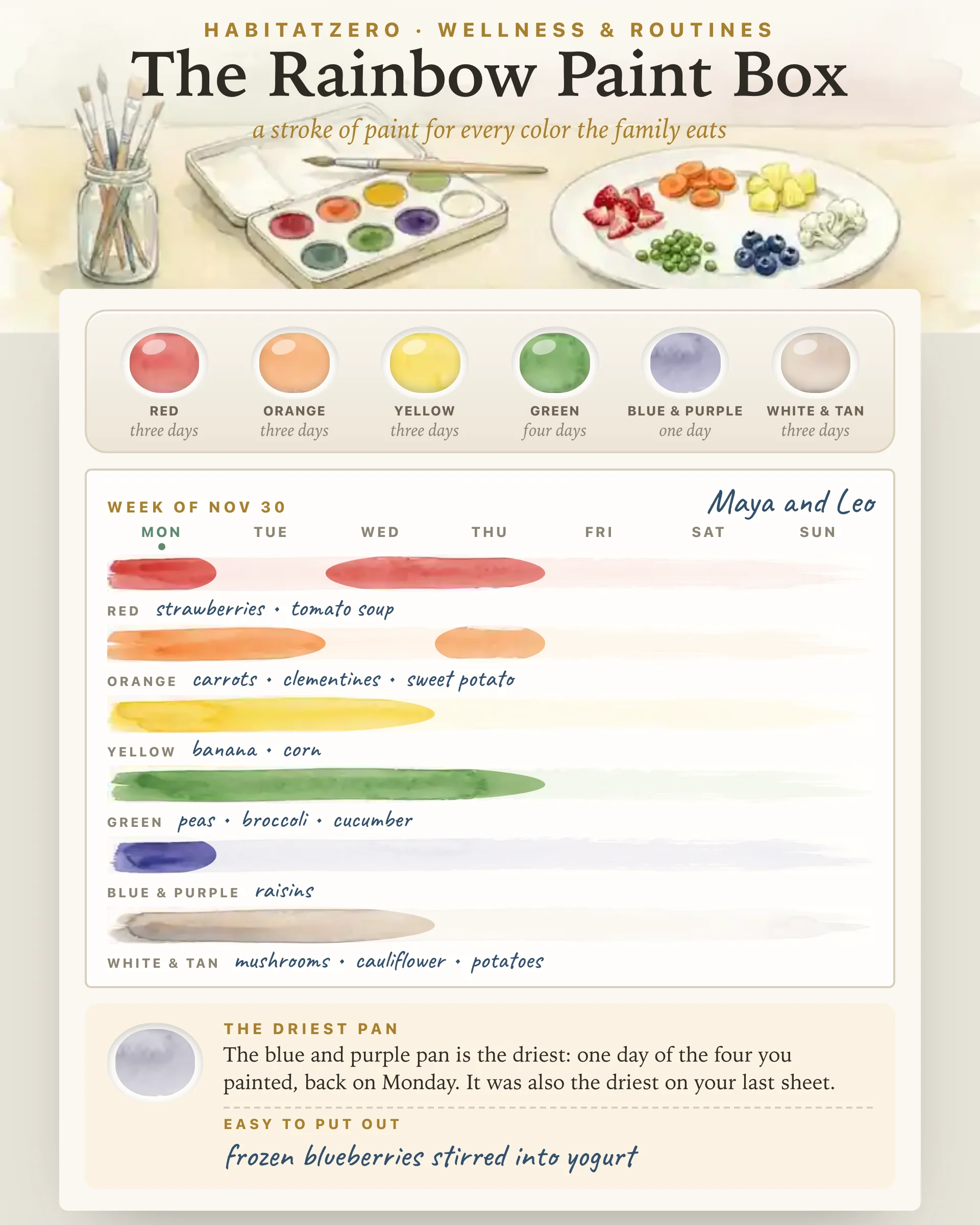
The Rainbow Paint BoxA week-long eat the rainbow chart for families: tap a color, pick the food by the name your family uses, and the week fills with paint. The pan that stays dry names one easy food to offer next.
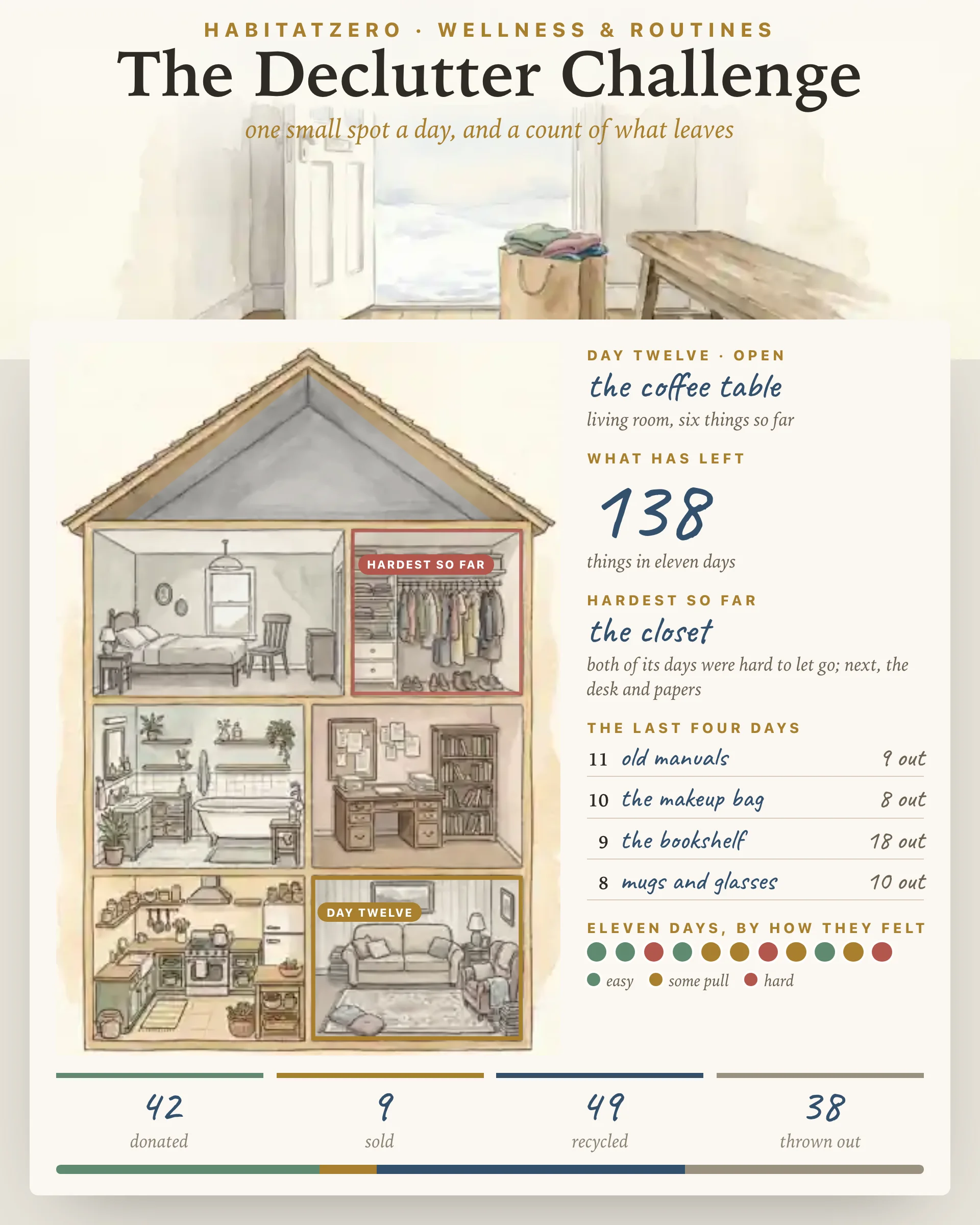
The Declutter ChallengeA painted house with seven rooms and thirty days to clear it one small spot at a time. Count what leaves for donation, sale, recycling or the trash, say how hard it was to let go, and each room fills back with color while the sheet names the rooms that were hardest.
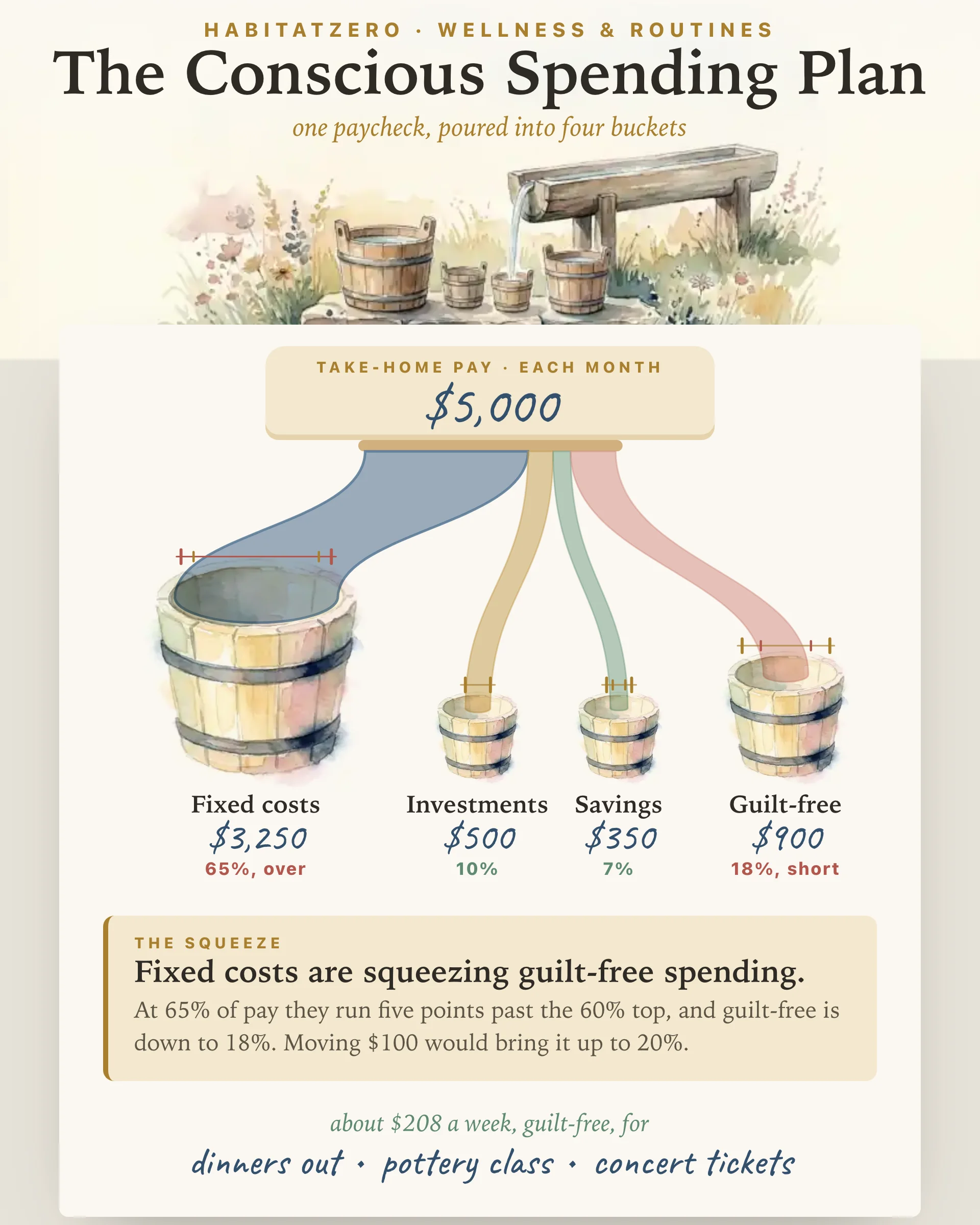
The Conscious Spending PlanPour each month's take-home pay into Ramit Sethi's four buckets, measure every bucket against its range, and see which one is squeezing the others and what it would take to set it right.
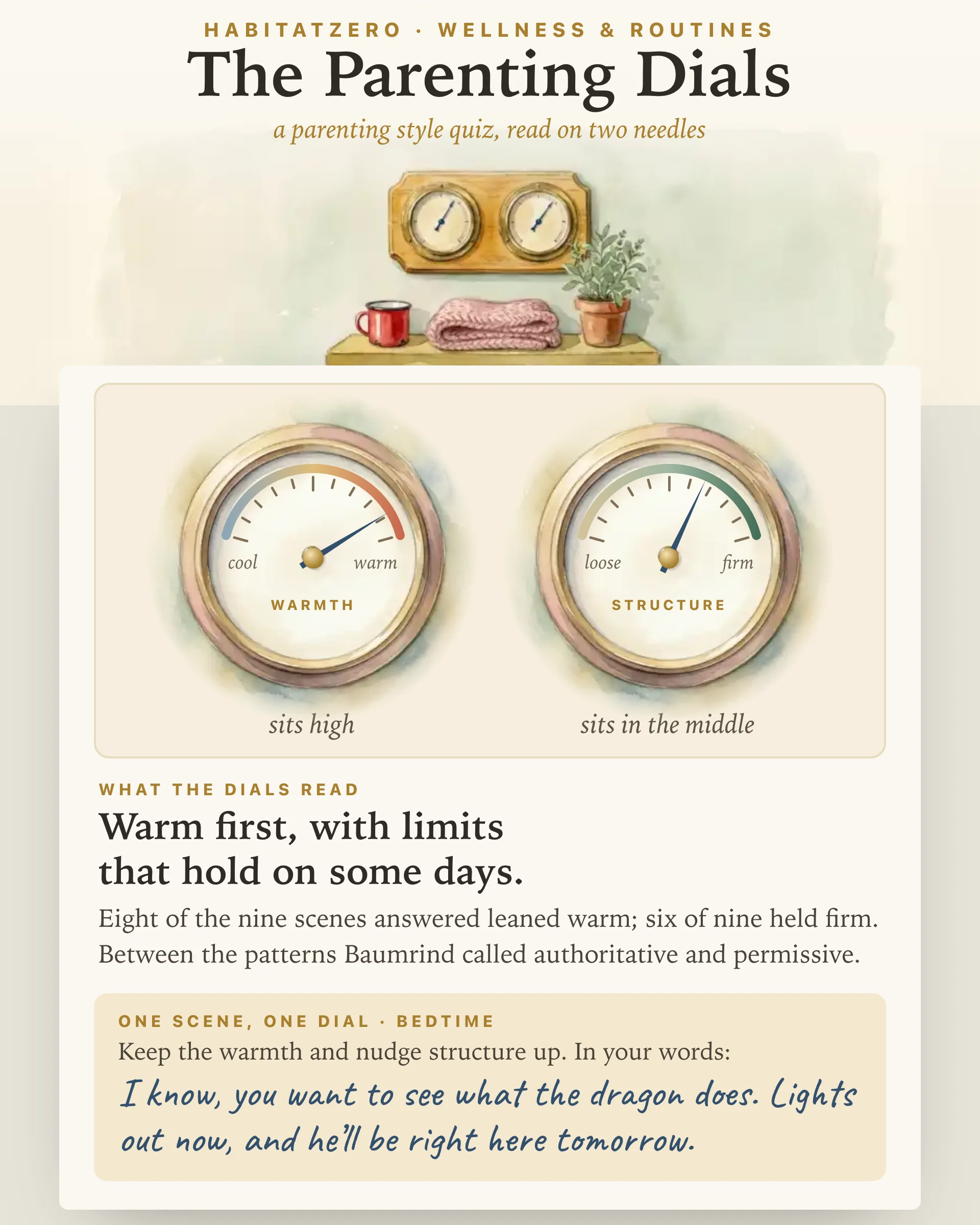
The Parenting DialsTen everyday scenes, from lights-out to a slammed door, swing a warmth needle and a structure needle. The reading shows where the two dials sit today, which of Baumrind's patterns your answers lean toward, and one scene to try differently in your own words.
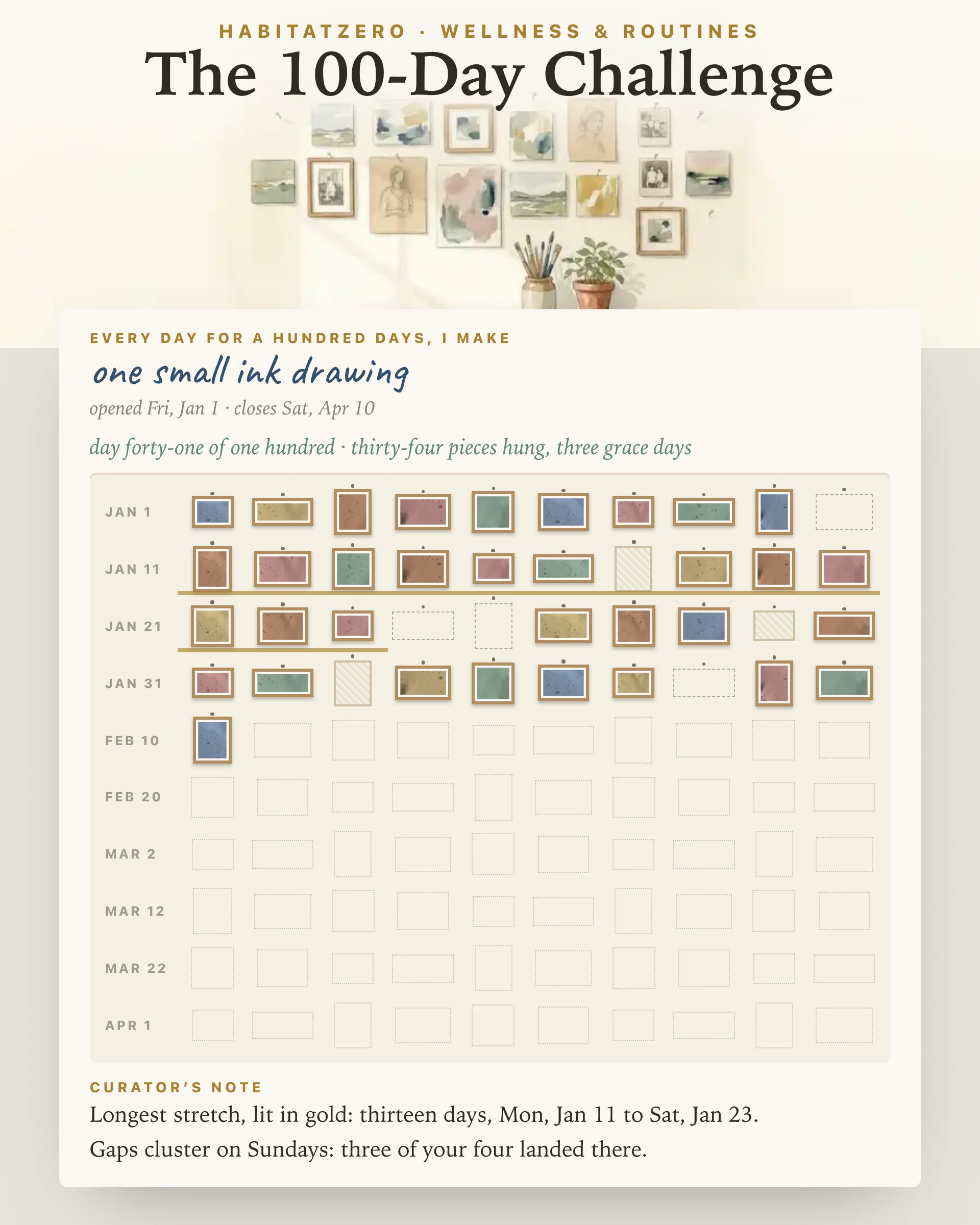
The 100-Day ChallengeChoose one small thing to make every day and hang each day's piece as a painted frame on ten walls of ten, with ten grace days held in reserve. Once a week of frames is up, the page shows which stretches kept going and where your gaps cluster.
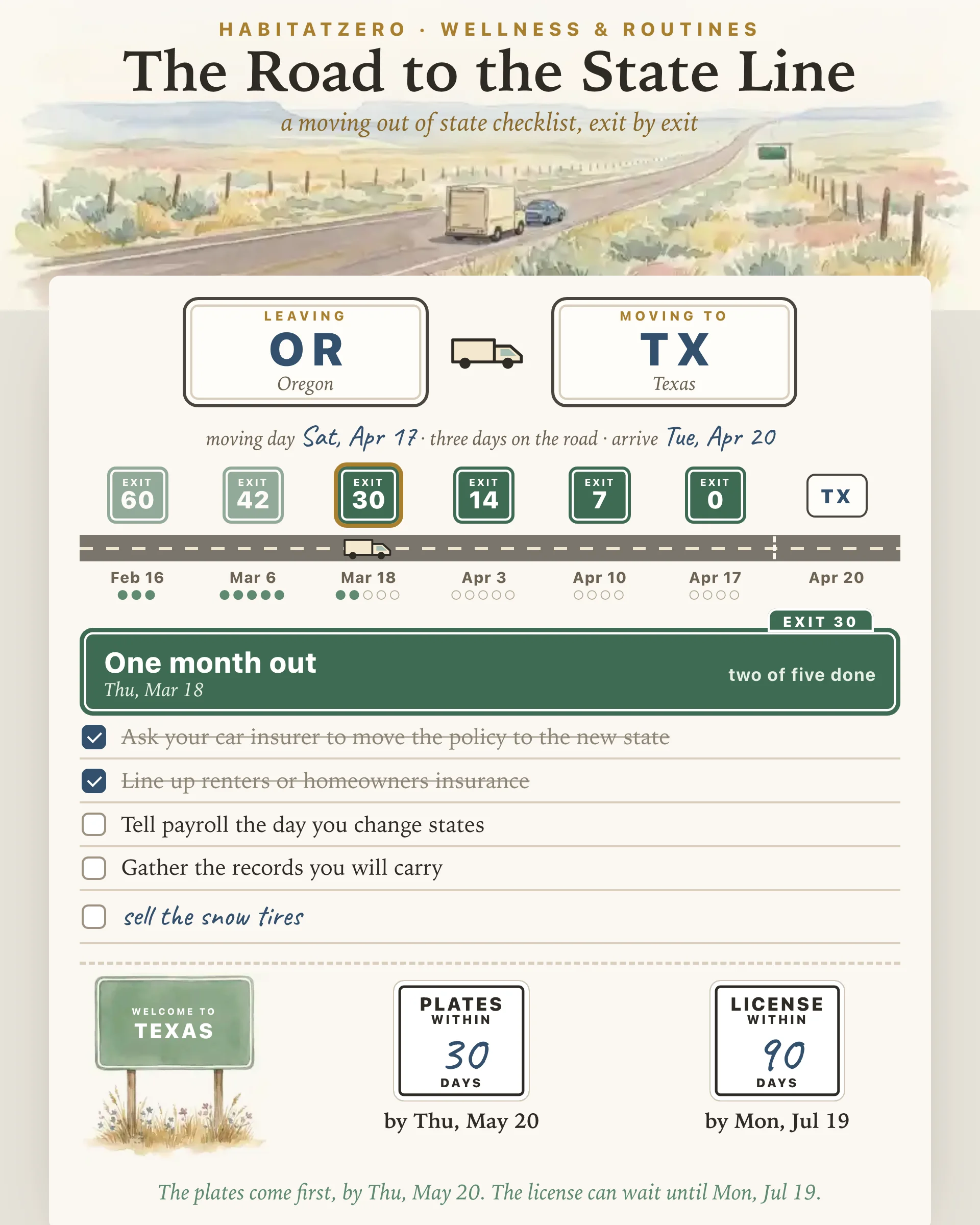
The Road to the State LineSet the two states and your moving day, and every exit on the road gets its date, from checking a mover's USDOT number to the last walk-through. Past the state line, write in the license and plate windows your new state gives you, and the deadlines turn into dates.
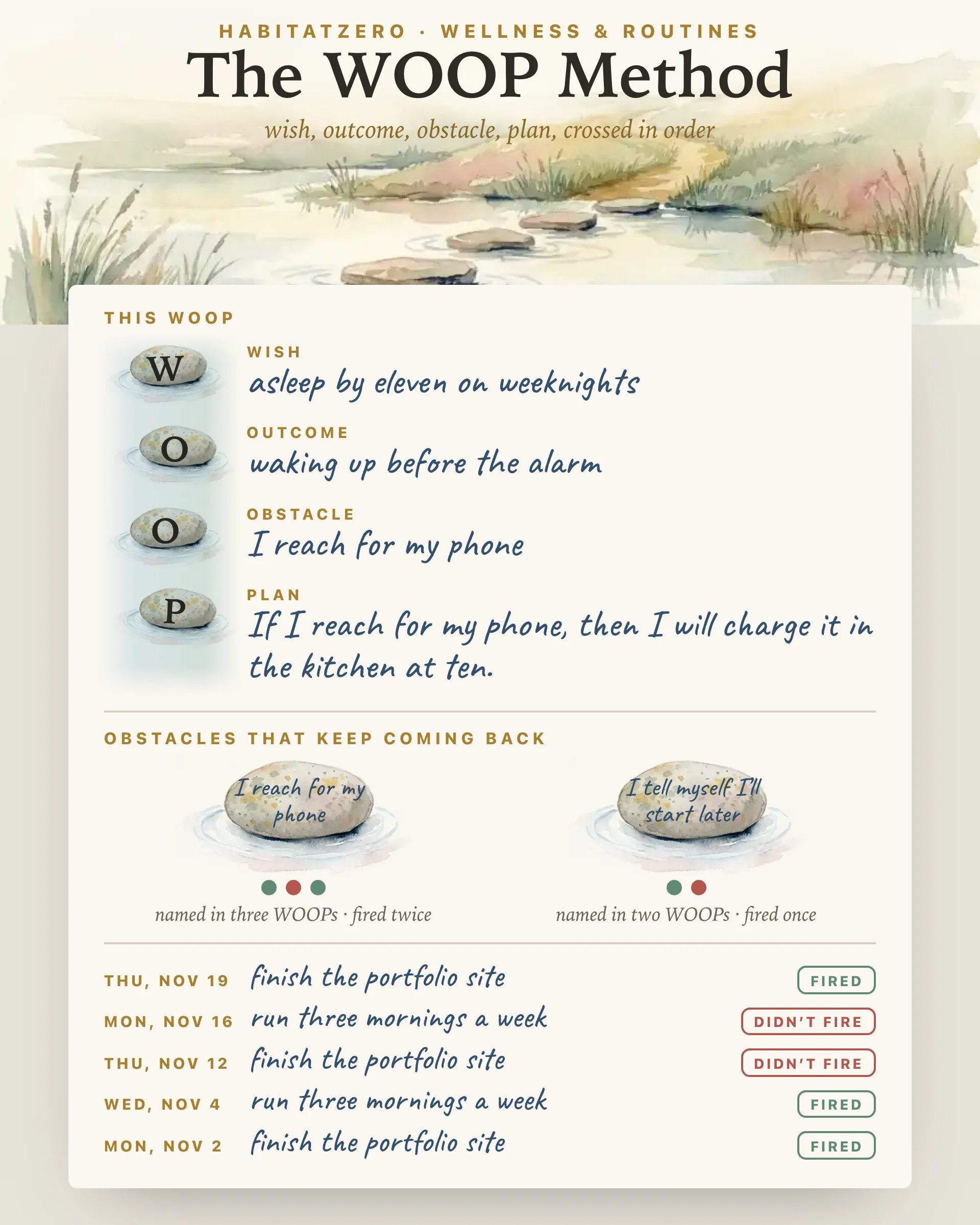
The WOOP MethodCross four stepping stones in order: name a wish, picture its best outcome, find the obstacle inside you, and write the if-then plan. Then log whether each plan fired and see which obstacles keep coming back.
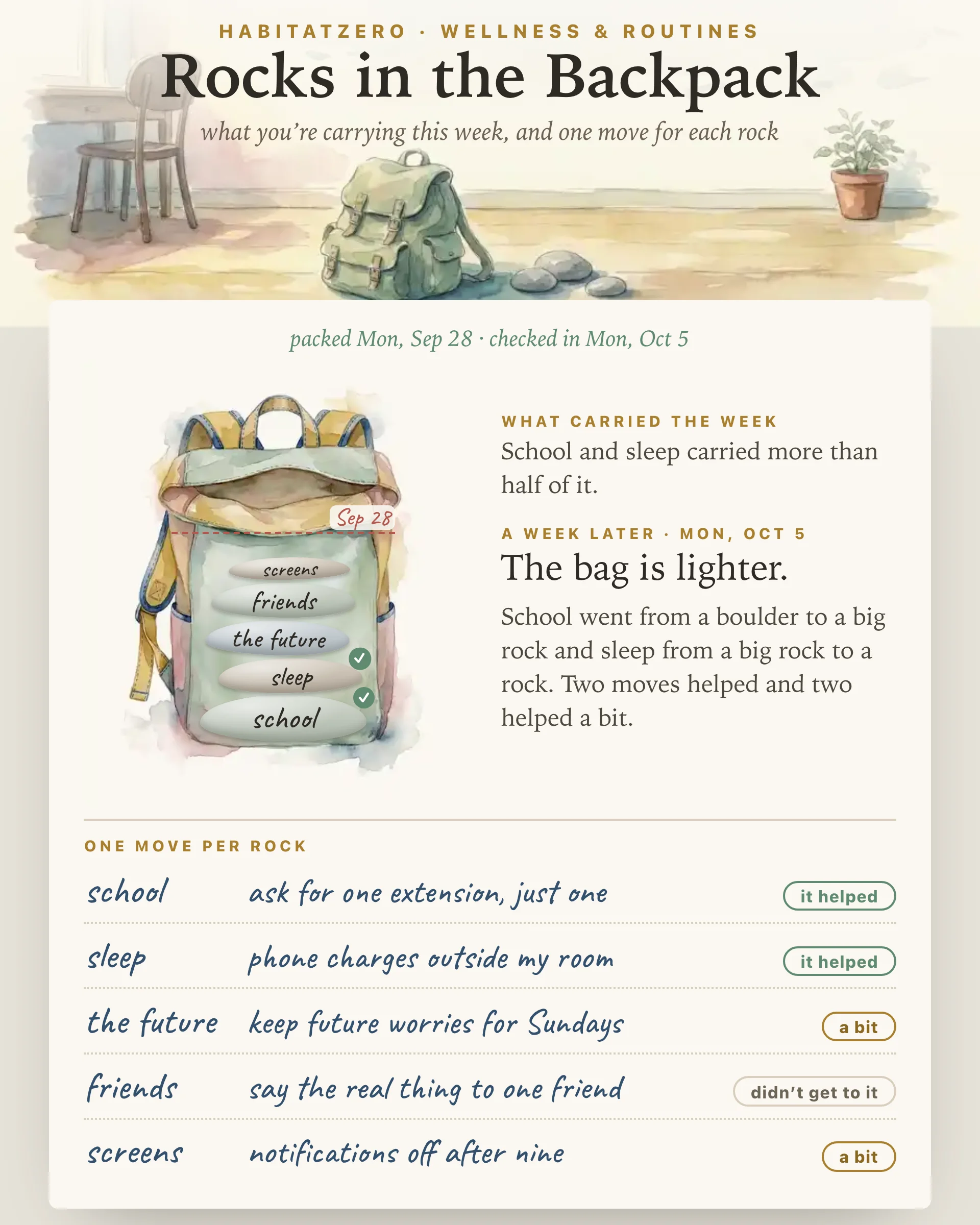
Rocks in the BackpackYour teen packs this week's loads into a painted backpack as rocks, sizes each one from pebble to boulder and picks one move per rock. The bag shows which rocks carry the week, and a check-in seven days later shows which moves made it lighter.
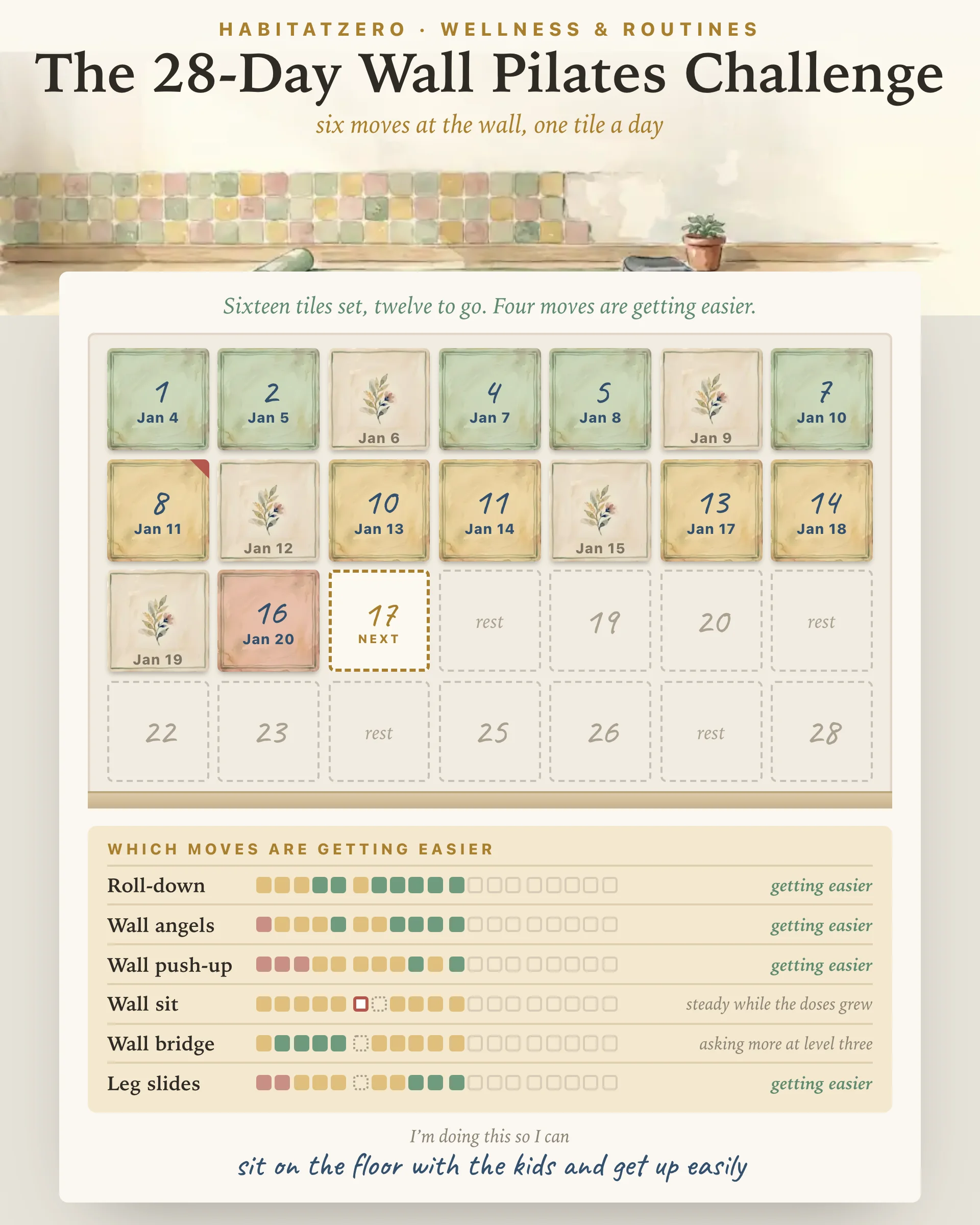
The 28-Day Wall Pilates ChallengeFour weeks of six short moves with a wall for support, each week a level up. Mark how every move felt, set a painted tile for each day you finish, and the wall reads back which moves are getting easier.
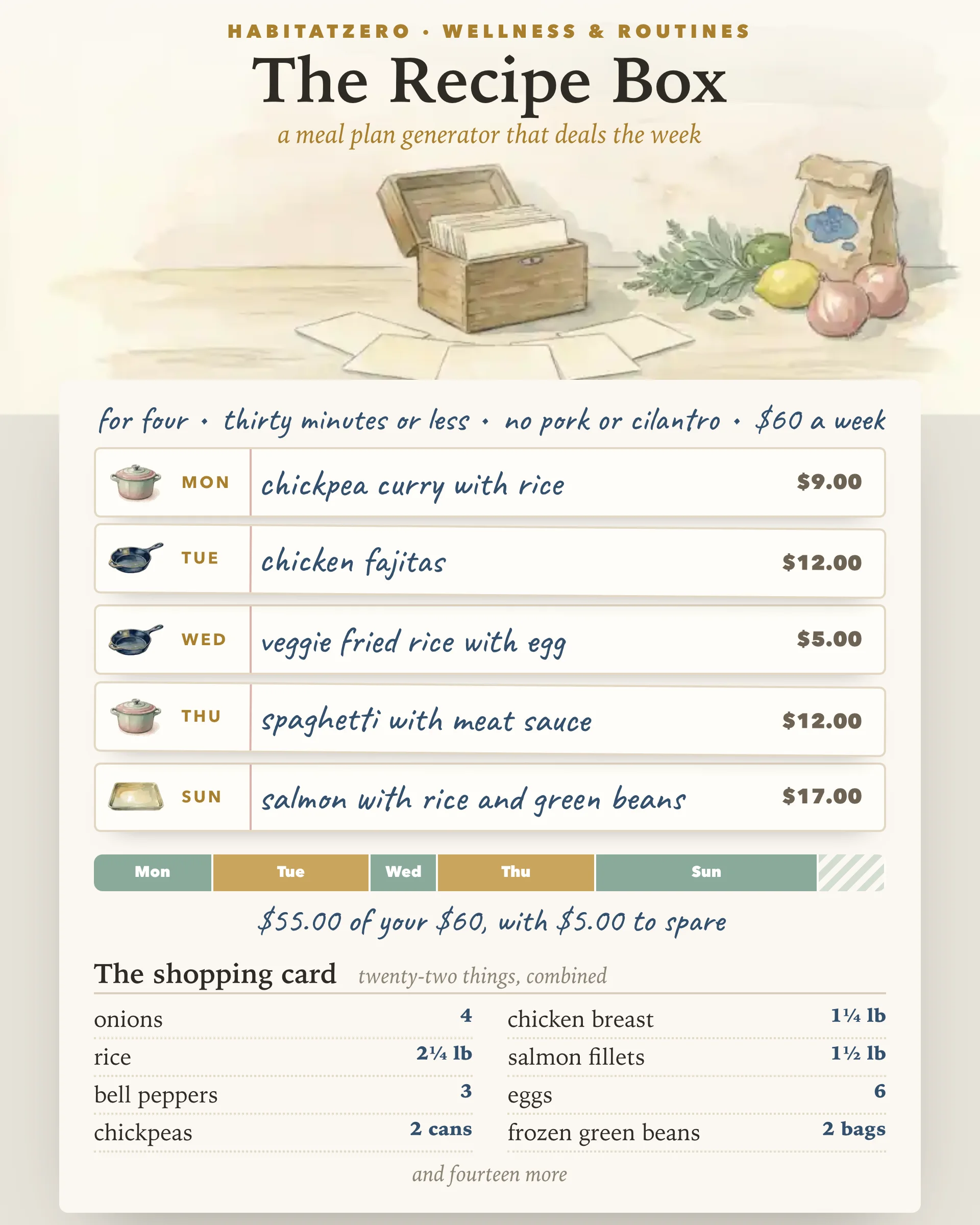
The Recipe BoxSet who is eating, the nights you cook, the minutes you have, the foods to skip and a weekly budget, and the recipe box deals a week of dinners that fits, with a swap for every card, one combined shopping list and a bar that shows where the money goes.
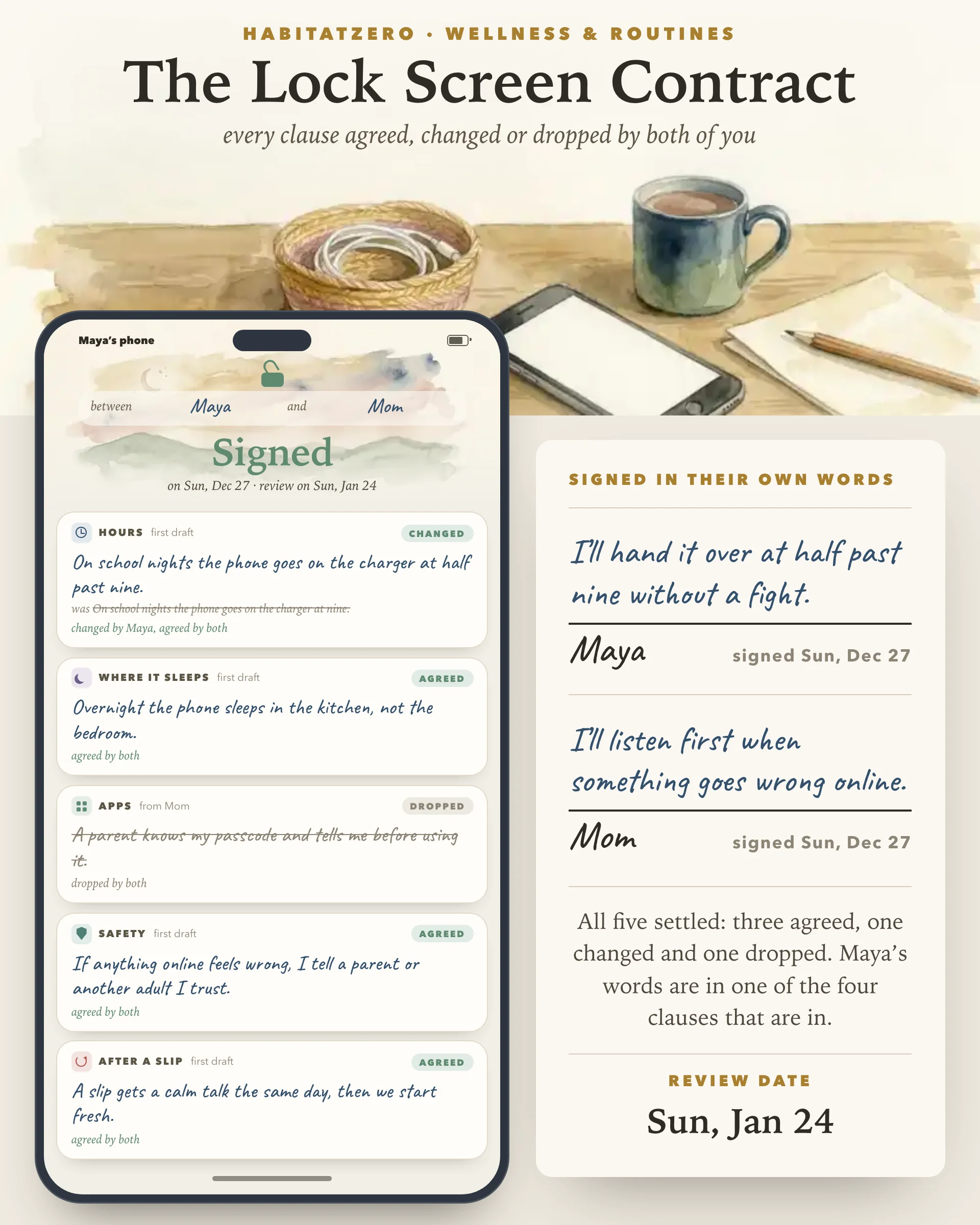
The Lock Screen ContractA phone contract you and your teen negotiate clause by clause: hours, where the phone sleeps, apps, money, safety and what happens after a slip. Each of you marks every clause agree, change or drop, and the lock screen opens once you both sign in your own words.
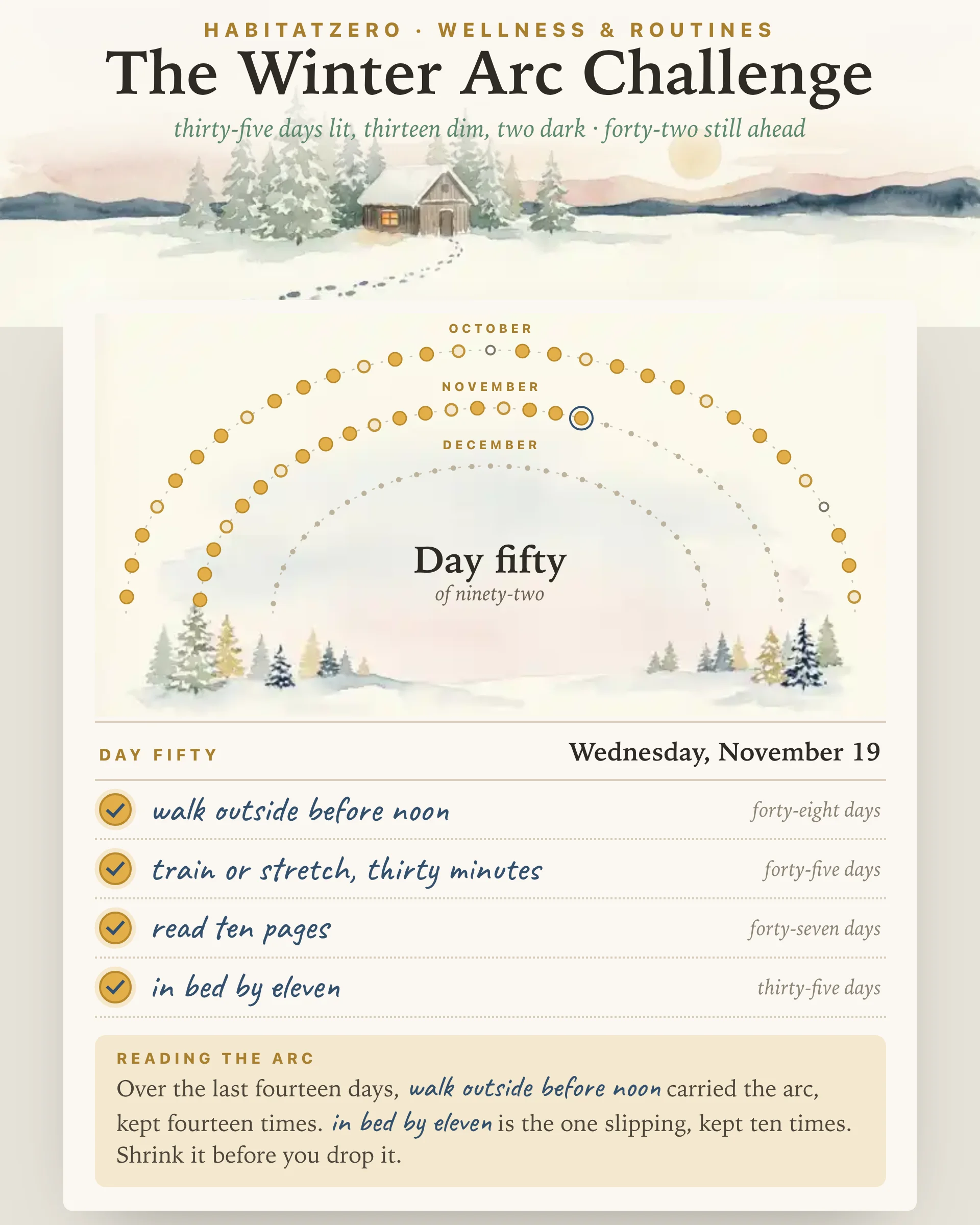
The Winter Arc ChallengeChoose up to five daily rules, stamp the ones you kept, and watch three months of days light up as arcs over a winter ridge. After a week it names the rule that is carrying you and the one that is slipping.
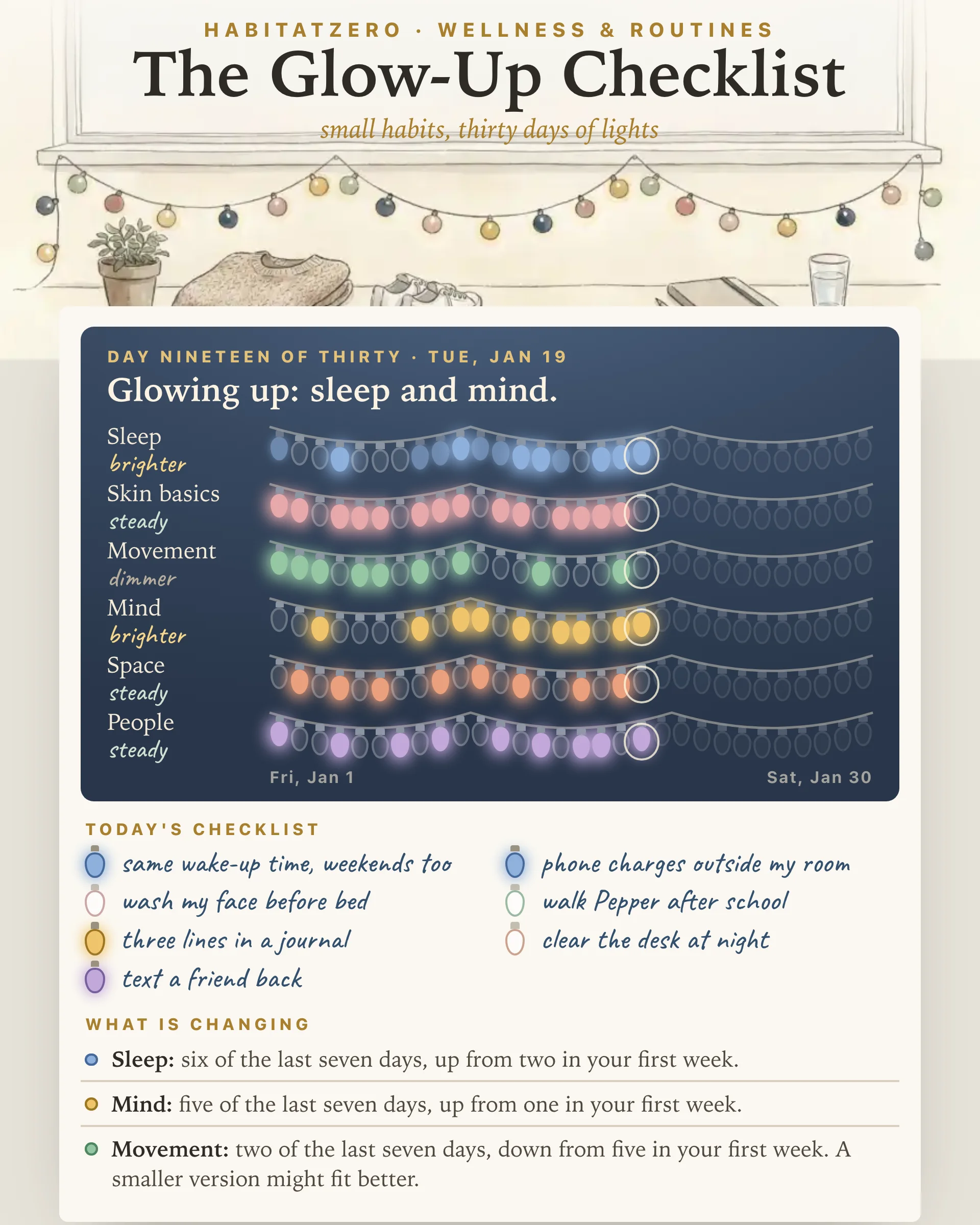
The Glow-Up ChecklistPick up to eight small habits across sleep, skin basics, movement, mind, space and people, then check them off each day. Every check lights a bulb on that area's strand, and after a week the page tells you which areas are actually changing.
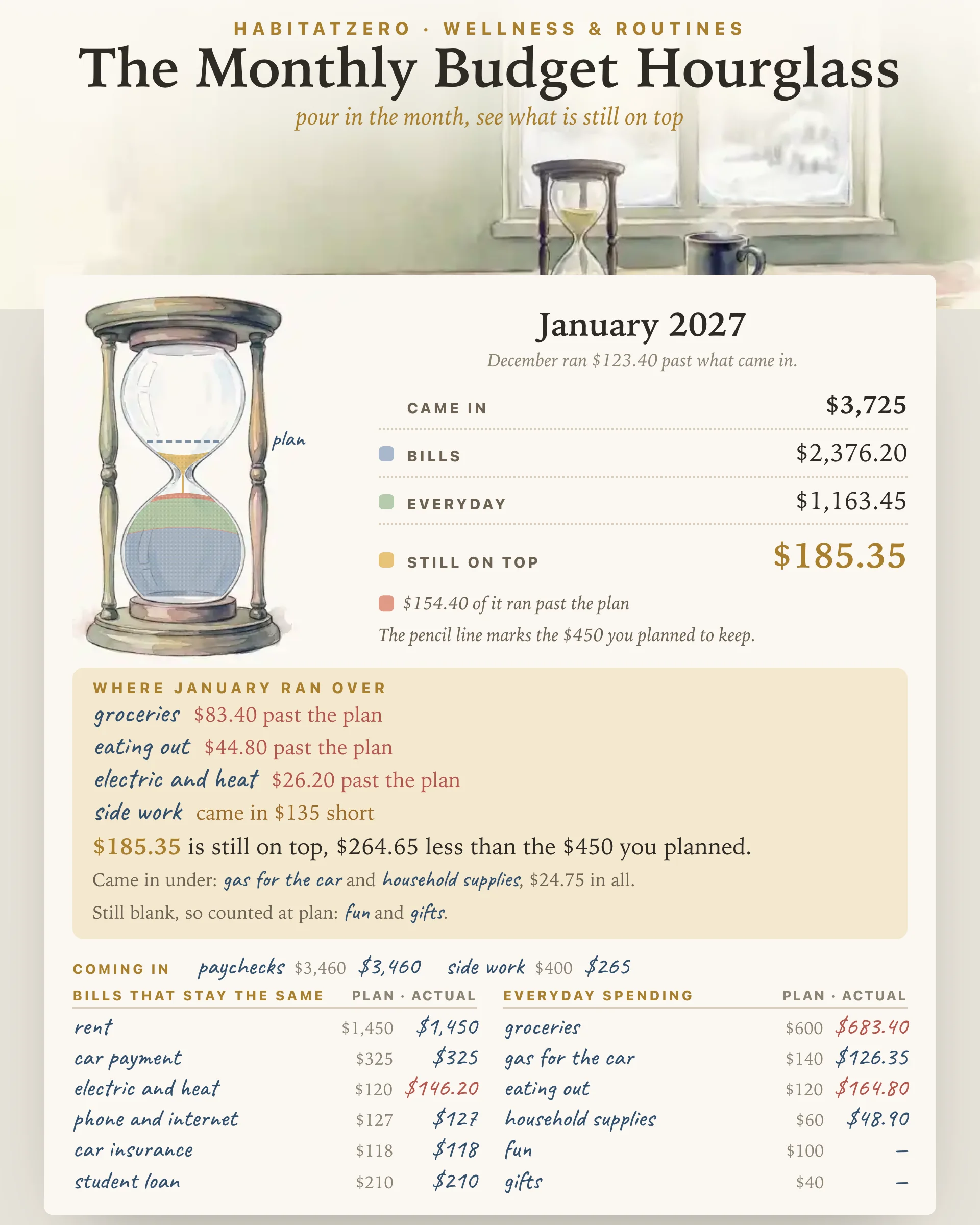
The Monthly Budget HourglassPour the month's income into an hourglass, let bills and everyday spending fall through as each line settles, and see where the month ran over and what is still on top.
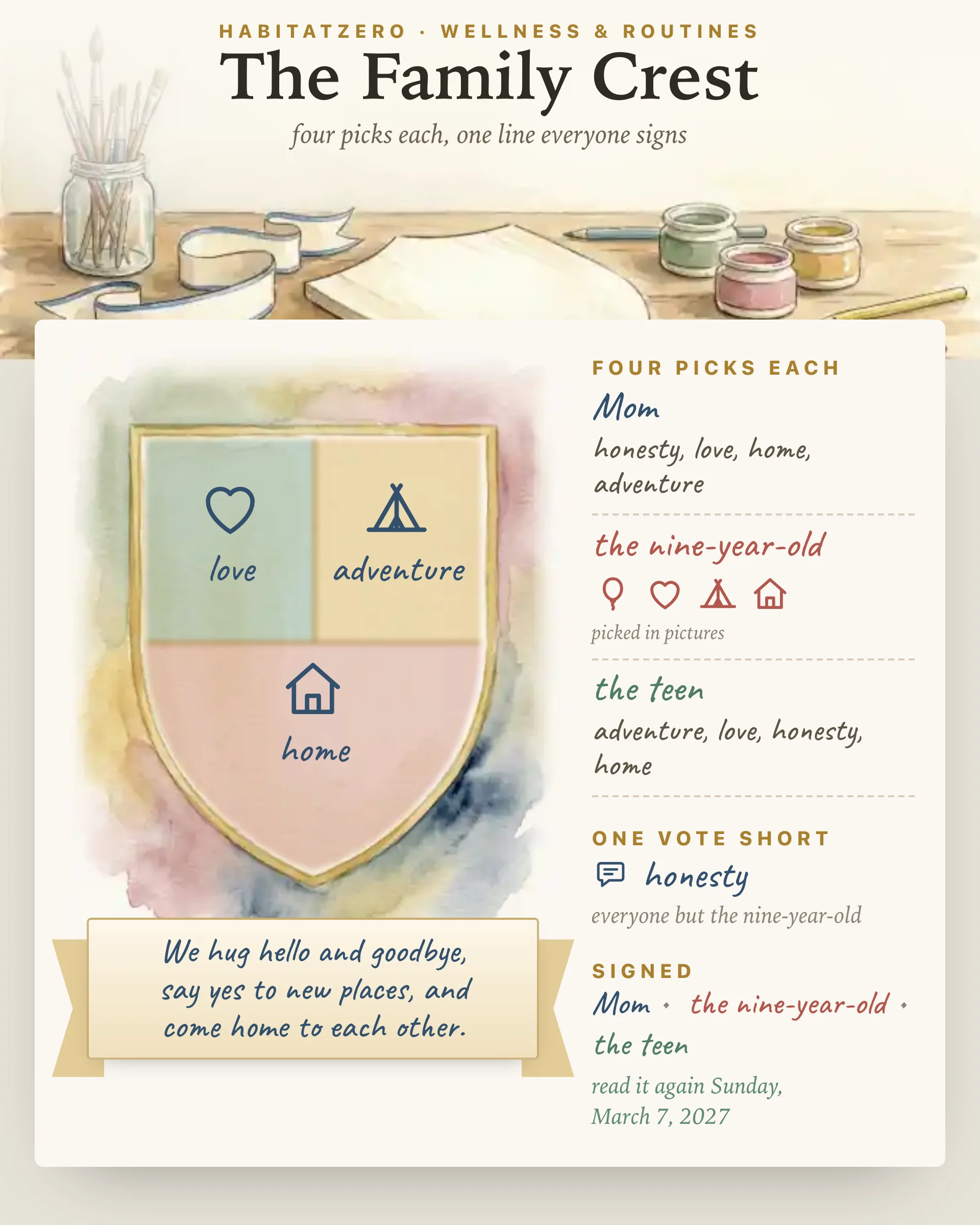
The Family CrestEveryone in the family picks the four values that matter most to them, in pictures or in words. The ones you all share are painted onto a crest, and your family's one-line mission goes on the ribbon, signed by everyone, with a day to read it again.
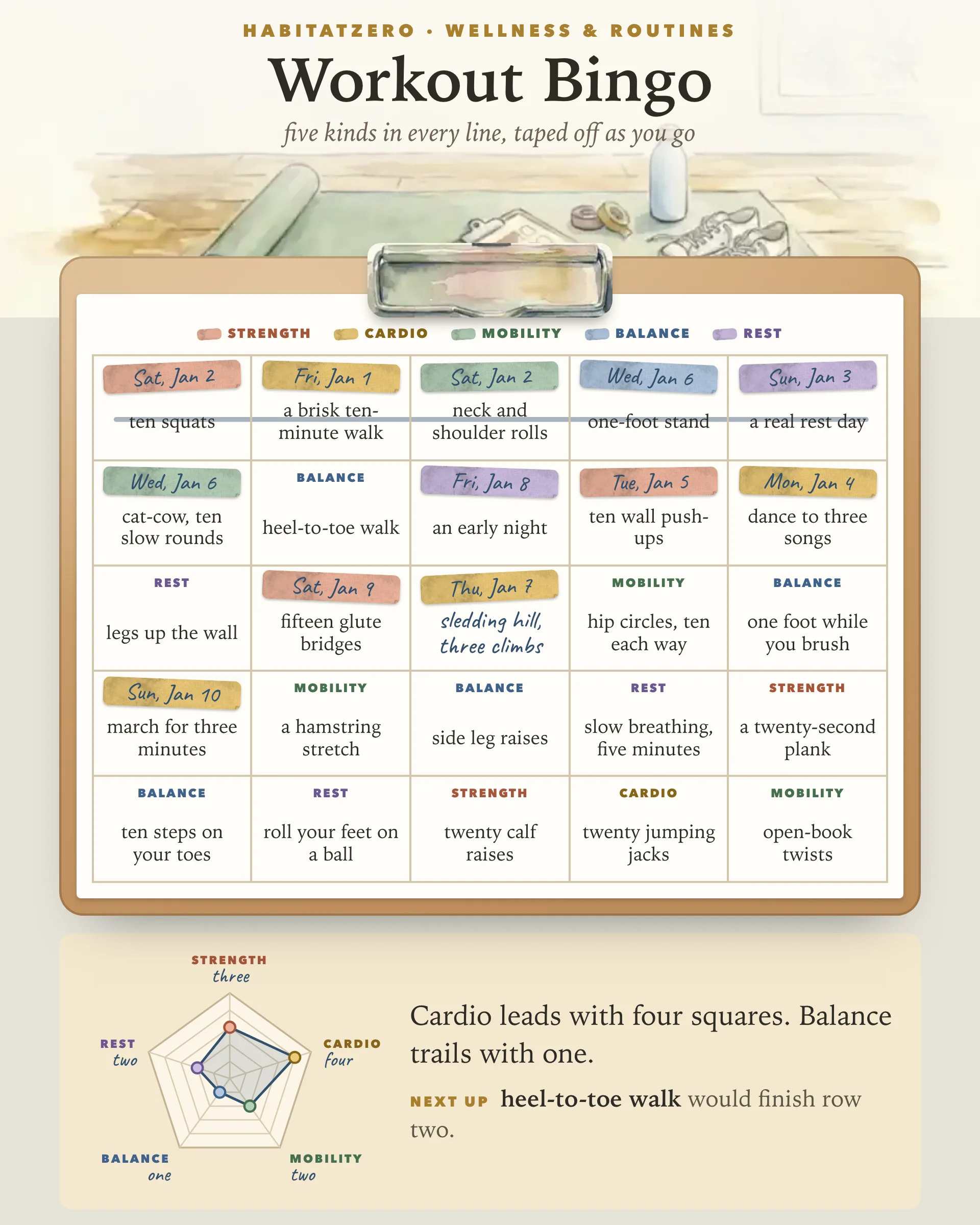
Workout BingoA clipboard card of twenty-five short workouts with strength, cardio, mobility, balance and rest in every row, column and diagonal. Tape off each square with the day you did it, and the card draws which kinds you keep doing and which you skip.
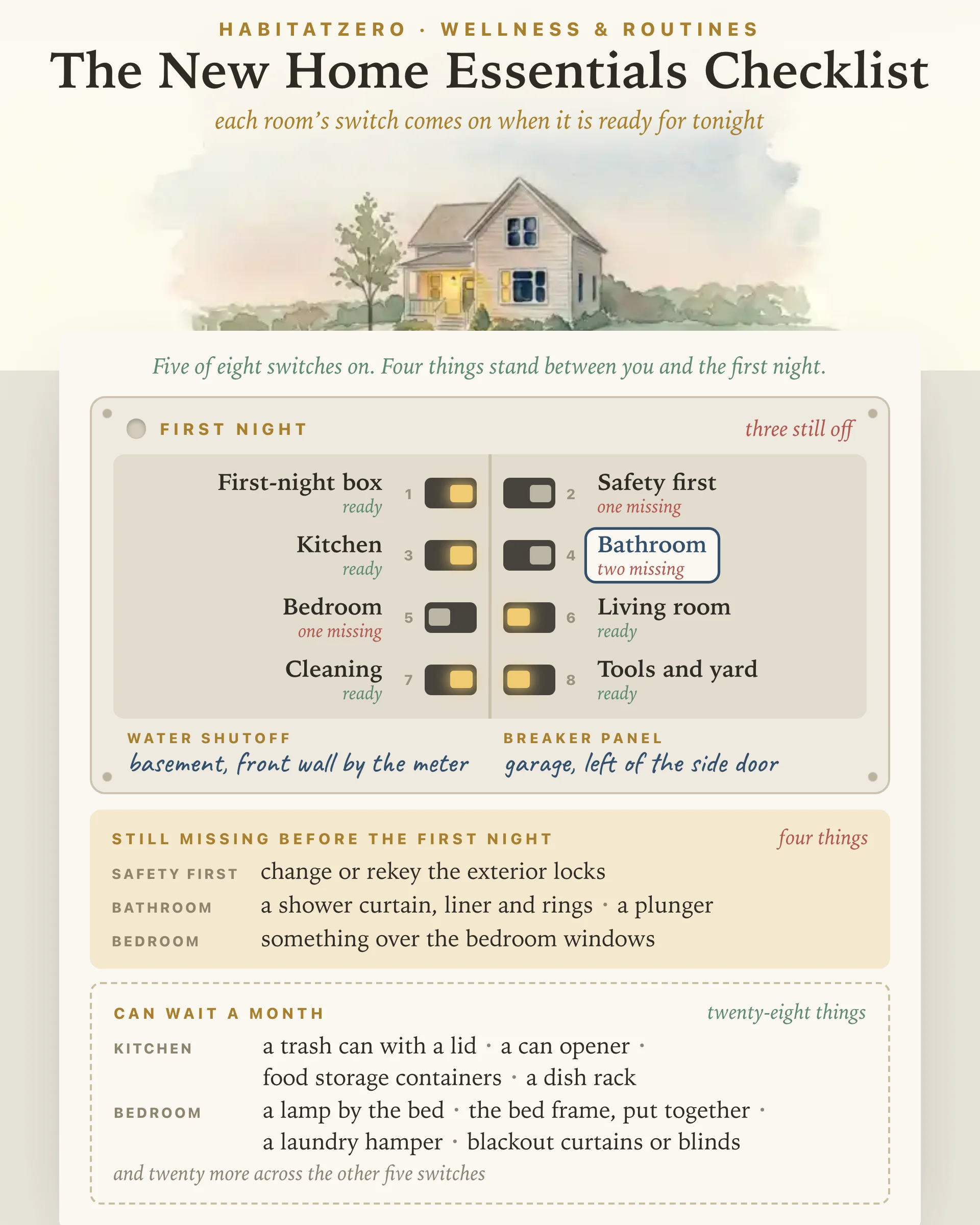
The New Home Essentials ChecklistA breaker panel with eight switches, from the first-night box to tools and yard: mark what you already have and each switch comes on once that part of the house is ready for tonight. What is still missing gathers on one short list, and whatever can wait a month moves to another.
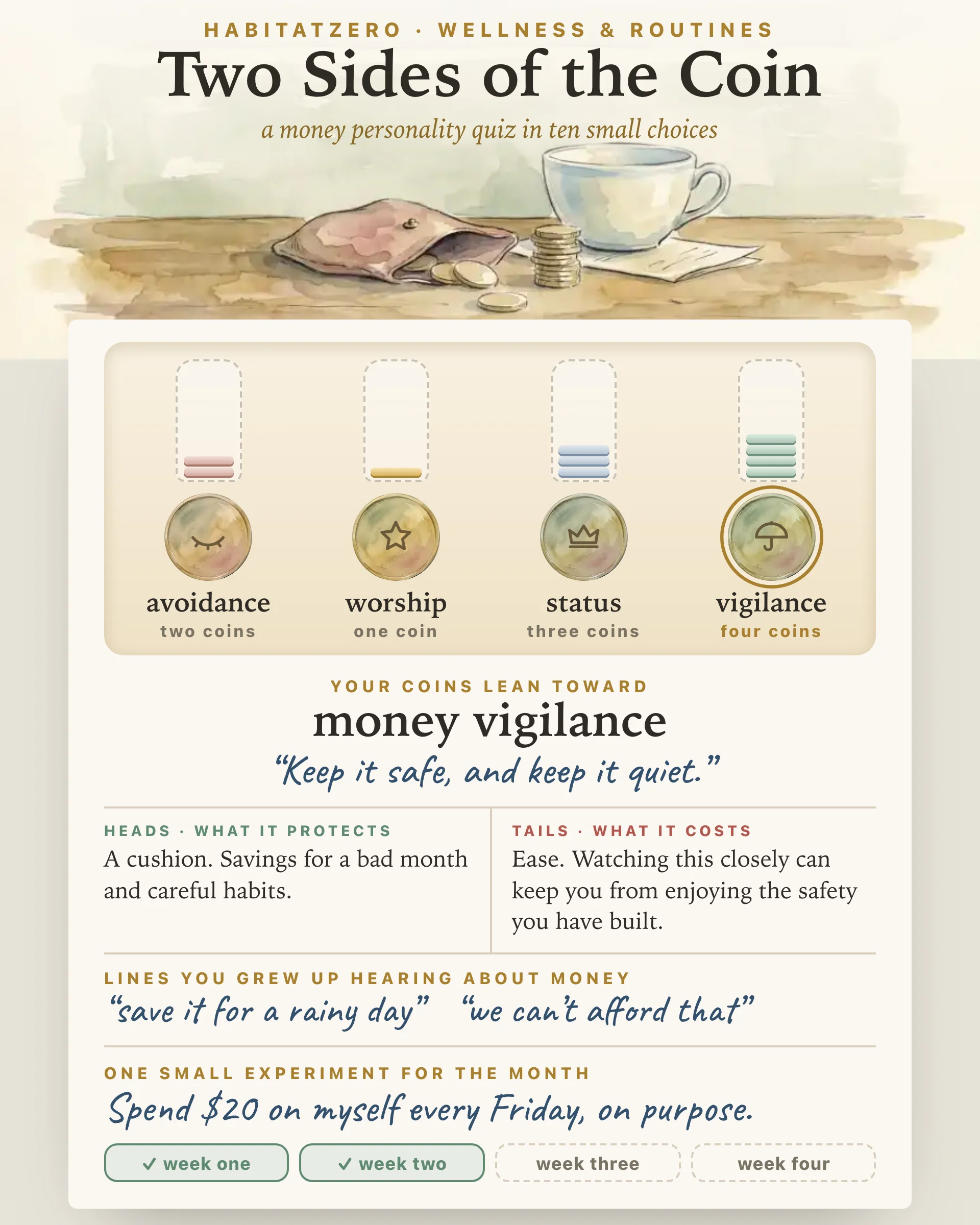
Two Sides of the CoinTen everyday money choices, from a surprise refund to a split dinner bill, each drop a coin on one of four money beliefs. The belief that leads is read on both faces, what it protects and what it costs, along with where it tends to start and one small experiment to carry through the month.
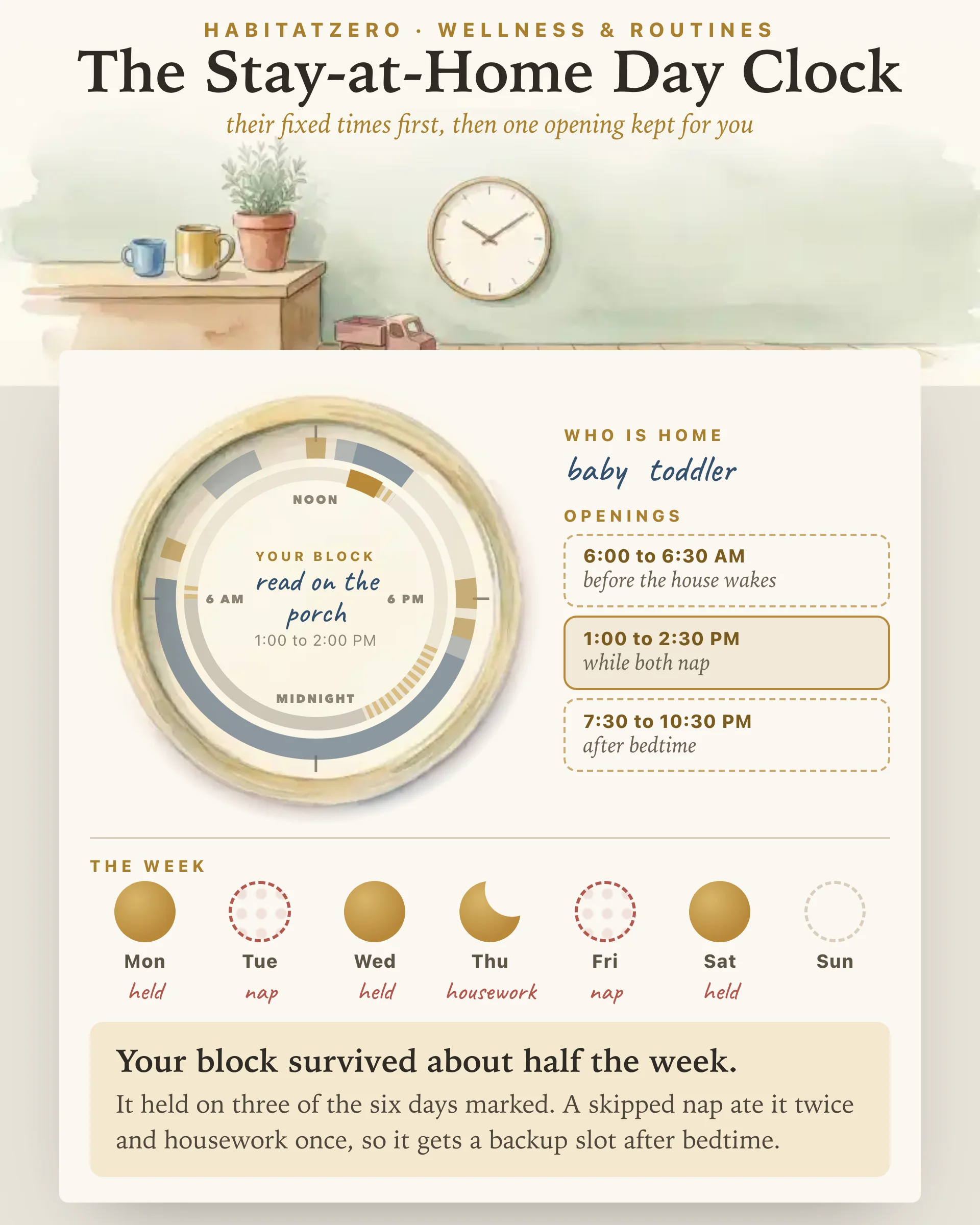
The Stay-at-Home Day ClockPut your children's naps, meals, school hours and bedtimes on a painted day clock, see the openings they leave you, and keep one of them as your own block. A week of quick evening taps then shows whether it held and what ate it.
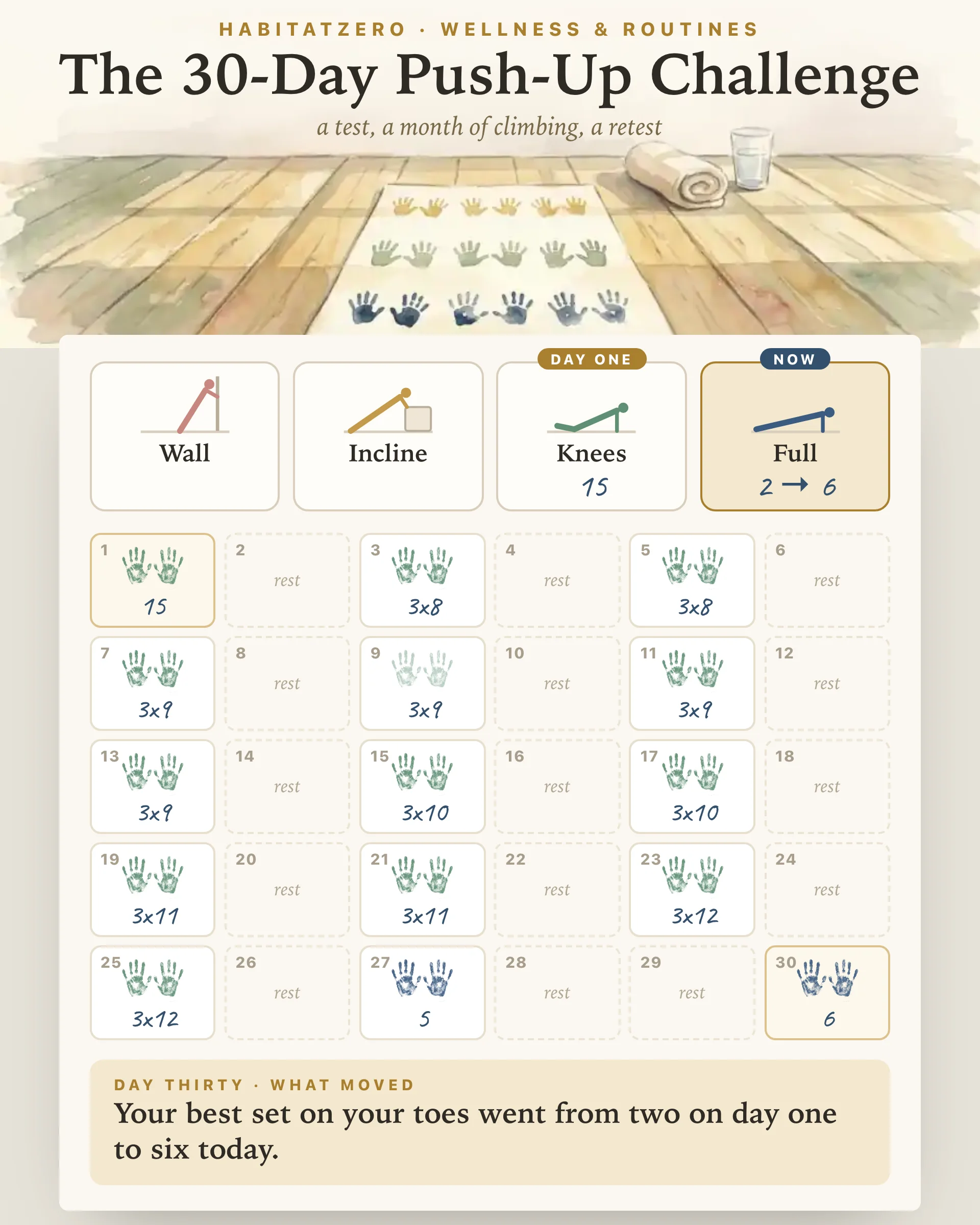
The 30-Day Push-Up ChallengeTest on day one at the wall, an incline, your knees or your toes, and the month builds itself from that set: a push-up day every other day, one more rep after two clean days, and a cap of twelve a set that moves you a level harder instead. Every push-up day leaves a pair of painted handprints, and the retest on day thirty shows how far your best set moved.
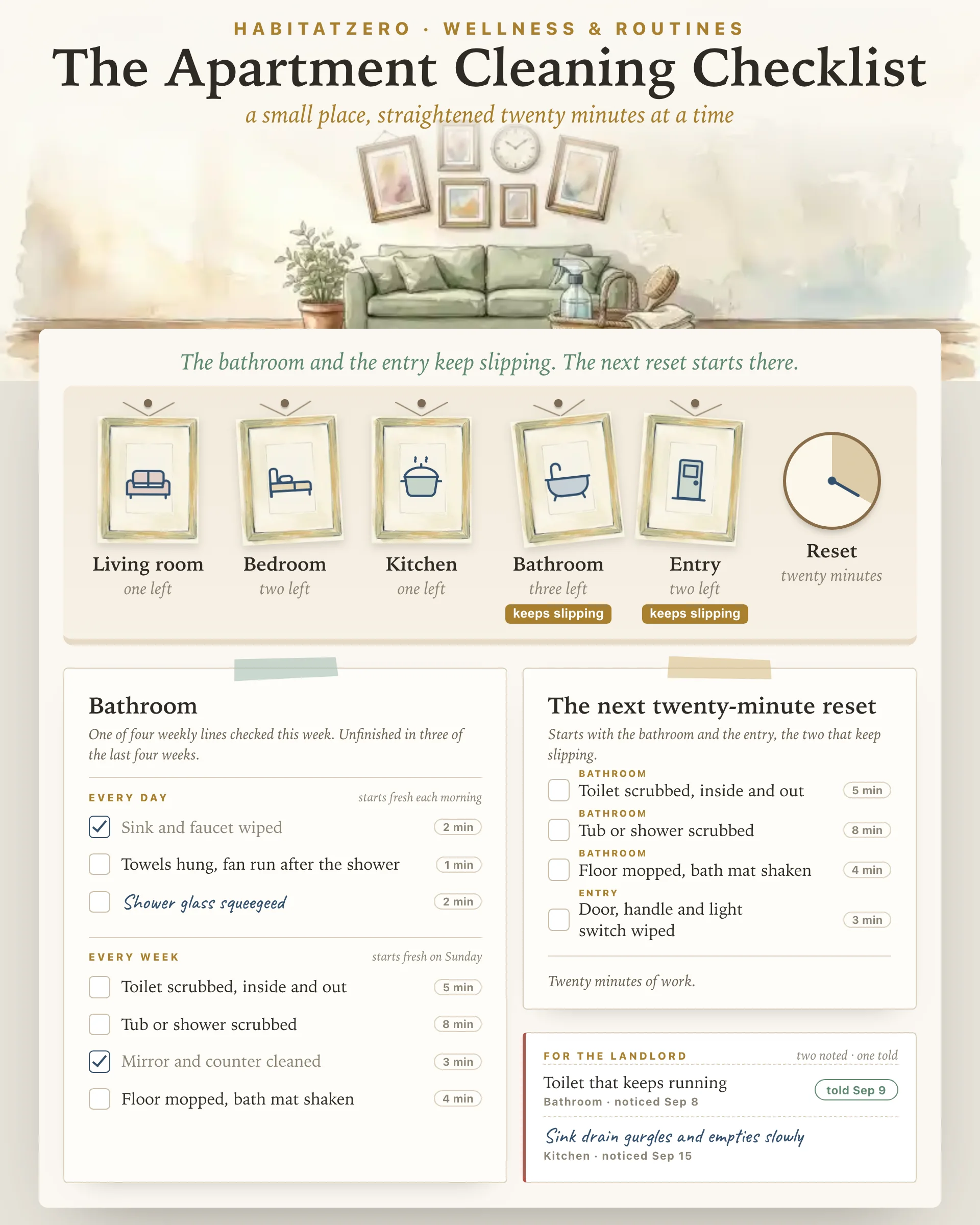
The Apartment Cleaning ChecklistEvery room of a studio, one-bedroom or two-bedroom on a gallery wall, with what to do daily, weekly and monthly. A room's frame tips when its week goes unfinished, the clock builds a twenty-minute reset from the rooms that keep slipping, and a landlord note keeps the repairs that are not yours to make.
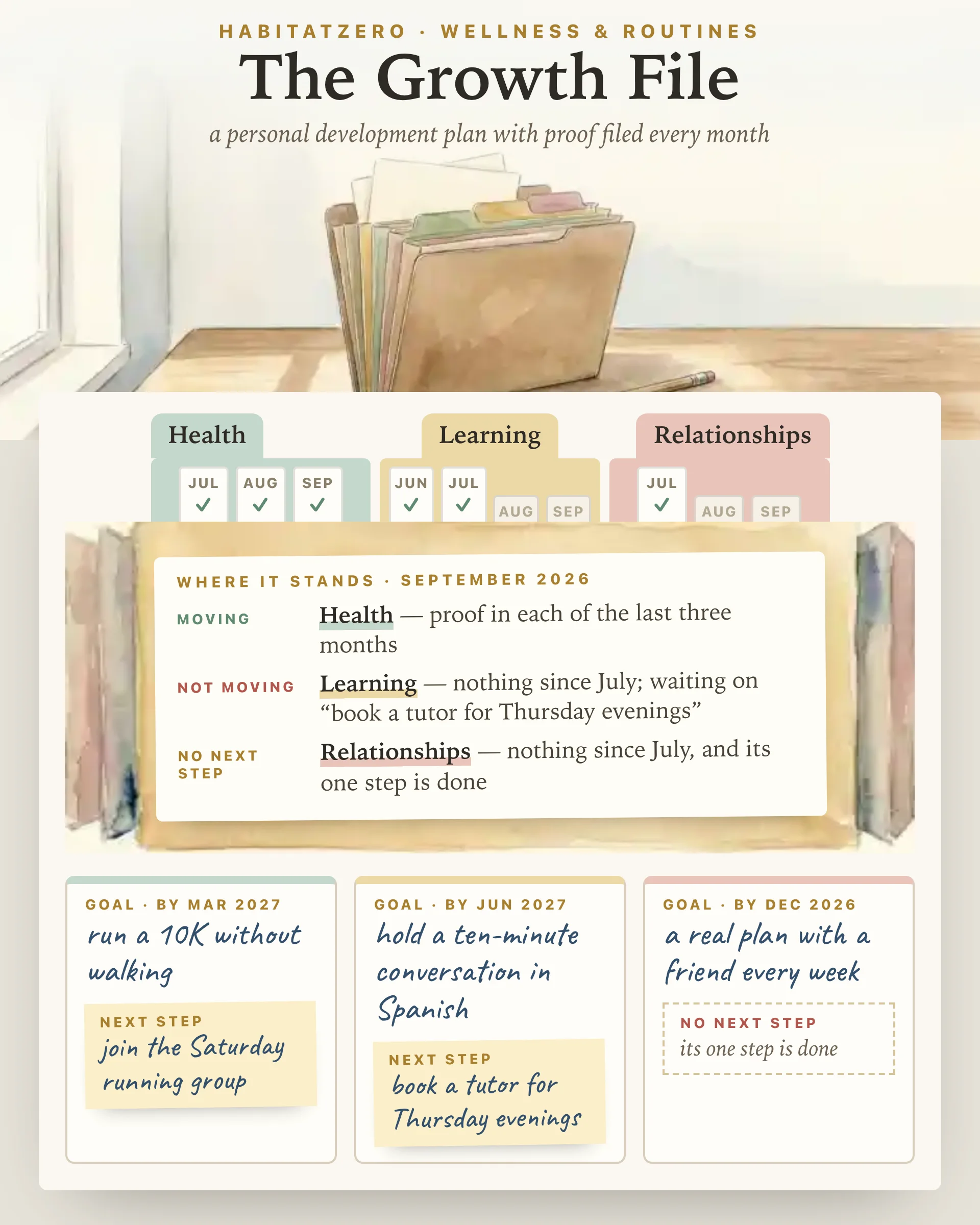
The Growth FileOpen a section of the file for each of two or three areas you want to grow, give it a goal, a next step and the support you need, then file one line of proof each month and let the label show which area is really moving.
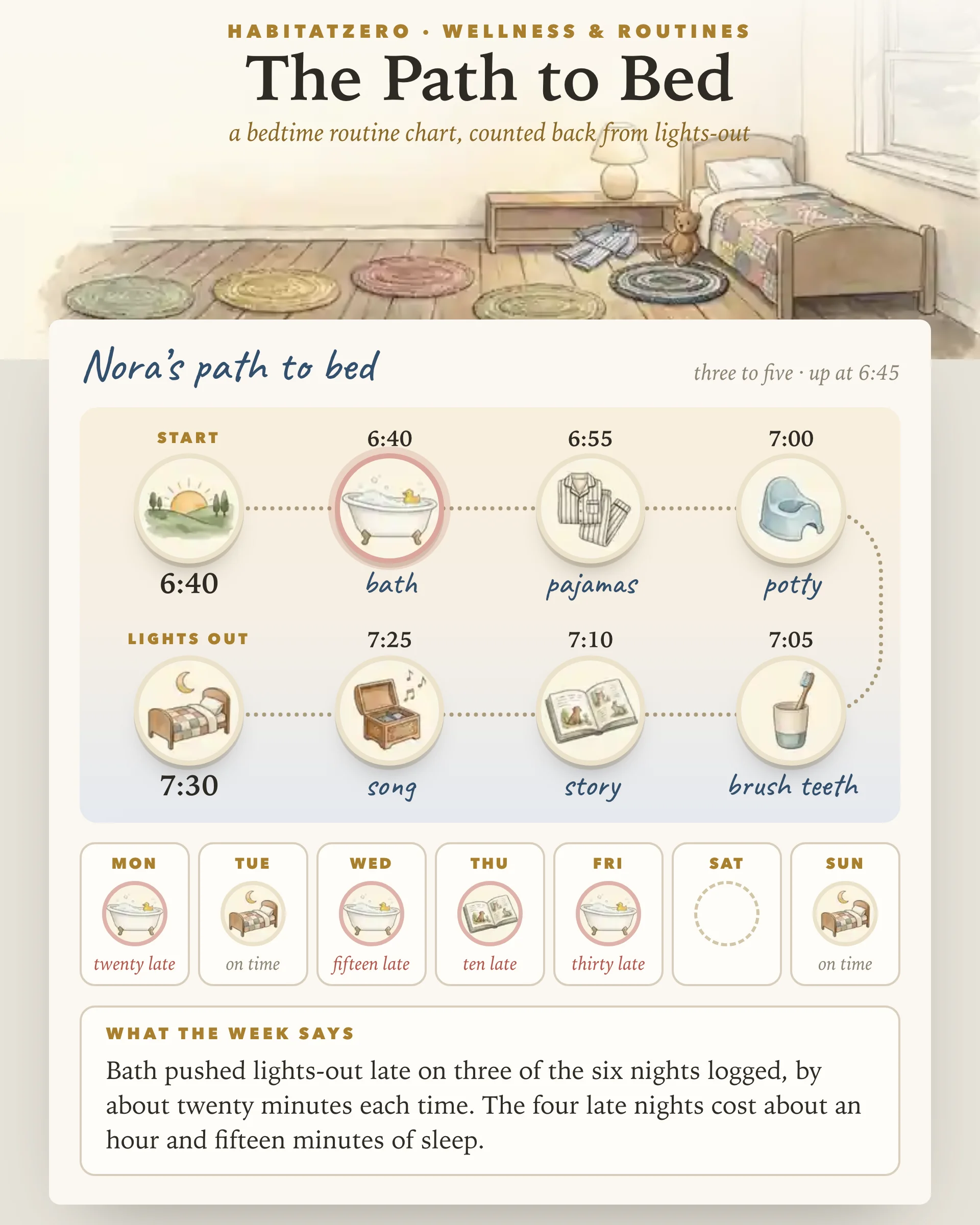
The Path to BedLay painted picture stones in the order your child's evening really goes, and the chart counts the start time back from lights-out and checks the night against sleep hours for their age. Log a week of bedtimes and it names the step that keeps pushing lights-out late.
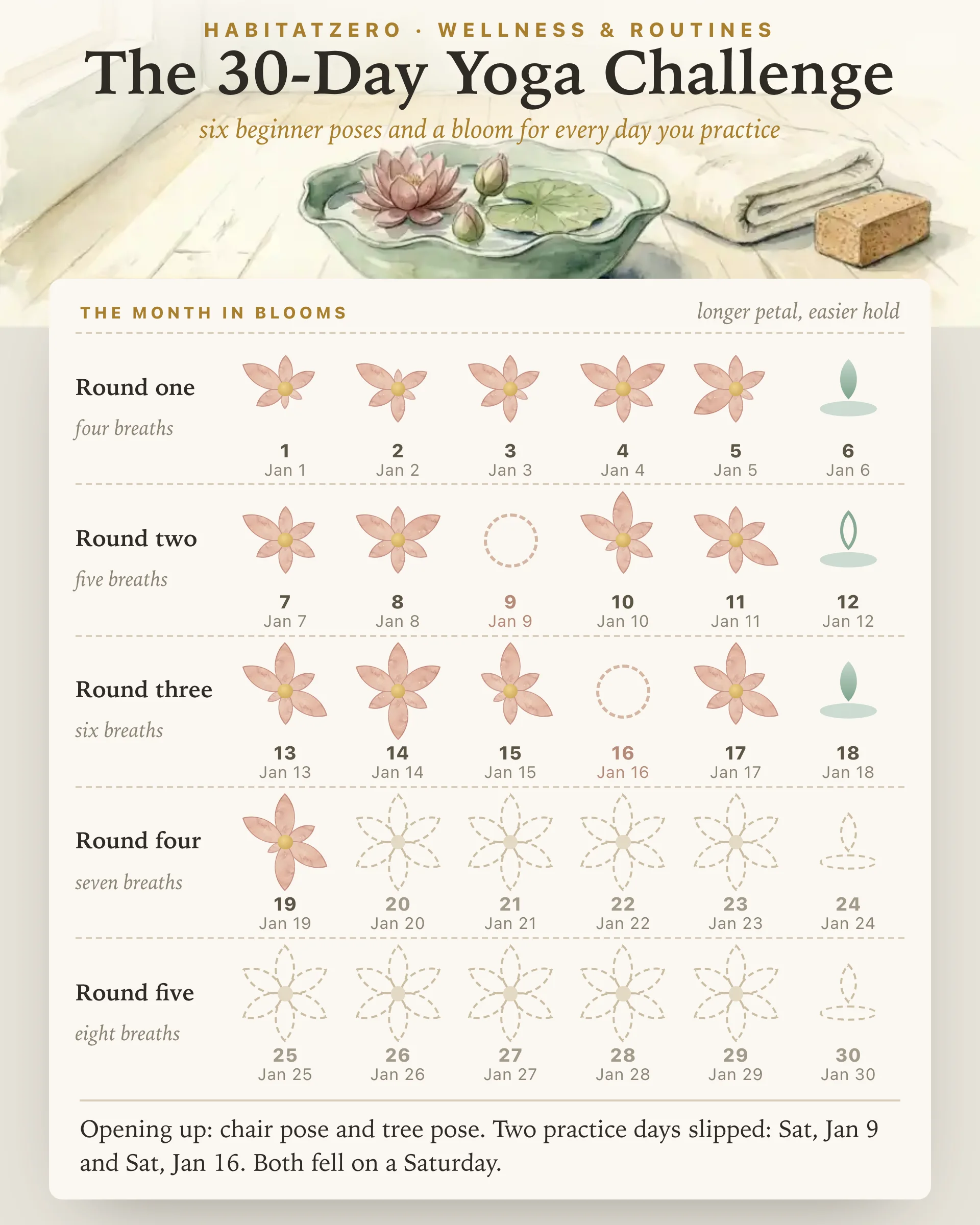
The 30-Day Yoga ChallengeSix beginner poses a day, holds that grow a breath each round, and a lotus that blooms for every day you practice, so you can see which poses are opening up and which days slipped.
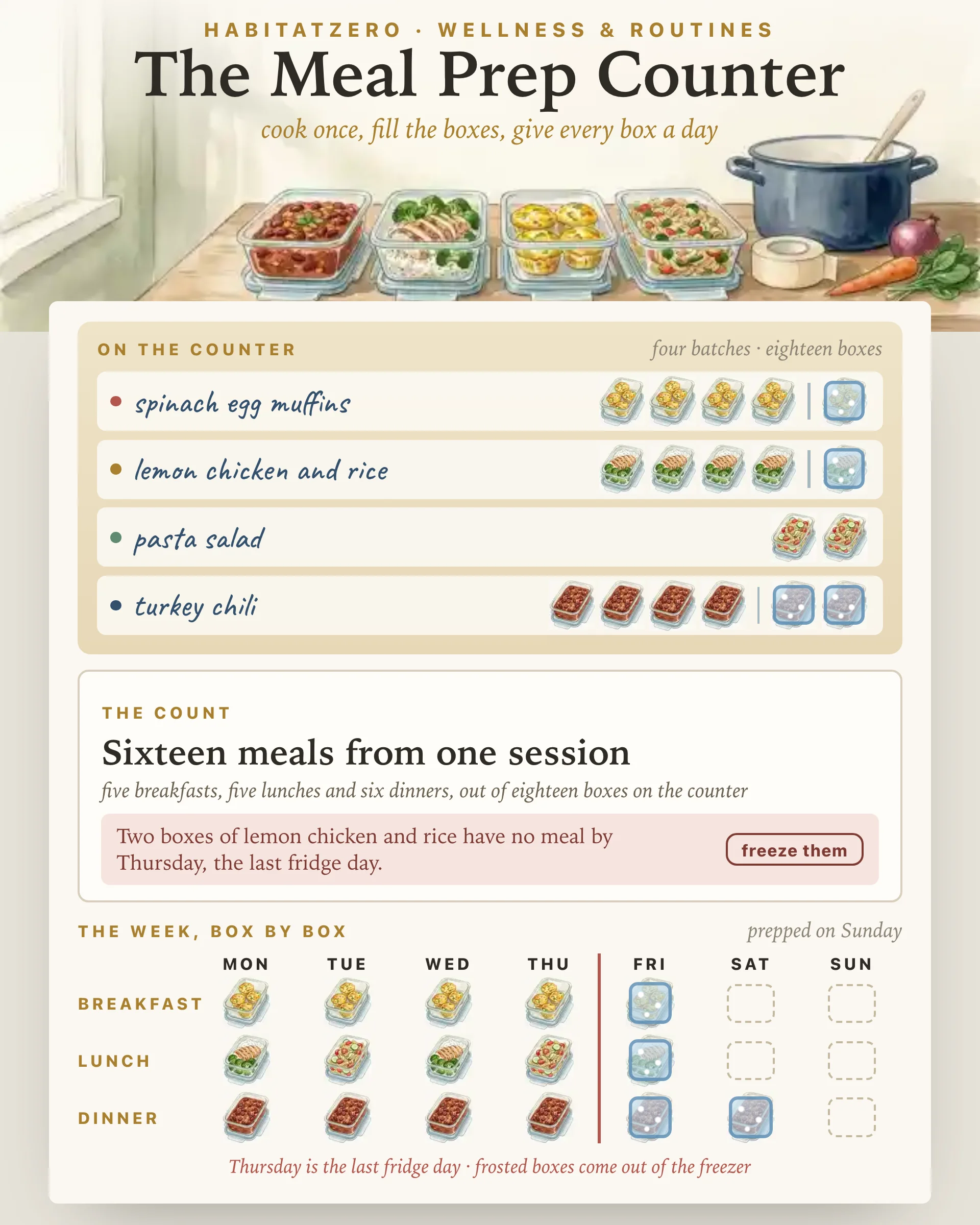
The Meal Prep CounterPut a prep session on the counter: each batch becomes a row of boxes you send to the fridge or freezer, the week hands every box a meal before it passes its fridge days, and the shopping list writes itself from the recipes.
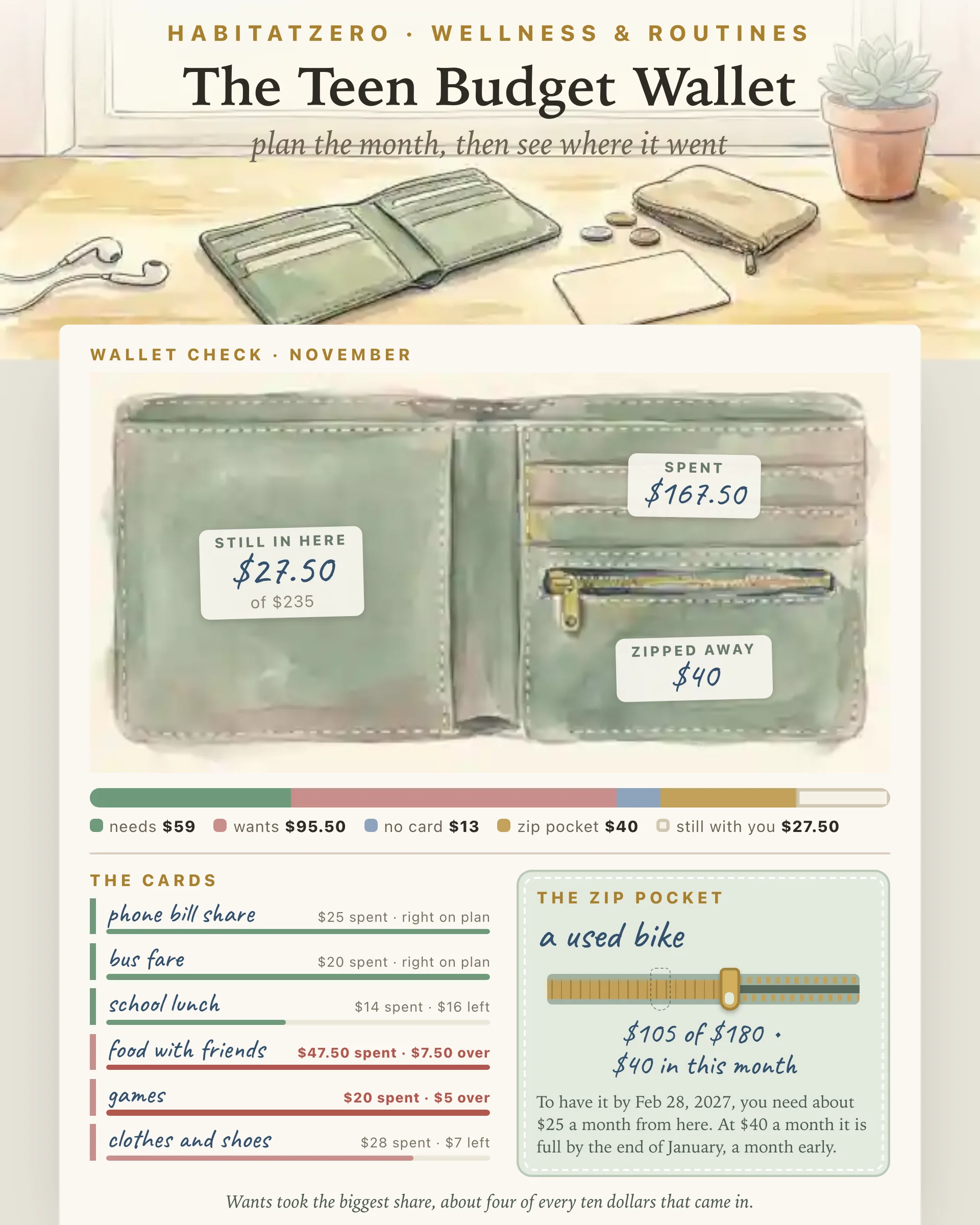
The Teen Budget WalletTuck what you earn into the billfold, give each need and want its own card that draws down as you spend, and zip savings toward one goal. When the month ends, the wallet check shows where your money really went.
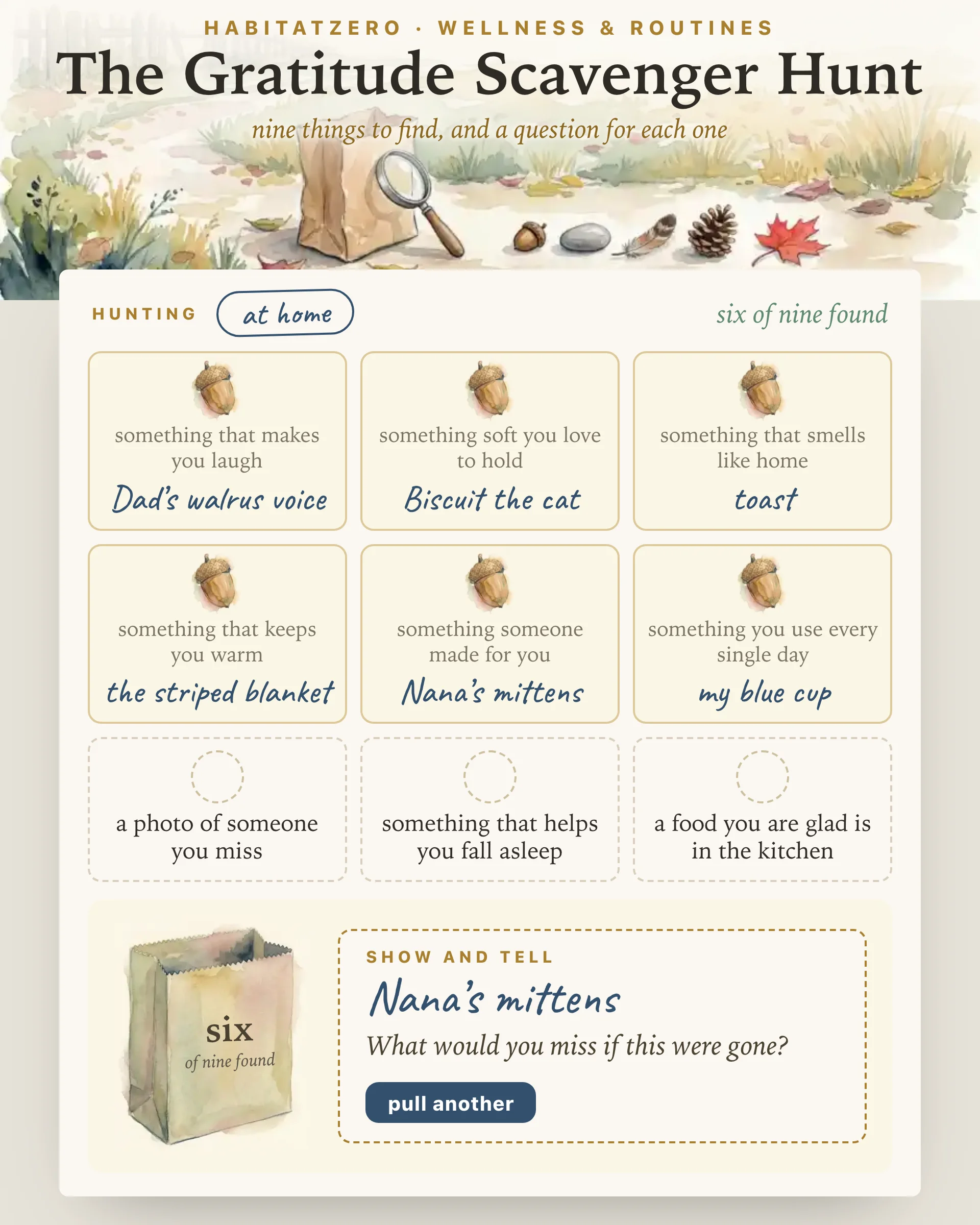
The Gratitude Scavenger HuntDeal a card of clues for home, outdoors, the classroom or the holiday table, stamp an acorn on each thing the children find, then pull the finds back out of the bag one at a time, each with a question that gets them talking about why it matters.
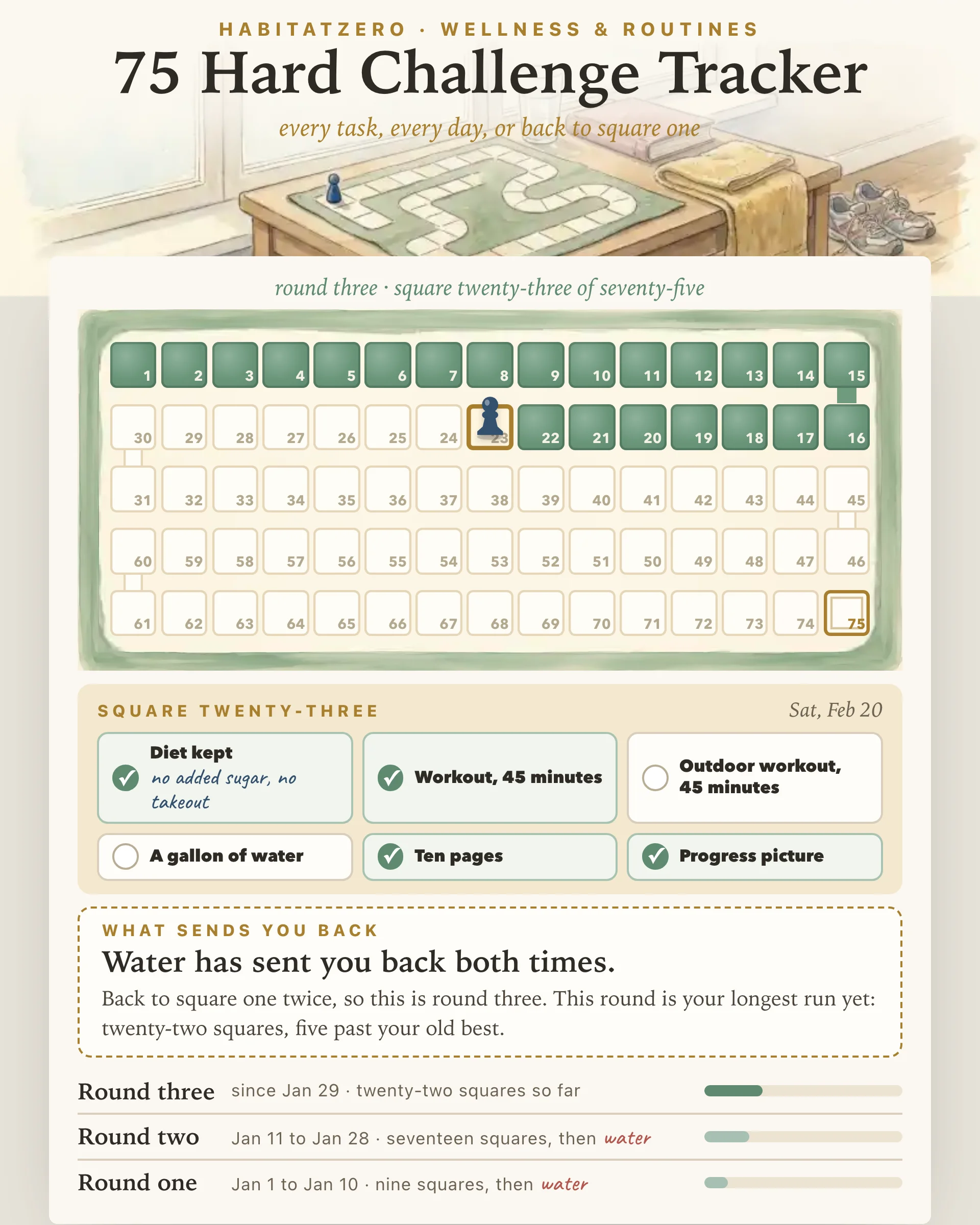
The 75-Day Square One BoardA painted board of seventy-five squares: mark each daily task as it happens, and the pawn moves one square for every day you keep them all. Miss one and it slides back to square one, while the round log keeps count of which task sends you back and how many rounds it took.
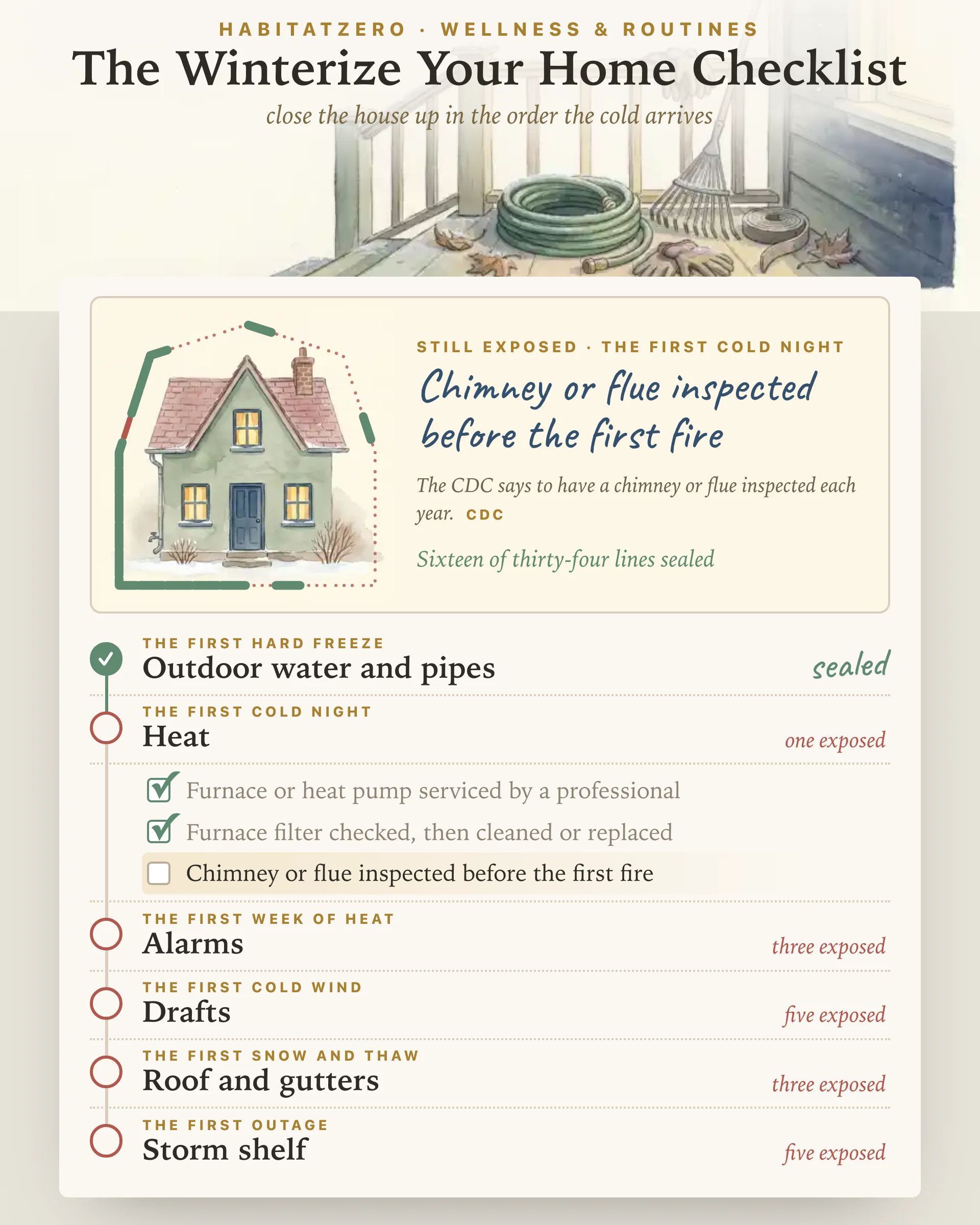
The Winterize Your Home ChecklistSix fronts of winter prep in the order the cold arrives, from the garden hose to the storm shelf. A card names what the first freeze would find, each line carries the guidance behind it, and the outline around the house closes stroke by stroke as you seal it.
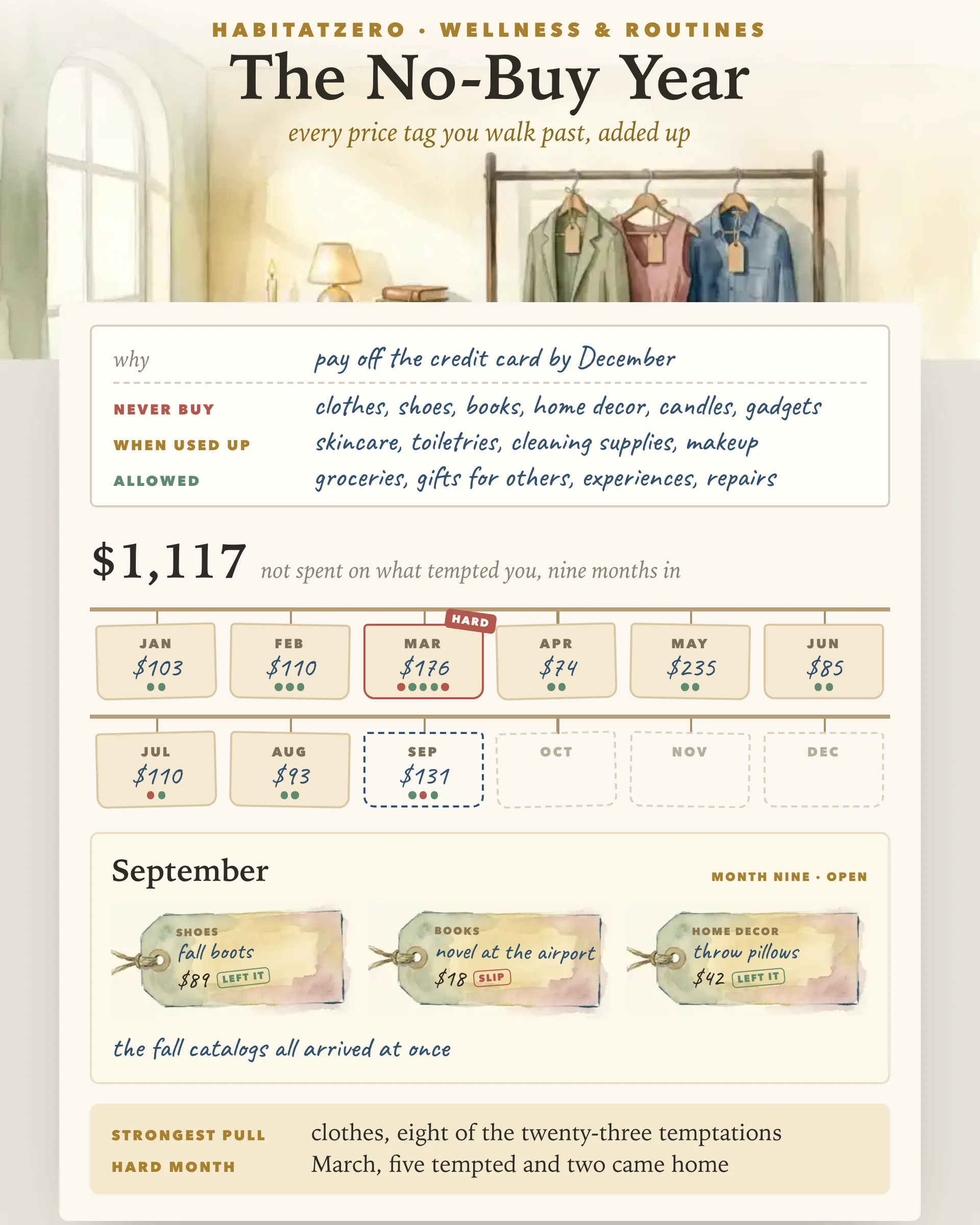
The No-Buy YearWrite your rules in three lists, then hang a tag each month for everything that tempted you. The rules judge what came home, the prices you walked away from add up, and the year shows your strongest pull.
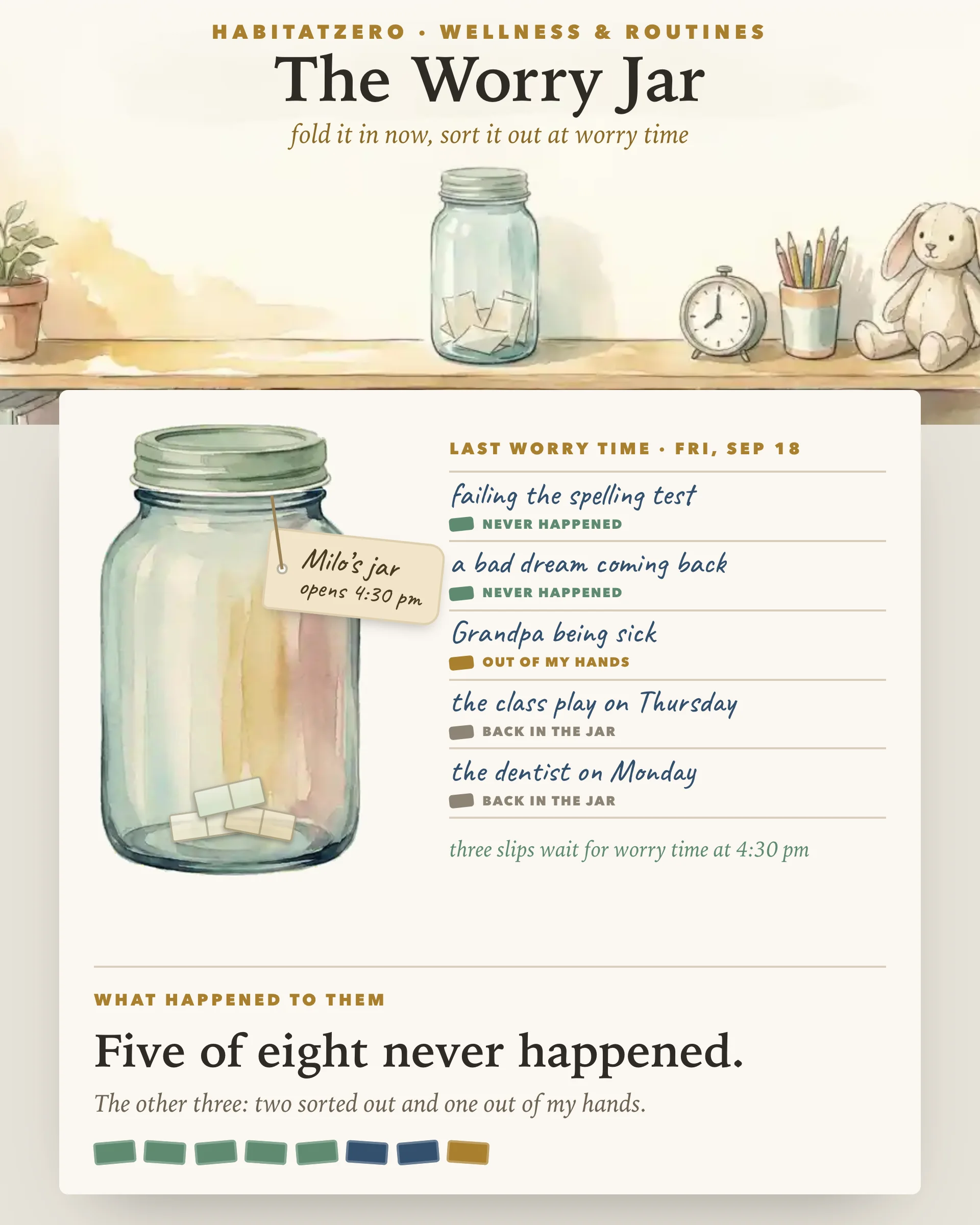
The Worry JarYour child folds each worry into the jar on a slip, and the lid stays on until a set worry time. Then you open it together, sort every slip, and watch the count of worries that never happened grow.
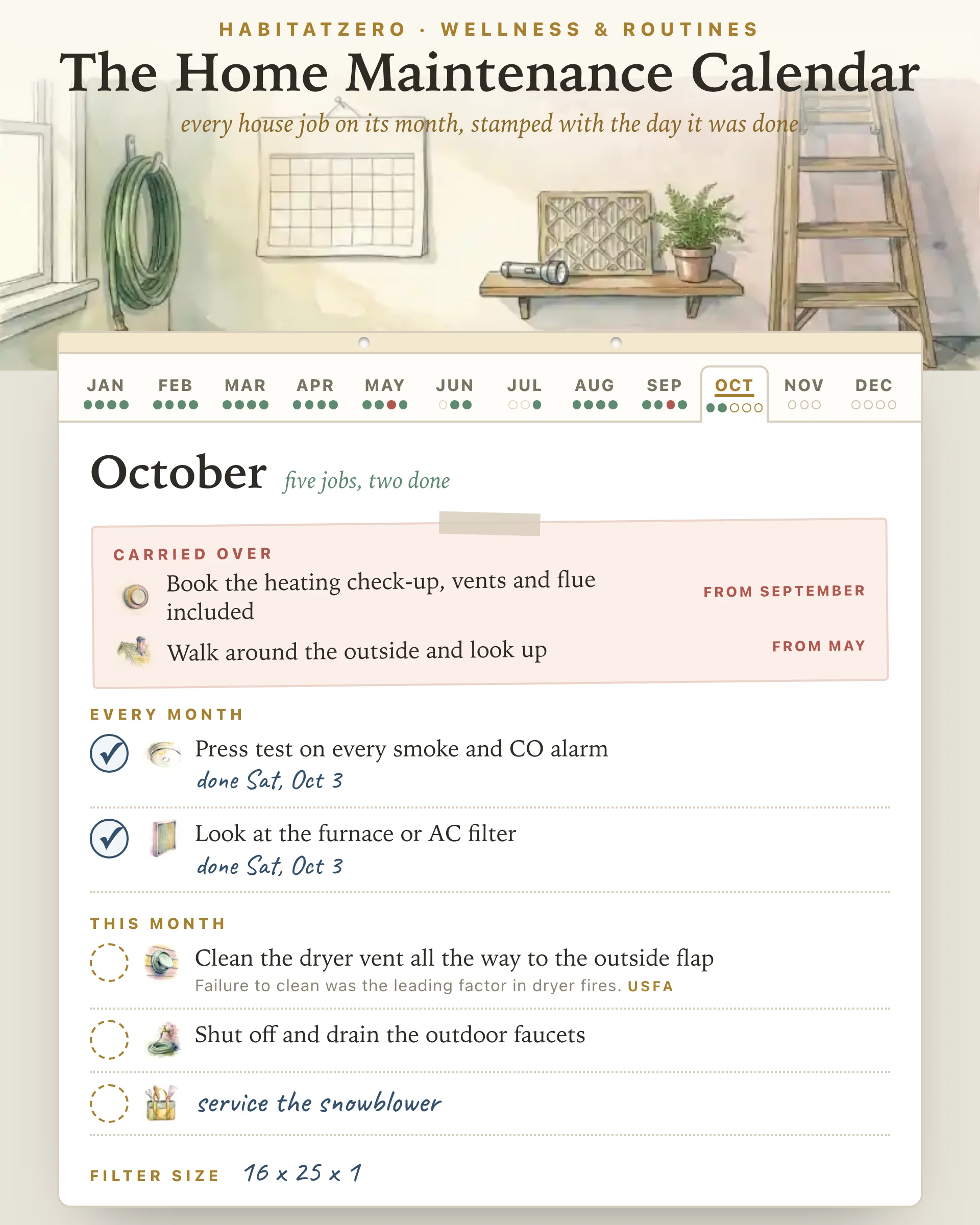
The Home Maintenance CalendarA wall calendar of house jobs, each on the month it belongs: alarm tests, filters, gutters, the water heater, the dryer vent and the heating and cooling check-ups. Set it for a house or a condo and for hard or mild winters, stamp each job with the day you did it, and the page tells you what this month holds and what is carried over.
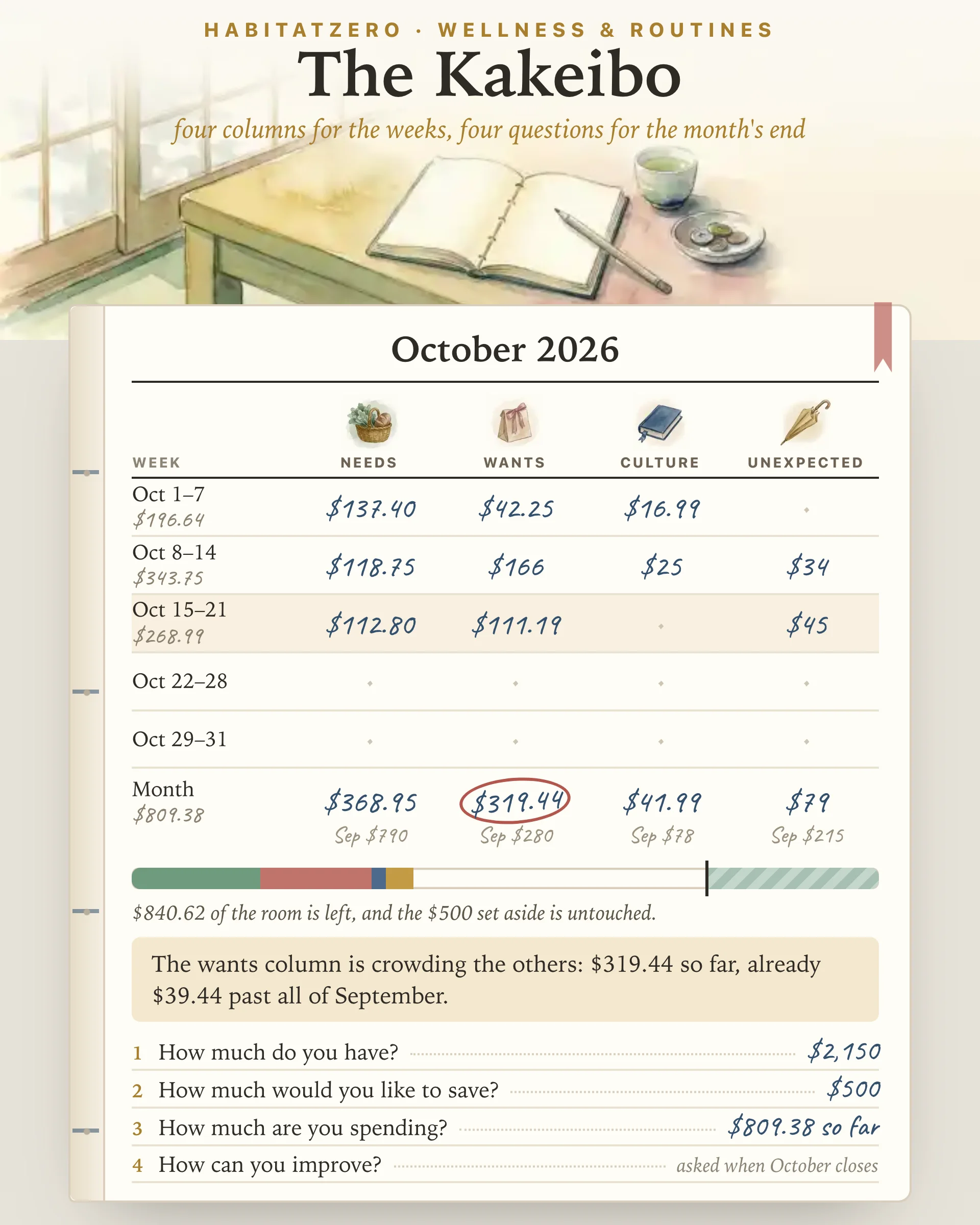
The KakeiboA kakeibo that does the adding: set what comes in, your fixed costs and a savings goal, write each week's spending into needs, wants, culture and unexpected, then close the month with the four questions and a plain verdict on the goal.
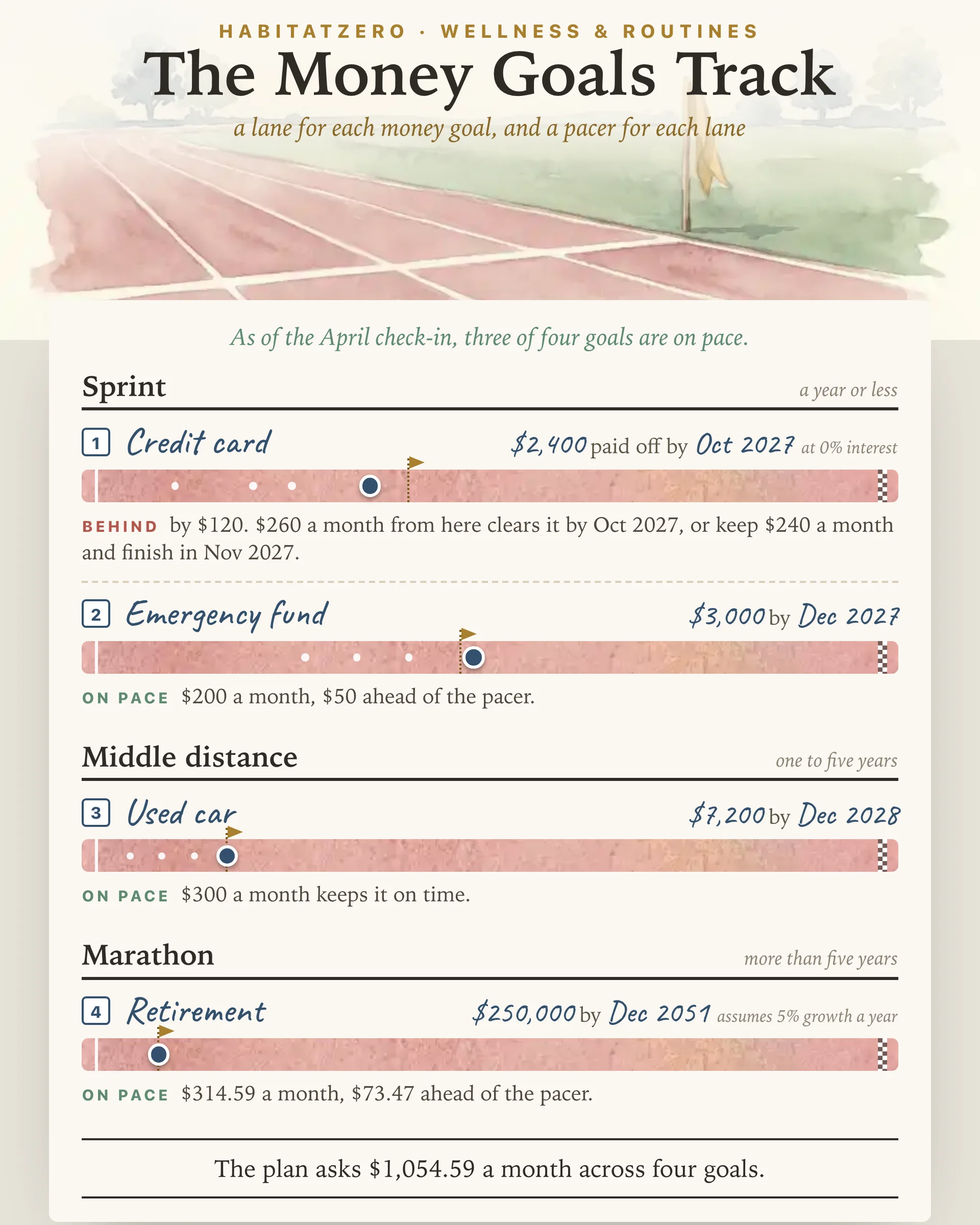
The Money Goals TrackGive every money goal its own lane, from an emergency fund to retirement, with an amount, a finish date and the monthly amount that gets there. Check in once a month and the pacer shows which goals keep up and which need a bigger monthly amount or a later finish.
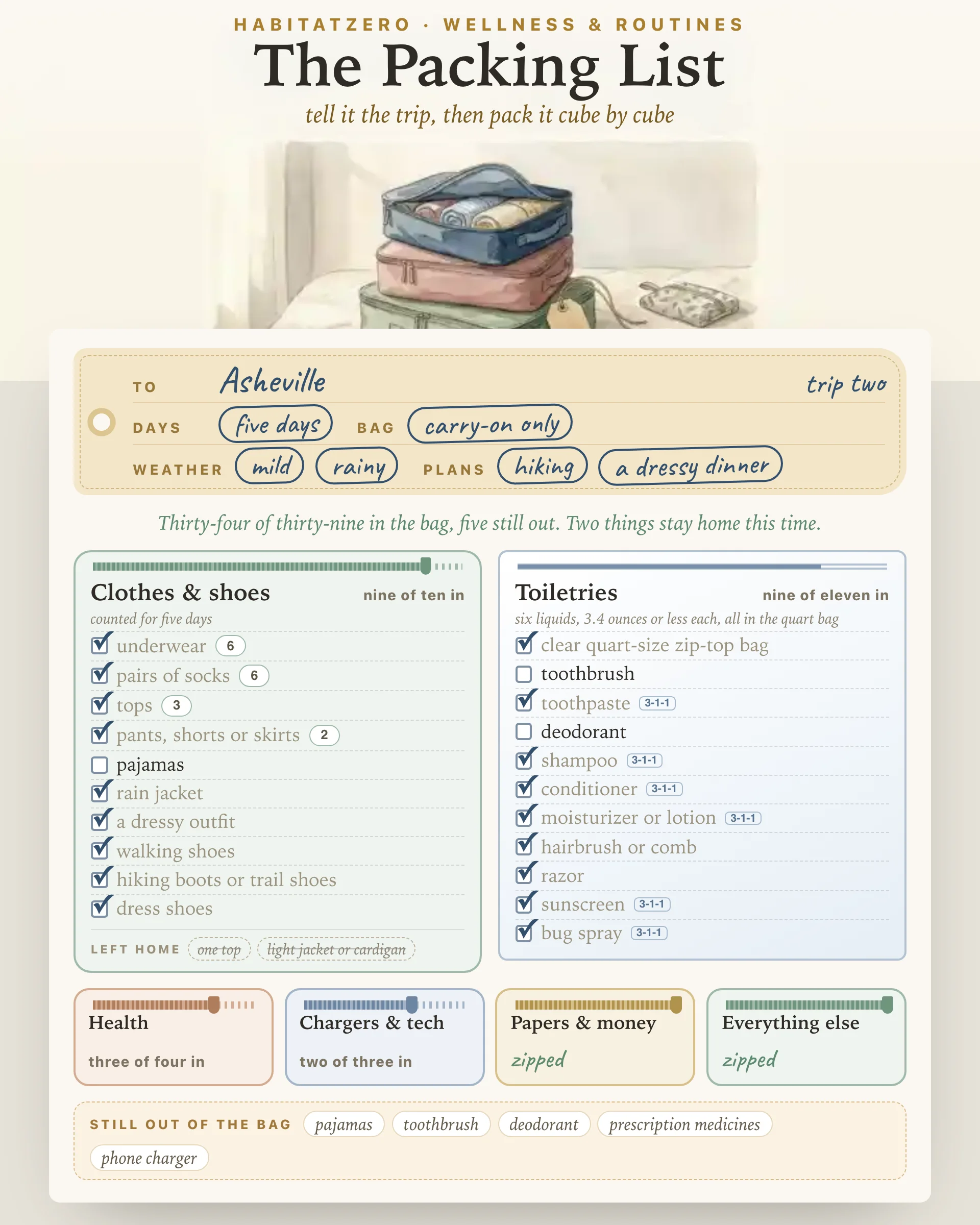
The Packing ListTell it the trip and the list builds itself: clothes counted to the days, liquids sorted for a carry-on, door checks before you lock up. Back home, mark what you never used and the next list comes out shorter.
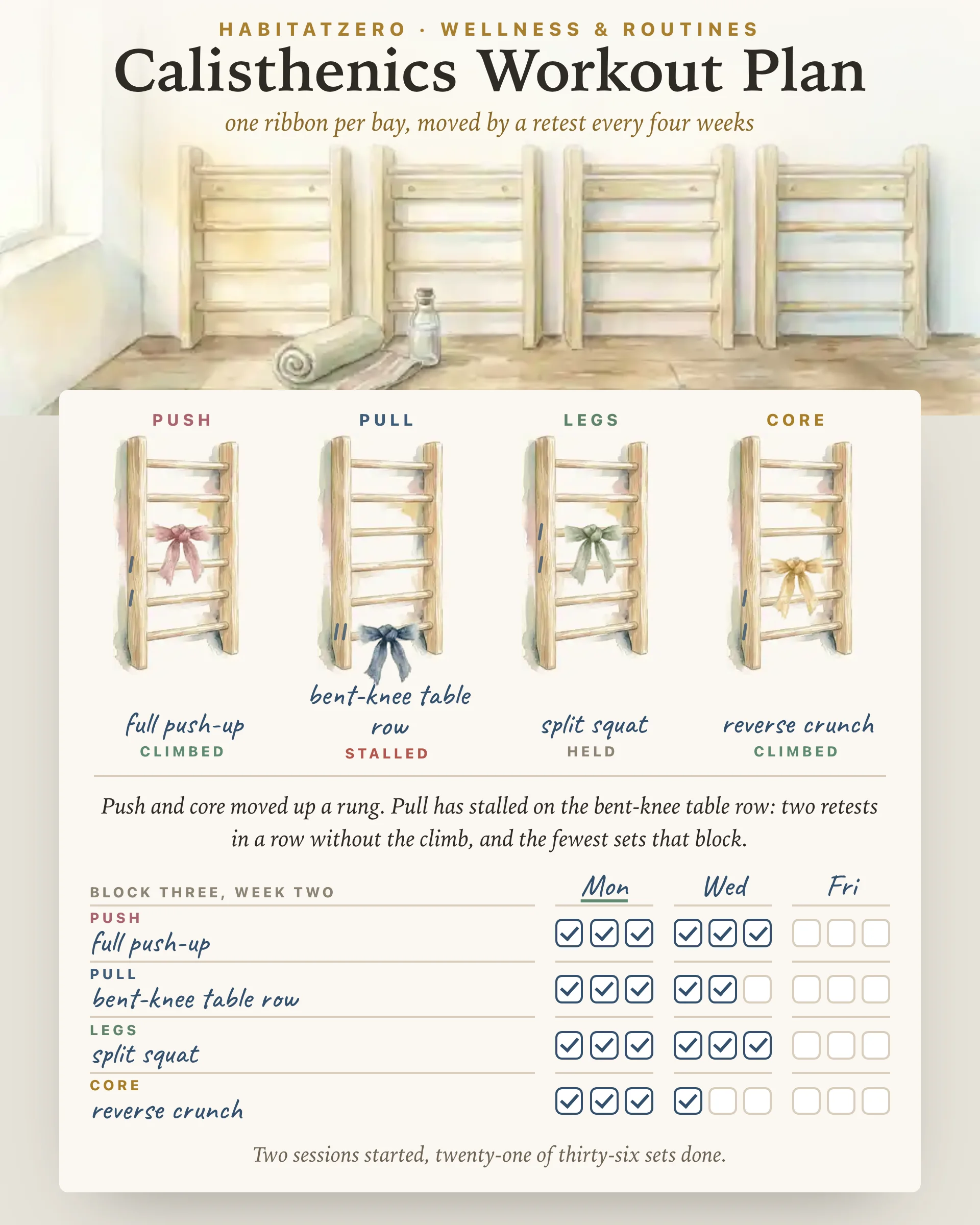
Calisthenics Workout PlanTie a ribbon at your level on four wall-bar bays for push, pull, legs and core, check off three sets of each move three days a week, and let a retest every four weeks show which ribbons climbed and which stalled.
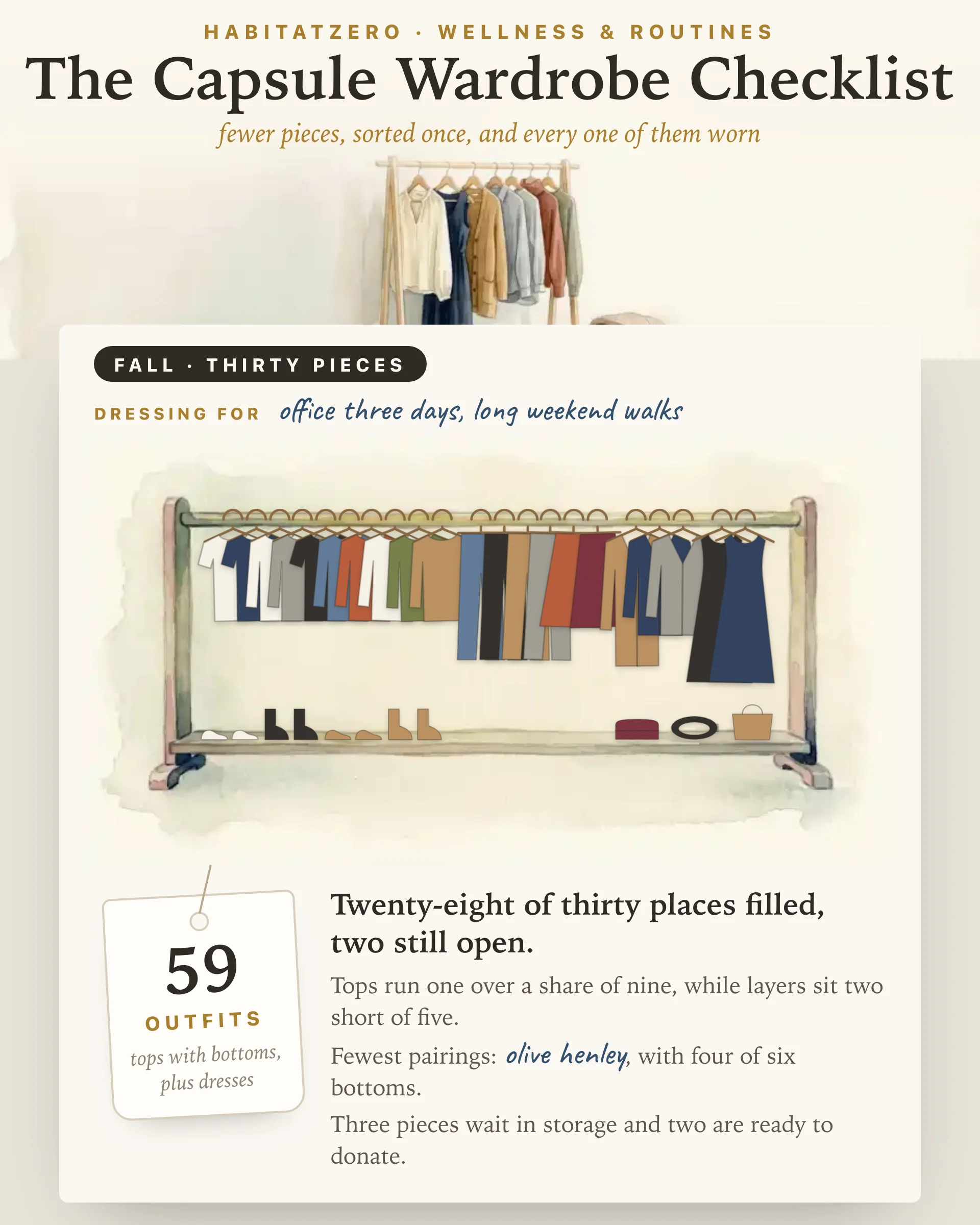
The Capsule Wardrobe ChecklistPick a season and a size, then mark every piece you own keep, store or donate. A painted rail fills with your colors, counts the outfits your tops, bottoms and dresses make, and names the category running over or short.
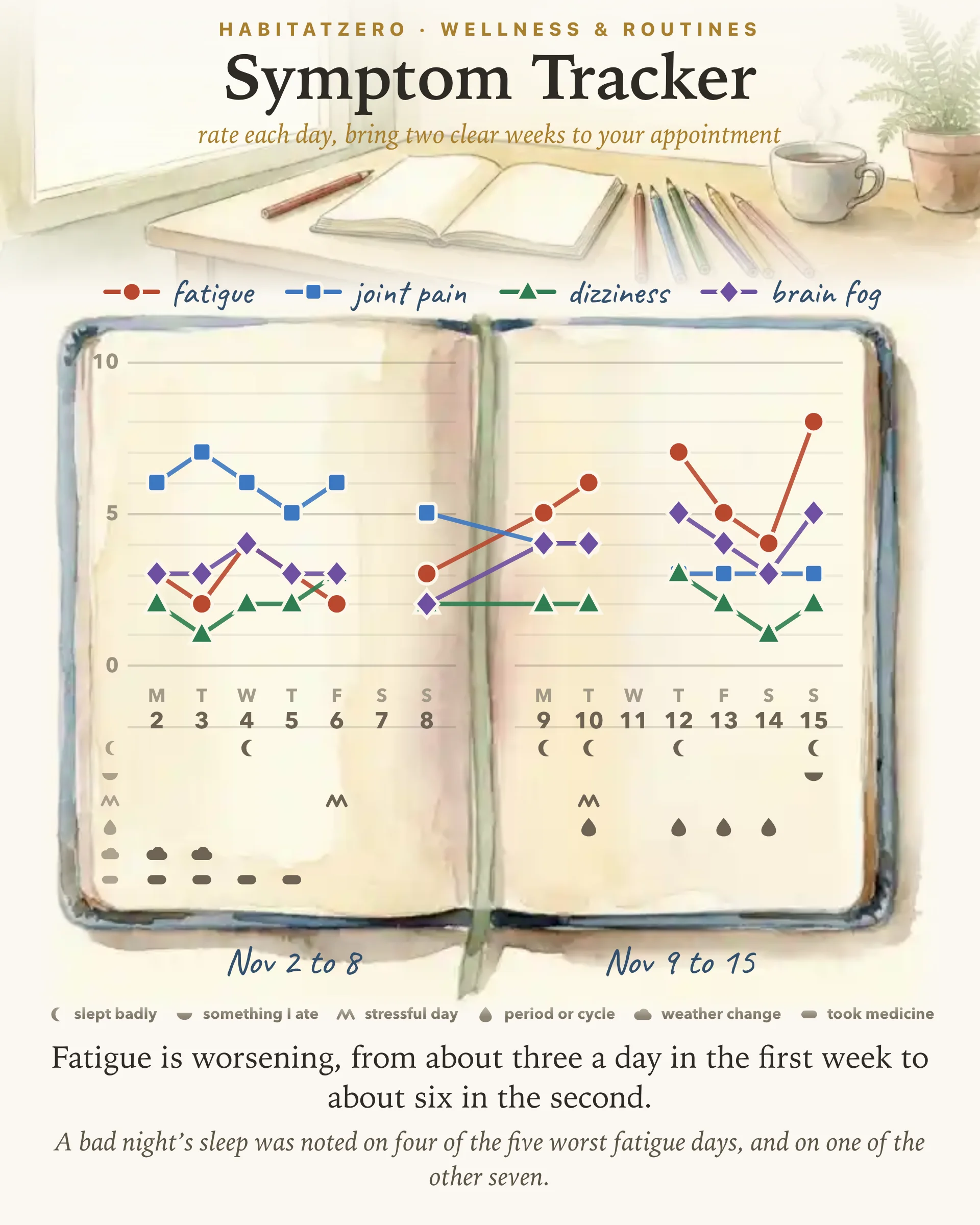
Symptom TrackerName up to six symptoms and rate each one from zero to ten every day, with sleep, food, stress, cycle, weather and medicine noted beside it. An open notebook draws two weeks in colored pencil, says what is worsening or easing and which note keeps turning up with it, and writes a summary for your clinician.
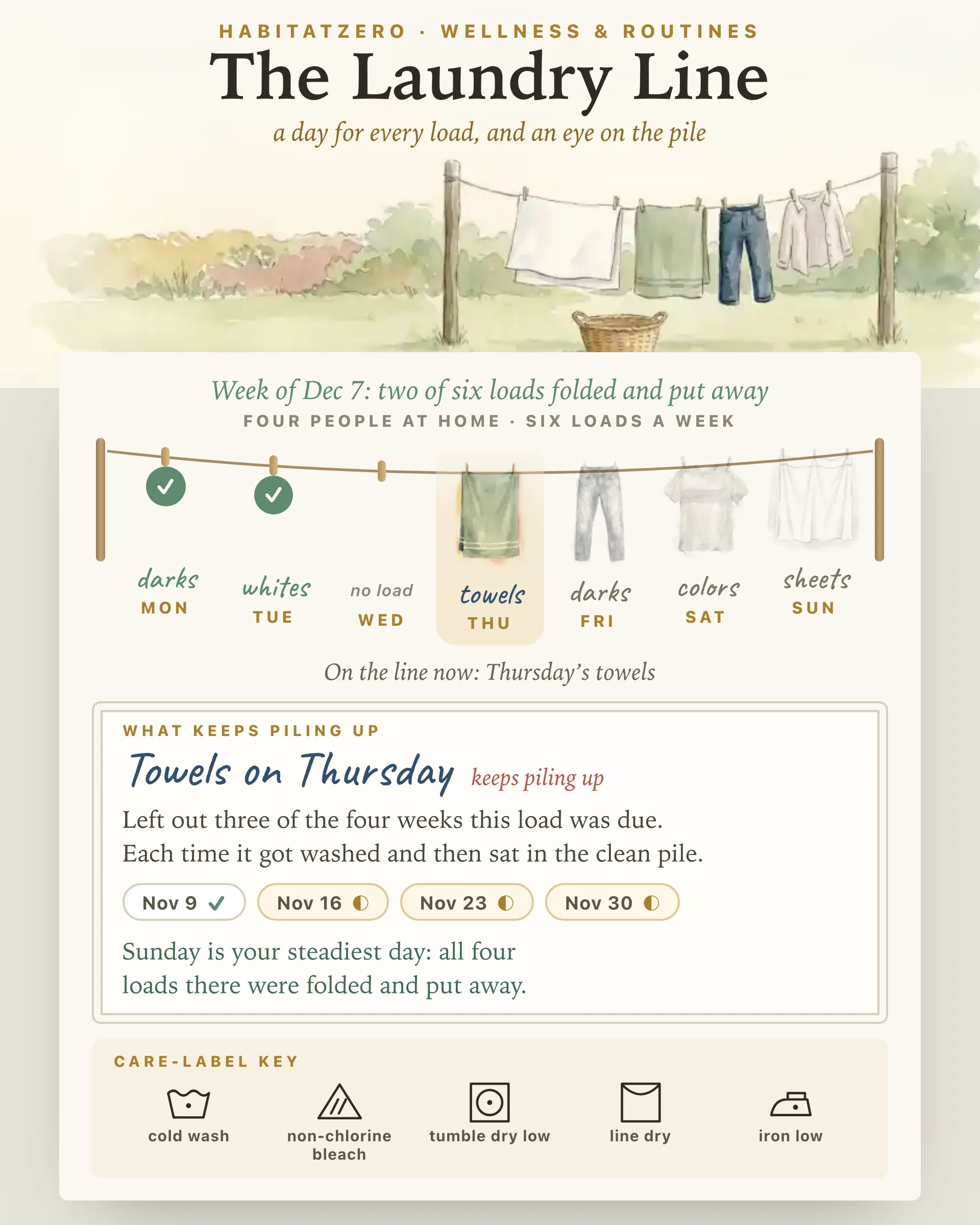
The Laundry LineSay who lives at home and a week of loads hangs itself on a clothesline, each on its own day. Mark every load washed, then folded and put away, and the line shows which load keeps piling up, on which day, and a steadier day to move it to.
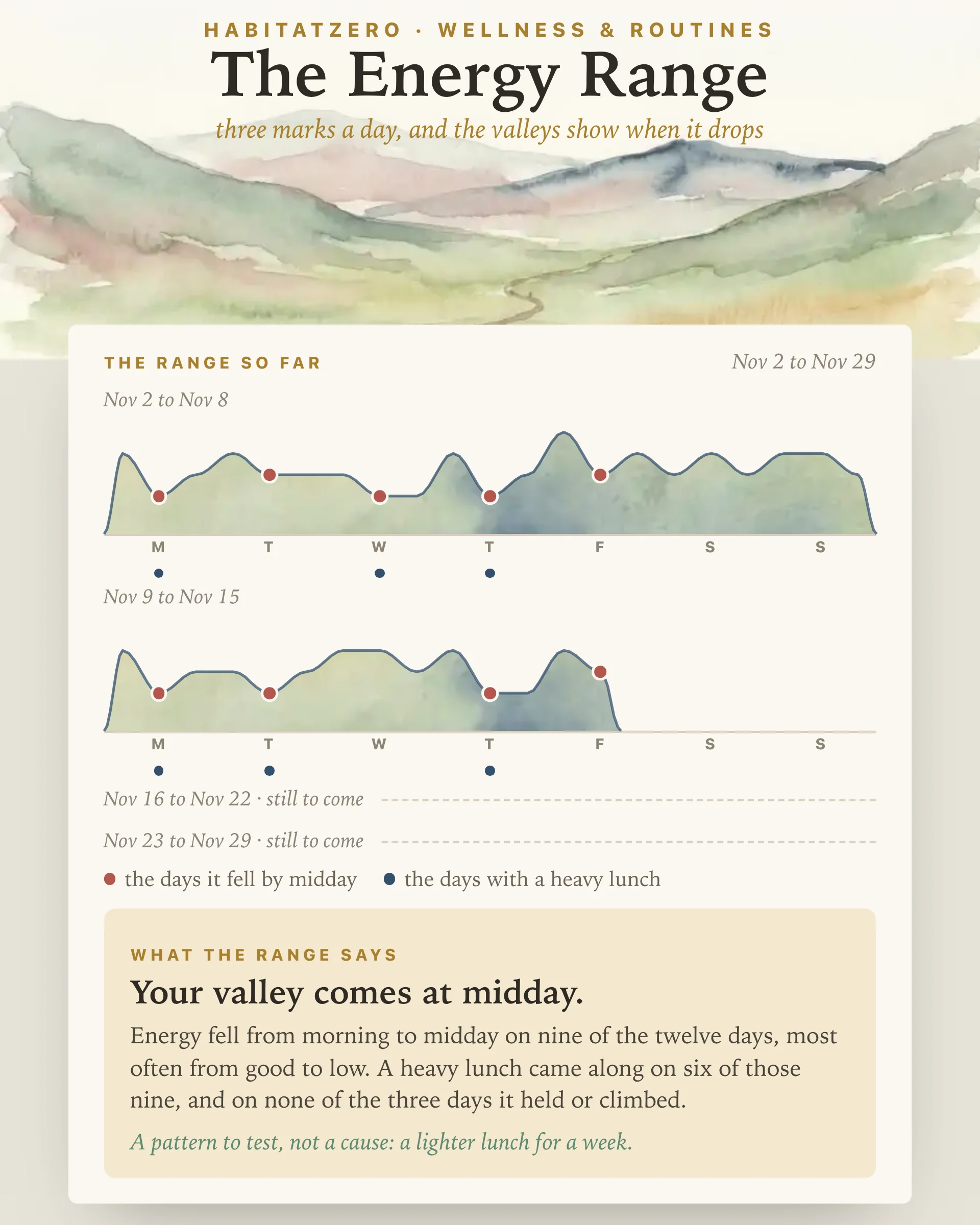
The Energy RangeMark your energy morning, midday and evening, tap what came with the day, and watch four weeks rise into a painted mountain range that shows when your energy drops and what tends to ride along with it.
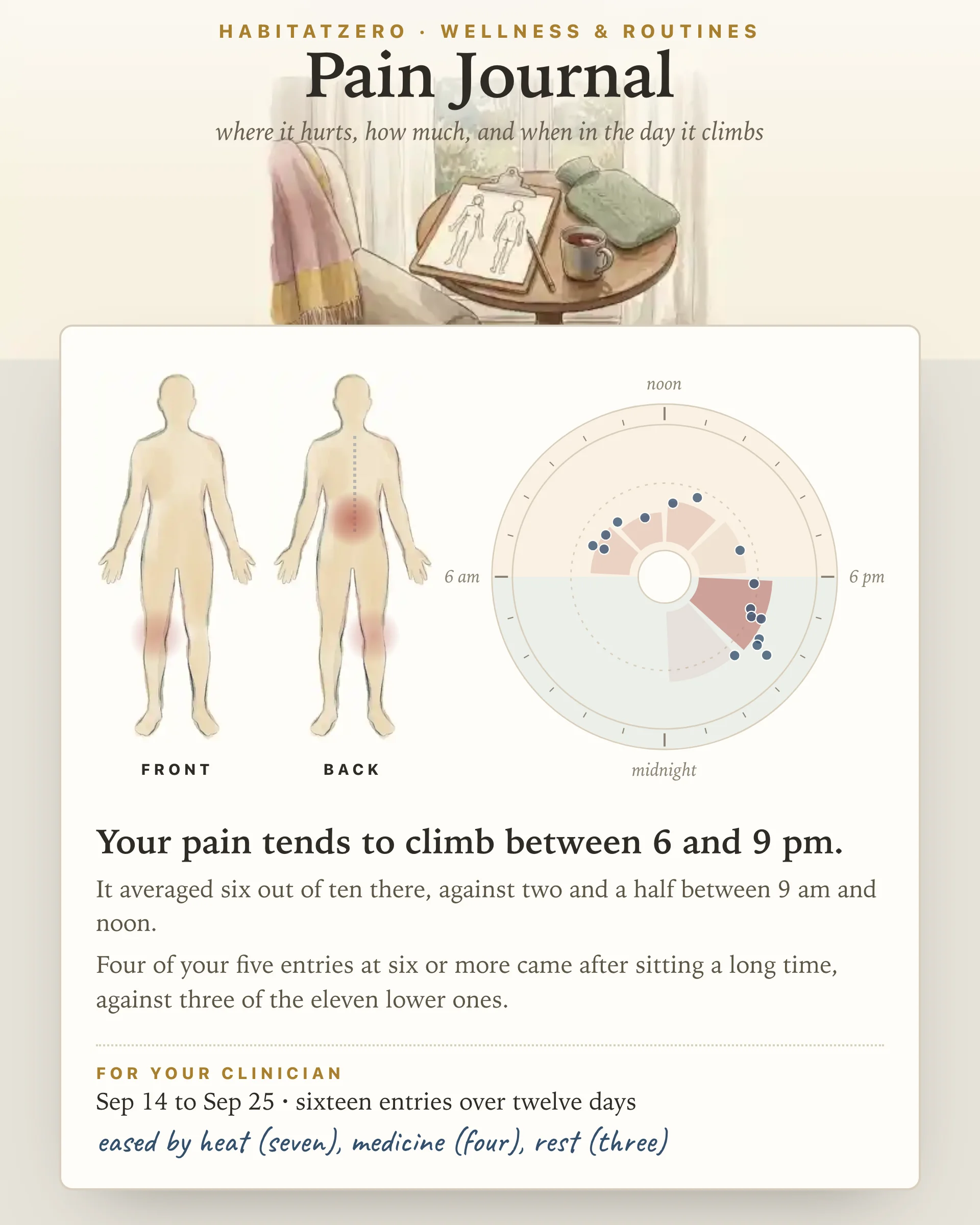
Pain JournalMark where it hurts on a front-and-back body chart, how much from zero to ten and what kind, with what came before it and what eased it. A day clock shows when your pain tends to climb and after what, and the journal writes a summary to bring to your clinician.
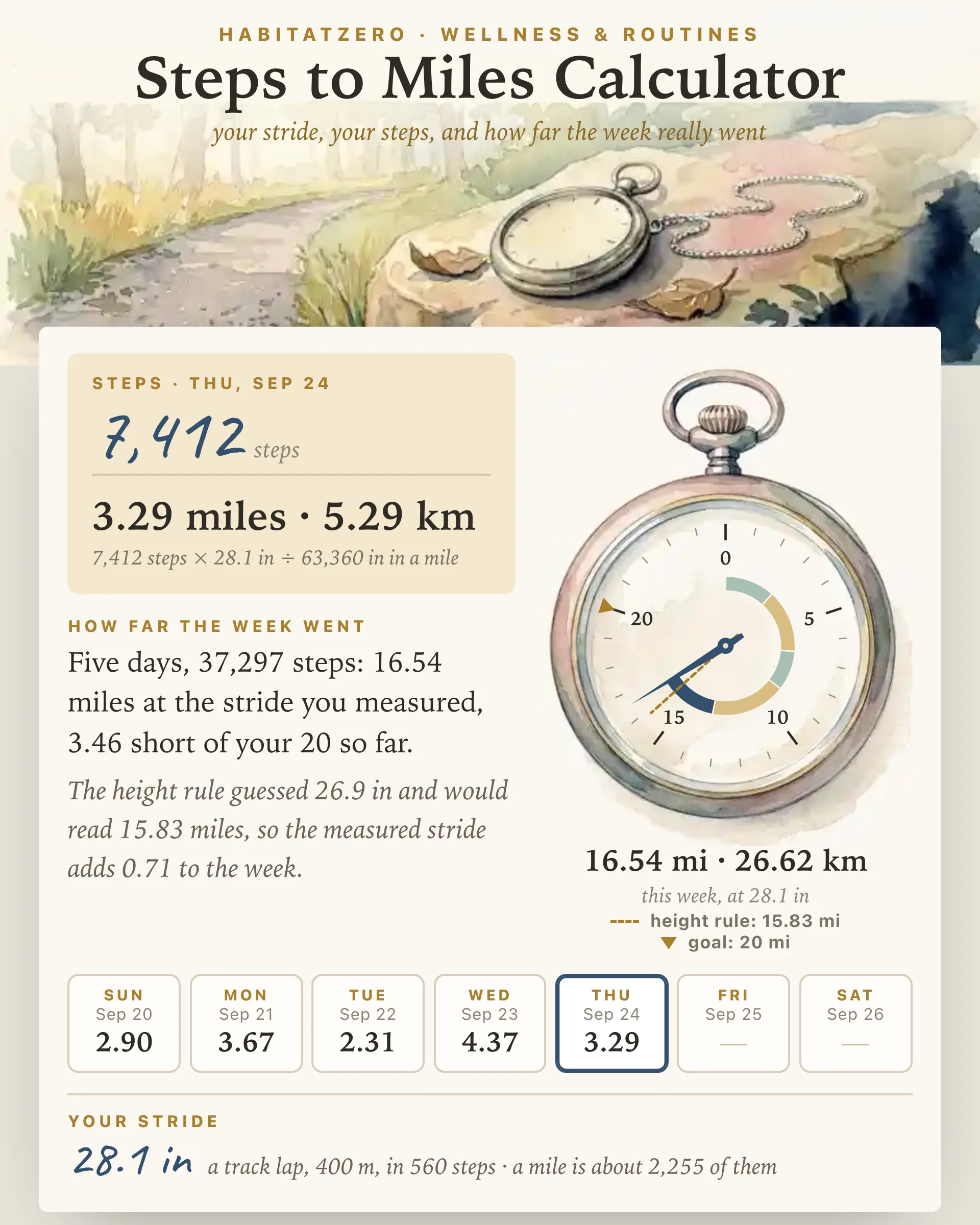
Steps to Miles CalculatorTurn any day's steps into miles and kilometers on a pocket pedometer dial, at a stride worked out from your height or measured on a real walk. Log the week and the dial shows how far it went, and how much of that distance rests on your stride.
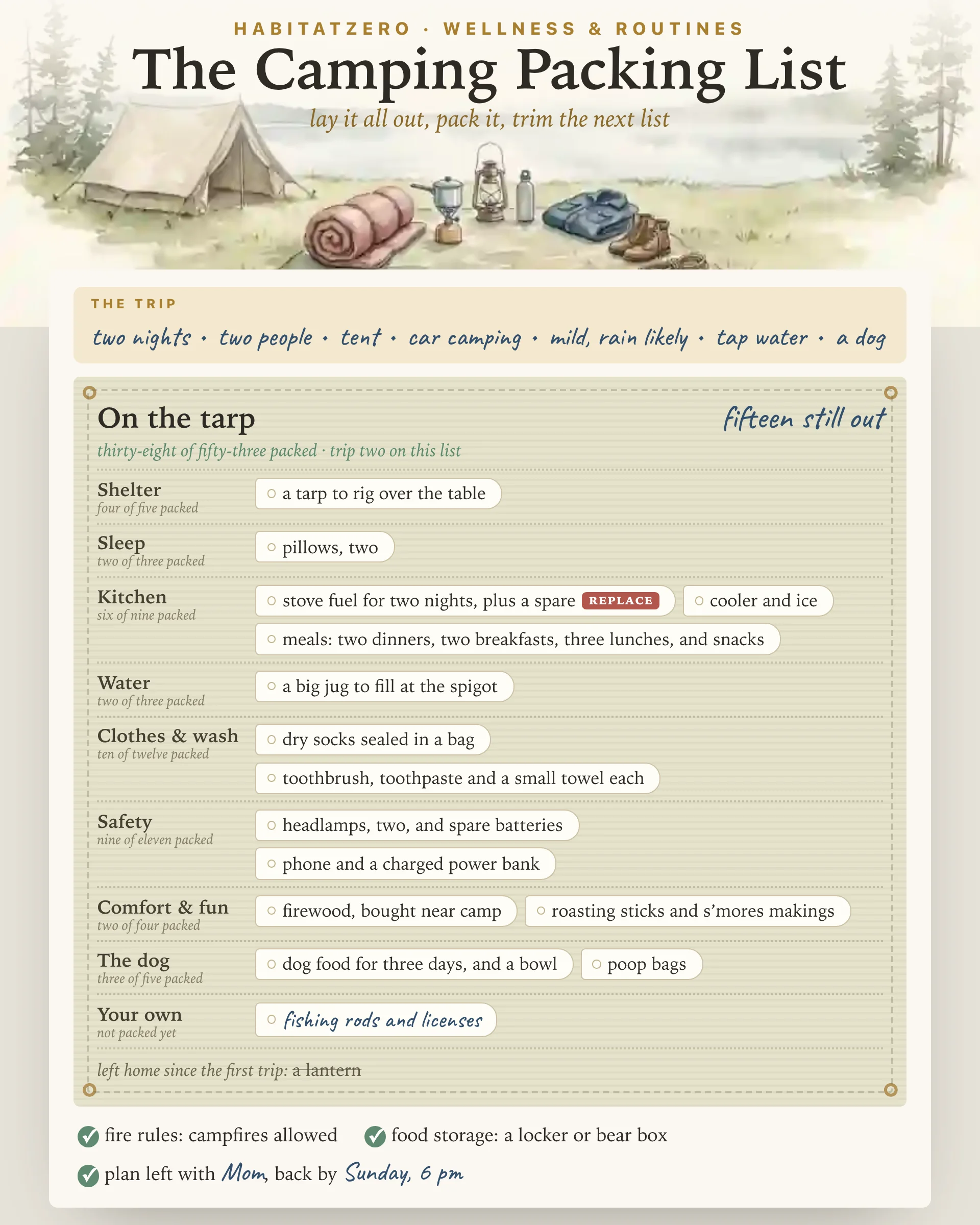
The Camping Packing ListSet the nights, the shelter, the weather and the water, and the gear list lays itself out on a tarp with the right counts. Pack it tag by tag, run the fire, food and trip-plan checks, then sort what came home unused so the next trip packs lighter.
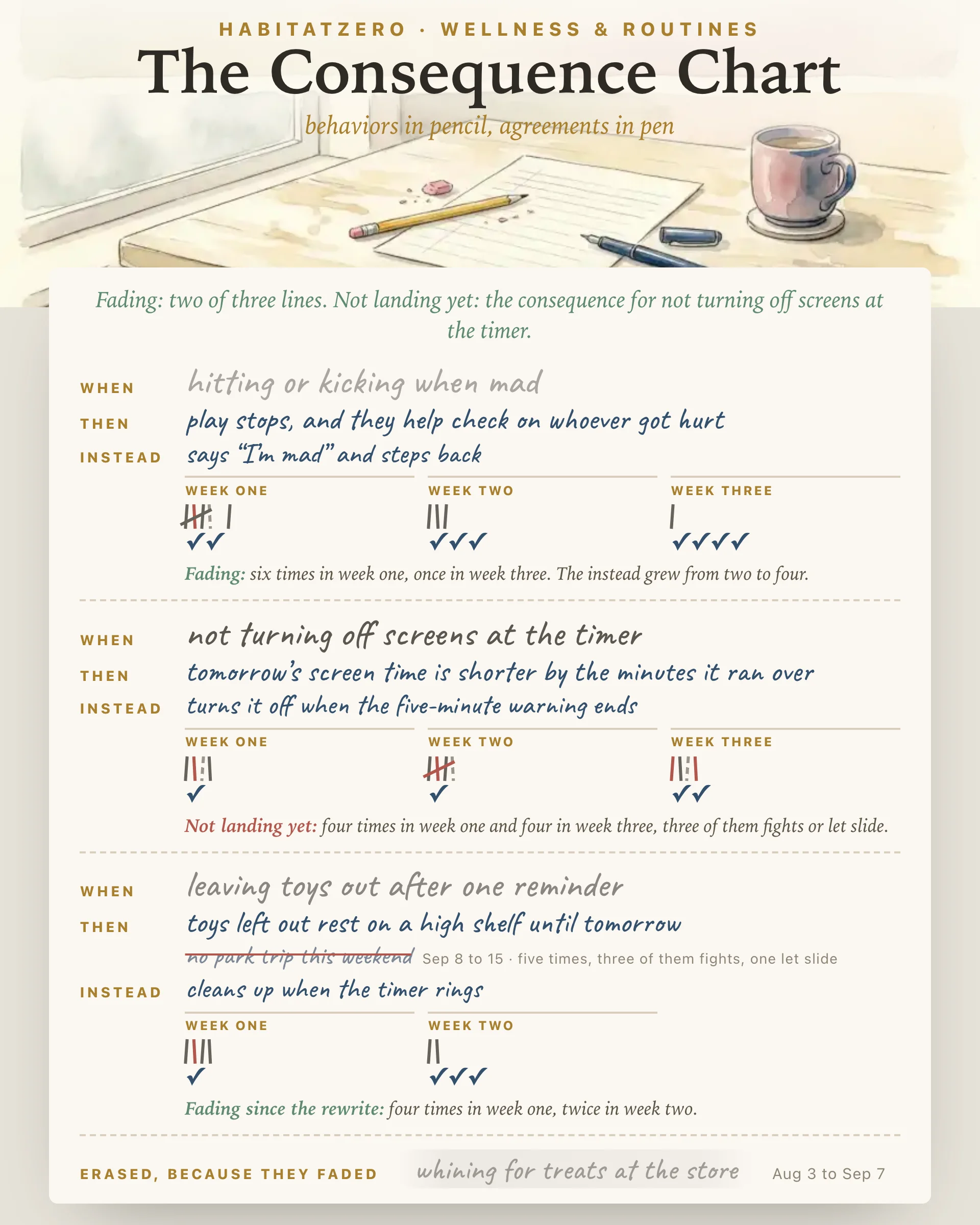
The Consequence ChartWrite up to three repeated behaviors in pencil and agree on each consequence in pen, checked against related, respectful and reasonable. Mark how every follow-through went, and the chart shows which behavior is fading and which consequence isn't landing.
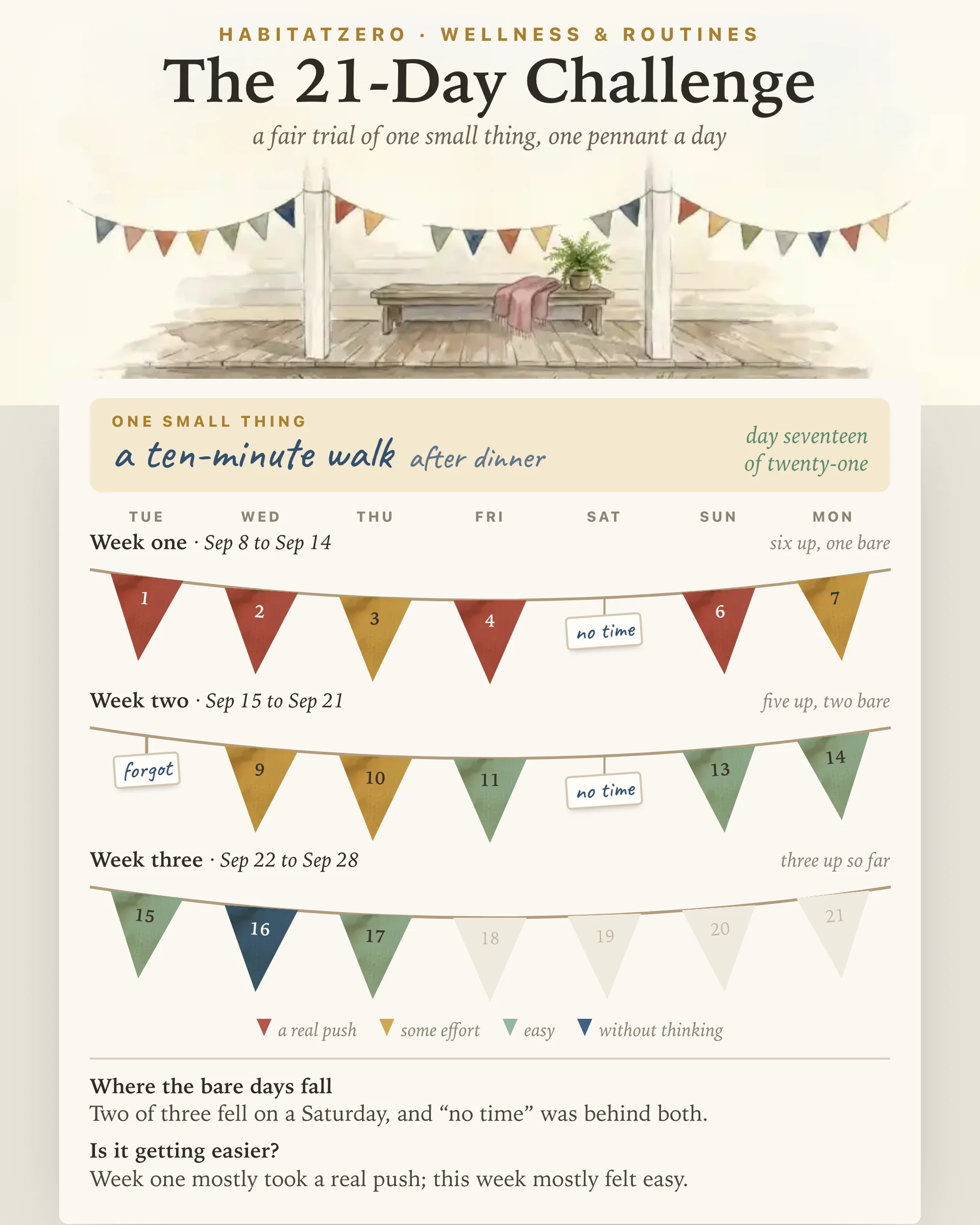
The 21-Day ChallengeChoose one small daily action and hang a pennant for every day you do it, colored by how hard it felt, or leave the day bare with a tag for what got in the way. After three weeks the garland shows which weekdays slip and whether the action is getting easier.
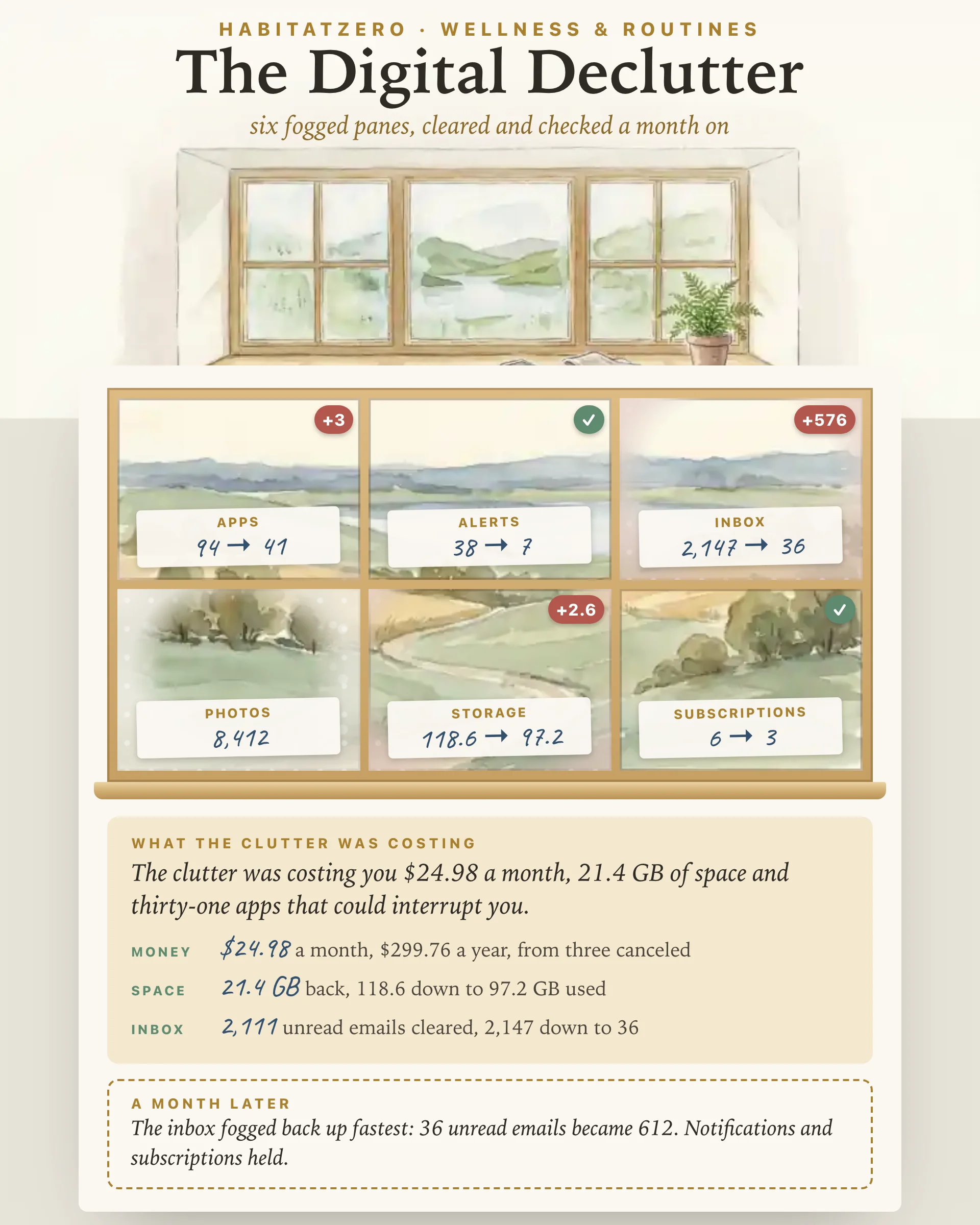
The Digital DeclutterSix fogged window panes for the places digital clutter collects, from apps and unread email to subscriptions: count each before and after, and the glass clears to show what the clutter was costing, down to the dollar and the gigabyte. A month later, count again and see which pane fogged back up.
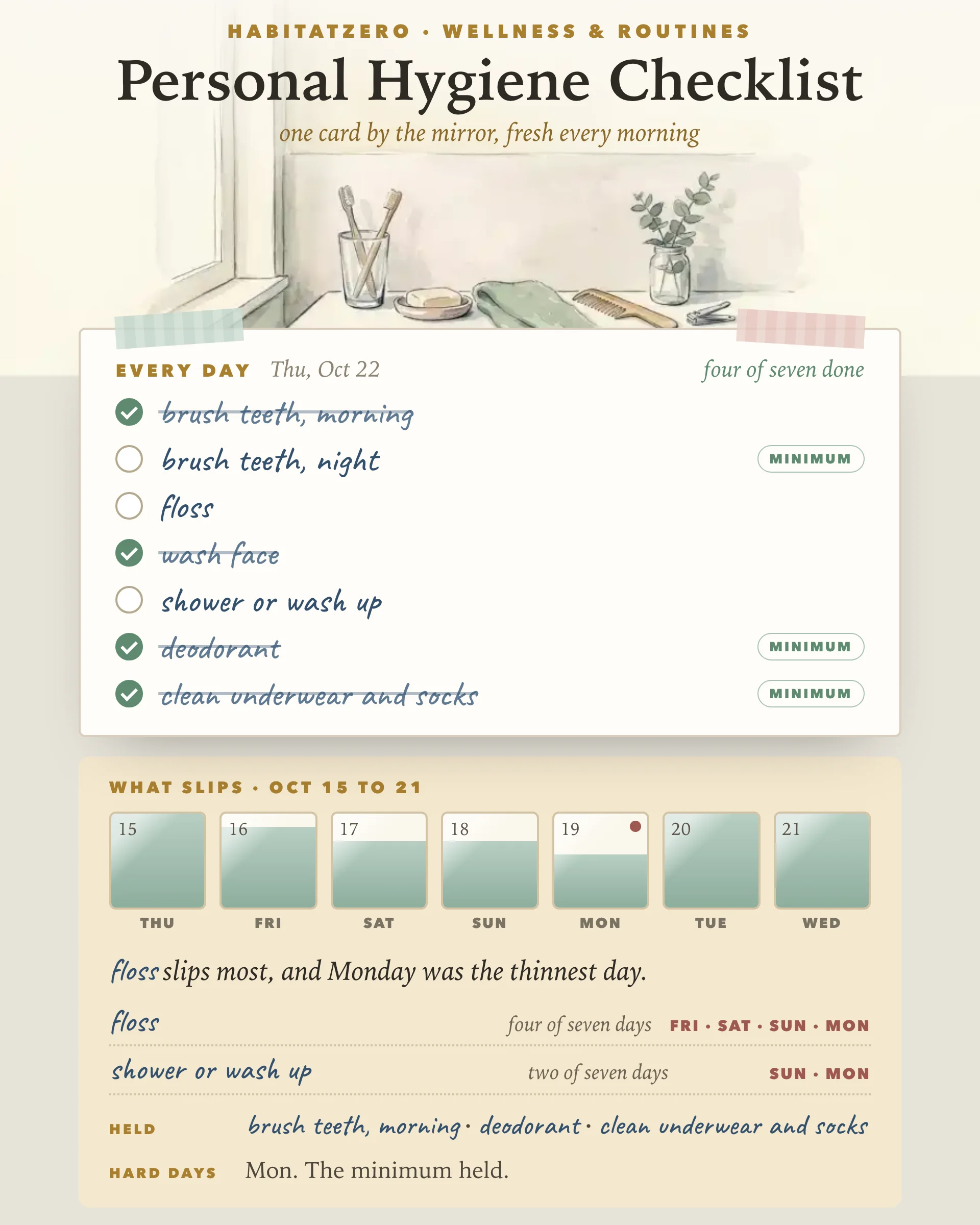
Personal Hygiene ChecklistCheck off daily, weekly and monthly care on a card that starts fresh each morning, keep a small minimum for hard days, and see which care slips and on which days.
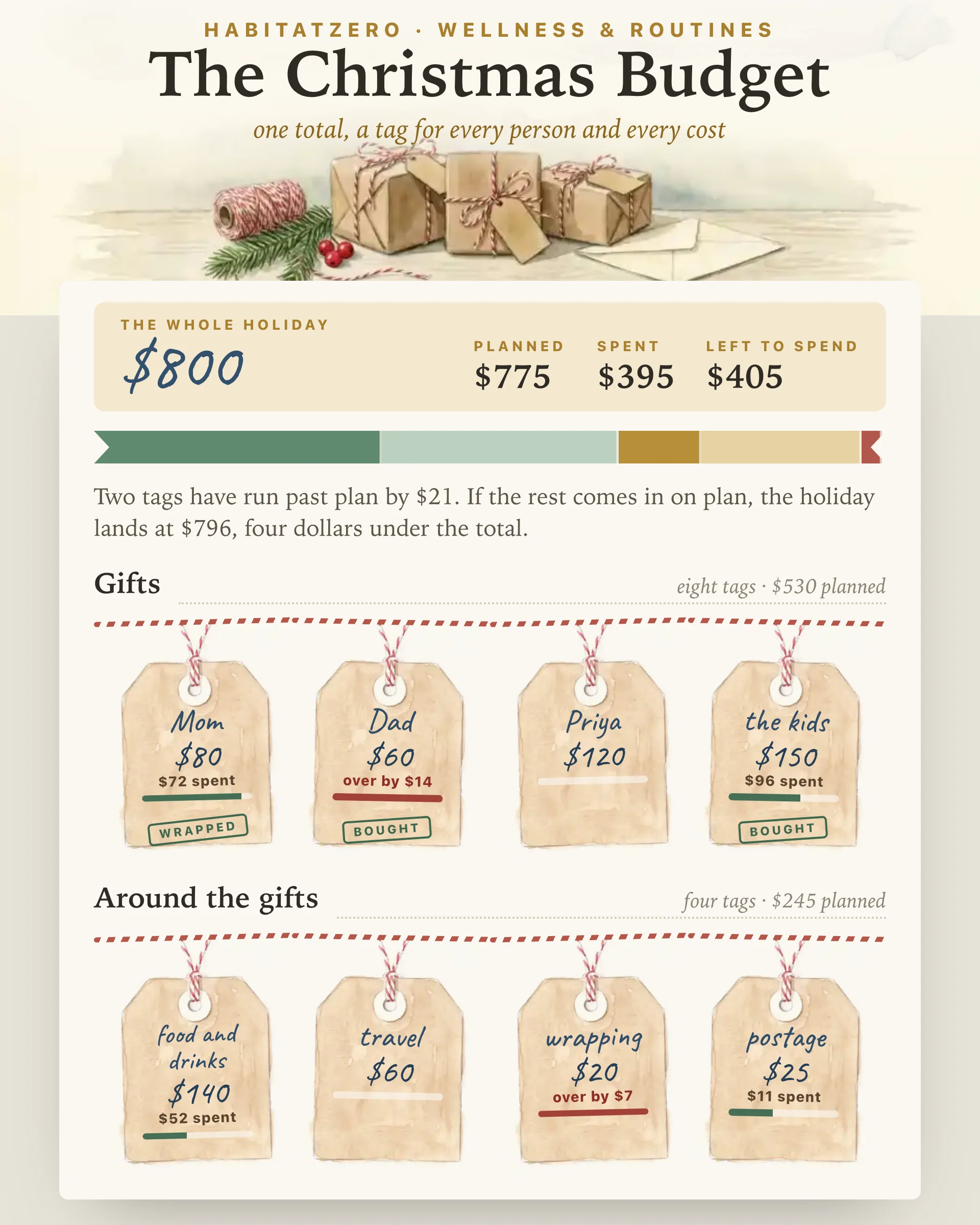
The Christmas BudgetSet one total for the whole holiday, hang a gift tag for every person and every cost around the gifts, and log purchases as you shop. A ribbon shows planned against spent, and the page says in plain words where the money stands.
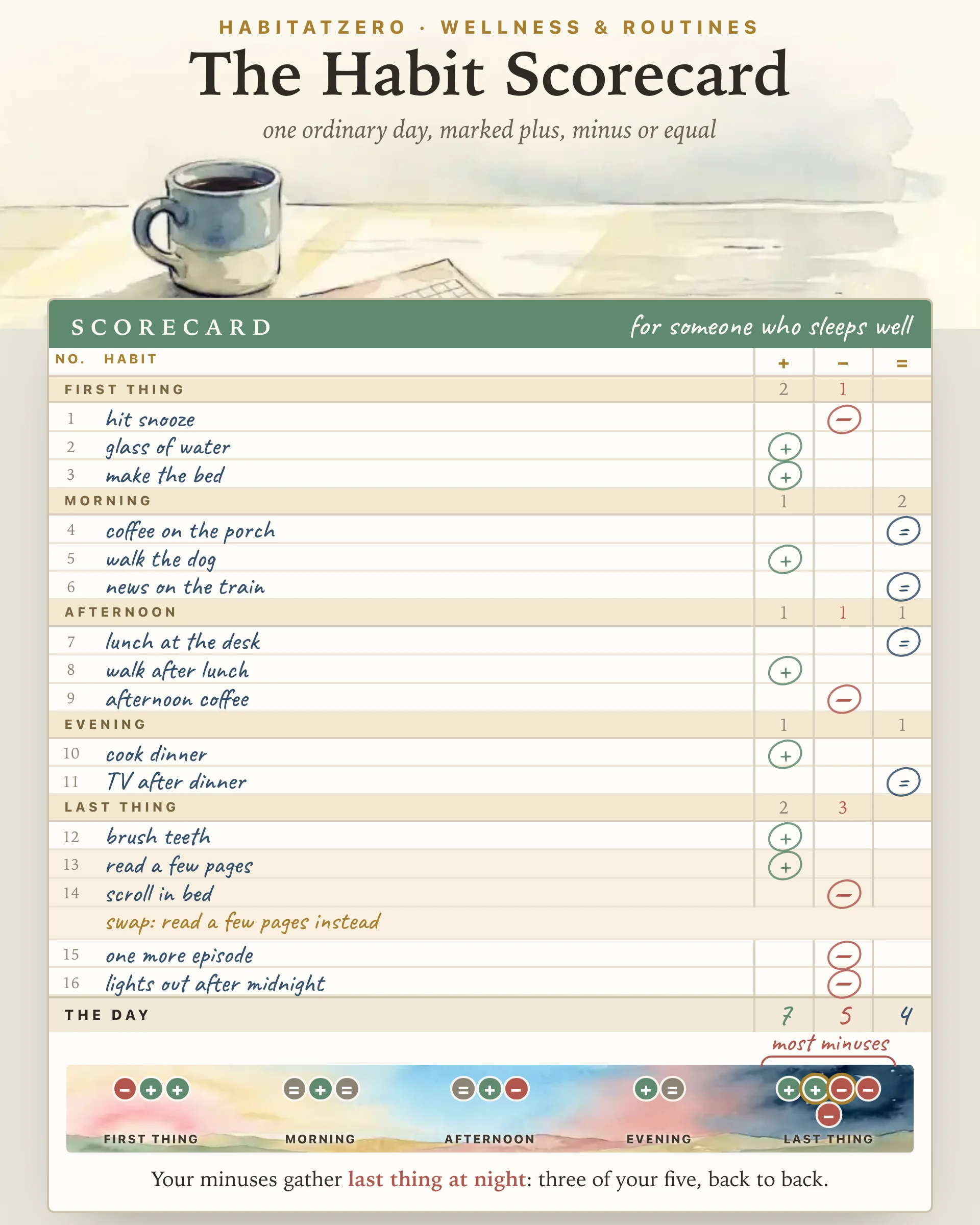
The Habit ScorecardWrite one ordinary day in the order it happens, from the alarm to lights out, and mark every habit plus, minus or equal. The card shows where in the day your minuses gather and which one sits beside a plus you could pair it with or swap it for.
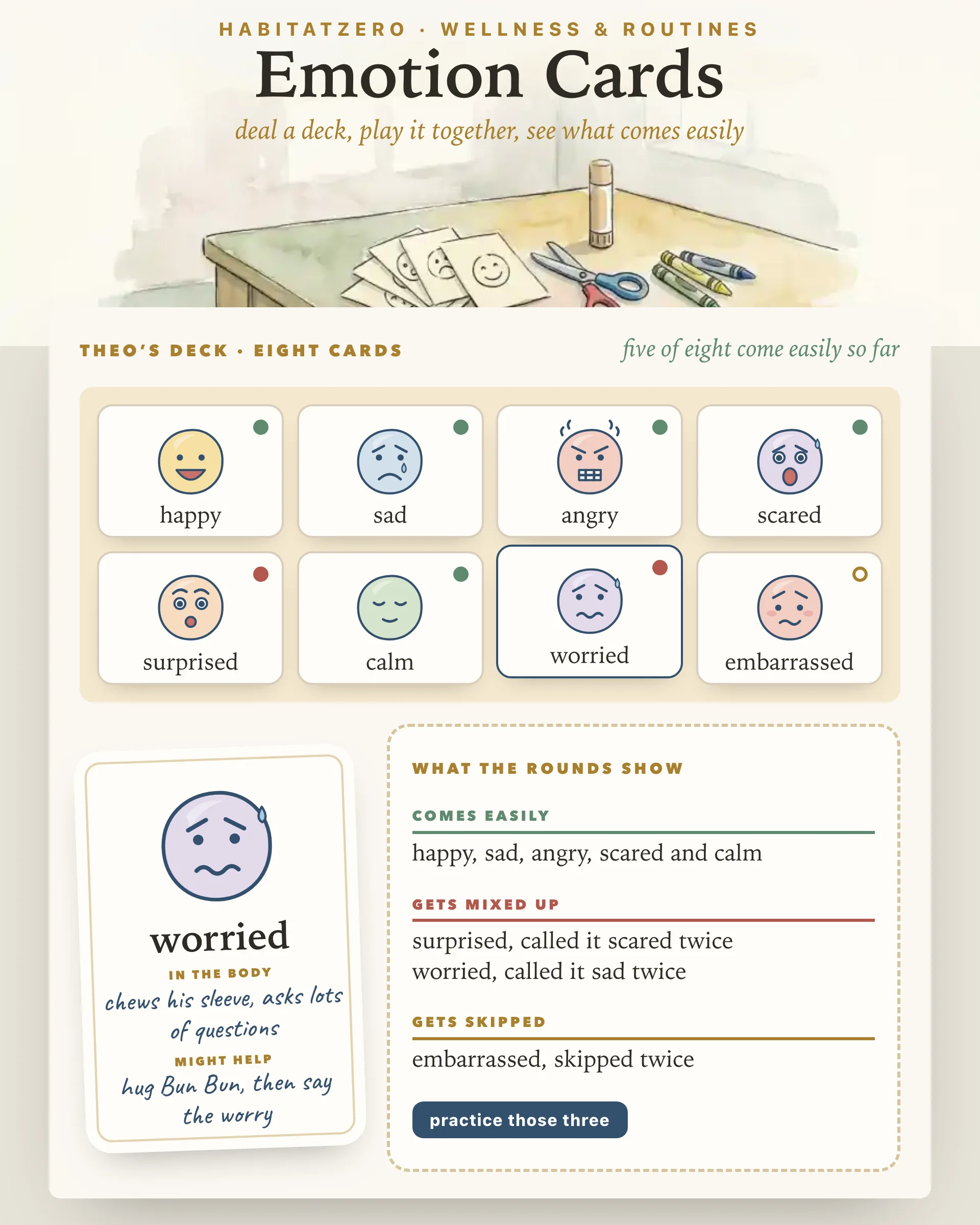
Emotion CardsDeal a deck of up to twelve drawn feeling cards, each with a face, the word, a body clue and what might help. Play guess the face, match or charades with your child, and the deck shows which feelings come easily and which get skipped or mixed up.
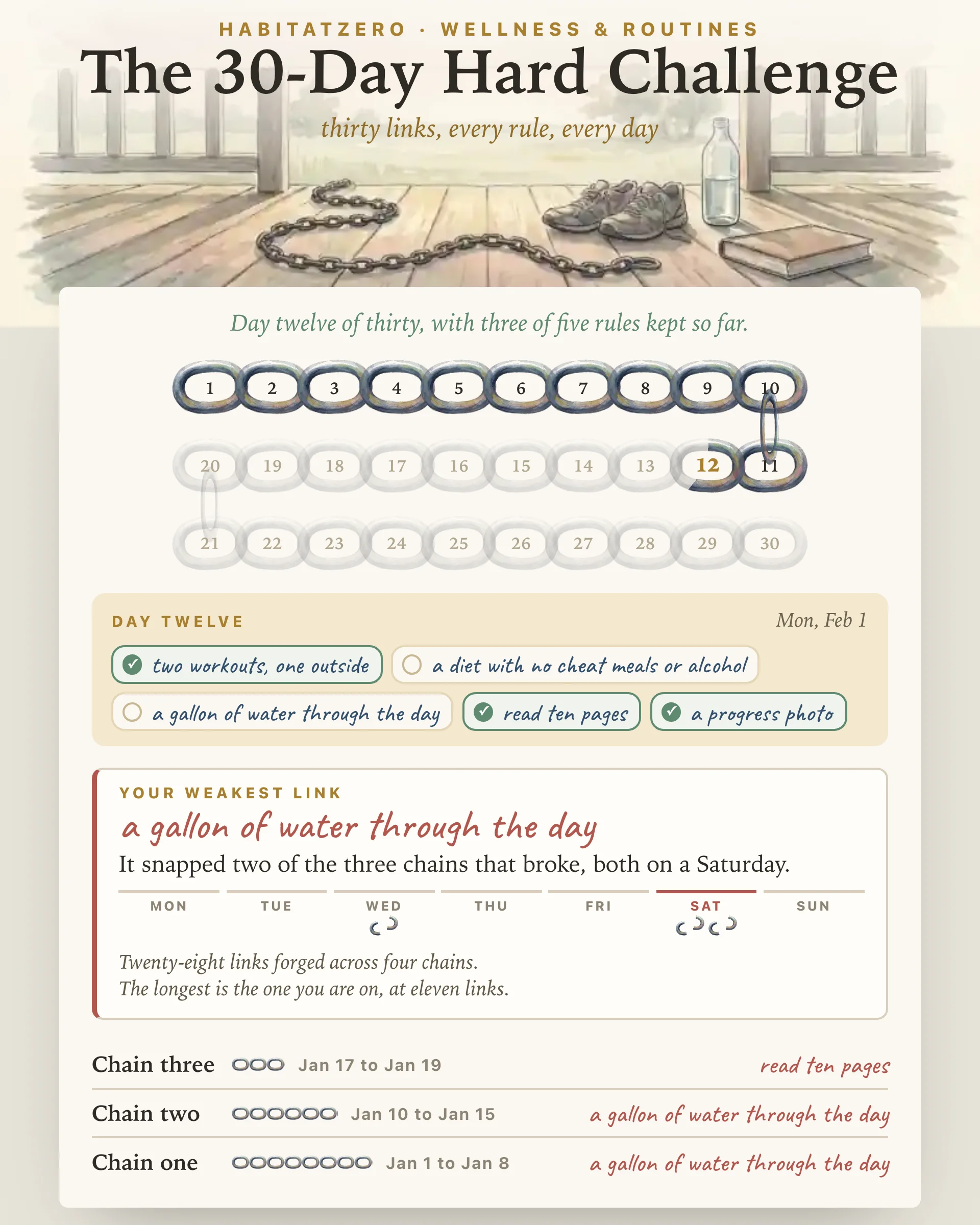
The 30-Day Hard ChallengeChoose up to five daily rules and forge one iron link for every day you keep them all. A slipped rule breaks the chain back to day one, and the page names your weakest link and the weekday it tends to snap.
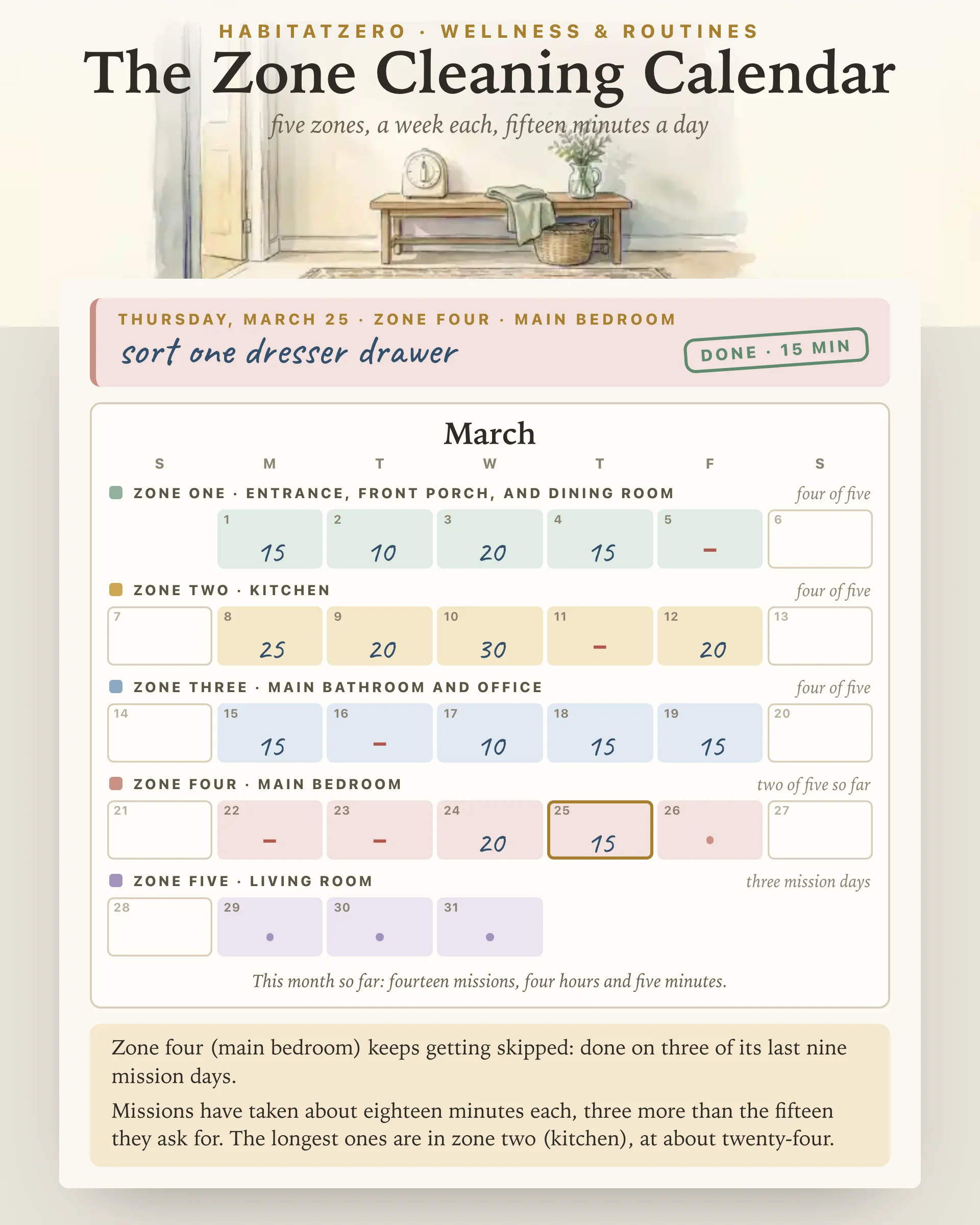
The Zone Cleaning CalendarSplit your home into five zones, give each one a week of the month, and do one timed fifteen-minute mission a day. The calendar shows how long each mission really took and which zone keeps getting skipped.
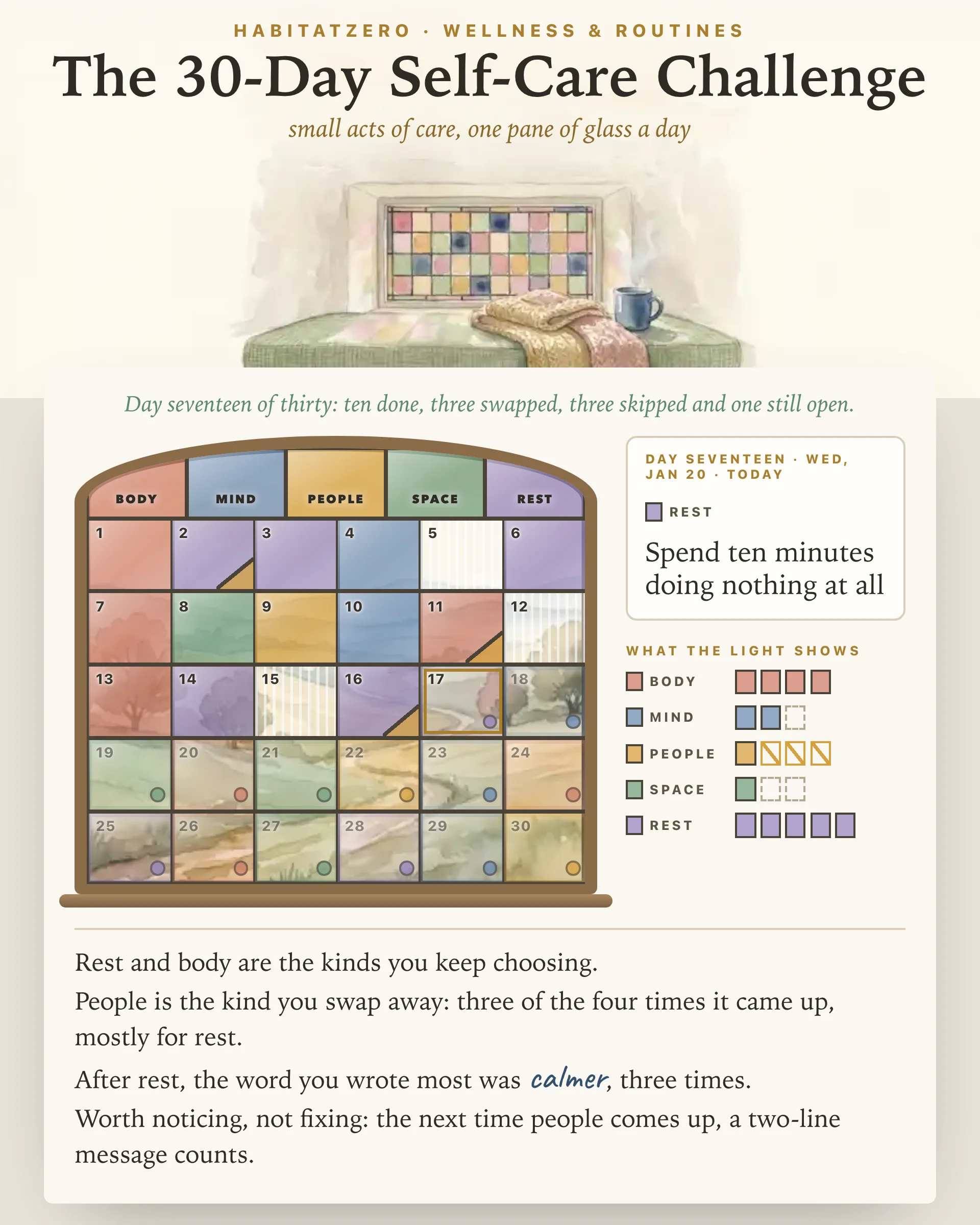
The 30-Day Self-Care ChallengeThirty small acts of care across body, mind, people, space and rest, one a day. Mark each one done, swapped or skipped with a word for how it felt, and a leaded window shows which kinds of care you keep and which you swap away.
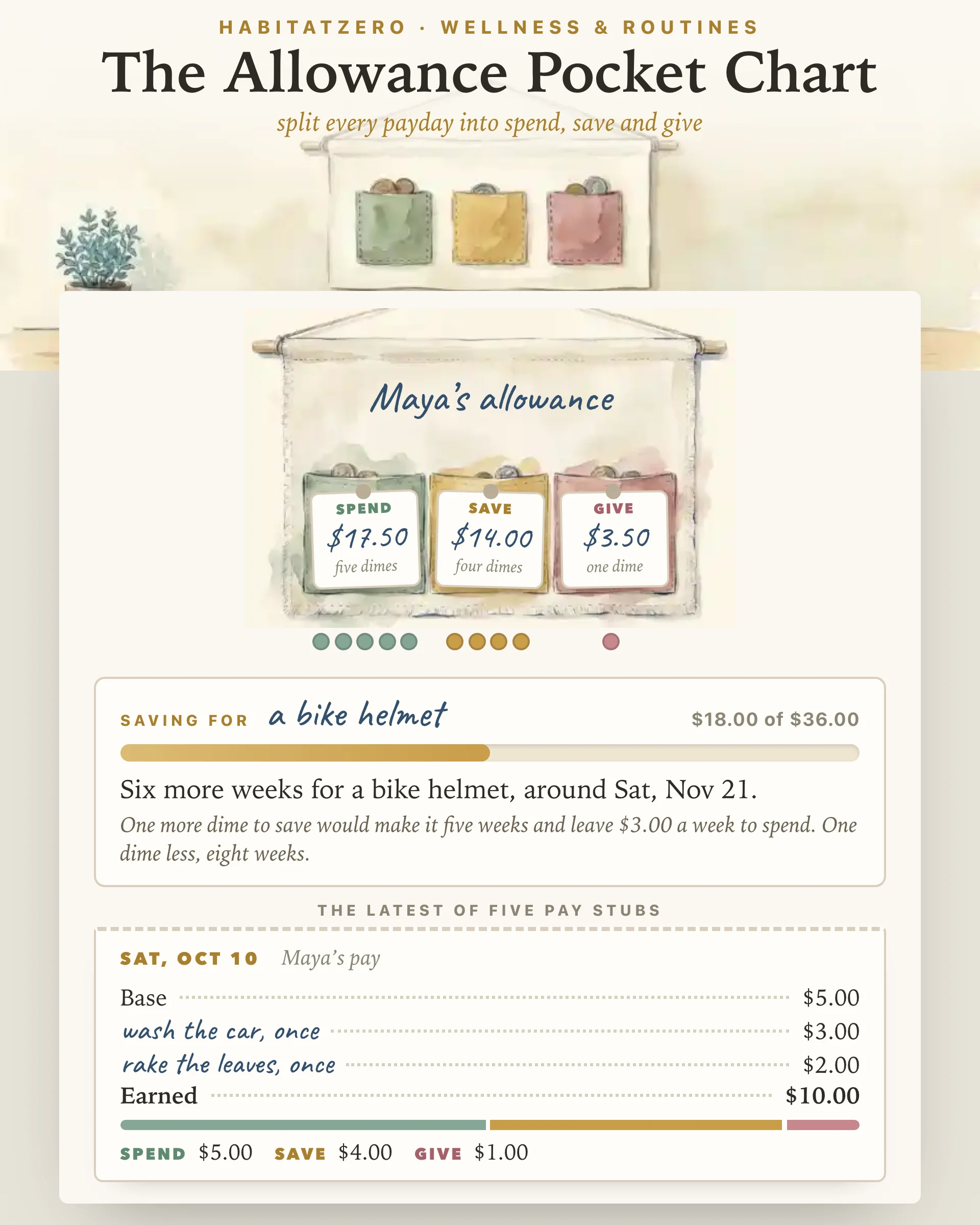
The Allowance Pocket ChartAgree on how allowance is earned, then drop every payday into three pockets, spend, save and give. Each payday leaves a pay stub, and the savings goal shows how many weeks are left and what one more dime to save would change.
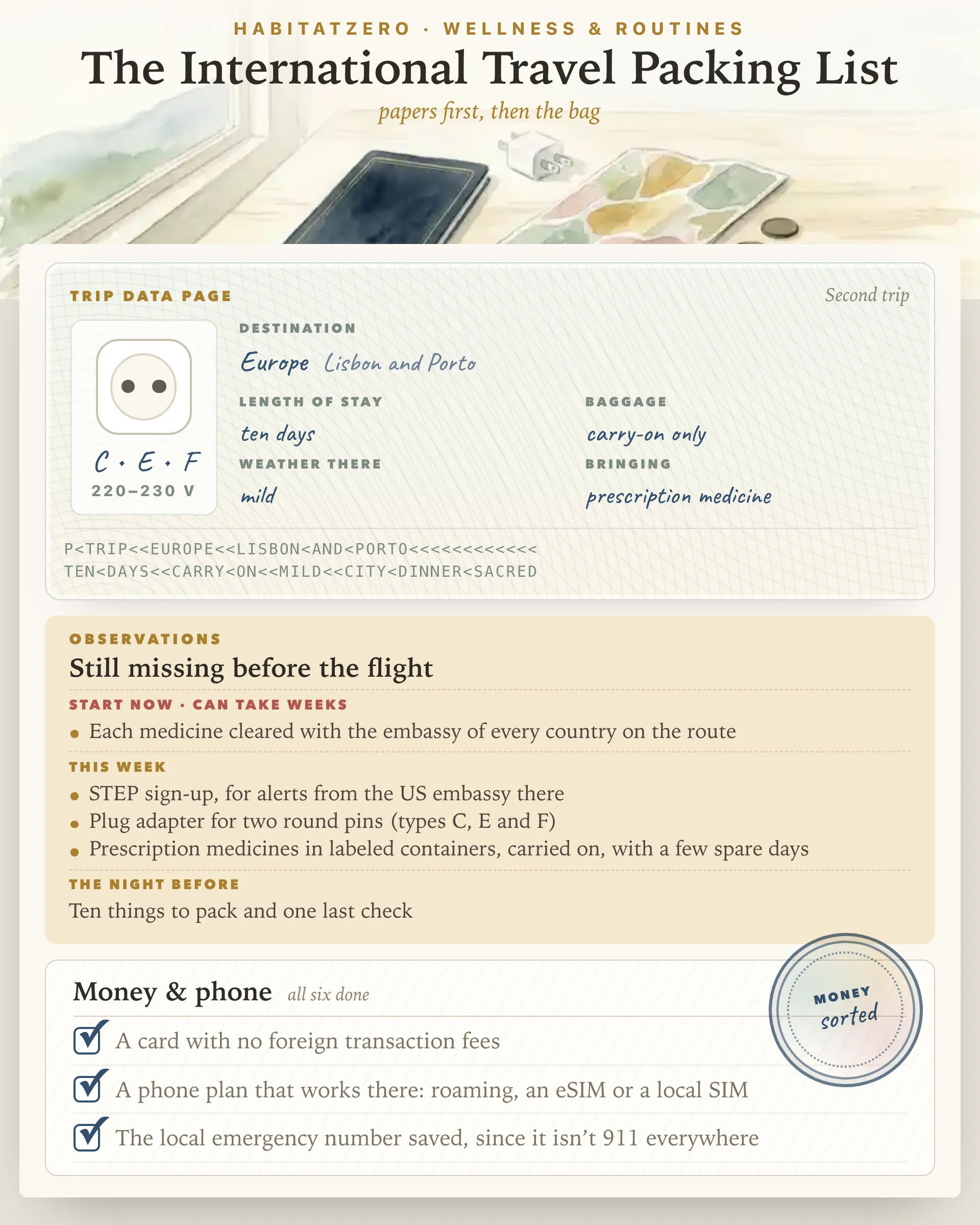
The International Travel Packing ListTell the passport where you are going, for how long, with what bag and in what weather, and it lists the papers, money and plugs first, then the bag, and keeps a running note of what is still missing before the flight.
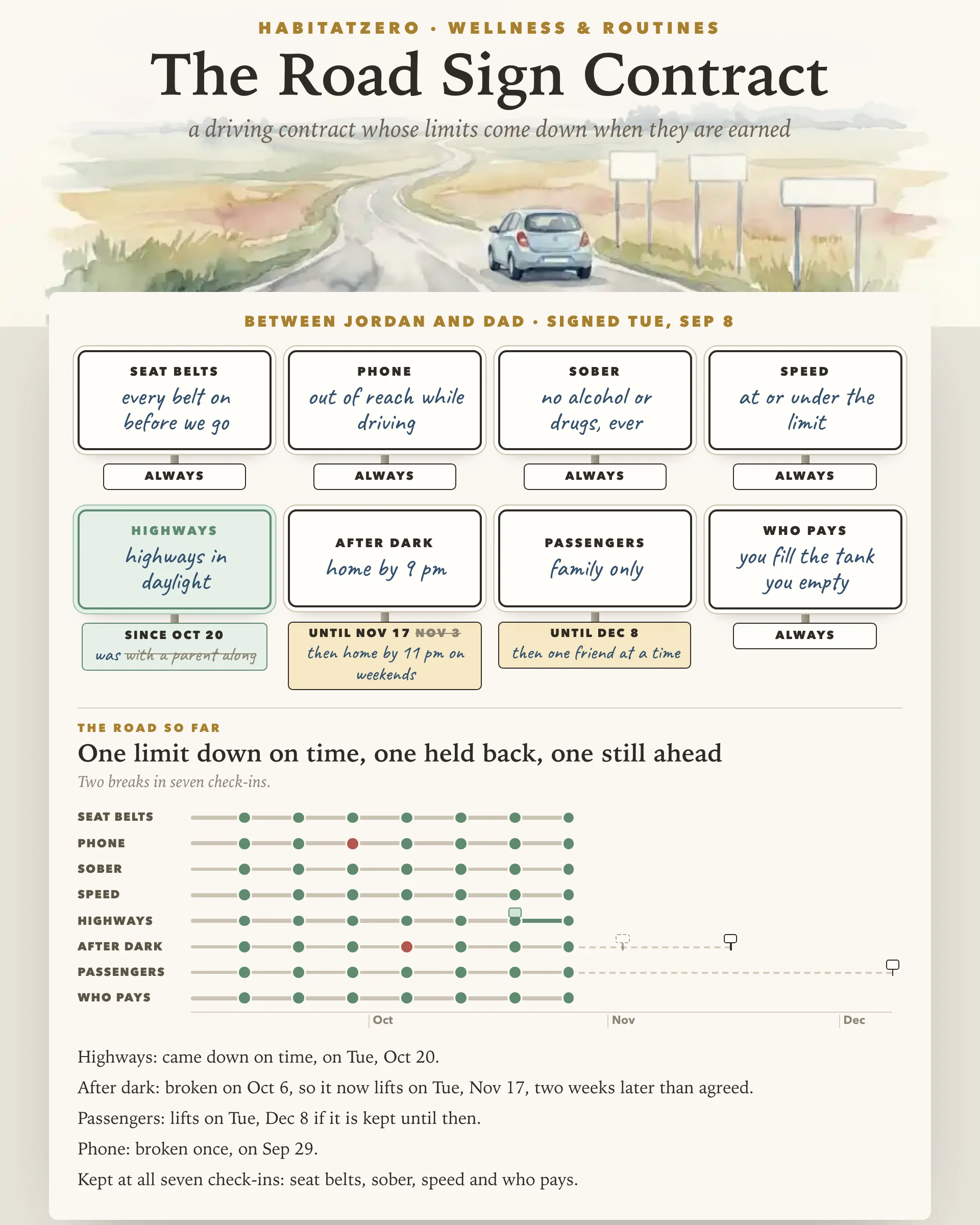
The Road Sign ContractA driving contract you and your teen post as road signs: every rule gets a consequence, the early limits get a date to come down, and you both sign. Weekly check-ins mark anything broken, and the page shows which limits came down on time.
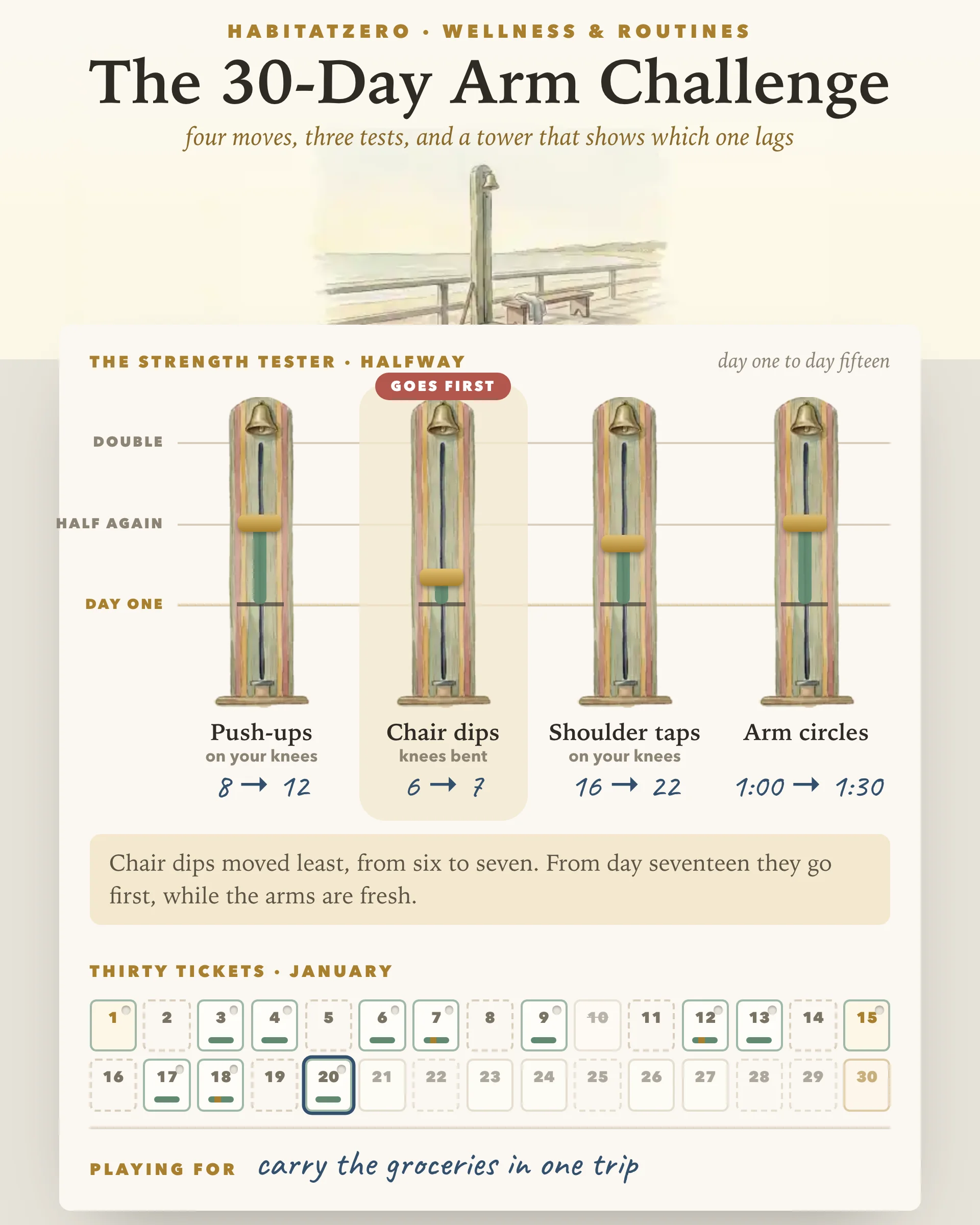
The 30-Day Arm ChallengeTest four bodyweight moves on day one (push-ups, chair dips, plank shoulder taps and arm circles) and the month builds from your own counts: two sessions then a rest day, and sets that climb only as far as your latest test allows. At the retests on days fifteen and thirty, each move's puck climbs a painted strength tester, and the move that lags at halfway goes first for the rest of the month.
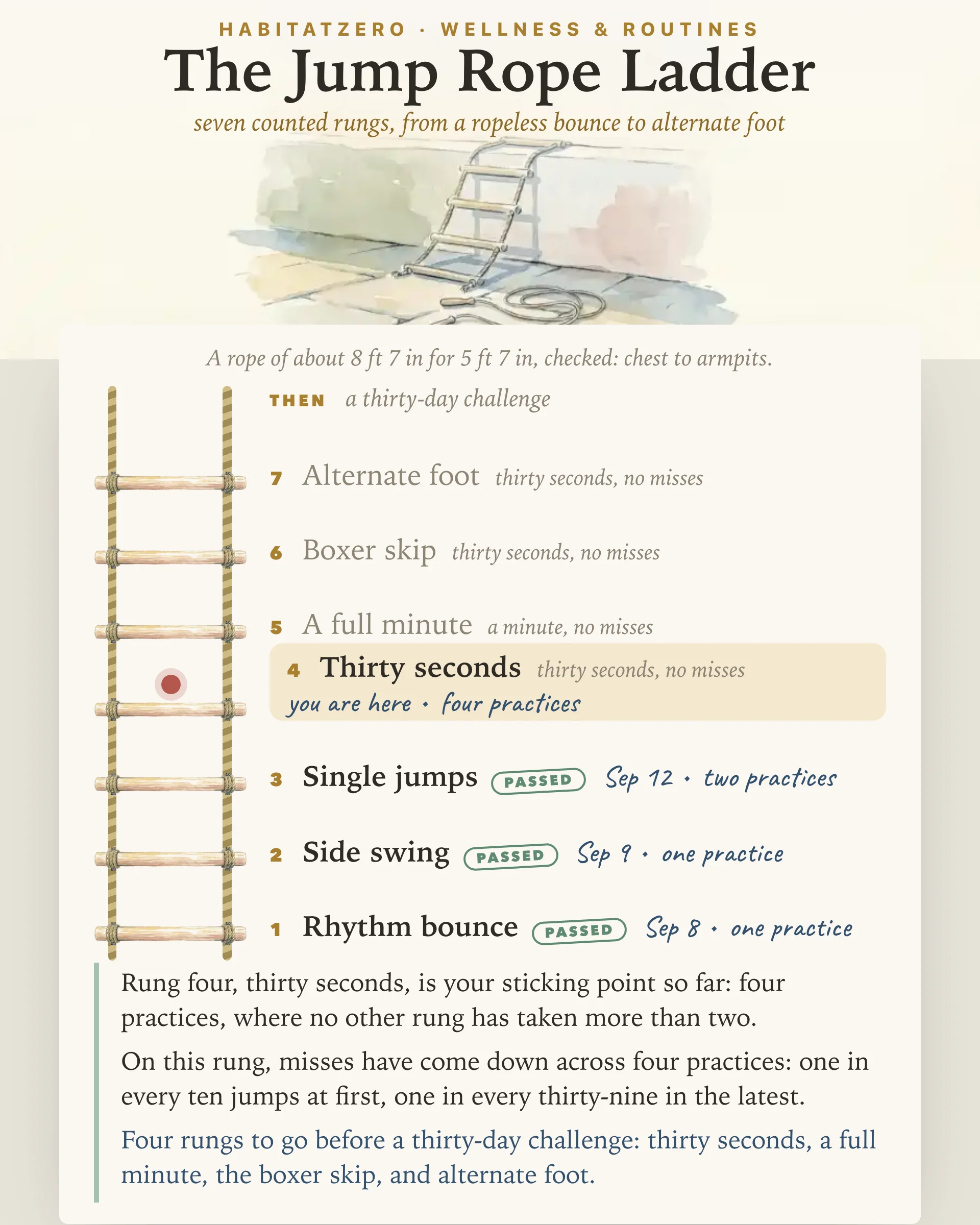
The Jump Rope LadderSize your rope from your height, then climb seven rungs from a ropeless bounce to alternate foot in short timed rounds. Tally jumps and misses after each round, and the ladder shows which rung is holding you up, whether your misses are falling, and how far you are from a thirty-day challenge.
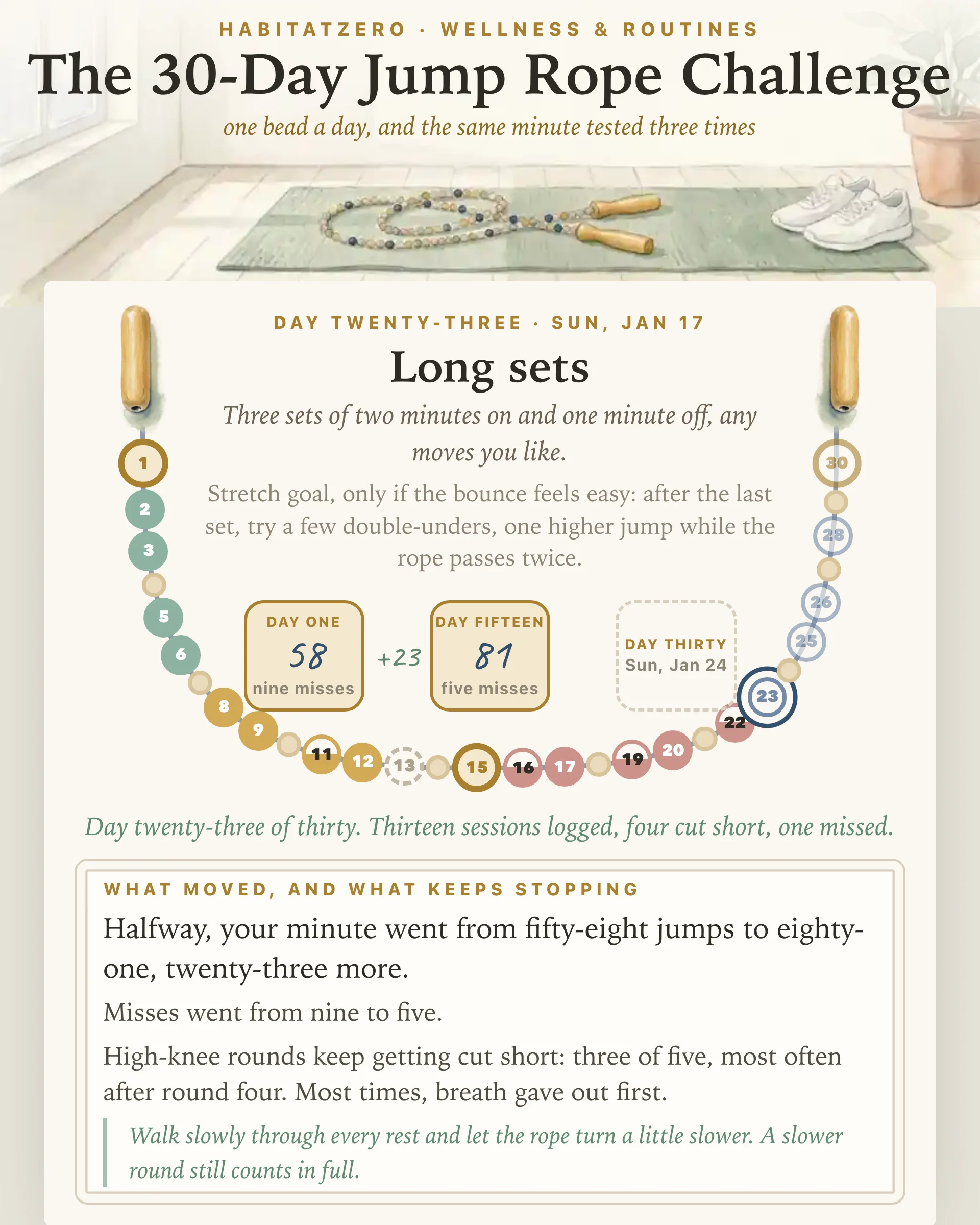
The 30-Day Jump Rope ChallengeThirty beads on one rope: bounce rounds that lengthen into long sets, rest days built in, and the same one-minute test on days one, fifteen and thirty. Log each day in a tap and the rope reads back how far your minute moved and which session keeps ending early.
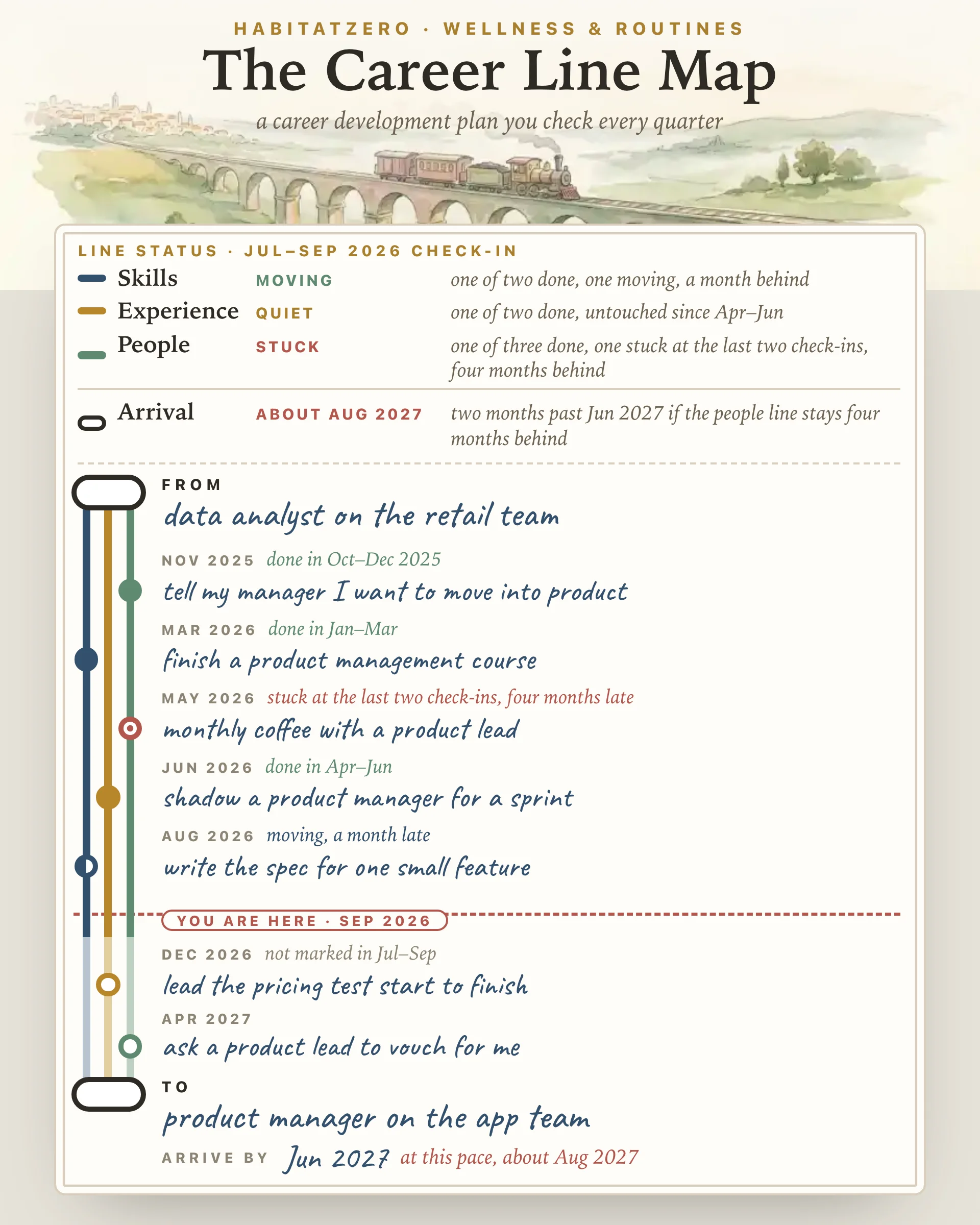
The Career Line MapRun three lines from the job you have to the one you want: skills to build, experiences to get and people to learn from. Give each stop a date, a helper and proof, check them every quarter, and the map tells you which line is moving and when you will really arrive.
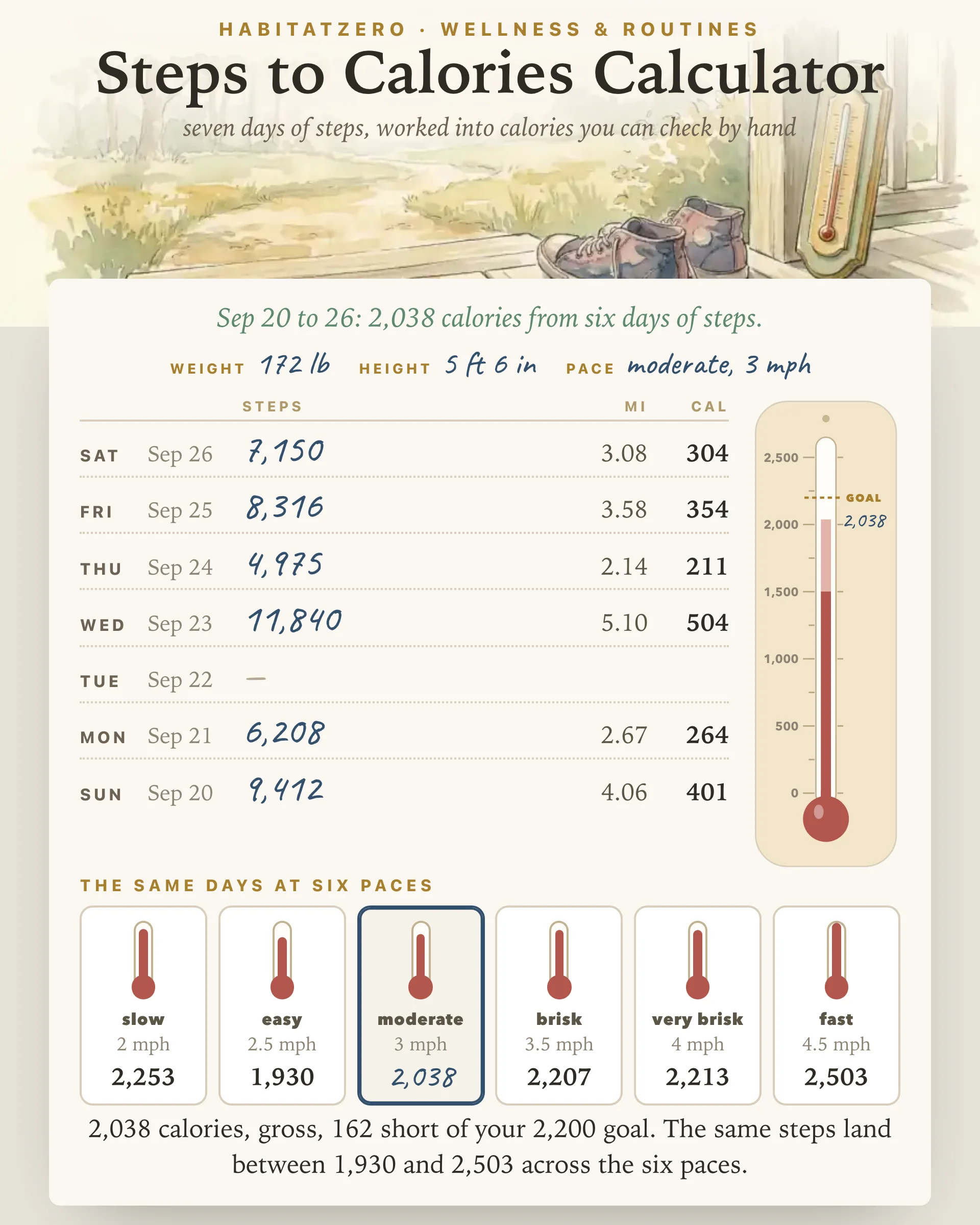
Steps to Calories CalculatorTurn each day's steps into miles, minutes and calories from your weight, height and walking pace, with every line of the arithmetic printed. A thermometer climbs toward your weekly goal, and six small ones show how much your pace really moves the total.
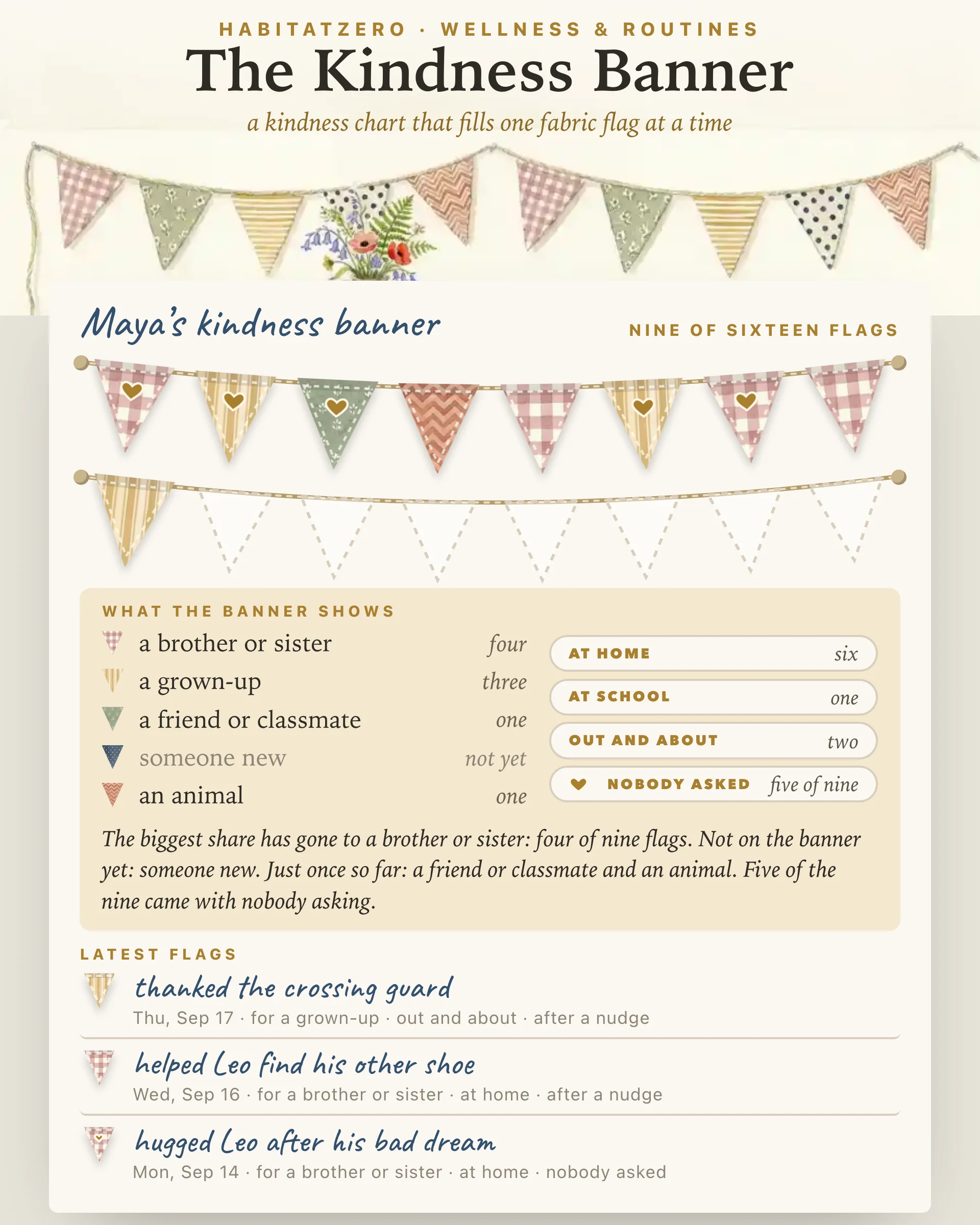
The Kindness BannerCatch your child being kind and hang a fabric flag for it, patterned by who the kindness was for. The banner shows which kinds come easily and which are rare, and when it is full, your child picks how the family celebrates.
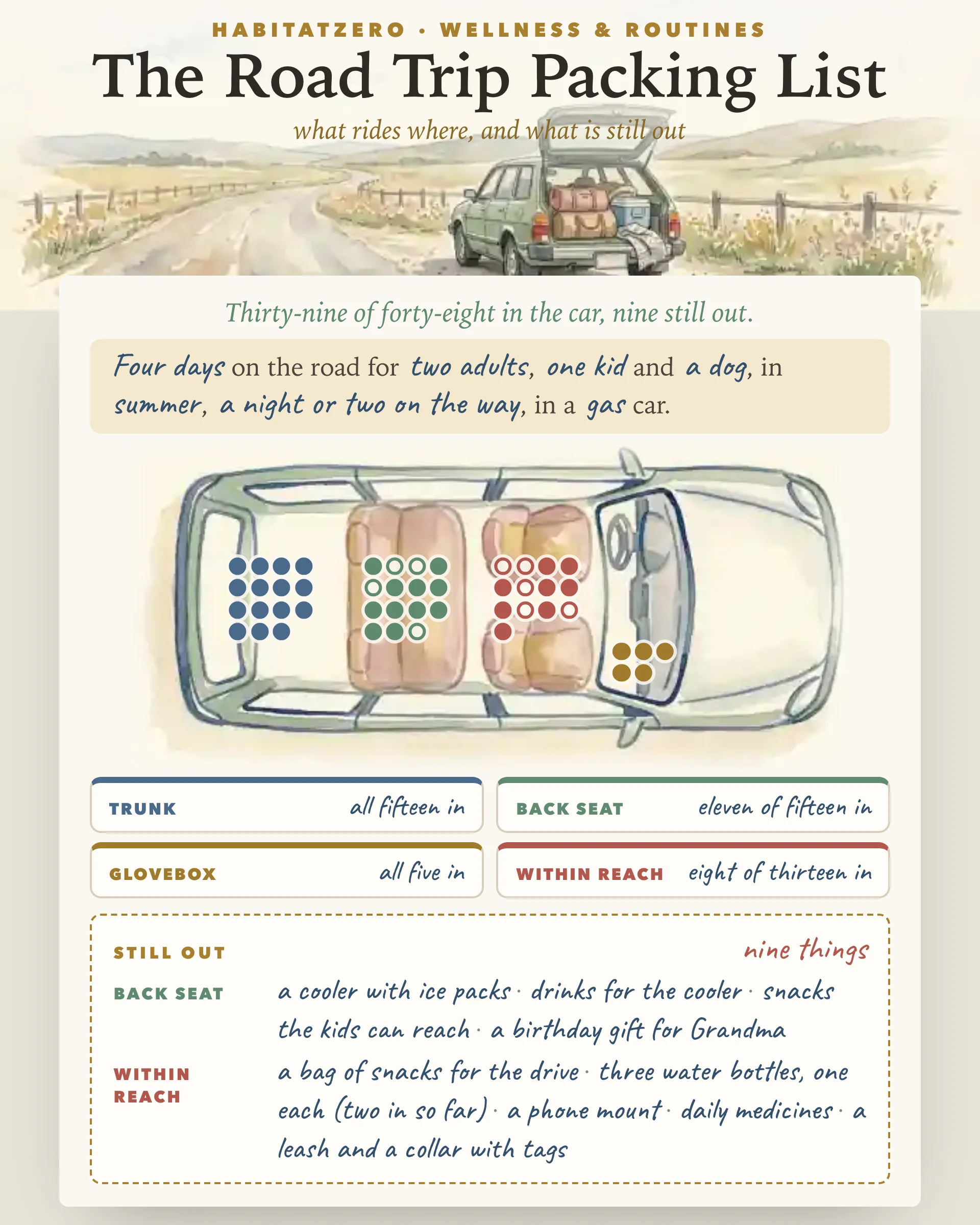
The Road Trip Packing ListTell it the days, who is riding, the season, the stops and whether the car runs on gas or a charge, and it builds the list roadside safety first, then loads each thing into the trunk, the back seat, the glovebox or within reach on a painted car. It names what is still out before you pull away, and back home, what never left the trunk.
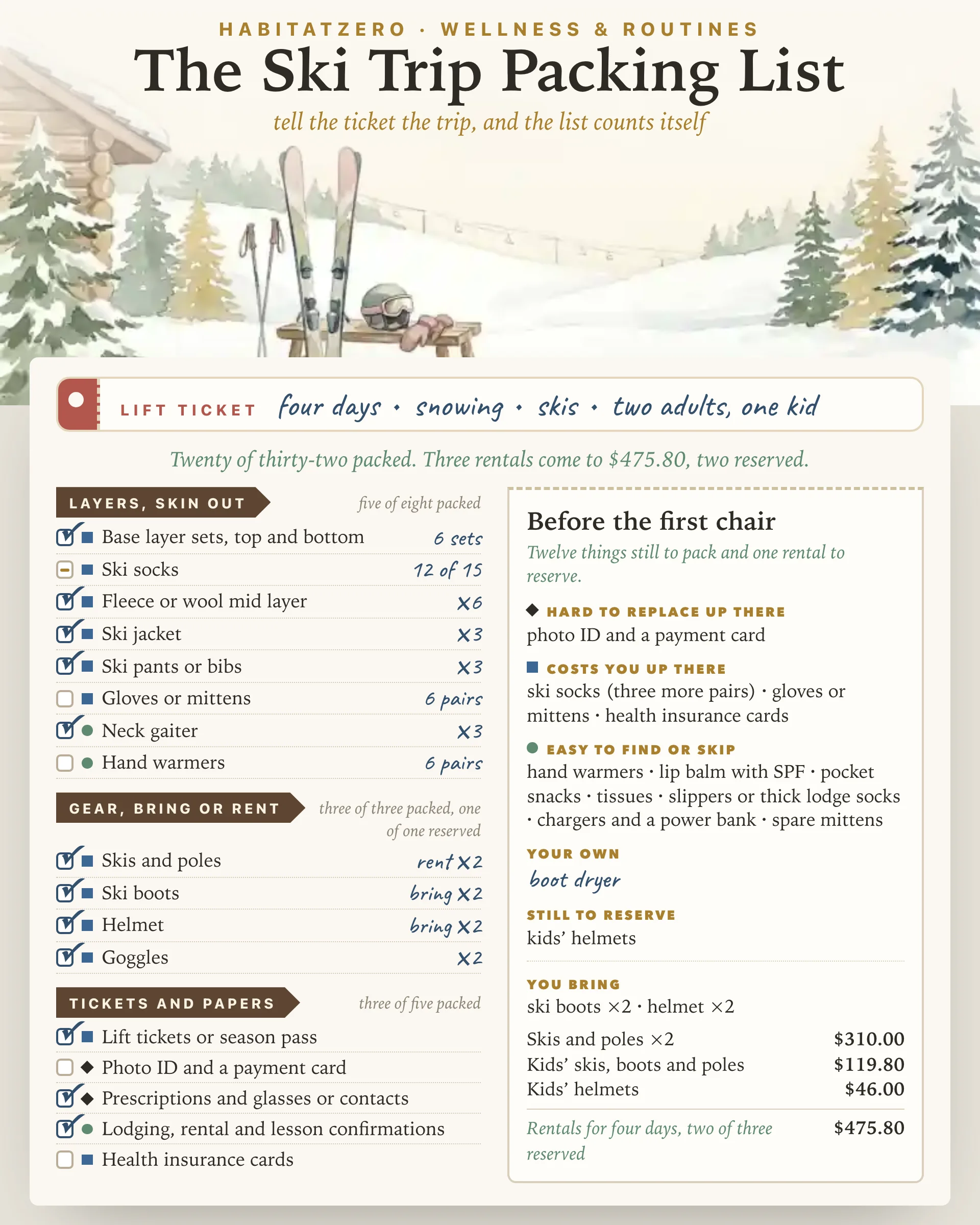
The Ski Trip Packing ListTell the lift ticket how many days, what weather and who is coming, and the list counts socks, layers and warmers for you. Decide what to bring or rent, enter the shop's prices, and see what is still out before the first chair.
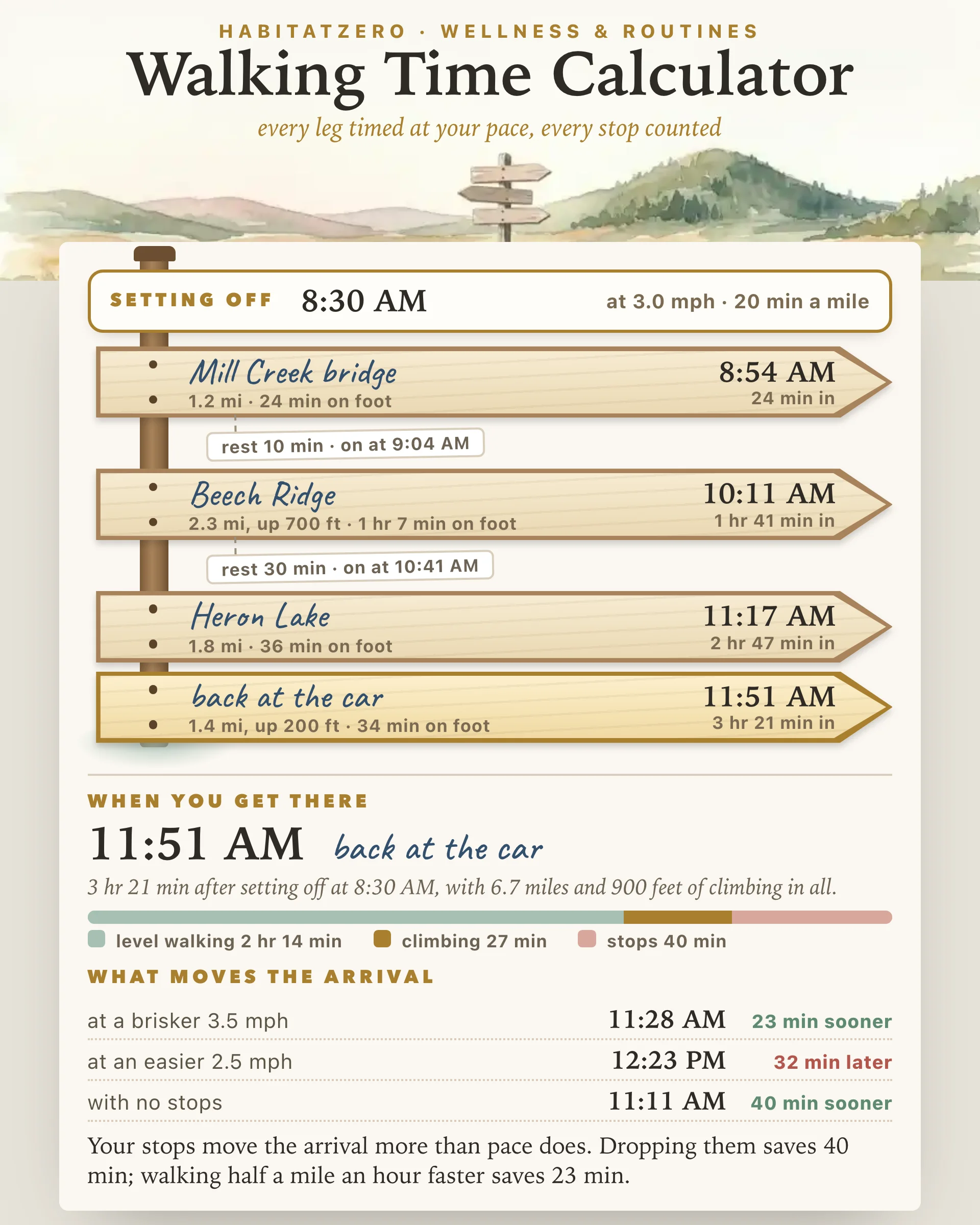
Walking Time CalculatorPut up a trail signpost for your walk: every leg gets an arm that shows how long it takes at your own pace, with climbs and rest stops counted, and when you will get there.
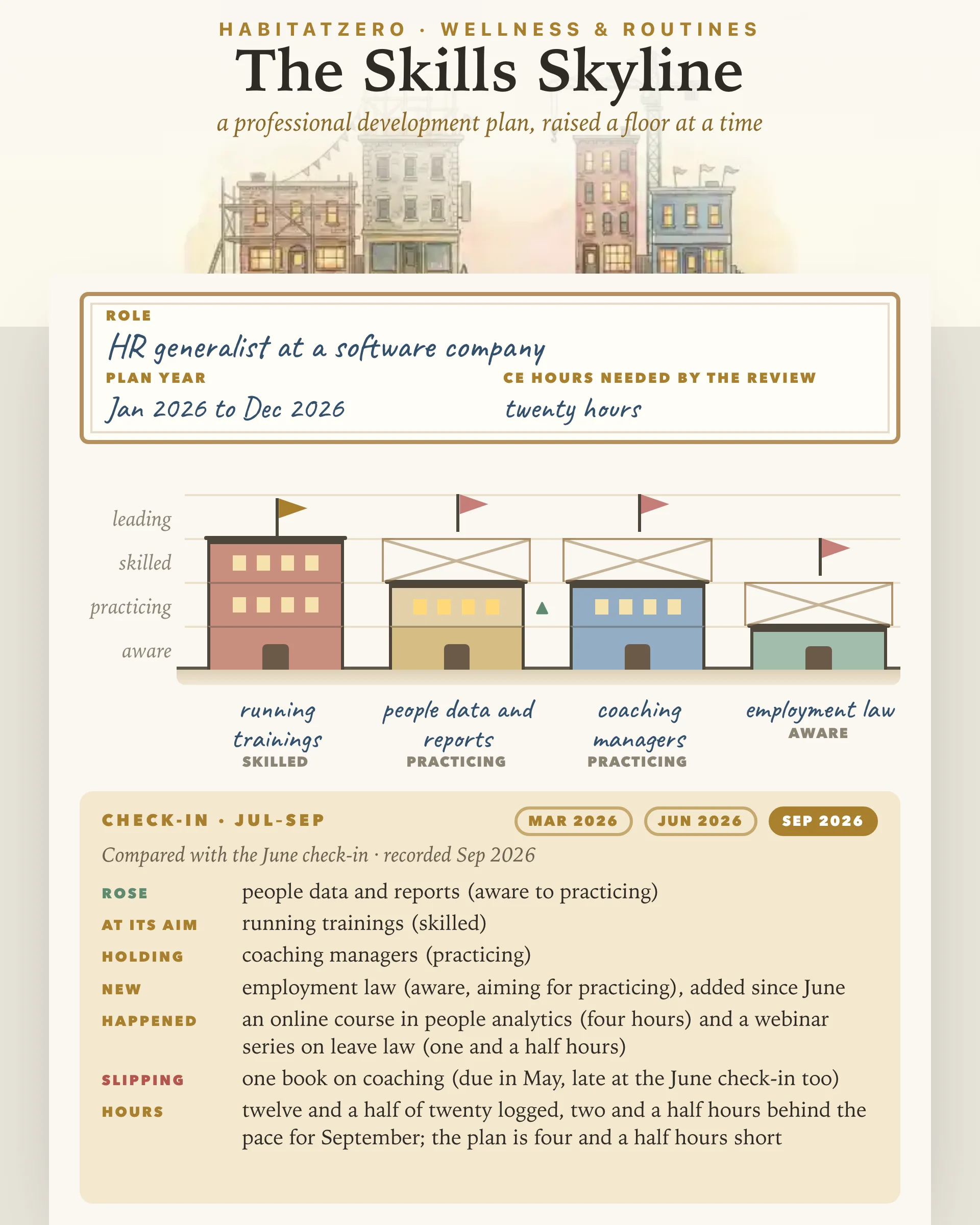
The Skills SkylineStand three to five competencies on a skyline, each a building with floors for where it stands and scaffolding up to where you are aiming. Plan dated activities and the evidence they will leave, log your CE hours, and each quarter the check-in names what rose, what happened, what keeps slipping and whether the hours are on pace.
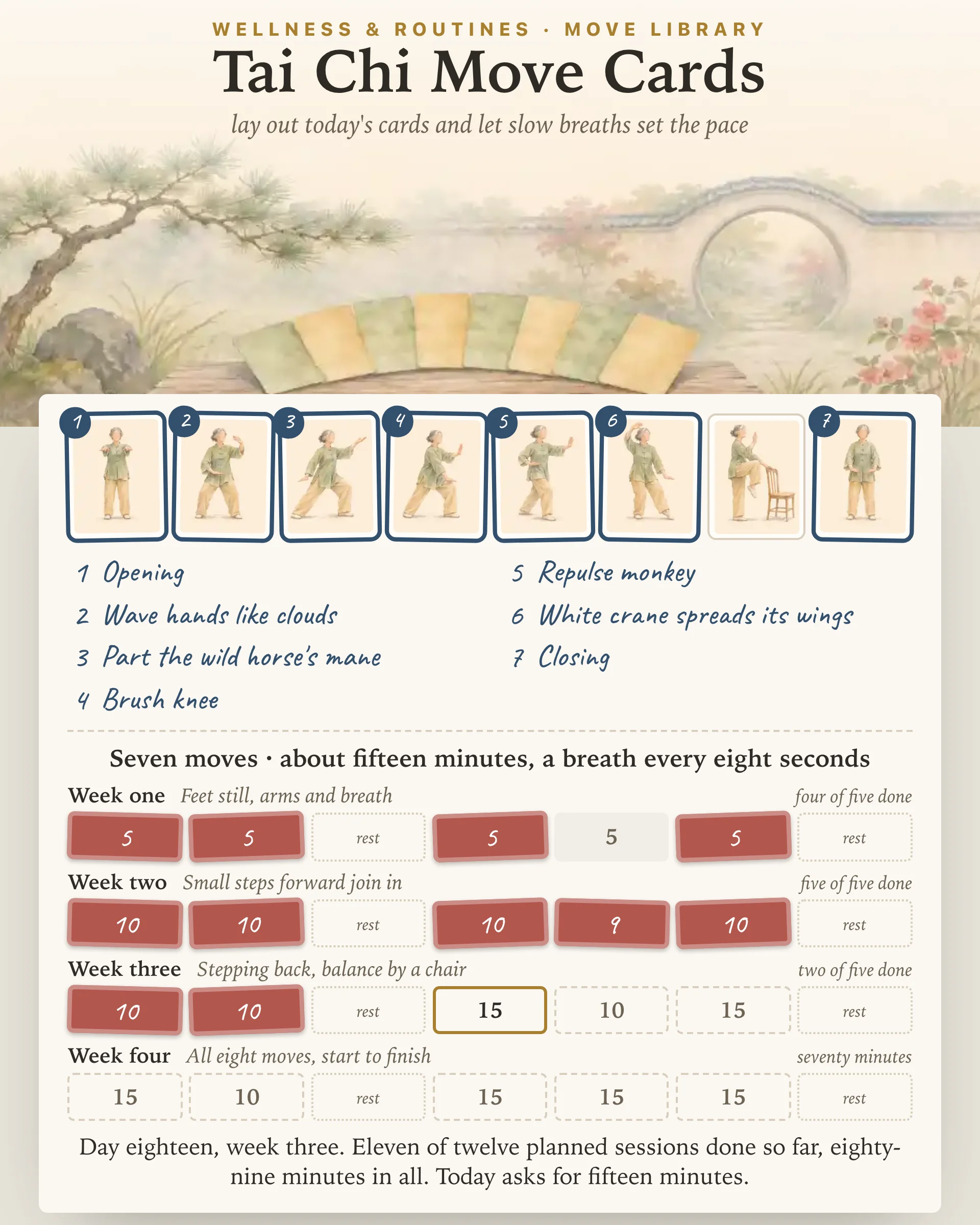
Tai Chi Move CardsEight foundational tai chi moves as painted cards. Tap the ones you want and the sheet puts them in order, shares slow breaths across five, ten or fifteen minutes, walks you through them silently and stamps a four-week plan.
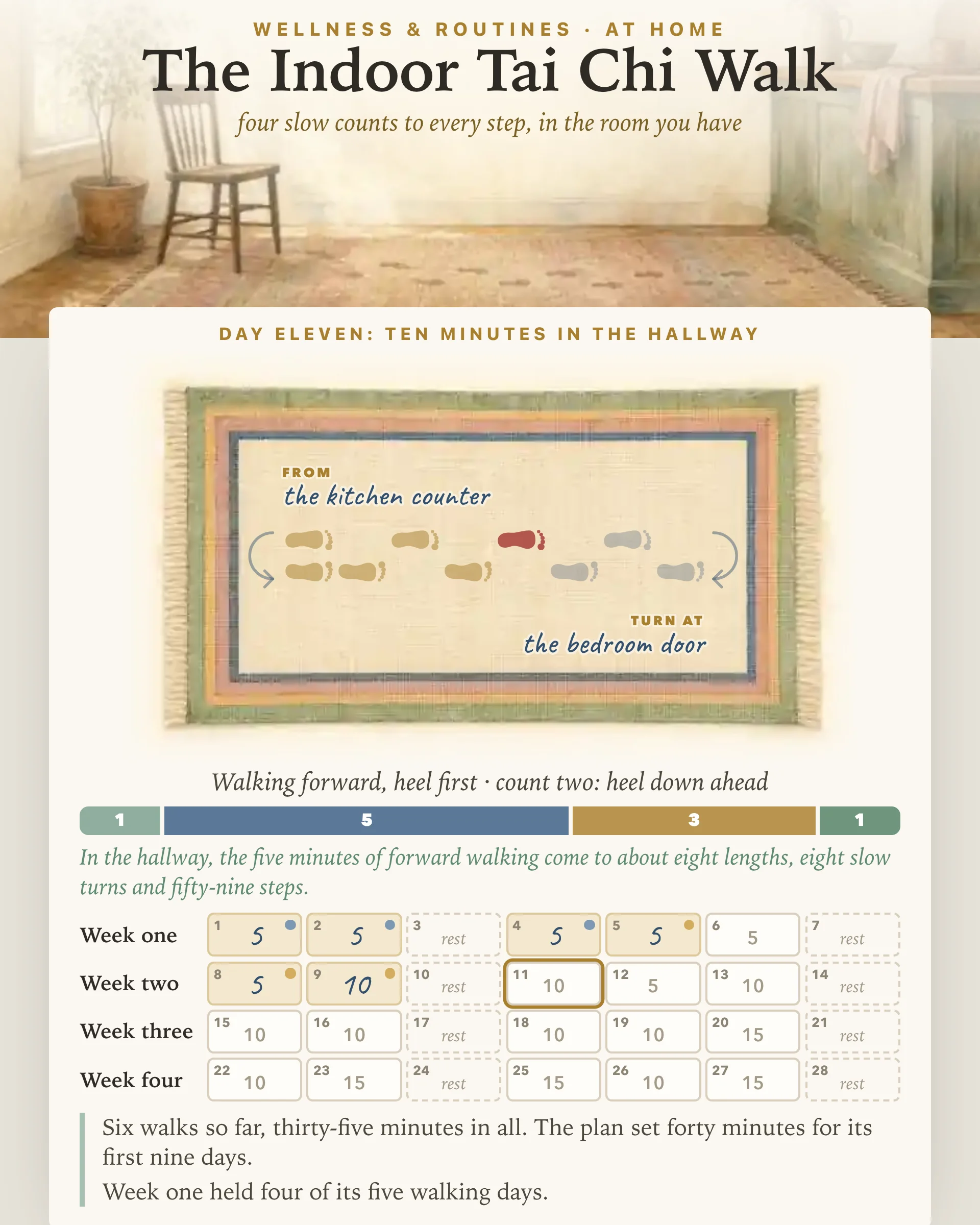
The Indoor Tai Chi WalkChoose a short lane, a hallway or an open room and five, ten or fifteen minutes, and a painted rug lays out your footprints and turns. A four-count pacer walks you through it, and four weeks of walks fill in as you log them.
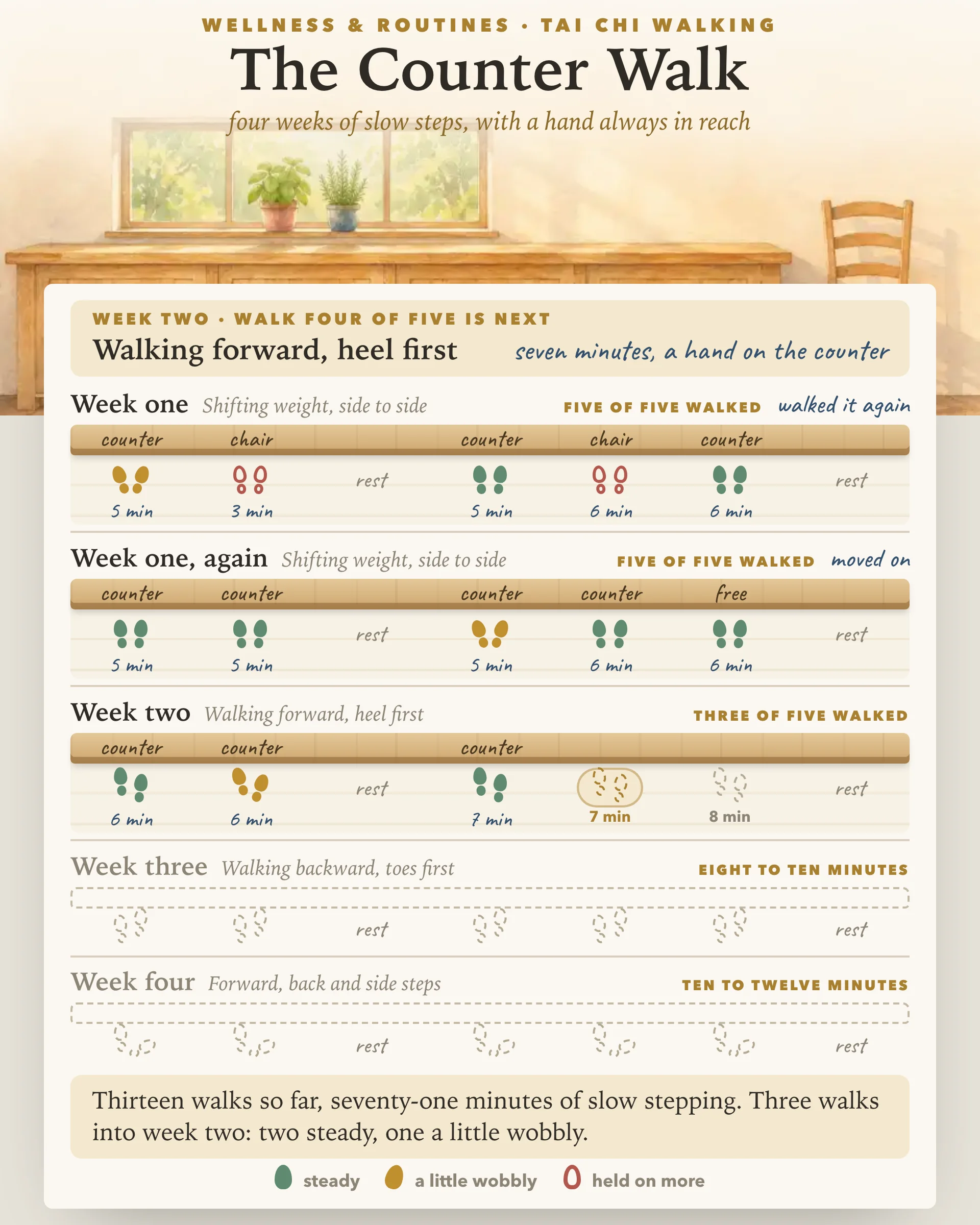
The Counter WalkFour weeks of short tai chi steps beside a kitchen counter. Choose what you hold and how long, say how steady each walk felt, and footprints fill in along the counter while the sheet suggests when to stay with a week and when to move on.
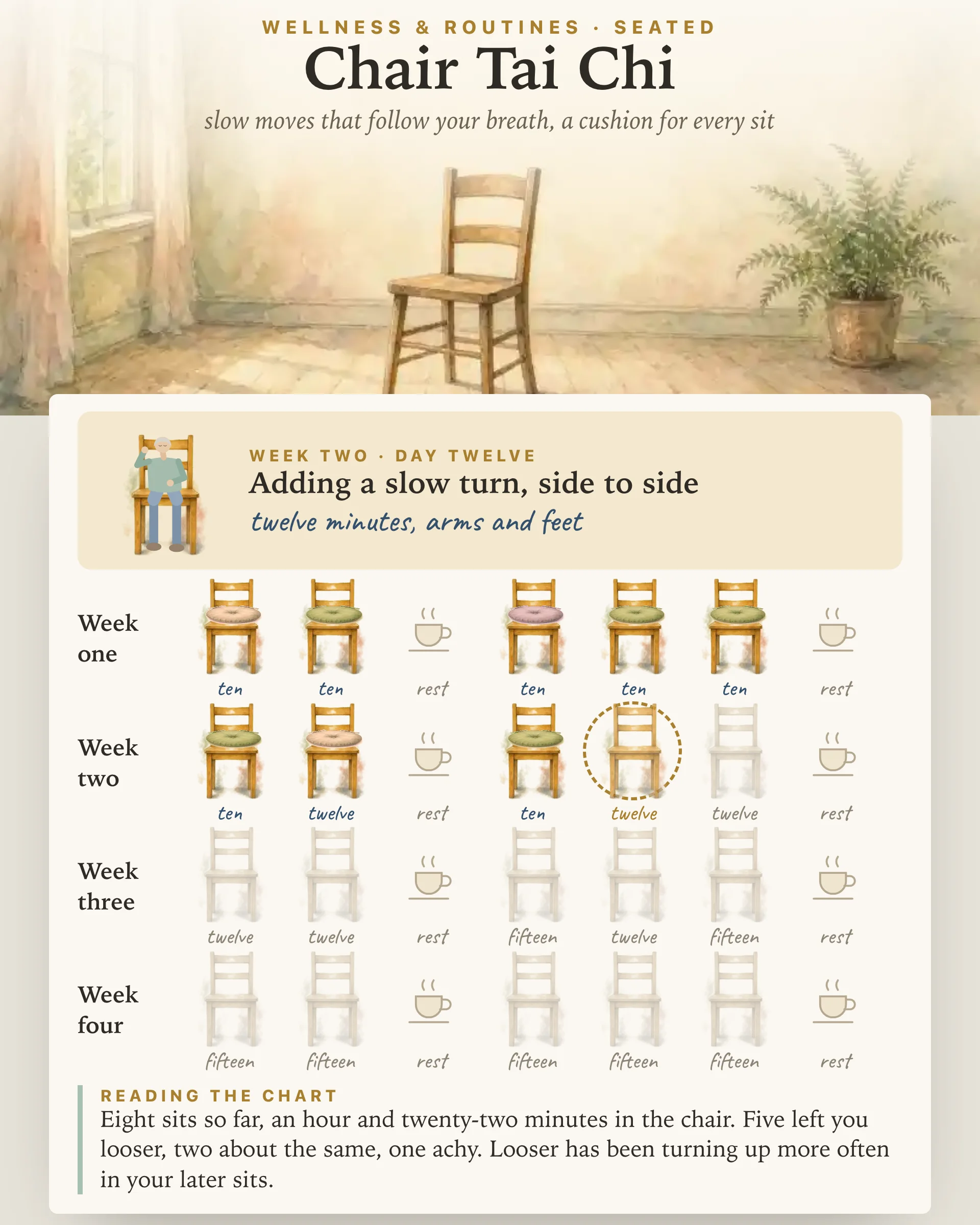
Chair Tai ChiFour weeks of slow seated moves you follow on the page: a figure on a painted chair moves with a breath-paced timer, arms only or arms and feet, and every sit you finish puts a cushion on your seat chart.
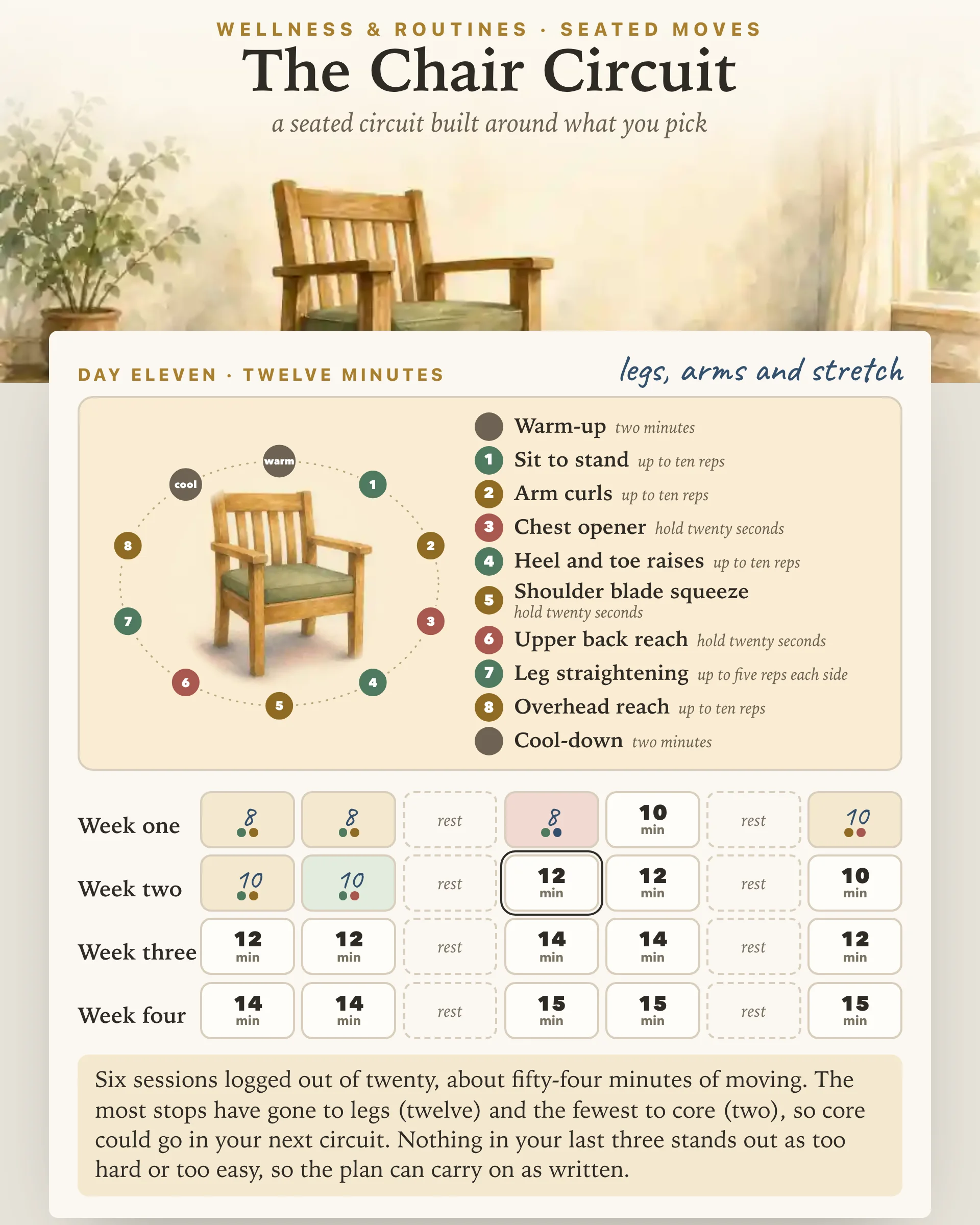
The Chair CircuitPick legs, arms, core or stretch and the page lays out a seated circuit that fits the day's minutes, times every stop for you, and keeps a four-week record of how each session felt.
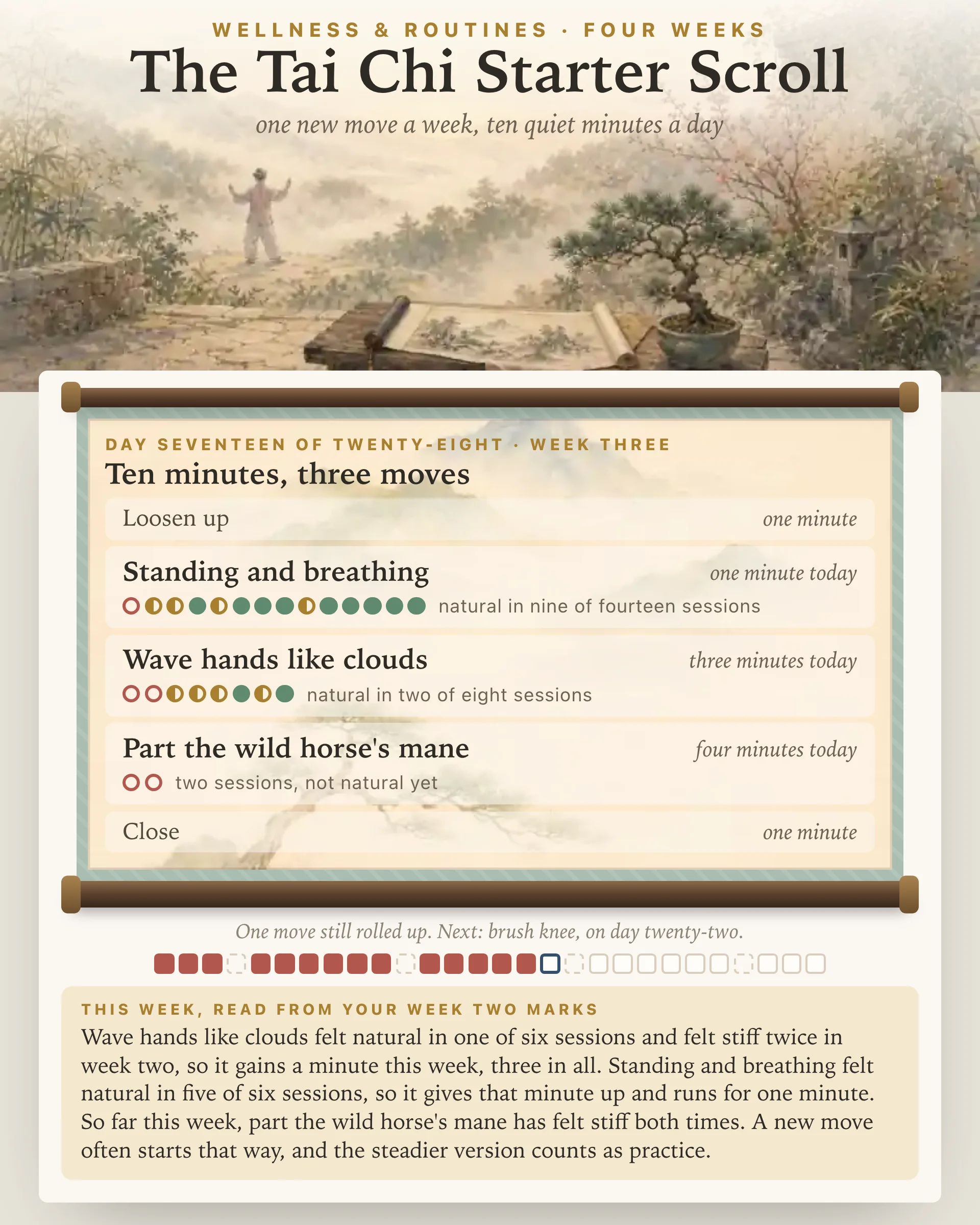
The Tai Chi Starter ScrollLearn four tai chi moves in four weeks, one at a time, in ten quiet minutes a day. A hanging scroll unrolls a new move each week, a silent timer lights each row in turn, and the way each move felt decides how next week's minutes split.
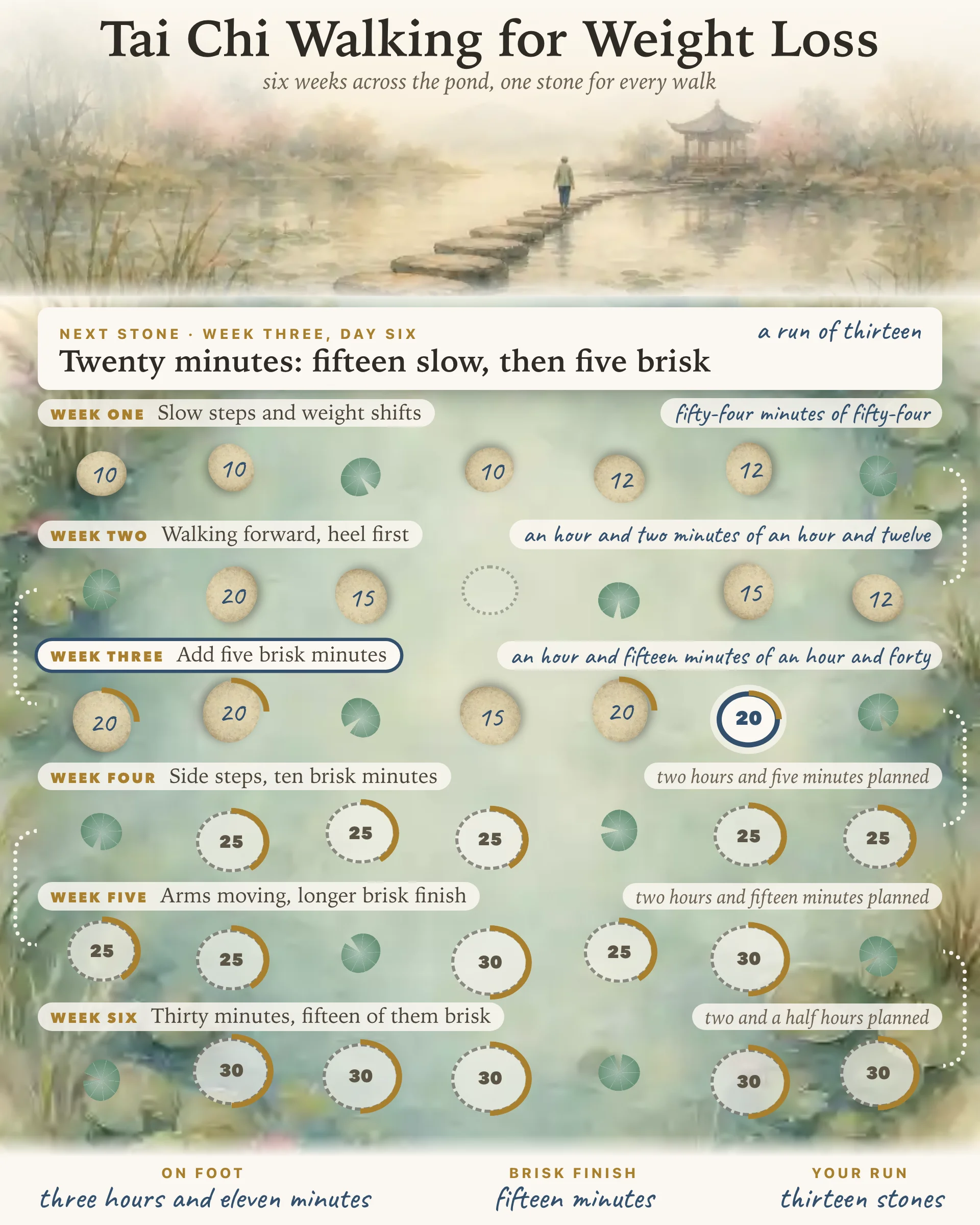
Tai Chi Walking for Weight LossThirty stepping stones across a painted pond, one for every walk in a six-week plan that builds from ten slow minutes to thirty, with a brisk finish from week three. Weekly minutes add up beside each stretch, and a forgiving run counts the stones you lay.
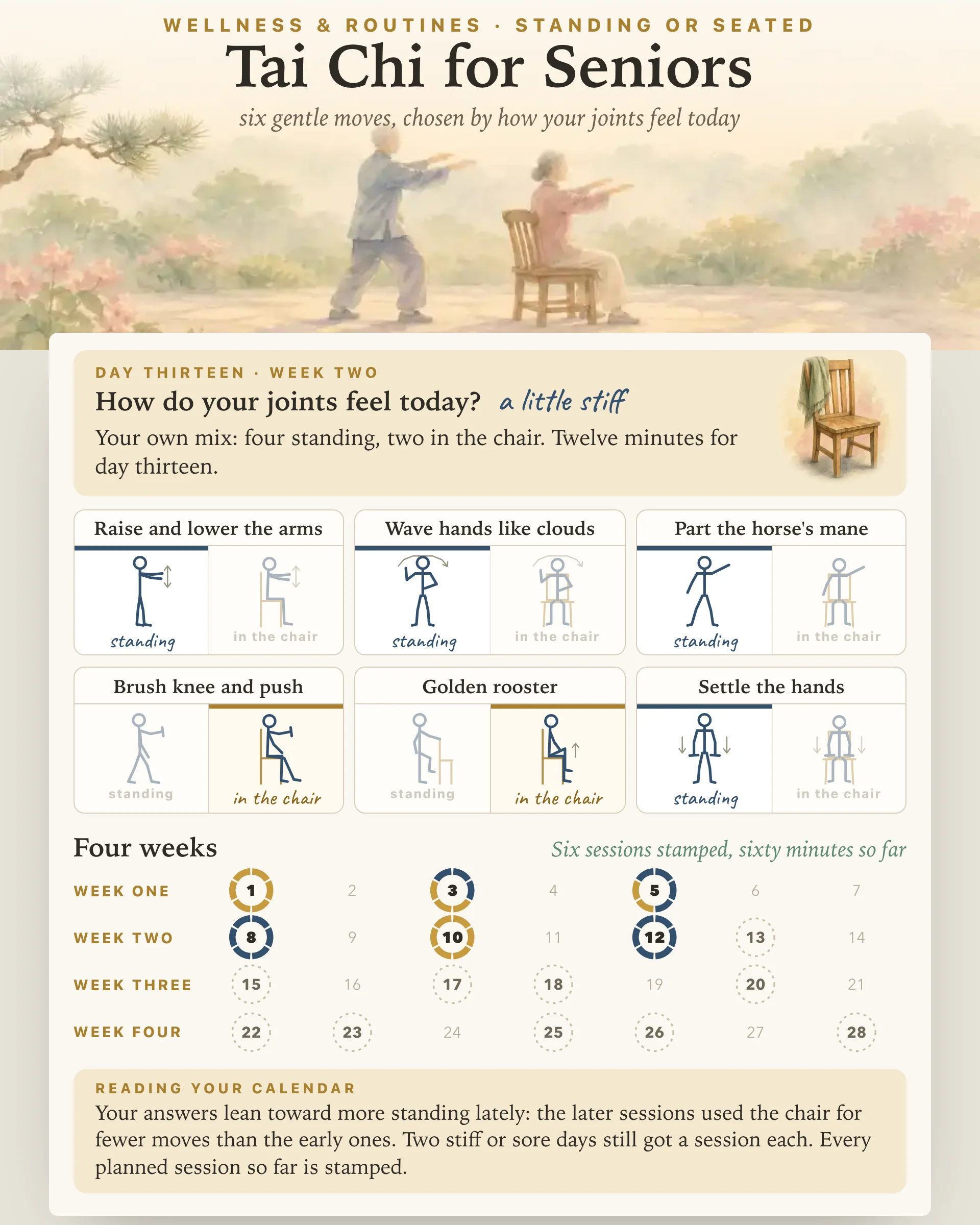
Tai Chi for SeniorsSix gentle tai chi moves, each shown standing and seated side by side. Say how your joints feel today and the cards set themselves, then stamp the session on a four-week calendar that shows how you practiced.
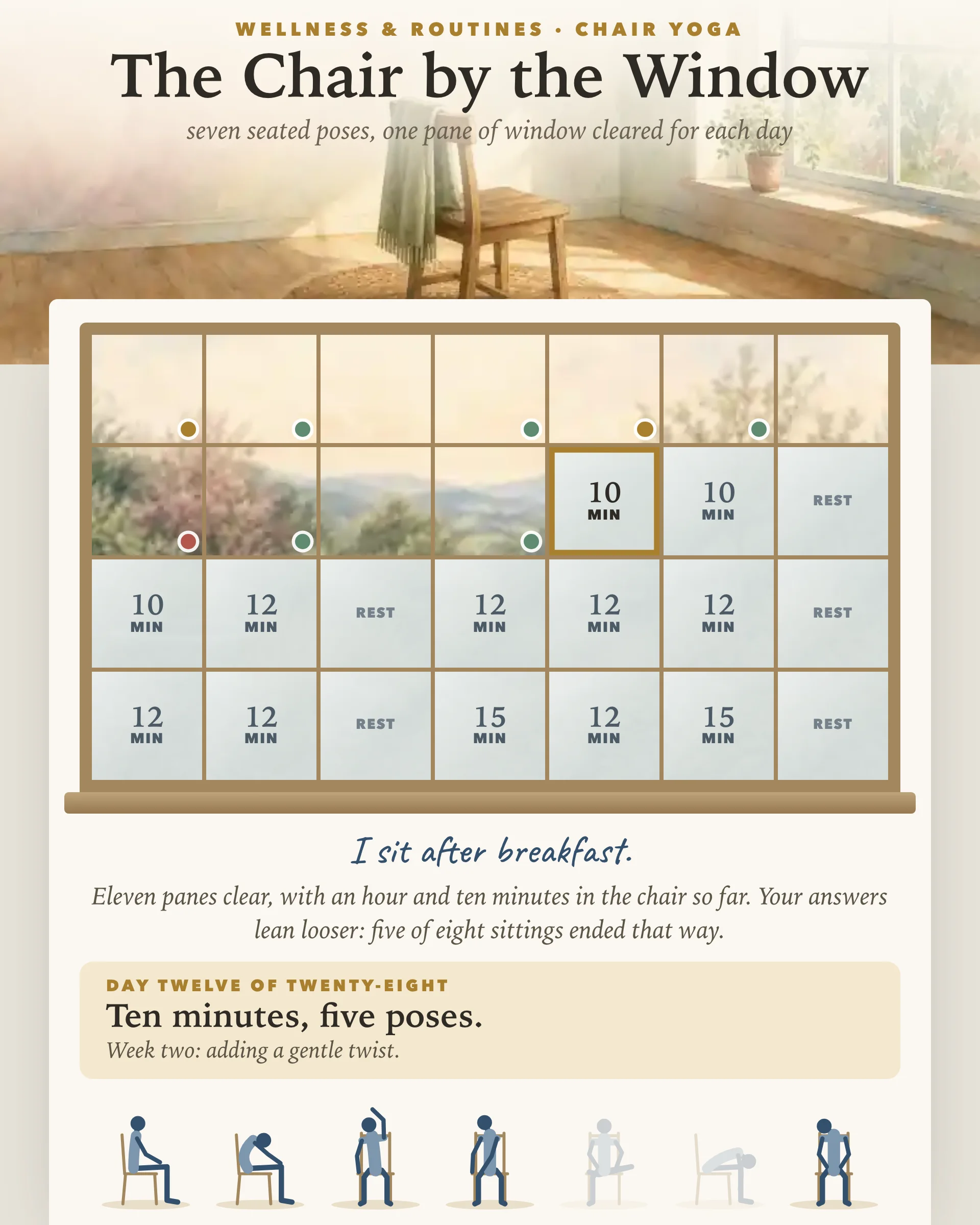
The Chair by the WindowSeven seated poses timed for you, with a small figure and a breath word to follow. Each day of the 28-day plan clears one pane of a frosted window, until the whole view is yours.
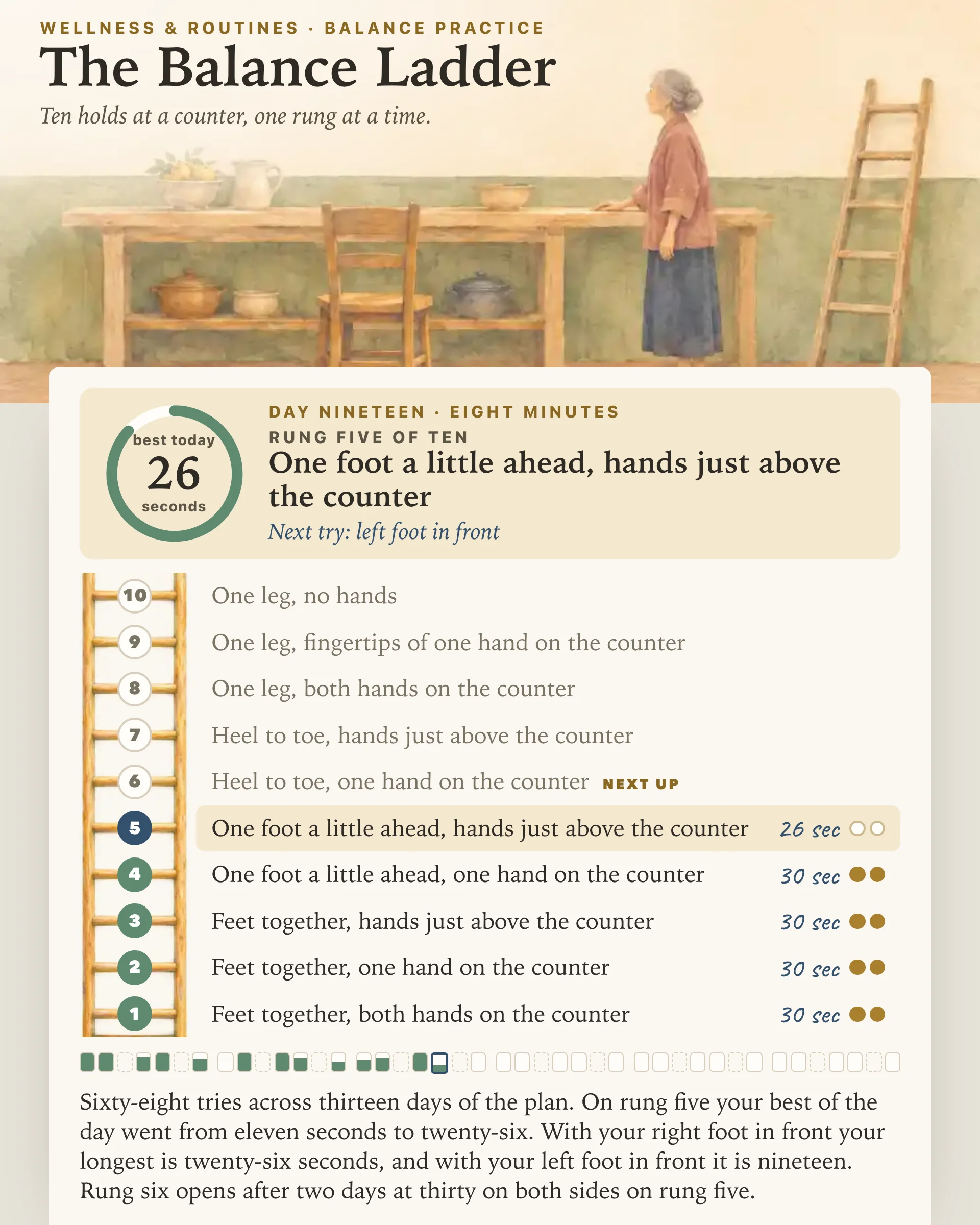
The Balance LadderClimb ten balance holds at a counter, from feet together to one leg. A hold clock logs your best on each rung, and thirty seconds on two different days opens the next one, across a six-week plan of daily minutes.
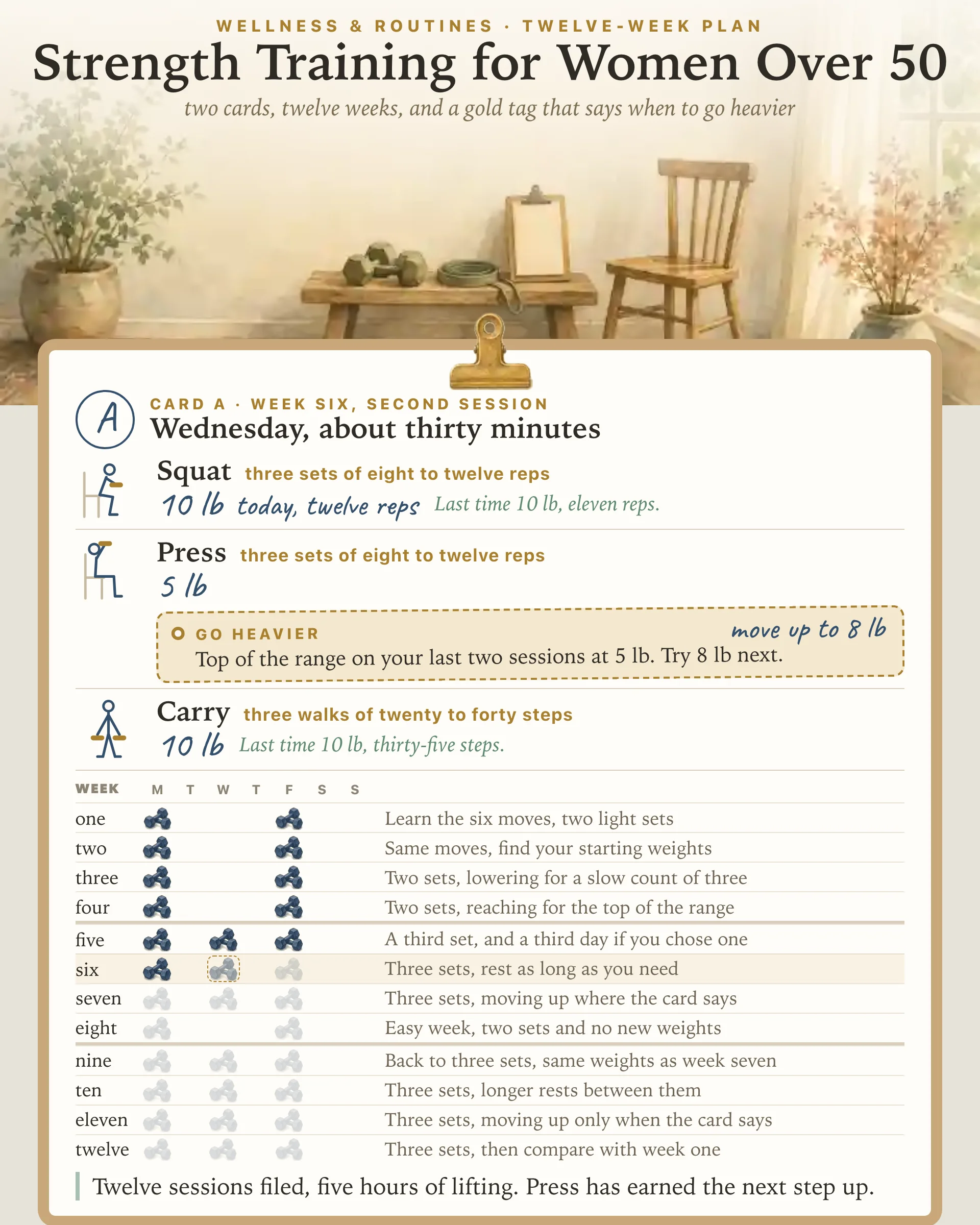
Strength Training for Women Over 50Twelve weeks of two workout cards built from the dumbbells, bands or chair you already have. Log your weight and reps, and a gold tag tells you when you have earned the next step up.
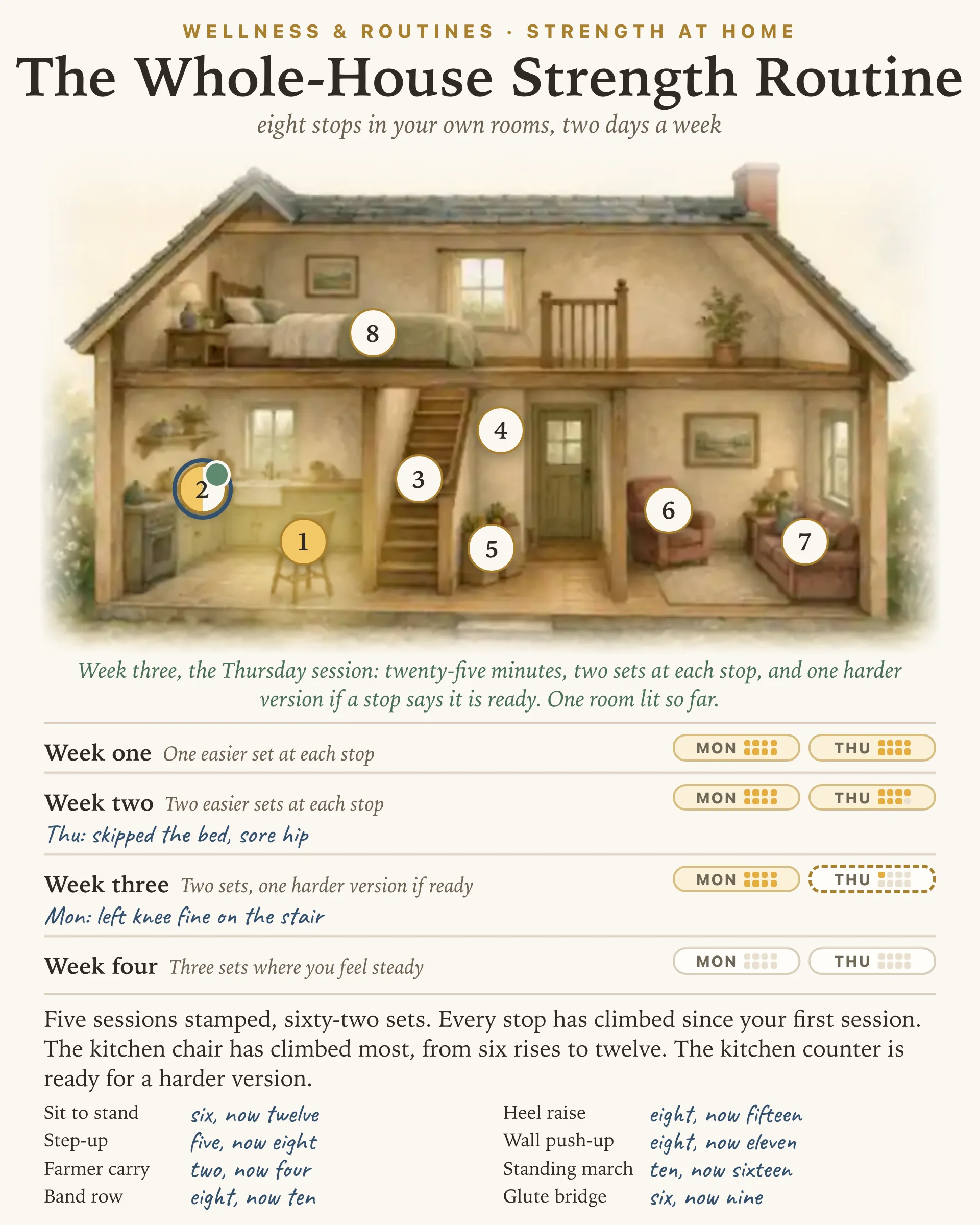
The Whole-House Strength RoutineEight strength moves placed around a painted house, from the kitchen chair to the grocery bags, each with an easier and a harder version. Log your sets, watch the rooms light up, and follow a four-week chart that tells you when a stop is ready for more.
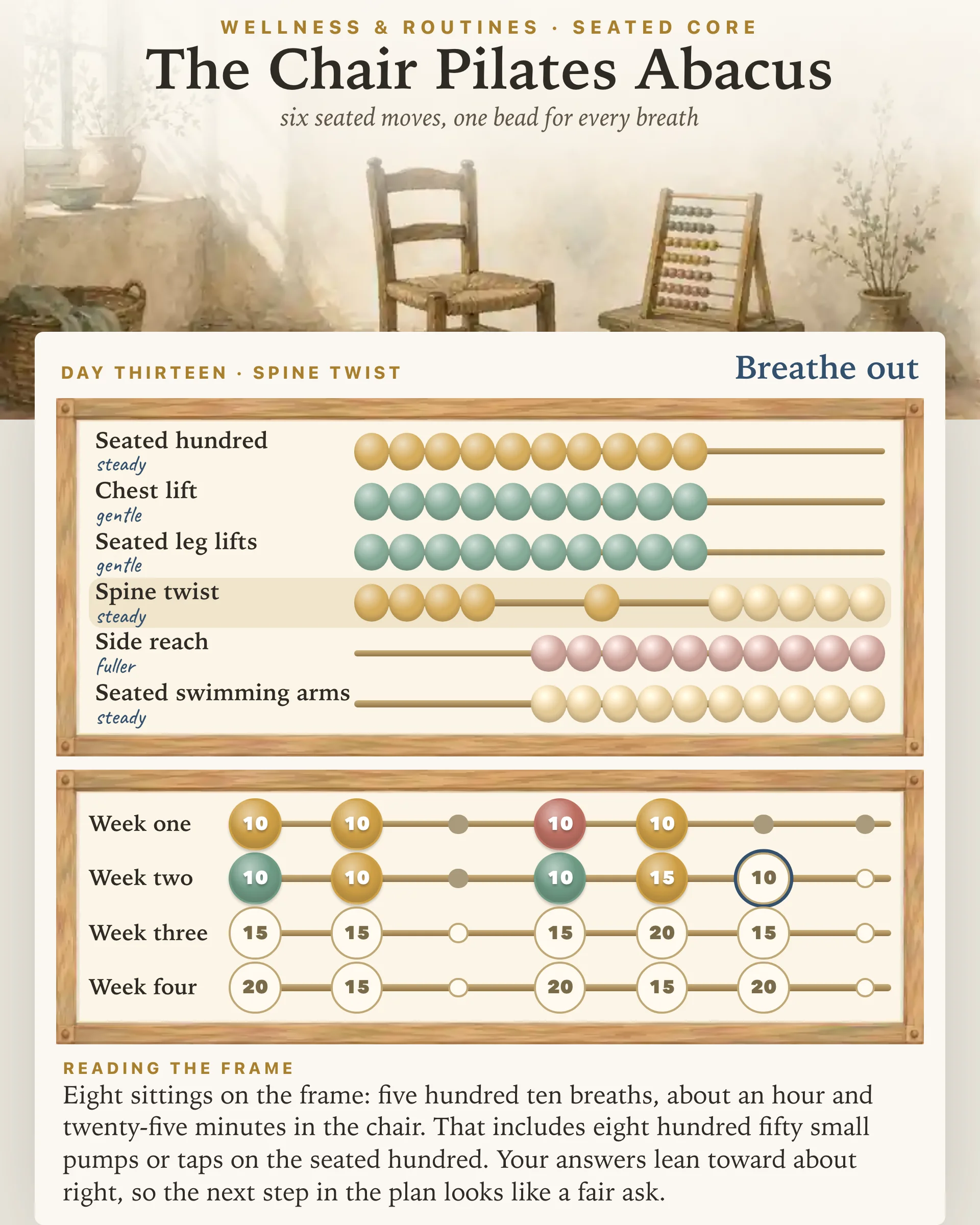
The Chair Pilates AbacusSix seated Pilates moves on a wooden abacus: every breath slides a bead across the rod, each move has a gentle, steady and fuller version, and a four-week frame follows ten to twenty minutes a day and reads back how it felt.
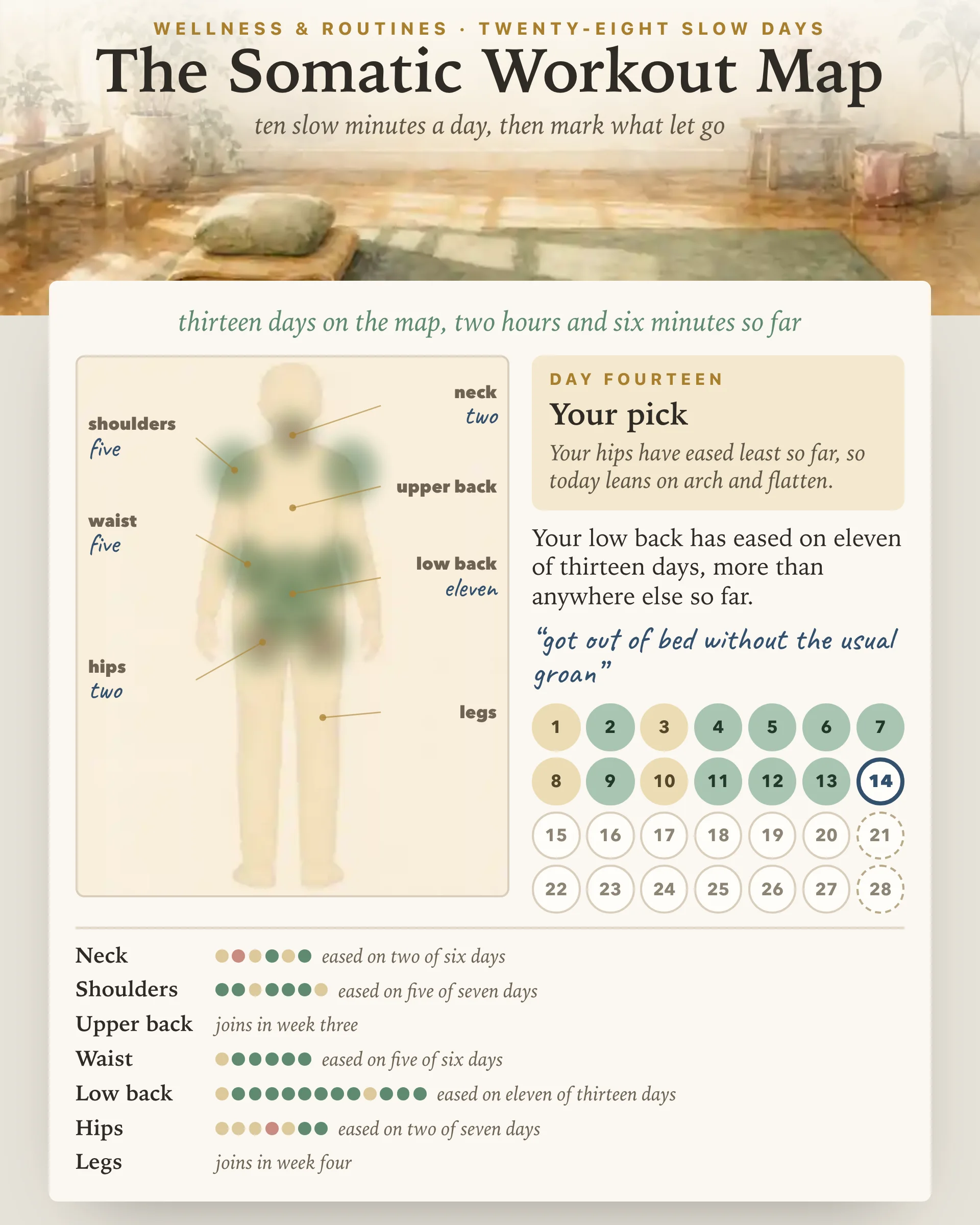
The Somatic Workout MapA 28-day somatic workout you follow on the page: a drawn figure and a slow timer guide ten minutes on the floor, then you mark what felt looser, the same or tighter, and a painted body map fills in where tension eased.
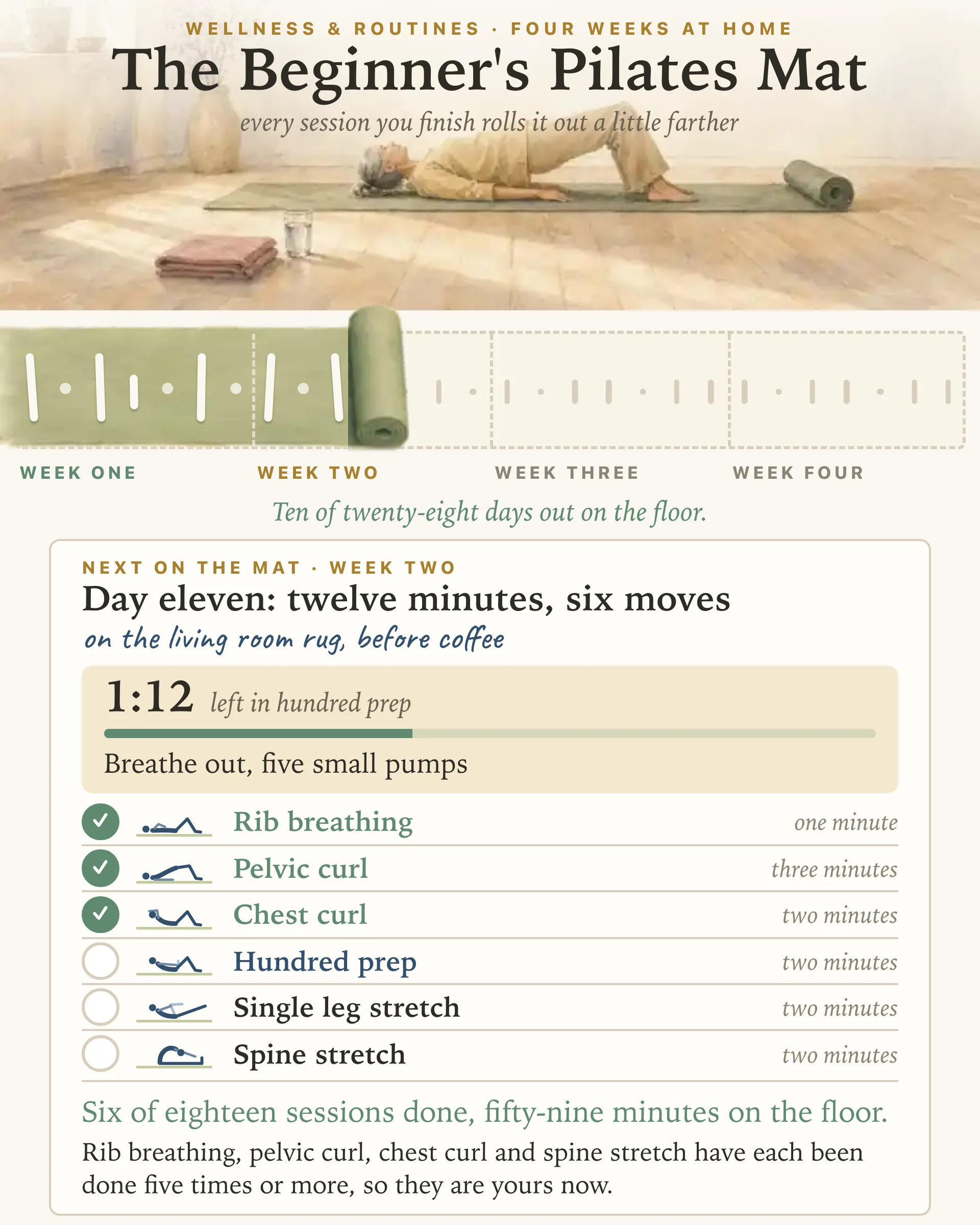
The Beginner's Pilates MatA four-week mat plan that brings in eight classic moves one week at a time, each drawn step by step with a gentler version. A silent clock walks you through ten to eighteen minutes, and a painted mat rolls out a little farther with every session you finish.
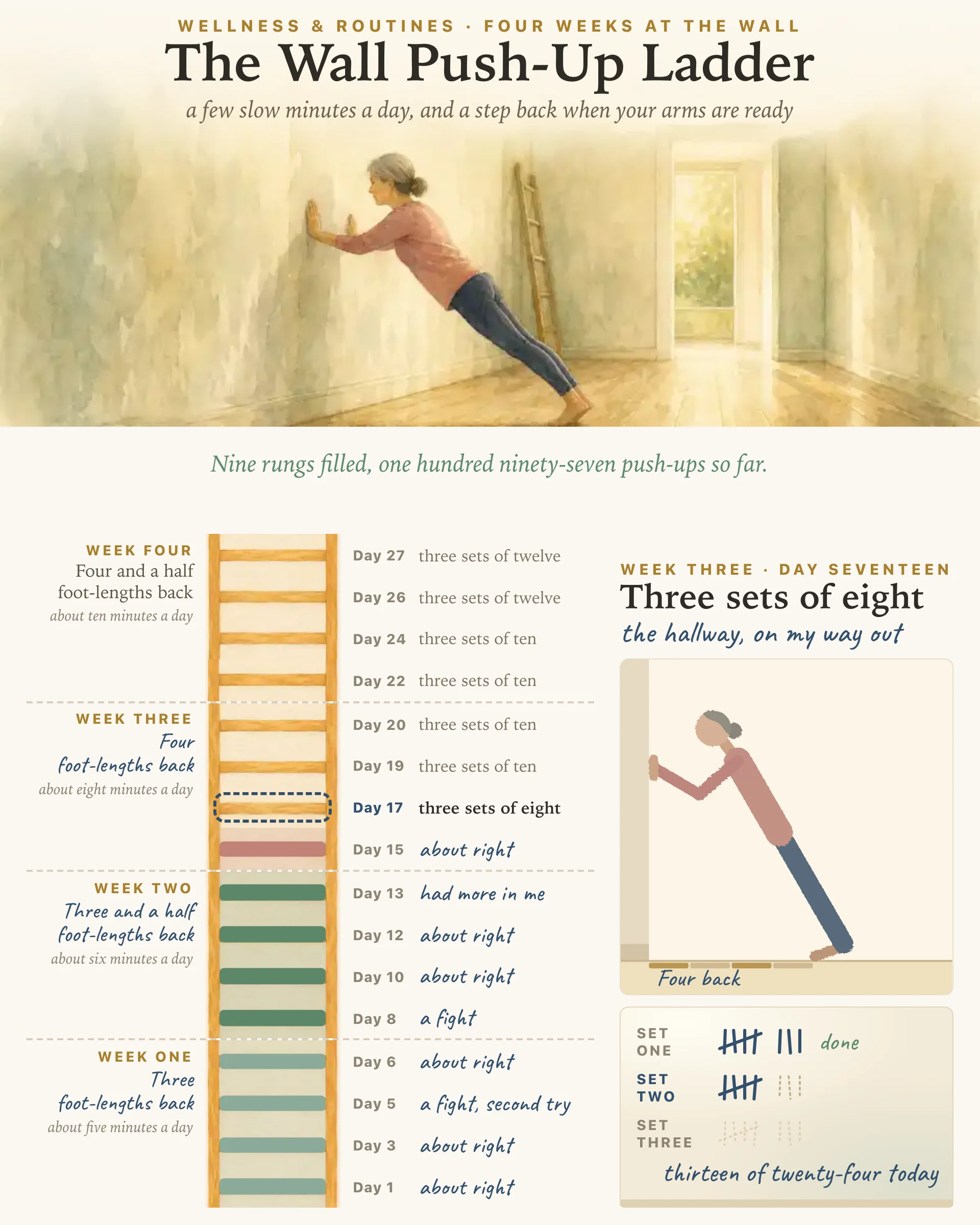
The Wall Push-Up LadderTap the wall to tally each slow rep or let the sheet count you through a set, and fill one painted rung each push day for four weeks. When a week closes, your answers say whether to step back a mark or stay, and a figure leans further as your feet move.
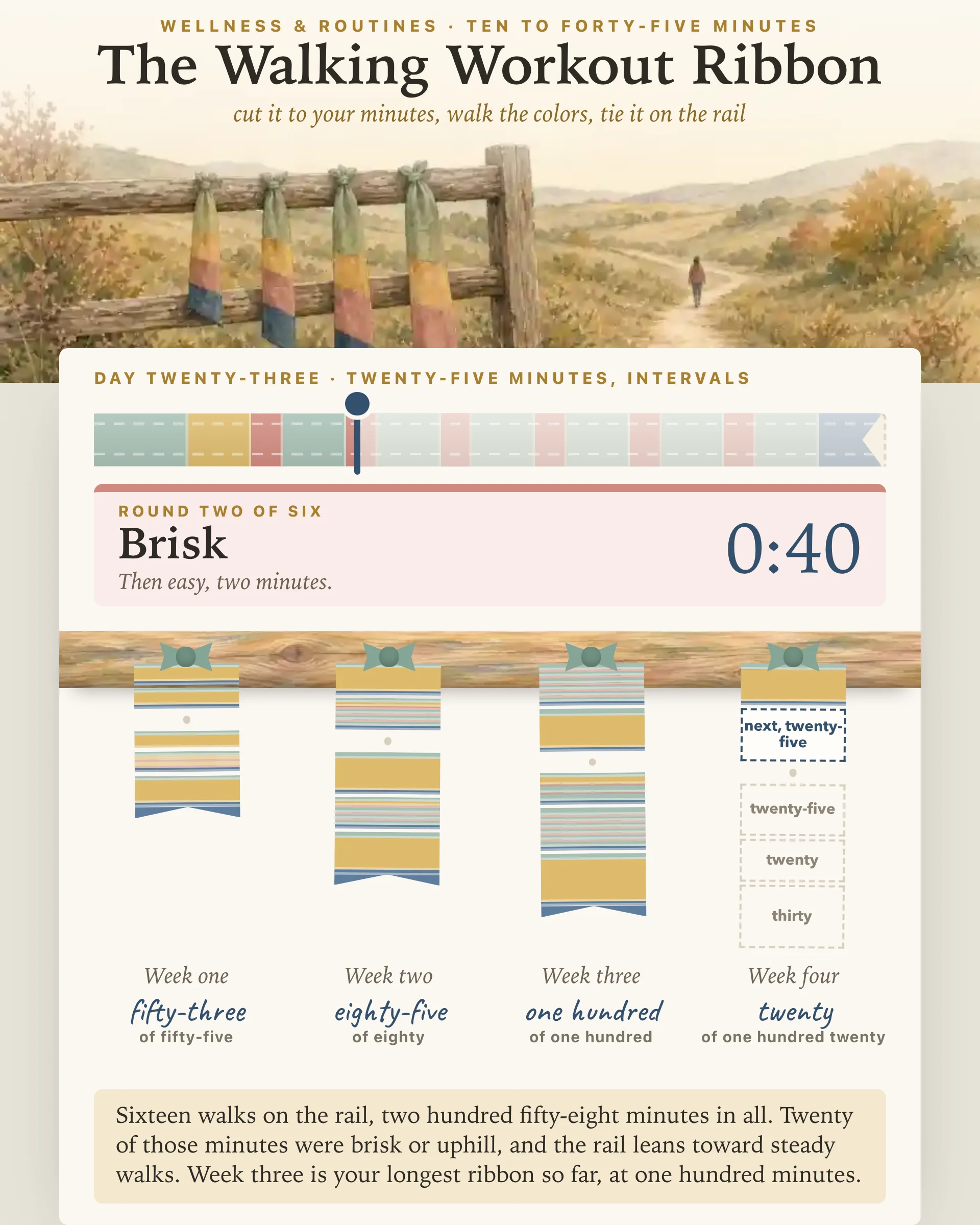
The Walking Workout RibbonPick ten to forty-five minutes and a kind of walk, and the page cuts a colored ribbon showing when to ease in, when to push and when to slow down. A silent timer walks you along it, and each walk you tie on adds to four weeks of hanging ribbons.
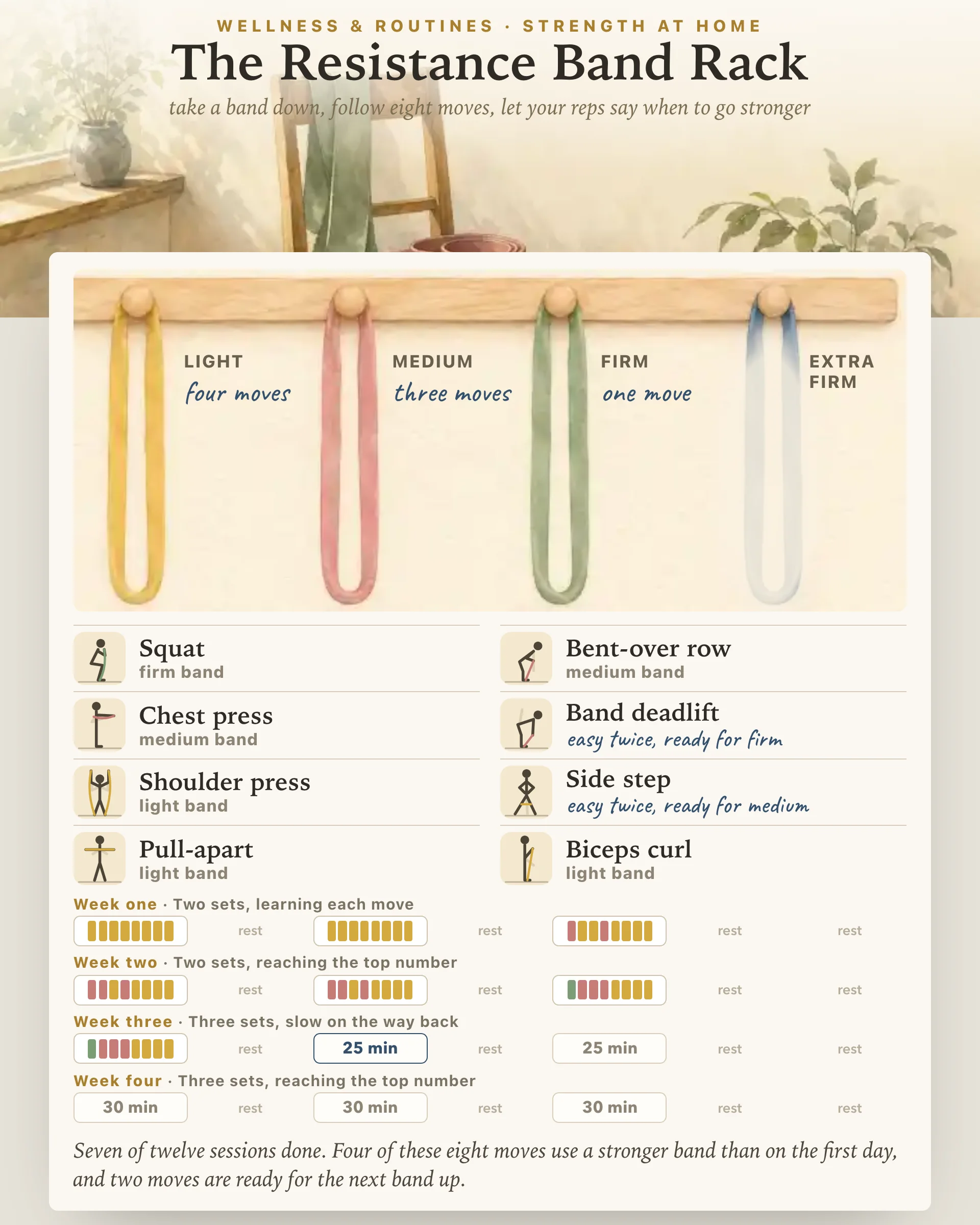
The Resistance Band RackTake a band off the rack and follow eight resistance band exercises with sets and reps, for the full body, the upper body or the lower body, with a seated version for older adults. A four-week chart tells you when a move is ready for a stronger band.
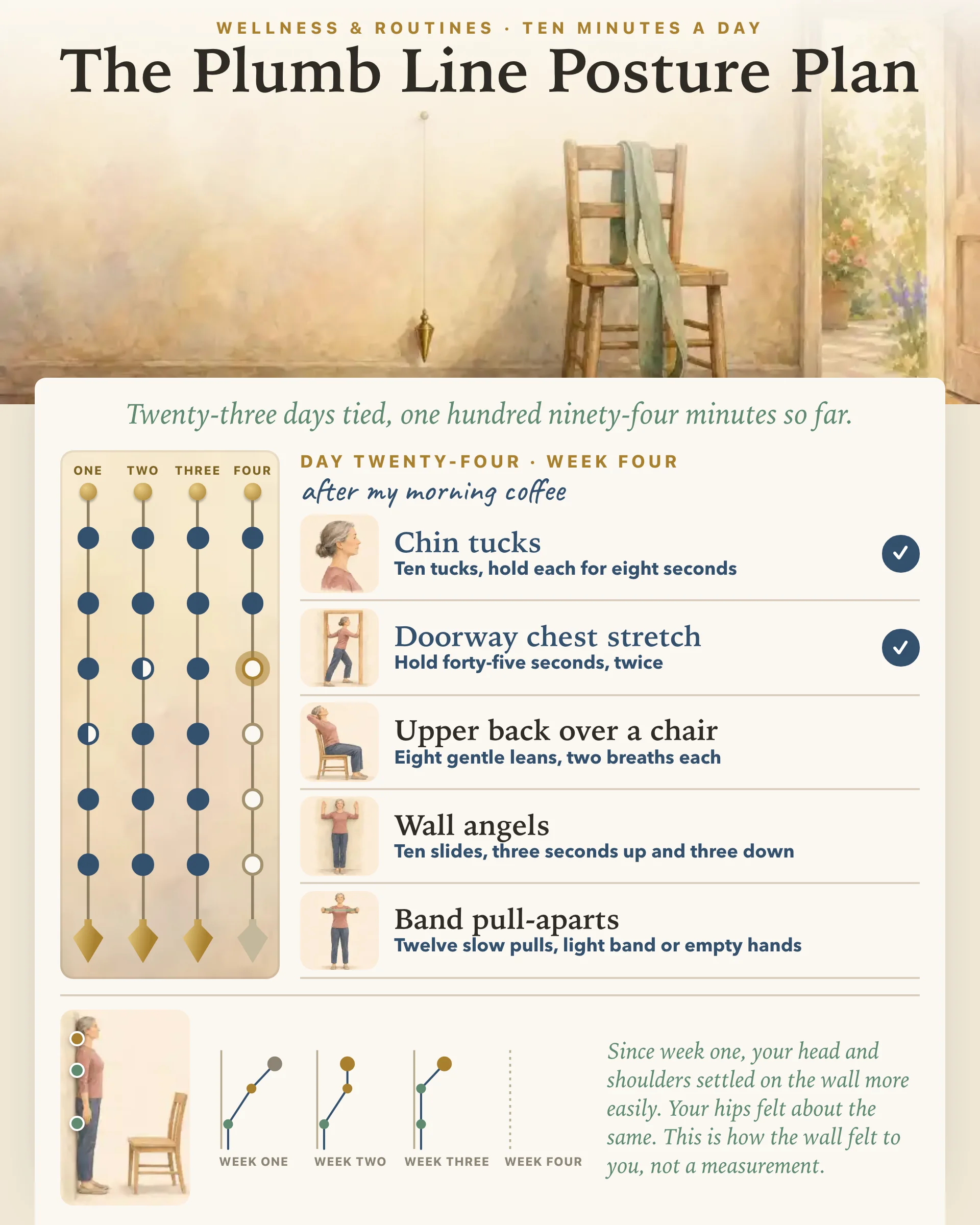
The Plumb Line Posture PlanFive slow moves with a timer that walks you through them, two minutes each, six days a week for four weeks. Every day ties a knot on a painted plumb line, and a one-minute wall check draws how each week felt beside the last.
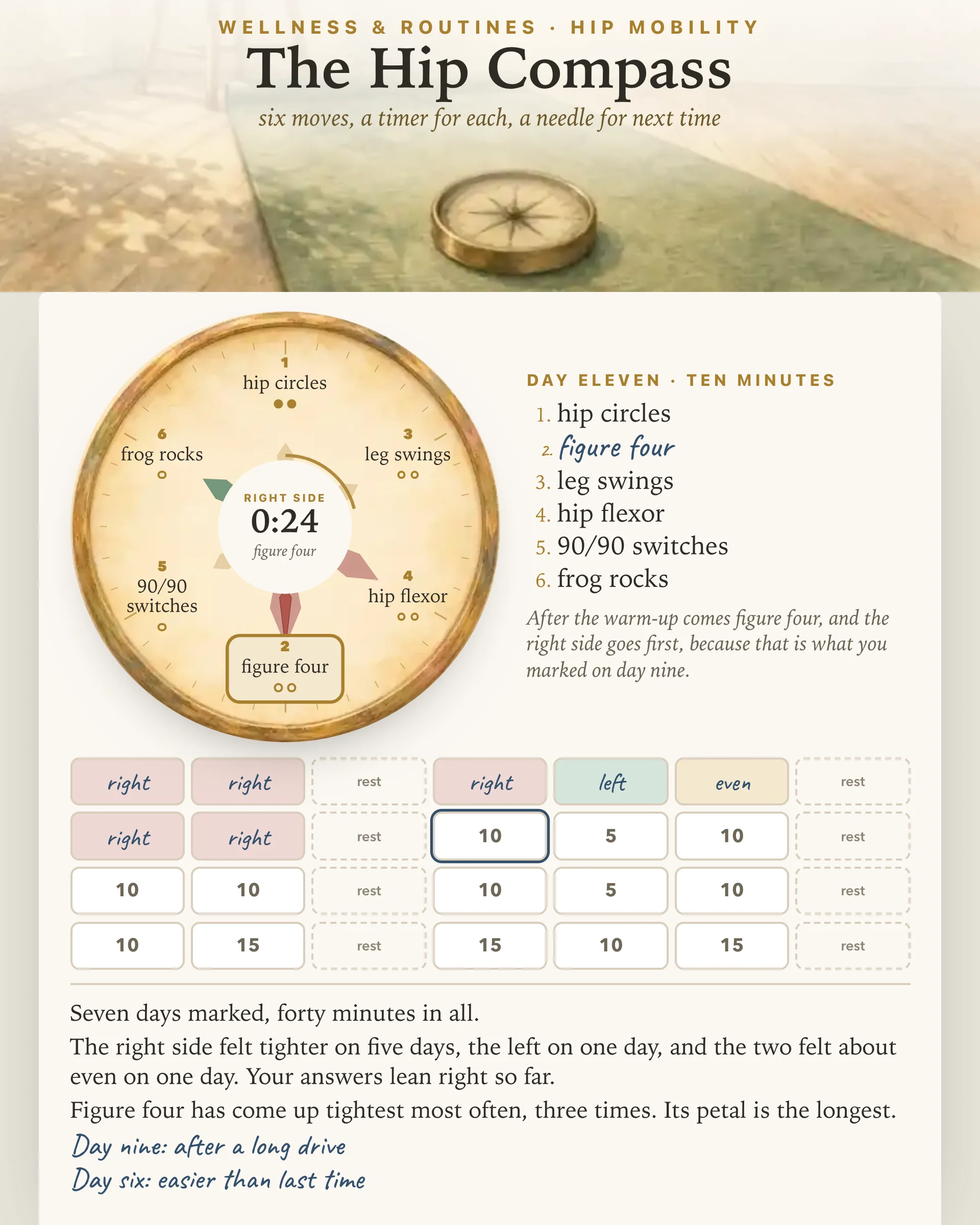
The Hip CompassSix hip mobility exercises on a compass dial, each with a silent timer and a version for the floor or for a chair and counter. Mark which side felt tighter, and the needle orders your next session across a four-week plan.
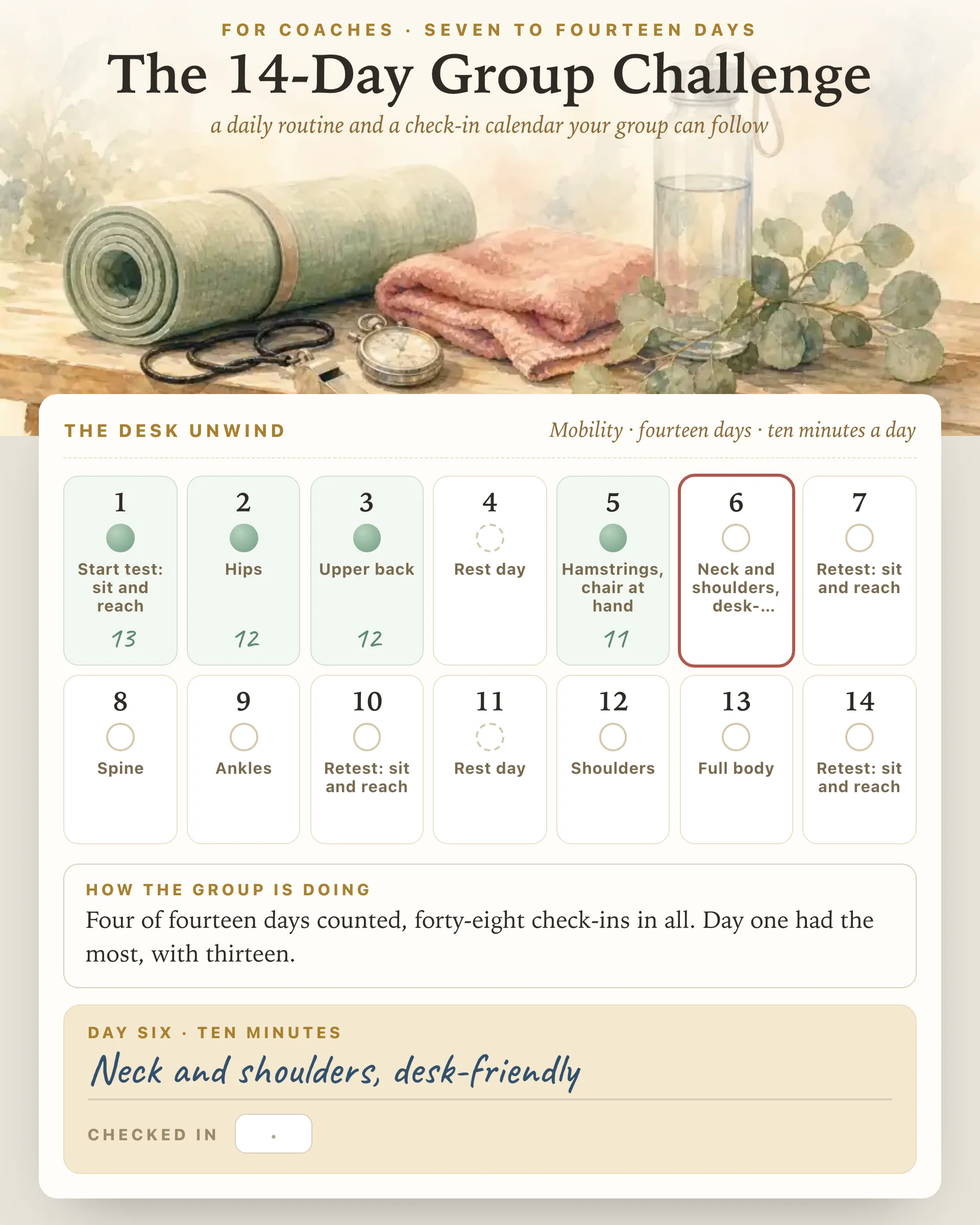
The 14-Day Group ChallengePick a focus, seven to fourteen days and the minutes a day, and every day fills with one idea, opening with a short test and keeping a rest day each week. Rename any day, then count how many members checked in. Personalize saves the planner to a free Salon account, by the makers of Fabulous.
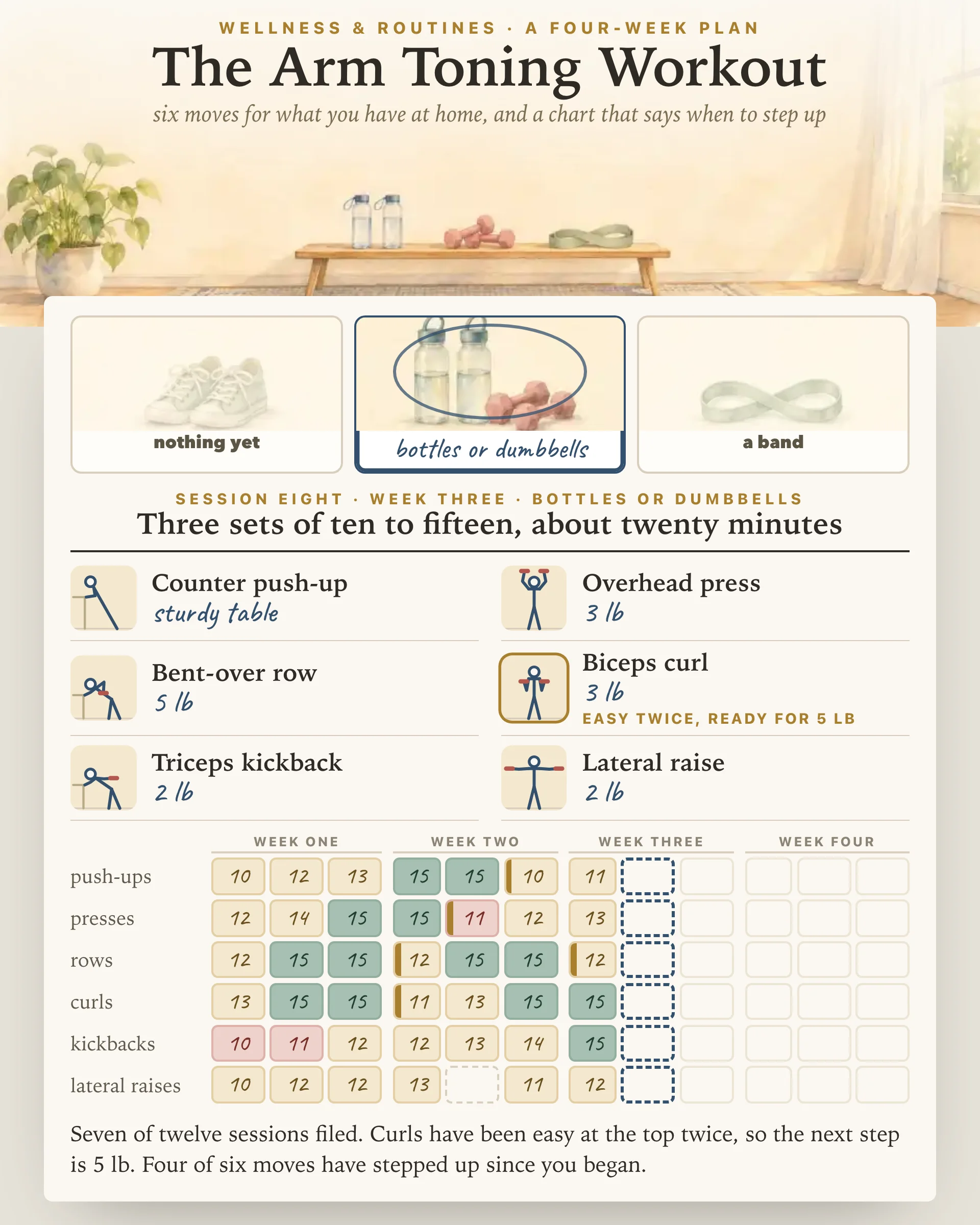
The Arm Toning WorkoutSix arm moves set by what you have at home, from nothing at all to bottles, dumbbells or a band, with sets and reps for where you are starting. Tap your reps and how each move felt, and a four-week chart tells you when a move has earned its next step.
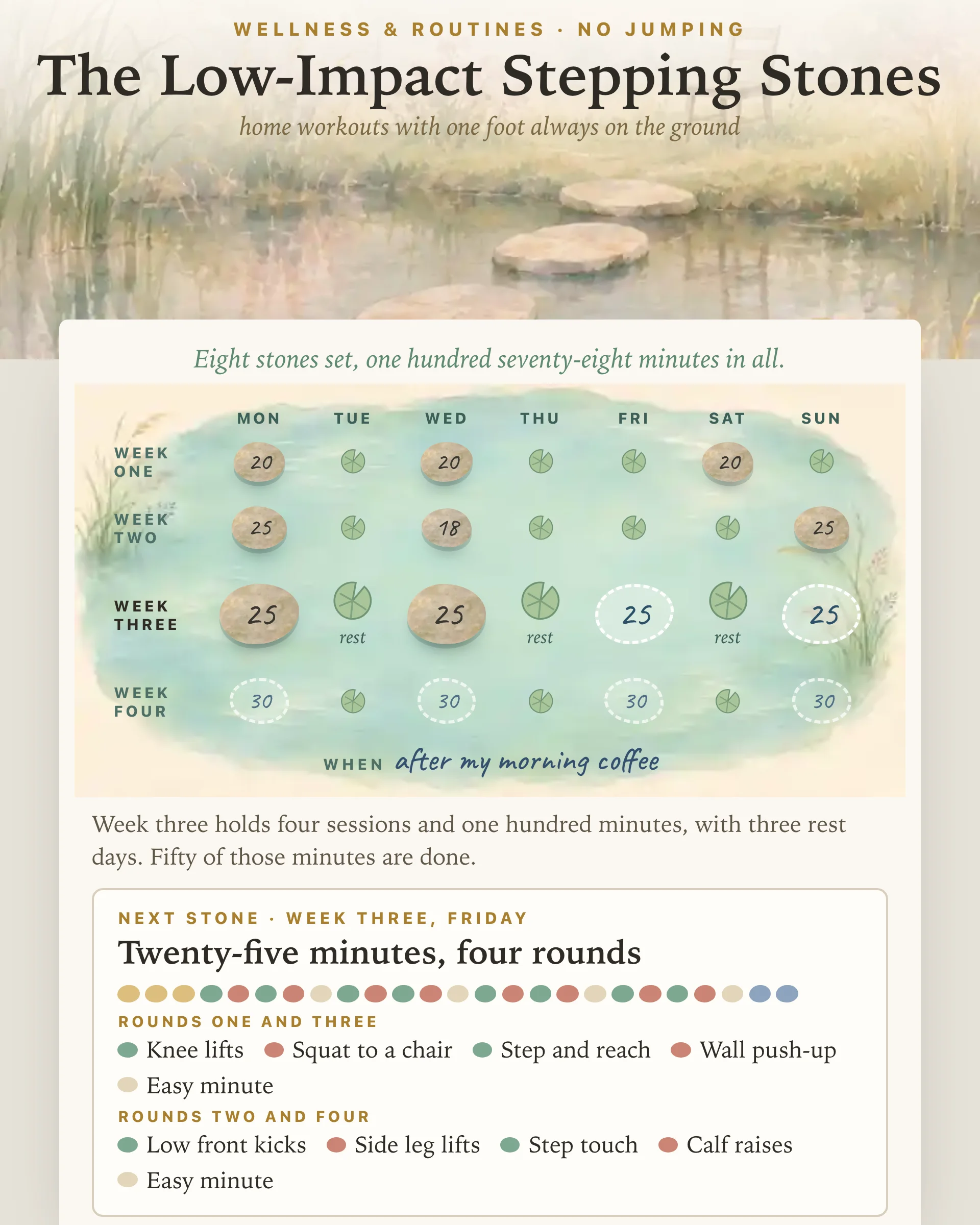
The Low-Impact Stepping StonesA four-week, no-jumping home workout plan laid out as stepping stones on a pond. Move each session to a day that suits you, let a silent timer walk you through marching, step touches, chair squats and wall push-ups, and watch every week add up its minutes and rest days.
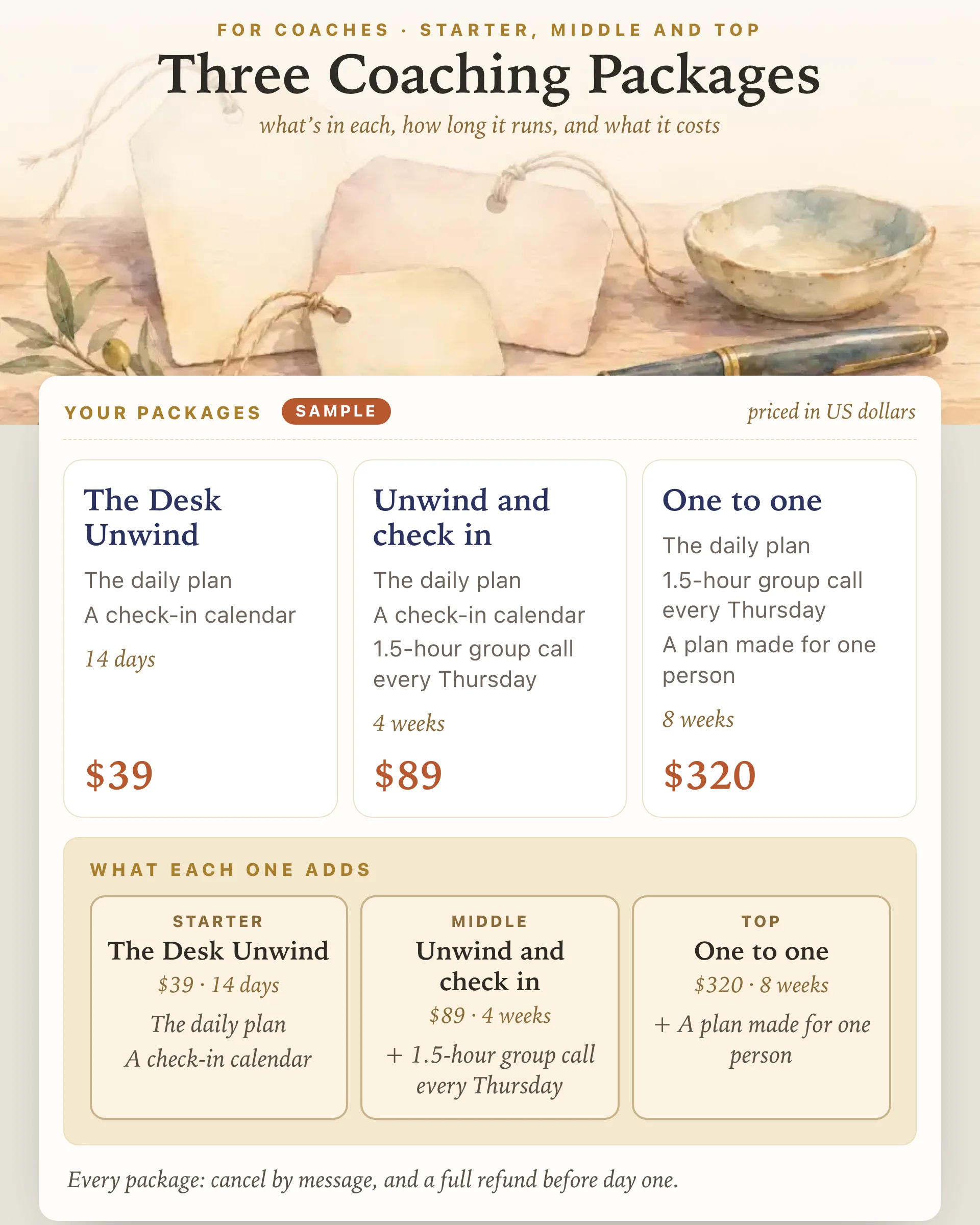
Three Coaching PackagesName three packages, list what each one holds, how long it runs and its price in your currency, and a ladder below shows what each package adds to the ones before it. Personalize saves the planner to a free Salon account, by the makers of Fabulous.
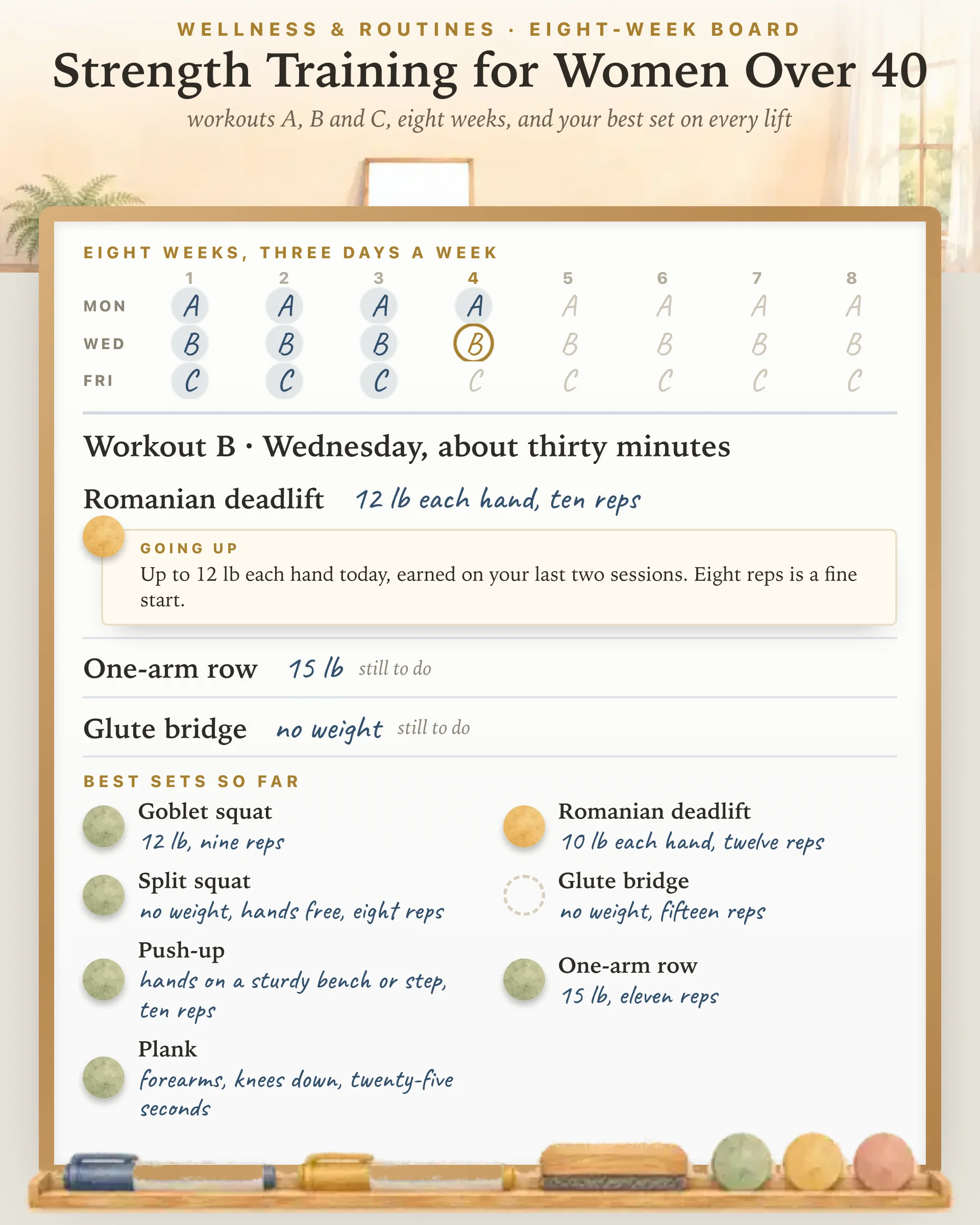
Strength Training for Women Over 40Eight weeks of lifting three days a week, at home with dumbbells or at a gym. Workouts A, B and C rotate on a whiteboard, every lift keeps its best set, and a gold magnet appears when you have earned a heavier weight.
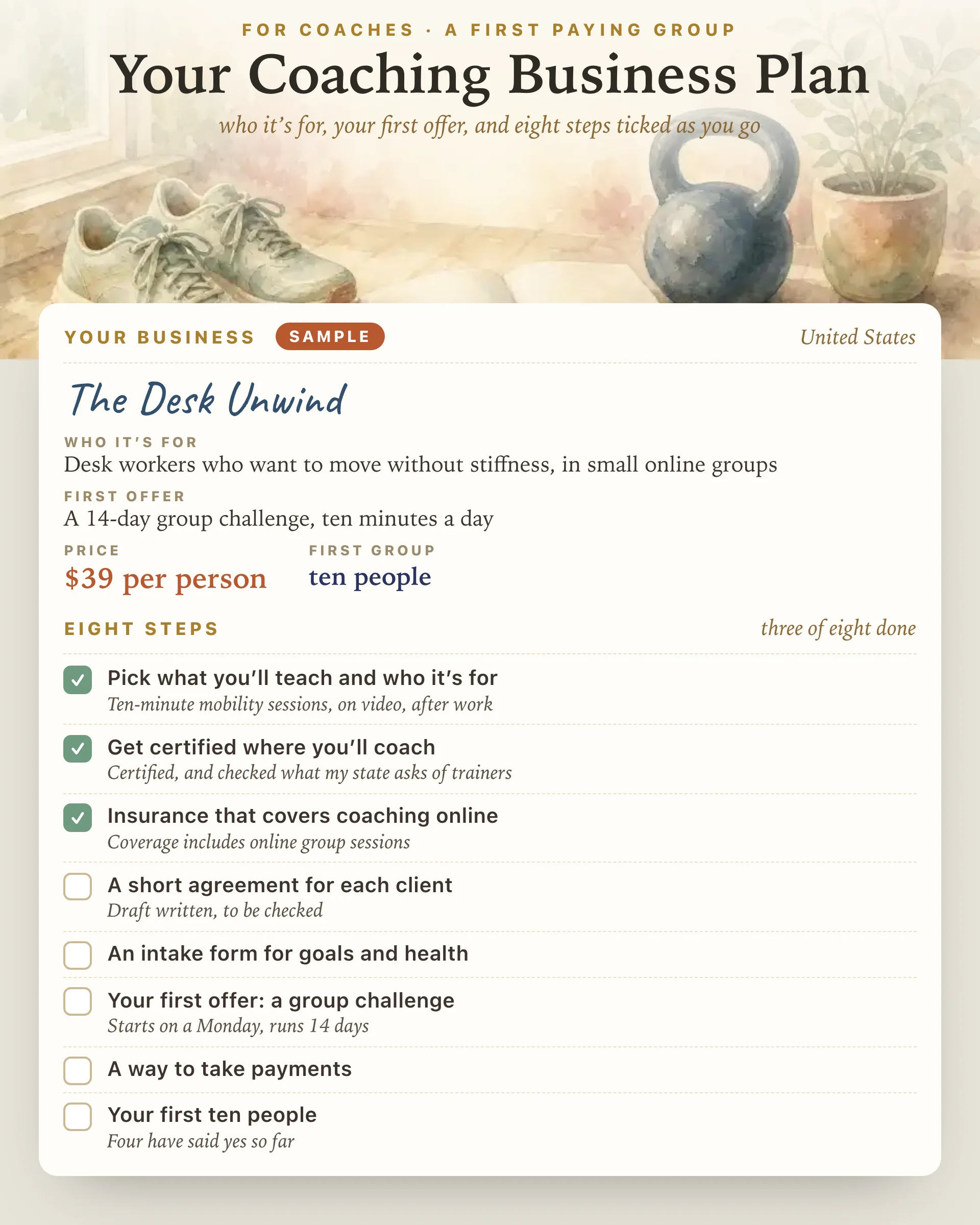
Your Coaching Business PlanName your coaching business, who it's for and your first offer, set its price and the size of your first group, then tick eight steps toward a first paying group with a note on each. Personalize saves the planner to a free Salon account, by the makers of Fabulous.
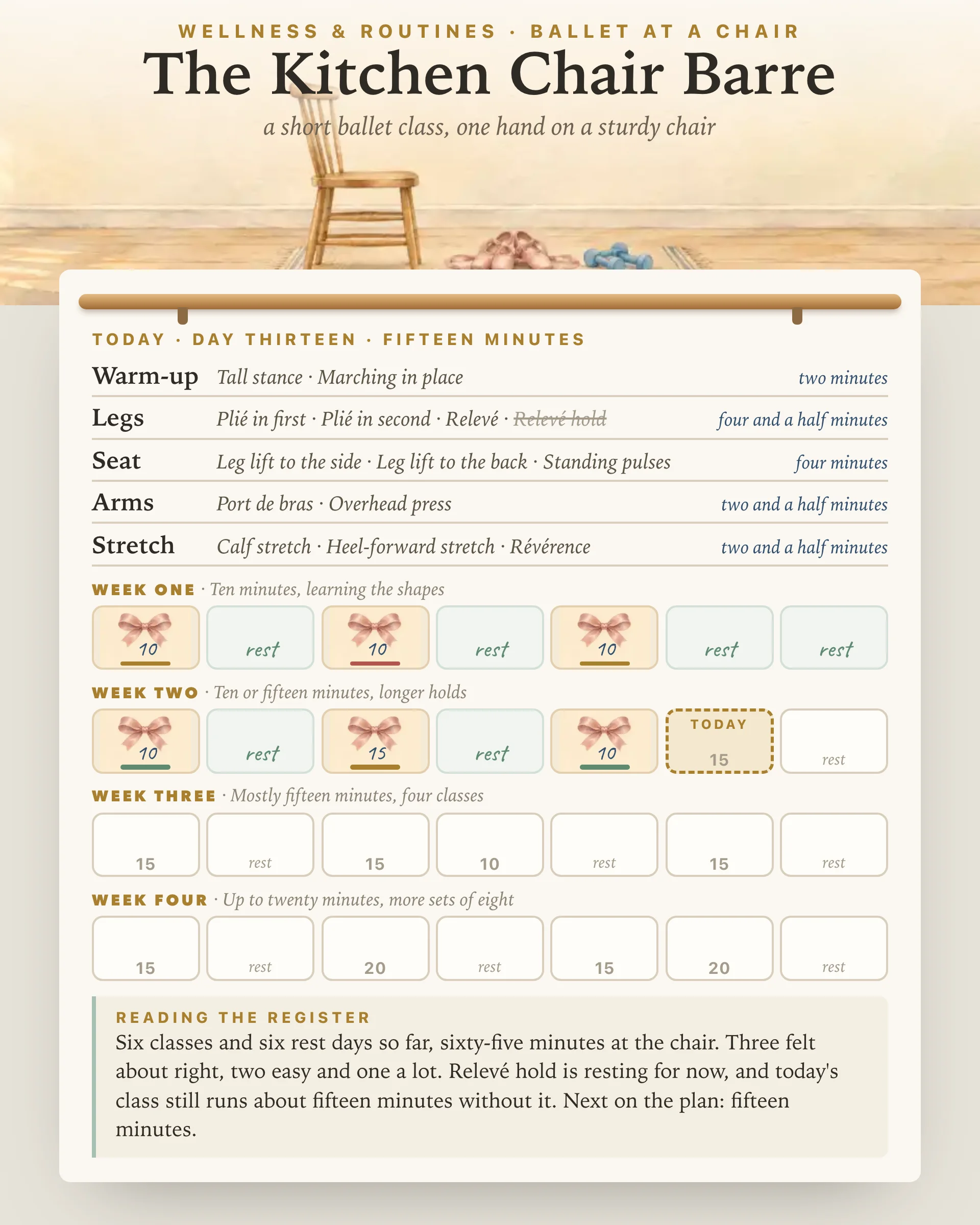
The Kitchen Chair BarreA ballet-based class at the back of a sturdy chair: choose ten, fifteen or twenty minutes and the page sets the pliés, leg lifts, arm sweeps and stretches, counts every set of eight for you, and ties a bow on a four-week register after each class.
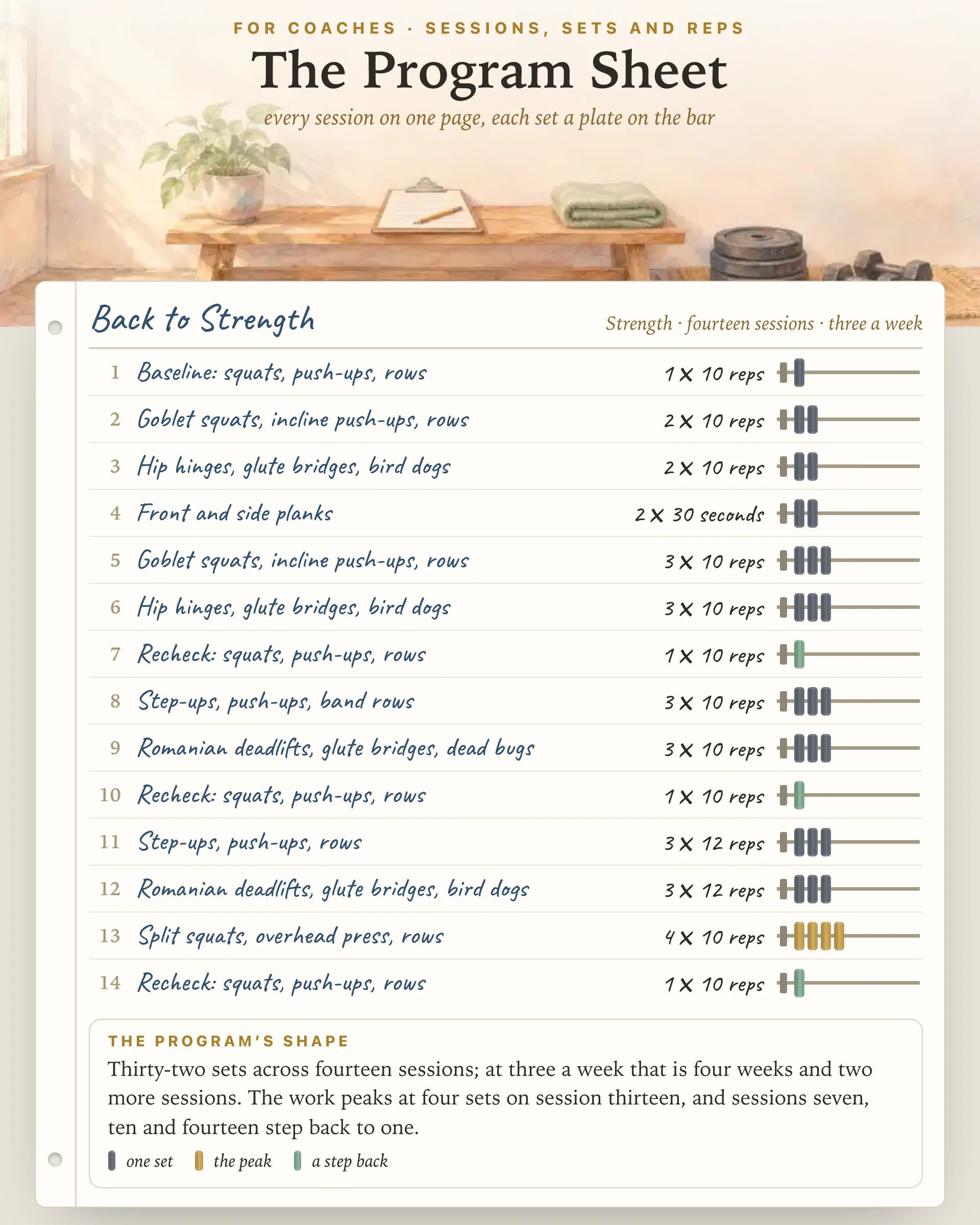
The Program SheetName a program, pick its focus and seven to fourteen sessions, and every session fills with moves, sets and reps you can rewrite. Each set shows as a plate on the bar, so the sheet reads back where the program peaks and where it eases off. Personalize saves the planner to a free Salon account, by the makers of Fabulous.
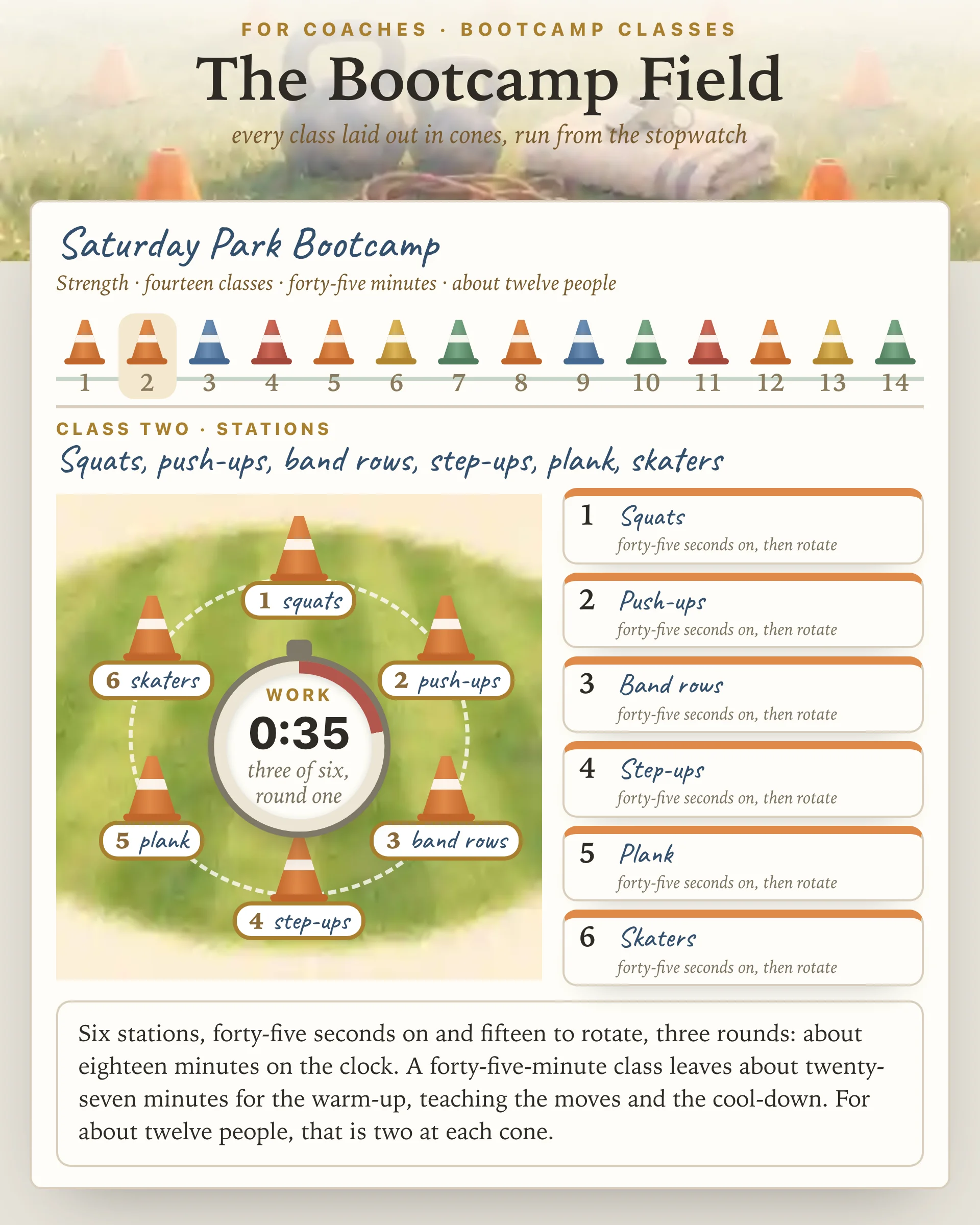
The Bootcamp FieldPick a focus and seven to fourteen classes, and each class lays out as cones around a stopwatch: rename its moves, switch its format, print the station cards and run the work and rest from the clock. Personalize saves the planner to a free Salon account, by the makers of Fabulous.
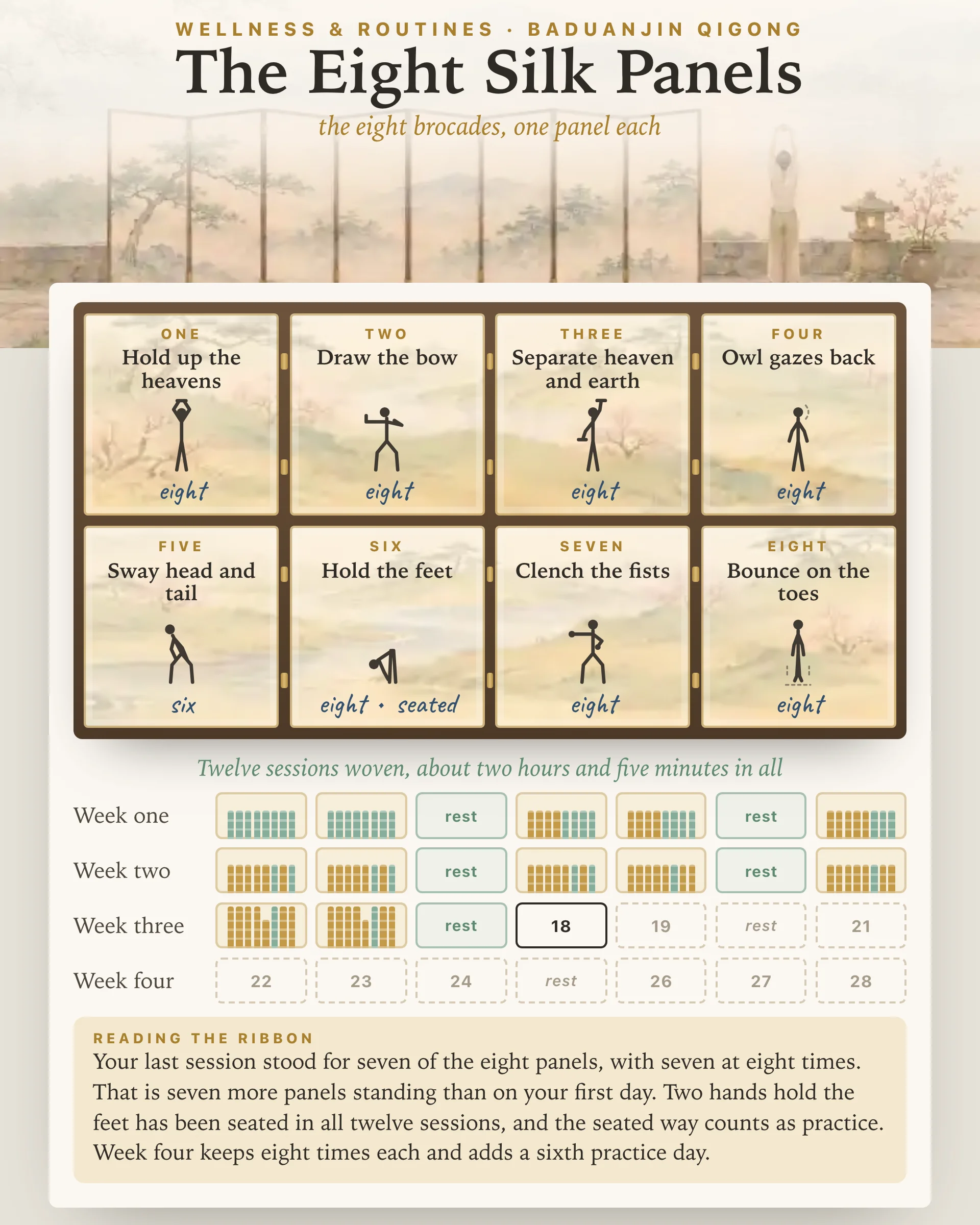
The Eight Silk PanelsLearn baduanjin, the eight brocades, from a folding screen of eight silk panels: plain cues and a seated way for every move, a silent timer that counts six or eight times through each one, and a four-week ribbon that weaves in every session.
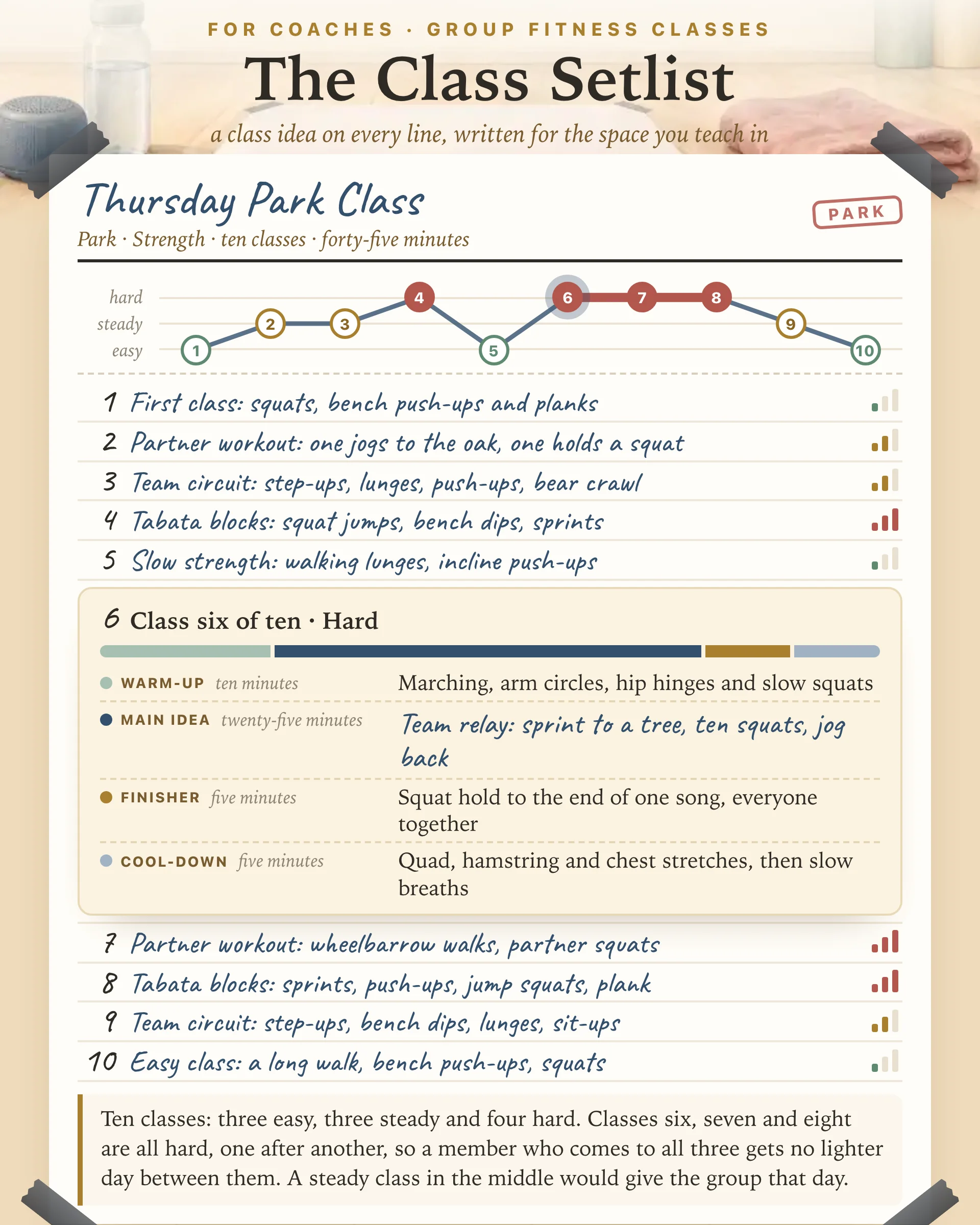
The Class SetlistPick where you teach, a focus and seven to fourteen classes, and every line of the setlist fills with a class idea you can rewrite. A line above it flags hard classes back to back, and each class opens into a timed plan to print. Personalize saves the planner to a free Salon account, by the makers of Fabulous.
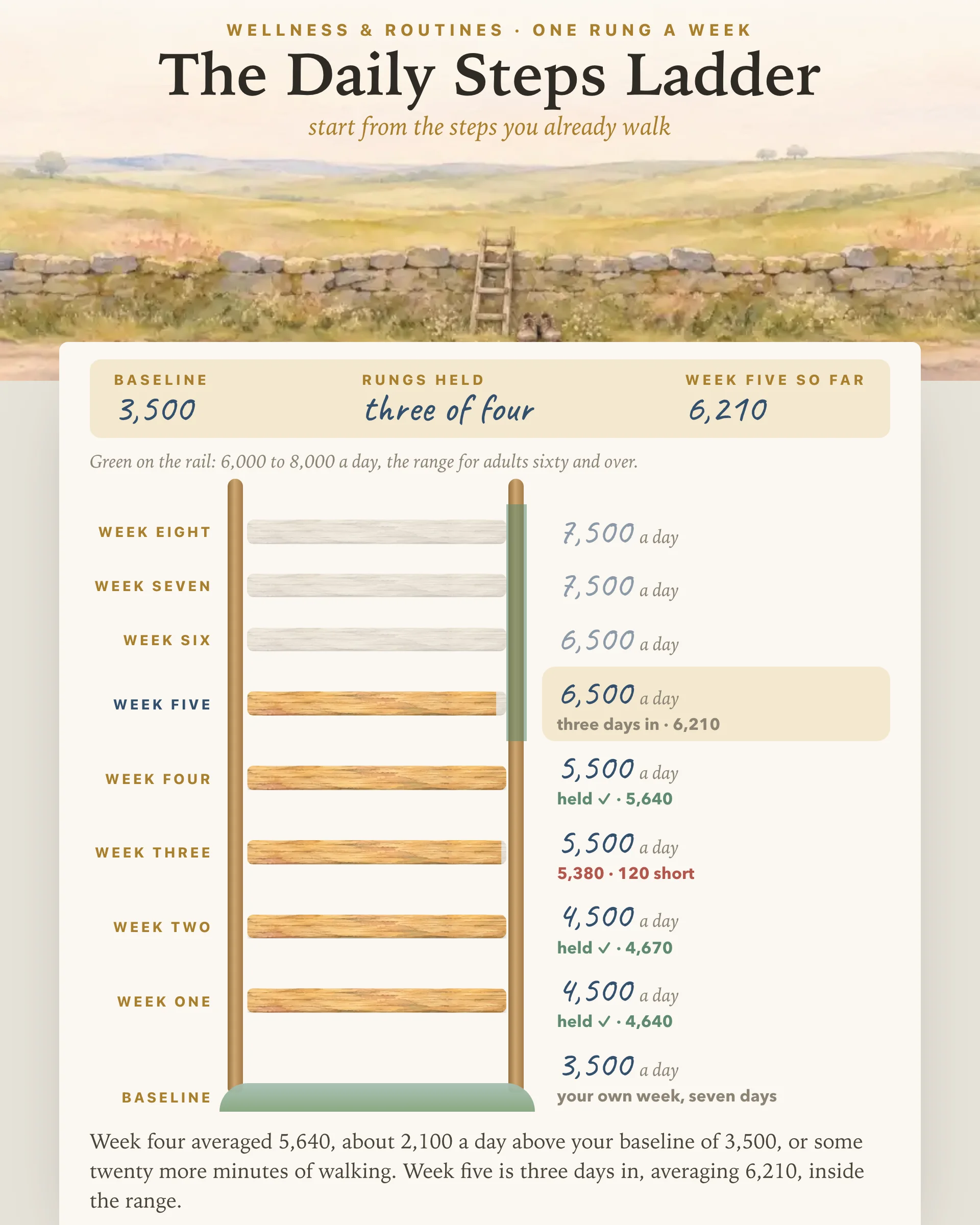
The Daily Steps LadderCopy one week of steps from your phone or watch and the page finds your own baseline, then builds an eight-week ladder that adds about a thousand steps a day every two weeks. Each rung paints in as your weekly average reaches it, with the range research ties to your age group marked on the rail.
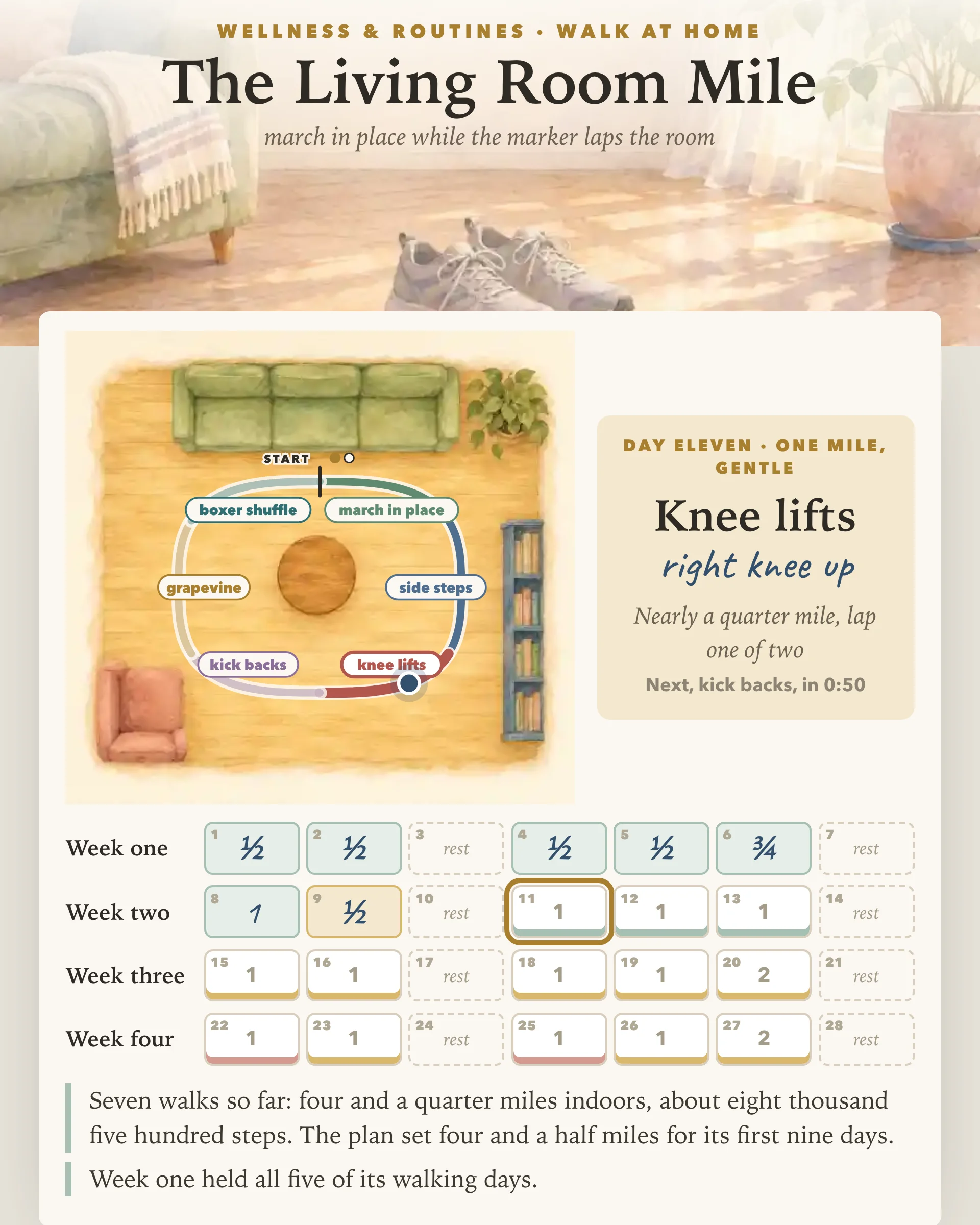
The Living Room MilePick half a mile to three miles and a pace, and a painted living room lays out six walking-in-place moves around one lap. A silent caller names each move as a marker laps the room, and four weeks of indoor miles fill in as you log them.
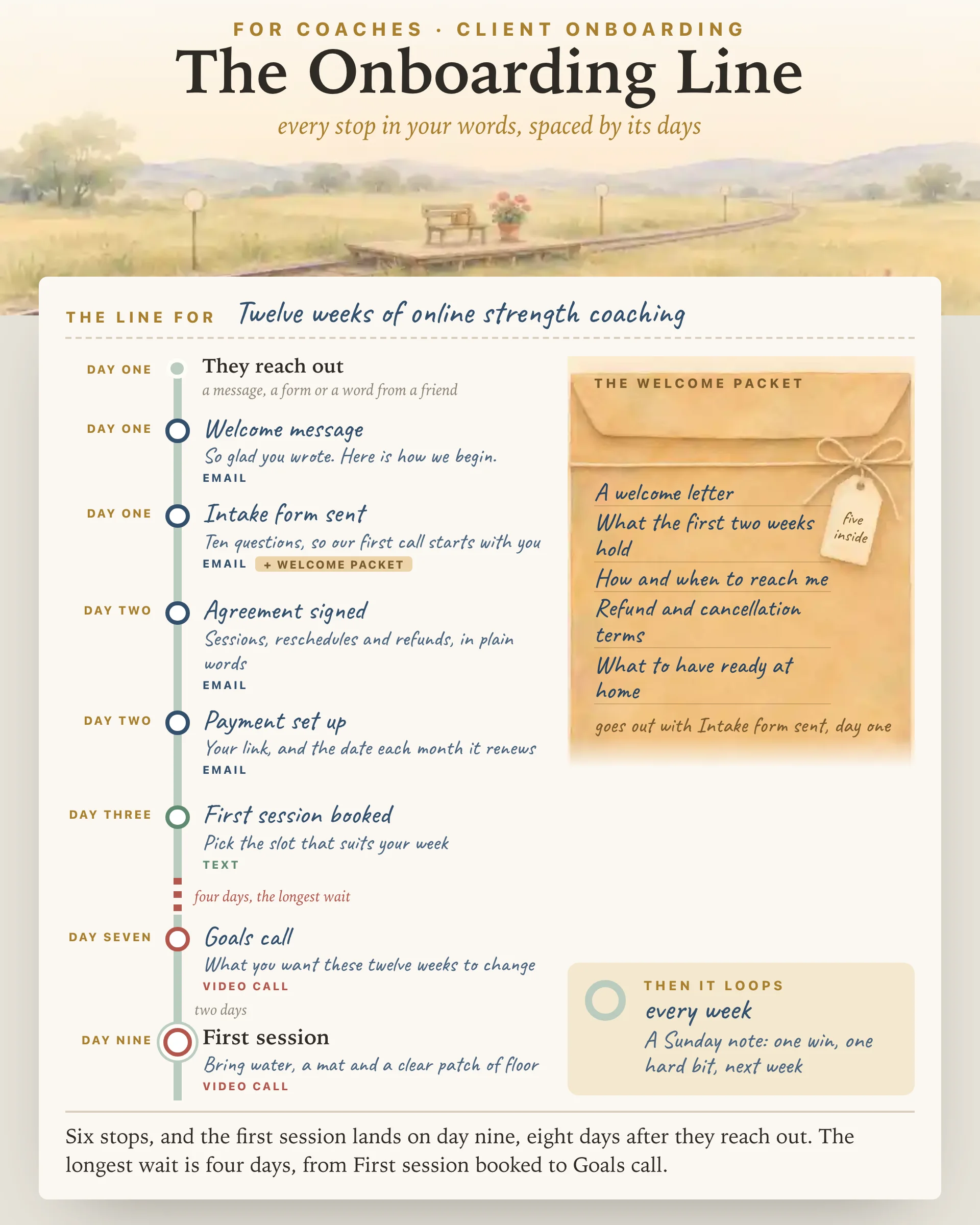
The Onboarding LineLay every stop between a new client's first message and the first session, each in your own words with the days since the one before, and the line spaces itself by those days to show where it waits longest. Pack a welcome packet and set your check-in rhythm, then print it as your process sheet. Personalize saves the planner to a free Salon account, by the makers of Fabulous.
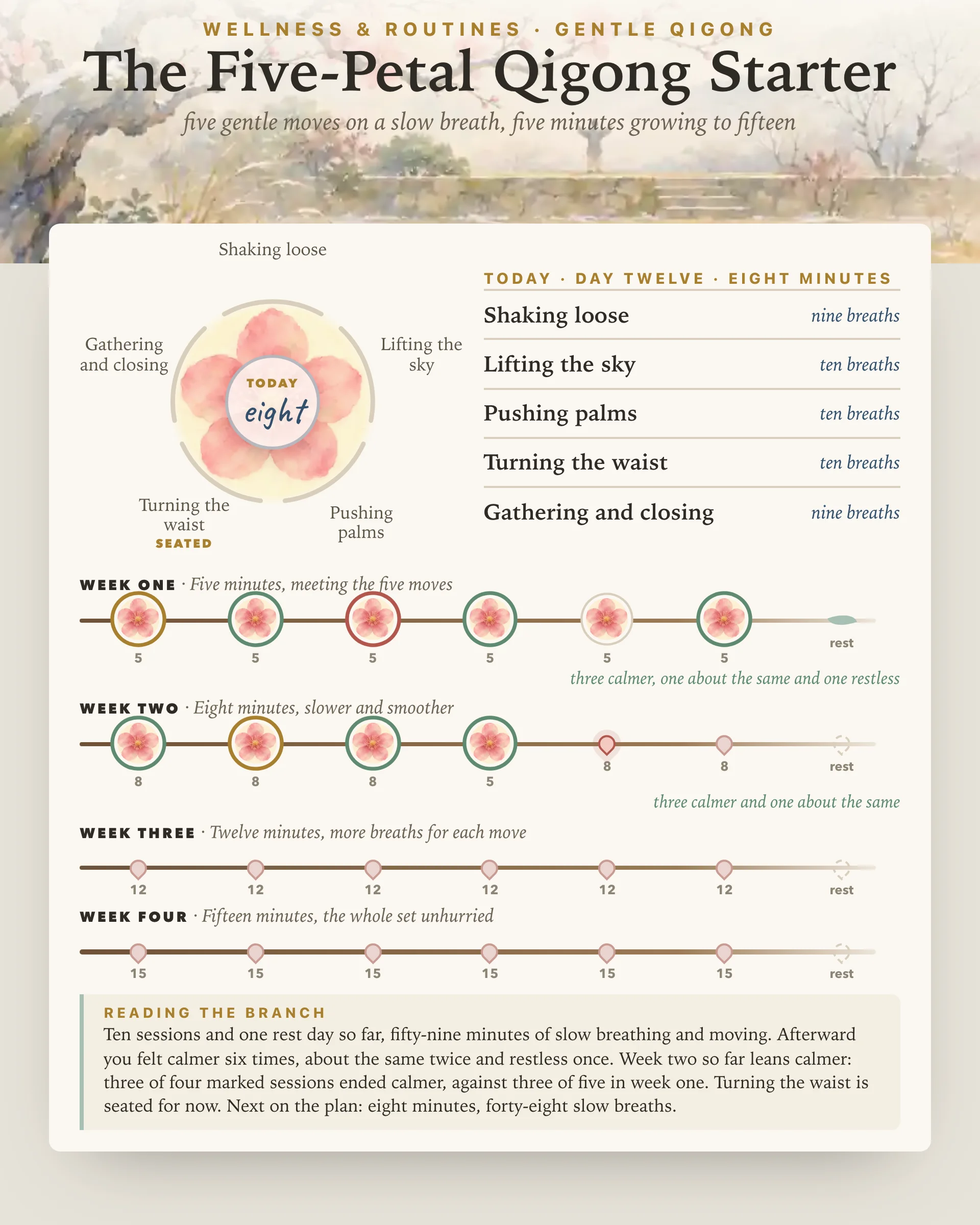
The Five-Petal Qigong StarterFive gentle qigong exercises on the petals of a painted blossom, each with a seated way. The flower breathes in for four and out for six while you move, sessions grow from five to fifteen minutes over four weeks, and every session opens a blossom on the branch.
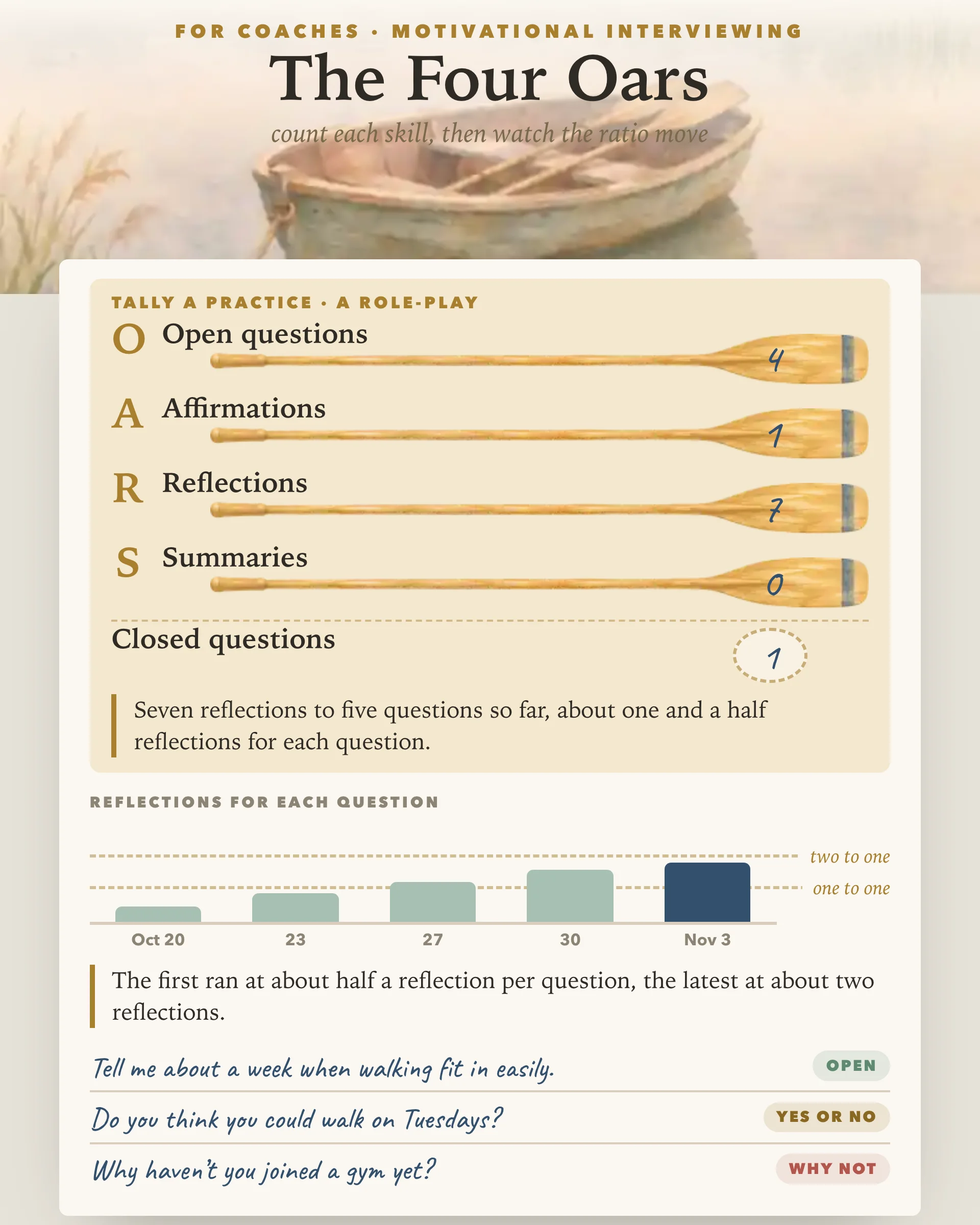
The Four OarsTally open questions, affirmations, reflections and summaries in a practice conversation, log the counts, and watch your reflections for each question move from one practice to the next. Keep a bank of open questions with a reading on each, and a guide to the change talk worth listening for. Personalize saves the planner to a free Salon account, by the makers of Fabulous.
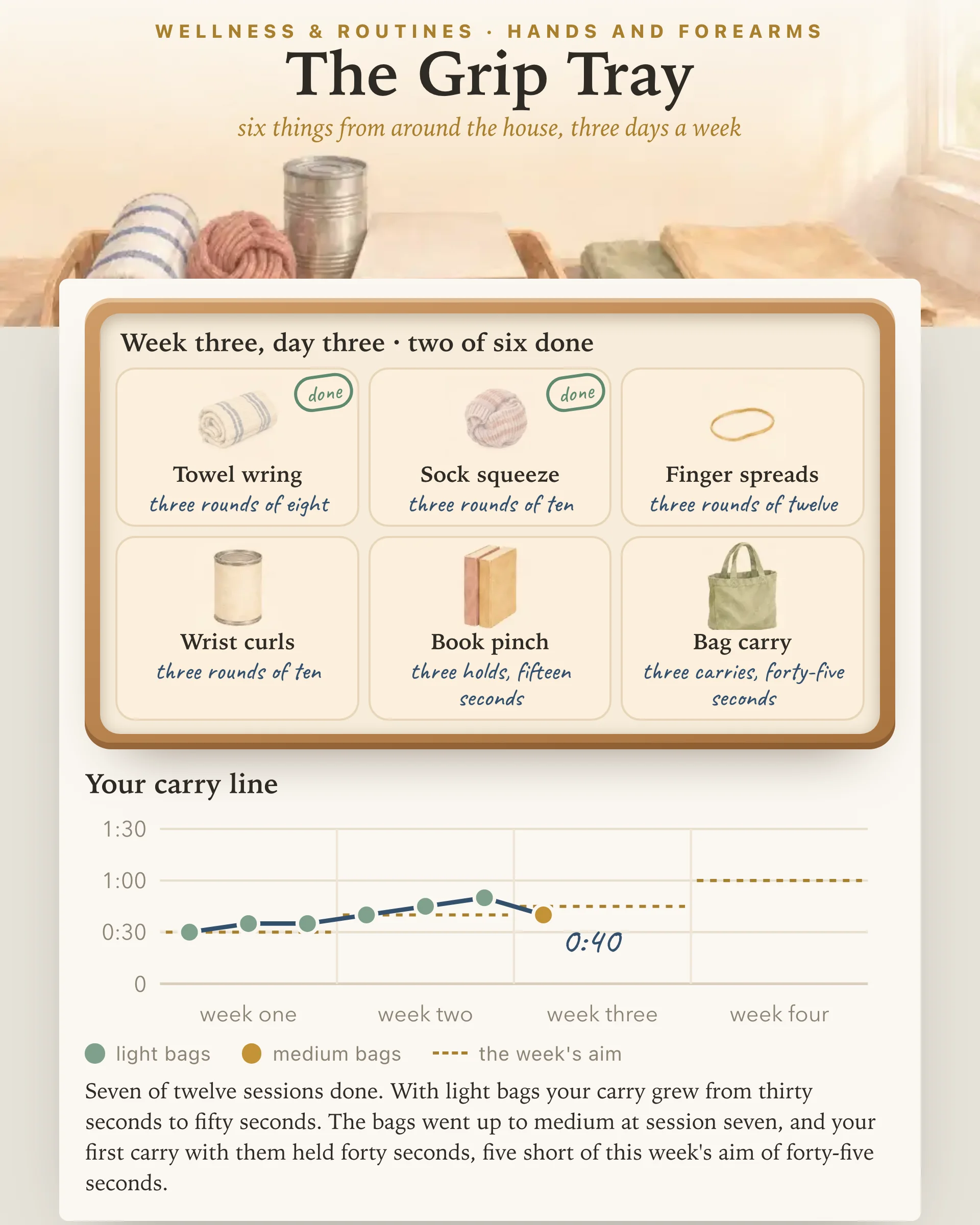
The Grip TraySix grip strength exercises with things you already own: a dish towel, a pair of socks, a rubber band, a soup can, two paperbacks and two grocery bags, on a four-week plan. Time your bag carry and the seconds you hold draw your progress line.
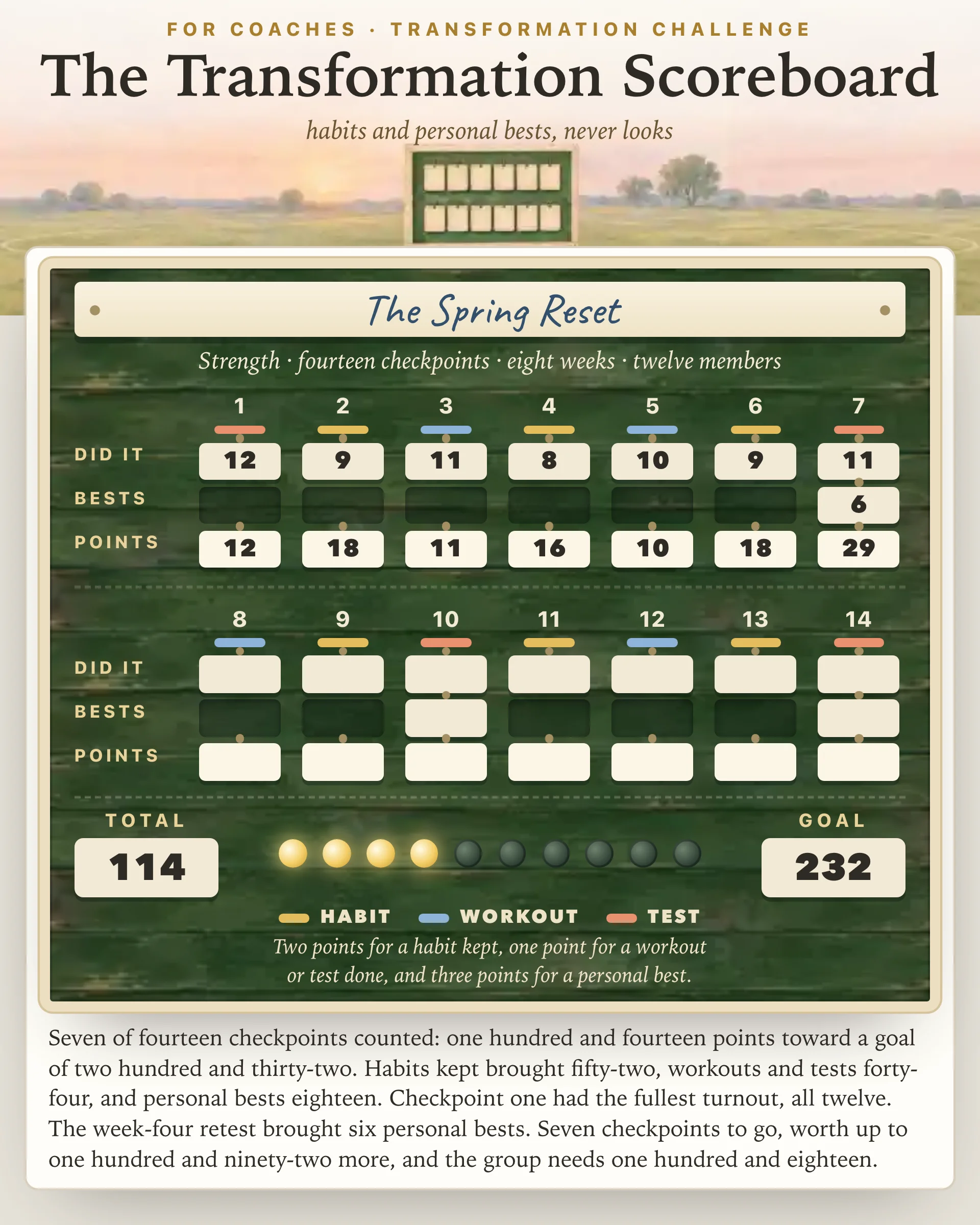
The Transformation ScoreboardPick a focus and seven to fourteen checkpoints, each a habit, a workout or a test, set your own points rule, then count how many members did each one. The board scores the whole group against its goal, with no names, weigh-ins or photos. Personalize saves the planner to a free Salon account, by the makers of Fabulous.
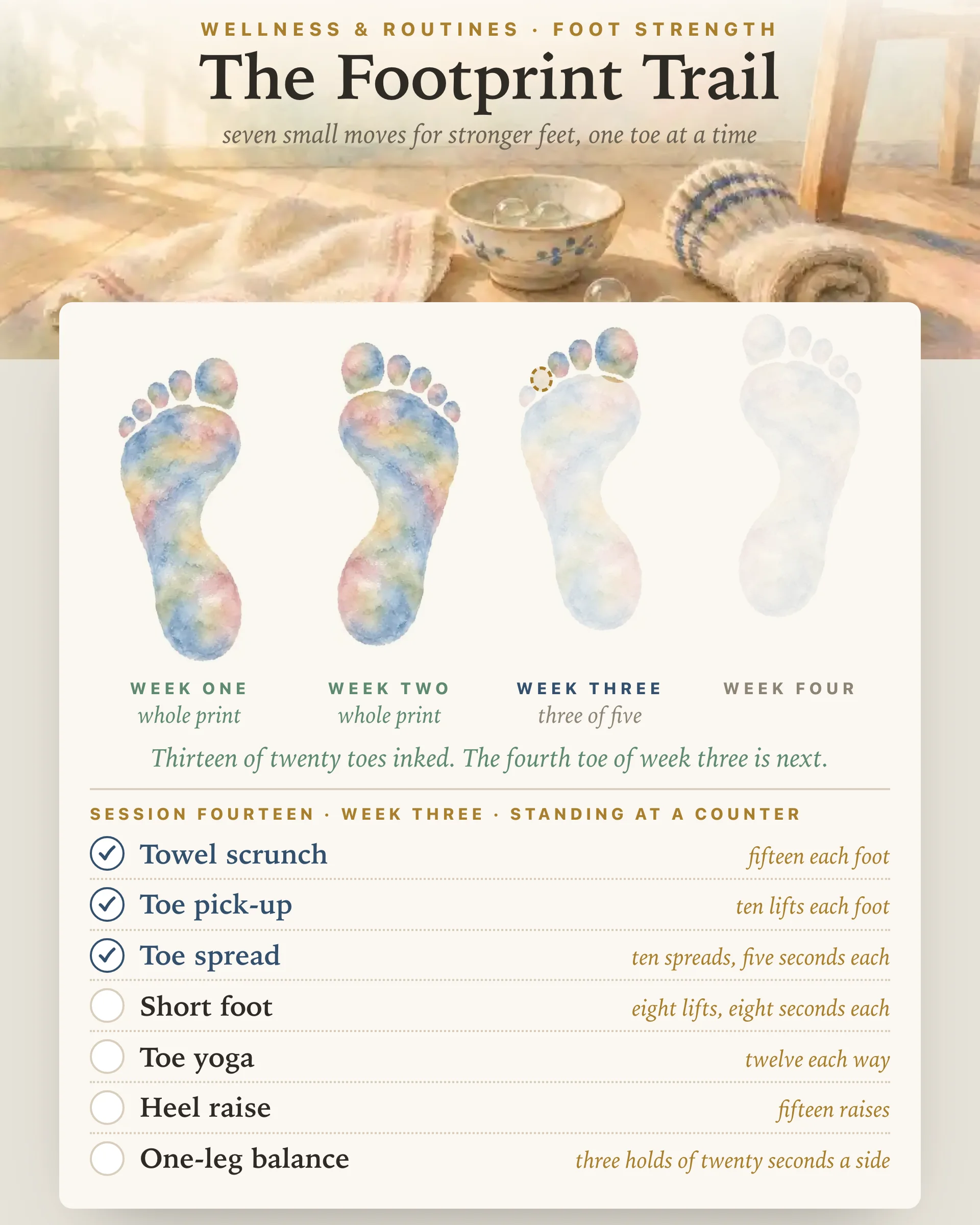
The Footprint TrailSeven foot and toe exercises with seated and standing versions, from towel scrunches to a supported one-leg balance. Tick each move as you go, and every finished session inks a toe on a trail of four painted footprints, one for each week of the plan.
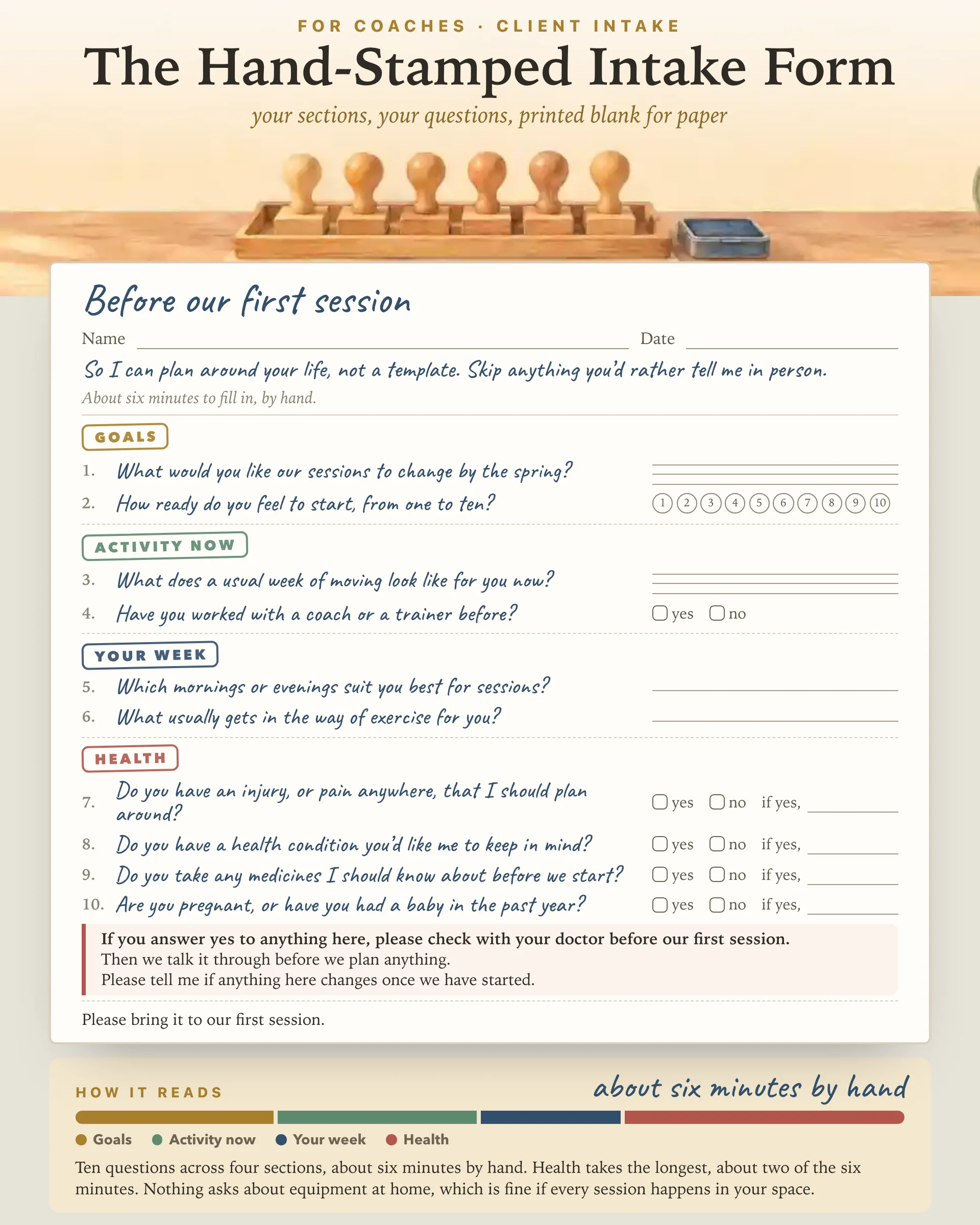
The Hand-Stamped Intake FormStamp the sections your intake form needs onto a blank sheet, pick and word each question and the space its answer gets, and see how long it takes a new client by hand. Any yes under Health asks them to check with their doctor first, and the form prints blank for paper. Personalize saves the planner to a free Salon account, by the makers of Fabulous.
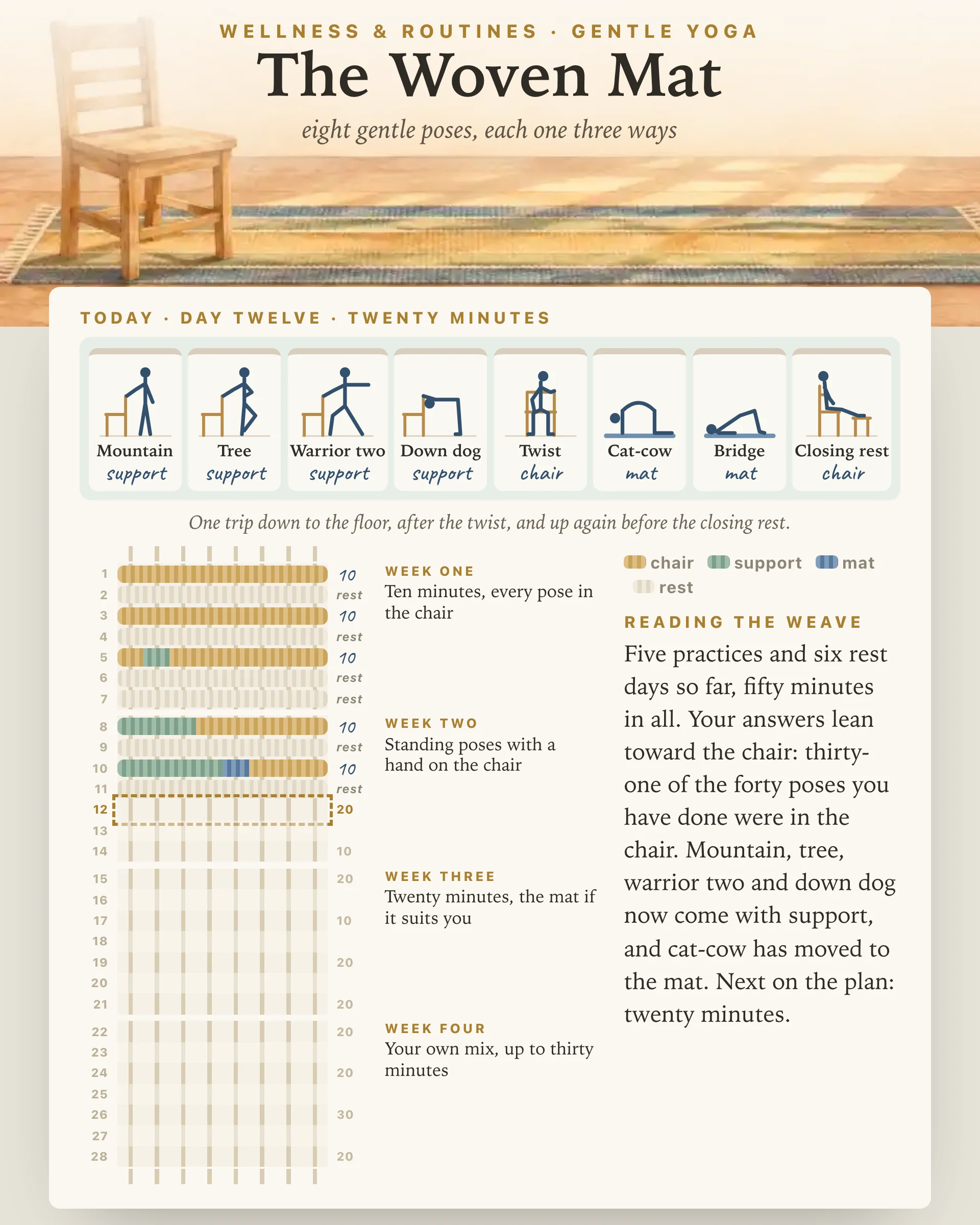
The Woven MatGentle yoga for older adults: eight poses, each one in the chair, with support or on the mat. Pick ten, twenty or thirty minutes, follow the breath-paced holds, and weave a row into a four-week mat on every day you practice.
Your PAR-Q+ Routine, Gate by GateSet the routine around the official PAR-Q+: when new clients fill it in, what any yes pauses until they are cleared, and what your paper file records. Then print a cover note to hand over with the form and a blank strip for your files. Personalize saves the planner to a free Salon account, by the makers of Fabulous.
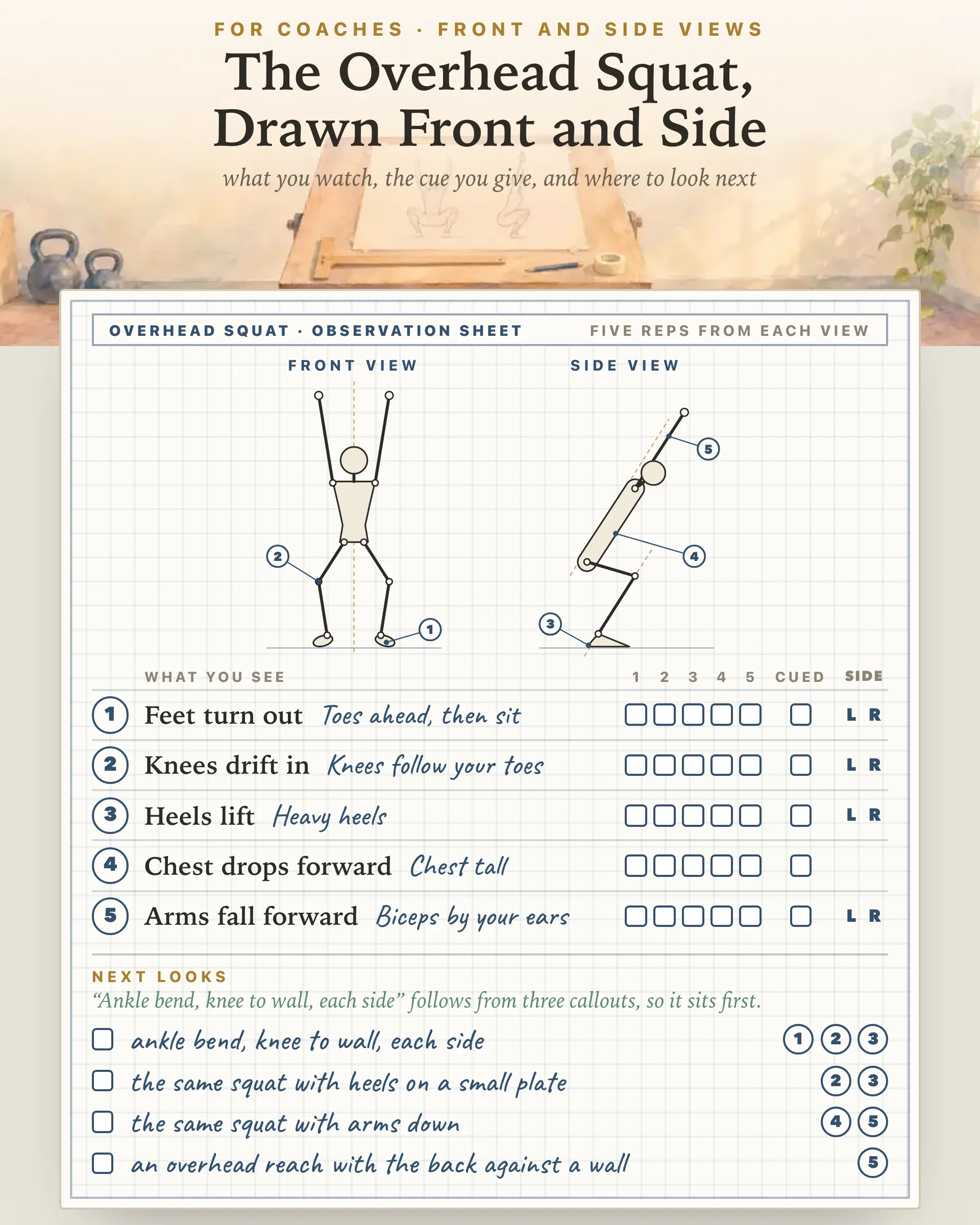
The Overhead Squat, Drawn Front and SideMark the checkpoints you watch from the front and the side on a two-view drawing, word a cue and a next look for each, and print a blank observation sheet to fill in by hand. Personalize saves the planner to a free Salon account, by the makers of Fabulous.
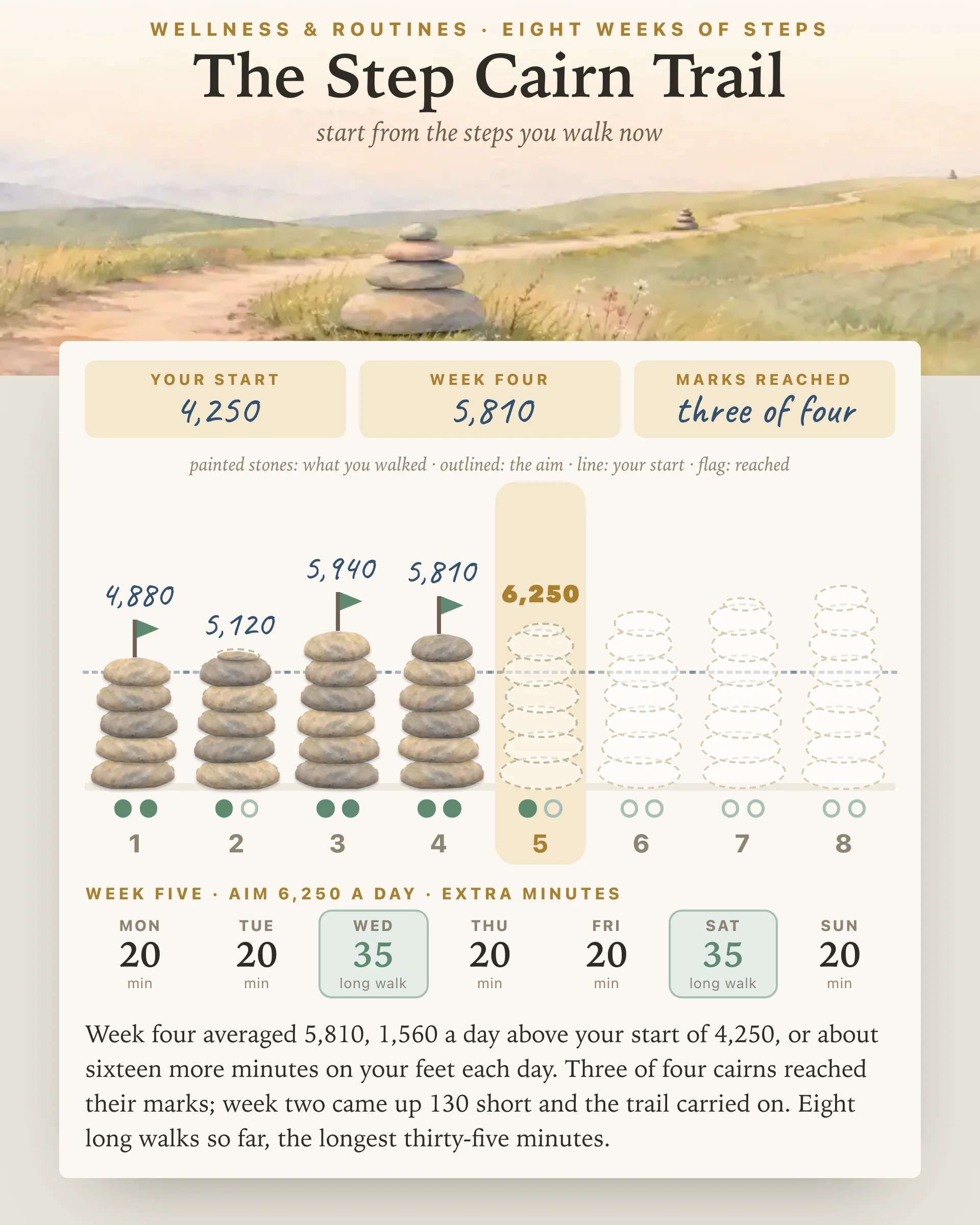
The Step Cairn TrailStart from the daily average your phone already shows and get eight weeks of steps: a gentle or steady climb, one or two long walks a week, and the extra minutes for each day. Stack each week's average and a cairn of stones rises against its mark.
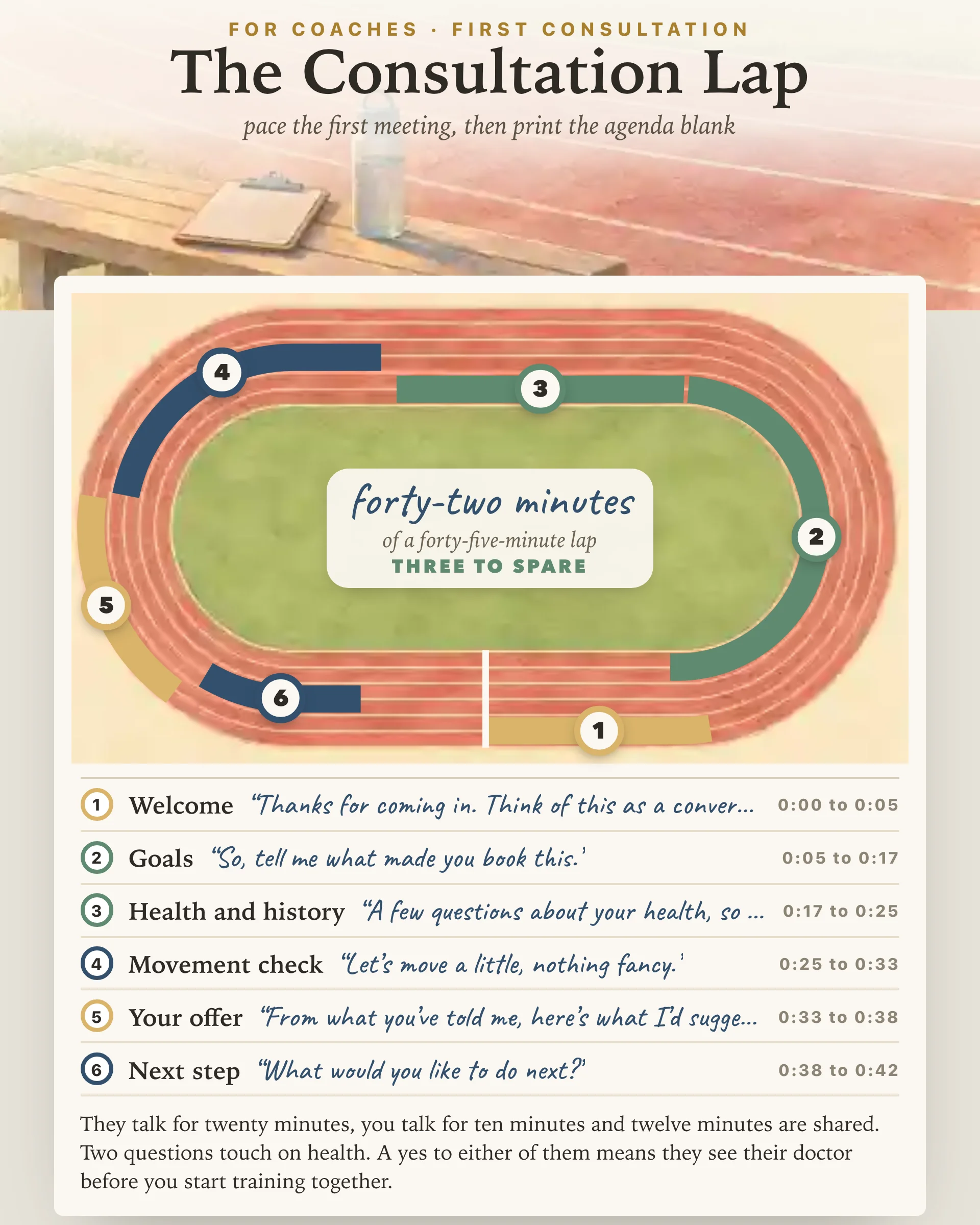
The Consultation LapLay your first consultation with a new client around one lap: each stretch gets its minutes, who does the talking, your own opening line and the questions you ask, and the lap shows whether it fits the time and who holds the floor. Print the agenda with blank lines for their answers. Personalize saves the planner to a free Salon account, by the makers of Fabulous.
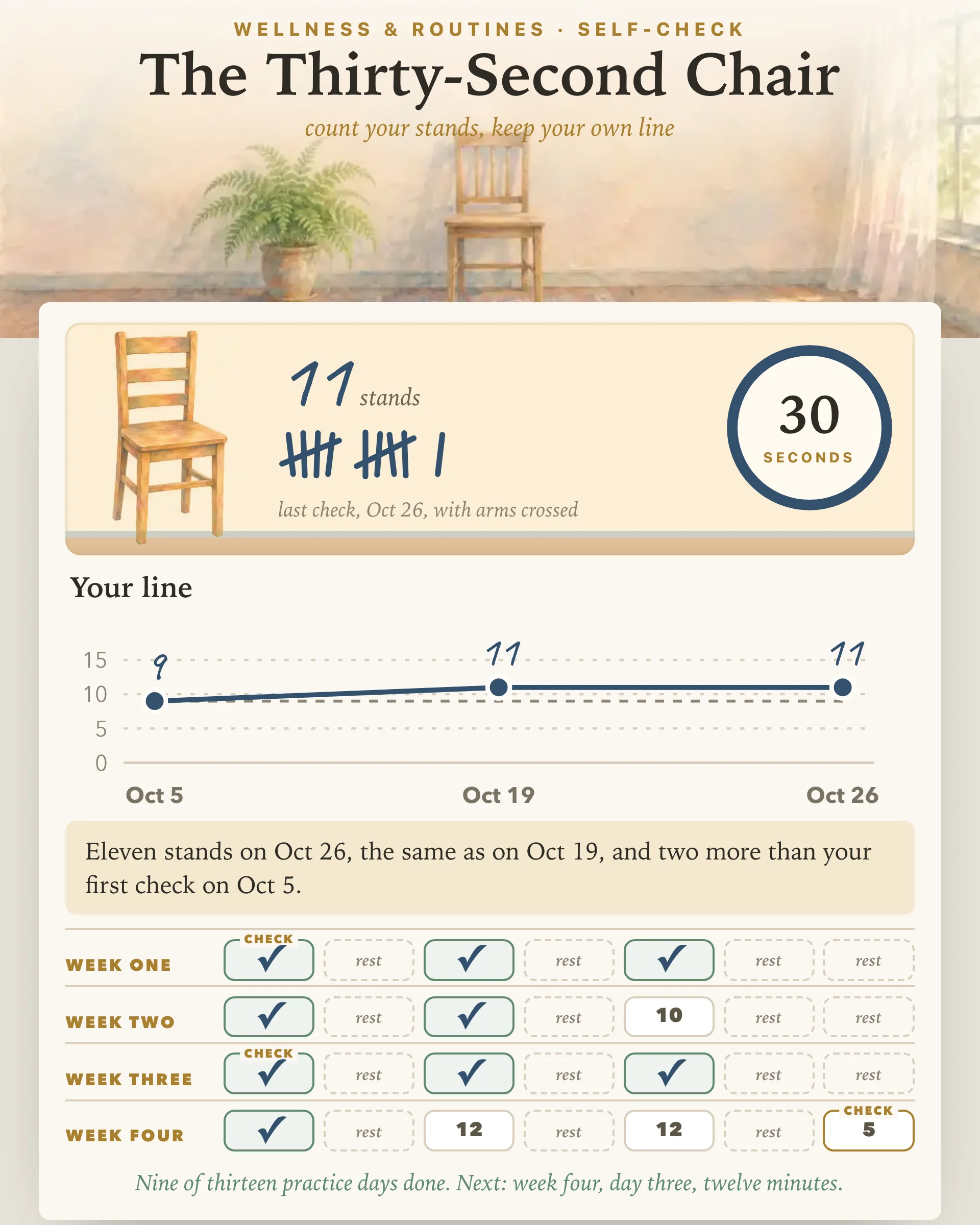
The Thirty-Second ChairA thirty-second chair stand self-check: a timer, a painted chair you tap at each full stand, and a dated log drawn as a line of your own results, with a four-week sit-to-stand practice plan between checks.
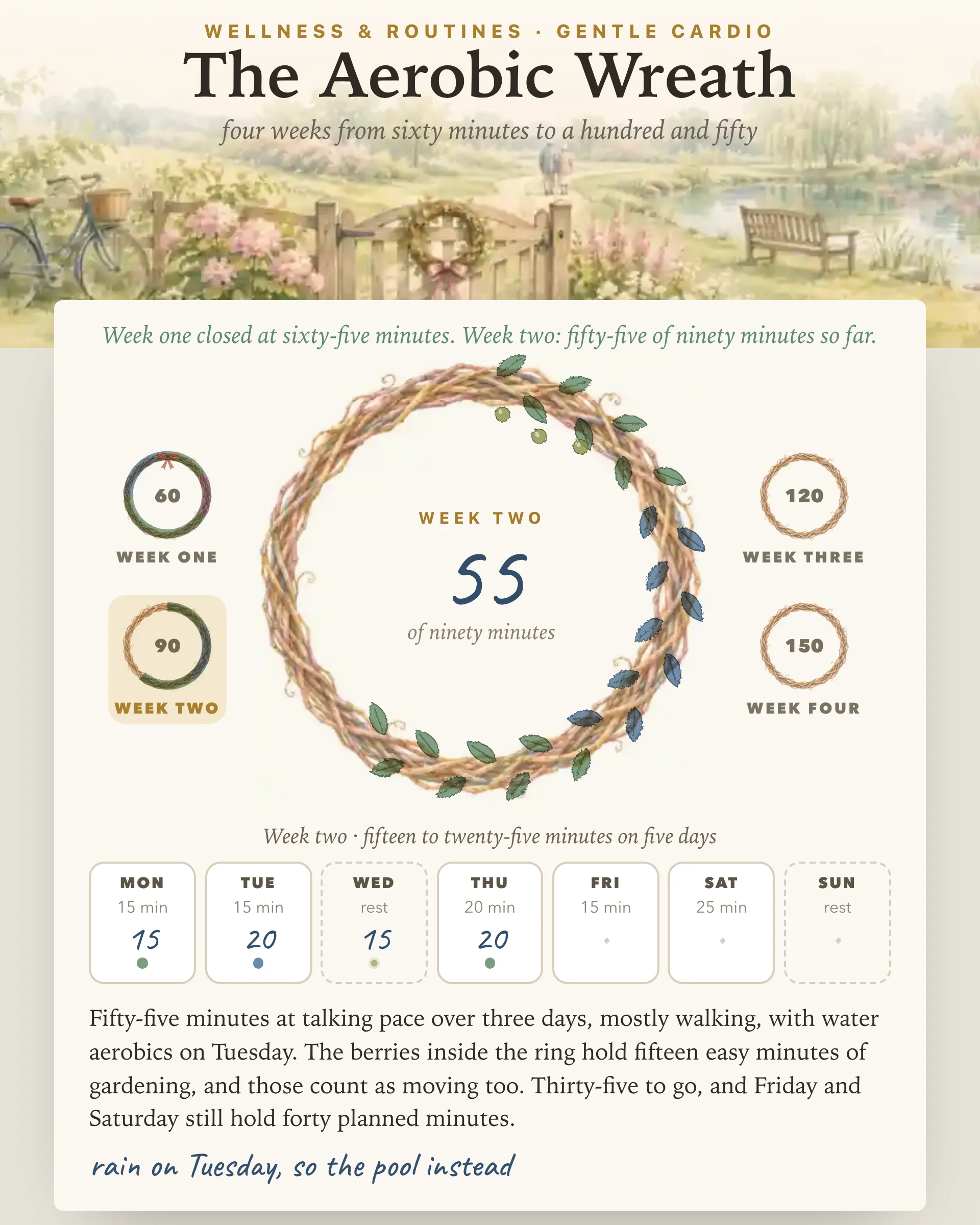
The Aerobic WreathA four-week cardio plan for older adults that grows from sixty to a hundred and fifty minutes a week. Log each walk, swim, dance or spell of gardening with the talk test, and watch the week's wreath fill with leaves until a bow ties the ring closed.
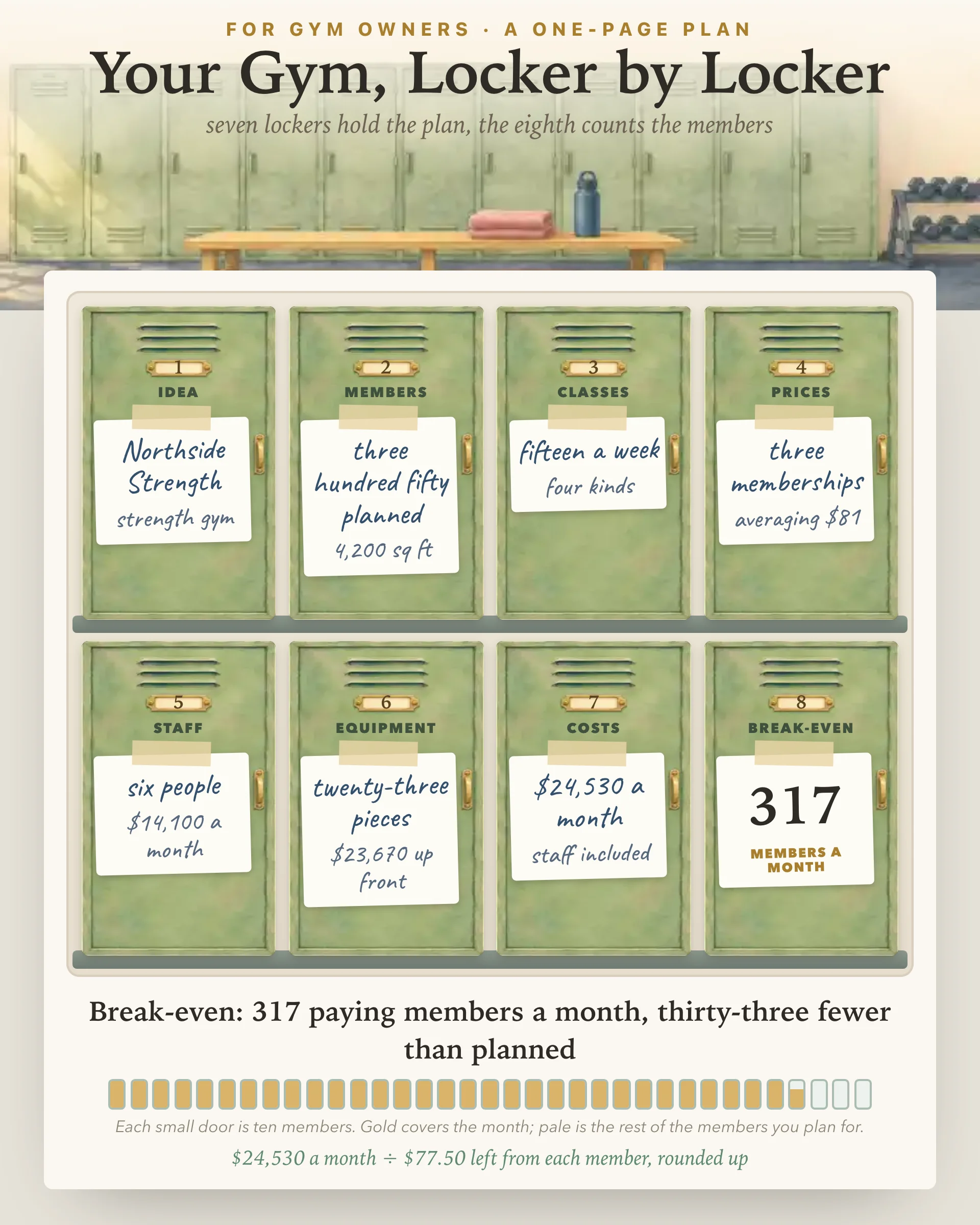
Your Gym, Locker by LockerFill seven painted lockers with your gym or studio plan, from the idea and the memberships to staff, equipment and monthly bills, and the eighth works out how many paying members cover a month from your own numbers. Personalize saves the planner to a free Salon account, by the makers of Fabulous.
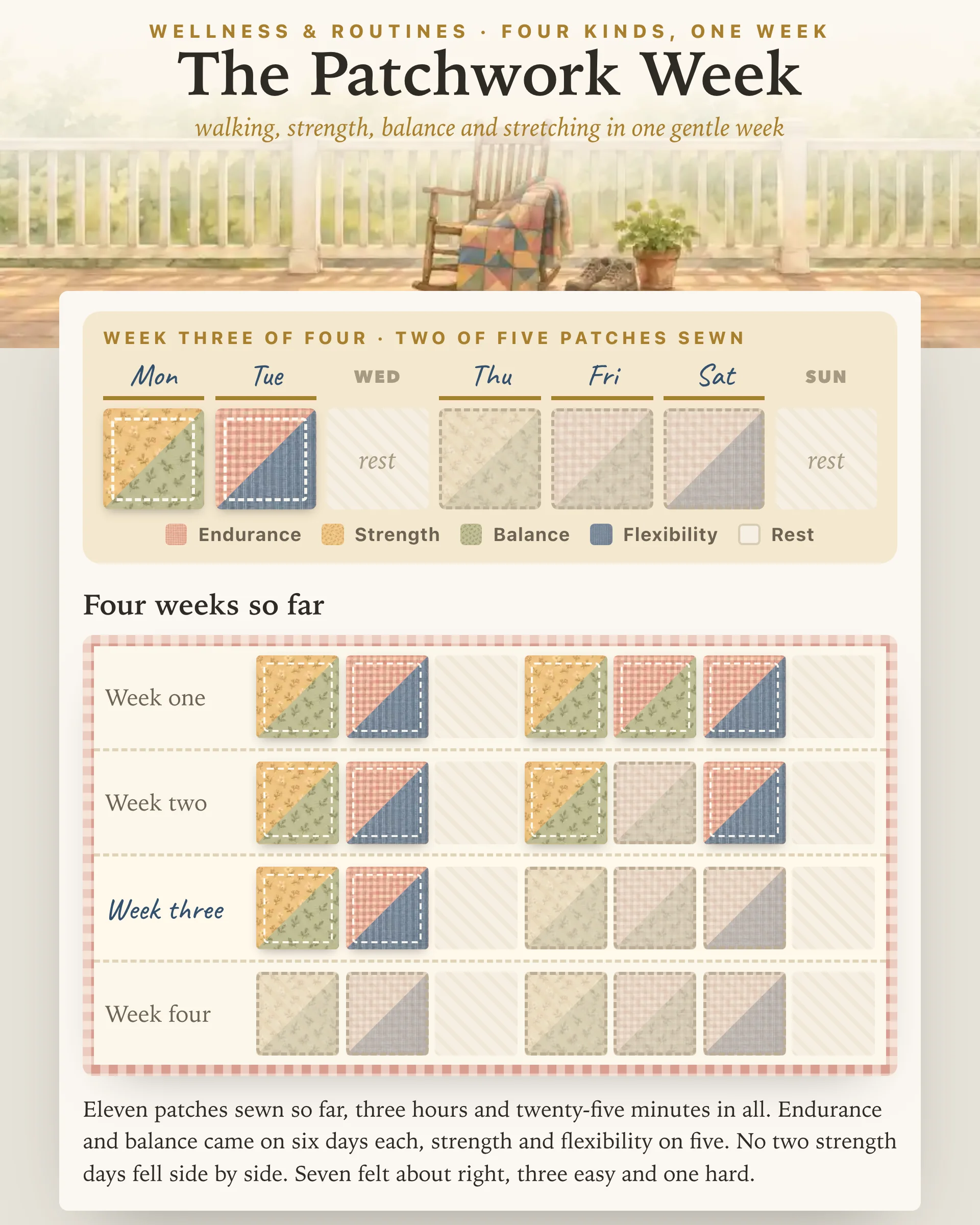
The Patchwork WeekA whole week of exercises for older adults, pieced like a quilt: pick your moving days and each one gets a short session pairing two of the four kinds, endurance, strength, balance and flexibility. Sew a patch when you finish, and four weeks show how many days each kind got.
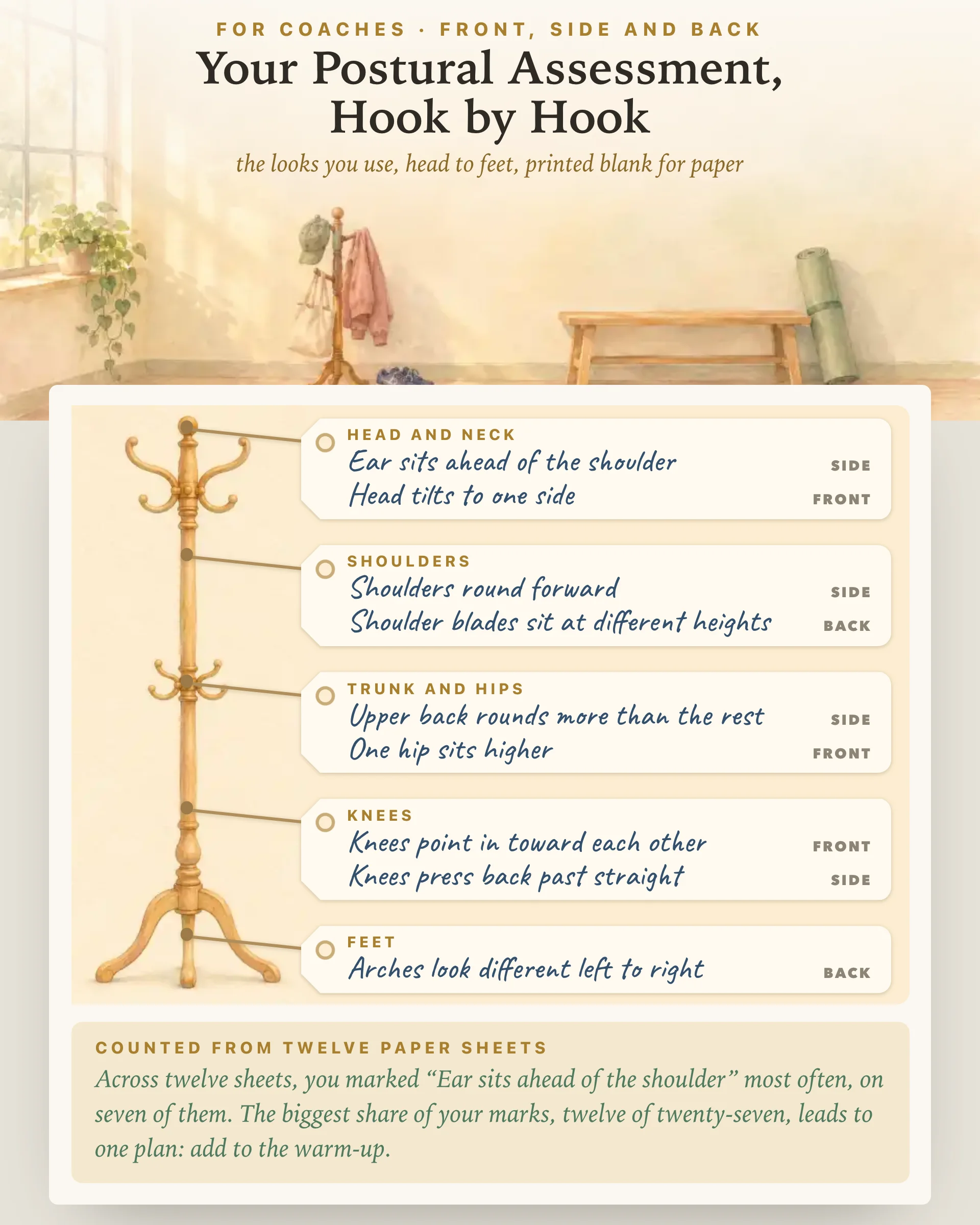
Your Postural Assessment, Hook by HookHang the looks you check at each height of a coat stand, from head to feet, word each one and choose what you do if you see it, then print a blank sheet to fill in on paper and count your sheets for a reading. Personalize saves the planner to a free Salon account, by the makers of Fabulous.
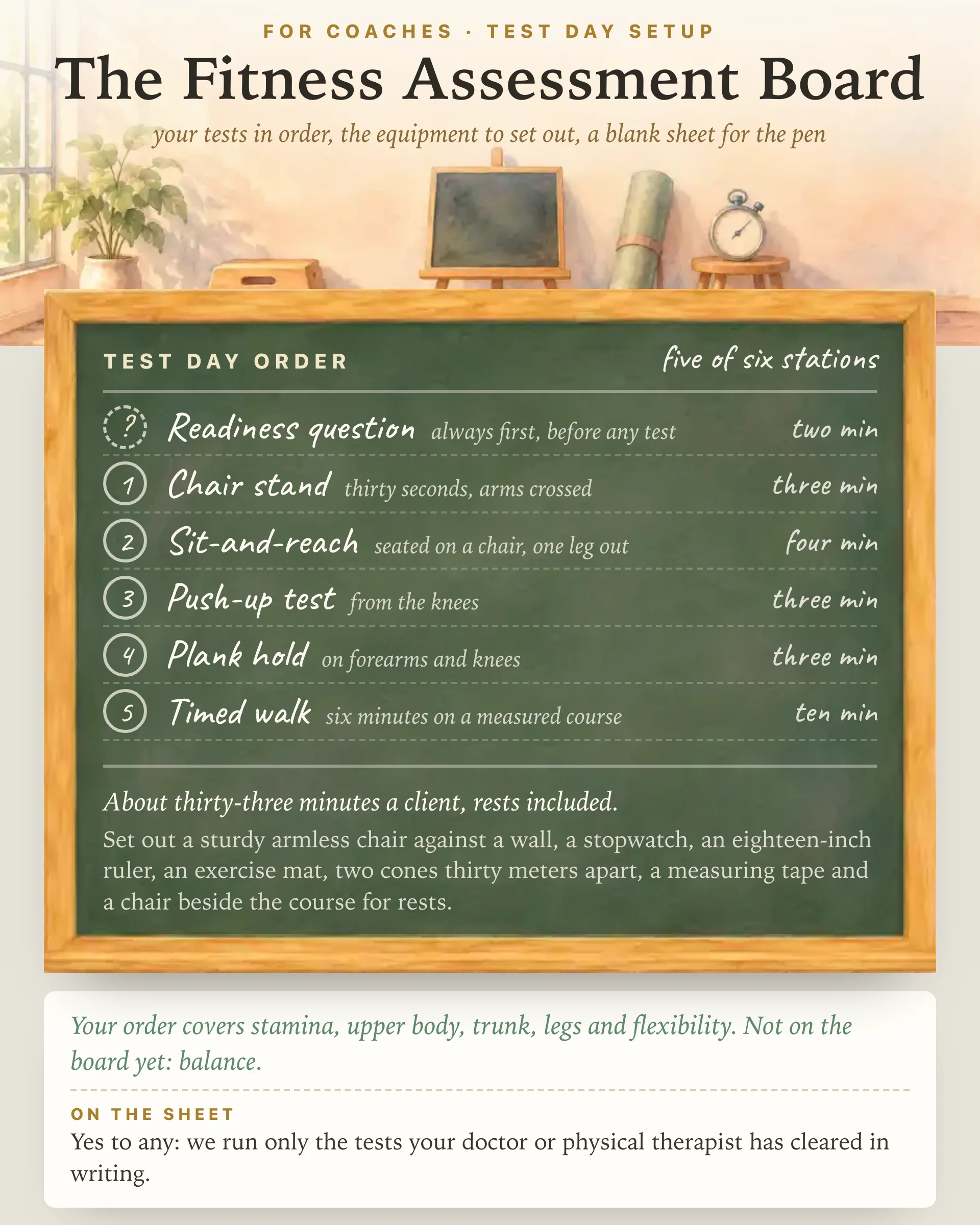
The Fitness Assessment BoardChalk up the tests you run, from a push-up test to a timed walk, in your order, each with how to run it safely and when to hold it back. The board adds up the minutes and the equipment and builds a blank sheet to fill in on paper. Personalize saves the planner to a free Salon account, by the makers of Fabulous.
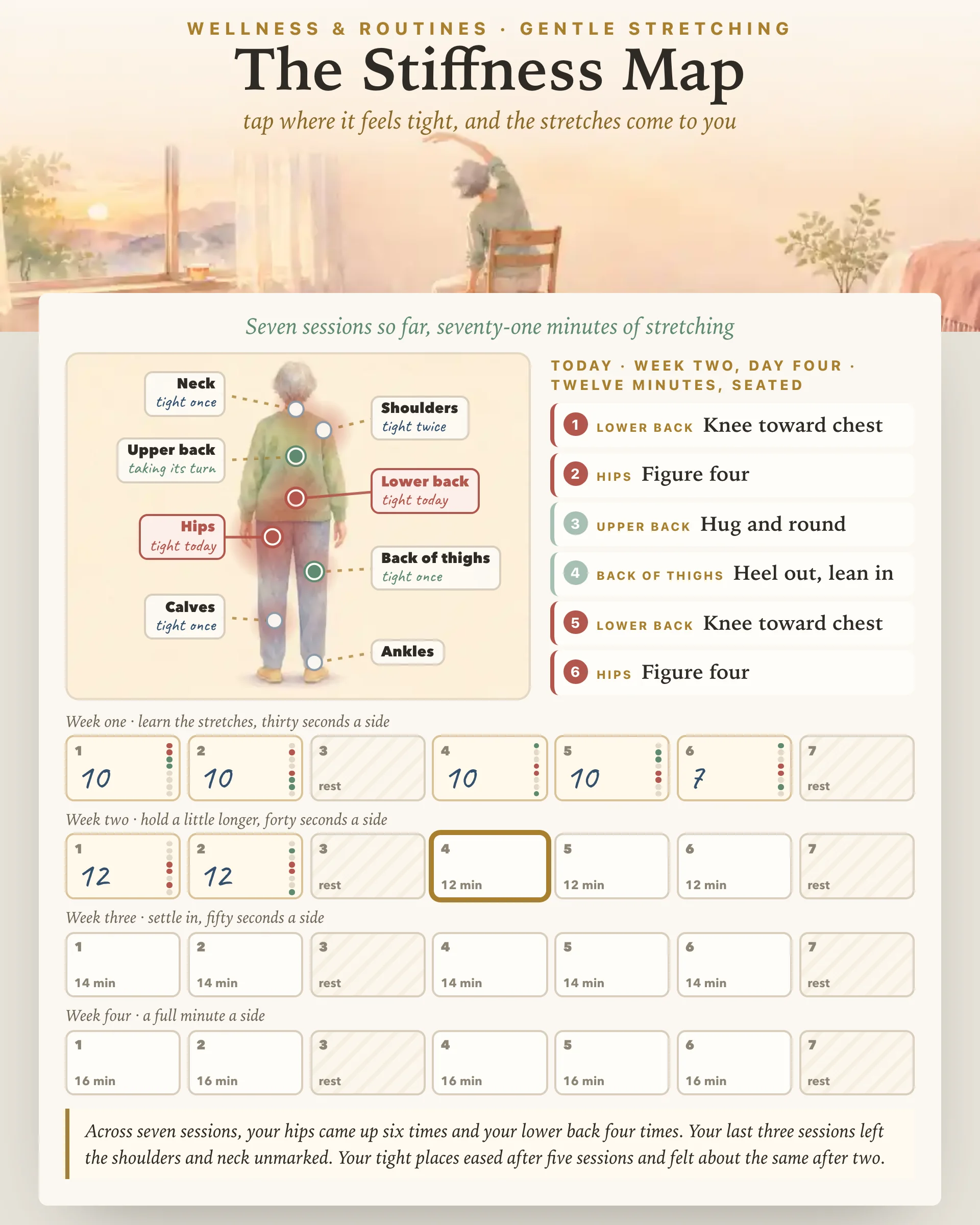
The Stiffness MapTap the places that feel tight today on a painted figure, and the sheet builds six gentle stretches, seated or standing at a counter, with a hold timer that grows from thirty seconds to a minute over a four-week plan.
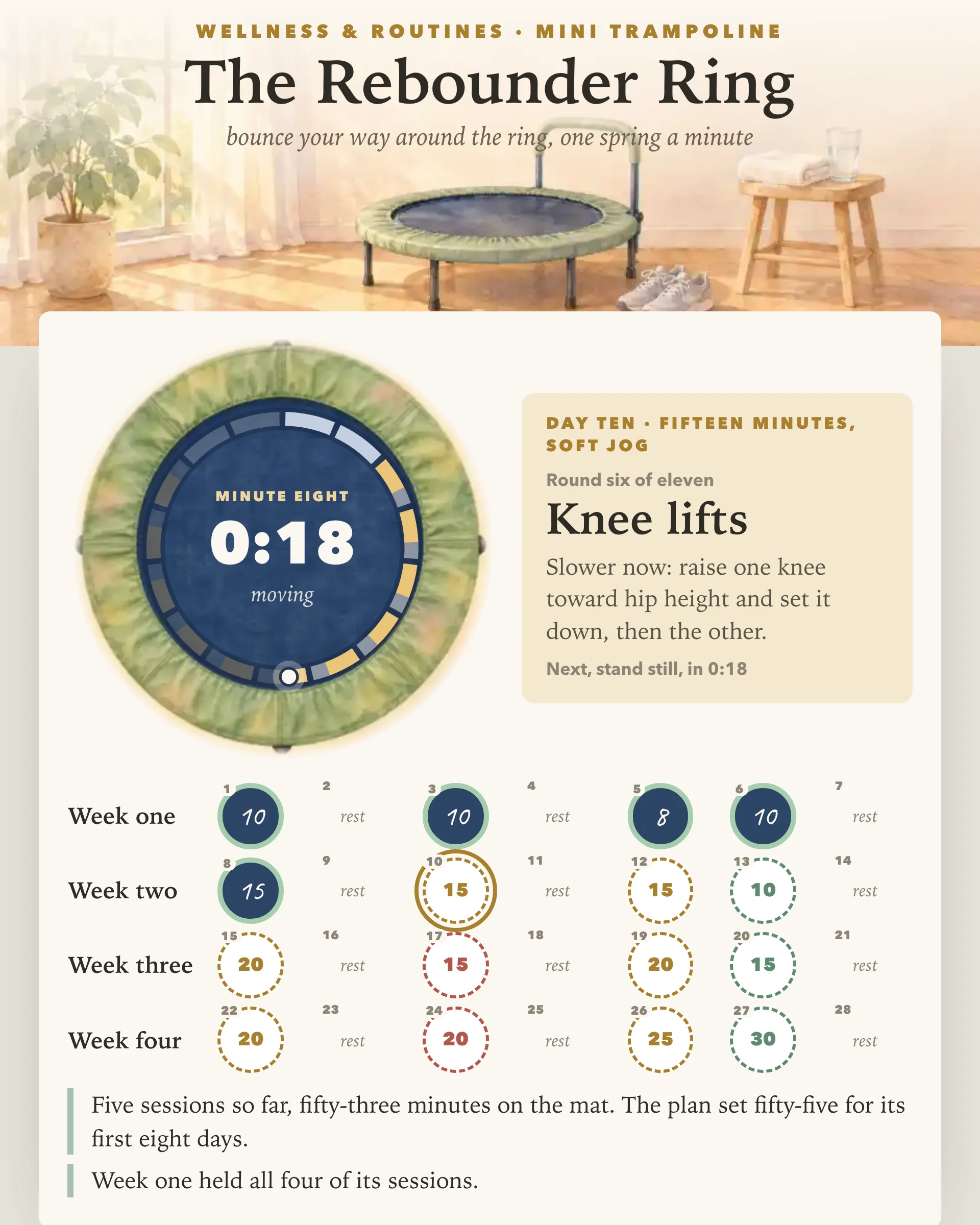
The Rebounder RingPick a level, from the gentle health bounce to small jacks and twists, and ten to thirty minutes, and the rim of a painted rebounder becomes a ring of one-minute springs. A timer that keeps real time walks you round by round, and four weeks of sessions fill in as you bounce them.
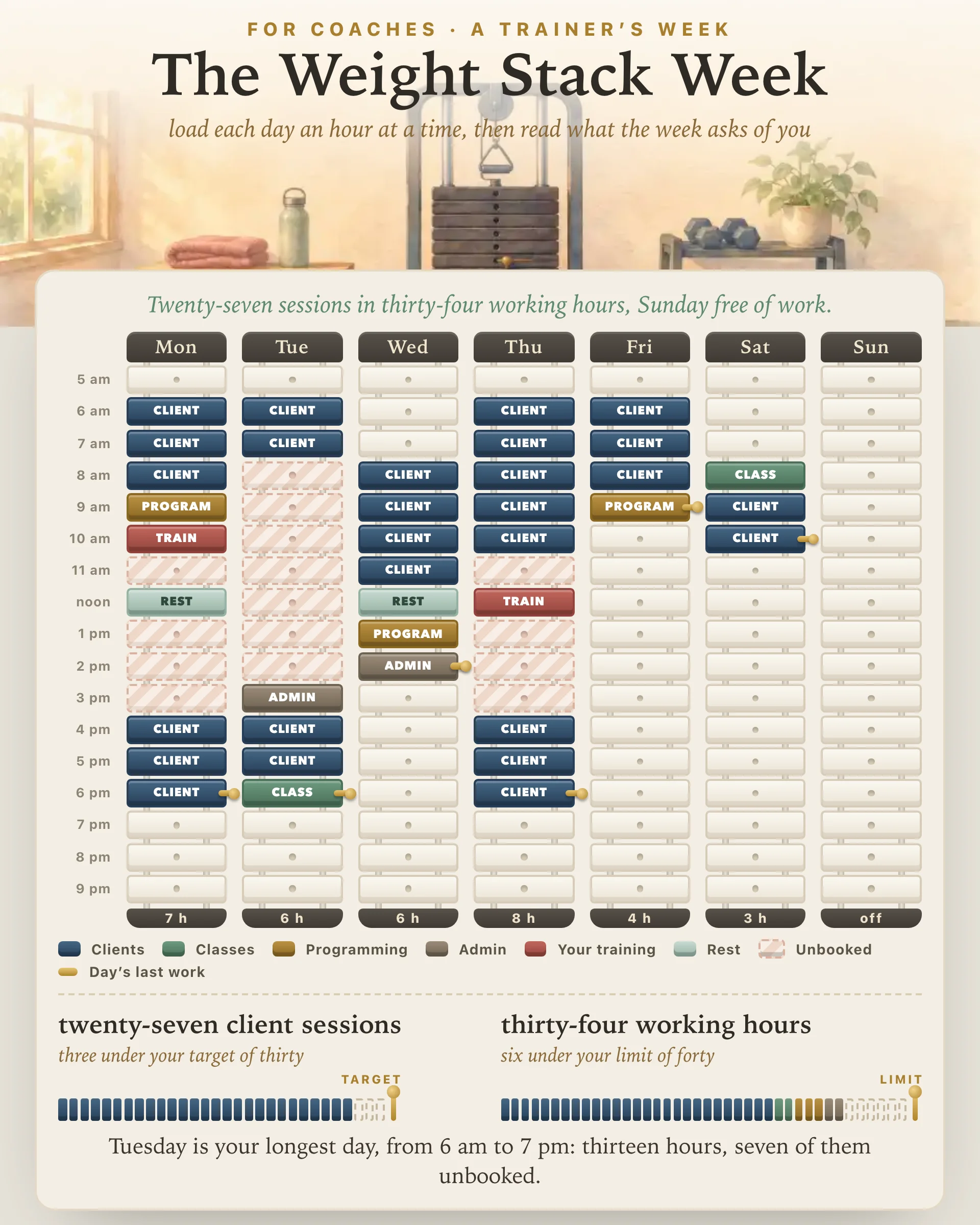
The Weight Stack WeekLoad seven weight stacks, one plate an hour, with client sessions, classes, programming, admin, your own training and rest, and the week reads back its load: sessions against your target, working hours against your limit, your longest day and its unbooked hours. Personalize saves the planner to a free Salon account, by the makers of Fabulous.
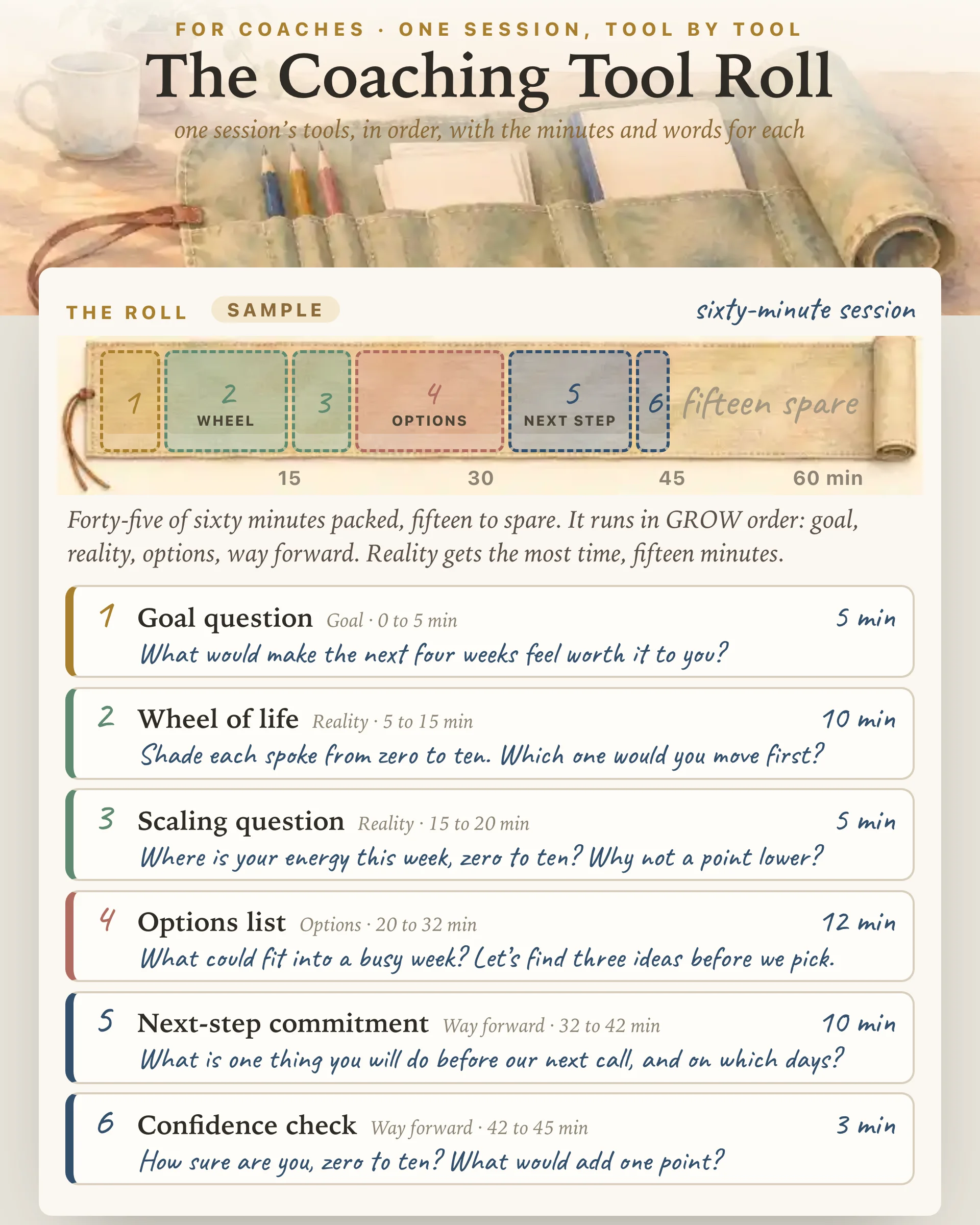
The Coaching Tool RollSlot classic coaching tools into a canvas roll in the order you will use them, from the wheel of life and the GROW questions to a scaling question and a next step, give each one its minutes and your own wording, and the roll shows how your session fills its time. Personalize saves the planner to a free Salon account, by the makers of Fabulous.
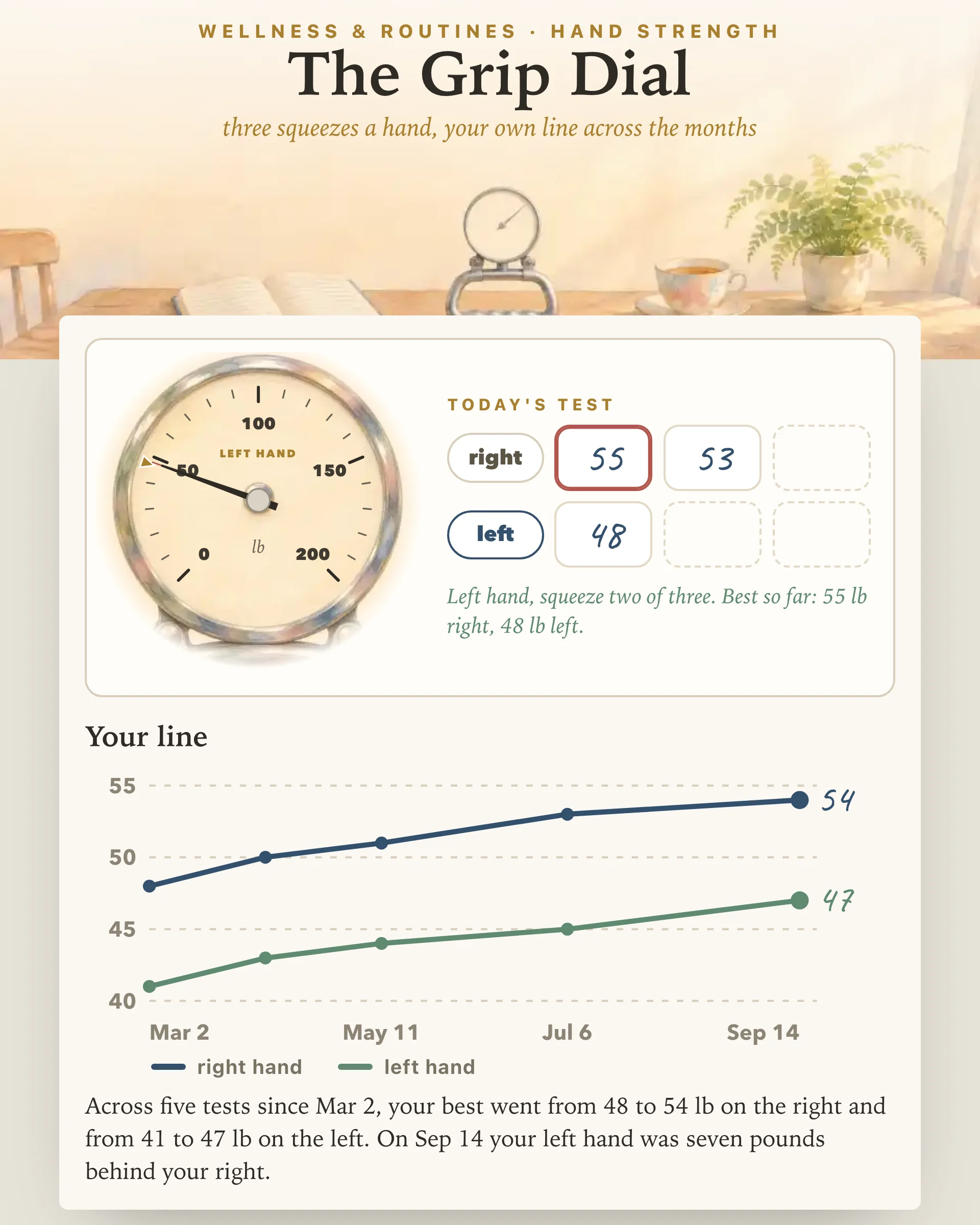
The Grip DialLog a grip strength test on a dynamometer dial: three seated squeezes a hand, the best one kept, in pounds or kilograms. Each saved test adds to a line of both hands over the months, with four weeks of practice between tests.
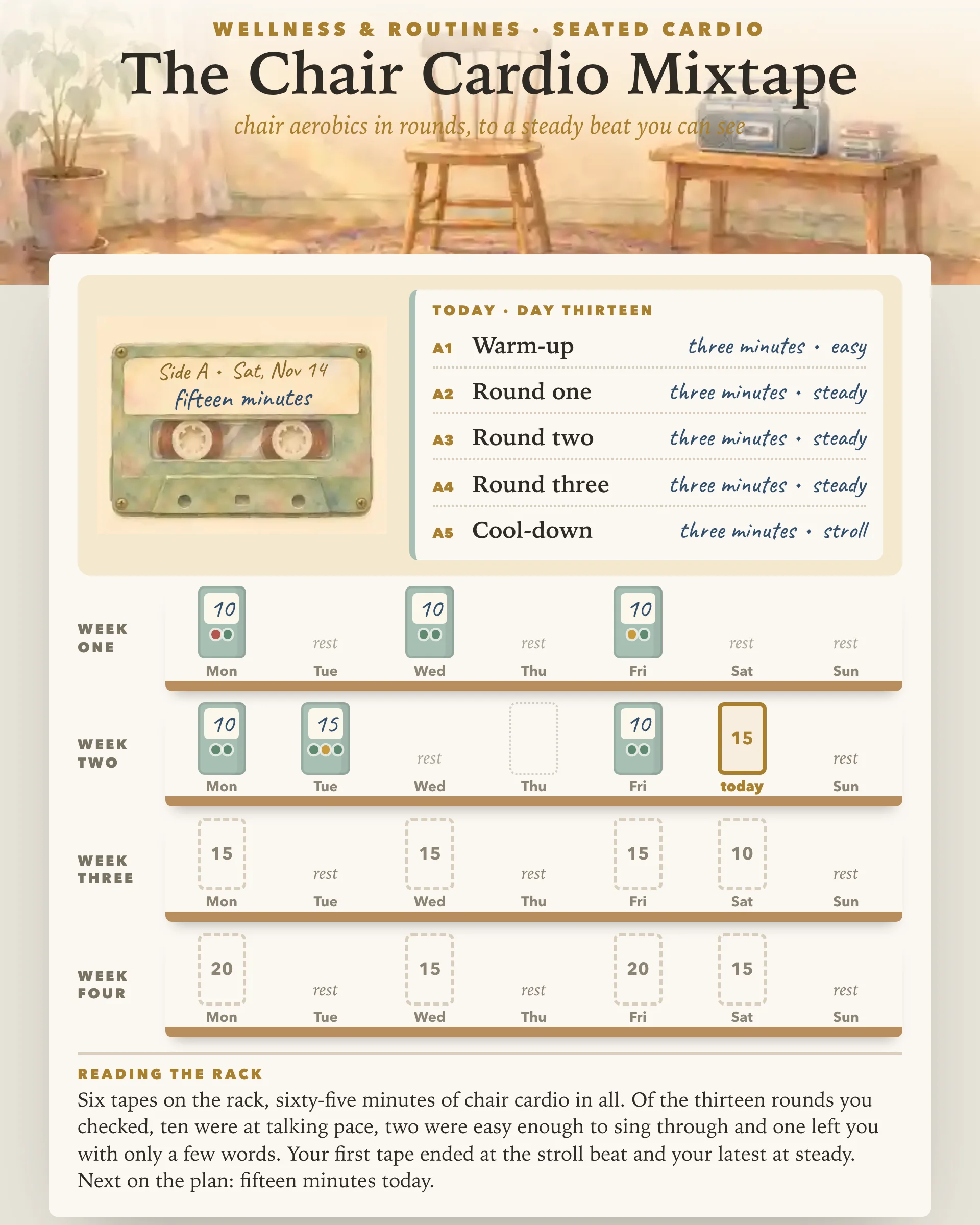
The Chair Cardio MixtapeChair aerobics played like a mixtape: pick ten, fifteen or twenty minutes and follow a flashing beat through rounds of seated marches, punches, heel taps and skaters, let a talk test after each round set the pace, and shelve a tape on a four-week rack for every session.
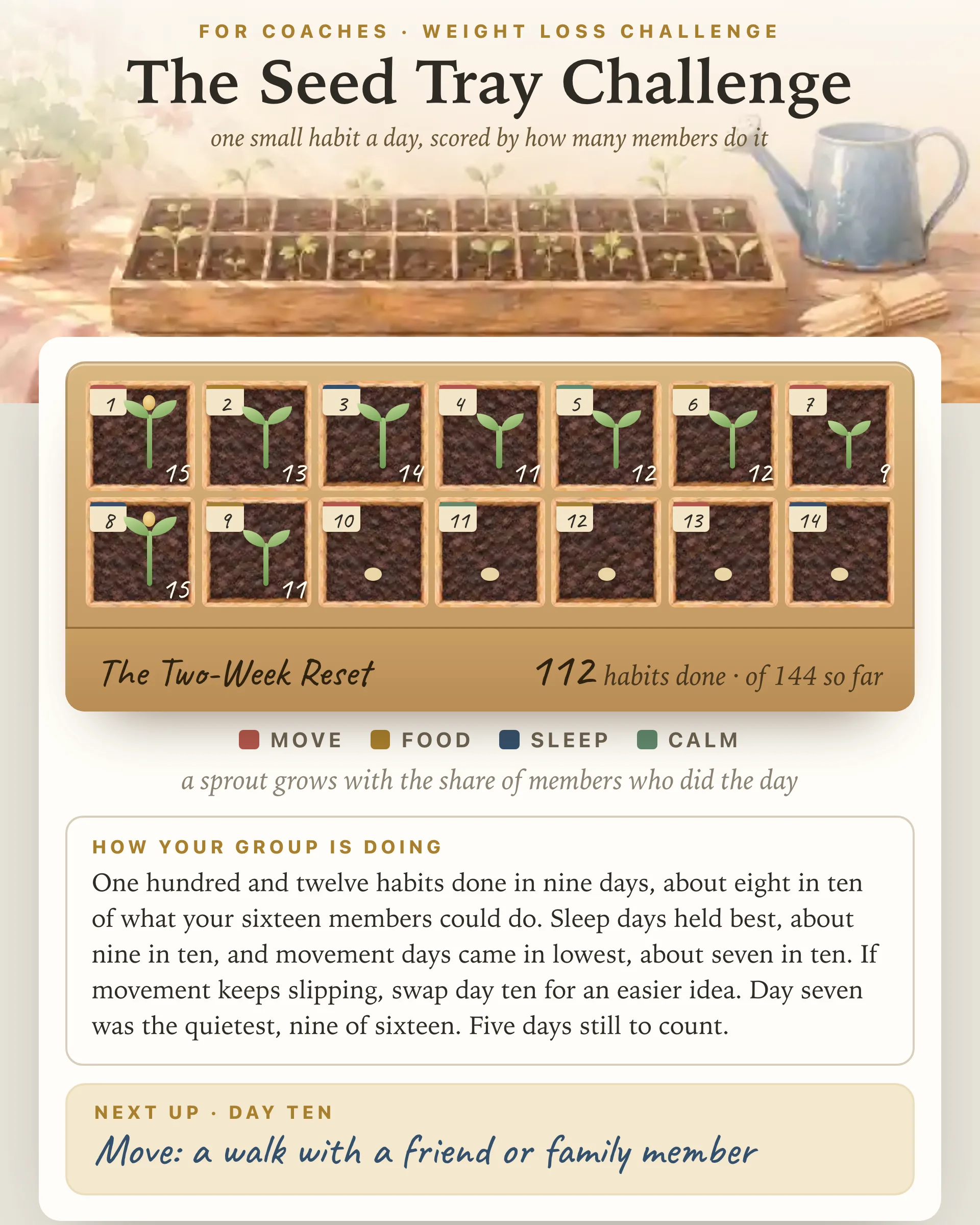
The Seed Tray ChallengePick a focus and seven to fourteen days fill with small habits for movement, food, sleep and calm. Count how many members did each one, and that day's sprout grows with the share, so the challenge is scored on habits done and never on weight. Personalize saves the planner to a free Salon account, by the makers of Fabulous.
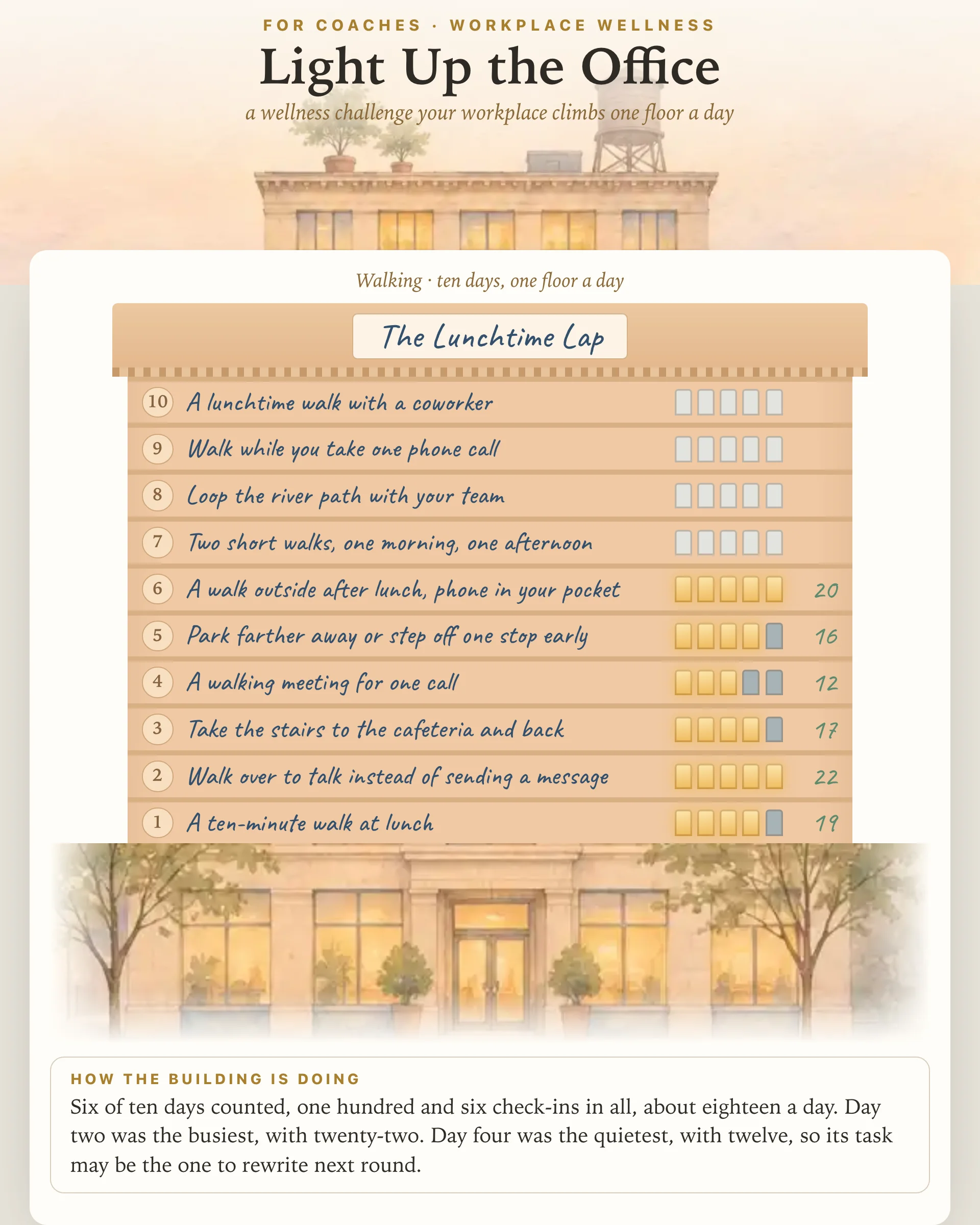
Light Up the OfficePick a theme and seven, ten or fourteen days, and every floor of an office building fills with one small task you can rewrite. After each day, count how many people joined in and watch the windows light up. Personalize saves the planner to a free Salon account, by the makers of Fabulous.
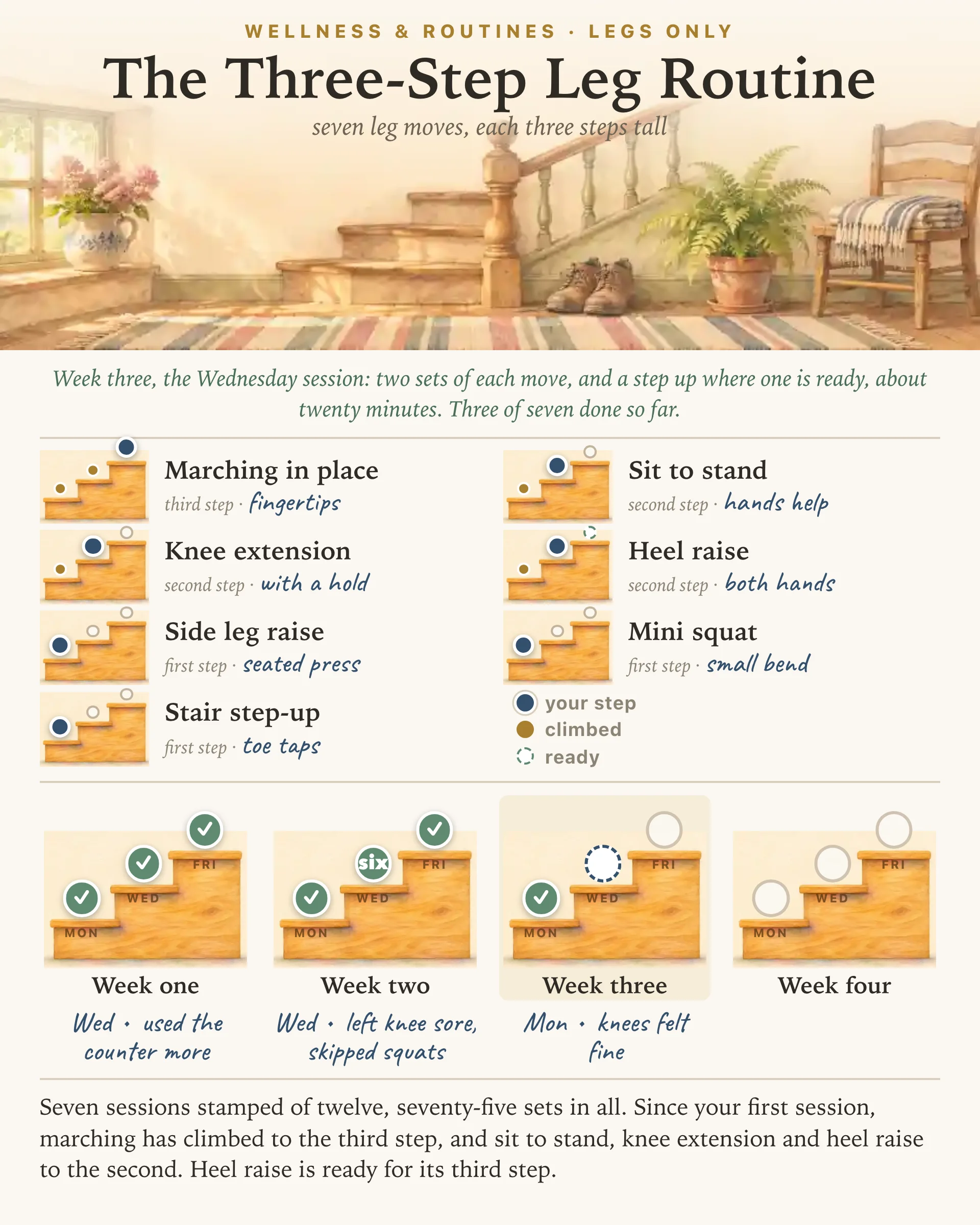
The Three-Step Leg RoutineSeven leg exercises for older adults, each painted as three steps: a seated or easiest version, a holding-on version and a fingertips version. Check off your sets, say how each move felt, and the page shows which step every move is on and when one is ready to climb, across four weeks of three short sessions.
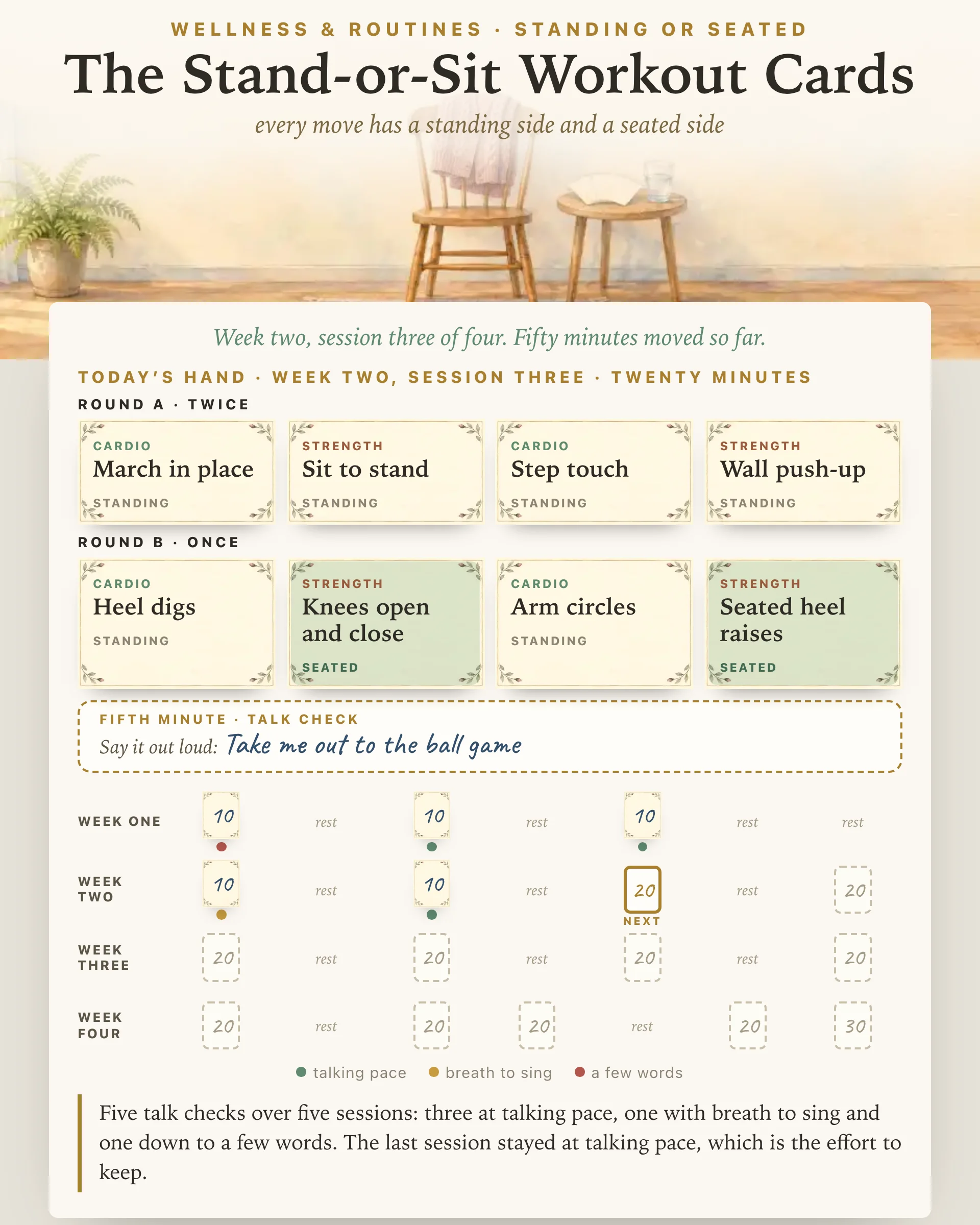
The Stand-or-Sit Workout CardsA low impact workout for older adults dealt as two-sided cards. Pick ten, twenty or thirty minutes, turn any move to its seated side, follow a timer that ends every round with a talk check, and fill four weeks of three to five sessions.
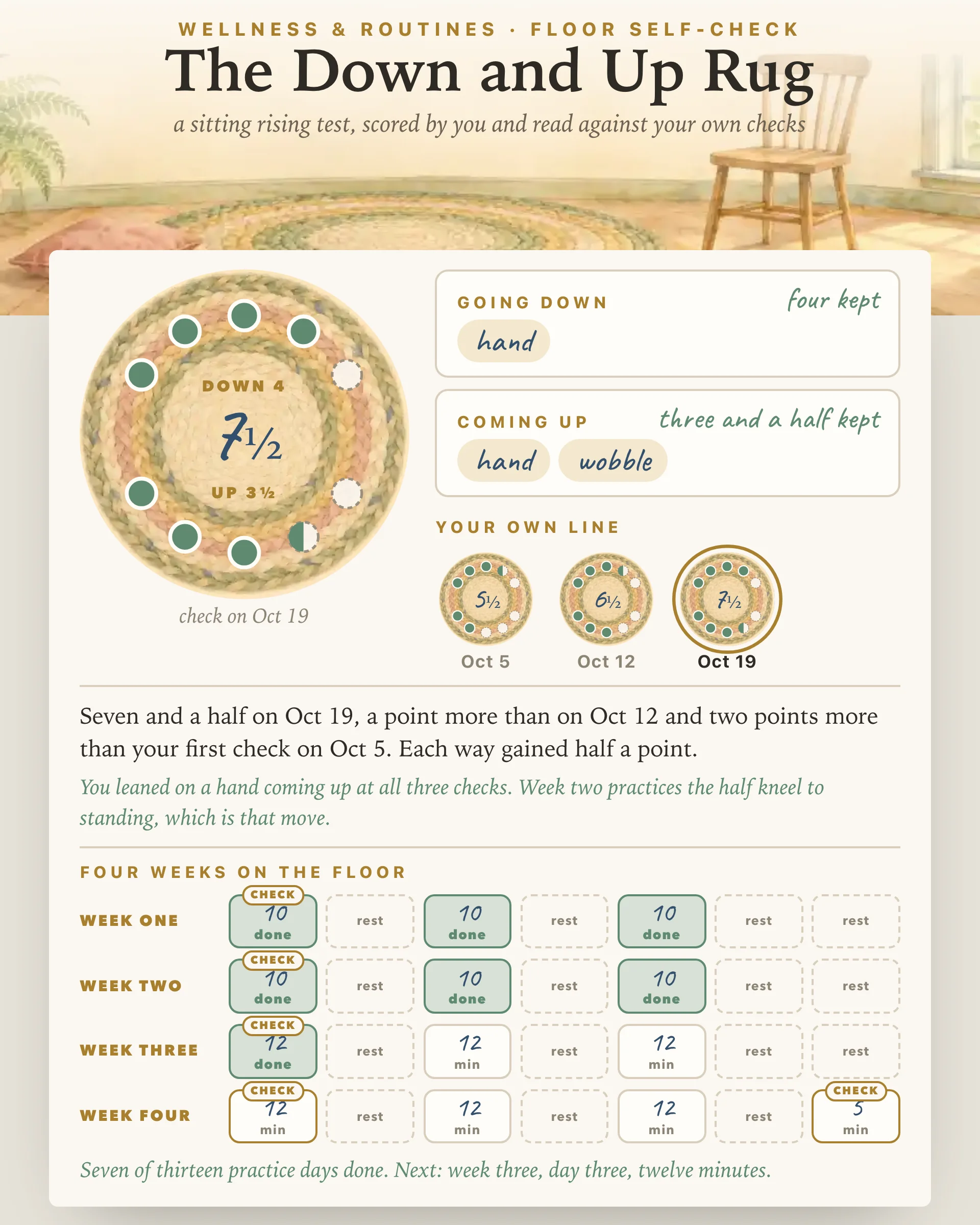
The Down and Up RugScore the sitting rising test on a painted rug: tap each hand, knee or wobble going down and coming up, keep a line of your own checks, and follow four weeks of floor practice between them.
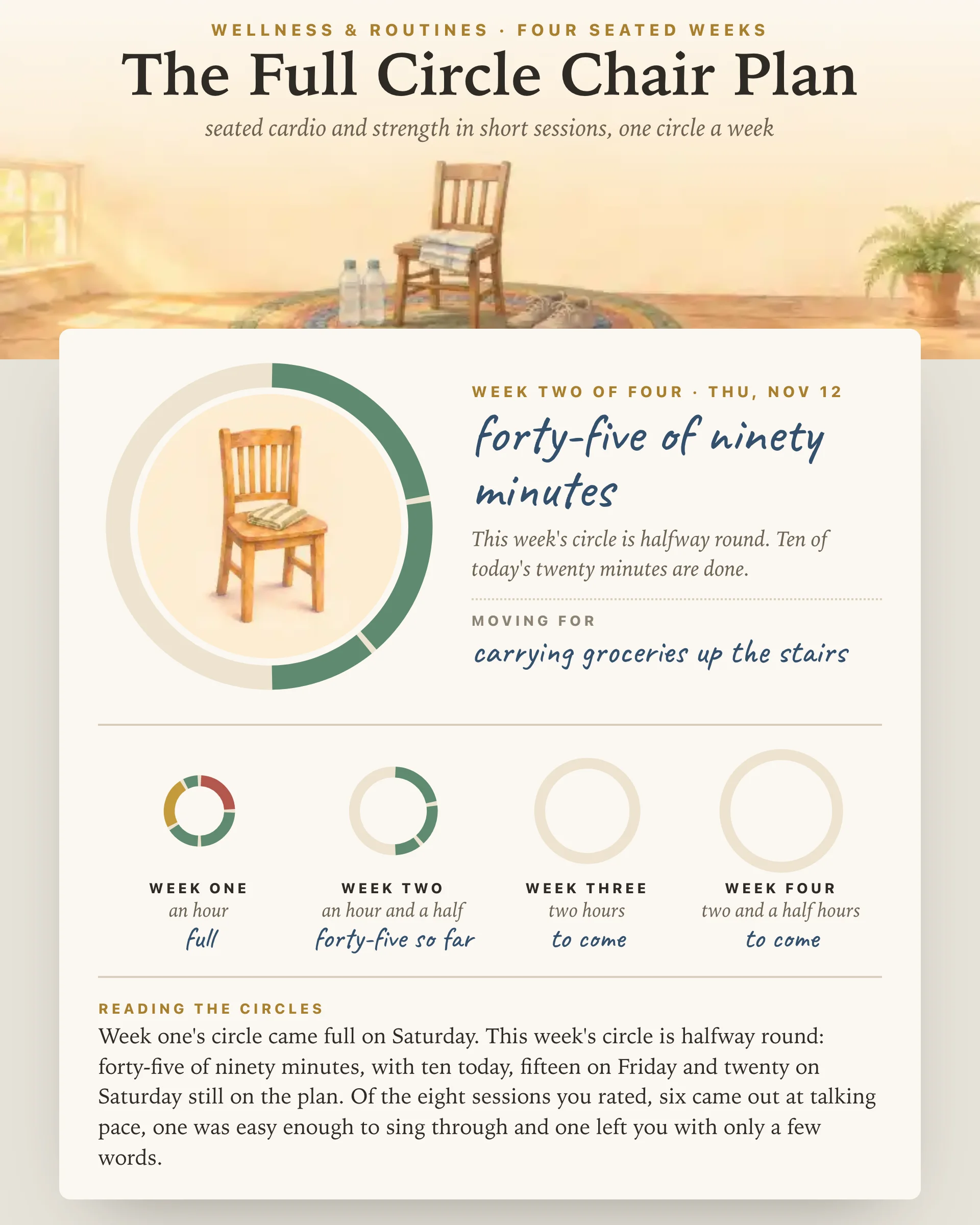
The Full Circle Chair PlanA four-week seated plan for moving more: timed sessions mix chair cardio rounds with sit to stand, towel rows and leg extensions, a talk test sets the effort, and each week's circle fills from one hour toward two and a half.
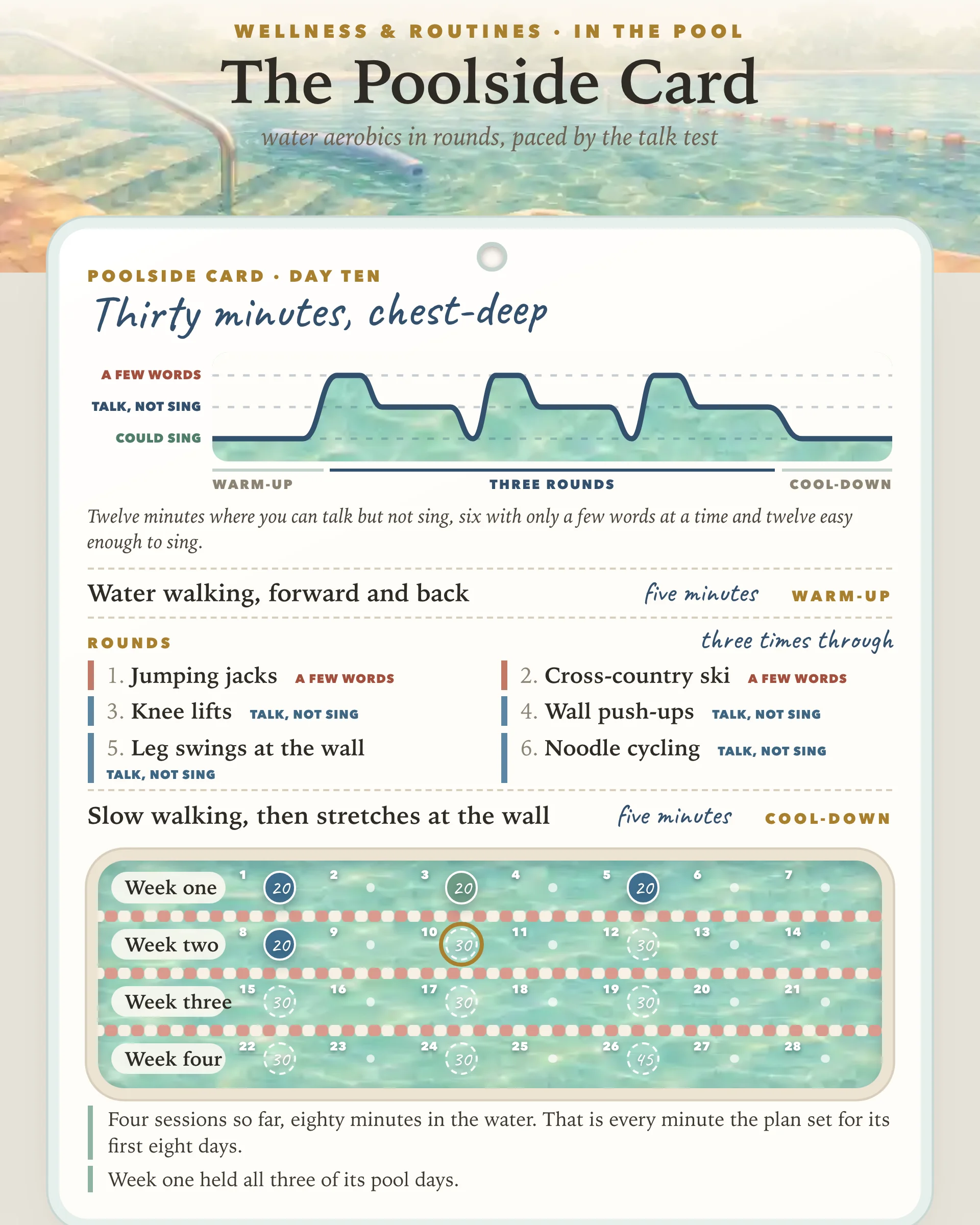
The Poolside CardA water aerobics card you set for waist-deep or chest-deep water and twenty, thirty or forty-five minutes. It lays out the warm-up, the rounds of pool exercises and the cool-down, draws each session's effort as a talk-test wave, and logs four weeks of pool days, one lane a week.
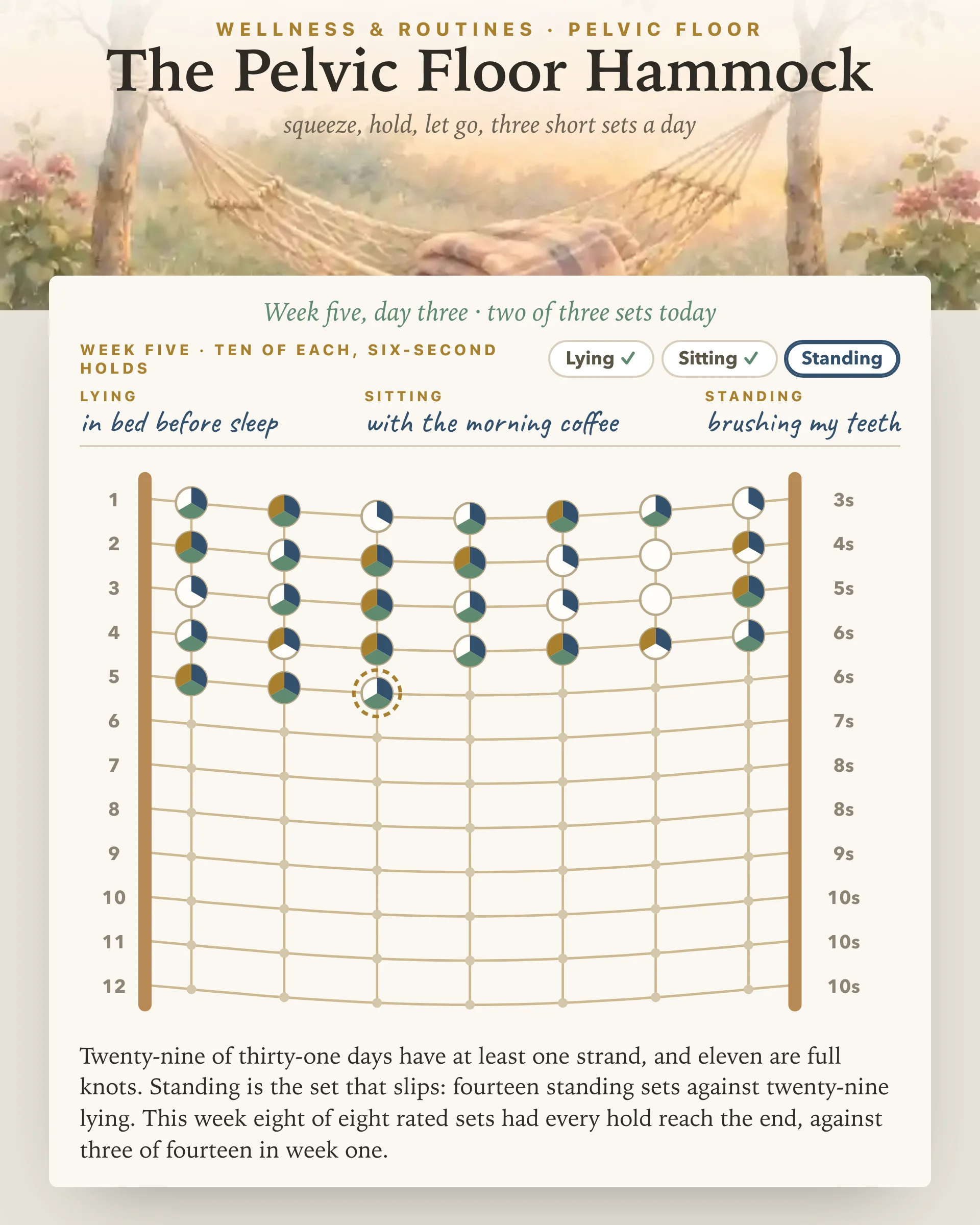
The Pelvic Floor HammockFind the right muscles, then squeeze and let go with a painted hammock that draws up and settles in real time. Three short sets a day, lying, sitting and standing, tie knots into a twelve-week net while the holds grow from three seconds to ten.
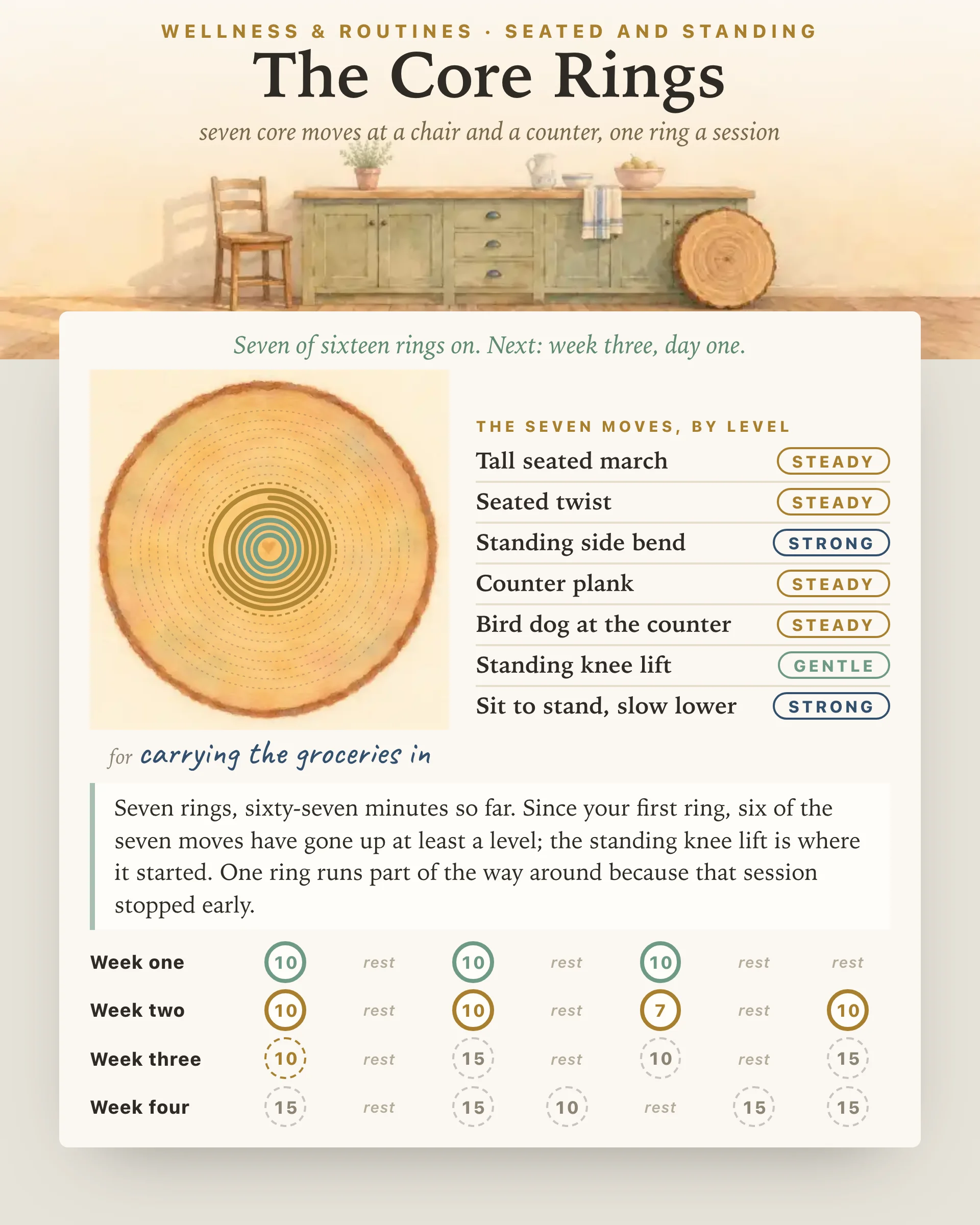
The Core RingsCore exercises for older adults that never go down to the floor: seven moves at a chair and a kitchen counter, each at a gentle, steady or strong level, a ten or fifteen minute timer, and a four-week plan where every session grows a ring on a tree trunk.
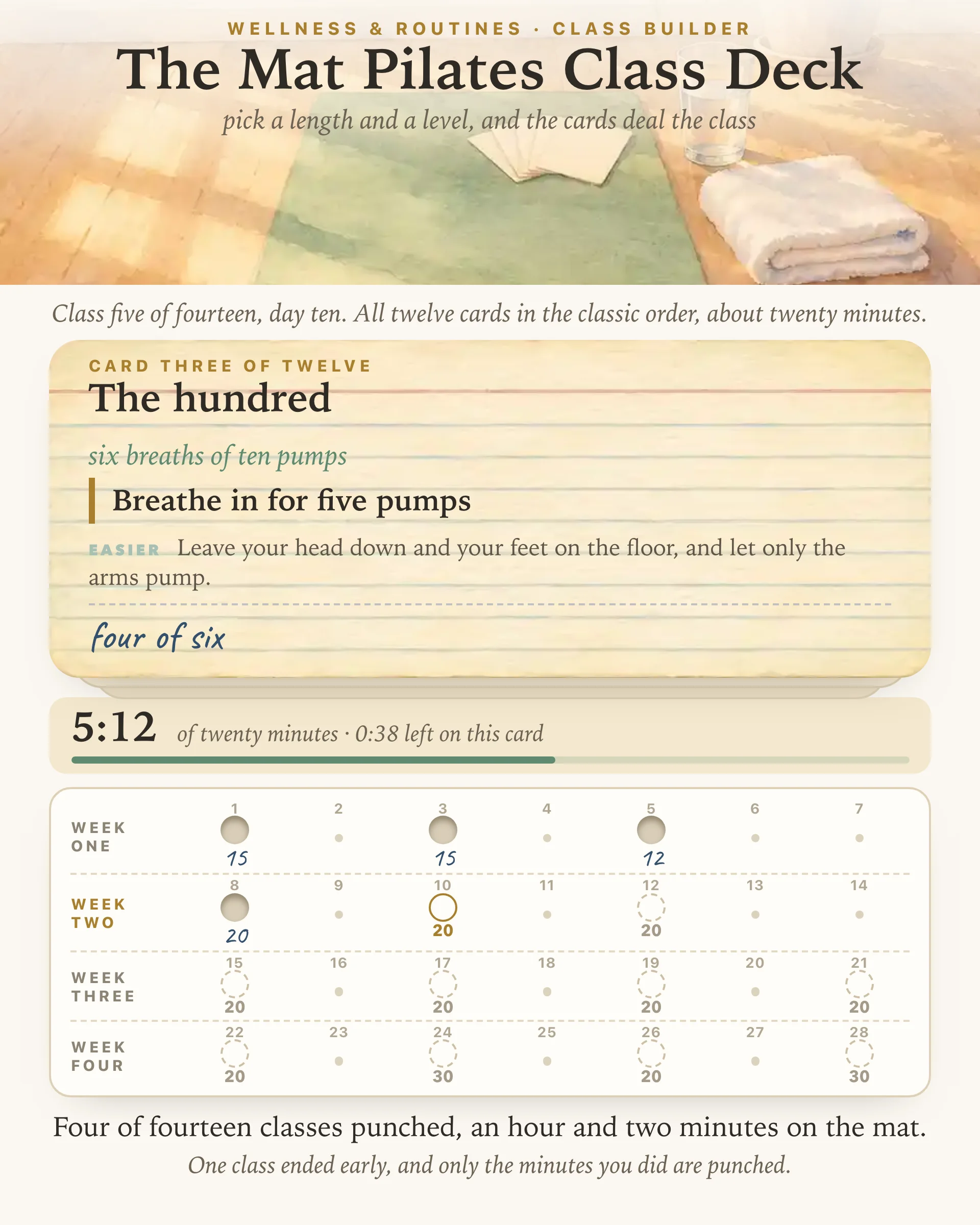
The Mat Pilates Class DeckChoose fifteen, twenty or thirty minutes and a beginner or intermediate level, and twelve cue cards deal you a mat class in the traditional order. Each card carries reps, cues and an easier version, while a rep counter and a real-time clock run the class and a four-week card punches every class you finish.
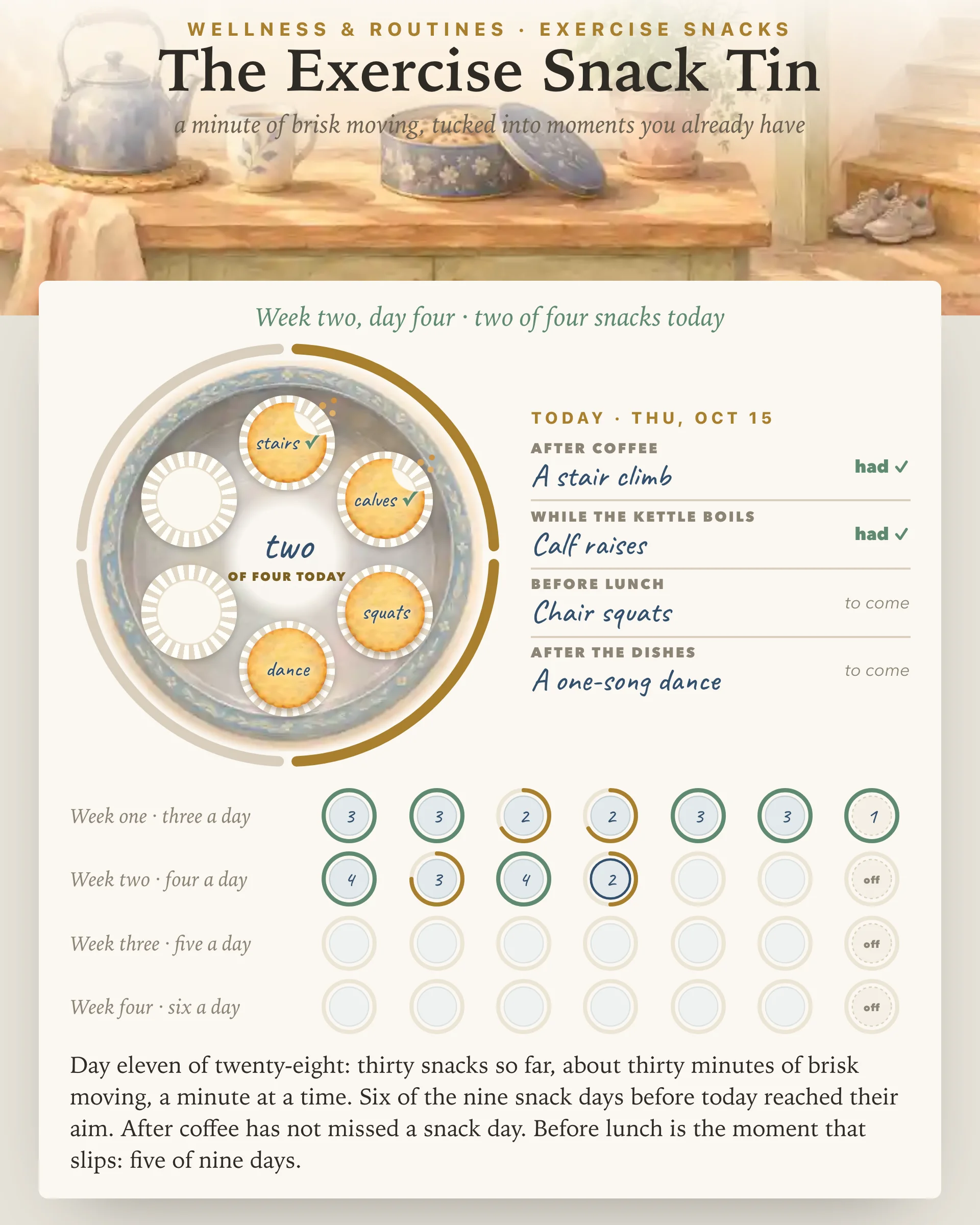
The Exercise Snack TinPack a painted tin with one-minute exercise snacks, each pinned to a moment you already have, like after coffee or while the kettle boils. Tap each one as you have it, and four weeks of small tins fill in as the plan climbs from three snacks a day to six.
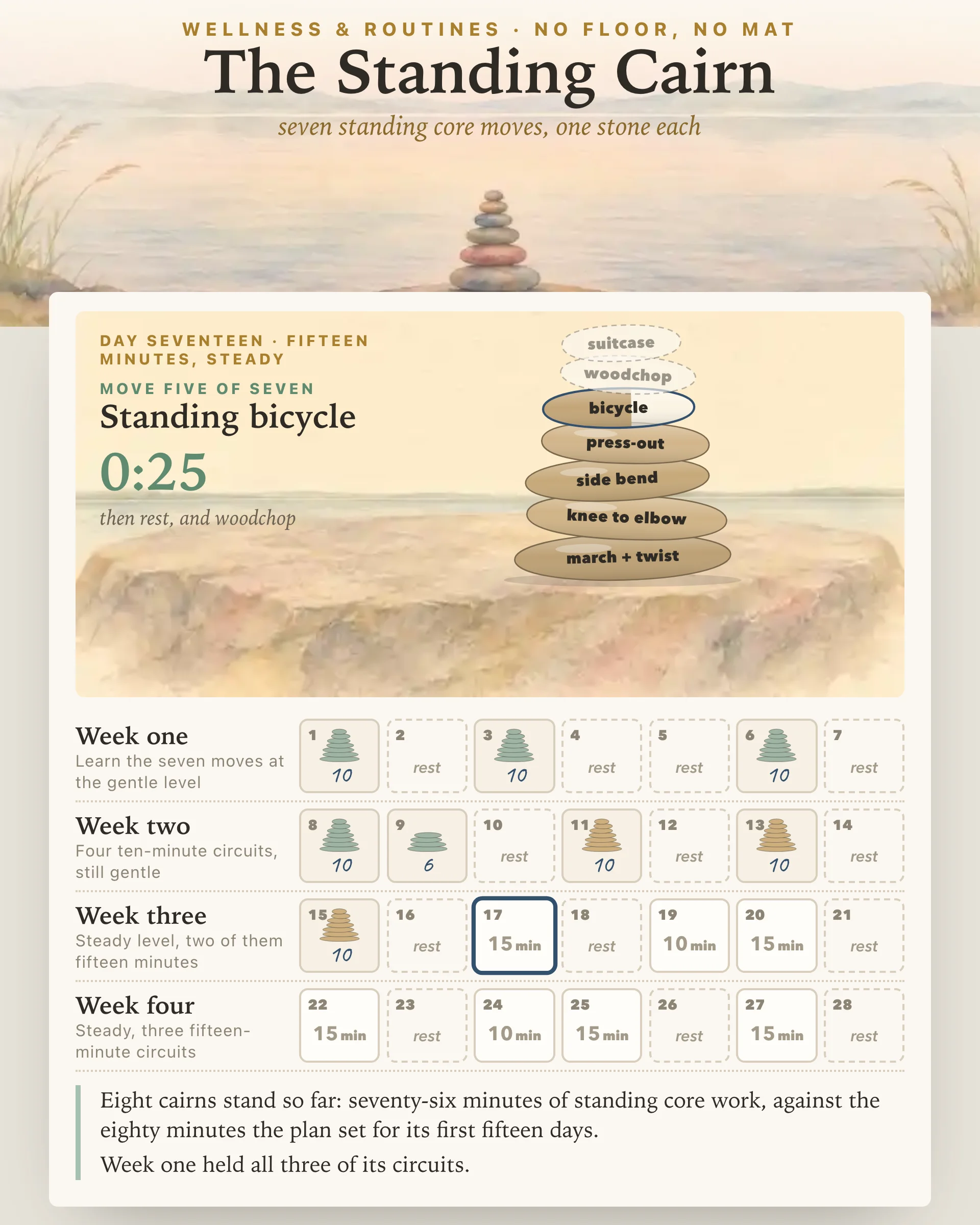
The Standing CairnA standing abs workout with nothing on the floor: seven core moves at a gentle, steady or strong level, timed for ten or fifteen minutes, where every finished move sets a stone on a cairn. Four weeks of circuits fill in as small cairns, with a plain reading of how they went.
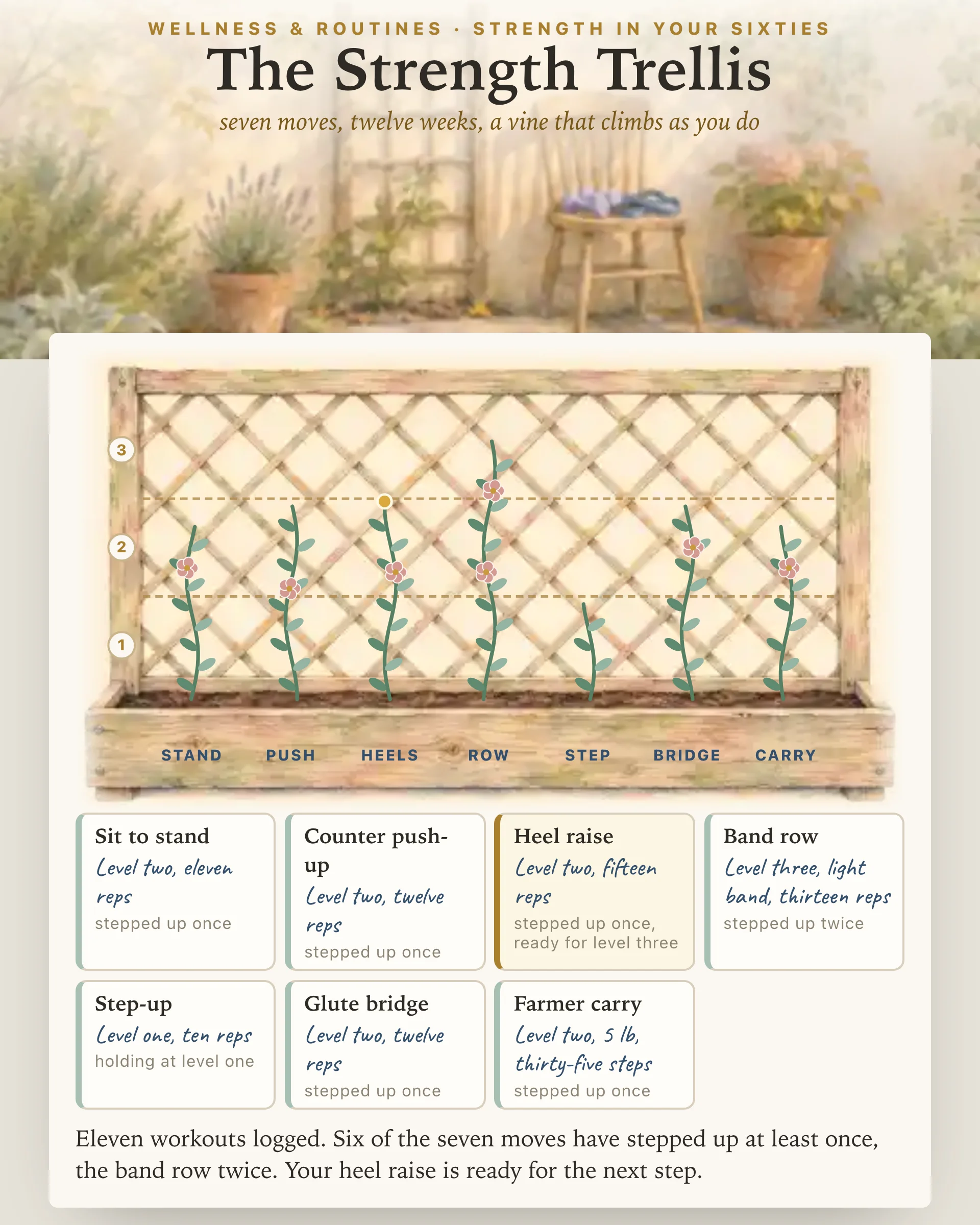
The Strength TrellisA twelve-week strength plan for women in their sixties, done at home with a chair, a band and light dumbbells. Log each move's level, weight and reps, watch its vine climb the trellis, and see a gold bud when it has earned the next step.
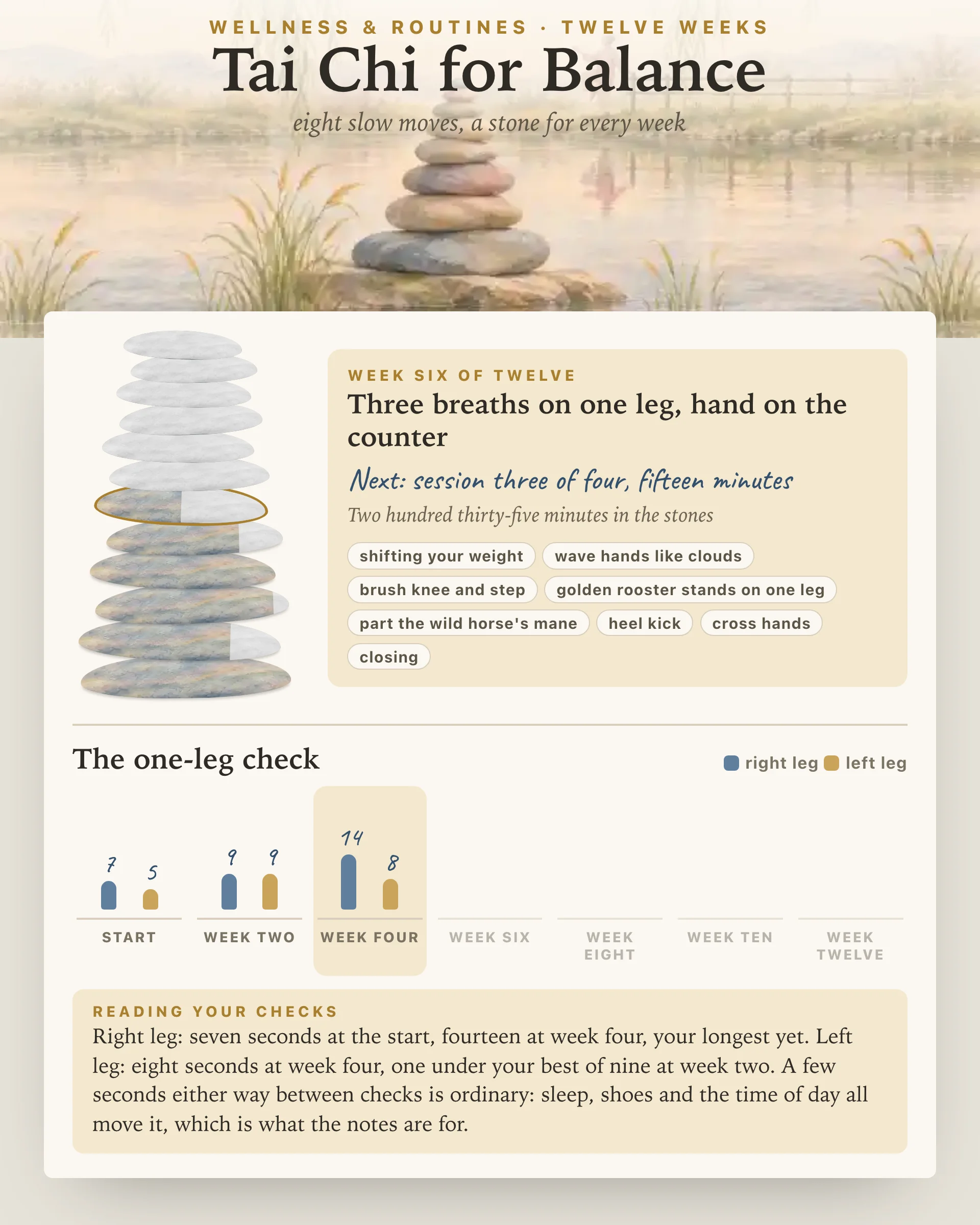
Tai Chi for BalancePractice eight slow tai chi moves at a kitchen counter with a clock that walks you through them, build a stack of twelve weekly stones as the minutes grow, and time a one-leg stand every two weeks against your own earlier times.
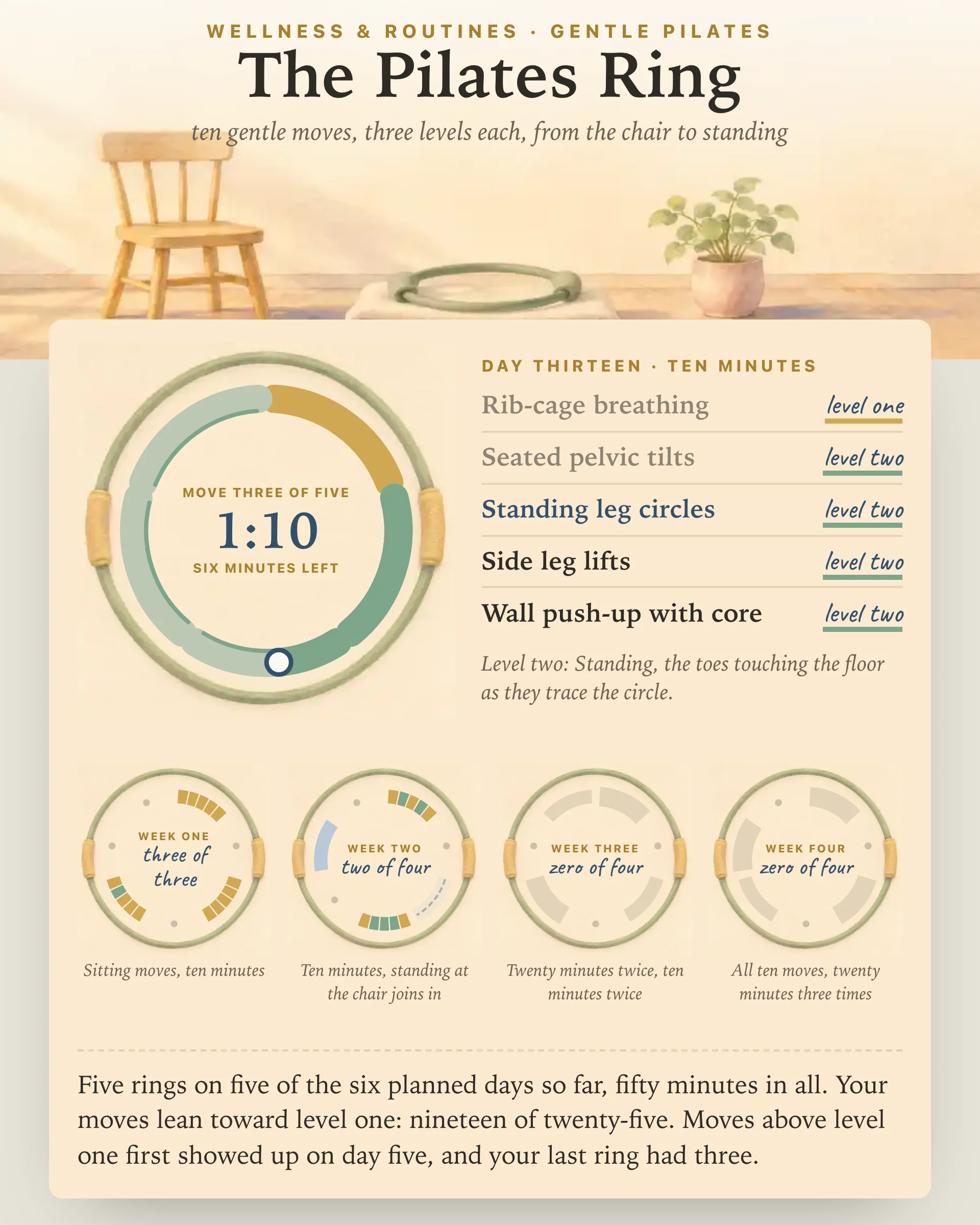
The Pilates RingTen gentle Pilates moves for older adults, each at three levels from the chair to standing. Build a ten or twenty minute ring, follow it as it fills in real time, and watch four weeks of rings shift from the chair toward standing.
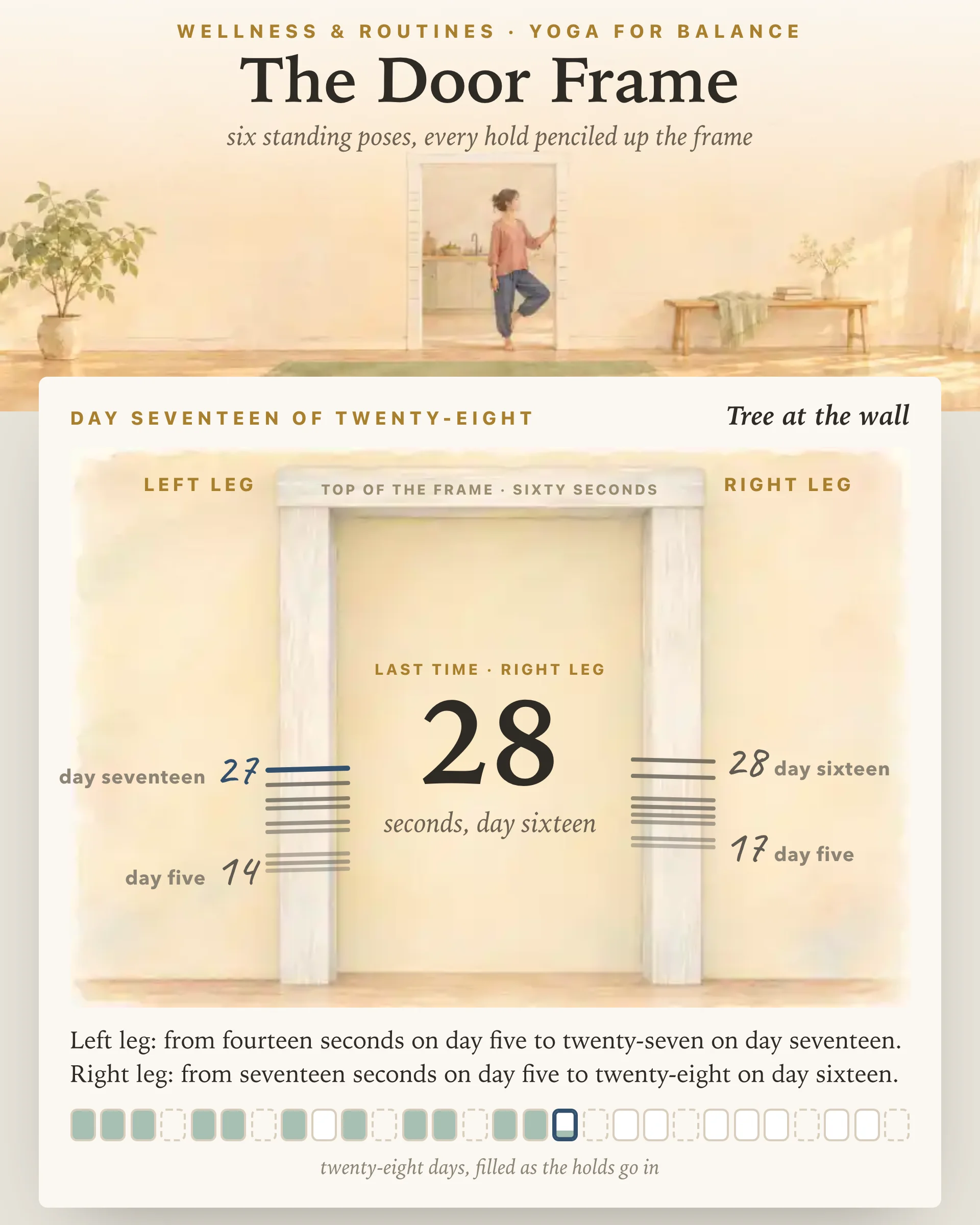
The Door FrameSix standing yoga poses for balance, from mountain with your eyes closed to half moon, each at the counter, the wall or free. A hold clock times each side, and every day's best goes up a painted door frame in pencil, so across a four-week plan you see your own marks climb.
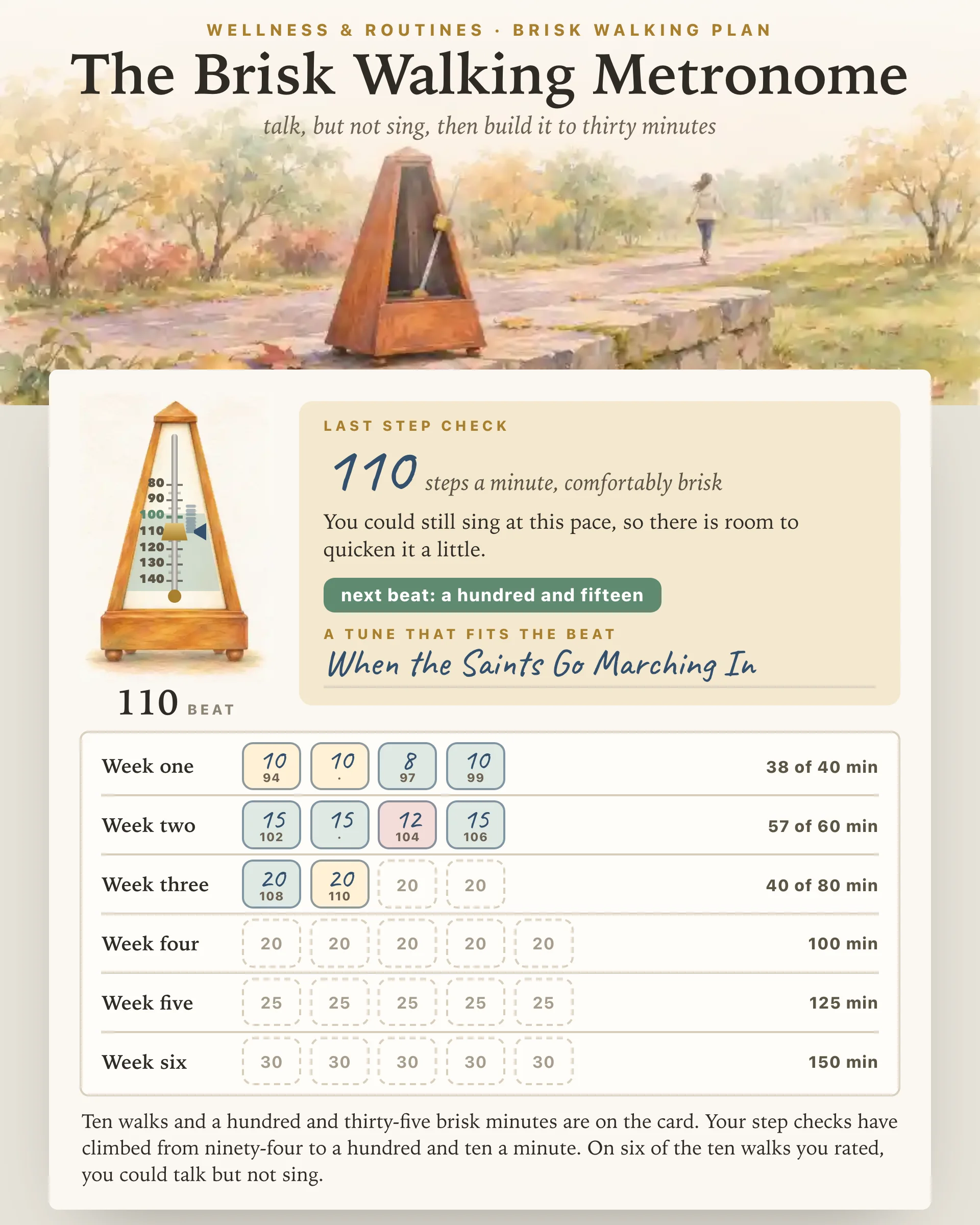
The Brisk Walking MetronomeTap with each step for a minute and a painted metronome marks your pace against the brisk line of about a hundred steps a minute. Set a beat to walk to, rate each walk by the talk test, and fill a six-week card that grows from ten brisk minutes to thirty.
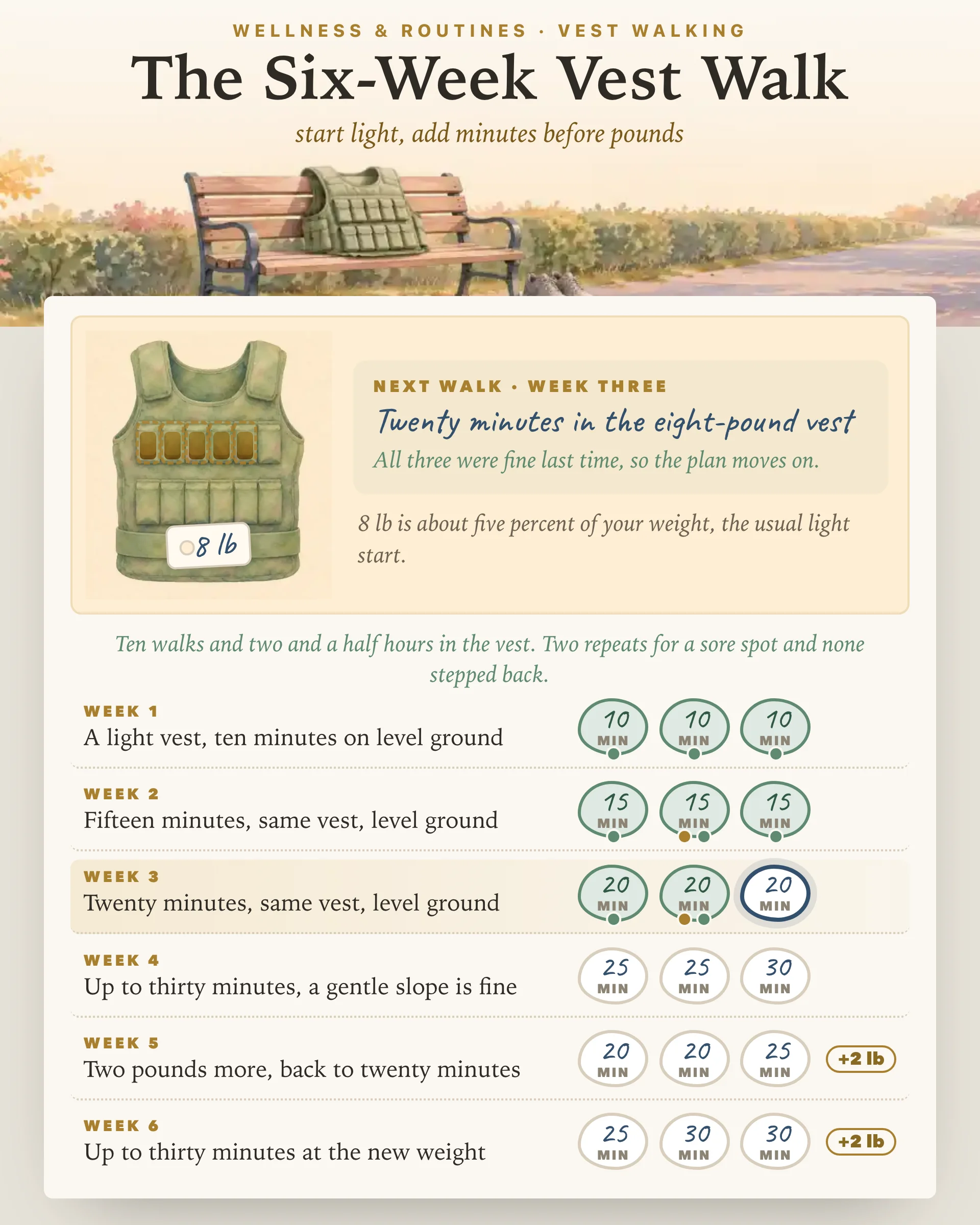
The Six-Week Vest WalkA six-week plan for walking with a weighted vest. Set a starting weight near five percent of your own and watch the vest's pockets fill, then log each walk with a quick check of your back, knees and feet that moves the plan on, repeats a walk or steps it back.
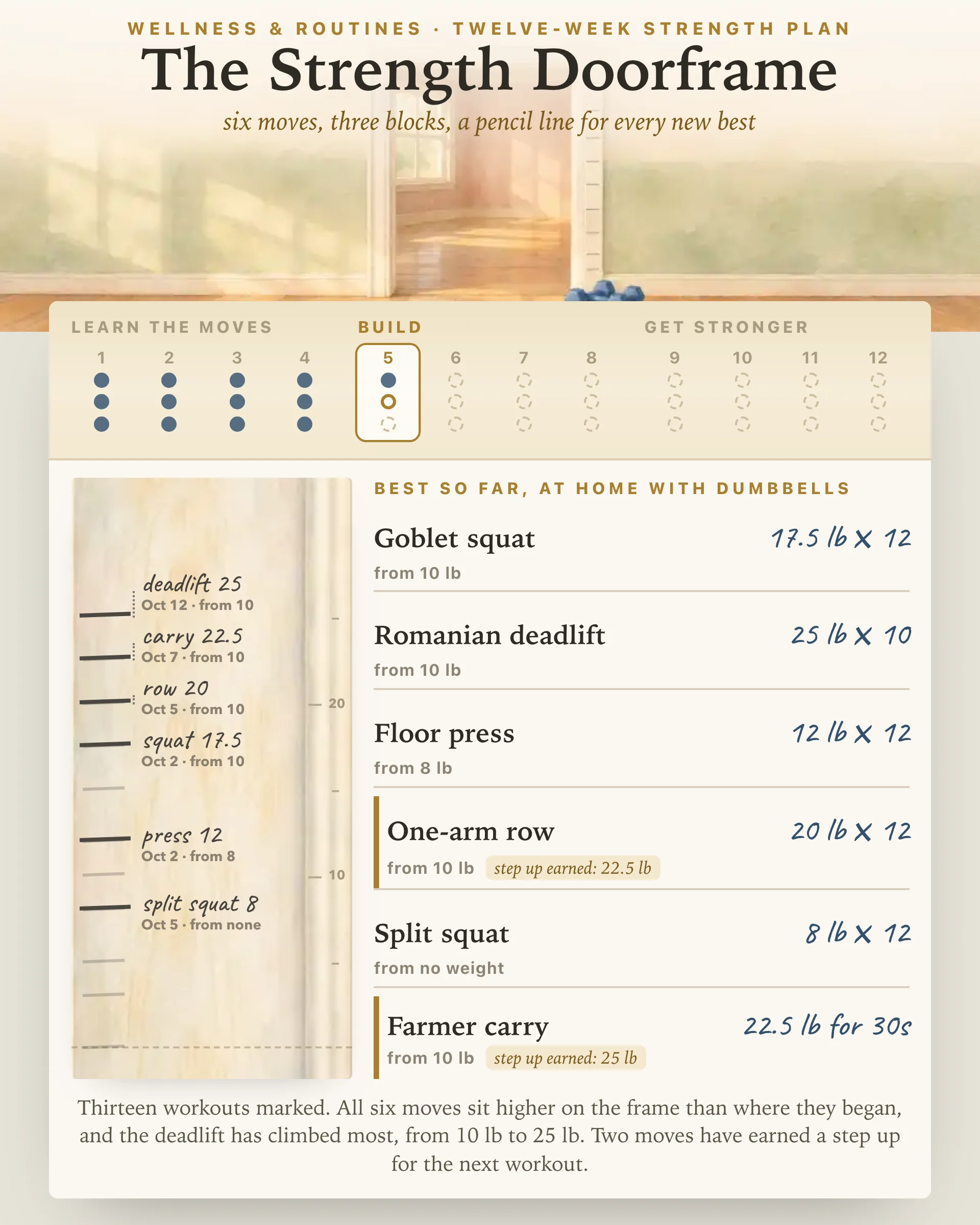
The Strength DoorframeA twelve-week beginner strength plan in three blocks, at home with dumbbells or at a gym, two or three days a week. Log the weight and sets of six moves each workout, watch every new best go up the doorframe as a pencil line, and see when a move has earned a heavier weight.
The Three-Track Peg BoardAn honest four-week plan for a thicker middle after fifty: brisk walks, two strength days and a five-minute core finisher, each pegged on a wooden board the day you do it, with a reading of which track is slipping and an optional waist line every two weeks.
The Hip LanternsEight hip exercises for older adults at three levels each, done at a chair, the kitchen counter and the bed. A real-time timer walks you through every move and lights a painted lantern for each one you finish, across four weeks of three short sessions.
The Kettlebell WoodpileA six-week beginner kettlebell plan built on one bell picked by your experience. Learn the deadlift, goblet squat, two-hand swing, one-arm row and halo in order, run each session on a minute-by-minute clock, and add a log to the woodpile for every session you finish.
Turn Back the CoversBed exercises for older adults: ten gentle moves lying down and at the edge of the bed, a routine shaped by how you feel today, a five to ten minute timer that folds the covers back as you go, and a four-week plan.
The Music Box BarreA full barre class at home: choose twenty, thirty or forty minutes and a level, then follow pliés, relevés and attitude lifts at your counter, curtsy lunges and an arm series, and a mat finish, on silent counts with a hold timer. Every class threads a pearl on a four-week strand.
The Water Walking MosaicA six-week water walking plan that grows from ten minutes in the shallow end to thirty. Each session is laid out move by move and timed on a pool clock, then set into a painted pool floor one tile a minute, with your lengths turned into distance and the talk test beside them.
The Picket Fence Walking PlanAn eight-week walking plan for older adults that starts at five, ten or fifteen minutes. Each walk paints a picket in how it felt, a tiring walk brings an easy day after it, and the fence grows three minutes a week only when your weeks agree.
The Somatic Yoga ShellNine slow somatic yoga poses on the floor or the bed, each paced by a gentle count. Follow four weeks of ten to twenty minutes, tap how your body feels afterward, and watch a shell grow one chamber for every day you practice.
The Coil Pot Workout PlanA twelve-week full-body plan for beginners, at home or at a gym, two or three days a week. Check off each move with the weight you used and every finished workout lays a coil on a clay pot; a move you skip leaves a thin spot and leads the next workout.
The Snowflake WindowA six-week holiday workout plan from late November to New Year's: mark the days you will be away, get a short no-equipment session for the room you will have, and watch each finished one cut a paper snowflake onto a frosted window.
The Lace-Up Home Workout PlanFour weeks of six-move bodyweight circuits for a small room, a hallway or a yard, three to five days a week. Run each session on a timer that keeps real time, set push-ups and plank at your level, and lace one eyelet of a painted pair of shoes for every session you finish.
The Yoga MannequinTwelve beginner yoga poses over six weeks, two new ones each week, each shown on a jointed wooden figure with plain cues and a prop version. Build a ten, twenty or thirty minute session from the poses you know, follow the breath-counted holds, and fill in a six-week calendar.
The Step-Up HillA six-week step-up plan that starts on a low step with a hand on the rail, marks each leg's sets, tells you when two easy sessions mean it is time to step up, and plants a flag on a painted hill at the height you have climbed.
The Effort Swatch CardTap the shade that matches how hard a walk, a strength round or a brisk minute felt, from 0 to 10 with Borg's 6 to 20 numbers lined up beneath, and read what that number feels like. Four weeks of sessions fill with color against the plan's aim.
The Living Room Dance FloorA dance workout for your living room: pick disco, Latin, line dance or pop and fifteen, twenty or thirty minutes, learn one simple step per song in counts of eight with a low-impact version of each, and light a tile on a four-week floor for every dance, brighter when it was more fun.
The Minute TapeAn honest four-week belly fat workout: cardio and strength sessions with a short core finisher, each run on a timer that keeps true time and inked onto a tailor's tape in minutes, never inches, with an optional waist line every two weeks.
The Squat OrchardFive squat levels for older adults, from standing up with your hands on the armrests to a squat at the kitchen counter. A slow count on the real clock drops one apple in the crate for every squat, and the next level opens after two easy sessions in a row on a six-week, three-day plan.
The Bedtime Yoga MoonEight slow bedtime yoga poses you can do in bed or beside it, five to fifteen minutes, with a breath count and a page you can dim. Follow four weeks of nights, note how you slept each morning, and watch a moon fill for every routine.
The 10-Minute Kitchen Timer WorkoutA painted kitchen timer for short home workouts: twist it to five, ten, fifteen or twenty minutes, pick a focus and a level, and follow five moves around the dial on a clock that keeps real time. Every whole minute you finish fills a four-week plan of short sessions.
The Shorebird ShelfTime how long you stand on each foot beside a kitchen counter, keep the best of three tries, and watch each check stand up as a pair of carved shorebirds, with four weeks of counter practice between checks.
The 5K Balloon ArchAn eight-week plan to walk a 5K that counts back from your day and starts from the walk you can manage now. Each easy, brisk or long walk ties a balloon onto a finish arch, with a countdown and a pace check from your long walks.
The Hip Flexor ClotheslineSix hip flexor stretches for people who sit a lot, each with an easier and a deeper version. A hold timer runs every side for you, each finished hold pins a painted cloth to the line, and four weeks of short sessions build from fifteen to thirty-five seconds a side.
The Mile-a-Day ScarfWalk a mile and the page knits one row of a scarf in the color of the minutes it took, timed live or set by hand. Shorter walks knit part of a row, a slipped day can be made up with two miles the next day or let go, and four weeks of rows show how far your miles have carried you.
The Thirty-Crane Mobility ChallengeThirty ten-minute mobility routines for neck and shoulders, upper back, hips, ankles and a full-body flow, each on a timer that counts only the minutes you move, and each finished day folds a paper crane in its area's color. Pin two reaches on day one and see where they land on day thirty.
The Twelve-Door Advent HouseThe 12 days of Christmas song as a twelve-day home workout: one verse a day, stacked from the newest gift back to the partridge, with a low-impact swap for every move and a painted door that opens when the whole stack is done.
About these templates
Small rituals that hold a day together
Wellness here isn't a project — it's a handful of tiny, repeatable resets: closing the day on purpose, catching overwhelm early, building one habit at a time. Each worksheet turns a fuzzy intention into a five-minute ritual with a visible finish line.
Every template is free and interactive. Personalize one and it saves in HabitatZero, so the ritual is waiting for you tomorrow.
Browse by goal
Free ACT Worksheets & ExercisesFree ADHD Daily Planner TemplatesFree Anxiety Worksheets & Calming ToolsFree CBT Worksheets & ExercisesFree DBT Skills WorksheetsFree Workout PlansFree Goal Setting TemplatesFree Gratitude Journal & Jar TemplatesFree Habit Tracker TemplatesFree Personal Trainer TemplatesFree Printable Planners & ChecklistsFree Self-Awareness Tools & ExercisesFree Sleep Tools & TemplatesFree Study Tools & Student Planners