
The Overwhelm Recovery ProtocolWellness & Routines · ~5 min
About this template · Updated September 2026
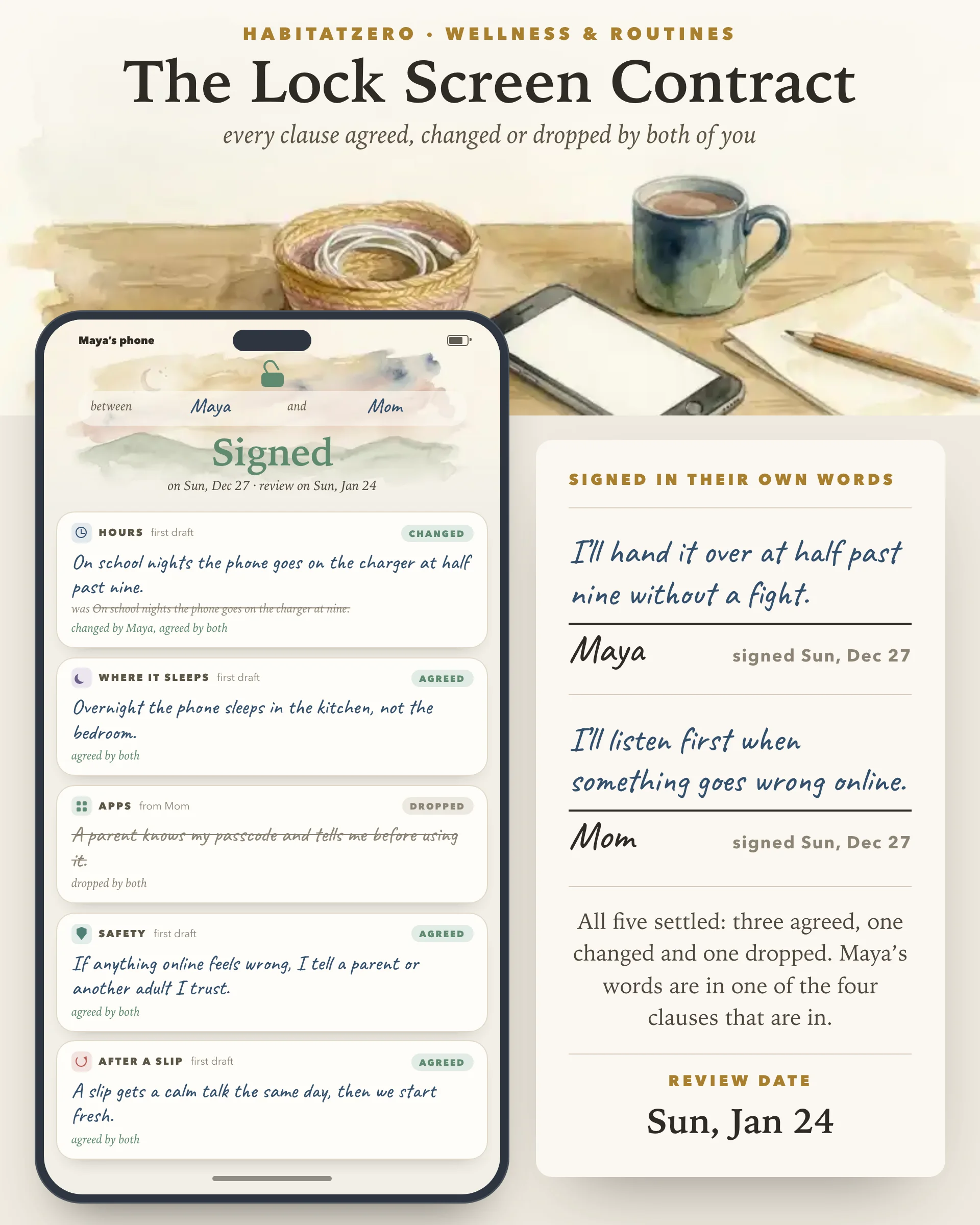
A first phone usually arrives with rules attached, and those rules usually come from one side of the kitchen table. That is the weak spot of most cell phone contracts for teens: your teenager signs because signing is the price of the phone, not because they agree with a word of it. Here the contract is a lock screen: each of you marks every clause, and the padlock opens once everything is settled and you have both signed in your own words.
A rule your teen argued over is one they understand, and often one they will defend to a friend at eleven at night. The American Academy of Pediatrics' advice on making a family media plan points the same way: set rules that fit your own household, talk them through with your kids, make a plan for every member of the family, yourself included, and revisit it as your child grows. Research on signed phone contracts as such is thin, so treat this page as a structure for a good conversation, not a guarantee.
The screen opens on a first draft of six clauses, one each for hours, where the phone sleeps, apps, money, safety, and what happens after a slip. Each clause is a notification with a row of buttons for your teen and a row for you: agree, change or drop.
A clause settles only when your marks match. If you both agree, it is in as written. If you both drop it, it stays on screen, struck through. If one of you wants a change, a line opens for new words; whoever writes them has agreed to them, the other person marks the new version, and the old wording stays underneath.
The top of the screen counts what is still open and names the next clause to settle. Lower down, the page tells you how many of the clauses that made it in carry your teen's own words, a quiet nudge when the answer is none. Add clauses from the suggestions or write your own, up to twelve. Signing unlocks once nothing is open, a review date is set, and each of you has written one line in your own words. Print it for the fridge if paper helps.
Where the phone sleeps. A meta-analysis of twenty studies covering more than 125,000 children and teens found that using a phone or tablet at bedtime went with shorter sleep, poorer sleep and more daytime sleepiness, and that simply having one in the bedroom at night showed the same pattern, even unused. The studies were cross-sectional, so they show a link rather than proof, but a charger in the kitchen is a cheap experiment.
Hours and apps. The AAP suggests screen-free zones such as the dinner table, homework time and before bed, and a look at privacy settings before a new app goes on.
Safety. Keep it to habits a teenager can carry out: photos go only to people they know in person, and anything online that feels wrong goes to you or another adult they trust. Pair that with your promise that telling you will never cost them the phone, or the lesson they learn is to stay quiet. If anyone ever pressures your teen for sexual images or threatens to share one, report it to the NCMEC CyberTipline at report.cybertip.org or call its 24-hour line at 1-800-843-5678. NCMEC's Take It Down service can also help remove images taken before eighteen from the platforms that take part.
After a slip. Decide what happens now, while everyone is calm, so the response is something you both signed rather than a penalty invented mid-fight. A short talk that evening and a fresh start is a reasonable default.
A contract that binds only the teenager reads like a probation order. In a snapshot of more than ten thousand American twelve- and thirteen-year-olds, parents' own screen use, screens at family meals and screens in the bedroom were each linked with more screen time and more problematic phone use, while setting limits and keeping an eye on use went with less. Using screens as a reward or punishment went with more screen time, not less. So add a clause that binds you, like no phones at dinner for anyone, and sign your own line as seriously as theirs.
A screen time contract usually covers every screen in the house, from the TV to the game console. A phone contract is about the one device your teen carries everywhere. To count minutes against a daily cap, especially for a younger child, The Screen Time Chart is built for that. For agreements about behavior beyond the phone, try The Behavior Contract, and if the phone plan is tied to chores or pay, The House Time Card keeps that part of the bargain in writing.
Use it before a new phone changes hands, or when the old rules have worn thin and every evening ends in the same standoff. Keep the review date close for a first phone, two weeks to a month, and push it further out once the deal is holding. On that date, reopen it and sign the version you both believe in.
Cover the things families actually argue about: phone hours, where the phone charges overnight, new apps and privacy settings, who pays for purchases and repairs, a couple of safety habits, and what happens after a slip. Add at least one promise from the parent, and put a review date on it.
Research on signed phone contracts themselves is thin. The usual complaint is that a teenager signs rules they had no say in, just to get the phone. Letting your teen mark, rewrite or drop each clause, and reviewing the deal on a set date, gives them a stake in keeping it.
It is a written family agreement about screens in general: daily limits, screen-free rooms and hours, and sometimes how extra time is earned. A phone contract is narrower and deals with the one device a teen carries everywhere. Plenty of families keep both, a chart for minutes and a signed agreement for the phone.
Whatever the two of you wrote in the after-a-slip clause, which is why that clause belongs in the first draft. A calm talk the same day and a fresh start is easier to keep than a punishment made up on the spot. If one clause keeps slipping, rewrite it at the review.
No. The AAP offers its own free Family Media Plan tool on HealthyChildren.org, built for screens across the whole household. This contract is an independent page that follows the AAP's advice to set rules together and revisit them, but the AAP did not make or review it.
The public page shows a signed example so you can see how the lock screen reads. To mark the clauses, sign in your own words and keep the deal until its review date, personalize it in HabitatZero, which costs nothing.
By the team behind Fabulous, the science-based self-care app used by over 30 million people.


