
The Overwhelm Recovery ProtocolWellness & Routines · ~5 min
About this template · Updated November 2026
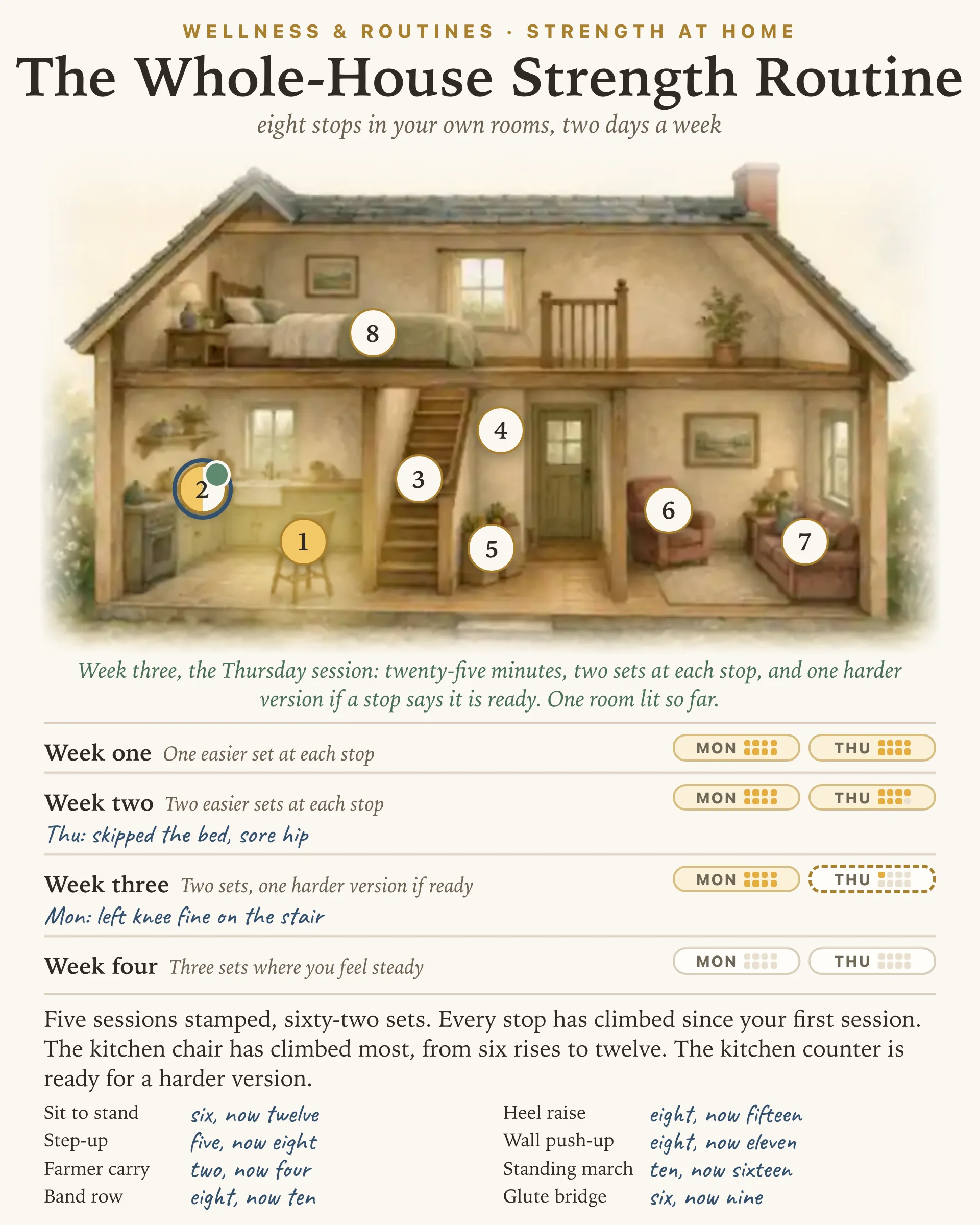
Think about the heaviest things you handled this week. Your own body getting up from a low couch, probably. A bag of groceries from the car. Yourself, again, up a flight of stairs. Strength training for seniors does not have to start with machines, because those jobs already are the exercises. This page turns your home into eight stops and walks you through them, two days a week, for four weeks.
The route starts in the kitchen and ends lying down. Follow the numbers or tap any stop on the painted house.
Each stop has an easier and a harder version beside a small painting of the move. Every standing move keeps a hand near a counter, a rail, a wall or a chair back, and it can stay there for all four weeks.
Tap the plus and minus to set your count, then log the set. Once you have done the number of sets that week asks for, the room glows and its number turns gold. Week one asks for one set at each stop, about fifteen minutes in all. By week four it asks for three where you feel steady, about thirty minutes.
When you are done for the day, stamp the session on the four-week chart. If you ran out of steam after three stops, stamp those three. The little windows on your chart show how many rooms you lit. Should two stamps land within a day of each other, the page asks you to give the next day to rest.
The page also keeps every count, so Then and now can show where each move began and where it stands today. When you reach the top of a move's range in two sessions running, say twelve rises from the chair, that stop tells you its harder version is ready. That rule is a working habit and nothing more. If twelve still feels wobbly, stay where you are.
The fullest summary of this kind of training is a Cochrane review of 121 trials and about 6,700 older people. Training two or three times a week had a large effect on muscle strength and a moderate to large effect on getting out of a chair. Its effect on overall physical ability was small. Most of those trials trained at high intensity, which is harder than the early weeks here, so their results may not transfer in full to a home routine. Serious problems were rare, but the authors warn that side effects were poorly recorded, and sore muscles and aching joints came up often.
Falls need a more careful sentence. A 2019 Cochrane review of 108 trials found that exercise programs built mainly on balance and functional moves reduced how often older people living at home fell. The same review was uncertain about programs that were primarily resistance training. So this page makes no promise about falls, and it should not be your only answer to that worry.
The World Health Organization's 2020 guidelines ask adults for muscle-strengthening work on two or more days a week, which is where this plan's rhythm comes from. For people 65 and older, they add varied balance and strength activity on three or more days, along with aerobic minutes. Two sessions here cover part of that picture and leave room for the rest. A position statement from the National Strength and Conditioning Association makes the broader case for resistance training in older adults, and one of its stated goals is to minimize the fears that keep people from starting.
Talk with your doctor or a physical therapist first if you have had a fall, get dizzy, have a replaced joint, live with a heart or blood pressure condition, or have pain you cannot explain. Stop any move the moment it hurts. Breathe out on the effort rather than holding your breath, wear shoes with grip, and clear loose rugs from the hall. For anything done on your feet, have a sturdy chair or the counter within arm's reach.
Set your two days first, and keep the band and a couple of bags where you will see them. On the days between, gentle movement fits well: The Daily Stretch Mat for a few minutes of loosening up, or the Walking Challenge for those aerobic minutes. Once the four weeks are stamped, The SMART Exercise Target can help you decide what the next month is for.
For days you would rather stay seated, The Chair Circuit builds a session from one chair, and The Balance Ladder spends its time on holding still at the counter.
No single routine wins, but moves that copy daily life are a sensible place to begin: standing up from a chair, climbing a step, pushing, pulling, rising onto your toes and carrying a bag. This page puts eight of them around the rooms you already have.
World Health Organization guidelines ask for muscle-strengthening work on two or more days a week. This plan uses two sessions a week with rest days in between, growing from fifteen minutes in week one to thirty in week four.
Your body weight is resistance on a sit to stand, a wall push-up, a heel raise, a step-up and a glute bridge. Grocery bags give you a carry. The one extra item worth buying is a stretchy band for the row, and until then a rolled towel pulled apart will do.
This page uses a plain working rule: when you reach the top of a stop's range in two sessions running with good form, the harder version is ready. It is a rule of thumb and not a medical threshold, so wait longer if a move still feels shaky.
In a large Cochrane review of trials, serious problems were rare, though many trials recorded side effects poorly and sore muscles and joint pain were common. See a doctor or physical therapist first if you have had a fall, dizzy spells, a joint replacement, a heart or blood pressure condition, or pain, and stop any move that hurts.
By the team behind Fabulous, the science-based self-care app used by over 30 million people.


