
The Overwhelm Recovery ProtocolWellness & Routines · ~5 min
About this template · Updated November 2026
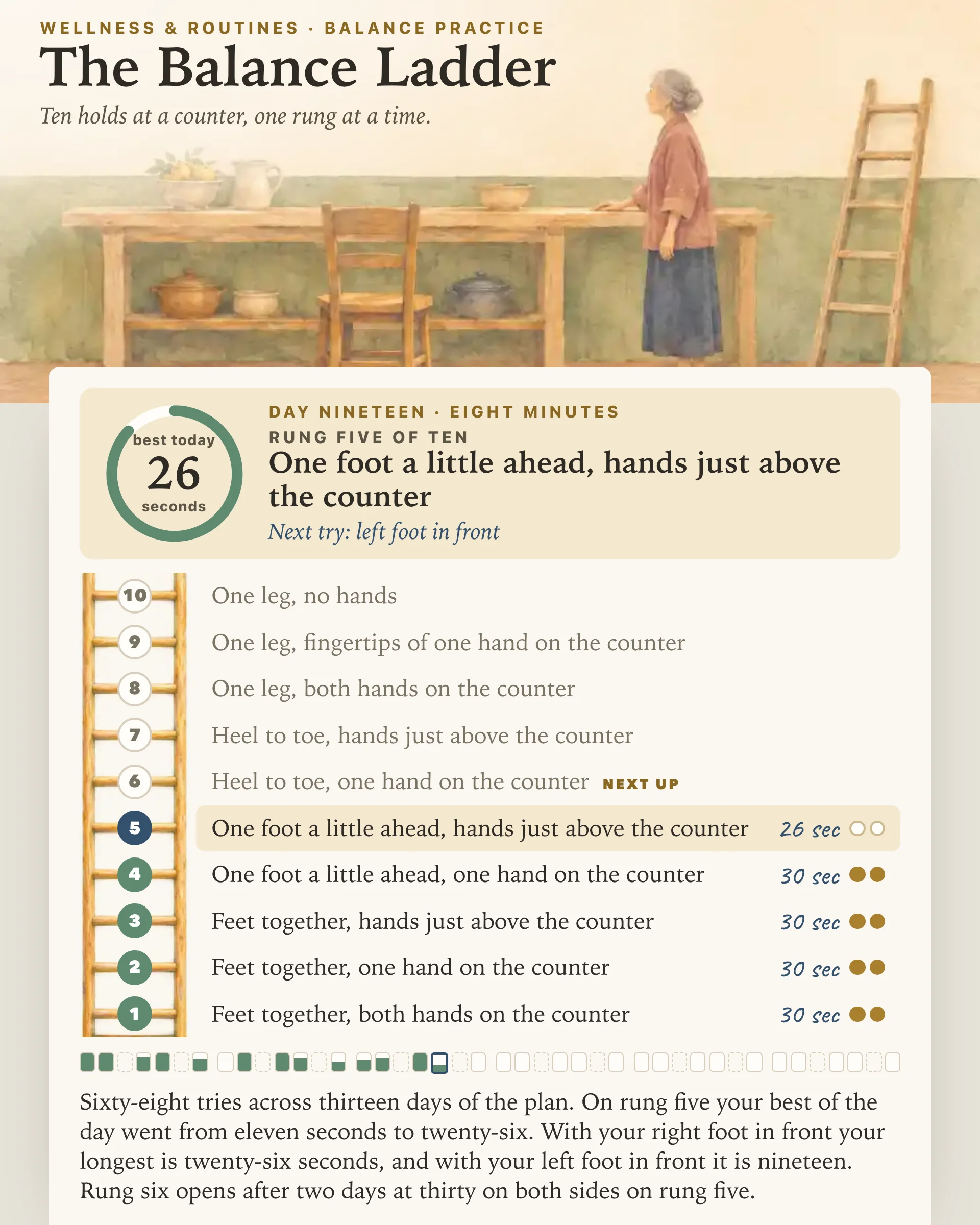
Most lists of balance exercises for seniors hand you ten moves and leave you to guess where to begin, or when a move is easy enough to leave behind. This page turns those moves into a ladder. You stand at a kitchen counter, start with your feet together and both hands down, and work toward standing on one leg with your hands free. A clock times each hold, and your own seconds decide when the next rung opens.
Each rung changes one thing: how close your feet are, or how much your hands help.
"No hands" never means walking away from the counter. Your hands stay an inch above it, ready to drop. Every rung also carries an easier version, like a small gap between your feet, so a shaky morning still has somewhere to go.
Tap start, and five seconds of get-set give you time to place your hands. Then the dial counts up and stops by itself at thirty, so you never have to reach for a screen while you are mid-hold. If you touch down sooner, tap the big button and that time goes in the log. If you would rather watch a wall clock, or have a friend count out loud, tap the seconds instead.
A rung opens the one above it after a thirty-second hold on two different calendar days. Managing it twice in one afternoon counts once, because the question is whether the hold is still there tomorrow. From rung four upward you trade sides, and both sides need their thirty on the same day. The page names the foot for each try and returns to whichever side has not reached thirty yet.
Underneath sits a six-week plan, five days a week, growing from five minutes a day to fifteen. One try is a hold plus about as long to rest, so a five-minute day is five tries. When those are used up the page stops offering more, since a longer session on tired legs is not the goal. The plan sets the minutes and your holds set the pace. You may well be on a middle rung when the six weeks end, and that is a good place to be.
A 2019 Cochrane review of exercise for preventing falls pooled 108 randomized trials and more than 23,000 people aged 60 and over living in the community. Programs built mainly on balance and functional exercise lowered the rate of falls by about a quarter compared with control groups, and the reviewers rated that evidence as high certainty.
Those were whole programs tested in trials, not this ladder. Most trials carried an unclear or high risk of bias on at least one item. The review found exercise may make little difference to quality of life, and it could not say whether hospital admissions after a fall changed. A group average also says nothing certain about one person. So this page makes no promise about falls. It never turns your seconds into a risk score, and it never compares you with other people your age.
The World Health Organization's 2020 guidelines ask older adults for varied activity that emphasizes functional balance and strength on three or more days a week. The CDC's overview of activity for older adults sets balance beside aerobic activity and muscle strengthening, and names walking heel to toe as one example. So treat the ladder as one part of your week. The Walking Challenge can look after the walking, the Tai Chi Walking Plan adds slow, careful steps, and The Daily Stretch Mat suits a gentle rest day.
See a doctor or physical therapist first if you have had a fall, dizzy spells, a joint replacement, a heart or blood pressure condition, or pain that comes and goes. Stop for the day if a hold hurts. Do every rung within arm's reach of a sturdy counter, or the back of a heavy chair pushed against a wall, and clear the floor around your feet. Shoes with grip or bare feet beat socks. For the one-leg rungs, ask someone at home to stay close the first few times.
Tie it to something that already keeps you near the counter, like the minutes while the coffee brews. A day you miss simply stays empty on the plan until you come back to it. If a rung stops feeling steady after a bad night or a busy week, tap a lower one and spend the day there.
To practice balance while moving instead of holding still, Tai Chi for Seniors sets six slow moves side by side, standing or seated, and The Counter Walk adds slow steps with a hand in reach.
This page uses ten standing holds at a counter. The first three keep your feet together with less and less hand support, the next two set one foot a little ahead, the next two go heel to toe, and the last three stand on one leg, ending with no hands.
The lower rungs keep one or both hands on a sturdy counter, so you are never far from support. Ask a doctor or physical therapist first if you have had a fall, dizzy spells, a joint replacement, a heart or blood pressure condition, or pain, and keep someone close for the one-leg rungs.
World Health Organization guidelines ask older adults for varied activity emphasizing balance and strength on three or more days a week. This plan uses five short days a week with two rest days, and each session stays between five and fifteen minutes.
A 2019 Cochrane review found programs built mainly on balance and functional exercise lowered the rate of falls by about a quarter, on average. Those were full programs tested in trials, not this page, and no exercise can promise a result for one person.
No. It records your own seconds and tells you which rung is open, and it gives no score or verdict. If you are worried about falling, a doctor or physical therapist can check your balance properly and suggest what suits you.
By the team behind Fabulous, the science-based self-care app used by over 30 million people.


