
The Overwhelm Recovery ProtocolWellness & Routines · ~5 min
About this template · Updated November 2026
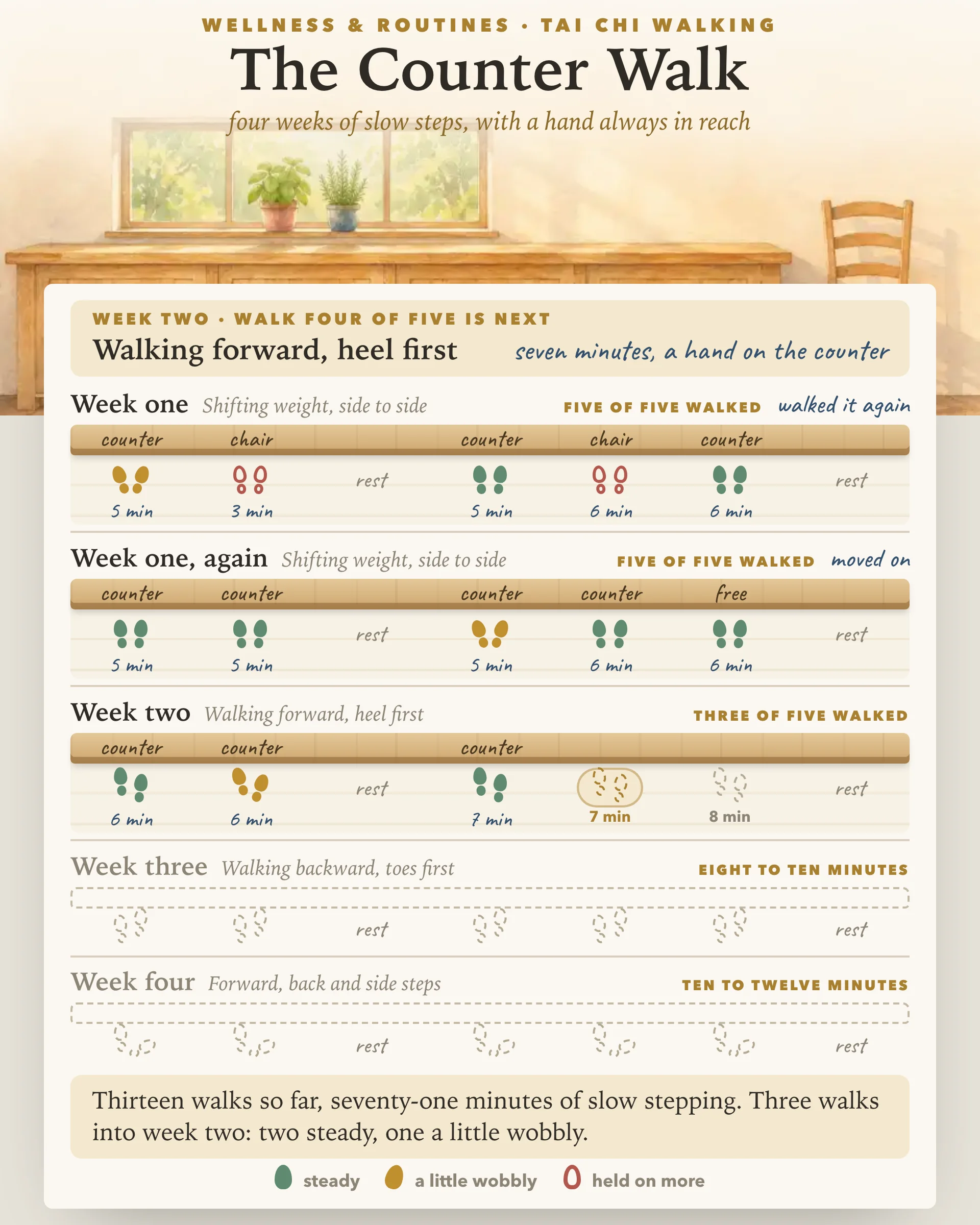
Tai chi walking for seniors is walking slowed down until you can feel where your weight is. You let one foot take your weight completely before the other foot moves, so every step becomes a small, unhurried balance exercise. You need a few clear steps of floor and something sturdy to rest a hand on, and in most homes that is the kitchen counter.
This page treats holding on as part of the practice, not something to grow out of. If you feel unsteady, it is easy to put balance work off until you feel steadier. A hand on the counter settles that argument: you can start today, with whatever steadiness you have.
Talk to your doctor or a physical therapist before you begin if you have had a fall, dizzy spells, a joint replacement, a heart or blood pressure condition, or pain when you walk. Stop any step that hurts, and keep a sturdy counter or chair within reach for every walk. If a visit is coming up anyway, The Doctor Visit Card is a good place to write the question down.
The plan is four weeks of short sessions, five walks a week with two rest days, growing from five minutes to twelve.
If life moves a walk, the next one simply waits for you, since the sheet counts walks rather than calendar dates.
Each walk starts with two small choices. Tap what you will hold: a hand on the counter, a chair back, or no support with the counter close by. Then keep the plan's minutes, take a shorter walk, or add a little.
Afterward you answer one question: felt steady, a little wobbly, or held on more. A pair of footprints lands beside a drawn counter for that day, in a color and shape that match your answer, with what you held written on the counter's edge.
After five walks the page reads them back. Three or more steady walks, with no more than one where you held on more, and it suggests the next week, along with a reminder to bring the counter back for a new step. Anything shakier and it suggests another round of the same week, which gets its own row. You can overrule it either way. The reading comes only from your own taps, so it says nothing about your risk of falling and is no kind of balance test. After three rounds of one week it stops offering more and suggests asking a physical therapist for a gentler step.
A Cochrane review of 108 trials of exercise for older people living at home found that tai chi may lower the rate of falls by about a fifth, with the evidence on that rate rated low certainty. The same review was uncertain about the effect of walking programs on falls, so the slow balance work is the point here, and brisk walking is a different thing.
In one trial, 670 adults aged seventy and over who had recently fallen or had trouble getting around took tai chi balance classes, a mixed exercise program or stretching. The tai chi group fell less often than both others at six months. Those people went to two hour-long classes a week for twenty-four weeks. Four weeks of short walks at home is far less than that, and this plan has not been tested as a way to reduce falls. Treat it as a gentle way in, and look for a local class if you enjoy it.
The World Health Organization advises older adults to do balance and strength work on three or more days a week. Five short walks build that rhythm, but they are gentler than the guideline's moderate intensity and do not train strength, so see them as a start and not the whole of it.
Move loose rugs, cords and stray chairs off the stretch of floor you will use. Wear closed shoes with a low heel rather than socks or slippers, turn on a good light and keep a phone within reach.
Open the sheet when you are about to walk, and again right after to answer the one question. If you finish the four weeks and want more to learn, the Tai Chi Walking Plan teaches a longer set of steps, and The Daily Stretch Mat is an easy companion on rest days.
If the kitchen is taken and a hallway is all you have, The Indoor Tai Chi Walk fits the walk to the room, and on days when standing feels like too much, Chair Tai Chi moves the practice to a seat.
It is the slow stepping practice from tai chi, done in short sessions beside something sturdy. You let your weight settle fully into one foot before the other moves, which turns a kitchen or hallway into a place for balance practice rather than a workout.
Yes, and this plan assumes you will. A few clear steps of floor along a counter is enough, because every week can be walked in short lengths or in place behind a chair. Move loose rugs and cords out of the way first and keep the lights on.
Nobody can promise that. A Cochrane review found tai chi may lower how often older adults fall, but the programs studied ran far longer than four weeks of short walks. Treat this as balance practice, and bring it up with your doctor if falling already worries you.
After five walks the sheet counts your answers. At least three steady walks and no more than one where you held on more suggests moving on, and anything shakier suggests another round. It is a suggestion drawn from your own taps, not a test of your balance, and you can choose either.
Ask a doctor or physical therapist first if you have had a fall, dizzy spells, a joint replacement, a heart or blood pressure condition, or pain when you walk. Once you begin, stop any step that hurts and keep a counter or sturdy chair within reach.
By the team behind Fabulous, the science-based self-care app used by over 30 million people.


