
The Overwhelm Recovery ProtocolWellness & Routines · ~5 min
About this template · Updated September 2026
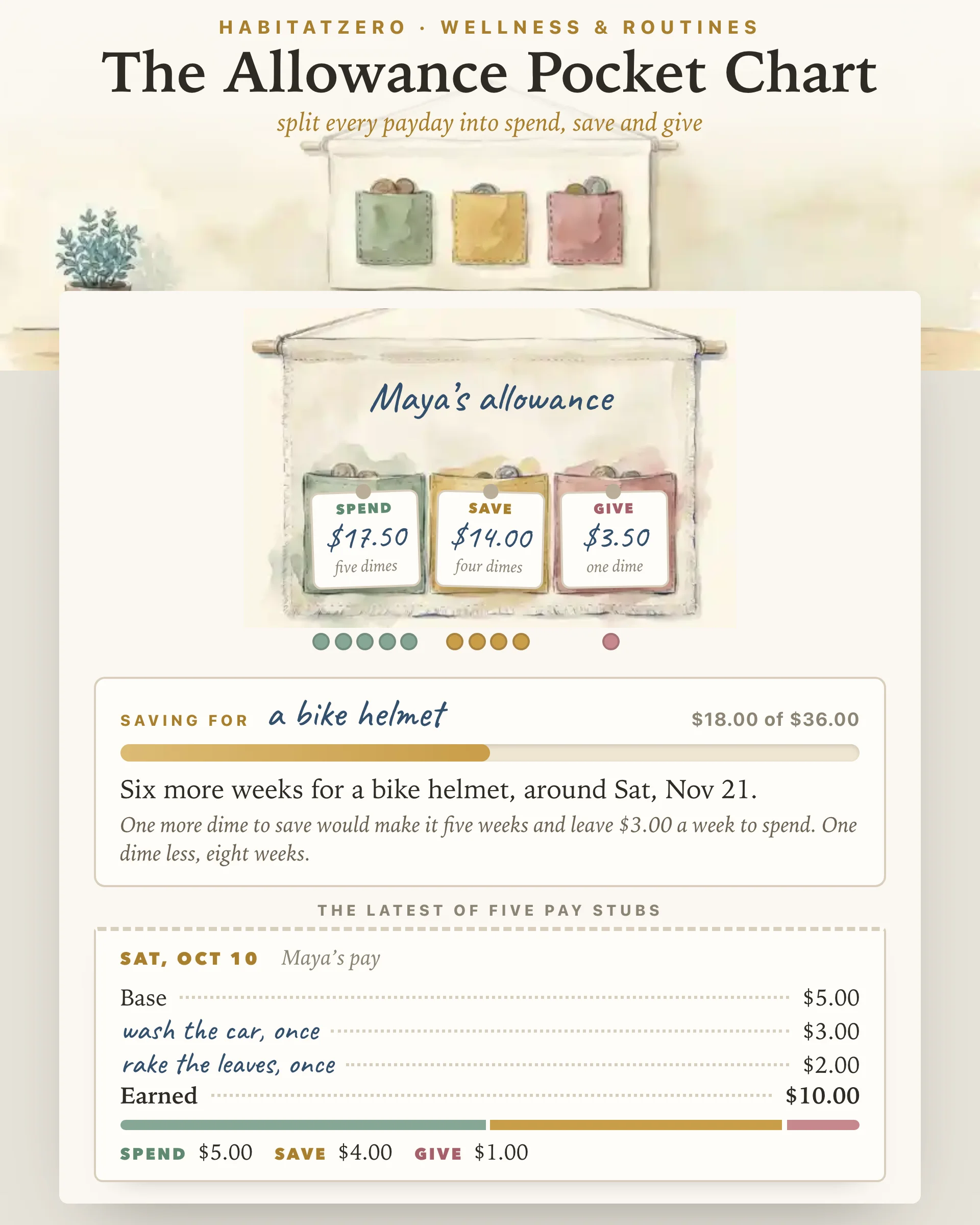
An allowance only teaches something if your child can see where the money goes. Coins handed over on a Saturday and gone by Tuesday leave no trace to talk about. This chart gives every payday a record: the pay drops into three pockets, spend, save and give, a stub keeps the numbers, and a goal tag counts the weeks to whatever your child is saving for.
Before the amount comes the harder question: what the money is for. Allowances come in three common shapes, and the chart asks you to pick one.
A study of allowance arrangements in American families summed up the advice of its day: some writers wanted pay tied to chores so children learn to work for money, others worried that paying for household work undercuts the idea that everyone pitches in. Some of the experts it reviewed allowed an exception that this chart calls base plus extras: no pay for everyday chores, but pay for the bigger jobs a parent might otherwise hire someone to do, like washing the car or shoveling snow. The same study pointed out that the benefits claimed for a regular allowance had seen few systematic tests, worth remembering when anyone claims there is one right way.
A common rule of thumb is a dollar a week for each year of age, so eight dollars for an eight-year-old. The chart treats it as a convention: set the age and it shows what the rule comes to, with a button to use it if it suits you. Your own number depends on your budget and on what the allowance is expected to cover. A child who buys their own snacks needs more than one whose money is only for treats.
The Consumer Financial Protection Bureau's Money as You Grow program stresses something else. Its advice to parents of school-age children says the most important part of an allowance is talking with your child about plans for the money, and suggests talking through what counts as extra work in your family and how to earn it. The chart's deal section is where that conversation lands on paper.
Percentages mean little to a seven-year-old. Dimes do. The chart describes the split as dimes out of every dollar, five to spend, four to save and one to give, and draws them as coins under each pocket. Spend keeps whatever is not saved or given, so a dime moved to save is a dime less to spend, the trade you want your child to feel.
Money as You Grow suggests saving at least a dime of every dollar, and recommends giving a child a specific thing to save for, broken into small steps. Name the goal on the tag, add its price and anything already saved, and it fills with each payday.
Pick the way you pay, then add your child's first name, age and the weekly amount. For per-chore or extras pay, tap jobs from the suggestions or write your own, each with a price; the list stops at six so payday stays quick.
Between paydays, tap a job each time it gets done. On payday, press pay. The chart splits the total to the cent, drops each share into its pocket and prints a stub showing what was earned and where it went.
The goal tag gives the answer children want most: how many more weeks until they can buy it, at the current split and pace. It also shows what one dime more or less for saving would do, so a child can weigh an extra dime of spending against a week of waiting. If you change the split or the amount later, paydays already on the chart keep what they were paid with, and the count of weeks updates right away. When the goal is reached, mark it bought and the price leaves savings.
Money as You Grow rests on the CFPB's research into how children build the habits and attitudes behind adult money skills, and its activities are grouped by age for that reason. None of that research says which amount, split or payday routine makes a better saver. Treat the chart as a tool for practice and conversation. It does arithmetic, and it is not financial advice.
Start when your child can count coins and wants something that costs more than one week of pay, often around the early school years. Keep unpaid everyday jobs on a Chore Chart, use The Chore Growth Chart to pick paid extras that fit their age, and when the allowance turns into a teenager's monthly budget, move up to The Teen Budget Wallet.
A common rule of thumb is a dollar a week for each year of age, so about eight dollars for an eight-year-old. Treat it as a convention to adjust rather than a rule, and start from what your budget allows and what the money is meant to cover.
Families disagree about this. Some pay a set amount and treat everyday chores as part of living together, some pay for each job, and many do both: a small base plus pay for bigger jobs. The chart handles all three, so pick the one you can keep up every week.
Each payday is divided three ways: money to spend now, money saved toward a goal, and money set aside to give to a cause your child chooses. This chart counts the split in dimes, so four dimes of every dollar to save means a forty percent share.
Take what is already saved away from the price, then divide what is left by the amount that goes into savings each payday. The chart does that sum for you and shows how one more dime to save, or one fewer, would change the count.
This page shows a filled-in example for a sample child. Keeping a chart of your own, logging each payday and watching a real goal fill happens when you personalize it in HabitatZero, which costs nothing.
By the team behind Fabulous, the science-based self-care app used by over 30 million people.


