The Overwhelm Recovery ProtocolWellness & Routines · ~5 min
About this template · Updated July 2026
A tick grid is a wonderful liar by omission. It records that Tuesday was kept and Wednesday was not, and stays perfectly silent about why — that Tuesday was easy because the shoes were by the door, and Wednesday died at 11 p.m. the night before when one more episode won. If you've kept streaks and still lost habits, the missing information was never the tick. It was the line beside it. This journal is that line.
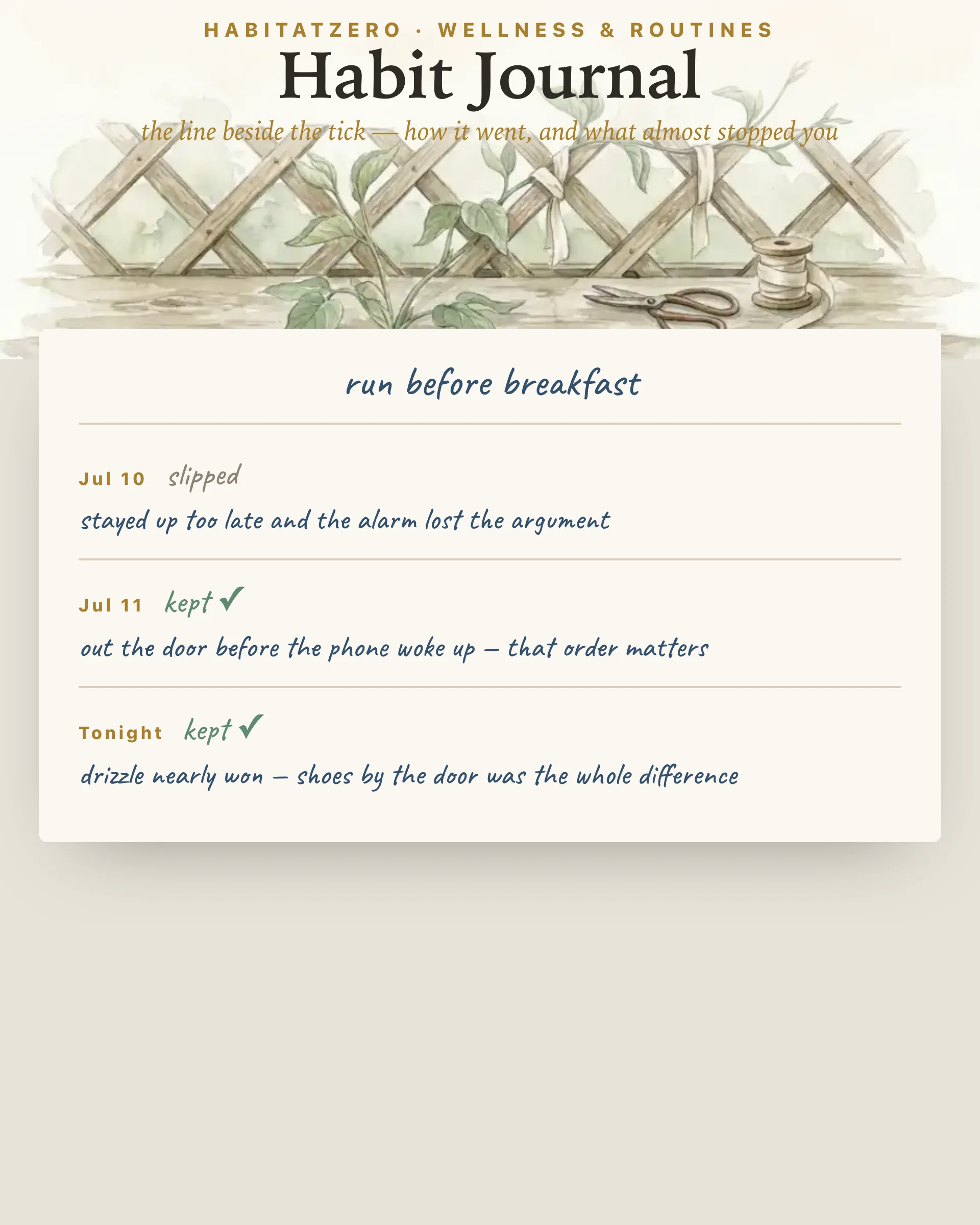
The whole nightly practice: mark the day kept or slipped, then write one line — how it went, and what almost stopped you. The near-miss clause is the engine. Research on how goals become commitments — Oettingen's work on mental contrasting — found that engaging with the obstacles standing between you and the wish, not just the wish itself, is what turns wanting into doing. A grid never asks about obstacles. A journal asks every night, in nine words or fewer: drizzle nearly won — shoes by the door was the whole difference.
The journal takes one habit at a time, named at the top in your own hand. That's deliberate scope: nobody writes honest nightly lines about six habits, and the habit that's currently the project deserves the depth. For the portfolio view — six habits, ten-week tap grids, streak math with a forgiving mode — the daily habit tracker is the wide tool; this is the deep one, and they run well in tandem.
Three weeks of pages collect below the sheet, kept and slipped alike, and the slipped ones earn their keep. Written honestly — as data, not confession — they name the habit's actual opponents, and opponents repeat: the alarm that keeps losing arguments points at bedtime, not discipline; the meeting that keeps eating the lunch walk points at the calendar, not character. The hint under the page says it plainly: slipped pages teach more than kept ones — write those especially.
That reframe matters because the real timeline is longer than the folklore. The best-known real-world study of habit formation, Lally and colleagues' modelling of habits in the wild, clocked automaticity at anywhere from around two months to the better part of a year — and found that a missed day here and there made little difference to the curve. A journal built on that evidence doesn't panic about a slip; it interviews it.
The journal holds a rolling twenty-one pages, and the reread is where it pays. Kept pages reveal the conditions of success (out the door before the phone woke up — that order matters). Slipped pages, read as a set, reveal the recurring opponent. Same obstacle three times isn't bad luck — it's a design problem, and design problems have fixes that willpower problems don't.
When the habit itself is steady and what wobbles is the day around it, the morning journal aims the whole morning in five lines. And when the vine finally holds to the trellis without the ties — when the line starts reading nothing almost stopped me — that's the journal telling you it's finished, and the next habit can have the pen.
One mark. One line. Three weeks of pages — and by the reread, you'll know your habit's opponents by name.
A habit tracker records whether you did the thing; a habit journal records what happened when you tried. This page is the journal: one habit named at the top, a kept-or-slipped mark each night, and one written line about how it went and what almost stopped you. The mark gives you the record, the line gives you the reasons — and the reasons are where stuck habits get unstuck.
Because the box cannot hold the obstacle. Research on turning goals into commitments found that engaging with the obstacles in your way — not just the outcome you want — is what produces real follow-through, and a nightly line about what nearly stopped you is exactly that engagement in miniature. Three near-misses that all say the alarm lost the argument point at a bedtime fix no streak count would ever suggest.
Longer than the internet's favorite twenty-one days, and the honest answer is: it varies enormously. The best-known real-world study found automaticity arriving anywhere from about two months to the better part of a year depending on the person and the habit. That is why this journal thinks in rolling three-week chapters rather than promising a finish line — you reread, adjust the design, and keep the vine growing.
That is the habit most worth journaling. Kept pages are pleasant to write; slipped pages are informative — each one names an opponent. Write the slipped line without the apology draft: stayed up too late and the alarm lost the argument is data, not a confession. After a week of honest slipped pages, the fix usually writes itself.
One at a time, on purpose — the writing is the feature, and nobody writes honest lines about six habits nightly. When you want the wide view instead, the daily habit tracker holds up to six habits on ten-week tap grids with streaks and forgiving mode; many people run both, with the grid for the portfolio and this journal pointed at whichever habit is currently the project.
Yes — the journal above arrives pre-filled with one, so you can read a working example before you clear it and start your own. The example tracks a single habit, running before breakfast, across a few days: one kept day whose line reads 'drizzle nearly won — shoes by the door was the whole difference', and one slipped day that says 'stayed up too late and the alarm lost the argument'. That pair is the whole method in miniature. The kept line records what made the habit survive; the slipped line names the real obstacle, which was never laziness — it was bedtime. A month of entries like these reads back as your own instruction manual.
By the team behind Fabulous, the science-based self-care app used by over 30 million people.