
The Overwhelm Recovery ProtocolWellness & Routines · ~5 min
About this template · Updated September 2026
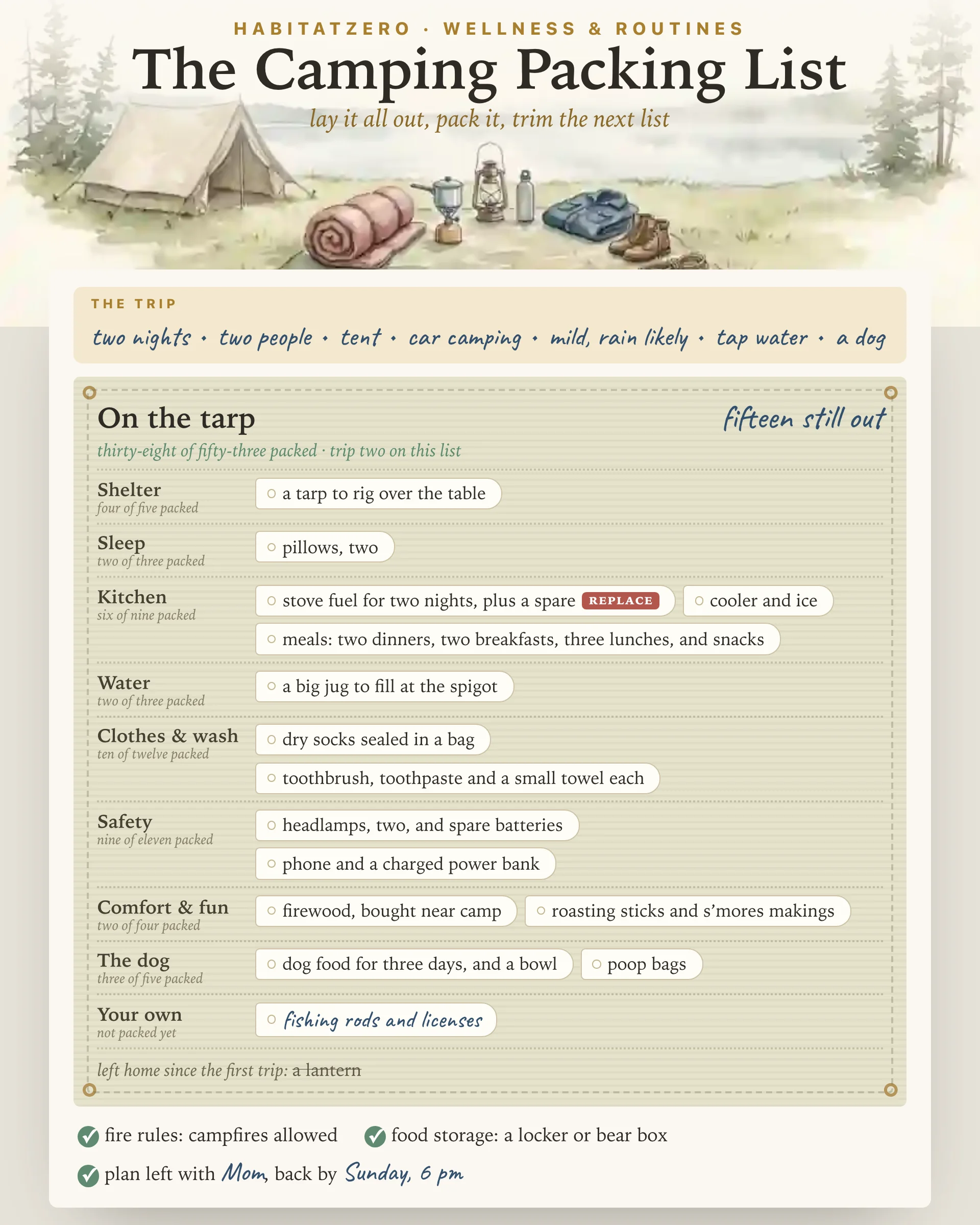
Most camping trips are not ruined by a forgotten tent. They are nagged by small absences: the lighter left on the counter, one pillow for two people, a third night that needed a third dinner. A good camping packing list is less about length than about fit, and a list that fits one trip is wrong for the next. This page builds the list from the trip you describe, lays it out like gear on a tarp, and gets a little shorter each time you tell it what came home unused.
Start with the trip card: nights, how many are going, a tent or a cabin, car camping or backpacking, the weather, where the water comes from, and whether kids or a dog are along. The tarp fills with tags sorted into shelter, sleep, kitchen, water, clothes and wash, safety, and comfort. Two nights for two people in a tent by car comes to forty-four tags.
Quantities follow the numbers. A third night adds a dinner, a breakfast, a lunch and another night of stove fuel; a third person turns the tent tag into one that sleeps three. If something was packed for the smaller trip, its tag goes back to unpacked with a note, so the count never claims more than the car holds. Switch to backpacking and the cooler, chairs and lantern leave the list; any already packed are named so you can pull them back out, and they stop counting.
Spreading everything out before it goes into the car is an old habit because you can see at a glance what is missing. Each tag here is one thing on the tarp. Tap it once it is packed and it becomes a dashed outline, the space it used to fill, while the before-you-go card lists whatever is still out.
Fire. Each park sets its own campfire rules, and a dry, windy stretch can bring a burn ban, so the National Park Service suggests asking shortly before your visit and again when you arrive. Pick stoves only and the firewood leaves the list; at a car campsite, pick campfires and a bucket of water joins it. The same page asks you to buy firewood near the campground, since wood hauled from far away can carry pests into a new forest.
Food storage. How you store food, trash and toiletries depends entirely on where you sleep. Yosemite has a food locker at every campsite, requires bear canisters for overnight wilderness trips, no longer allows food hangs, and counts toiletries and even an empty cooler as food. Your site may run differently, so the check asks what its rule is, and the list adds a canister, or rope and a sack, when the answer calls for one.
Trip plan. The park service's hiking safety advice is to leave a trip plan with someone who is not coming: where you will be, who is with you, and when you expect to be back. A phone may find no signal in the park, which is exactly when that plan matters. Type a name and a return time, and the check is done.
After the trip, open the list once more and sort what came back. Tap anything that never left the bag. Tap twice for anything used up, broken or lost. Whatever you leave alone counts as used.
When you start the next trip, unused comforts stay home: they wait at the bottom of the tarp, and one tap brings any of them back. Safety gear is the exception. The Ten Essentials (navigation, light, sun protection, first aid, a knife and repair tools, fire, shelter, and extra food, water and clothing) exist for the day that goes wrong, so a first aid kit that came home untouched did its job and stays on the list. Anything in the replace pile returns flagged until a fresh one is packed, which is also a good moment to look for expired items in the first aid supplies, as the park service recommends.
Plenty of people searching for a camp packing list have a child's sleepaway camp in mind rather than a tent in the woods. Switch the trip to sleepaway camp and the tarp holds bedding, clothes counted from the session length and whether the camp does laundry, shower and swim gear, a day pack, and stamped envelopes for letters home. The checks change too: name labels on everything, health forms sent, and medicines packed the way the camp's forms ask. The camp's own list wins wherever the two disagree, most of all on what must stay home.
It does not know your park, your forecast, or whether last year's tent pole is cracked. Treat its counts as a starting point, read the site's page before every trip, and add what your group always brings on the own-items line, up to ten. For the food itself, plan the camp meals in The Recipe Box and take the shopping to The Aisle-by-Aisle Grocery List. A campus move suits the same lay-it-all-out approach, and The Dorm Packing List handles that one.
Shelter, sleep, kitchen, water, clothes and toiletries, safety gear and a few comforts, each sized to the trip. The safety group follows the Ten Essentials the National Park Service recommends: navigation, a light, sun protection, first aid, a knife and repair tools, fire starter, emergency shelter, and extra food, water and layers. Two nights for two people in a tent by car comes to forty-four tags on this list.
Yes. Switch the trip to sleepaway camp and the list turns into bedding, clothes counted from the session length and whether the camp does laundry, shower and swim gear, a day pack and letters from home. The camp's own list wins wherever the two differ, especially on what must stay home, and every item should carry your camper's name.
Where the site has no tap, plan on a gallon a person a day for drinking, cooking and doing the dishes, the figure Ready.gov uses for emergency supplies. Two people on a two-night trip need about six gallons, close to fifty pounds, which is why backpackers usually filter from a stream or lake instead. Choose that source and the list adds a filter and backup tablets.
Only the place you camp can answer that. Yosemite, for one, has a food locker at every campsite, requires canisters for overnight wilderness trips and no longer allows food hangs. Record your site's rule in the before-you-go check, and the list adds a canister, or rope and a sack, when the answer calls for one.
The filled-in example on this page is free to look through without signing up. Setting your own trip, packing from the tarp and keeping the trimmed list for next season happens in HabitatZero, which is free.
By the team behind Fabulous, the science-based self-care app used by over 30 million people.


