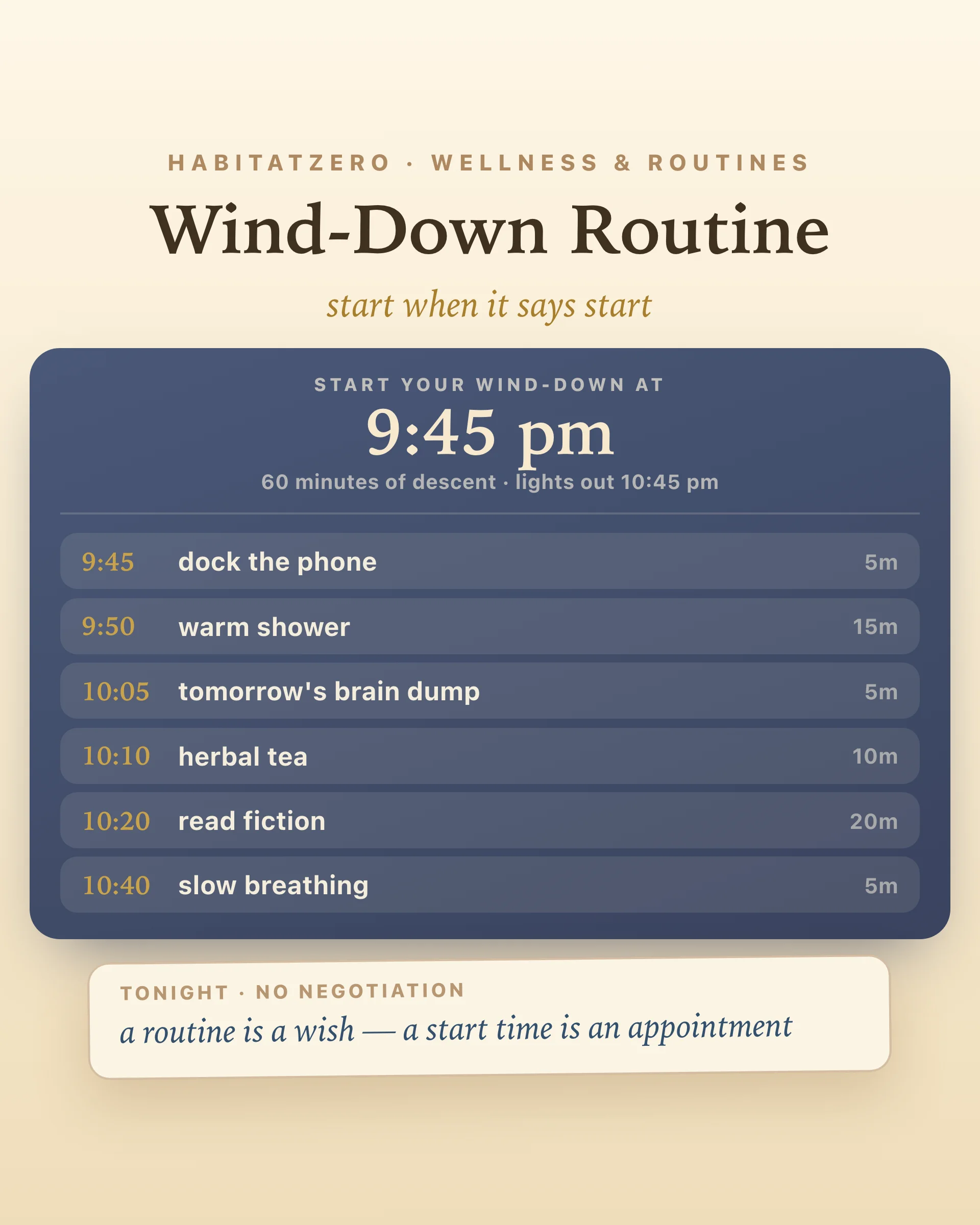
Wind-Down Routine BuilderSleep & Evenings · ~4 min
Fabulous · Practices
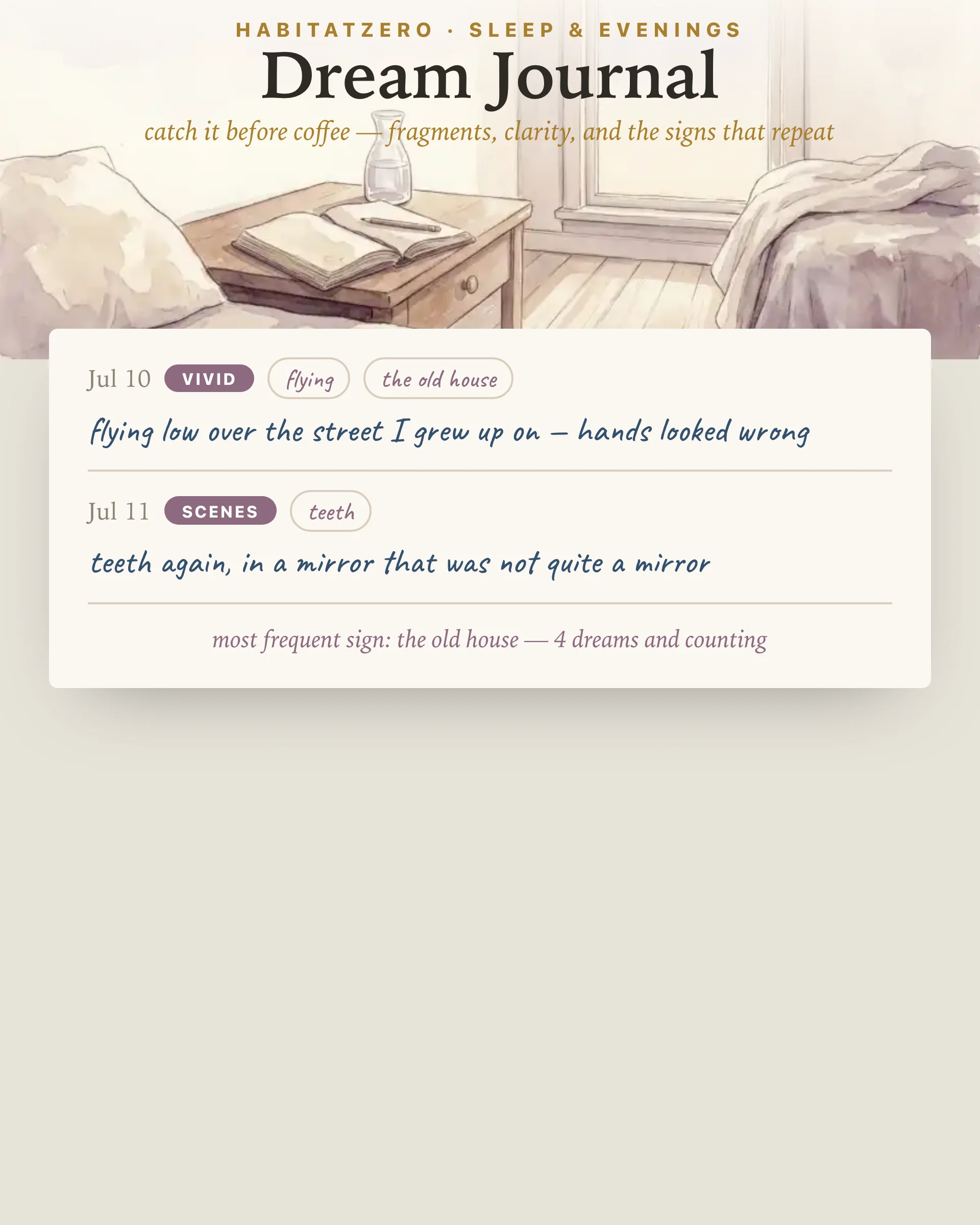
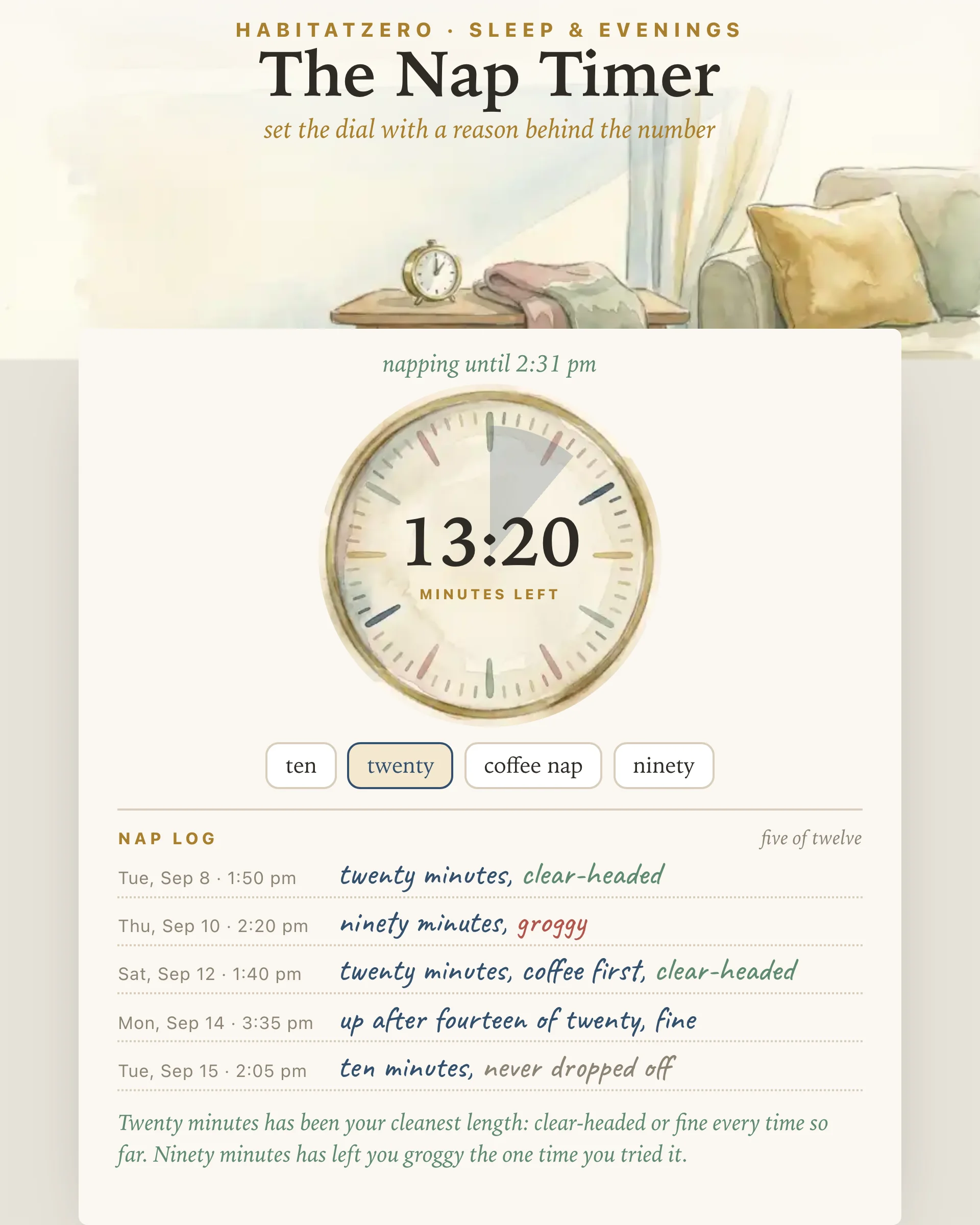
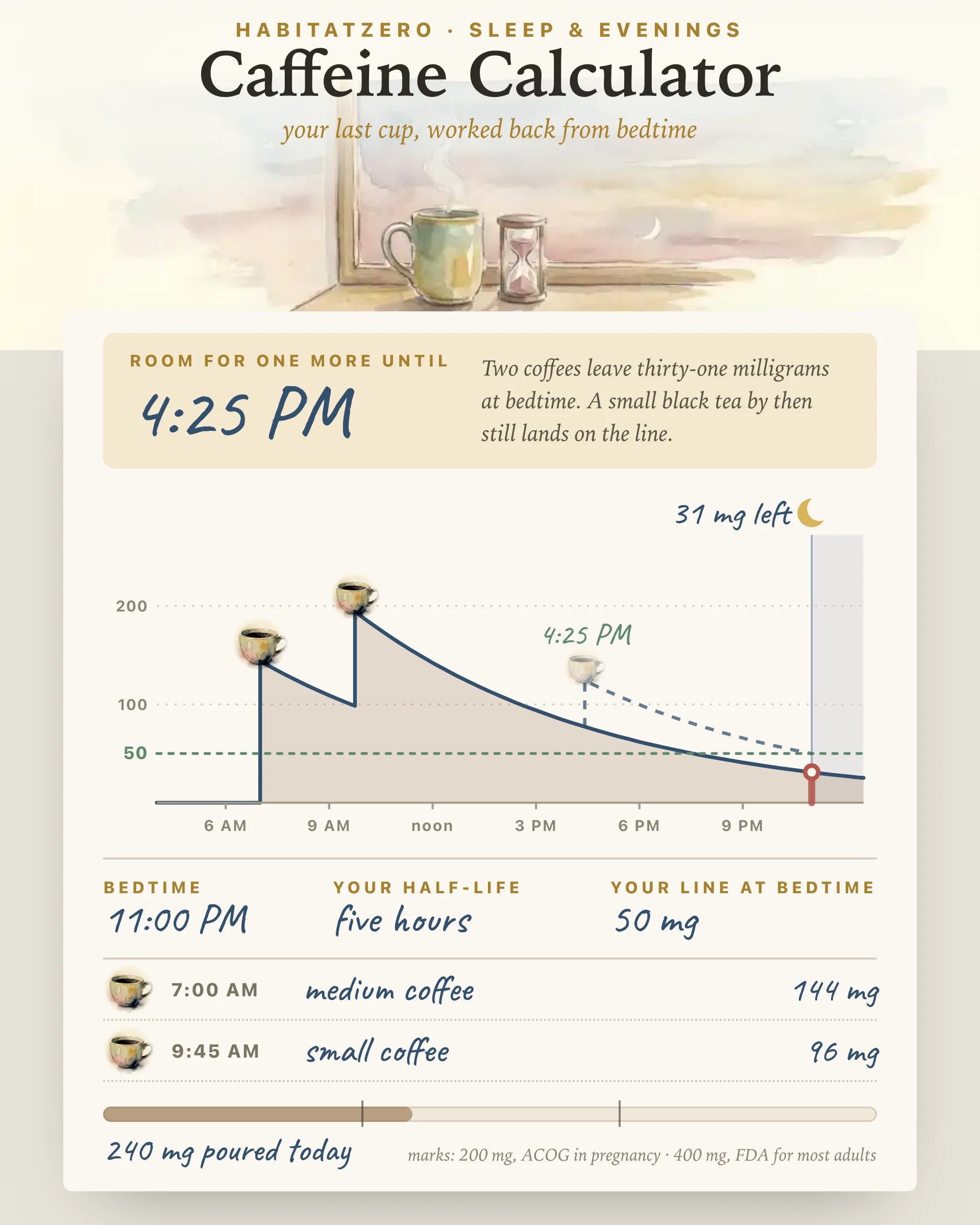
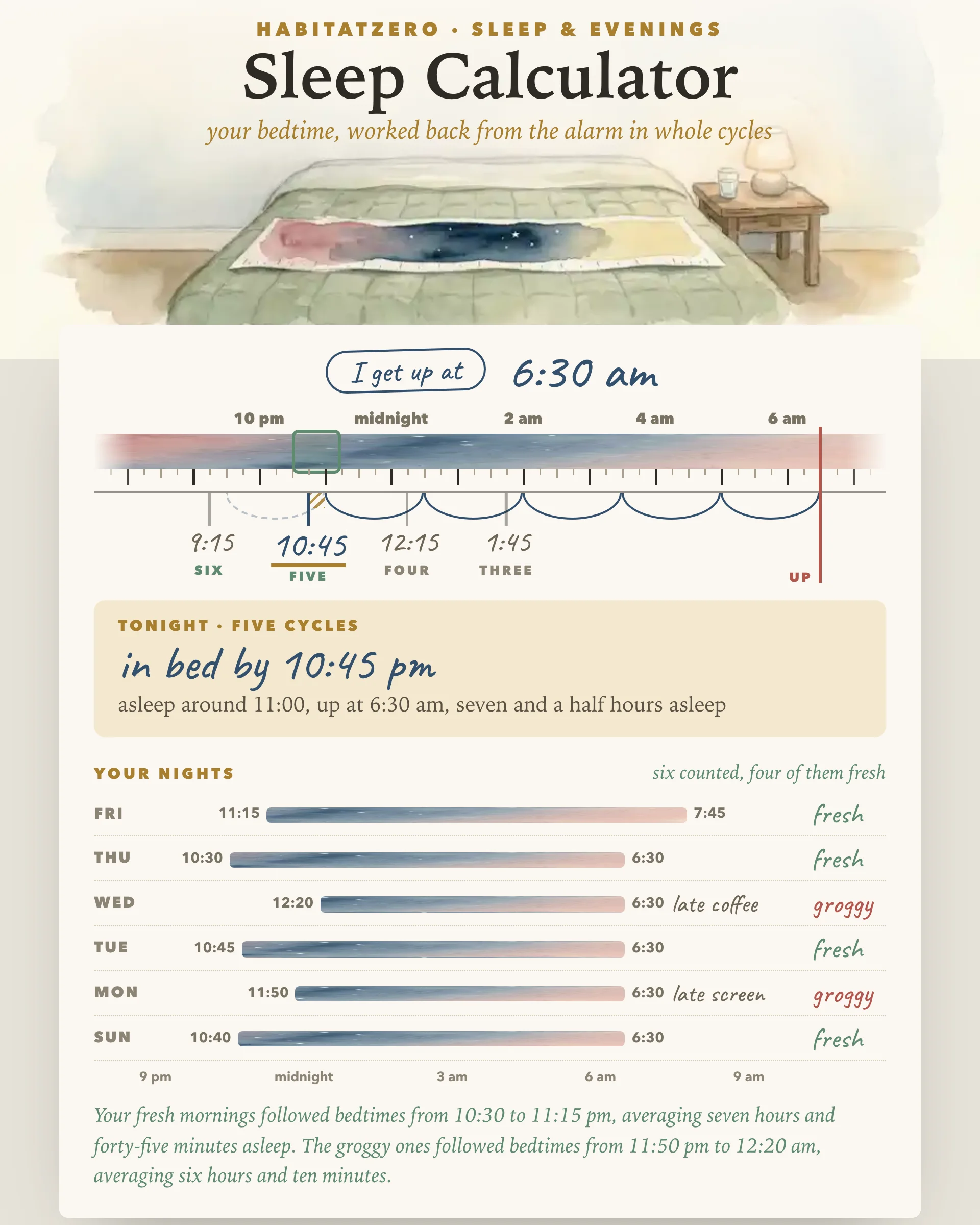
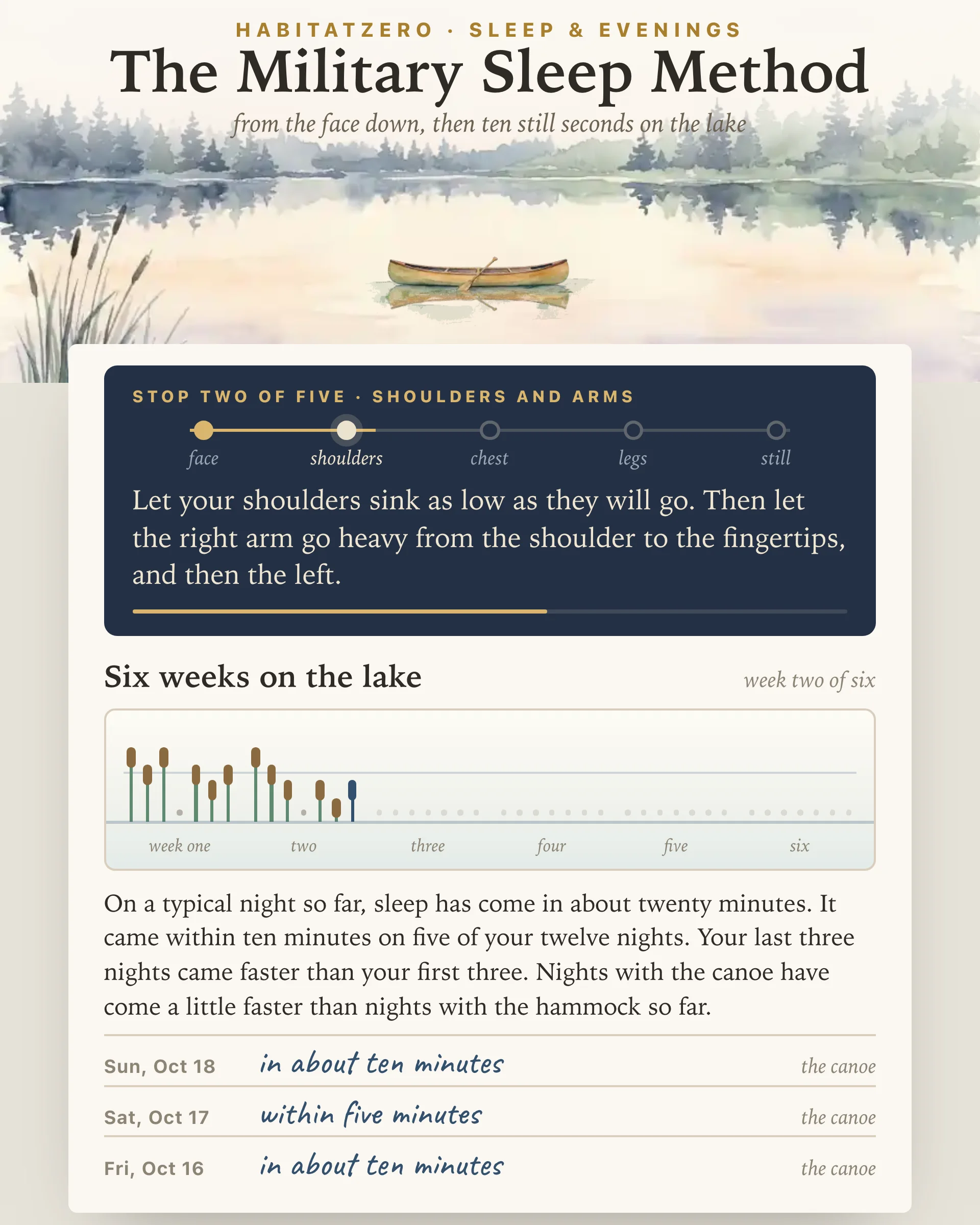
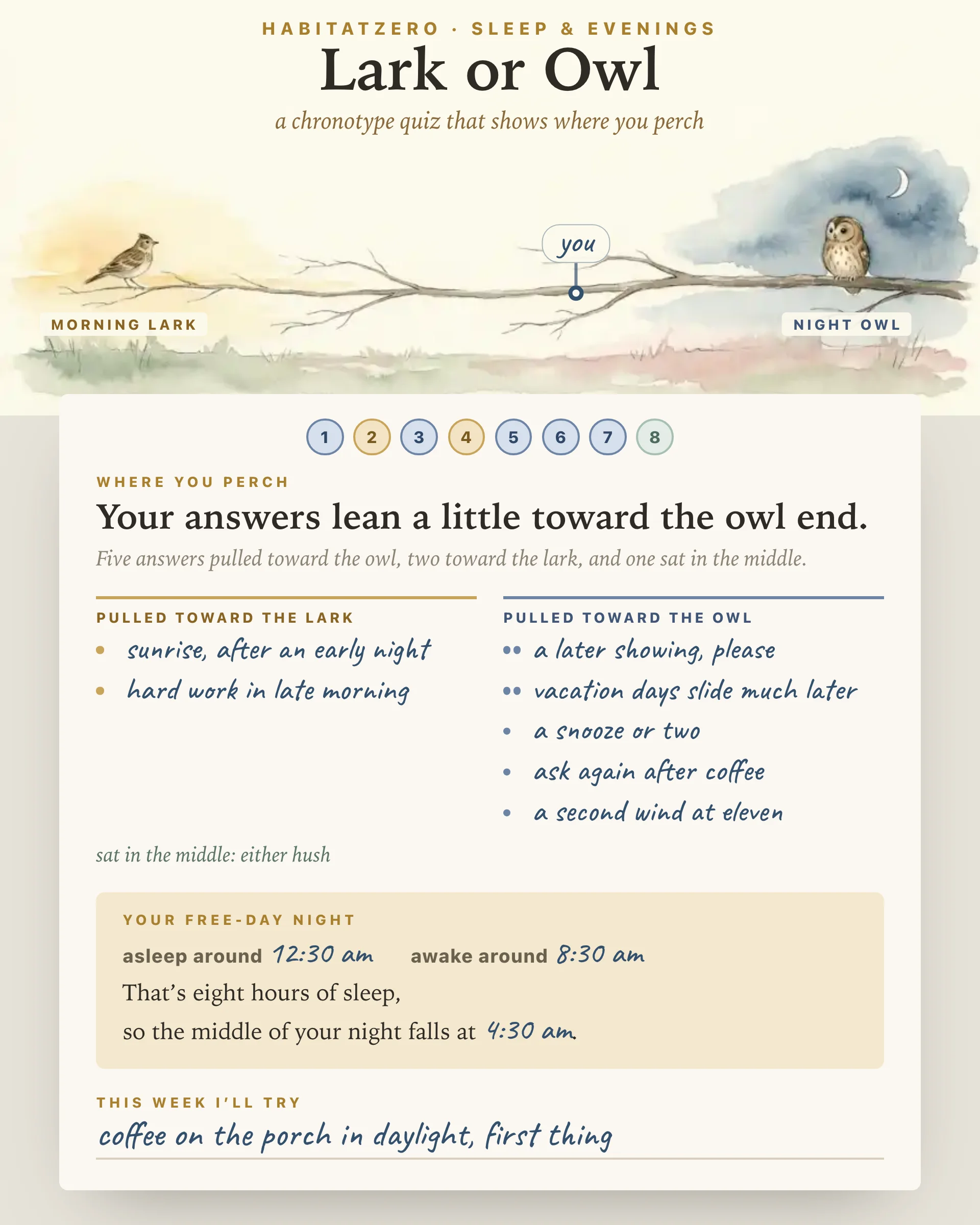
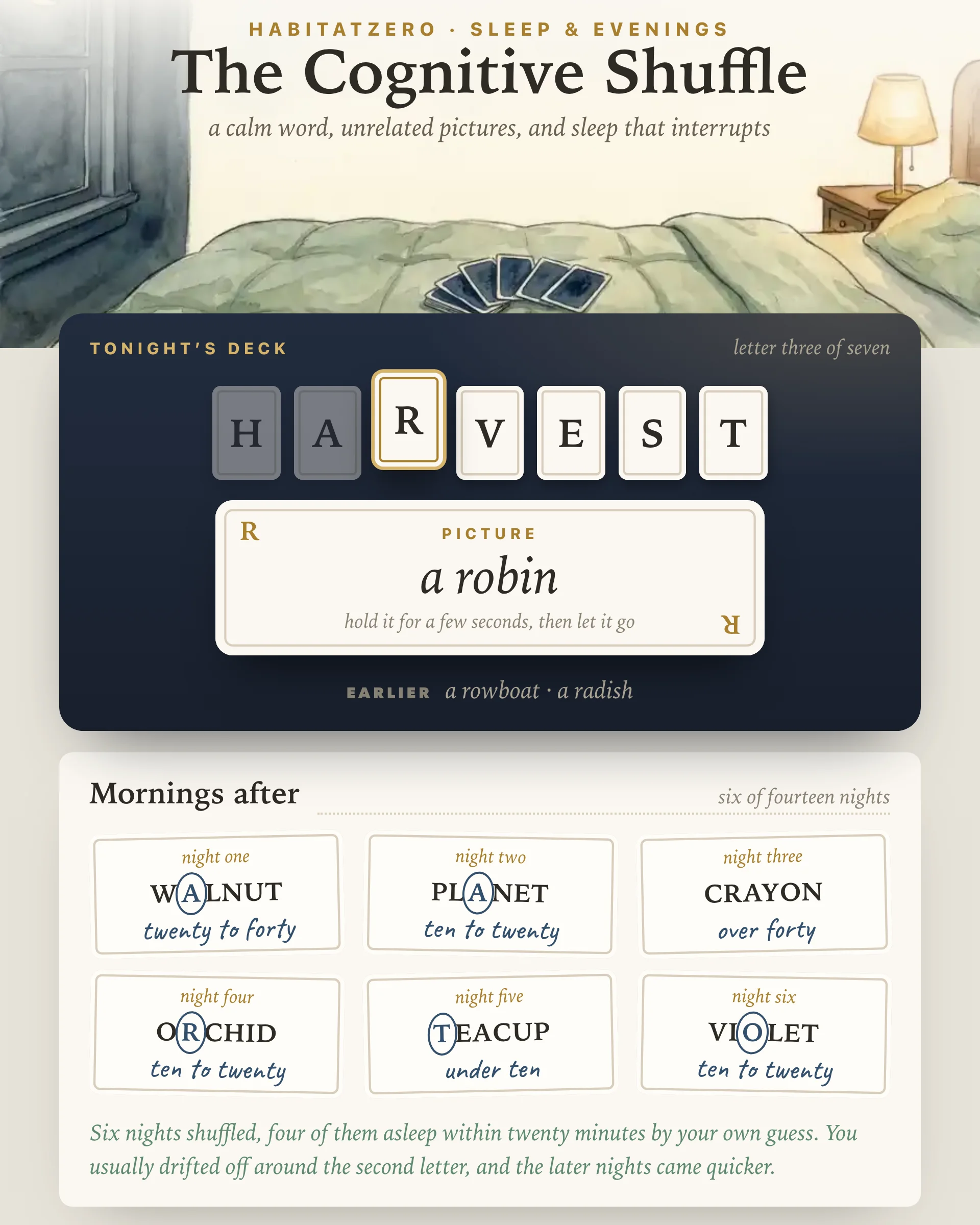
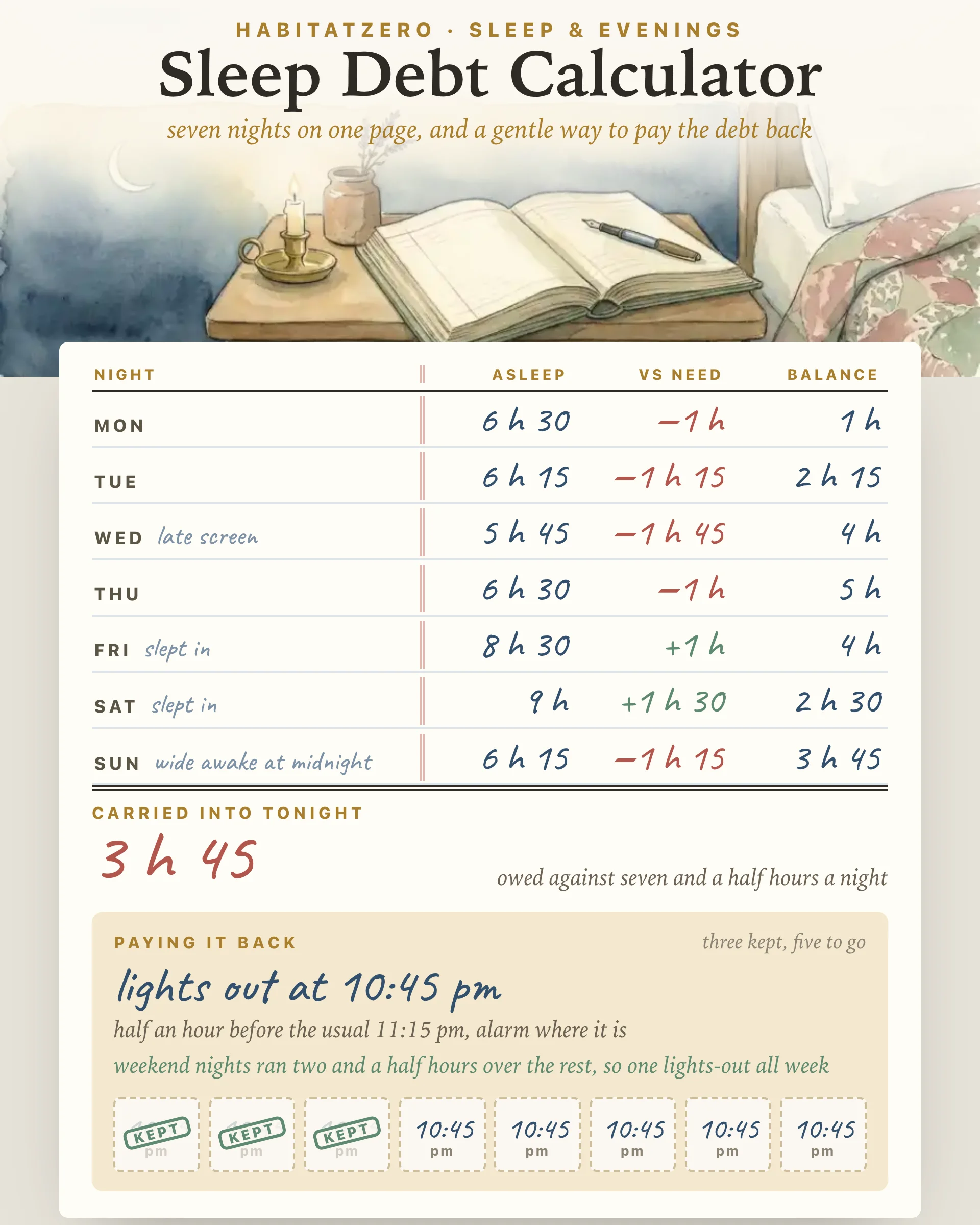
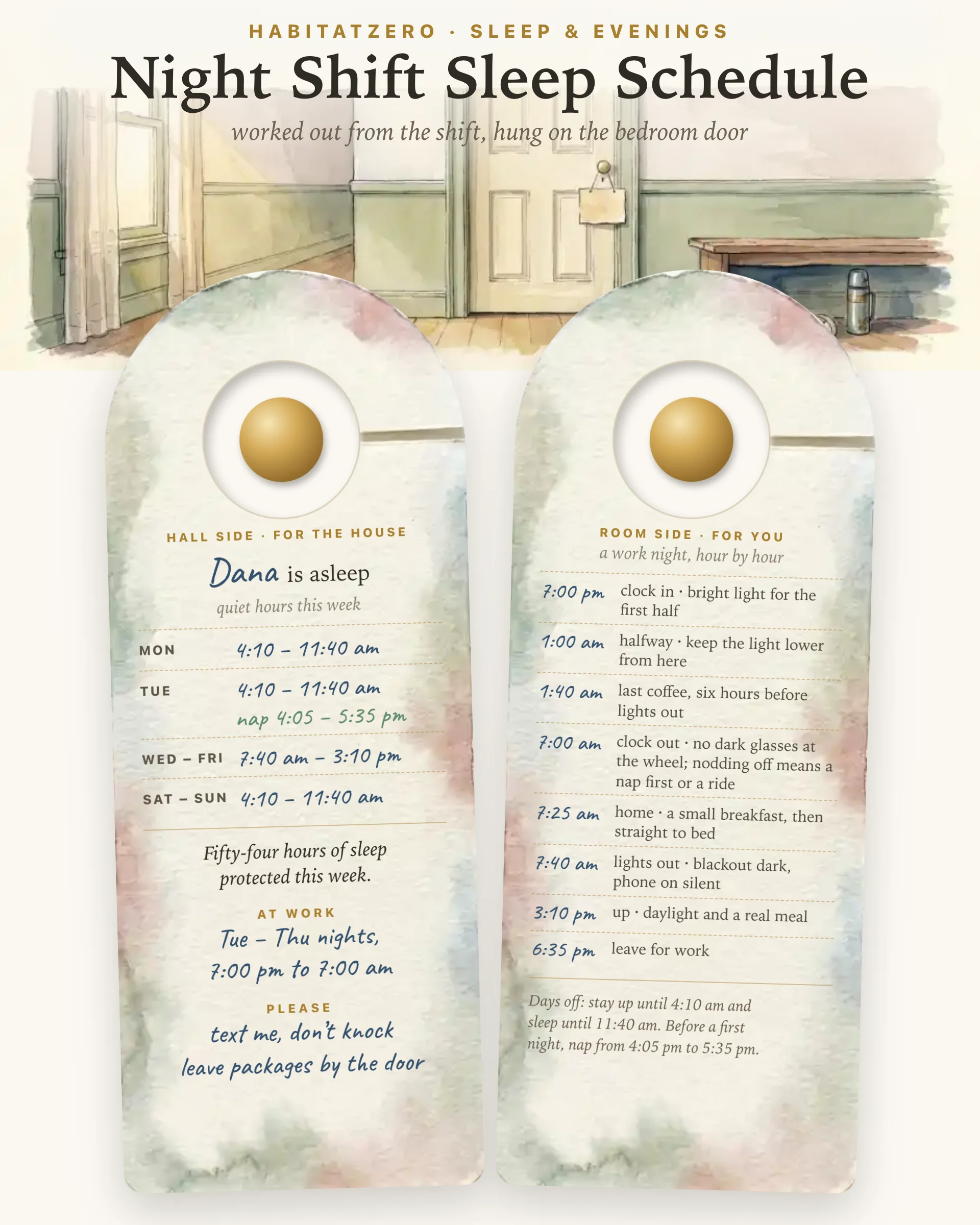
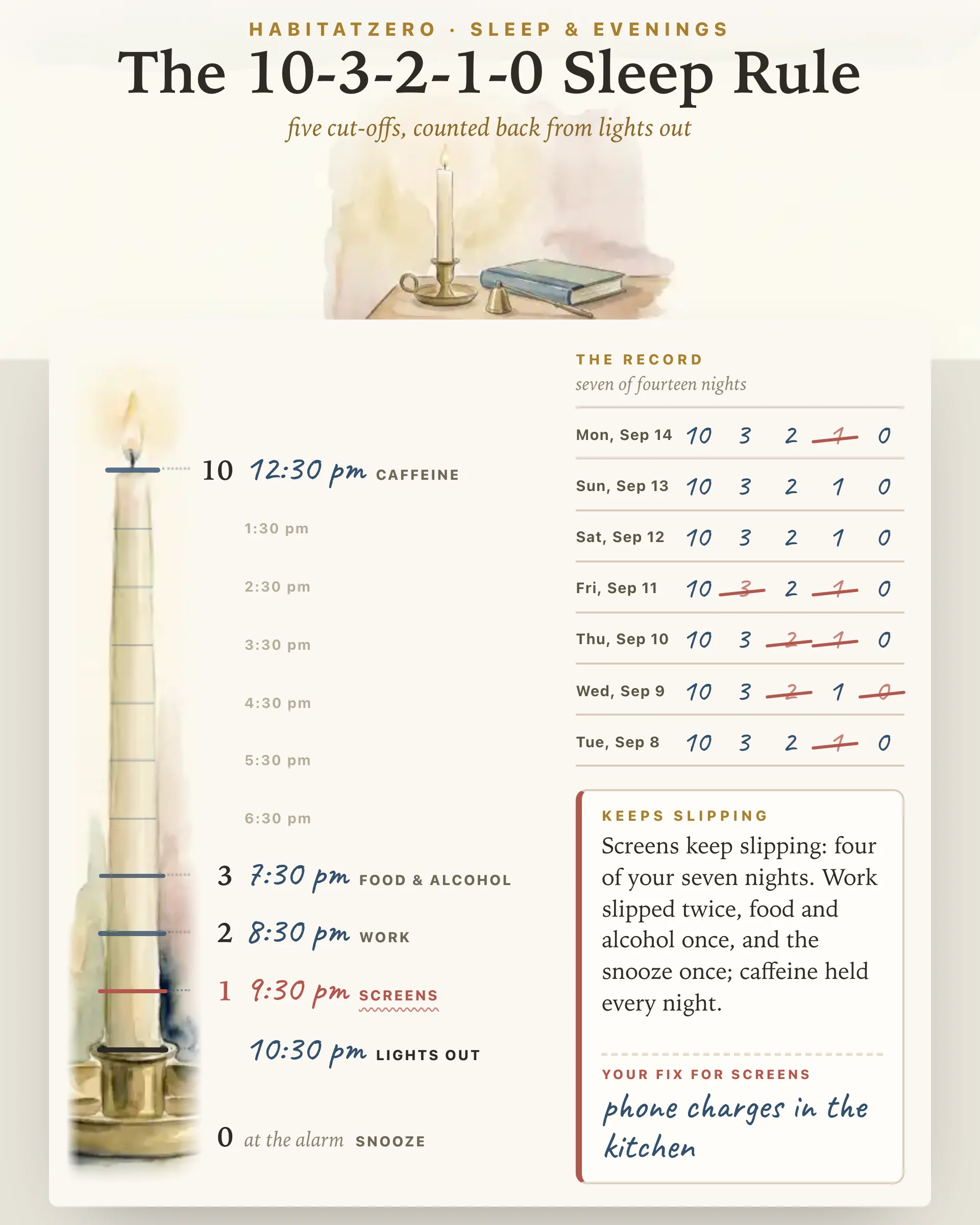
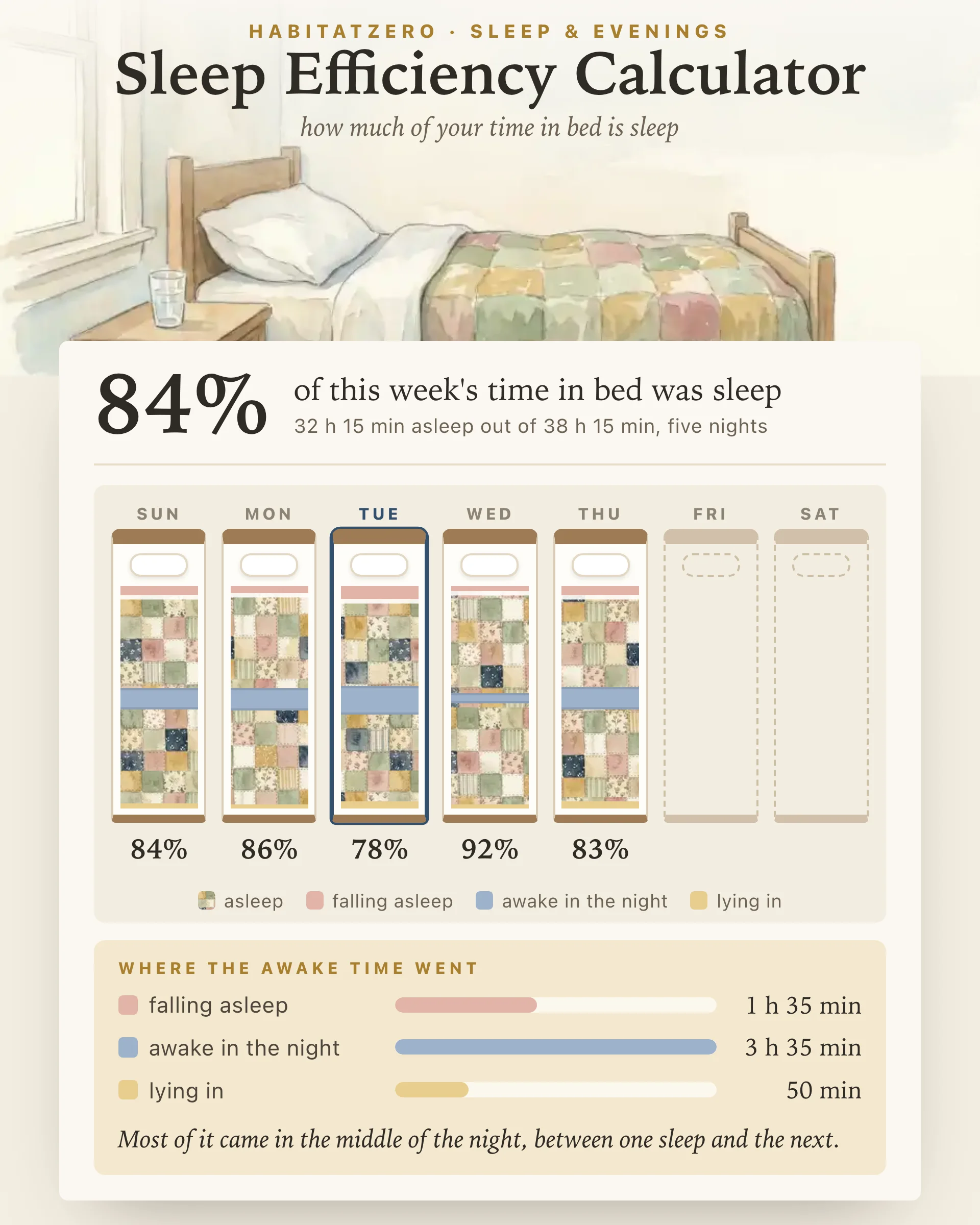
Free interactive sleep tools: a wind-down routine builder, a scored sleep hygiene quiz, a nightly sleep log, a bedtime brain dump, a sleep calculator and more.
Why these templates
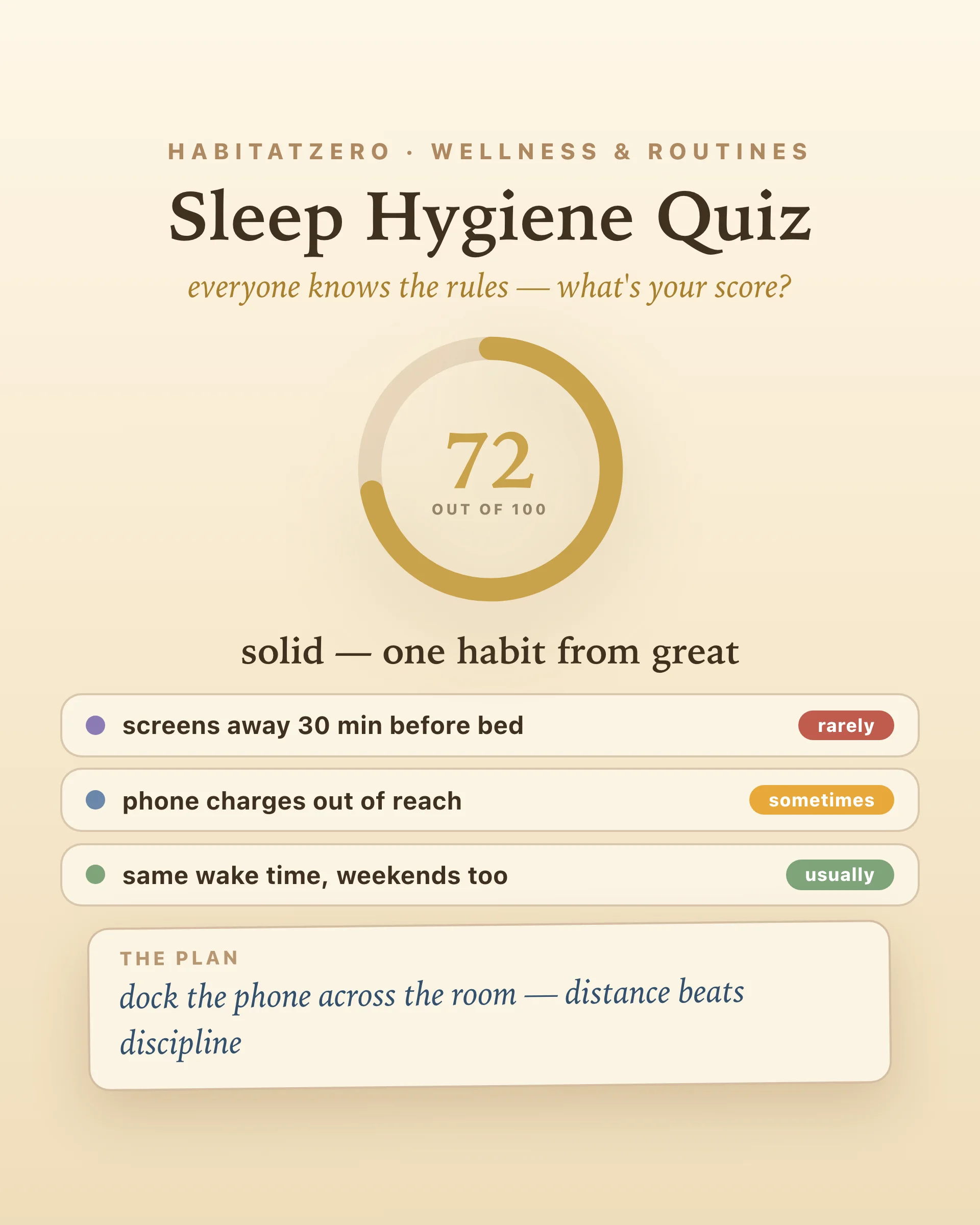
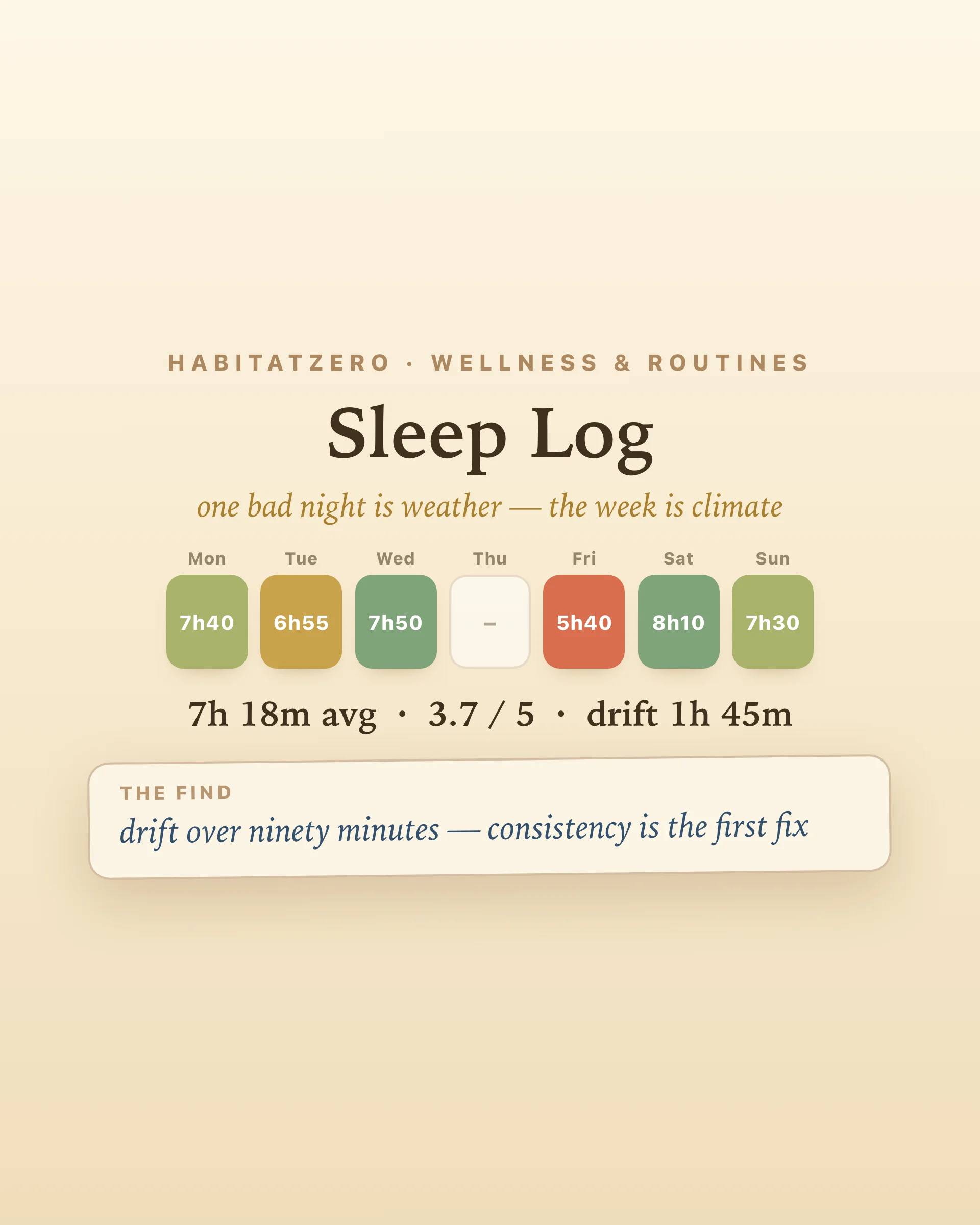
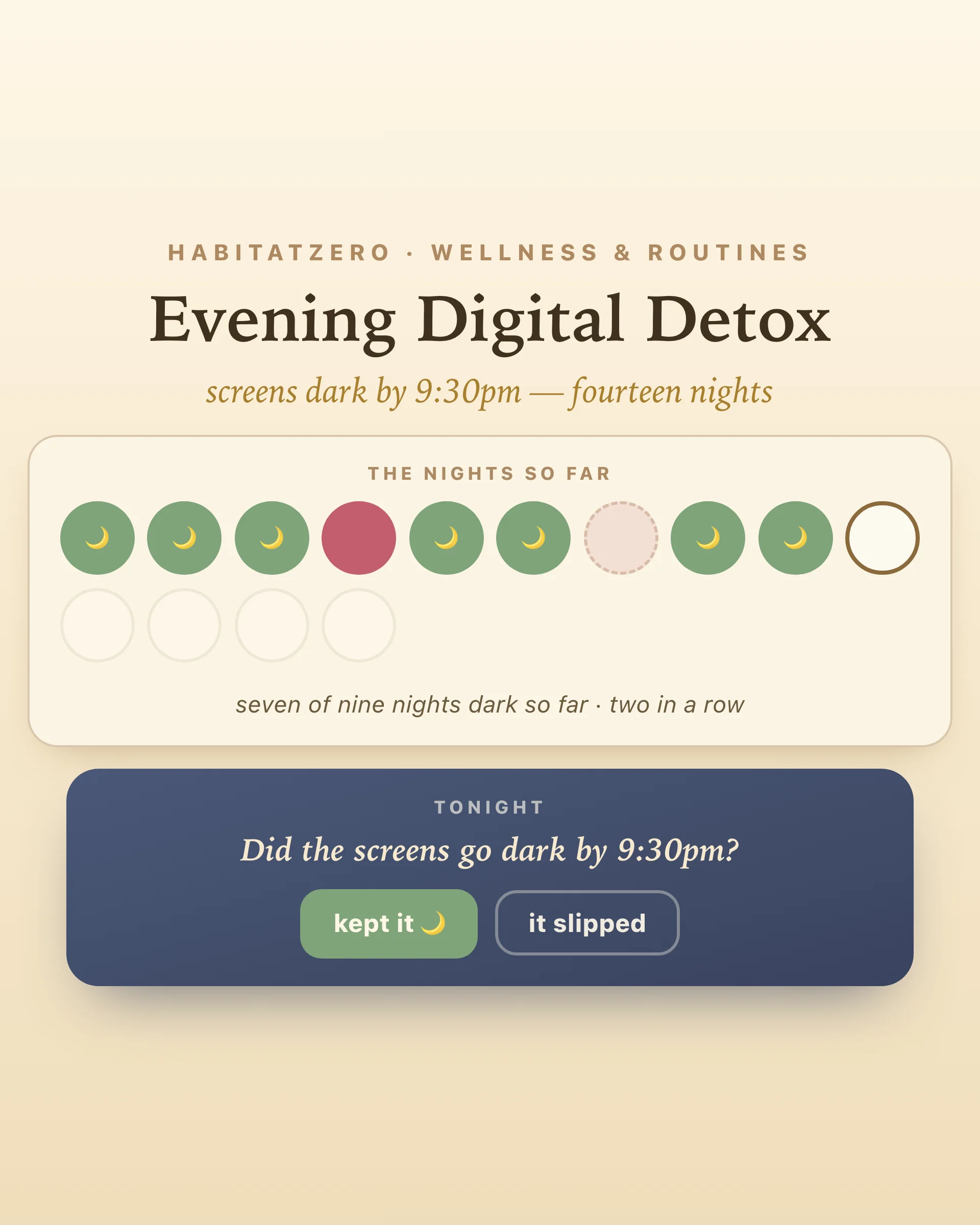
Better sleep advice has a compliance problem: everyone already knows it. Screens dim, caffeine early, consistent bedtime — the knowledge is universal and the follow-through is not, because knowing isn't a system. The tools on this page are the system, and each is built on the evidence rather than adjacent to it: evening screens measurably push melatonin and the body clock later — which is exactly what the evening digital detox turns into a keepable screen curfew; the habits in the quiz come from the canon that sleep hygiene research supports for the general population; and the log mirrors the core fields of the Consensus Sleep Diary that sleep researchers standardized on.
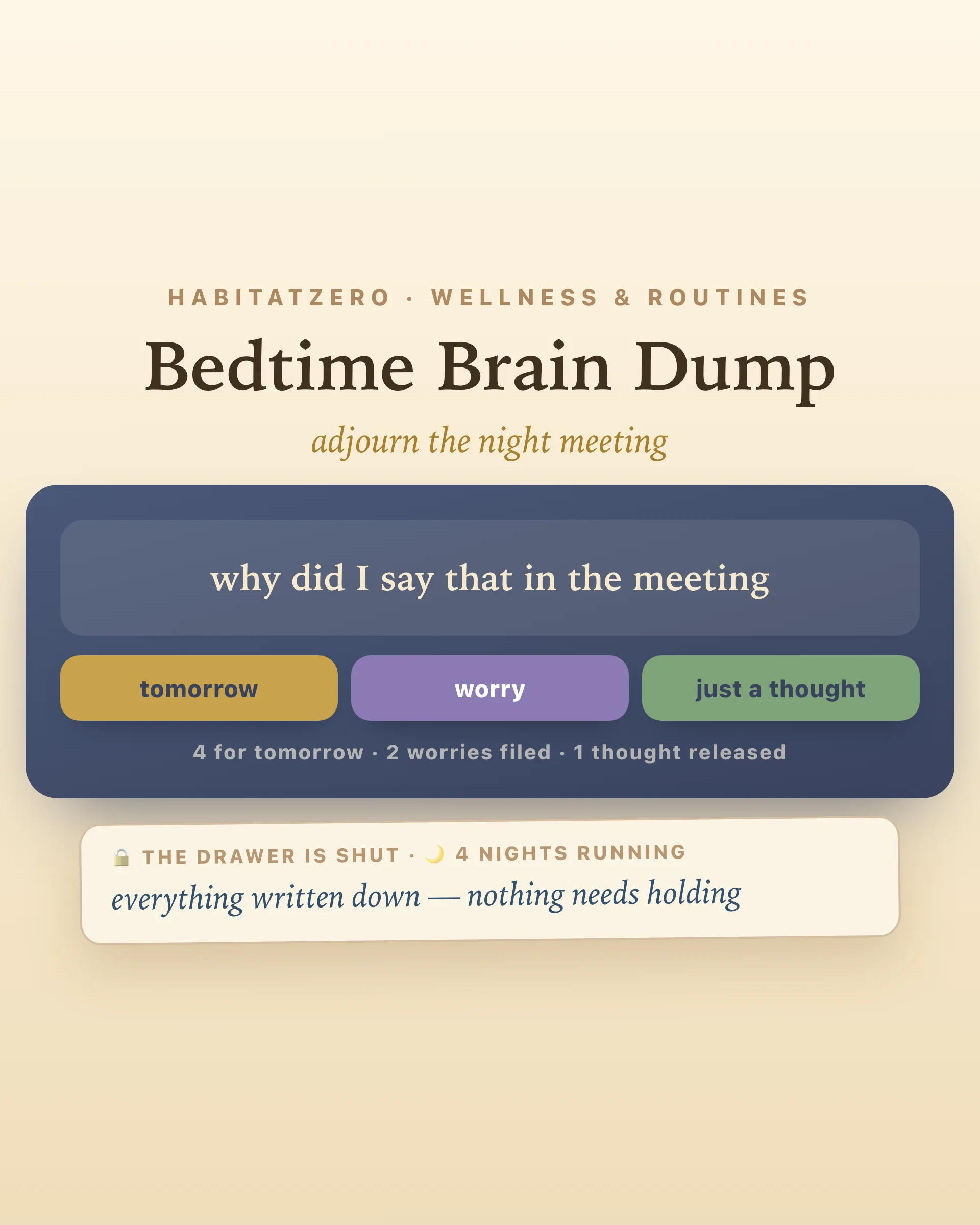
They work as a loop. The quiz scores your habits and names the two weakest; the routine builder turns the fix into a sequence with an exact start time — because a routine is a wish and a start time is an appointment; the detox keeps the last hour dark, the bedtime brain dump empties the head that fills the silence the phone leaves behind; and the log keeps the receipts, so two weeks later you know whether the fix moved anything. Everything is free, runs in the browser, needs no signup, and none of it is a medical assessment: these tools tend the conditions around sleep, and sleep that stays broken despite good conditions belongs with a professional.
The boring, repeatable ones: a wind-down routine with a fixed start time, a periodic habit check, and a short nightly log. Apps and wearables measure; these tools change behavior — the routine makes the descent automatic, the quiz finds the leaking habit, and the log proves within two weeks whether a fix worked. Use them as a loop: score, fix, log, rescore.
Take the sleep hygiene quiz first — three minutes, and it names your two weakest habits with concrete fixes. If the weakness is the evening itself, build the wind-down routine next and start at the minute it gives you. Then keep the sleep log for two weeks; the bedtime-drift number it computes is usually the single most revealing stat.
Free, yes — browser-based, no signup, no email. Medical, no: everything here is a habit and routine layer, deliberately framed as prevention and maintenance. Sleep that stays poor despite well-tended habits, loud snoring, or daytime sleepiness that affects your life are professional territory, and a completed two-week log from this page is exactly what a clinician will ask to see.