Wind-Down Routine BuilderSleep & Evenings · ~4 min
About this template · Updated July 2026
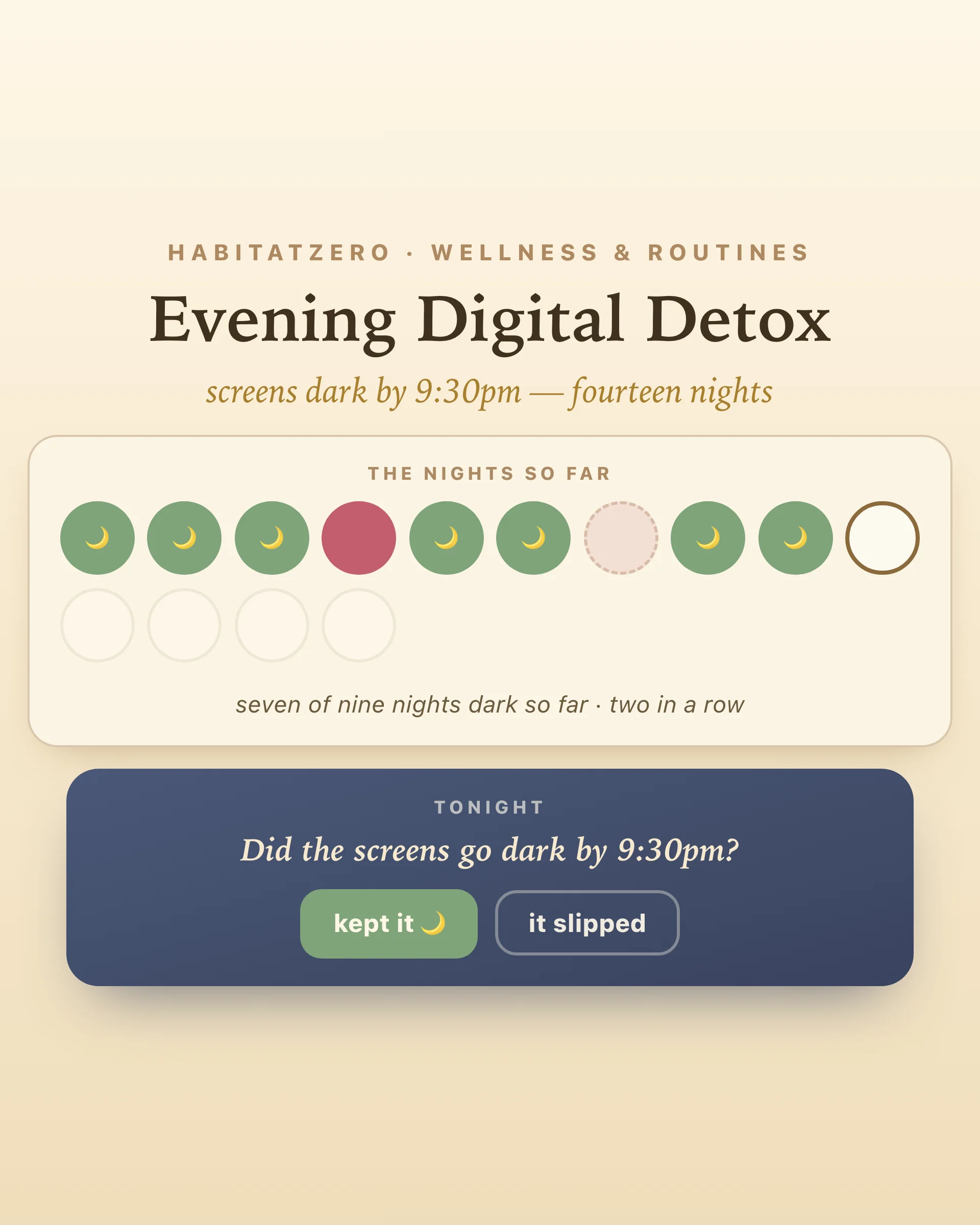
Nobody needs convincing that the last hour of the day has been quietly annexed by a screen. The convincing everyone needs is subtler: that you don't have to quit your phone to get the hour back. Whole-life digital detoxes fail the way crash diets fail — dramatically, then completely. What survives is a smaller, sharper rule: screens off by a set hour, for a set number of nights. An evening scope, a finish line, and a grid that keeps the score.
Pick the length. Seven nights proves you can. Fourteen makes dark evenings start to feel normal. Thirty gives a new default a genuine chance to set — and if you're wondering how long habits take to form, the honest answer from habit formation research is "weeks at minimum, and it varies enormously between people." Treat the first round as a trial, not a verdict.
Set the hour. Choose the time the screens go dark — half past nine, ten, whatever sits an hour or so before your real bedtime. The point isn't asceticism; it's giving the evening a boundary that doesn't have to be re-negotiated nightly at the exact hour your willpower is weakest.
Declare your exceptions — honestly, in advance. An e-reader, a podcast, an actual phone call: decide now, not at 9:47pm with the phone already warm in your hand. A rule with named exceptions survives; a rule with improvised ones dissolves. The challenge is against the scroll, not against light itself.
The evening scope isn't arbitrary — it's where the research points. Reading on a light-emitting screen before bed has been shown to suppress melatonin, delay the circadian clock, and dull next-morning alertness compared with reading the same material on paper. And the device does a second kind of damage that has nothing to do with light: researchers studying bedtime procrastination found that people routinely delay sleep with no external reason at all — the feed simply keeps proposing one more thing, past the point where the body was ready. A screen curfew closes both doors with one rule.
Each evening, ten seconds: did the screens go dark by curfew? Tap kept and a moon fills in. Tap slipped and a rose dot takes its place — recorded, not punished. This is the design decision the whole challenge leans on: a slip doesn't reset anything. All-or-nothing streaks are how most challenges die; one bad Tuesday becomes the excuse to stop logging, and the quiet quit follows. Here, a thirty-night round with six slips reads as what it is — twenty-four dark evenings your sleep actually received — and the grid shows the streaks inside it either way.
When the last night passes, you get the count, the download-able card, and a one-tap way to archive the round and start the next one a little bolder.
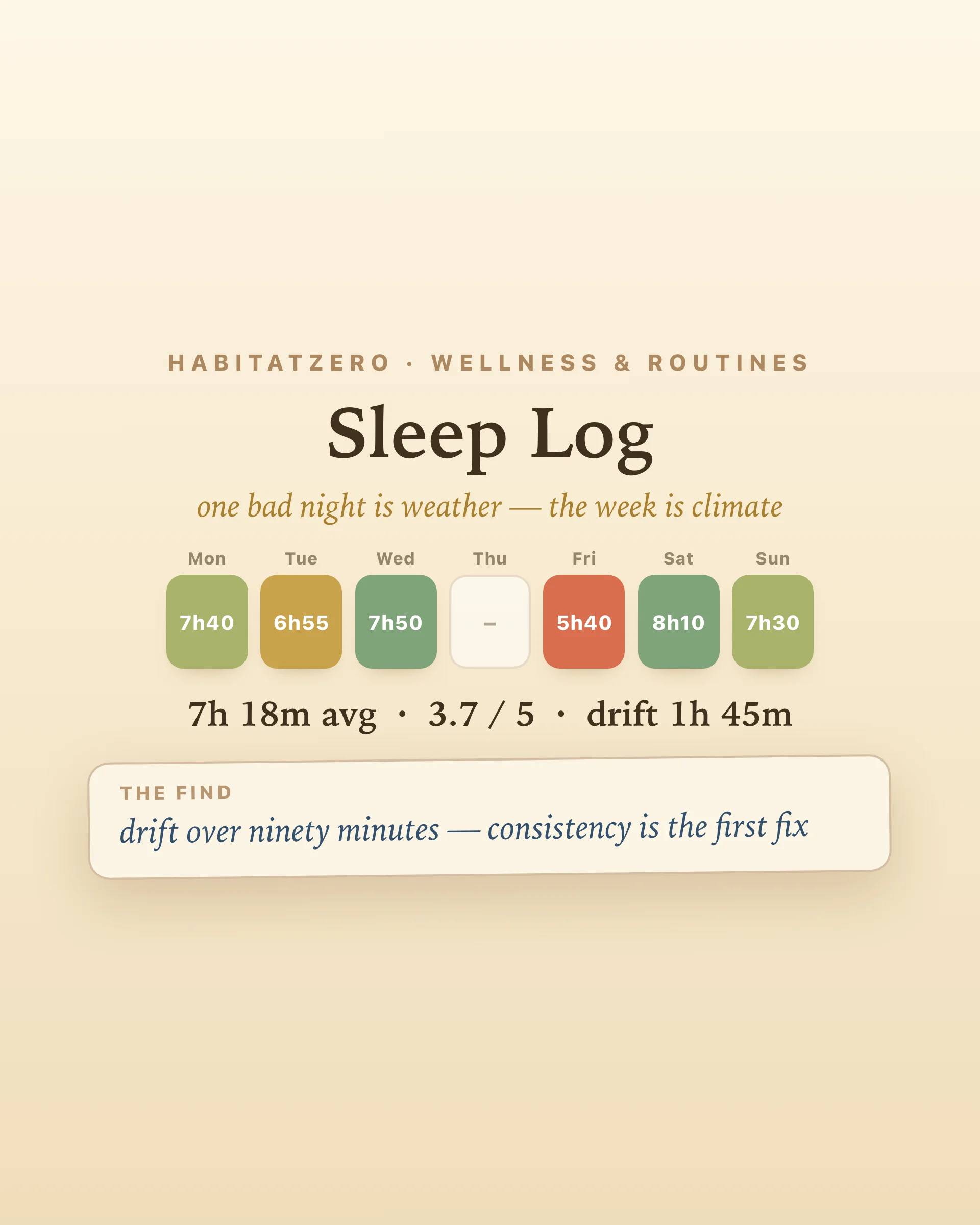
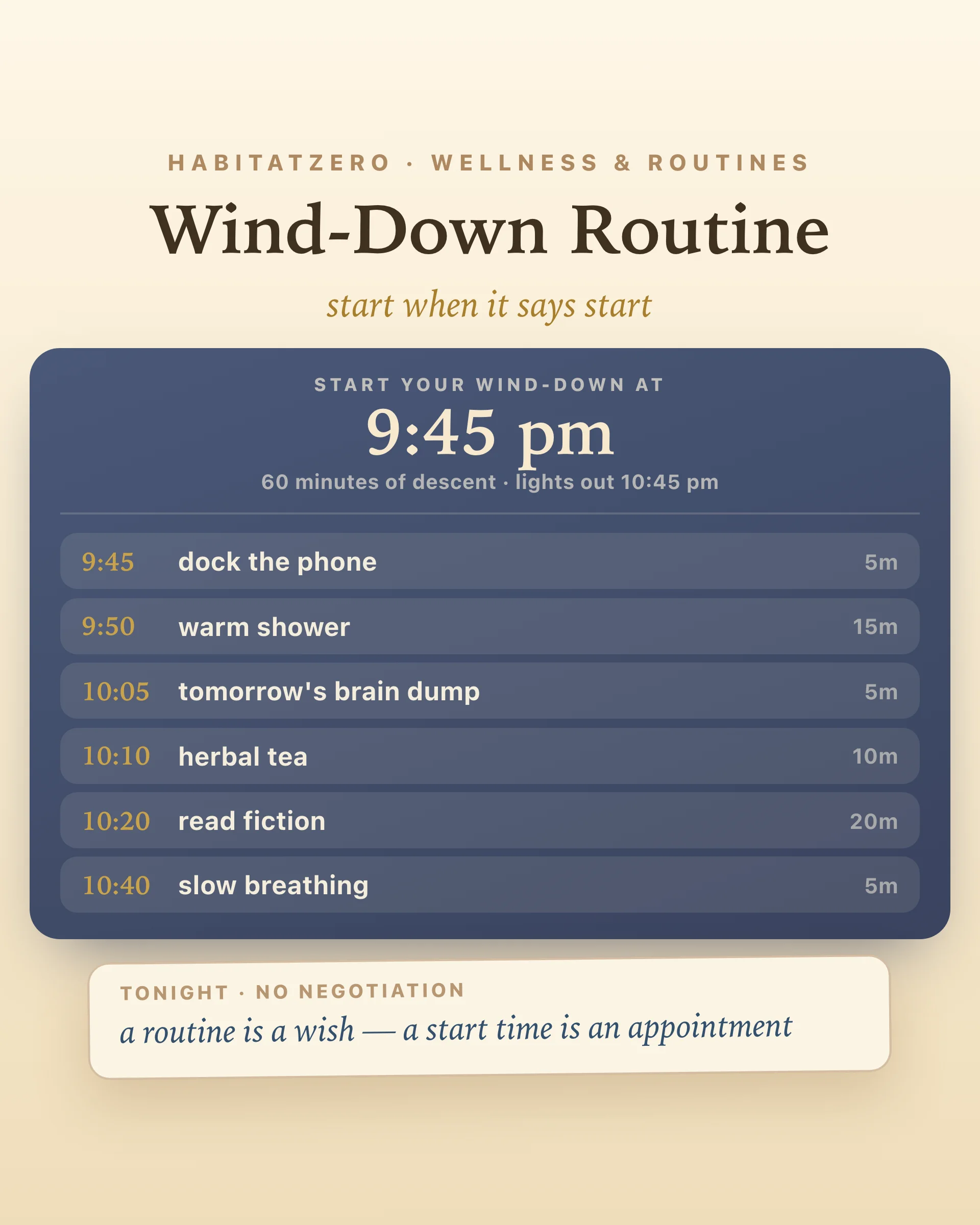
The detox clears the hour; its neighbors fill it. Build what happens in the reclaimed time with the wind-down routine — the backward-planned pre-bed sequence this curfew was making room for. If the head fills the silence the phone used to fill, the bedtime brain dump empties it onto paper. And if you want to know whether any of this is working, the sleep log will show the bedtime drift flattening within a week or two.
Seven, fourteen, or thirty nights. The phone will still be there in the morning — which, it turns out, was always soon enough.
A fixed run of days with a rule about screens, tracked honestly. This one is evening-scoped on purpose: instead of quitting devices entirely — which rarely survives contact with real life — you set a nightly screen curfew and try to keep it for seven, fourteen, or thirty nights. The fixed length matters: a challenge with an end date gets started, while a vague resolution to use the phone less does not.
The research points that way from two directions. Evening use of light-emitting screens has been shown to delay the circadian clock, suppress melatonin, and reduce next-morning alertness compared to reading on paper. And separately, the scroll itself keeps the mind aroused past the point of natural sleepiness — researchers call the pattern bedtime procrastination, delaying sleep with no external reason. A curfew addresses both at once.
Long enough to feel different, short enough to finish. Seven nights proves you can; fourteen makes the evenings start feeling normal; thirty gives a new default a real chance to set in. Habit research suggests automaticity builds over weeks at minimum — and varies enormously between people — so treat the first round as a trial run and let the moon grid tell you whether to go longer.
Log it and keep going — the challenge counts nights kept, not perfection. A thirty-night round with six slips is still twenty-four dark evenings your sleep received. The tracker shows slips in the grid without resetting anything, because the all-or-nothing rule is how most challenges die: one bad Tuesday becomes a reason to quit. Here a slip is one rose dot in a row of moons.
Yes — free, in your browser, no signup. Your rule, your nights, and your check-ins save as you go, finished rounds archive into a history, and the moon-grid card downloads as an image. In the Fabulous app the same challenge syncs across devices.
By the team behind Fabulous, the science-based self-care app used by over 30 million people.