The Gratitude JarEmotional Fitness · ~1 min
Fabulous · Practices
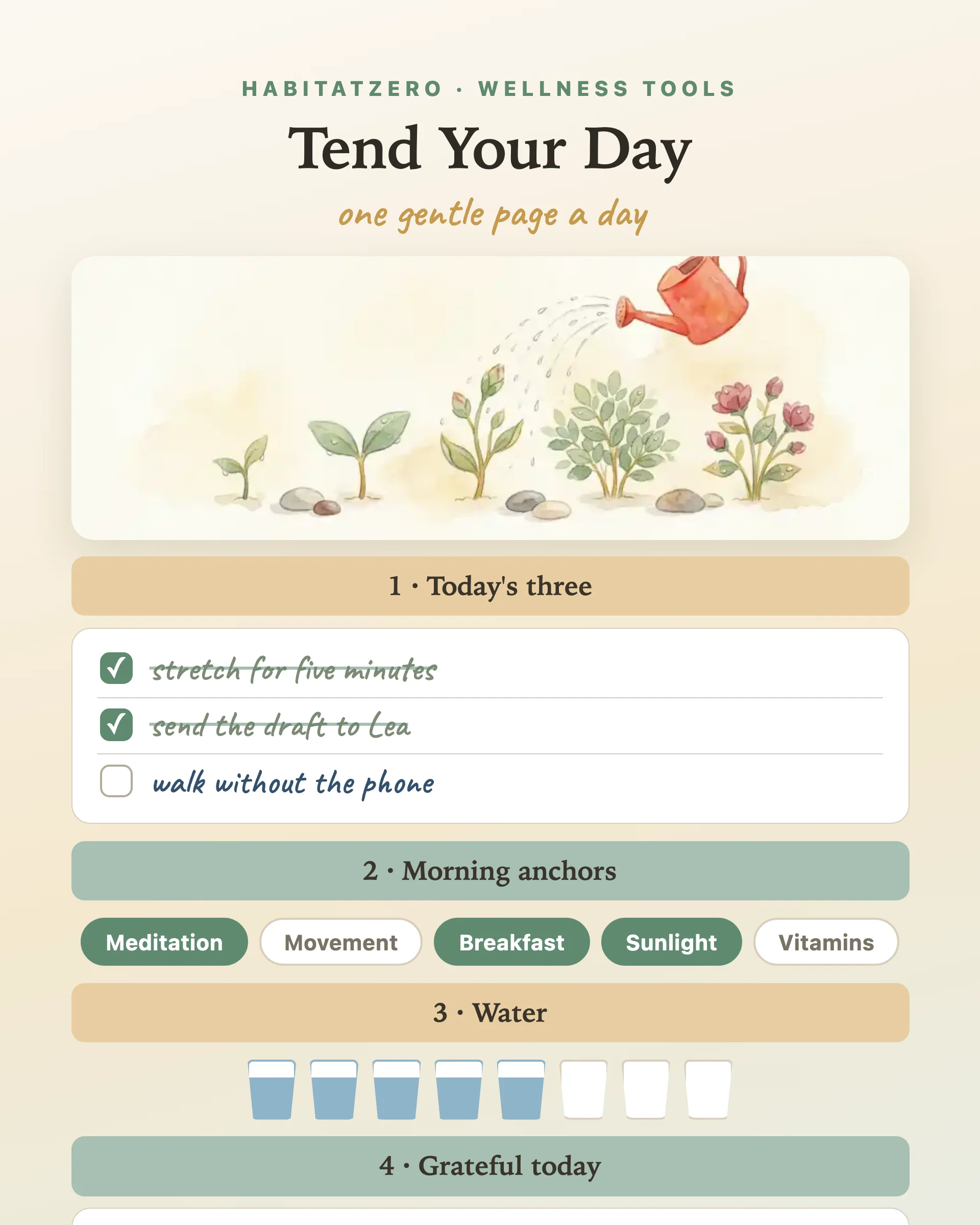
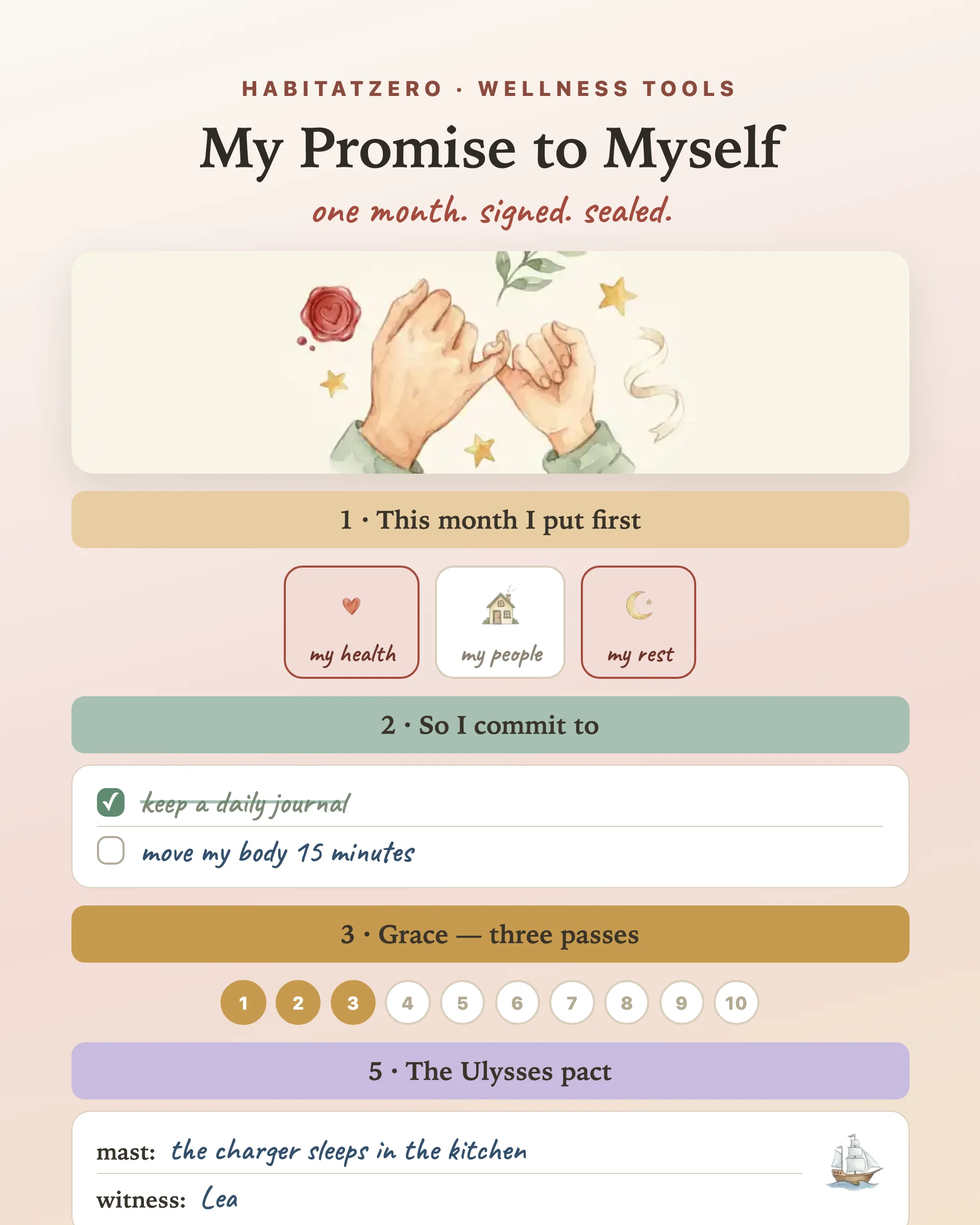
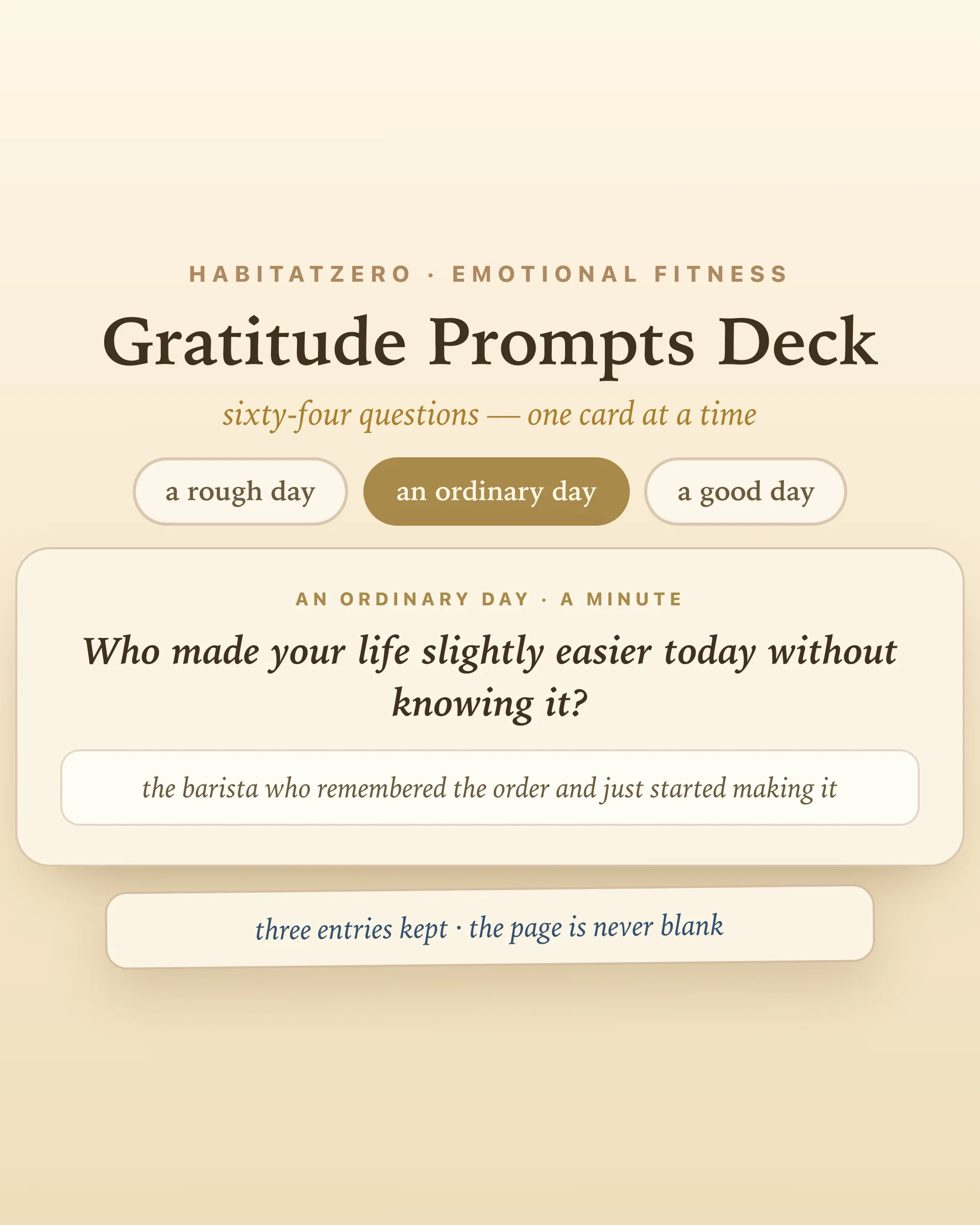
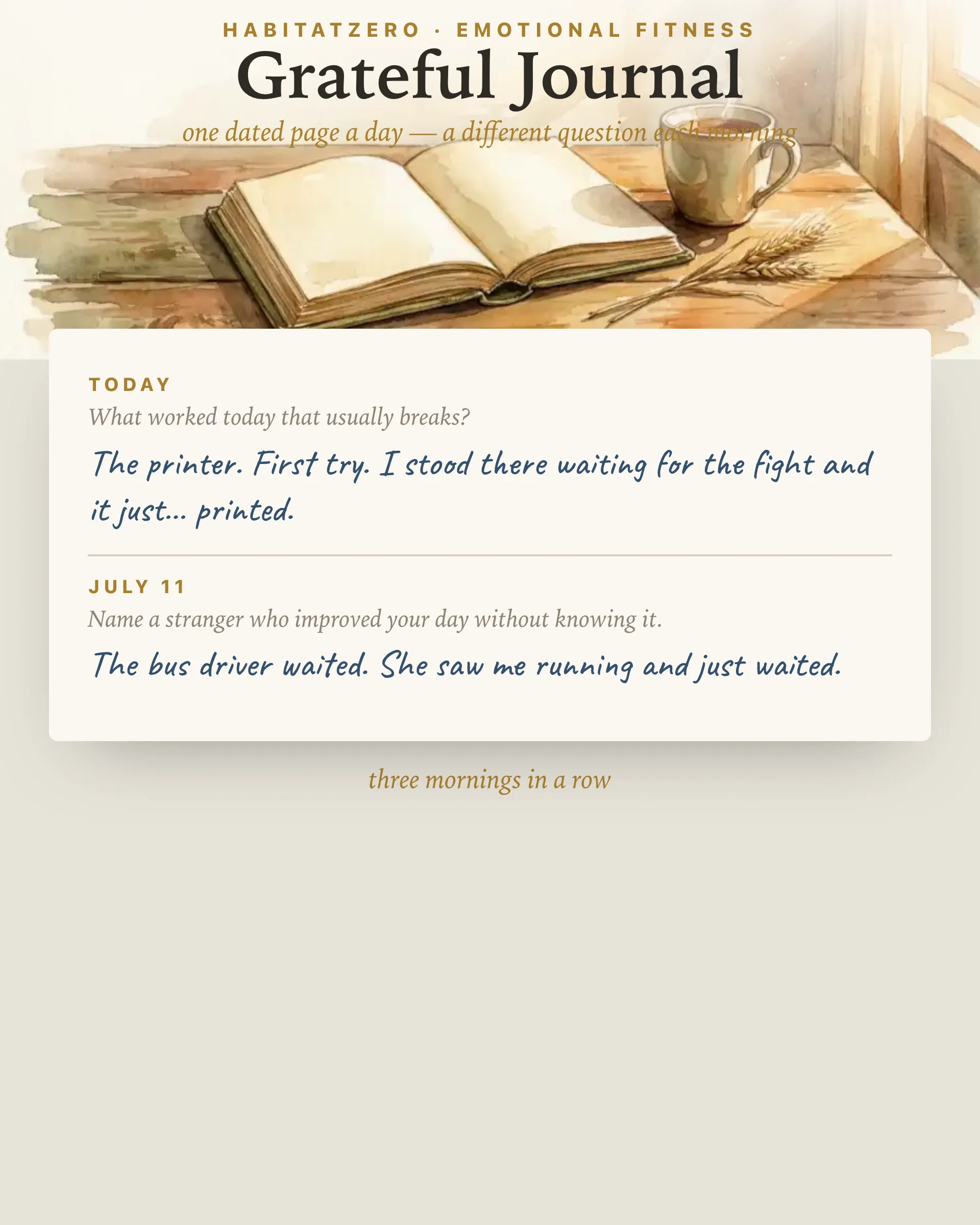
Free interactive gratitude templates: a year-in-a-jar that keeps every good moment, a daily check-in, and a self-contract — all usable in the browser.
Why these templates
Gratitude journaling is one of the most-studied small wellbeing practices, and the classic finding is startlingly simple: people asked to regularly note what they were grateful for reported better mood and life satisfaction than groups who tracked hassles or neutral events. The catch is that blank journals go stale — the practice works when noticing becomes a small ceremony you actually keep.
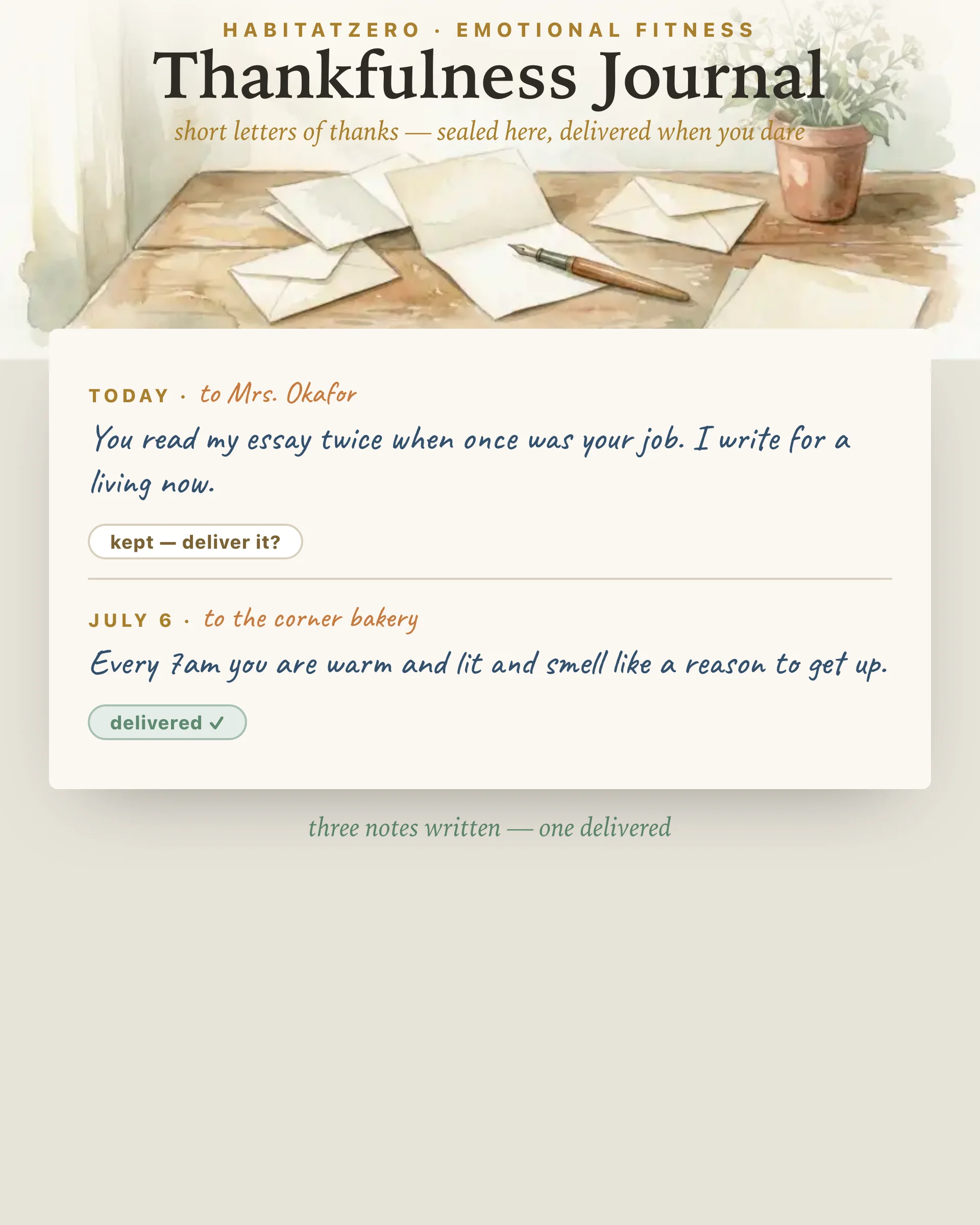
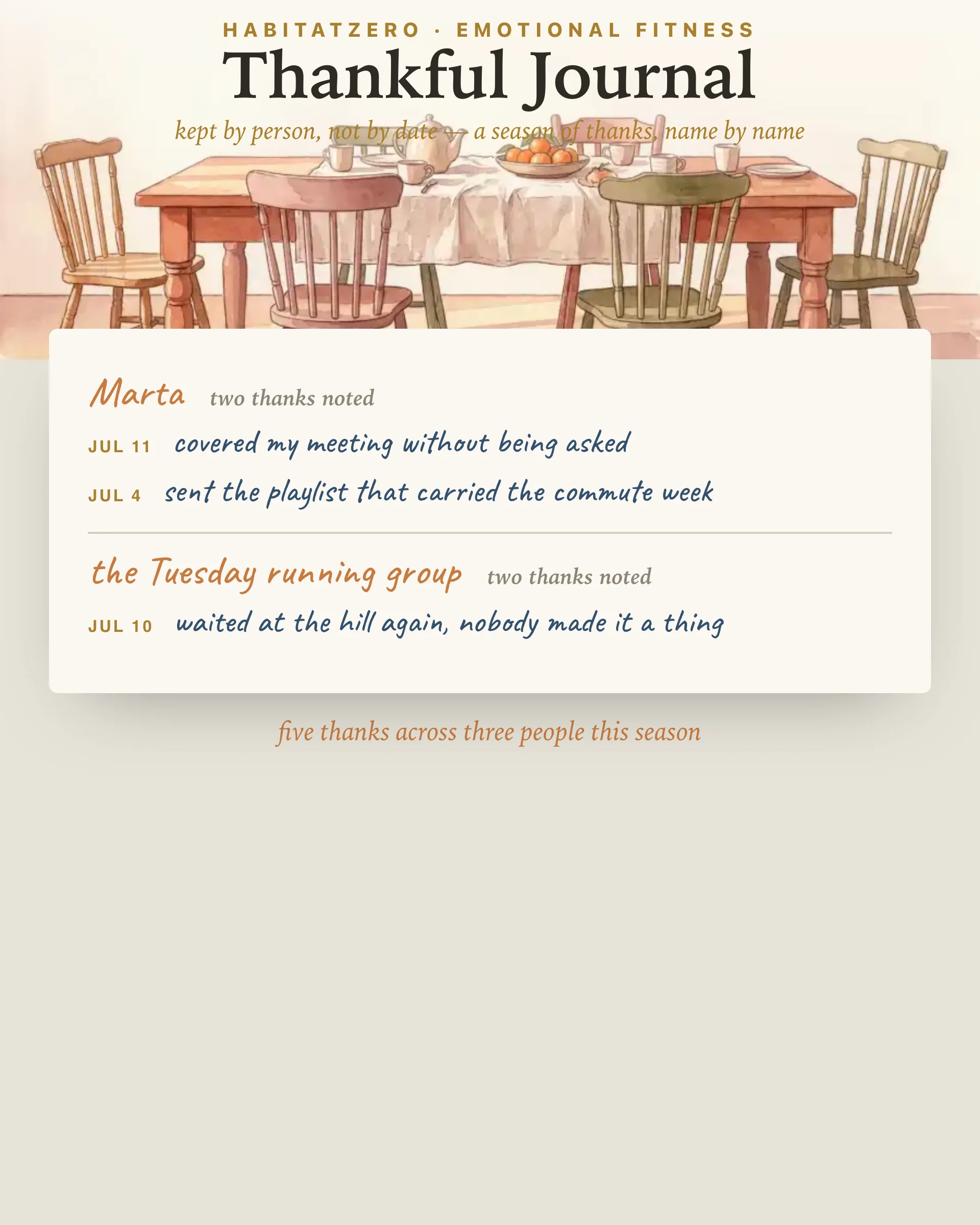
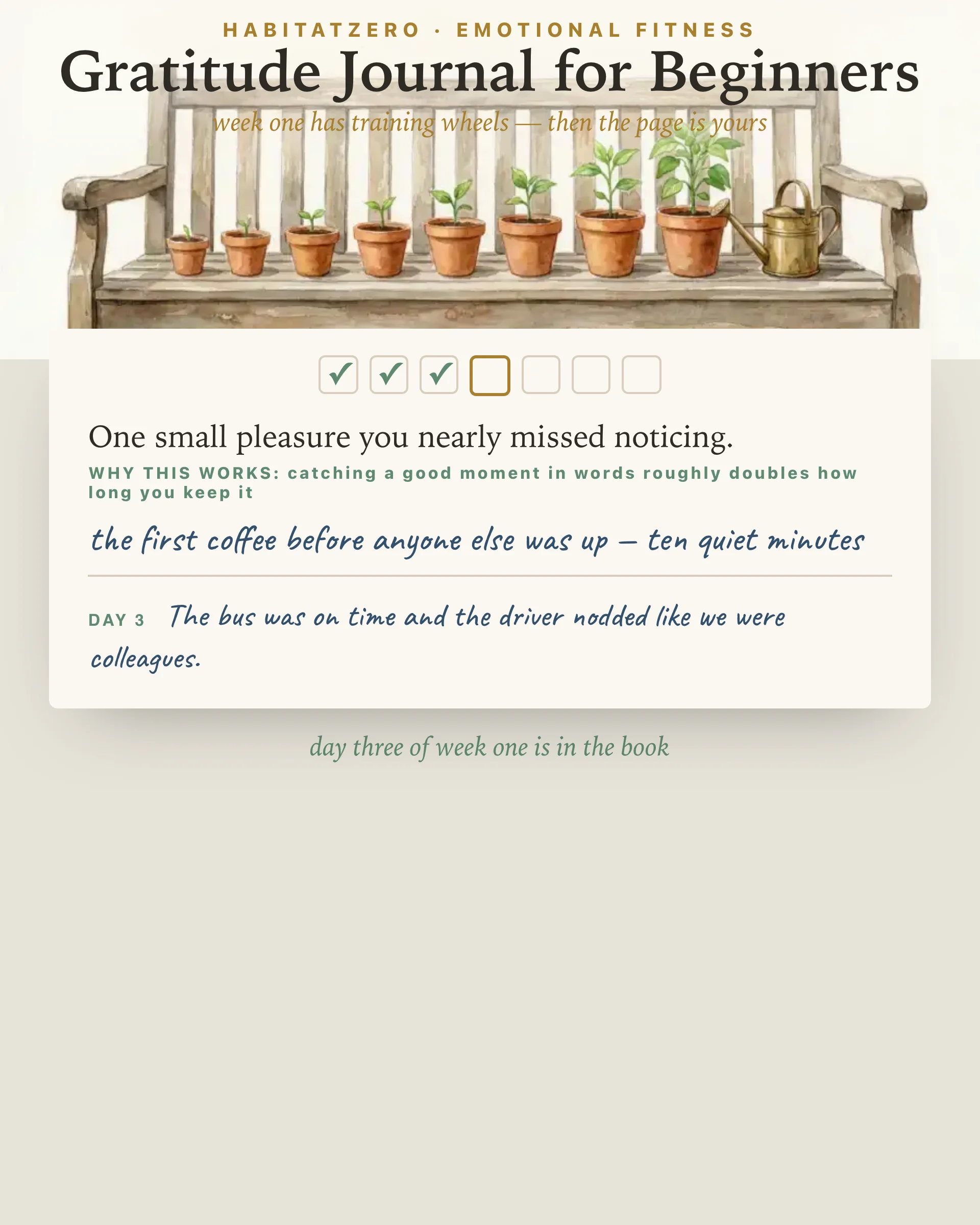
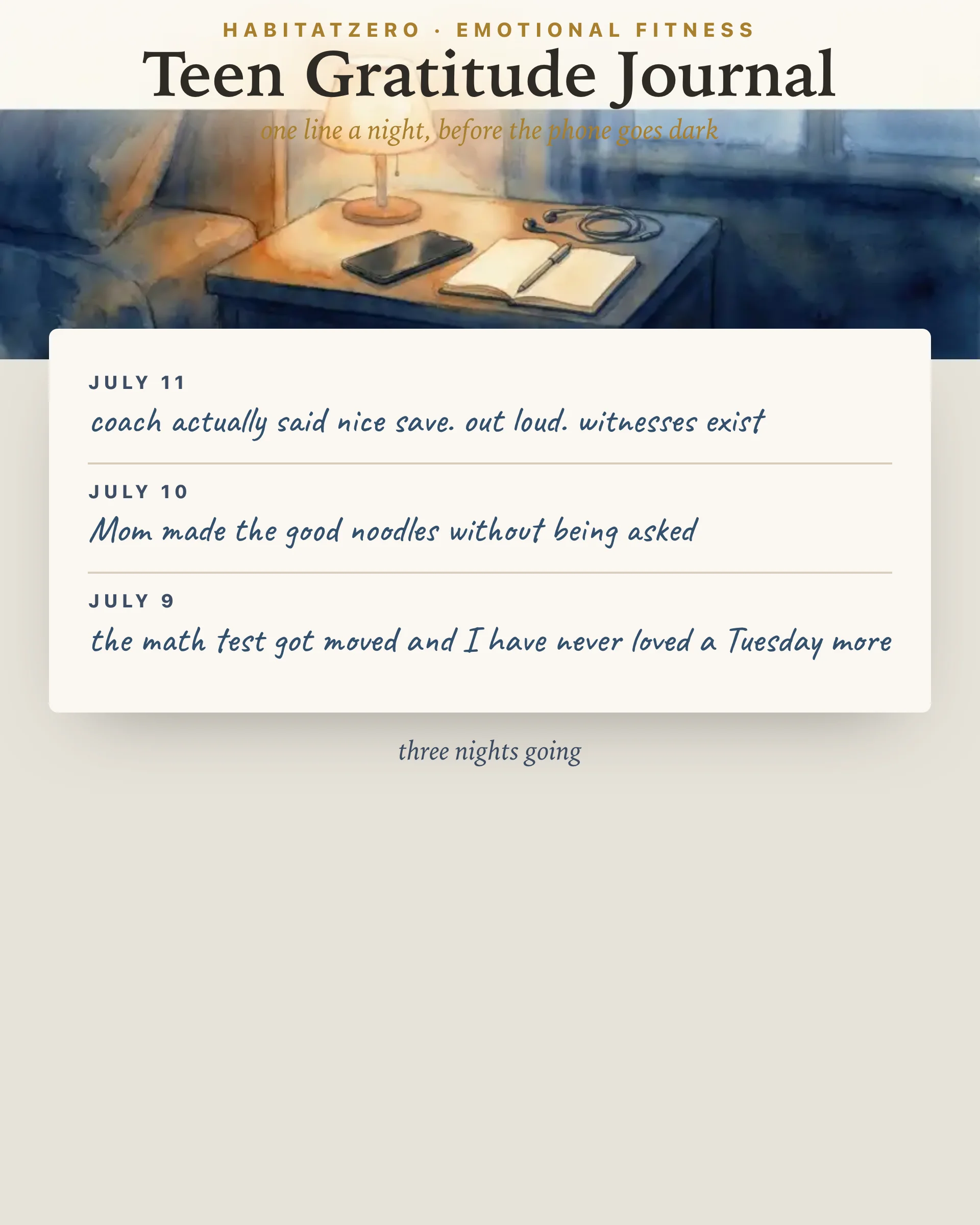
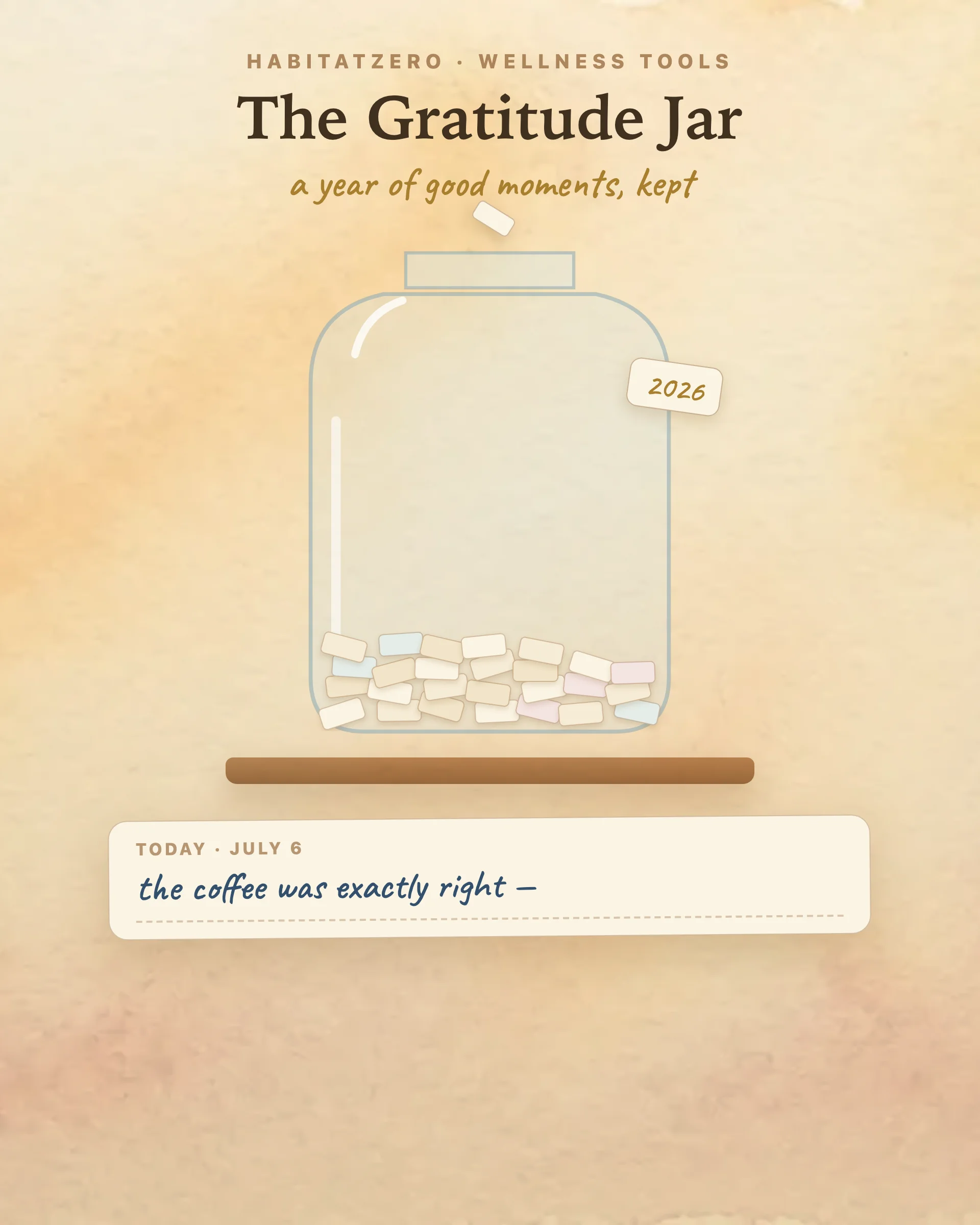
That's the design idea behind these templates. The gratitude jar makes each entry physical: write a good moment, watch it fold and drop onto the pile, and read the whole year back on New Year's Eve. The daily check-in is the two-minute version — tend the day, notice one true thing. And the self-contract is for turning the noticing into a promise with teeth. Everything runs in the browser, saves as you go, and is free to try.
Small and specific beats big and abstract: the coffee that was exactly right, a text that made you laugh, sun on the desk at 4pm. One or two lines is plenty — the practice is in the noticing, not the writing.
The research used weekly and daily variants; both helped. A sustainable rhythm matters more than a perfect one — a slip in the jar whenever something good happens tends to outlast a forced daily quota.
A container you fill with dated notes about good moments through the year, then empty and read on New Year's Eve. Our interactive version animates each slip folding into the jar, hands you back a random moment on hard days, and replays the whole year at the end.