Leaves on a StreamEmotional Fitness · ~3 min
About this template · Updated July 2026
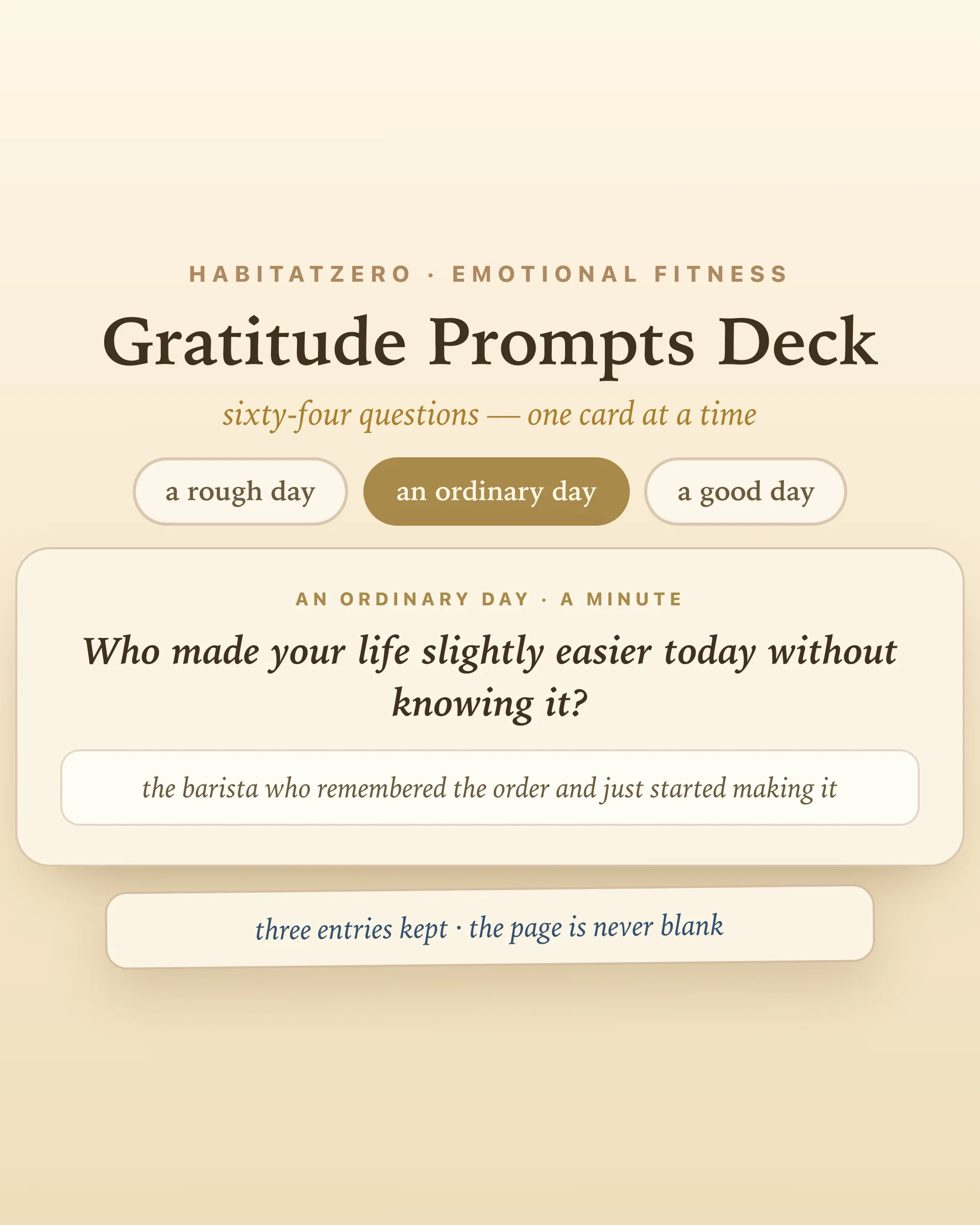
Every abandoned gratitude journal died the same death: the blank page asked "what are you grateful for?" and the mind returned the same three answers it gave yesterday — family, health, coffee — until the whole exercise felt like reciting a phone number. The fix isn't more discipline. It's a better question. This deck holds sixty-four of them, and it deals you exactly one.
The studies that put gratitude journaling on the map used structured exercises, not open pages. In the foundational experiments, people who counted a short list of blessings at a set rhythm reported better well-being than groups tracking hassles or neutral events — and in the classic follow-up, the "three good things" exercise, which asks what went well and why, produced benefits that outlasted the week people practiced it. The active ingredient in both: a specific question that forces fresh attention. Not gratitude in general — this good thing, noticed properly.
That's the deck's whole design. A specific prompt breaks the family-health-coffee loop because it points your attention somewhere it hasn't already been today: what smelled good? who did their job well for you? name something that held.
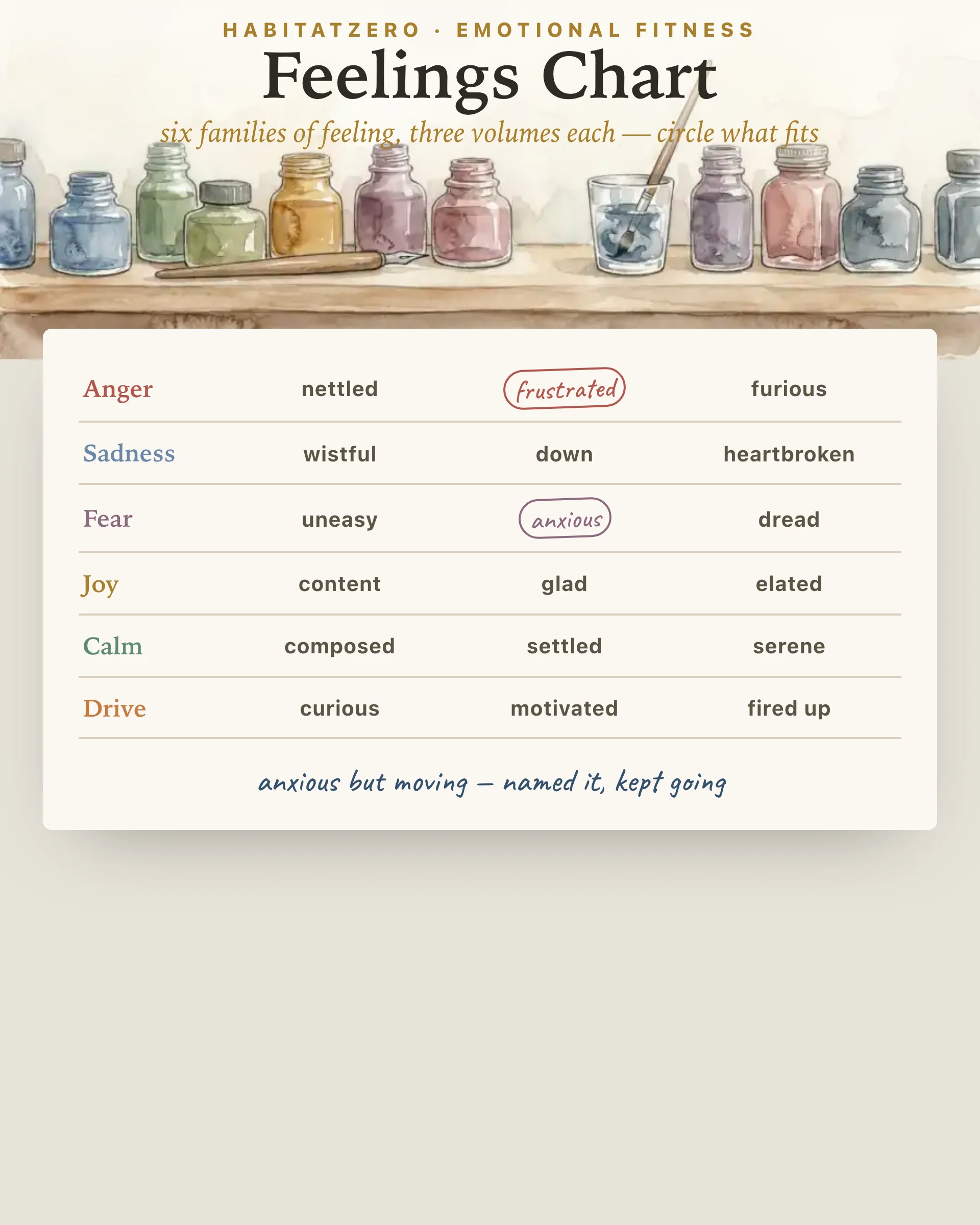
The classic gratitude-journal failure mode is the rough day — the page asks for sunshine and the honest answer is "nothing," so the journal gets closed and never reopened. The deck's first filter exists for exactly that: tell it whether today was rough, ordinary, or genuinely good, and the questions change register. Rough-day prompts lower the bar on purpose (name one thing that didn't get worse today). Good-day prompts do the opposite — they bottle it (reverse-engineer today: which ingredient is repeatable?). Ordinary days get the noticing questions, because ordinary days are where most of a life happens.
The second filter is honest about time: a minute or five. One-minute prompts want a phrase. Five-minute prompts want a paragraph — description, detail, the why behind the good thing, which is where the research says the value concentrates.
Draw a card, write right on it, keep the entry. Kept entries collect below the deck with their date and prompt, and the deck remembers what it dealt you recently so tomorrow's draw stays fresh. One card, honestly answered, is a complete session — the deck will never guilt you into a streak.
Three habits keep a prompts practice alive where blank journals die. Anchor it to something that already happens — with the evening tea, after lights-out on the Tend Your Day close, or as the warm-up to morning pages when the first sentence won't come. Go specific over long — "Marta covered my meeting without being asked" beats "my coworkers" every time you write it. And reread occasionally — the entries you keep here become their own argument on the days gratitude feels like a stretch.
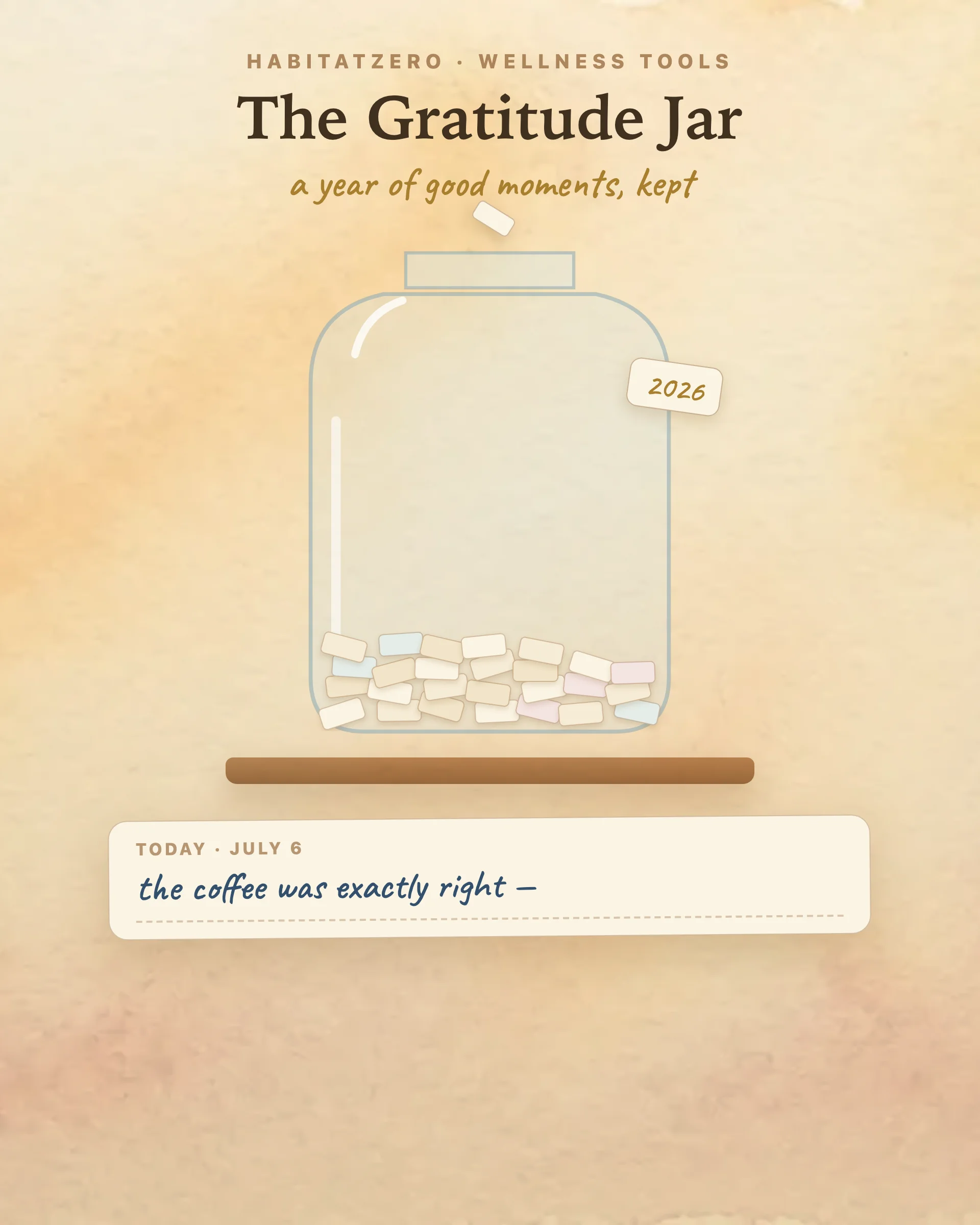
And when an entry feels bigger than a line — the kind of good thing you'll want to rediscover in December — drop it in the gratitude jar too. The deck asks the questions; the jar keeps the treasure.
Sixty-four questions. One card at a time. The page is never blank again.
One, answered specifically, beats five answered on autopilot. The research behind gratitude journaling used brief, simple exercises — counting a handful of blessings once a week or noting three good things a night — and the benefit came from genuinely attending to the good thing, not from volume. That is why this deck deals a single card at a time.
Ones that lower the bar instead of demanding sunshine: name one thing that did not get worse, one comfort within reach, one person who would pick up if you called. The deck has a rough-day filter built exactly for this — twenty-two of the sixty-four prompts are written for days when the usual questions feel impossible, and none of them ask you to pretend the day was good.
The full deck is readable on this page — every prompt is listed in the browse section, grouped by the kind of day it suits, so you can print the page or copy the ones you love into a paper journal. The interactive part is the dealing and the writing: the deck filters by your day, avoids recent repeats, and keeps your entries with their dates.
Yes — free, in your browser, no signup. Draws, filters, and kept entries save as you go, and returning tomorrow deals from the prompts you have not seen recently. In the Fabulous app the same journal syncs across your devices.
By the team behind Fabulous, the science-based self-care app used by over 30 million people.