Leaves on a StreamThe classic ACT defusion practice, made real: write the thought that has hooked you, set it on a watercolor leaf, and watch the stream carry it away. The stream keeps nothing you write.
The Gratitude JarAn interactive gratitude jar: write a good moment on a paper slip, watch it fold and drop into the jar, pull one back out on a hard day, and read the whole year at the end.
Feelings ChartAn adult feelings chart you can actually use: six feeling families across three intensities, circle the words that fit right now, add one honest line, and keep a running log of check-ins.
Mood TrackerA month of moods in five inks: pick the pen that matches the day, dot the calendar with one tap, and let the pattern say what memory never reports straight.
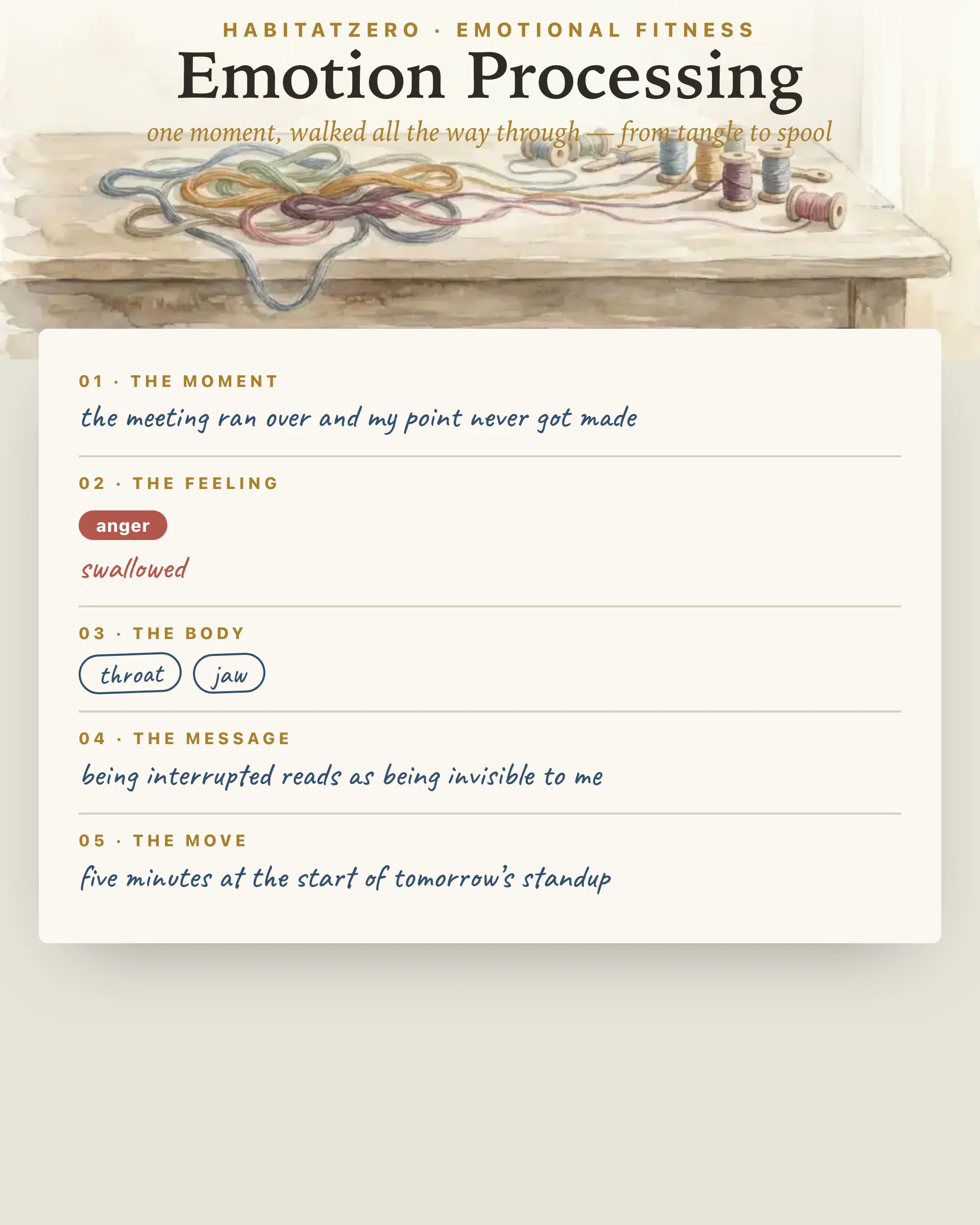
Emotion ProcessingA five-step worksheet that walks one emotional moment all the way through: what happened, what you felt in your own word, where it sat in the body, what it was telling you, and the next small move.
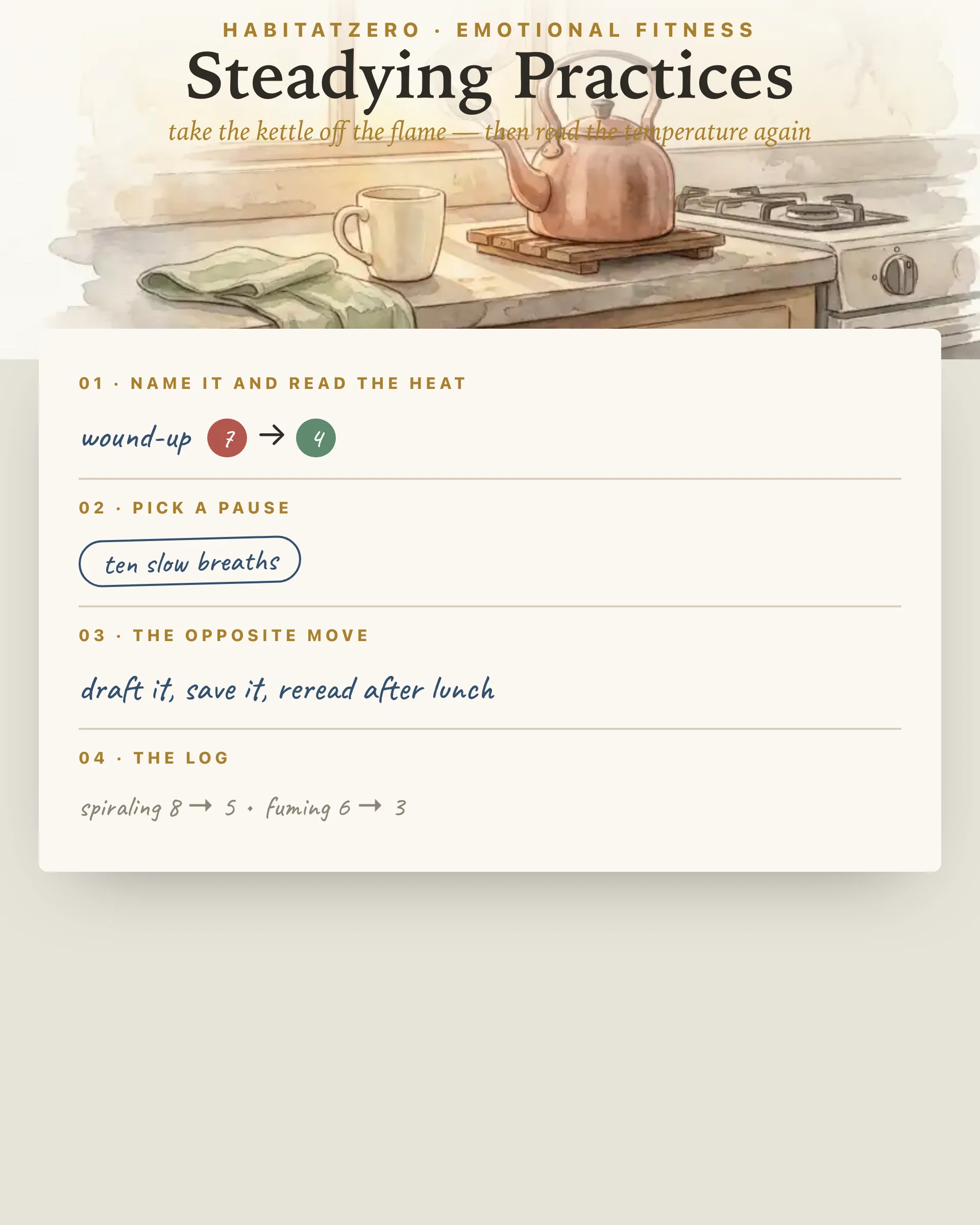
Steadying PracticesA steadying worksheet for hot moments: name the feeling, read its heat one to ten, pick a ninety-second pause, choose the opposite move, and log how far the temperature came down.
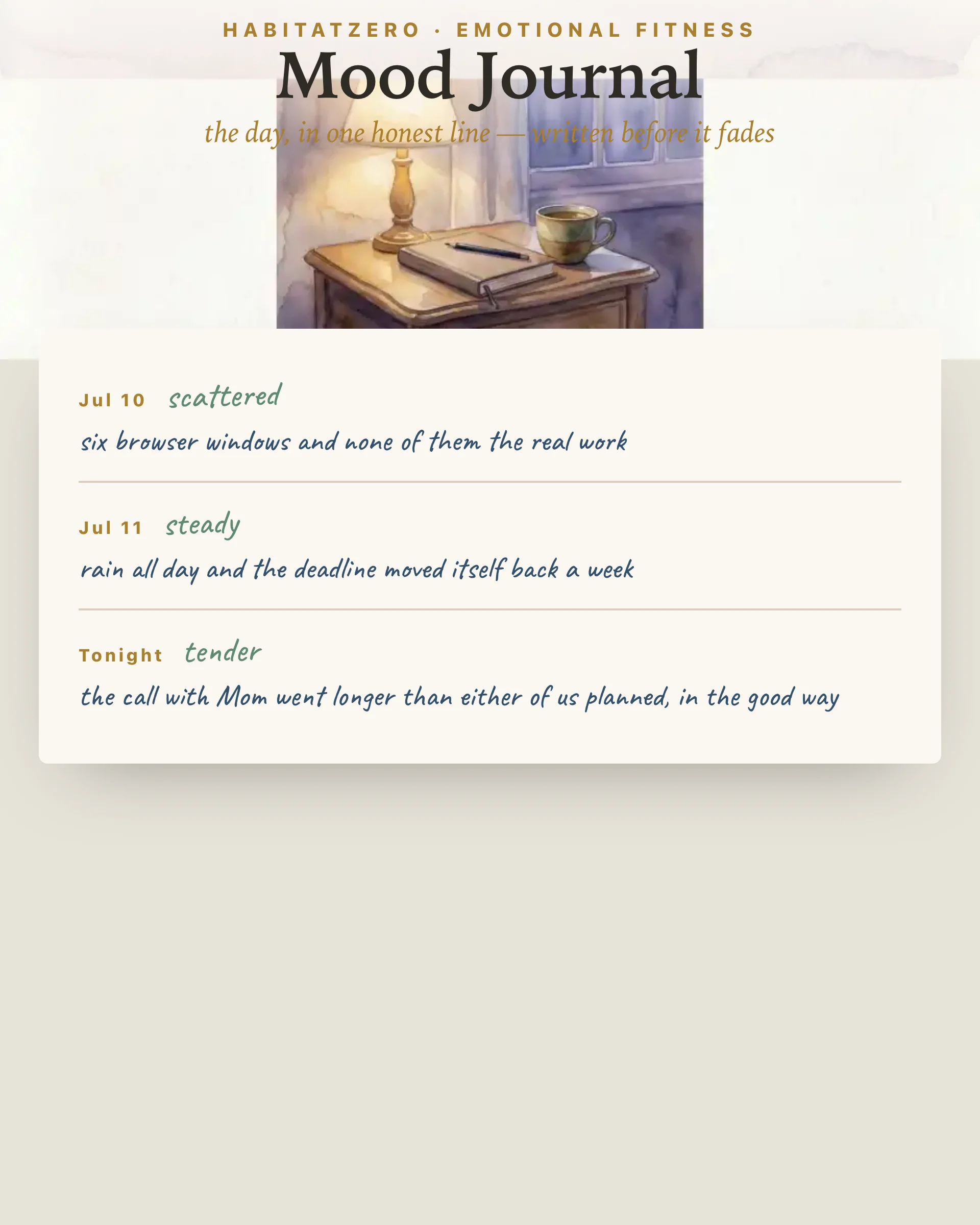
Mood JournalAn evening mood journal in miniature: one word for what colored the day, one line about where it came from, and a month of evenings that reads back like weather you actually remember.
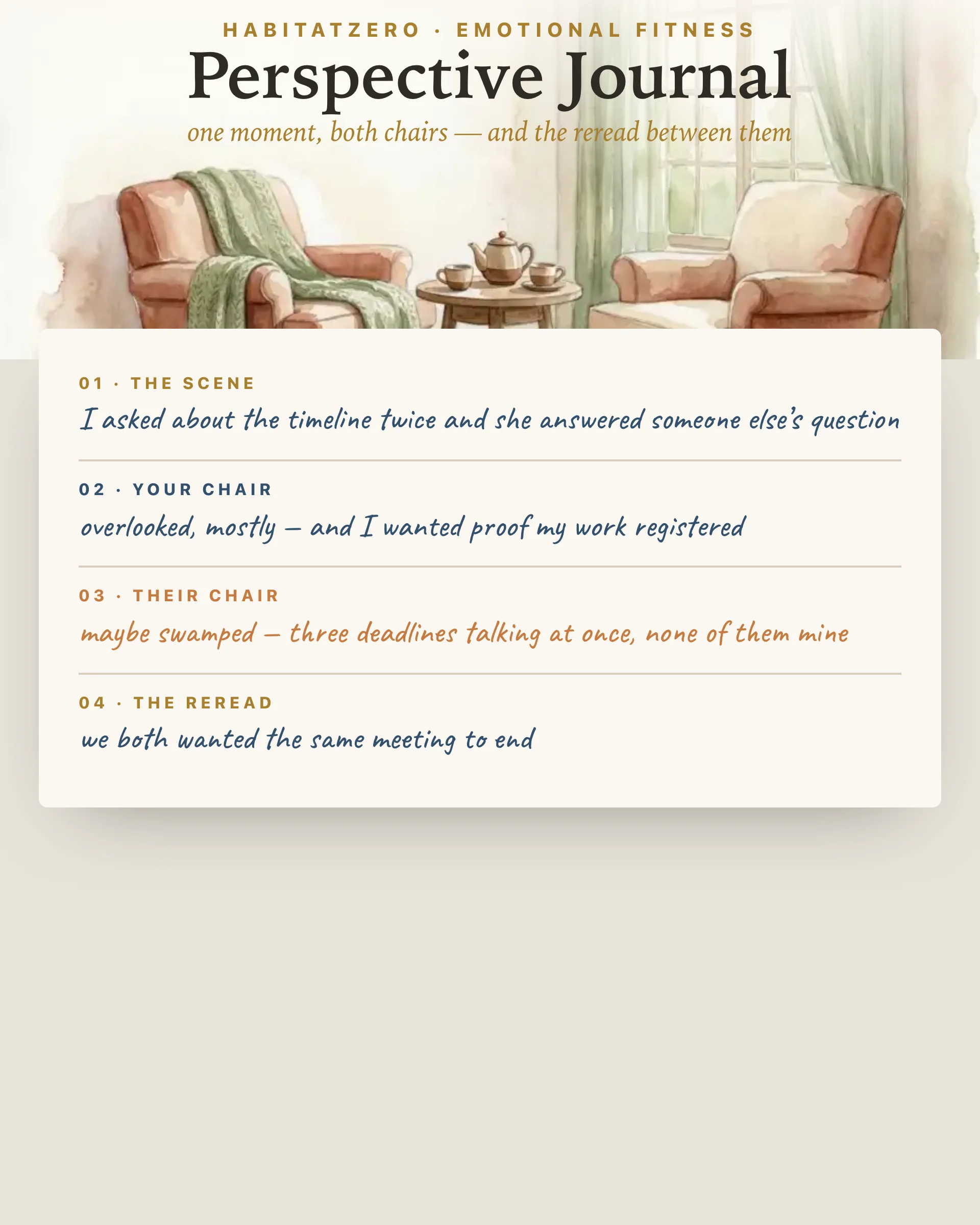
Perspective JournalA two-chair journaling practice: replay one moment from your seat and theirs, reread both accounts side by side, and keep the line you want ready for next time.
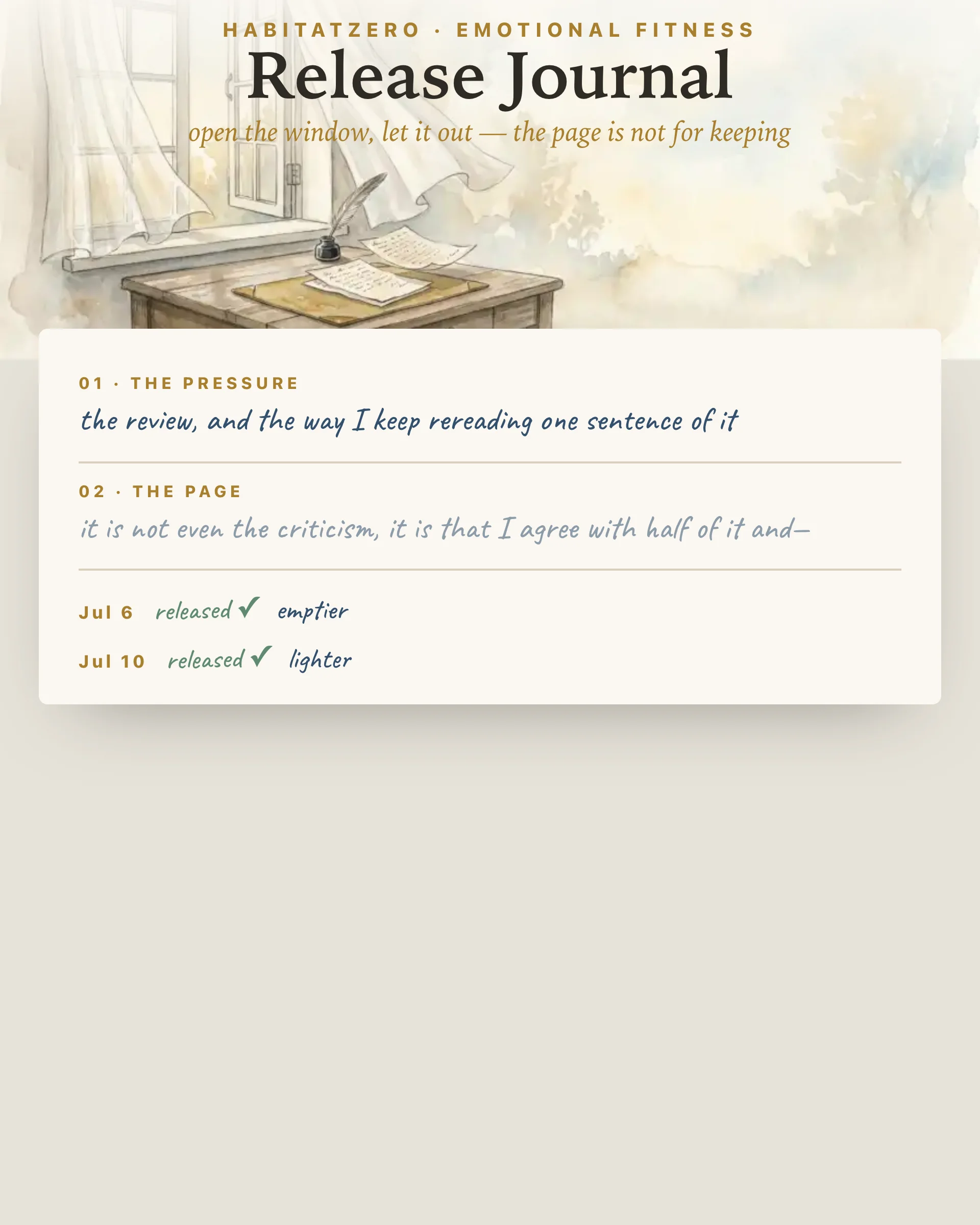
Release JournalA page built for letting out, not keeping: name what is taking up room, write it uncensored until the pressure drops, and release the page — only the date and one after-word stay.
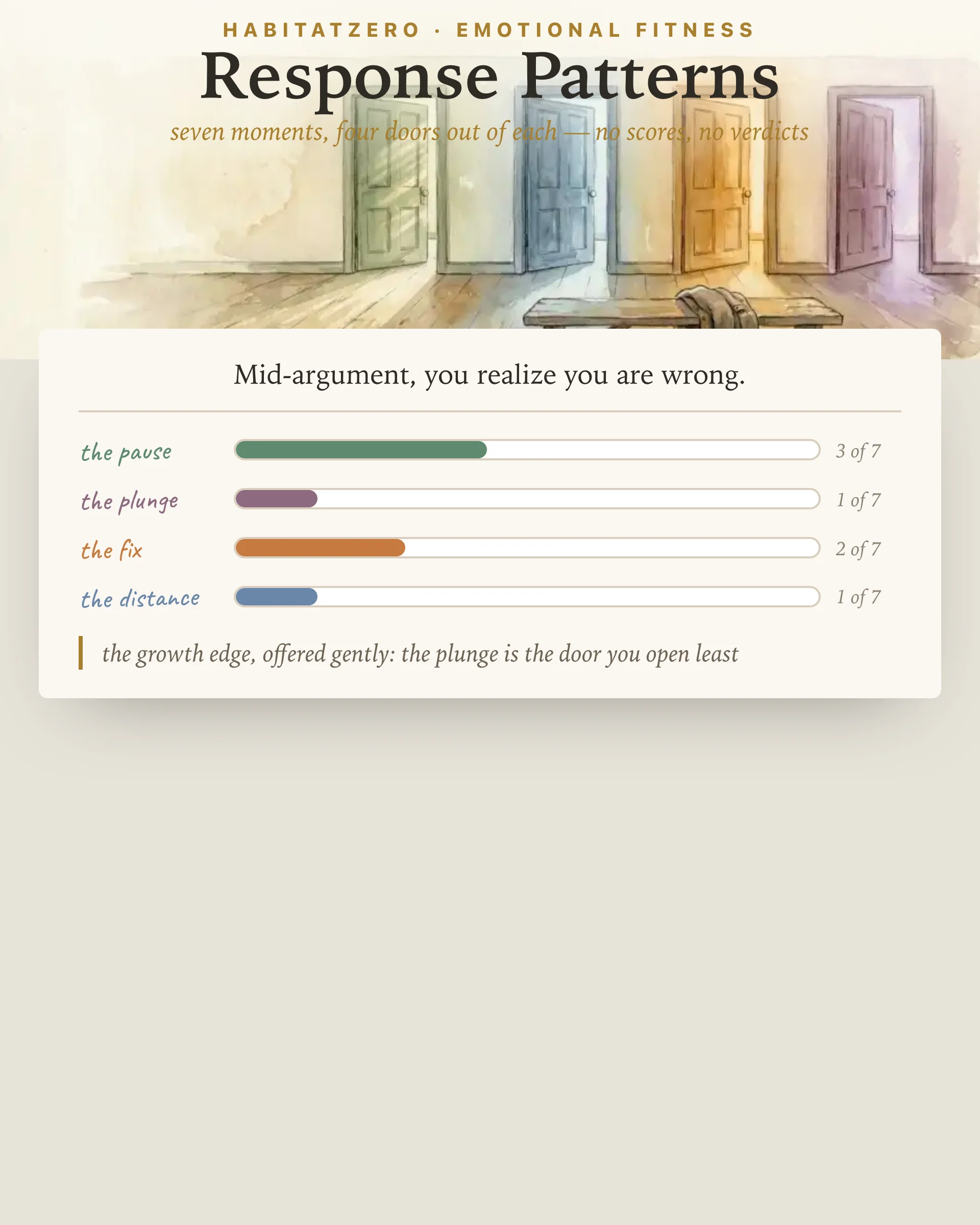
Response PatternsSeven everyday moments — the sharp text, the fair criticism, the plan that falls through — and four honest ways through each. The result is a reading of the patterns you practice, plus the one worth borrowing. No score, no verdict.
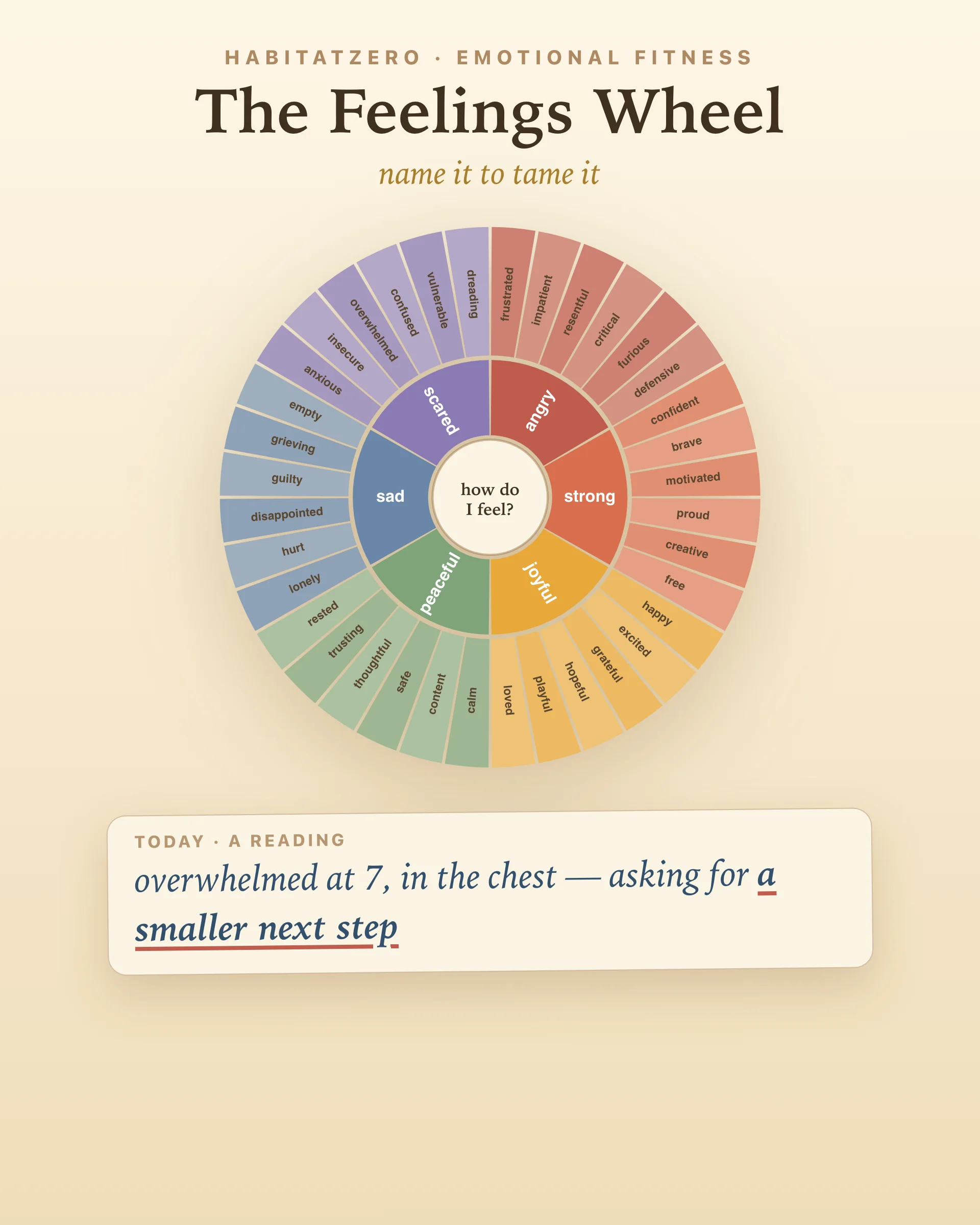
The Feelings WheelAn interactive feelings wheel that goes somewhere: name what you feel from 114 words, then read it — where it sits in your body, how strong it is, what it is asking for, and one small move that answers it.
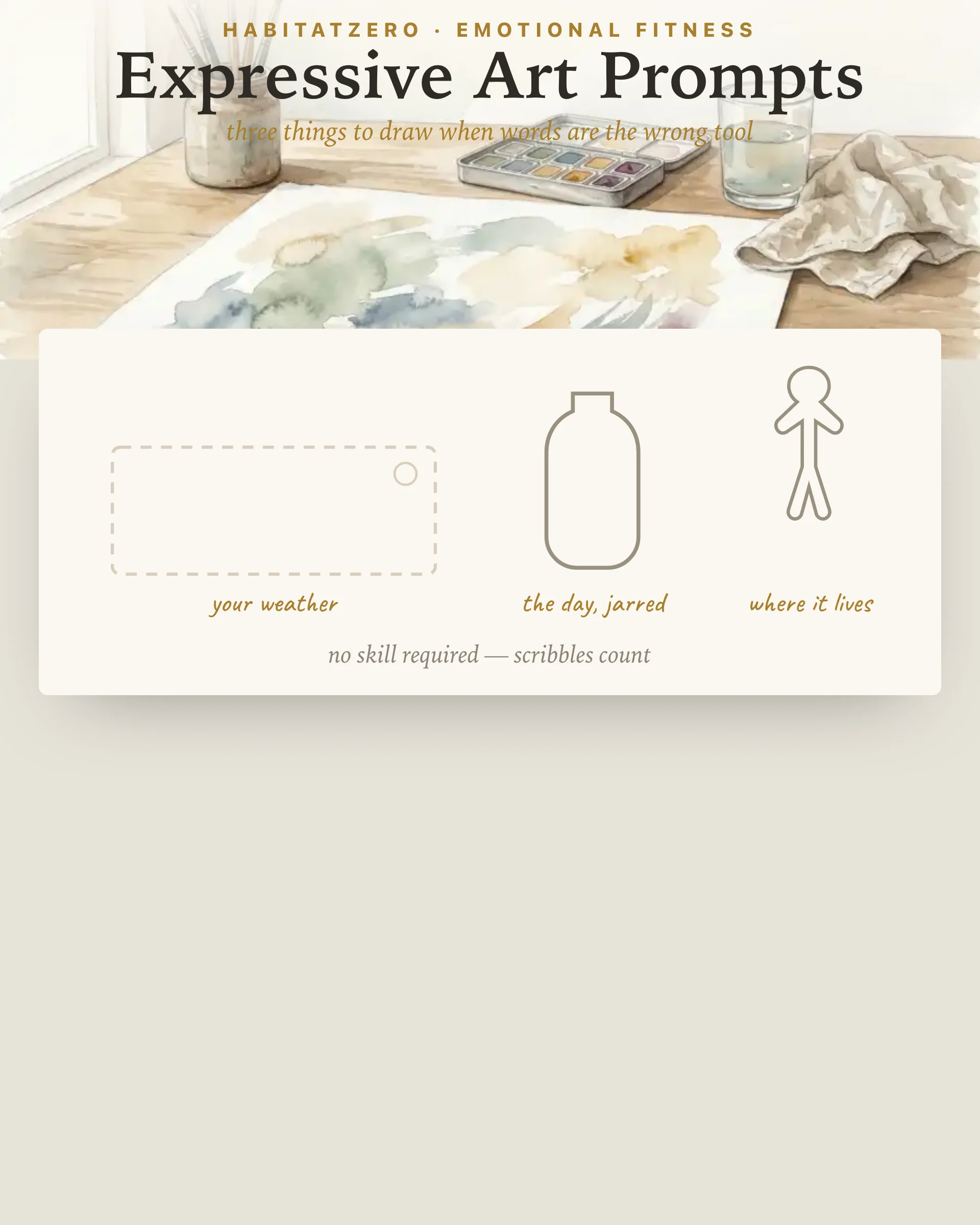
Expressive Art PromptsThree things to draw when words are the wrong tool: the weather inside you, a jar packed with today, and a body outline colored where feelings sit. One caption line each, no skill required — scribbles count.
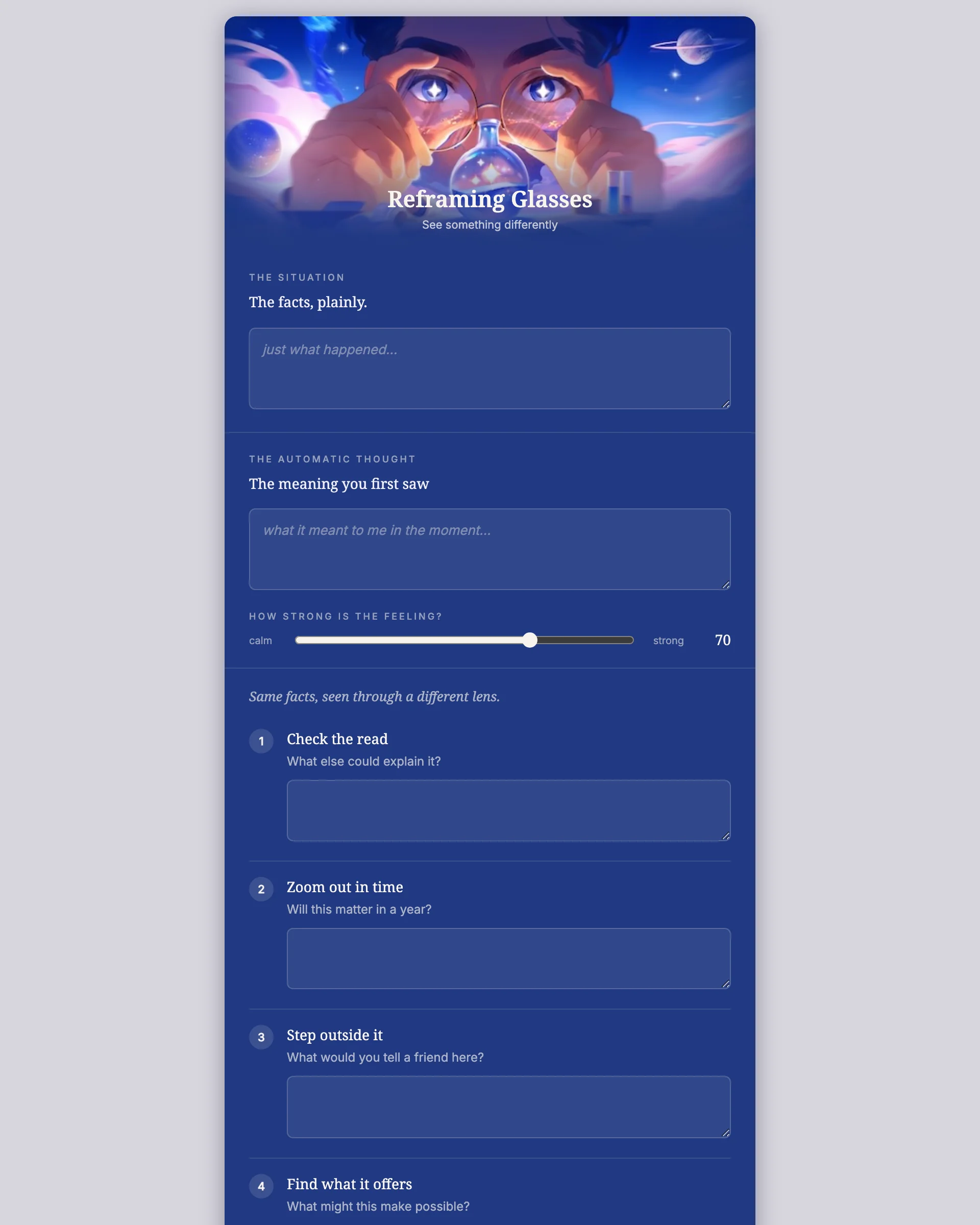
Reframing GlassesOne reframe card for one loud moment: the facts plainly, the automatic thought with a feeling-strength slider, four lens questions to look through, and the version you choose to carry — rated again on the way out.
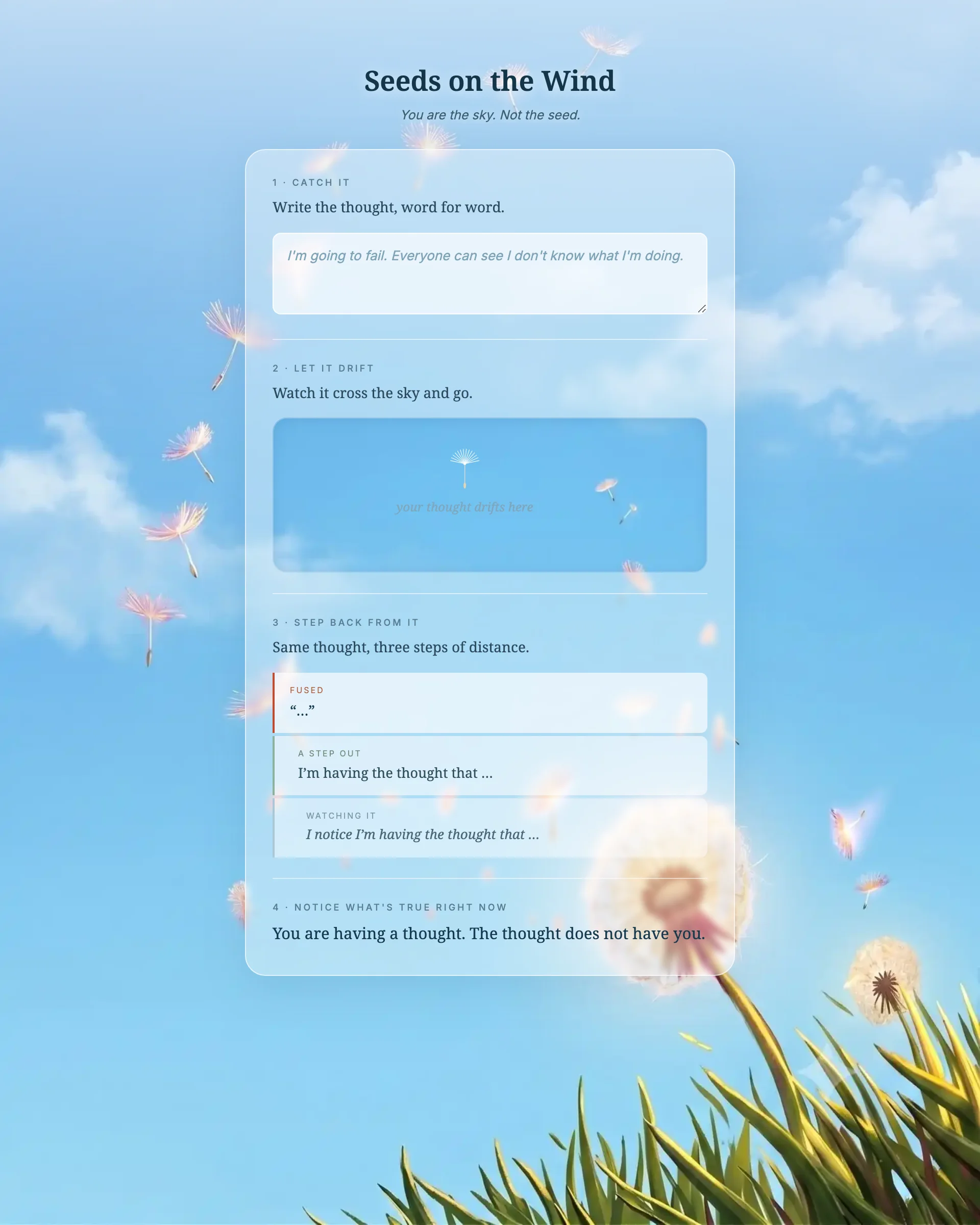
Seeds on the WindWrite the sticky thought word for word, watch it drift across the sky like a seed on the wind, and read it back through three steps of distance — from the thought itself to noticing yourself having it.
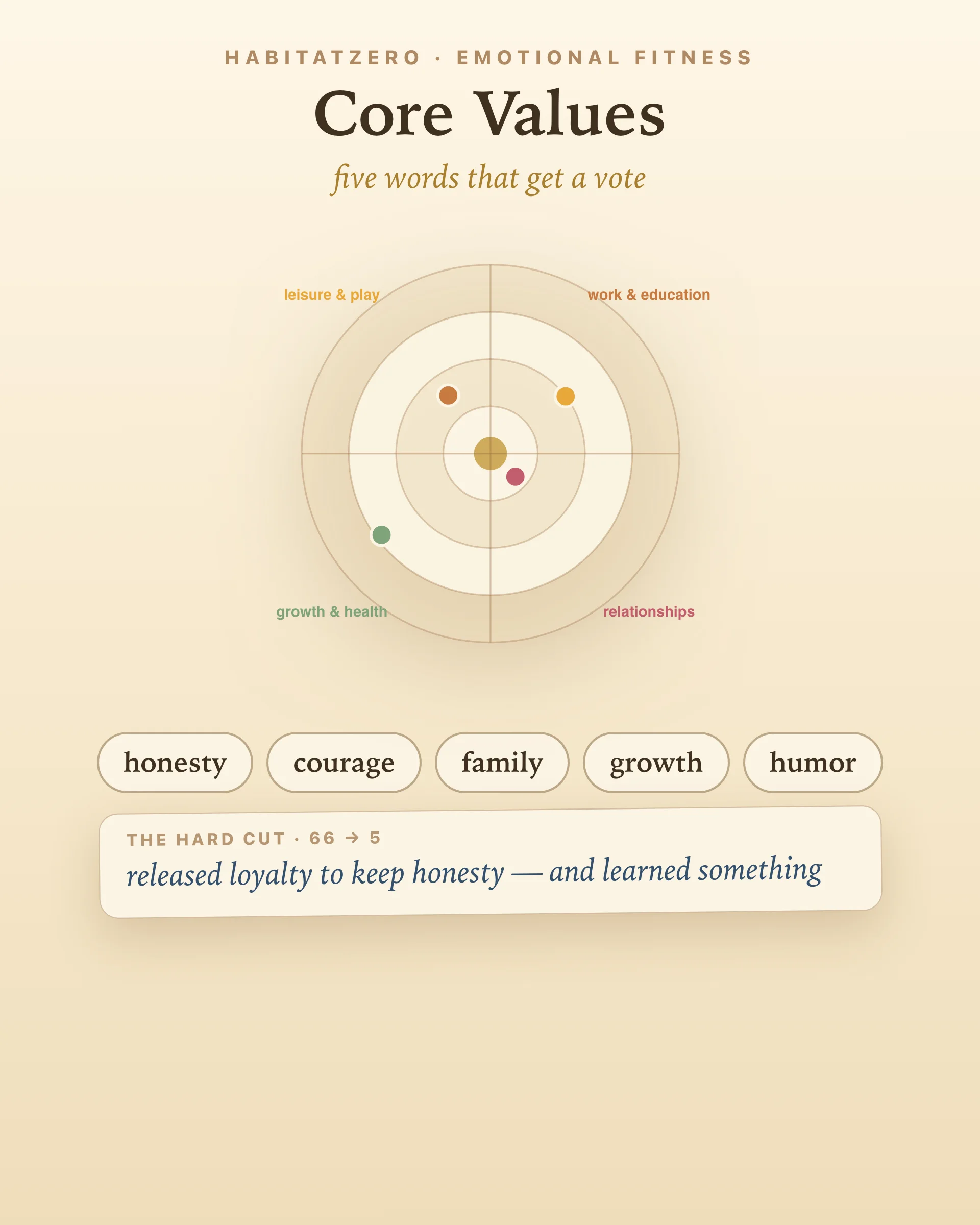
Core Values WorksheetFind the five values that actually get a vote in your decisions: gather the words that pull you, make the hard cut to five, then plot how you're living them on an ACT-style bullseye.
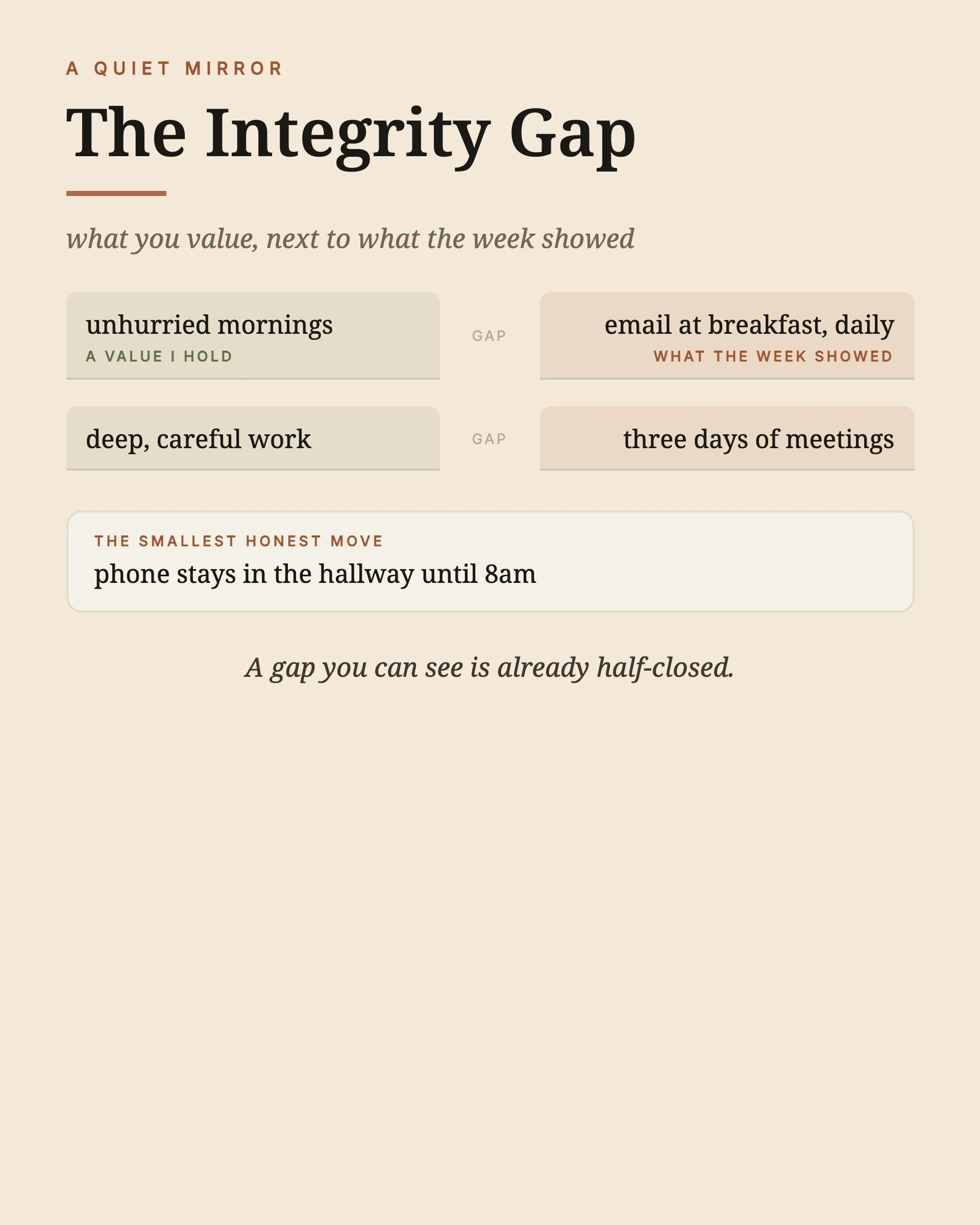
The Integrity GapA quiet mirror held up to one week: name what you say matters to you, write what your time and choices actually showed, and pick the smallest honest move that could shorten one gap.
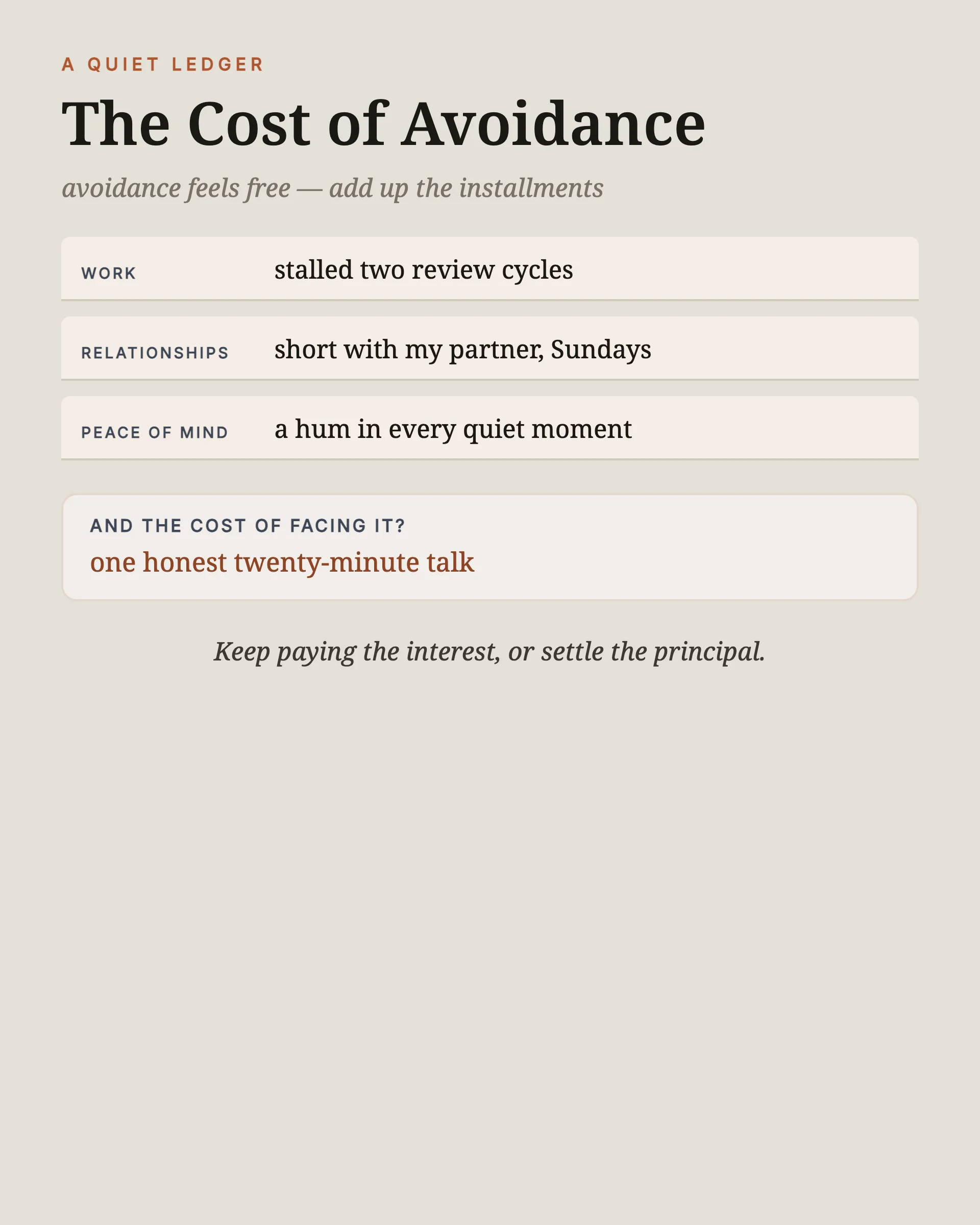
The Cost of AvoidanceA quiet ledger for the thing you keep avoiding: add up what the avoidance charges you across work, relationships, health, peace of mind, and your future self — then weigh it against the one-time cost of facing it.
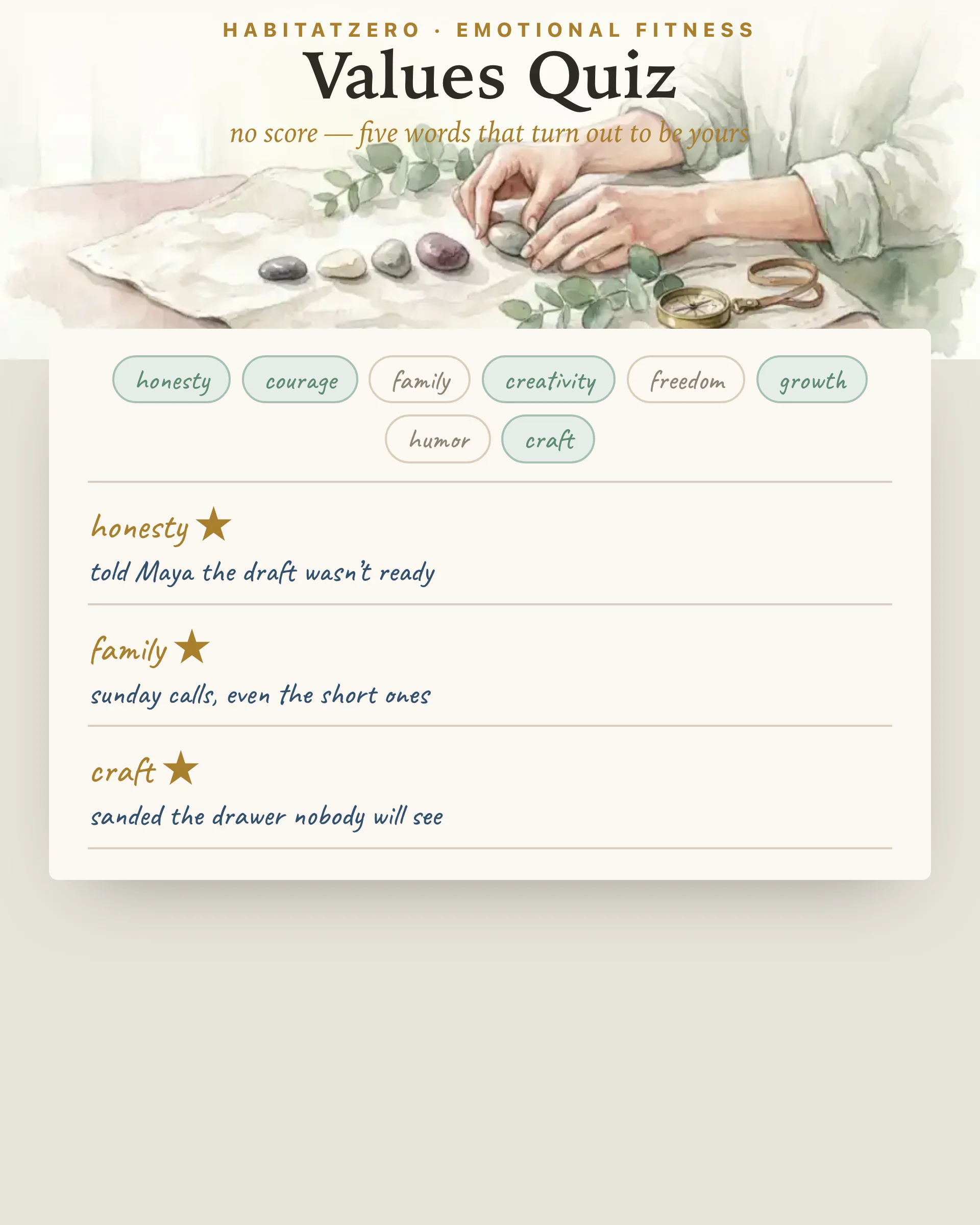
Values QuizA quiz with no score: gather every value word that pulls at you, star the five that survive the collision, then catch each one in the wild — one line about where it actually showed up this month.
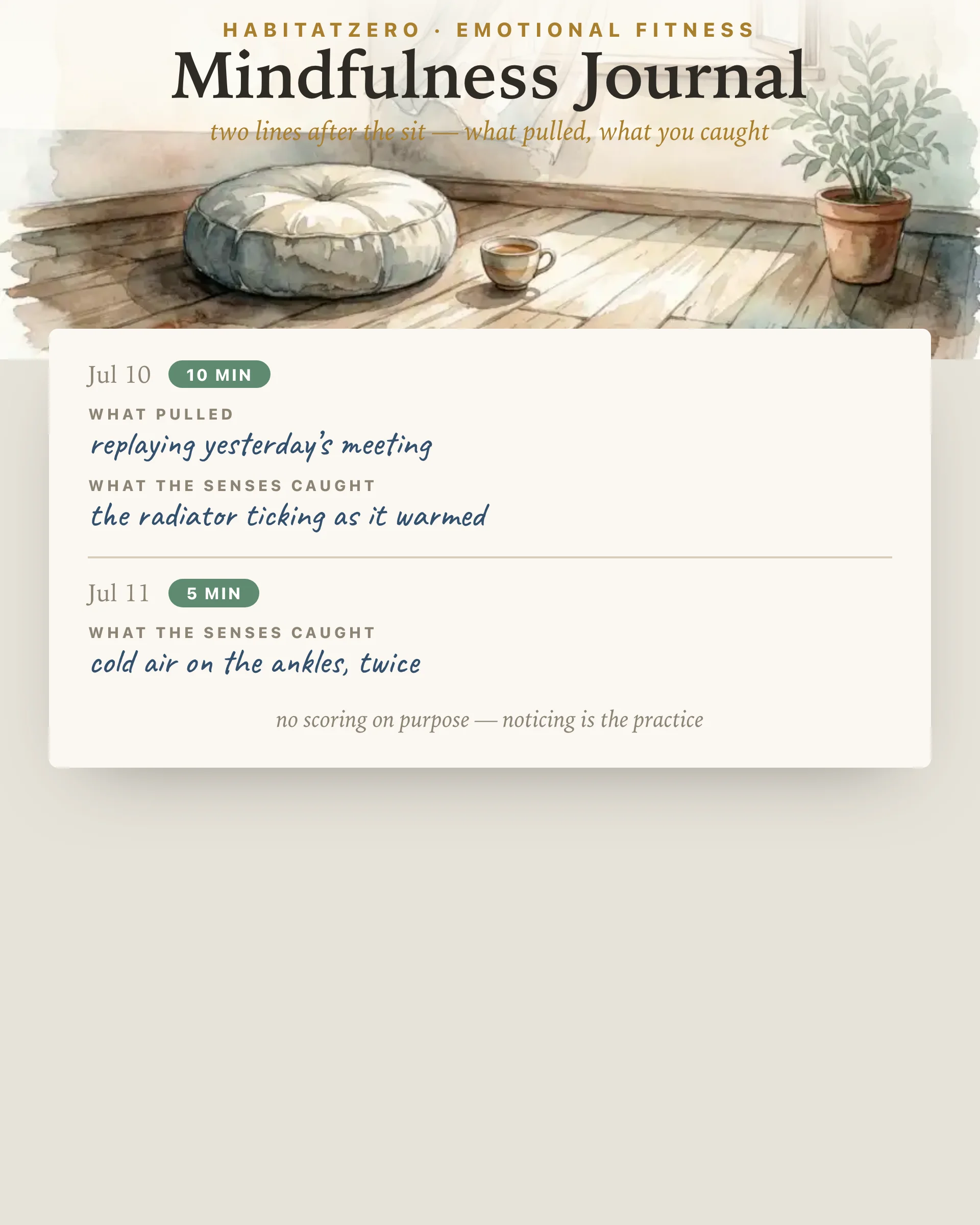
Mindfulness JournalThe two lines you write after a sit: how long you sat, what kept pulling your attention, and one thing your senses actually caught — kept as an unscored book of sits, because noticing the wandering is the practice.
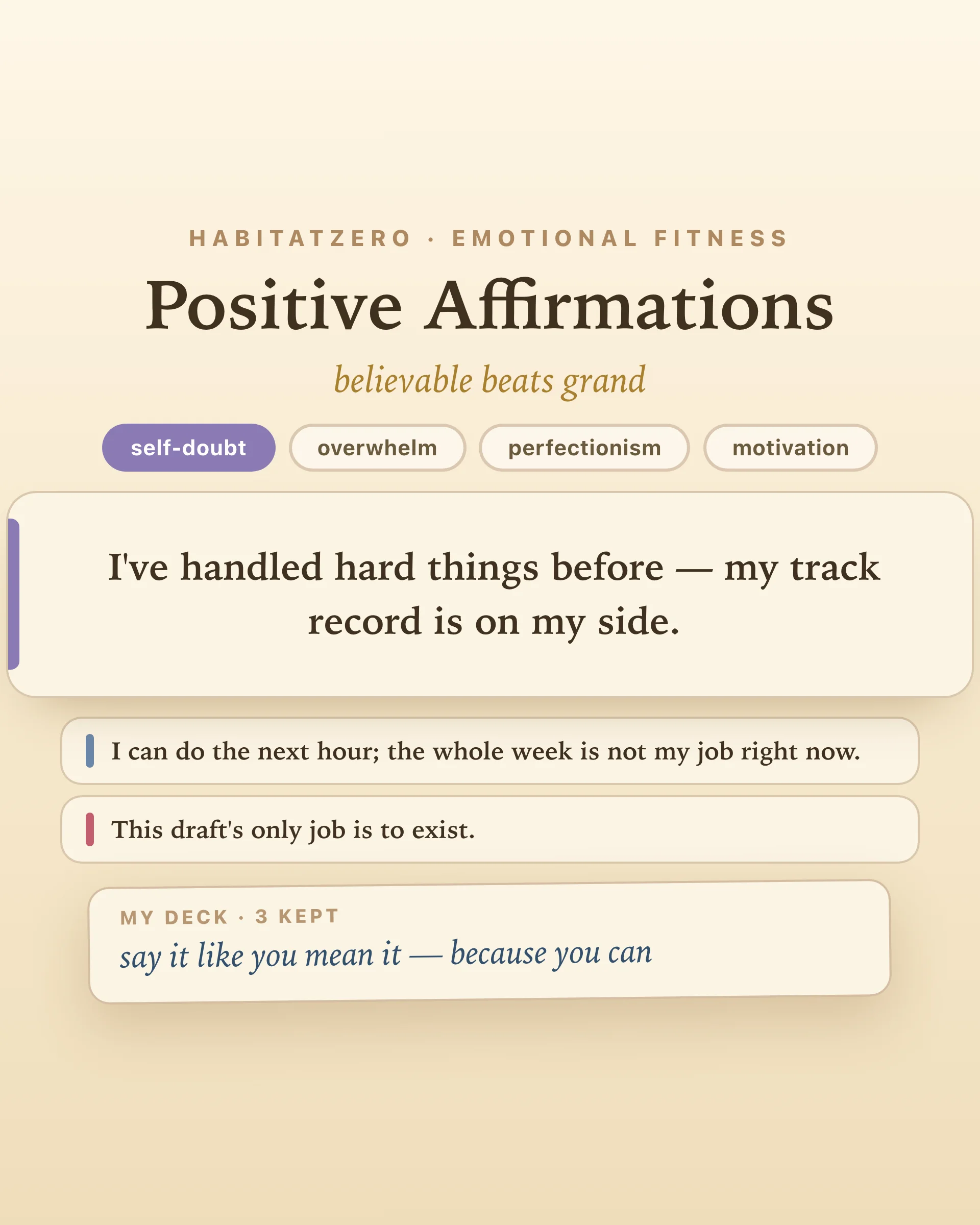
Positive AffirmationsAffirmations that don't ask you to lie to yourself: pick what's loud right now, flip through cards written to be believable, keep the ones that land, and write your own with a formula that works.
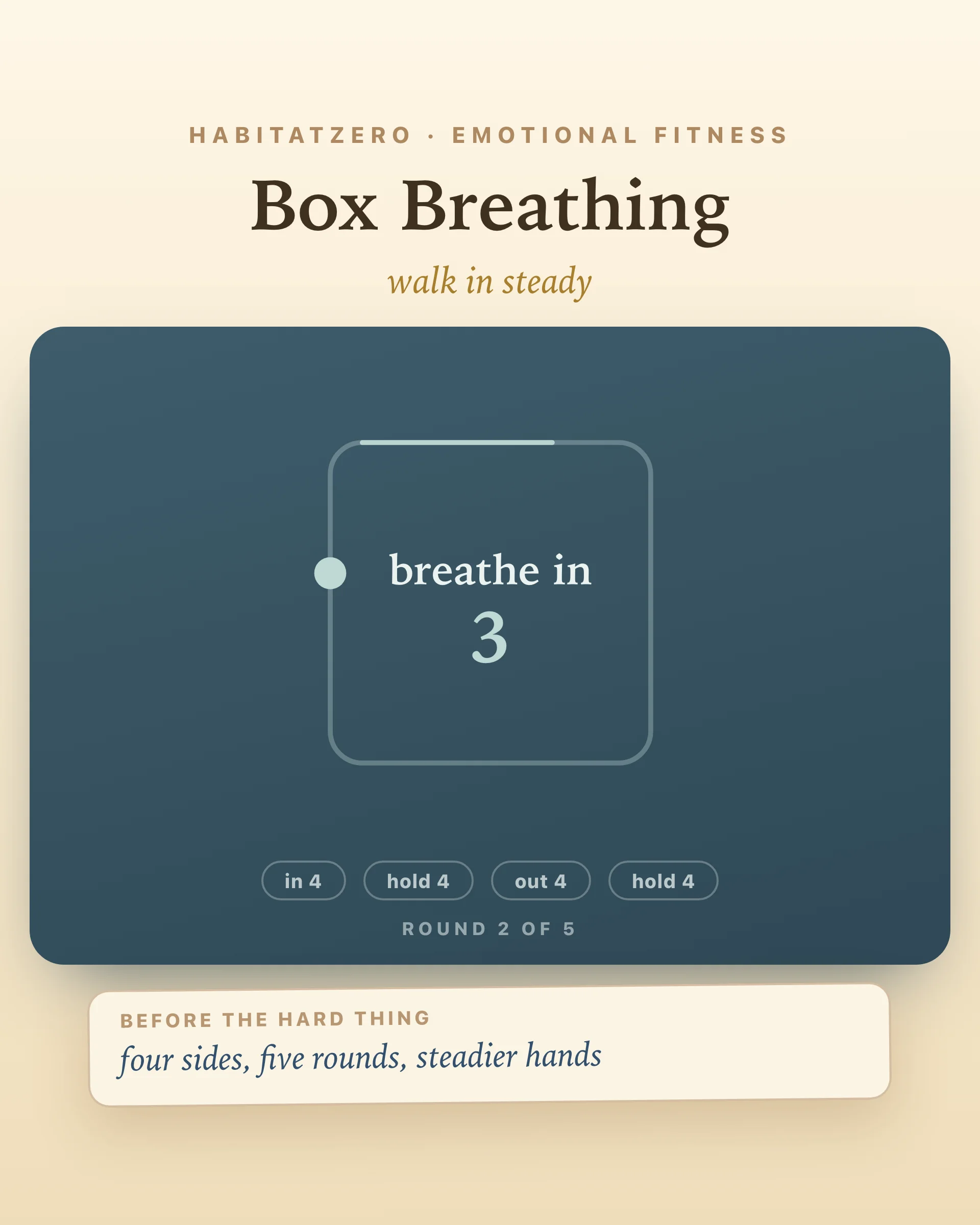
Box BreathingThe four-sided breath, drawn for you: follow the dot around the square — in four, hold four, out four, hold four — with counted phases, adjustable pace, and a before-and-after check.
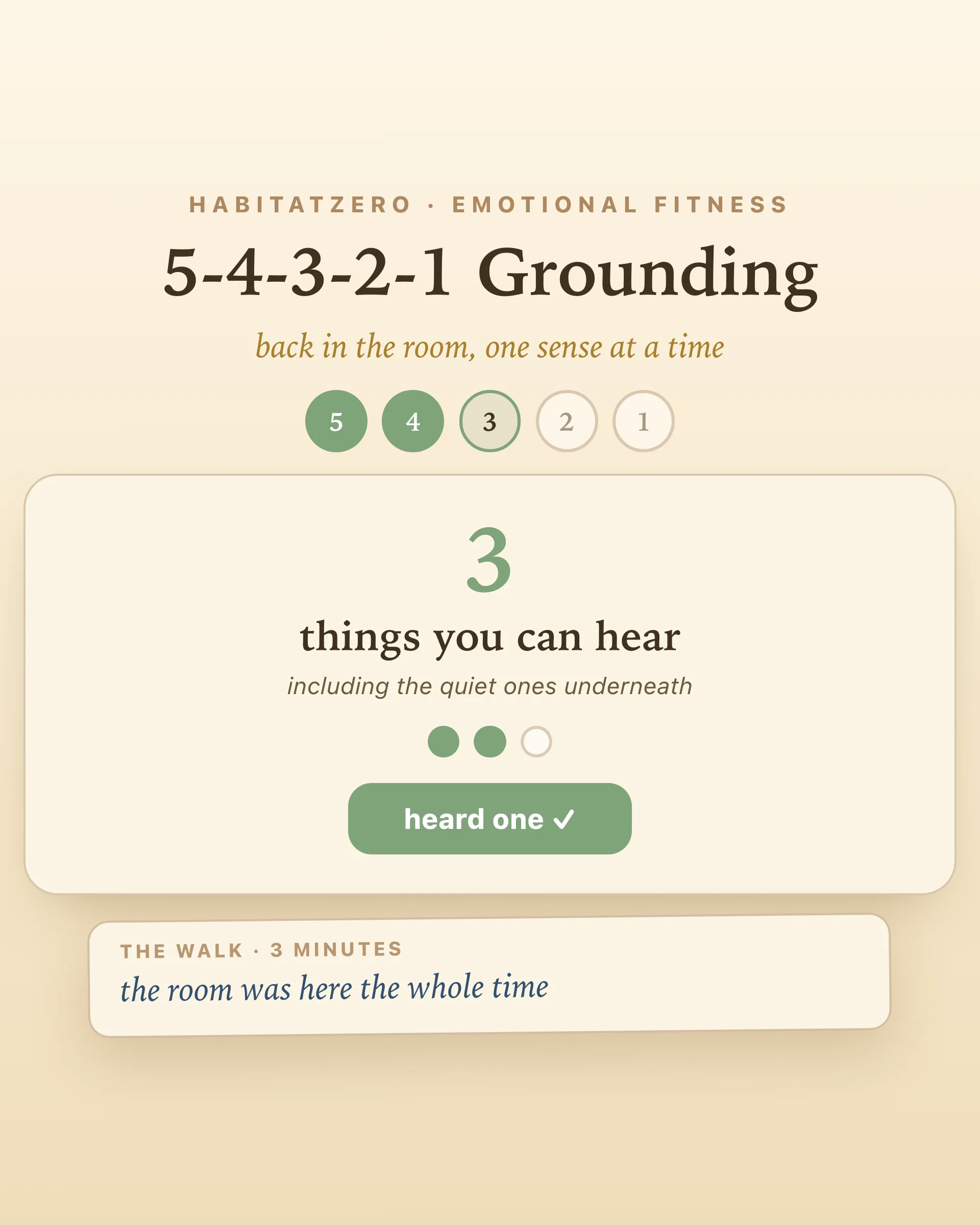
5-4-3-2-1 GroundingThe classic five-senses grounding walk, guided one sense at a time: five things you can see, four you can touch, three you can hear, two you can smell, one you can taste — tap each as you find it.
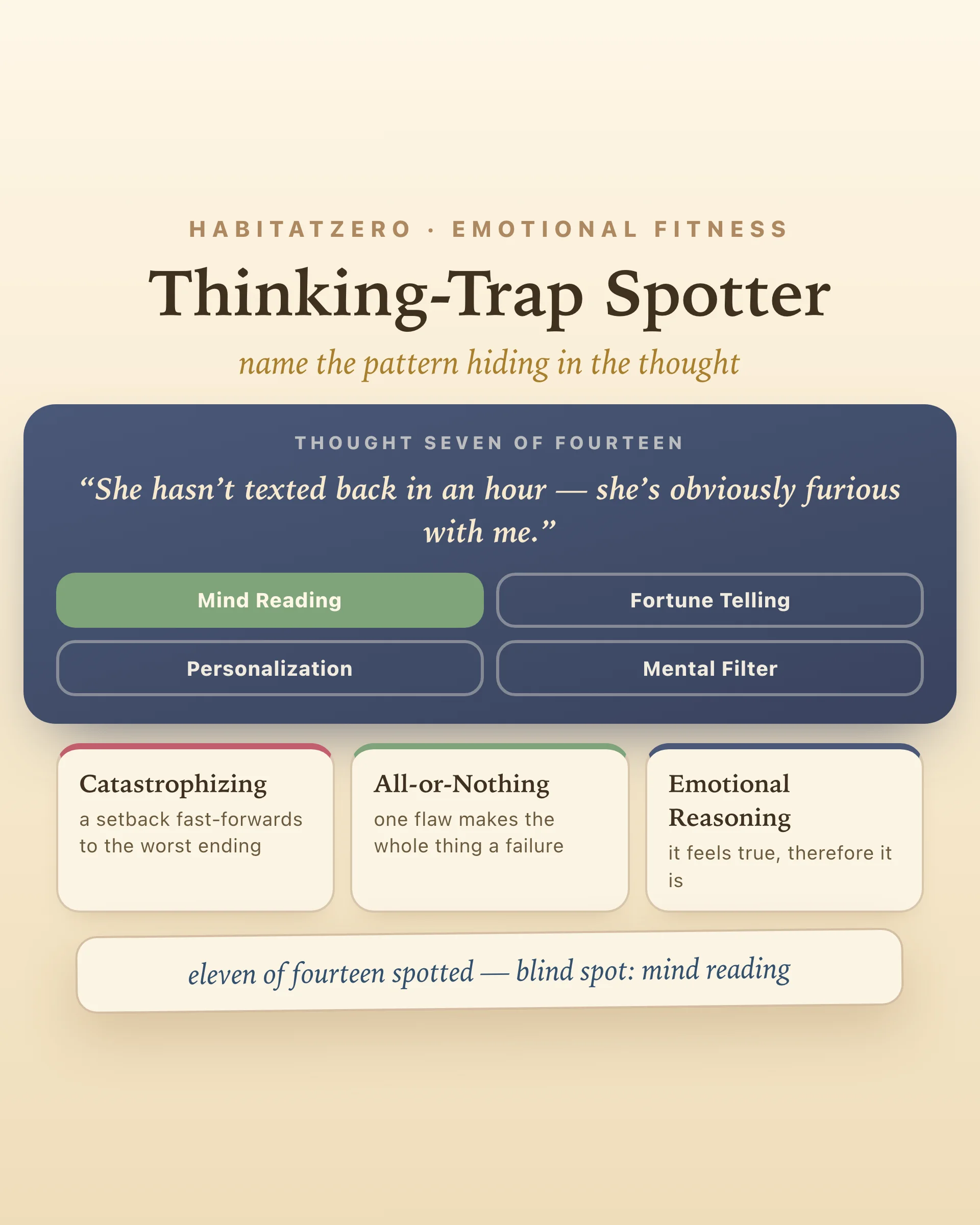
Thinking-Trap SpotterLearn the ten classic thinking traps, then train your eye with a spot-the-trap quiz: read a realistic thought, name the pattern hiding in it, and find out which trap is your blind spot — noticing is a skill, and this is its practice range.
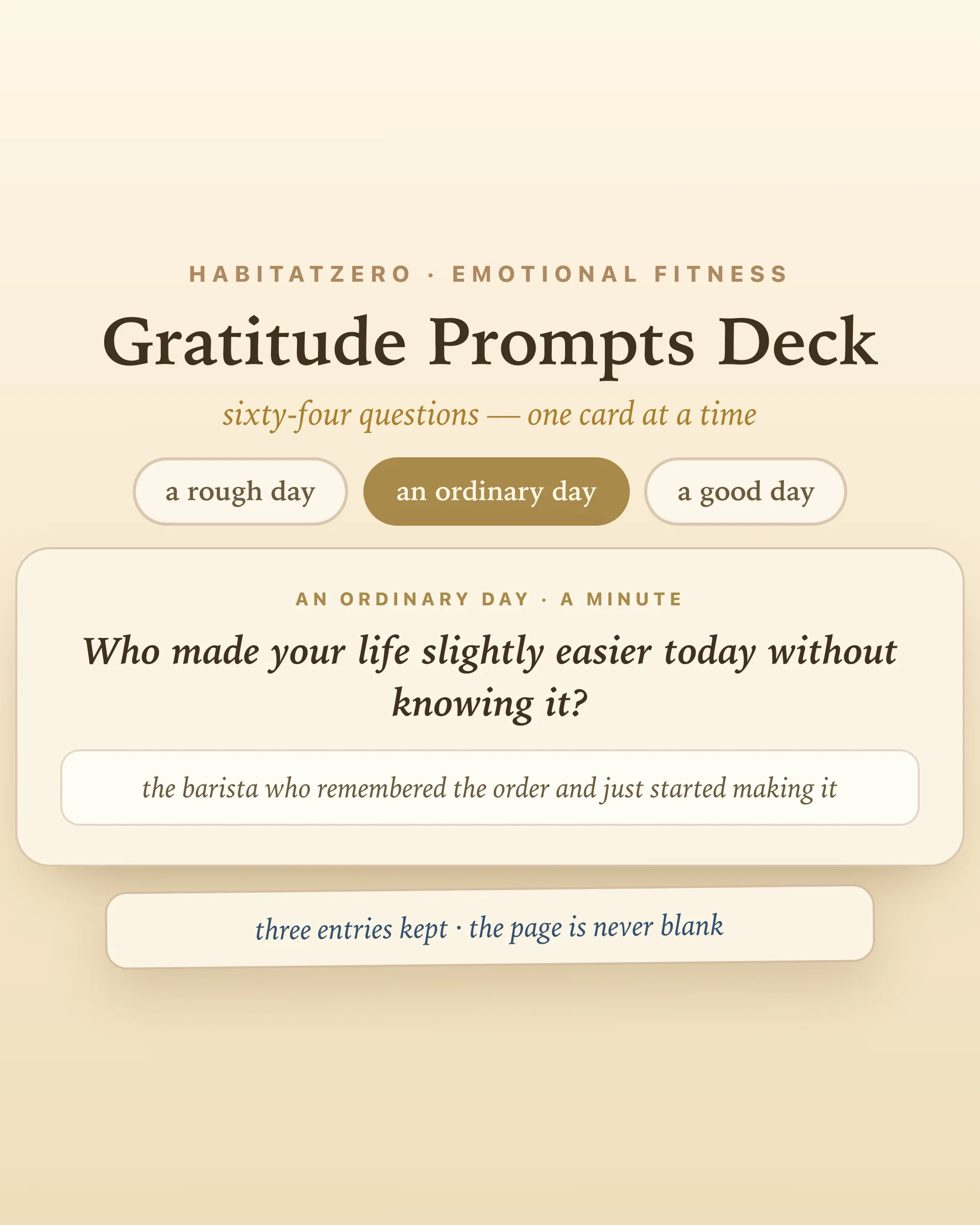
Gratitude Prompts DeckSixty-four gratitude prompts dealt one card at a time: tell the deck what kind of day it was and how long you have, draw, write right on the card, and keep the entries — a journal that never starts with a blank page.
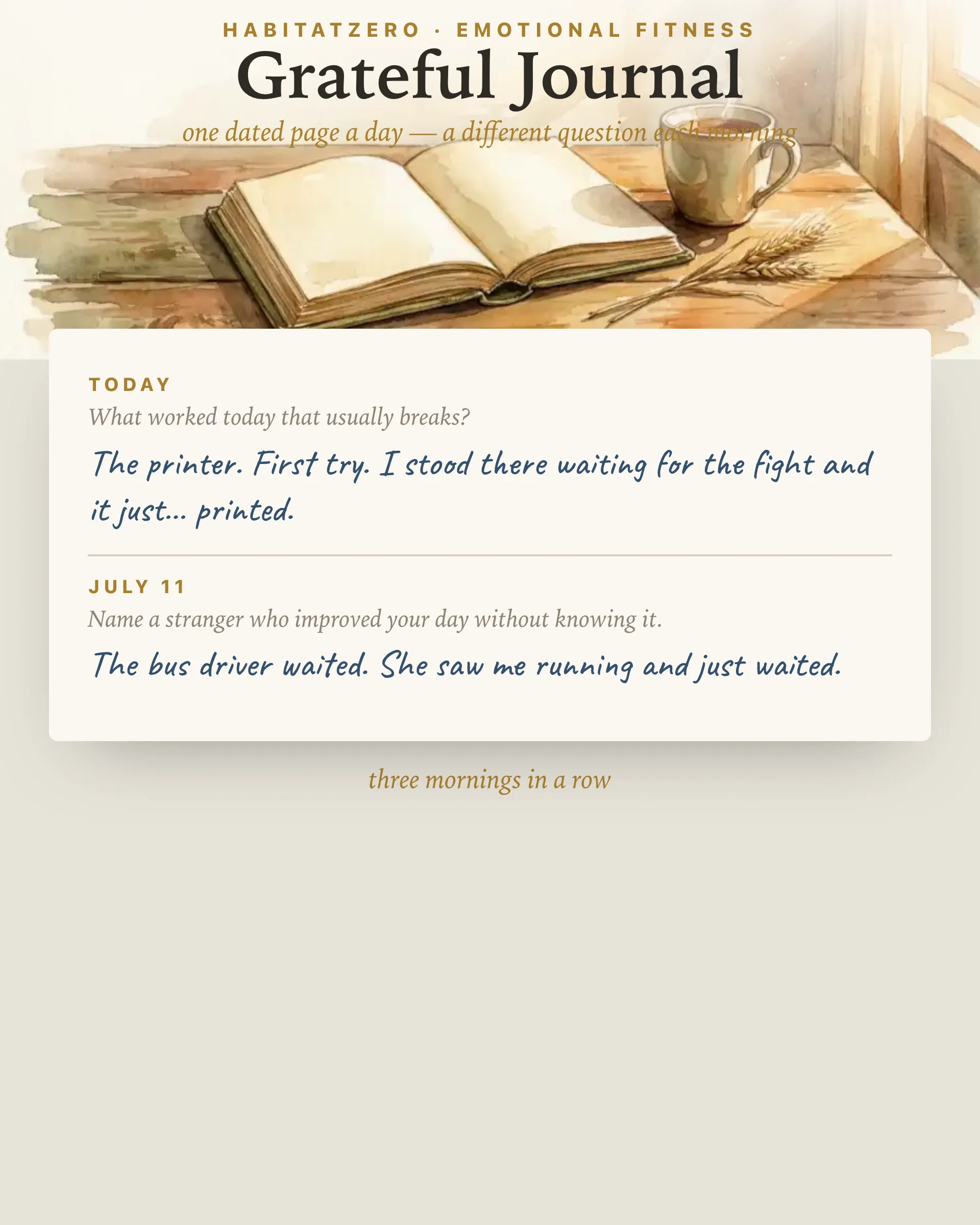
Grateful JournalA daily gratitude journal with one dated page per morning: a question that changes each day, handwritten-style entries, and every kept page bound below — a journal that builds itself while you answer.
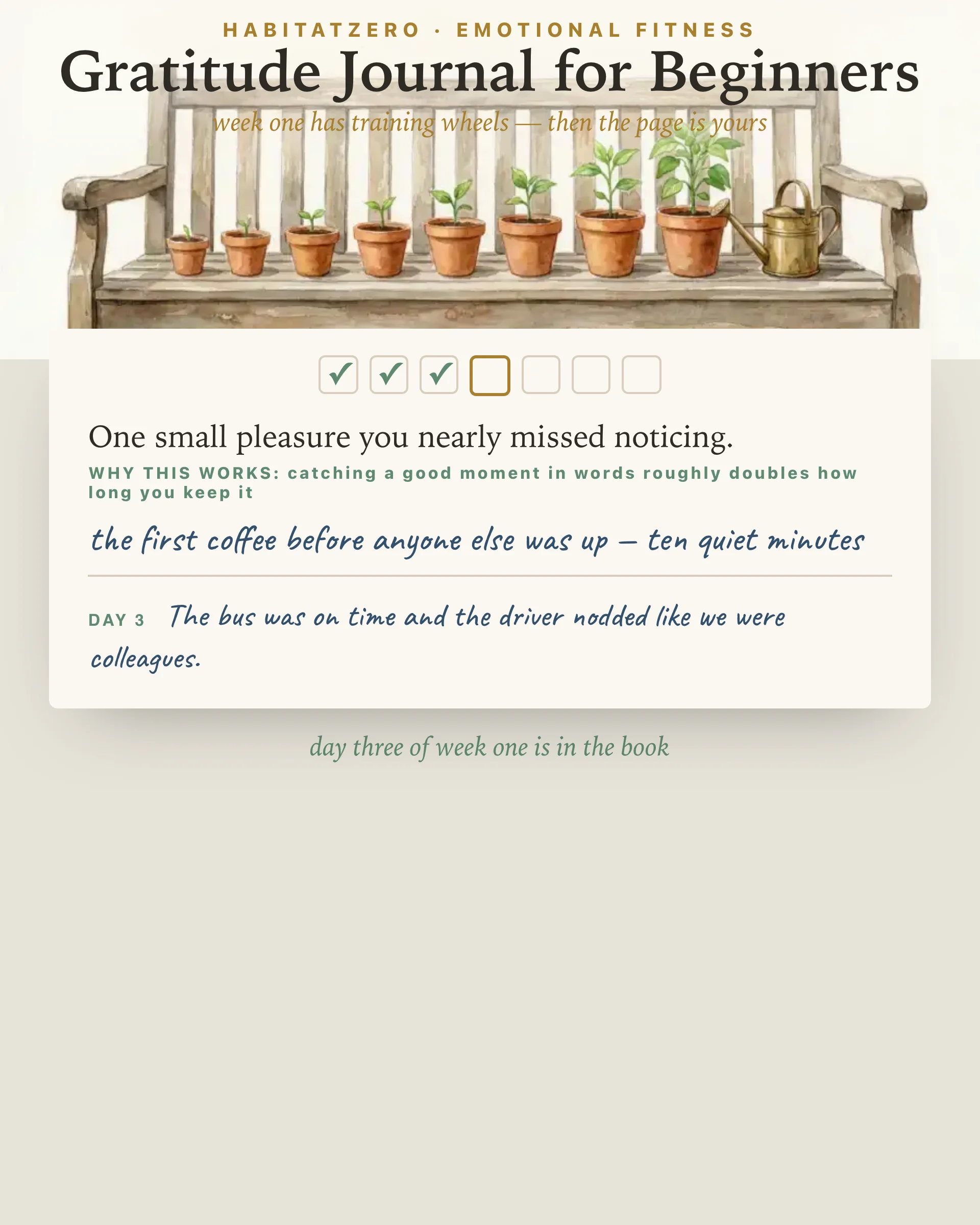
Gratitude Journal for BeginnersA gratitude journal that starts with training wheels: seven fixed micro-prompts for your first week, each with a plain why-this-works line, a visible seven-day tracker, and freeform pages once week one is in the book.
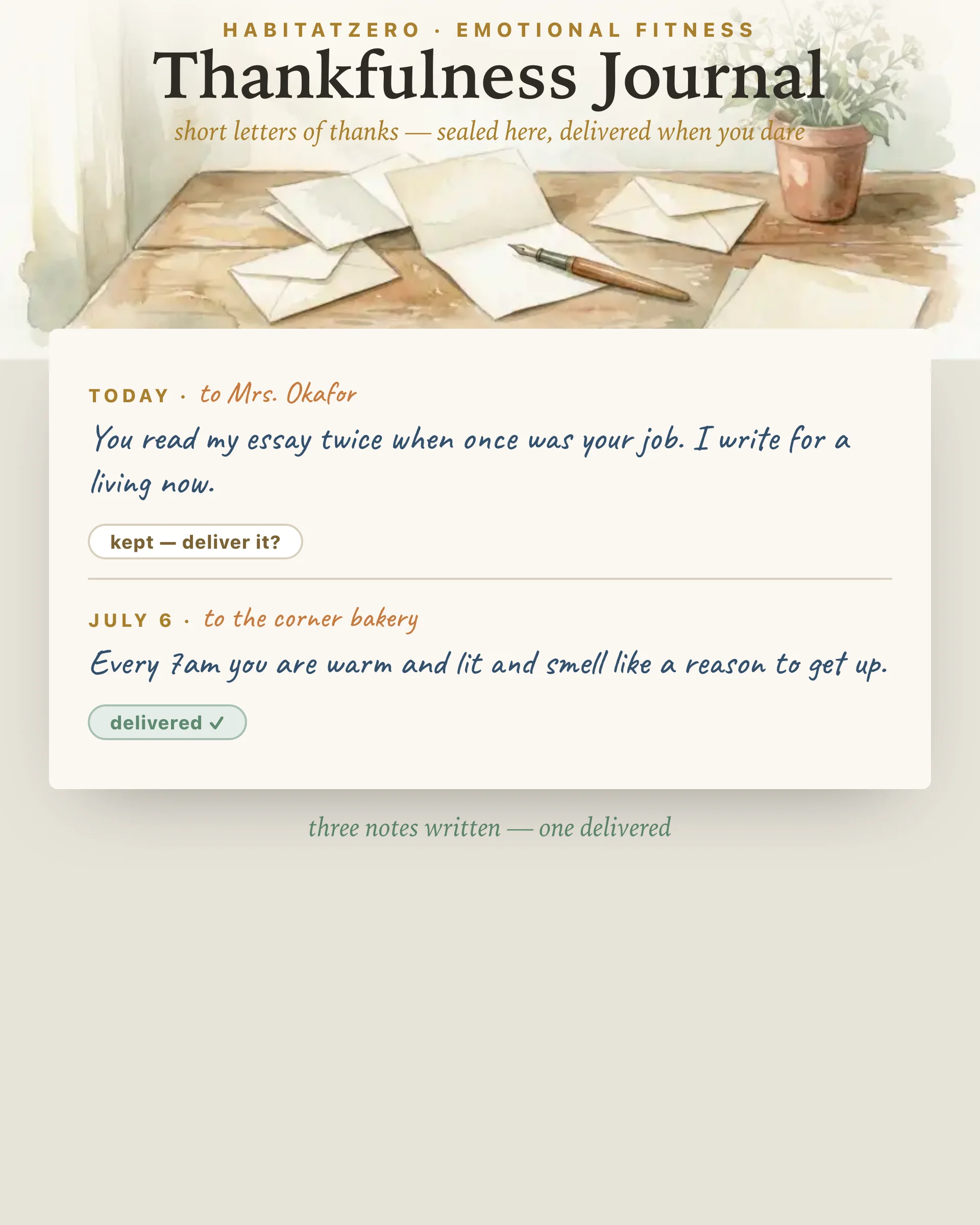
Thankfulness JournalA thankfulness journal built around the gratitude-letter practice: address a two-line note of thanks to a specific person or thing, seal it into your stack, and mark the brave ones delivered — a running record of thanks written versus thanks given.
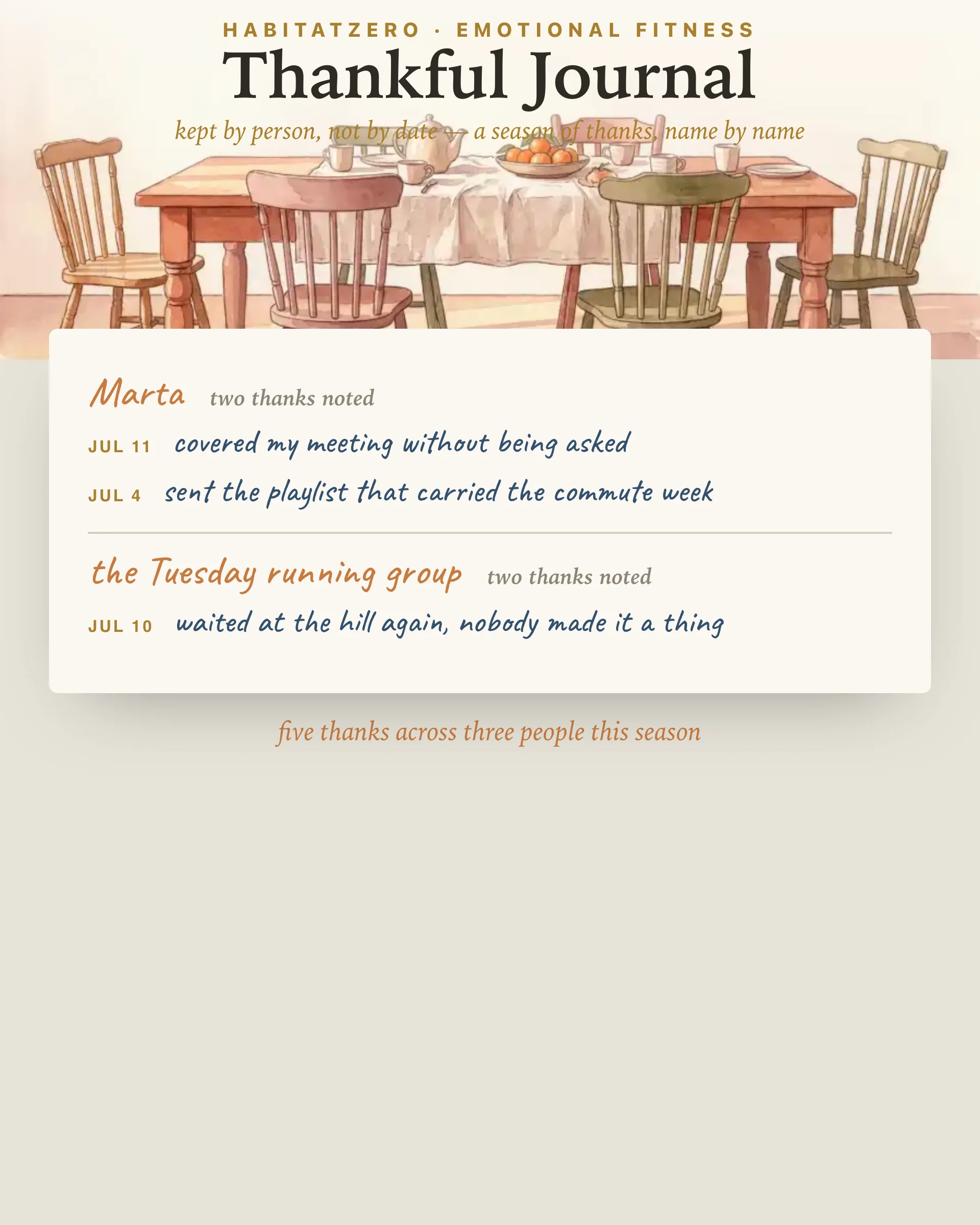
Thankful JournalA thankful journal organized around names instead of dates: add the people holding your season up, note the specific things they do as they happen, and let each name's growing tally show you who your life actually runs on.
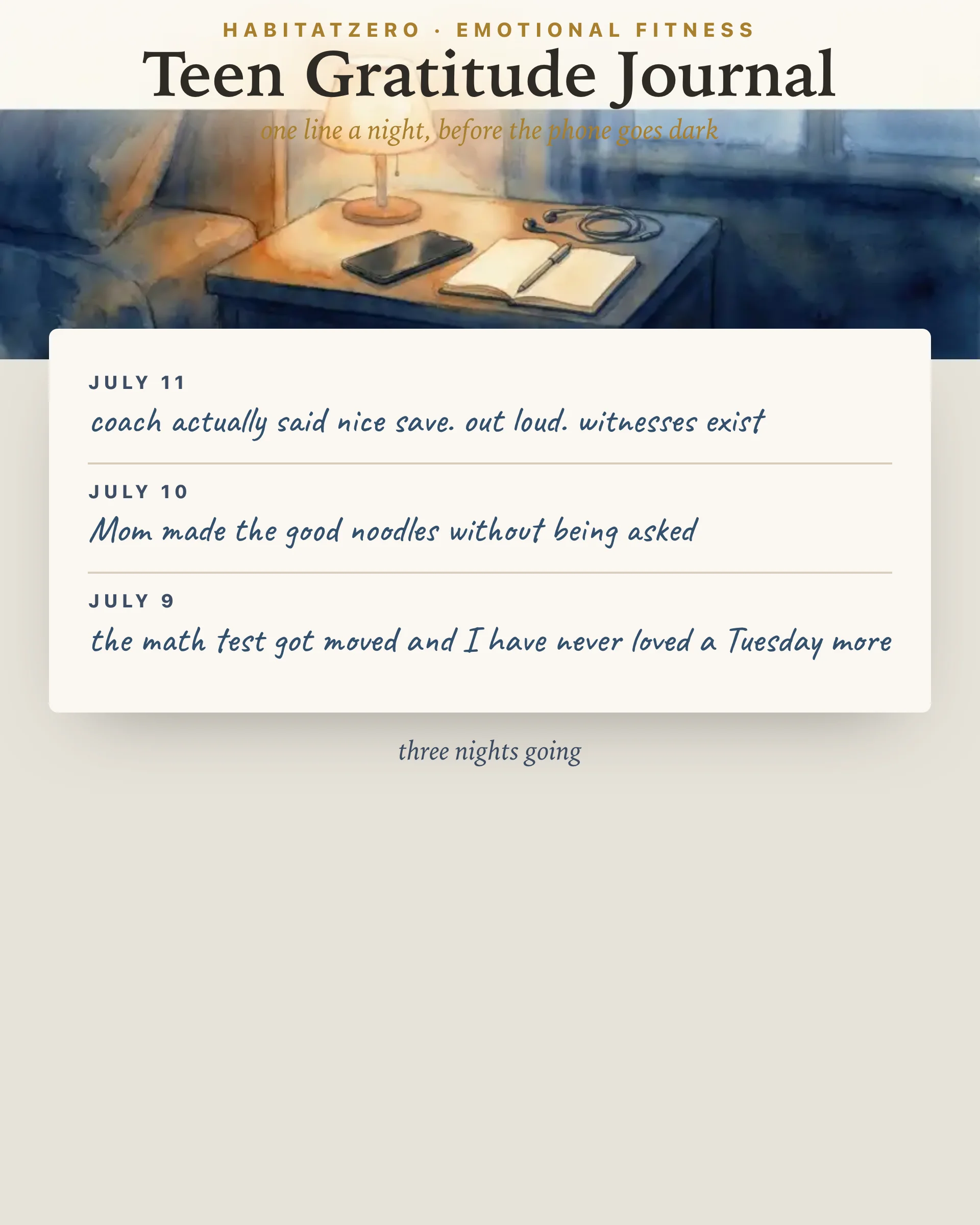
Teen Gratitude JournalA gratitude journal a teenager will actually keep: one private line before the phone goes dark, sentence-starters for stuck nights, a light going-count with no guilt attached — and setup guidance for the parent doing the handing-over.
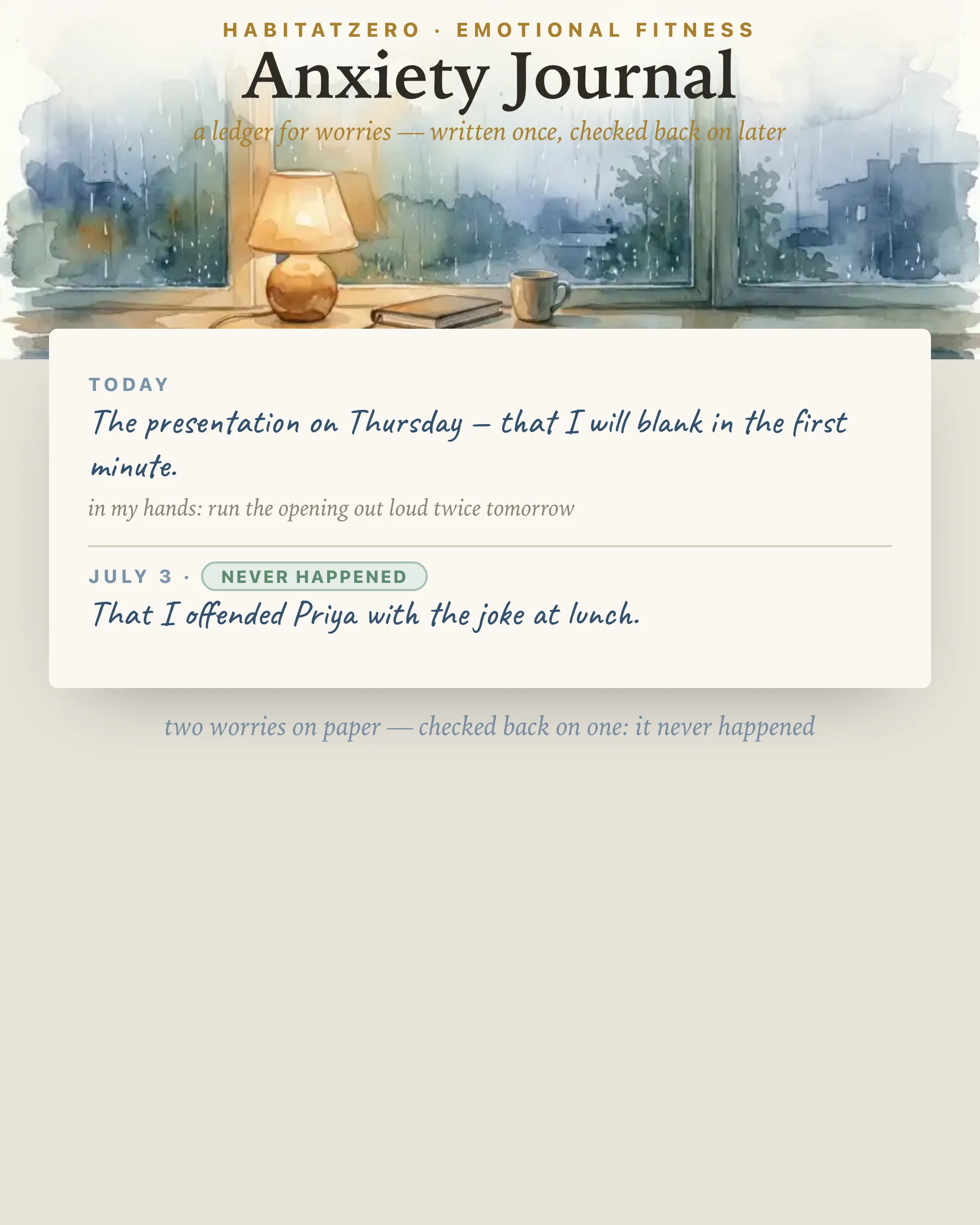
Anxiety JournalA worry ledger, not a diary: put each worry on paper in one plain line, note what is actually in your hands, then come back when the dust settles and record what really happened — never happened, handled, or still open.
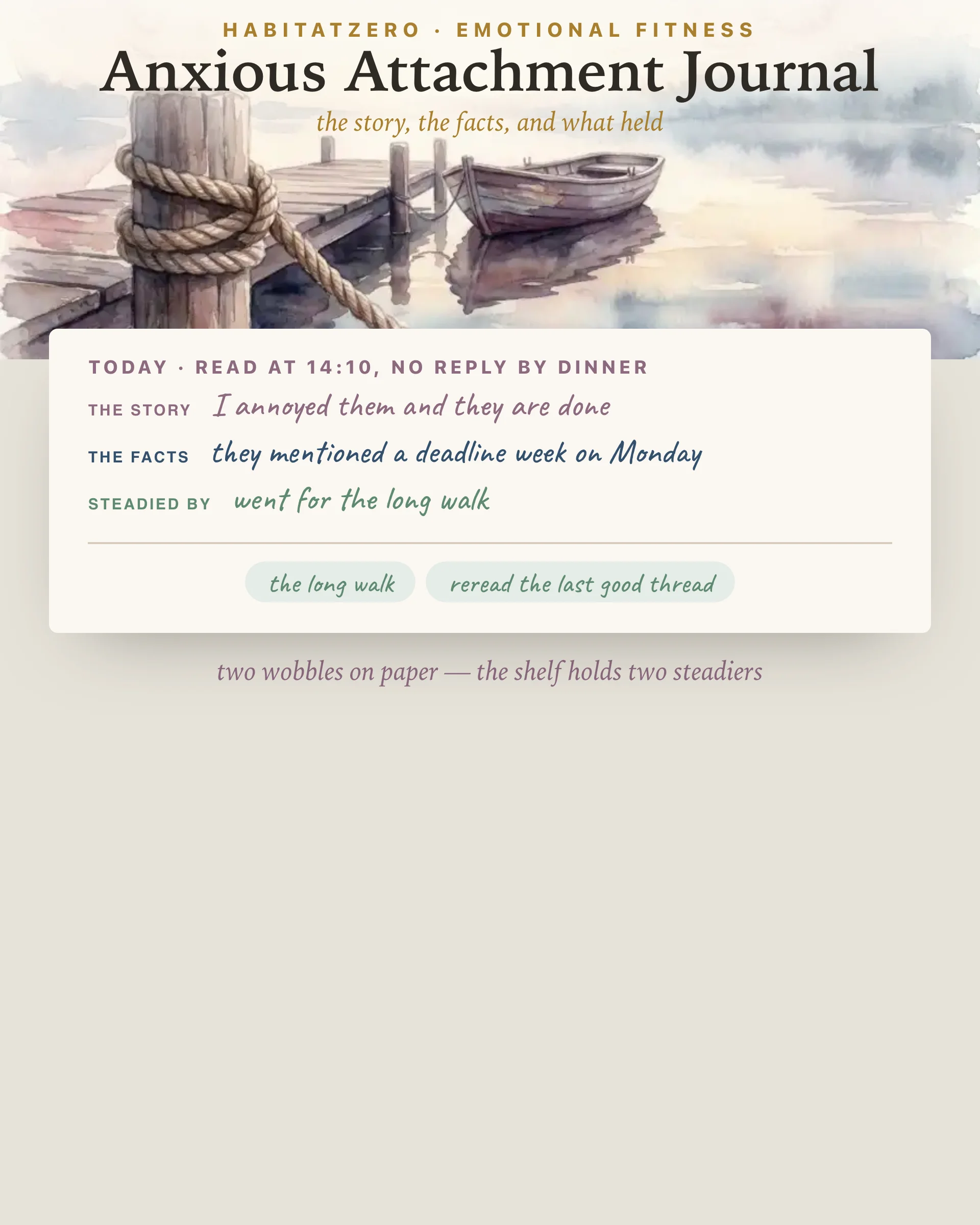
Anxious Attachment JournalA four-line journal for the wobbly relationship moments: name what set it off, split the story you started telling from what a camera would have seen, and note what steadied you — building a shelf of proven steadiers for next time.
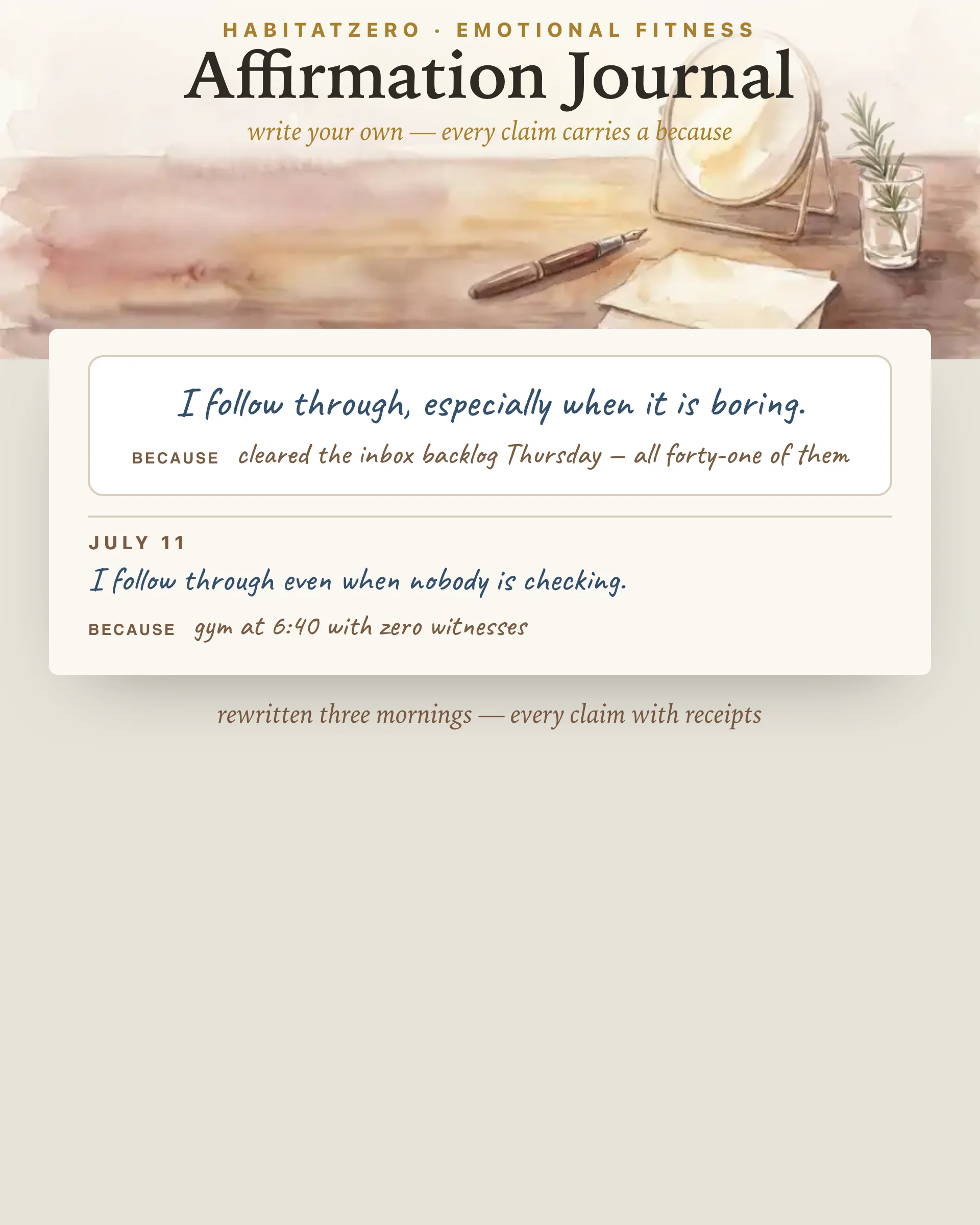
Affirmation JournalAn affirmation journal for writing your own instead of borrowing someone else's: one present-tense claim, a mandatory because line citing a real moment from your life, and a morning rewrite ritual that keeps both lines honest.
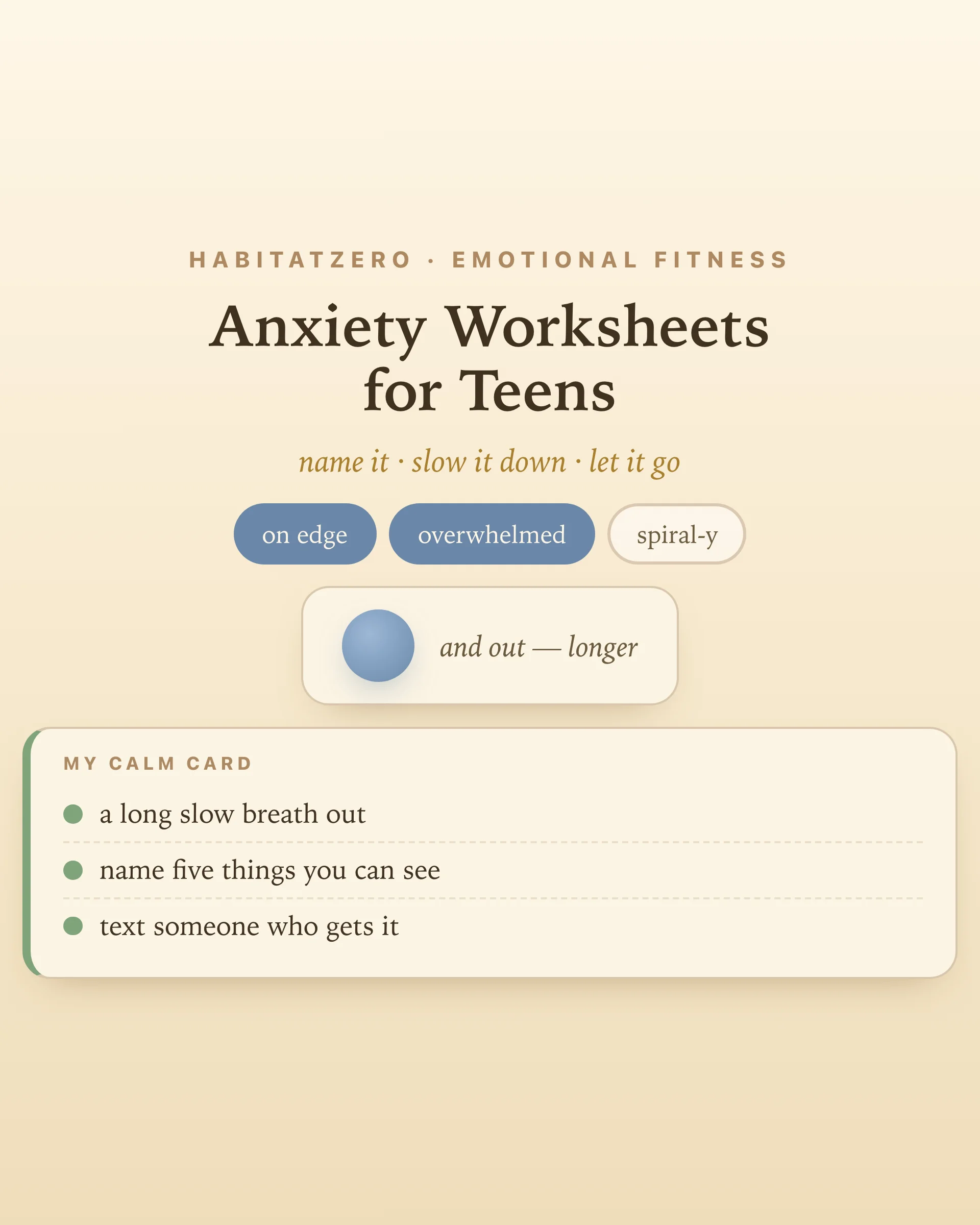
Anxiety Worksheets for TeensThree short exercises built for the pressure of being a teenager: name what is happening with a feelings check-in, slow it down with a sixty-second breathing reset, and let some of it go with a write-and-release that stores nothing — then build a pocket calm card to keep.
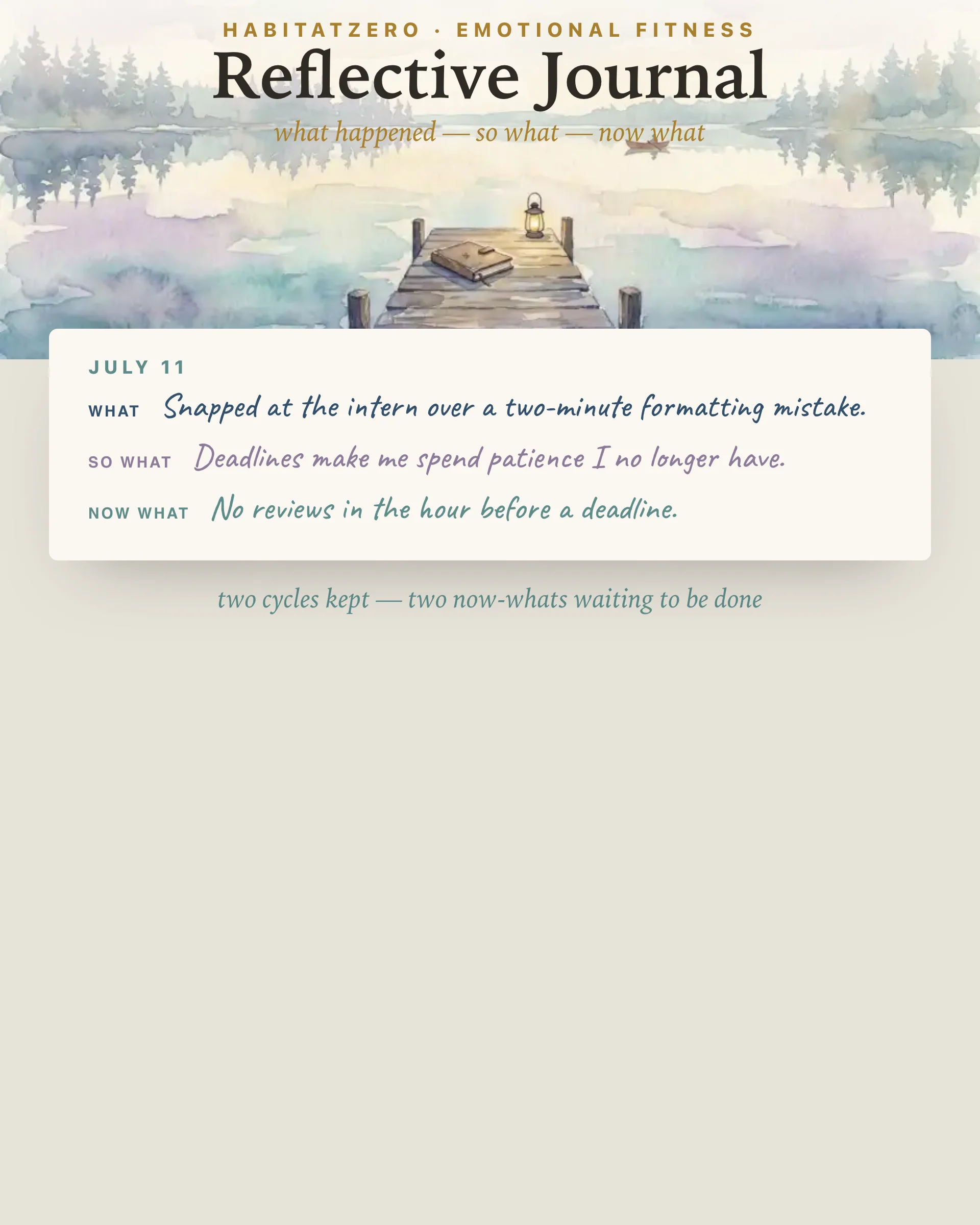
Reflective JournalA reflective journal that runs single moments through the three-question cycle — what happened, so what did it mean, now what changes — with a worked example on the page until your own cycles replace it.
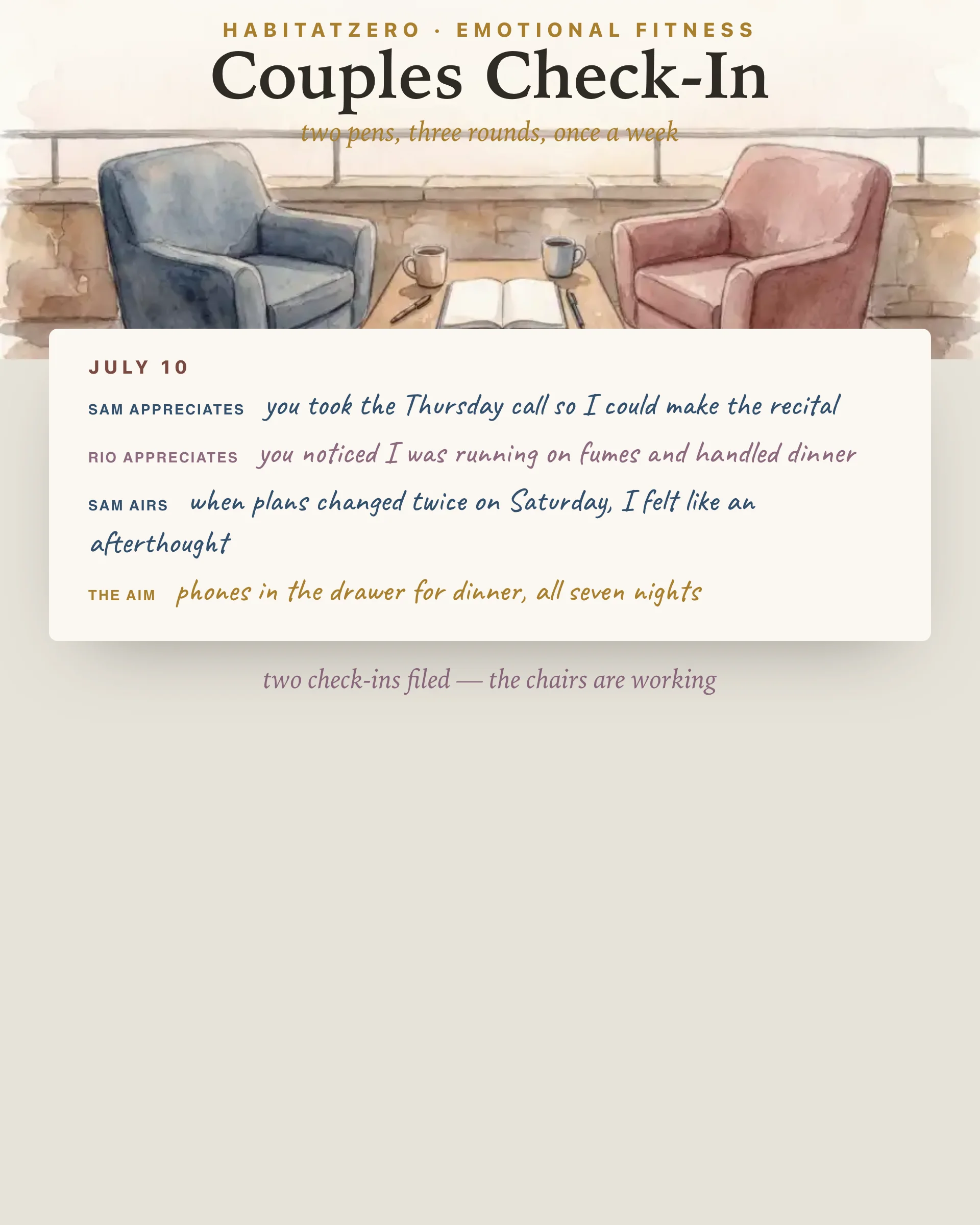
Couples Check-InA weekly ritual for two people and two pens: each partner appreciates one specific thing, airs one small friction kindly, and both sign one shared aim for the week — the check-in files only when both pens are down.
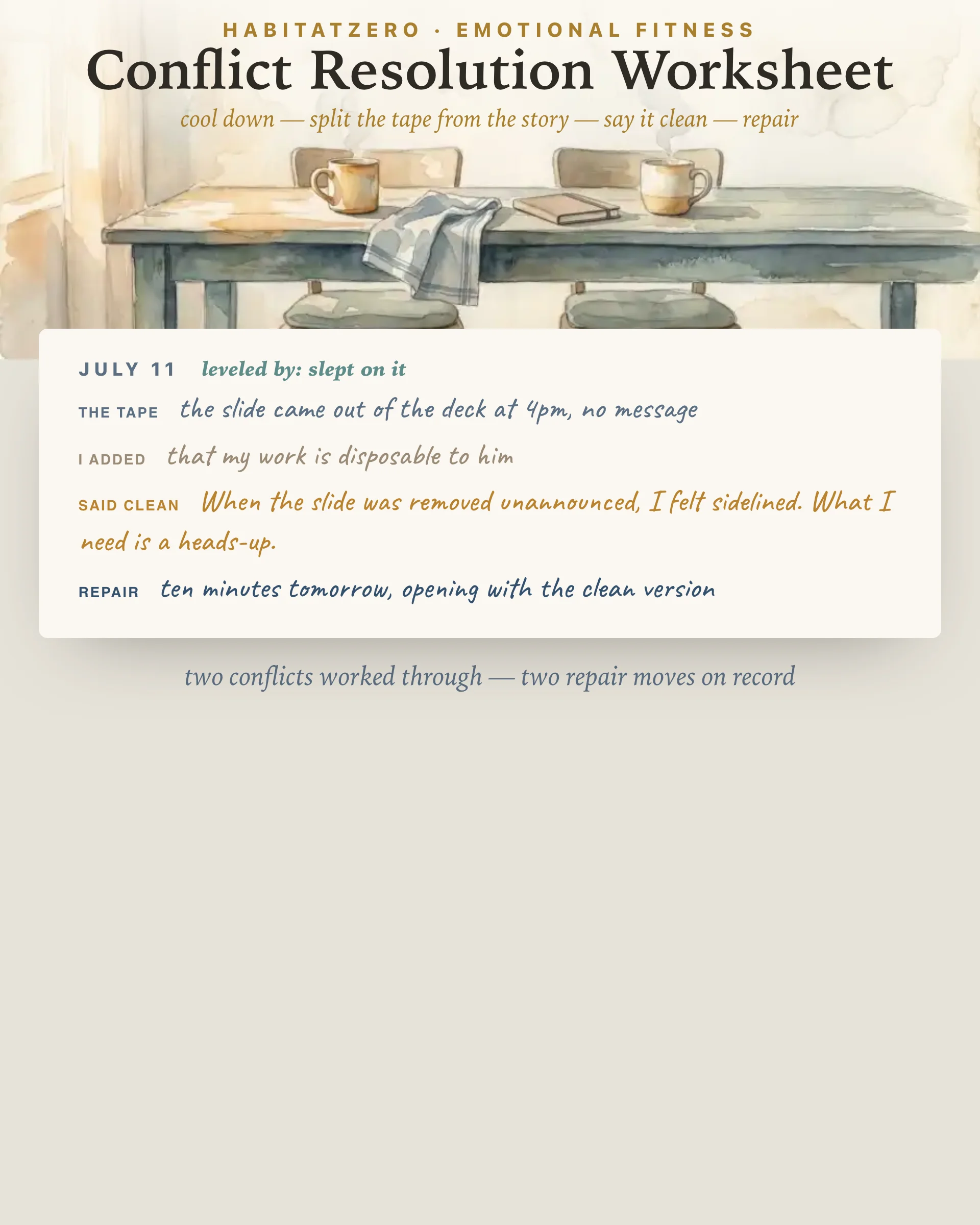
Conflict Resolution WorksheetWork one conflict through four honest stations: how you got level, what a recording would show versus what you added on top, an I-statement built in three clean parts, and the single repair move you will actually make.
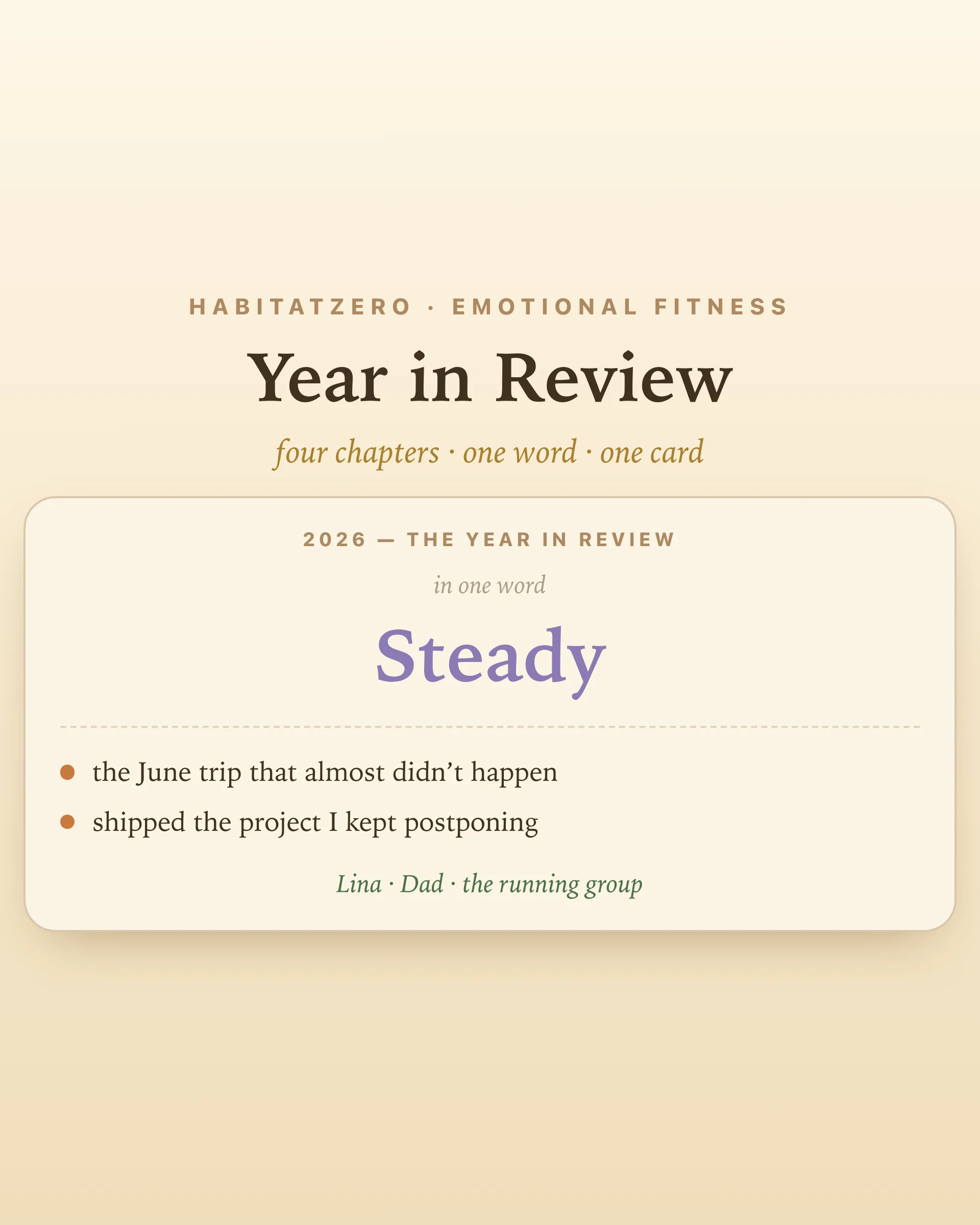
Year in ReviewA guided look back in four chapters — the highlights that made the year, the lessons it taught, the people who mattered, and the one word that sums it up — ending in a summary card you can keep or share.
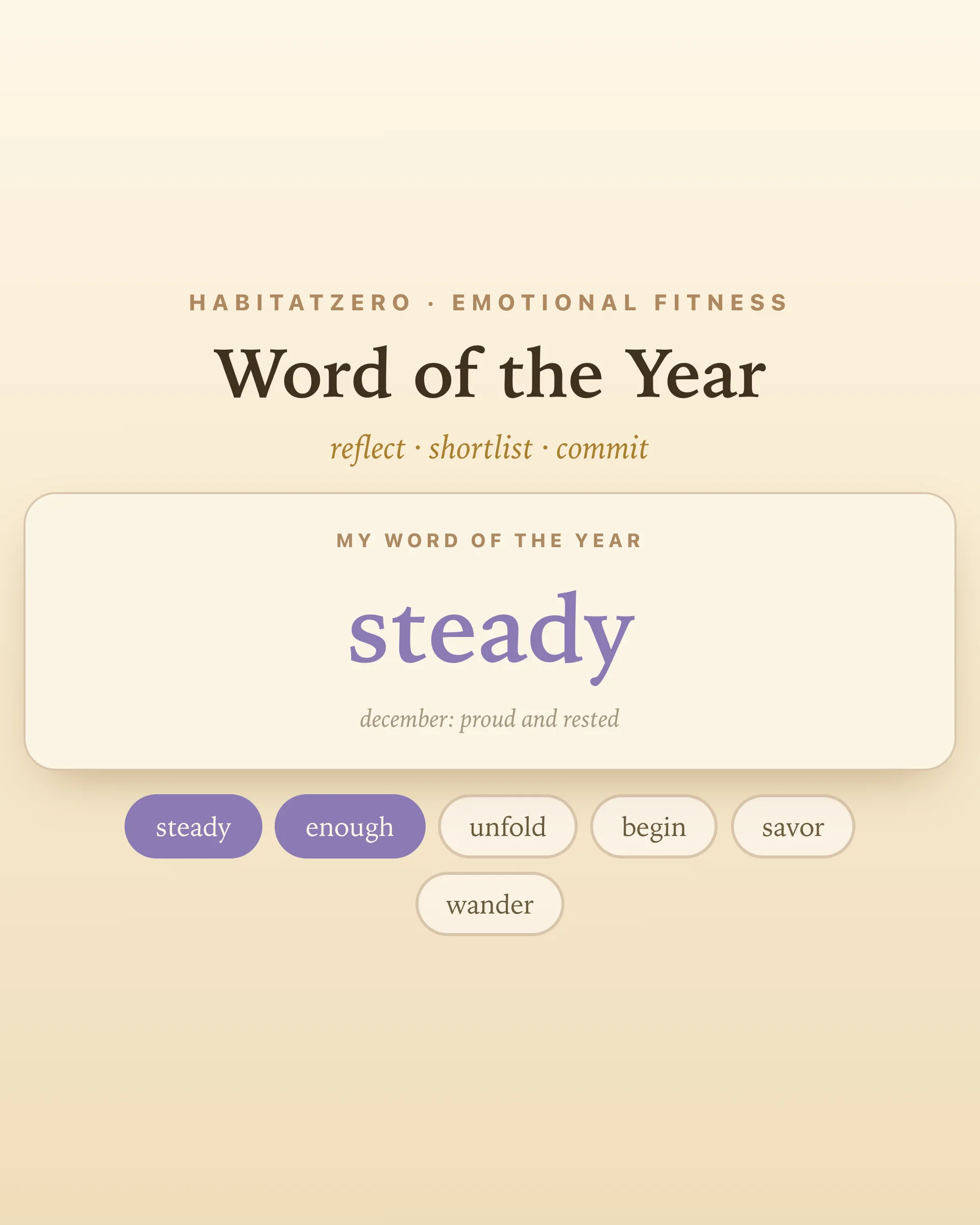
Word of the YearA guided picker for your one word: reflect on what the year needs, shortlist candidates from a bank of more than one hundred fifty words grouped by theme, commit to the one — and download it as a keep-it-visible card.
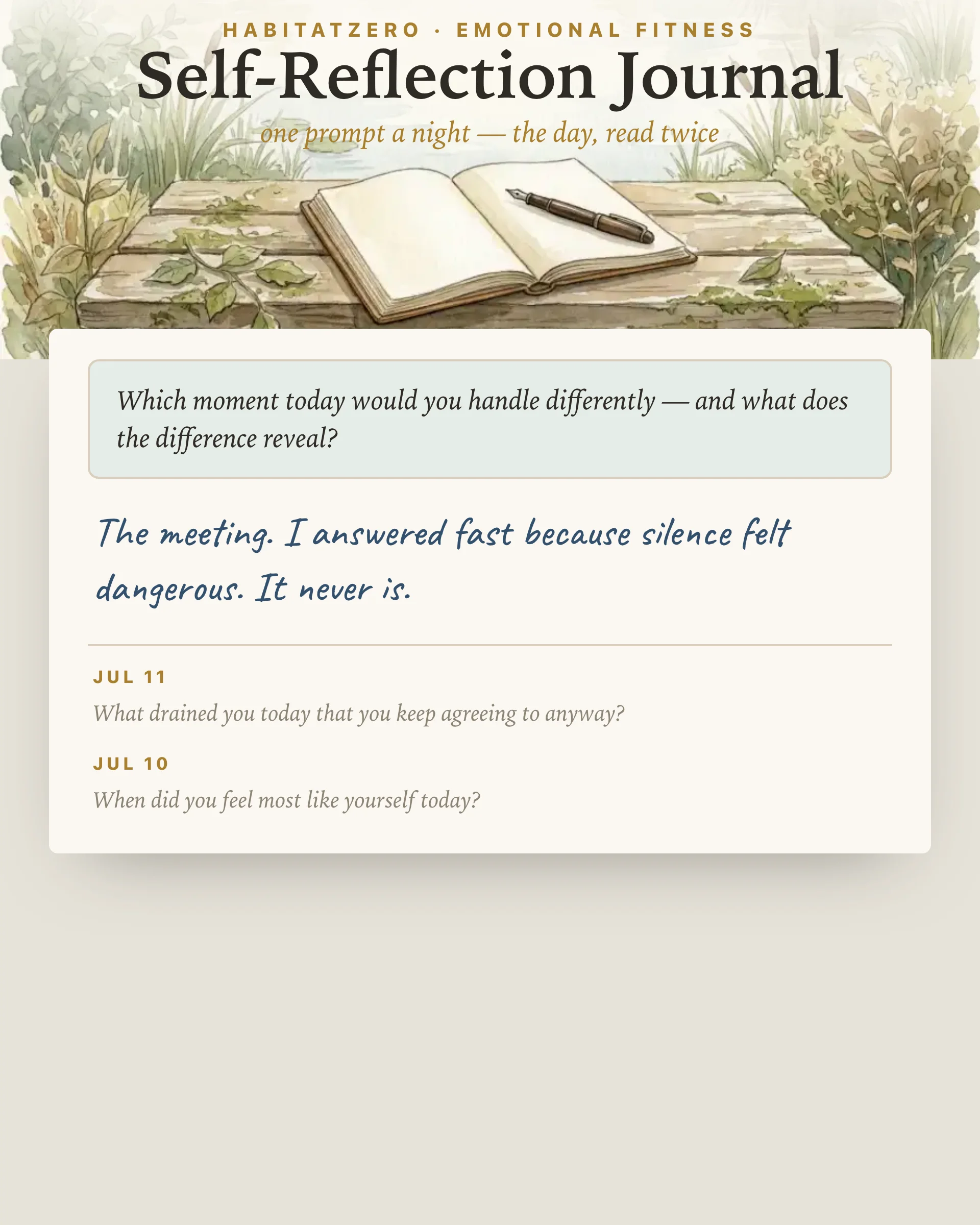
Self-Reflection JournalA quiet page with one honest prompt a night: draw a question, write what today actually said, and keep a shelf of reflections that slowly starts talking back.
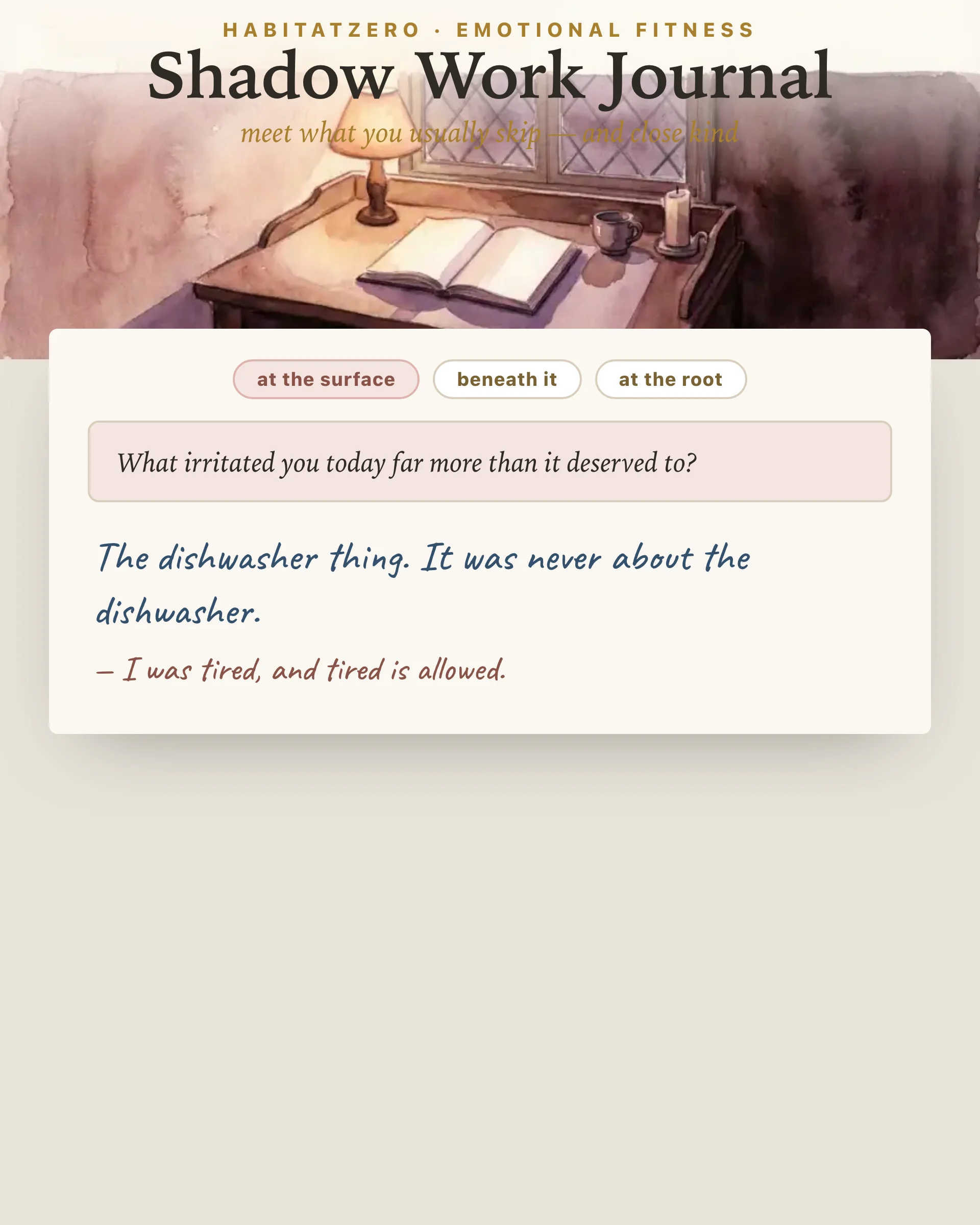
Shadow Work JournalAn evening page for the parts you usually skip: pick how deep you want to go, answer one shadow prompt in your own hand, and close every session with a kind sentence.
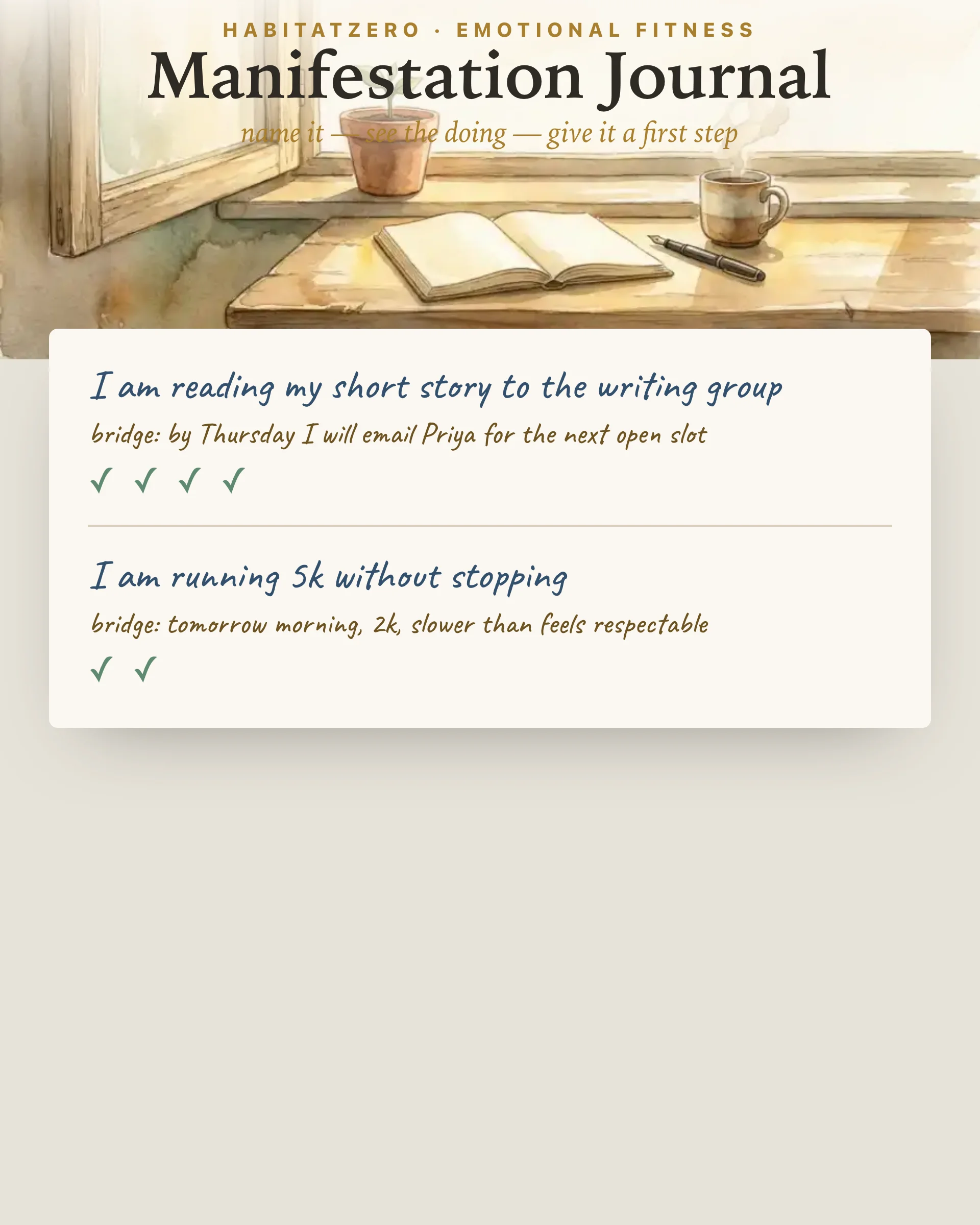
Manifestation JournalA manifestation journal with its feet on the ground: name the intention, write yourself doing the work, and bridge it to one real step within two days.
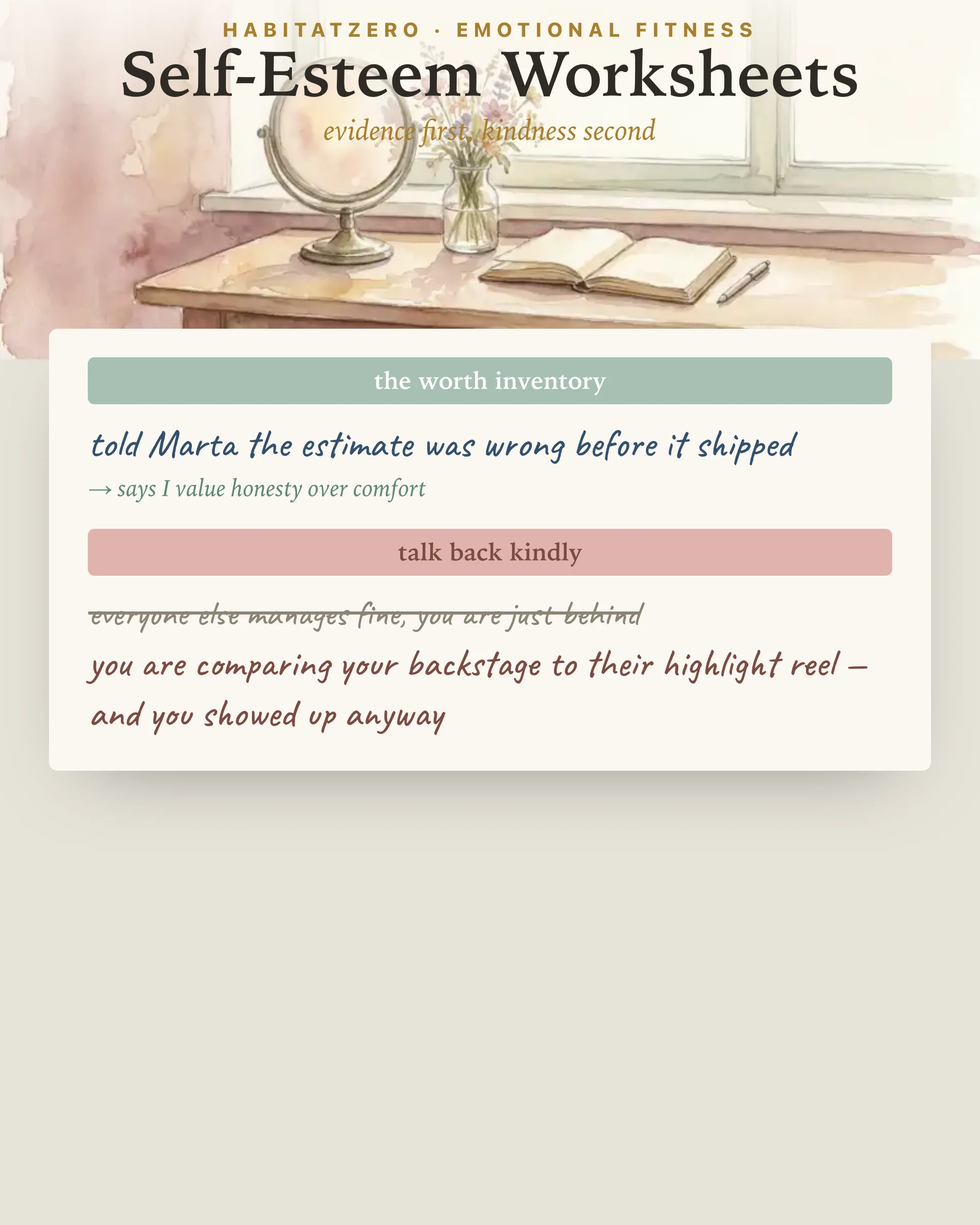
Self-Esteem WorksheetsTwo short exercises on one page: a worth inventory that ties small actions to what you value, and a talk-back column that answers your harshest line the way you would answer a friend's.
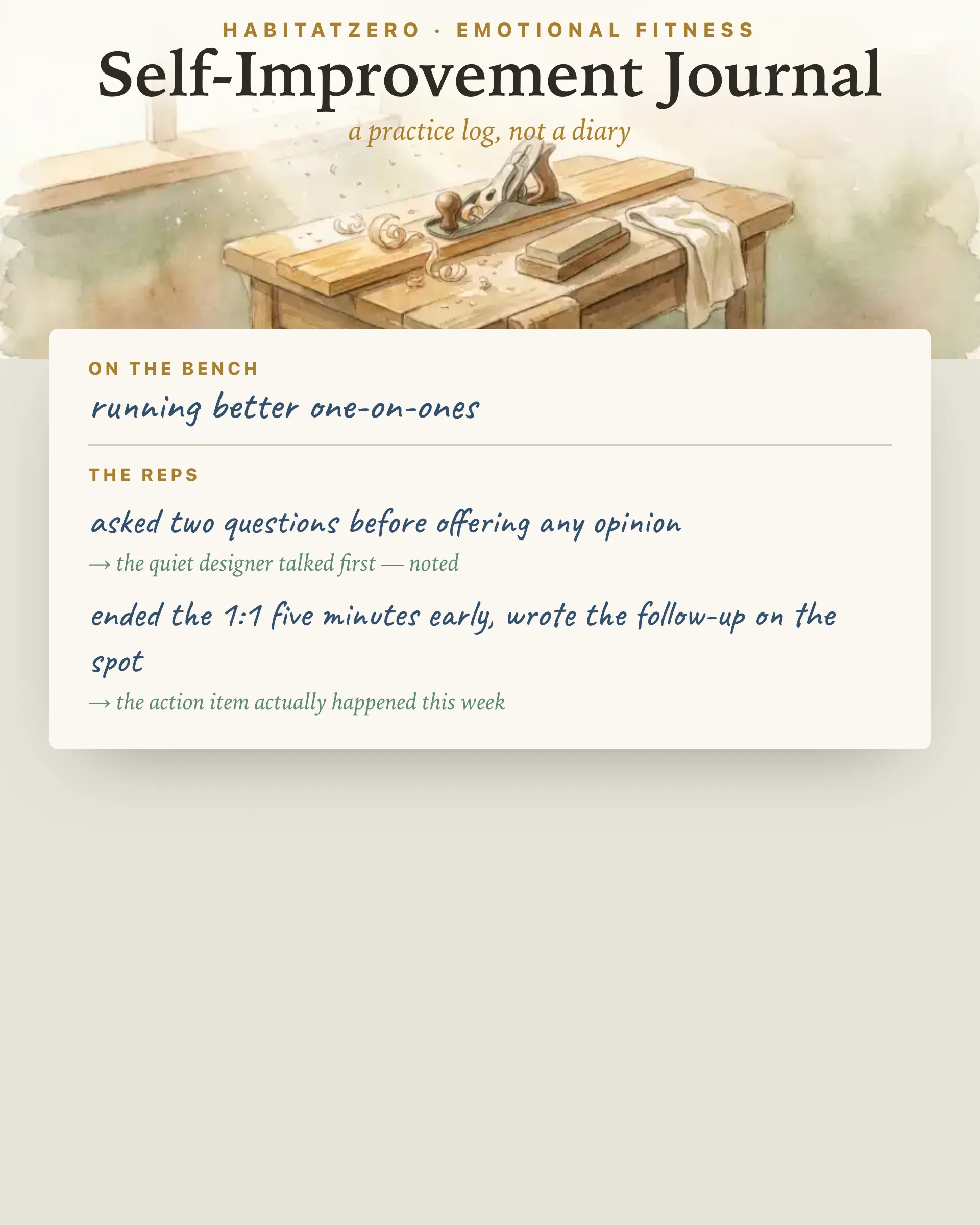
Self-Improvement JournalA practice log, not a diary: put one improvable thing on the bench, define what better looks like, and log deliberate reps with what each one changed.
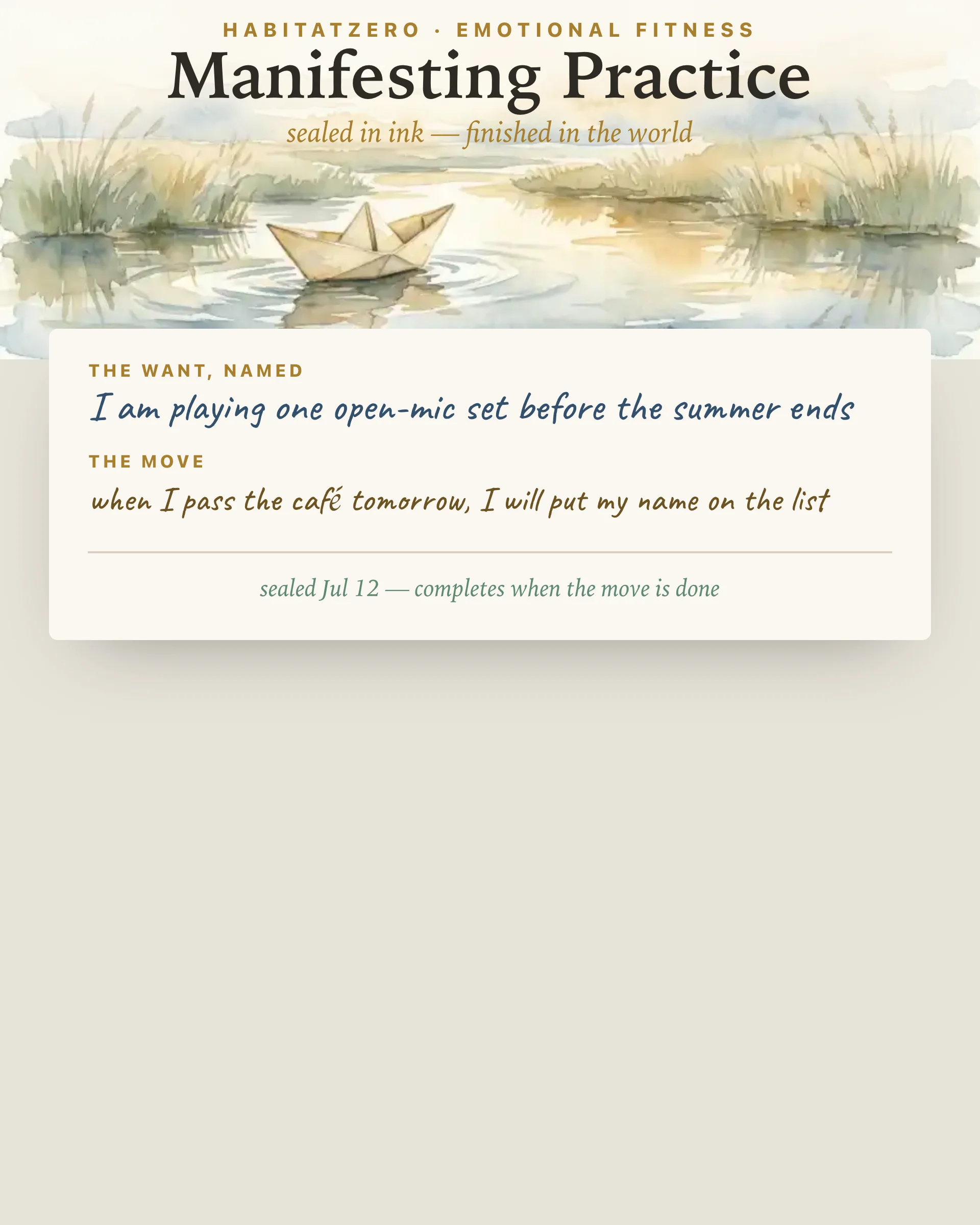
Manifesting PracticeOne guided manifesting session, taught by doing: name the want, ground it in reach, see the doing, seal it — and the page only completes when the move is made.
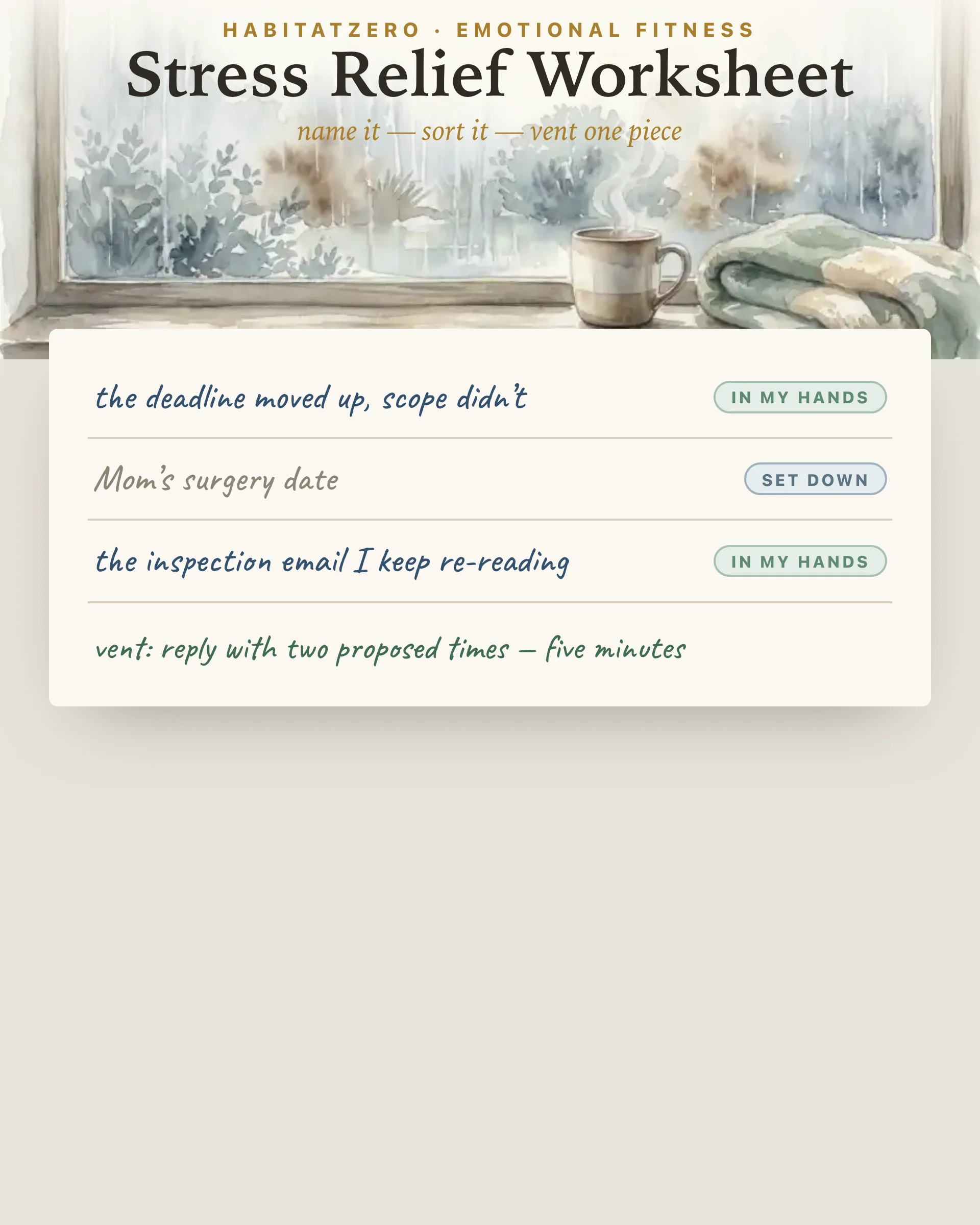
Stress Relief WorksheetName every pressure, sort each into in-my-hands or not-mine-to-carry, then vent the biggest one with a single small action — the page does the triage with you.
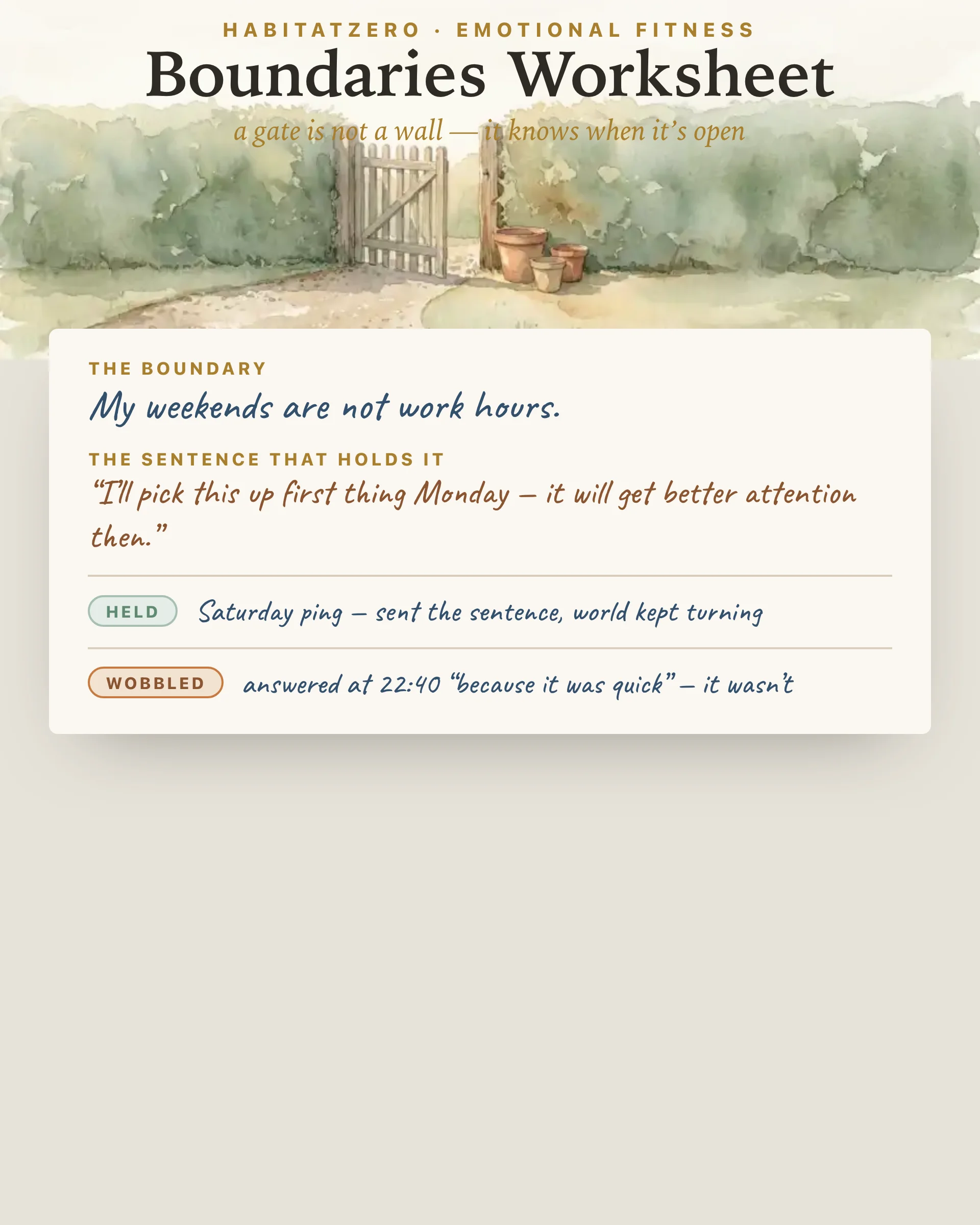
Boundaries WorksheetFind where you end: inventory what drains you, write one boundary in your own words with the exact sentence that holds it, and log the helds and the wobbles.
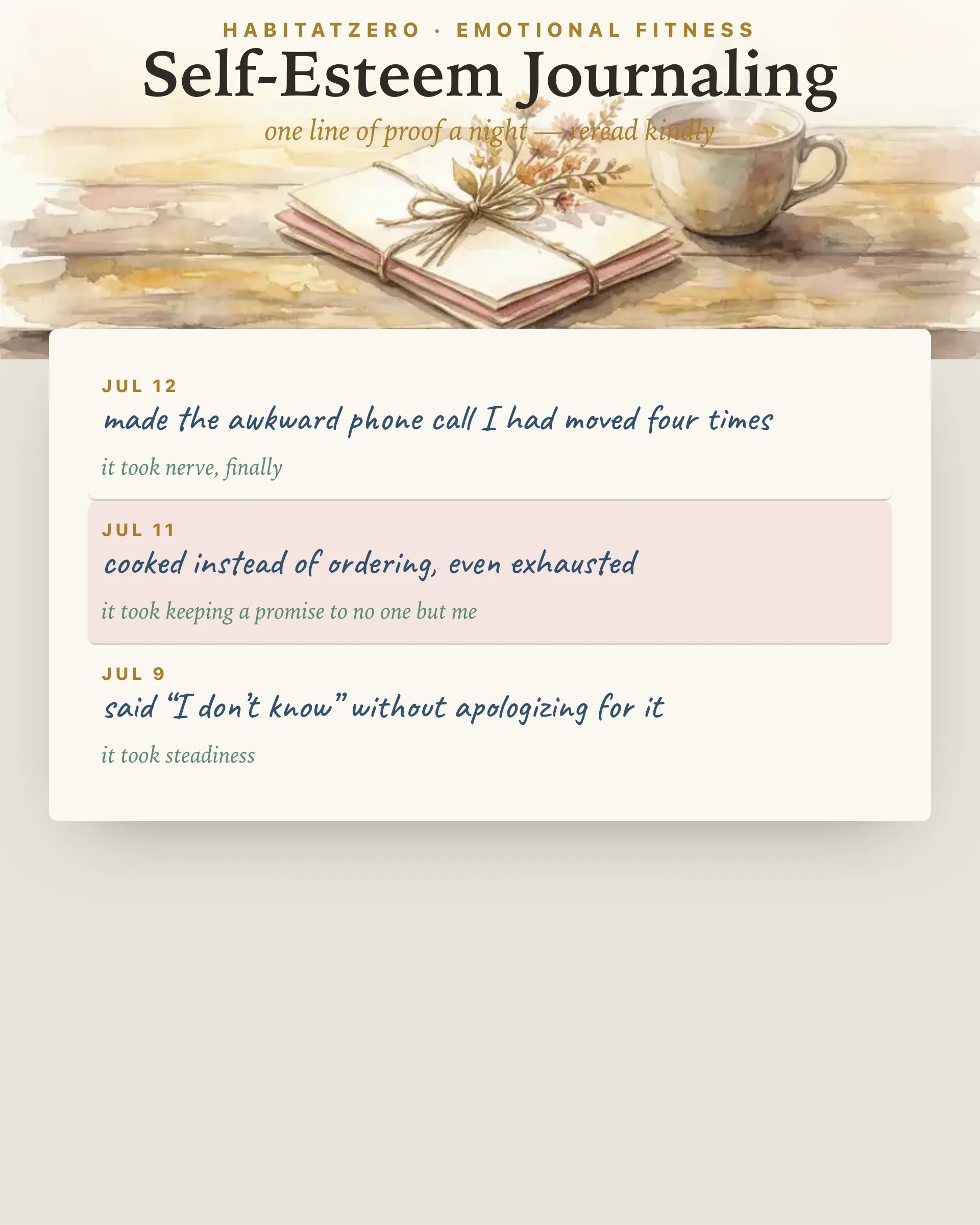
Self-Esteem JournalingA nightly line of proof: something you handled today and what it took — then the ritual that does the real work, rereading three old lines kindly.
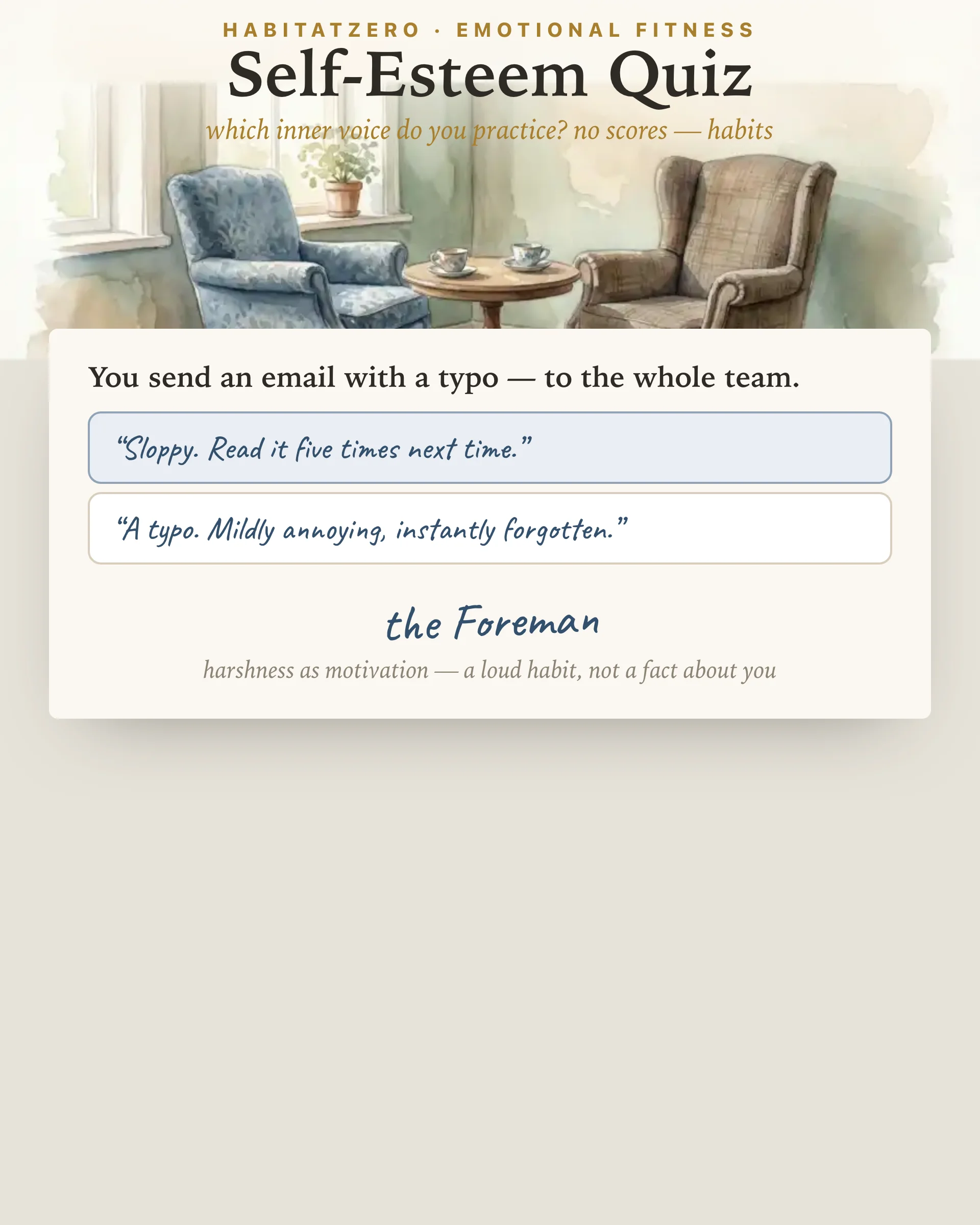
Self-Esteem QuizEight everyday moments, four inner voices — find which one you practice most. No scores and no grades on your worth: voices are habits, and habits retrain.
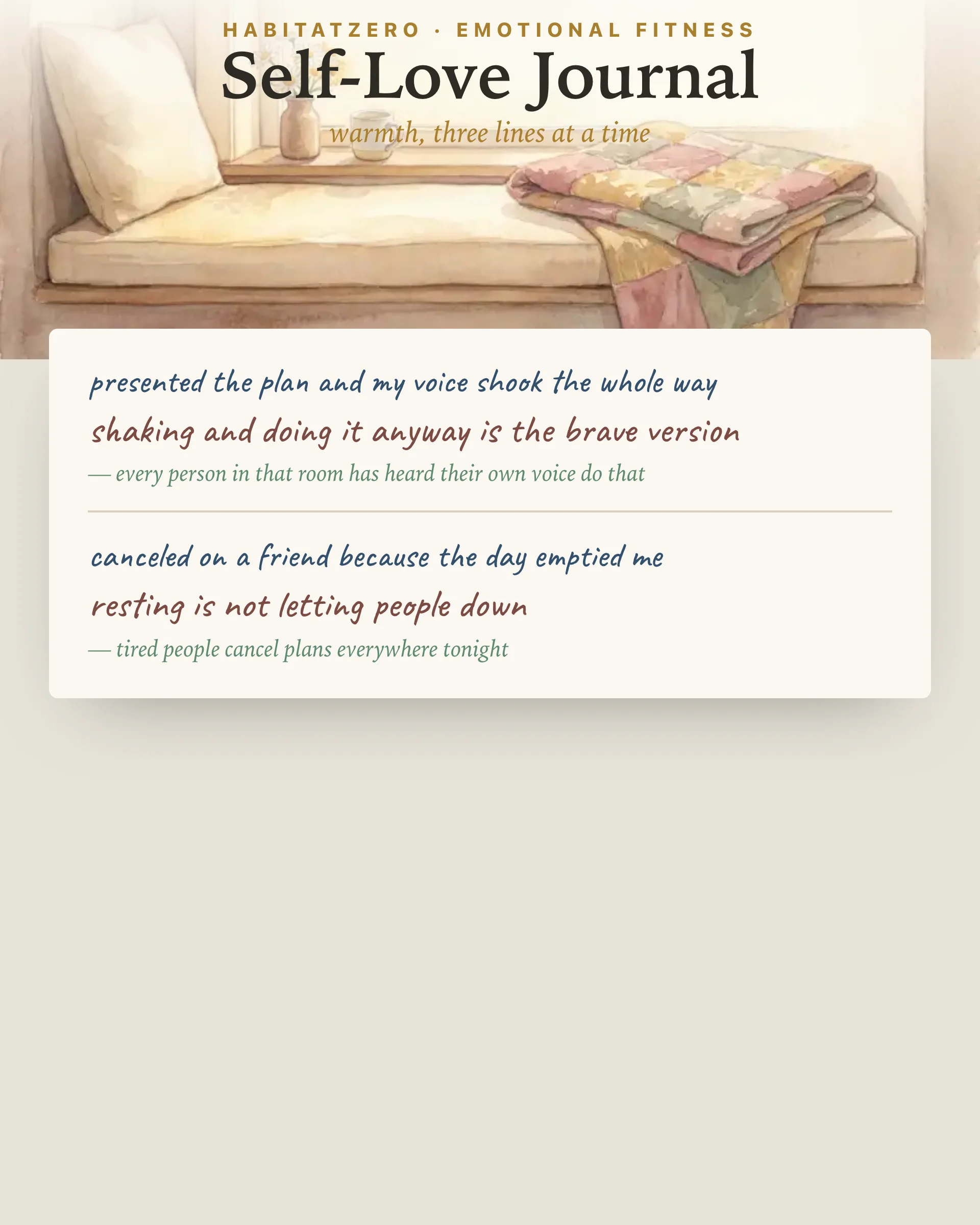
Self-Love JournalThree soft lines a day: the moment that was hard, the words you actually needed, and the reminder that you are not the only one — warmth as a written habit.
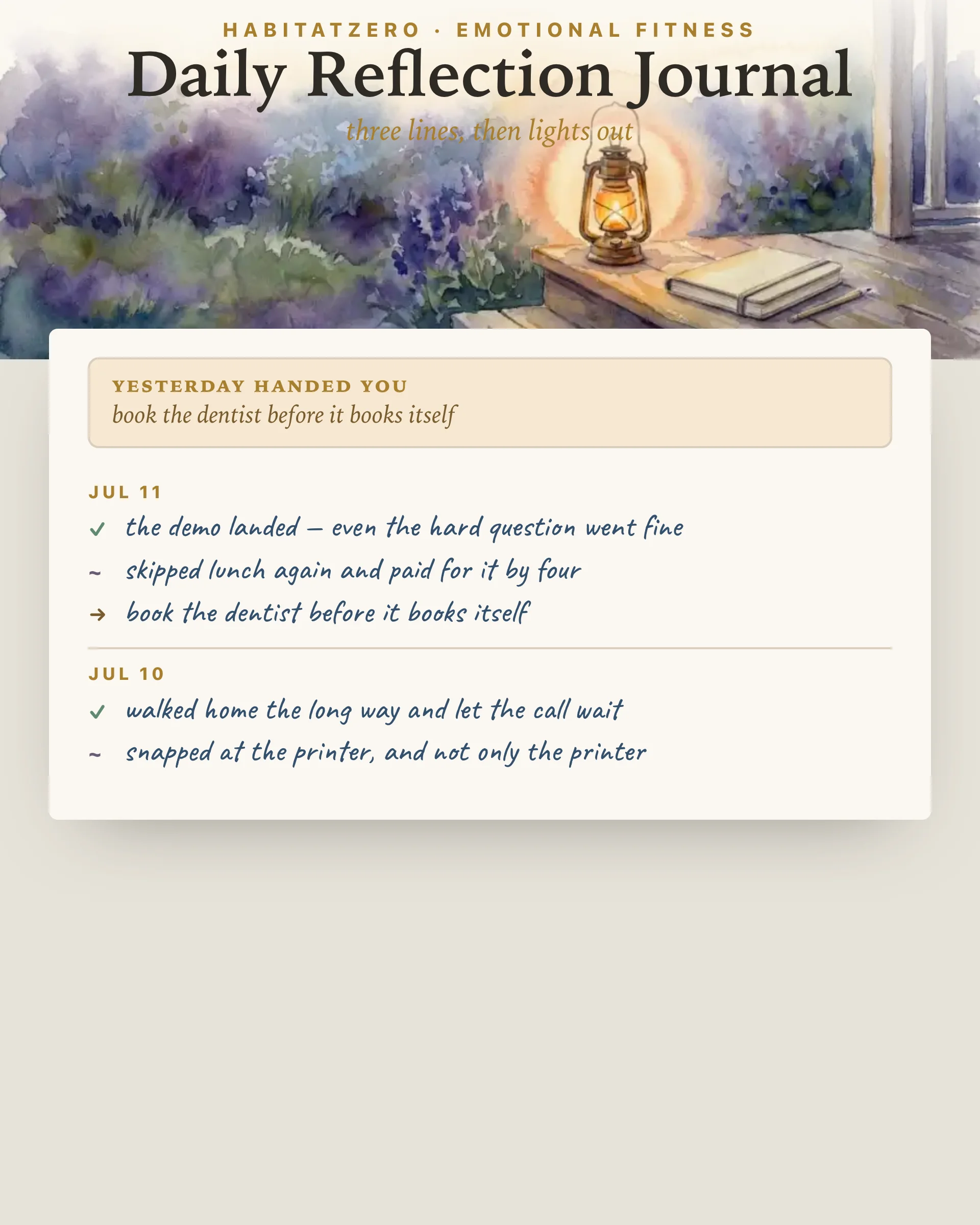
Daily Reflection JournalThe same three small questions every night — what went well, what went rough, what carries forward — and each morning starts with what yesterday handed it.
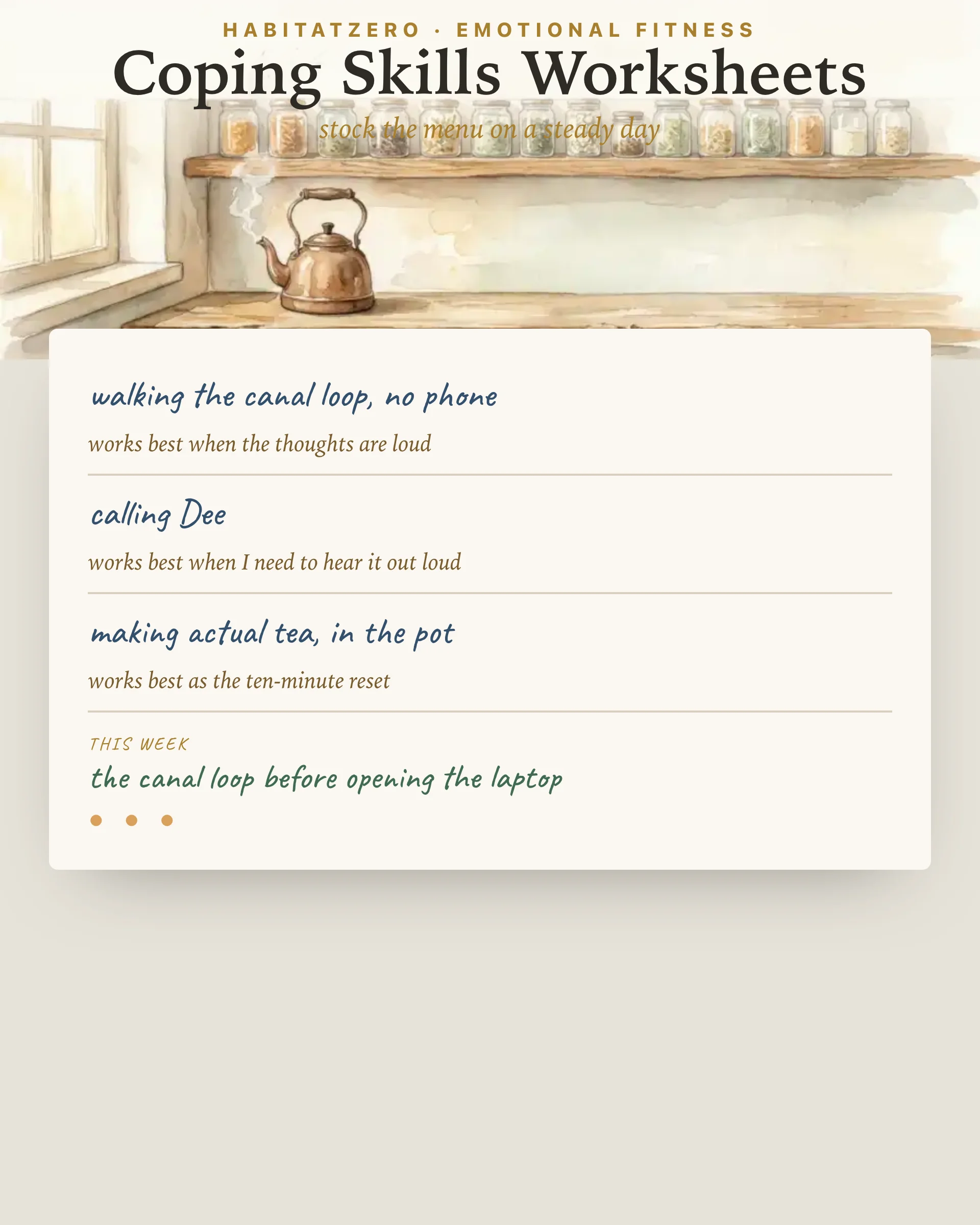
Coping Skills WorksheetsYour personal menu of what already steadies you — written in your words, with when each one works best — plus the one you're practicing this week.
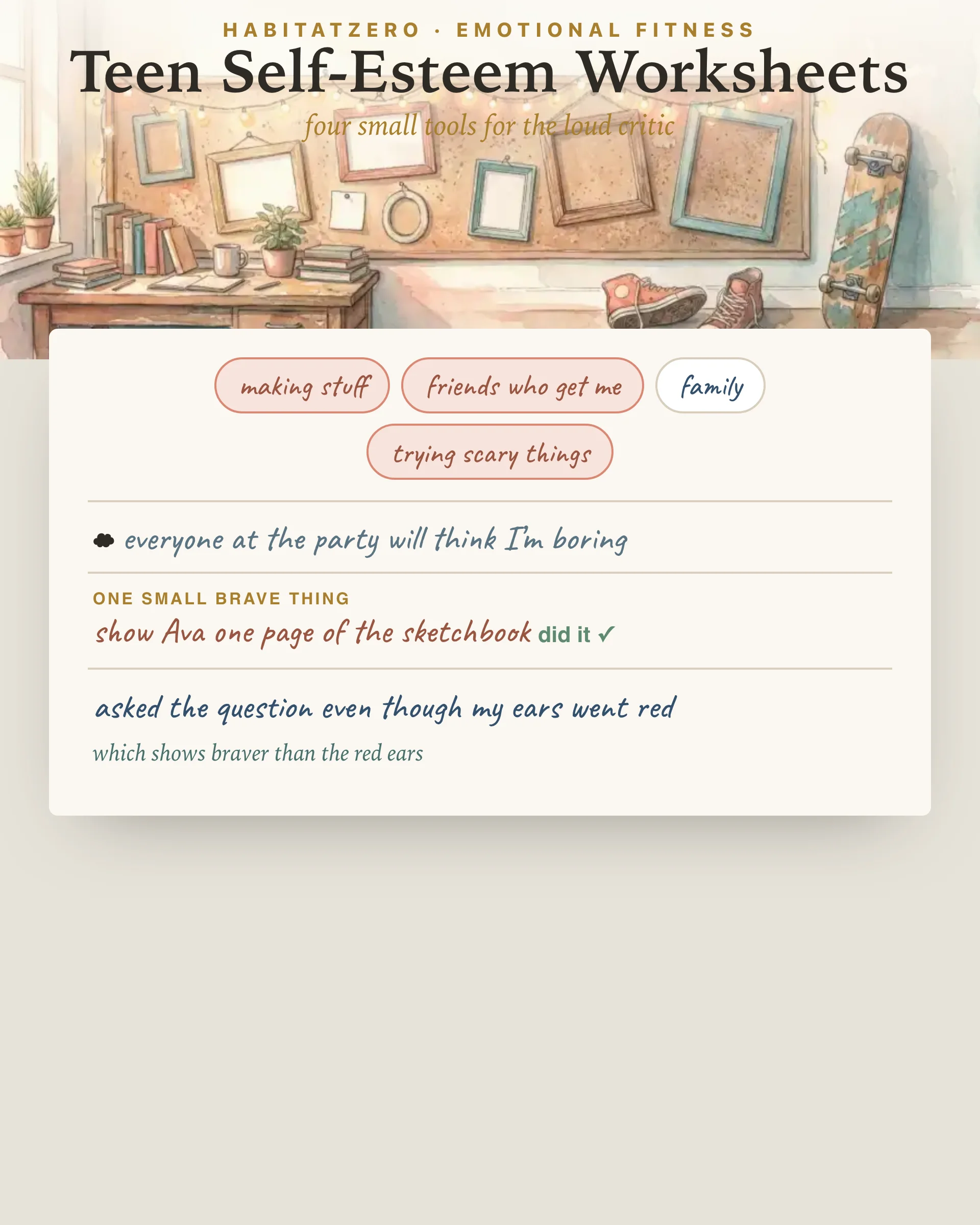
Teen Self-Esteem WorksheetsFour small tools for a teen's toughest critic: pick what actually matters to you, file loud thoughts as weather, do one small brave thing, and keep the did-it list.
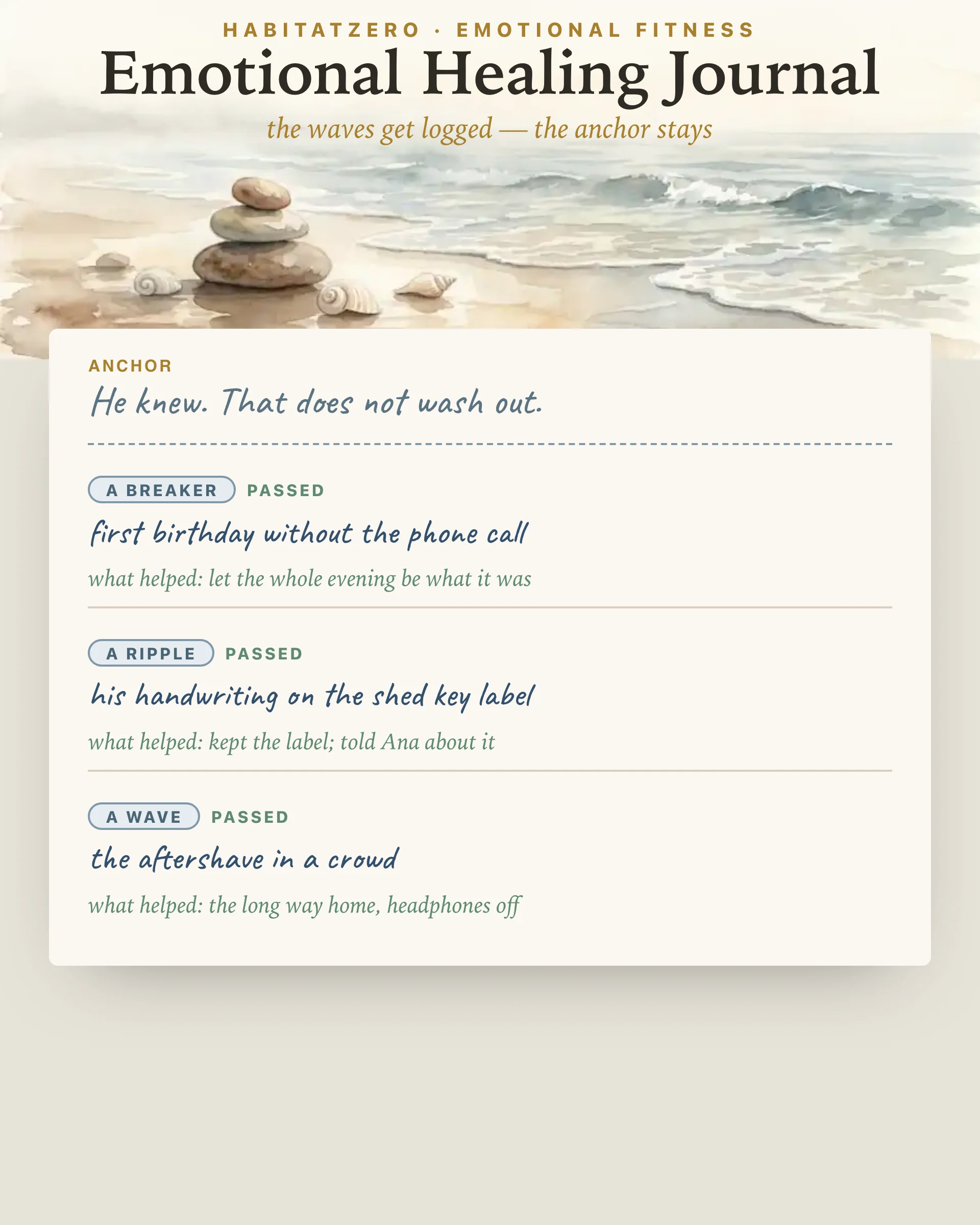
Emotional Healing JournalName the hard thing once, keep one anchor line that stays true, and log each wave as it passes — its size, what set it off, and what helped this time.
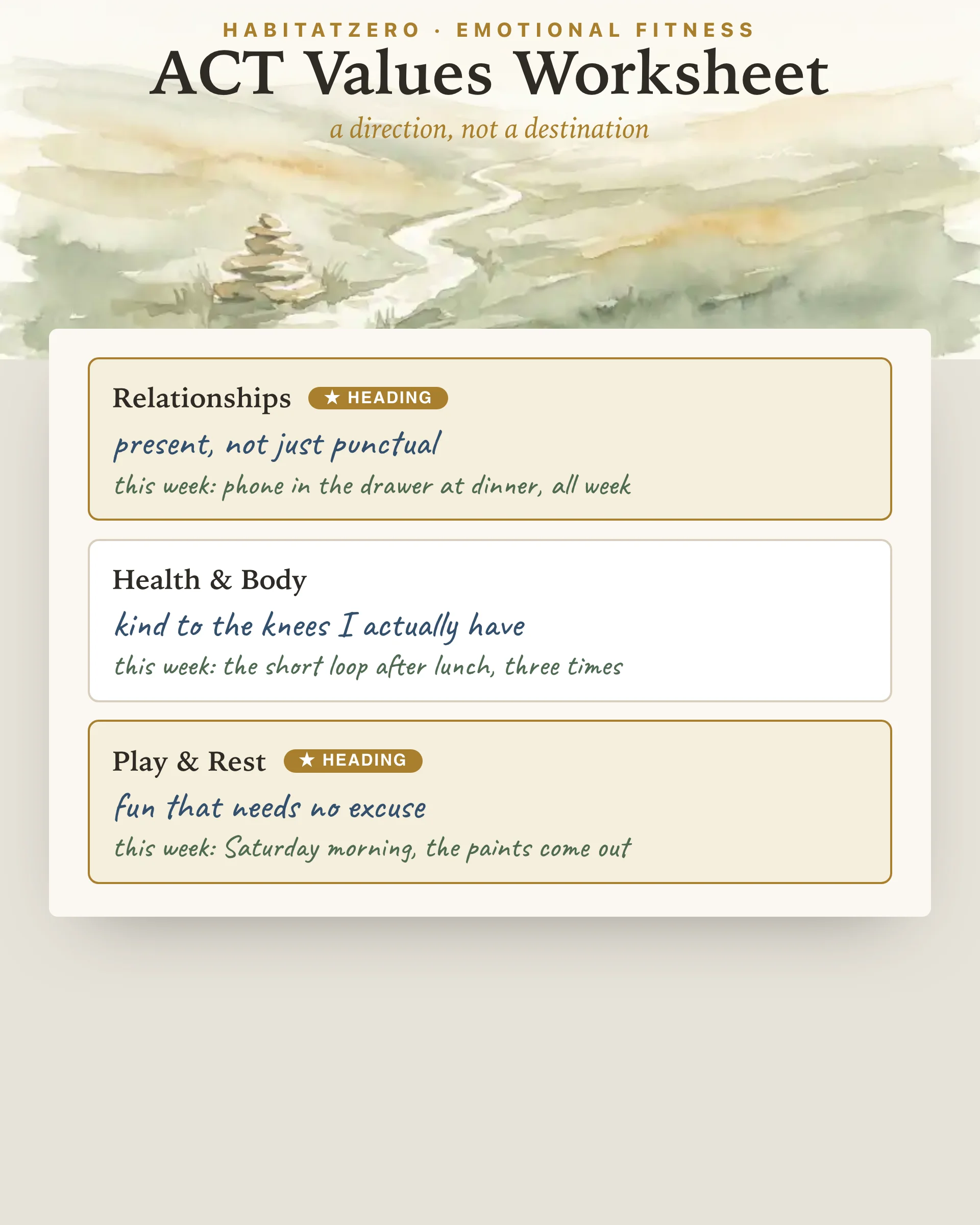
ACT Values WorksheetSix compass points, your chosen value in your own words at each one, and one committed step per value small enough to actually happen this week.
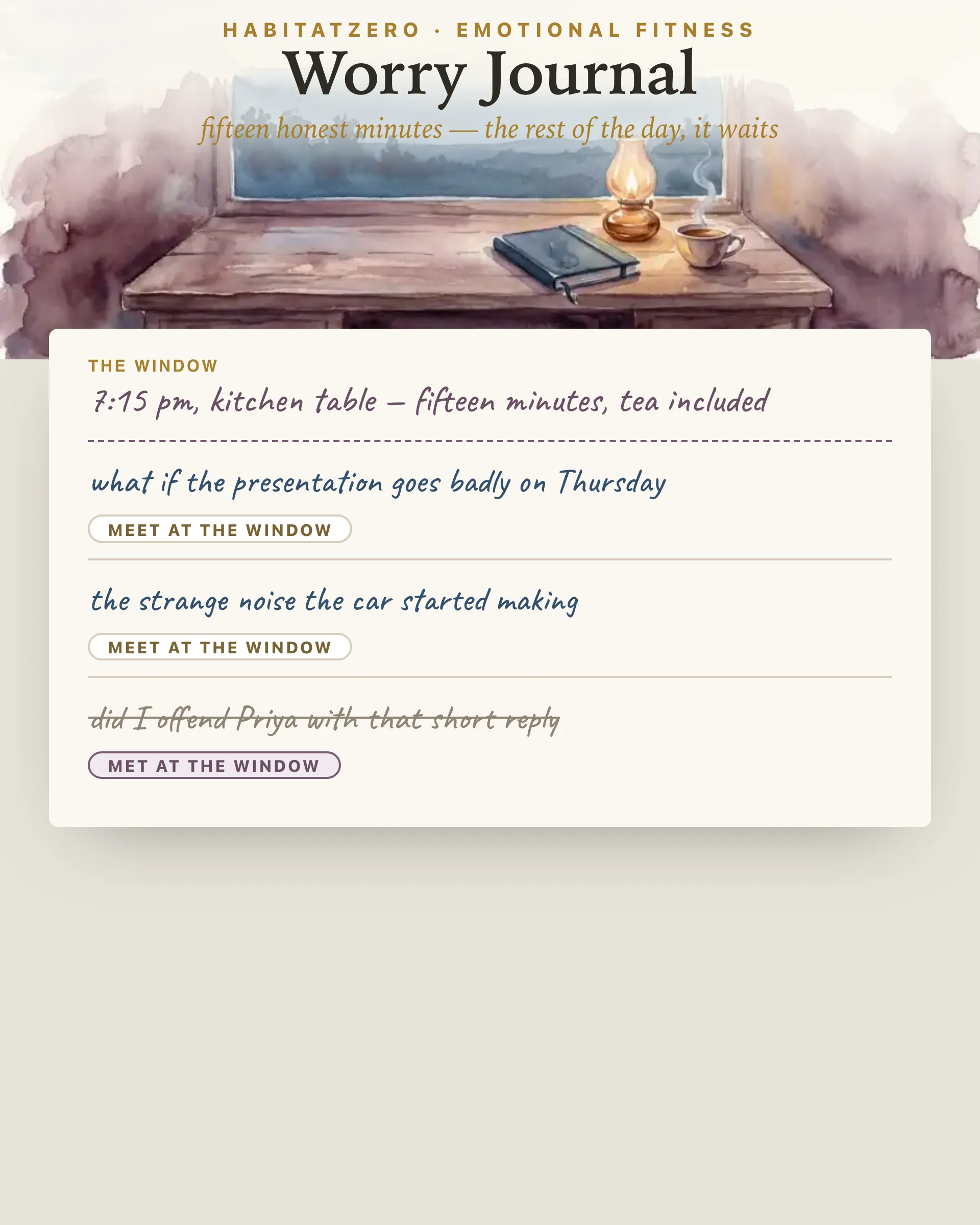
Worry JournalSet a daily worry window, park each worry in one line the moment it shows up early, and meet it at the appointed time — contained, not ignored.
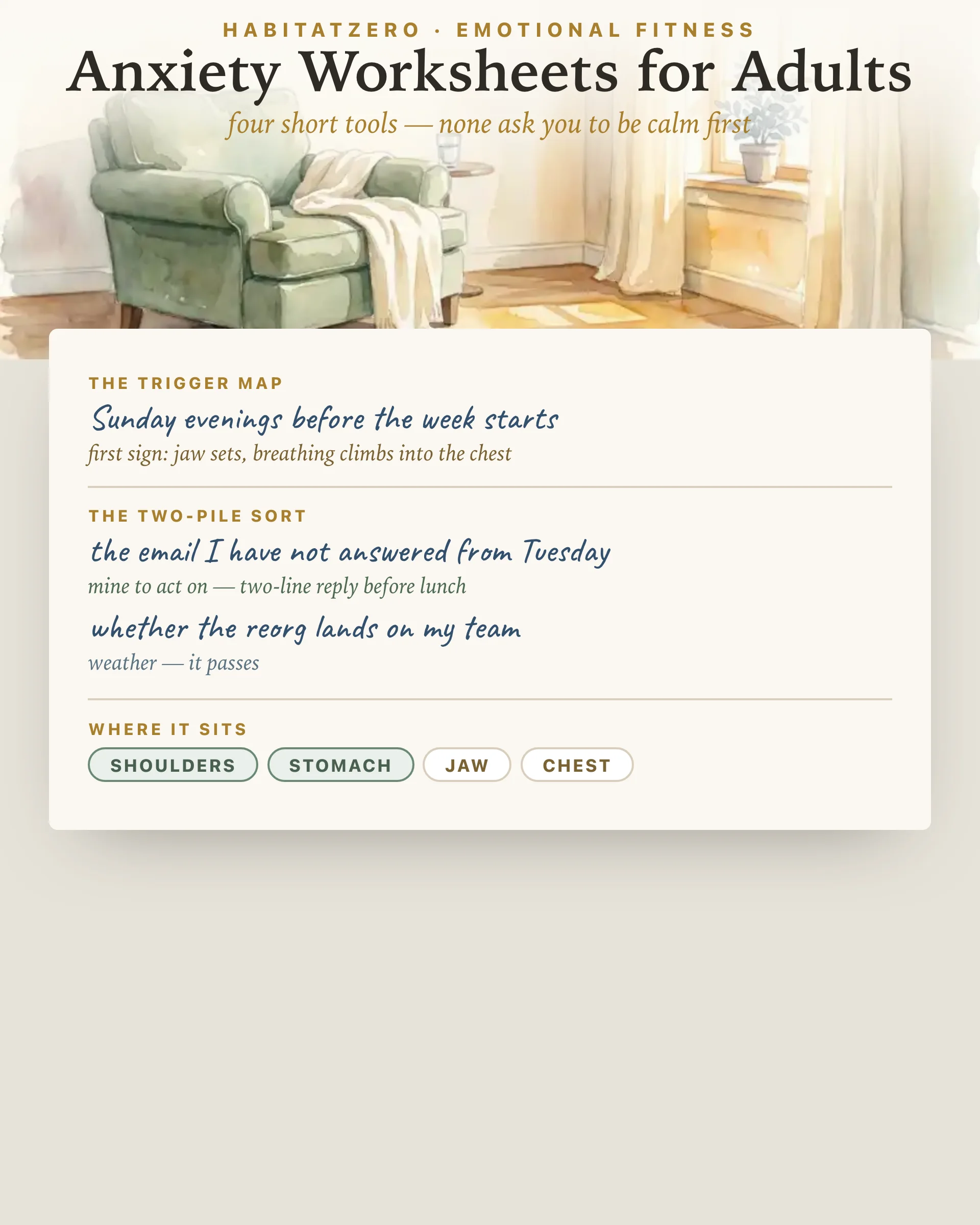
Anxiety Worksheets for AdultsFour short tools on one sheet: map what sets your anxiety off, steady yourself with three touchpoints, sort worries into two honest piles, and note where it sits in the body.
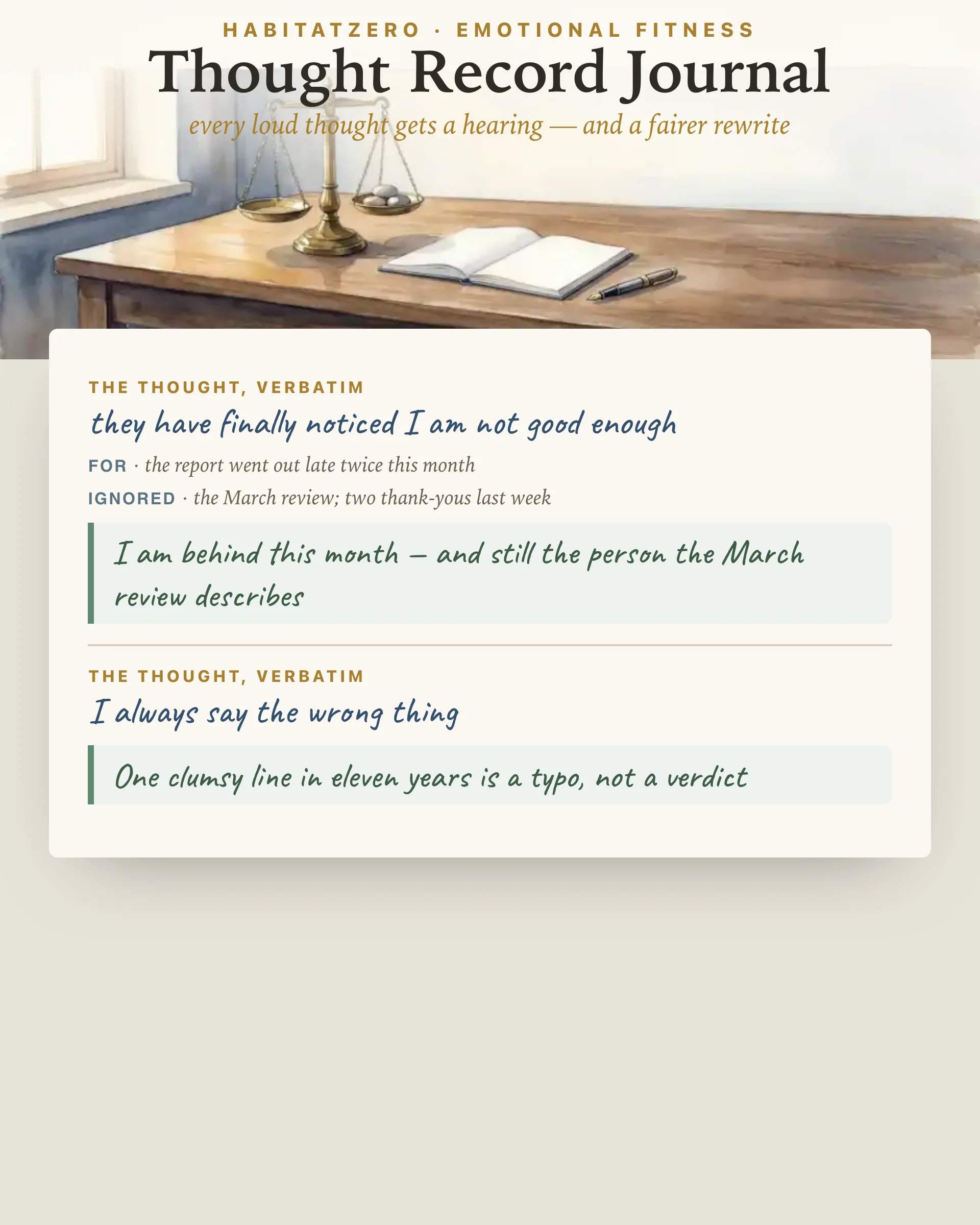
Thought Record JournalThe CBT thought record as a journal: catch the loud thought word for word, hear the evidence on both sides, and keep the balanced line that gets the last word.
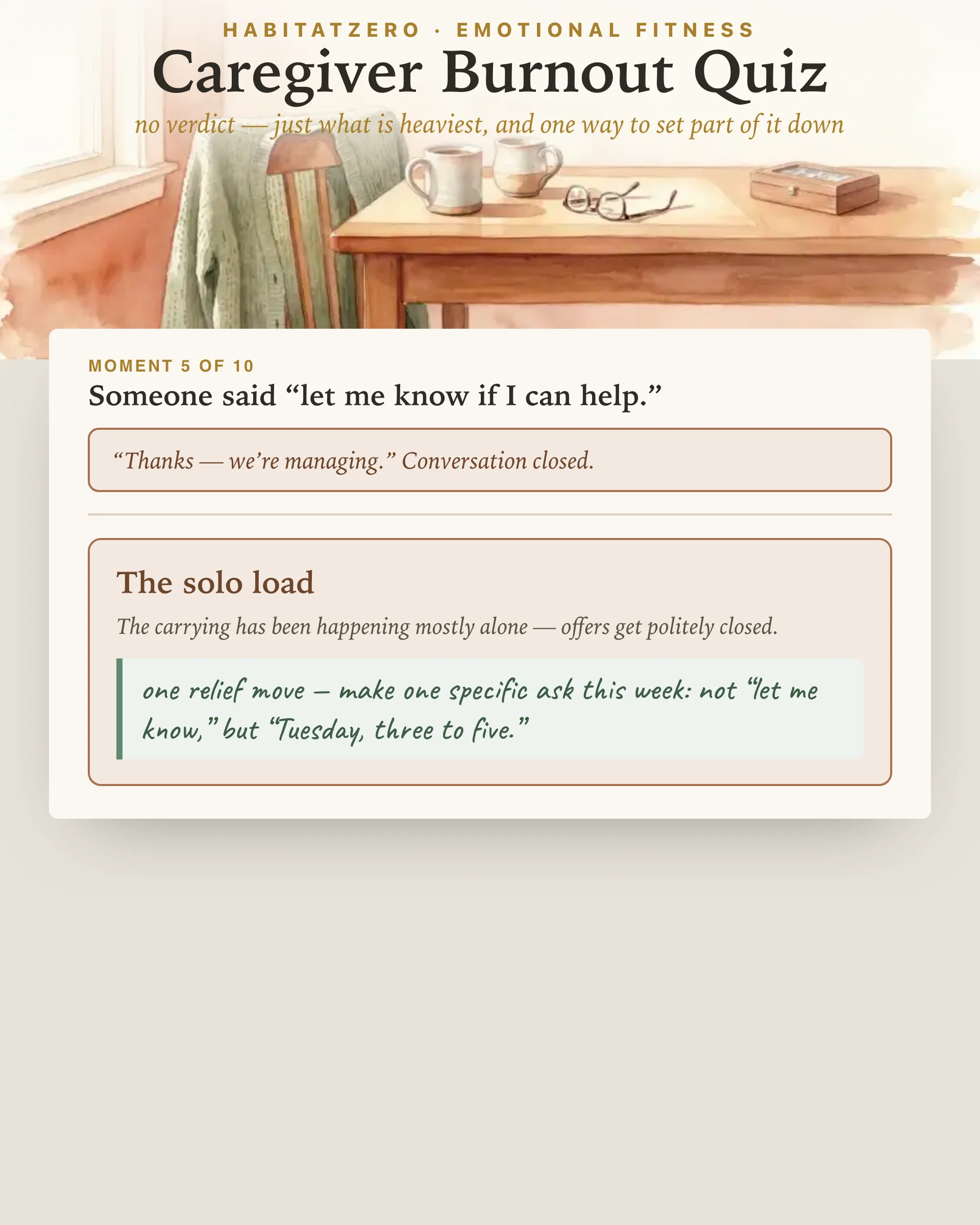
Caregiver Burnout QuizTen ordinary moments from a caregiver's week — sleep, your own appointments, asking for help, minutes of your own — showing which loads are heaviest right now, each with one concrete relief move.
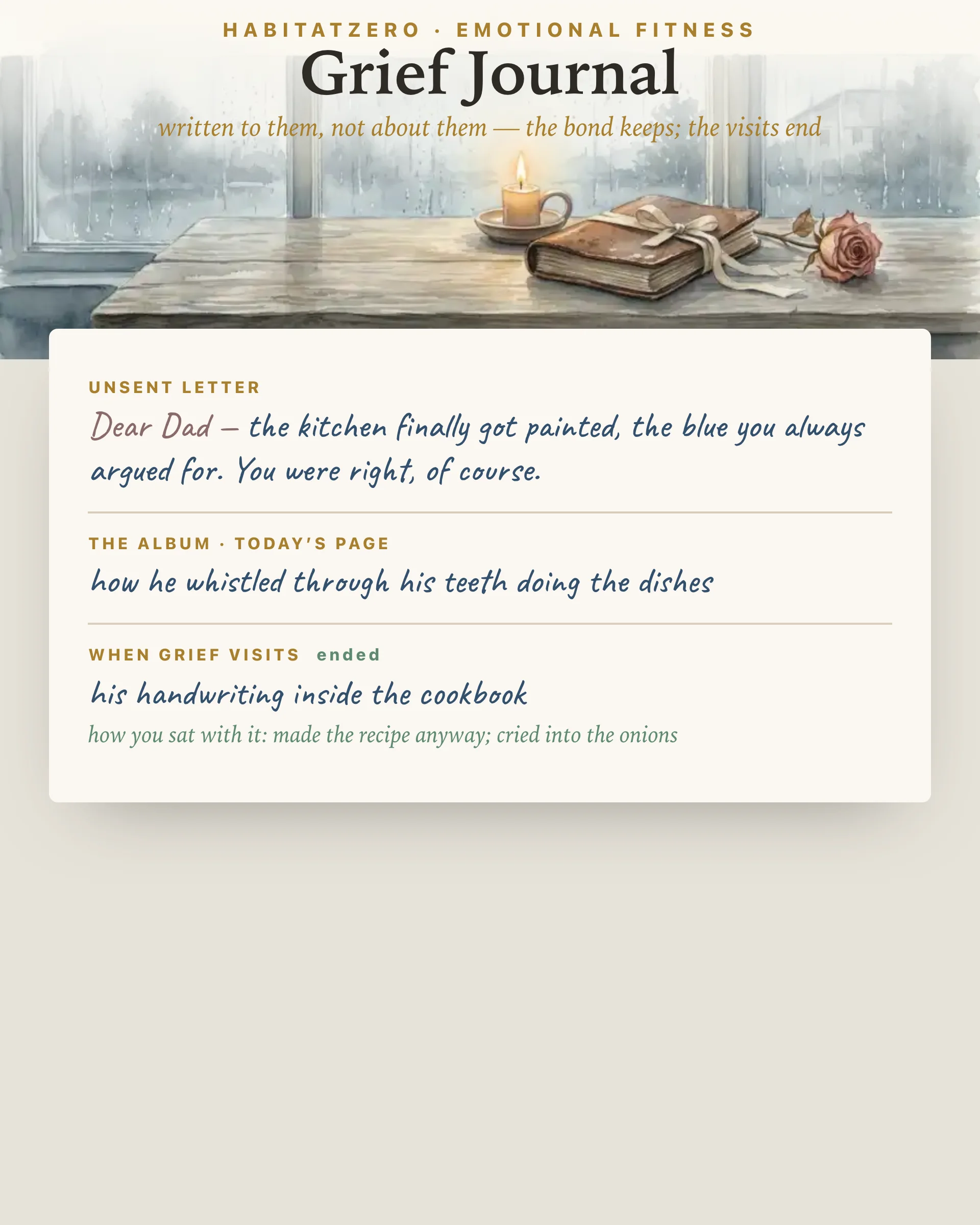
Grief JournalA continuing-bonds grief journal: unsent letters written to them, an album that keeps one memory a day, and a log of grief's visits — every one of them ends.
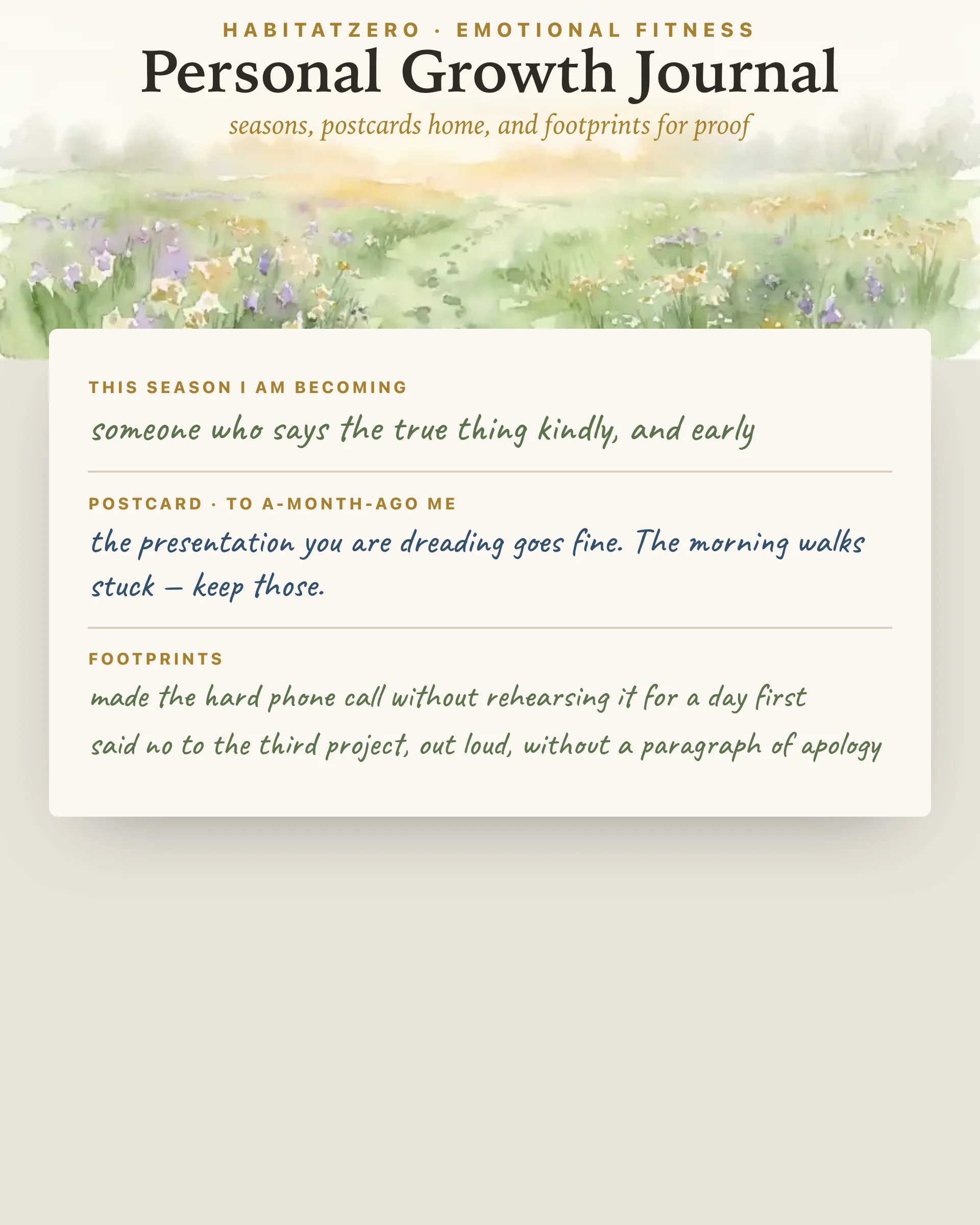
Personal Growth JournalName who you are becoming this season, send a monthly postcard back to your past self, and press in footprints — one-line proof that the movement happened.
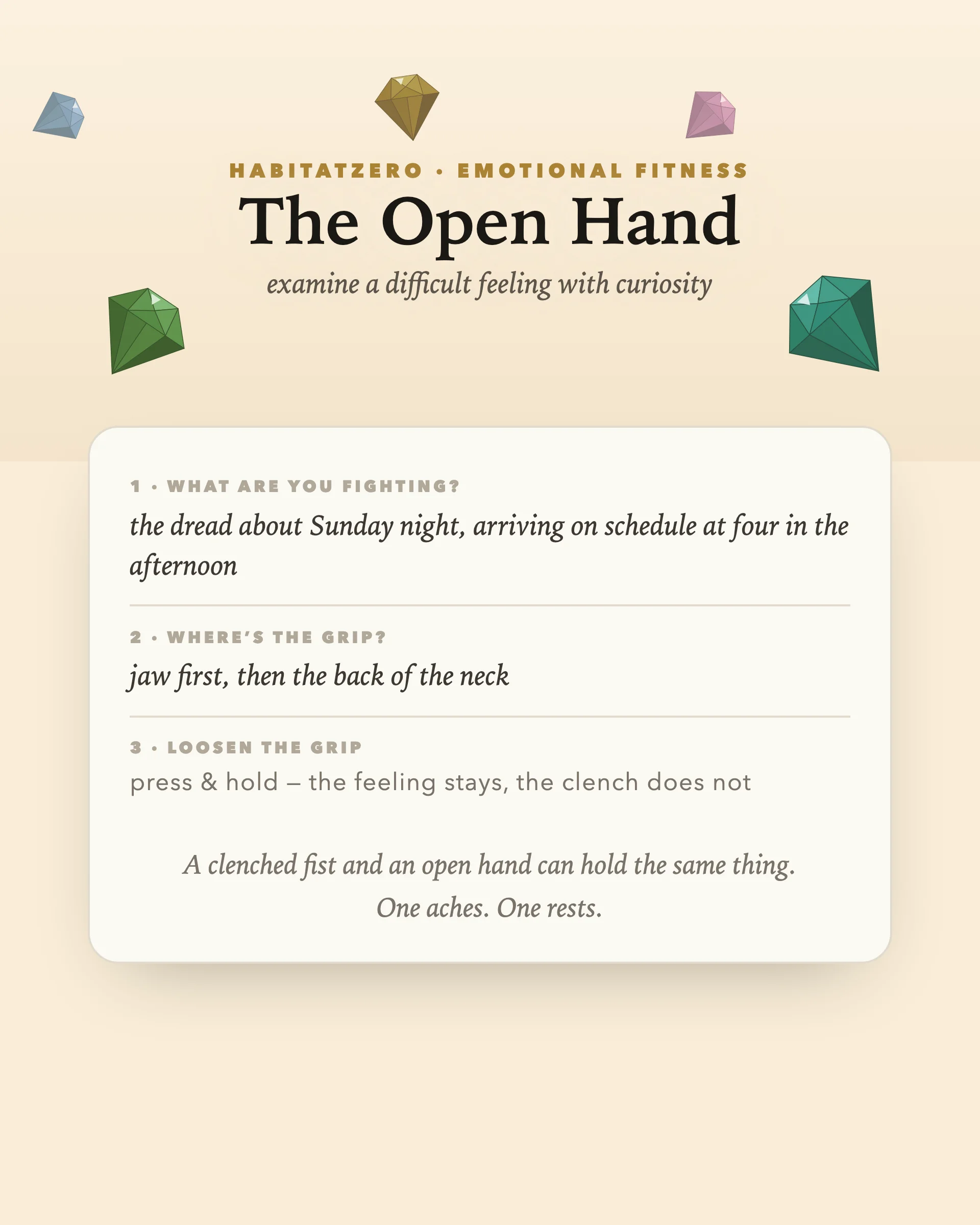
The Open HandName the feeling you are fighting, find where the body grips it, then press and hold until the hand opens — the feeling stays; the clench is what leaves.
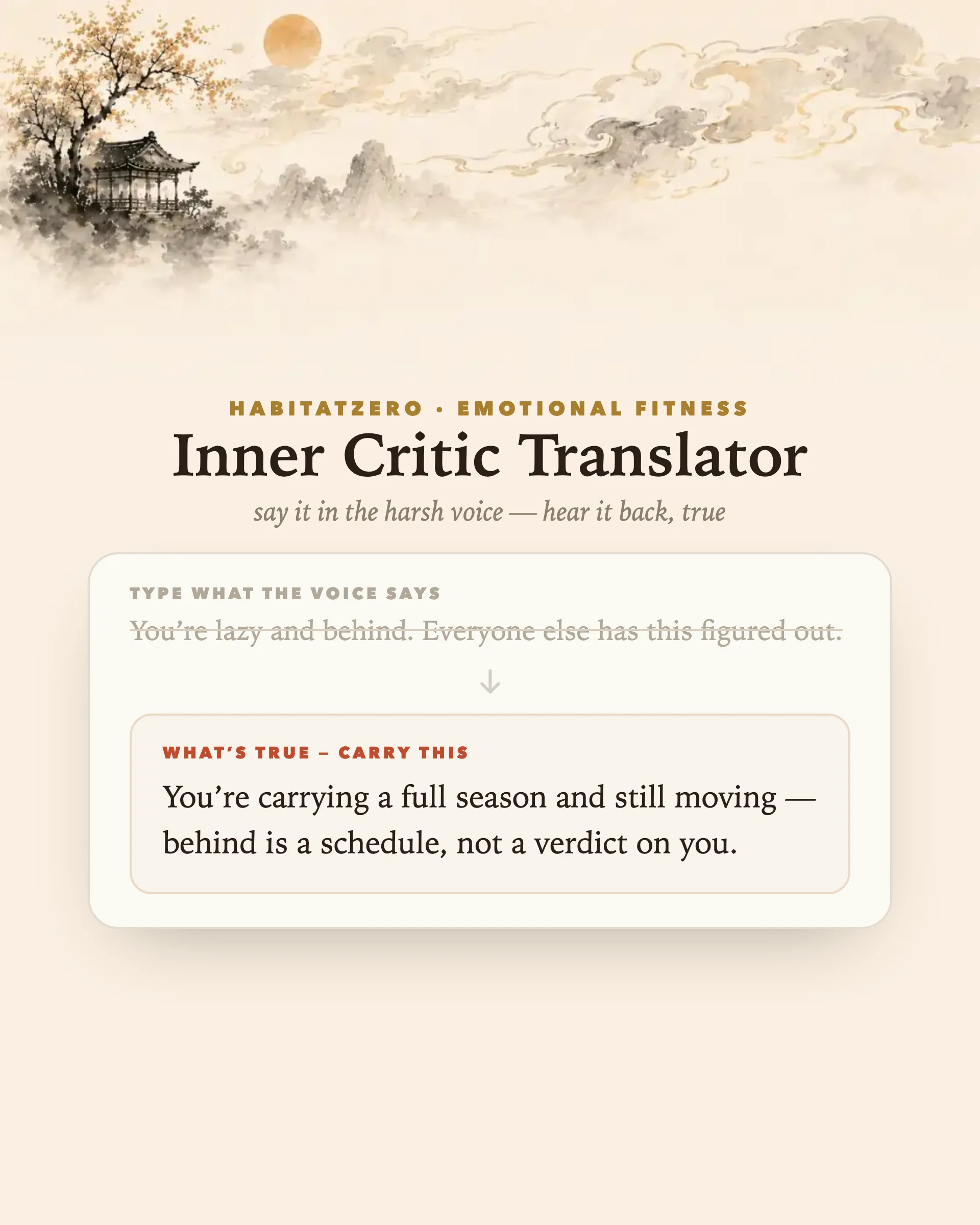
Inner Critic TranslatorType what the harsh voice says, name the pattern if you spot it, and hear the same thought back — kind, believable, and true enough to carry.
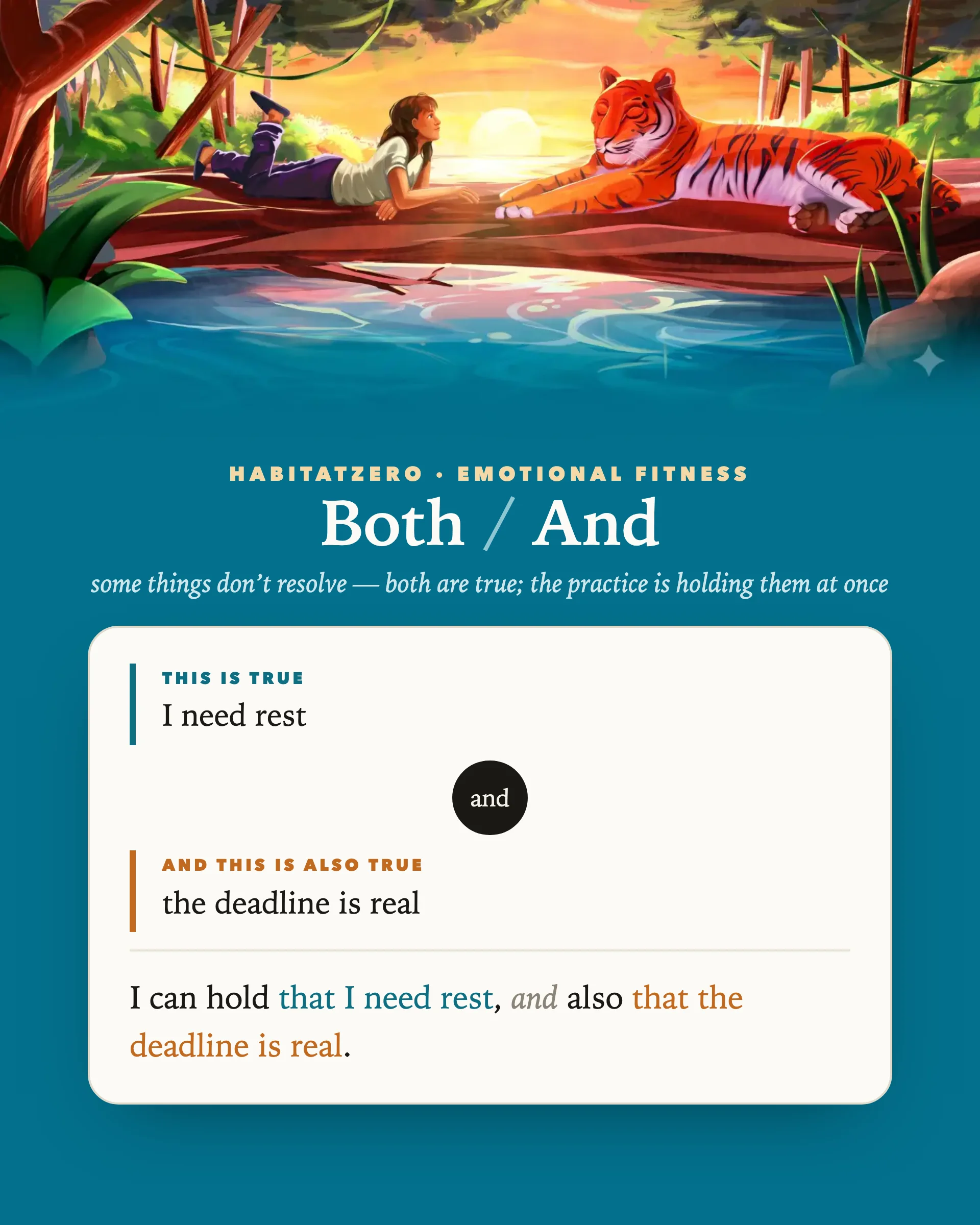
Both/AndWrite two truths that both hold, try to make the balance choose a side, and watch it spring back — the practice is holding both at once.
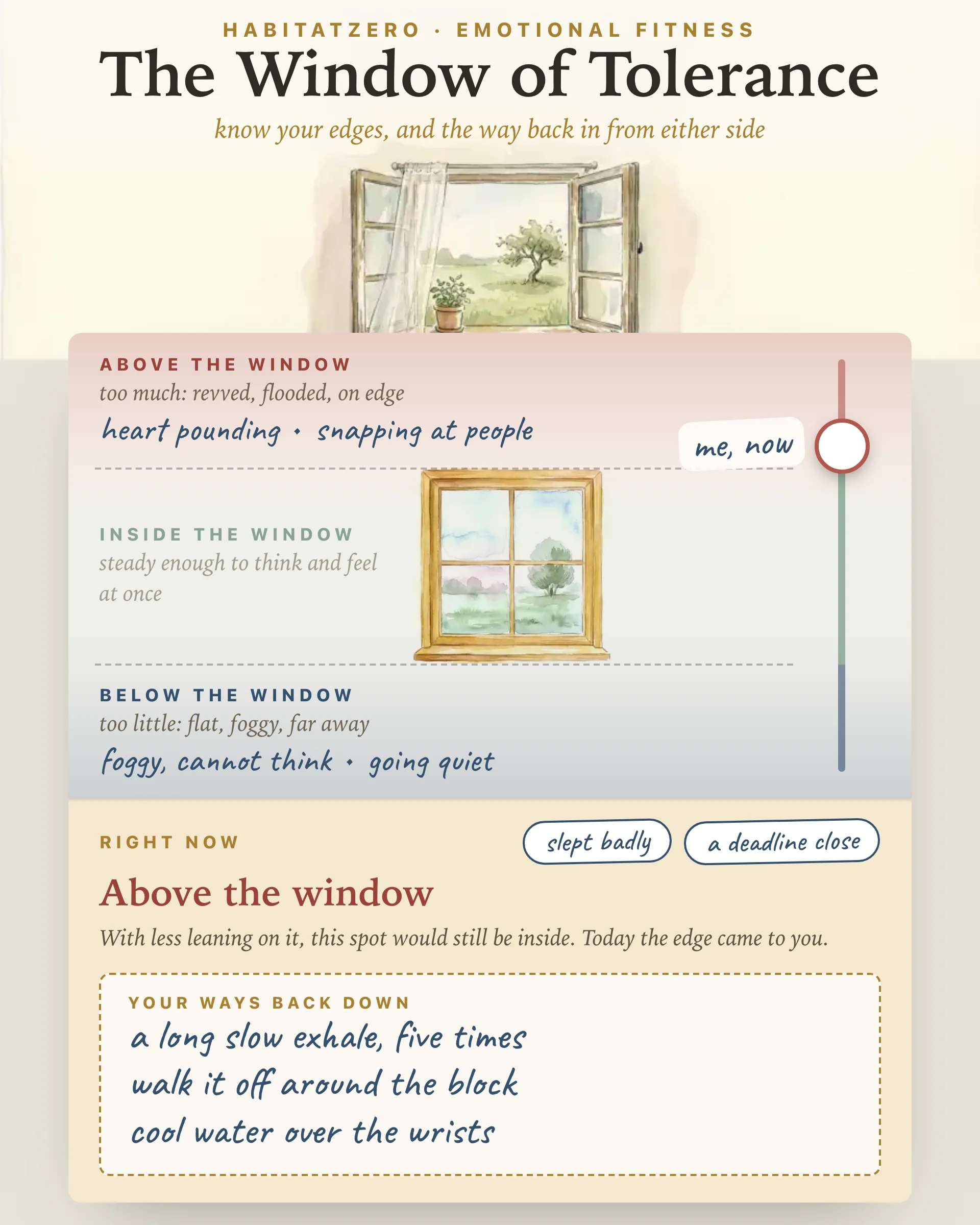
The Window of ToleranceSlide a marker to where you are right now, watch the window narrow under today's load, and get your own ways back handed to you from a map of both edges you drew while steady.
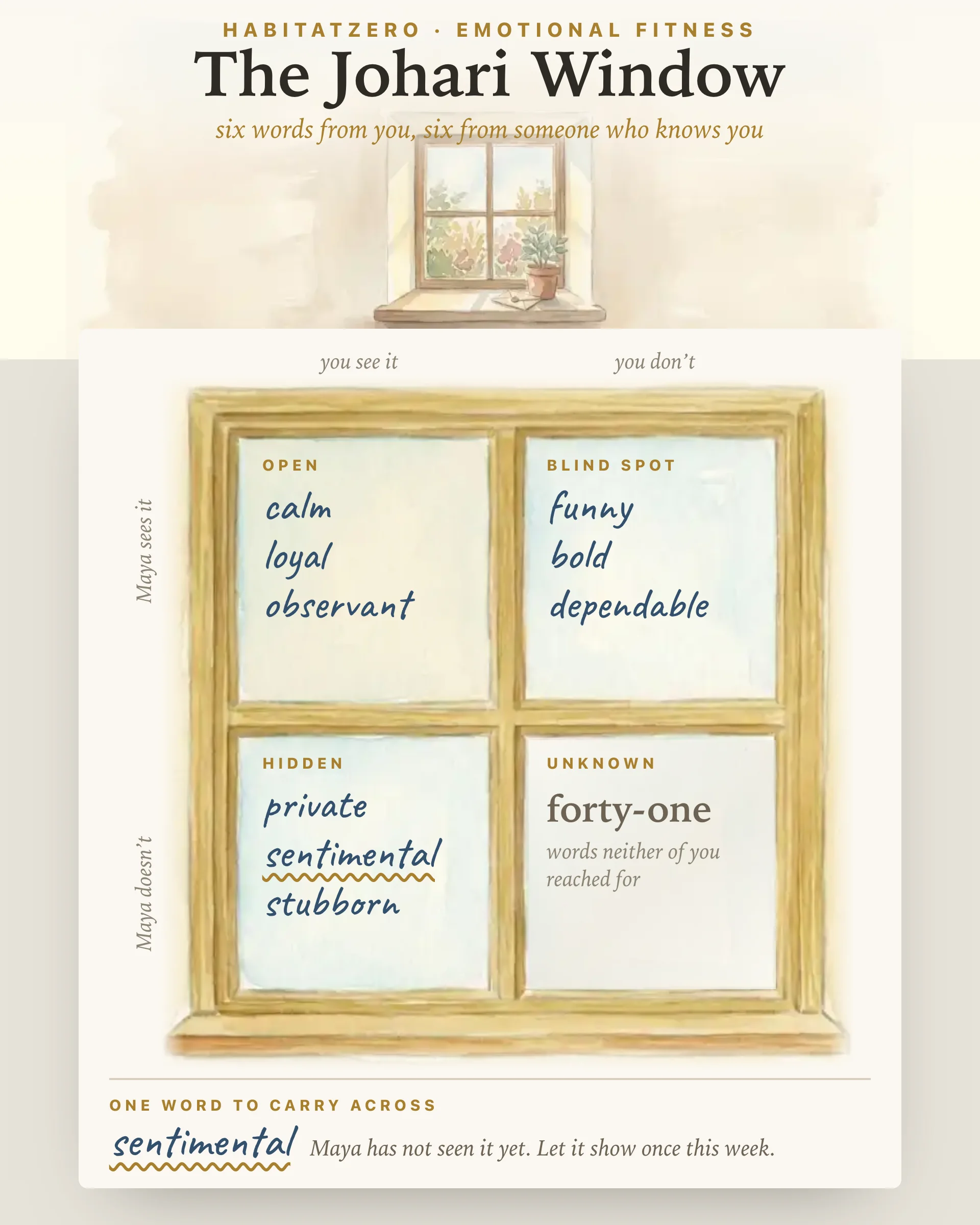
The Johari WindowChoose the six words that sound most like you, add six from someone who knows you, and a painted four-pane window sorts them into open, blind, hidden and unknown. Then pick one word to carry into the open.
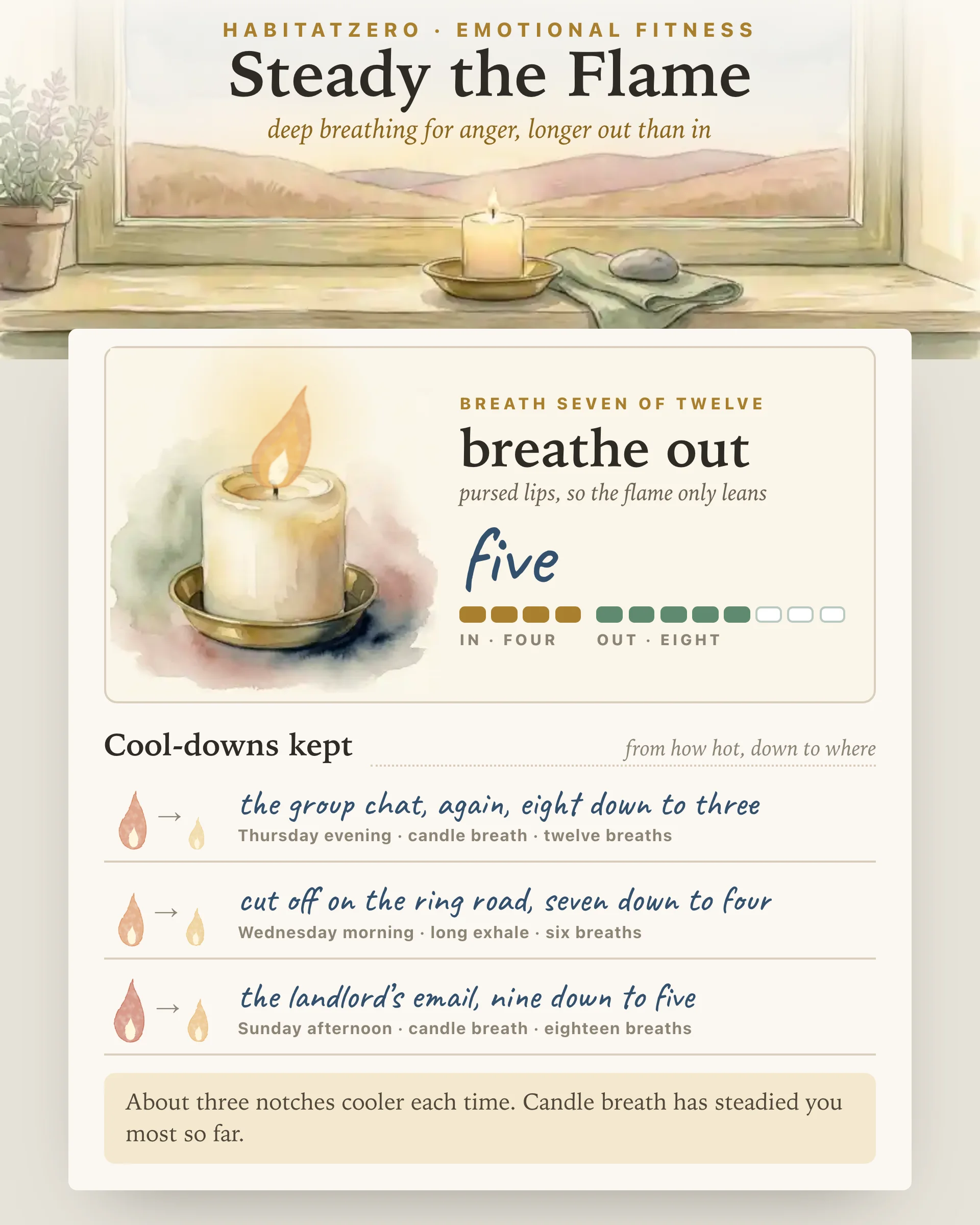
Steady the FlameSay how hot the anger is, then breathe with a candle whose flame stands tall on the in-breath and leans through a longer out-breath. Three paced patterns, and a ledger that shows how far each session cooled you.
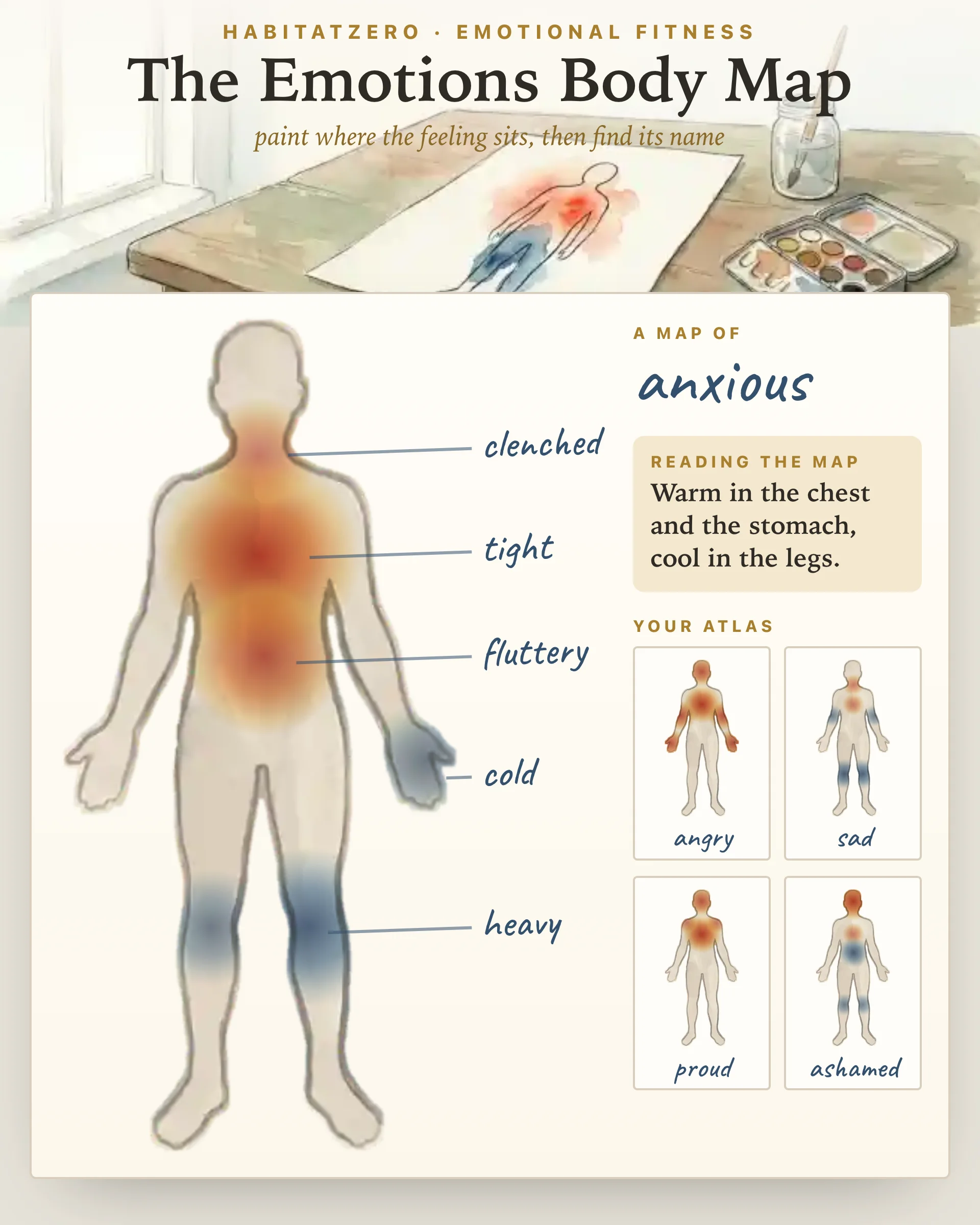
The Emotions Body MapPaint warm and cool marks on a body outline wherever a feeling sits, give each spot a word, and read the pattern against the research maps before you name it. Every map you keep joins a small atlas.
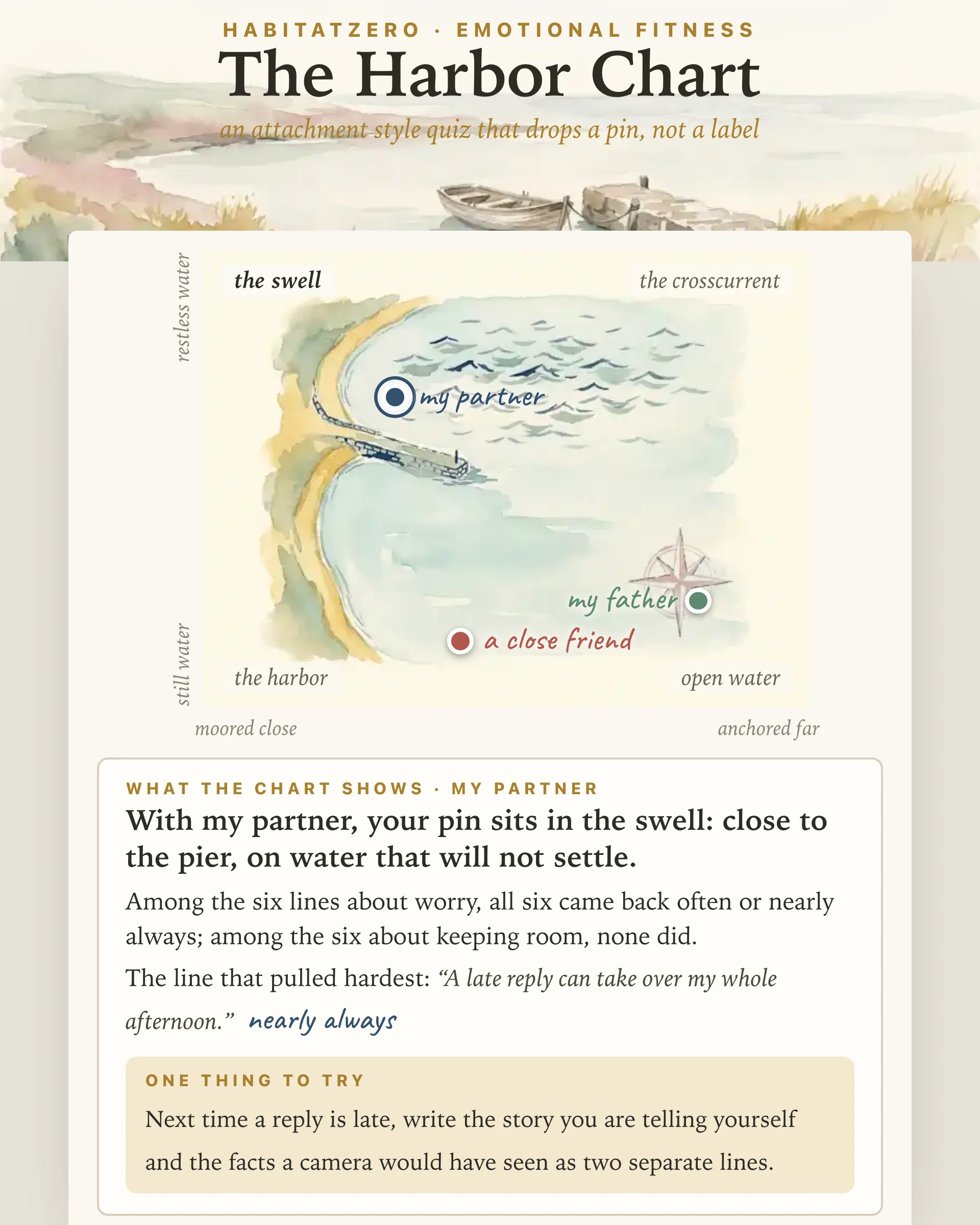
The Harbor ChartAn attachment style quiz built on the two dials research actually measures: twelve lines about one person drop a pin on a painted bay, up to three pins to compare, and a reading of your own answers instead of a label.
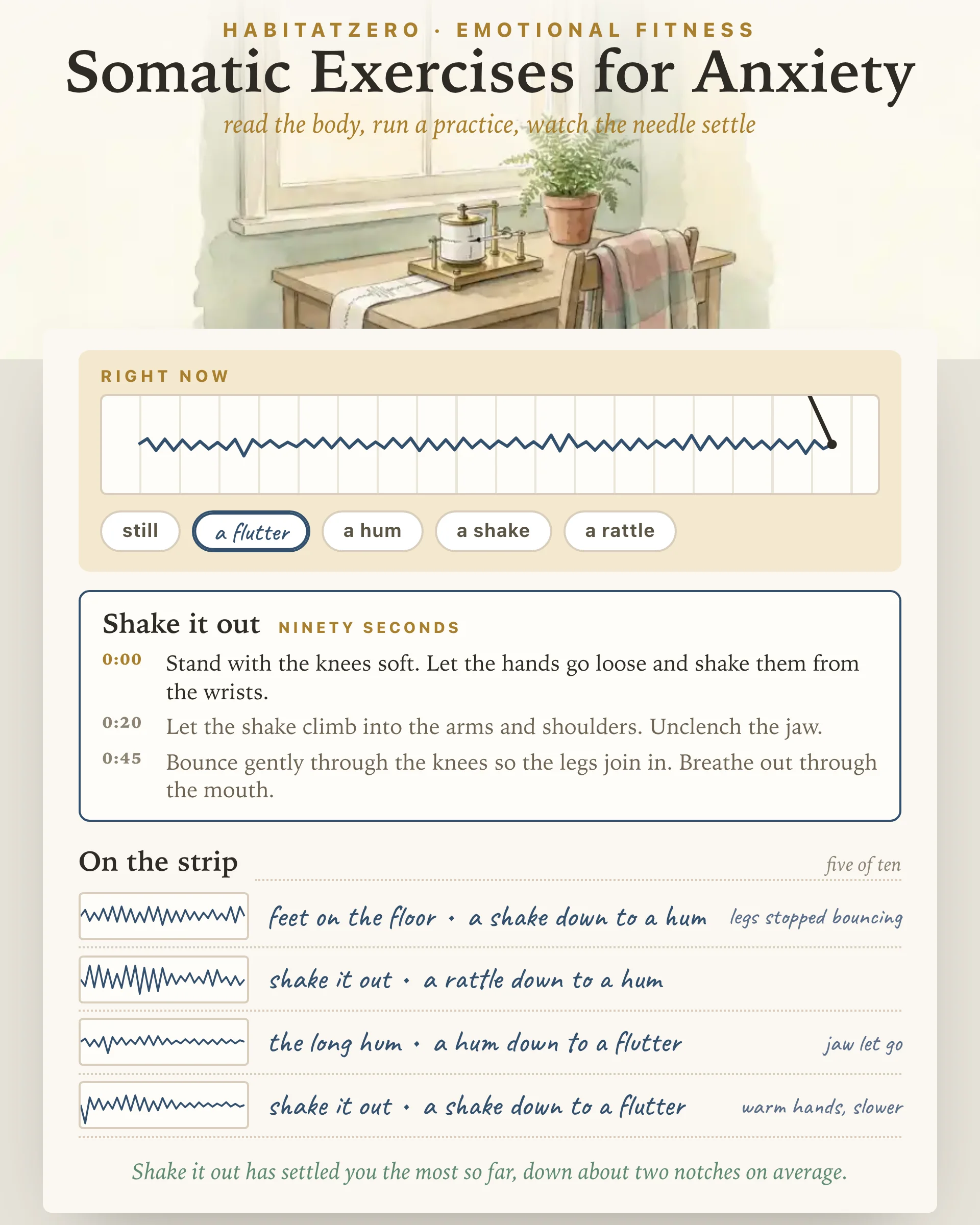
Somatic Exercises for AnxietySix short body practices paced by a timer, from a ninety-second shake-out to a minute of feet on the floor, with a needle that traces how the body felt before and after so you learn which one settles you.
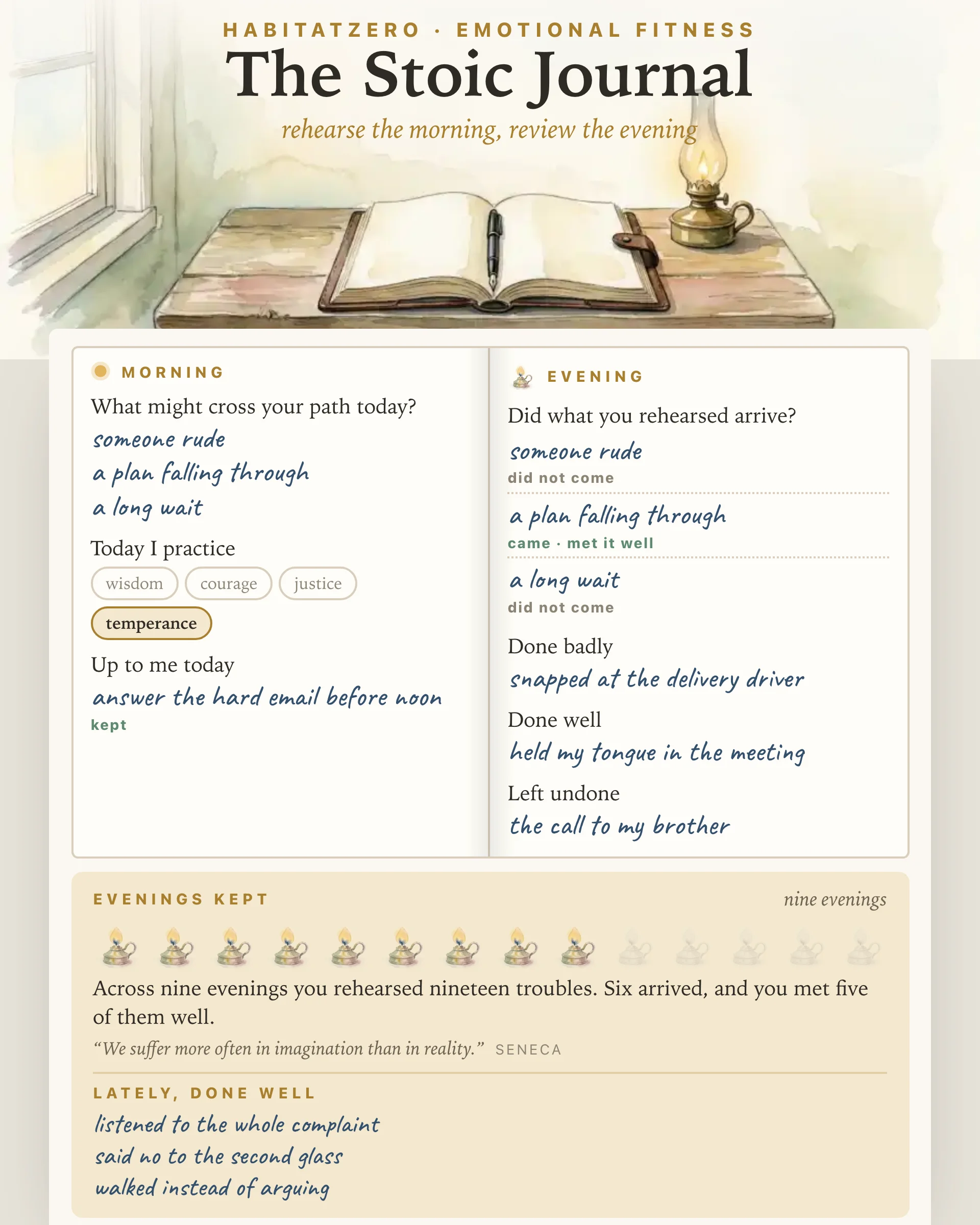
The Stoic JournalRehearse the day's likely troubles on the morning leaf, judge on the evening leaf which ones actually came, and light a lamp for every day you close. The ledger keeps count of how much of what you feared ever arrived.
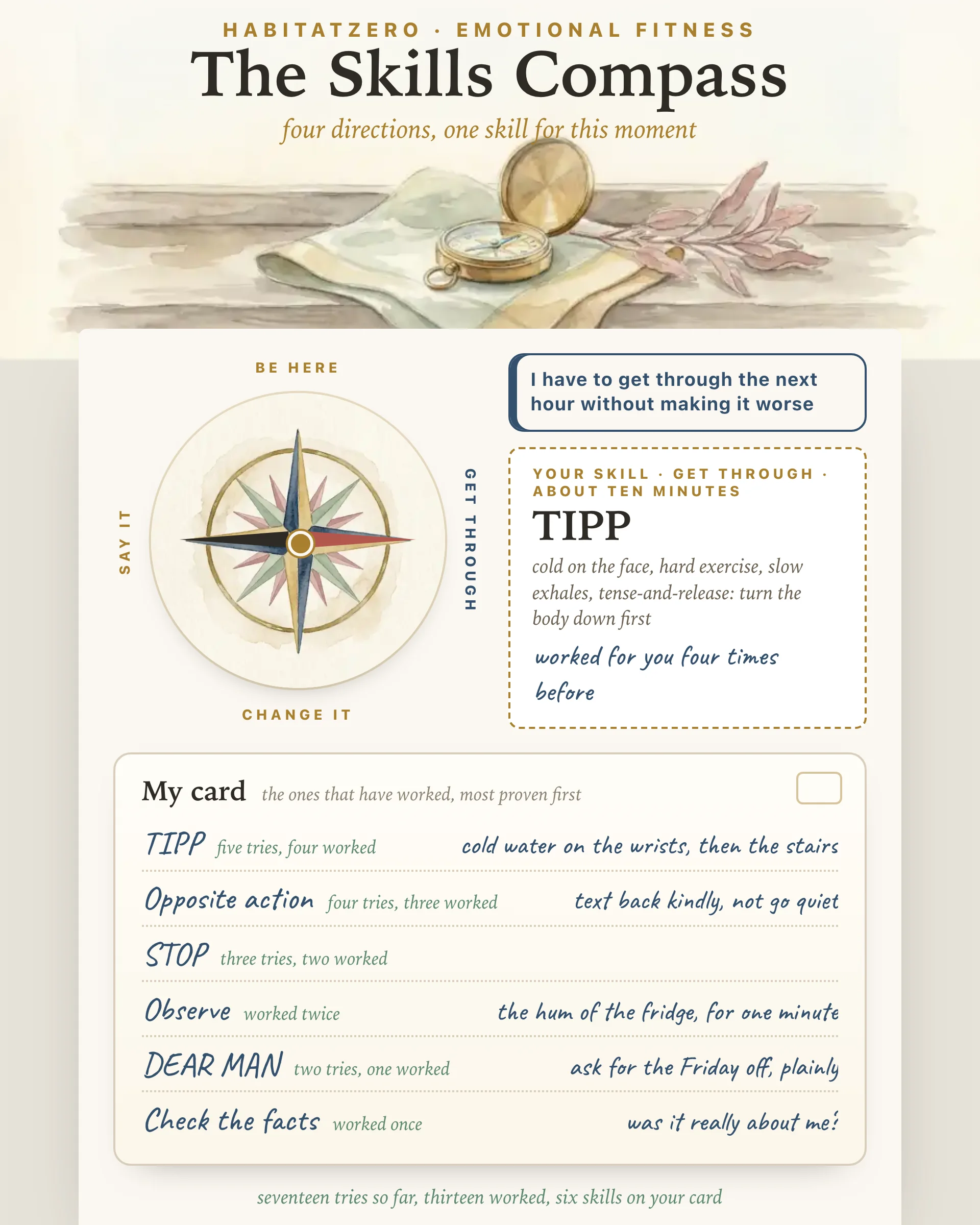
The Skills CompassThe four DBT modules on one compass rose: tap what this moment is like, dial how much room you have, take the skill the needle points to, and watch a card of the ones that worked write itself.
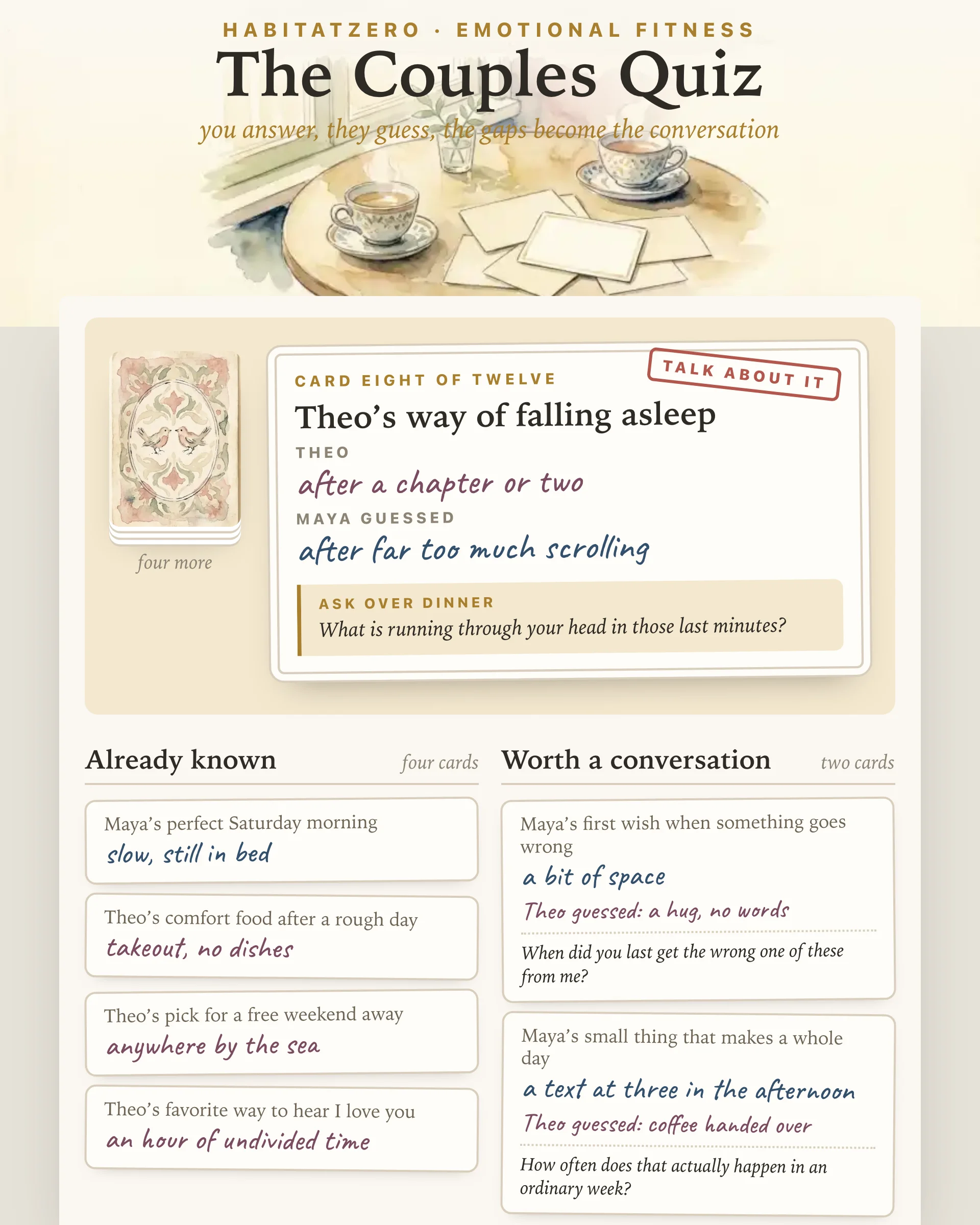
The Couples QuizTwelve question cards on one screen: one of you taps an answer, the card flips, the other guesses, and the turned cards sort into what you already knew and what is worth a conversation tonight.
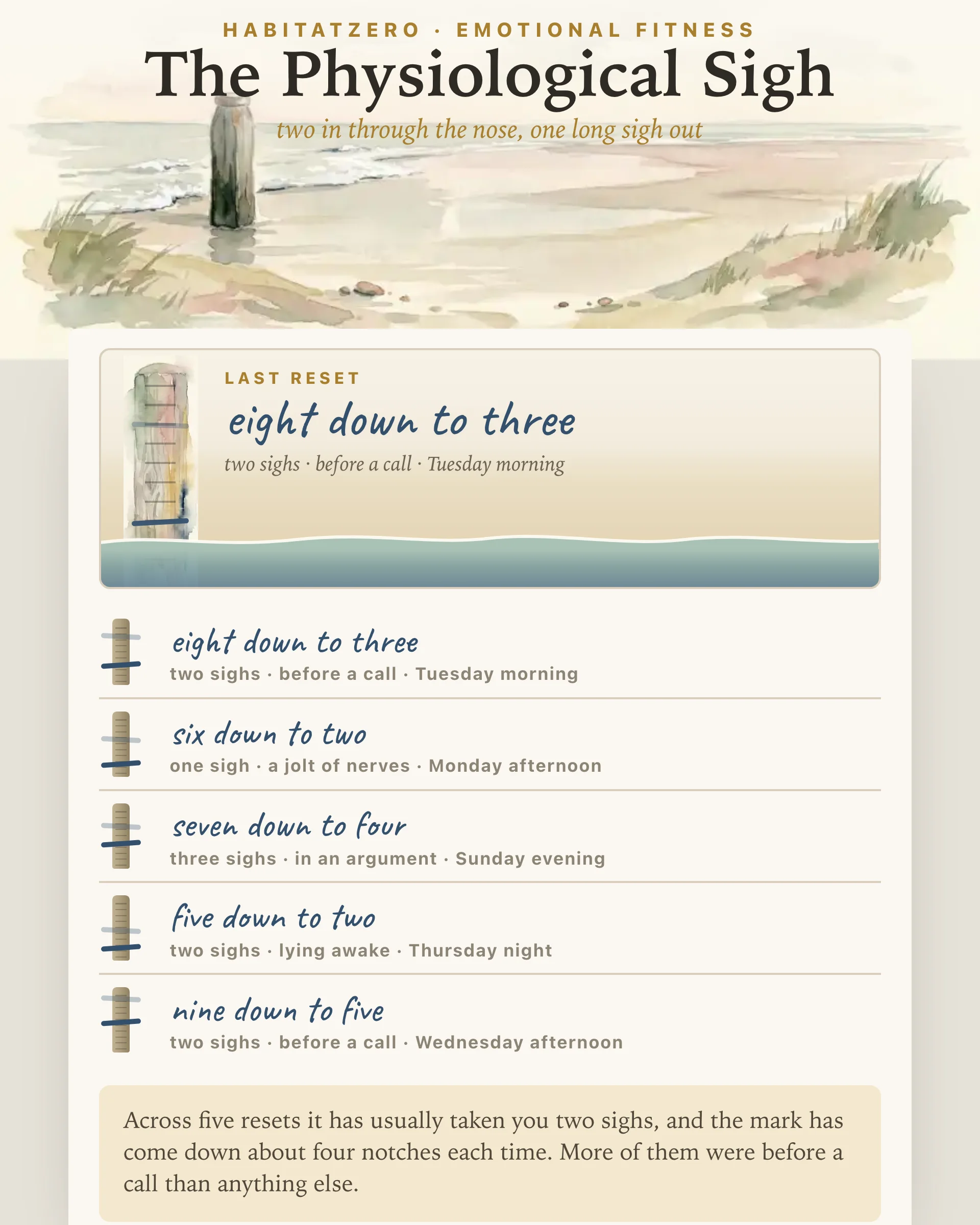
The Physiological SighTwo breaths in through the nose and one long sigh out, paced by a tide that climbs and drains with you. Mark the tide post before and after, take the sighs one at a time, and keep a log that learns how many a reset usually takes you.
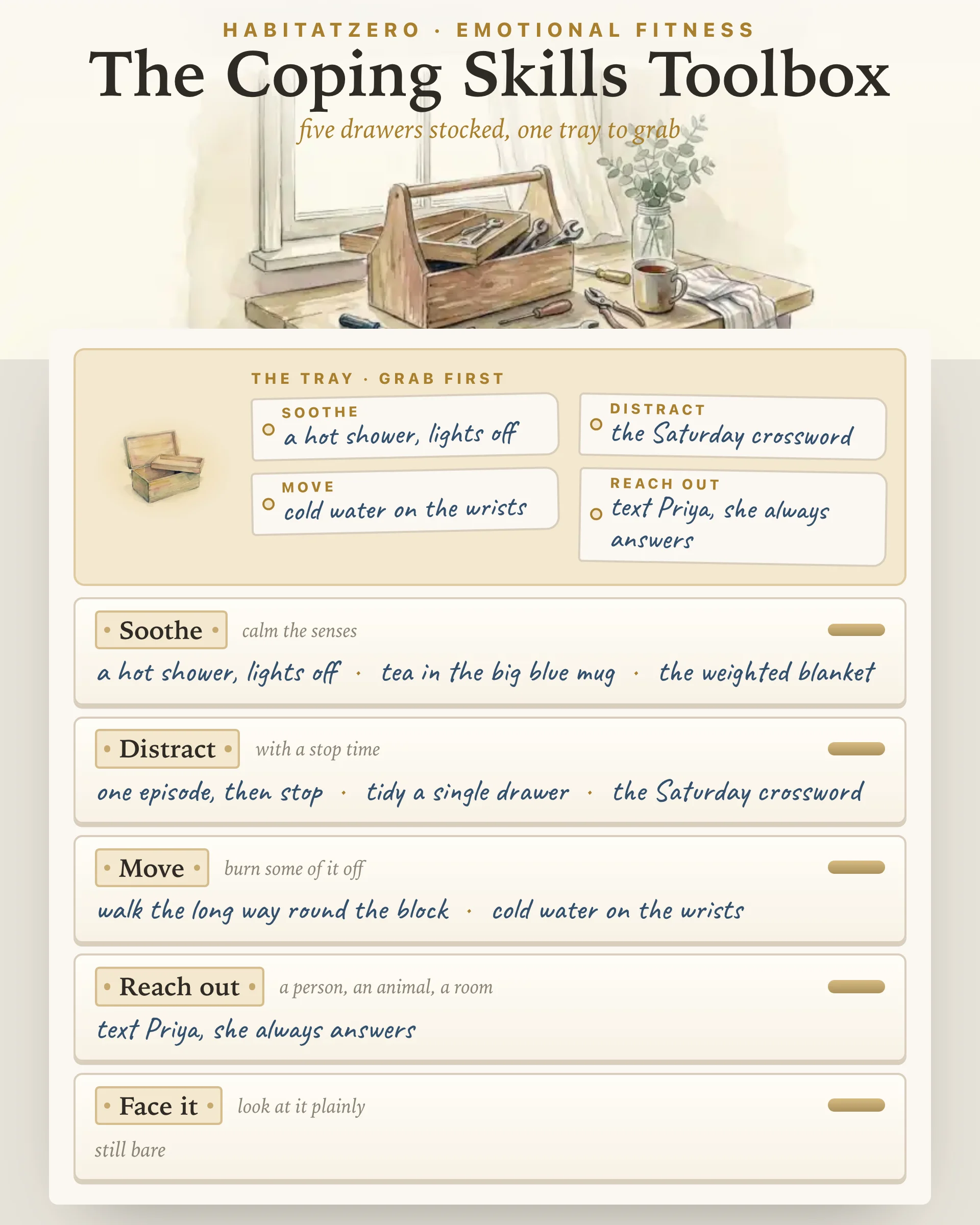
The Coping Skills ToolboxStock five drawers, soothe, distract, move, reach out and face it, with what actually settles you, pin one tool from each to a grab-first tray, and let the sheet tell you which drawer is still bare.
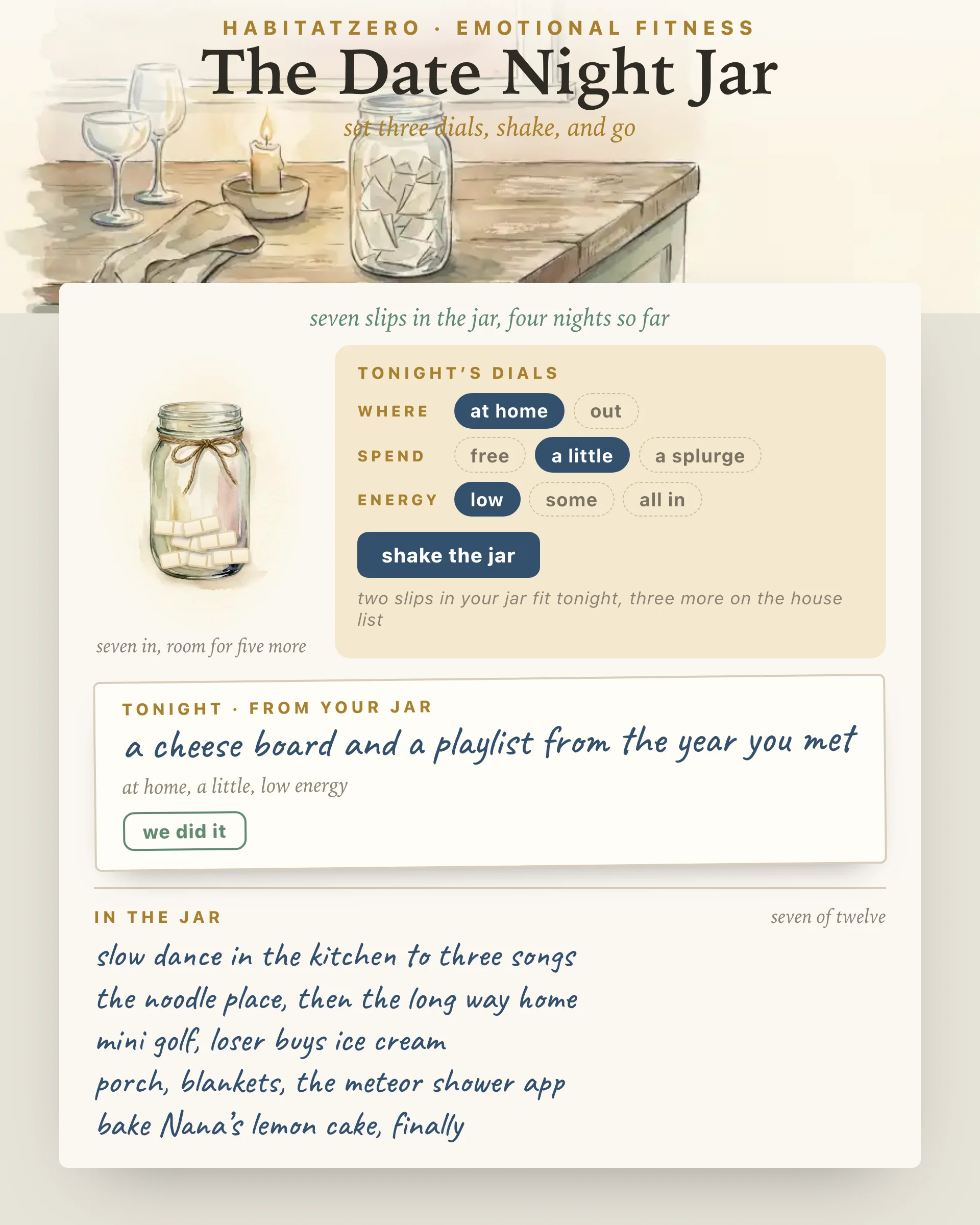
The Date Night JarA date night idea generator shaped like a jar: set where, spend and energy, shake for tonight's slip in handwriting, keep the ones you would actually do, and count the nights that happened.
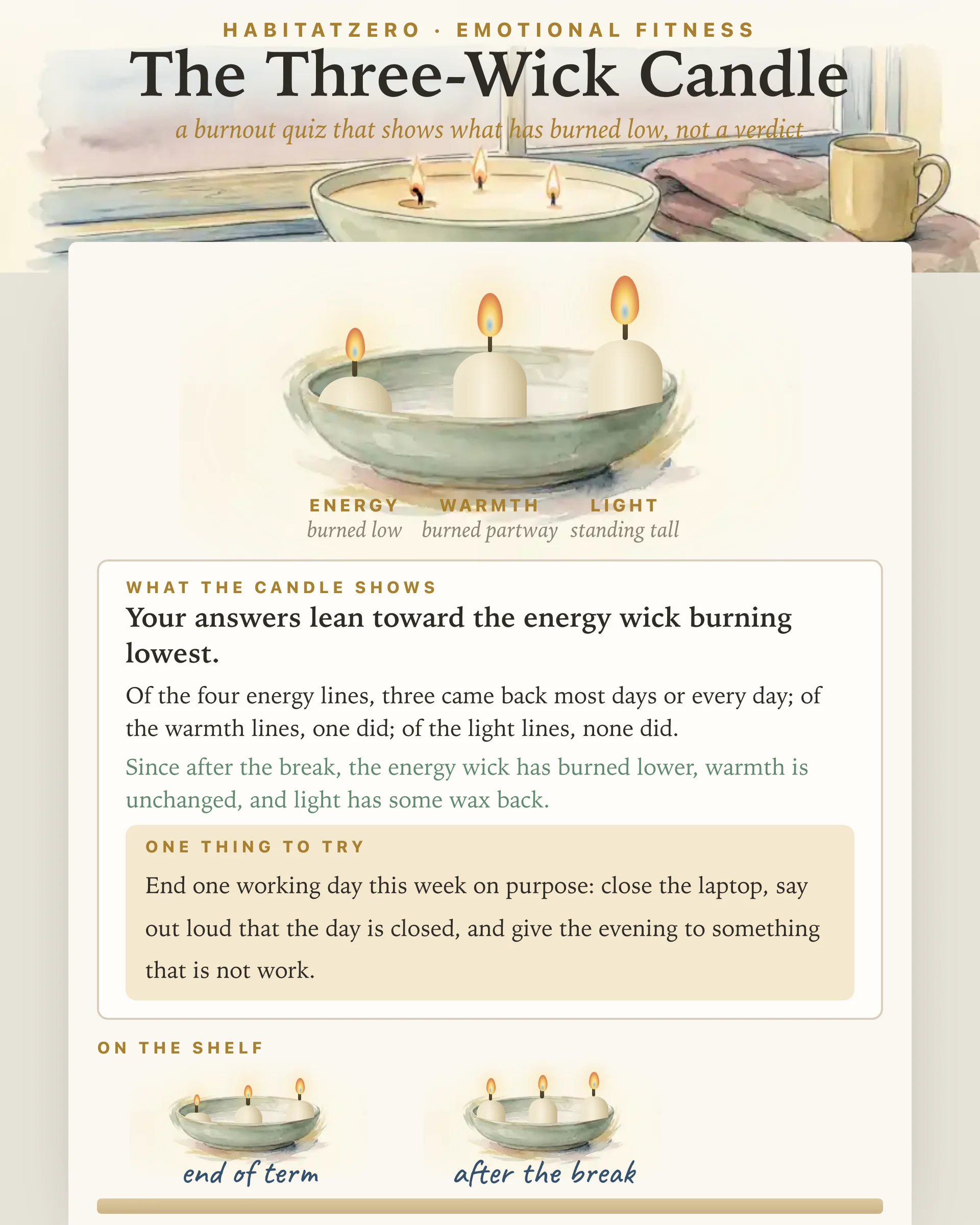
The Three-Wick CandleTwelve lines about recent weeks light a candle with three wicks, for energy, warmth and light, and the wax shows which has burned lowest. No score, one small thing to try, and a shelf to set an earlier reading beside a later one.
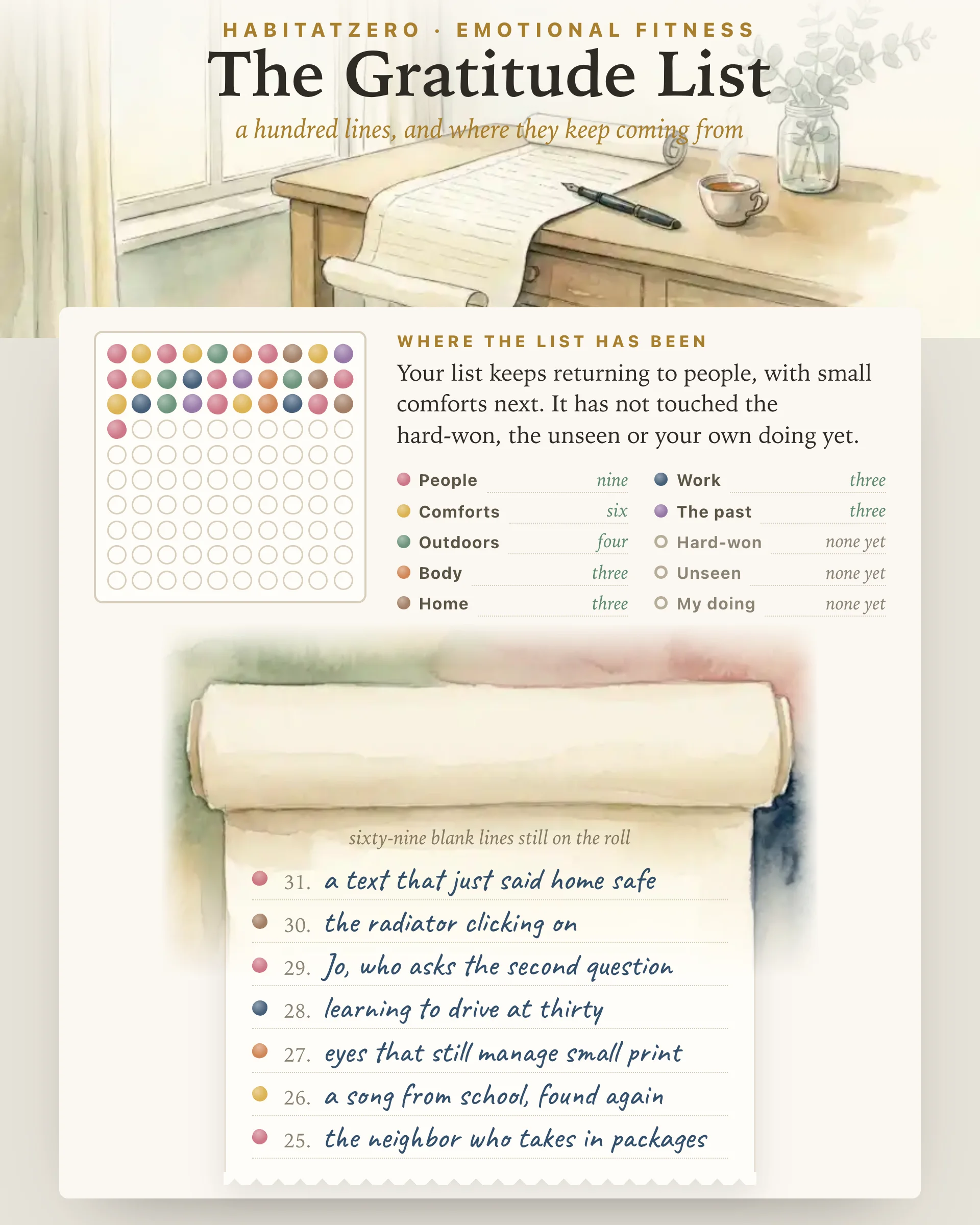
The Gratitude ListWrite your way to one hundred specific things, prompted from ten areas of life, while a square of colored marks shows which areas your list keeps returning to and which it has not touched.
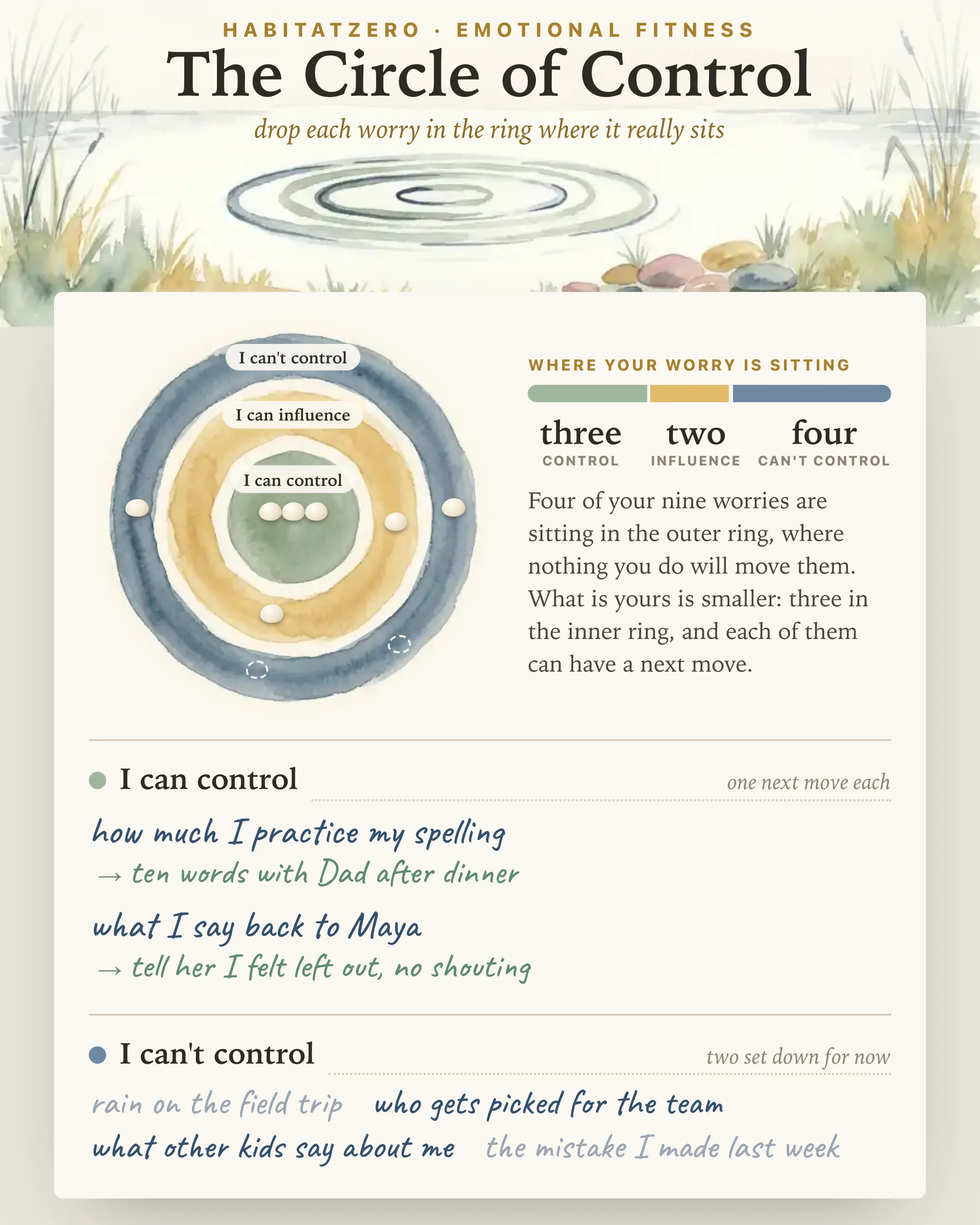
The Circle of ControlWrite each worry as a pebble and drop it in the ring where it really sits: control, influence or concern. The sheet counts where the weight is, and every worry in the inner ring gets one next move.
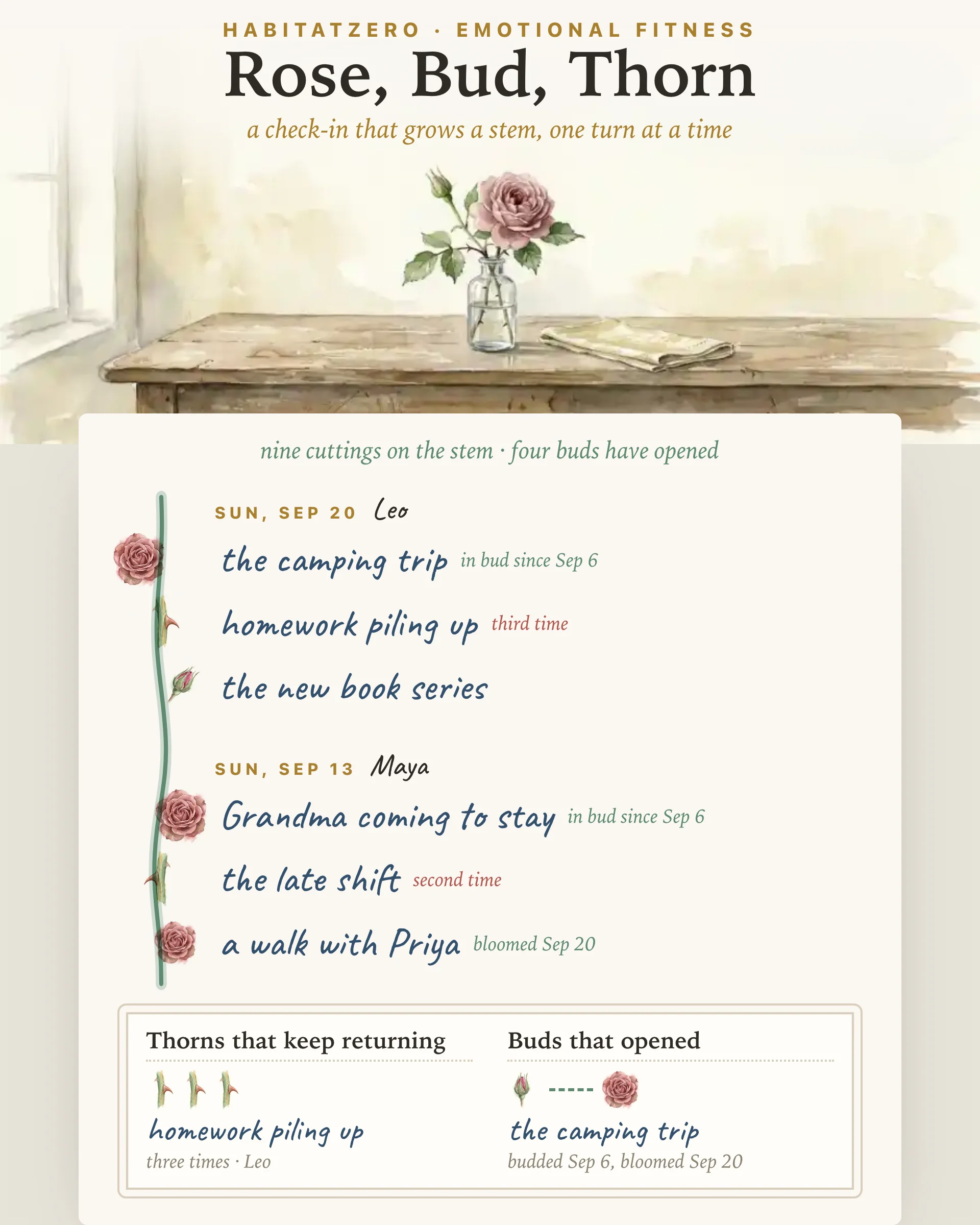
Rose, Bud, ThornName one rose, one thorn and one bud, alone or taking turns around a table, and watch a painted stem grow a cutting at a time. It keeps count of the thorns that return and the buds that finally bloom.
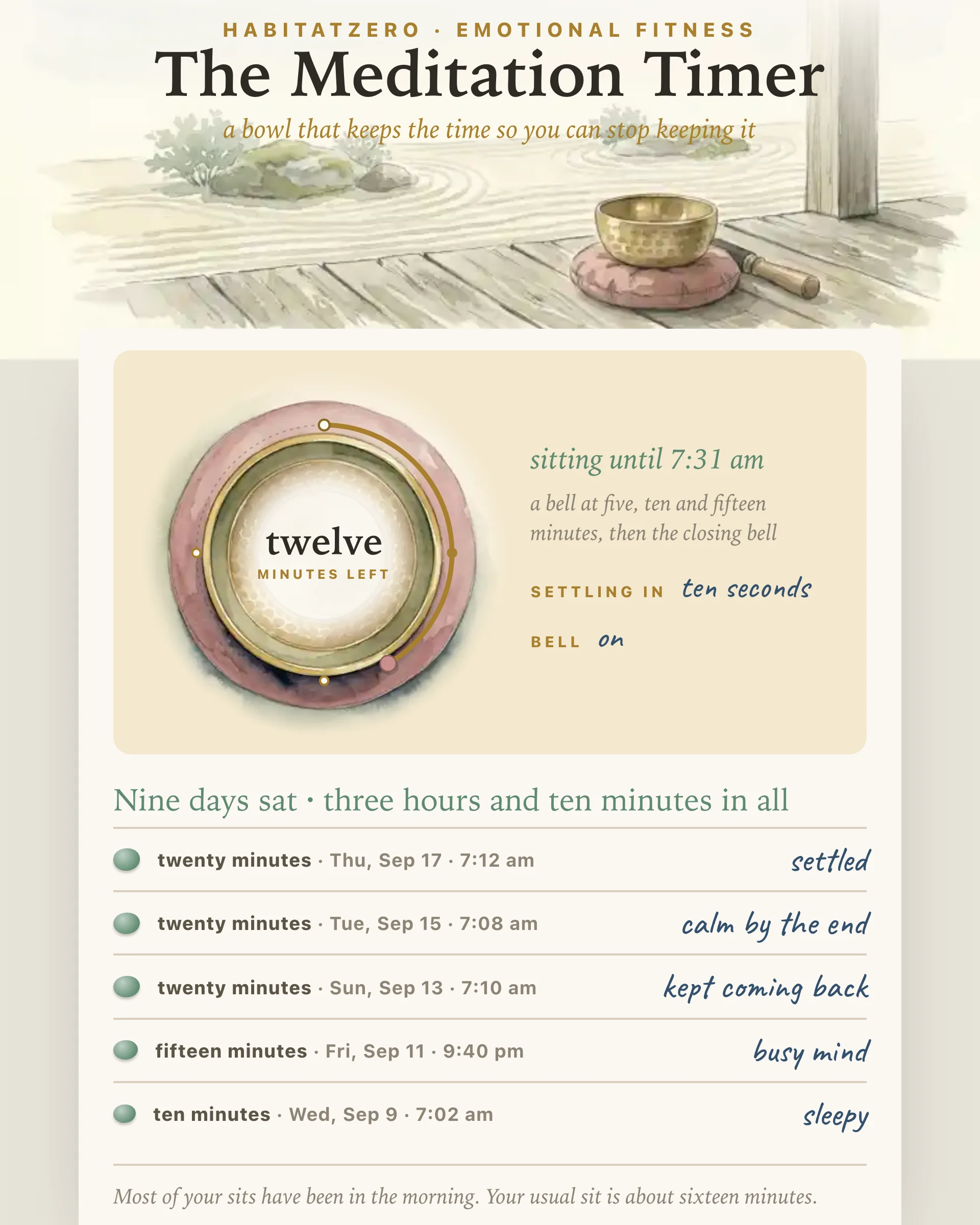
The Meditation TimerAn unguided timer built around a painted singing bowl: choose a length, interval bells and a settling-in count, then sit while the bowl keeps the time from the real clock. Afterwards one line goes on a log that counts your days sat and minutes in words.
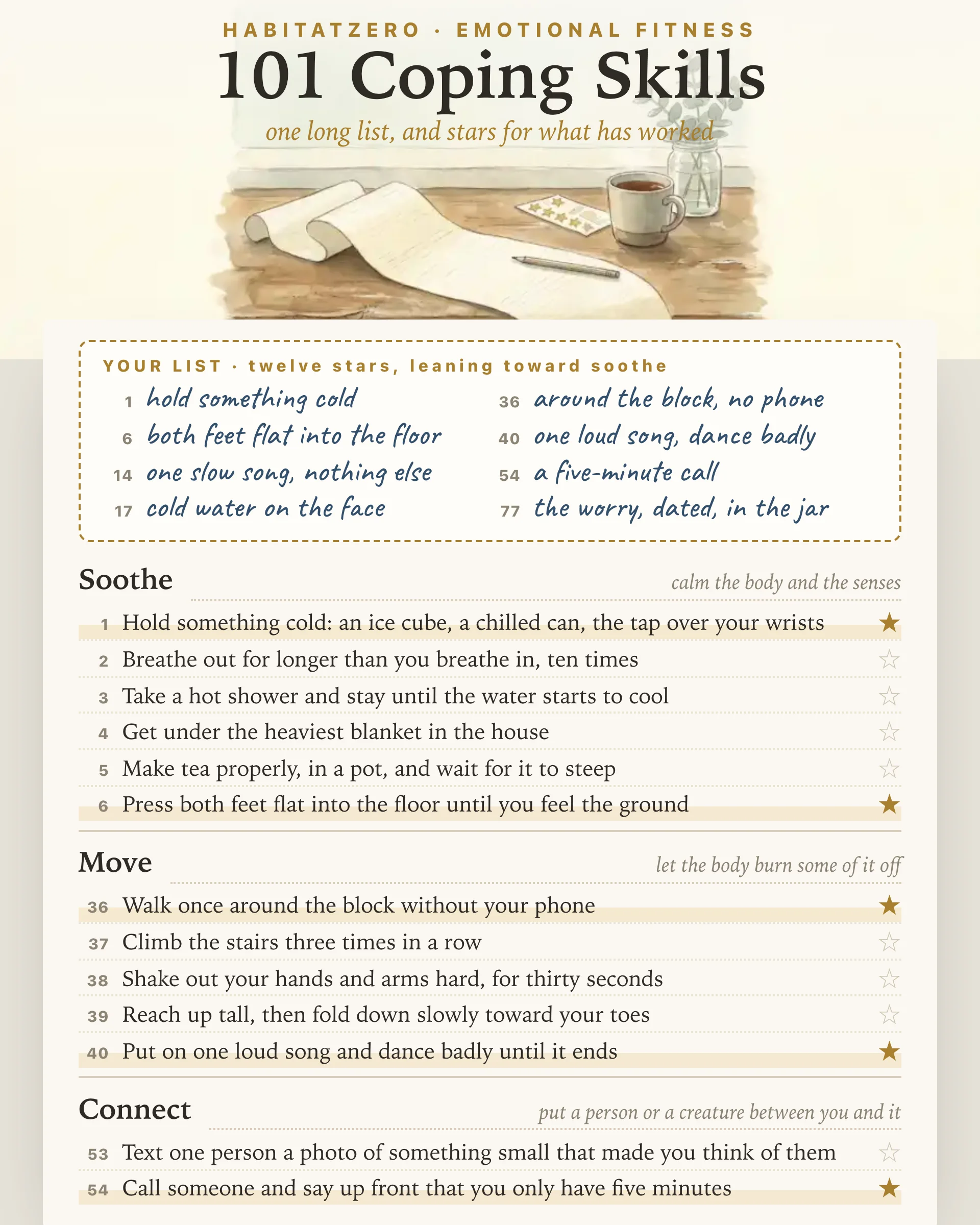
101 Coping SkillsOne hundred and one coping skills in six kinds of help, narrowed to the time, company and money you have right now, starred for the ones that have worked on you, with a print view of the whole numbered list.
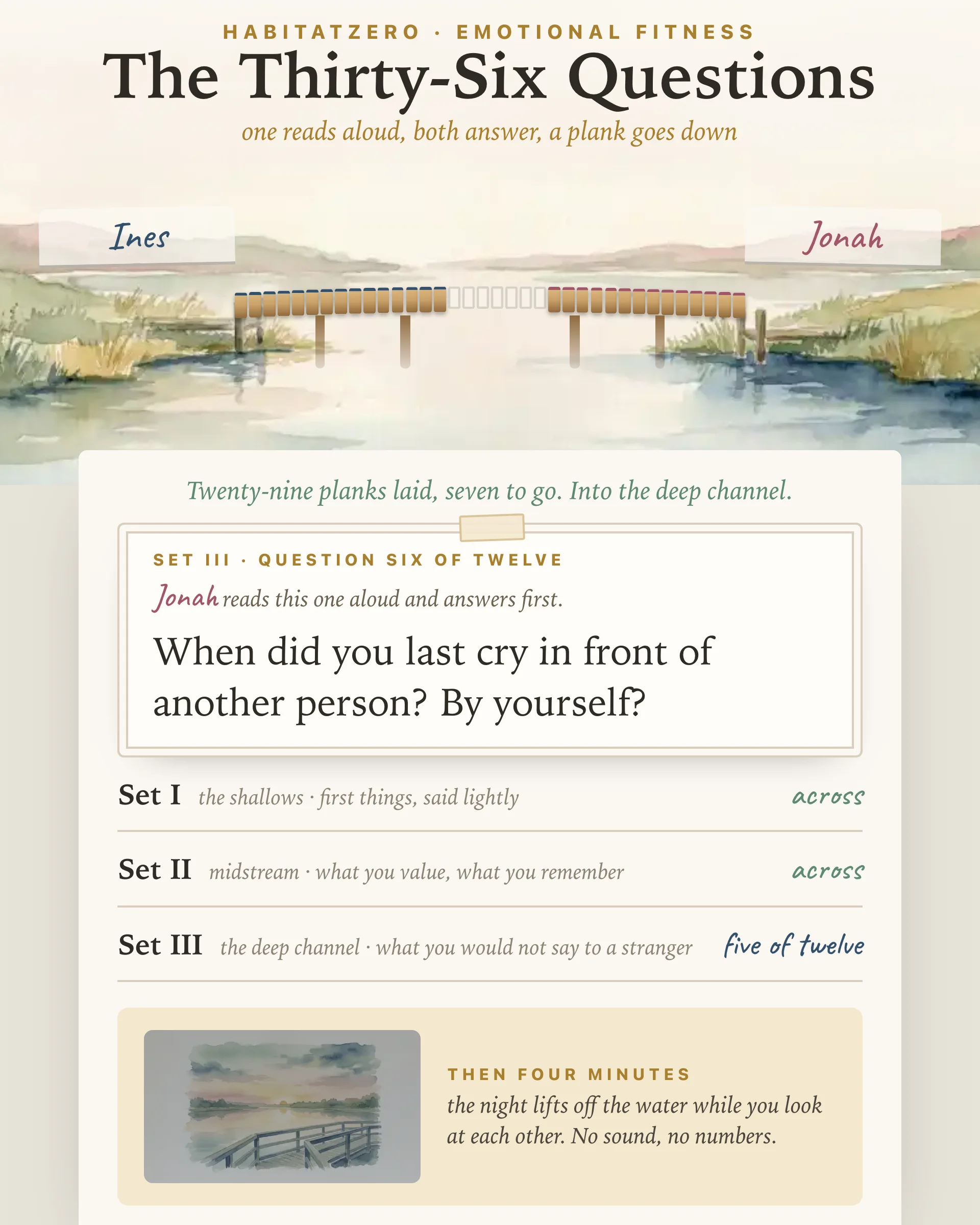
The Thirty-Six QuestionsAron's thirty-six questions in their three sets, for two people on one screen: one reads aloud, both answer, and each answer lays a plank of a footbridge from your bank toward theirs, with a silent four-minute dawn to close.
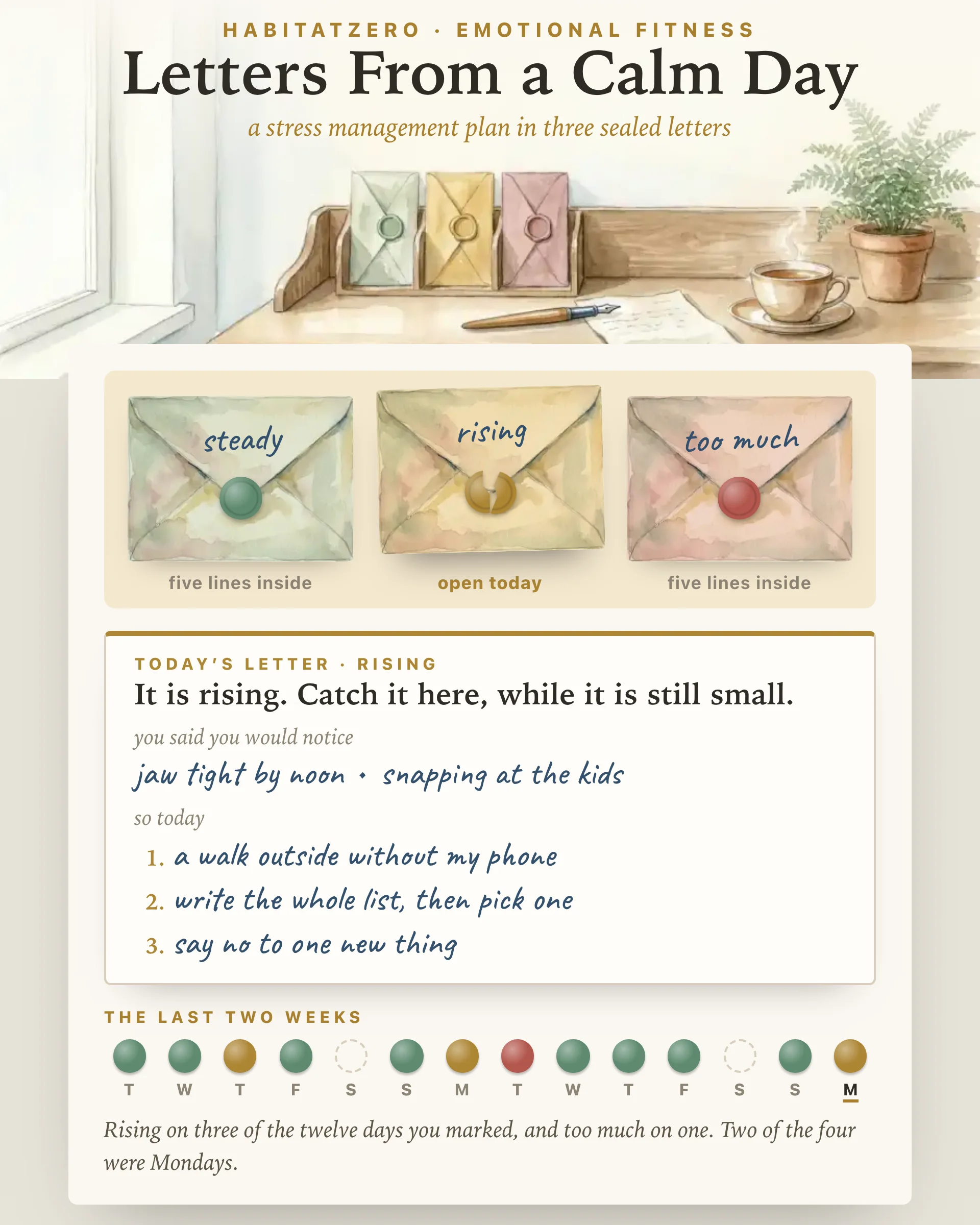
Letters From a Calm DayA stress management plan in three sealed letters, steady, rising and too much, filled in by tapping on a quiet day. Open the one today needs and it hands back exactly that part of your plan, while a two-week log shows which days keep climbing.
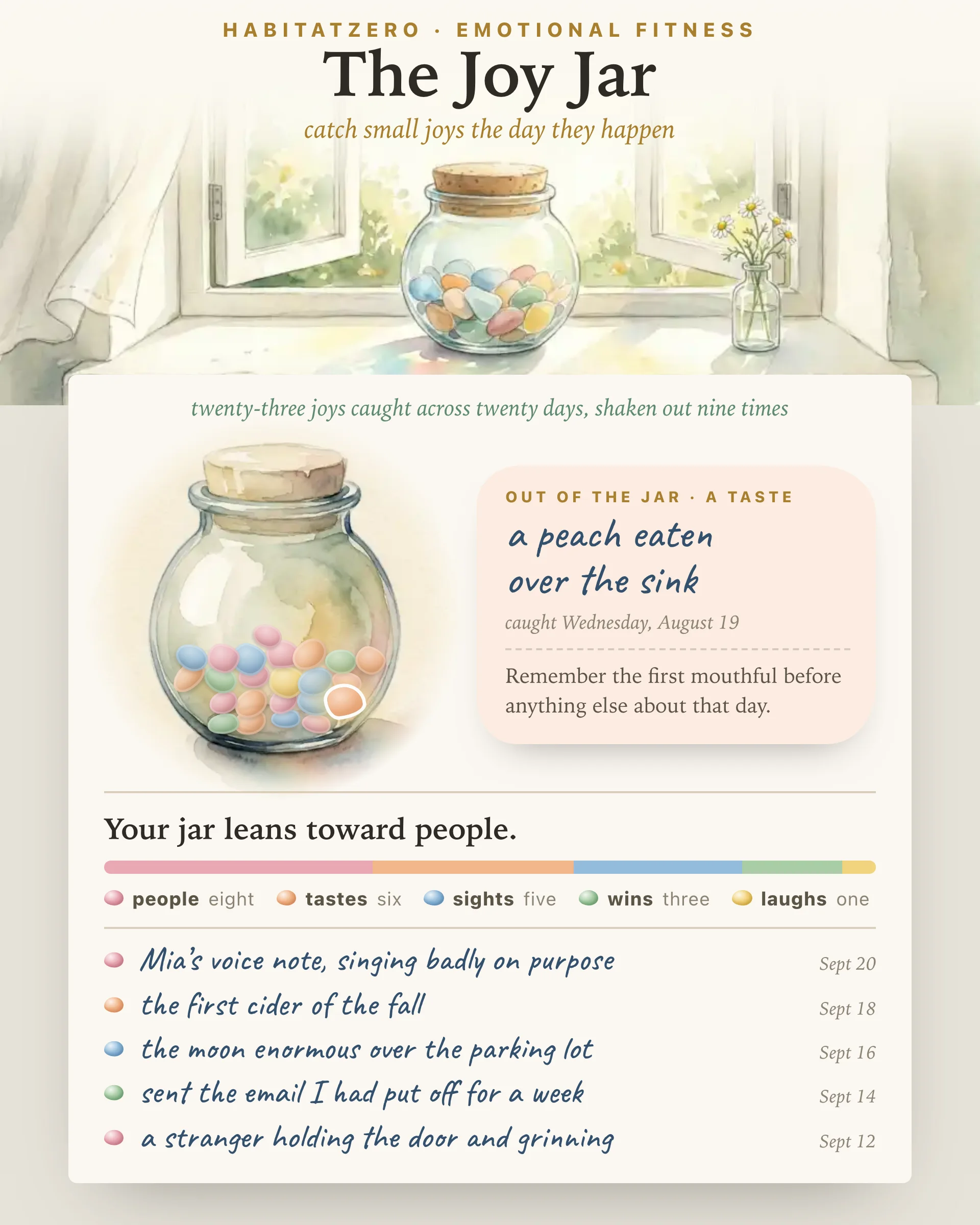
The Joy JarCatch a small joy the day it happens with one line and a tap for its kind, watch the glass fill with color, and shake one back out on a low day, favoring the ones you have not seen in a while.
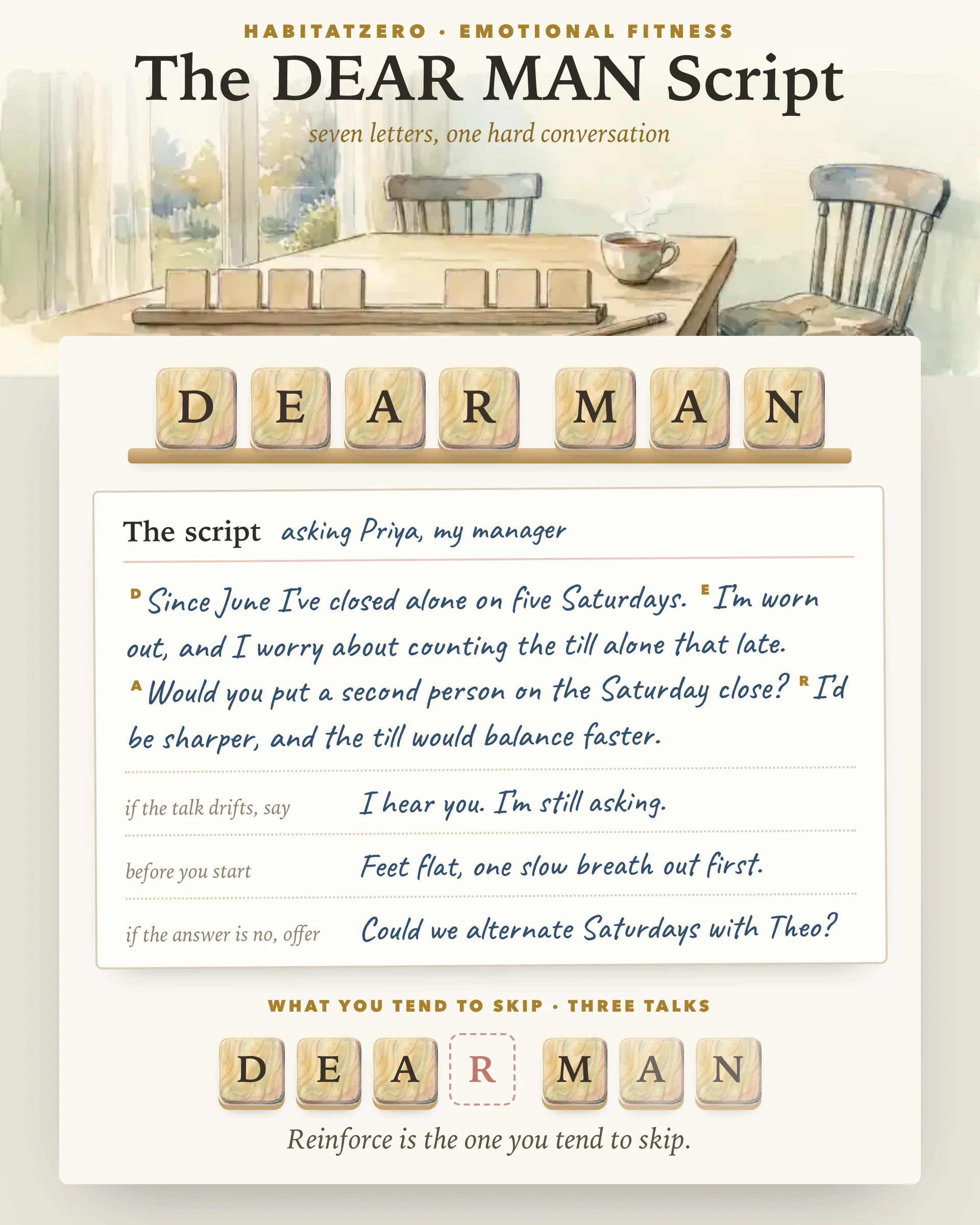
The DEAR MAN ScriptBuild one hard conversation a letter at a time: tap a starter for each DEAR MAN step, read the whole script back in your own words, rehearse it tile by tile, and log which letters made it into the real talk.
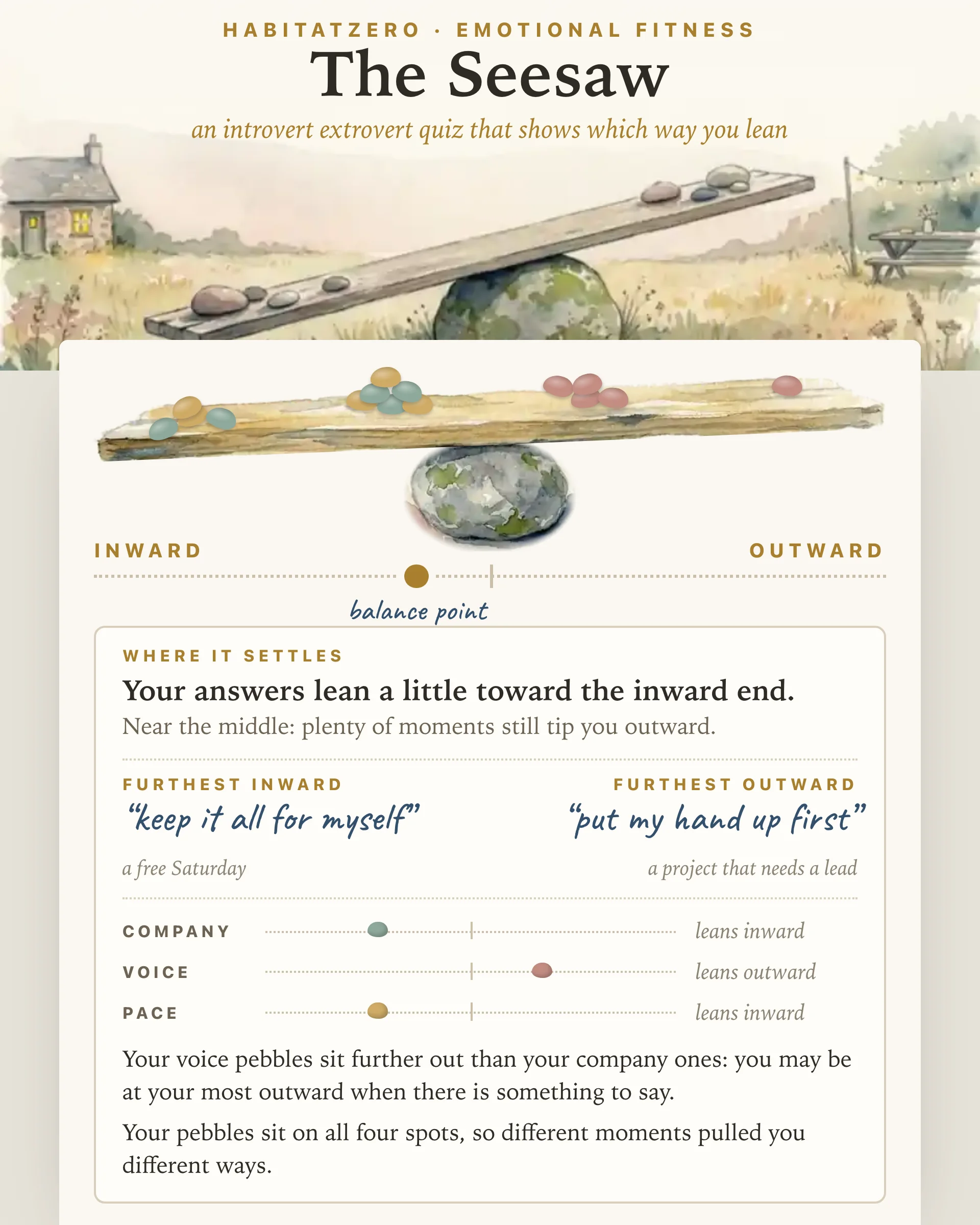
The SeesawAn introvert extrovert quiz in fifteen everyday moments: each answer sets a pebble on a painted seesaw, the plank tips toward where your answers gather, and the reading quotes your own answers back instead of handing you a type.
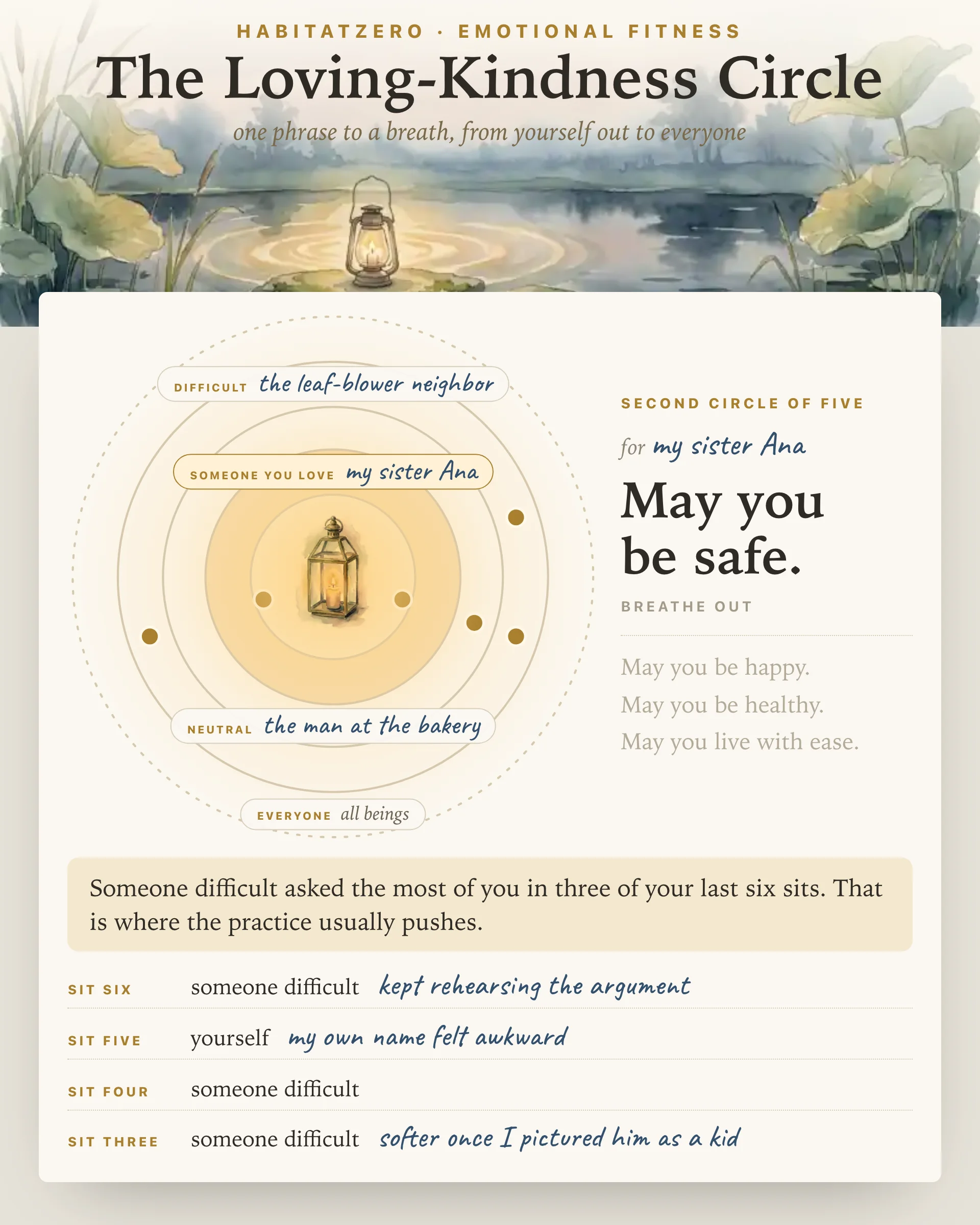
The Loving-Kindness CircleName the people in your five circles, keep the classic phrases or write your own, and let a lantern pace one phrase per breath from yourself out to everyone. After each sit, a line about the hardest circle goes in a log that shows where the practice pushes you.
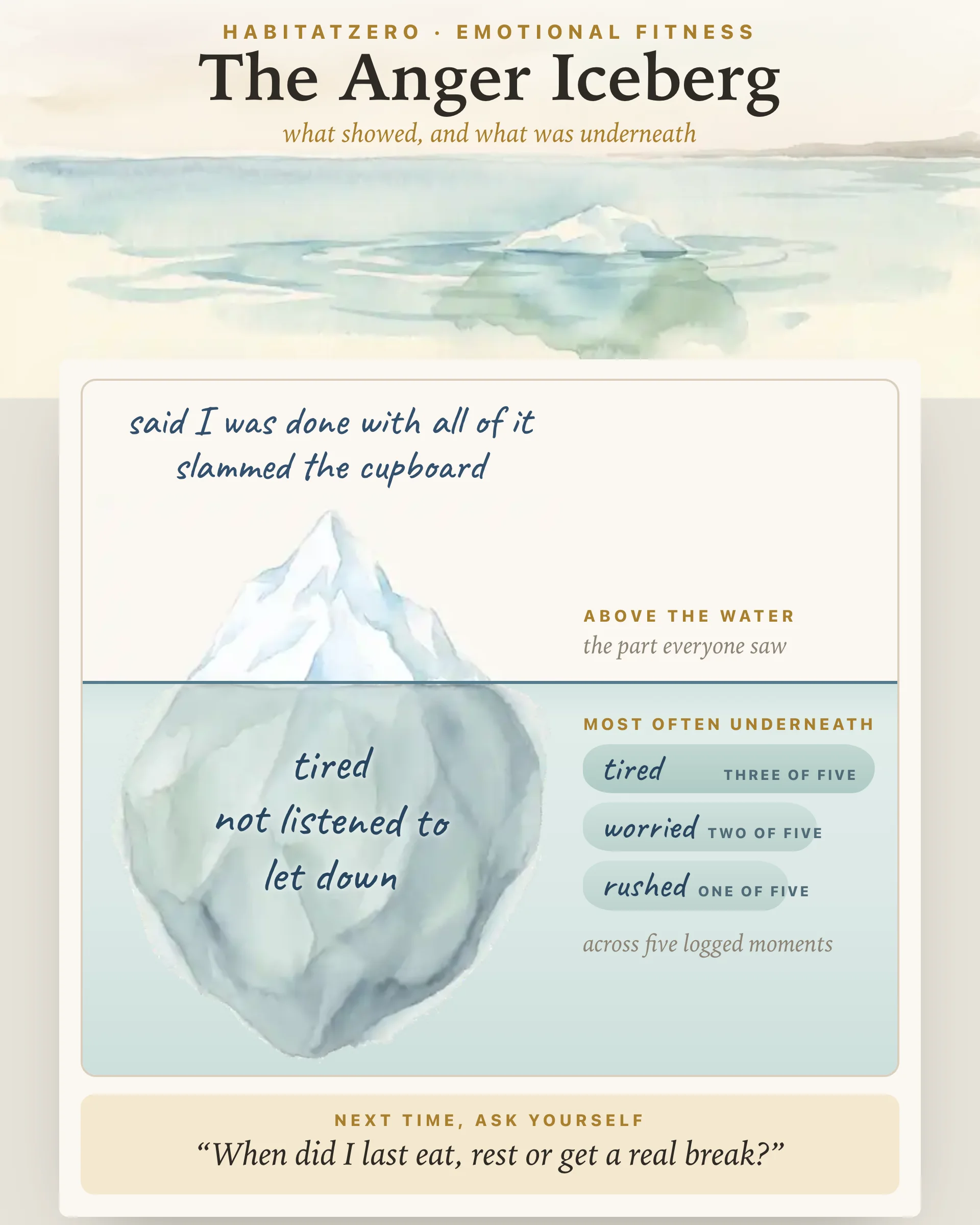
The Anger IcebergWrite what your anger looked like above the waterline, bring up the feelings that sat beneath it, and watch the page show which ones keep coming back, with one question to carry into next time.
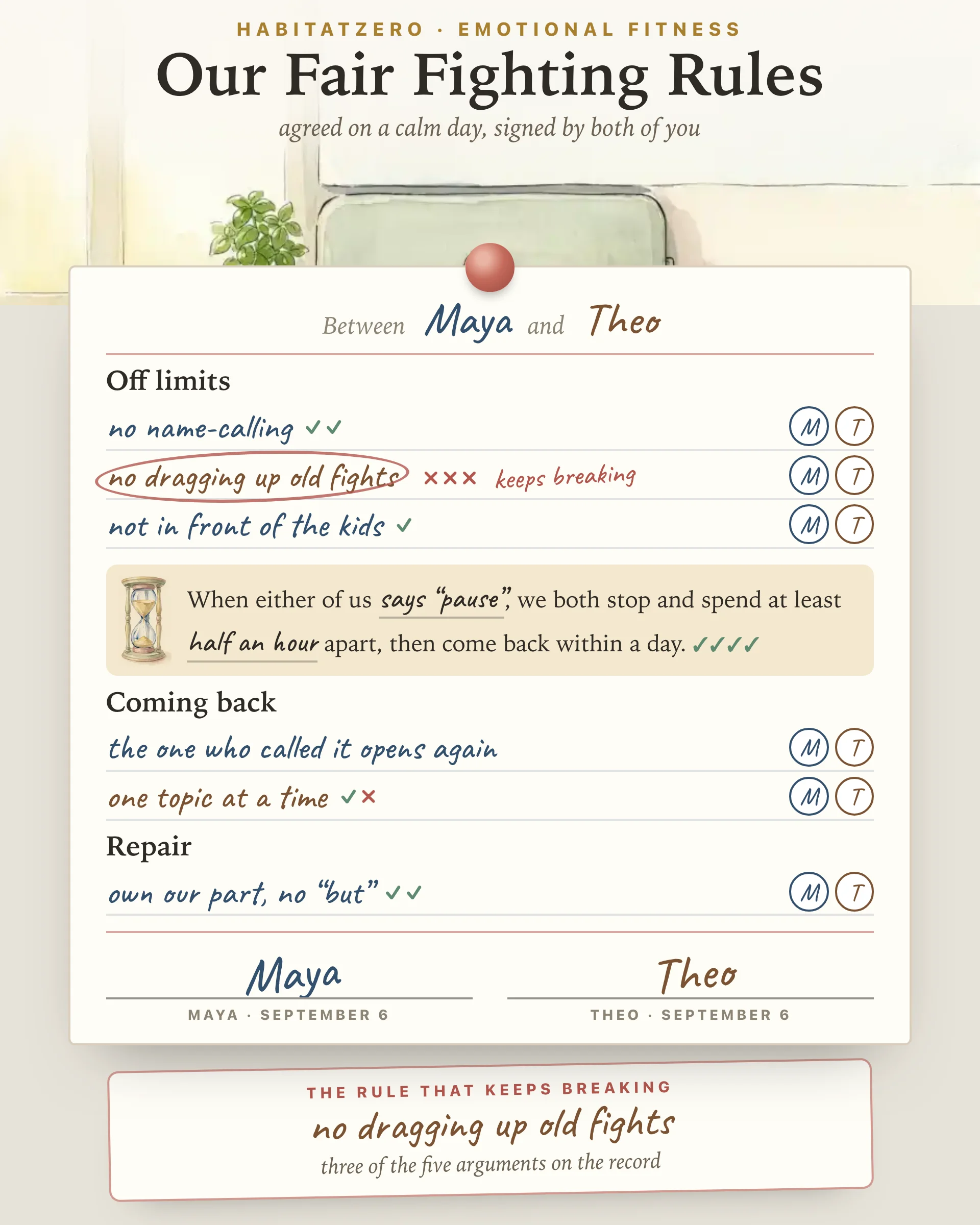
Our Fair Fighting RulesPass the pen to propose and initial your rules for what is off limits, the time-out, coming back and repair, sign the card together, then log each argument to see which rule keeps breaking.
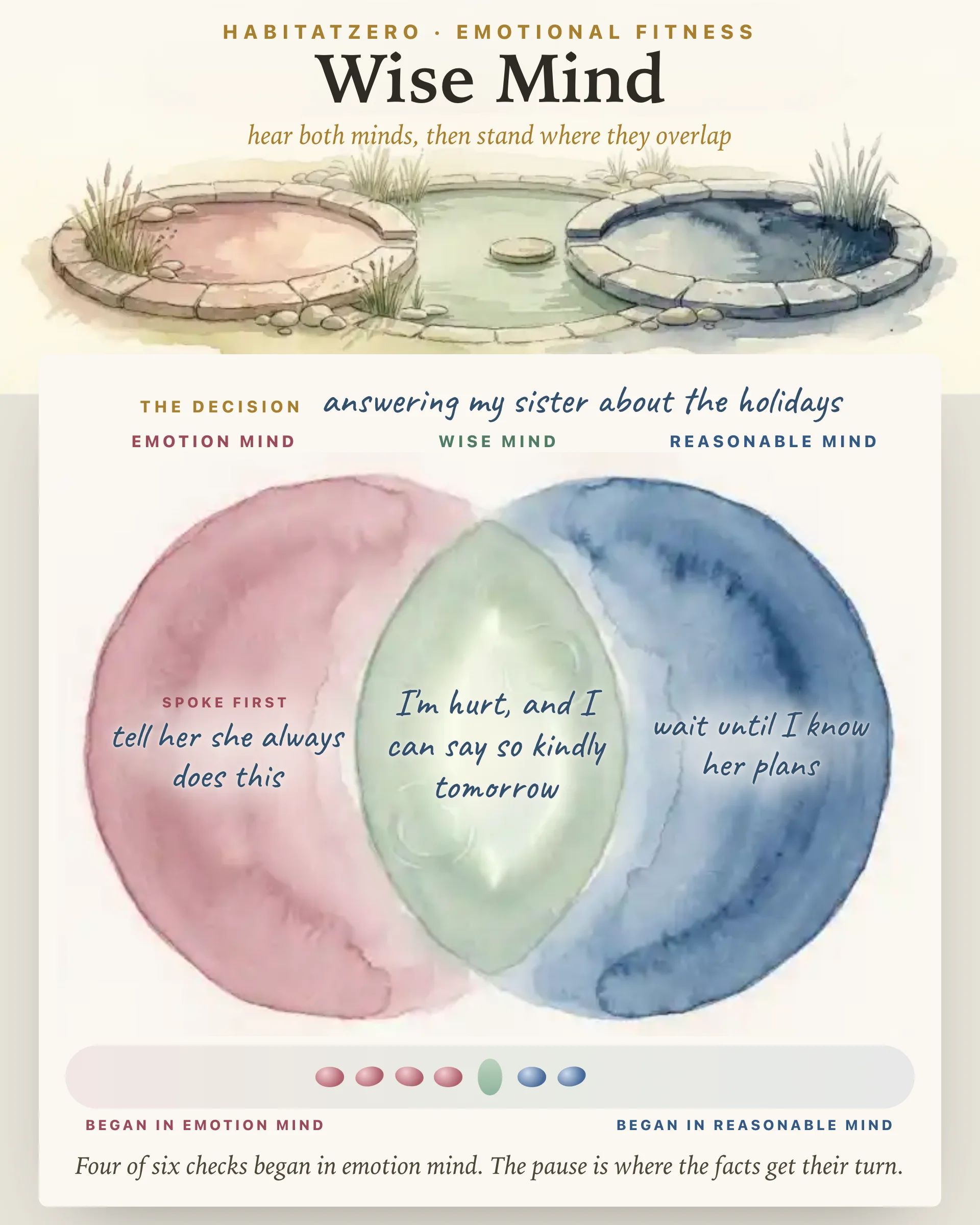
Wise MindGive emotion mind and reasonable mind a pool each, take a silent minute while the overlap brightens, then write what you know holding both. Every check you keep shows which mind you tend to start from.
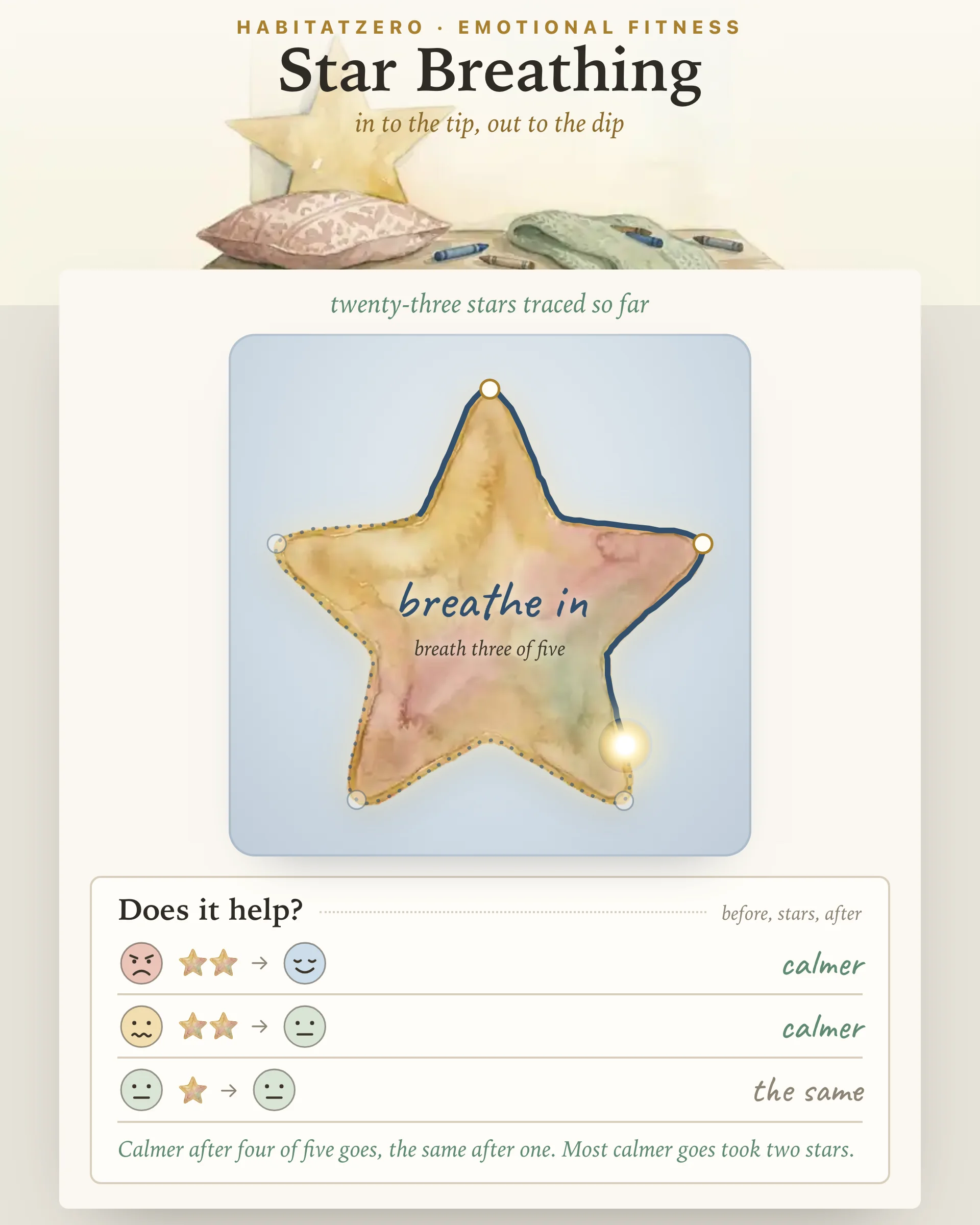
Star BreathingA painted star to breathe around with your child: a glowing point travels its edges at a pace you set, or a small finger traces it. Count the stars, and check a face before and after to see whether it helps.
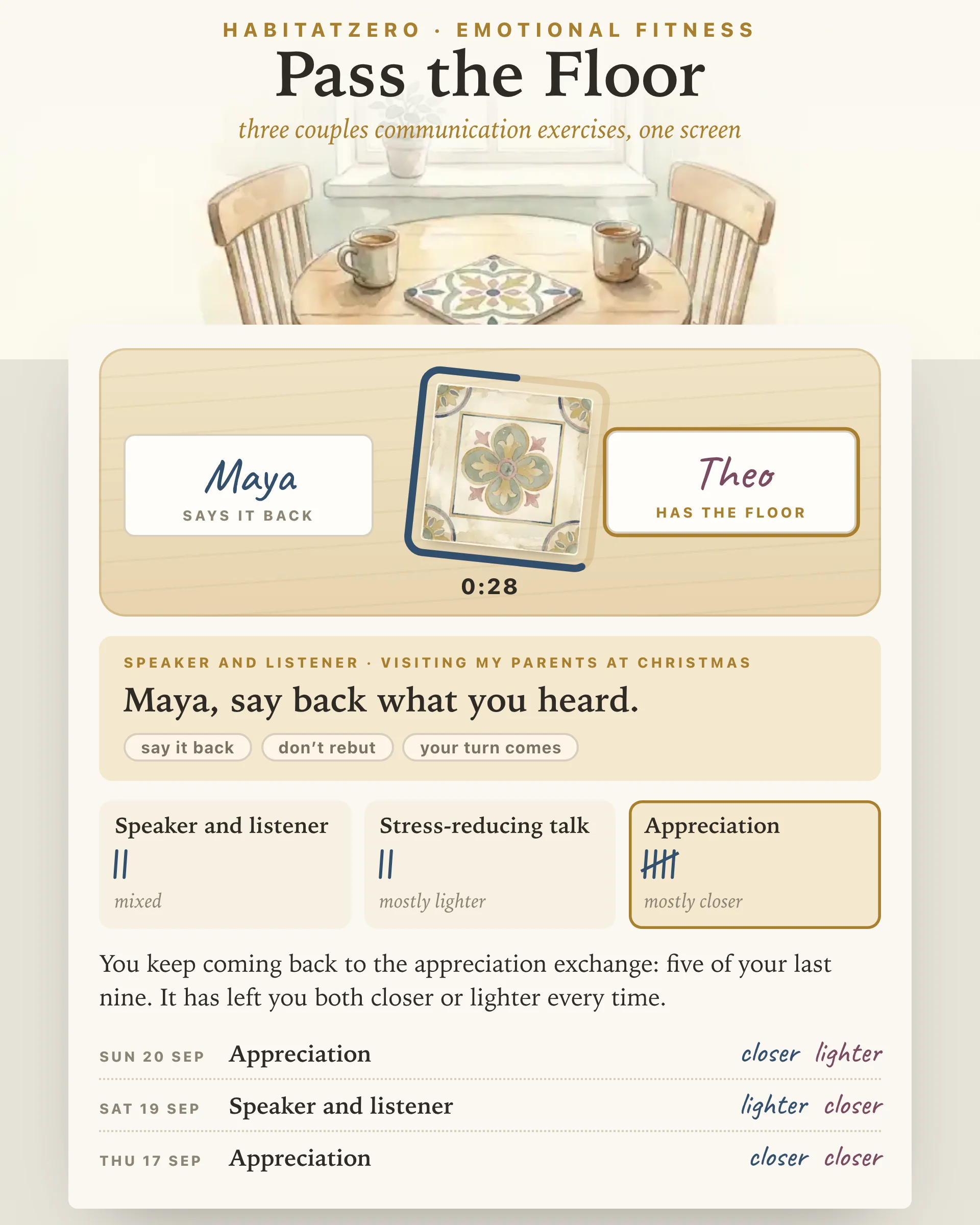
Pass the FloorThree couples communication exercises run on one screen: a painted tile passes between your two names to show who speaks, its edge keeps the time, and a log shows which exercise you keep coming back to.
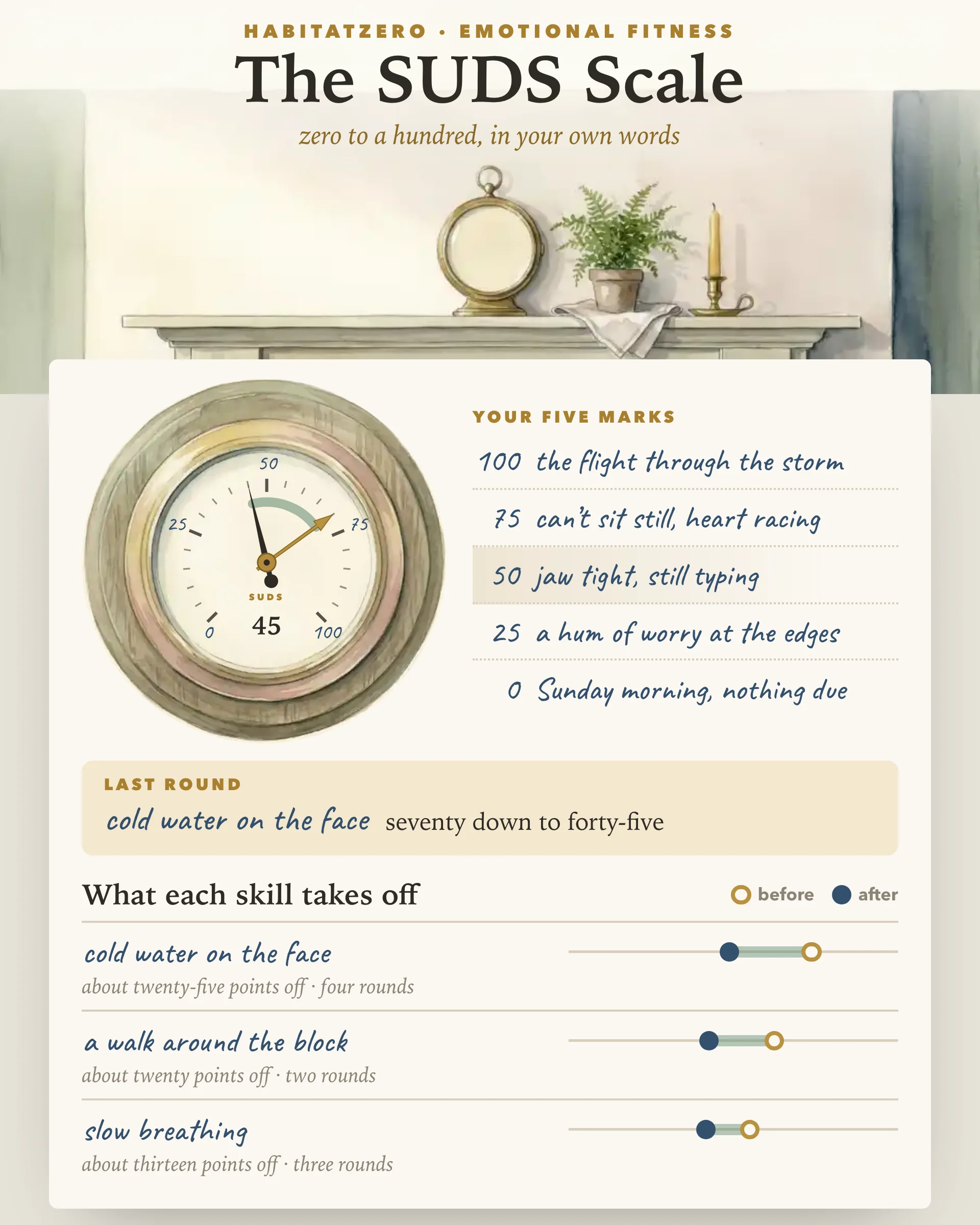
The SUDS ScaleGive zero to a hundred five marks in your own words and read your distress on a painted brass dial. Park the brass hand before a coping skill, read the needle after, and see how many points each skill usually takes off.
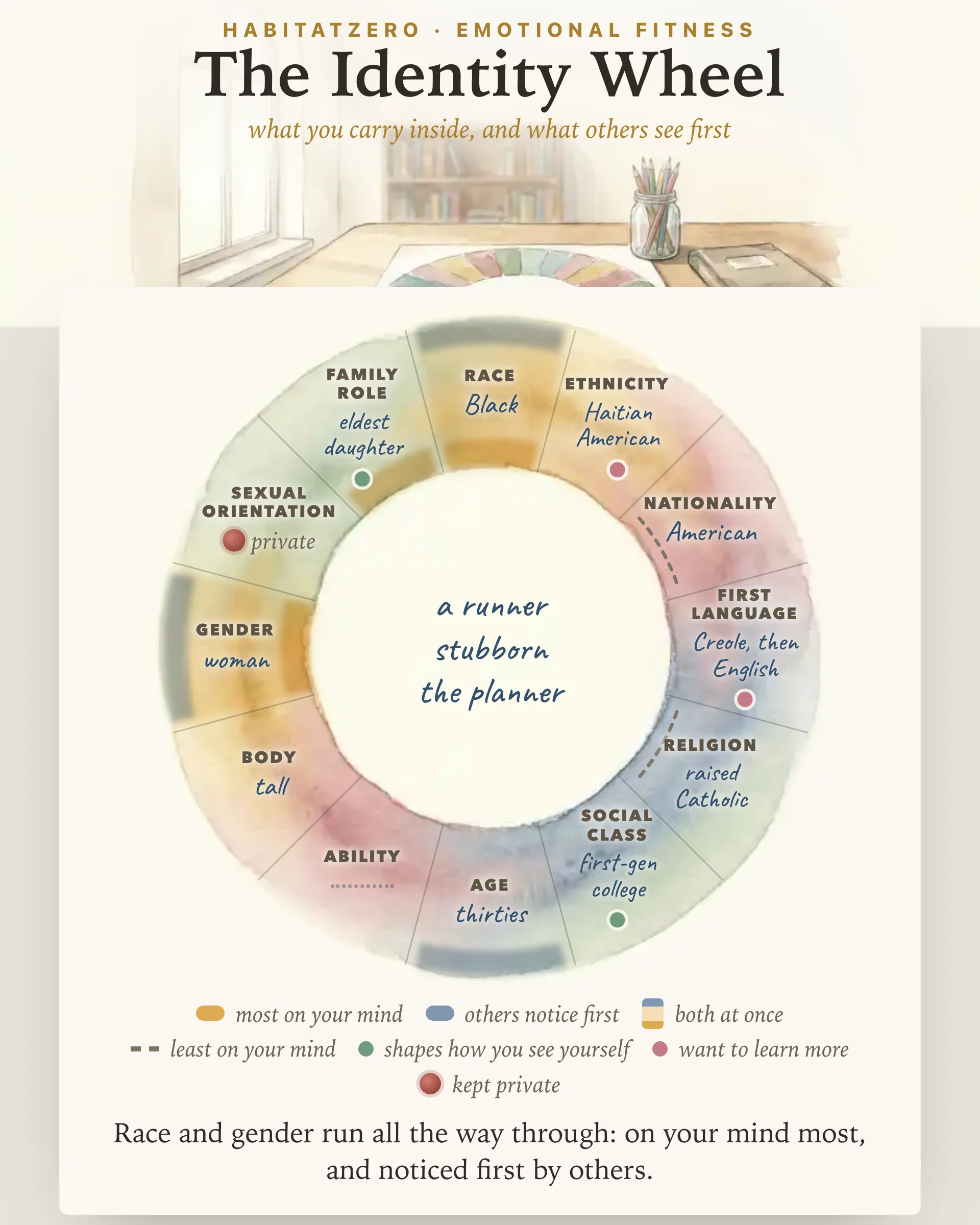
The Identity WheelName twelve spokes of who you are in your own words, keep any of them private, then mark the five classic questions and watch the wheel show where what you think about most meets what others notice first.
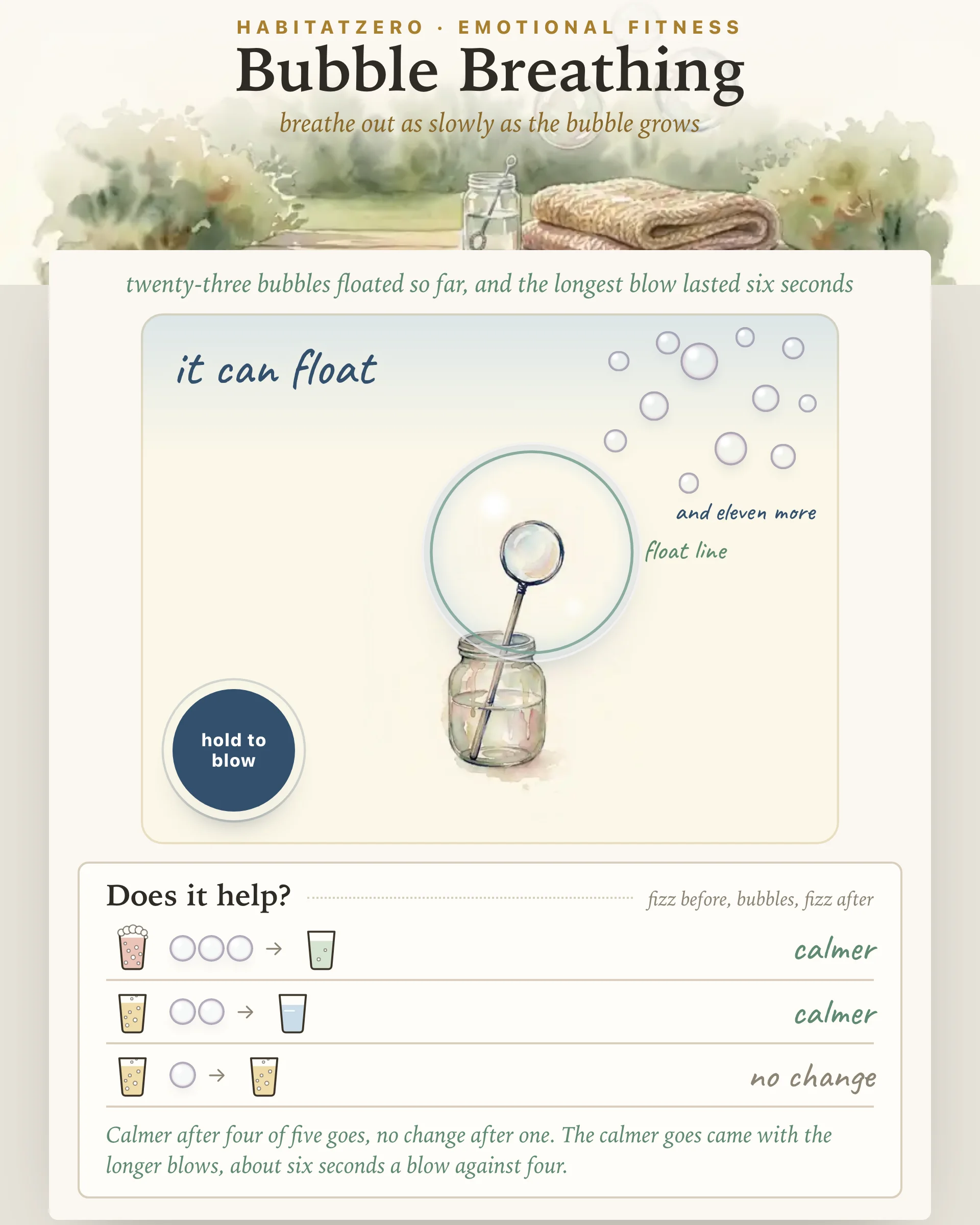
Bubble BreathingA painted bubble wand for your child's slowest breath out: they hold the button while they blow, and the bubble grows, floating away only if the blow was long and steady. Count the floats, and check the fizz before and after to see whether it settles them.
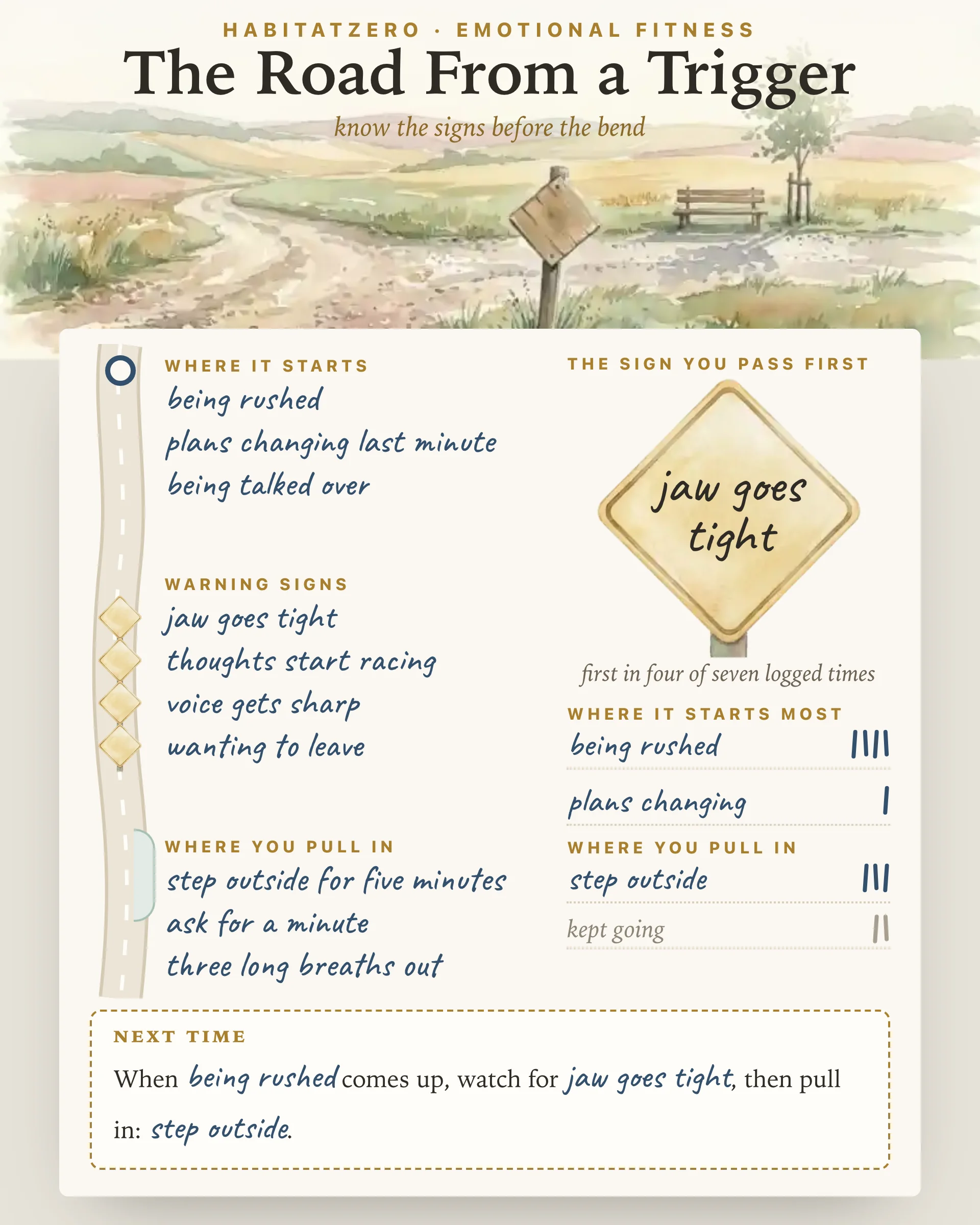
The Road From a TriggerMark what sets you off, the warning signs that follow and where you will pull in, then log each time it happens and see which trigger keeps returning, which sign reaches you first and which plans you actually use.
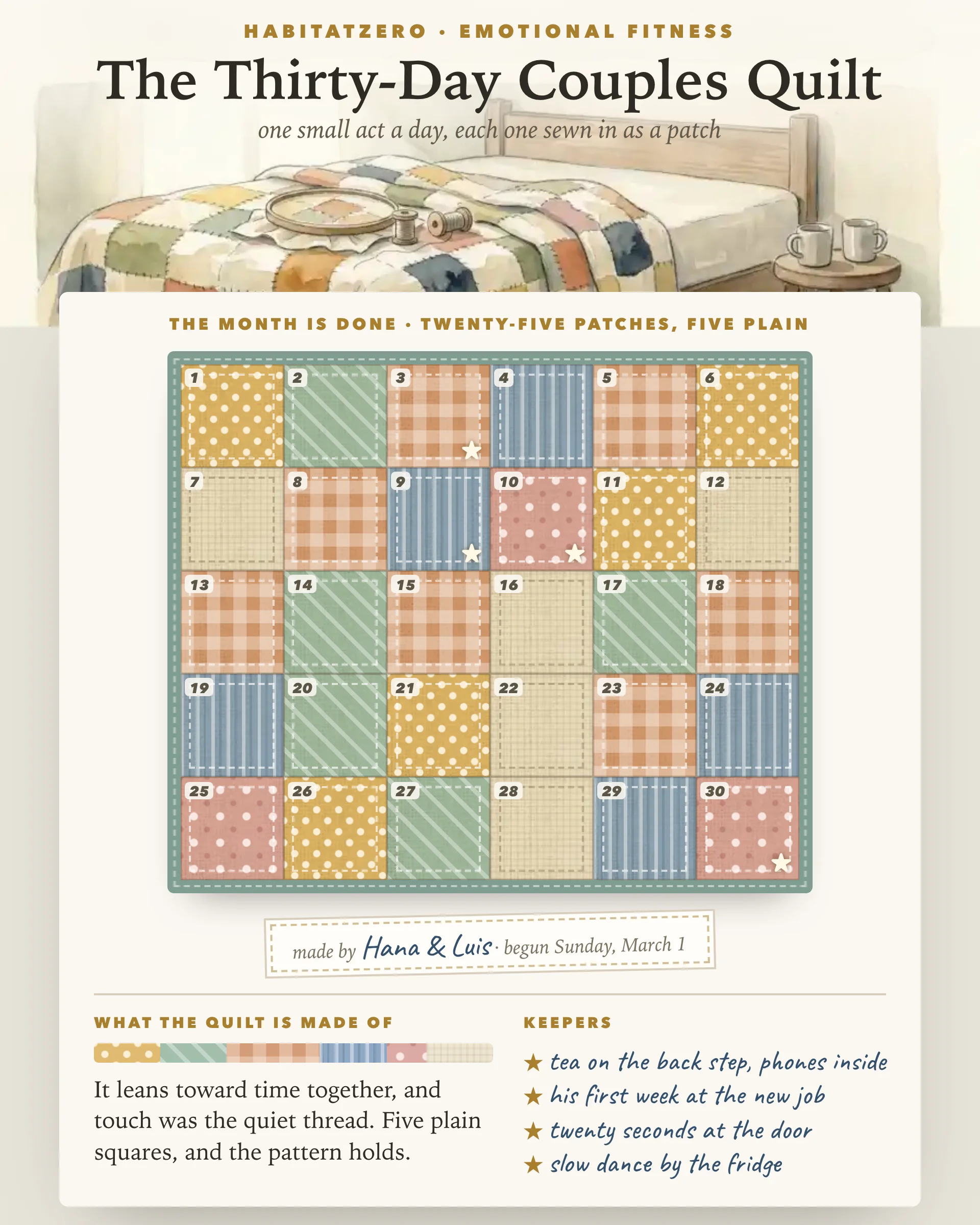
The Thirty-Day Couples QuiltOne small act a day for each other, from a twenty-second hug to a question asked properly. Each one you do sews a patch into a shared quilt, a missed day stays a plain square, and the finished quilt shows what your month was made of.
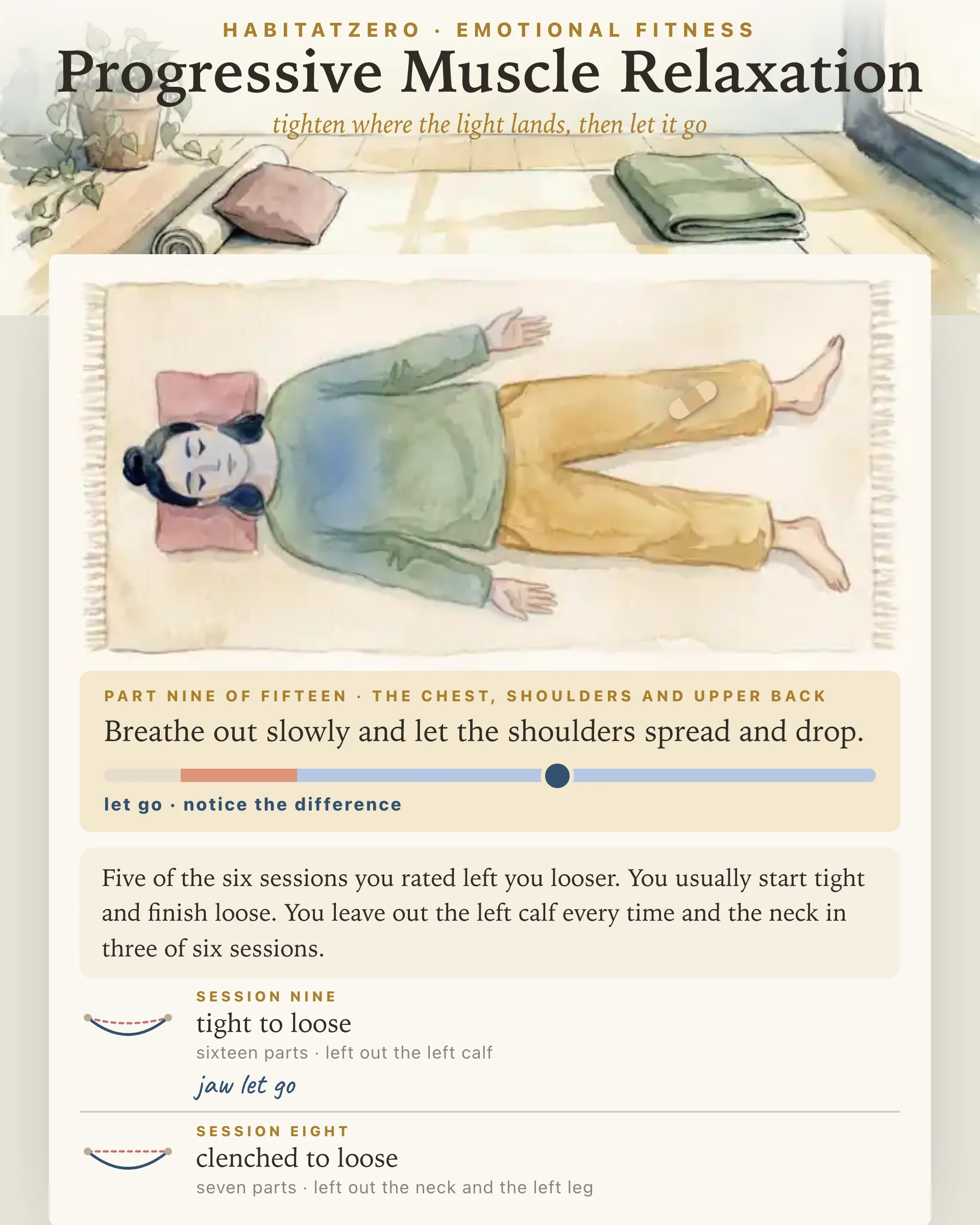
Progressive Muscle RelaxationA silent, paced progressive muscle relaxation session: a painted figure lights each muscle group in turn, you squeeze for a few seconds and let go for longer, and your log shows whether sessions leave you looser.
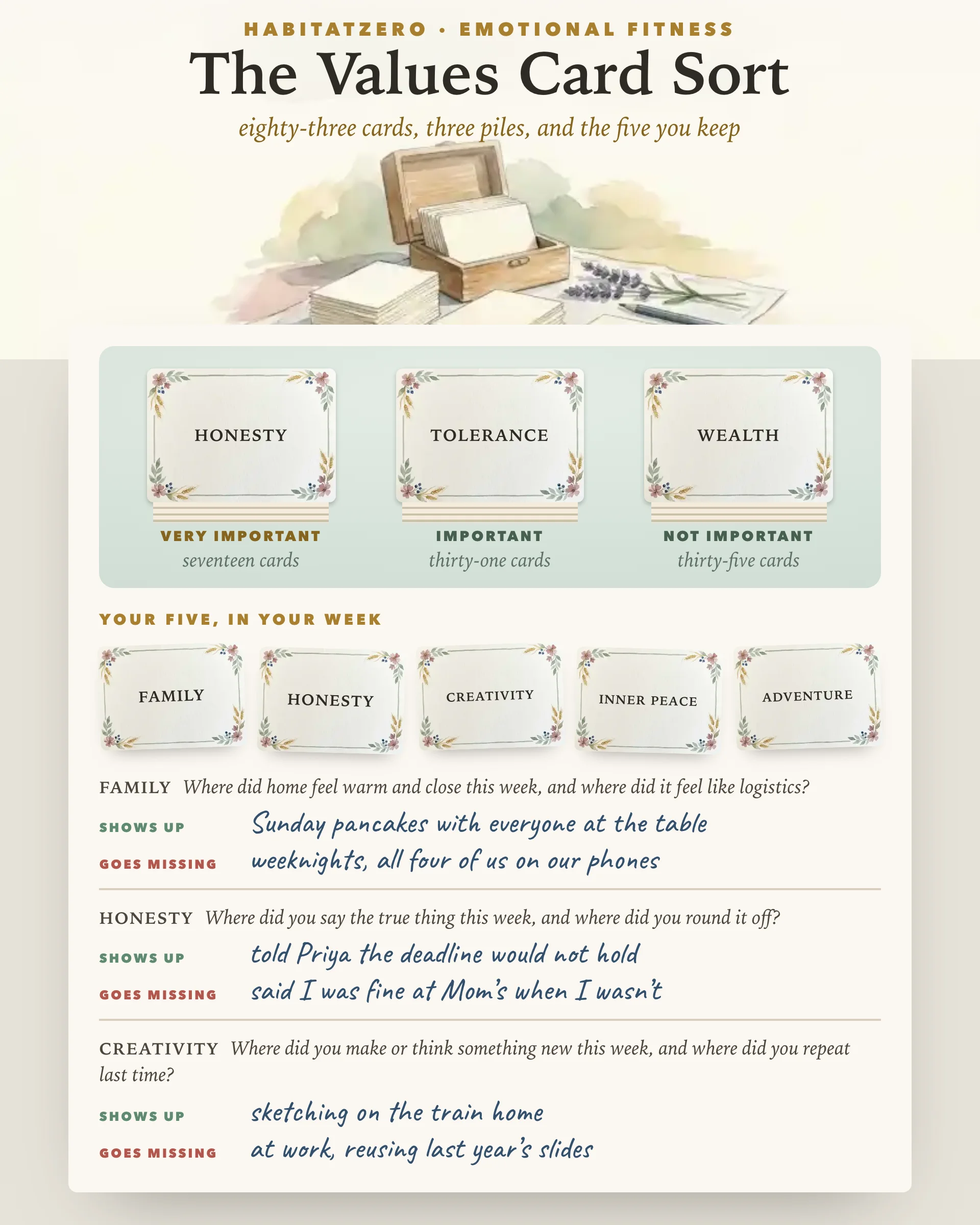
The Values Card SortDeal the eighty-three cards of the Personal Values Card Sort into three piles, keep the five you would not trade, and let each kept card ask where it shows up in your week.
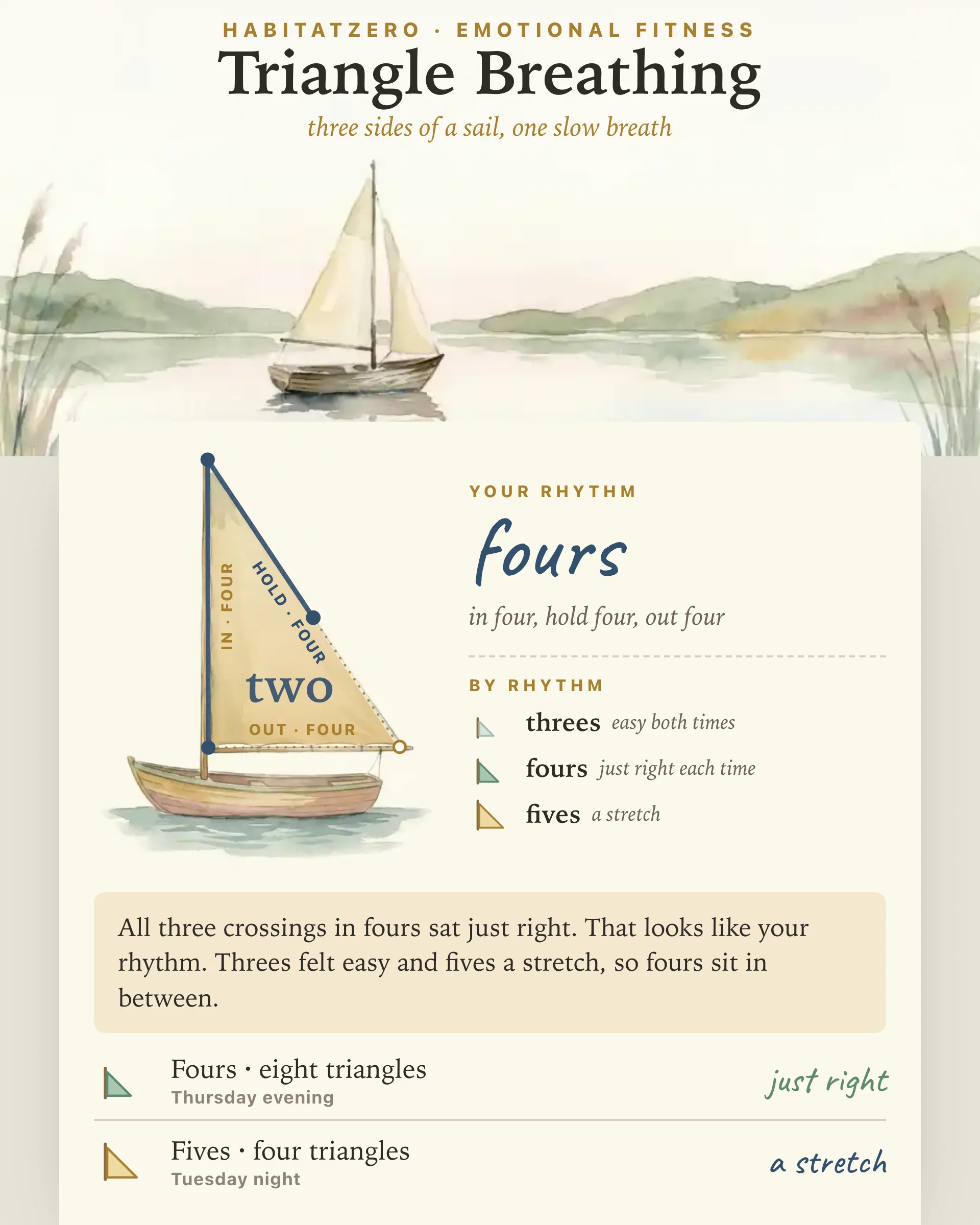
Triangle BreathingBreathe around a painted sail: in up the mast, a soft hold down the sail, out along the boom, in threes, fours, fives or with a longer way out. One tap after each crossing says how the rhythm sat, and the logbook learns which one is yours.
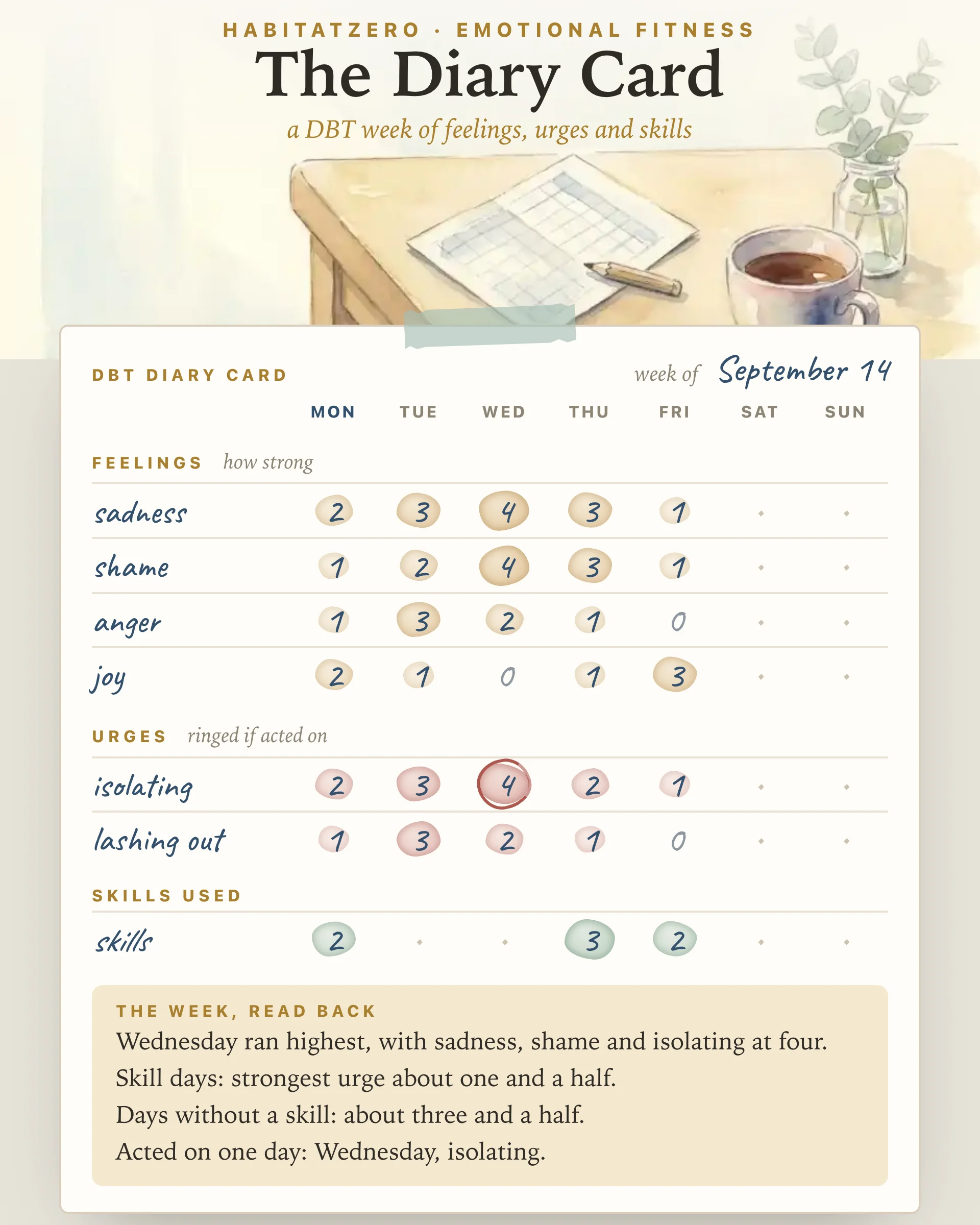
The Diary CardA DBT diary card you fill in by tapping: pick the feelings and urges you watch, rate each day zero to five, tick the skills you used, and get the week read back and ready to print for your session.
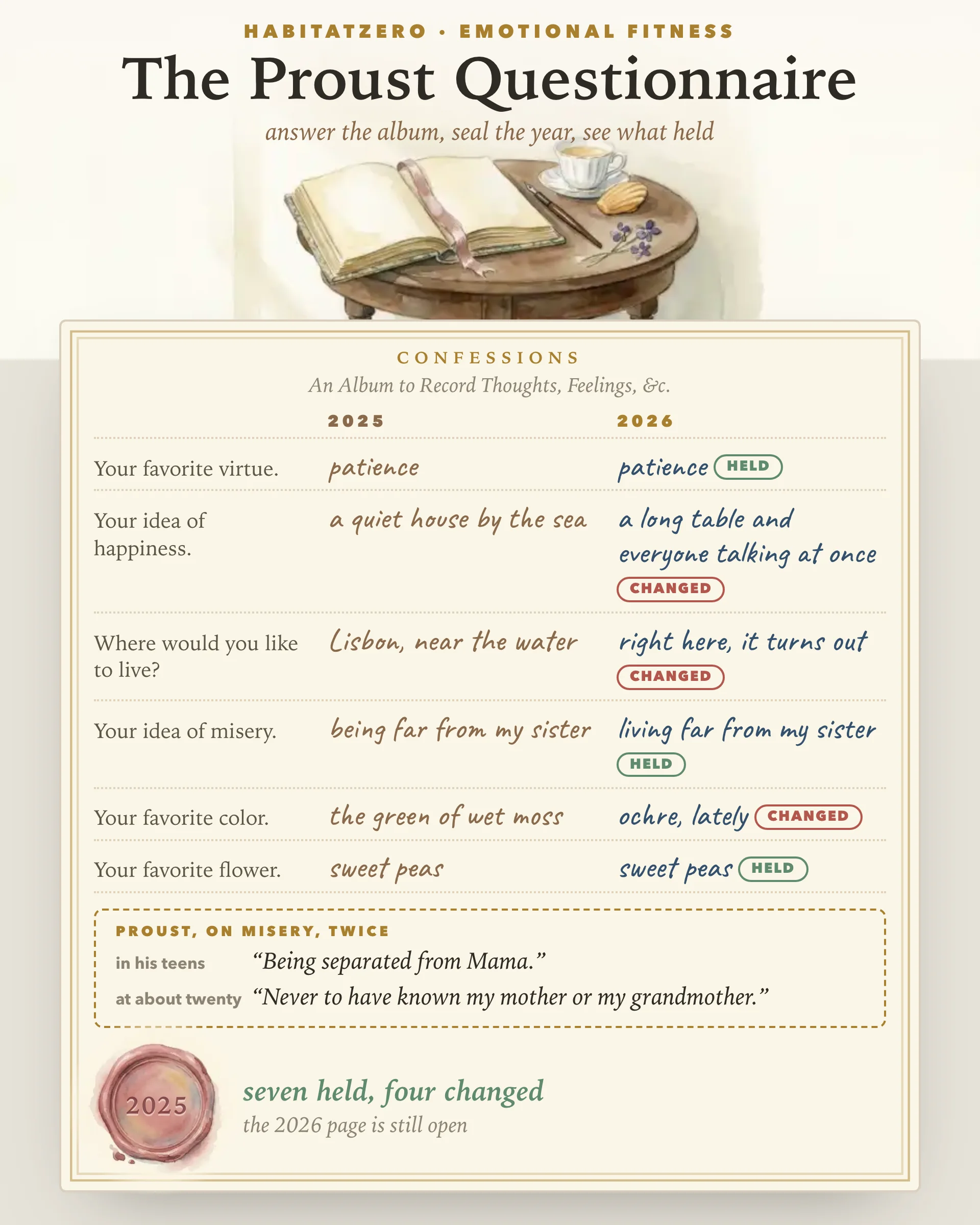
The Proust QuestionnaireAnswer the thirty-four prompts from the confession albums Marcel Proust filled in, in your own hand and at your own pace, see his answers after yours, then seal the page and come back next year to see which answers held.
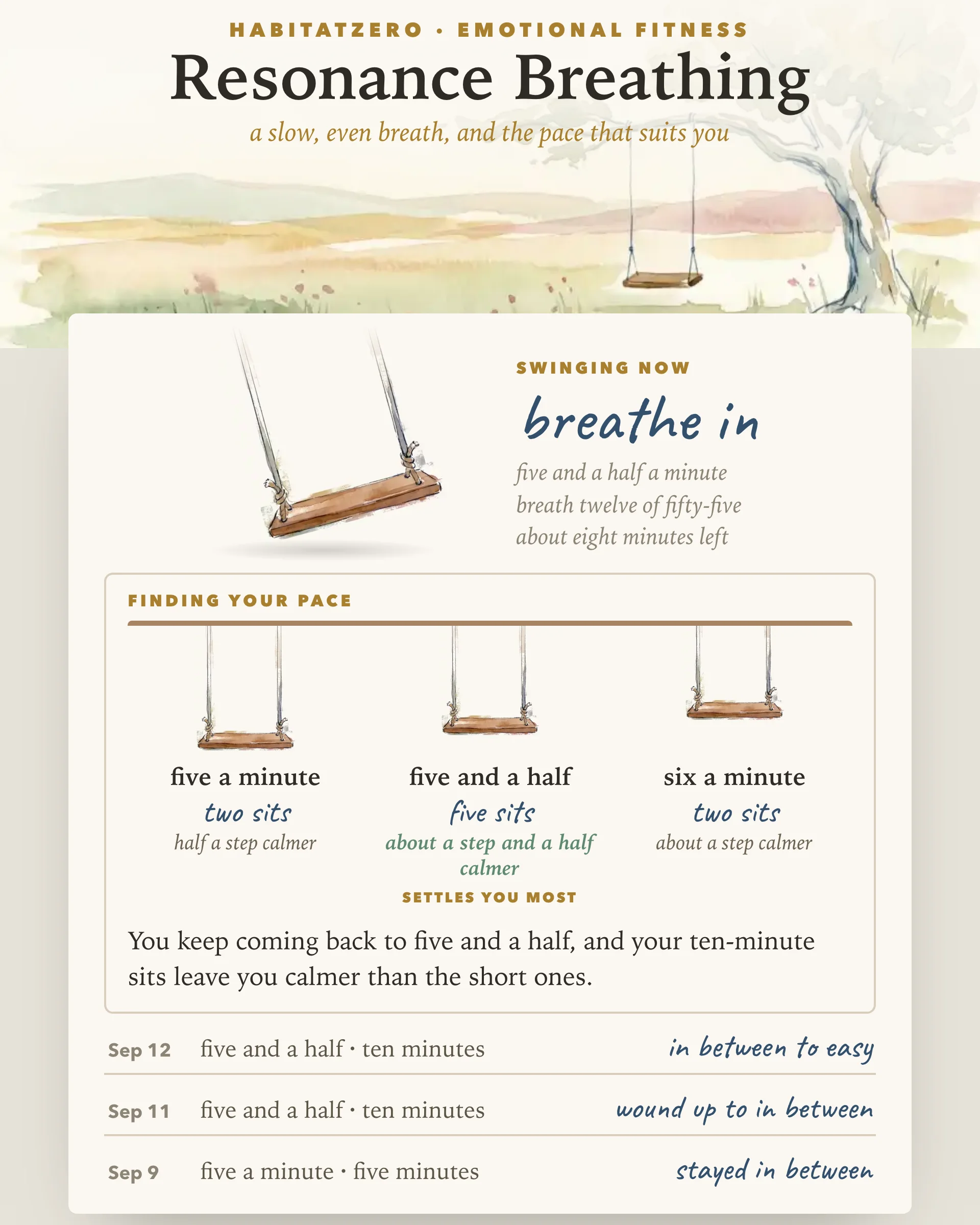
Resonance BreathingA silent painted swing paces slow, even breaths at five, five and a half or six a minute. Rate how settled you feel before and after each sit, and the log learns which pace you keep coming back to and whether longer sits leave you calmer.
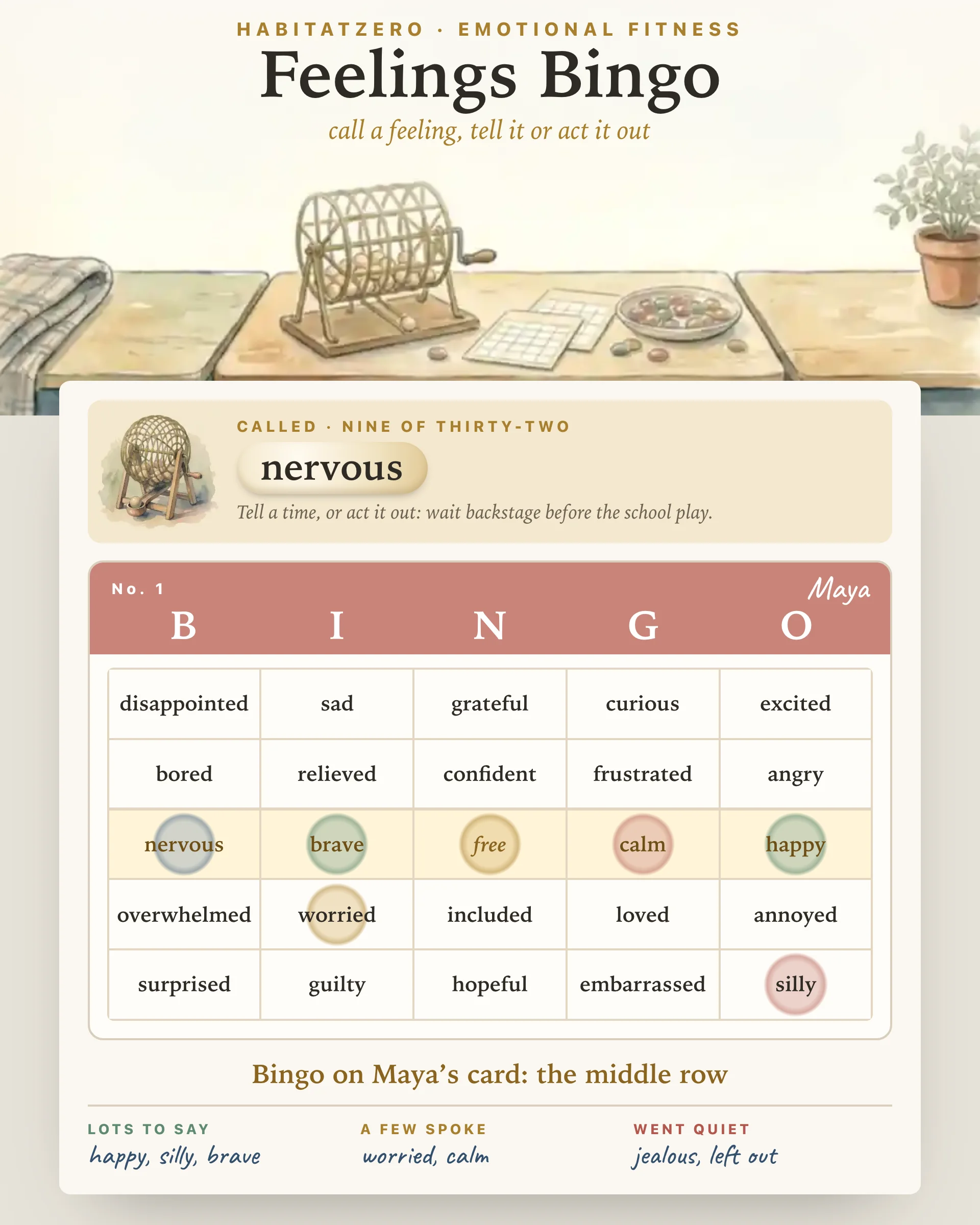
Feelings BingoDeal a differently shuffled card to every player, call feelings from the cage, and mark a square only when someone tells a time they felt it or acts it out. The page keeps the called list, checks each bingo and shows which feelings your group found easy or hard to talk about.
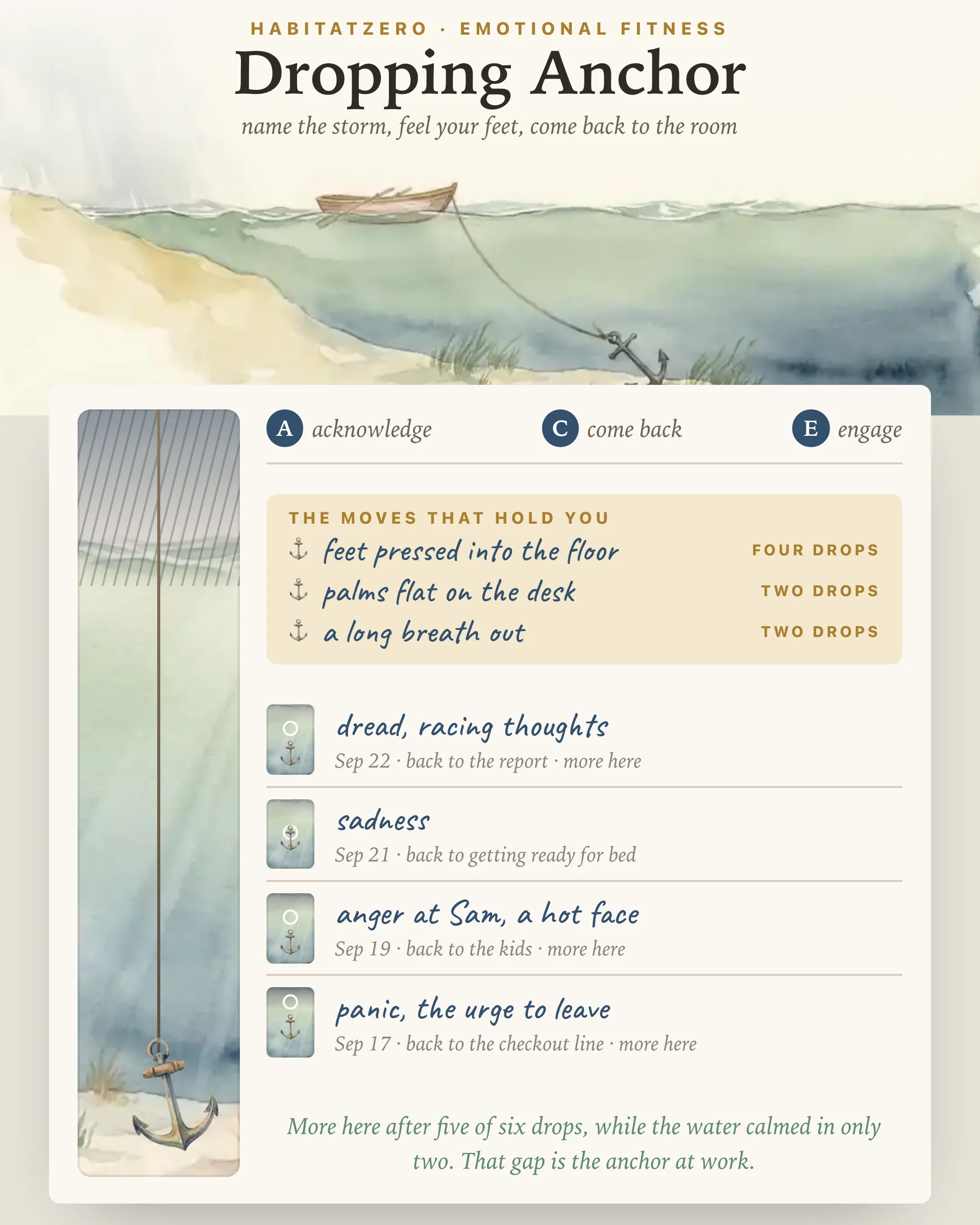
Dropping AnchorA silent, guided dropping anchor exercise: name what is showing up, come back into your body, return to what you were doing, and keep a log that shows which moves steady you and how present you become.
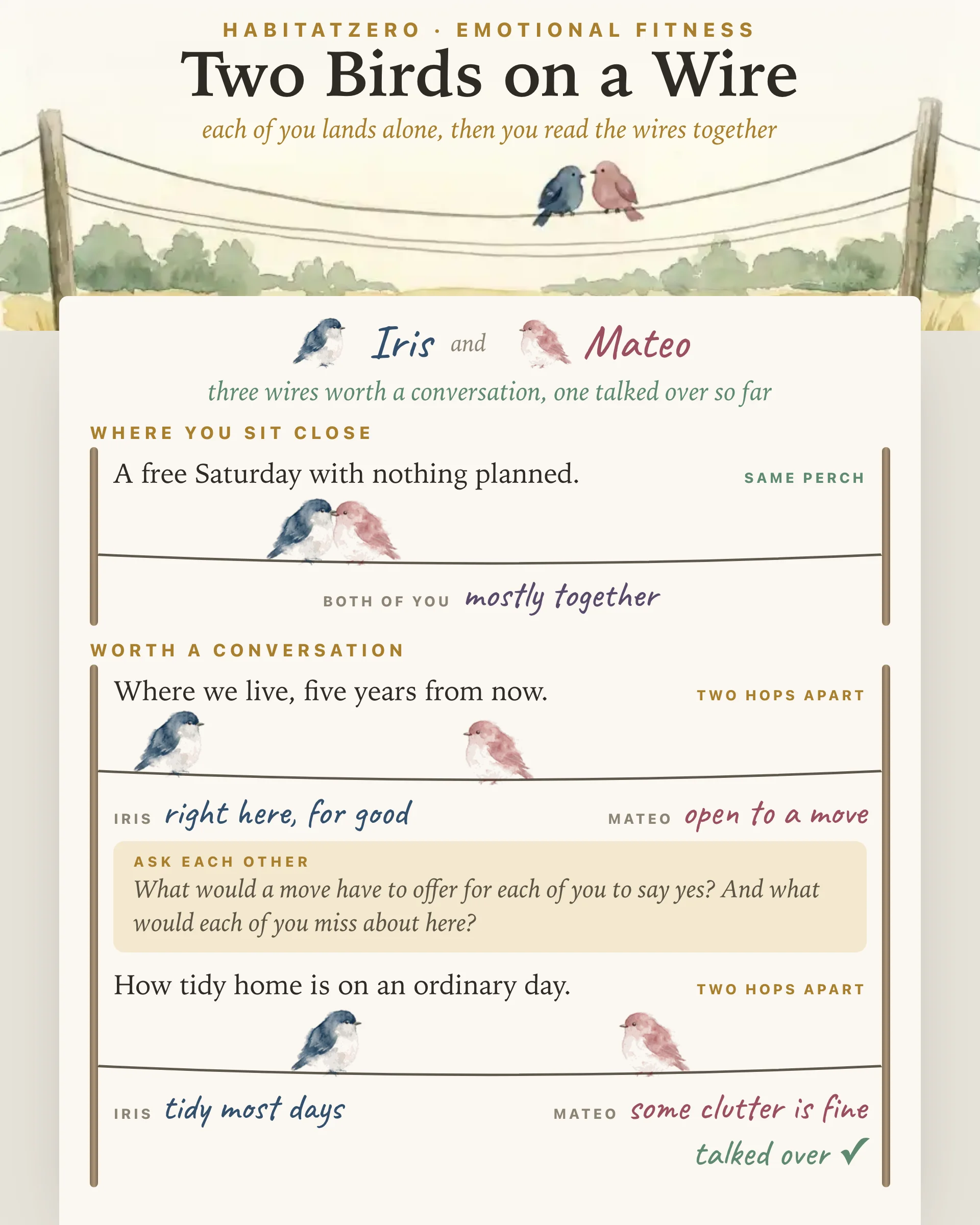
Two Birds on a WireA couples compatibility quiz you answer apart: each of you lands a painted bird on ten wires about money, time together, home, family and plans, then both birds land at once to show where you sit close and which differences deserve a conversation.
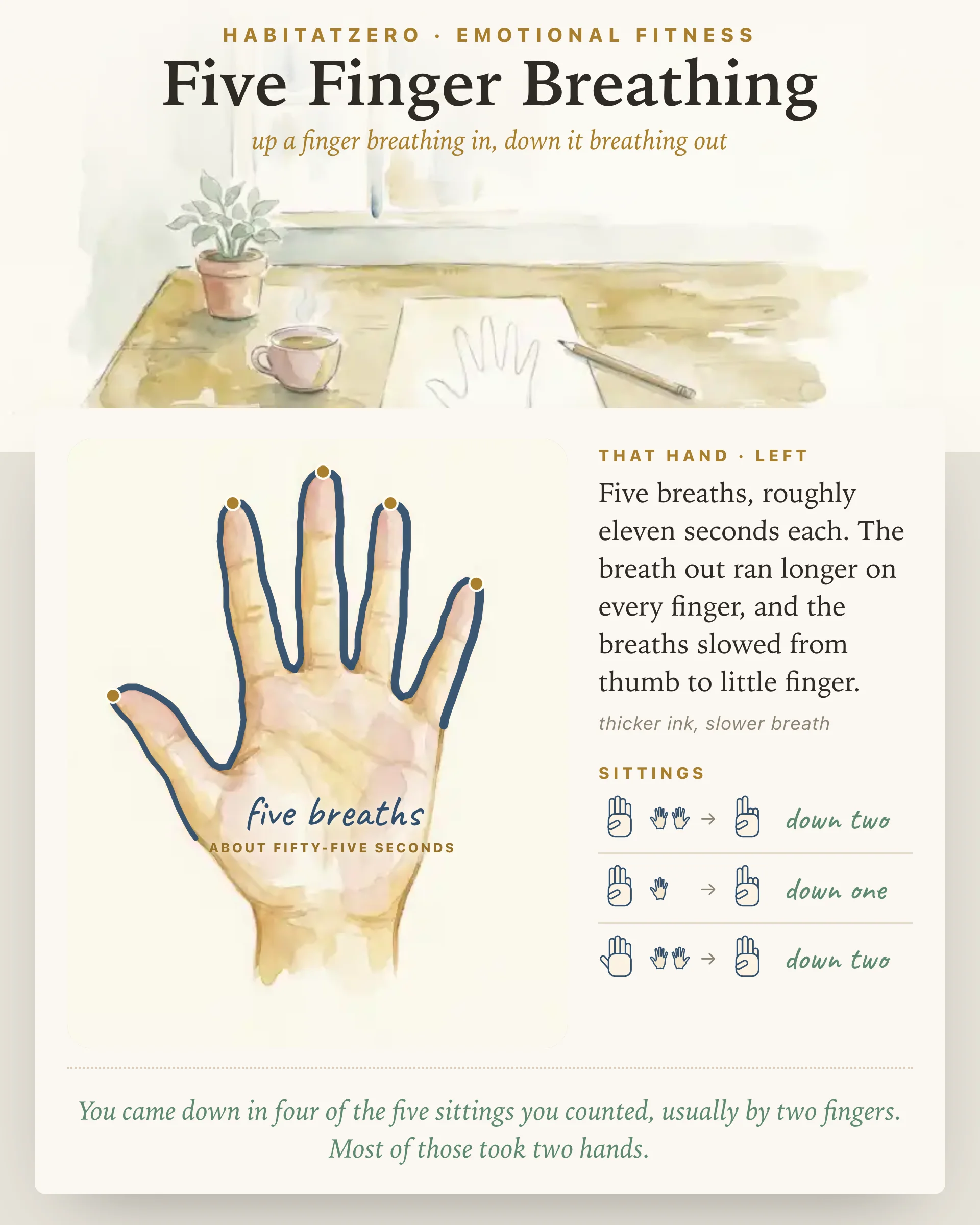
Five Finger BreathingTrace a painted hand at your own pace, up each finger on the breath in and down it on the breath out. The ink thickens wherever you slowed, and a before-and-after count on your fingers shows what a hand or two of breathing does for you.
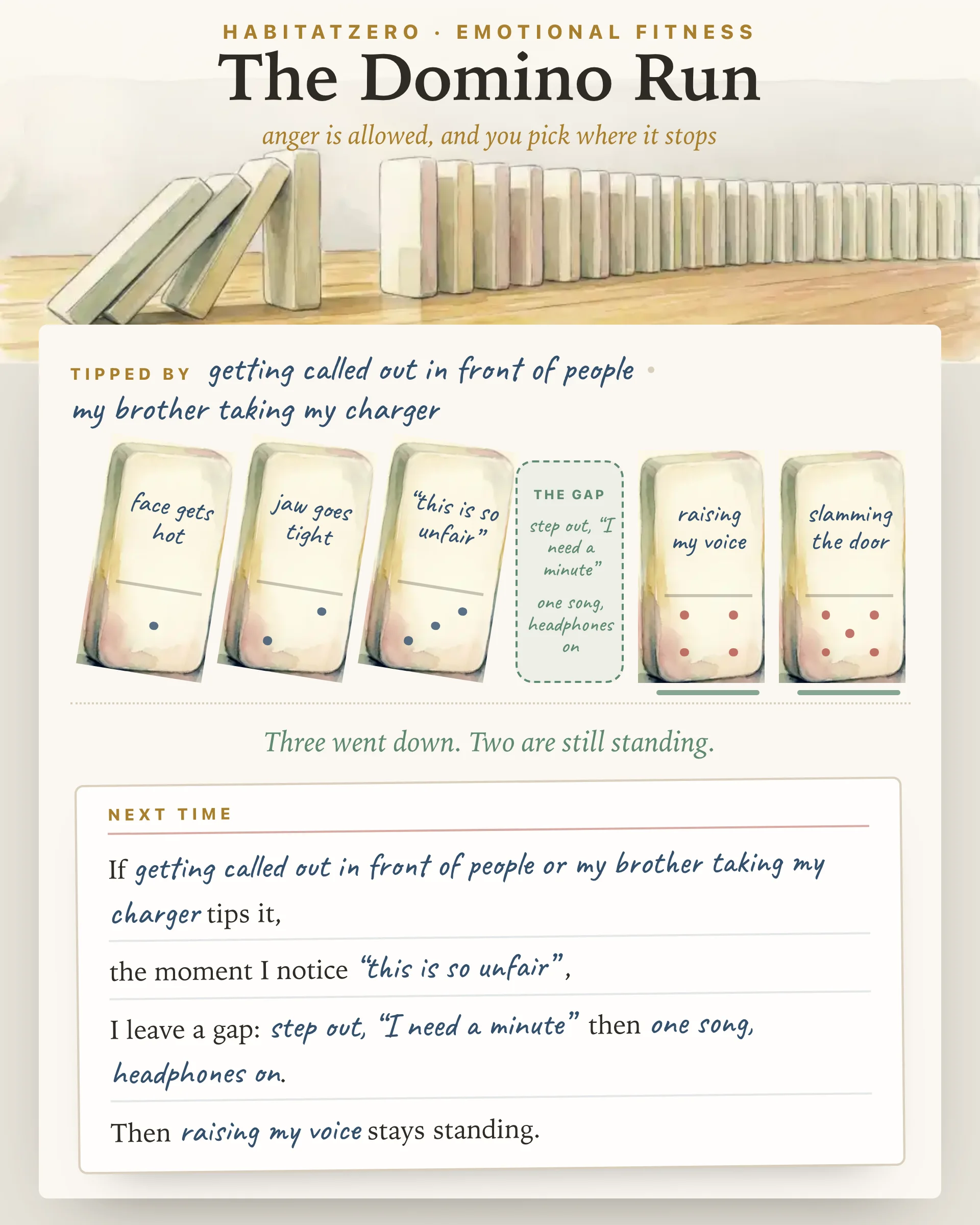
The Domino RunAnger practices a teen can do alone, set up as a domino run: what tips it, the signs that fall first, a gap before what they would take back, then a tip that shows what stays standing and a script for making it right.
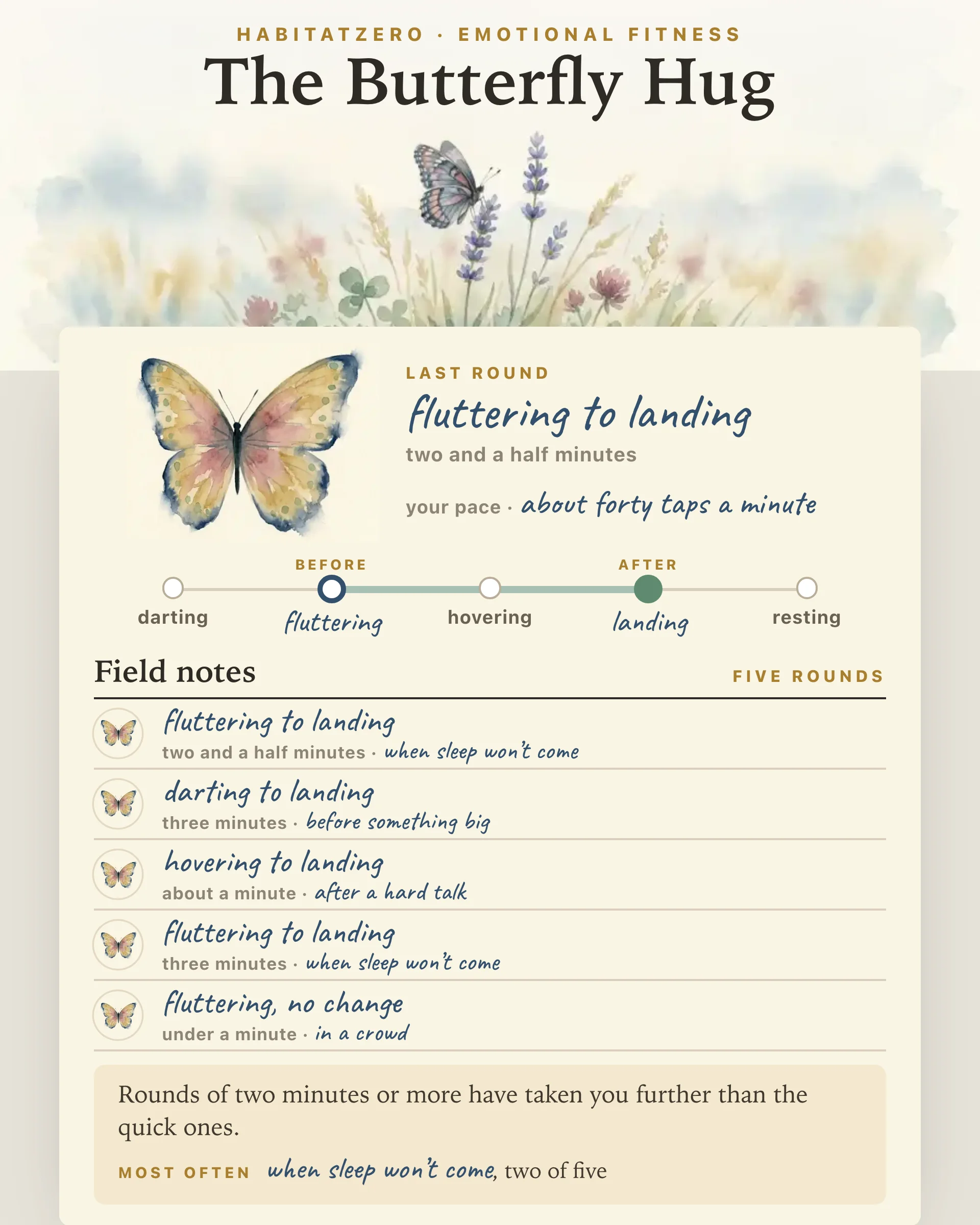
The Butterfly HugTap the painted wings to find your own slow pace, then let them keep it in silence while you hug. Mark how settled you are before and after, and your field notes learn which rounds and moments help you most.
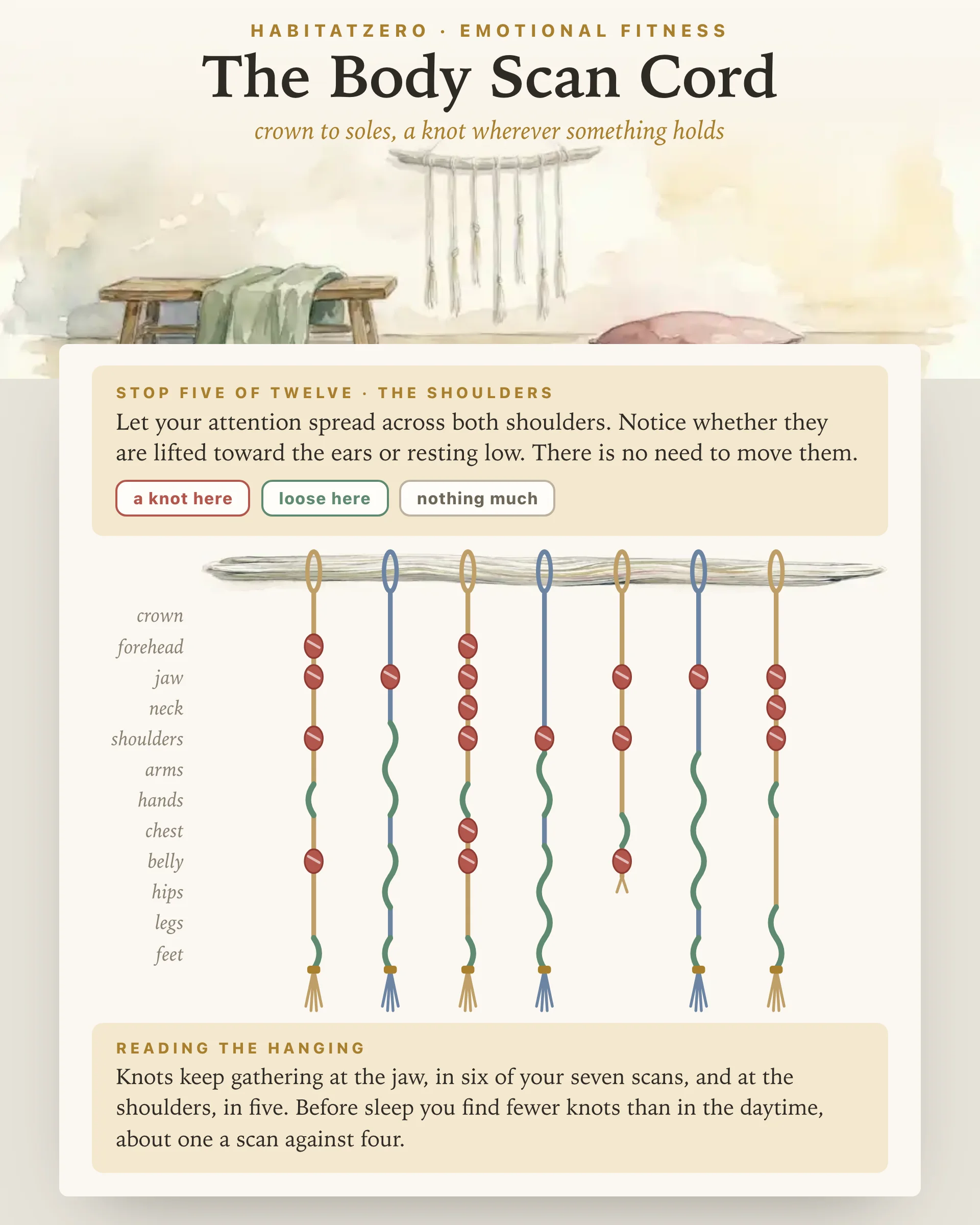
The Body Scan CordA silent body scan script you move through at your own pace, from the crown to the soles, marking each place as a knot, loose or nothing much. Every scan hangs as a cord, and the hanging shows where tension keeps returning and how your scans before sleep differ from daytime ones.
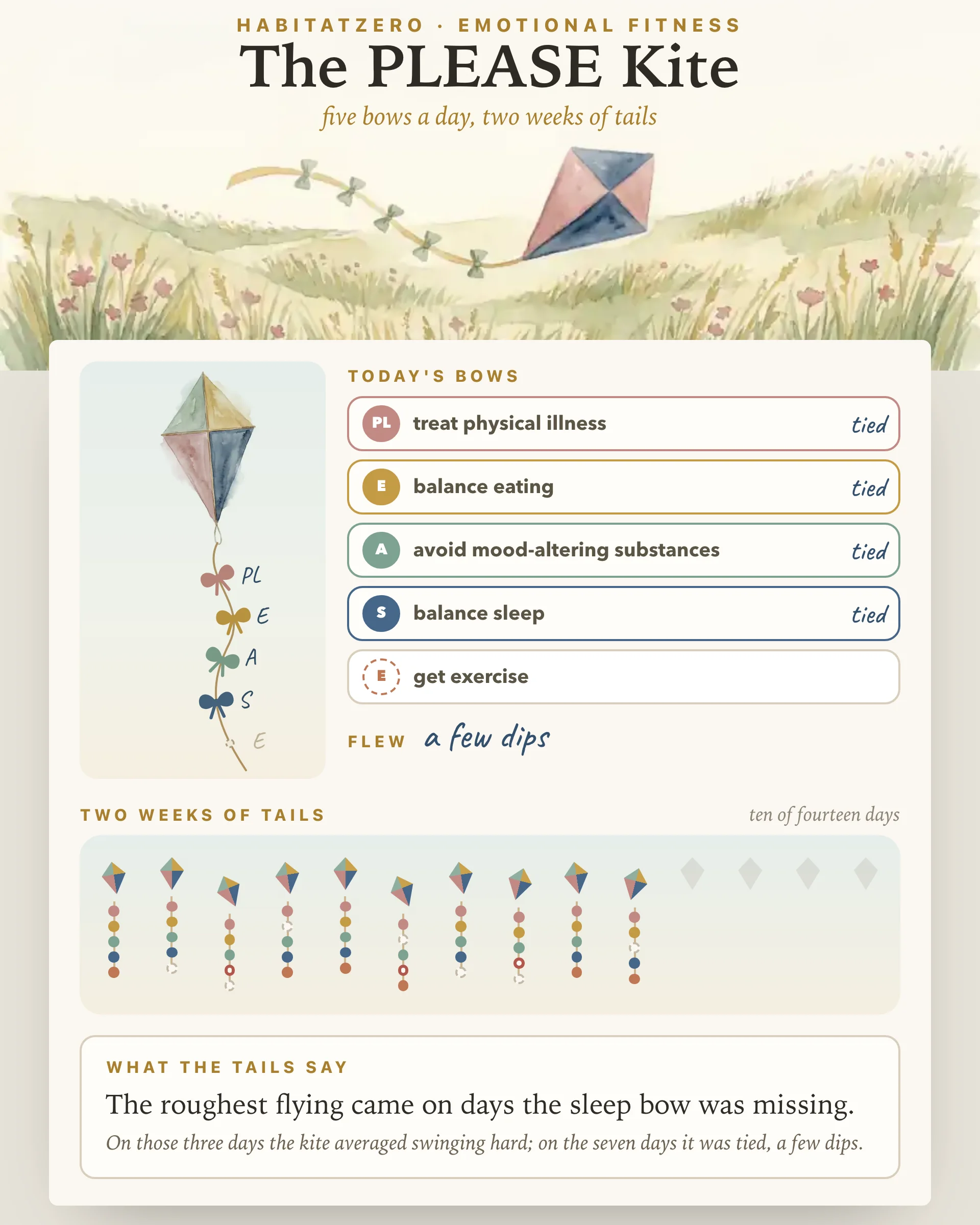
The PLEASE KiteTie a bow on the kite's tail for each PLEASE skill you kept today and say how steady the day felt. After a week or two, the tails show which missing bow lines up with your roughest days.
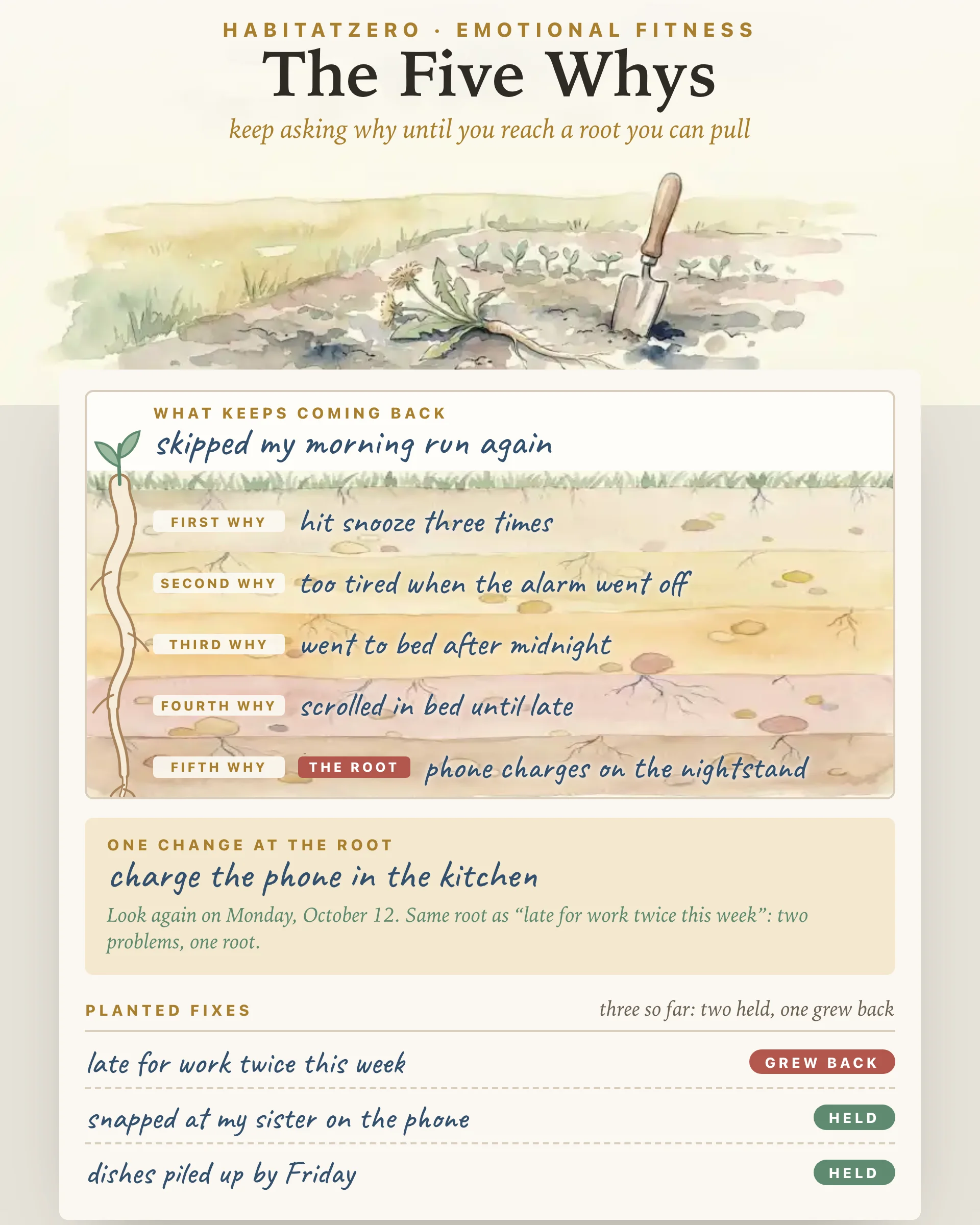
The Five WhysDig one recurring problem down layer by layer until you reach a root you can change, plant a single fix with a day to look again, and watch which fixes held and which problems grow from the same root.
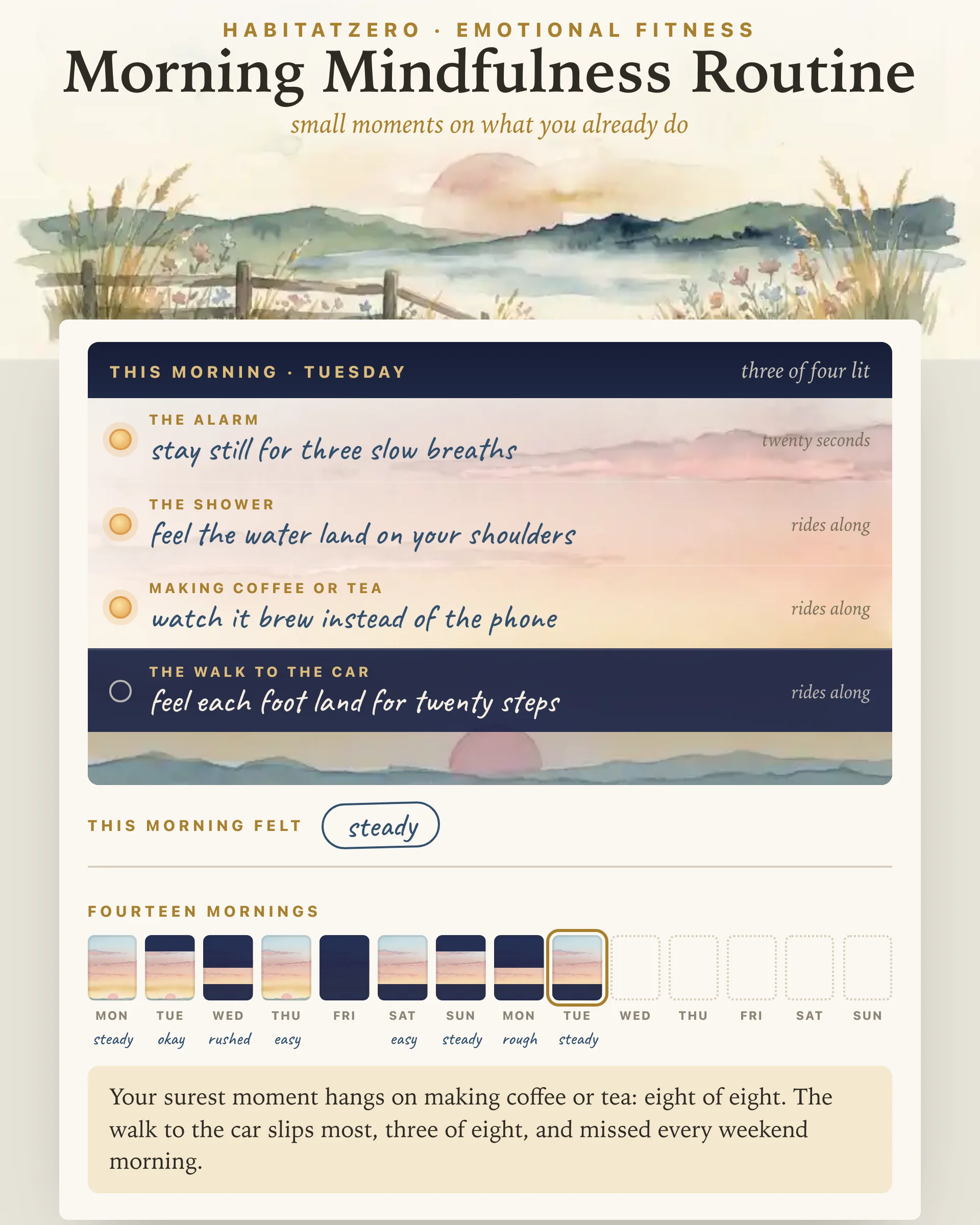
Morning Mindfulness RoutineHang a few small mindful moments on things you already do each morning, sized to the time you really have. Light each one as it happens, and after two weeks the sheet shows which held and how those mornings felt.
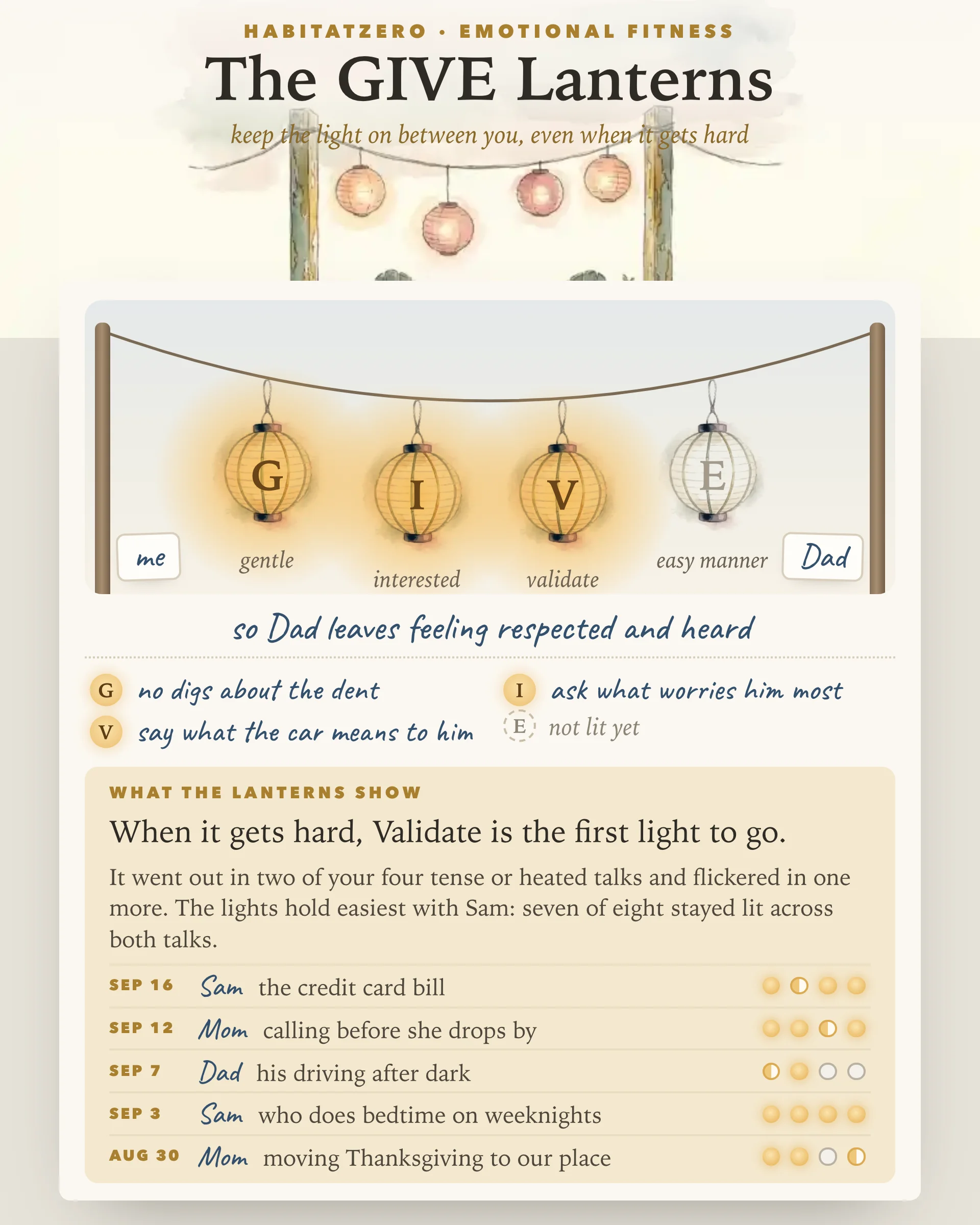
The GIVE LanternsLight four paper lanterns before a hard talk, one small move each for gentle, interested, validate and easy manner, then mark which stayed lit. After a few talks it shows which light goes out first under pressure, and with whom they hold best.
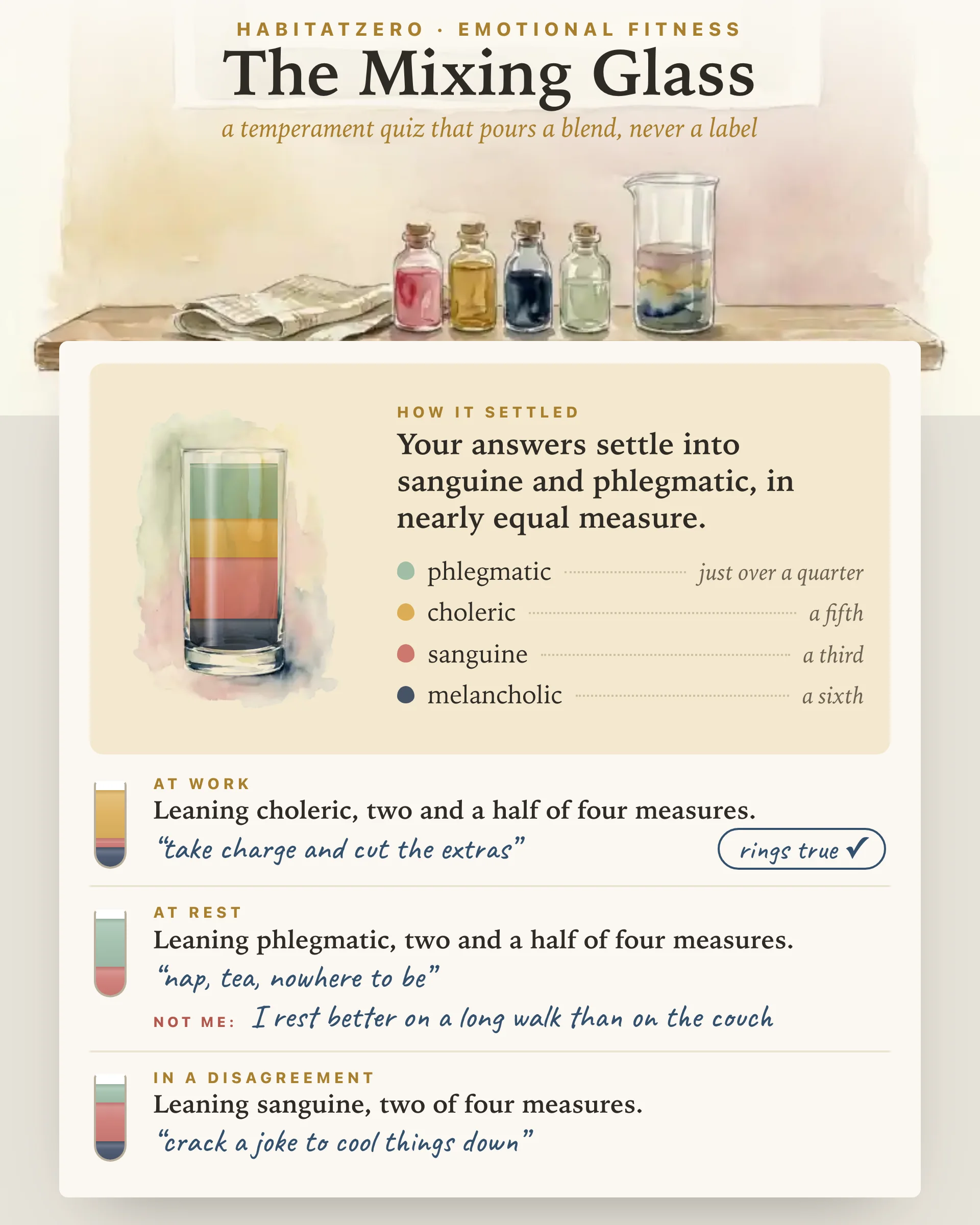
The Mixing GlassTwelve everyday moments pour sanguine, choleric, melancholic and phlegmatic into a glass that settles into your own blend. See how the mix shifts at work, at rest and in a disagreement, and mark where it misses.
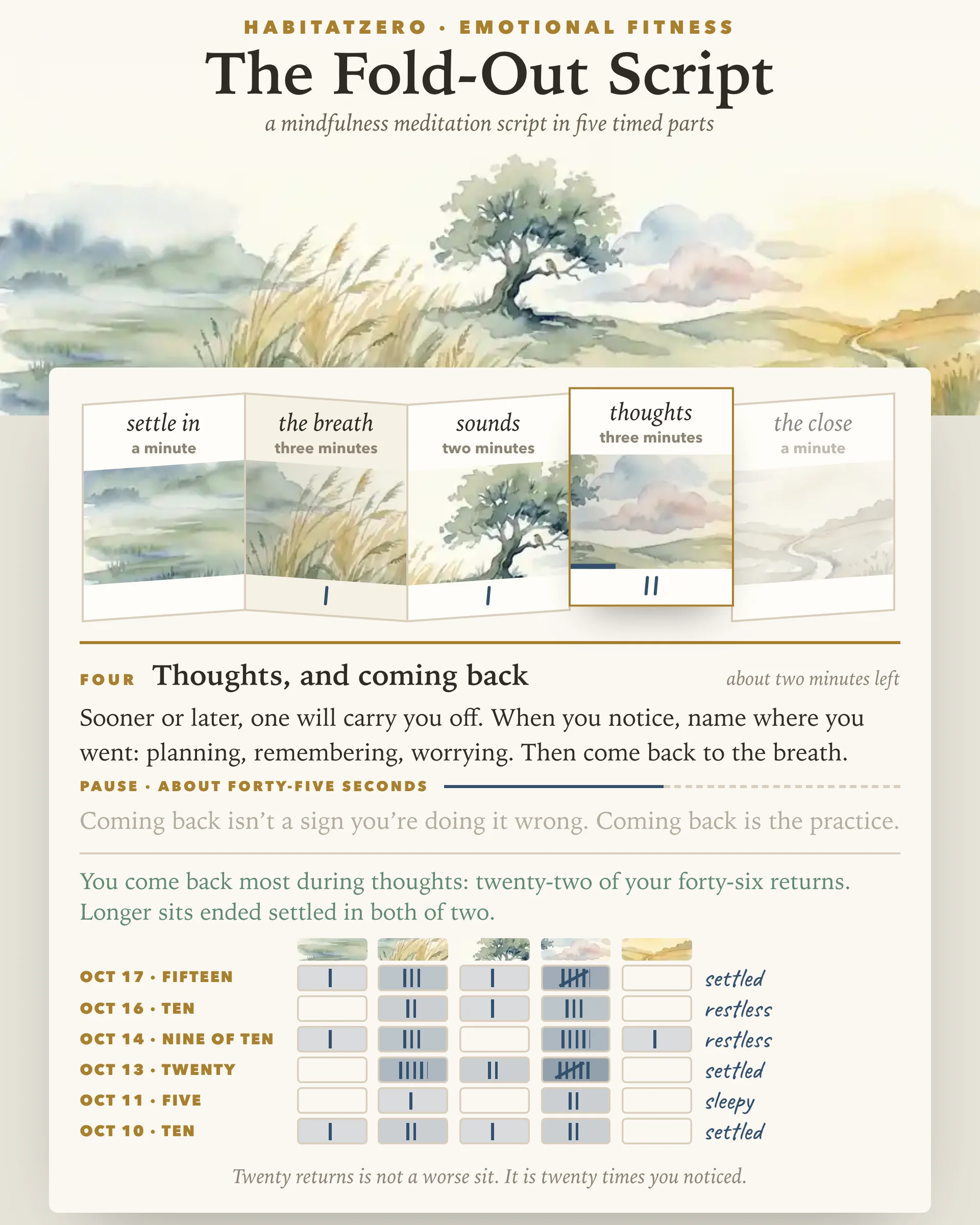
The Fold-Out ScriptA mindfulness meditation script in five fold-out panels, from settling in to the close, with pauses timed to the length you pick. Read it to yourself or aloud to a group, mark each time you notice you drifted and came back, and your kept sits show where attention wanders most.
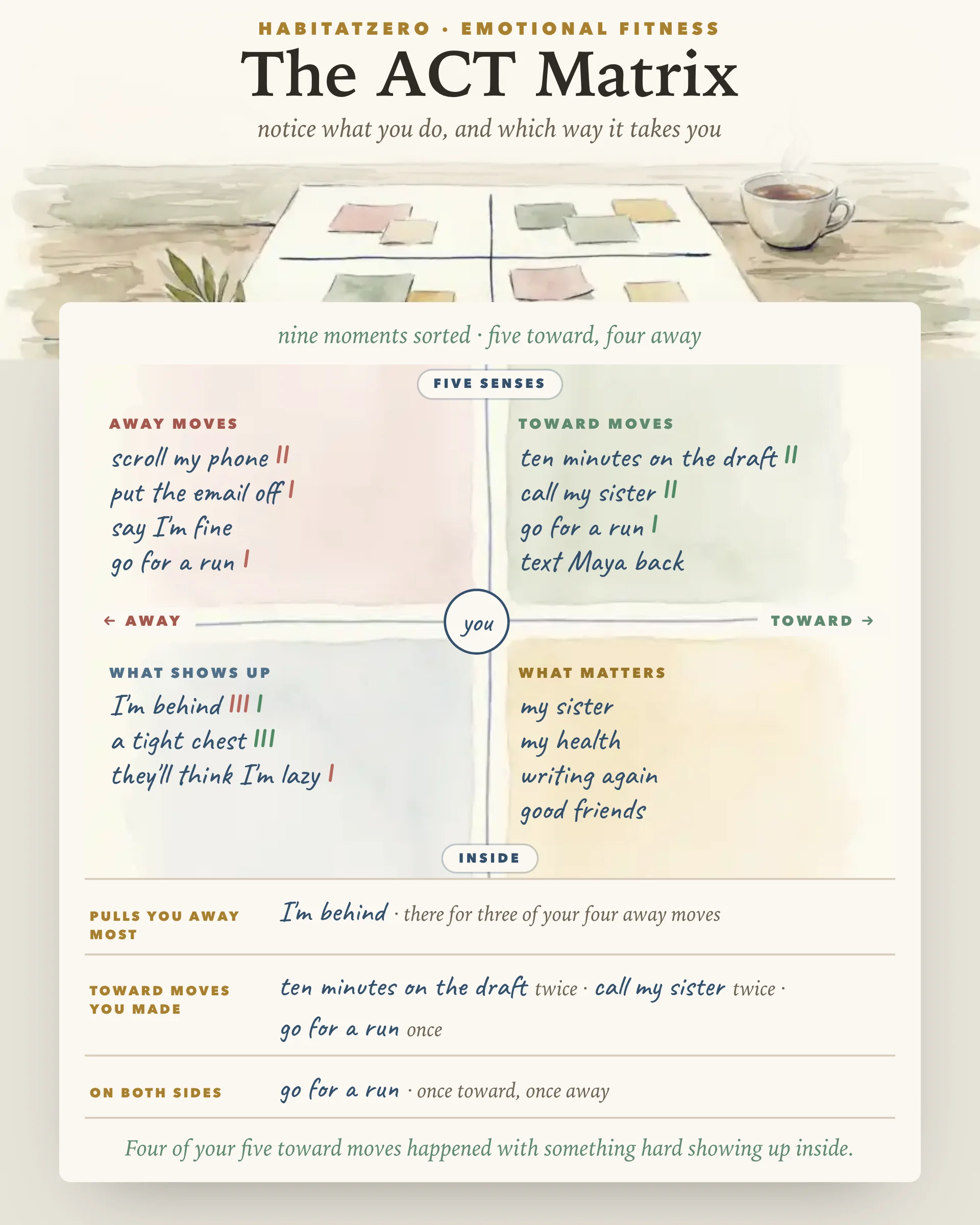
The ACT MatrixDraw the four corners of your ACT Matrix, then sort real moments toward or away as they happen, and watch the marks show which inner stuff pulls you off course and which toward moves you actually make.
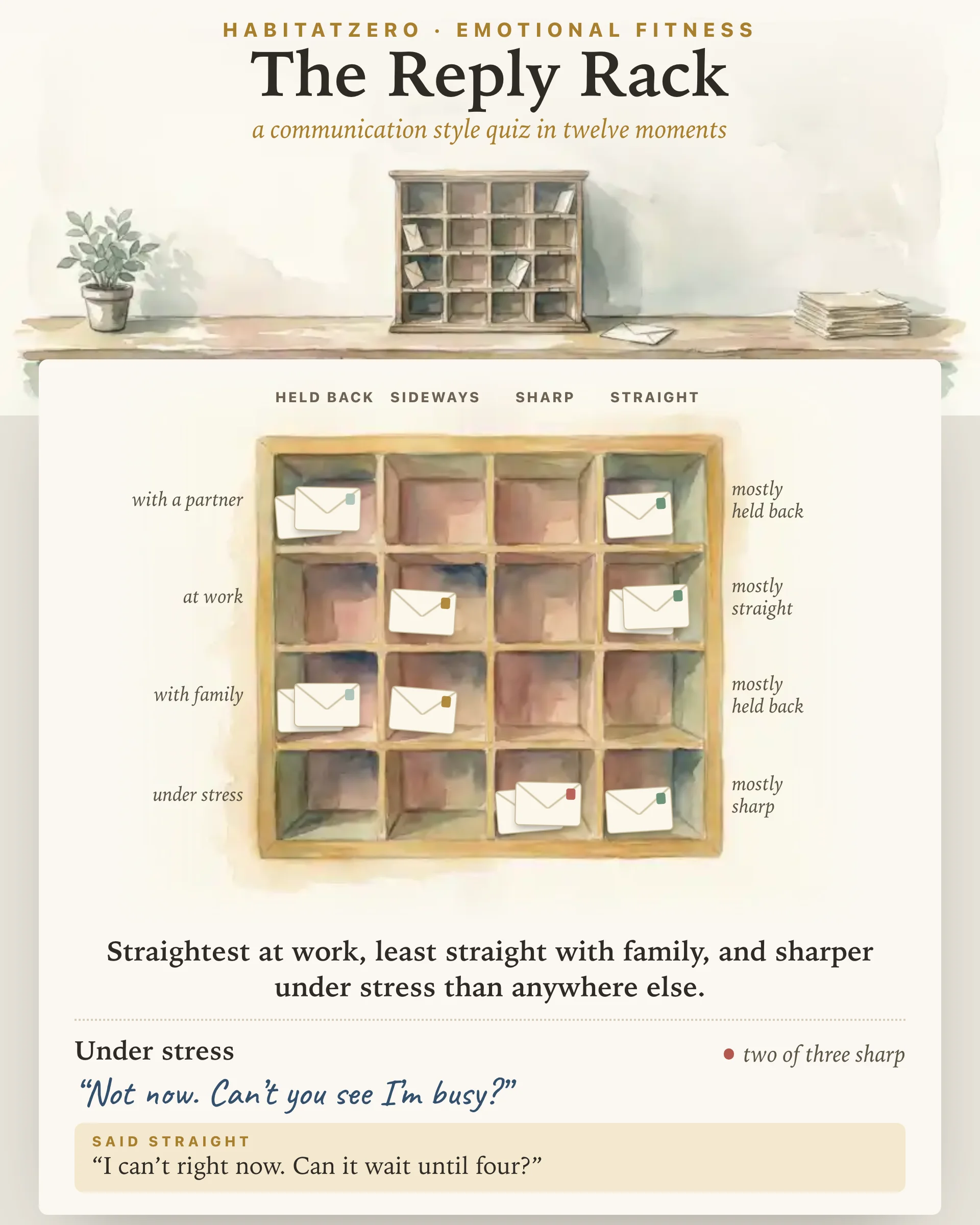
The Reply RackA communication style quiz in twelve everyday moments: each reply you pick files an envelope into a painted rack, and the reading shows how you lean with a partner, at work, with family and under stress, with a straight way to say each one.
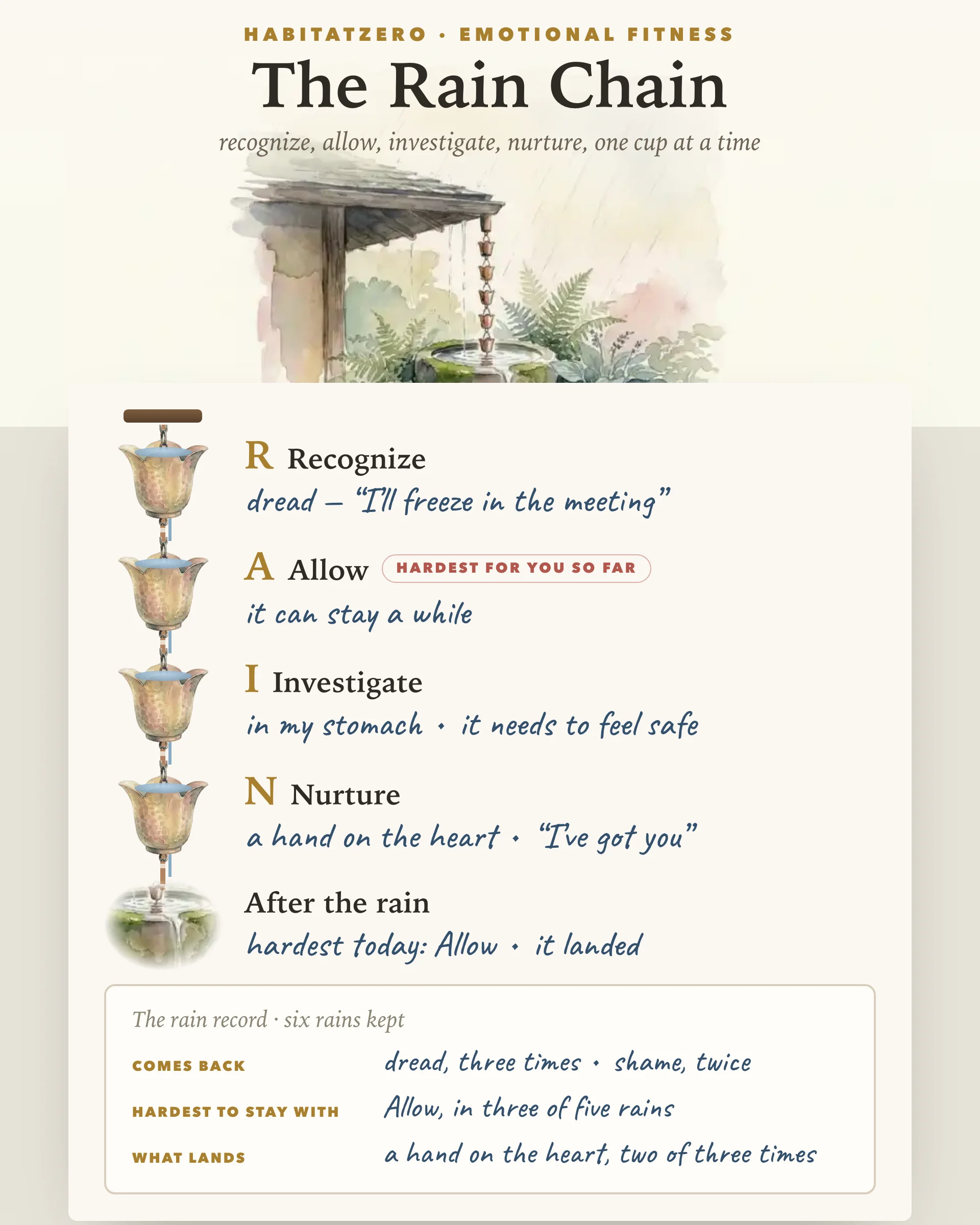
The Rain ChainCarry one hard feeling down four painted cups, recognize, allow, investigate and nurture, in your own words and at your own pace. Keep each rain, and the record starts to show which feelings return, which cup is hardest and what kindness lands.
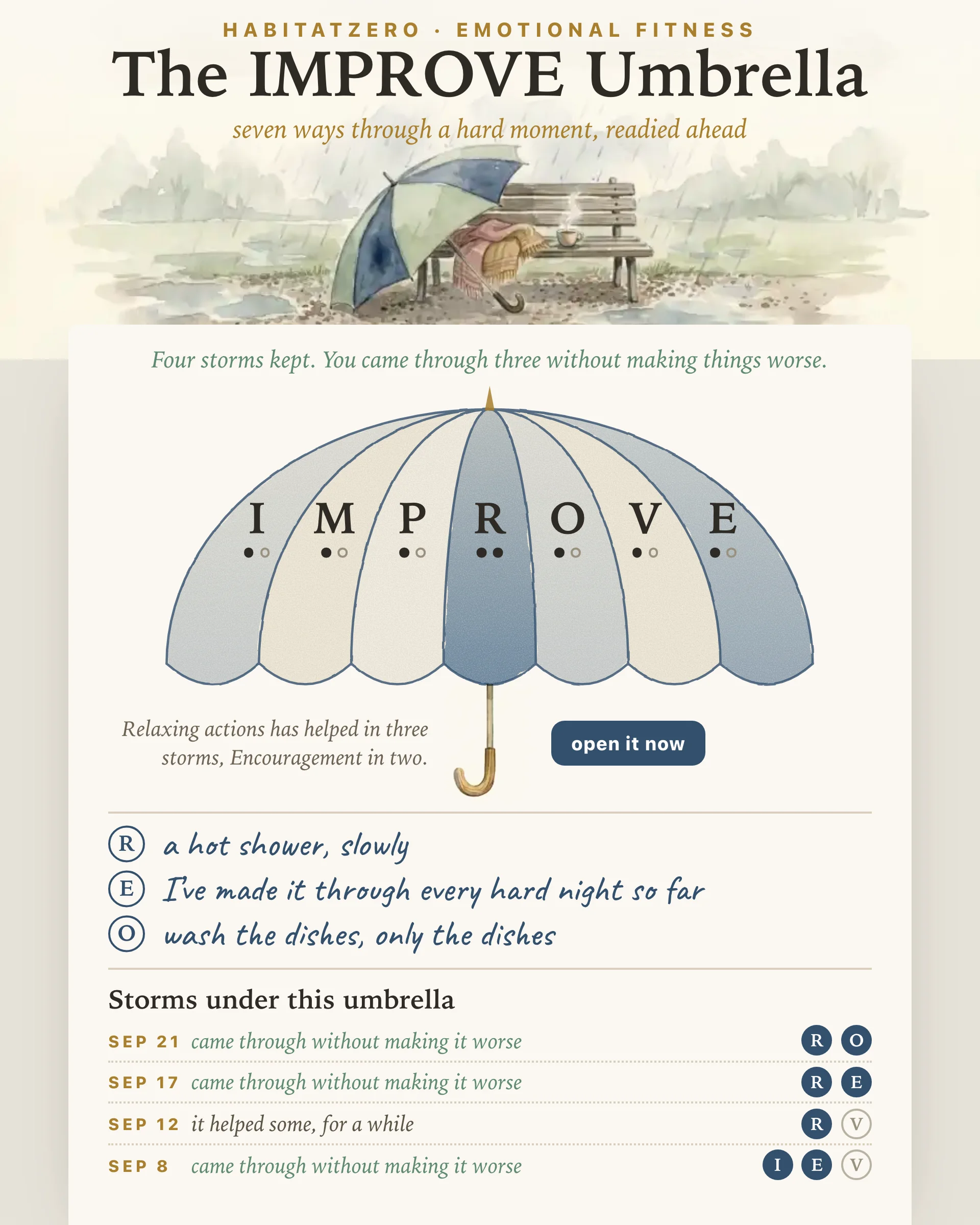
The IMPROVE UmbrellaGive each of the seven DBT IMPROVE skills a line or two on the panels of an umbrella, open it when a hard moment hits, and mark what helped. The panels that get you through turn a deeper blue with every storm.
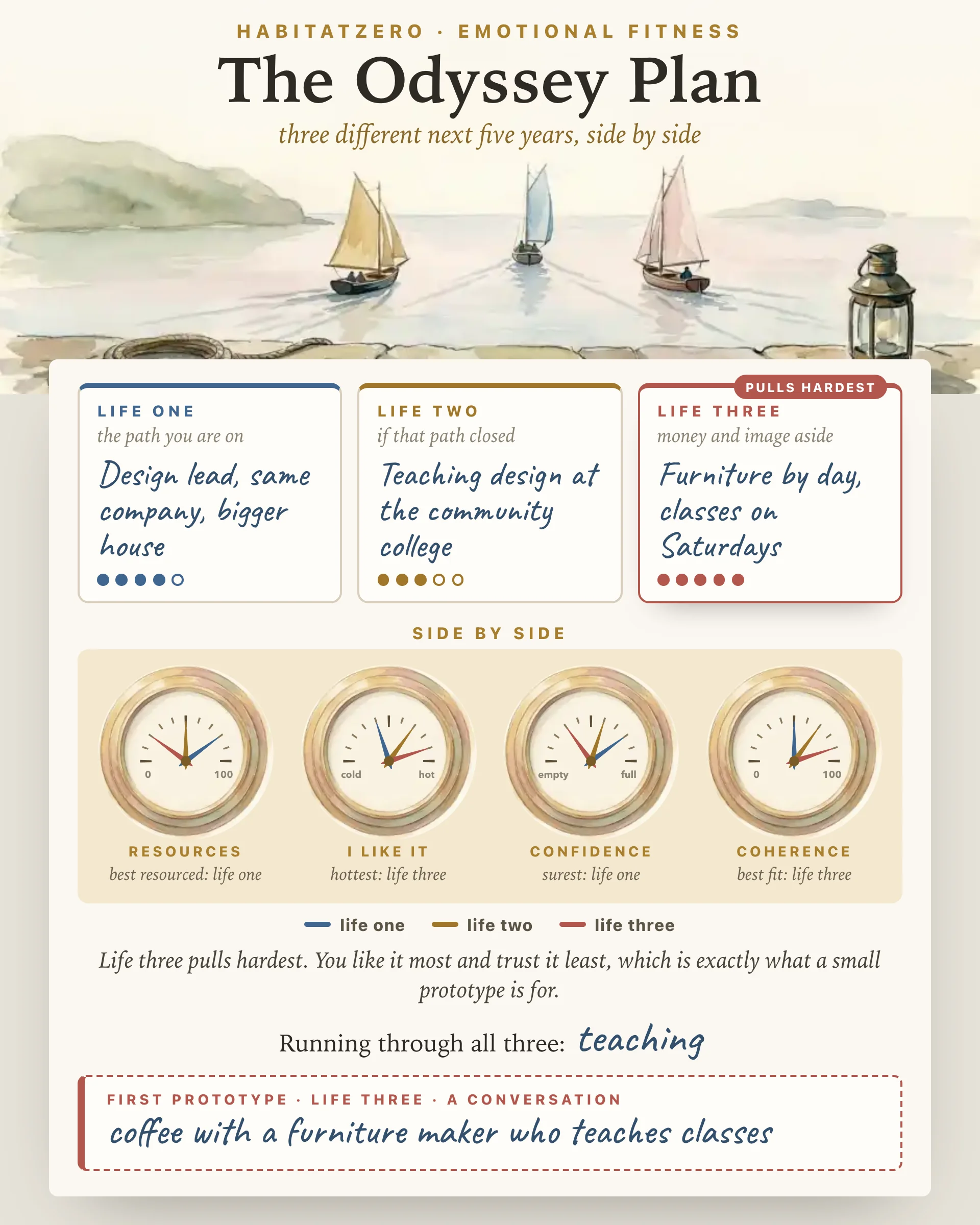
The Odyssey PlanSketch three different five-year lives, each with a six-word title, a route and four brass gauges, then read them side by side: which one pulls hardest, what runs through all three, and the first small prototype worth trying.
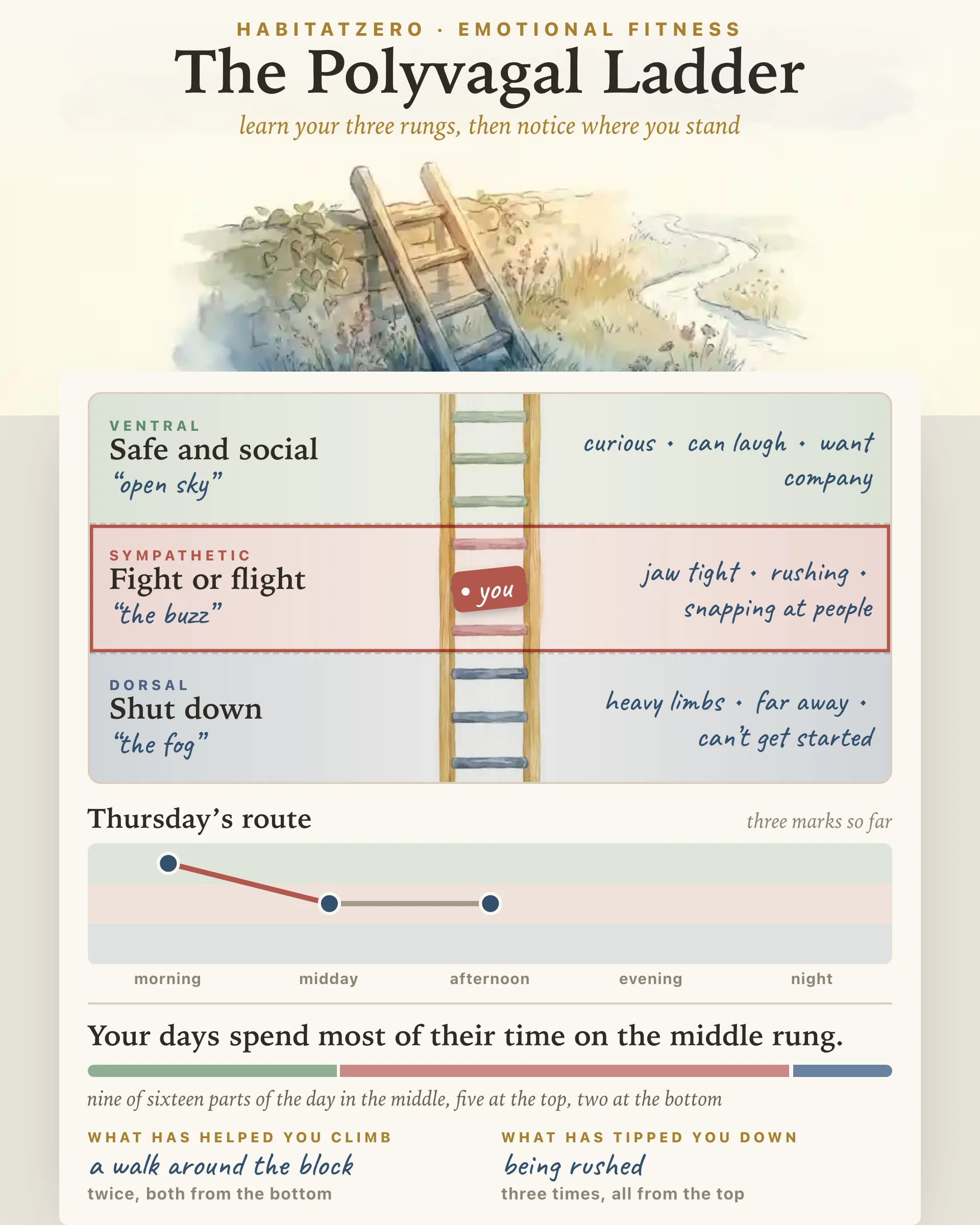
The Polyvagal LadderPut safe and social, fight or flight and shut down into your own words, mark the rung you are on through the day, and watch your ladder learn what actually helps you climb.
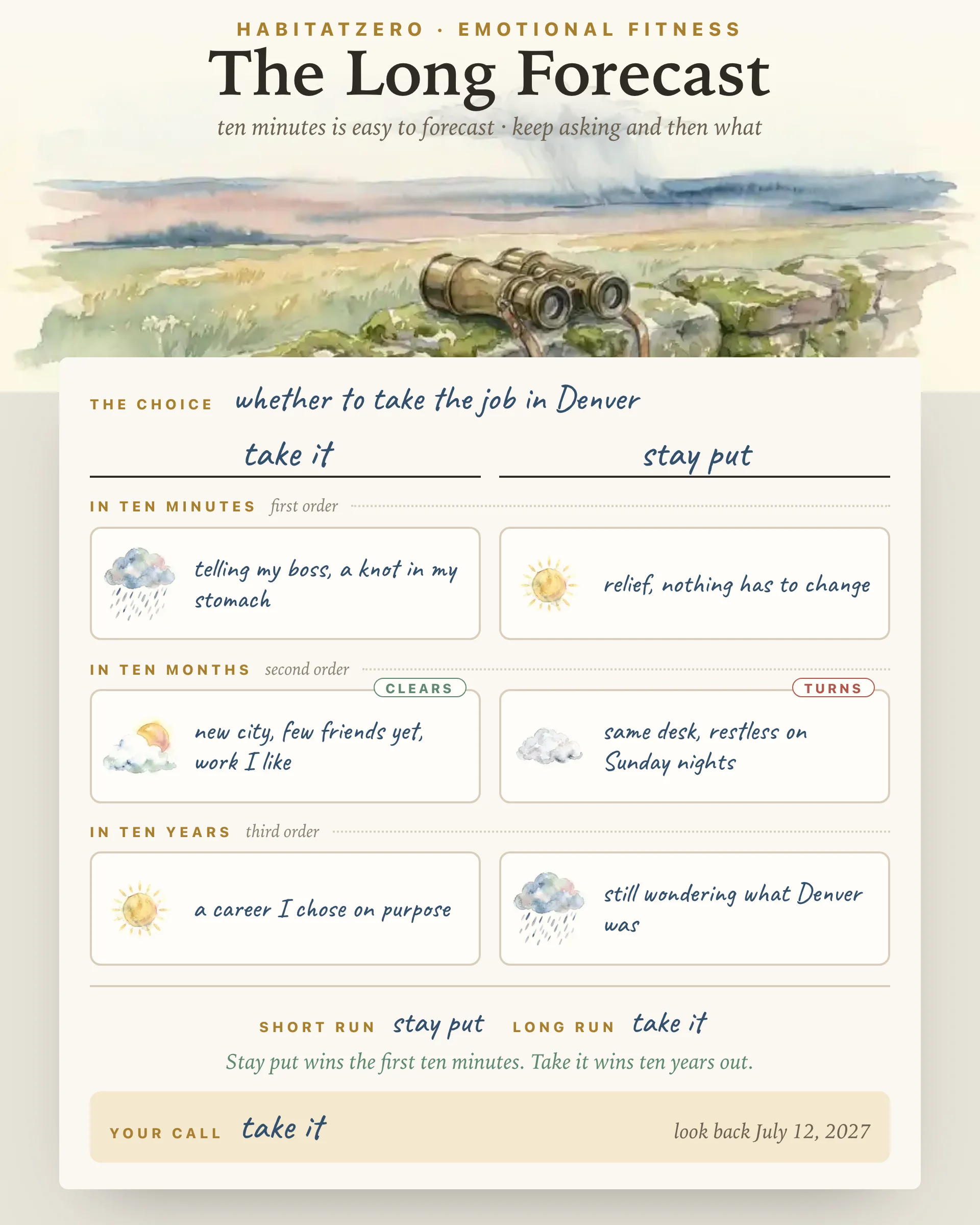
The Long ForecastForecast each way of a hard choice at ten minutes, ten months and ten years with painted skies, see where a quick win turns into a later cost, then make your call and date a look-back.
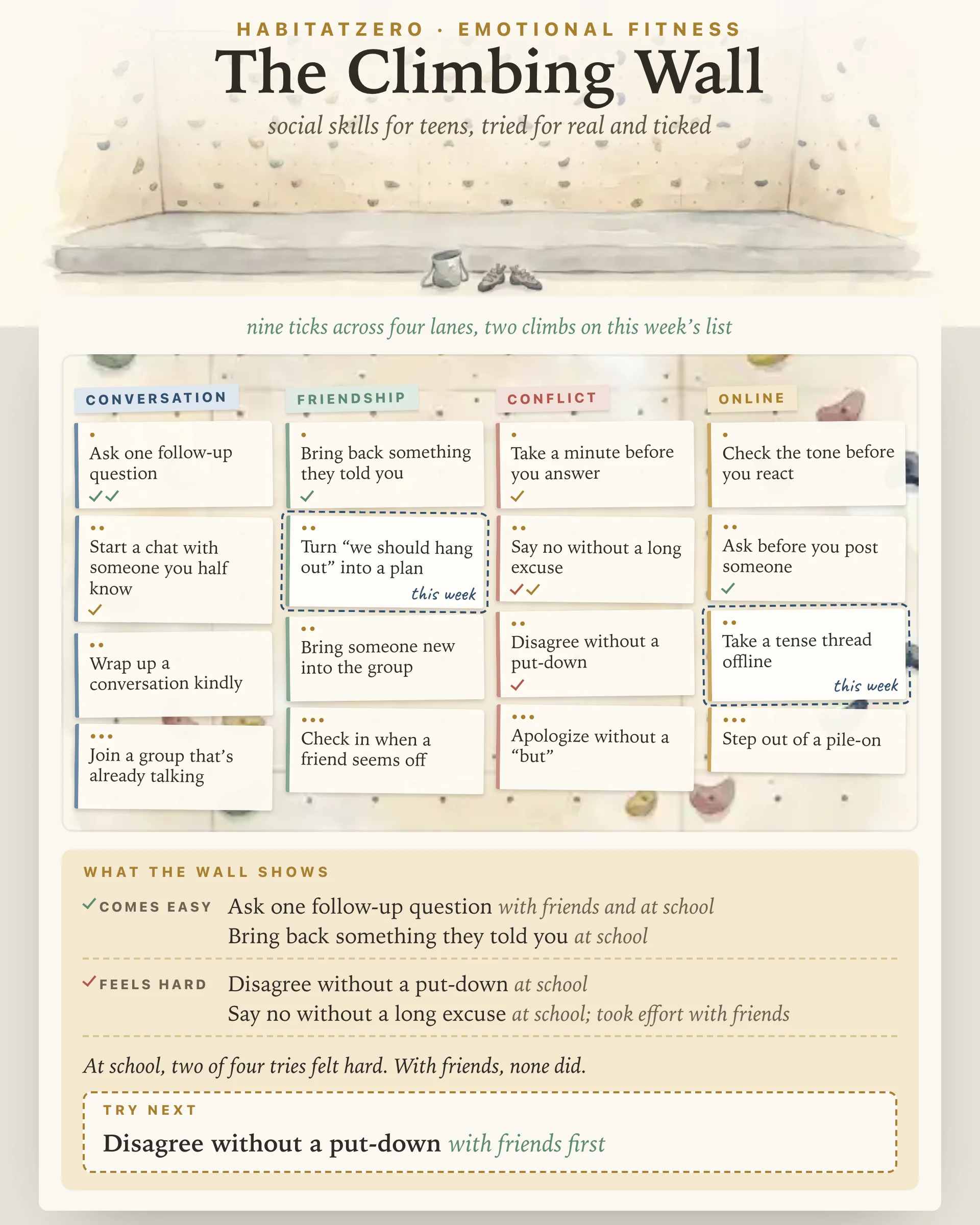
The Climbing WallSixteen social skills on a painted climbing wall, graded from warm-up to stretch. Pick three to try for real this week, tick how each went and where, and the wall shows what comes easy, what still feels hard and which climb to try next.
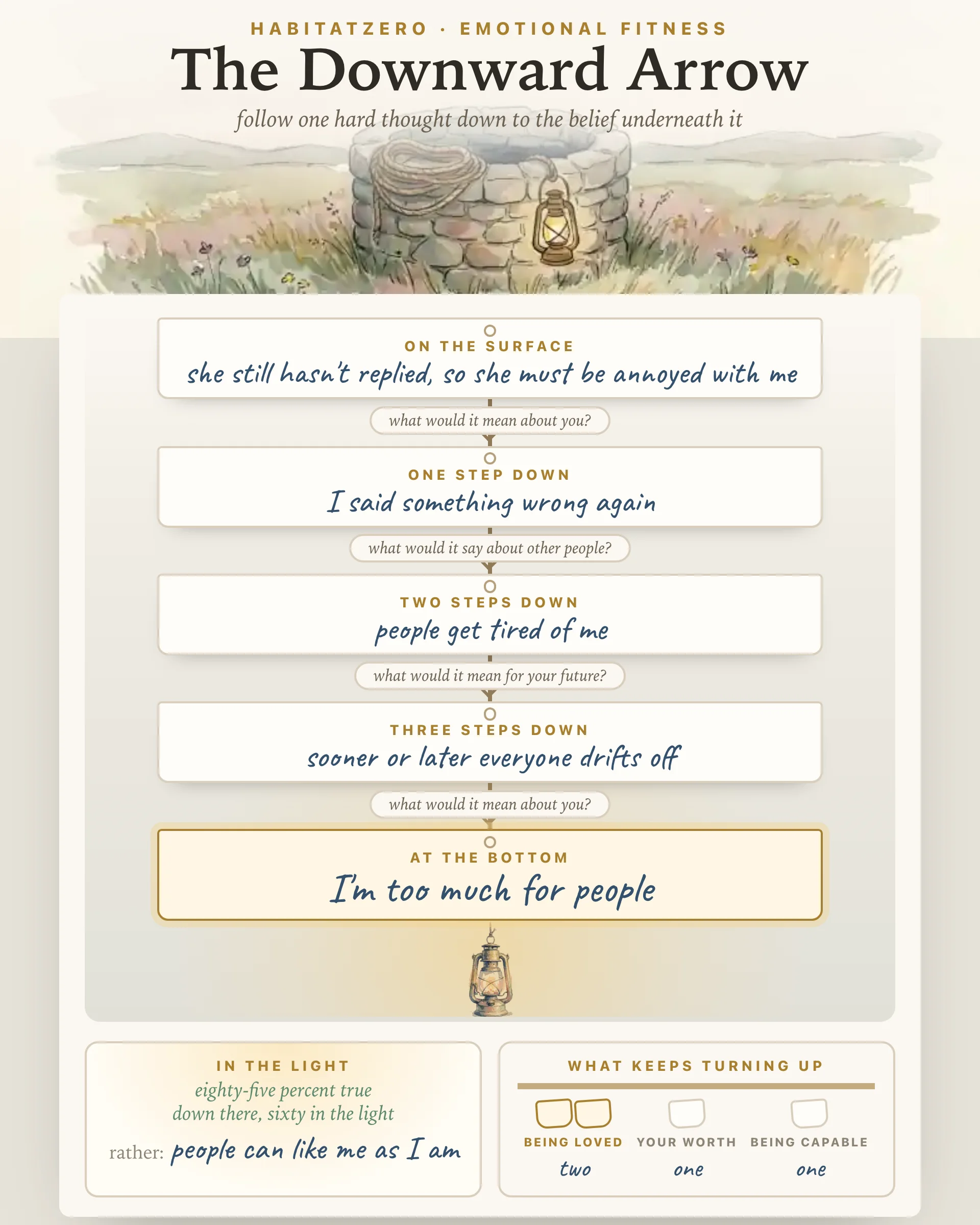
The Downward ArrowLower one upsetting thought down a line, asking what it would mean each time, until the belief underneath it surfaces. Then hold that belief up to the light and see which themes keep turning up at the bottom.
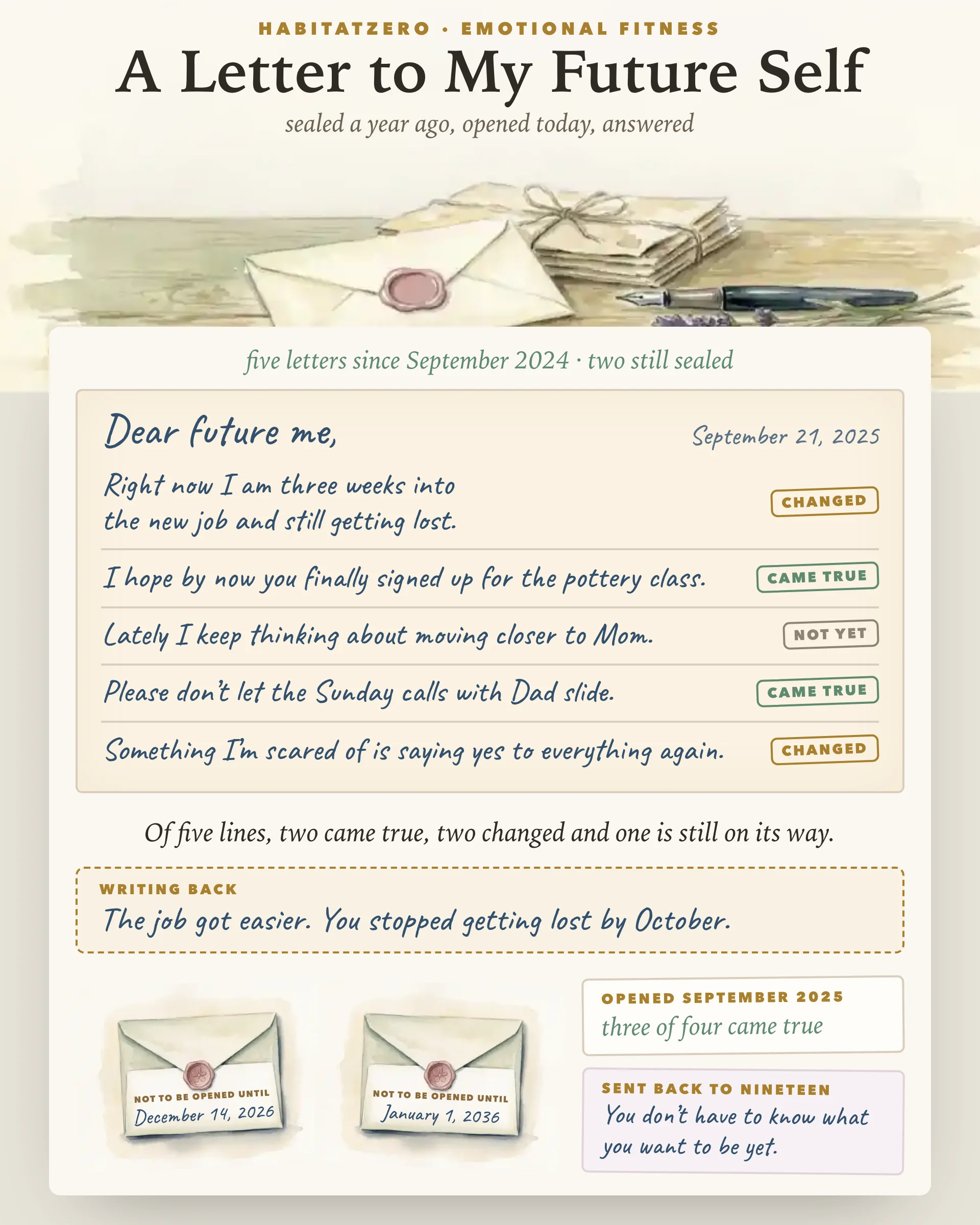
A Letter to My Future SelfWrite to the person you are becoming from gentle prompts, seal the letter until a day you choose, then open it, mark what came true and write back. Every letter stays in a bundle you can reread for years.
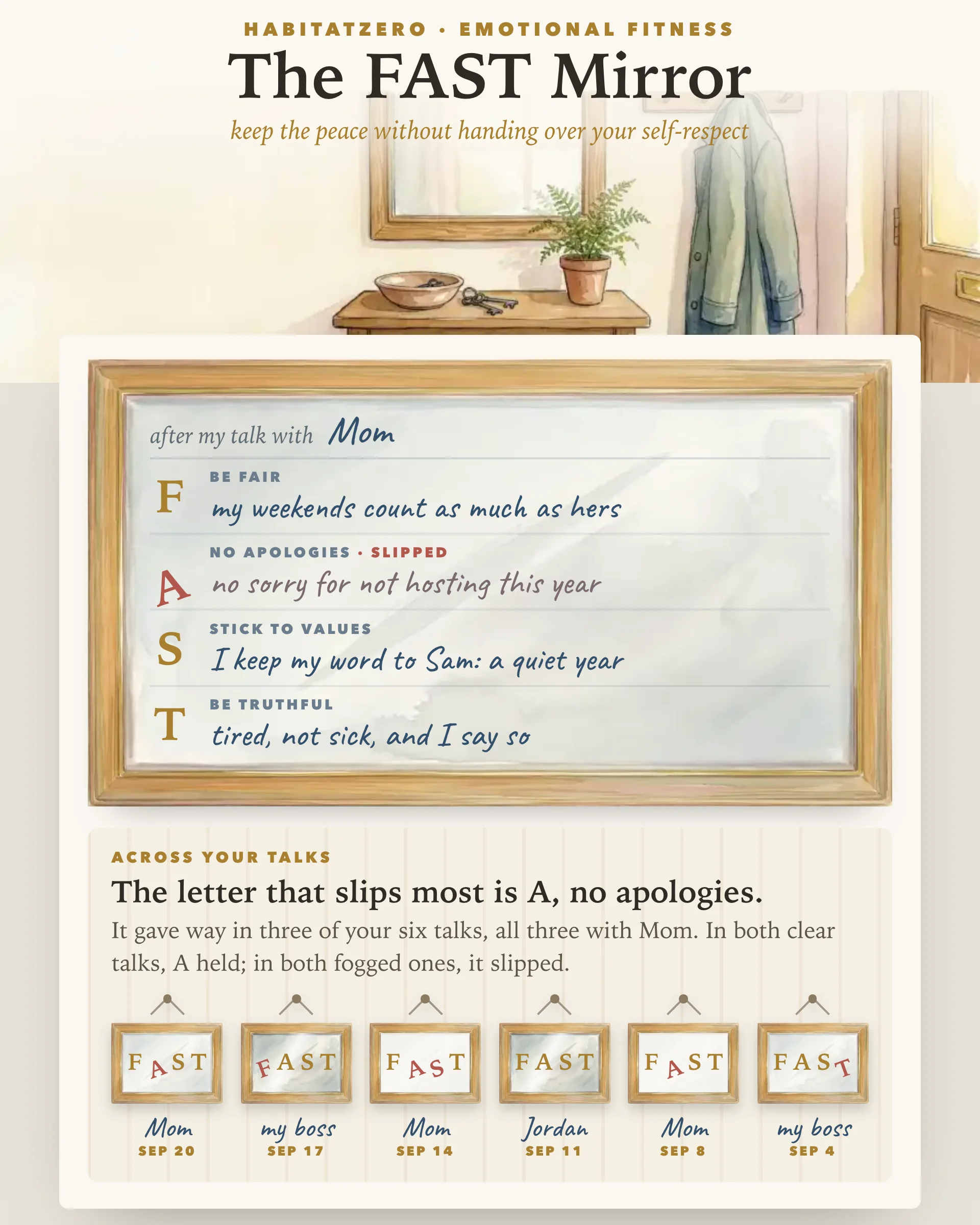
The FAST MirrorWrite your four FAST lines on a hall mirror before a talk where keeping the peace could cost you, then mark what slipped and how you walked away. Every talk hangs on a wall that shows which letter gives way, with whom, and what your clear talks kept.
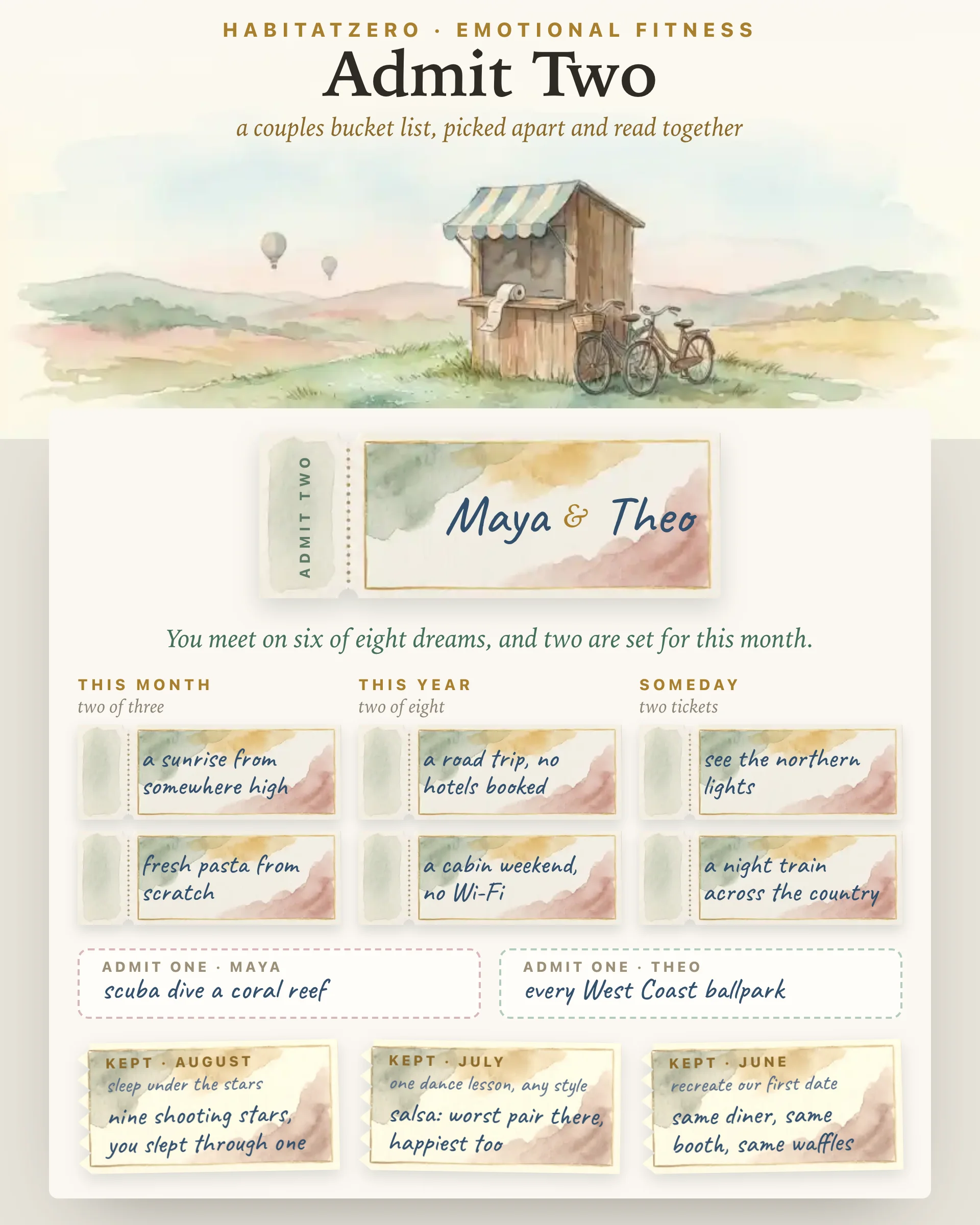
Admit TwoEach of you picks dreams without peeking, and the ones you both chose become tickets for two, sorted into this month, this year and someday. Trade the ones only one of you holds, and keep a stub with a memory for every one you actually do.
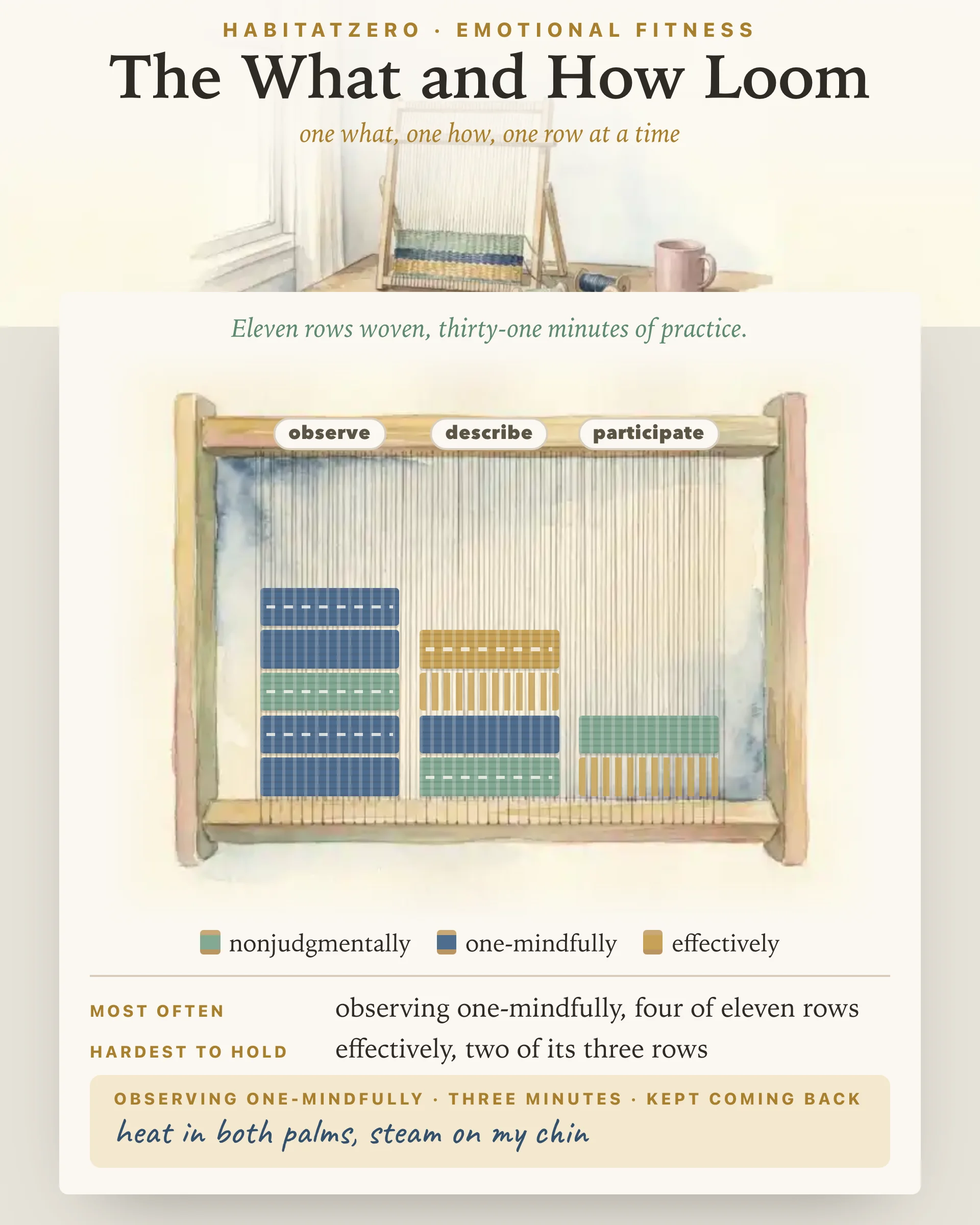
The What and How LoomPractice DBT's mindfulness skills one pairing at a time: pick observe, describe or participate, thread it with nonjudgmentally, one-mindfully or effectively, and time a short practice. Each practice you put into words weaves a row, and the cloth shows which pairings you come back to and which how is hardest to hold.
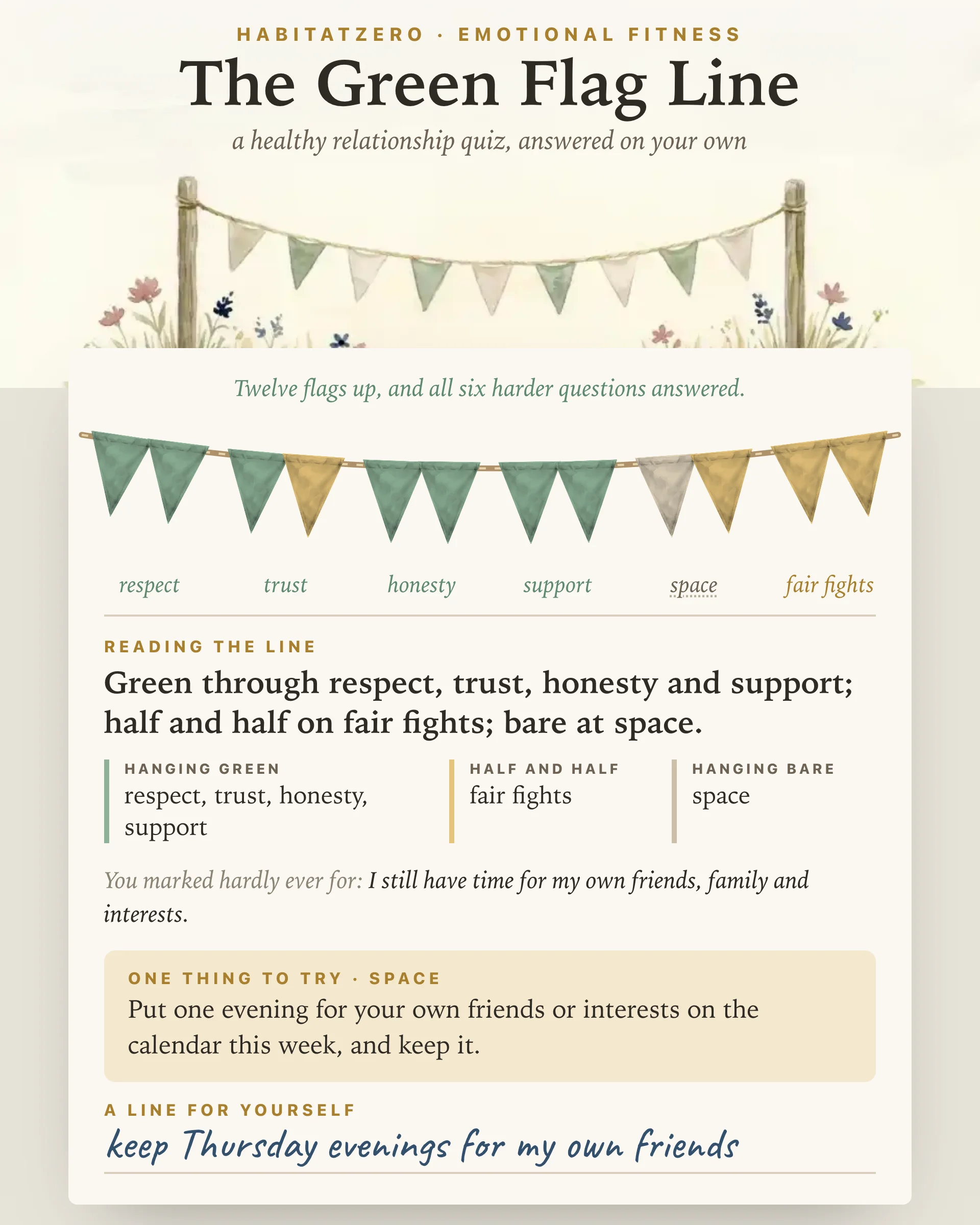
The Green Flag LineTwelve everyday signs of respect, trust, honesty, support, space and fair fights, answered on your own: each one dyes a flag on the line, the reading shows where things look steady or strained, and any warning sign you mark is set apart with The Hotline beside it.
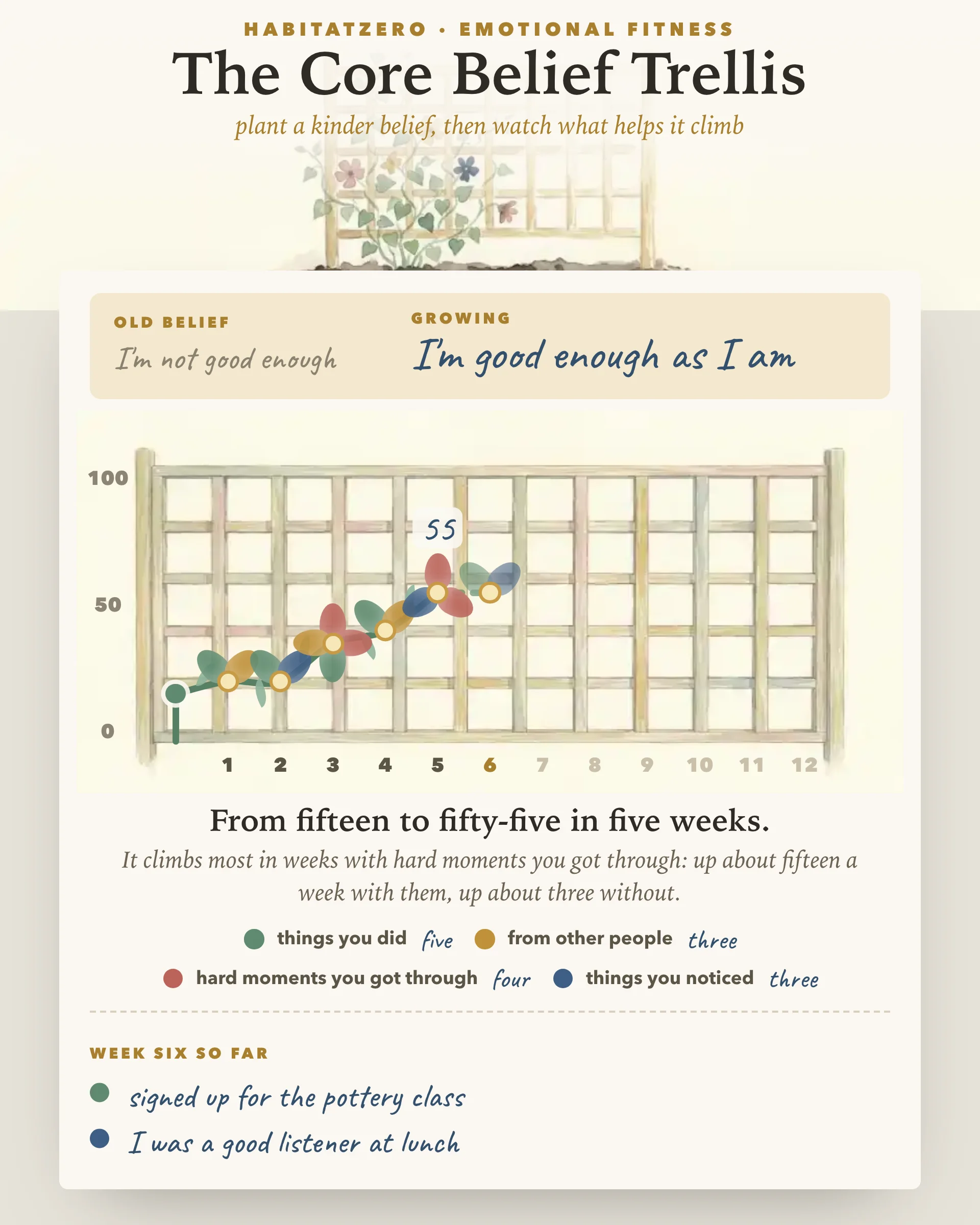
The Core Belief TrellisName an old core belief, plant a kinder one, and log small evidence for it as the weeks go by. Each weekly rating moves a vine up a painted trellis, and the page shows which kinds of evidence help it climb.
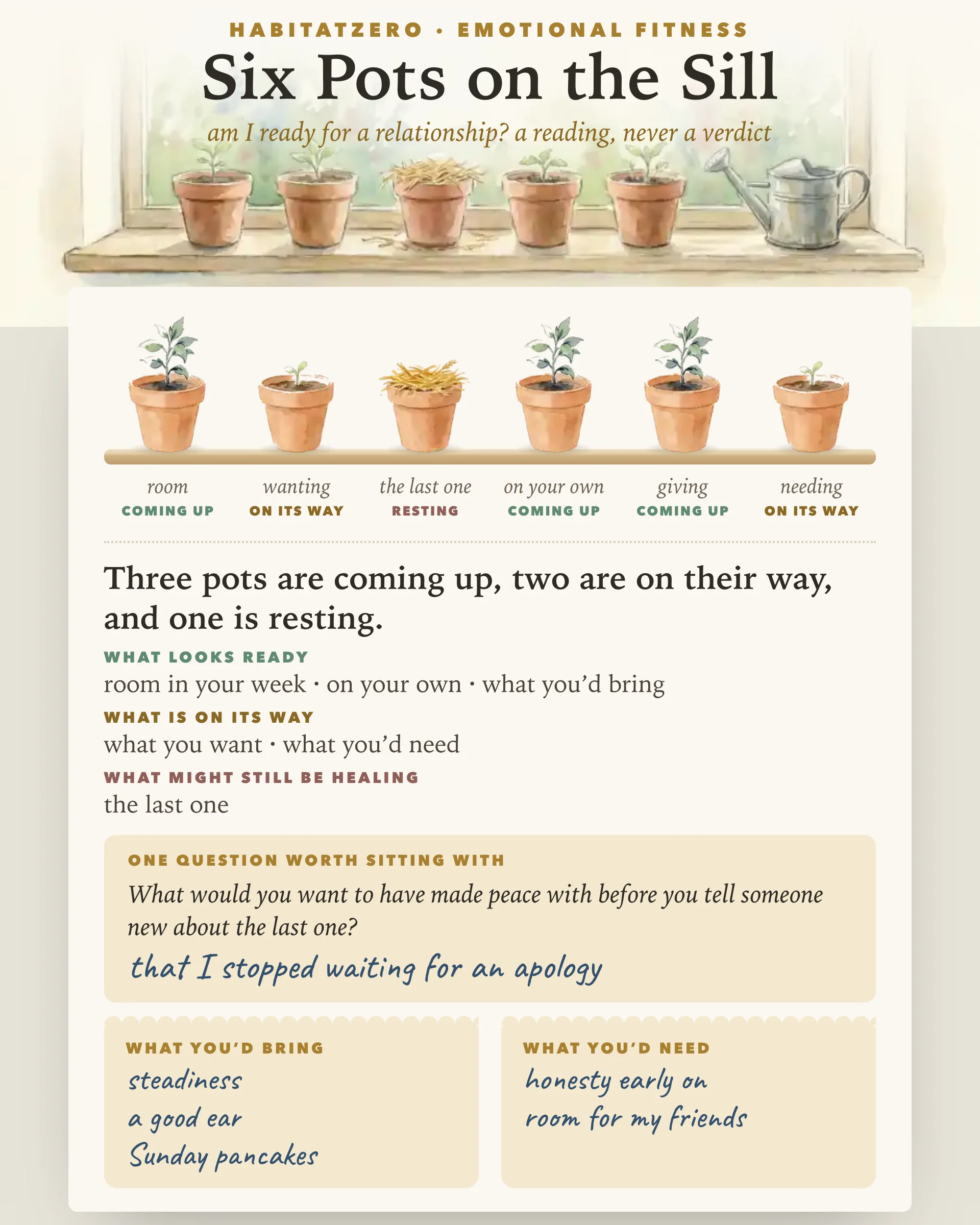
Six Pots on the SillAnswer twelve questions about your week, what you want, the last relationship and your own company, and six pots on a windowsill come up, sprout or rest. The sill then reads back what looks ready, what may still be healing and one question to sit with.
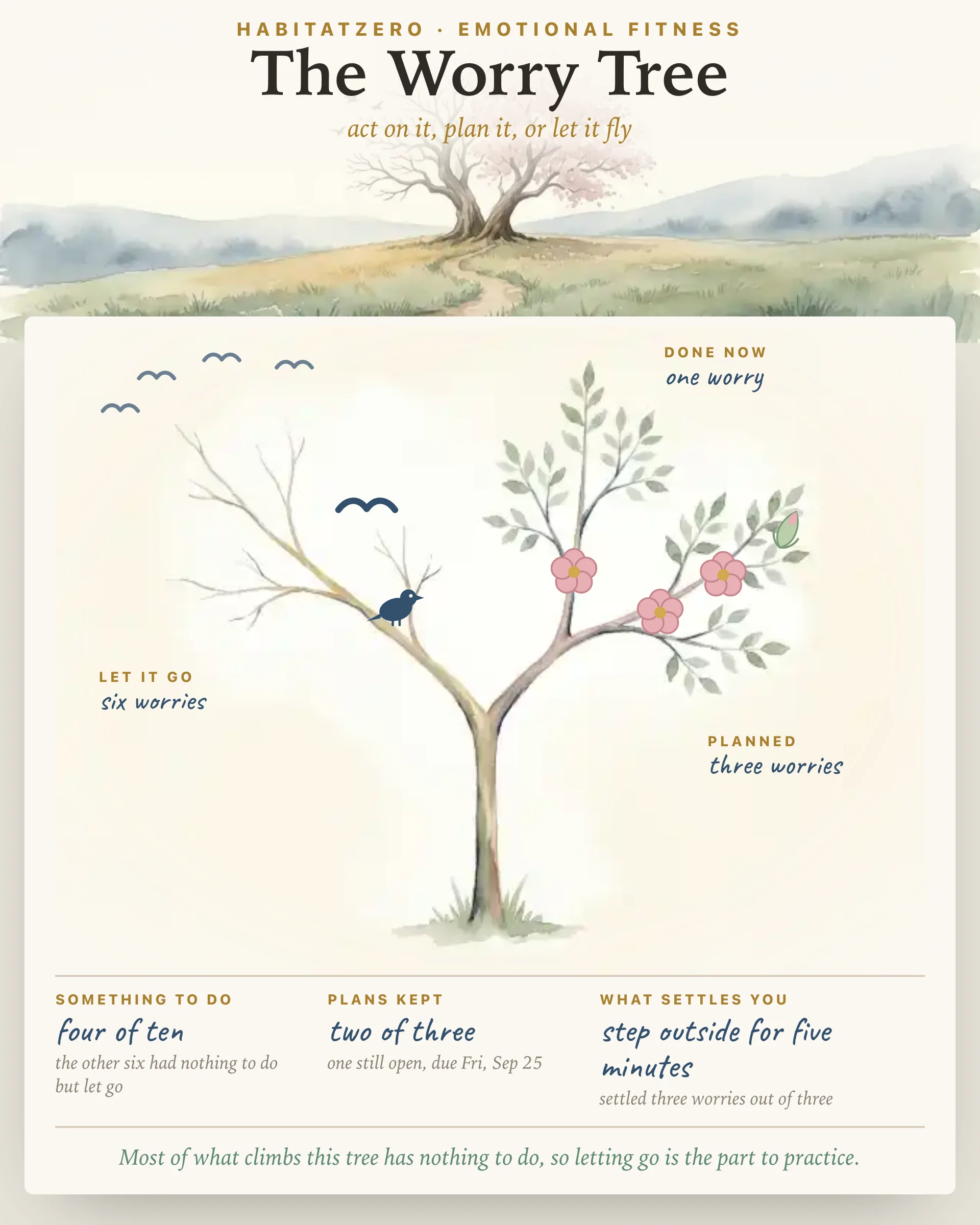
The Worry TreeWalk one worry to a single question, is there anything you can do about it, then act now, plan it for later, or let it fly. Every worry rests on your tree as a blossom, a bud or a bird, and over the weeks it shows how many had a step and what helps you let go.
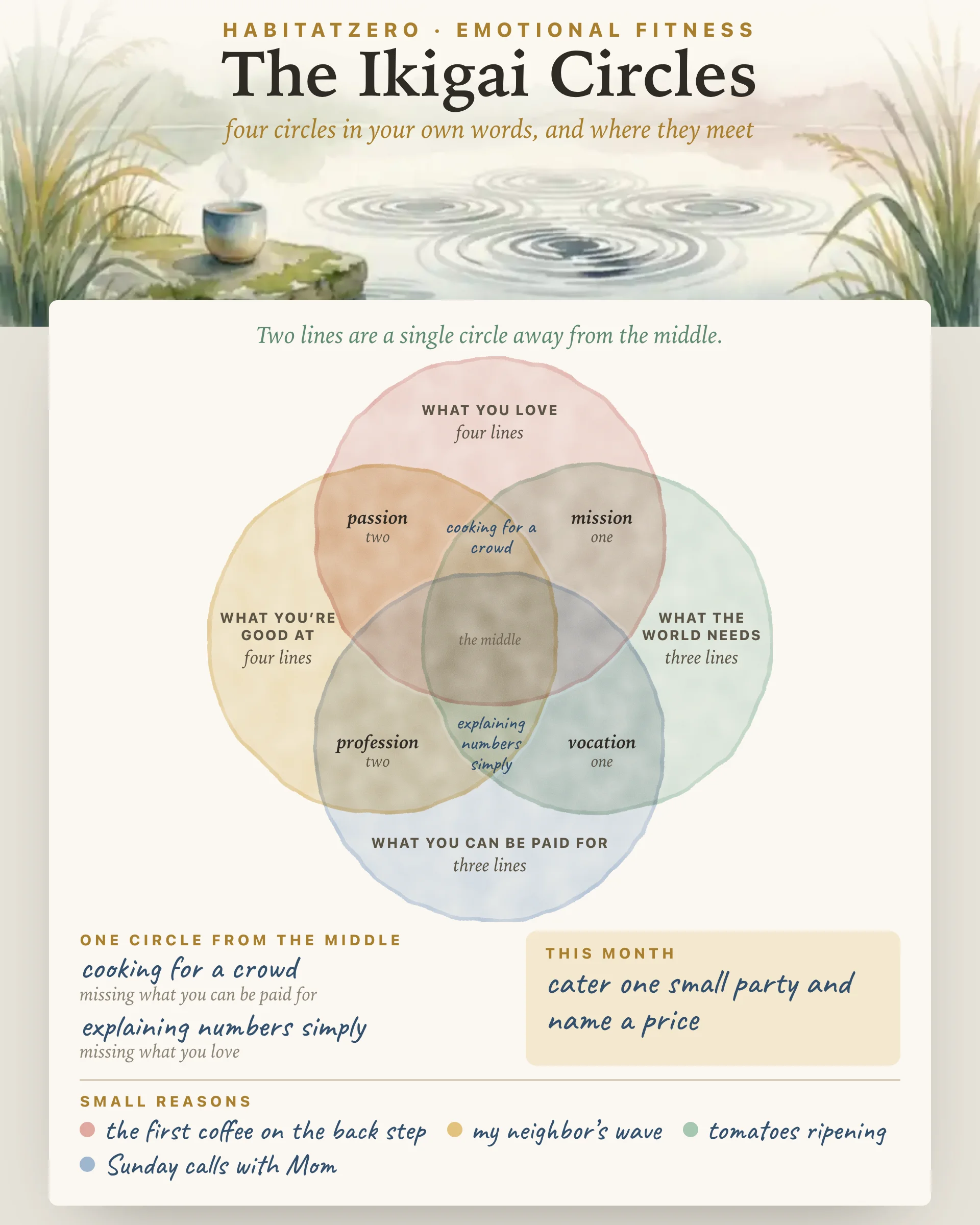
The Ikigai CirclesFill four watercolor circles in your own words, tap the dots to say where each line also belongs, and watch the overlaps paint themselves in. Then test the line nearest the middle with one small experiment, and keep the small everyday reasons that count as ikigai too.
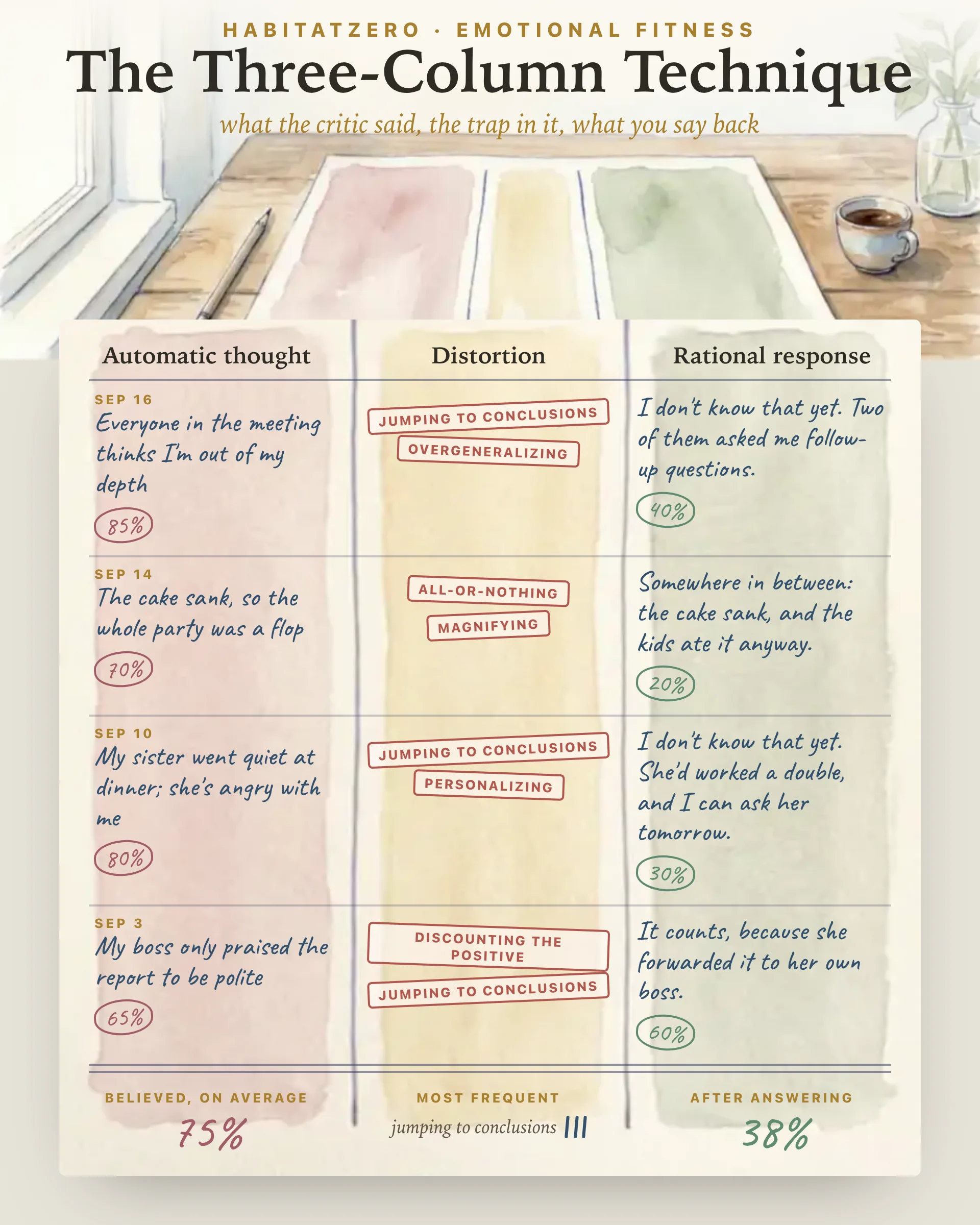
The Three-Column TechniqueWrite the automatic thought, stamp the distortion hiding in it, and answer back on a painted three-column sheet. The totals line keeps count of your usual traps and how far your belief drops once you answer.
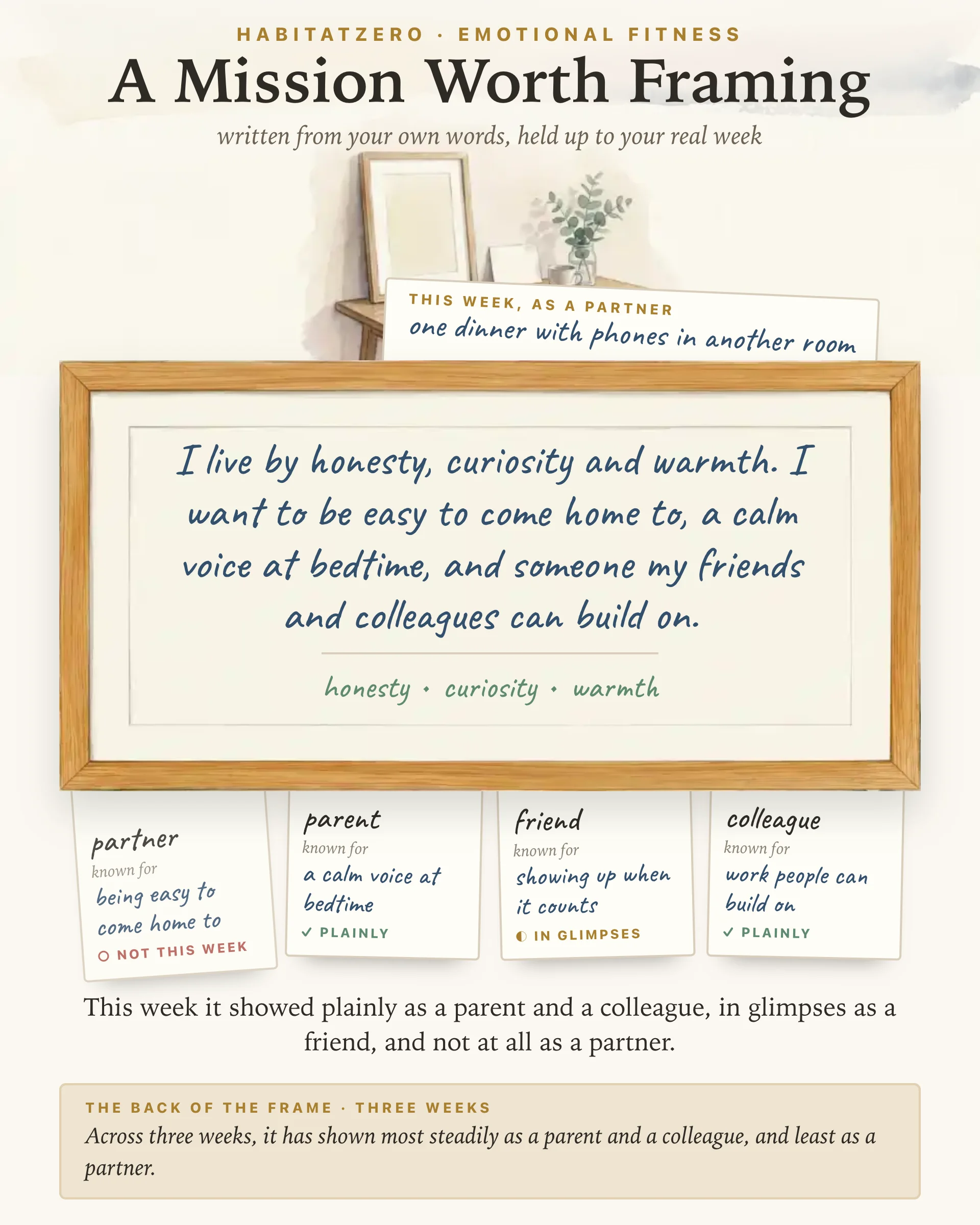
A Mission Worth FramingName the people you show up for and what each would know you for, pick the values underneath, draft one or two sentences from your own words, then hold the framed statement up to the week you actually had.
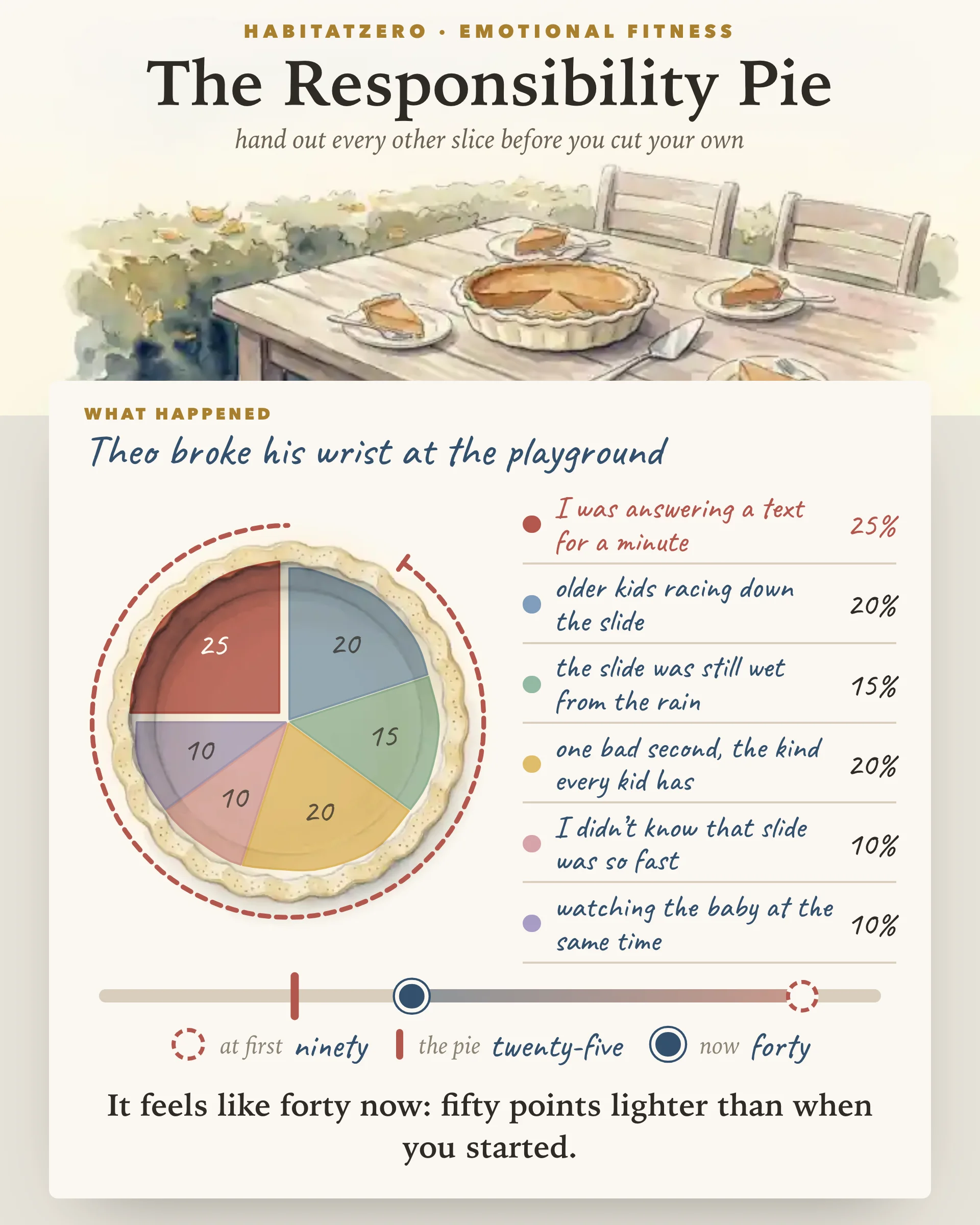
The Responsibility PieRate how much of a bad outcome feels like yours, give every other person and factor its own slice, then cut your slice last and see how far the feeling moves.
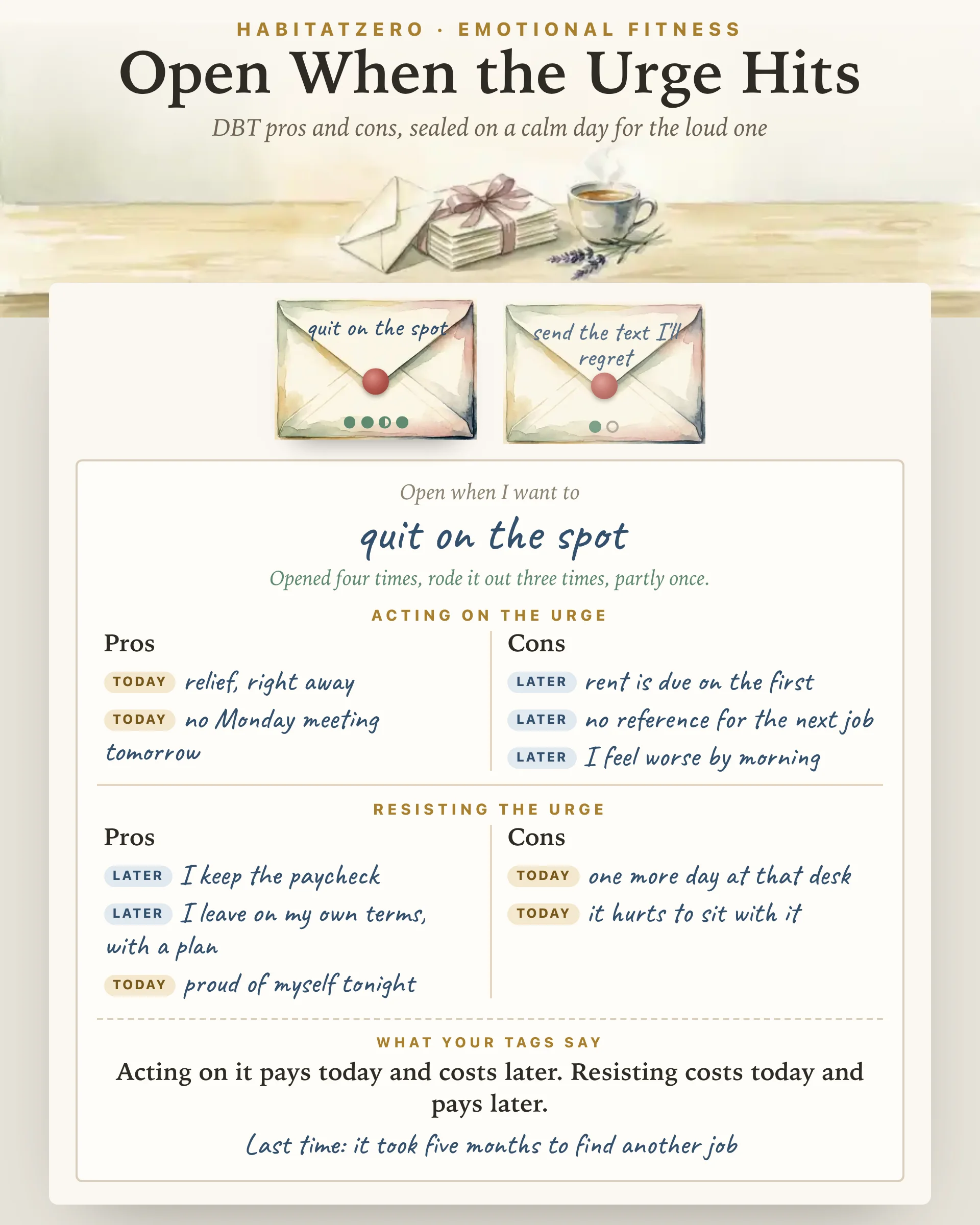
Open When the Urge HitsThe DBT pros and cons grid, sealed into a letter on a calm day: four squares weighing acting on a crisis urge against resisting it, each line marked today or later. Open it when the urge hits, then note whether reading it helped you ride it out.
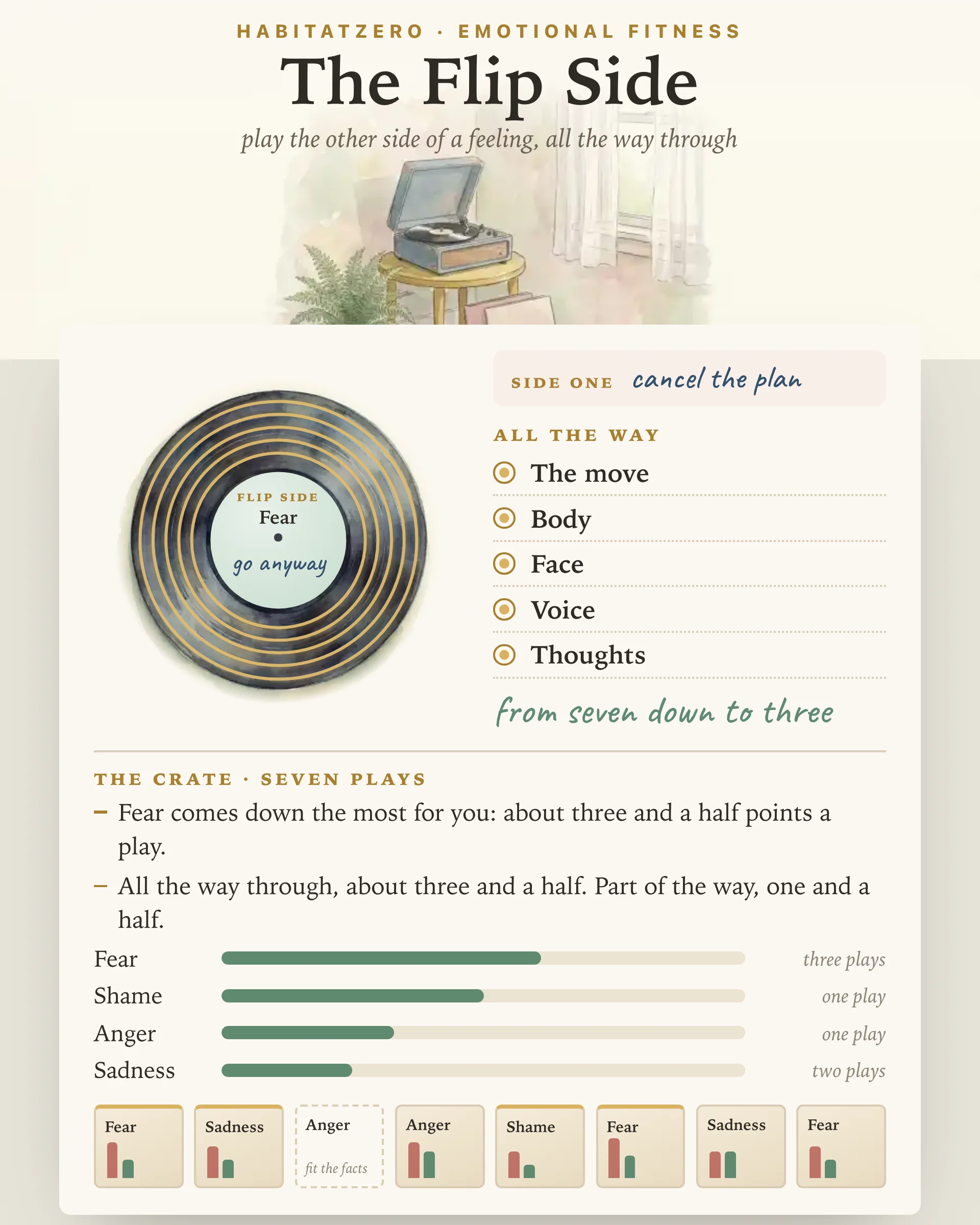
The Flip SideDBT opposite action on a record: side one holds the feeling and its urge, a facts check decides whether to flip, and the flip side's five tracks take the opposite move all the way. The crate keeps every play and shows which feelings come down most.
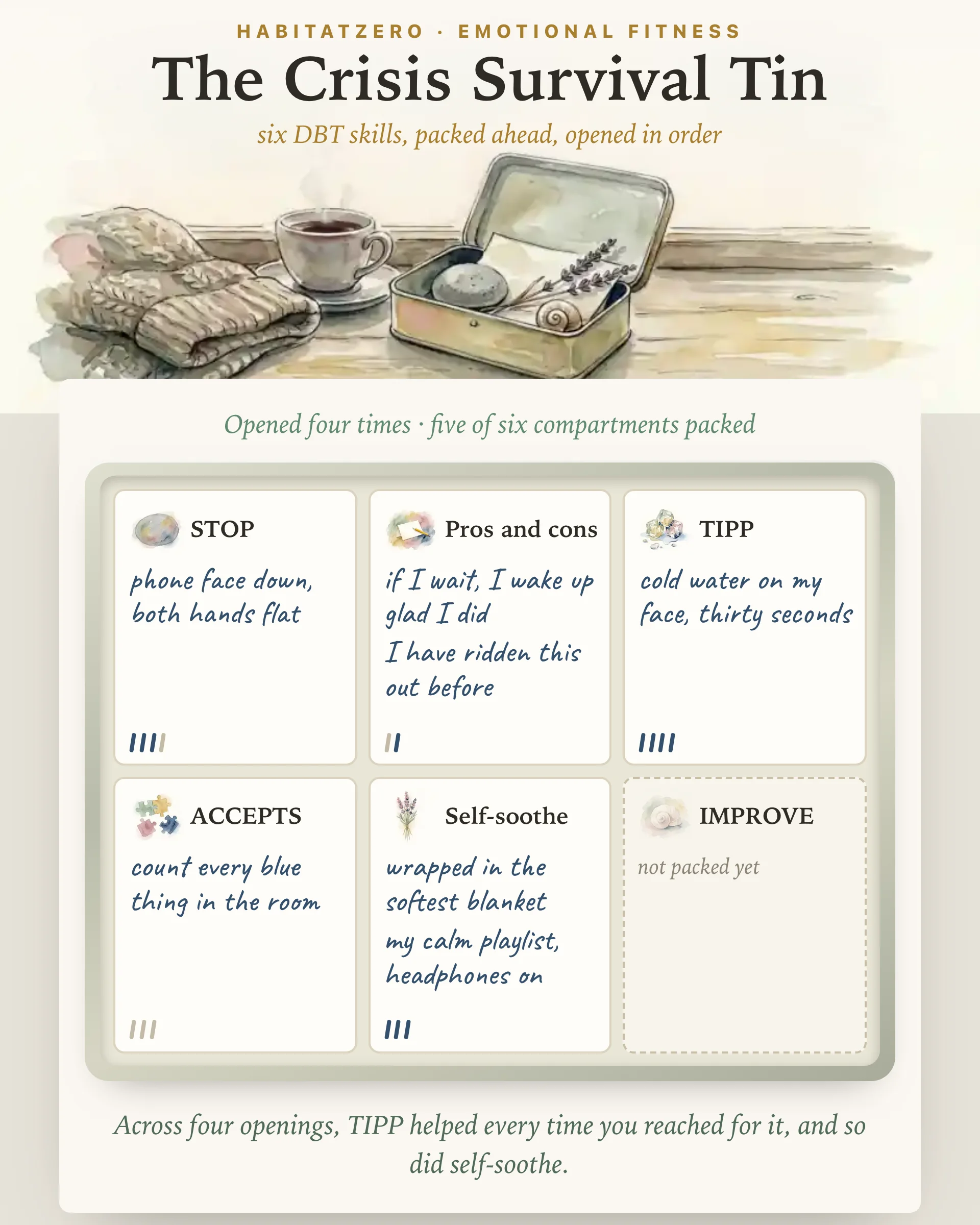
The Crisis Survival TinPack the six DBT crisis survival skills into a tin in your own words, then open it one skill at a time when a crisis hits and mark what helped. The notches show which skills actually carry you.
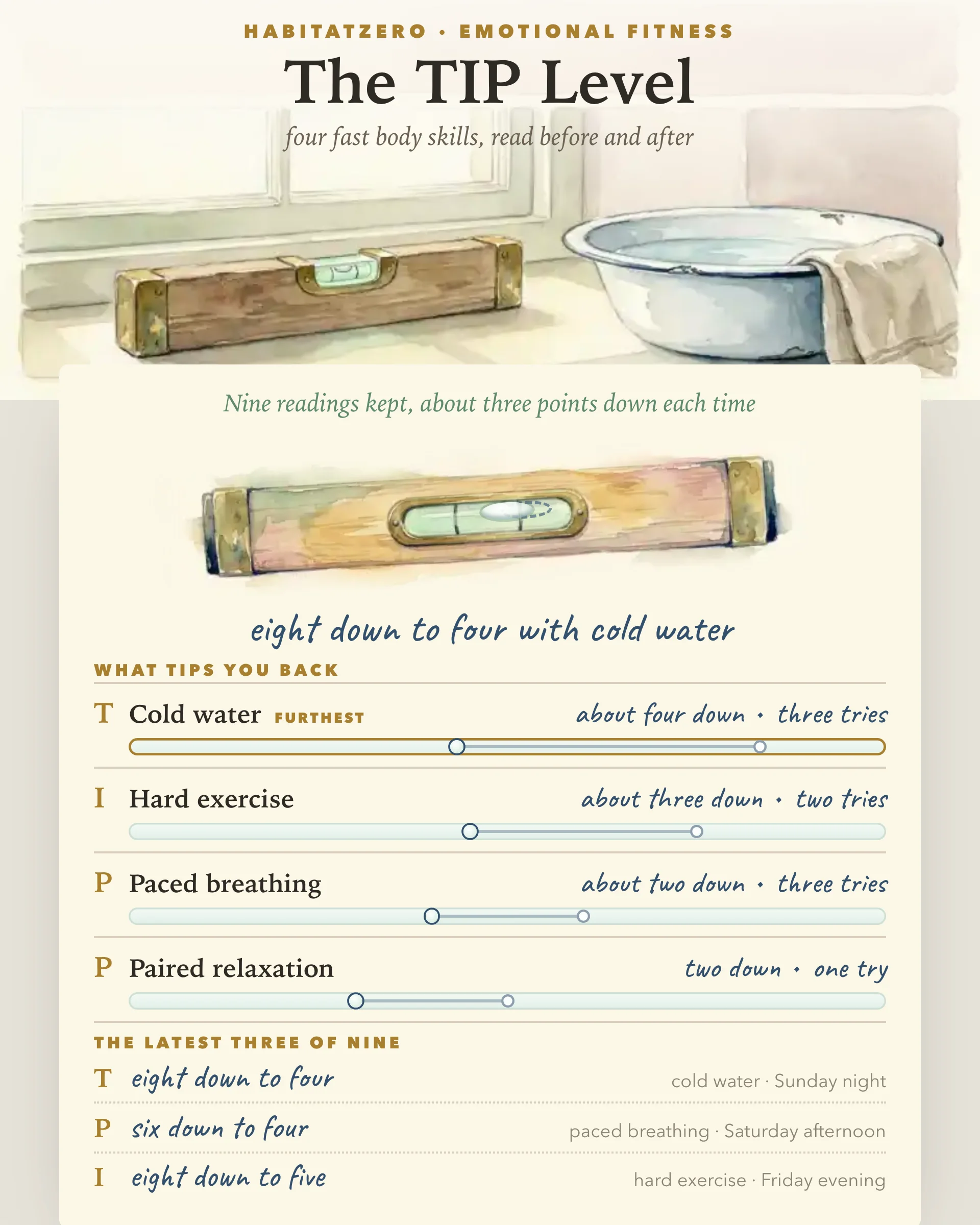
The TIP LevelRead how strong a feeling is on a painted spirit level, follow silent guided steps for cold water, intense exercise, paced breathing or paired muscle relaxation, then read it again and learn which skill brings you back the most.
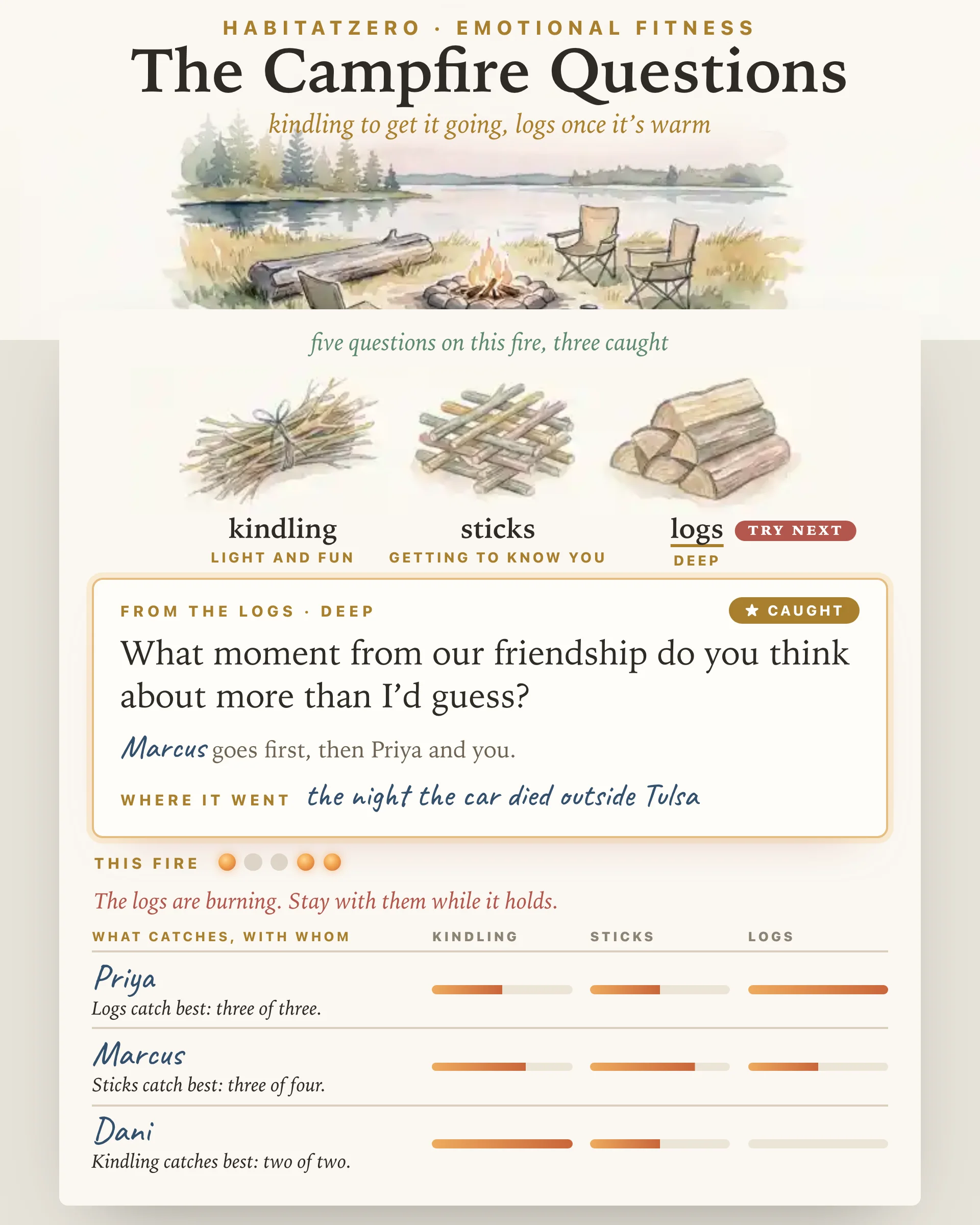
The Campfire QuestionsNinety-six questions to ask friends, stacked in three woodpiles from light to deep. Draw one, pass the turn around the circle, star the ones that catch, and let a quiet record show which friends and which depths make your best talks.
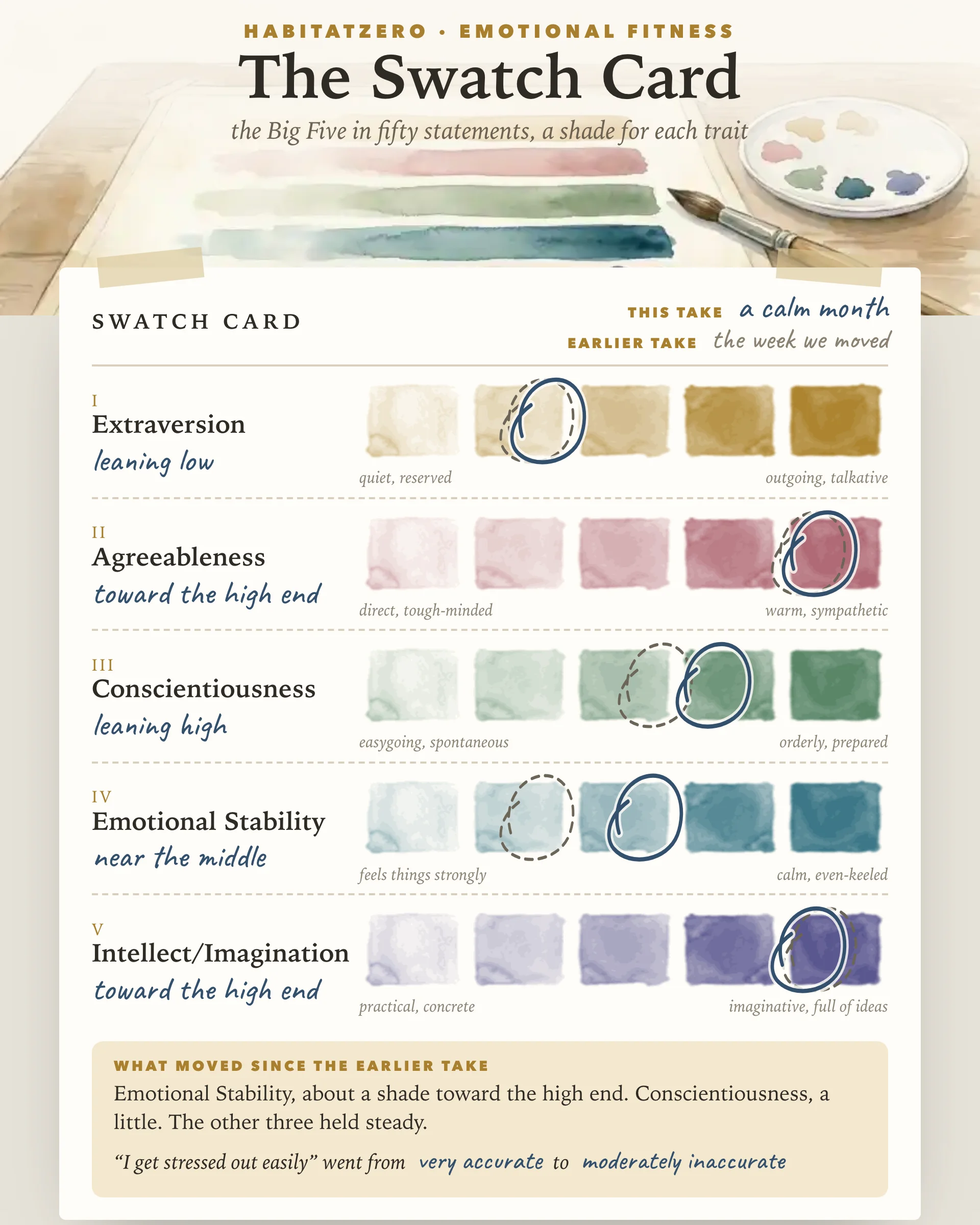
The Swatch CardA Big Five personality test on the fifty public-domain IPIP statements: each answer tints its trait’s painted strip, a circle marks where you land on each range, and the reading quotes the statements that pulled every shade up or down. Take it again in a few weeks to see what moved.
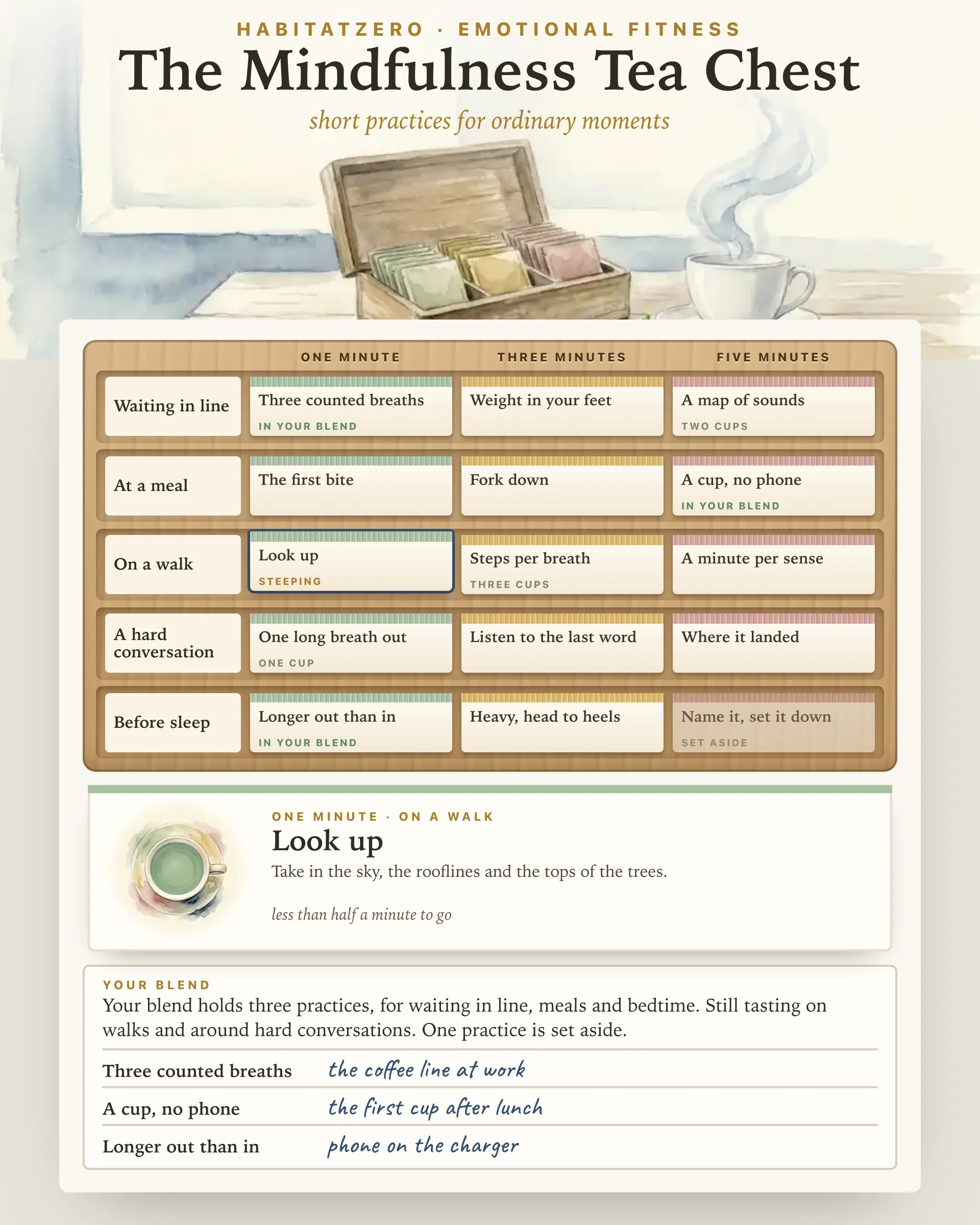
The Mindfulness Tea ChestFifteen short mindfulness exercises filed like tea, by the moment they suit and a one, three or five minute steep. Pull one, let the painted cup keep time, say how it sat, and your own blend of practices that work gathers by itself.
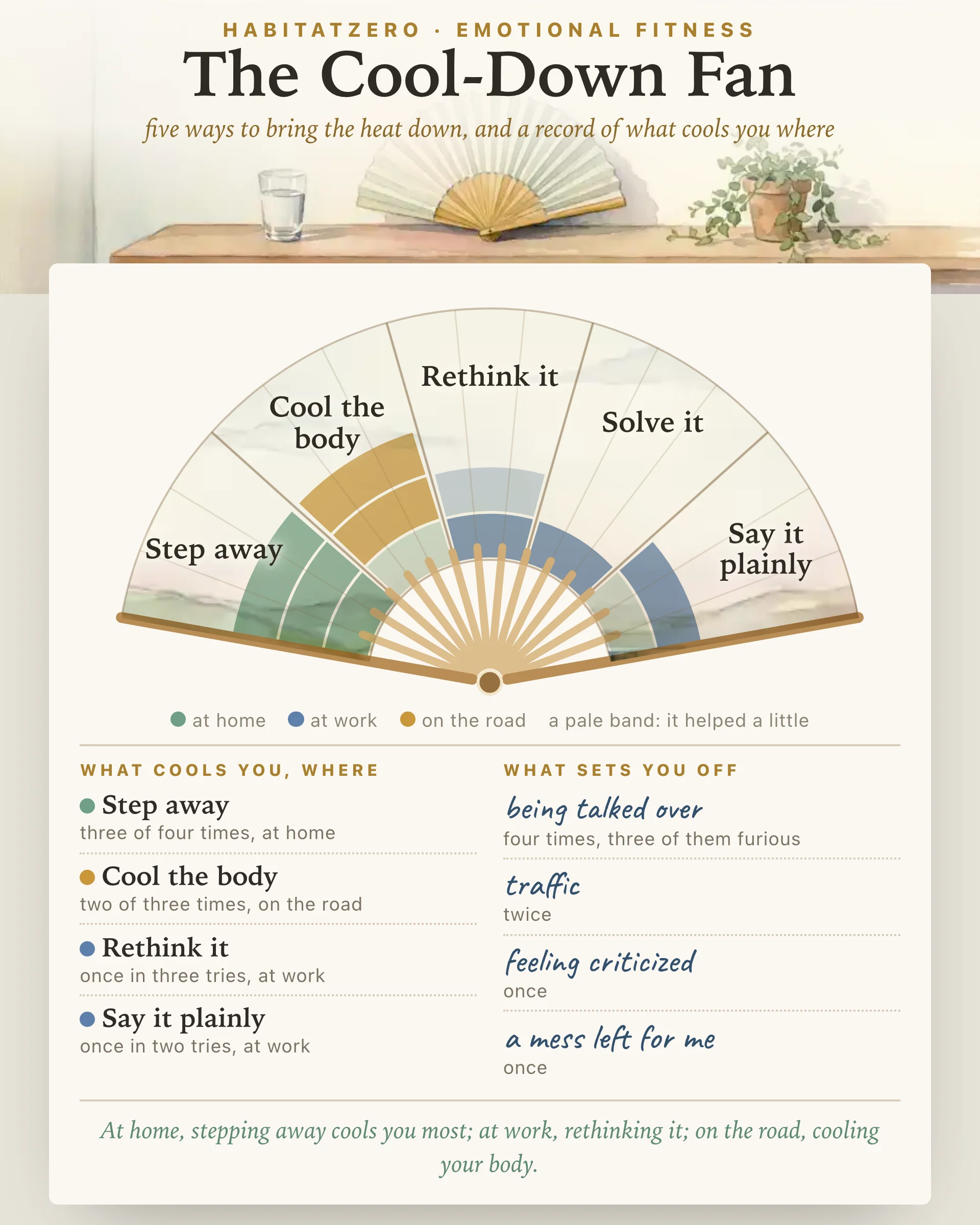
The Cool-Down FanFive anger management techniques on the folds of a paper fan. Open one when the heat rises, log what set you off once you have cooled down, and the fan paints which techniques work for you, and where.
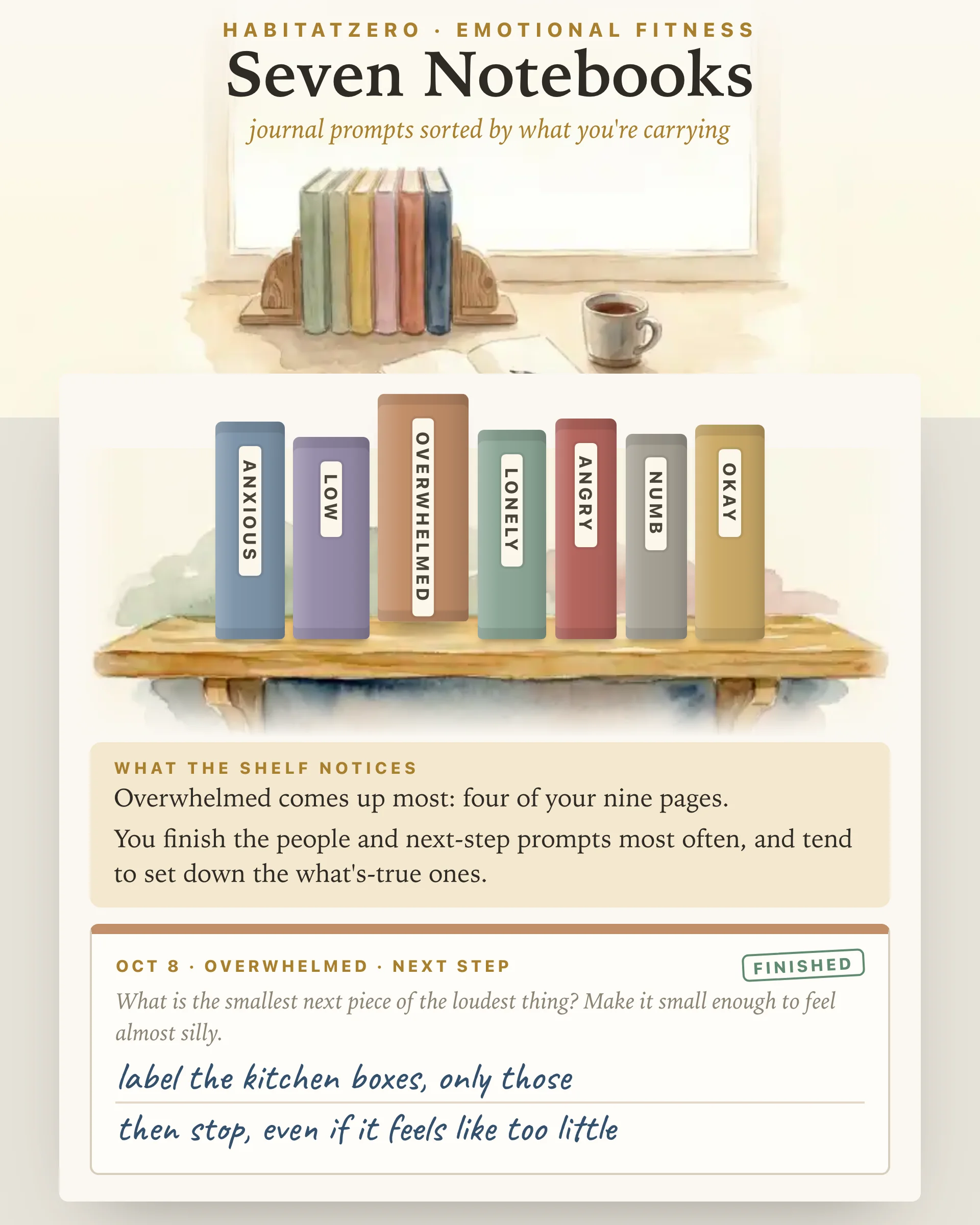
Seven NotebooksSeven slim notebooks of journal prompts, one for each thing you might be carrying today, from anxious to numb to okay. Write a few short lines, finish the page or set it down, and watch the shelf show which notebooks you reach for and which prompts you see through.
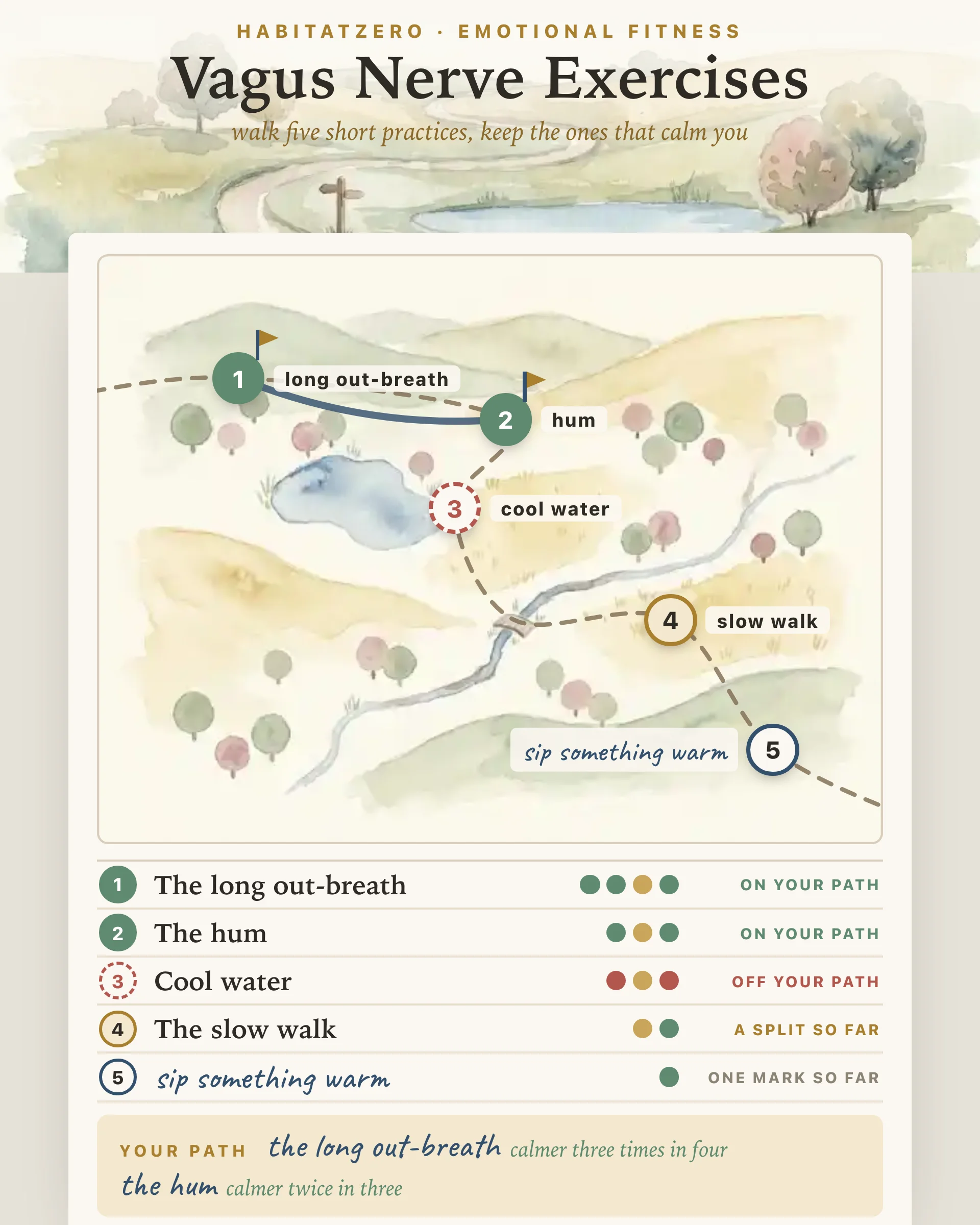
Vagus Nerve ExercisesFive short practices on a painted trail map, from a paced long out-breath to cool water on the face. Mark how each one leaves you, and the map inks a path through the ones that actually calm you.
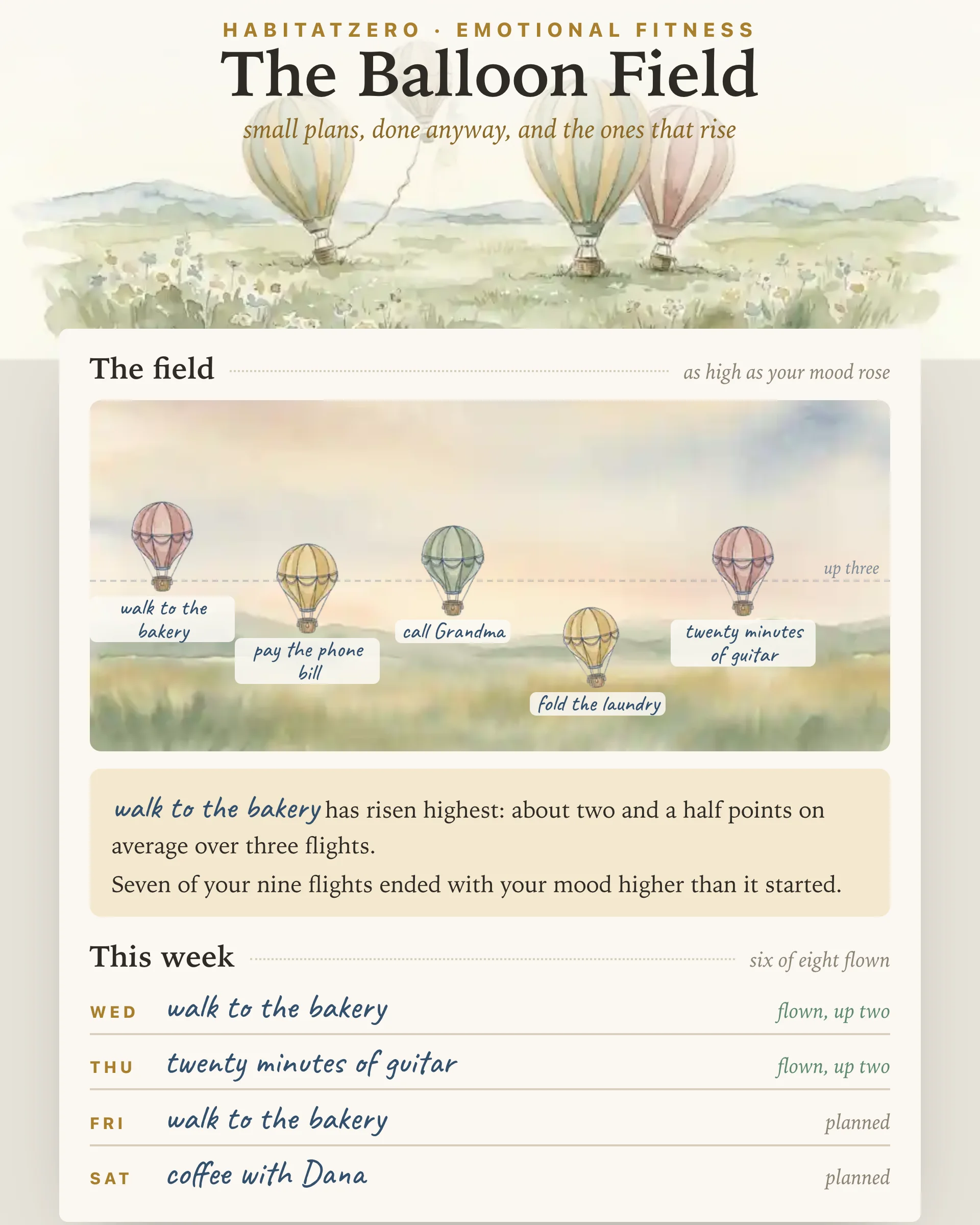
The Balloon FieldPlan small activities day by day, then log each one for mood before and after, achievement and enjoyment. Every activity becomes a painted balloon that floats as high as your mood rose, so you can see what actually helps.
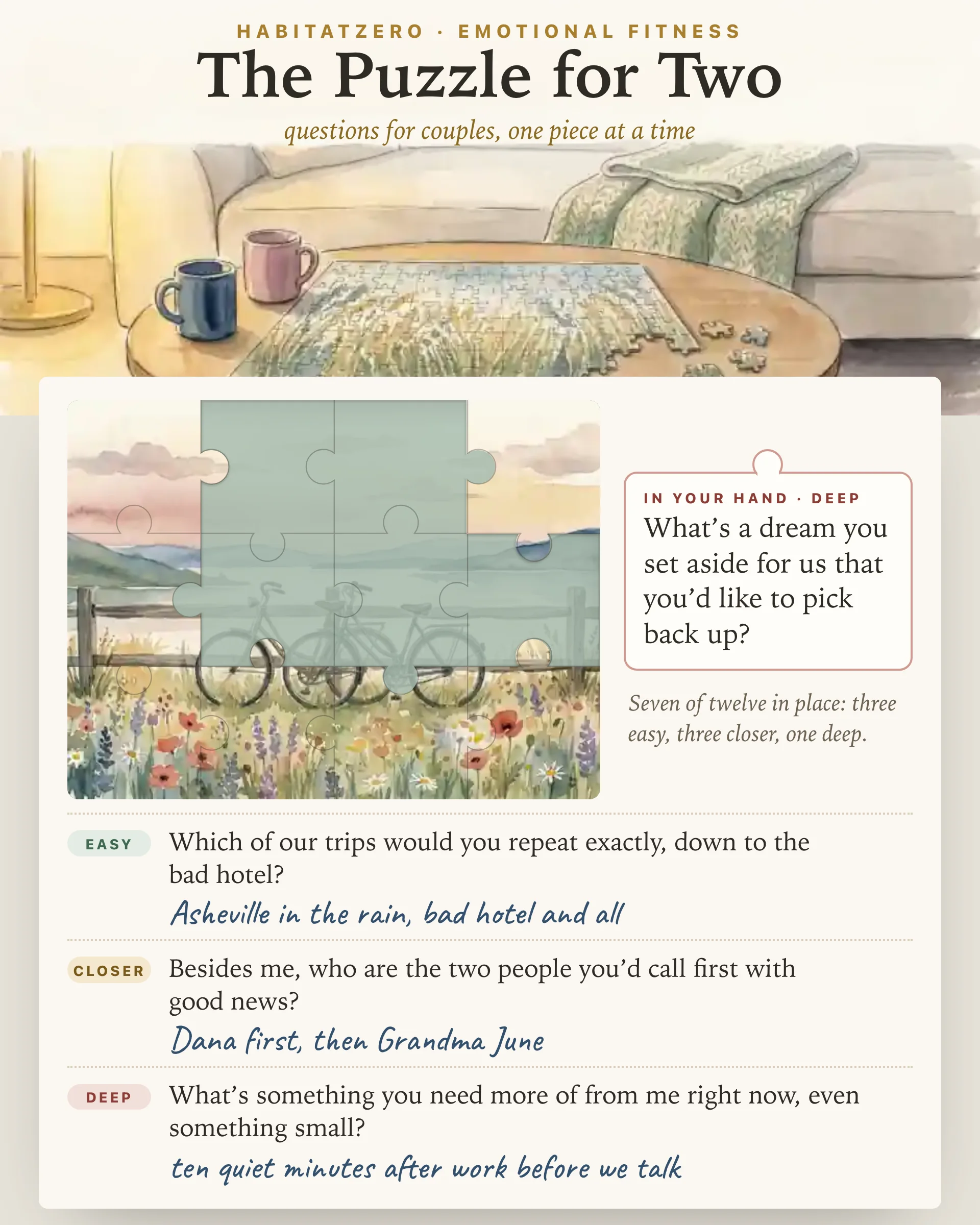
The Puzzle for TwoNinety-six fresh questions for couples in three piles, easy, closer and deep, filtered for couples who are still new or years in. Every one that opens a real conversation becomes a piece of a painted jigsaw, with a line in your own hand about where it went.
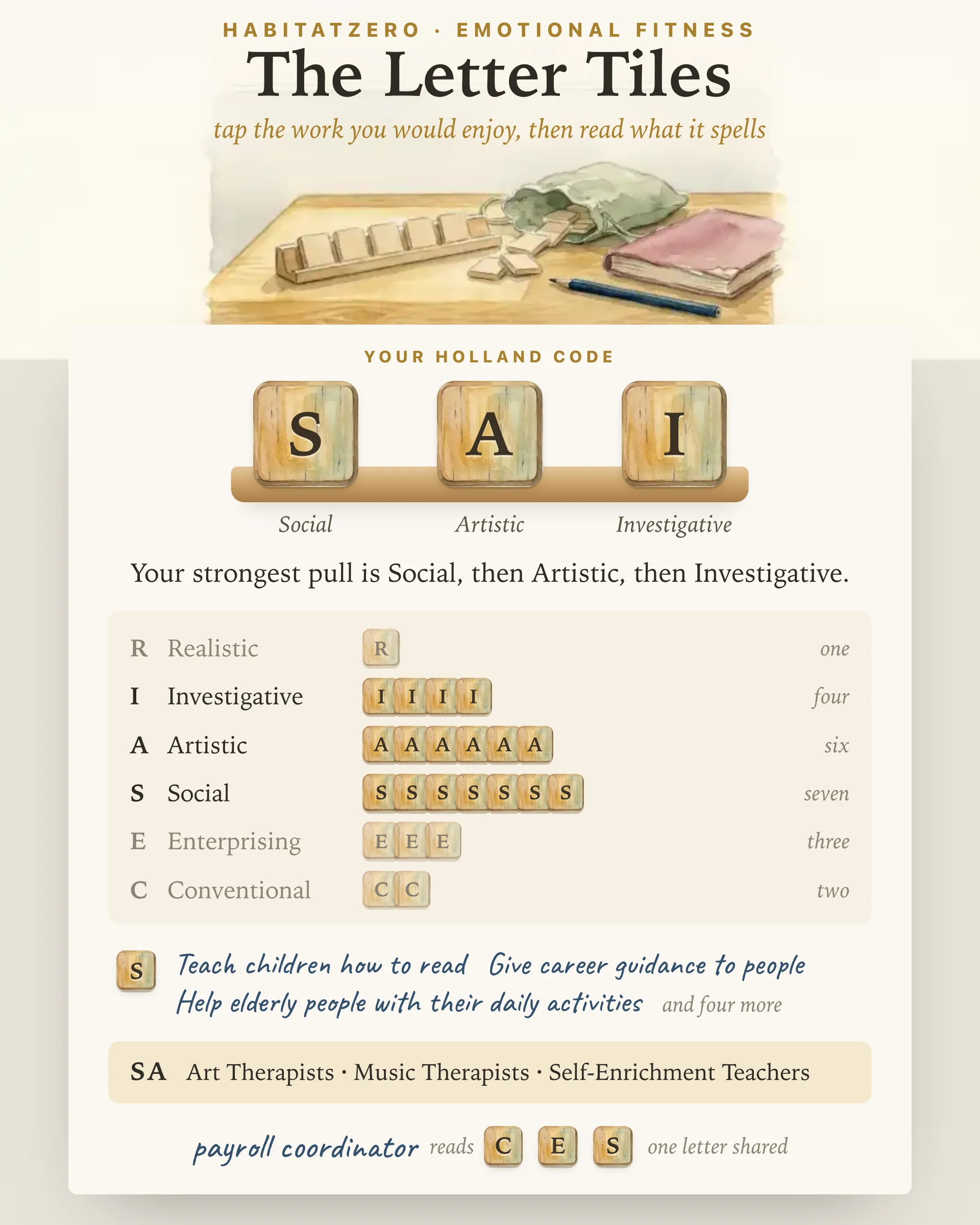
The Letter TilesA Holland code career test on forty-eight public-domain RIASEC activities: every one you would enjoy lays a wooden tile face down, and when you tip them out the longest rows spell your three-letter code. Read what each letter means, example occupations filed under your code, and how it lines up with the job you have now.
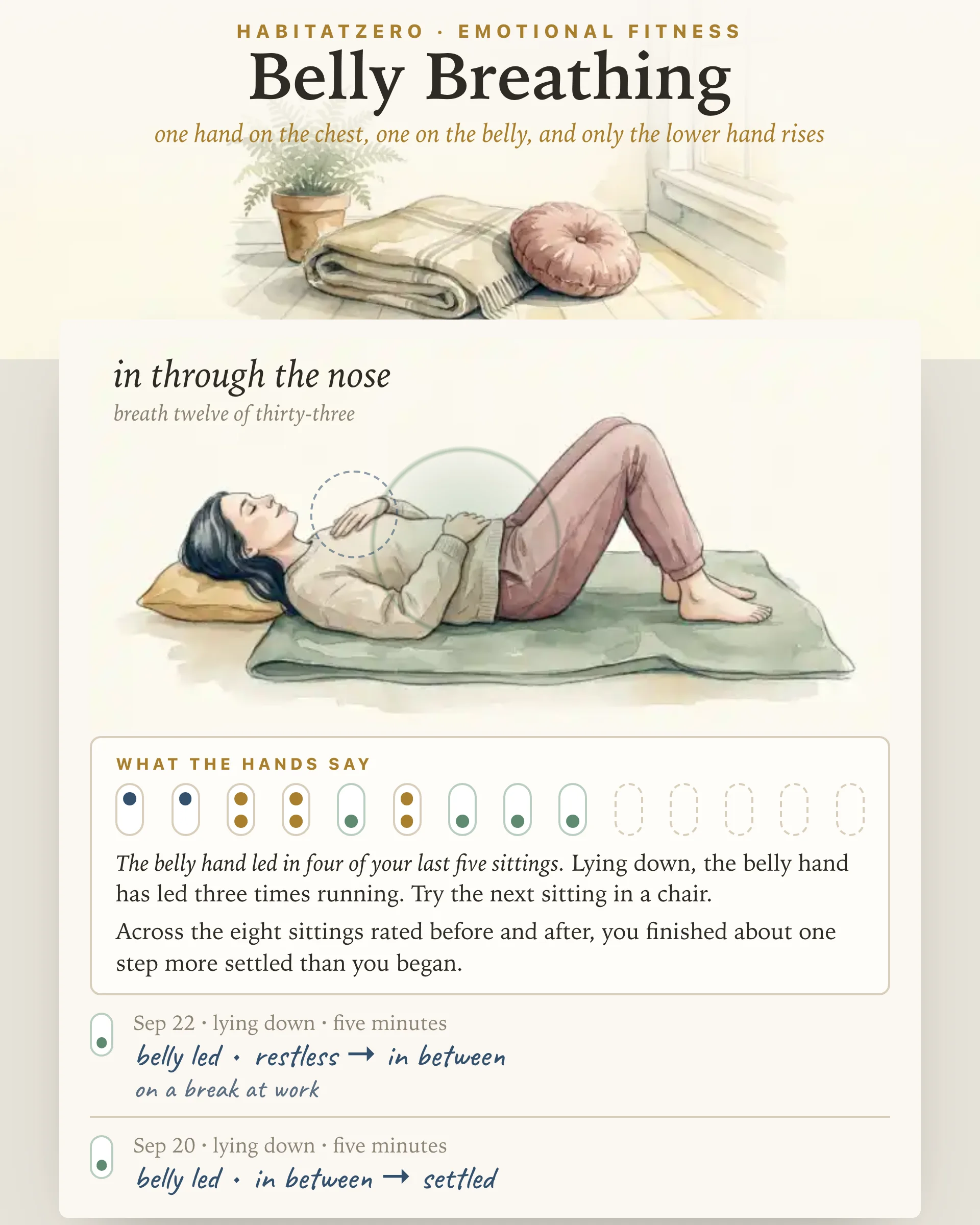
Belly BreathingBreathe with a painted belly that swells under your hand while the chest hand stays quiet, then check which hand did the moving. Your sittings line up as a strip that shows the breath sinking from chest to belly, and the page tells you when to try it in a chair.
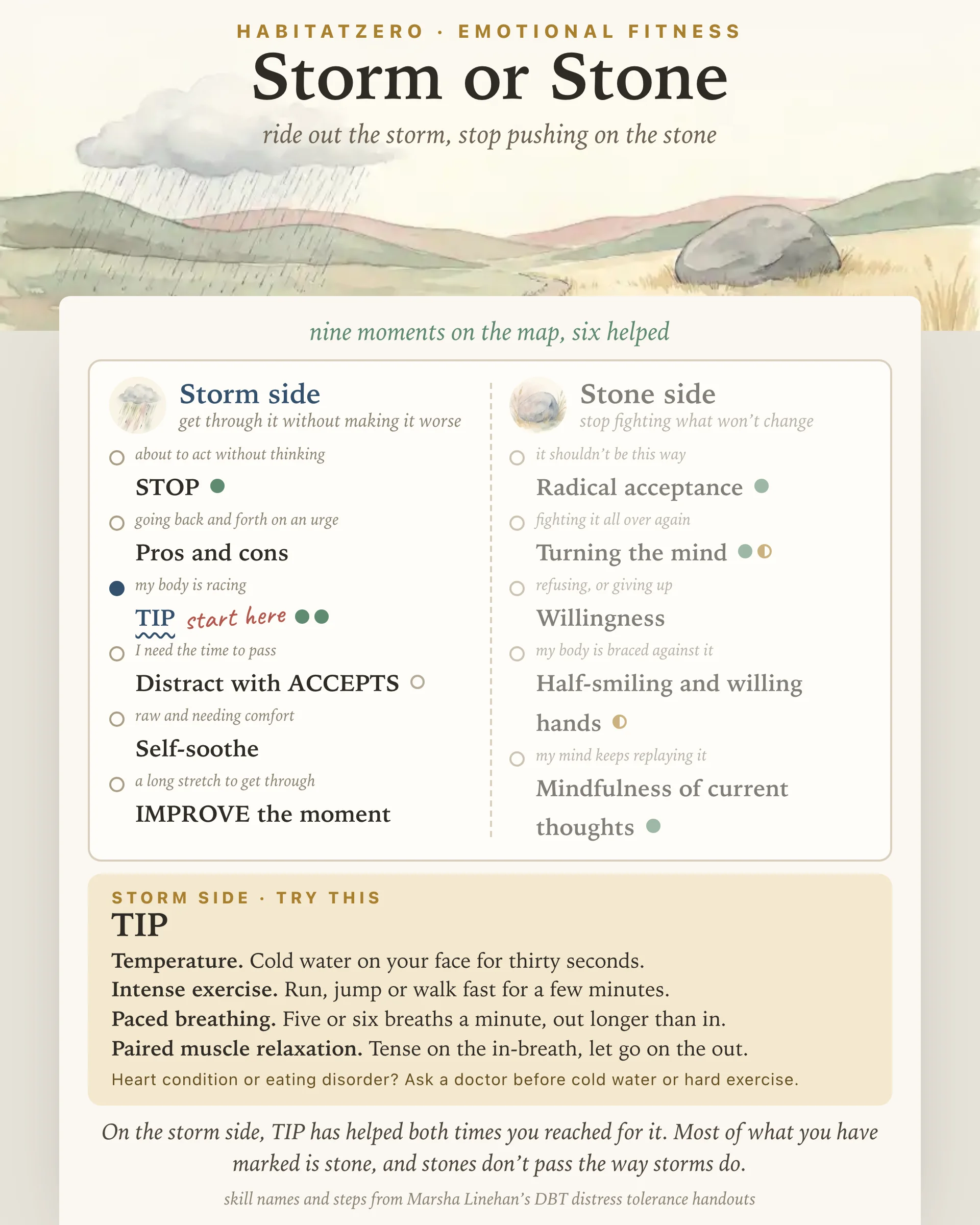
Storm or StoneSay whether this is a storm to get through or a stone you keep pushing, and the map hands you the DBT distress tolerance skill that fits, with Marsha Linehan's steps. Mark what helped, and the map starts showing where to begin next time.
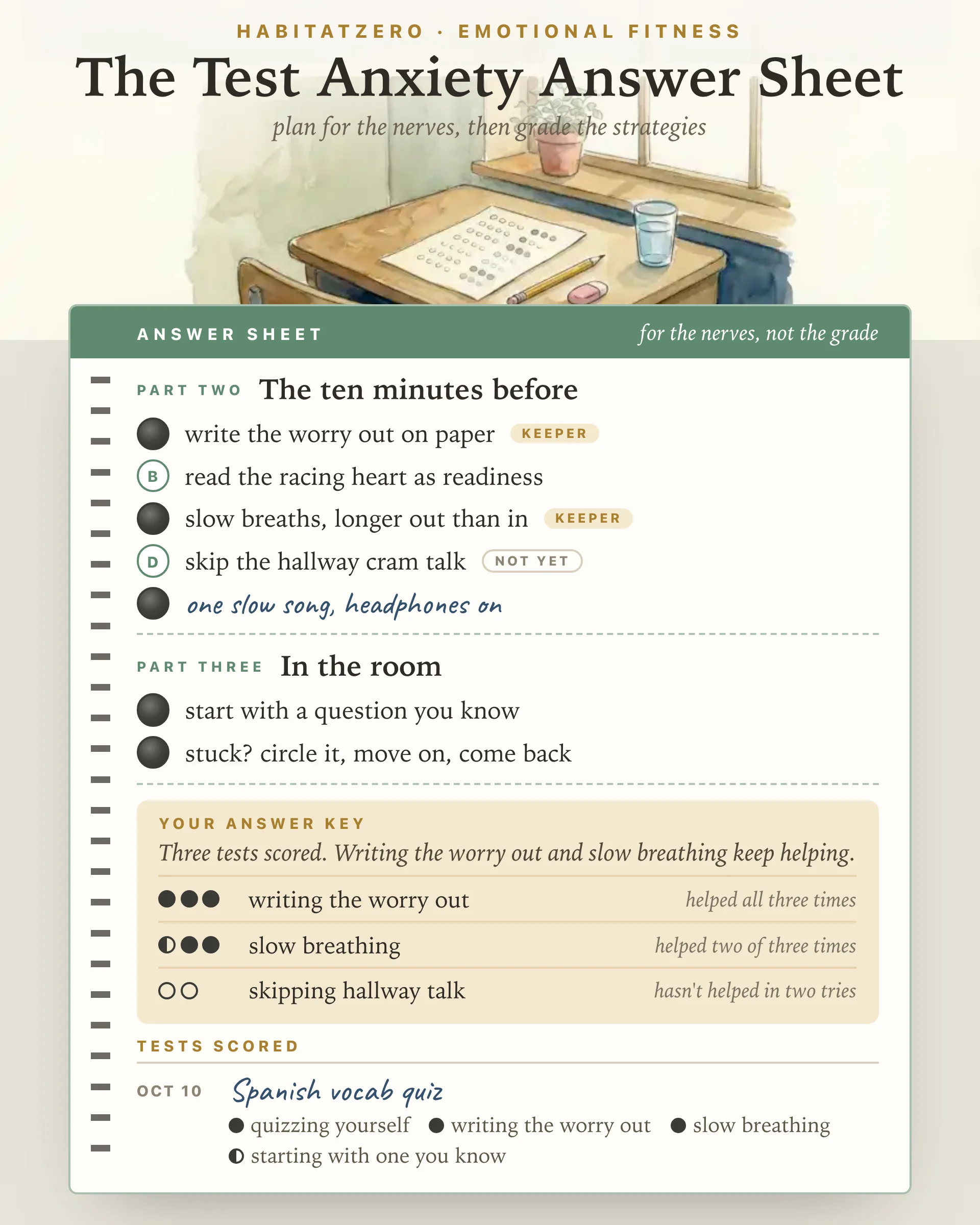
The Test Anxiety Answer SheetBubble in a plan for the weeks before a test, the ten minutes before and the room itself, then score which strategies helped. After a few tests the sheet writes your own answer key.
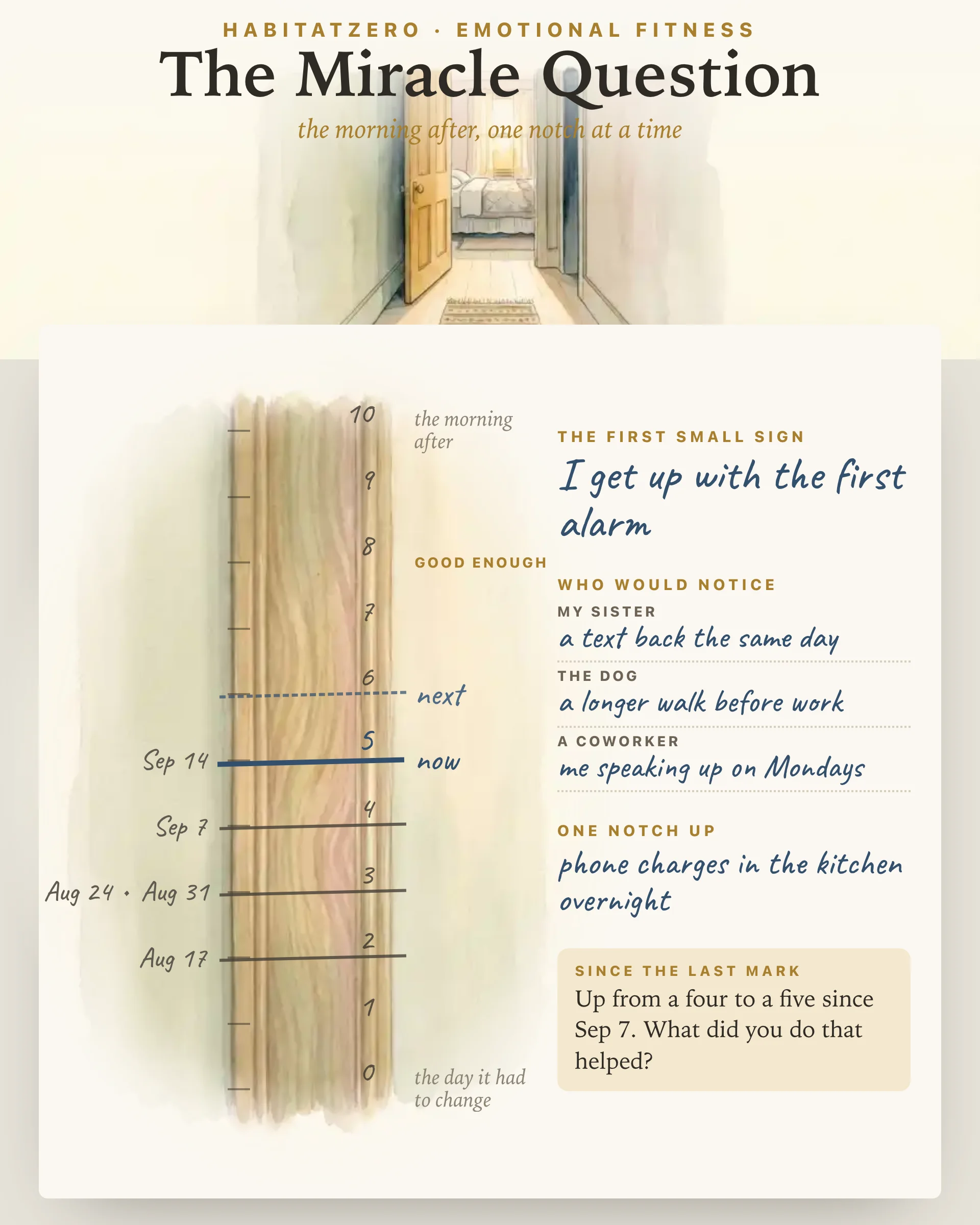
The Miracle QuestionPicture the morning after the trouble lifts and write the first small signs you and the people around you would notice, then pencil in each week where you stand from zero to ten and the one small step up.
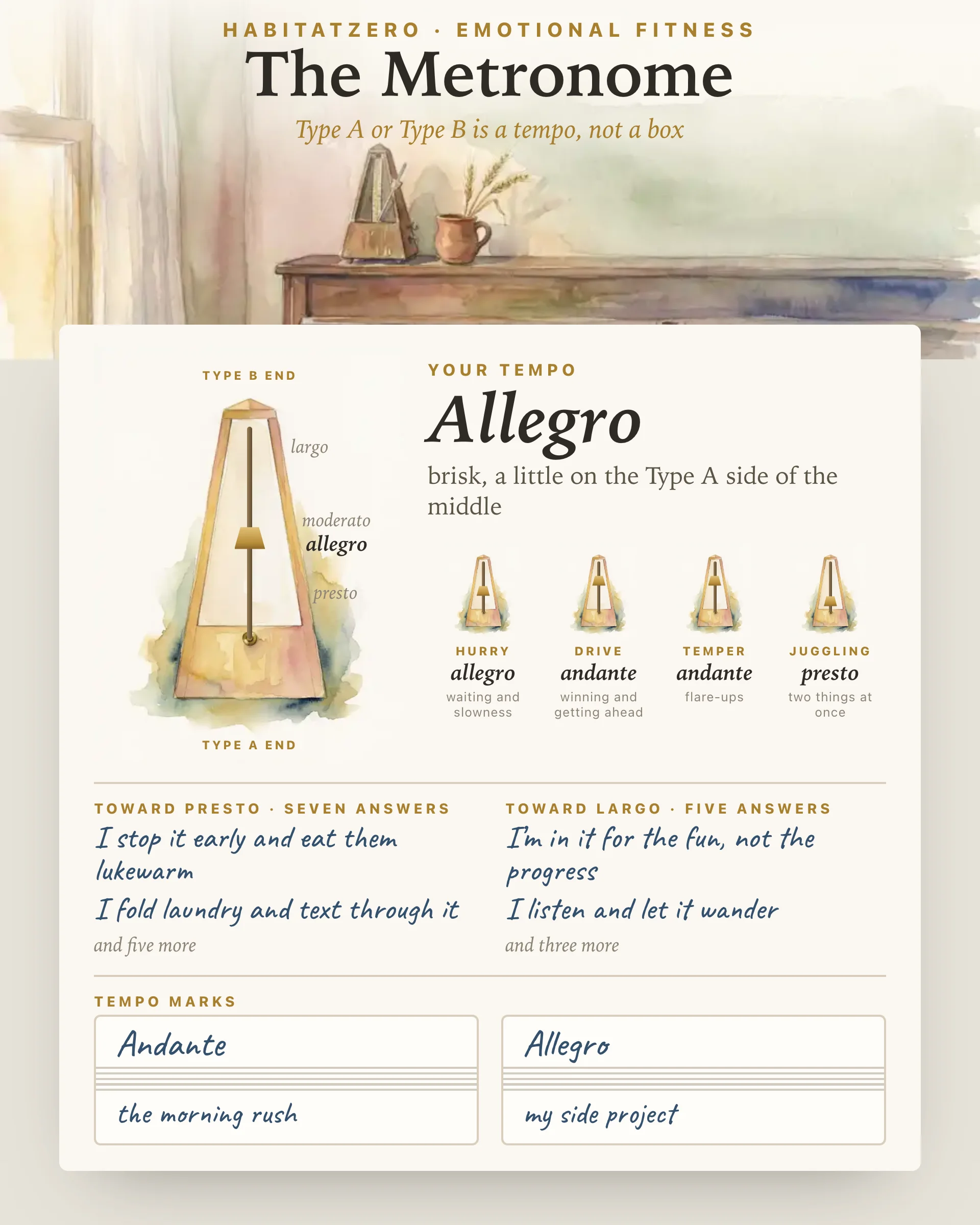
The MetronomeA Type A vs Type B quiz in twelve everyday moments: each answer slides the weight on a painted metronome, and the reading names your tempo from largo to presto, gives hurry, drive, temper and juggling a tempo each, and quotes the answers that pulled you each way. Then pencil your own tempo onto up to three moments of your week.
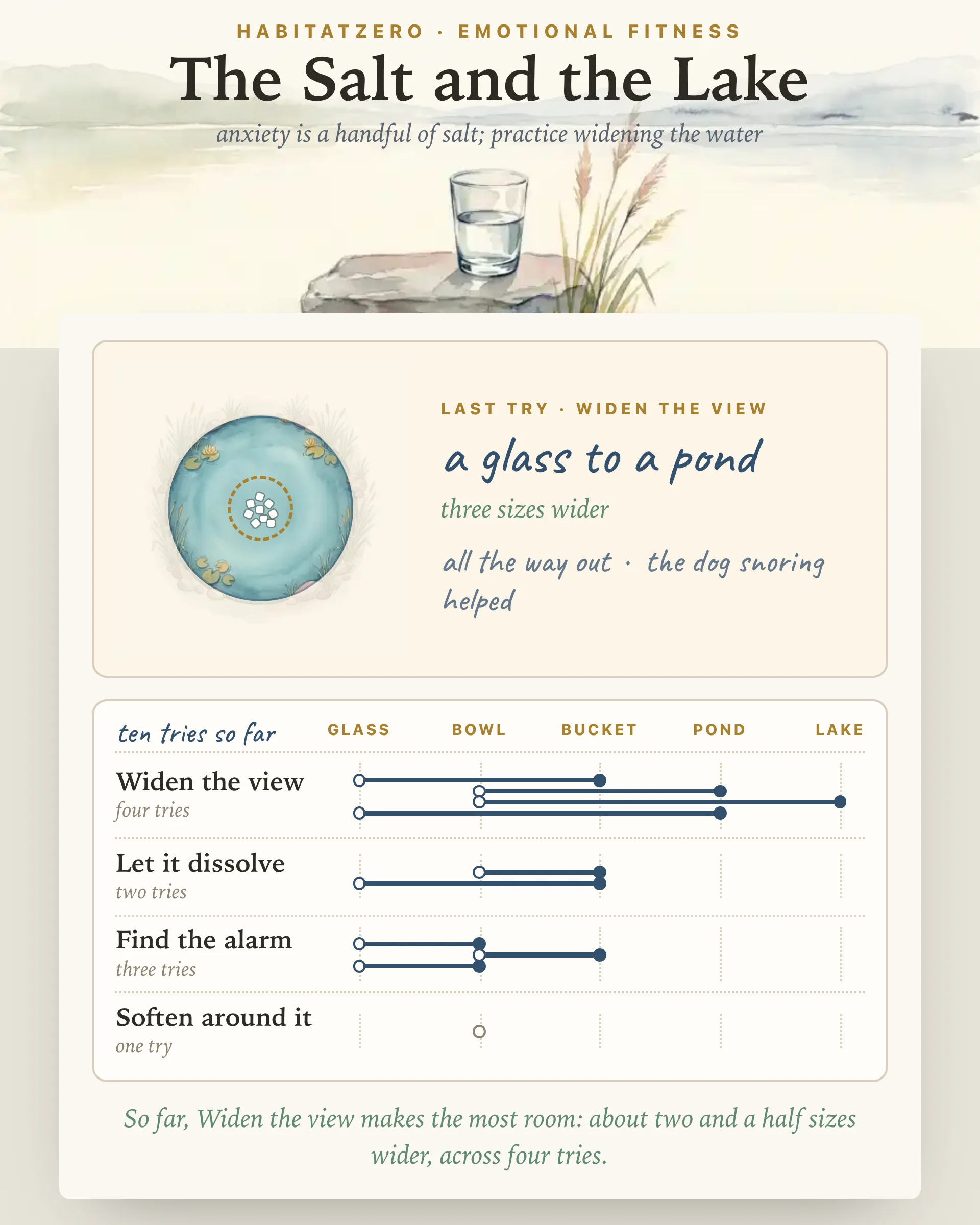
The Salt and the LakeFour short mindfulness exercises for the anxious moment, from finding the body's alarm to widening your view. Mark how much water surrounds the salt before and after each one, and a shoreline chart shows which practice gives you the most room.
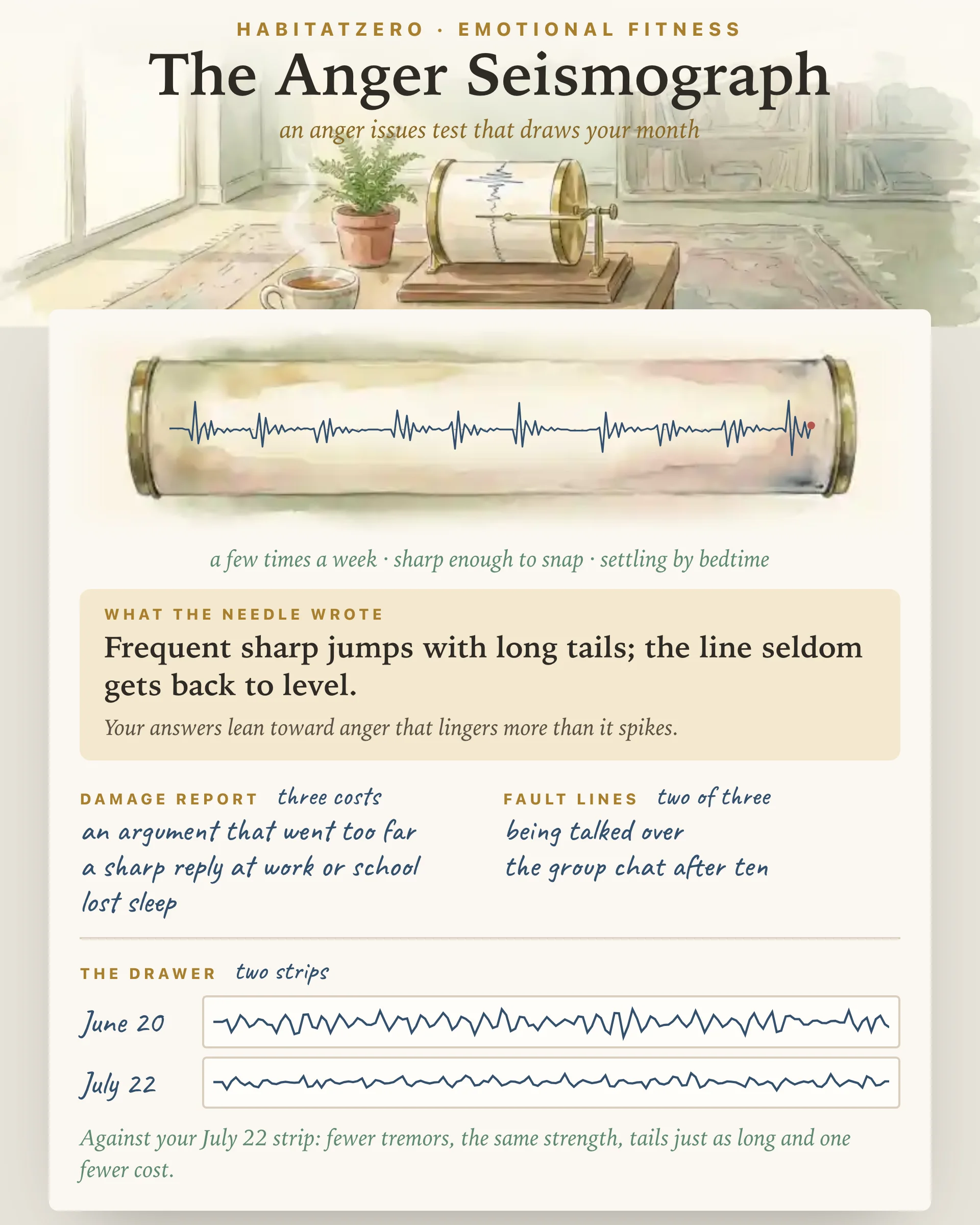
The Anger SeismographThree dials about the past month draw your anger as a seismograph trace: how often it came, how strong it got, how slowly it settled. Mark what it cost and where it builds, read the pattern back in plain words, and file each month's strip to watch it change.
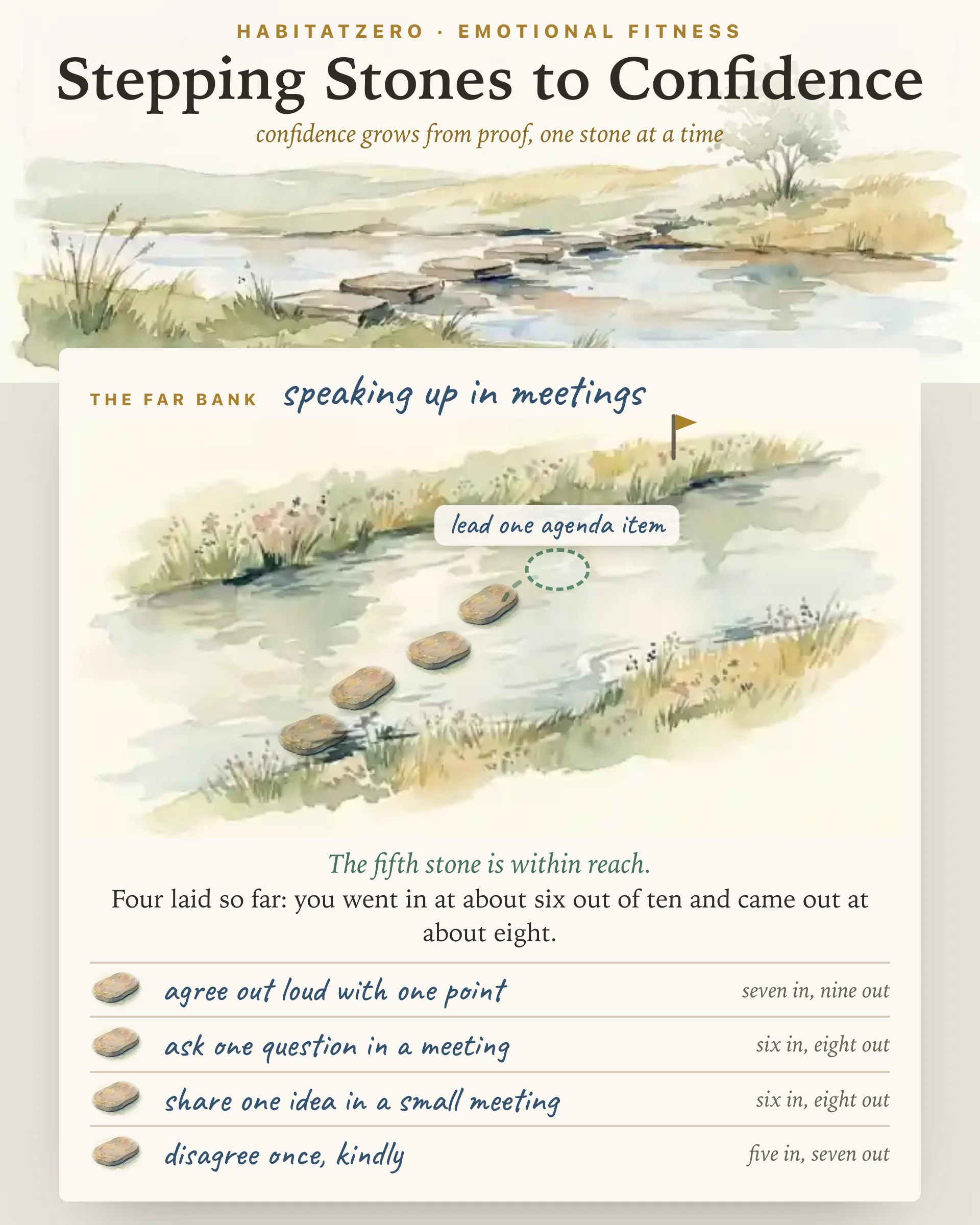
Stepping Stones to ConfidenceName what you want to feel sure enough to do, rate each next step from zero to ten until it is small enough to take, and lay it as a stone across a painted stream. The page shows how sure you were before and after each one, and keeps a log of the rivers you have already crossed.
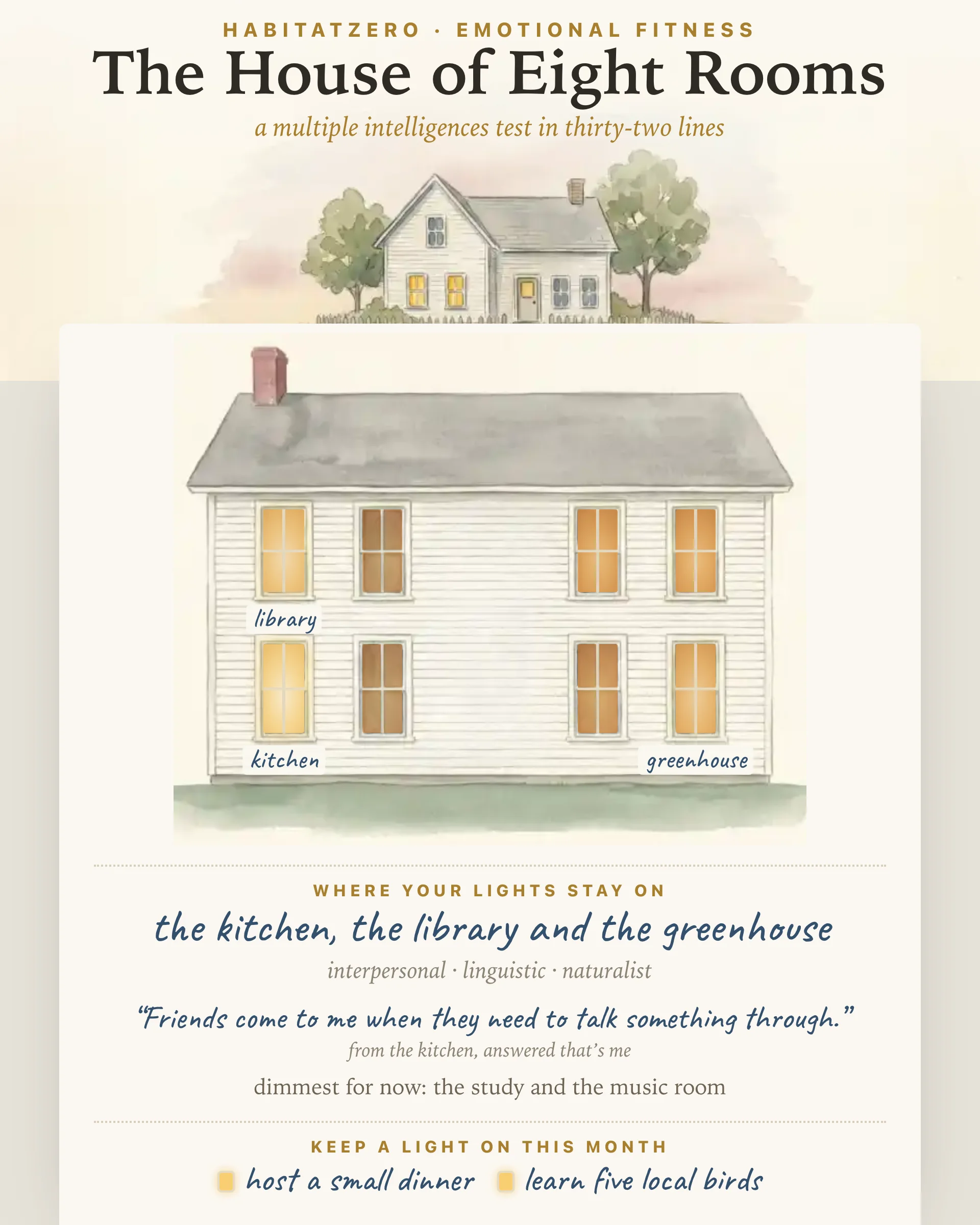
The House of Eight RoomsA multiple intelligences test in thirty-two short lines: every answer lights a window in a painted house, one room for each of Howard Gardner's eight intelligences, and the reading names the rooms where your lights stay on, quoting your own answers back. Open any room to change a line, then choose up to three small things to do more of.
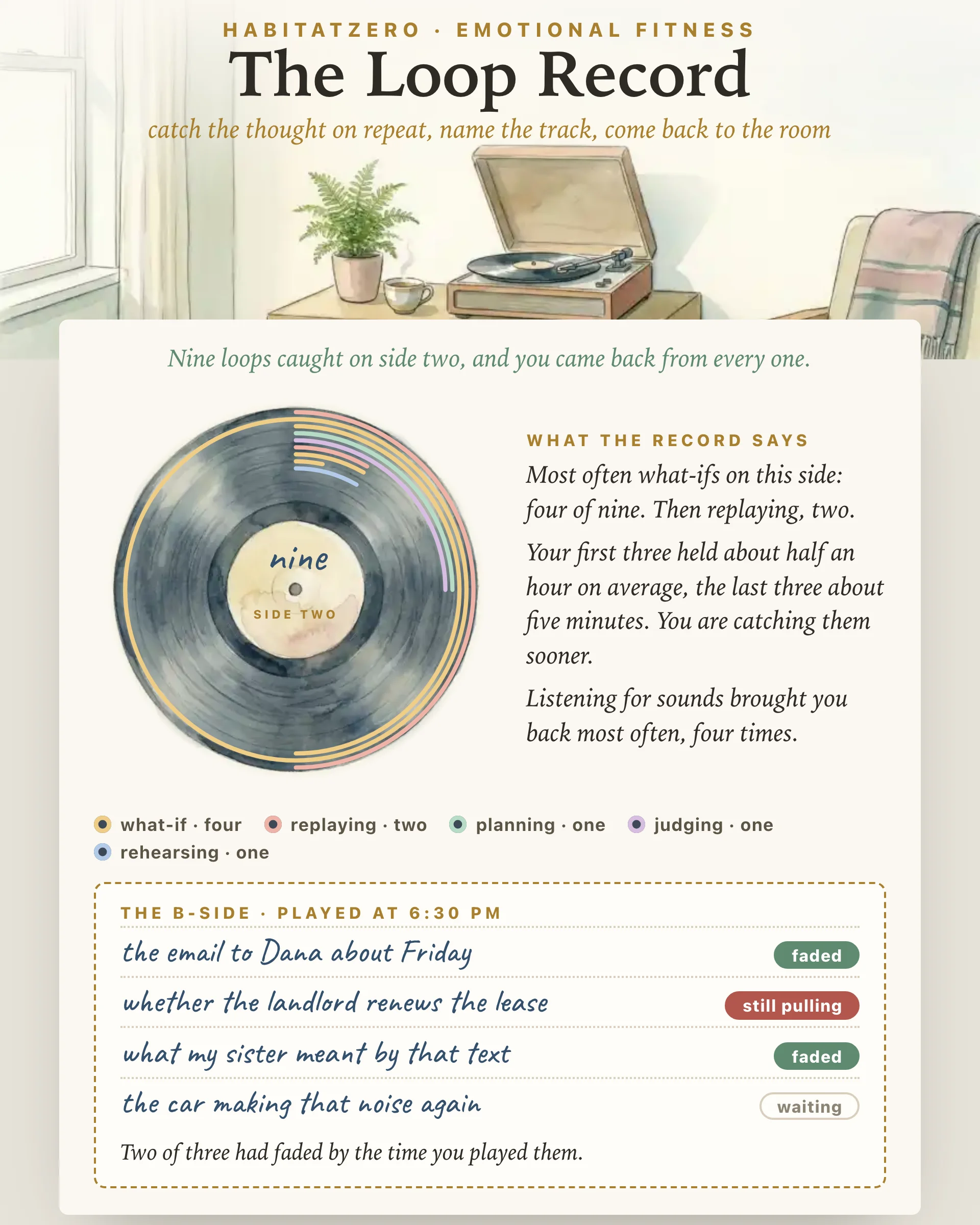
The Loop RecordCatch a thought on repeat, name the track it is playing and come back through one of your senses. Every catch becomes a groove on a painted record, drawn as long as the loop held, and worries that want an answer wait on the B-side for a time you choose.
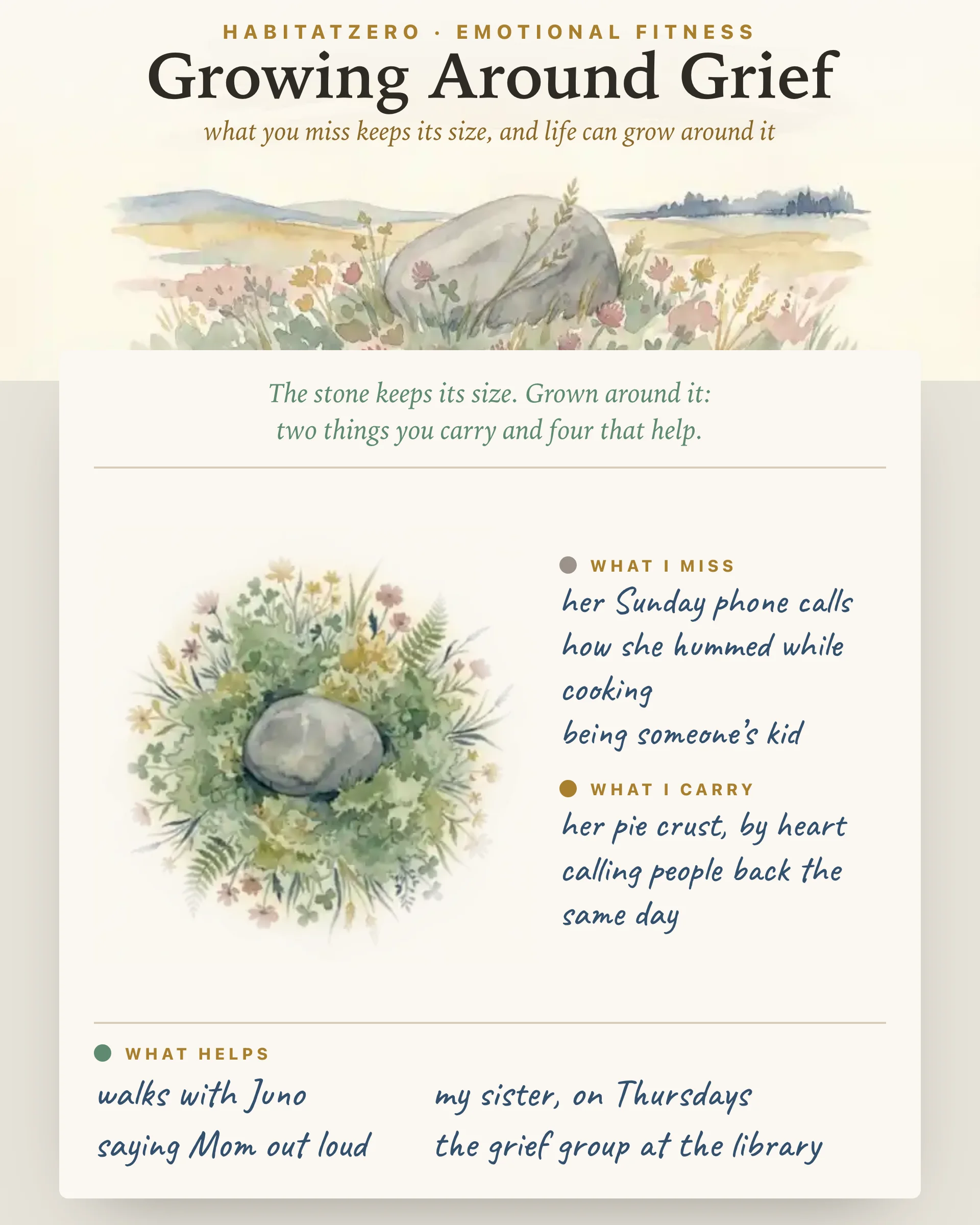
Growing Around GriefWrite what you miss, what you carry of them and what helps, in any order and at your own pace, and watch a meadow grow around a stone that keeps its size.
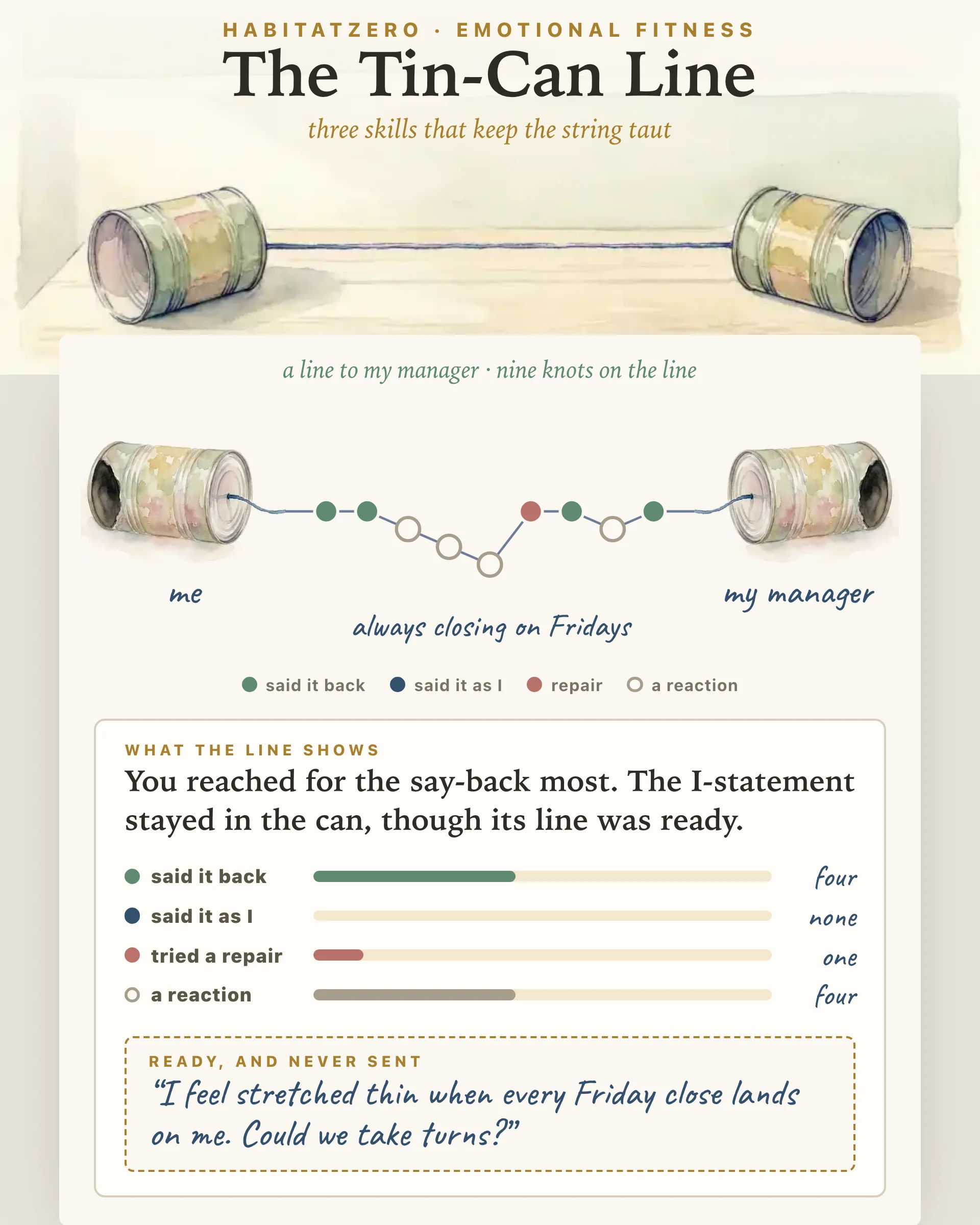
The Tin-Can LineReady three lines for one real conversation, a say-back, an I-statement and a repair, then replay the talk knot by knot on a tin-can telephone to see which skill you reached for and which one stayed in the can.
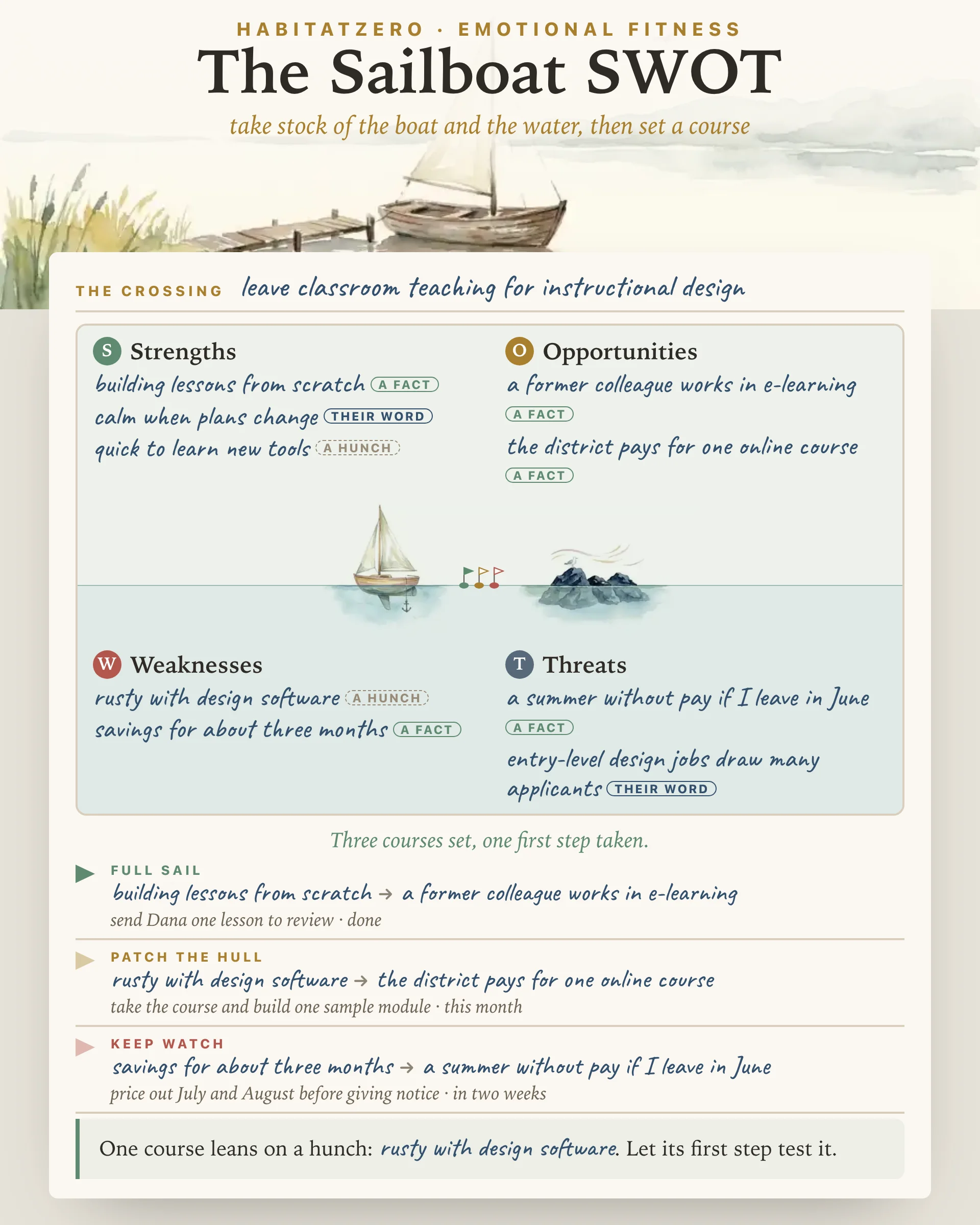
The Sailboat SWOTFill the sails, the drag, the wind and the rocks of one real decision, tie every line to proof, then pair a strength with an opening and the boat turns it into a course with a first step.
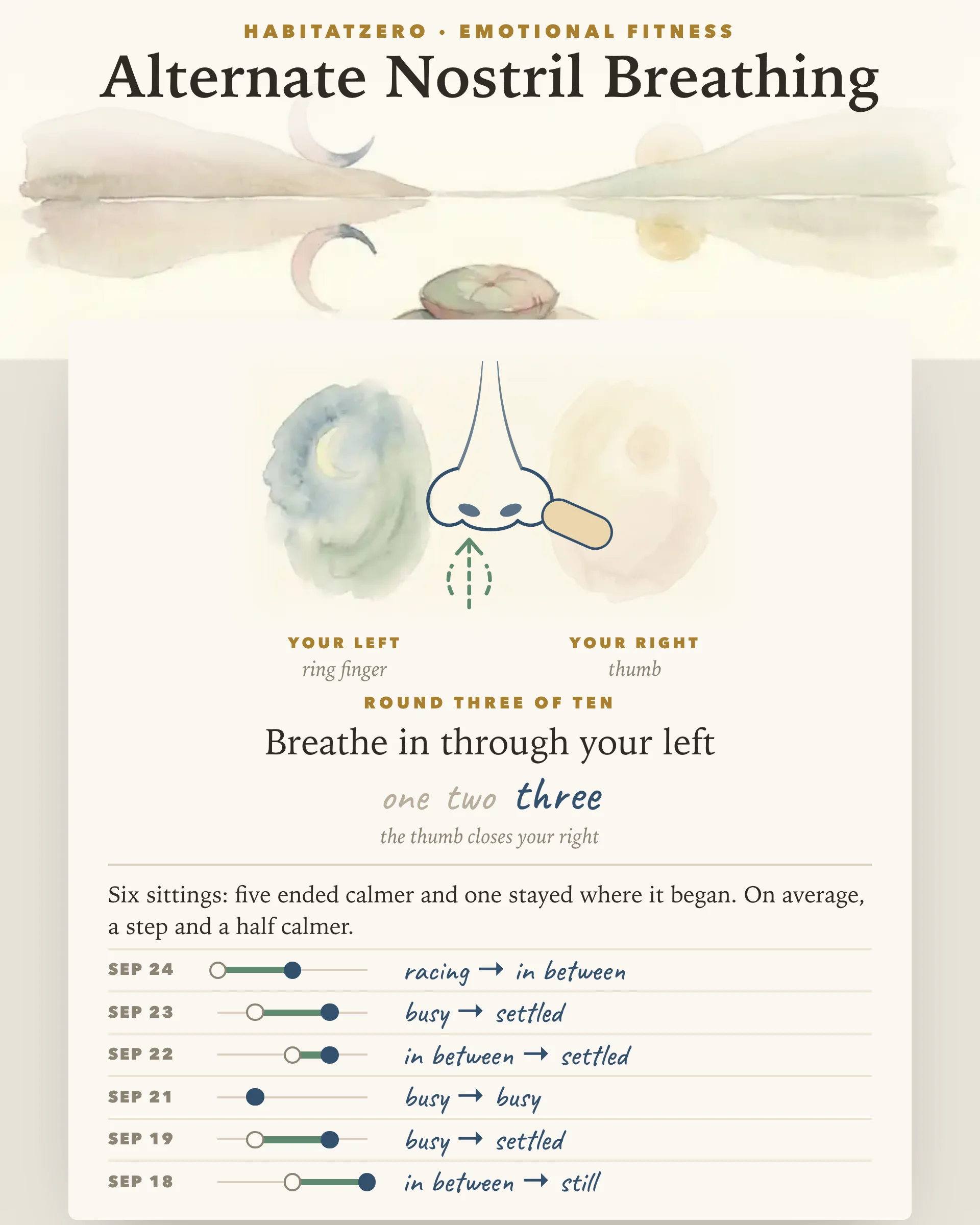
Alternate Nostril BreathingA paced guide to nadi shodhana: a nostril diagram between a painted moon and sun shows which side to close, a gentle count carries each round, and a log shows how your mind felt before and after every sitting.
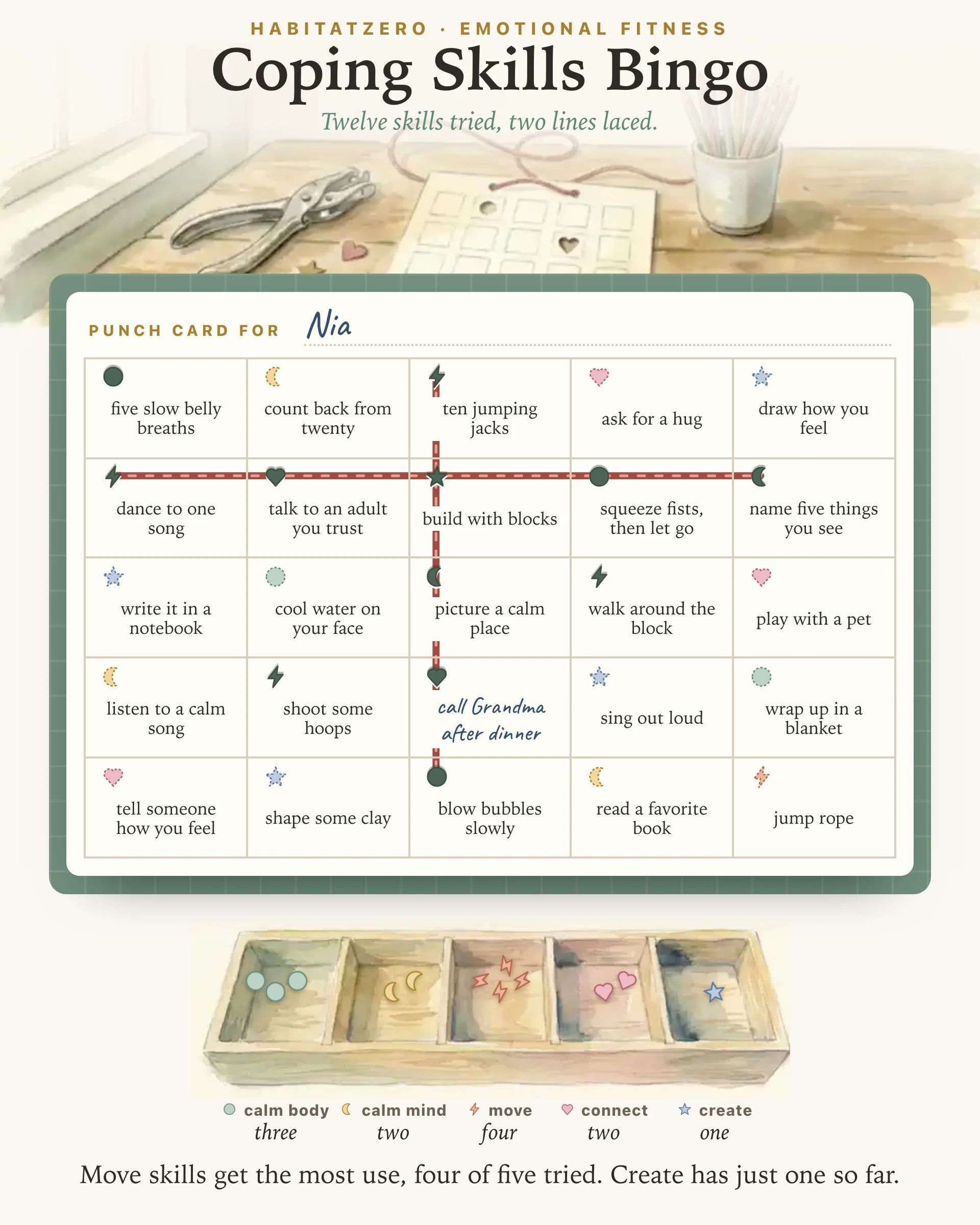
Coping Skills BingoA five-by-five punch card of coping skills for kids, teens and groups: punch a square each time a skill actually gets tried, lace a cord through every finished line, and let the tray show which kinds of coping get used most.
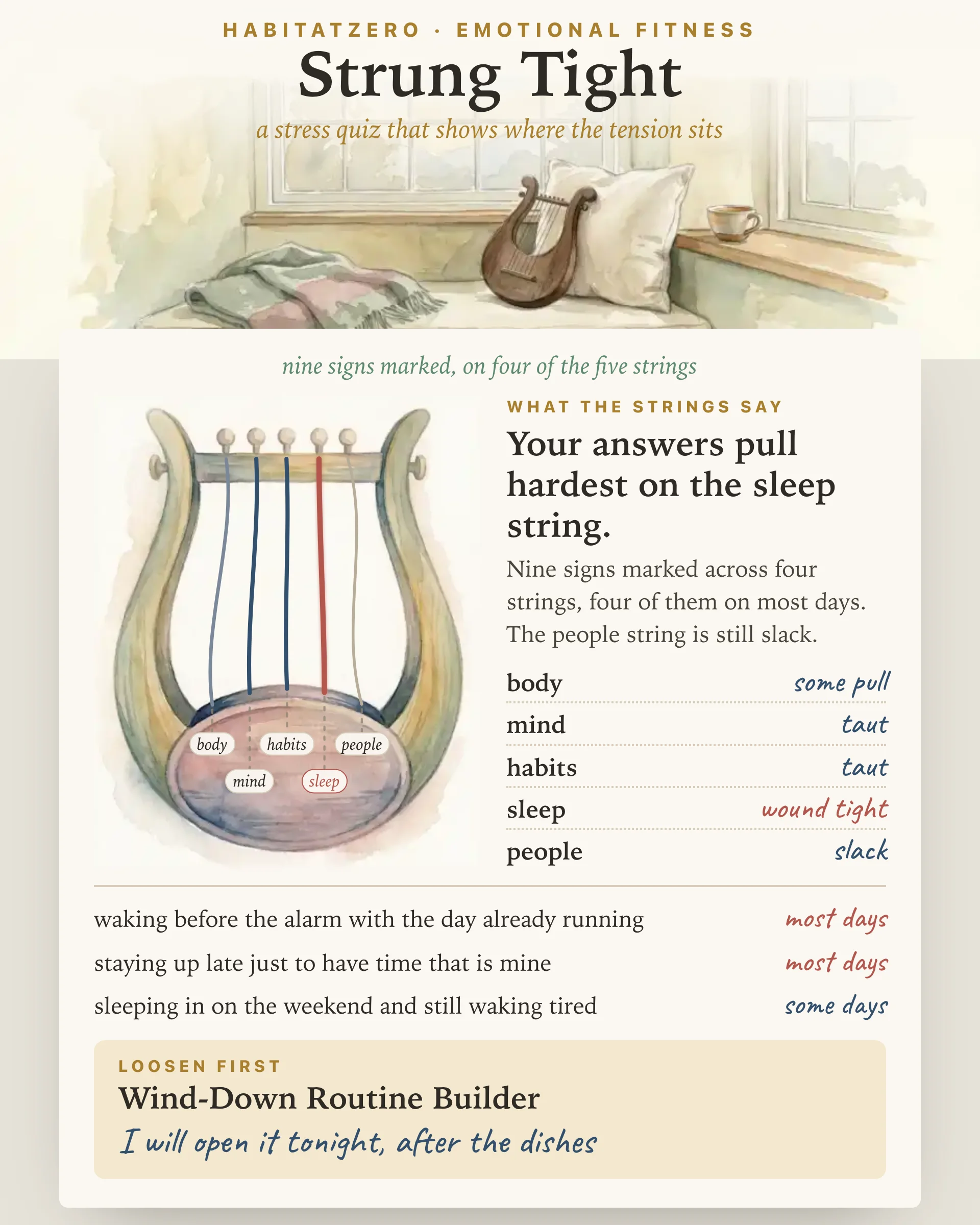
Strung TightTwenty everyday signs, from a twitching eyelid to messages piling up, tighten five strings on a lyre: body, mind, habits, sleep and people. The reading names the string pulled tightest and hands you one tool to loosen it, with no score attached.
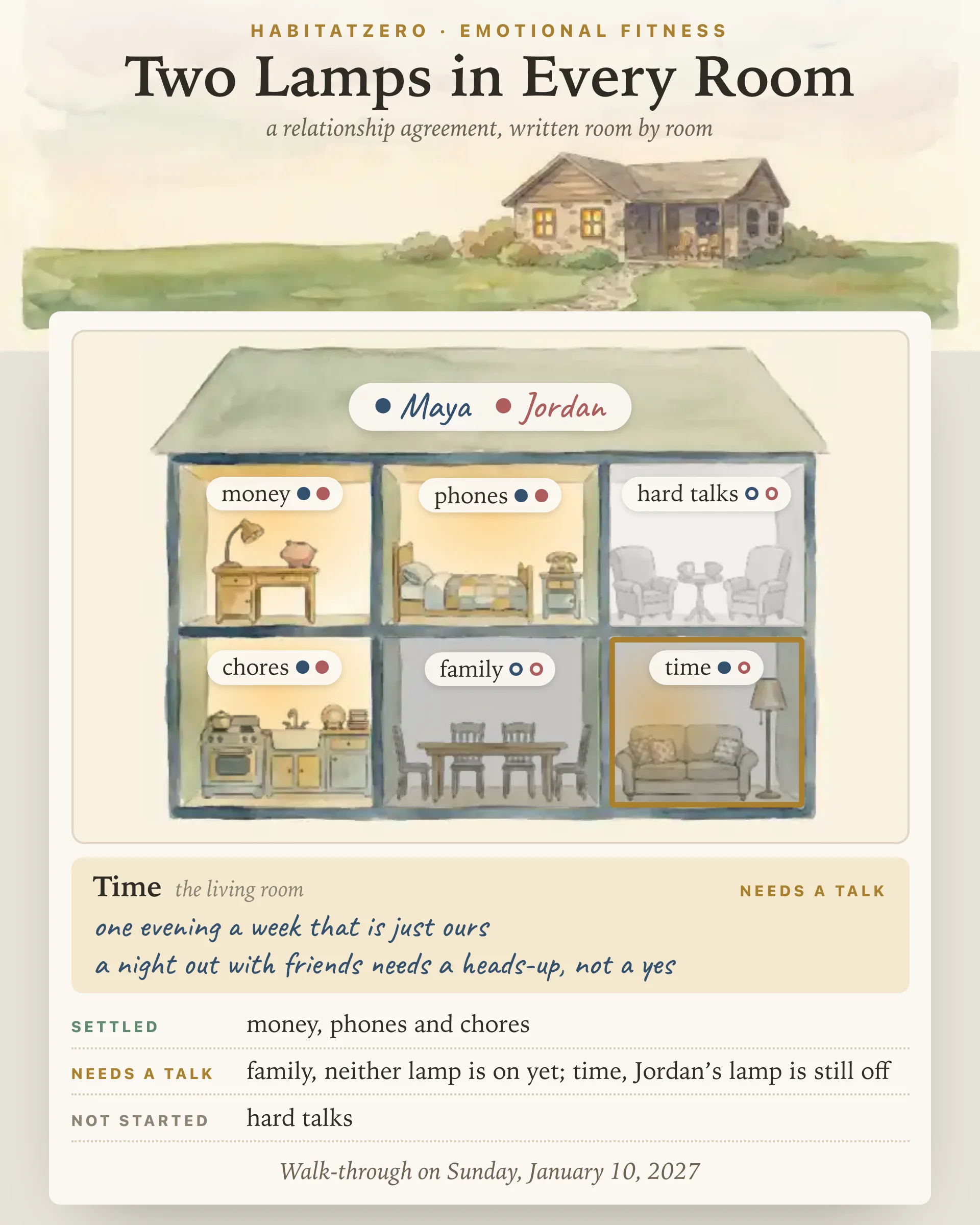
Two Lamps in Every RoomA relationship agreement for two, written room by room: money in the study, phones in the bedroom, chores in the kitchen. Each of you switches on your own lamp, and the painted house shows which rooms are settled and which still need a talk.
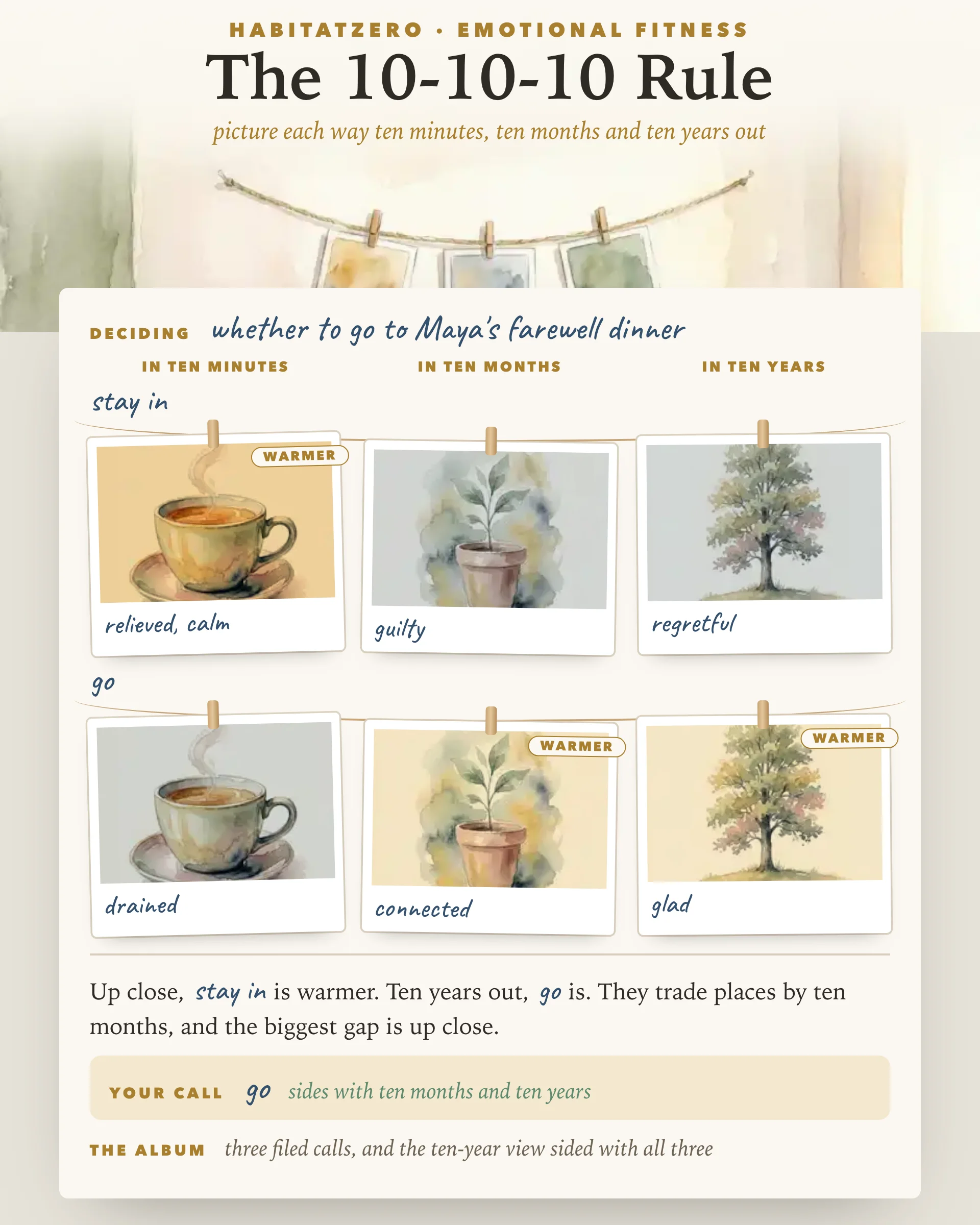
The 10-10-10 RulePicture each way a choice could go at ten minutes, ten months and ten years, watch the snapshots warm or cool with how each would feel, and see where the near and far views part.
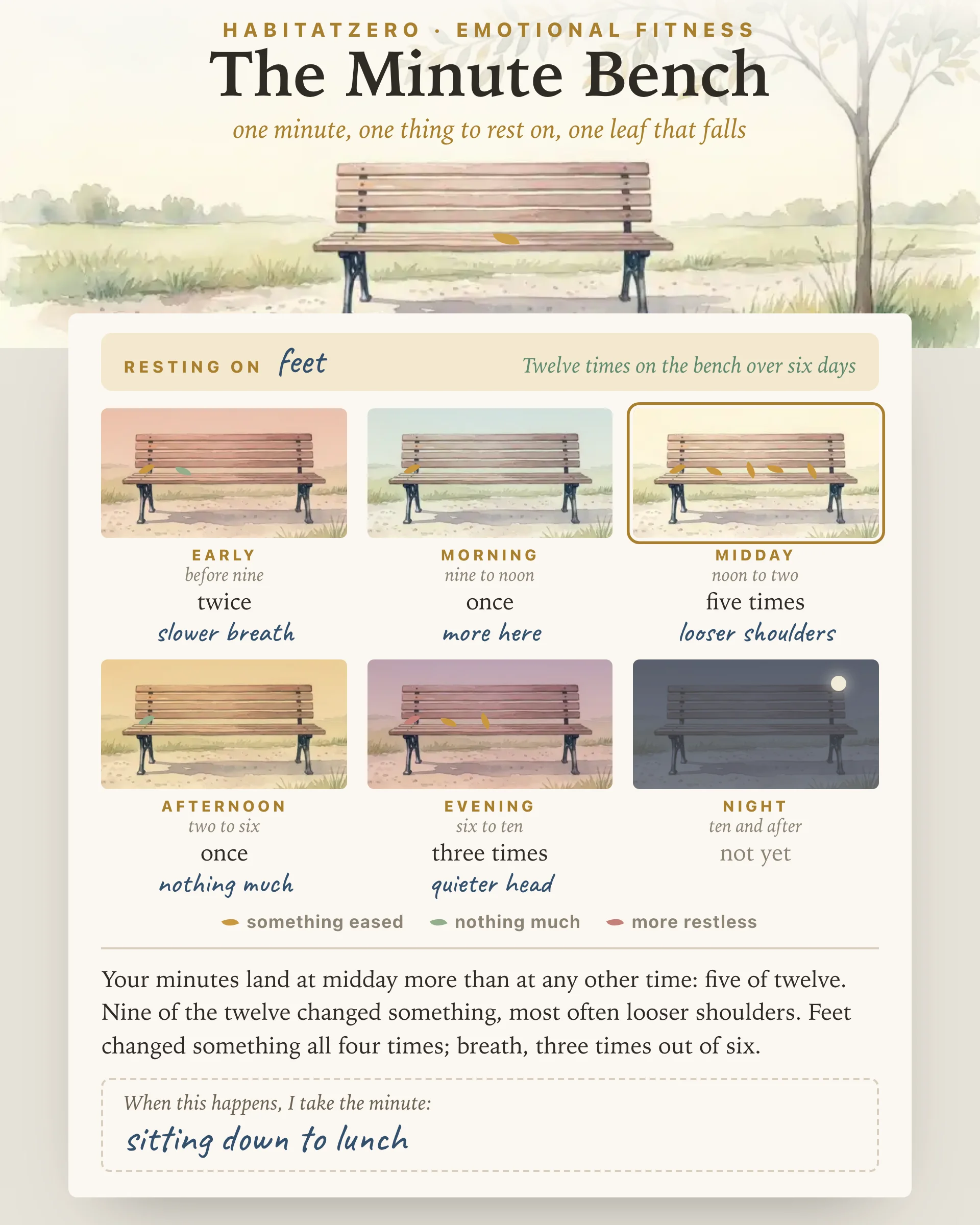
The Minute BenchSit for one mindful minute on a painted bench, resting on your breath, nearby sounds or your feet while a single leaf falls. Keep each minute and the bench shows when in your day one actually gets taken, and what it tends to change.
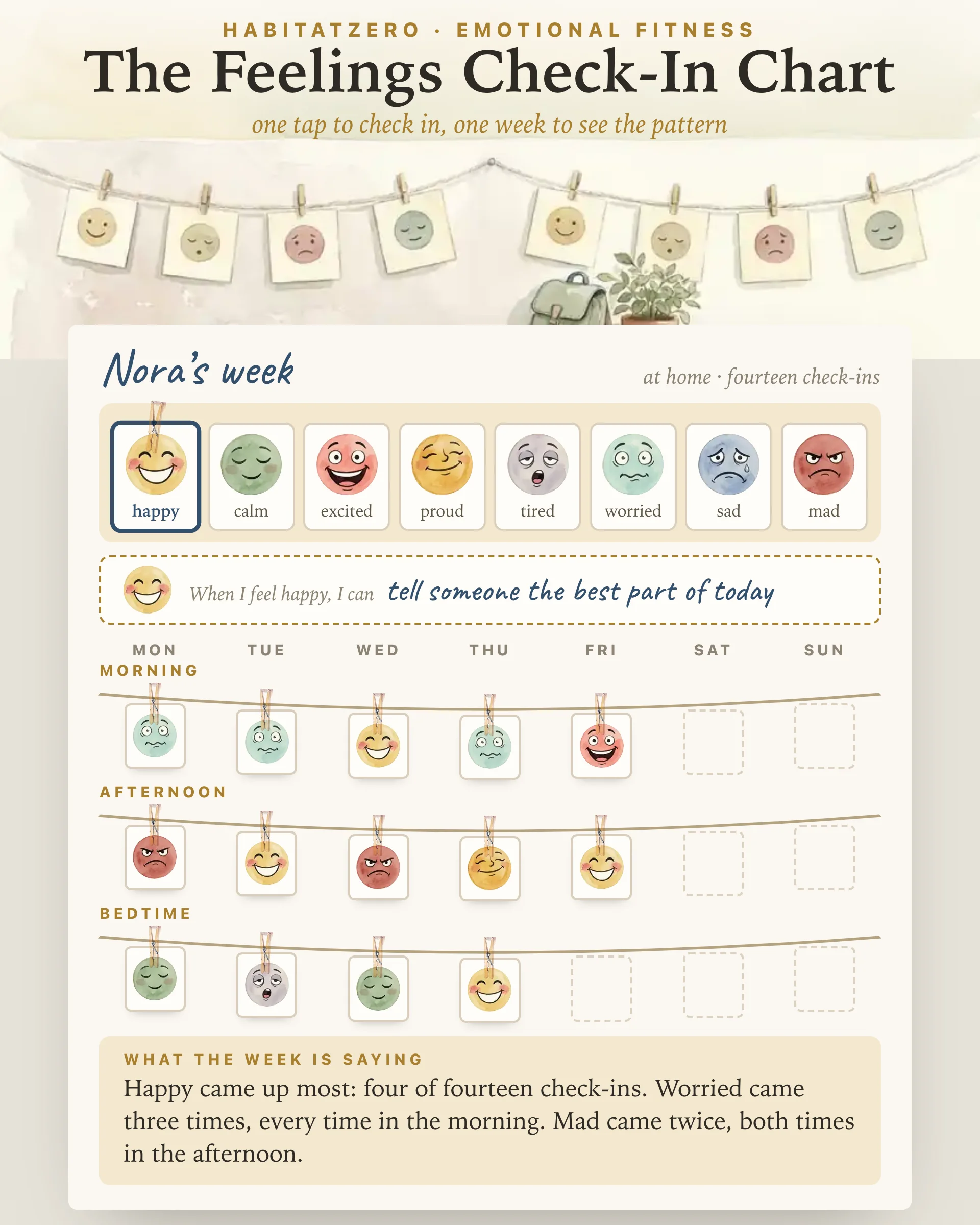
The Feelings Check-In ChartA feelings check-in chart for kids at home or in class: tap one of eight painted faces to clip on how you feel, and the week's three clotheslines show which feelings come most, and at what time of day.
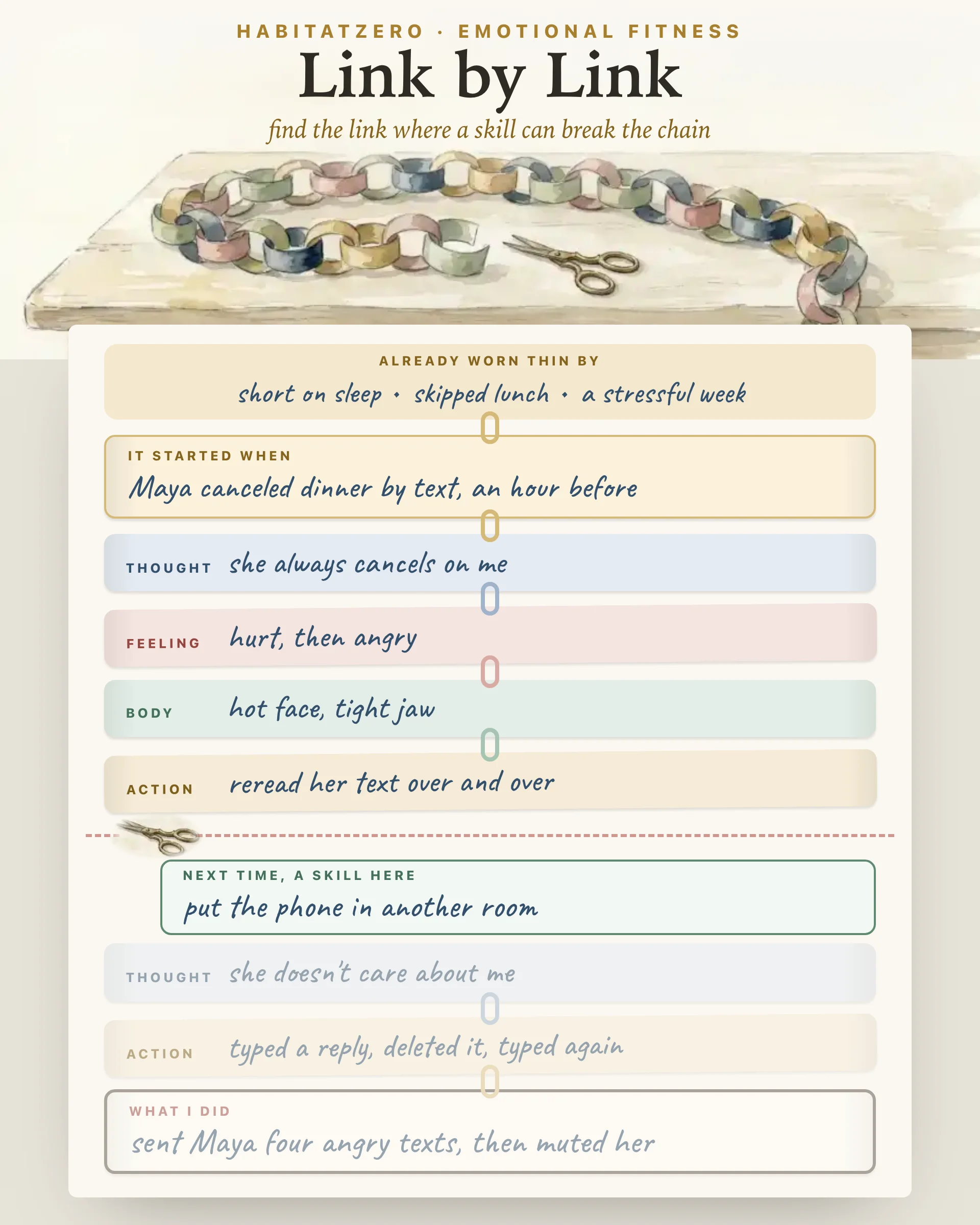
Link by LinkBuild a DBT behavior chain analysis as a paper chain: what wore you thin, what set it off, every thought, feeling, body sensation and action in between, and what you did. Then cut the chain where a skill fits and keep that plan for next time.
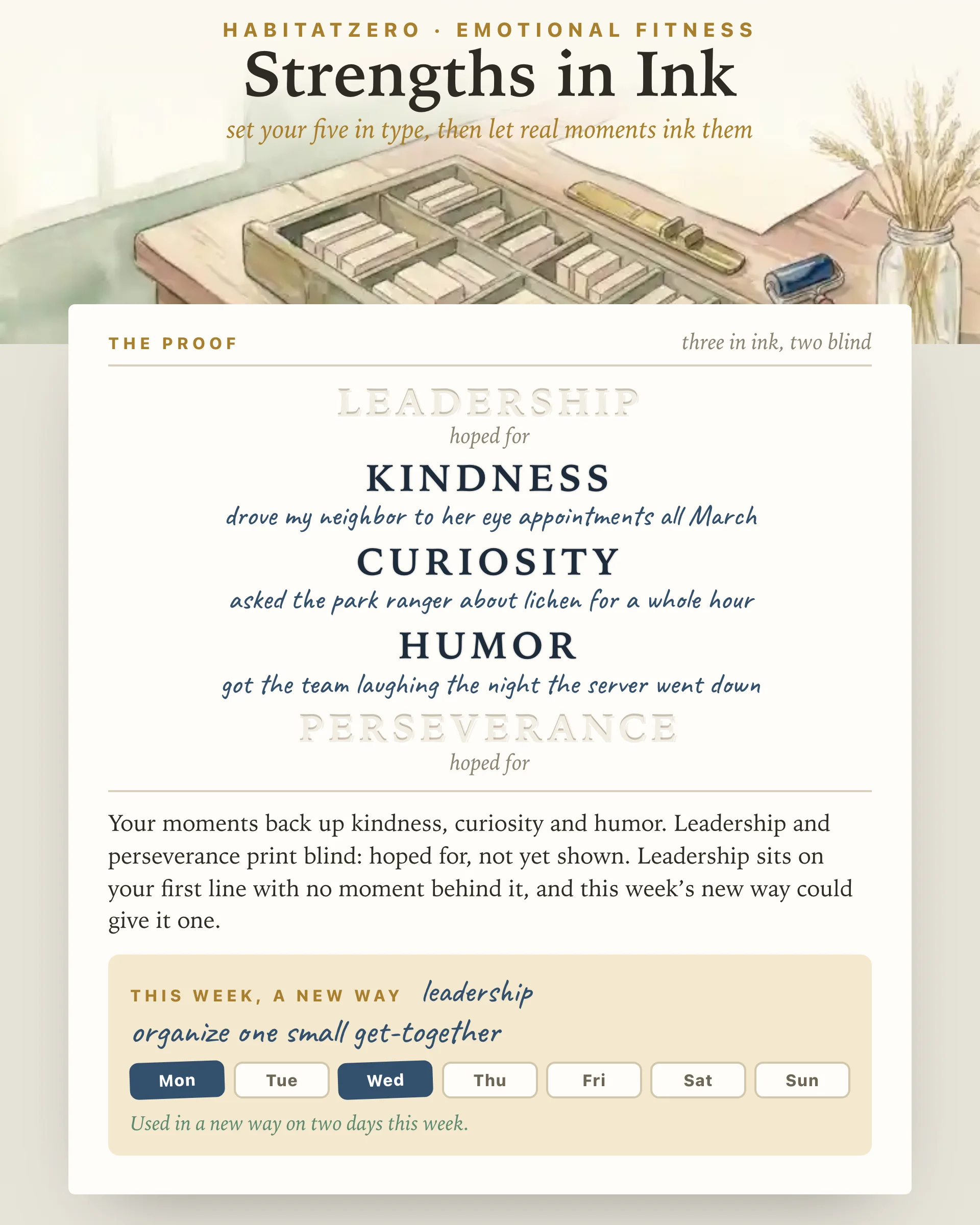
Strengths in InkBrowse the twenty-four character strengths, set your top five in type and back each one with a real moment. The proof then shows which strengths your life backs up and which are still only hoped for.
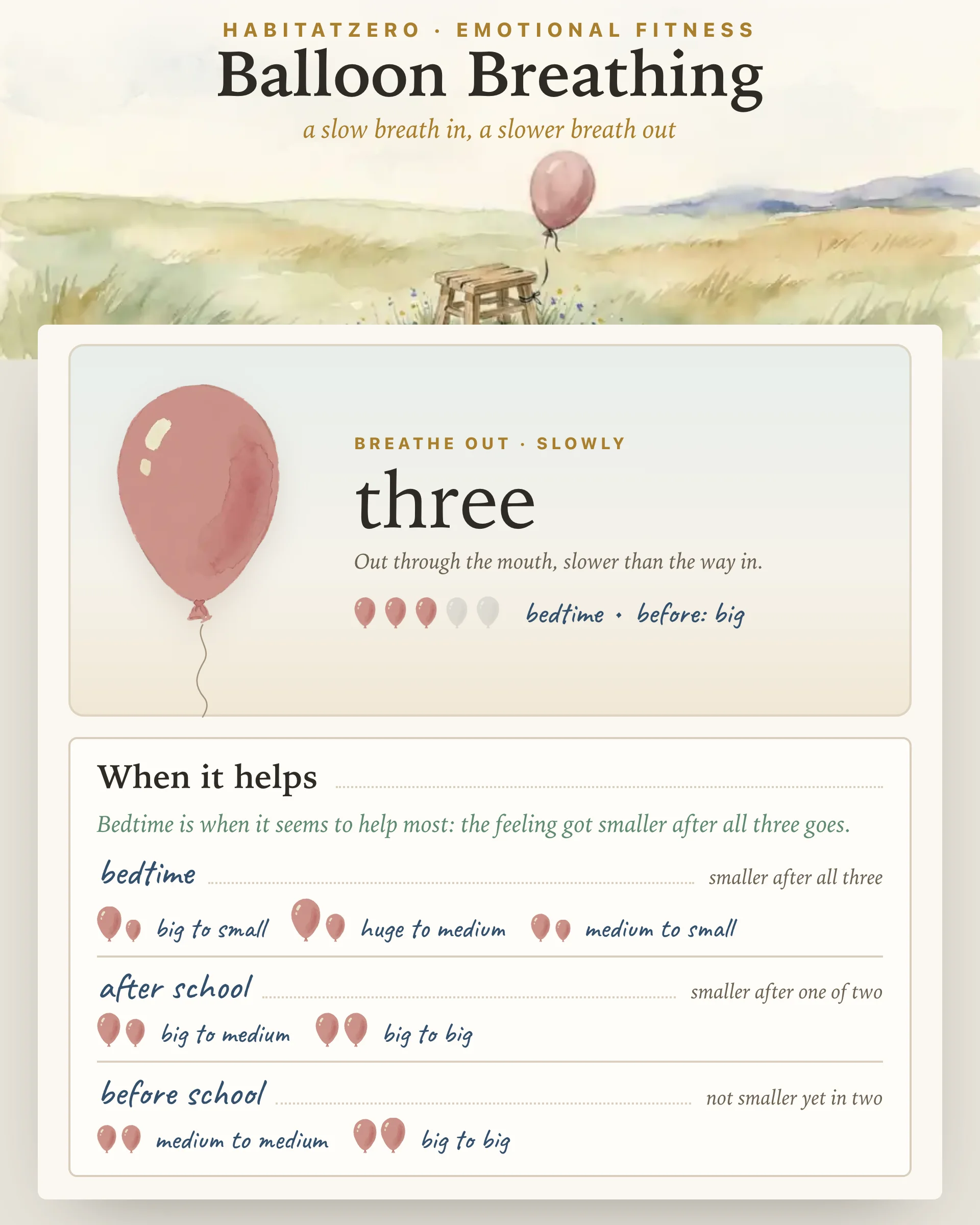
Balloon BreathingA painted balloon fills and empties at your child's pace while the count appears in words, and a small log of how big the feeling was before and after shows which moments of the day it helps most.
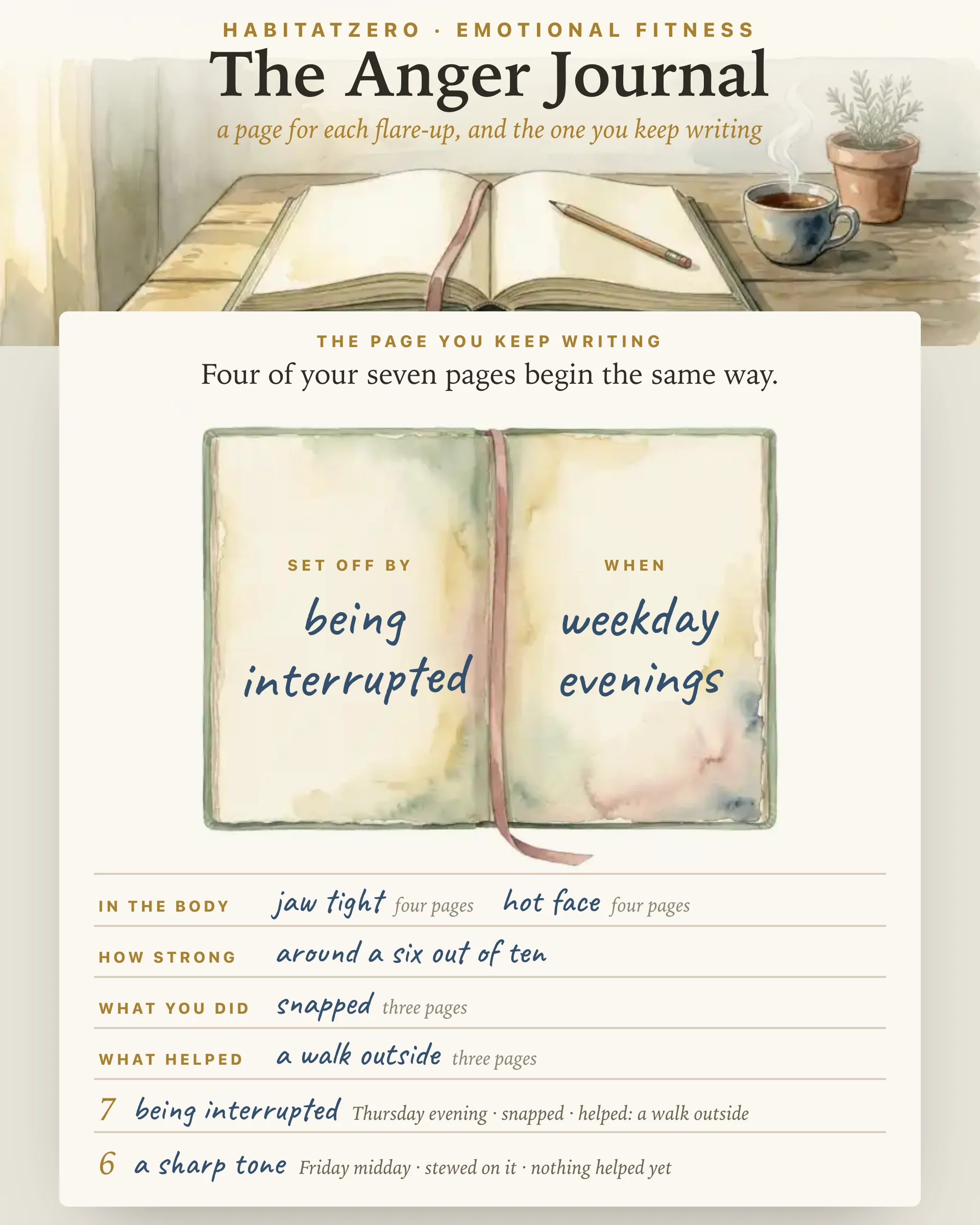
The Anger JournalLog each flare-up in about a minute of taps: what set it off, when, where it showed in your body, how strong it got, what you did, what it cost and what helped. Three pages in, the journal reads them back and names the trigger and the time that keep repeating.
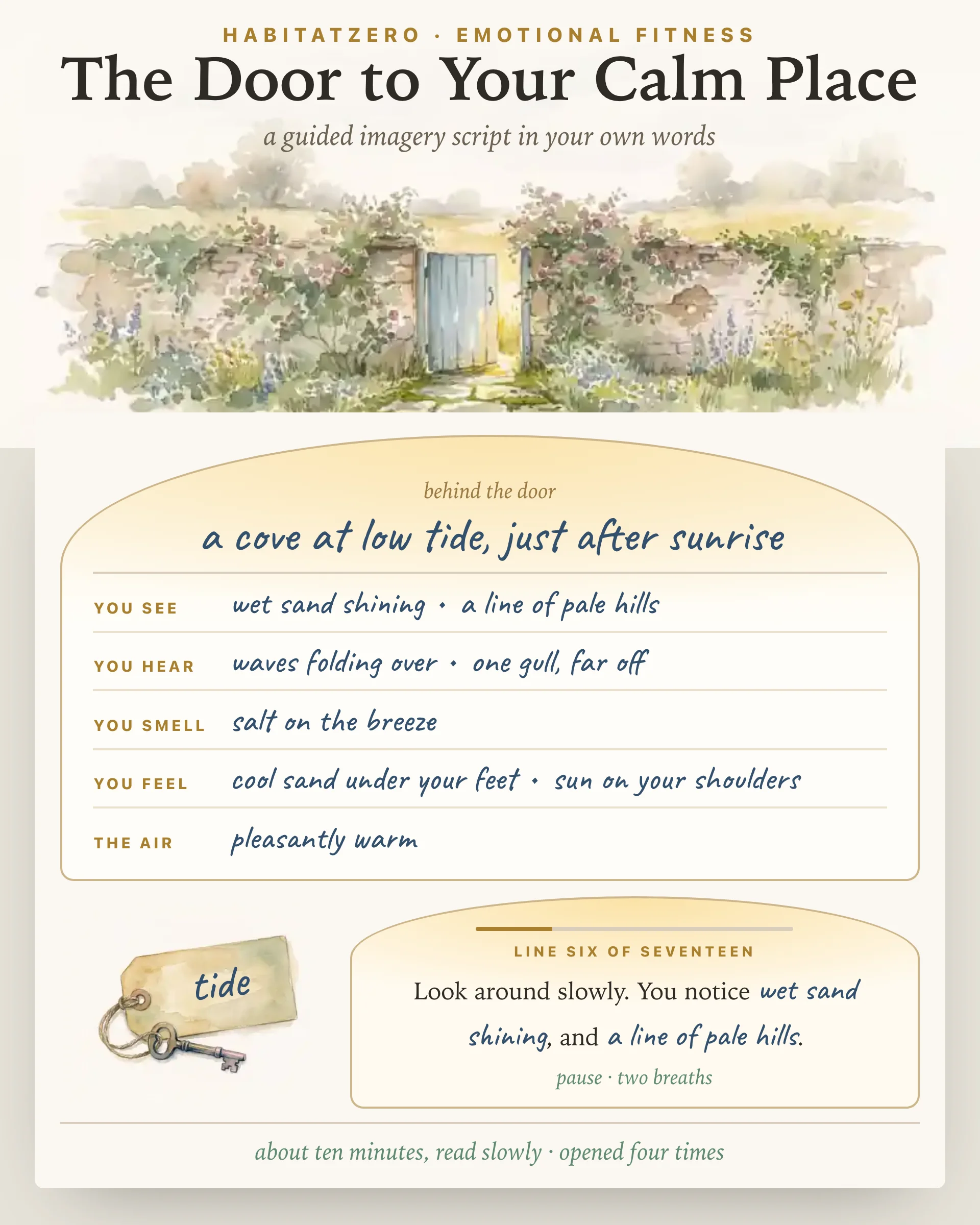
The Door to Your Calm PlaceBuild a calm place from what you see, hear, smell and feel there, pick a word to carry back, and the page writes it all into a guided imagery script in your own words. Open the door and it walks you through, one slow line at a time, holding every pause.
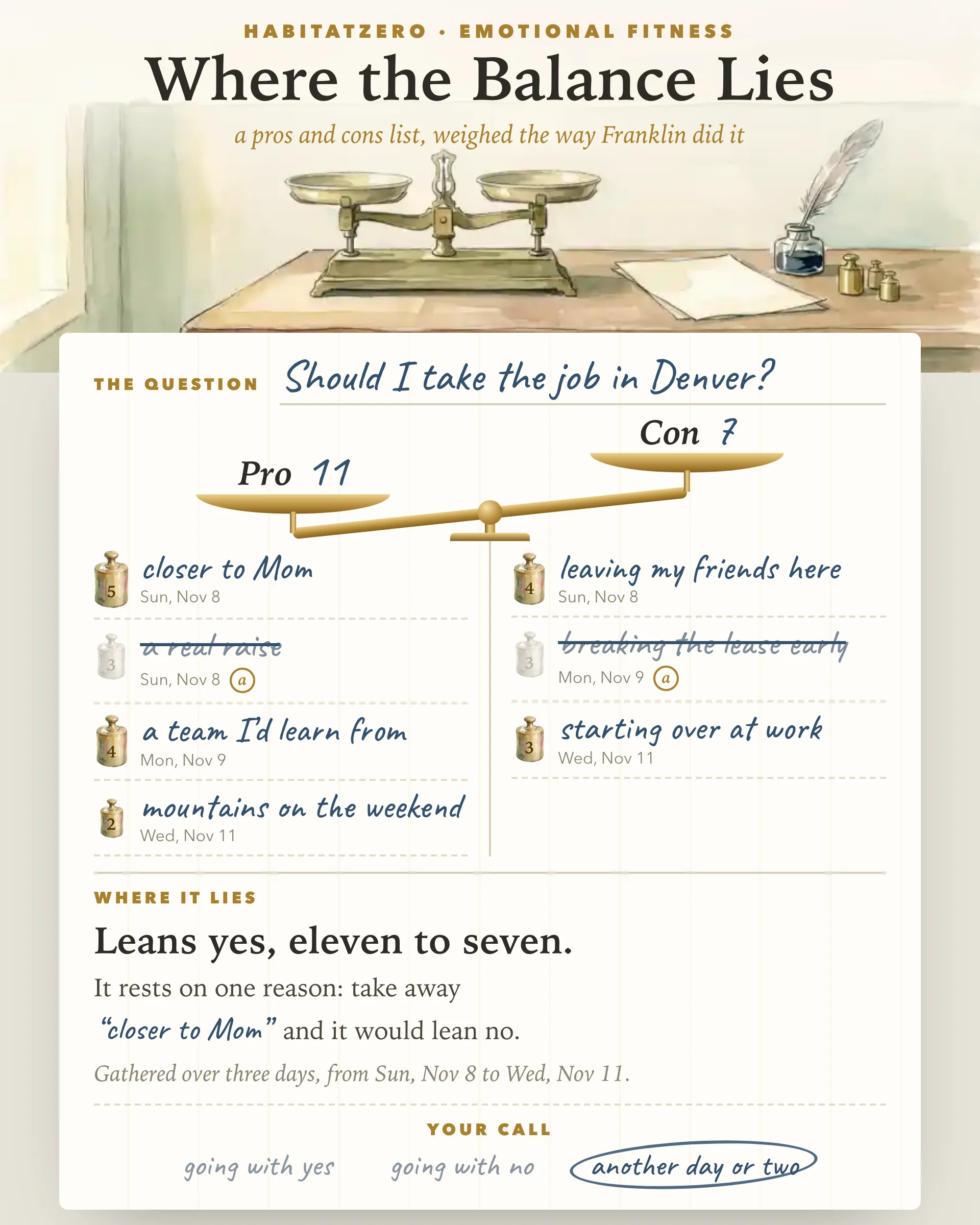
Where the Balance LiesA pros and cons list for one yes-or-no question. Give every reason a brass weight from one to five, strike out equal weights the way Benjamin Franklin did, and watch the scale show which way the rest leans and whether one heavy reason is holding it there.
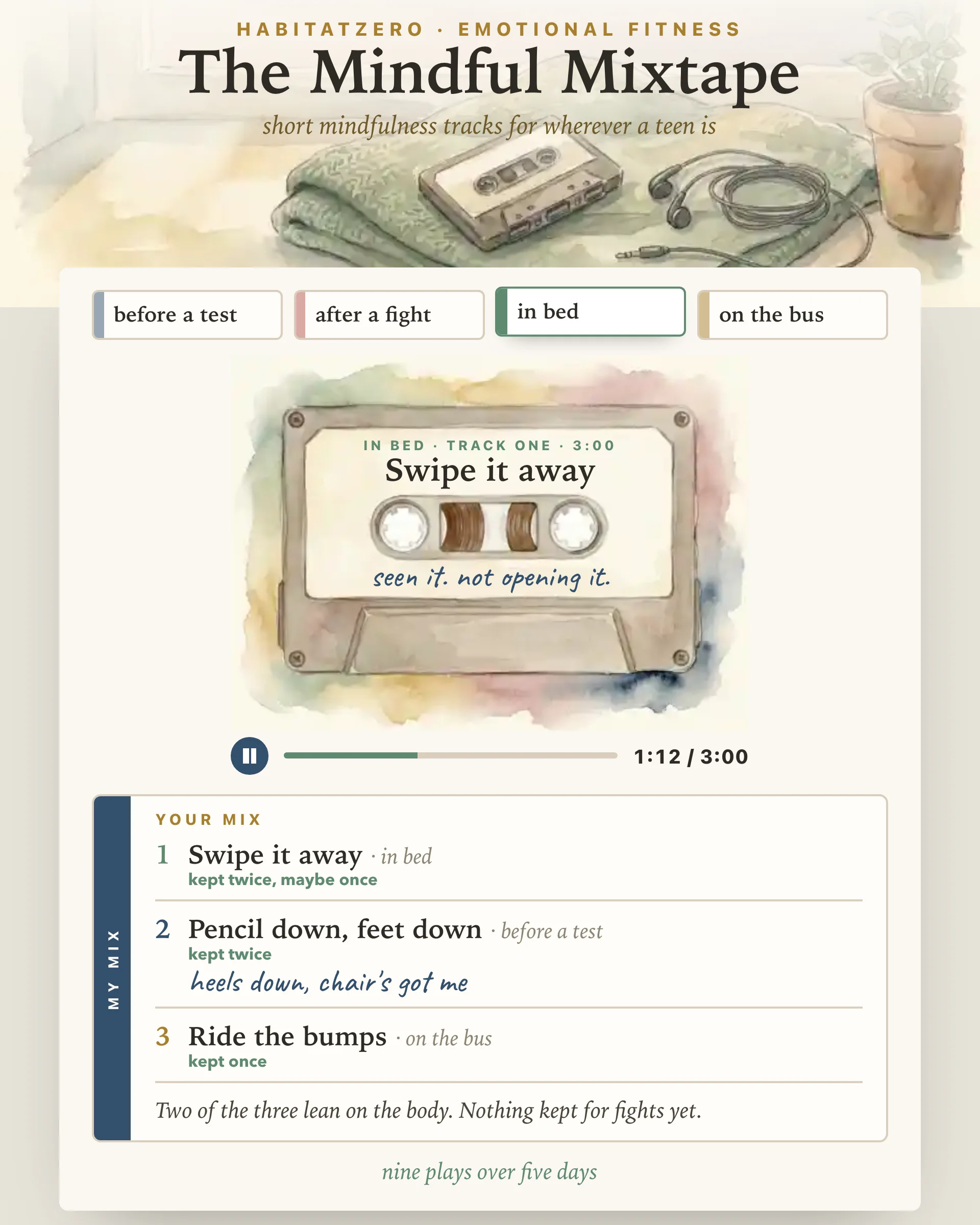
The Mindful MixtapeTwelve short mindfulness tracks for teens on four tapes, one for each place: before a test, after a fight, in bed, on the bus. Each plays on a silent timer with a line written in a teen's voice, and the tracks they would play again gather into a mix of their own.
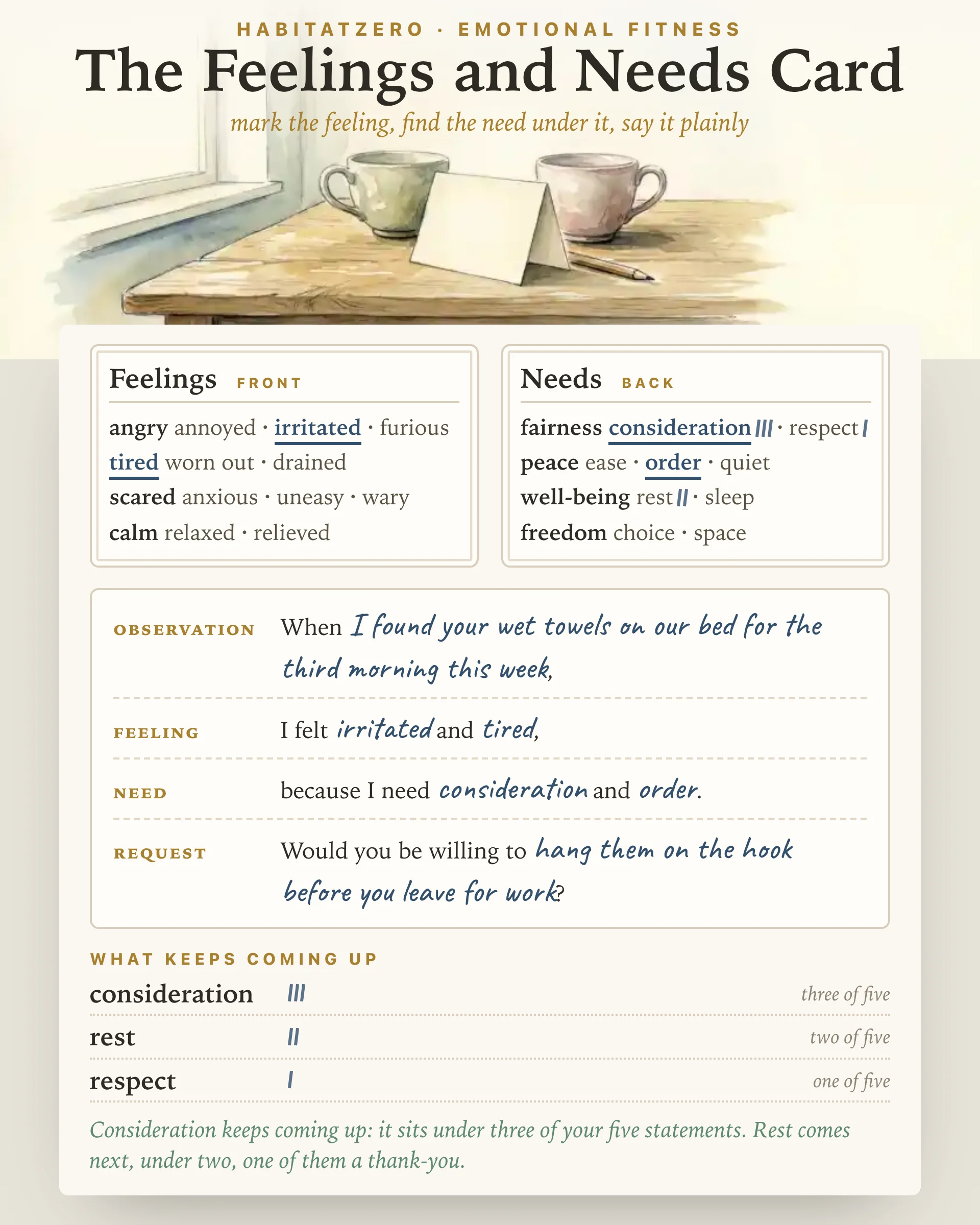
The Feelings and Needs CardMark what you feel on the front of the card, turn it over to find the need underneath, and say it in four plain parts. Keep your statements, and the card shows which needs keep coming up.
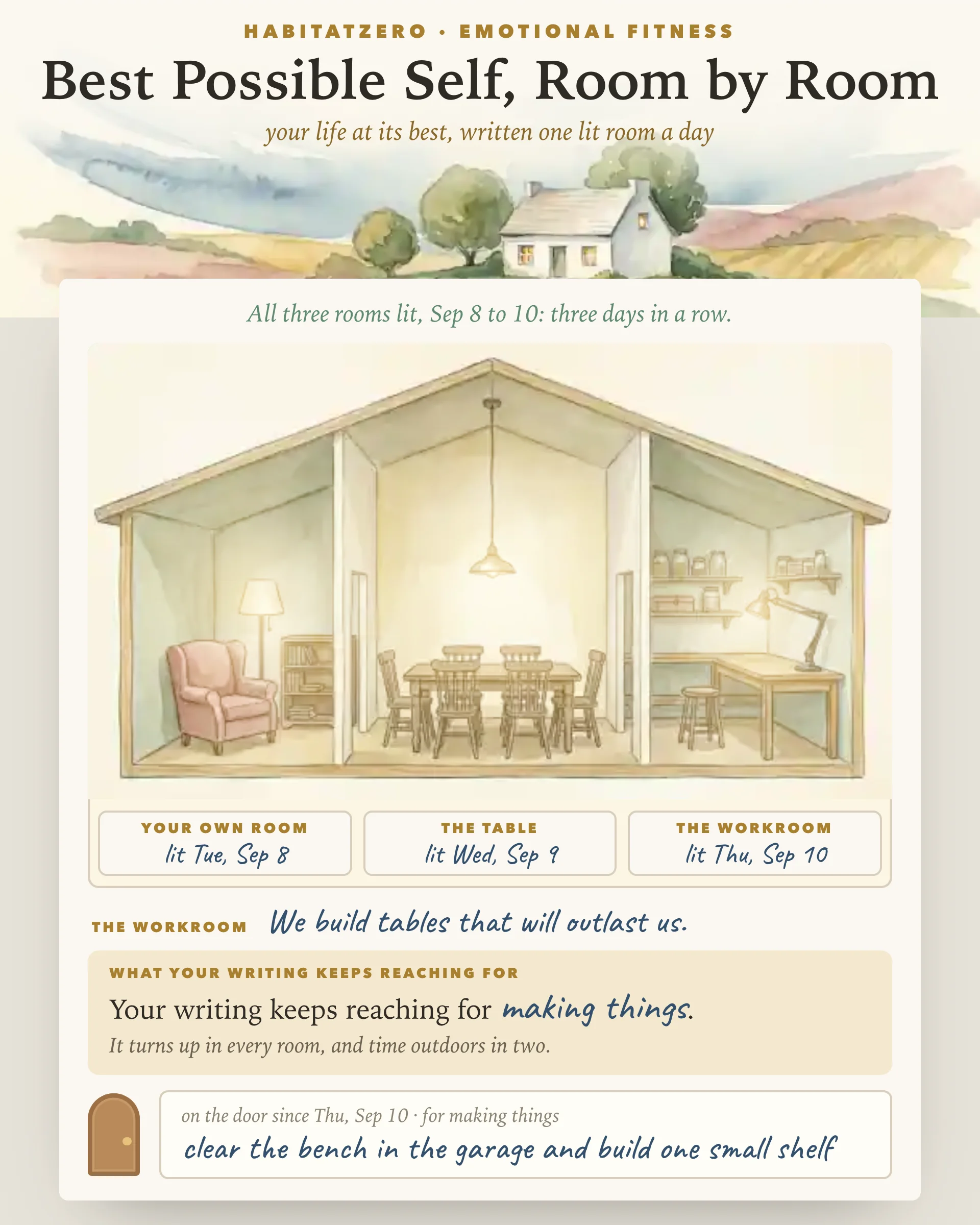
Best Possible Self, Room by RoomWrite your best possible self into a house of three rooms, one sitting a day: a lamp fills while you write about yourself, your people and your work, then the house reads back what keeps turning up and hangs one small step on the door.
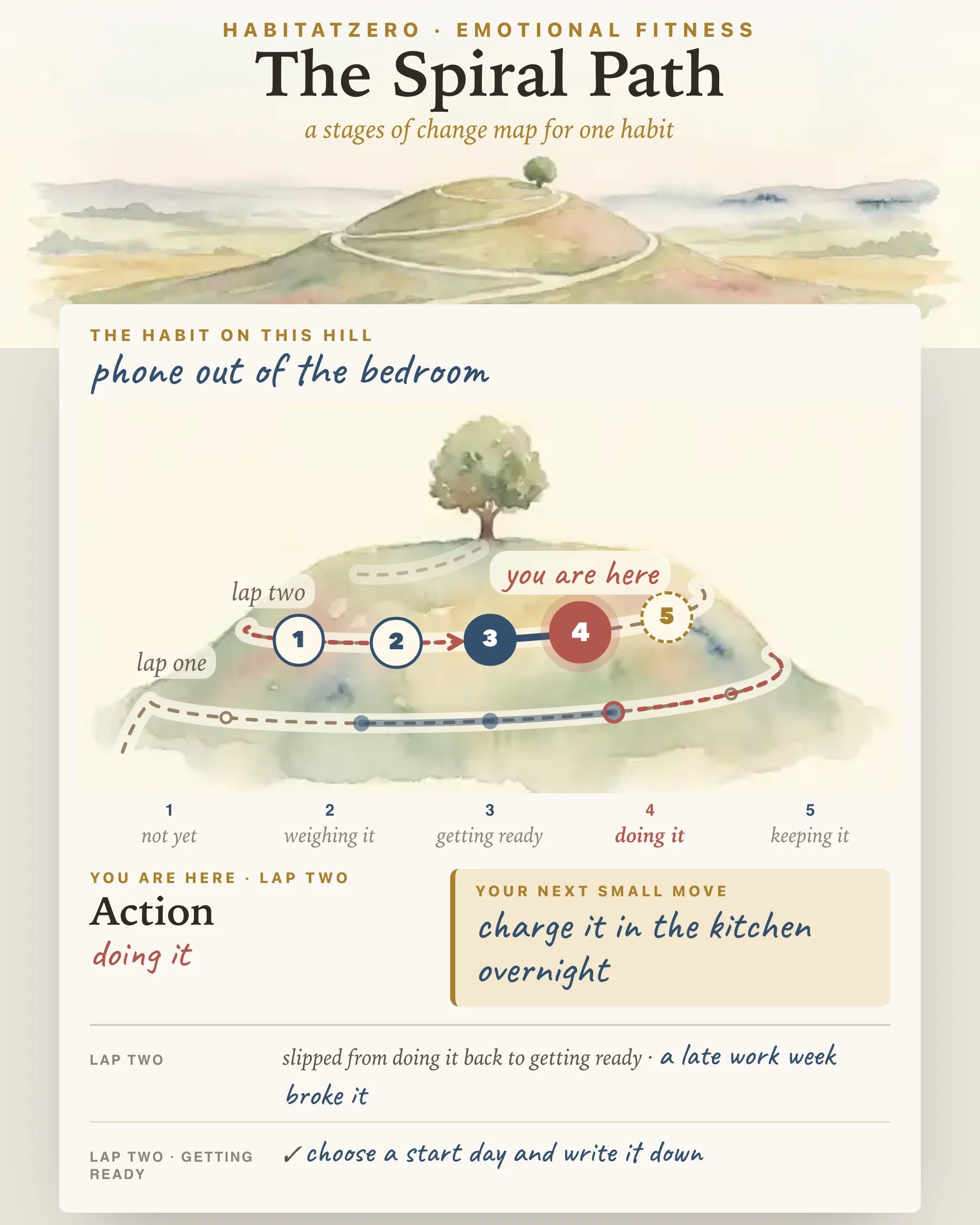
The Spiral PathPut one habit on a painted hill trail, find which of the five stops you are at, and take the small move the stages of change model pairs with that stop. A slip sends you around the hill again, a turn higher, with what the last lap taught you.
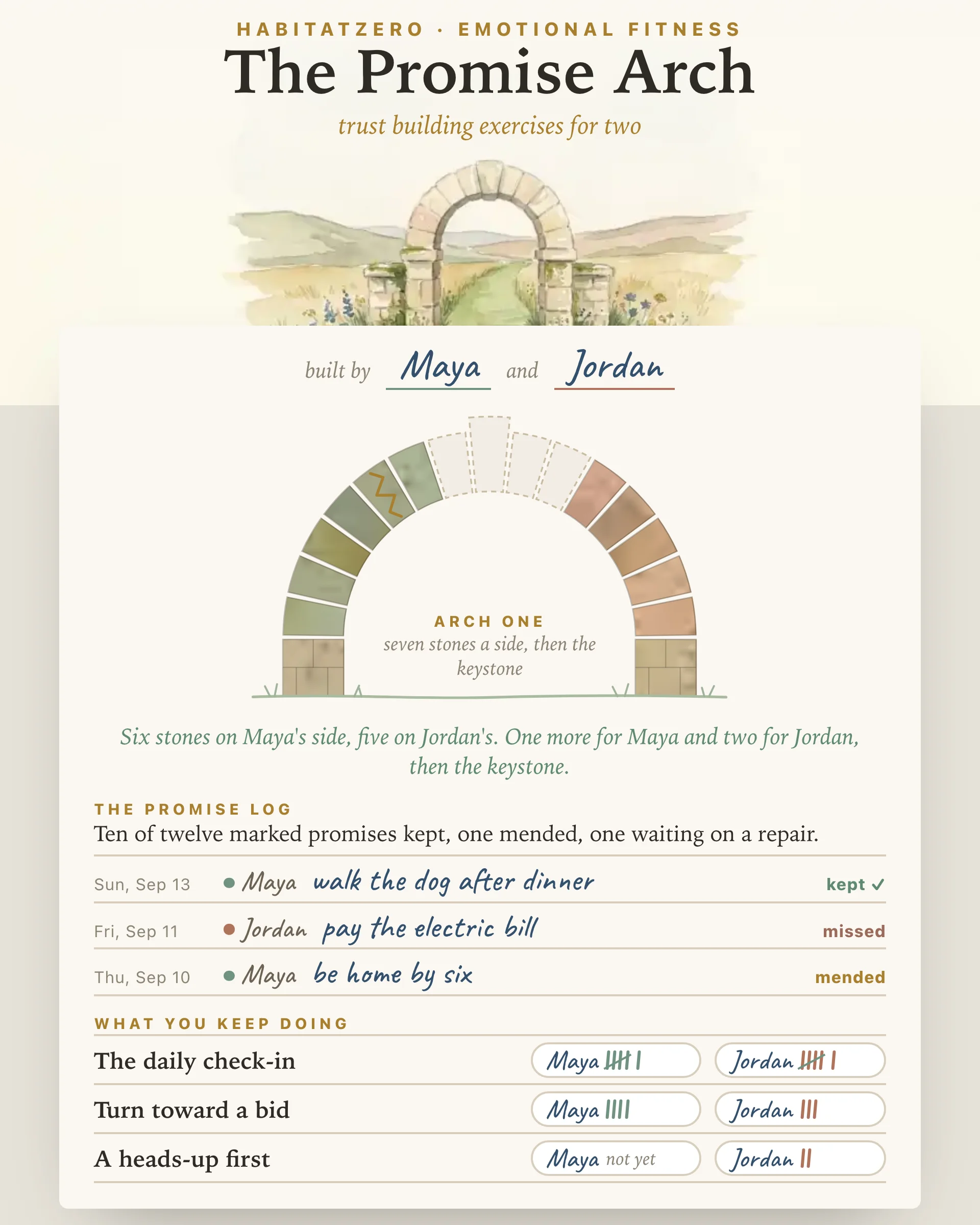
The Promise ArchSix small trust building exercises for two, from one stated promise a day to repair after a miss. Every promise you keep sets a stone on your side of a shared arch, a mended miss goes in with a gold seam, and your taps show which exercises you keep doing.
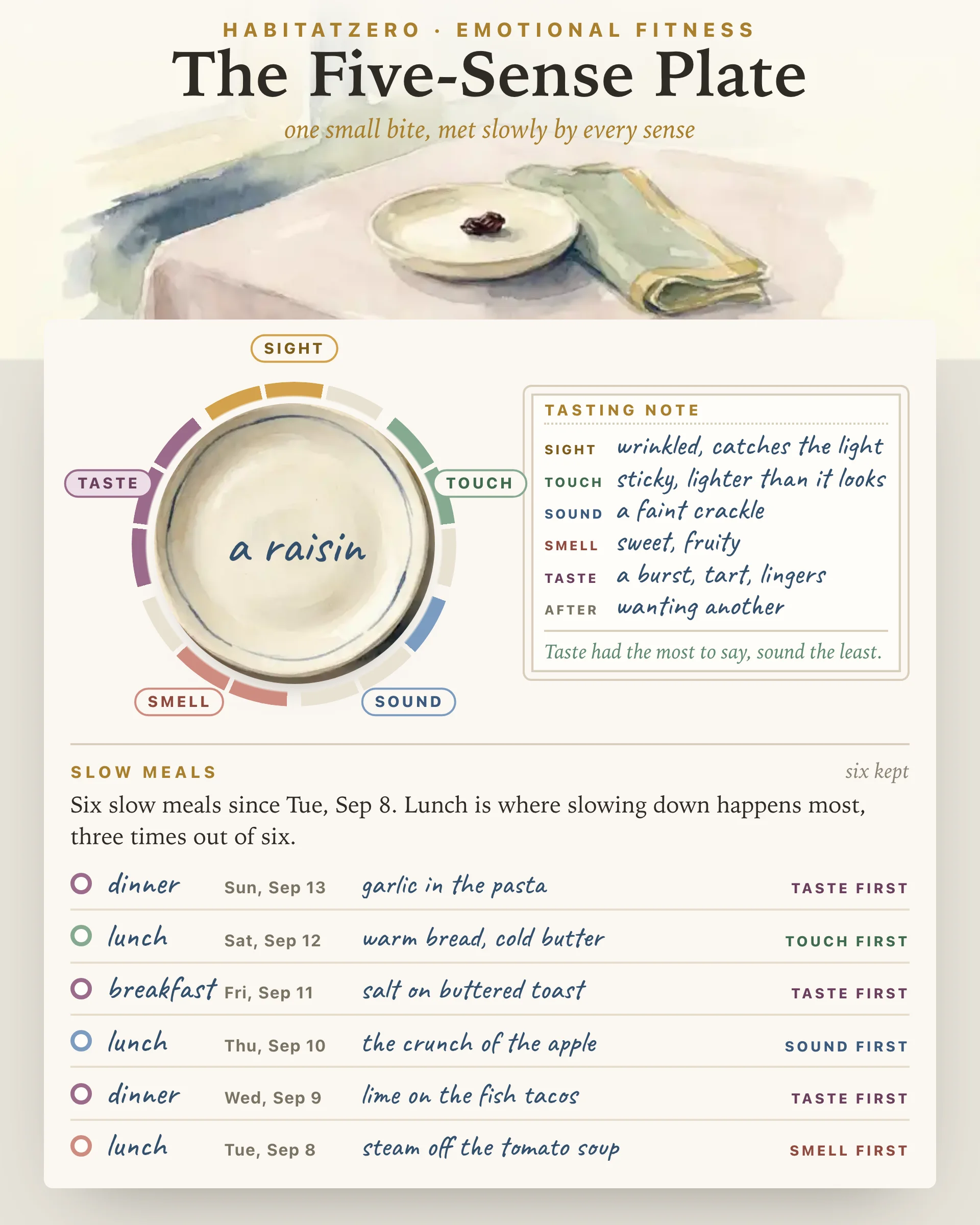
The Five-Sense PlateTake one small bite through sight, touch, sound, smell and taste, tapping the words that fit: the rim of a painted plate fills sense by sense, and your words gather into a handwritten tasting note. Then keep a short record of meals you ate slowly and see which sense tends to reach you first.
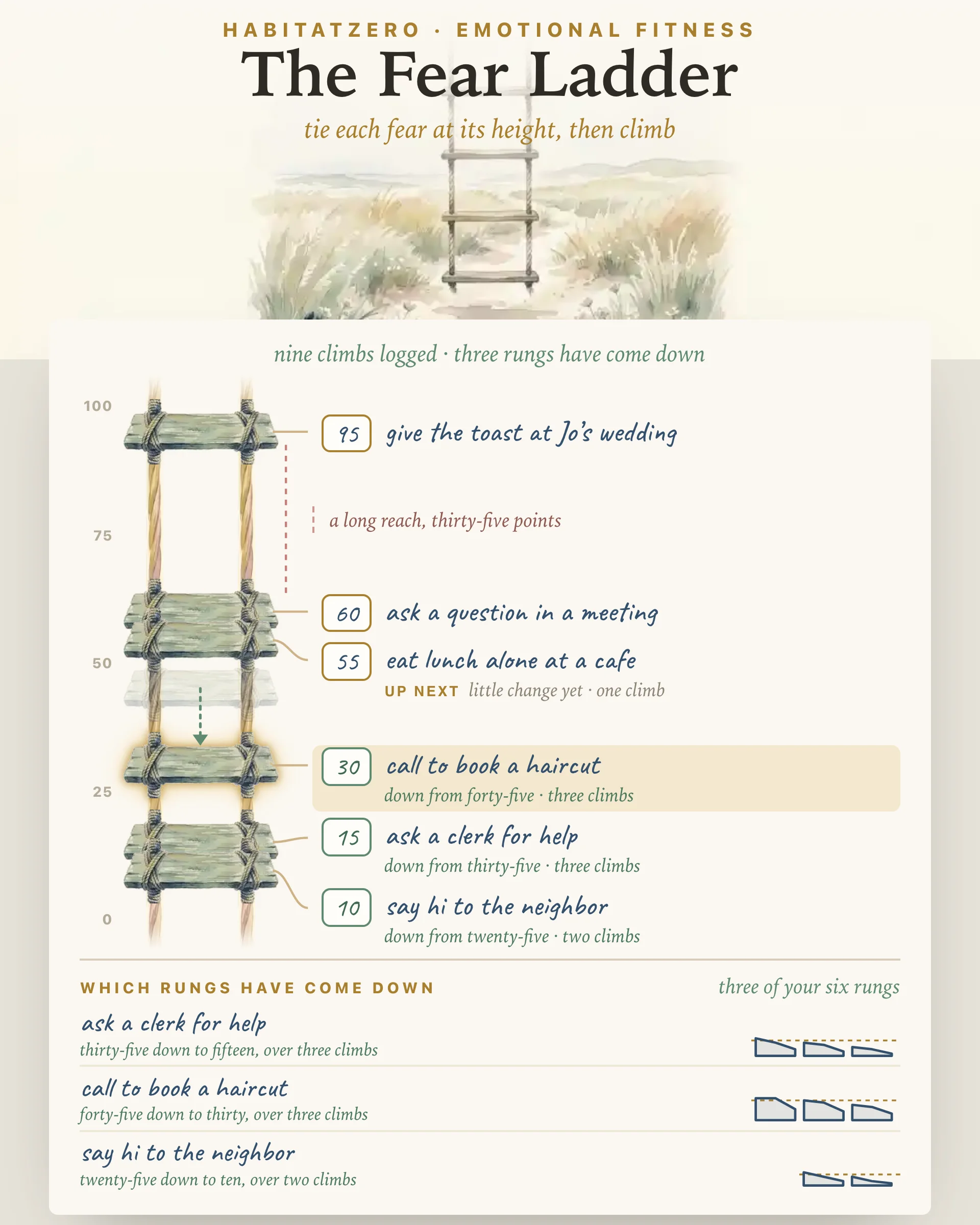
The Fear LadderRate each feared step from zero to a hundred and tie it onto a rope ladder at that height, so the long reaches show. Log the fear just before, at the peak and at the end of every climb, and watch which rungs come down.
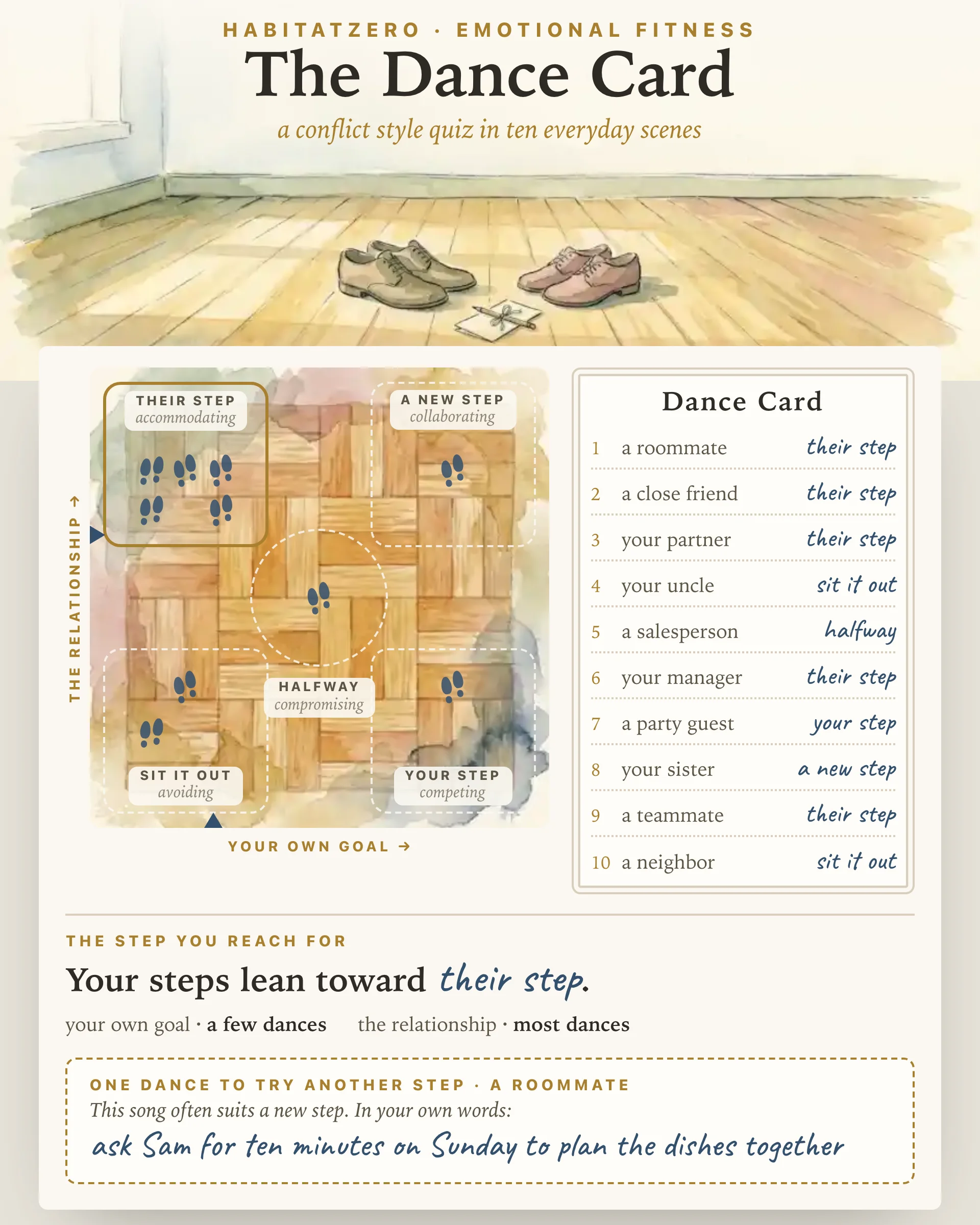
The Dance CardA conflict style quiz in ten everyday scenes: every answer sets a pair of footprints on a painted dance floor, and the card reads back the step you reach for first, with one dance where another step might serve you better.
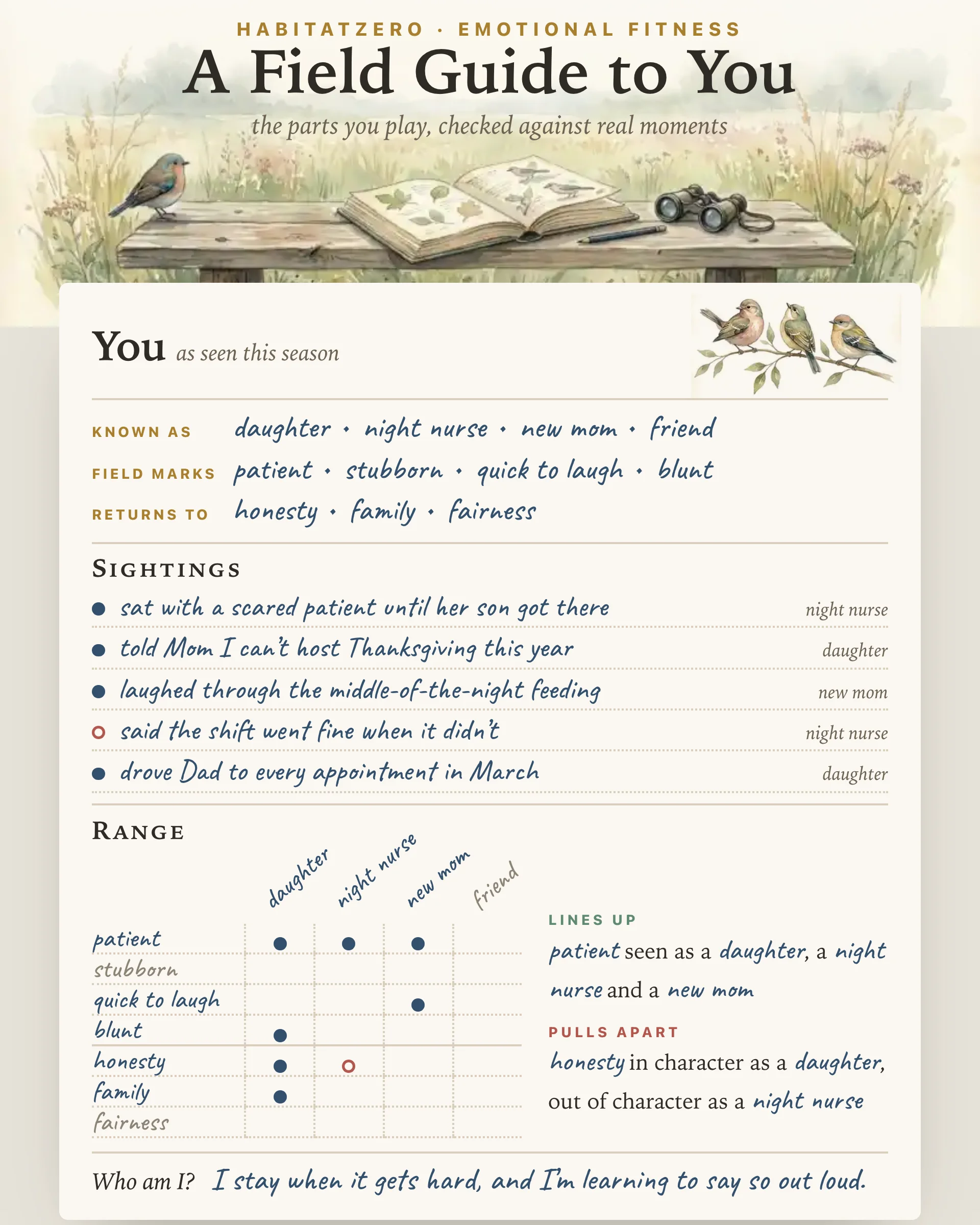
A Field Guide to YouWrite yourself up the way a naturalist would: the parts you play, the marks people know you by, what you keep returning to, and a few sightings that prove it. A range chart then shows where they line up and where they pull apart.
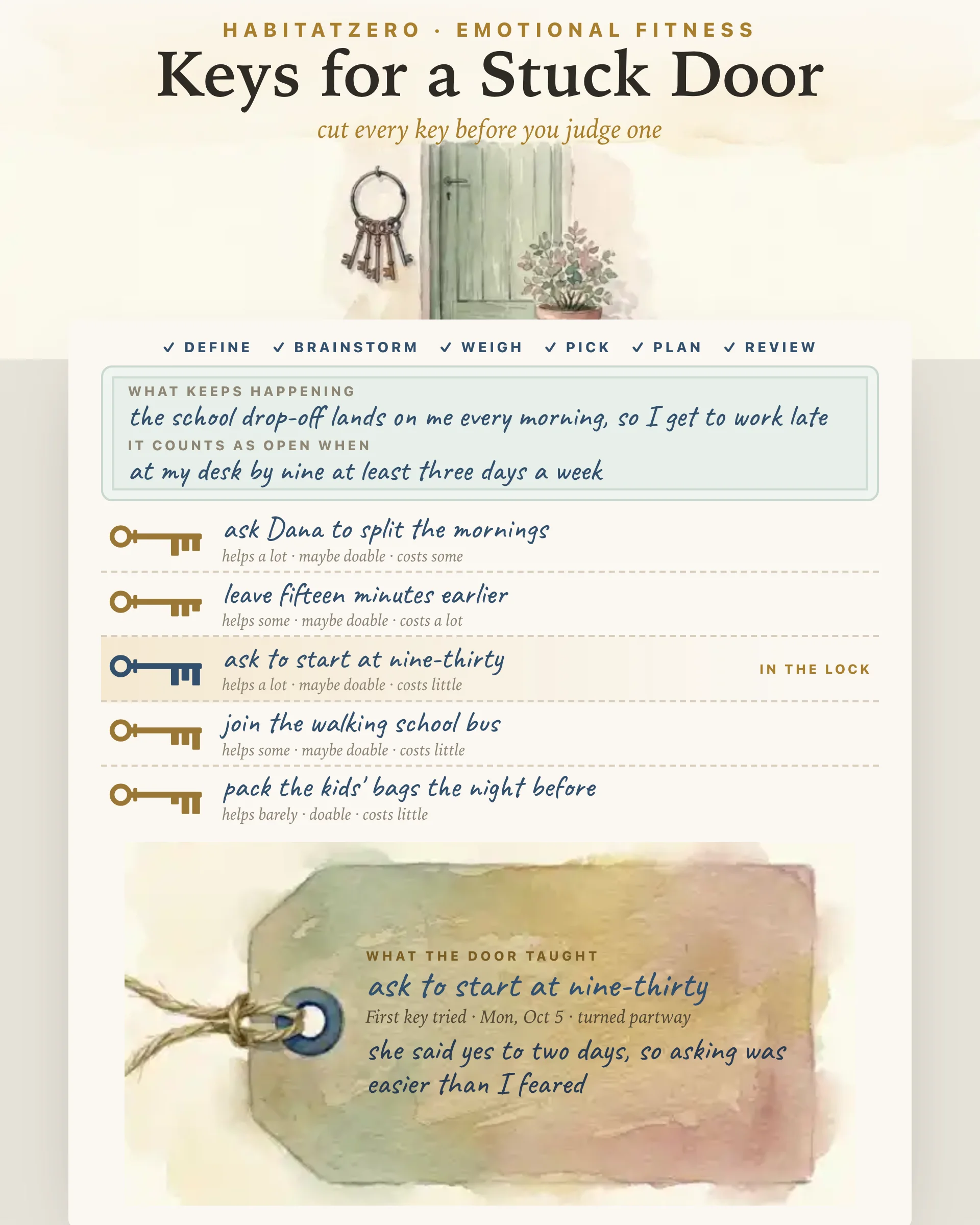
Keys for a Stuck DoorName the stuck door, cut every key you can think of before judging any, then answer three questions to cut each key's teeth. Choose one for the lock, plan the turn, and tag it with what the try taught you.
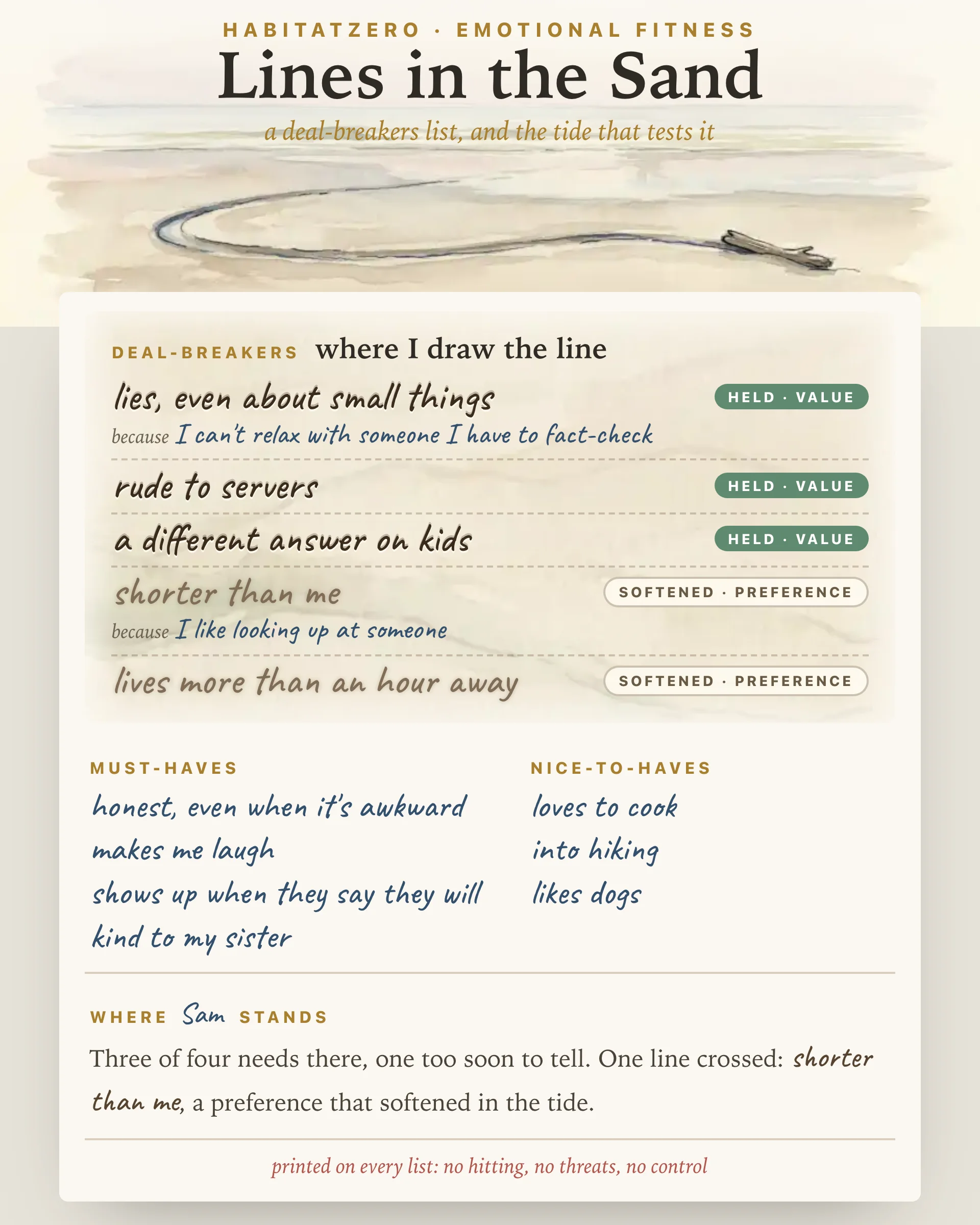
Lines in the SandSort what you need, what would be nice and where you draw the line, each with your reason, then let two questions show which deal-breakers stand on values and hold someone you're seeing up to the list.
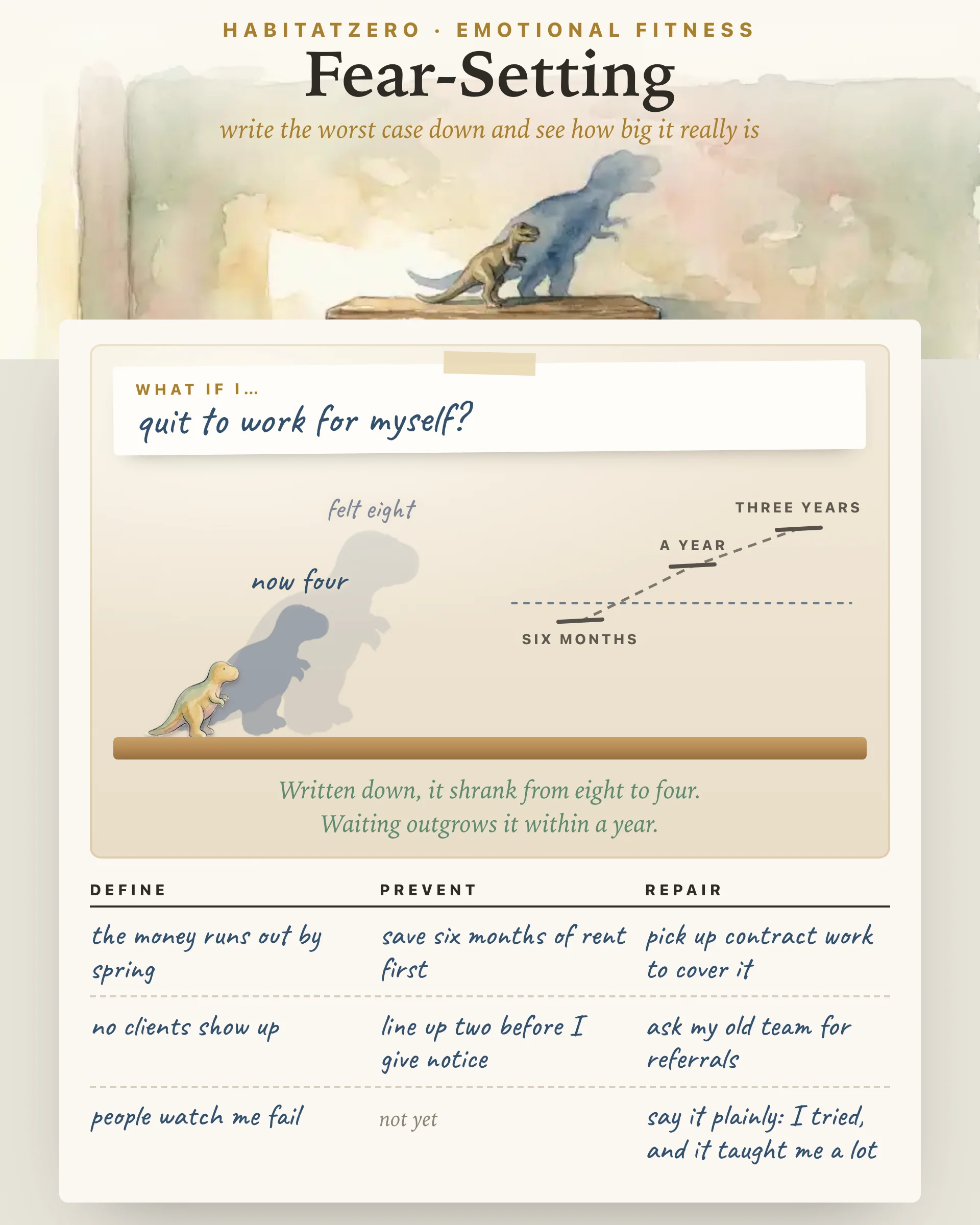
Fear-SettingSay how big the fear feels, then fill Tim Ferriss's three pages: each worst case with a way to prevent and repair it, what an attempt could bring, and what waiting costs. Measure it again and see whether the shadow shrank.
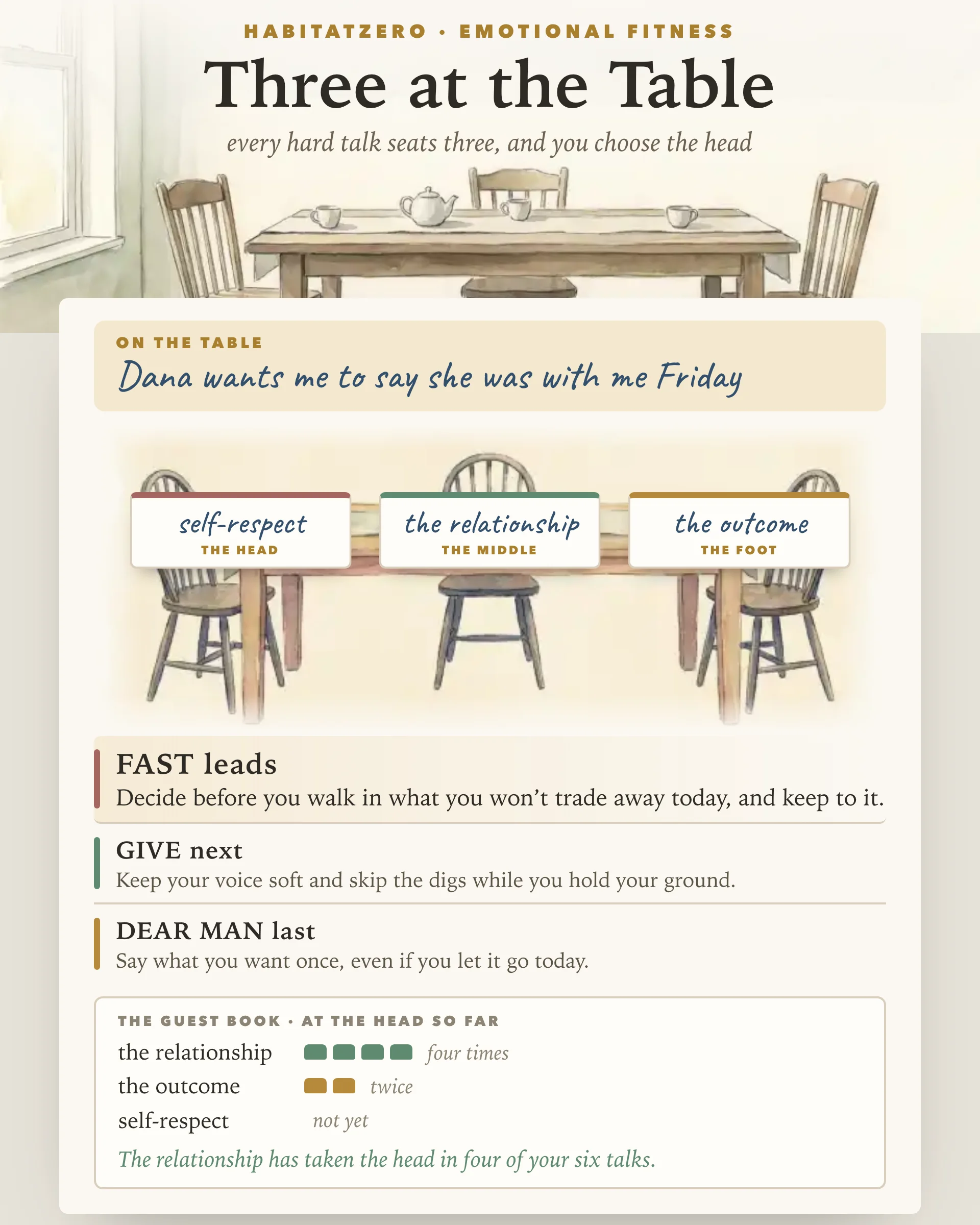
Three at the TableBefore a hard talk, seat the outcome, the relationship and your self-respect in the order they matter, and DEAR MAN, GIVE and FAST line up with a practice line each. A guest book of past talks shows who you keep putting at the head.
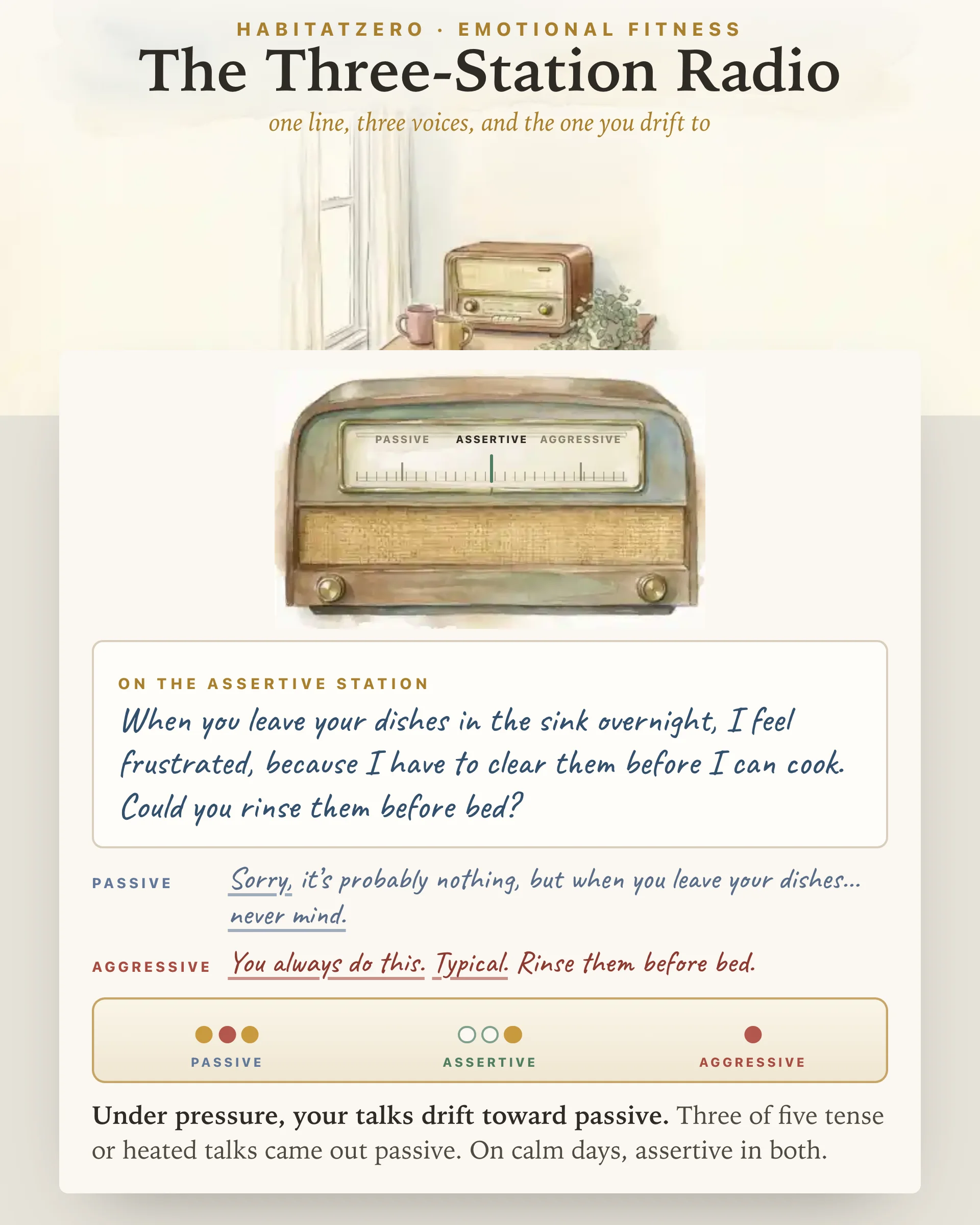
The Three-Station RadioWrite the thing you need to say and hear it played three ways, passive, aggressive and assertive, with the giveaways of each marked. A static check flags the words that tip your I-statement, and a log of real talks shows which station you drift to when the pressure is on.
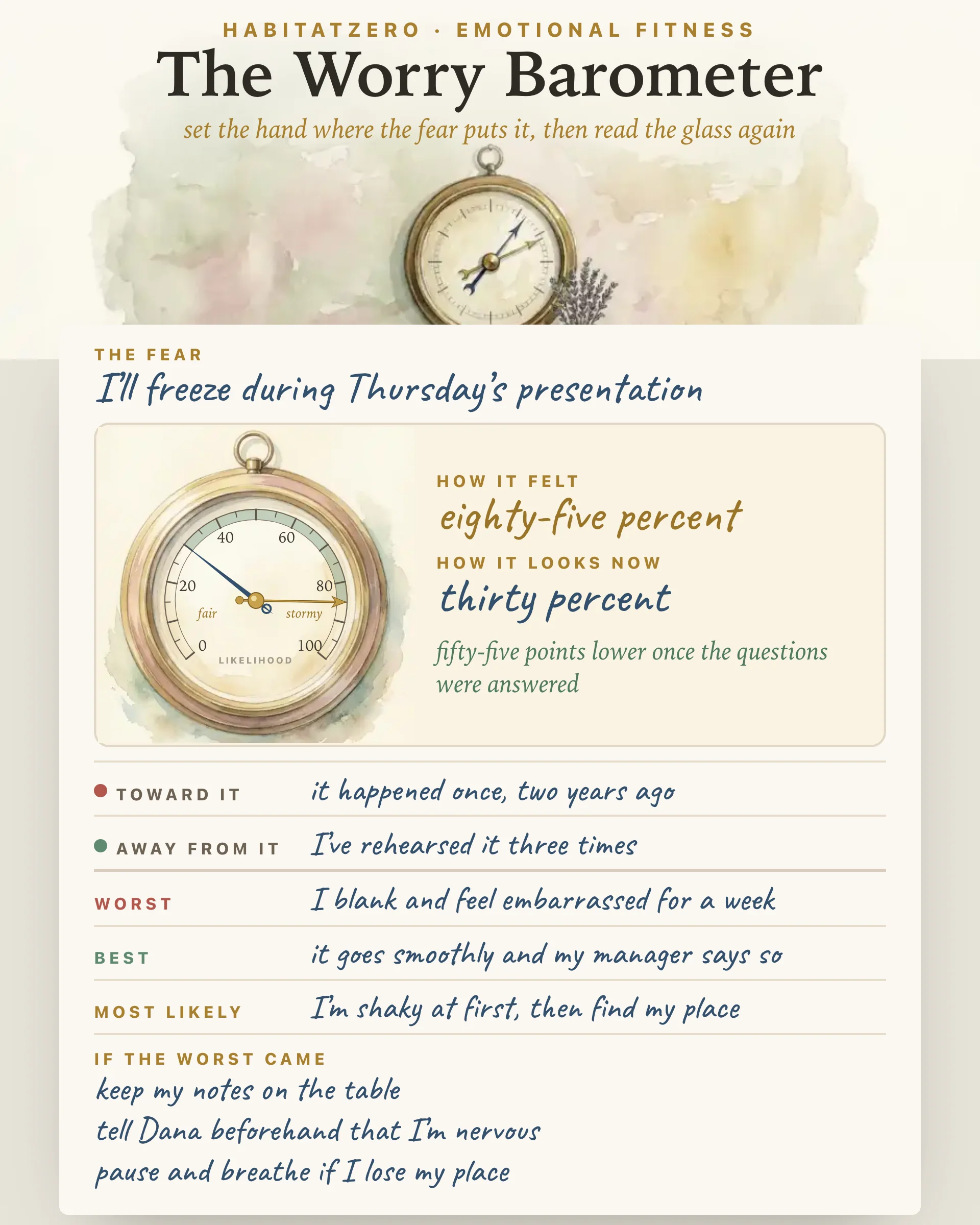
The Worry BarometerSet a brass hand at how likely your fear feels, weigh what the evidence says, write the worst, best and most likely outcomes and how you would cope, then read the needle again and see how far it moved.
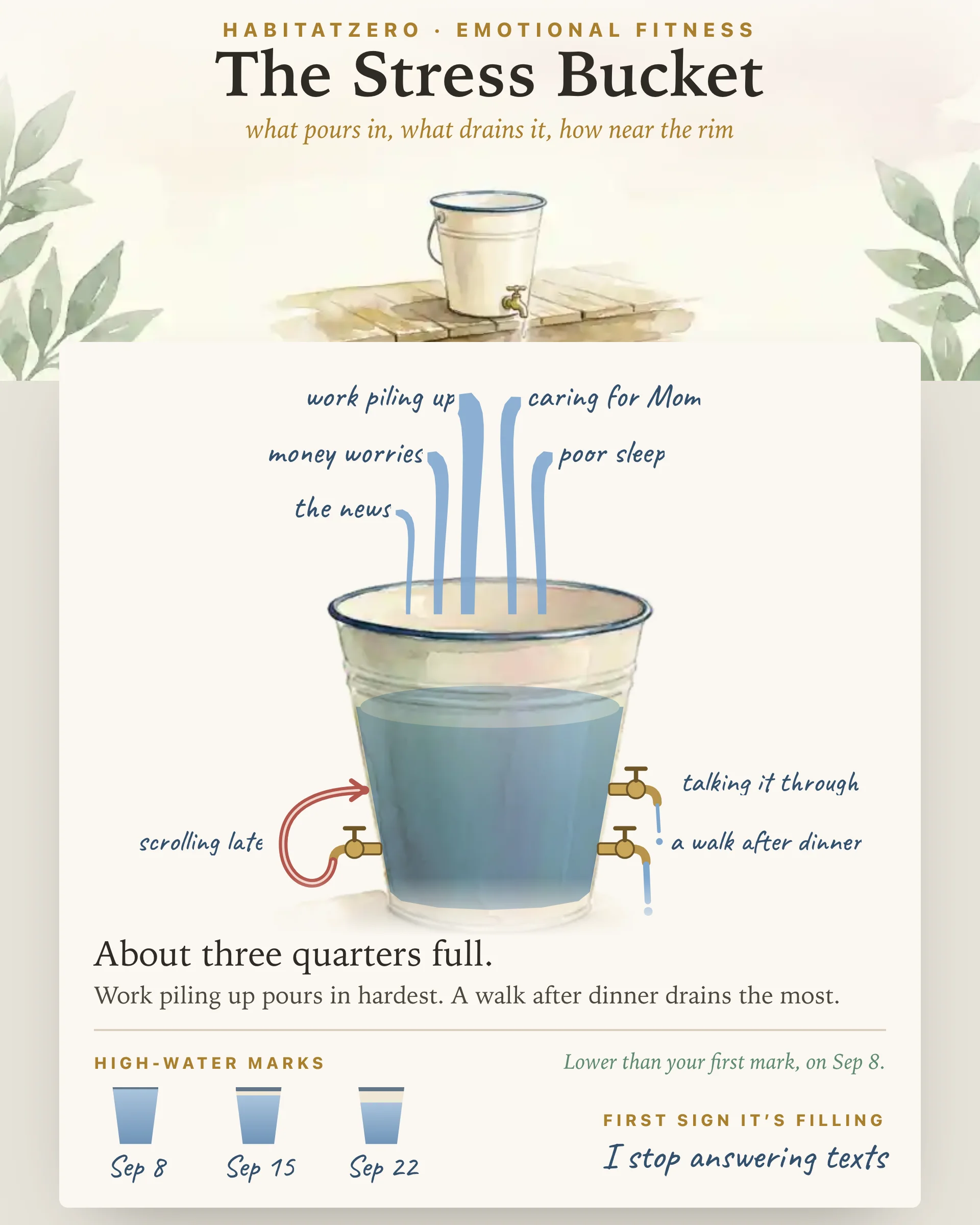
The Stress BucketPour in what weighs on you and open the taps that let it out, and the painted bucket shows how close to the rim you run, which tap drains the most, and whether the level stays high from one week to the next.
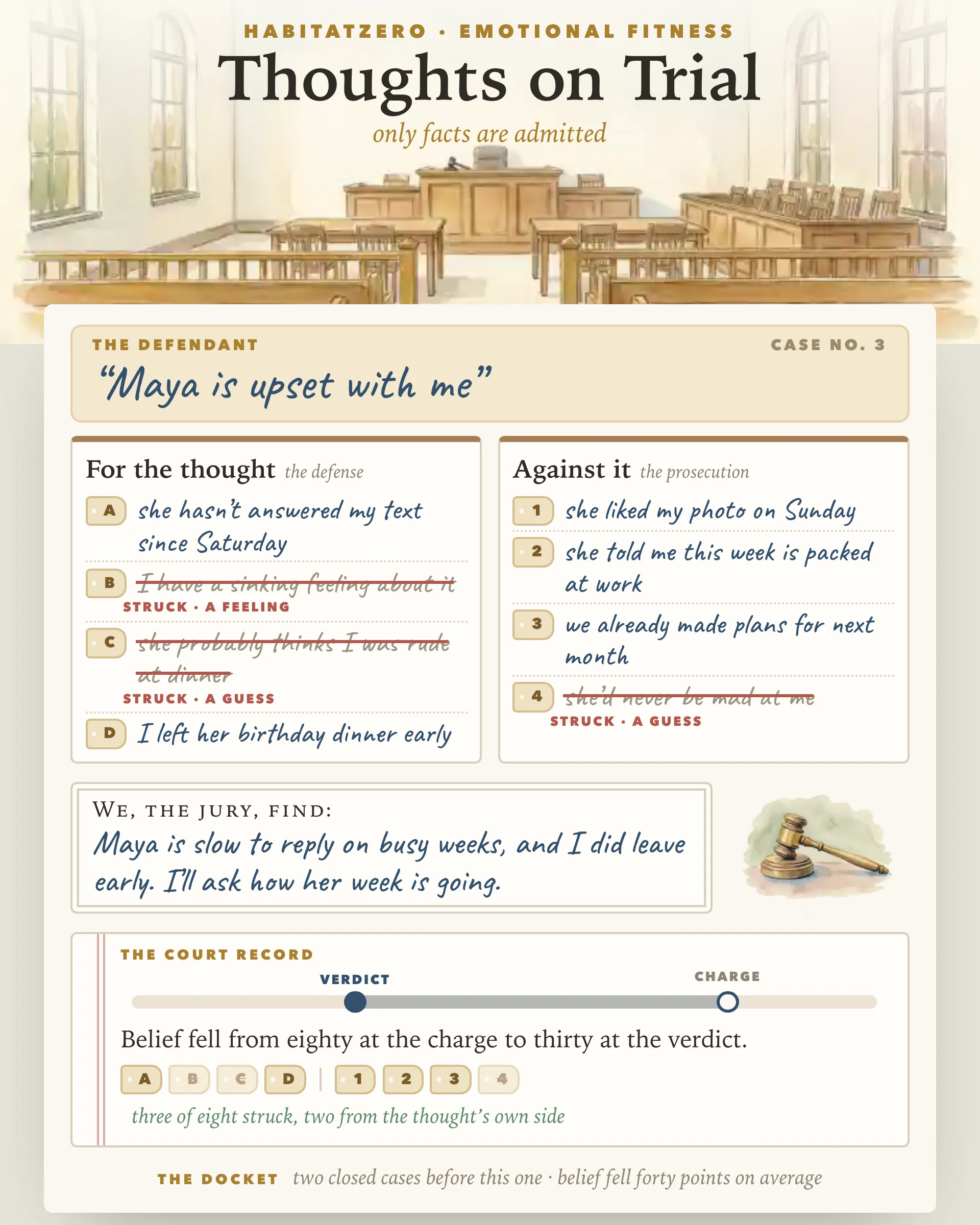
Thoughts on TrialPut one anxious thought on trial: enter the facts for and against it, strike every feeling and guess from the record, and return a fairer verdict. The court record shows how far your belief moved and how much of the case was feeling rather than fact.
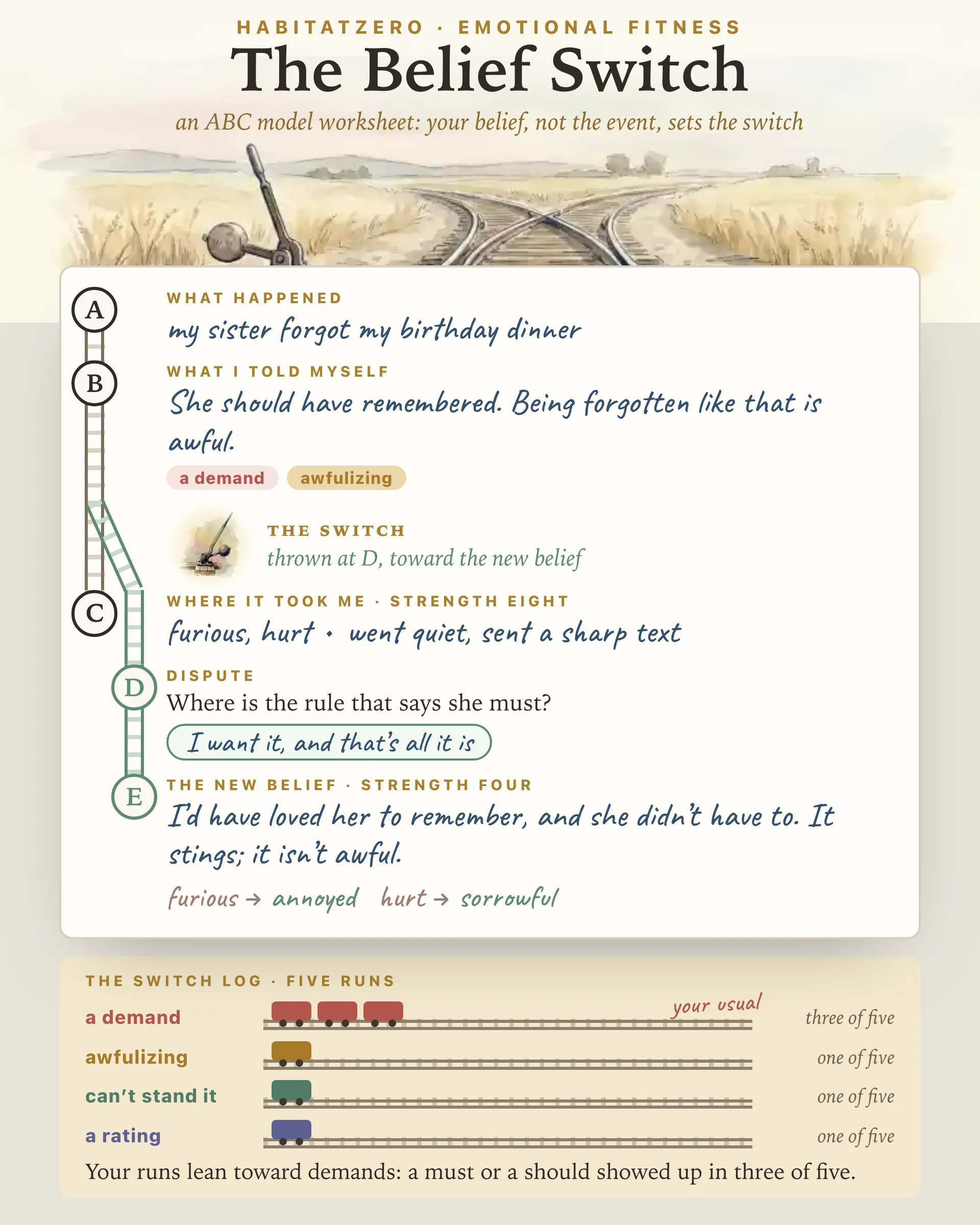
The Belief SwitchRun one upsetting moment down the line from A to E: the event, the belief that set the switch, where it took you, a dispute that throws the switch, and a new belief. The switch log shows which kind of belief keeps coming back.
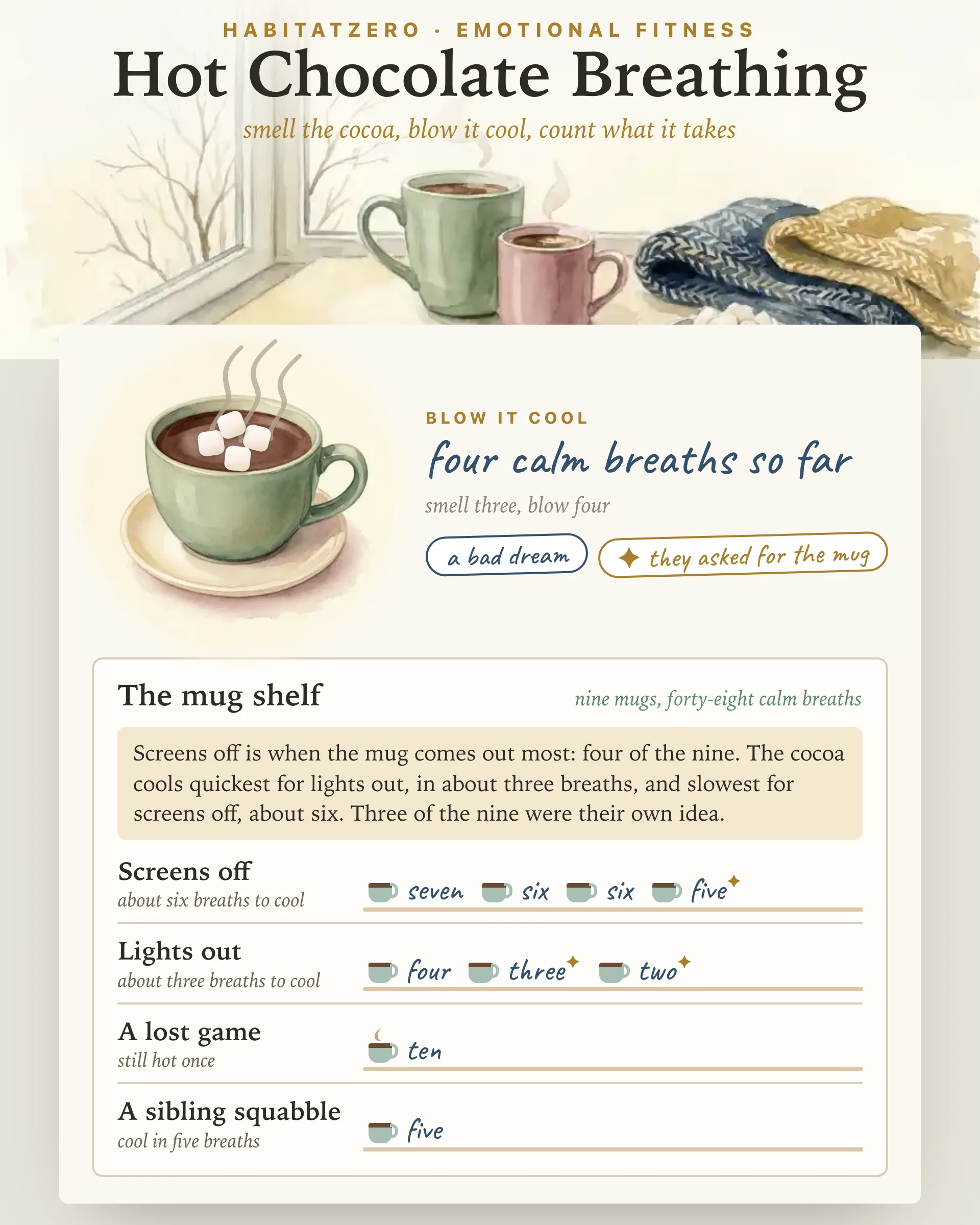
Hot Chocolate BreathingA painted mug of pretend cocoa for your child to breathe with: the steam rises while they smell it and bends away while they blow it cool, a marshmallow drops in for each calm breath, and a small shelf shows which moments bring the mug out and how many breaths each one takes to settle.
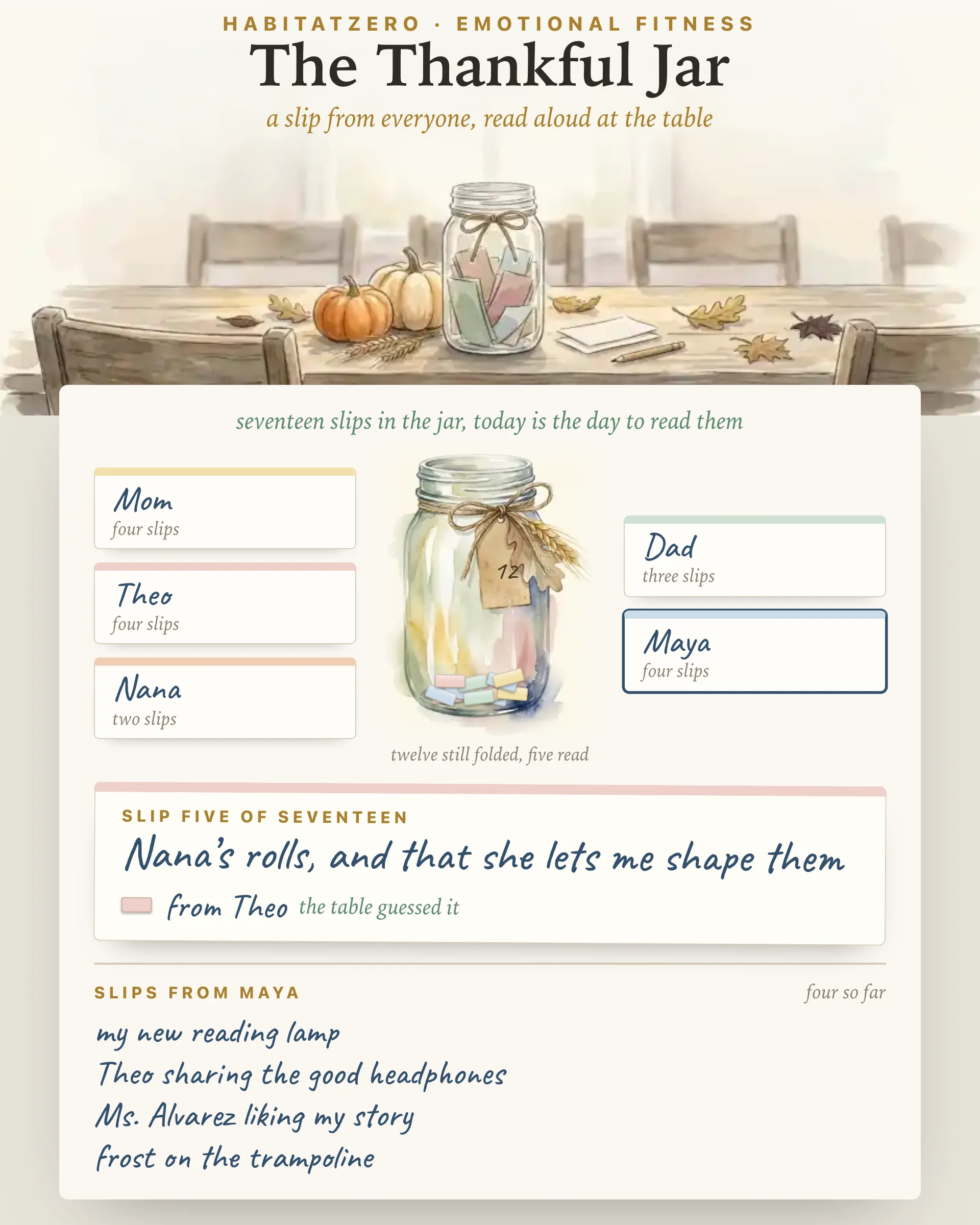
The Thankful JarA thankful jar for the whole household: set a place card for each person, fold in signed slips through November, watch the days run down to Thanksgiving, then draw the slips one at a time and guess who wrote each.
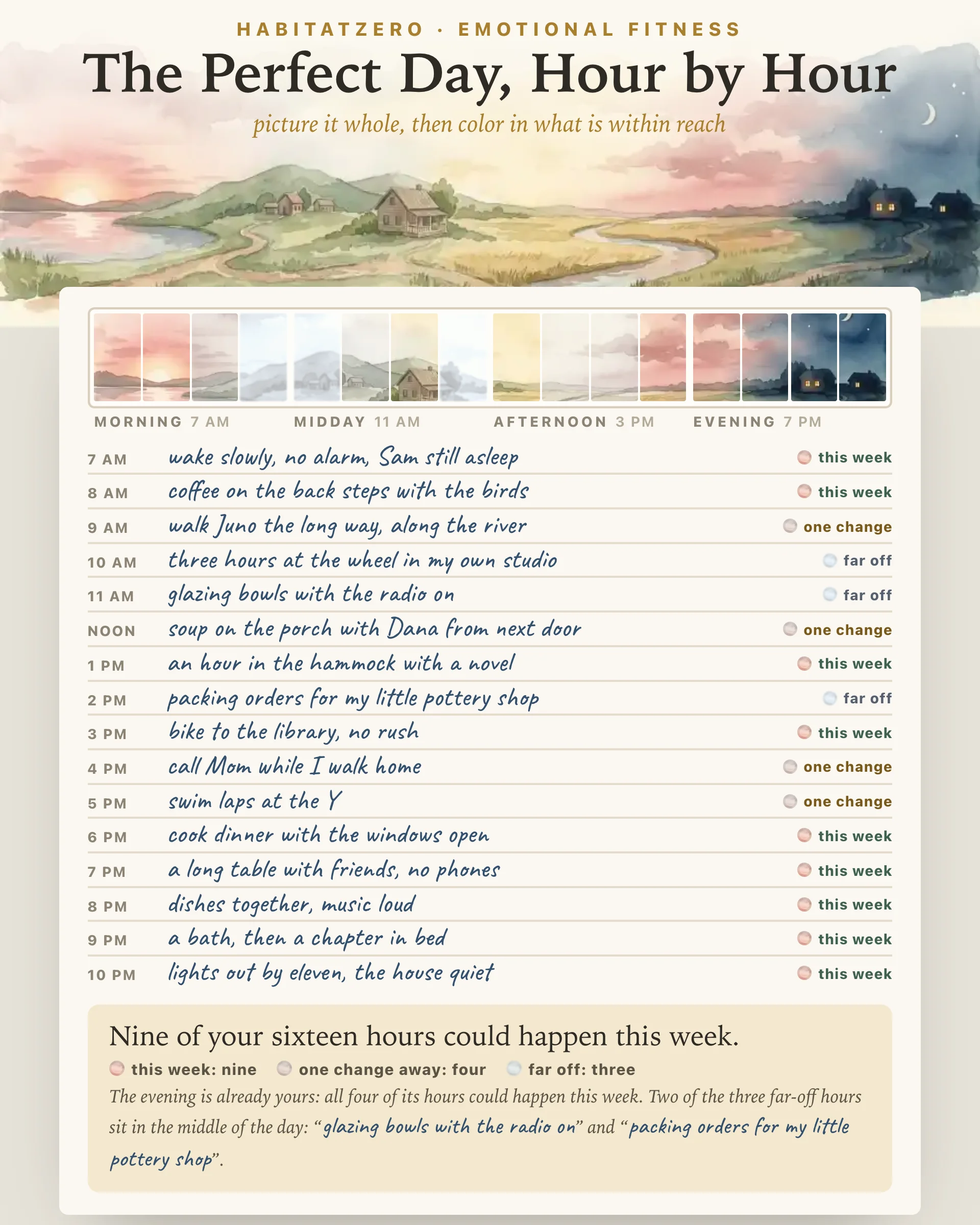
The Perfect Day, Hour by HourPicture one ordinary day of the life you want, from waking to lights out, then mark each hour as possible this week, one change away or far off. A painted day colors in as it comes within reach, and every one-change hour becomes a next step.
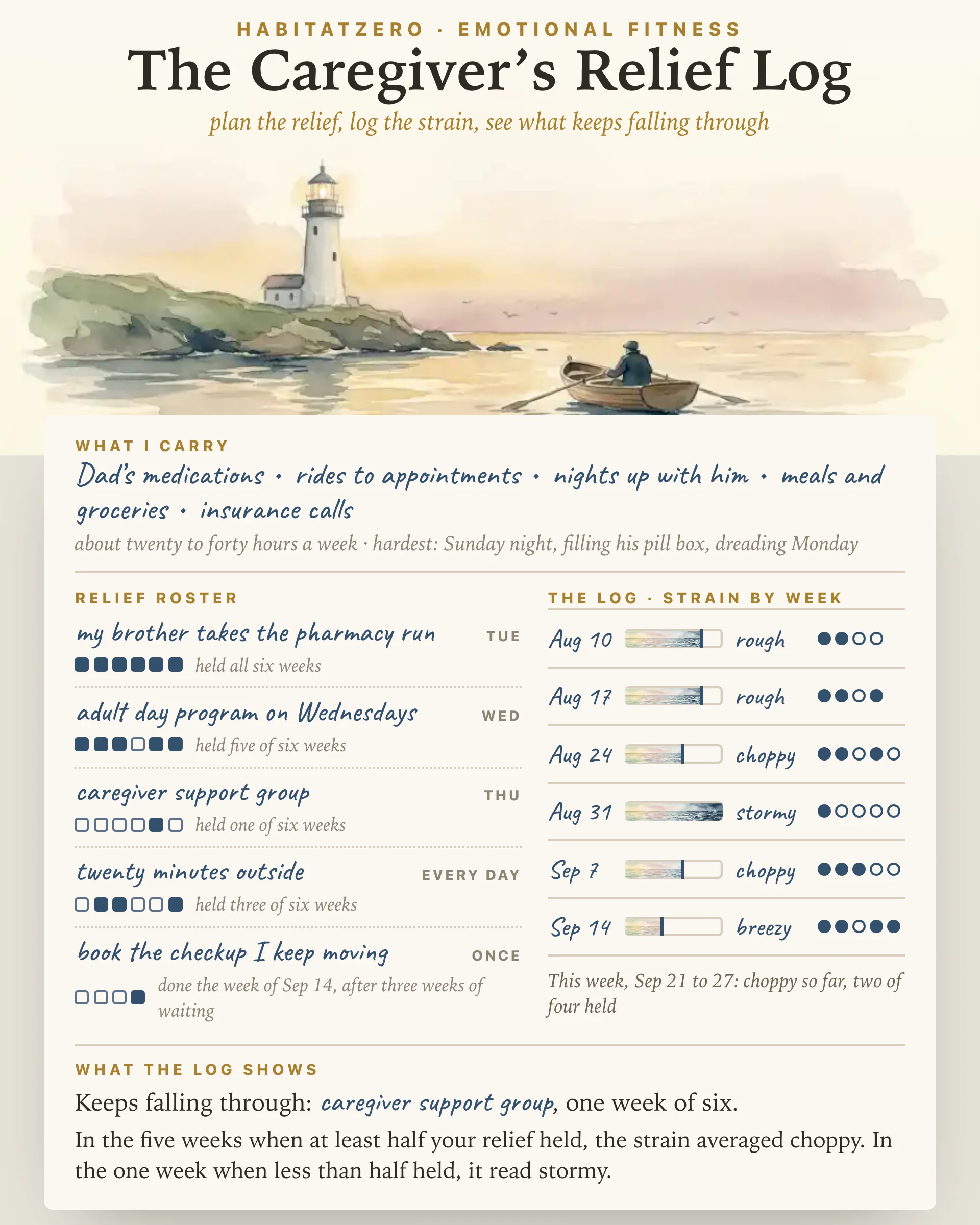
The Caregiver's Relief LogPut the relief a family caregiver needs on a weekly roster, from one specific ask to a night of sleep, then log each week's strain and watch which relief keeps falling through.
About these templates
Feelings respond to practice, not willpower
Emotional fitness works like physical fitness: small, repeatable reps beat rare heroic efforts. These worksheets take the moments that usually just happen to you — a spike of anger, a wave of worry, a flat gray afternoon — and give each one a short, concrete practice: name what's here, let it move through, and choose the next kind step.
Every template is free and interactive. Personalize one and it saves in HabitatZero, so the practice is ready the next time the feeling arrives.
Browse by goal
Free ACT Worksheets & ExercisesFree ADHD Daily Planner TemplatesFree Anxiety Worksheets & Calming ToolsFree CBT Worksheets & ExercisesFree DBT Skills WorksheetsFree Goal Setting TemplatesFree Gratitude Journal & Jar TemplatesFree Habit Tracker TemplatesFree Printable Planners & ChecklistsFree Self-Awareness Tools & ExercisesFree Sleep Tools & TemplatesFree Study Tools & Student Planners