Leaves on a StreamEmotional Fitness · ~3 min
About this template · Updated July 2026
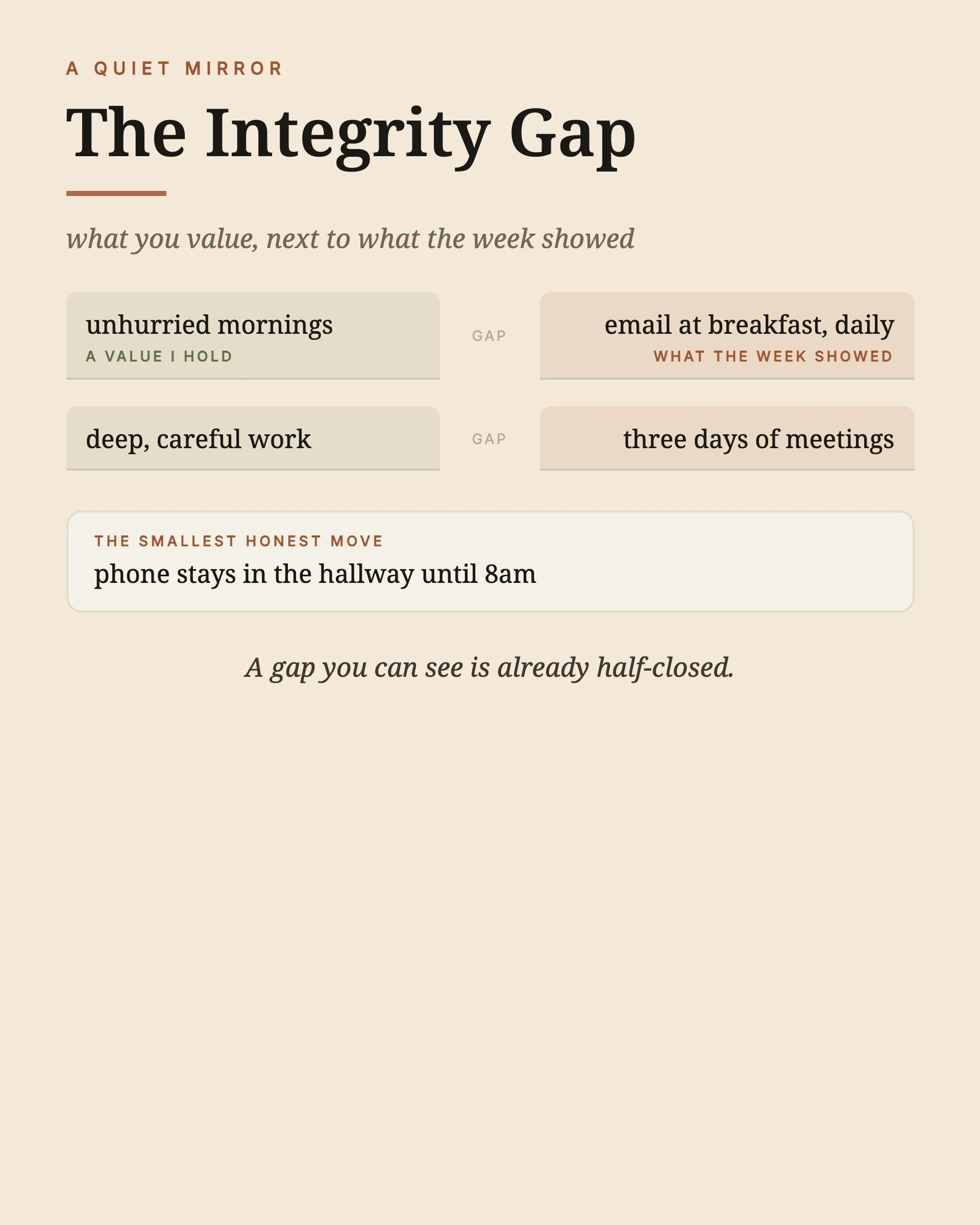
Most values exercises stop at the pleasant part: choosing the words. Integrity, family, creativity — picked, admired, filed away. The Integrity Gap, built by psychologist Jazmin Quill, starts where those exercises end. It puts what you say matters on the left, what your week actually showed on the right, and makes you look at the space between.
This page adapts the logic of the Valued Living Questionnaire, the instrument developed within acceptance and commitment therapy research to measure valued living. The VLQ's insight is structural: it never asks only "what do you value?" It asks two questions — how important is this to you, and how consistently did you live it in the past week — and treats the difference as the finding. A person who rates family a ten in importance and a three in recent action has learned something no values list could tell them. This worksheet keeps that two-column architecture and strips the numbers: your own values in your own words, one real week as the evidence, and the gap sitting visibly between them.
The sheet's central instruction — wonder at the gap rather than scold yourself for it — is not politeness, it's method. Gaps read under shame produce resolutions; gaps read with curiosity produce information. A week that showed email-at-breakfast instead of unhurried mornings is usually reporting something about defaults and environments, not character. The assessment works only if the right-hand column stays honest, and honesty survives curiosity far better than it survives verdicts.
The bottom of the sheet refuses the grand gesture on purpose: pick one gap, and name the tiniest action that could shorten it next week. Not "become present" but "phone stays in the hallway until 8am." Values change through the smallest unit of behavior that expresses them, and a move small enough to survive a bad Tuesday is worth more than a resolution that needs a good month.
If you haven't settled what your values are yet, run the core values worksheet first — it narrows a large deck down to the few worth writing in this page's left column. If even naming them feels abstract, the values quiz surfaces them through forced choices instead. This assessment is the third stage: not finding your values, but finding out whether you're living them — and closing one gap at a time when you're not.
An exercise that measures the distance between what you say matters to you and how you actually spend your time and choices. This one takes about five minutes: four values on the left, the week's evidence on the right, and one small corrective move at the bottom. Nothing is scored - the gap itself is the finding.
Most values tests rank a fixed list and hand you a profile. This assessment starts from values you name yourself and compares them against one real week, which is where the useful information lives - a profile tells you what you admire, the gap tells you what to change on Monday.
The Valued Living Questionnaire is the research instrument this page adapts: it asks people to rate both how important each life domain is and how consistently they lived it recently, and treats the difference as the signal. This worksheet keeps that two-column logic - importance beside lived reality - in a form you can finish before the kettle boils.
The sheet's own instruction applies: wonder with a hmm, not a tsk. A visible gap usually means the week was run by circumstances rather than hypocrisy - and either way, shame closes notebooks while curiosity closes gaps. Write it down plainly and let the smallest honest move do the responding.
Weekly is the natural rhythm, because a week is long enough to show a pattern and short enough to remember honestly. Many people run it Sunday evening, carry one small move into the new week, and check next Sunday whether that particular gap narrowed.
By the team behind Fabulous, the science-based self-care app used by over 30 million people.