The Open HandEmotional Fitness · ~3 min
Fabulous · Practices
Free interactive DBT skills worksheets: radical acceptance, dialectical thinking, urge surfing and opposite action. Guided on screen, in the browser, nothing to print.
Why these templates
Dialectical Behavior Therapy was built by Marsha Linehan for people whose emotions arrive fast and loud, and its skills have since proved useful far beyond that starting point. A randomized trial of DBT skills training on its own, without the full therapy, found it helped adults struggling with emotion dysregulation across different difficulties. The skills come in four modules, laid out in Linehan's skills training manual: mindfulness, distress tolerance, emotion regulation and interpersonal effectiveness.
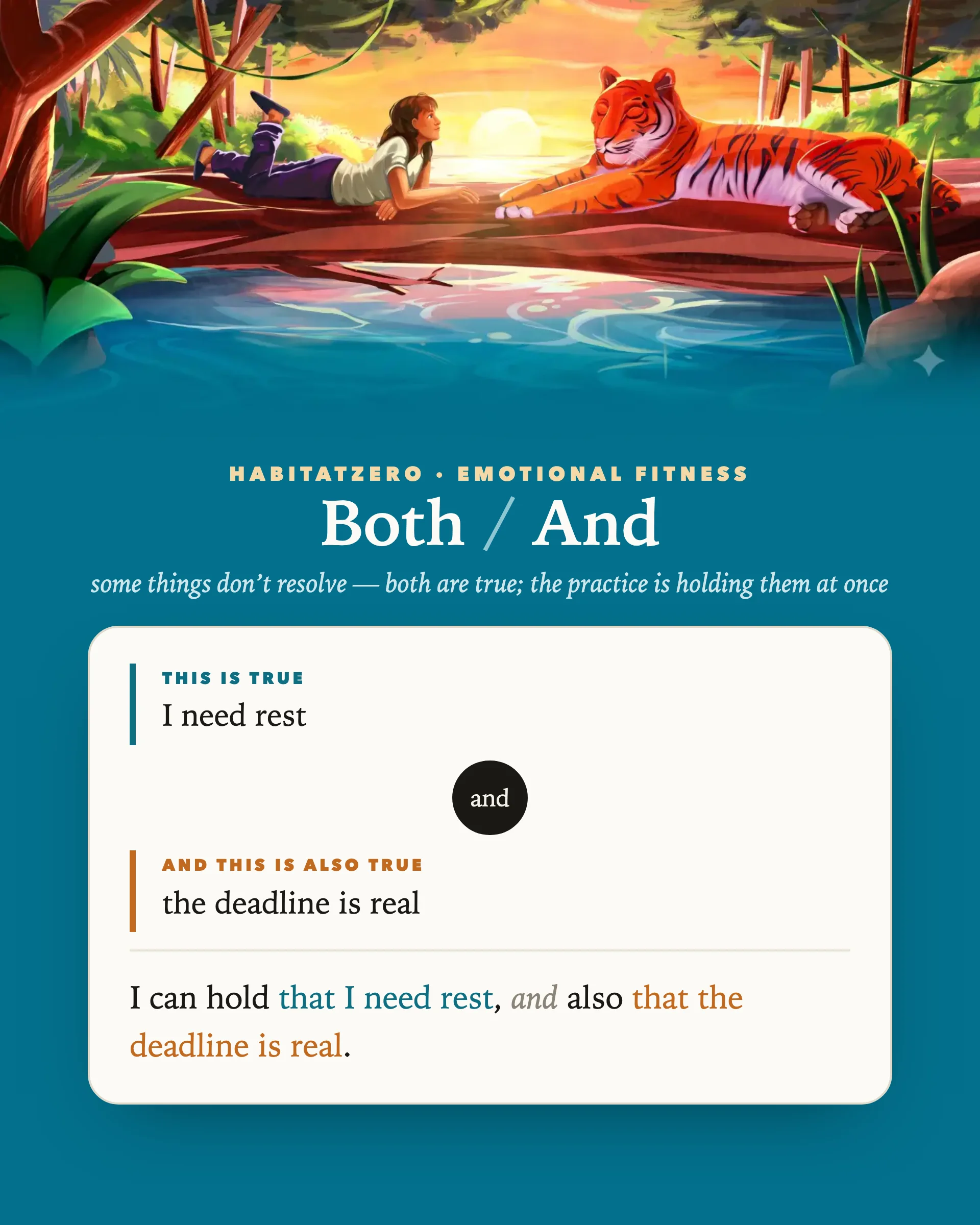
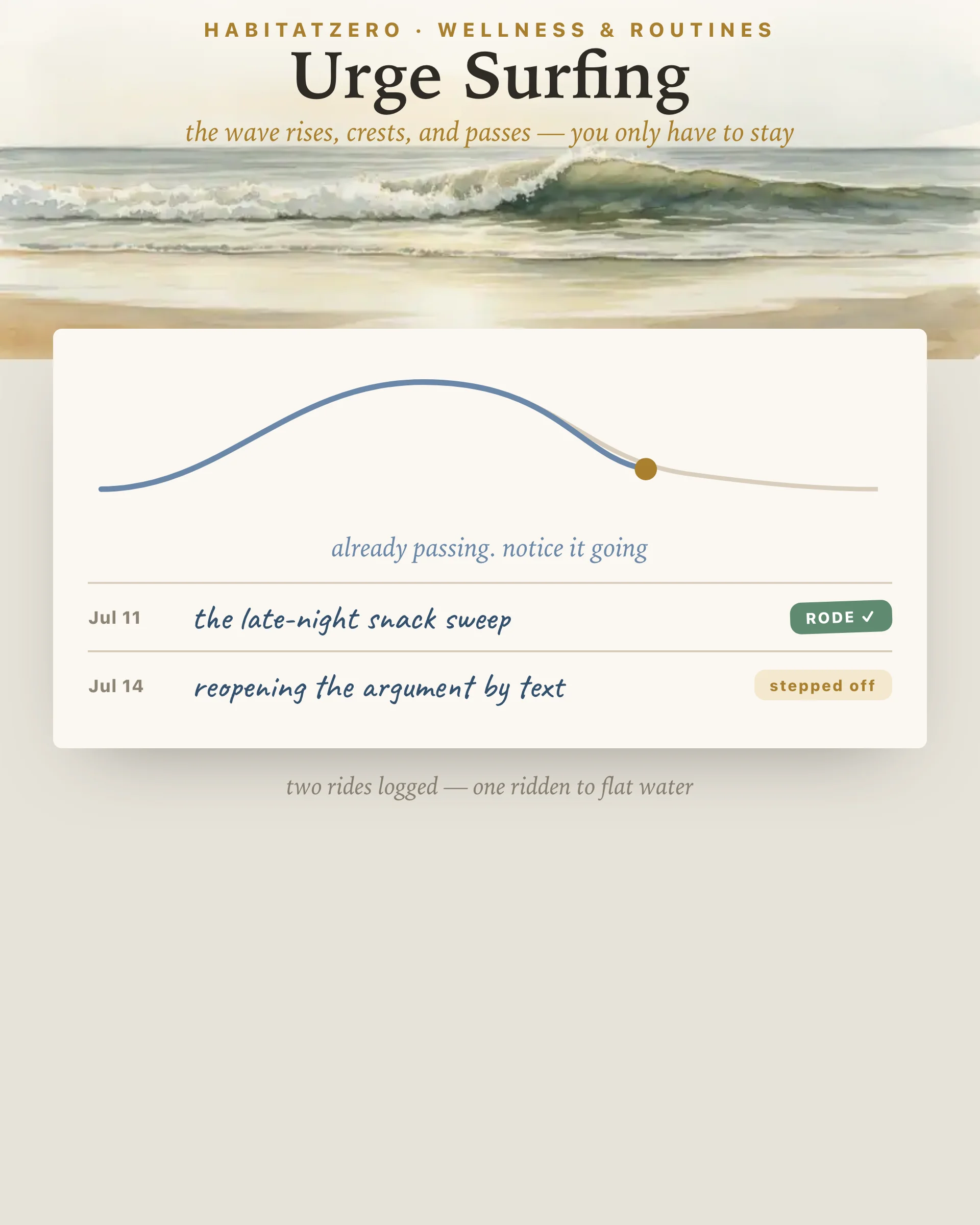
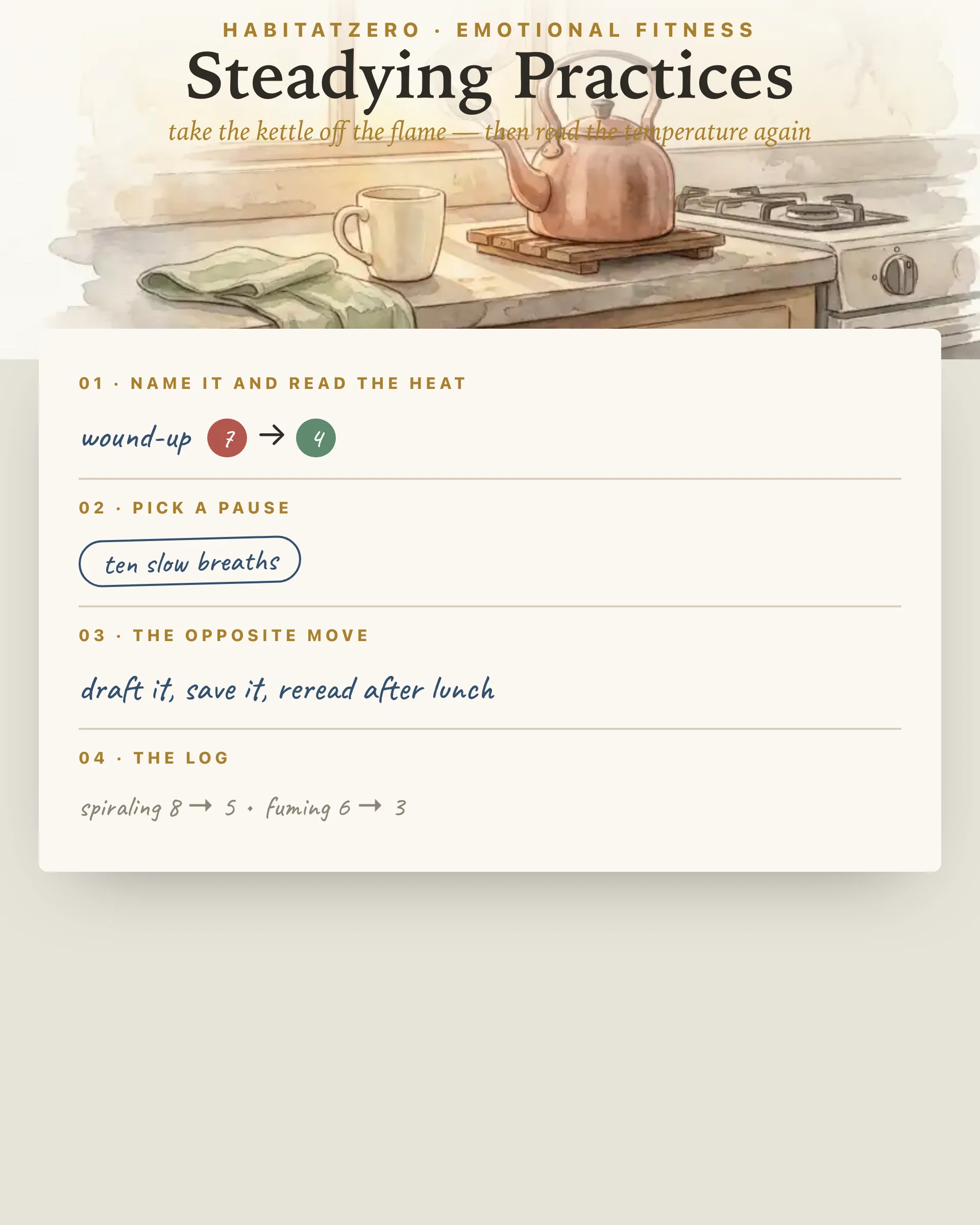
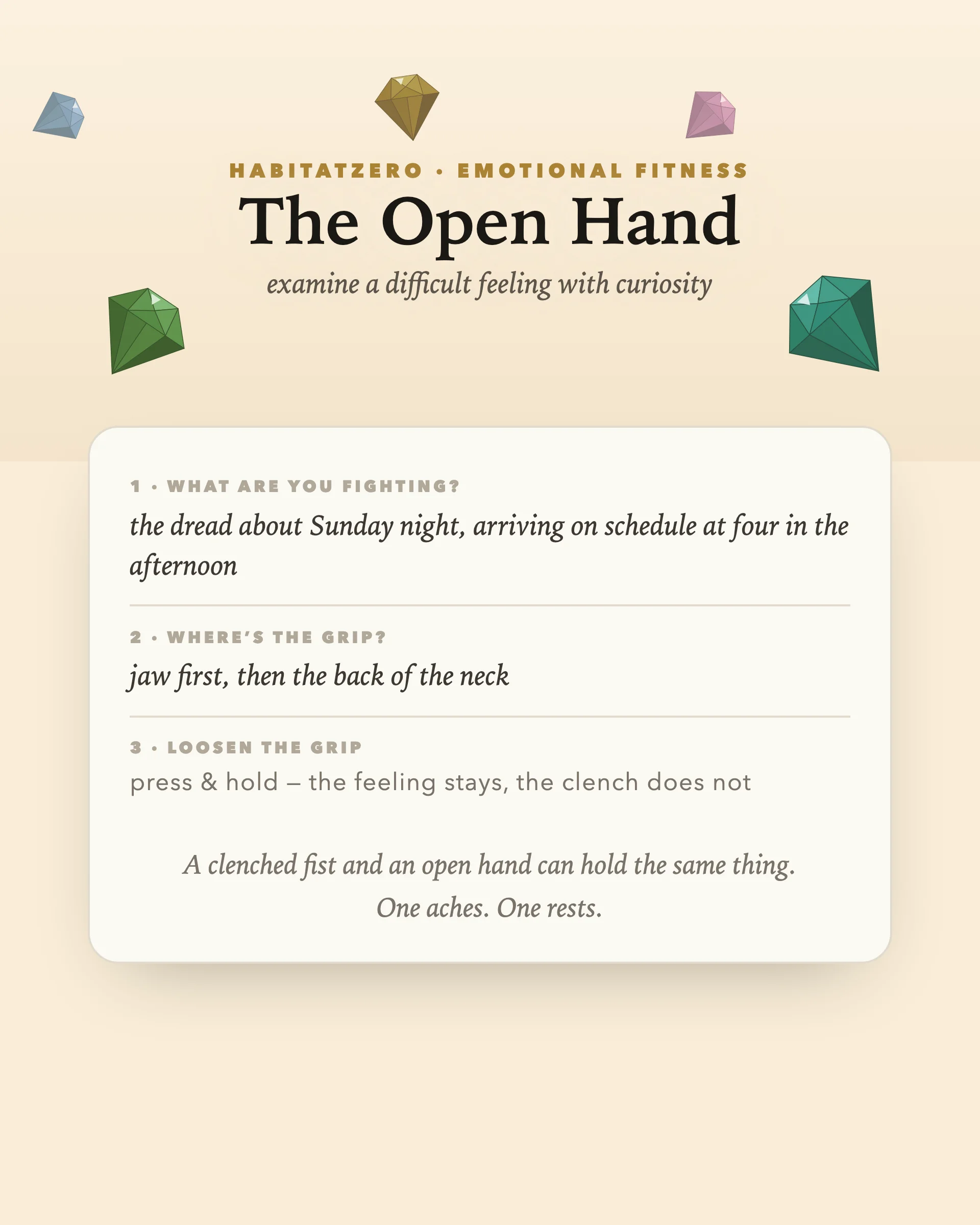
A skill is something you do, so each tool here makes you do it. You press and hold until a clenched hand opens, which is radical acceptance in the body rather than on paper. You load two truths onto a balance that refuses to tip, which is the dialectic itself. You stay on a board for fifteen minutes while an urge rises, crests and passes. You read the heat of a feeling, pause, and choose the opposite move. Most DBT worksheets online are scans of handouts meant for a group room. These are meant for the moment you need the skill, alone, with a phone in your hand. They are practice, not a DBT program, and they work best next to one.
| You want to… | Start with |
|---|---|
| I am fighting a fact I cannot change | The Open Hand |
| I am stuck in either-or thinking | Both/And |
| An urge is building and I want to ride it out | Urge Surfing |
| A feeling is running hot and I want to cool it and choose my move | Steadying Practices |
Mindfulness, distress tolerance, emotion regulation and interpersonal effectiveness. Mindfulness is the base for the other three. Distress tolerance gets you through the worst moments without making them worse, emotion regulation lowers how often you end up there, and interpersonal effectiveness covers asking, refusing and keeping your self-respect.
You can practice individual skills on your own, and research on skills training suggests the skills carry much of the benefit. A full DBT program adds a therapist, a skills group and coaching, which matters most when emotions feel unmanageable. Use these tools for practice and bring what you notice to a professional if things are heavy.
CBT worksheets mostly work on the content of a thought: is it accurate, what is the evidence. DBT worksheets assume the feeling is already at full volume and teach what to do with it: accept what cannot change right now, tolerate the wave, then act opposite to the urge when the urge does not fit the facts.
Distress tolerance skills. On this page that means urge surfing, where you ride the urge out against a timer, and radical acceptance, where you stop fighting the fact of the moment. Save the analysis for later, when the wave has gone flat. If you are in crisis or thinking about hurting yourself, call or text 988 (US) right now, or reach your local emergency number.