Leaves on a StreamEmotional Fitness · ~3 min
About this template · Updated July 2026
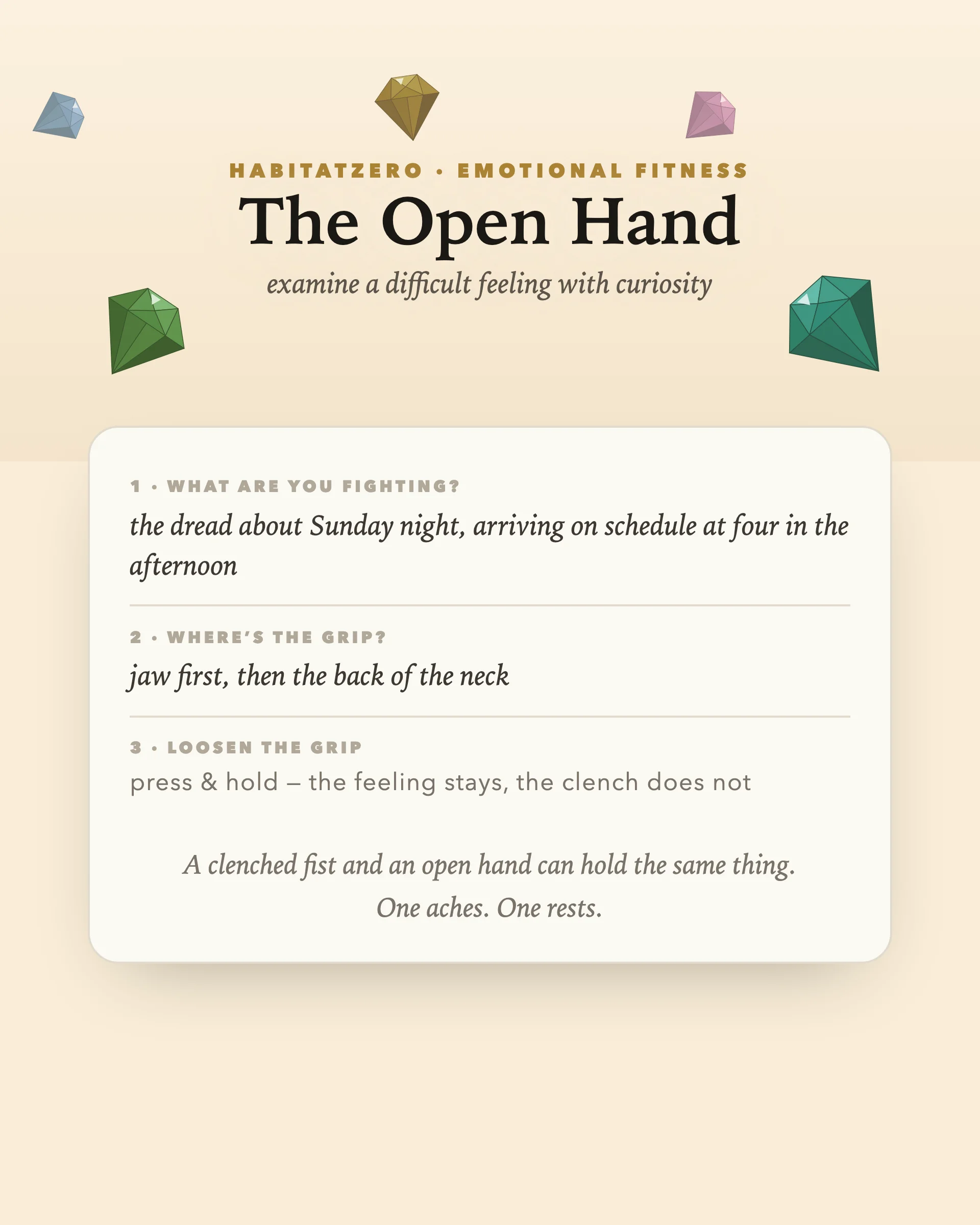
There is a particular exhaustion that comes not from a painful feeling but from the campaign against it — the bracing, the swallowing, the arguing with a fact that has already happened. Radical acceptance is the skill of ending that campaign, and this worksheet, The Open Hand, teaches it in the most literal way possible: with your hand. You name the feeling you are fighting, find where your body grips it, and then press and hold until the hand opens. The feeling stays. The clench is what leaves.
Radical acceptance comes from dialectical behavior therapy — DBT, the treatment developed by Marsha Linehan — where it anchors the distress-tolerance skills. The idea is precise: acknowledge reality completely, as it is, rather than as it should have been. This feeling is here. That thing did happen. The word radical means all the way to the root — not a partial, teeth-gritted concession with a silent "but it shouldn't be" still running underneath, which is just the fight in quieter clothes.
Linehan's summary of the arithmetic is famous in the field: pain is unavoidable, and suffering is pain plus non-acceptance. The pain arrives on its own schedule; the second term is optional. DBT itself is one of the most rigorously tested treatments in clinical psychology, and the acceptance stance generalizes well beyond the therapy room: a series of studies on accepting negative emotions and thoughts found that people who habitually accept their difficult feelings — rather than judging or fighting them — show better psychological health, and respond to stress with less negative emotion, than equally stressed people who resist.
Radical acceptance has a branding problem: it sounds like surrender. It is not approval, not resignation, and not permission for a bad situation to continue. Accepting that the anger is here says nothing about whether the thing you are angry at should change — often it should, and often you will be the one to change it. The finding that surprises people is the order of operations: action gets easier after acceptance, not harder, because the energy that was going into disputing reality becomes available for responding to it. You cannot steer a car whose wheel you are wrestling.
The worksheet's closing line carries the whole distinction: a clenched fist and an open hand can hold the same thing. One aches. One rests. Nothing about the object changed.
The exercise takes about three minutes. First, name what you are fighting — the feeling itself, in your own words, not a report on the situation. Second, find the grip: where your body clenches before your mind admits anything is wrong. Jaw, chest, shoulders, stomach — the fight against a feeling is physical long before it is verbal, and locating it turns an invisible struggle into something with an address.
Then the part you do with your hand. A gem — the feeling — sits trembling on the page. You press and hold, and the exercise walks you through its stages in real time: clenched… deep breath… loosening… let go. Each stage takes a few slow seconds; the hold cannot be rushed, which is faithful to the skill — acceptance is something the body does gradually, not a switch the mind flips. When you finally lift your fingers, the tension dissolves and the gem remains, resting in the open hand, close enough to examine with curiosity. That last beat is the deliberate one. The exercise never promises the feeling will go away; it demonstrates that you can hold it without the ache.
The press-and-hold saves nothing, on purpose. It is a practice for the moment it happens in, and every visit starts from the clenched fist — because every difficult feeling does.
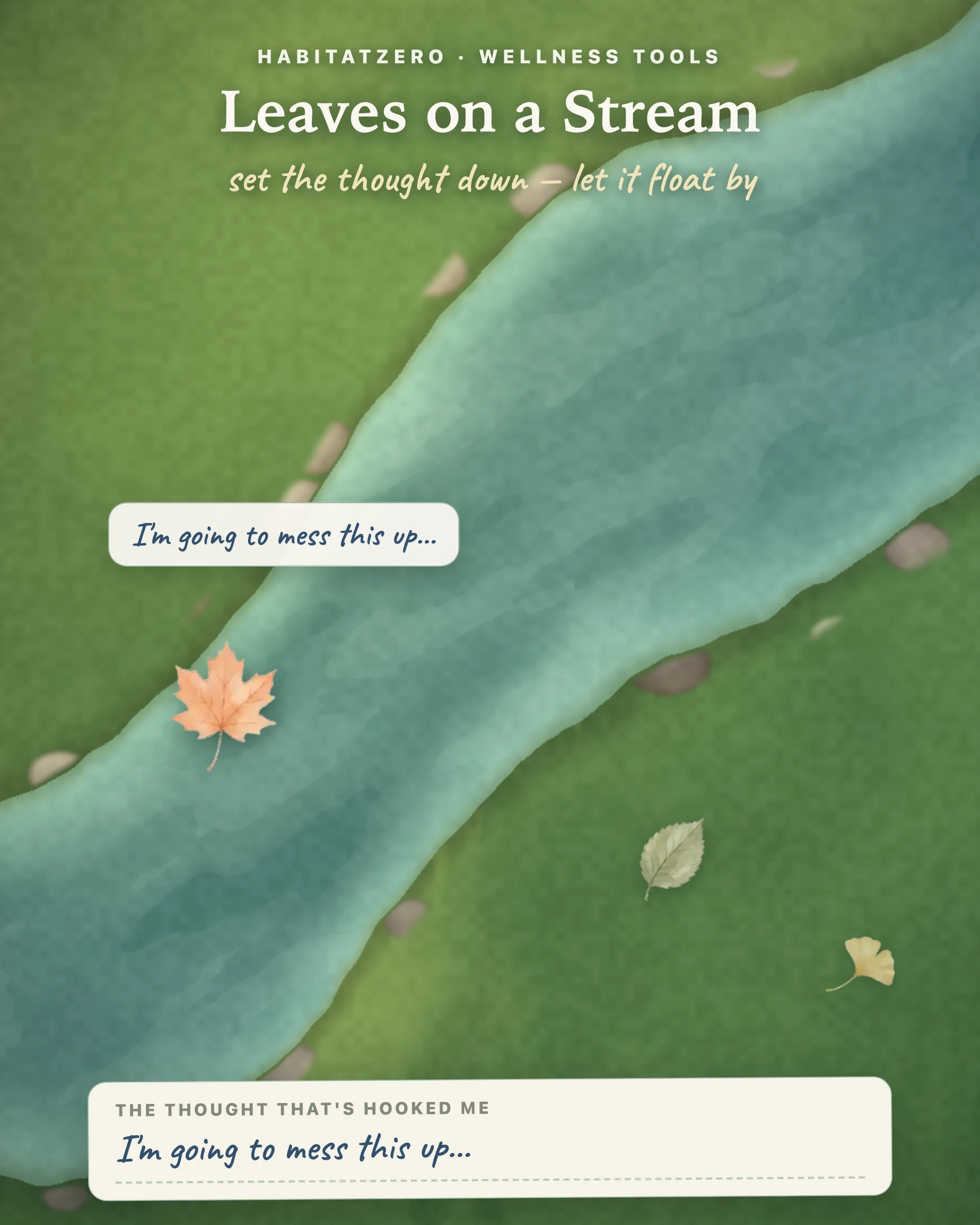
Radical acceptance pairs naturally with two other practices on this site. Leaves on a stream — from the ACT tradition — teaches letting thoughts move without wrestling them; The Open Hand teaches letting a feeling stay without wrestling it. And when the hard thing is bigger than one sitting — a loss, an ending, a season — the emotional healing journal is built for the long version of the same posture.
This page teaches one skill from a large clinical toolbox, as self-help; it is not therapy and does not treat anything. If the feelings you are bracing against are running most days — or if what needs accepting keeps overwhelming what a page can hold — a therapist is the right next step, and DBT skills in particular were built to be learned with one. If you are in crisis or thinking about hurting yourself, call or text 988 (US) right now, or reach your local emergency number.
One boundary, stated plainly: this practice is a self-help skill, not therapy, and radical acceptance was built for feelings that can run deep. If what you are bracing against feels unbearable more days than not, a professional is the right companion for this work. If you are in crisis or thinking about hurting yourself, call or text 988 (US) right now, or reach your local emergency number.
A skill from dialectical behavior therapy, developed by Marsha Linehan: fully acknowledging reality as it is — this feeling is here, this thing did happen — instead of spending your strength fighting facts that have already occurred. The radical part means complete, all the way down, without a silent meanwhile in the back of the mind still arguing. Pain is part of the deal either way; the fight against reality is the part you can put down.
No, and the distinction is the whole skill. Accepting that a feeling or a fact is present says nothing about liking it, approving of it, or letting it stand unchallenged tomorrow. A clenched fist and an open hand hold the same thing — acceptance just stops paying the ache of the clench. People often find they act more effectively after accepting a situation, not less, because the energy that went into disputing reality becomes available for responding to it.
Three steps, about three minutes. You write down the feeling you are fighting, note where your body grips it, and then press and hold a trembling gem — the feeling — through a few slow, timed stages: clenched, deep breath, loosening. When you finally lift your fingers, the tension dissolves and the gem remains, resting in an open hand. The design makes the point physically: what leaves is the grip, never the feeling, and the feeling turns out to be bearable to hold.
No. Dialectical behavior therapy is a full, structured treatment practiced with a trained professional, and radical acceptance is one skill inside its distress-tolerance module. This page borrows that one skill as a self-help exercise, with attribution and without pretending to be the rest. If you are working with a therapist — DBT or otherwise — this makes a fine between-sessions practice; it is not a substitute for the sessions.
Free, in your browser — this page shows a locked preview with an example filled in. Inside Fabulous, what you write in the first two steps saves privately to your account. The press-and-hold itself deliberately saves nothing: it is a practice for the moment it happens in, and every visit starts from the clenched hand on purpose.
By the team behind Fabulous, the science-based self-care app used by over 30 million people.