Leaves on a StreamEmotional Fitness · ~3 min
Fabulous · Practices
Free interactive ACT worksheets: leaves on a stream, a thought-distancing exercise, a values compass and the values bullseye. Use them in the browser, no PDF to print.
Why these templates
Acceptance and Commitment Therapy asks a different question from most self-help. Not how do I get rid of this thought, but what would I do if this thought stopped steering. Steven Hayes and colleagues describe the aim as psychological flexibility: staying in contact with the present moment and moving toward what matters even while difficult thoughts and feelings are along for the ride. The model rests on six processes, and the Association for Contextual Behavioral Science keeps the fullest public account of them.
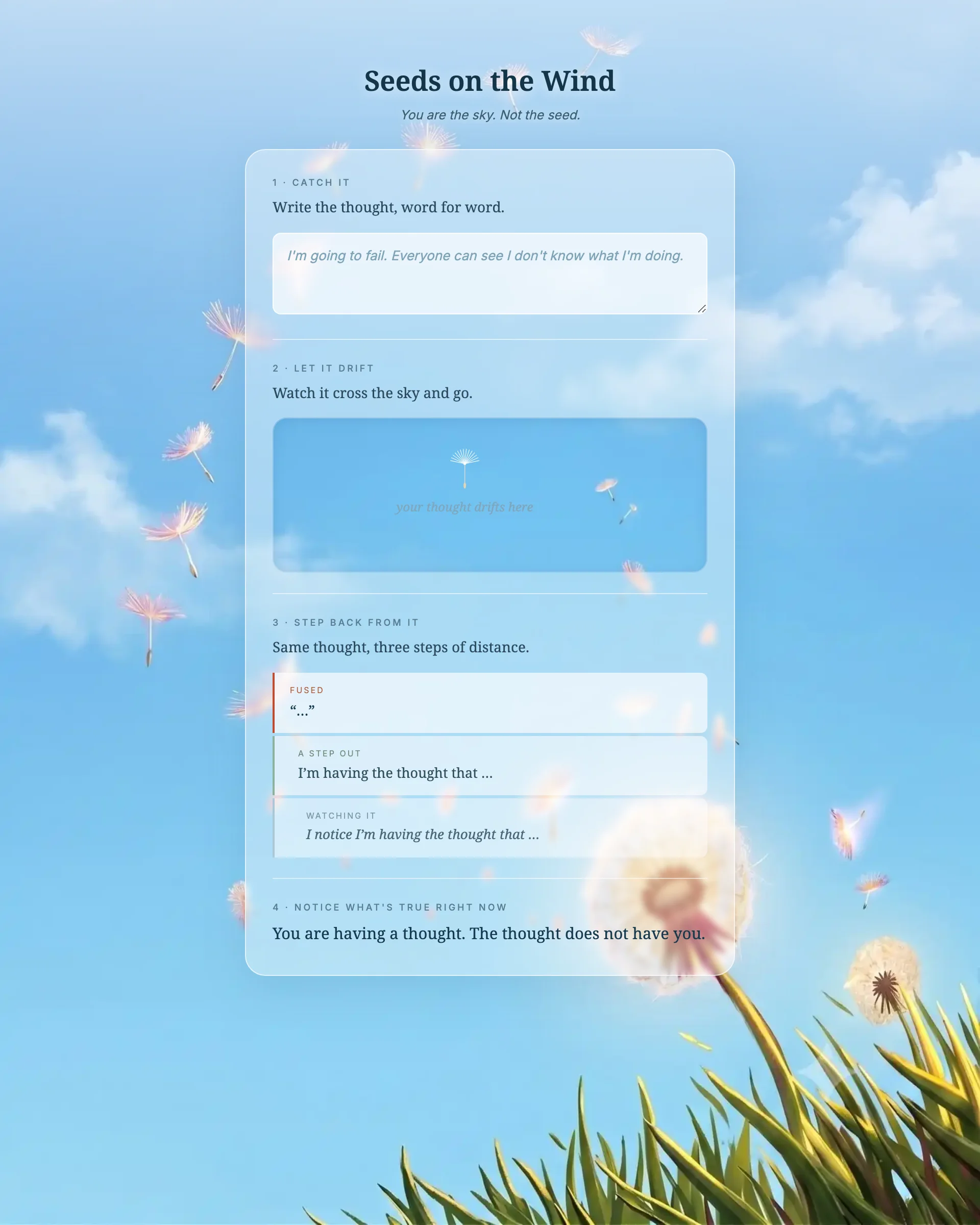
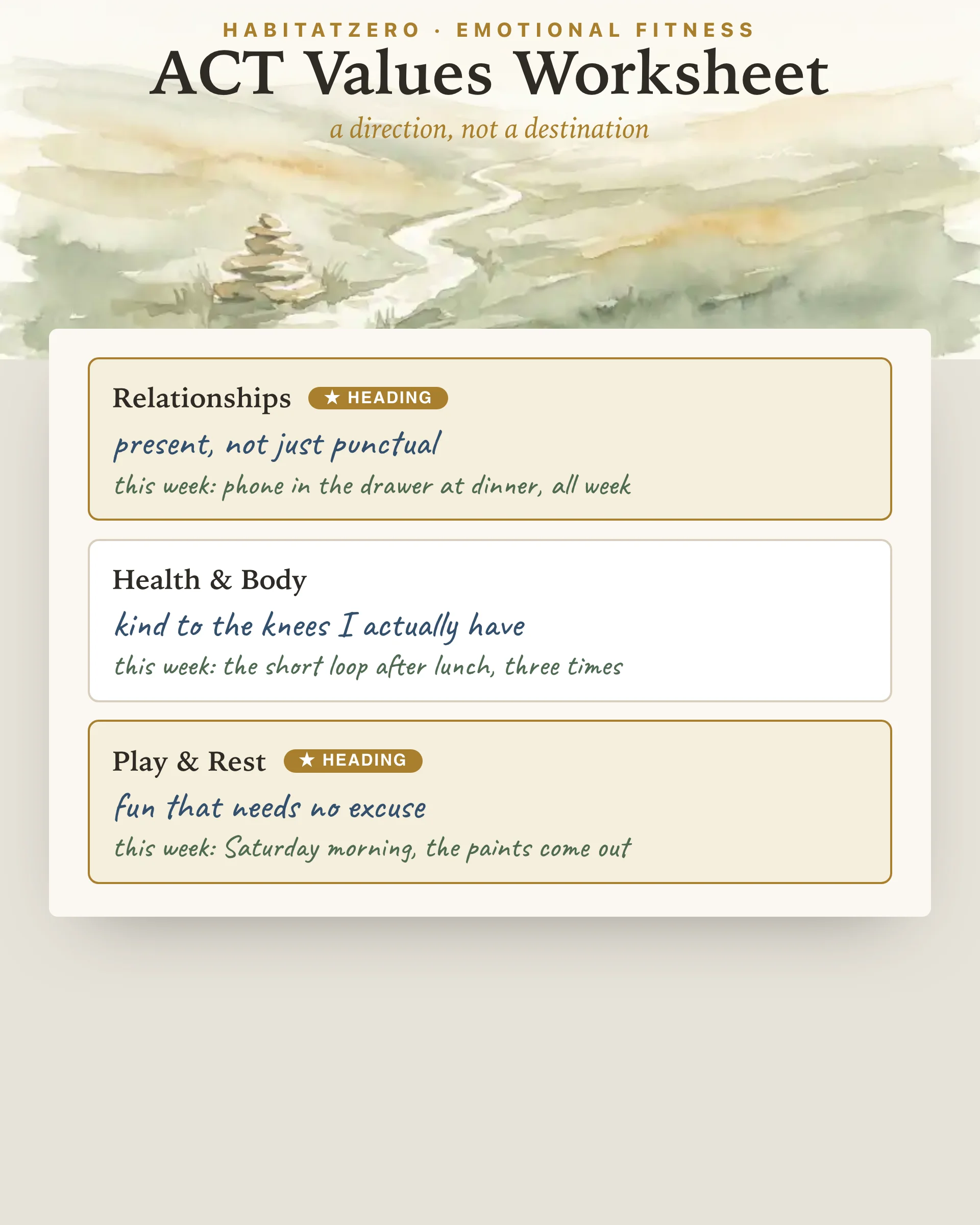
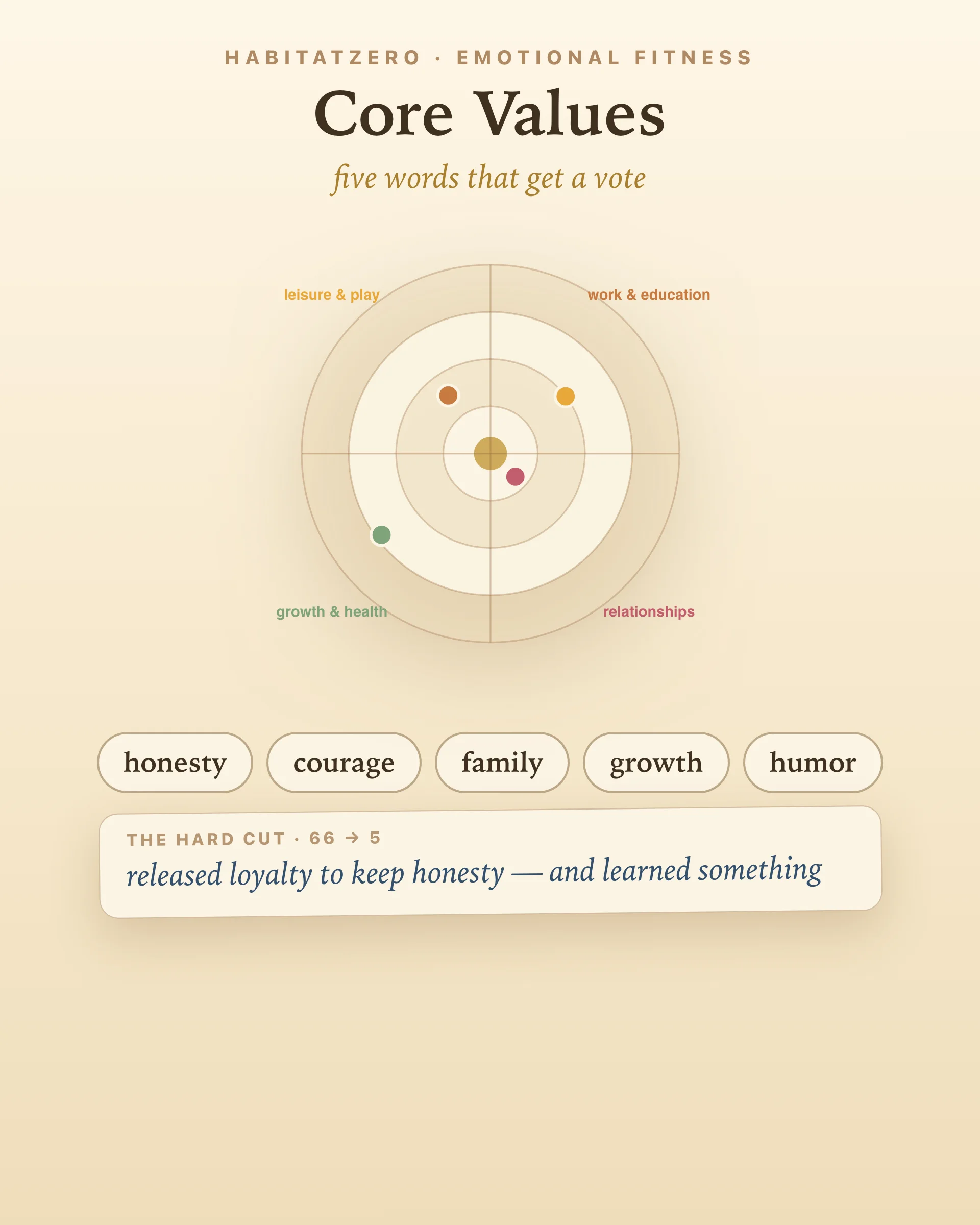
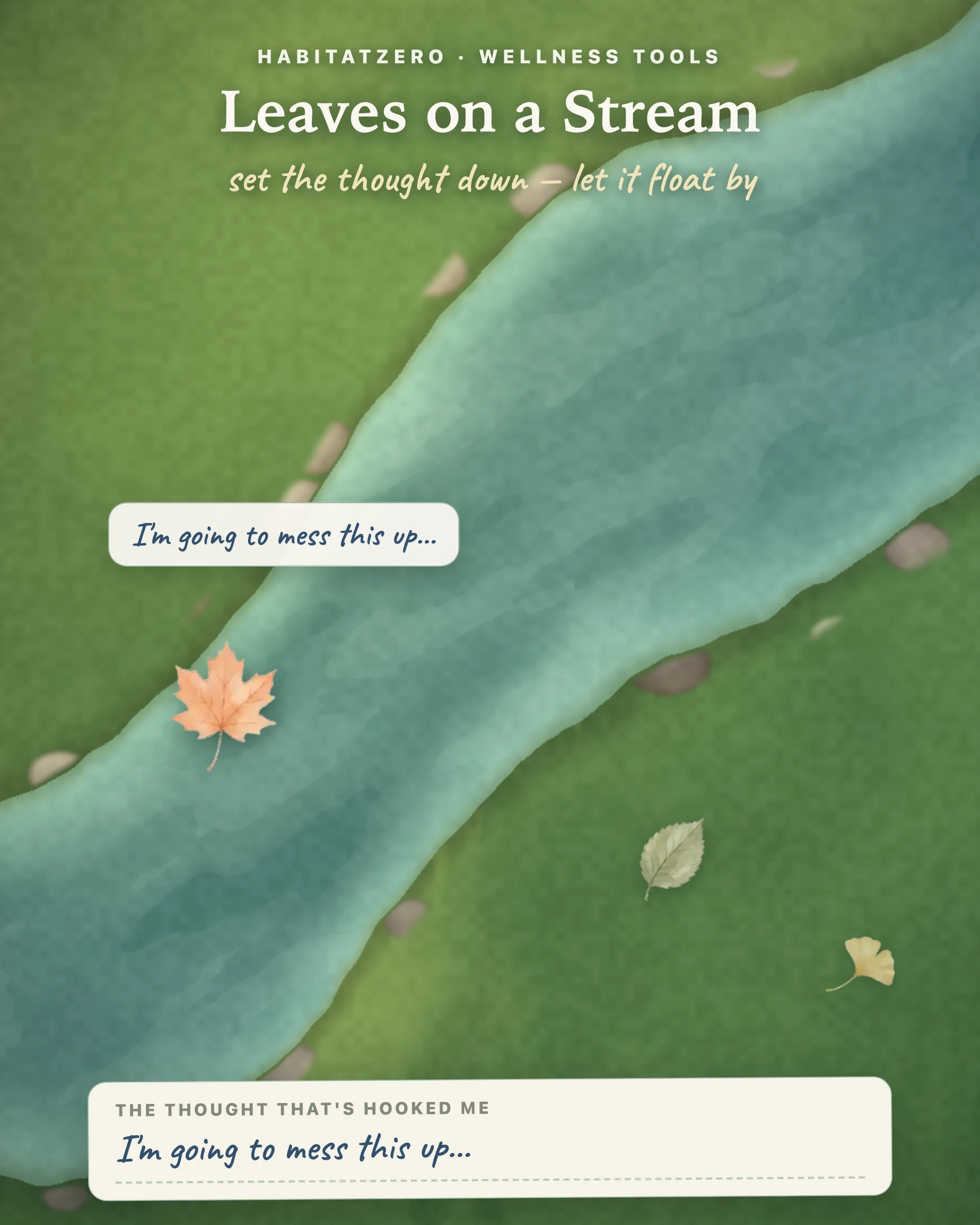
ACT is learned by doing, which is why a printed sheet sells it short. The exercises on this page are the working versions: a stream that actually carries the leaf away, a thought you watch drift off until you can see yourself having it, a compass where each value gets one step small enough for this week, and a bullseye that shows how close you are living to your own center. Two of them train defusion, the skill of unhooking from a thought. Two train values and committed action, the part of ACT that decides where your energy goes once it is free. They are self-help practice, not treatment, and they sit well alongside work with a therapist.
| You want to… | Start with |
|---|---|
| One thought keeps looping and I want some distance from it | Leaves on a Stream |
| I believe the thought completely and need to see it as a thought | Seeds on the Wind |
| I feel busy but aimless and want to know what matters | ACT Values Worksheet |
| I know my values and want to see how closely I am living them | Core Values Worksheet |
A structured way to practice one of the six processes of Acceptance and Commitment Therapy: defusion, acceptance, contact with the present moment, self-as-context, values, or committed action. The worksheets here are interactive, so the exercise happens on screen instead of being described on paper.
Start where you are stuck. If one thought keeps looping, begin with Leaves on a Stream. If you believe the thought completely, Seeds on the Wind adds the step of noticing yourself having it. If the problem is direction rather than noise, the values compass and the bullseye come first.
Defusion means changing your relationship to a thought rather than its content. You do not argue with it or replace it. You learn to see it as a string of words passing through, which loosens its grip on what you do next.
No. They are practice tools for everyday stuck points. A trained ACT therapist tailors the work to your history and goes places a worksheet cannot, and these exercises make good homework between sessions.