Leaves on a StreamEmotional Fitness · ~3 min
About this template · Updated September 2026
Dropping anchor is an exercise created by Dr. Russ Harris, the ACT trainer and author of The Happiness Trap, and his own free dropping anchor recordings are the best way to hear it in his voice; they run from forty seconds to twelve minutes. This page is a separate practice tool that we designed and built ourselves. Dr. Harris had no part in making it, has not reviewed or endorsed it, and has no connection to Fabulous.
The name borrows a picture from sailing. An anchor does not make a squall any kinder; it keeps the boat from being dragged across the bay while the weather does its worst. Harris puts it bluntly when he teaches it: "anchors don't control storms". A wave of panic, fury, grief or dread works the same way. Instead of fighting it off or being swept along with it, you hold your position long enough to choose what your hands and feet do next.
Harris builds the skill from three letters, and you cycle through them rather than ticking each one off once.
His handout suggests going around the loop slowly three or four times, about two to three minutes in all. A single pass takes roughly thirty seconds when time is short, and a quiet evening can stretch the practice to ten minutes.
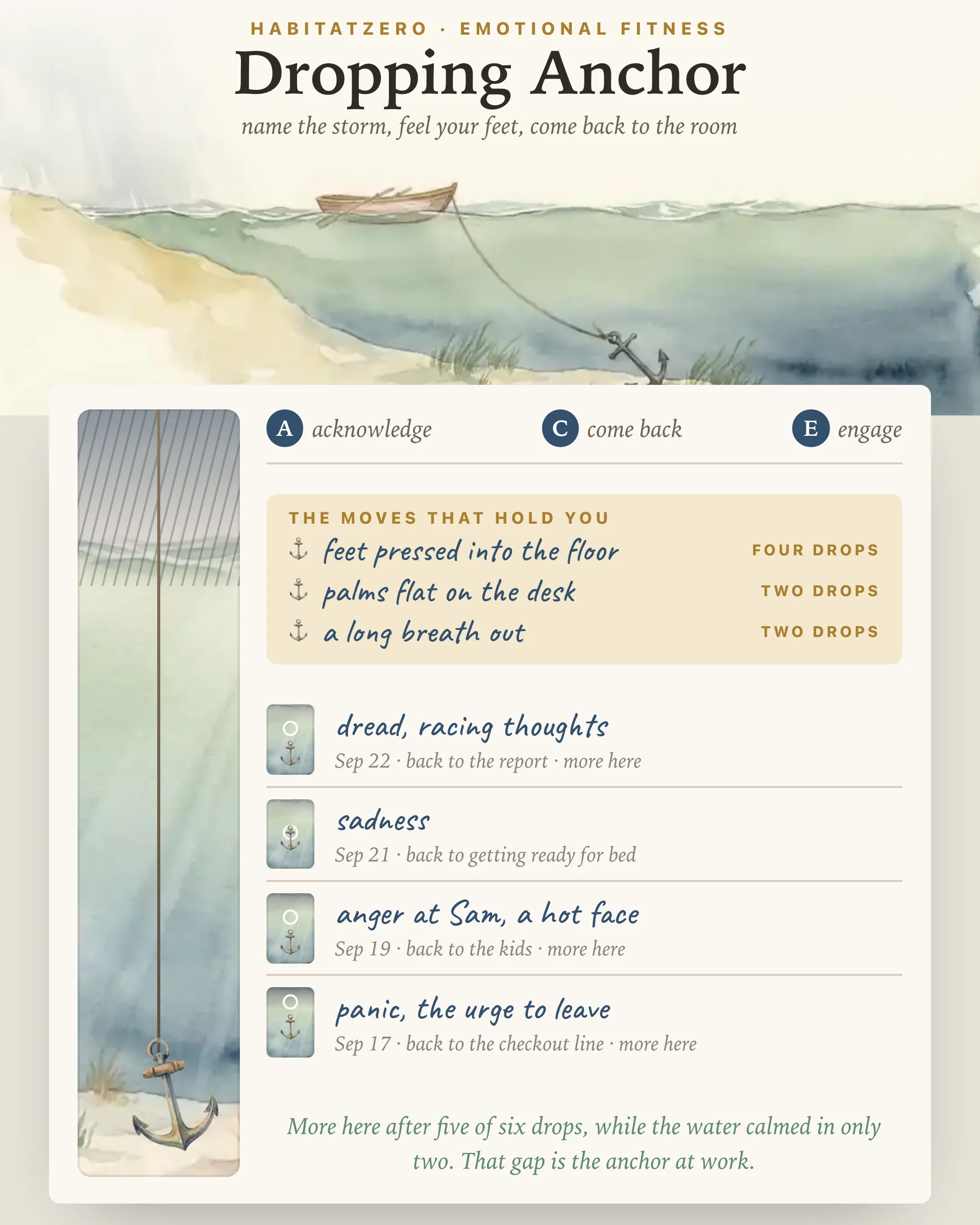
You start with two taps: how rough the water feels and how much of you is here in the room. Then the painted anchor goes over the side and sinks a little with every station. The page will not move past A until you have named at least one thing, since that is the step most people rush. At C you tap a slow move or write your own; at E you tick off what you notice and write what you are coming back to. When you are ready, usually after three or four rounds, you set the anchor in the sand, take the two readings again, and log the drop.
The log is where a screen earns its place over paper. It counts the moves you lean on and puts your most used ones first next time. Each drop gets a small sounding, a ring for how present you were before and the anchor for after, with deeper meaning more here. A line underneath compares whether you came back more present with whether the water itself calmed. Expect the first to rise more often than the second; that gap is the skill doing what it promises.
We could not find a trial of dropping anchor on its own, so be wary of anyone quoting a success rate for it. The support comes from the therapy it belongs to. A 2020 review pooling twenty meta-analyses and more than twelve thousand participants found acceptance and commitment therapy efficacious for anxiety, depression, substance use and pain, though it did not outperform cognitive behavioral therapy.
The nearest thing to a field test is Self-Help Plus, the World Health Organization's five-session stress course, built on ACT with a strong focus on grounding. In a cluster randomized trial with nearly seven hundred South Sudanese refugee women in northern Uganda, it reduced psychological distress more than enhanced usual care three months later. The effect was modest and belongs to the whole course, not to one exercise inside it, so treat the evidence as a reason to try the skill and let your own log judge it.
Drop anchor the moment a feeling starts to steer: the dread before a hard conversation, the heat when a message lands wrong, a memory that ambushes you in the grocery store. Practice on ordinary afternoons, too. Harris recommends building the skill in easier moments so it is there when things turn rough, and the log counts those calm-water drops as practice runs.
This page is built for everyday storms. If your feelings are overwhelming, or you do not feel safe, reach out to a mental health professional rather than working through it alone on a screen.
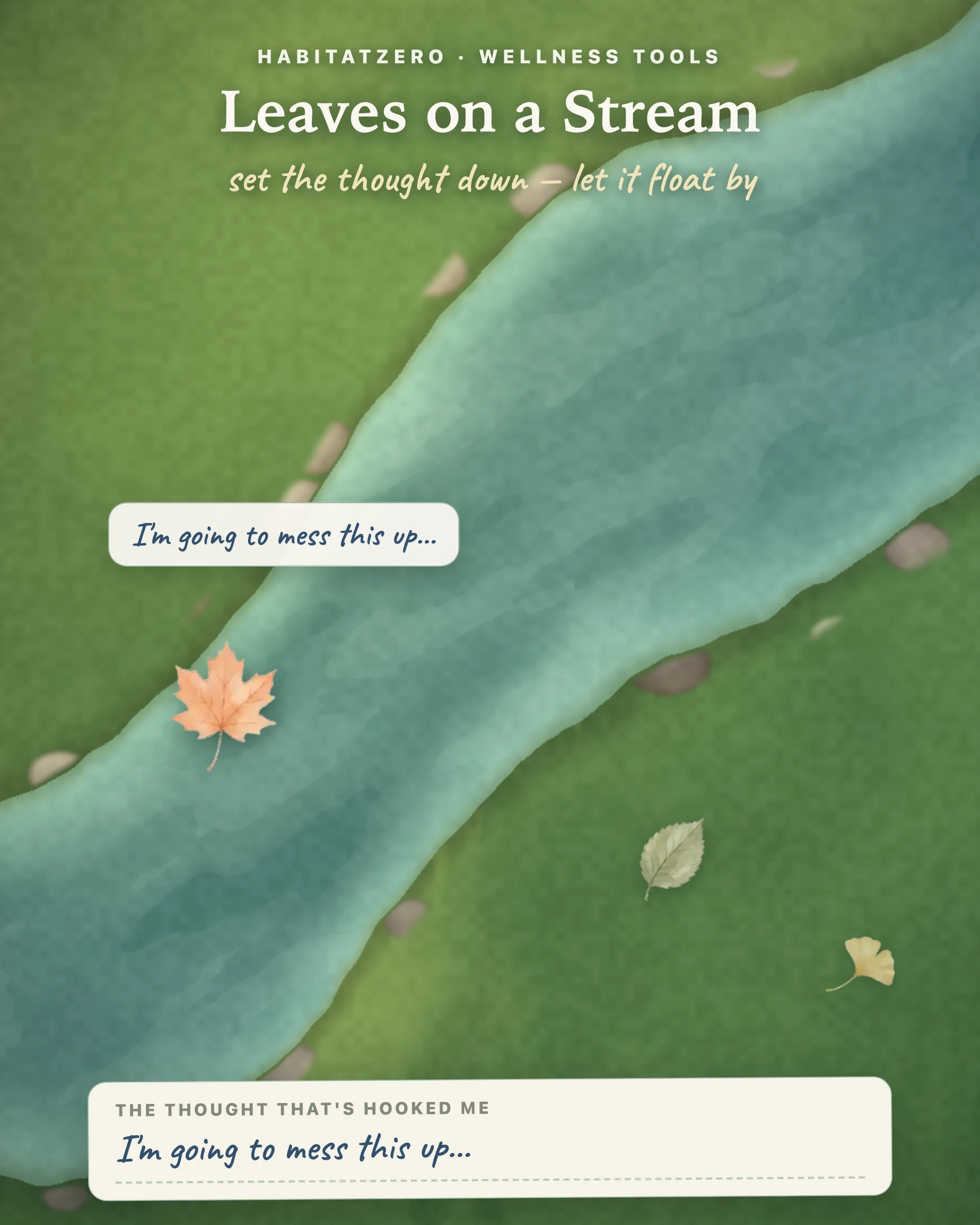
If a sticky thought keeps hooking you after the anchor holds, Leaves on a Stream is the ACT exercise for unhooking from it. If the E step leaves you wanting a slower, sense-by-sense walk back into the room, try 5-4-3-2-1 Grounding. And once you are steady, the ACT Values Worksheet helps you choose what deserves your attention next.
It is a short grounding skill from acceptance and commitment therapy, created by Dr. Russ Harris. When a strong feeling hits, you acknowledge it, come back into your body with slow movements, and engage with what you are doing, so the feeling steers less of what you do.
A is acknowledging your thoughts and feelings, C is coming back into your body, and E is engaging in what you are doing. You loop through the three letters a few times rather than doing each one once and moving on.
Harris suggests three or four slow rounds of ACE, which comes to two or three minutes. One quick round takes about thirty seconds when you are pressed for time, and a deliberate practice session can stretch to ten minutes.
No. The feelings are allowed to stay, and the storm may not ease at all. The aim is to hold steady and choose your next action, which is why this page tracks how present you were separately from how rough the water felt.
Harris shares free recorded versions, from under a minute to twelve minutes, on his ACT Mindfully site. This page is a silent guided version instead: you set the pace, use your own words, and sign in to HabitatZero to keep a log of your drops.
By the team behind Fabulous, the science-based self-care app used by over 30 million people.