Leaves on a StreamEmotional Fitness · ~3 min
About this template · Updated July 2026
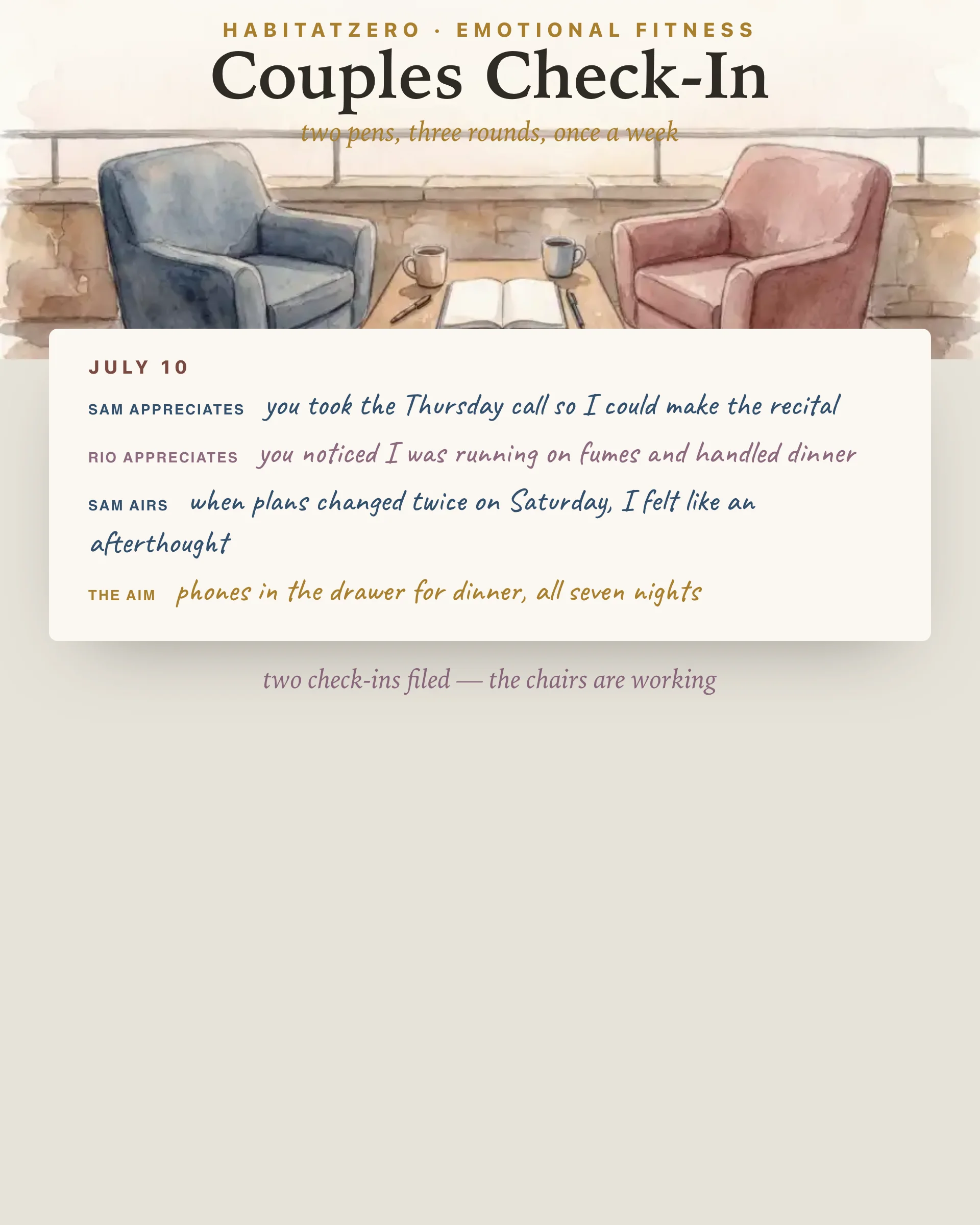
The uncomfortable finding from decades of relationship research is how little the dramatic moments matter compared to the boring ones. Longitudinal work following couples across fourteen years found that how partners handle ordinary, unremarkable interaction predicts the long arc better than how they weather the occasional storm. Which is quietly great news, because ordinary interaction is schedulable. This page schedules it: two chairs, two pens, three rounds, twenty minutes, once a week.
Each partner writes in their own ink — blue and plum, named at the top of the sheet — and the check-in refuses to file until both have written. That refusal is the design. A relationship exercise one person fills out alone becomes a diary with a grievance section; the both-pens rule makes the ritual structurally mutual, and the log below keeps both voices side by side, week after week, in handwriting-styled color.
Appreciate opens, and it is non-negotiable. One specific thing the other did this week — you took the Thursday call so I could make the recital — not a compliment category. The specificity matters more than it looks: research on everyday gratitude between partners found that noticed, expressed appreciation for concrete acts functions as a kind of booster shot for the relationship itself, increasing connection for both the thanker and the thanked.
Air is the pressure valve, scaffolded to stay kind: when this happened, I felt this. One small friction each, maximum, and skipping a calm week is explicitly allowed. The round exists so that small things get said while they are still week-sized — the alternative is that they compound silently and arrive months later wearing armor.
Aim closes the ritual: one shared intention for the coming week, written once, signed by the act of filing. Phones in the drawer at dinner. The budget conversation moved to Sunday coffee, capped at thirty minutes. Small enough to keep, concrete enough to check next week — which is exactly what the next check-in's first round tends to appreciate.
It is a structured conversation, honestly labeled: not therapy, not an assessment, and it issues no verdicts about anyone's relationship. Worksheets like this one live in two worlds — couples who simply want a weekly rhythm, and couples in counseling whose therapist assigns something similar as between-sessions practice. Both are good uses. And the limits are real: if round two keeps detonating, or the same friction returns wearing armor no matter how kindly it is aired, that pattern deserves a trained third chair. Finding one is not a failure of the ritual; it is the ritual working as an early-warning system.
For the solo practices that pair well on either side of the week, the grateful journal keeps the noticing muscle warm between check-ins, and the anxious attachment journal is the right tool when the wobble is yours to untangle before it reaches the chairs.
Same chairs next week. The pens will be waiting.
It is the kind of structured exercise widely used in and around couples work, offered plainly: a guided weekly conversation, not therapy and not a substitute for it. Plenty of couples use it on its own; plenty of therapists assign something like it between sessions — both uses are legitimate.
Stop the round, keep the chairs. The scaffold — when this happened, I felt this — is designed to keep round two at week-size, but if the same friction keeps detonating, that is real information: it belongs with a trained third chair rather than a worksheet, and finding one is a strength move.
Weekly, same slot, same chairs — rhythm does more work than depth here. Research following couples over many years keeps pointing at the everyday texture of interactions, not grand gestures, as the thing that predicts how relationships fare; twenty minutes a week tends that texture directly.
Because a check-in one person fills out alone is a diary with a grievance section. The both-pens rule keeps the ritual honest: both appreciations written, one aim signed together, and only then does the week file into the log you will reread in December.
In the between-sessions sense, yes: structured weekly exercises like this one are commonly assigned alongside marriage counseling, and the filed log gives a session something concrete to start from. On its own it remains what it says on the sheet — a conversation ritual for two, useful long before anything needs a professional and honest about when something does.
Once a season, yes: spend one check-in on values instead of the week — each pen lists the five things that matter most in how you live together, then compare lists across the table. Where the lists agree you have found your aims for the next few weeks; where they differ, round two already knows how to say it.
By the team behind Fabulous, the science-based self-care app used by over 30 million people.