Leaves on a StreamEmotional Fitness · ~3 min
About this template · Updated July 2026
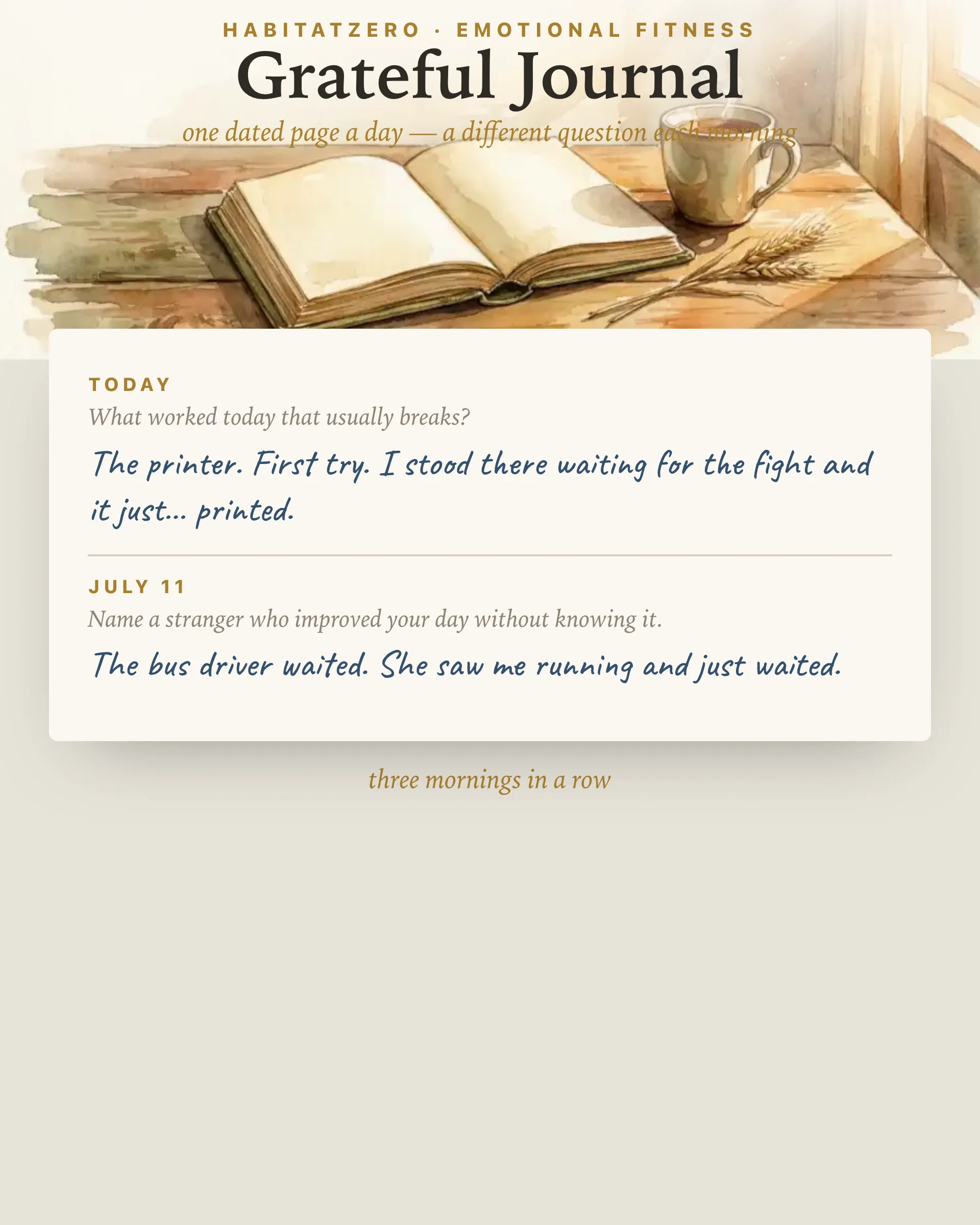
Most gratitude journals are bought in November and blank by February. The pattern is reliable enough to plan around: the book itself is lovely, the intention sincere, and the practice dies anyway — because every page opens with the same enormous question and expects you to supply the structure yourself. This journal flips that arrangement. It supplies the structure — one dated page, one rotating question, one small target — and asks you only for the honest sentence.
The unit of this journal is the dated page. Each morning carries its own prompt drawn from a rotating set of twenty-one, keyed to the calendar, so Tuesday never opens with Monday's question. That rotation matters more than it looks: the original counting-blessings experiments found benefits when people attended to new good things at a steady rhythm, and the attention is what does the work. A fresh angle each day — a sound worth keeping, a stranger who helped without knowing, a thing that almost went wrong but didn't — keeps the noticing muscle under load instead of letting it coast on last week's answers.
Three lines fills a page here, by design. The best-validated gratitude exercises asked for a handful of items with a why, not an essay — depth of attention beat length of list in the follow-up data. A target you can hit on a gray Wednesday is the target that survives until spring.
Tap keep this page and today's entry files itself under Past pages, newest first, with its date and the question it answered. That growing stack is quietly the most useful part of the whole practice. A 2020 review of gratitude and health research notes that effects strengthen with sustained practice — and nothing sustains a practice like evidence of it. Twenty bound pages are twenty small arguments against the voice that says nothing good is happening; rereading them on a hard morning is the practice paying interest.
The journal counts consecutive mornings and mentions them gently — four mornings in a row — but a missed day costs nothing except its own page. There is no red streak-breaking guilt here. Journals with gaps get reread too.
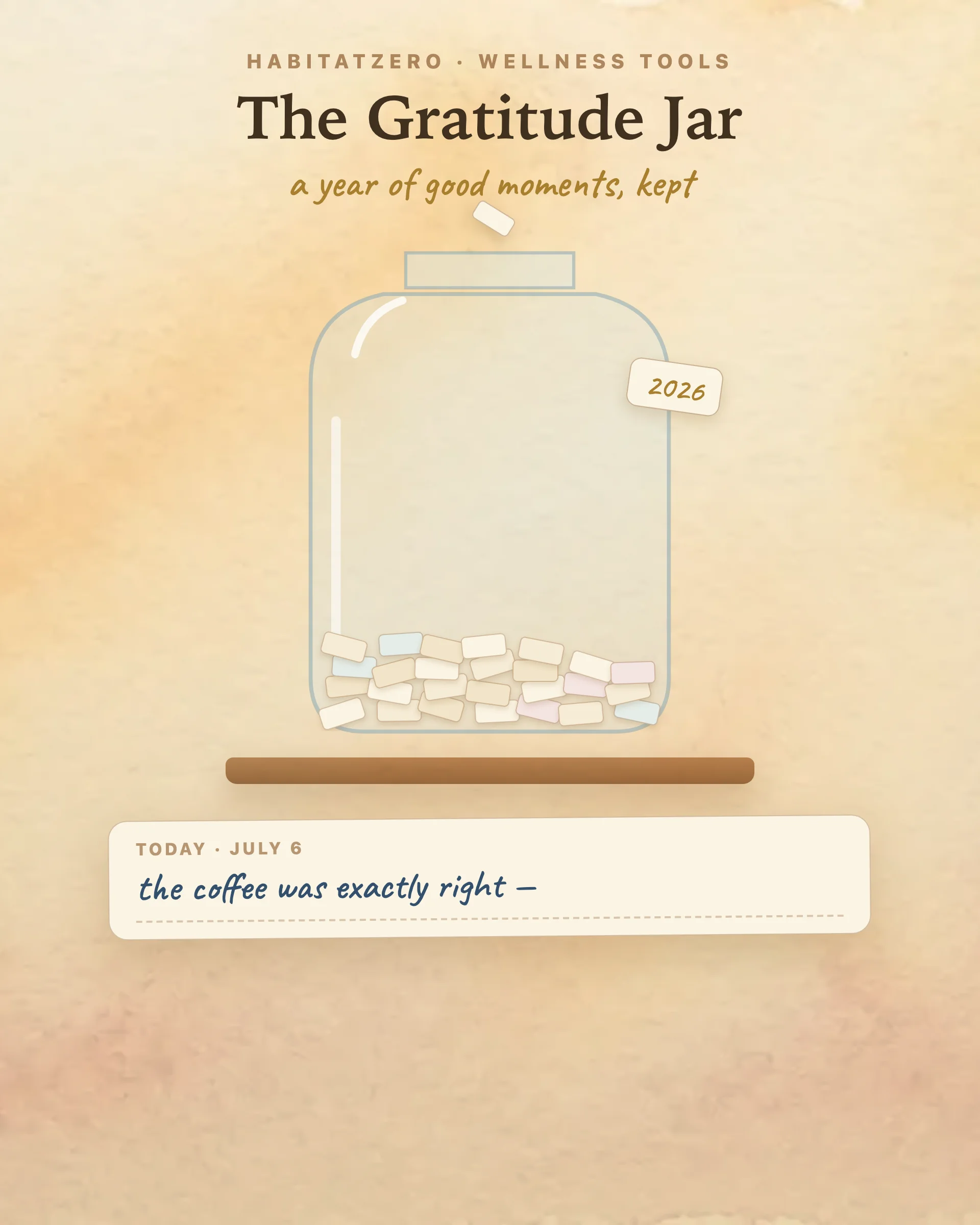
This is the daily bound book. If a moment feels bigger than a page — the kind of thing you'll want to pull out and hold in December — give it to the gratitude jar, which is built for keepsakes and year-end rereading. If the blank line stalls you even with a prompt, warm up with the gratitude prompts deck, which deals card-sized questions tuned to the day you actually had. And if mornings are your writing time, the journal pairs naturally after morning pages: drain the sediment first, then keep one good thing.
Start tonight or tomorrow with the day's question. Answer it in three honest lines. The binding is handled.
Answer the day's question with one specific moment rather than a category — the built-in grateful journal prompts rotate through twenty-one angles so the question does the aiming for you. A named person, a sound, a meal, a near-miss that resolved: specifics reward rereading, while generic lists like family and health fade after a week of repeats.
This is the bound-book version of the practice: exactly one dated page per day that files itself chronologically. The jar is a keepsake ritual for special moments and the deck deals many card-sized questions per sitting — this journal asks once each morning and keeps the pages in order.
No. A missed day simply has no page, and the next morning offers a fresh question with no penalty. The run counter celebrates consecutive mornings when they happen, but a journal with gaps is still a journal worth rereading.
Three lines is a complete page here on purpose. Research on gratitude practice points to depth over volume — one moment described properly beats ten items listed in a hurry, and a small target is the one you will still be hitting in March.
That is its natural gait: one dated page per grown-up day, sized for the gap between the alarm and the first meeting. The draft saves itself mid-thought for interrupted mornings, nothing carries guilt across a missed date, and the archive stays private on your own account rather than performing for anyone.
It suits anyone with a crowded morning, which is who it was drawn for. Nothing about the practice is gendered: the rotating question, the three-line page, and the private archive work identically whoever holds the pen — pick it for the rhythm, not the marketing aisle.
Across controlled studies, regular practice tracks with better mood, closer attention to what is working, and for many people easier evenings — real gains, honestly modest in size. The dated archive adds a quieter benefit the studies rarely measure: your own evidence, rereadable on the days that argue otherwise.
By the team behind Fabulous, the science-based self-care app used by over 30 million people.