Leaves on a StreamEmotional Fitness · ~3 min
About this template · Updated July 2026
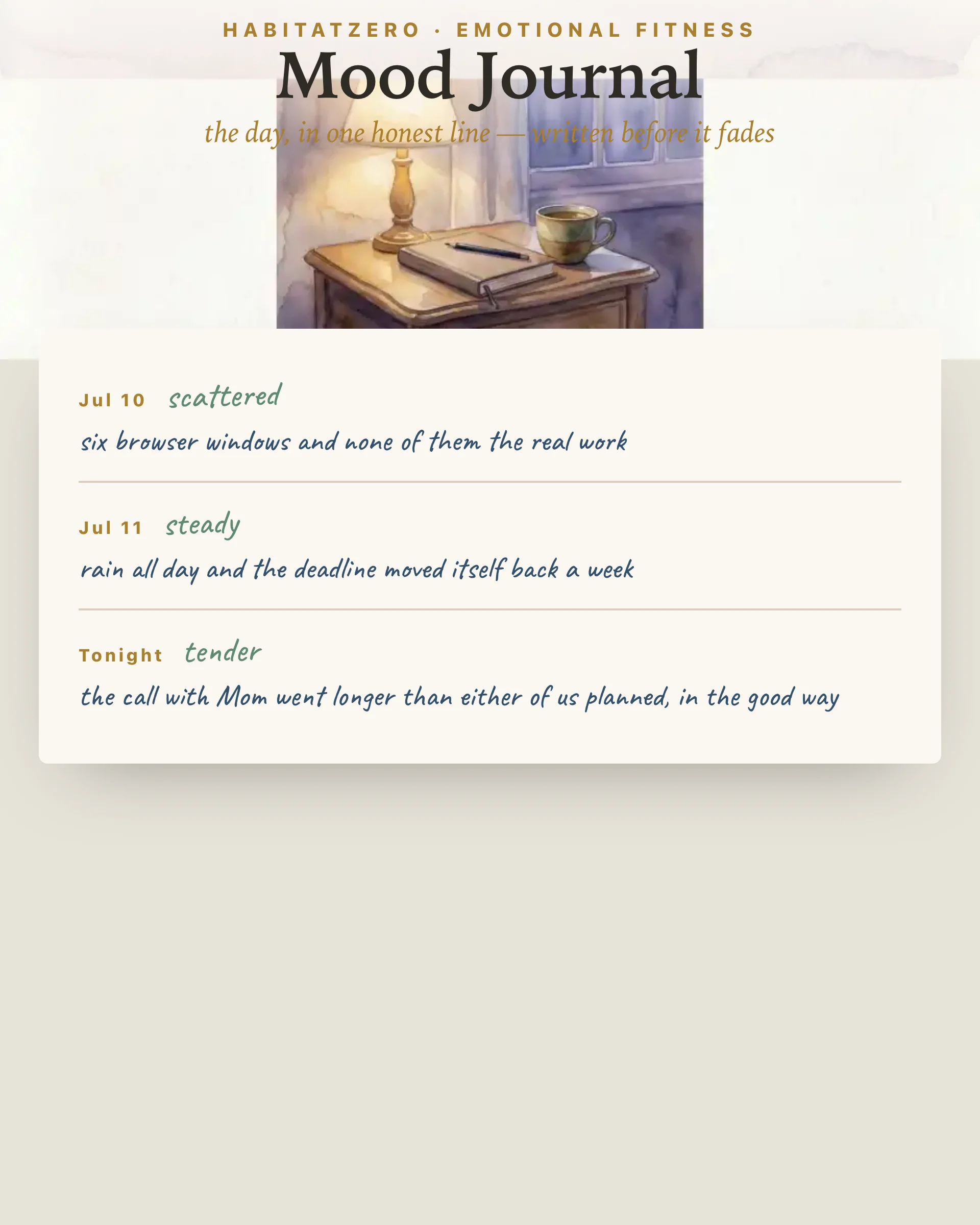
The graveyard of abandoned journals is full of beautiful intentions: the leather notebook, the fountain pen, the promise of a page a night. What killed them wasn't laziness — it was scope. At 10 p.m. a page is a mountain. So this mood journal asks for a molehill: one word for what colored the day, one line about where it came from. Ten seconds for the word, a minute for the line. That's the whole practice.
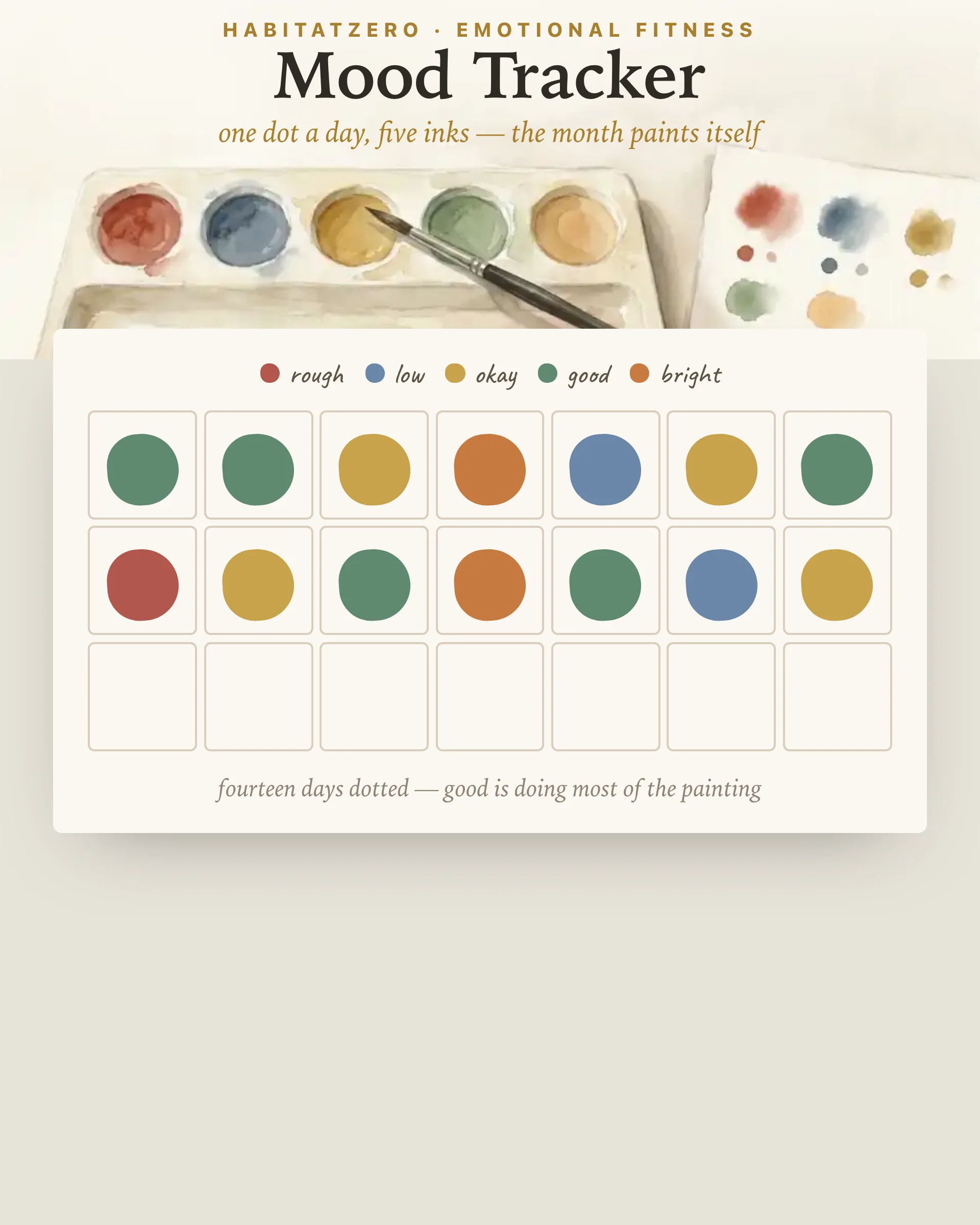
A mood tracker — the one-tap kind, like HabitatZero's five-ink mood tracker — is the right tool for the trend. But dots have no vocabulary. A month of green tells you the weather held; it can't tell you that steady in week one meant rain-and-no-deadlines while steady in week three meant you'd finally stopped checking the news at breakfast. The journal is the tracker's missing commentary track: the word carries the color, the line carries the cause. Dot daily if you like; write the line on days that earned one. The pair was built to be used together.
There's a genuinely useful research wrinkle here. When Sonja Lyubomirsky and colleagues compared writing, talking, and thinking about life's best and worst experiences, the modes pulled in different directions: writing about hard experiences helped people process and settle them, while writing analytically about the best experiences could actually flatten their glow. Meanwhile, Burton and King found that writing about intensely positive experiences in a savoring register — reliving rather than dissecting — came with mood and even health benefits.
The one-line format quietly respects both findings. On a threadbare day, the line does its settling work: six browser windows and none of them the real work — named, filed, done. On a tender day, a single line is savoring, not surgery: the call with Mom went longer than either of us planned, in the good way. Short enough to relive, too short to dissect.
Kept evenings stack under the page, newest first, a month at a time. The reread is where the journal pays: the same word arriving every Sunday night, the scattered entries that cluster around a particular meeting, the good lines that keep featuring the same two people. Memory summarizes; the stack quotes.
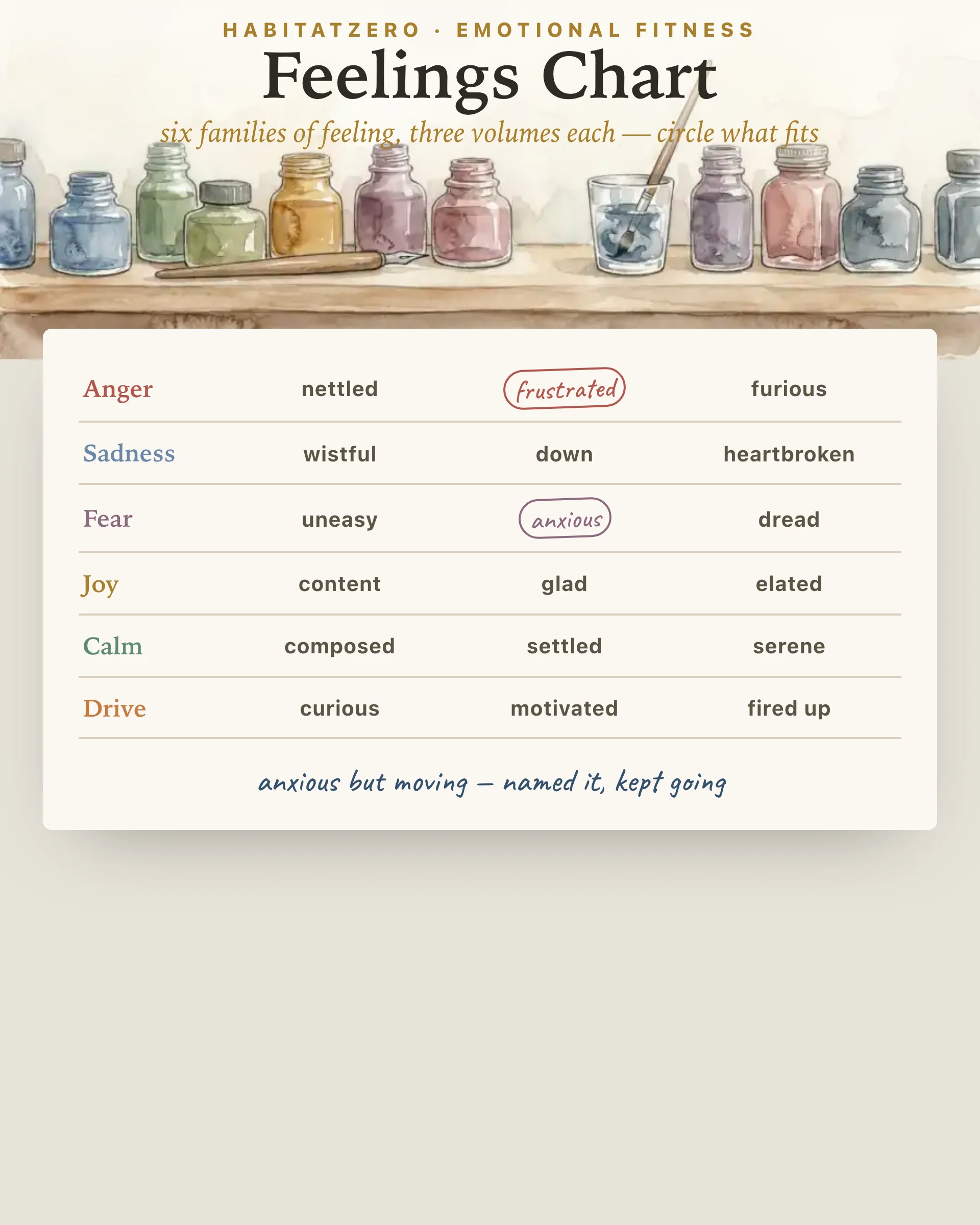
When one evening's word won't come, the feelings chart holds thirty-six candidates at three volumes. And when a line turns out to be the tip of something that keeps circling, the emotion processing sheet takes it the rest of the way. This journal stays small on purpose — the shallow end is what you'll actually wade into nightly.
One word. One line. Thirty-one evenings, and a month that can finally quote itself.
A journal whose entries are deliberately small: one word for what colored the day and one line about where it came from, dated and kept. It sits between a full diary, which asks too much of a tired evening, and a mood chart, which records the weather but not the why. The smallness is the design — two minutes is a promise you can keep nightly.
Start with the word you would give a friend who asked how today actually was — in this journal that word is the entry's spine. Then one sentence of context: what the day did, or what you did to it. Skip analysis, skip resolutions; the entry's job is to be true and short. The good entries read like telegrams: steady — rain all day and the deadline moved itself.
They answer different questions and pair well. A tracker records the trend: one tap a day builds a month you can read at a glance. A journal records the reasons: the words and lines that explain the dots. HabitatZero has both — the mood tracker for the color of the month, and this journal for the sentences underneath it. Many people dot first and write only on days that earned a line.
Shorter than feels respectable. A word is a complete entry here, and a line is a generous one. Length is the enemy of nightly practices: a journal that wants paragraphs gets abandoned by Thursday, while a journal that wants a word is still alive in March. When an evening genuinely needs more room, that is a sign to open a fuller page — this journal will still take its one line.
Yes, and rereading is half the point. Research on writing about experiences suggests the mode matters: putting hard days into words helps them settle, while replaying good days in written detail helps them keep paying. A month of dated words and lines gives you both — and it shows repeats, like the same word arriving every Sunday night, that no single evening could reveal.
Smaller than people expect, and better for it. Real examples of the shape this journal asks for: 'Drained — the meeting ate the afternoon and I let it.' 'Steady. First run in two weeks, legs remembered.' 'Scratchy — too many tabs open, in the browser and in me.' One mood word, one honest line about why, written at the end of the day. The word makes the entry comparable across weeks; the line keeps it human. If you can text a friend how today went, you can keep a one-sentence journal — this page just gives the sentence a place to live.
By the team behind Fabulous, the science-based self-care app used by over 30 million people.