Leaves on a StreamEmotional Fitness · ~3 min
About this template · Updated July 2026
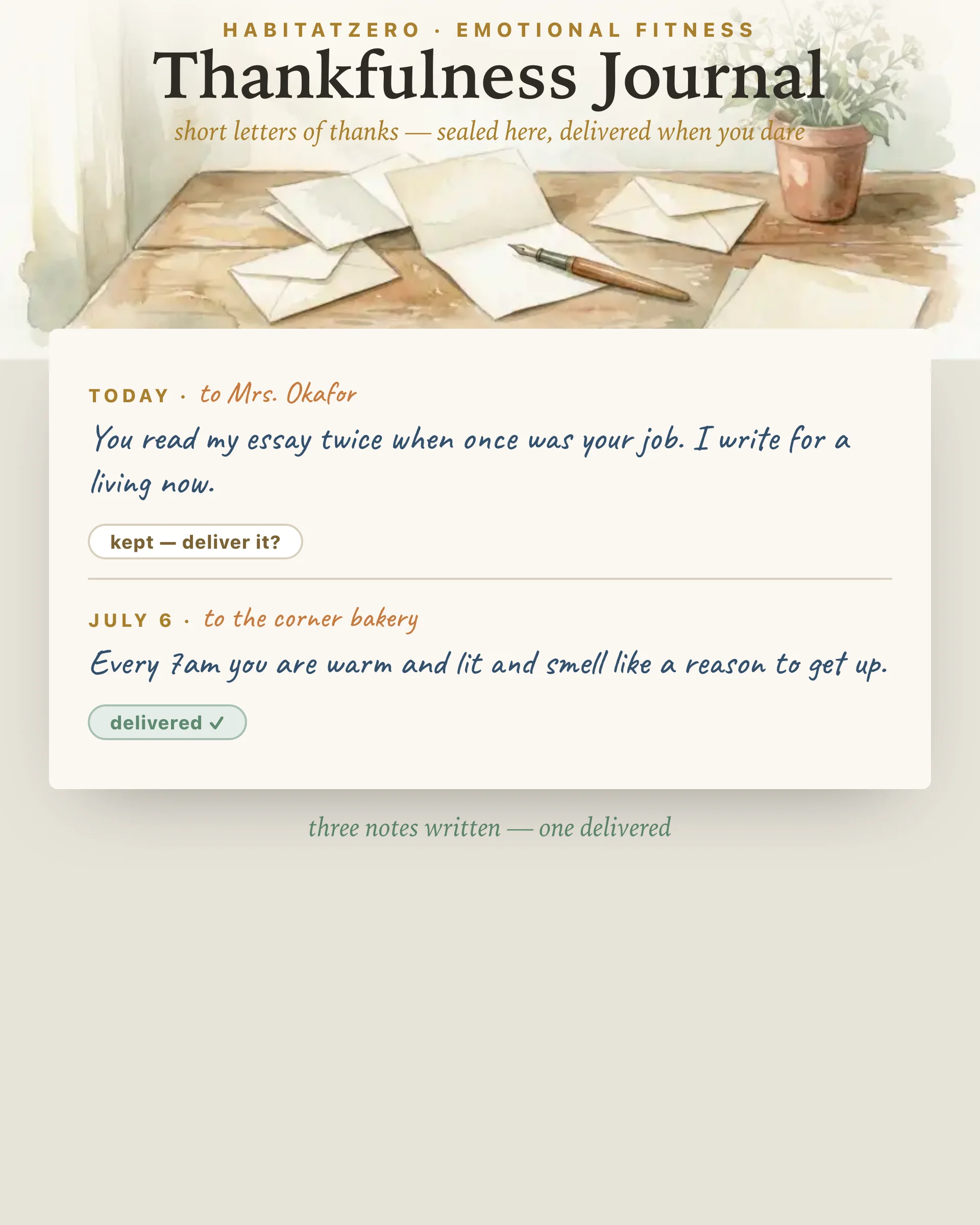
There is a stronger form of thankfulness than the nightly list, and psychology has known about it for twenty years: the letter. In the landmark study of positive interventions, the gratitude visit — writing a concrete letter of thanks to a specific person — produced the largest immediate boost in the whole battery of exercises tested. The catch has always been friction: a proper letter feels like an occasion, so it waits for a retirement, a eulogy, a wedding toast. This journal removes the occasion. Two lines, addressed to a real name, sealed into a stack. The letter practice at note size.
A list says coffee, my sister, the weather turned. A note says to Ana — you drove forty minutes to sit with me and never once checked your phone. Putting a name on the To line changes the writing that follows: you stop summarizing a feeling and start seeing an act from the other side of it, which is where the warmth actually lives. The journal keeps a rotating nudge under the address line for the days nobody surfaces on their own — the teacher whose voice you still hear, the colleague who asks the question you were afraid to, the coat that has outworked every replacement. People, places, and stubborn objects all take an address here.
Every sealed note joins the stack with its date, and each carries a quiet toggle: kept, or delivered. Kept is a complete practice — the writing does its work whether or not anyone reads it. But the toggle exists because of one of the most cheering findings in the expression literature: people systematically undervalue sending their gratitude. Writers in those experiments predicted awkwardness and mild pleasure; recipients reported being moved, surprised, and anything but awkward. The gap between how sending feels in your head and how landing feels in theirs is the whole argument for the toggle. Read one aloud over dinner. Paste one into a message. Watch what happens.
The status line keeps the honest score — eleven notes written, four delivered — not as a guilt mechanism, but because the delivered count is the one that tends to be remembered years later, on both ends.
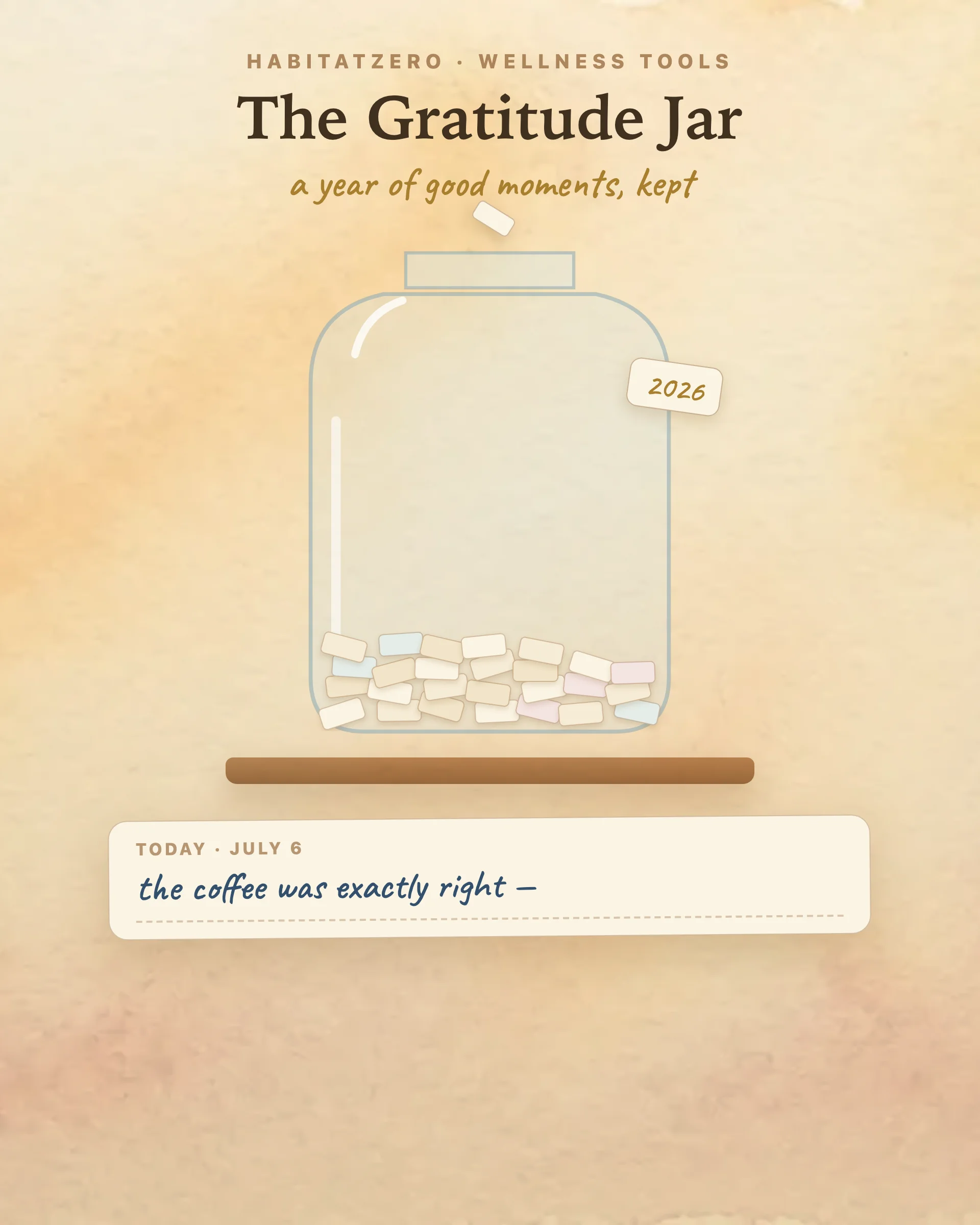
Each gratitude tool here does one job. The grateful journal is the dated daily page — a rotating question every morning. The gratitude jar hoards good moments for a year-end rereading. The gratitude prompts deck deals small questions when the blank line stalls you. This journal is the one that faces outward: thanks with an address on it, written while the specifics are still sharp, delivered when you find the nerve.
Somebody is overdue. You already know who. Two lines.
A practice of writing thanks down instead of just feeling it. This version borrows the strongest form from the research — the gratitude letter — and shrinks it to a two-line note addressed to a specific person or thing, so a complete entry takes minutes.
No. Sealed notes stay in your stack, and unsent ones still count — the writing itself is where much of the shift happens. The delivered toggle is there because studies on expressed gratitude keep finding that recipients value these messages far more than senders predict.
Anyone owed thanks they never fully received: the teacher, the friend who answers on the first ring, the neighbor who quietly watches out. Objects and places are allowed here too — the point is addressing something real rather than listing something vague.
Whenever the pang of owed thanks shows up, and roughly weekly if you want a rhythm. This practice runs deeper and slower than a daily list — one properly addressed note a week outweighs seven hurried bullet points.
By the team behind Fabulous, the science-based self-care app used by over 30 million people.