Leaves on a StreamEmotional Fitness · ~3 min
About this template · Updated August 2026
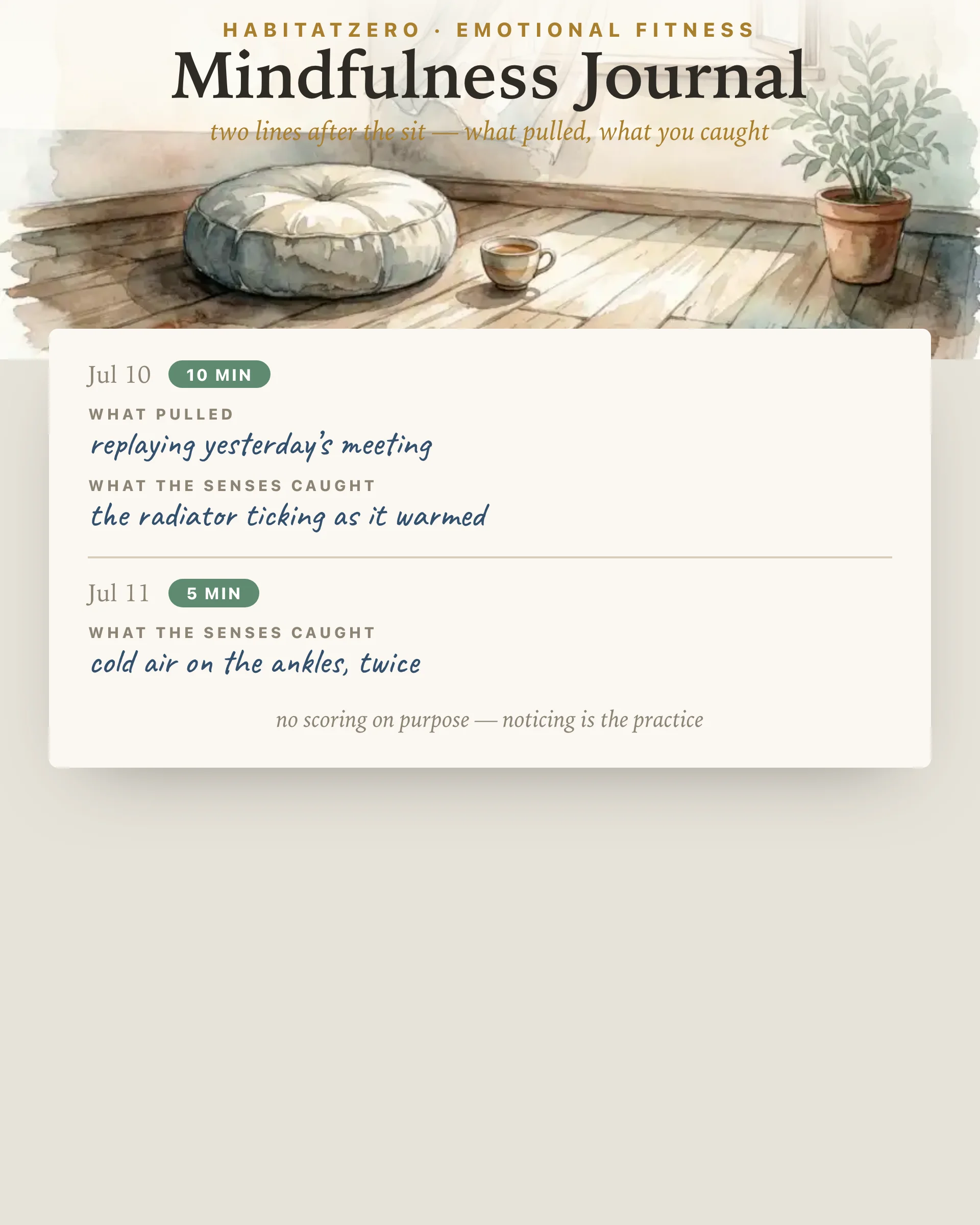
There's a small industry of advice about journaling instead of meditating, and another about meditating instead of ruminating on paper. This page takes the boring, useful position: sit first, then write two lines about what actually happened. The journal is the practice's receipt — not its replacement.
The pull. Every sit has a gravitational field — tomorrow's call, an itch, the fridge hum, the argument you're still winning in your head. Naming the day's pull isn't a complaint about the meditation; it is the meditation's core skill, performed once more with a pen. Over a few weeks the pulled-lines develop a pattern worth knowing: what your mind reaches for when nobody's steering.
The catch. One thing your senses genuinely registered — rain starting, warmth in the hands, the third breath that finally landed. Asking for a single sensory catch keeps the entry honest (no essays, no philosophy) and quietly trains attention toward the concrete, which is where mindfulness lives anyway.
And deliberately, no grade. The journal has no how did it go scale, because grading sits trains exactly the wrong reflex. In practice terms, the moment you notice the mind has wandered is a successful repetition — the bicep curl of the whole enterprise — so a restless sit full of noticings was a productive one. The scoreboard is gone on purpose; the observations stay.
The meditation itself is the load-bearing part, and its evidence base is genuinely substantial: Khoury and colleagues' meta-analysis across more than two hundred studies found moderate effects of mindfulness-based therapy on anxiety, depression, and stress, and Goyal and colleagues' review of randomized trials — the stricter, active-control kind — still found meaningful improvements in anxiety, depression, and pain from mindfulness meditation programs. Neither found magic; both found a practice that repays showing up.
The journal's contribution is humbler and very practical: it makes showing up visible. The book of sits — dated, with minutes — is a record you can't argue with on the weeks that feel like nothing is happening. And the two prompts rehearse the exact noticing the cushion trains, once more, in daylight.
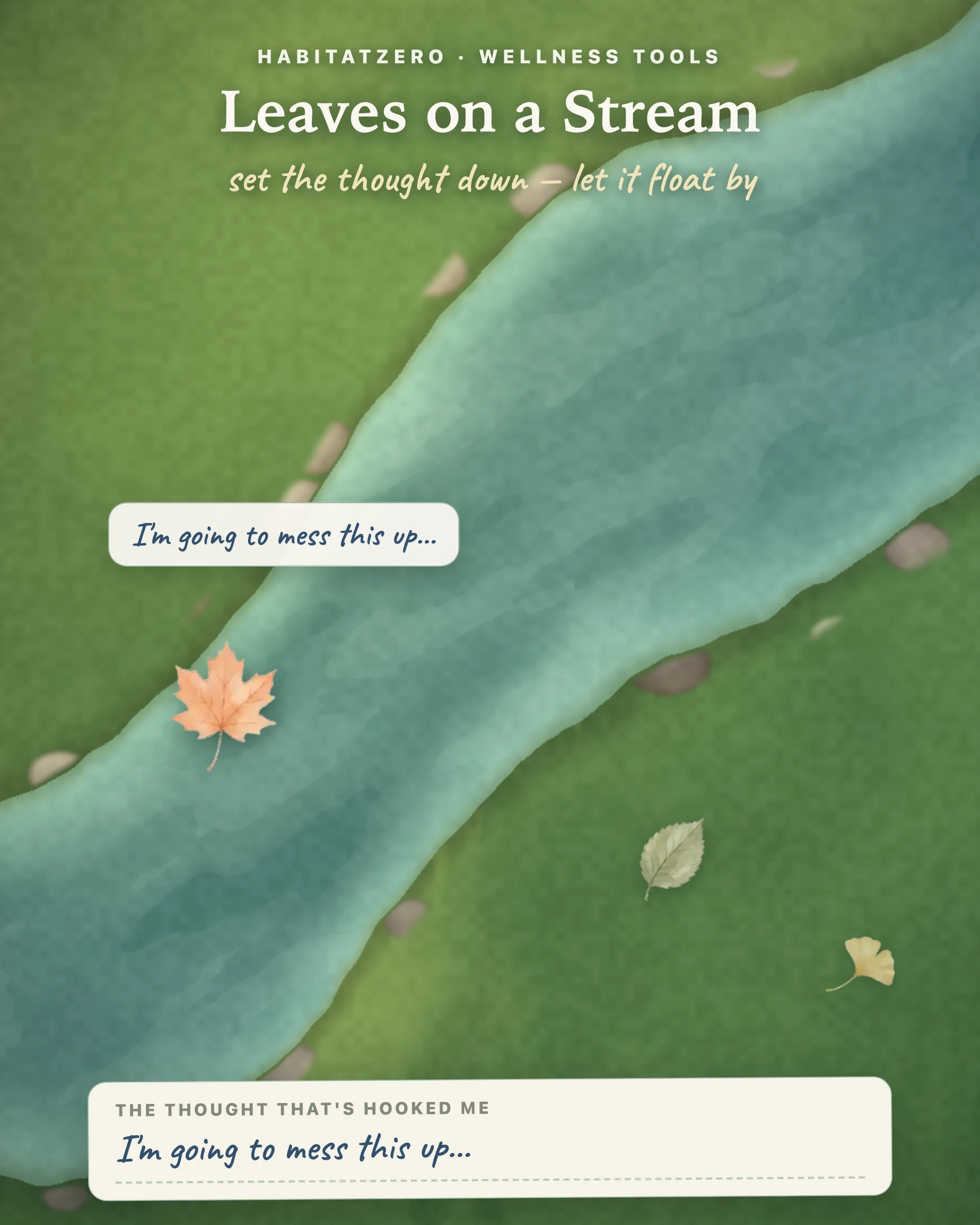
This page is the record, not the practice — the practices live next door. The 4-7-8 Breathing exercise is the shortest on-ramp; Box Breathing suits the wound-up middle of the day; and Leaves on a Stream is the classic thought-watching visualization that pairs almost perfectly with a what pulled line afterwards. Sit with any of them, then come back here while it's still warm.
Two lines. No grade. The practice, on the record.
A short log kept right after meditating rather than a diary written instead of it. Here each sit becomes three small records: the minutes, what kept pulling your attention, and one thing your senses caught. Over weeks the book shows your practice - and your distractions - with unusual honesty.
Two lines at most. First the pull: the thought or sensation that kept collecting your attention, named plainly. Second the catch: one genuinely sensed thing, however small. If the sit felt like nothing but wandering, write the wandering - that entry is the practice on paper.
Because grading sits trains the wrong reflex. The moment you notice the mind has wandered is the repetition mindfulness builds on, so a restless sit full of noticings is not a bad sit. The journal drops the scoreboard and keeps the observations.
Meditation itself has a serious evidence base - large meta-analyses find moderate, real effects of mindfulness programs on stress, anxiety, and mood. The journal's job is humbler and practical: it makes the practice visible and repeatable, and its two prompts rehearse the same noticing the cushion trains.
Any. If you want somewhere to start on this site, the 4-7-8 breathing exercise and the leaves-on-a-stream visualization are both short, guided, and pair naturally with a two-line entry afterwards.
Thirty sits, then it asks you to release an early one before closing a new one. A rolling book keeps the recent story of your practice in view instead of burying it in an archive.
By the team behind Fabulous, the science-based self-care app used by over 30 million people.