Leaves on a StreamEmotional Fitness · ~3 min
About this template · Updated July 2026
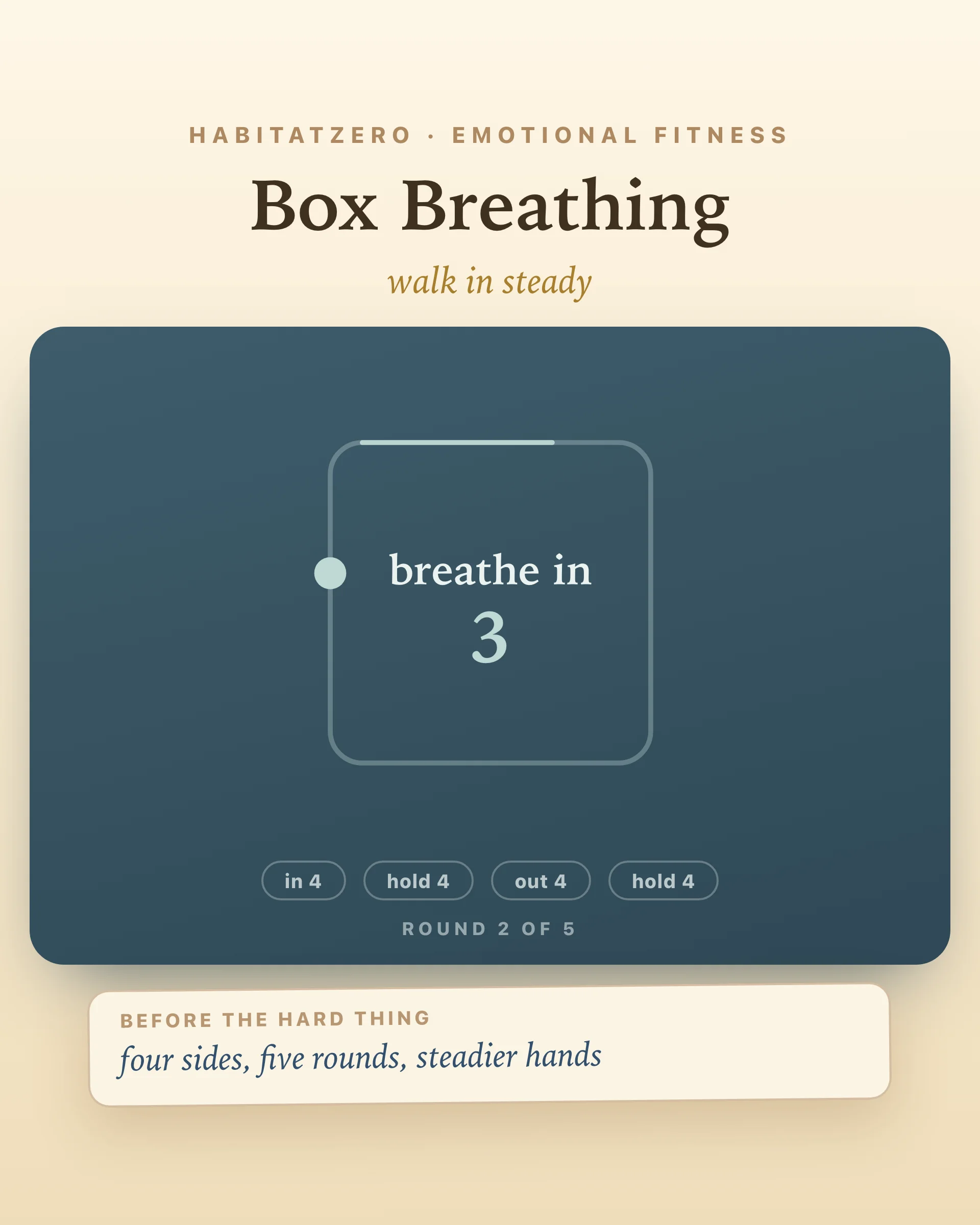
Some breathing exercises are for falling asleep. This one is for walking in steady — into the meeting, the difficult call, the exam room, the moment before you hit send. Box breathing is the composure tool: four equal sides, in-hold-out-hold, the pattern famously drilled into Navy SEALs and taught in every profession where hands aren't allowed to shake.
The technique is almost embarrassingly simple. The hard part — the part that defeats everyone trying it from a blog post — is pacing yourself while stressed, which is exactly the moment your internal metronome is broken. So this page brings the metronome: a square, a dot, and a count. You just breathe where the dot is.
Check in first. One tap, one to five: how wound up? Two seconds now buys you the satisfying before-and-after at the end.
Follow the dot. Press start and the dot begins its lap: up the left side — breathe in, four counts. Across the top — hold, four. Down the right — out, four. Along the bottom — hold empty, four. The square swells gently as you fill and settles as you empty; the count ticks in the corner of your eye. Nothing to remember, nothing to pace — attention on the dot is the whole assignment, and that's by design: attention tracking the square is attention not available to the spiral.
Five rounds and out. The standard session is five laps — about ninety seconds — with a soft chime at each corner and a finish you can feel. Check out with the same one-to-five, and watch the gap. If four-count sides feel like straining, drop to threes; if you're seasoned, fives deepen it. Holds should feel like a pause at a window, never like clenching.
Two lines of evidence meet here. The first is general: reviews of slow-paced breathing research show that deliberately slowing the breath — the box cycle lands around four breaths a minute at standard pace — shifts the nervous system measurably toward its calming branch: heart-rate variability rises, and people reliably report steadier states. The second is specific to this pattern's famous users: studies of tactical breathing under real stress found that the technique reduced perceived stress while people performed demanding tasks — not after, during. That's the box's niche: it isn't a wind-down; it's ballast.
And the honest boundary, kept plainly: this is a steadier, not a treatment. It brings your physiology to the hard moment. If the hard moments are constant, that's a different conversation with a different professional.
People ask why the holds matter — other exercises skip them. Three reasons. The holds slow the total cycle without demanding heroic lungfuls. They give the wandering mind four clean corners to anchor to, which is more tracking than a simple in-out offers. And the empty-lungs hold, oddly, is where most people feel the switch flip — the moment the body concedes that nothing urgent is happening.
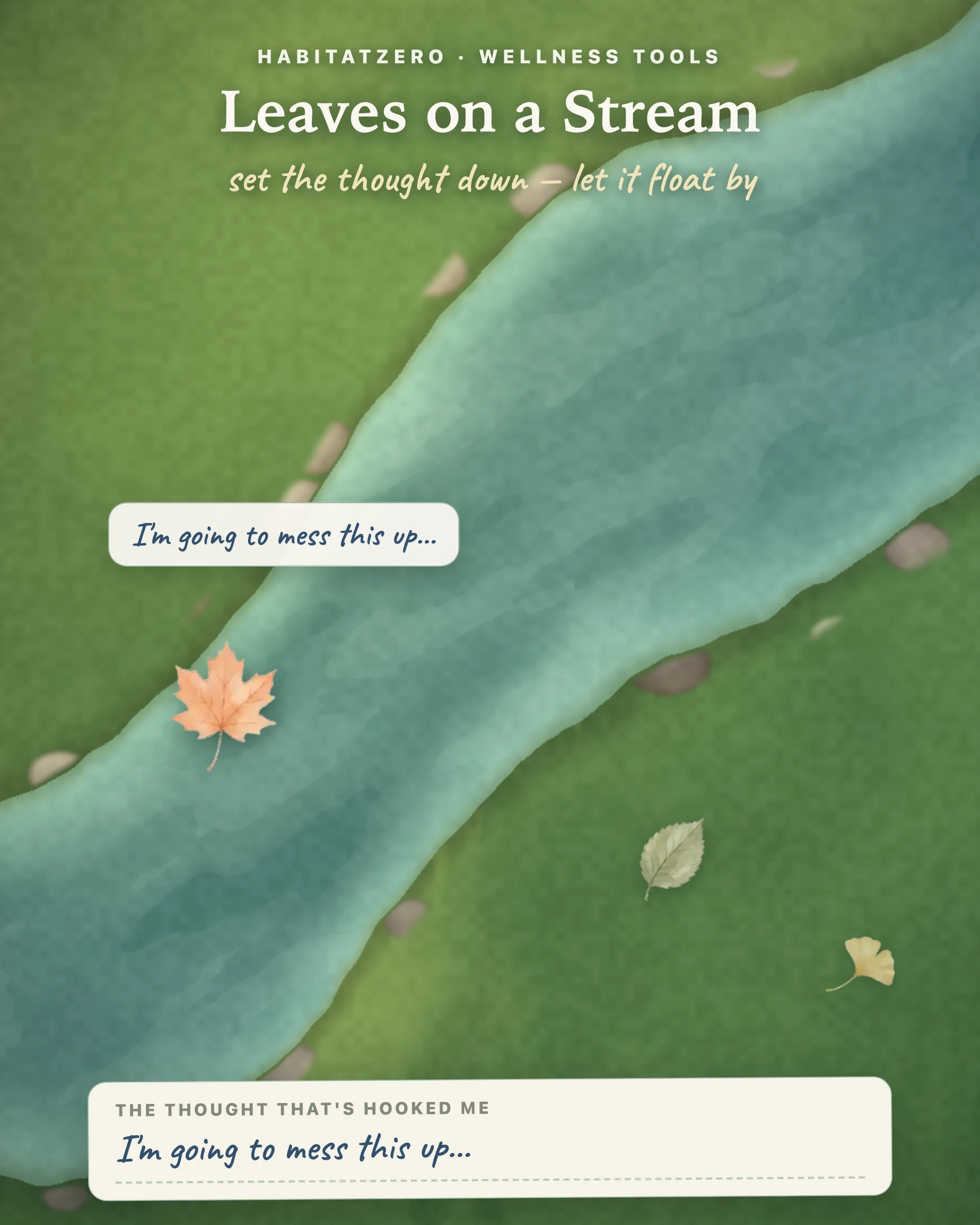
Box breathing pairs by time of day and by problem. Before the hard thing: this page. After it, when the day needs closing down, the long-exhale 4-7-8 Breathing is the wind-down sibling. If what's got you isn't an event but one looping thought, set it on the water at Leaves on a Stream. And when it's everything at once, the Overwhelm Recovery Protocol sorts the pile before any breathing has to carry it.
Four sides. Five rounds. Walk in steady.
A paced breathing pattern with four equal sides: inhale for four counts, hold for four, exhale for four, hold empty for four — like tracing a square. It's also called square breathing or tactical breathing, the last because it's famously taught to Navy SEALs and other high-stress professions as an in-the-moment steadier. This page draws the square and moves the dot so you never have to count alone.
Slow, paced breathing is one of the better-evidenced quick interventions: reviews of slow-breathing studies show measurable shifts toward the nervous system's calming branch, and studies of tactical breathing in high-stress settings found reduced perceived stress during demanding tasks. It's a steadier, not a cure — a way to bring your physiology to the meeting, not a treatment for an anxiety condition.
Five rounds — roughly ninety seconds at the standard pace — is the common in-the-moment dose, and this timer defaults to it. Before a hard conversation, one session is usually enough to feel your shoulders change altitude. For a longer reset, run two or three sessions rather than one endless one; the finish line is part of what makes it work.
The holds are what make the box a box — they slow the whole cycle to around eight breaths per minute and give your attention four clean corners to track, which crowds out the spiraling thought. If four-count holds feel strained, drop the pace to three seconds per side; the square works at any size. Holds should feel like a pause, never like clenching.
Box breathing is symmetric and alerting-yet-calm — built for composure before or during stress, which is why the tactical world uses it. The 4-7-8 pattern, with its long exhale, tilts further toward wind-down and works best at day's end. Rough rule: box before the hard thing, 4-7-8 after it — both live on this site.
Yes — free, in your browser, no signup. Pick your pace, run your rounds, and in the Fabulous app your sessions and feel checks are saved so the steadier is one tap away.
By the team behind Fabulous, the science-based self-care app used by over 30 million people.