Leaves on a StreamEmotional Fitness · ~3 min
About this template · Updated July 2026
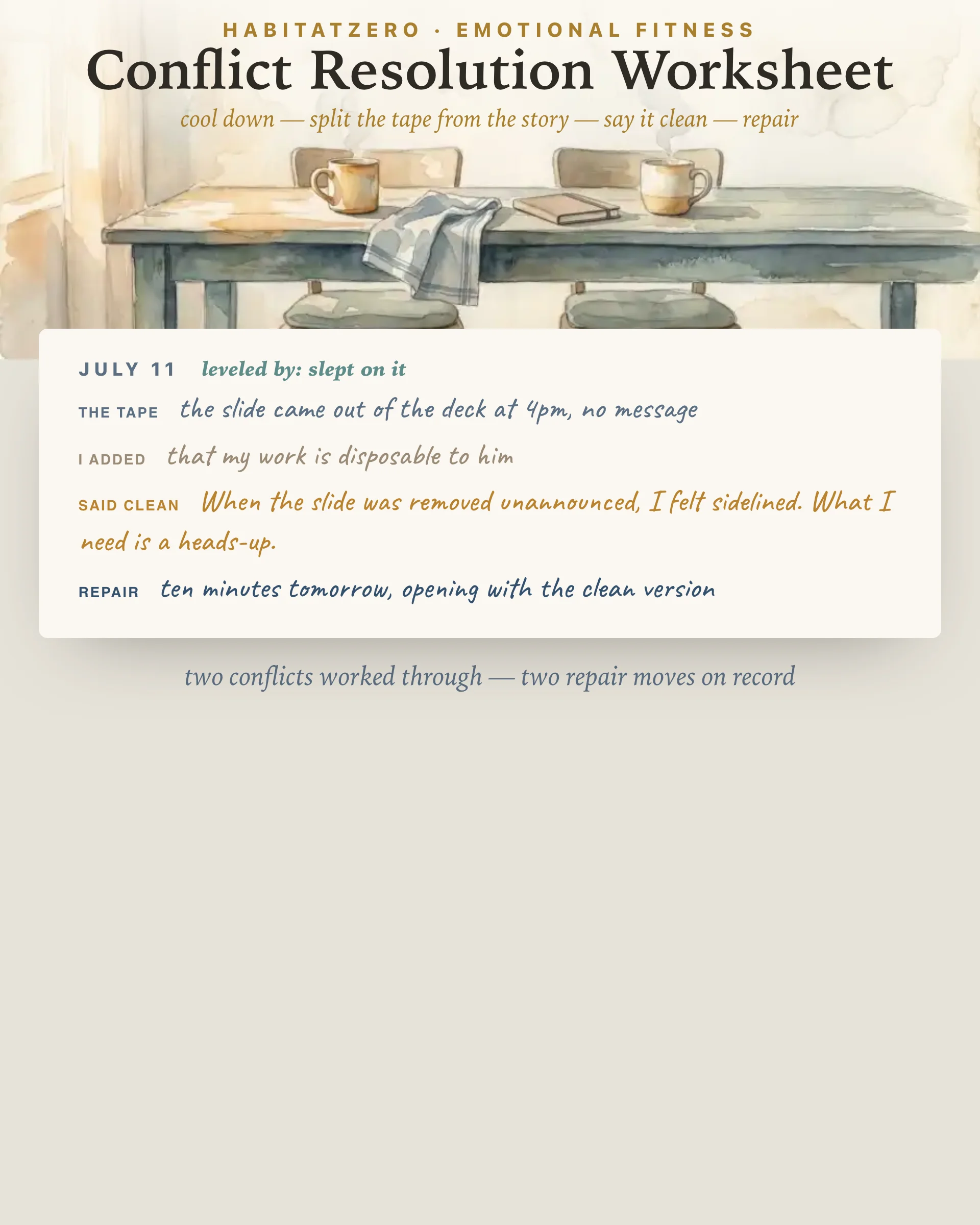
Nobody resolves a conflict at the temperature it arrived at. That is not a character flaw; it is the operating condition this worksheet is designed around. Four stations, each with its own ink: get level, establish the tape, notice what you added, say it clean — and leave with exactly one repair move you will actually make.
The sheet's first line refuses to be skipped: how did you get level — or what will get you there? The walk around the block, the night's sleep, the kettle counted to boiling. This is not padding. Research on reflective self-talk shows that the way people address themselves when regulating a hot moment measurably changes how well they regulate it — a small step back before speaking produces cooler, clearer performances under stress. The cool-down line is that step back, made into a required field.
Mid-conflict, two records get written simultaneously and filed as one: what a recording would show, and the meaning you supplied on top. The slide came out of the deck at 4pm with no message is the tape. My work is disposable to him is an addition. Both are real experiences — but only one is evidence, and most conflicts shrink at exactly the seam between them. The worksheet gives each its own line and its own ink so the seam stays visible. The additions line is optional, and filling it honestly is oddly relieving: named additions lose their disguise as facts.
The I-statement is built rather than freestyled, in three labeled parts: when this happened, I felt this, what I need is this. The structure is not politeness theater — experimental comparisons of complaint phrasings found that accusatory second-person messages reliably generate more anger and defensiveness in the listener than assertive first-person versions carrying the same content. Same grievance, different delivery, different meeting.
Then one repair move — singular on purpose. The ten-minute conversation requested for tomorrow. The redo offered. The apology owed for your own additions, occasionally. Sweeping resolutions have a short shelf life; one concrete move, filed with its date, tends to actually happen. The log keeps the score in repair moves, which is the only score that matters here.
It handles the everyday register of conflict — the removed slide, the third rescheduled dinner, the roommate arithmetic. Entrenched disputes that survive repeated repairs deserve a skilled third party: a mediator, a counselor, HR when it wears a lanyard. When the conflict is inside a partnership and both people are willing, the couples check-in turns this solo practice into a weekly ritual for two. And when the heat is more spiral than dispute, the anxious attachment journal untangles the story-versus-facts knot on the relationship side. If any conflict leaves you afraid rather than angry, put every worksheet down — that is a safety matter, and real support comes first.
One conflict, four stations, one repair. The kettle is probably boiled by now.
By separating jobs the mind mashes together mid-argument: getting level, establishing what happened, noticing what you added, phrasing the grievance cleanly, and committing to one repair. Each station gets its own line and its own ink, and the sheet refuses to file half-worked conflicts.
Controlled comparisons of message styles found that accusatory you-phrasings reliably provoke more anger and defensiveness in listeners than assertive first-person versions of the same complaint. The three-part builder bakes that finding into the page: when, felt, need — no character verdicts anywhere in the sentence.
It is built to be workplace-friendly — the tape-versus-added split works identically on a removed slide as on a rescheduled dinner, and the repair move translates naturally into a ten-minute conversation request. For patterns that outlast repeated repairs, HR or a mediator is the grown-up escalation, not more worksheets.
Then trust that feeling. Entrenched disputes deserve skilled third parties, and any conflict that leaves you afraid rather than angry is a safety matter first — real support comes before paperwork of any kind, this page included.
By the team behind Fabulous, the science-based self-care app used by over 30 million people.