Leaves on a StreamEmotional Fitness · ~3 min
About this template · Updated September 2026
The vagus nerve takes its name from the Latin for wandering, and it earns it. It leaves the brainstem, runs down through the neck, and branches out to the throat, heart, lungs and gut. It is the main nerve of the body's rest-and-digest system, and one of its jobs is to act as a brake on your heart rate. Vagus nerve exercises are the everyday practices said to lean on that brake: breathing out slowly, humming, cool water on the face.
Much of what you will read about them promises more than anyone has measured. You cannot reset a nerve, and toning one is a wellness phrase, not a medical one. What researchers can measure is heart rate variability, the beat-to-beat changes in your pulse that grow when the vagus nerve has more say over your heart. Some of these practices move that number while you do them. Whether they calm you is a separate question, and only you can answer it.
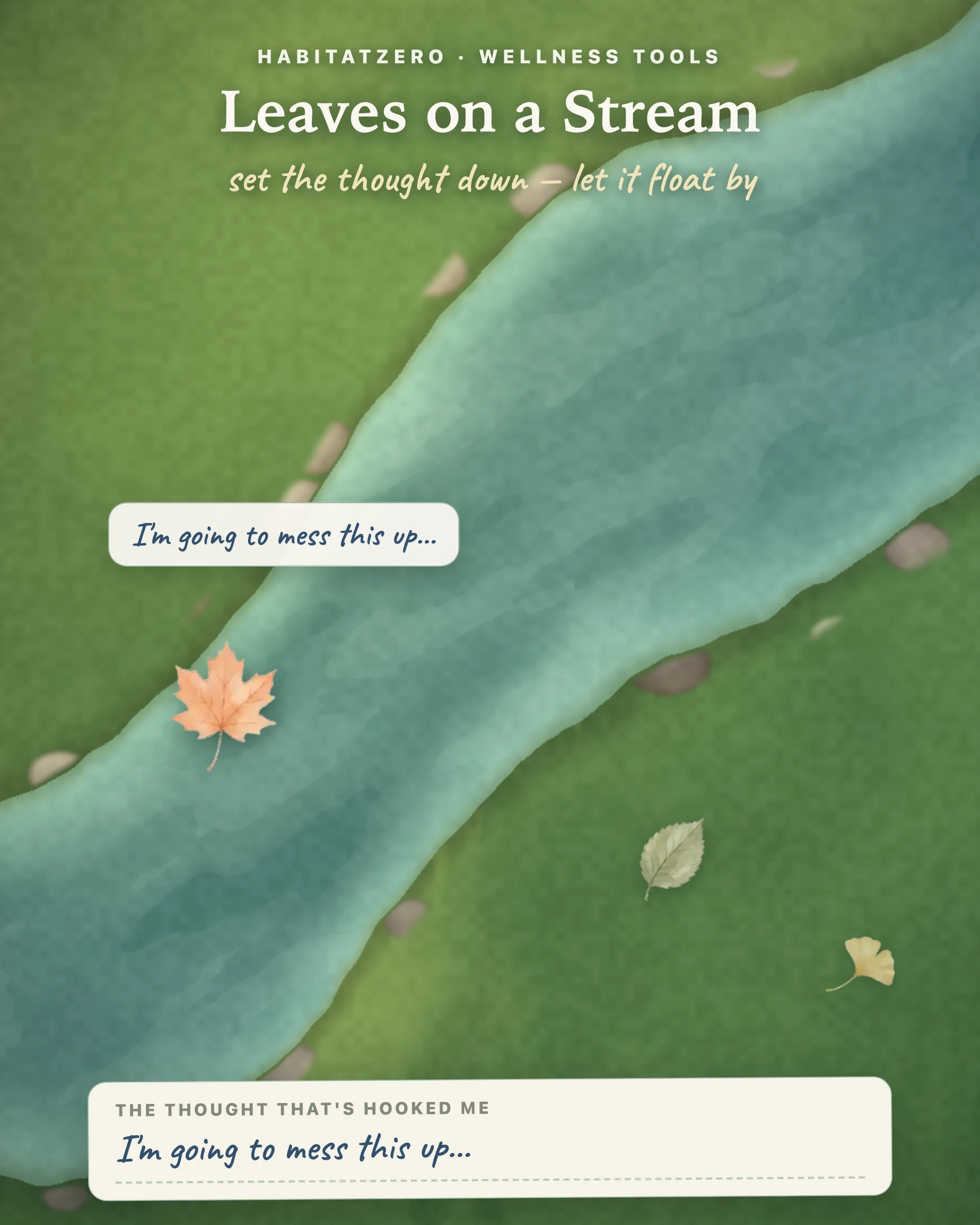
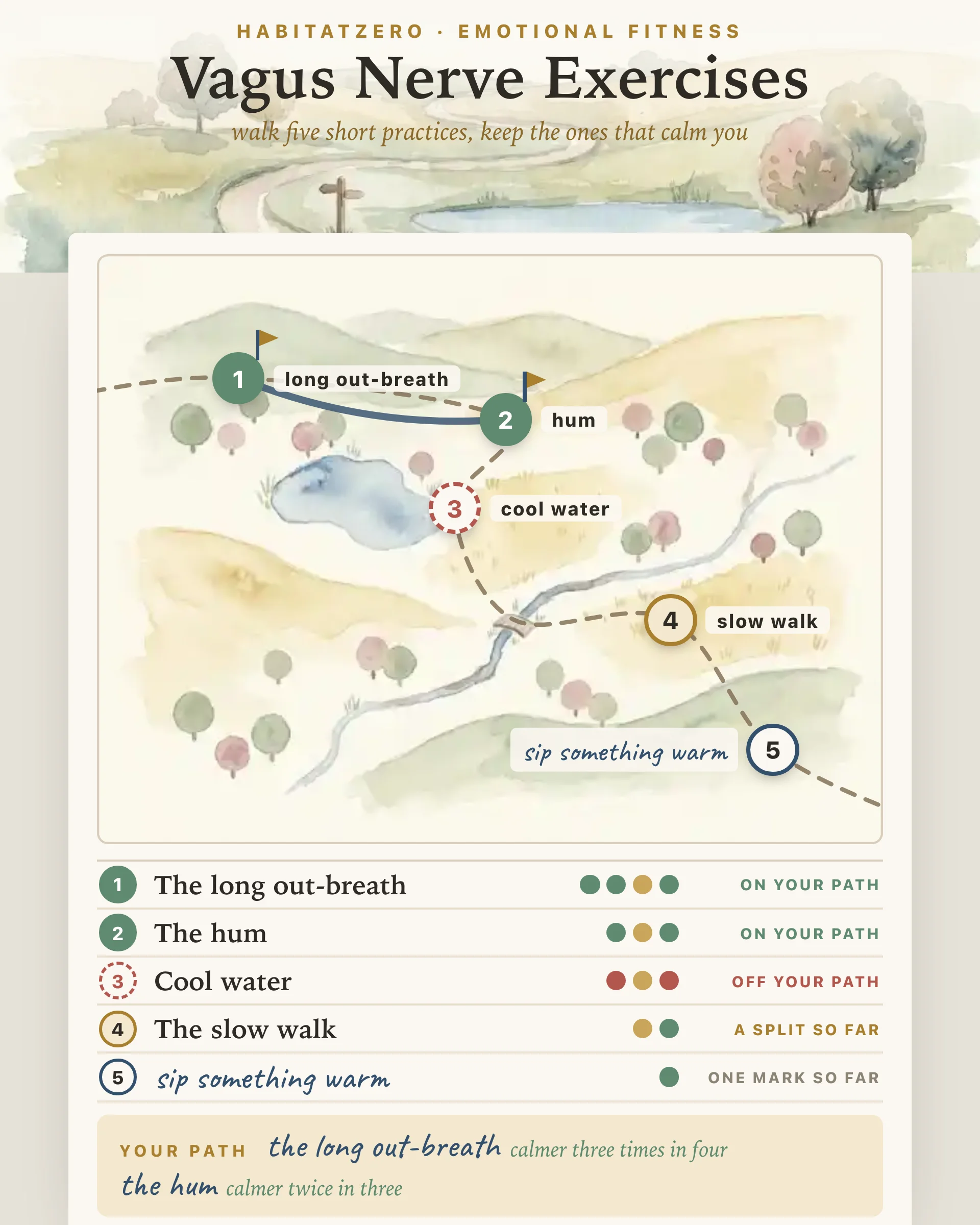
This page lays five short practices along a painted trail:
Tap a numbered marker, or the stop's row under the map, and its steps open with a pacer. Press start and a silent ring does the counting: a disc swells as you breathe in, shrinks as you breathe out, and the ring closes when the stop is done. The disc holds still if your device asks for reduced motion.
Afterward you mark how you feel compared with before: calmer, about the same, or worse. Each mark is a colored dot on that stop. A stop that calms you in at least two tries, and in three of every five overall, earns a flag, and the map inks a line between the flagged stops. One that leaves you worse at least twice, and at least as often as it calms you, drops off your path. Each stop keeps eight marks, and tapping a dot twice lets an old one go. The walk your path button then takes you through your keepers in order.
Slow breathing stands on firm ground. A systematic review and meta-analysis of voluntary slow breathing pooled more than two hundred studies and found that the vagally linked part of heart rate variability rises during slow breathing, straight after a single session, and after programs of several sessions, with few side effects expected.
Humming stands on much less. A systematic review of bhramari, the humming breath of yoga, found just six studies, none of them randomized trials, and rated their quality very low, though they leaned toward a calmer, rest-and-digest pattern. A few small trials have appeared since. Part of what humming does is stretch the out-breath, so it may be the first stop in disguise.
Cool water is the odd one out. When you hold your breath with your face in water, your body sets off the diving reflex, which slows the heart and steers blood toward the vital organs. That part is well-documented physiology. The cool water stop is a gentler version, a splash or a cold cloth while you keep breathing, and whether it eases anxiety has had little direct study, so the page asks you to mark it rather than trust it.
None of these practices treats an anxiety disorder, panic attacks or trauma; they are tools for a hard few minutes. If anxiety is shaping your days, a doctor or therapist is the right next step, and these can sit alongside that care.
Cleveland Clinic's guidance on these home techniques calls them low risk for healthy people, but suggests checking with a clinician first if you have a heart condition or an irregular heartbeat, take medicines that affect the nervous system, have a history of fainting or low blood pressure, or are pregnant. The cool water stop matters most here, because the reflex it borrows from slows the heart. Use cool rather than icy water, keep breathing, and stop any practice that leaves you light-headed.
Reach for a stop when your chest tightens before a call, when you cannot settle at night, or right after a jolt of bad news. Walk one or two stops a day for a couple of weeks rather than all five at once, so each mark stands for one practice. If the long out-breath turns into a keeper, The Physiological Sigh is its quicker cousin. If your body wants to move more than breathe, Somatic Exercises for Anxiety has six short options. And if you keep landing far past calm, The Window of Tolerance helps you map where that edge sits.
The name covers simple practices such as slow breathing with a long exhale, humming and cool water on the face, picked because the vagus nerve helps slow the heart when you are at rest. Slow breathing has solid evidence for shifting heart rhythm that way; the others are plausible but much less studied.
They may take the edge off an anxious few minutes, and slow breathing, the best studied of them, reliably changes heart rhythm while you do it. None of them treats an anxiety disorder, and what helps differs from one person to the next, so this page has you mark each practice and keep only the ones that calm you.
Not in the way the ads suggest. Vagal tone is a genuine research concept, meaning how strongly the nerve steers your heart at rest, but toning or resetting the nerve is marketing language. Slow breathing raises heart rate variability while you practice and after a run of regular sessions, which is useful, but there is no single switch to flip.
For most healthy adults a short splash of cool water is low risk. Cold on the face is part of what sets off the dive reflex, which slows the heart, so skip it if you have a heart condition, an irregular heartbeat, low blood pressure or a history of fainting unless your doctor says otherwise. Use cool rather than icy water and keep breathing normally.
The map above is a sample someone has already walked, so you can see how the marks and flags build up. To run the pacer, stamp your own marks and keep your path from one visit to the next, open the page in HabitatZero, which costs nothing.
By the team behind Fabulous, the science-based self-care app used by over 30 million people.