Leaves on a StreamEmotional Fitness · ~3 min
About this template · Updated July 2026
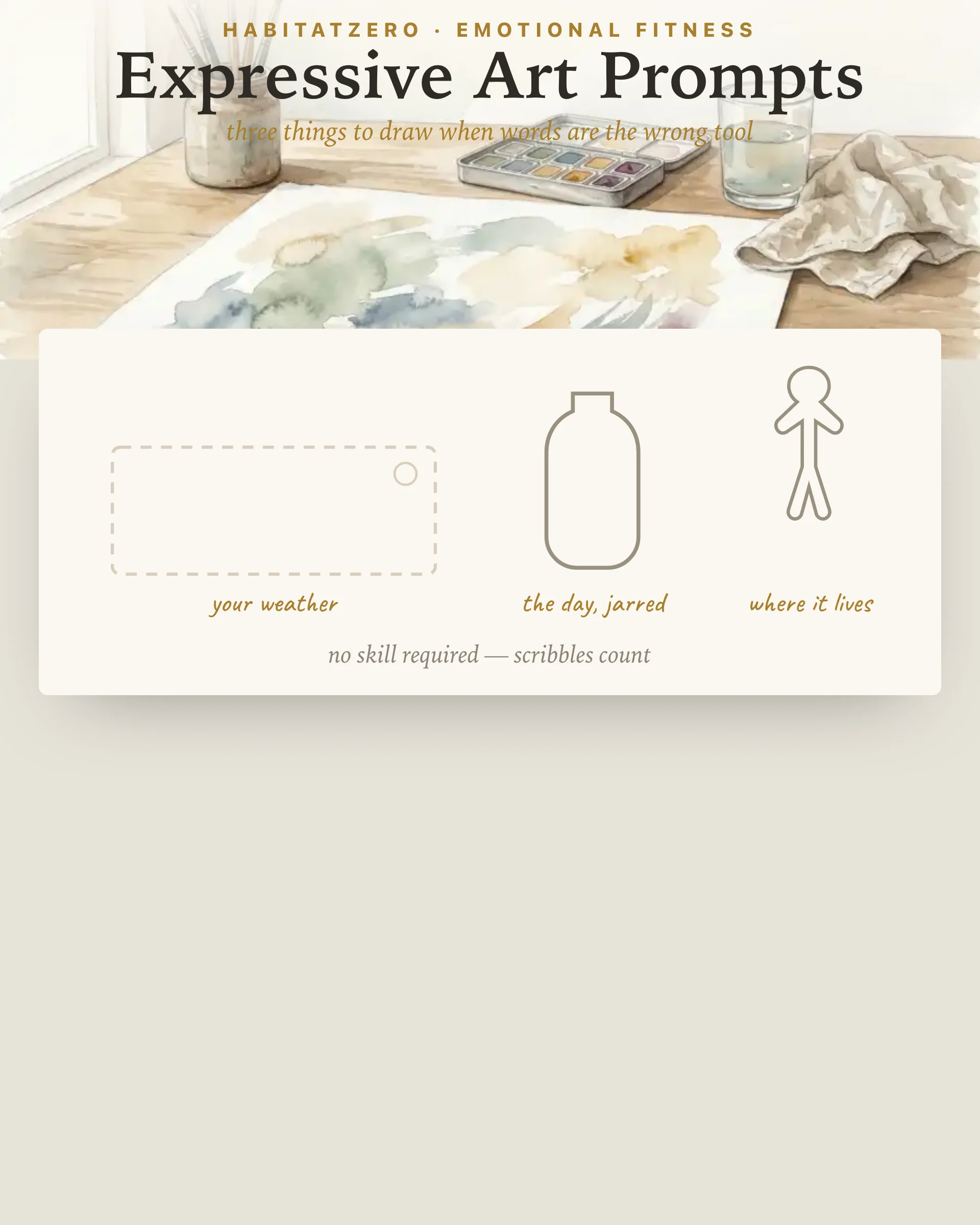
Let's be precise about the name first, because precision is owed. Art therapy is a licensed profession: a credentialed art therapist, a trained relationship, real clinical care. This page is not that, and says so on the printed sheet. What it is, is the thing most people are actually looking for when they type the phrase — a handful of expressive drawing prompts for ordinary hands on an ordinary evening, when the day needs putting somewhere and words feel like the wrong tool.
Three prompts, one page, no skill required. Scribbles count. Stick figures count. A single furious line counts.
No. 1 — Draw your weather. A dashed frame with a faint sun ghosted in one corner, and an instruction that a four-year-old and a CFO can both follow: draw the weather in you today. Storm, drizzle, glare, fog, something with no name yet. Then one word for it on the caption line. The move here is externalizing — a feeling drawn becomes weather you can look at, rather than weather you're standing in, and most feelings are easier company at arm's length.
No. 2 — Fill the jar with today. An empty outlined jar, and the day goes in: shapes, colors, scribbles, tiny drawings. Big things take big room, small things take small room — and that proportion is the point, because how you pack the jar tells you what the day actually weighed, which is often different from what it looked like on the calendar. One caption: what took the most room?
No. 3 — Color where it lives. A simple body outline and a legend you invent yourself: up to three colors, colored in wherever things sit today — the tight jaw, the warm chest, the shoulders that have been up near your ears since Tuesday. There's no standard key and deliberately so. Your body, your colors, your rules; the legend lines are just there so future-you can read the map.
The research on drawing and mood has a finding worth taking seriously: head-on venting underperforms. Drake and Winner's studies on confronting sadness through art-making found that drawing to get absorbed in the making improved mood more than drawing to express the upsetting thing itself. And a study of adults making art for 45 minutes found cortisol levels dropped regardless of experience or skill — the making did the work, not the making-it-good.
That's why every prompt on this page comes at feelings sideways, in costume: weather instead of the argument, a jar instead of a rehearsal of the day, colors on an outline instead of a list of what went wrong. The hard thing still reaches the paper. It just travels a kinder road.
The screen version saves your caption words, and that's all it tries to do — the drawing belongs to paper, crayon, pencil, whatever makes a mark. Print a small stack. Some people do the weather frame most evenings and save the jar for the full days; the body map earns its keep whenever you're carrying something and can't say where. Dated and kept, the sheets become a quiet record no app can make: a month of weathers in your own hand.
HabitatZero keeps its expression tools deliberately specialized. When words are the right tool after all, the emotions worksheet walks one feeling from event to next move, and the release journal is the pressure valve for the days that need an uncensored page. This sheet is for the other days — the ones that need a crayon. And the honest line from the sheet's own footer bears repeating here: if what surfaces when you draw keeps being heavy, a credentialed art therapist is the real thing, and worth every bit of the difference.
Frame, jar, outline. Weather, weight, where it lives. Print it and make a mark.
No, and it doesn't pretend to be. Art therapy is a licensed profession — a trained, credentialed art therapist working with you in a real relationship, which no printable can be. This page is the plain-speech cousin people usually mean when they search the phrase: expressive drawing prompts anyone can do at a kitchen table. If something heavy keeps surfacing when you draw, that's a signal worth taking to a professional — the page makes a good doorway and a poor destination.
Yes — skill is beside the point, and honestly a little skill can get in the way, because making it look good becomes the job instead of getting it out. Stick figures, scribbles, abstract smears, and single furious lines all count. Nobody grades the jar. The prompts only ask that the marks mean something to you, and that bar is reachable by anyone holding a crayon.
Two honest things. Externalizing: a feeling drawn is a feeling at arm's length — weather you can look at rather than weather you're standing in. And absorption: studies of art-making found mood improved more when people drew to get absorbed in the making than when they drew to vent the bad thing itself, and a study of adults making art for 45 minutes found cortisol dropped regardless of skill level. Which is why these prompts lean playful — a jar to pack, a map to color — rather than asking you to re-draw the worst of the day.
Gently: the research favors something else, or at least something sideways. Drawing as venting — rehearsing the upsetting thing in ink — tends to help less than drawing that pulls you into the making itself. These prompts are built sideways on purpose: weather instead of the argument, a jar instead of a diary entry, colors on a body instead of a list of what went wrong. The hard thing still gets onto the paper; it just arrives in costume.
Whenever the day needs putting somewhere — there's no schedule to keep. Some people print a small stack and do the weather frame most evenings; the jar earns its place at the end of full days; the body map is good whenever you notice you're carrying something and can't say where. If you date each sheet and keep a few, the stack becomes its own quiet record: a month of weathers, in your own hand.
By the team behind Fabulous, the science-based self-care app used by over 30 million people.