Leaves on a StreamEmotional Fitness · ~3 min
About this template · Updated July 2026
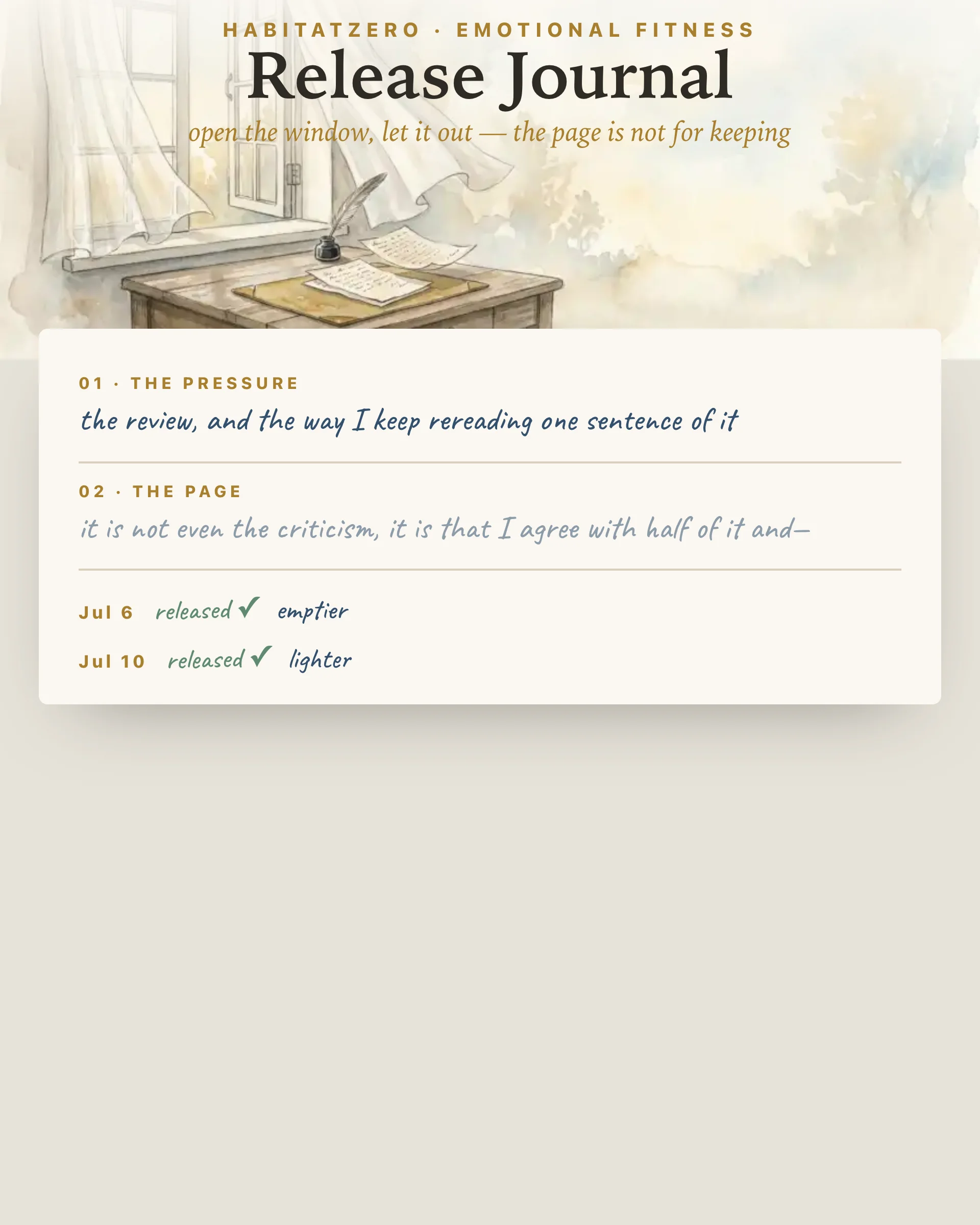
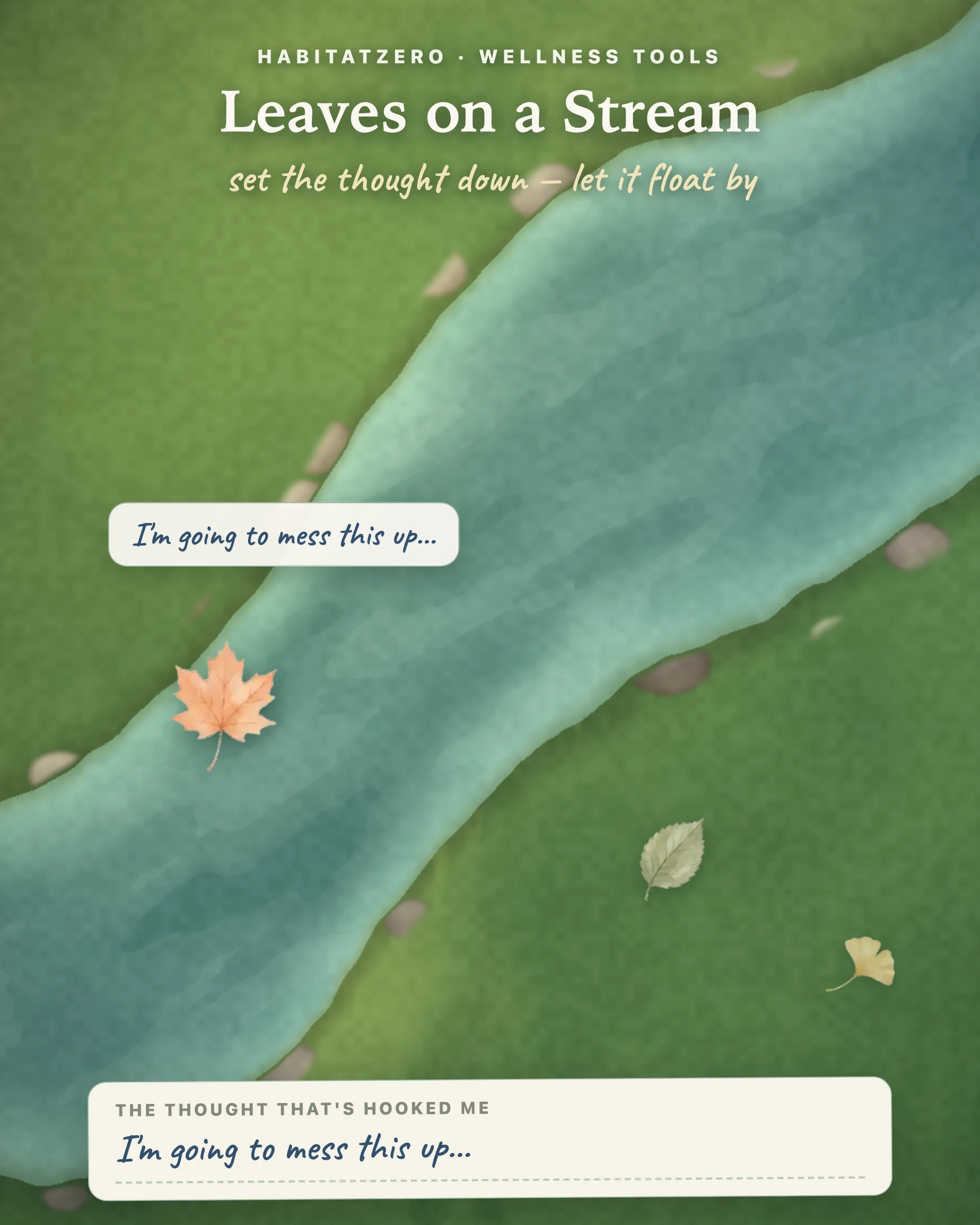
Most journals are archives. This one is a window. Something is taking up more room than it deserves — the review you keep rereading, the message that landed wrong, the everything of this particular week — and the point isn't to record it for posterity. The point is to get it out, all the way out, and then let the page go. On this sheet, "let go" is not a metaphor: the release page is never saved, and pressing the button makes the words gone.
Here the research deserves straight talk, because "venting" has a complicated file. Classic experiments on catharsis — most famously Bushman's Does Venting Anger Feed or Extinguish the Flame? — found that rehearsing anger (hitting the punching bag while stewing on the provocation) tended to keep the anger warm, not cool it. Raw repetition is rehearsal, and rehearsal strengthens.
But written release isn't raw repetition — or rather, it doesn't have to be. Studies comparing journaling styles, like Ullrich and Lutgendorf's work on cognitive processing versus pure emotional expression, found the benefits concentrate where expression is paired with even a little meaning-making. The design lesson is precise: pour everything out, and then close. One sentence of "what this is really about" turns a vent into a release.
That's the whole architecture of this page: uncensored middle, honest last line.
01 — The pressure. One line names what's taking up room. Not analysis — you're addressing the envelope before you fill it.
02 — The page. Write all of it. Messy, unfair, repetitive, in the wrong order, twice. The page is deliberately never saved — no draft, no history, no future reader, including future you — because honesty needs the door closed, and people write differently when an archive is listening. The one ask, printed right in the page's prompt: before you stop, add a single honest sentence about what this is really about. That's the close that separates release from rehearsal.
03 — Release, with one word for after. Lighter. Emptier. Still full. Press release and the words go. What remains is the window ledger: a line per release holding only the date, a small released ✓, and your after-word. Over weeks the ledger becomes something quietly valuable — proof in your own hand that the pressure moves when it's written out and let go, and an early-warning system when it doesn't.
HabitatZero keeps its writing tools deliberately specialized. Morning pages is the scheduled version of not-keeping — three unfiltered pages every morning, rain or shine. This release page is the unscheduled one: a valve for the moment the pressure spikes, any hour, any day. And when what you're carrying isn't today's pressure but the long tail of something genuinely hard, the emotional healing journal is built for that different, slower work — this page empties a room; that one helps a room mend.
One line to name it. A page to empty it. One word for after. The window is right there, and it opens as often as you need it to.
Writing whose job is discharge, not documentation. You name what is pressing, write it out in full — uncensored, by design unsaved — and finish with one honest sentence about what it is really about before releasing the page. The release is literal here: the words are never stored, and the ledger keeps only the date and the one word you choose for how you feel after.
Honest answer: pure venting has a mixed record — classic experiments on catharsis found that rehearsing anger can keep it warm rather than cool it. What separates useful release from rehearsal is the close: writing that moves toward meaning, even one sentence of it, is the version research supports. That is why this page asks you to end with what it is really about, and why the ledger asks for an after-word — both are tiny closes.
Two reasons. Honesty needs the door closed: people write differently when a future reader exists, even a future self. And the deletion is the ritual — pressing release and watching the page go is a physical act of putting the thing down, which a saved draft quietly undoes. What remains is the ledger: dates and after-words, the shape of the practice without its contents.
When something is loud right now. A keeping journal is for days worth rereading; this page is for the afternoon the email landed wrong and is still ringing. Many people run both: the release page as the pressure valve in the moment, and a regular journal for the entries that deserve a shelf. If the same pressure keeps returning week after week, that repetition is information — the kind worth taking past a page.
No — it is first aid for ordinary pressure, not a treatment for anything. If what you would write frightens you, or the ledger shows the same heavy after-word month after month, that pattern deserves a person: a friend with time, or a licensed professional. The page will still be here for the ordinary Tuesdays.
By the team behind Fabulous, the science-based self-care app used by over 30 million people.