Leaves on a StreamEmotional Fitness · ~3 min
About this template · Updated July 2026
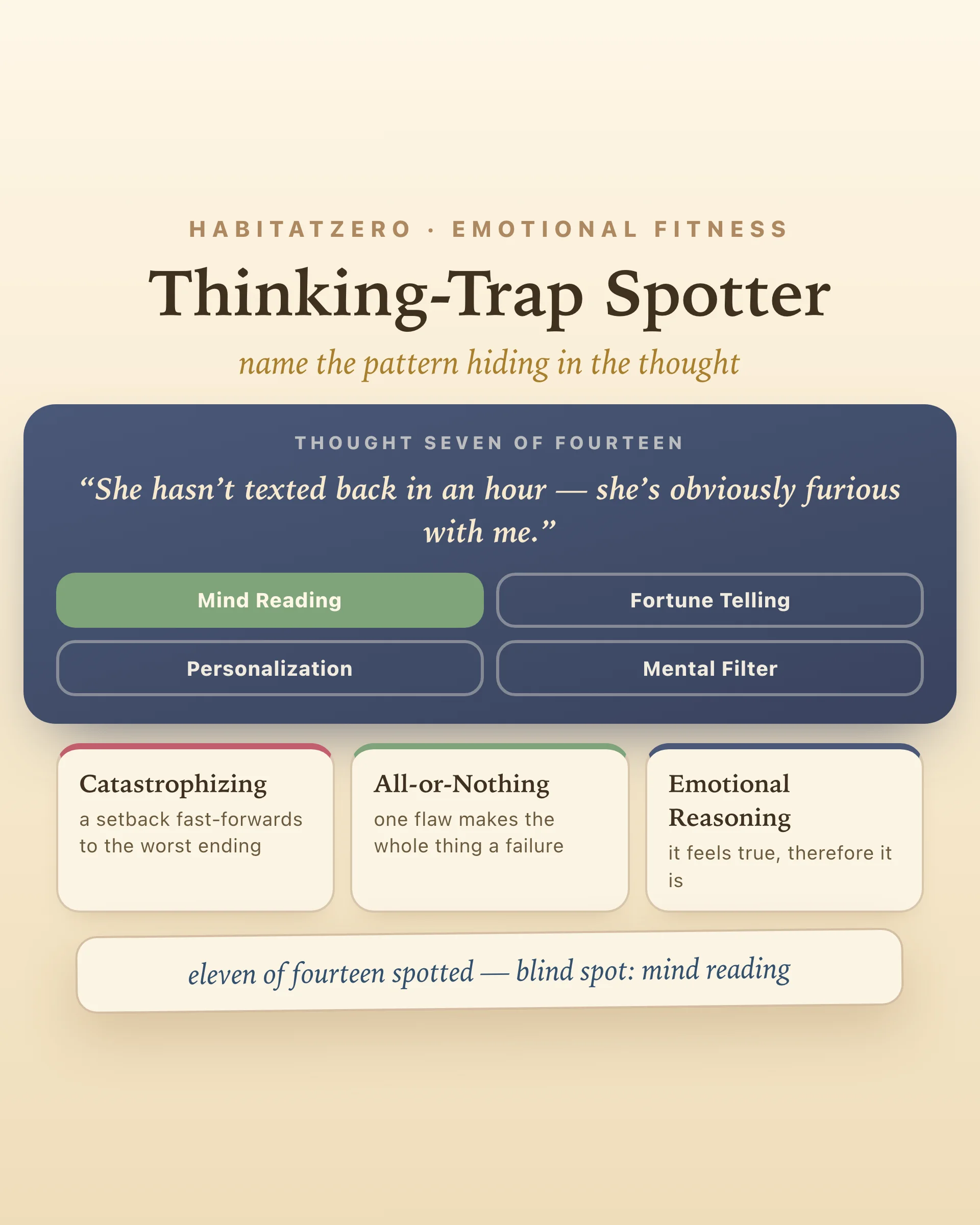
Some thoughts play fair. Others cheat — quietly bending the evidence, predicting the future, reading minds — and the cheating works because it goes unnamed. This page is a field guide and a practice range: learn the ten classic thinking traps, then play a spot-the-trap quiz until you can catch one moving through your own head at conversational speed.
One thing before the fun: every mind runs these patterns. They're features of fast human thinking, not defects in yours. This is a skill-builder for noticing — not a therapy tool, and not a diagnosis of anything.
The quiz trains you on the ten traps that show up everywhere: all-or-nothing thinking (one missed workout means the plan is ruined), catastrophizing (a stumble becomes a catastrophe three moves ahead), mind reading (an unanswered text becomes proof of fury), fortune telling (an interview already lost before it's scheduled), should statements (a stronger person would be over this by now), labeling (one forgotten birthday becomes I'm a terrible friend), the mental filter (nine compliments, one correction — guess which one survives the night), discounting the positive (they were only being polite), personalization (the dinner flopped and it was your fault, specifically), and emotional reasoning (feeling like a fraud, therefore being one).
Ten names, ten cards, each with a plain-language definition and an example you'll recognize. The names matter more than they look like they should.
Two research threads meet in this quiz. The first: putting an internal state into words — what researchers call affect labeling — measurably dampens the response of the brain's alarm systems. Naming isn't just description; it's regulation, arriving before you've done anything else. The second: once a thought is named, it can be reframed — examined as a pattern rather than obeyed as a fact — and reappraisal sits among the better-supported emotion-regulation strategies in the research literature.
The name creates the gap. "I'm definitely getting fired" is a fact until it's fortune telling — at which point it's a specimen, pinned and labeled, and specimens get examined instead of believed.
Reading definitions is easy; telling traps apart in the wild is the actual skill. The quiz deals you realistic thoughts — the kind that walk through a head on an ordinary Tuesday — and you name the pattern hiding in each. Immediate feedback explains every answer, including the near-misses, because the boundaries are where the learning is: fortune telling predicts one outcome as certain, catastrophizing inflates how bad the outcome would be; mind reading claims to know what someone thinks now, fortune telling claims to know what happens next.
At the end: your score, your sharpest catches, and the trap you missed most — your blind spot. That single name is the real take-away. The trap you can't spot in a quiz is usually the one running unsupervised in your own inner monologue, and now it has a wanted poster.
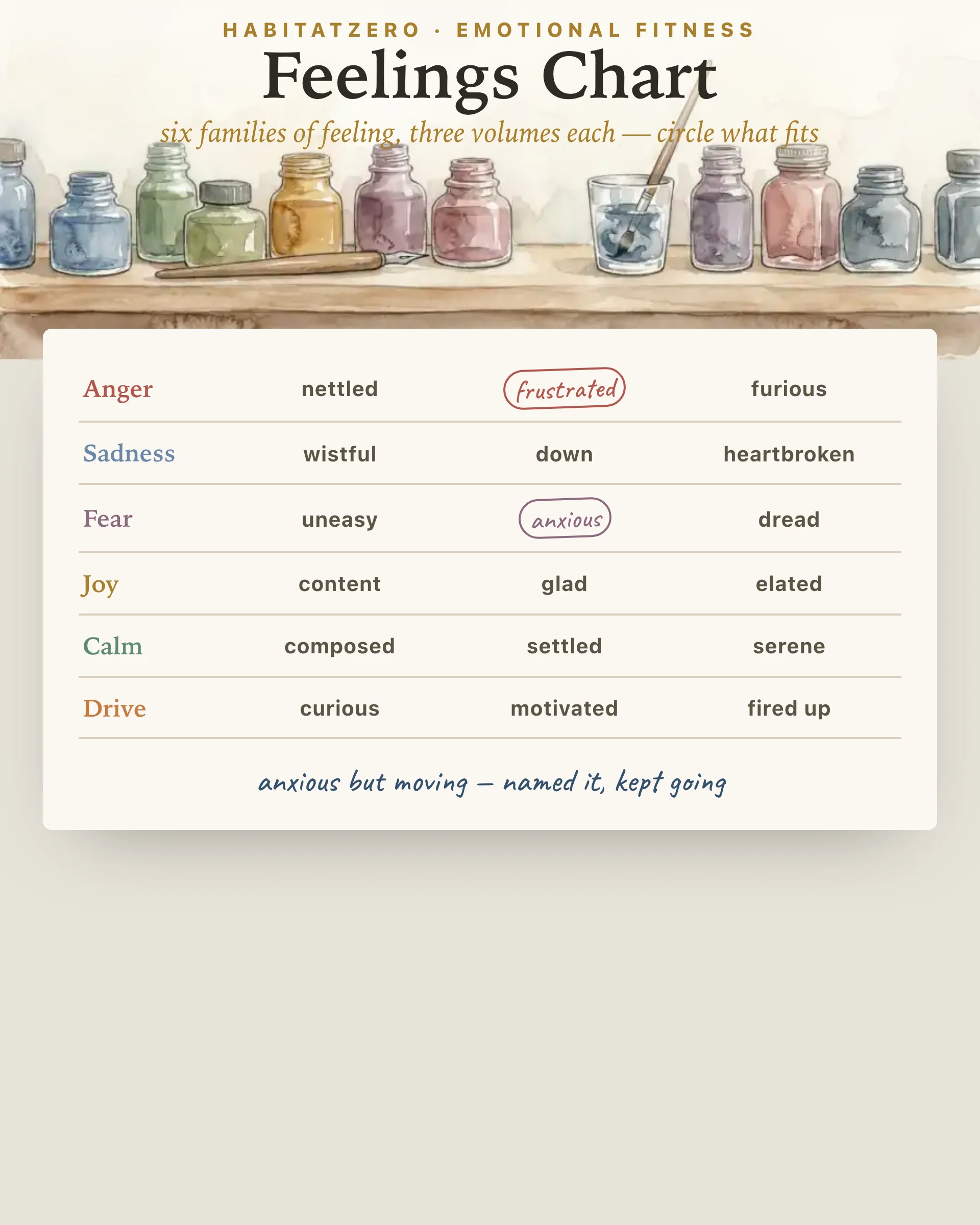
Spotting is step one of a longer game, and its neighbors live nearby. When a trap fires around a feeling you can't quite name, the feelings wheel does for emotions what this quiz does for thoughts. When the spotted thought is a night-time loop, the bedtime brain dump gives it somewhere to go, and when it spirals into the body, sixty seconds of box breathing settles the hardware first. And if the same trap keeps winning, the 5-4-3-2-1 grounding exercise pulls attention back out of the argument entirely.
Ten names, fourteen thoughts, one blind spot found. Your mind will keep dealing the same cards — the difference is you'll know the deck.
Habitual shortcuts in how thoughts frame reality — patterns like all-or-nothing thinking, catastrophizing, or mind reading that quietly bend the evidence in one direction. Everyone's mind runs them; they are features of fast human thinking, not flaws in yours specifically. The practical skill is noticing one while it happens, and noticing starts with knowing the names.
Ten come up again and again: all-or-nothing thinking, catastrophizing, mind reading, fortune telling, should statements, labeling, the mental filter, discounting the positive, personalization, and emotional reasoning. This quiz teaches all ten with plain-language definitions and everyday examples, then trains you to tell them apart — which is harder, and more useful, than it sounds.
Two research findings meet here. Putting feelings and patterns into words — affect labeling — measurably dampens the emotional charge of what is being labeled. And reframing a thought, which the naming makes possible, is among the better-supported emotion regulation strategies studied. The name creates a gap between you and the thought: once a thought is a specimen with a label, it is no longer simply true.
Neither — it is an educational quiz about patterns every mind produces, built for self-awareness practice the way a typing tutor is built for typing. Spotting traps in example thoughts is a skill anyone can train. If low mood or anxious thinking is genuinely interfering with your life, a professional is the right next step, and this quiz is not a substitute.
Yes — free, in your browser, no signup. Your quiz results and blind-spot readout save as you play, the field guide is always available for review, and your score card downloads as an image. In the Fabulous app your progress syncs across devices.
By the team behind Fabulous, the science-based self-care app used by over 30 million people.