Leaves on a StreamEmotional Fitness · ~3 min
About this template · Updated July 2026
The awkward secret of affirmations is that the research splits down the middle of how people use them. Repeating grand statements you privately doubt — the classic mirror routine — was found in the well-known positive self-statements study to backfire for the people who needed them most: when the claim contradicts what you believe, the mind files a rebuttal, not a boost. Meanwhile the serious self-affirmation literature keeps finding real, durable effects — but from affirmations grounded in what people actually value and can point to in their own lives. The difference isn't the practice. It's the grounding. This journal builds the grounding in as a hard rule.
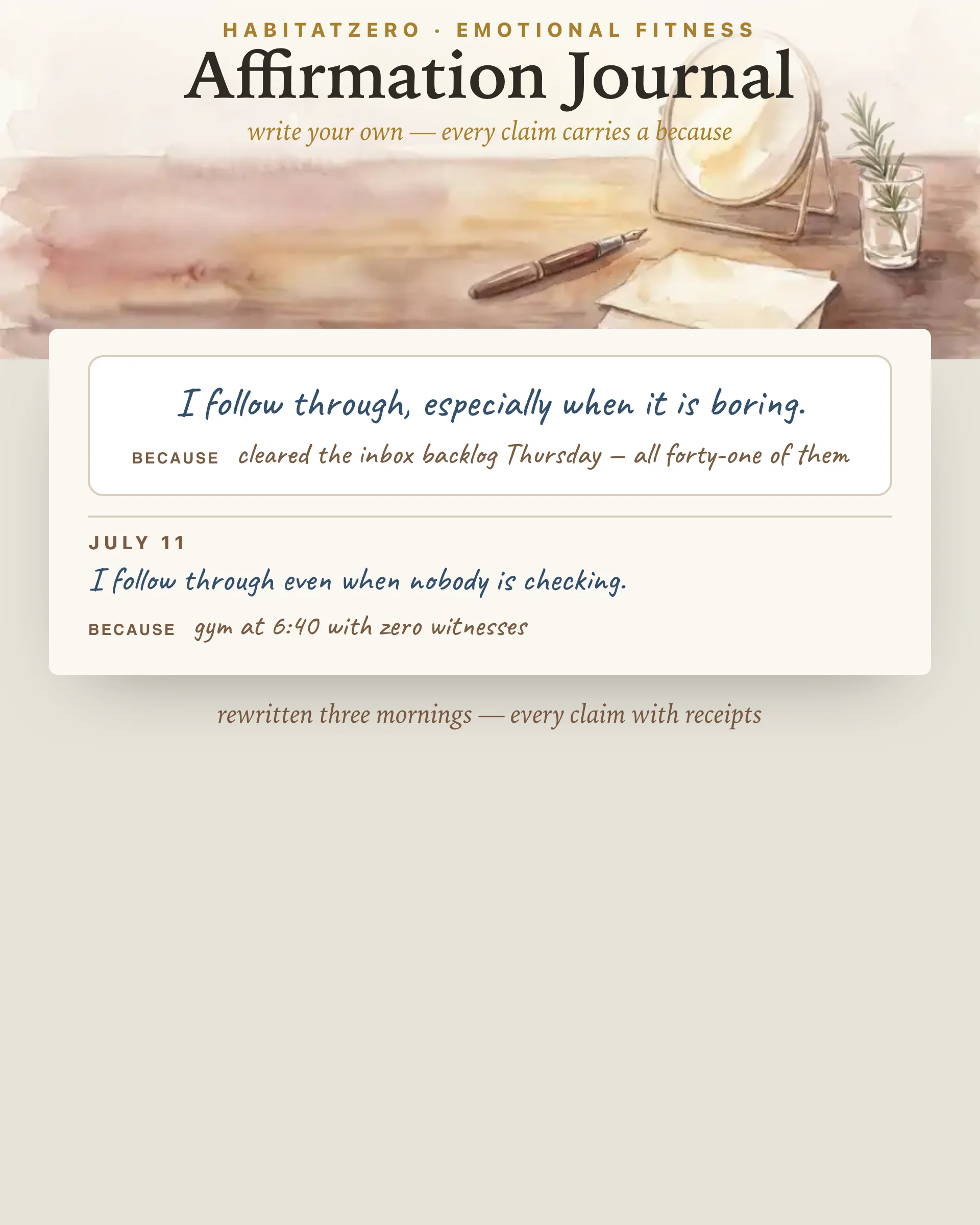
Every entry here is two lines. The claim: one present-tense sentence in your own words — I follow through, especially when it is boring. The because: one receipt from your actual life — cleared the inbox backlog Thursday, all forty-one of them. The journal will not accept the first line without the second; that refusal is the whole design. A claim with a receipt rides on memory. A claim without one rides on hope, and hope loses arguments with a bad morning.
This inverts how most people write affirmations. Instead of choosing an aspiration and repeating it until it feels true, you start from something you already did and write the identity it belongs to. The gym at 6:40 with zero witnesses was evidence before it was ever a sentence.
The second mechanic is the morning rewrite. You don't accumulate twenty different one-liners; you write roughly the same claim again in fresh ink, with that day's receipt attached. Yesterday's version sits ghosted in the placeholder so you can keep the words or sharpen them, and the dated stack below records the drift: I am someone who follows through becomes I follow through even when nobody is checking becomes I follow through, especially when it is boring. That sharpening is not indecision — it is the claim getting fitted, the way anything bespoke gets fitted, by repeated contact with the real thing.
On a doubting morning, the stack itself is the answer. Thirty dated becauses is not positive thinking; it is a case file.
The positive affirmations deck is the browsing practice — polished lines organized by the struggle they answer, good for finding language when you have none. This journal is the writing practice: draft your own, attach the receipt, re-earn it tomorrow. Deck first if you're stuck for words; journal once the words need to become yours. And since every because is a small win noticed properly, the grateful journal makes a natural evening bookend to this page's mornings.
One claim. One receipt. Same time tomorrow.
Start from evidence, not aspiration: find one thing you genuinely did, then write the identity claim that action belongs to. Ran when the couch argued otherwise becomes I follow through when it is boring. Present tense, one line, words you would say out loud.
Research on positive self-statements found that repeating claims you do not yet believe can actually backfire, leaving people feeling worse rather than better. The because line is the fix built into the page: every claim must cite a real moment, so the statement rides on memory instead of hope.
Rewrite rather than replace. Keeping roughly the same claim in fresh ink each morning — with that day's receipt attached — beats collecting twenty aspirational one-liners. Watch the wording sharpen across the dated stack; the drift is the practice working.
Cards hand you polished lines to repeat; this page makes you draft, evidence, and re-earn your own. Both have a place — the deck works as a browsing warm-up, while this journal is the writing practice where the claim becomes yours on paper.
By the team behind Fabulous, the science-based self-care app used by over 30 million people.