Leaves on a StreamEmotional Fitness · ~3 min
About this template · Updated July 2026
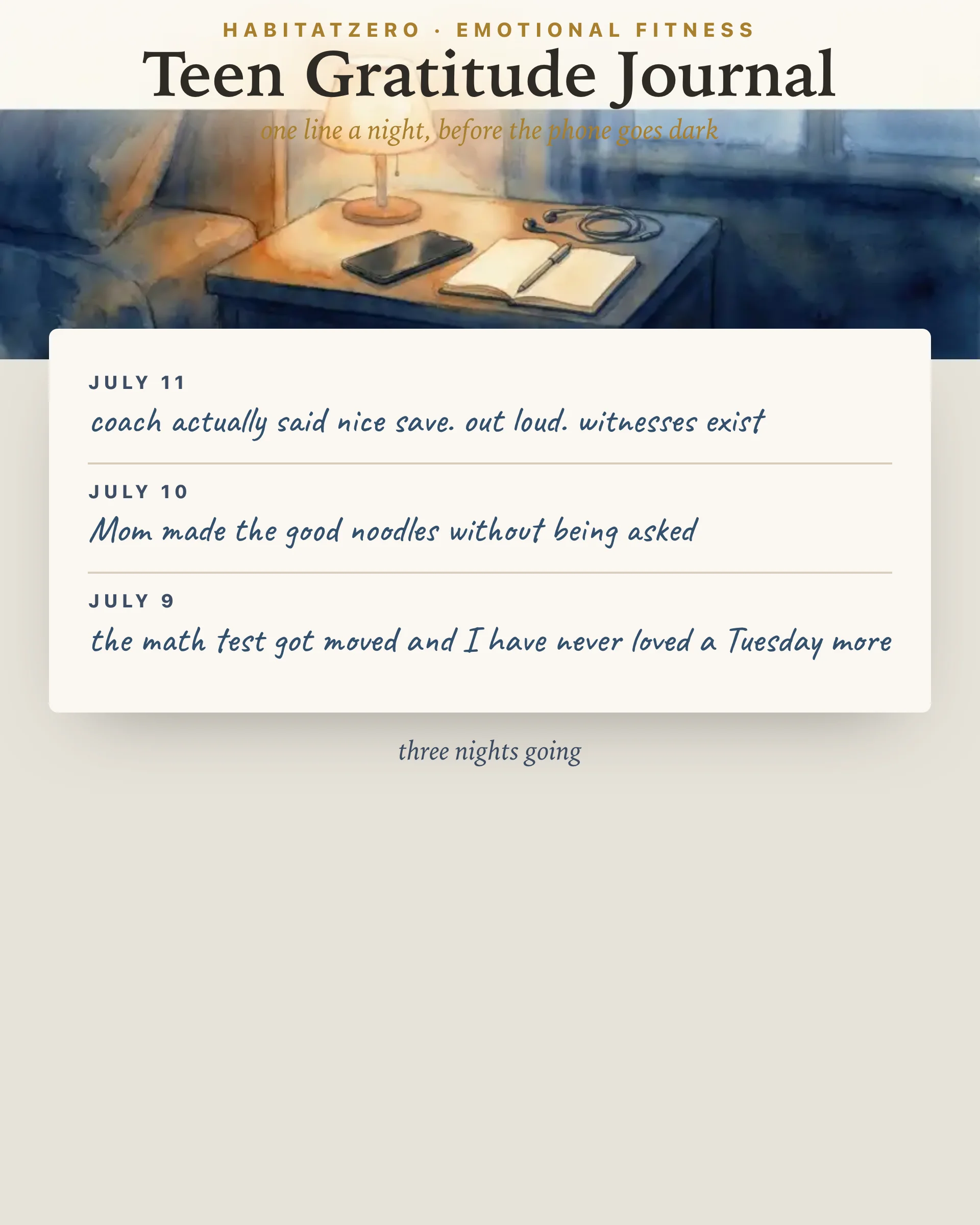
This page is written for the parent, because the parent is the one googling. Your teenager is not searching for a gratitude journal; your teenager is the reason the last one — the nice one, from the bookshop — has three entries and a January date. The problem was never your kid. The problem is that most gratitude journals are designed for people who already want to keep one, and teenagers can smell assigned feelings a corridor away.
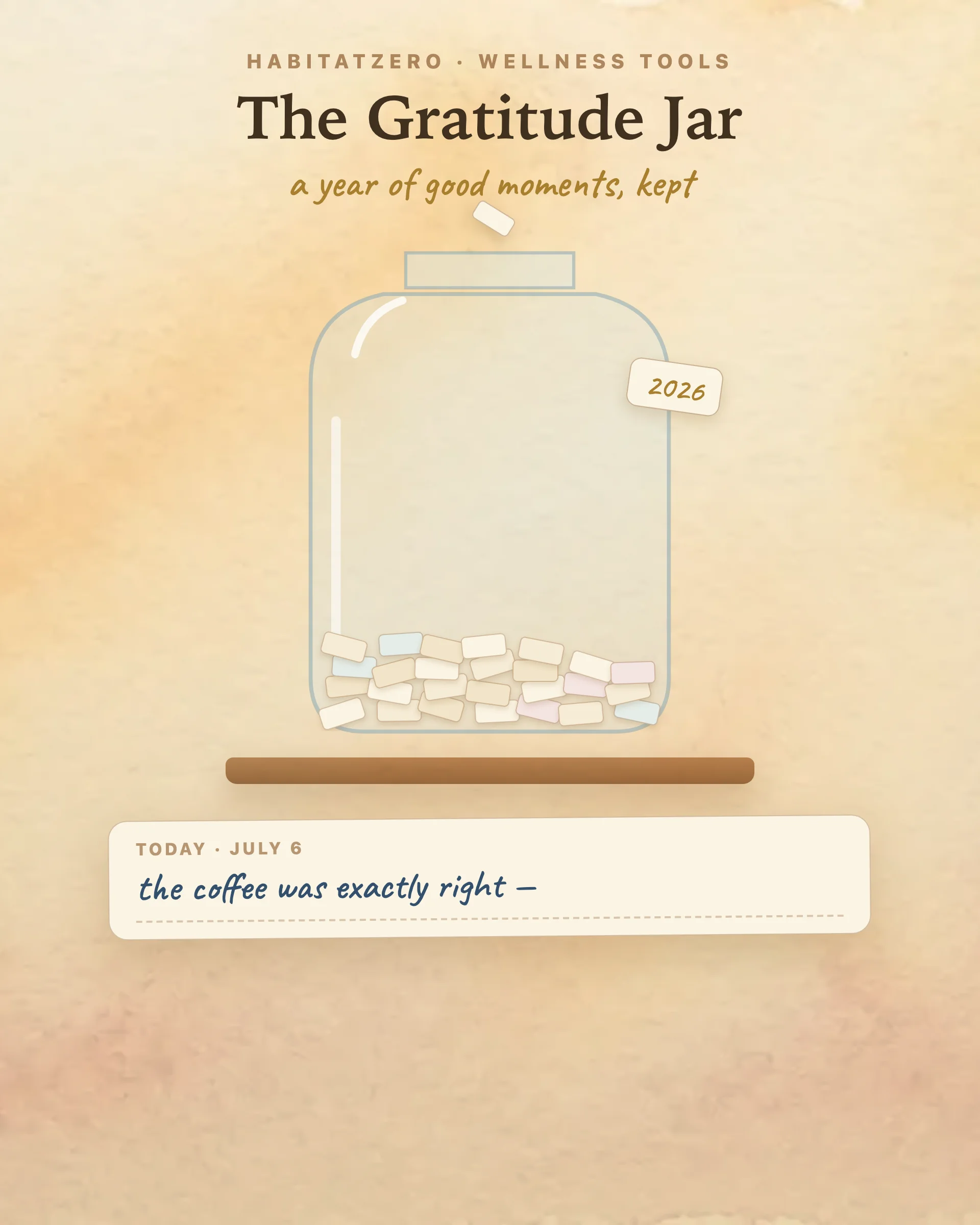
Three design decisions, each doing heavy lifting. One line, at lights-out. Not a page, not three items with reasons — one true line, docked to a moment that already happens every night (the phone going dark). Habits borrowed from existing routines outlive habits that demand new ones, and coach actually said nice save, witnesses exist is a complete, legitimate entry.
Private, and visibly so. The sheet says it right on the page: nobody reads this, including you. That is not a concession — it is the mechanism. A journal that might be inspected becomes a performance within the week, and performed gratitude is worse than none. The entries live on your teenager's own account and stay there.
Zero streak guilt. The counter says four nights going when it's going and quietly says nothing when it isn't. Missed nights carry no debt. Teenagers abandon apps that scold; this sheet doesn't know how.
The teen-specific research is genuinely encouraging without being miraculous. In the classic classroom experiment with early adolescents, students who spent a few minutes counting blessings reported greater satisfaction — including, notably, with school itself — compared with peers who tracked hassles. Modest effects, brief practice, real setting. That is exactly the scale of intervention a one-line nightly habit is, so expect a steadier baseline over weeks, not a personality transplant by Friday.
Skip the speech. "Found this — one line a night, it's private, I'm doing it too" is the entire pitch. Then the hard part: model instead of monitor. Keep your own line going where your teenager can see the habit exists — the grateful journal gives you the grown-up version with a rotating morning question, or run your own week-one on the beginners journal alongside them. Households where the adults visibly do the thing produce teenagers who eventually try the thing; the reverse approach produces eye-rolls with a paper trail.
And if the volunteered line ever comes — read at the dinner table, unprompted, half-mumbled — take it lightly. It's worth ten inspected pages.
Lower the ask and surrender the oversight. One line at lights-out is small enough to survive a bad week, and privacy is the price of honesty — a journal that might be inspected turns into a performance within days. The strongest move is quiet modeling: keep your own line going visibly.
The research on adolescents specifically is encouraging: in a classroom experiment, students who briefly counted blessings reported better outlooks and greater school satisfaction than comparison groups. The effect sizes are modest, not magic — which suits a one-line nightly habit fine.
Whatever cleared the worth-a-line bar today, in their own register: the coach's compliment with witnesses, the good noodles unprompted, the math test that moved. Specific and unpolished beats profound — the sheet's sentence-starters exist for nights when nothing surfaces.
No — and this page says so right on the sheet. Entries stay private to the account that writes them. What parents get instead is better: a teenager who keeps the habit because it was never homework, and the occasional volunteered line, which is worth ten inspected pages.
By the team behind Fabulous, the science-based self-care app used by over 30 million people.