Leaves on a StreamEmotional Fitness · ~3 min
About this template · Updated July 2026
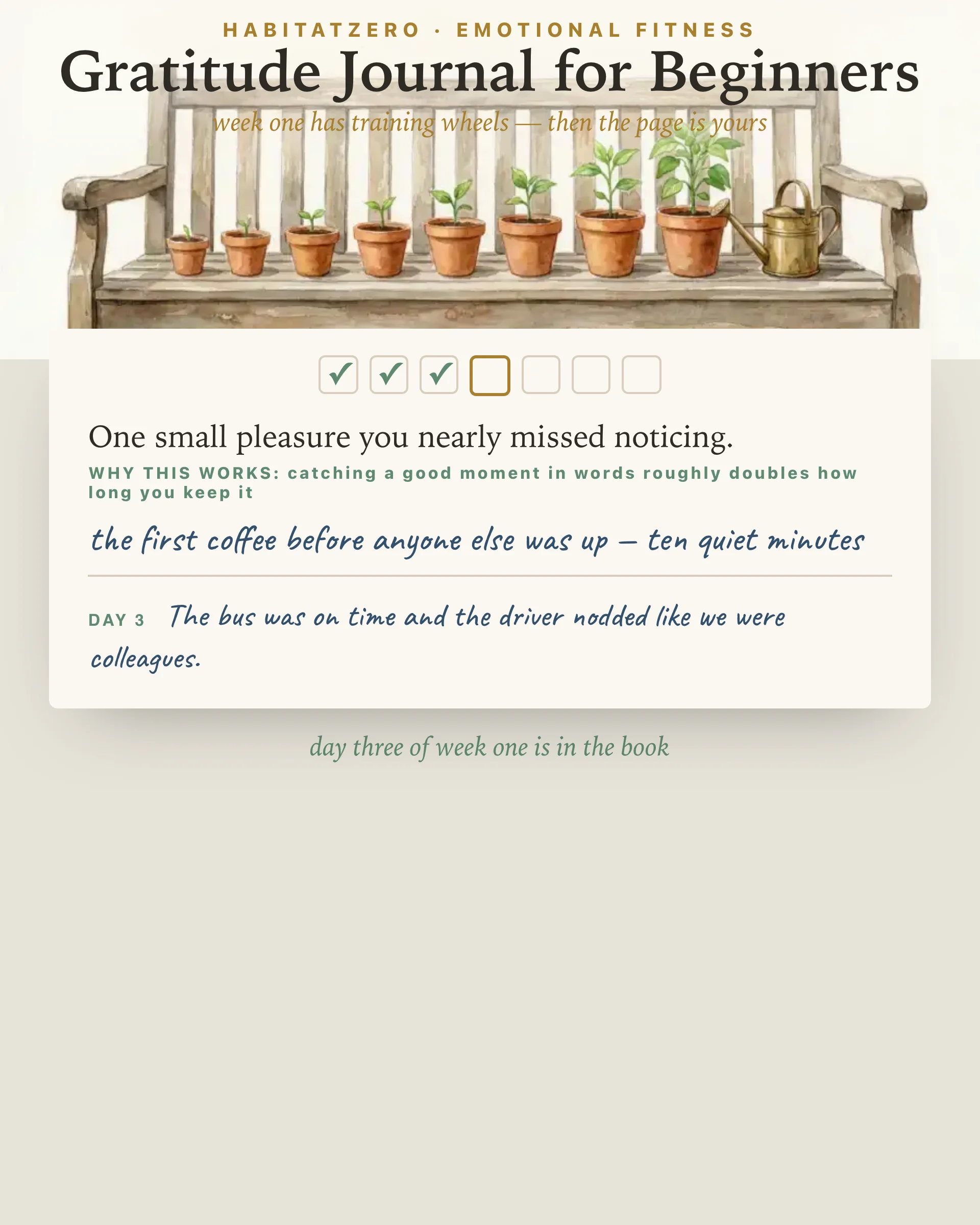
Beginner gratitude journals fail in a predictable place: not at feeling thankful, but at deciding what to write. The blank page hands you three jobs at once — pick a topic, judge whether it counts, and phrase it — and by Thursday the deciding costs more than the writing. This journal spends your first week deleting those decisions. Seven days, seven fixed micro-prompts, one line each. Training wheels, on purpose, and then off.
Each starter day asks for something a beginner can always produce. Day one wants a single good thing — the soup turned out passes. Day two points at a person and the small thing they did. Day three aims at the ordinary machinery that worked: the bus came, the kettle boiled. Later days introduce contrast (something hard that could have been worse), savoring (a pleasure nearly missed), and objects that quietly earn their keep. Under every prompt sits a one-line why this works note, because a beginner who understands the rep repeats it — this journal explains itself as it goes.
Day seven is the quiet payoff: reread the six lines you wrote and copy out the one that still glows. That tiny reread teaches the second half of the practice — a gratitude journal is for keeping, not just filling.
Here is what the evidence actually says, without the poster-quote gloss. The meta-analysis of gratitude interventions — pointedly titled Thankful for the little things — found real but modest benefits across dozens of controlled studies. And the original blessings experiments that launched the field used simple, structured practice at a steady rhythm, not heroic journaling. Translation for a beginner: this works the way flossing works. Small, cumulative, and only if it survives your schedule — which is exactly why week one asks for one sentence and not a soul inventory.
From day eight the wheels come off: freeform pages, your own words, any angle the day offers. Most graduates discover during the starter week which kind of noticing suits them, and there is a tool for each. If the daily-question rhythm fit best, the grateful journal rotates a fresh angle every morning. If your strongest entries were about people, the thankful journal keeps a whole season by name. If the prompts themselves were the magic, the gratitude prompts deck holds sixty-four more.
But that is week two's problem. Today is day one, and day one is one line long.
Start smaller than feels serious: one line, prompted, for seven days. This journal fixes the first week's prompts for you and explains each one, because beginners quit over decisions and blank pages, not over gratitude.
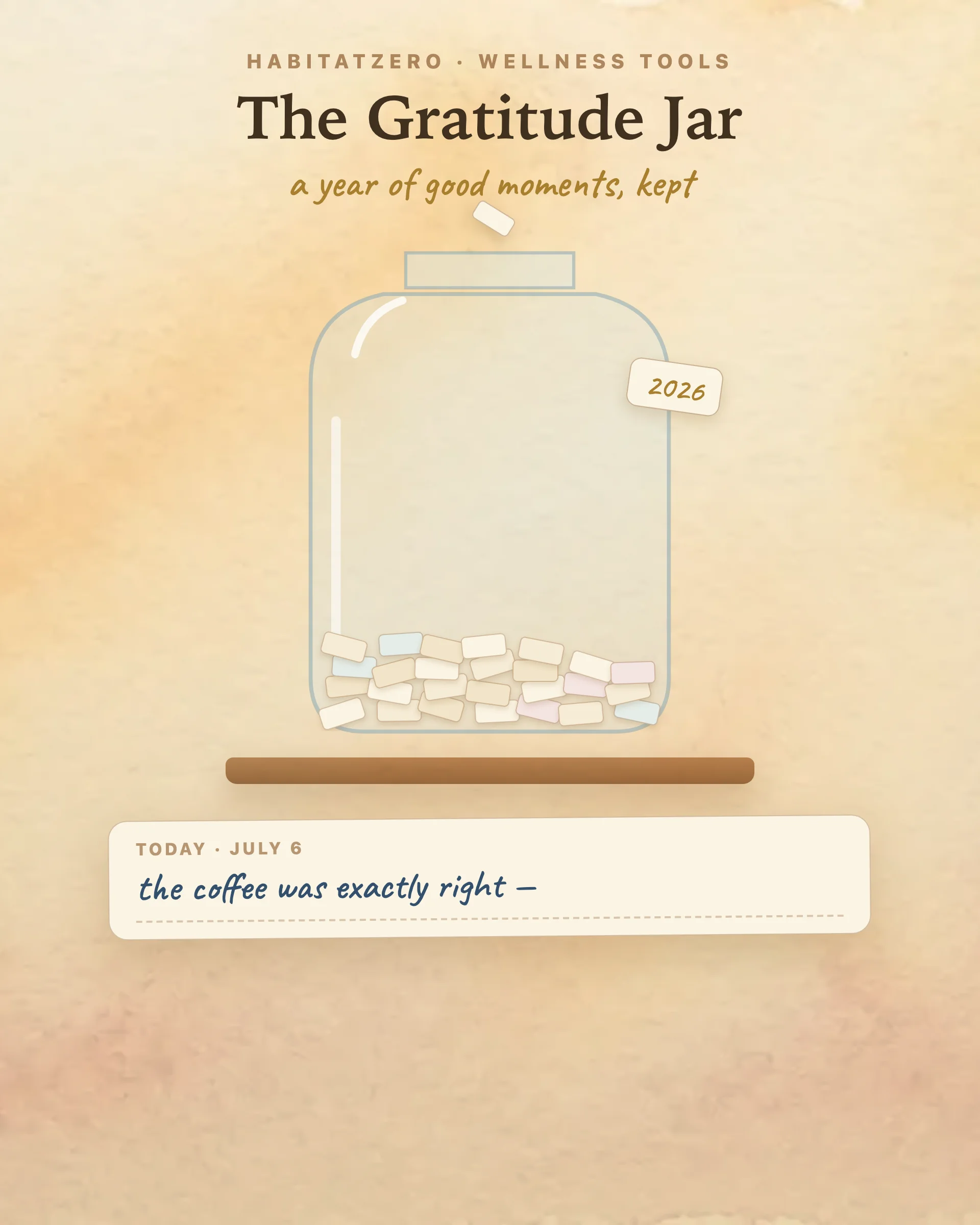
One good thing from today — that is the entire assignment. The soup turned out is a perfectly valid first entry. Depth arrives with practice; on day one you are only teaching your attention where to look.
Be suspicious of overnight claims. Across dozens of controlled studies the measured benefits are real but modest, and they favor people who keep going — which is exactly why this journal spends its first week making the habit cheap instead of impressive.
Day eight opens freeform pages: same journal, your own words, any angle. By then you have seven worked examples of what an entry can be, and the reread on day seven usually reveals which kind of noticing suits you best.
Three shapes cover most days. A person plus the act: Sam carried the meeting when my head was elsewhere. Ordinary machinery that held: the bus was on time and the driver nodded like we were colleagues. And contrast: the test came back fine, which last Tuesday felt impossible. Notice each names one concrete thing — that is the whole craft, and the starter week drills exactly these shapes.
For the first seven days, fully: the prompt is chosen for you, its purpose is spelled out underneath, and the only decision left is which honest line to write. The guiding then steps back on purpose, because a journal you can run without rails is the actual finish line.
Yes, and the starter week was practically built for it: a parent or teacher can hand it over on a Sunday and the first seven prompts run the show without any supervision. Two setup tips carry most of the weight — let the student keep the entries private, and do the week yourself alongside them, since modeling beats assigning every time.
Five minutes is luxurious by this page's standards; the starter week is designed to fit inside two. If you have the full five, spend the spare minutes on the why behind your line — the detail is where the practice compounds — or reread a few kept pages, which counts as practice too.
Studies link the practice to modest, steady improvements in mood and outlook, and this page sticks to that honest framing. It is an everyday self-help habit rather than any form of care — if things feel heavier than a journal can hold, talking to a professional comes first and this page will keep gladly waiting.
By the team behind Fabulous, the science-based self-care app used by over 30 million people.