Leaves on a StreamEmotional Fitness · ~3 min
About this template · Updated September 2026
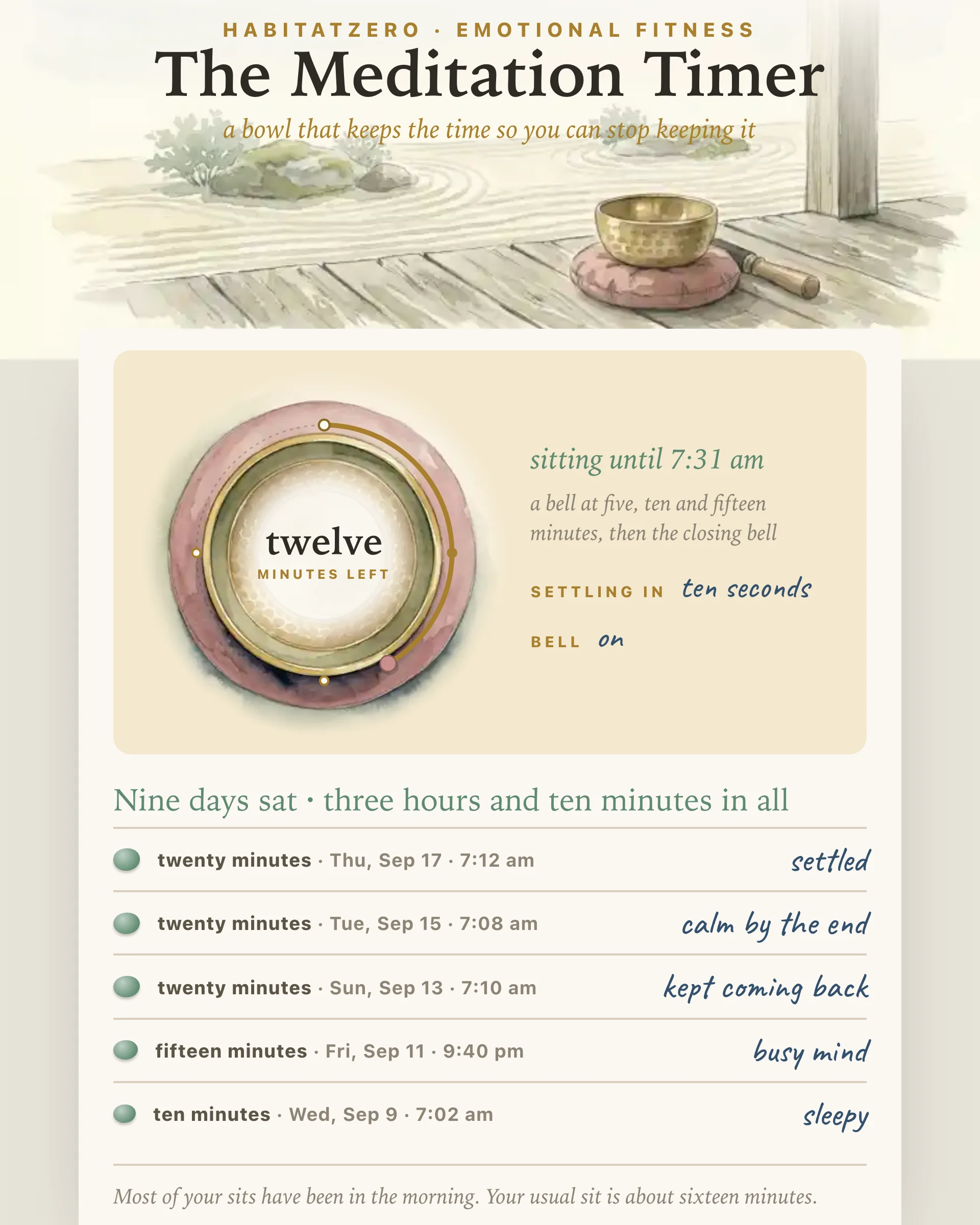
The hardest part of sitting still is not the stillness. It is the small voice asking how long it has been. Open one eye to check the clock and you have left the practice; leave the clock alone and part of you keeps counting anyway. A timer exists to take that job away from you. You decide the length once, at the start, and then the deciding is over.
This page is that timer with the decoration stripped out. No voice, no pacing, no music. A painted singing bowl, a bell at the start, a bell at the end, and, if you want them, a few bells in between.
Set the length by tapping a number or nudging the bowl a minute at a time. The words in the center tell you what you have set, and the rim shows where the bells will fall: one mark at the top for the closing bell, and a mark for each interval bell if you choose halfway, every five or every ten minutes. The bowl refuses an interval that would never ring inside the length you picked, and says so.
The settling-in count is the small thing that makes the rest work. Tap begin and, instead of ringing at once, the bowl counts down ten seconds, thirty, or a minute while you put the phone face down, find your seat and let your shoulders drop. Then the opening bell sounds and the sit begins.
From there the mallet travels the rim in real time, taken from the clock rather than a running counter, so a page picked up again after a pause still knows where you are. The time left is written in words and only changes once a minute, because a seconds counter is the kind of thing the practice is trying to let go of. Each bell ripples the bowl on screen as it sounds, and the closing bell rings three times.
The bell is a soft synthesized strike made by the page itself, which comes with an honest limit: a locked phone or a sleeping tab can silence it. The page asks the browser to hold the screen awake for the length of the sit, and there is a plain mute for when you want the bowl and not the sound, but for a long sit keep the screen on and the page in front.
When the closing bell has rung, the bowl asks for one line on how it went. Tap a word, such as restless, sleepy or settled, or write your own, and keep it. Each kept sit becomes a stone and a line in the log, with the date, the length and your words in handwriting. Above the lines the log keeps a running count in plain words: days sat, and minutes in all.
Days sat never resets. Miss a week and you have not lost anything; the next sit adds a day. Once the log has a few lines it also offers a short reading, such as when you tend to sit and how long your usual sit is, so you can see your own pattern without a chart.
Meditation has been studied a great deal, and the picture is modest rather than miraculous. A systematic review of forty-seven trials in JAMA Internal Medicine found moderate evidence that mindfulness programs ease anxiety, depression and pain, with small to medium effect sizes, and no evidence that they beat other active approaches such as exercise or therapy. A 2021 meta-analysis of a hundred and thirty-six trials in healthy adults reached a similar place: compared with doing nothing, mindfulness programs improved anxiety, depression and distress on average, but the spread across trials was wide enough that they will not help everyone.
It is also worth knowing that sitting with your own mind is not free of side effects. A 2020 review of eighty-three studies estimated that about eight percent of people report an adverse experience such as anxiety or low mood during or after practice, and the US National Center for Complementary and Integrative Health notes that this rate is similar to that seen with psychological therapies. If sitting reliably leaves you worse, that is information, not failure; shorten the sits, or talk to someone who works with this.
Nothing on this page treats or measures anything. It keeps time and it keeps a log.
The bowl suits any sit you want to take without a voice in your ear: first thing in the morning before the house wakes, a lunch break, the quiet stretch before bed. Use the settling-in count every time; the ten seconds between tapping begin and the first bell are where the practice actually starts.
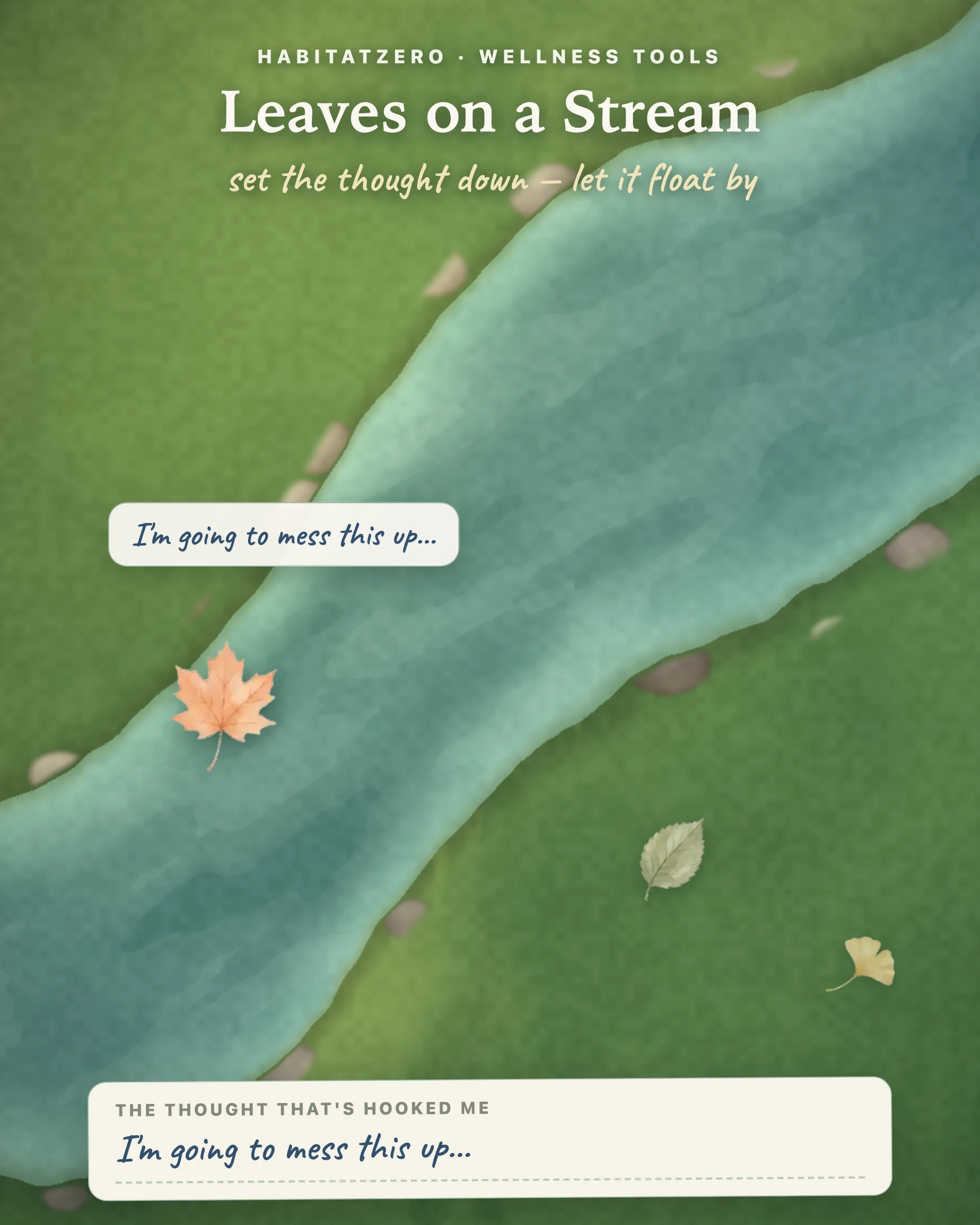
If you sit down and find your body will not settle, take two minutes with Box Breathing first and come back to the bowl. If a single thought keeps hooking you while you sit, Leaves on a Stream gives it somewhere to go afterwards. And when you have no ten minutes at all, The Physiological Sigh is the one-breath version for the moment before the hard thing.
Start with ten. Write one honest word when the bell rings. Let the days add up on their own.
Shorter than you think, and then the same length again tomorrow. Five to ten minutes is enough to learn what sitting feels like, and a length you will repeat beats a heroic one you will avoid. The bowl goes from one minute to two hours; most people settle somewhere between ten and thirty.
They mark the passing time without you opening your eyes, so you stop wondering how far along you are. Some people use a halfway bell as a nudge to come back to the breath; others sit longer once they know a bell will find them every ten minutes.
Not always. The bell is made by this page, so a locked phone or a suspended tab can silence it. The page tries to hold the screen awake during a sit, and the bowl shows every bell in its place, but for a long sit keep the screen on and the page in front.
No. There is no voice and no pacing, only a bell at the start, at the intervals you chose and at the end. What you do in between is up to you: follow the breath, count, sit with whatever is there. For a guided breath, Fabulous has paced breathing pages that lead you through each phase.
The public page shows a filled example under a lock. Personalizing it in HabitatZero, which is free, gives you your own bowl and a log that remembers every sit you keep across your devices.
By the team behind Fabulous, the science-based self-care app used by over 30 million people.