Leaves on a StreamEmotional Fitness · ~3 min
About this template · Updated September 2026
If you're the parent of a teenager whose inner critic has gotten loud, you've probably already discovered what doesn't work: compliments (they bounce), pep talks (they embarrass), and pointing out how great they objectively are (they leave the room). The problem was never a shortage of reassurance. Teenage self-esteem is built the same way the adult kind is — through values that feel owned, thoughts that lose their authority, and small brave actions with receipts. These four worksheets work that machinery directly, in language a teen will actually tolerate.
The mechanics are informed by acceptance and commitment research — an approach with a substantial evidence base built on exactly this trio: clarifying what matters, unhooking from harsh thoughts, and acting on values anyway (model and outcomes reviewed at DOI: 10.1016/j.brat.2005.06.006). What this page is not: an assessment. Nothing here scores self-esteem, bands severity, or checks symptoms — psychology defines self-esteem as the degree to which qualities of the self are felt to be positive (APA Dictionary), and that's territory for practice, not measurement.
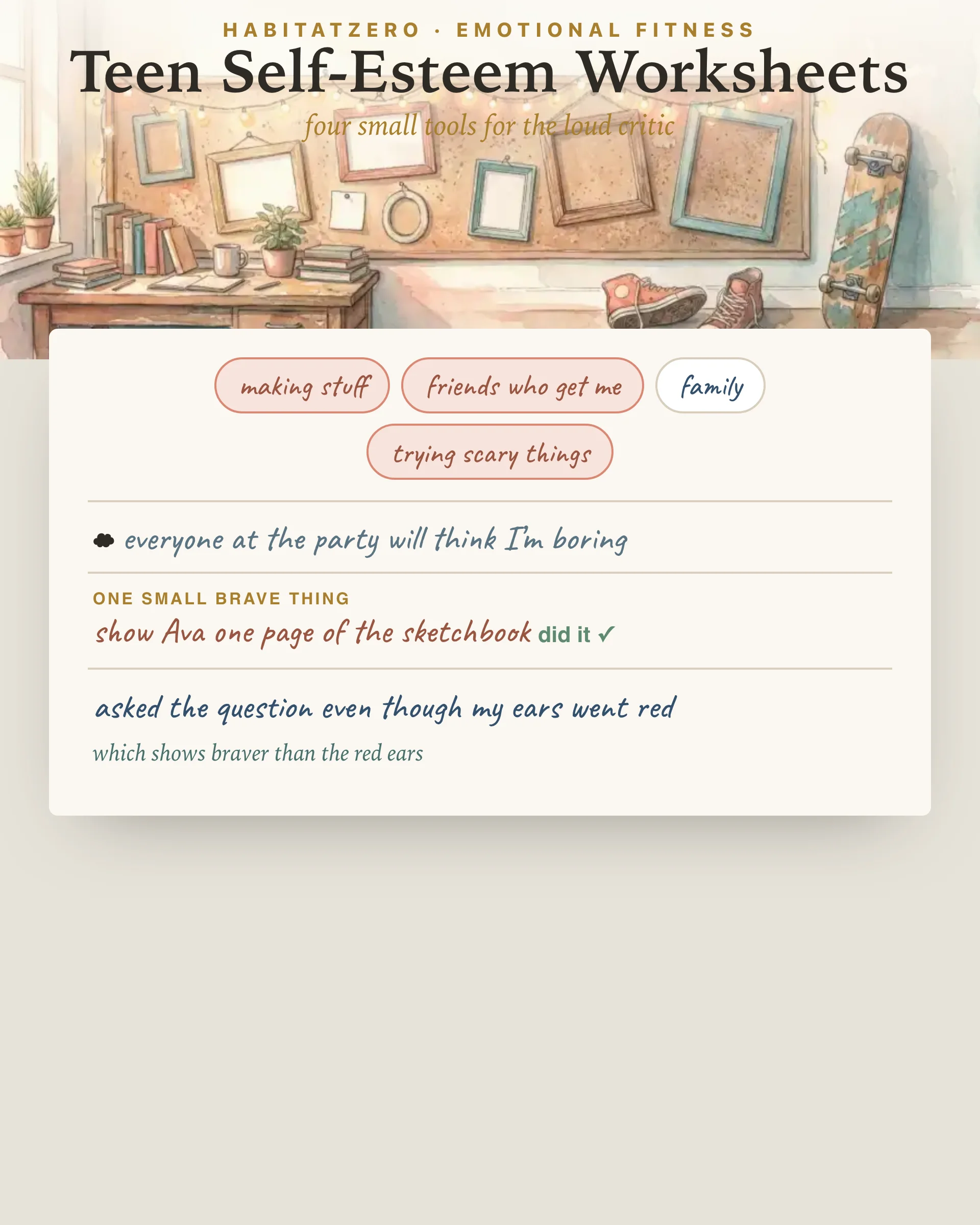
What matters to me. A values deck in teen language — friends who get me, making stuff, trying scary things — pick up to five, or write your own. This comes first because everything durable on the page hangs off it: a teen who knows what they're about has ground to stand on that no group chat can vote away.
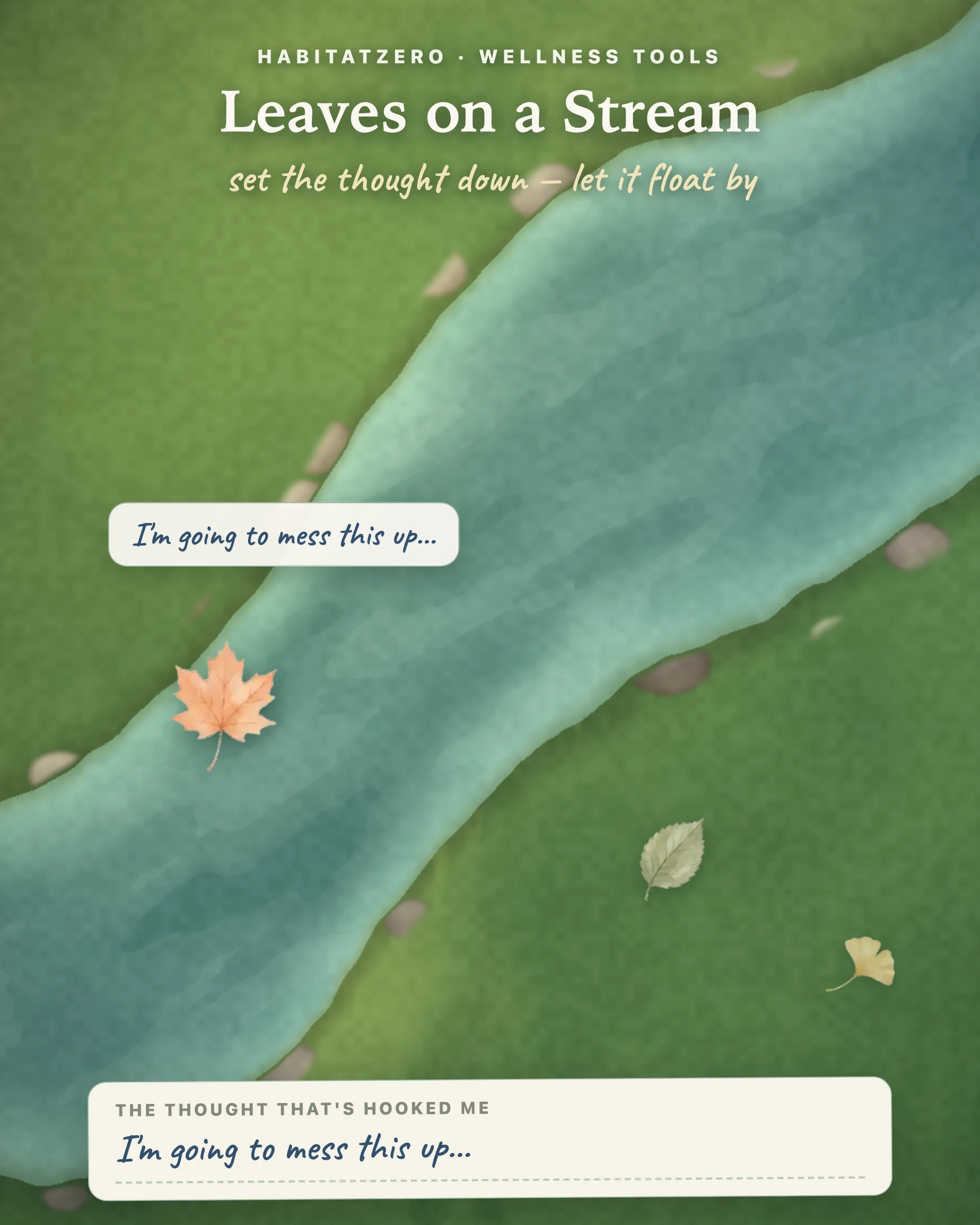
The weather report. When the critic gets loud — everyone at the party will think I'm boring — the thought gets written down word for word and filed under a little cloud. The framing is the skill: a thought is a weather report, not a verdict. Not argued with, not obeyed, just noticed and allowed to pass, the way weather does. Teens tend to take to this faster than adults; they already suspected their 11pm thoughts were unreliable narrators.
One small brave thing. Each week, one tiny action that lines up with a chosen value — show Ava one page of the sketchbook — doable within days, slightly scary today. This is where self-esteem actually accrues: not from being told they're capable, but from watching themselves do the thing their thoughts said not to.
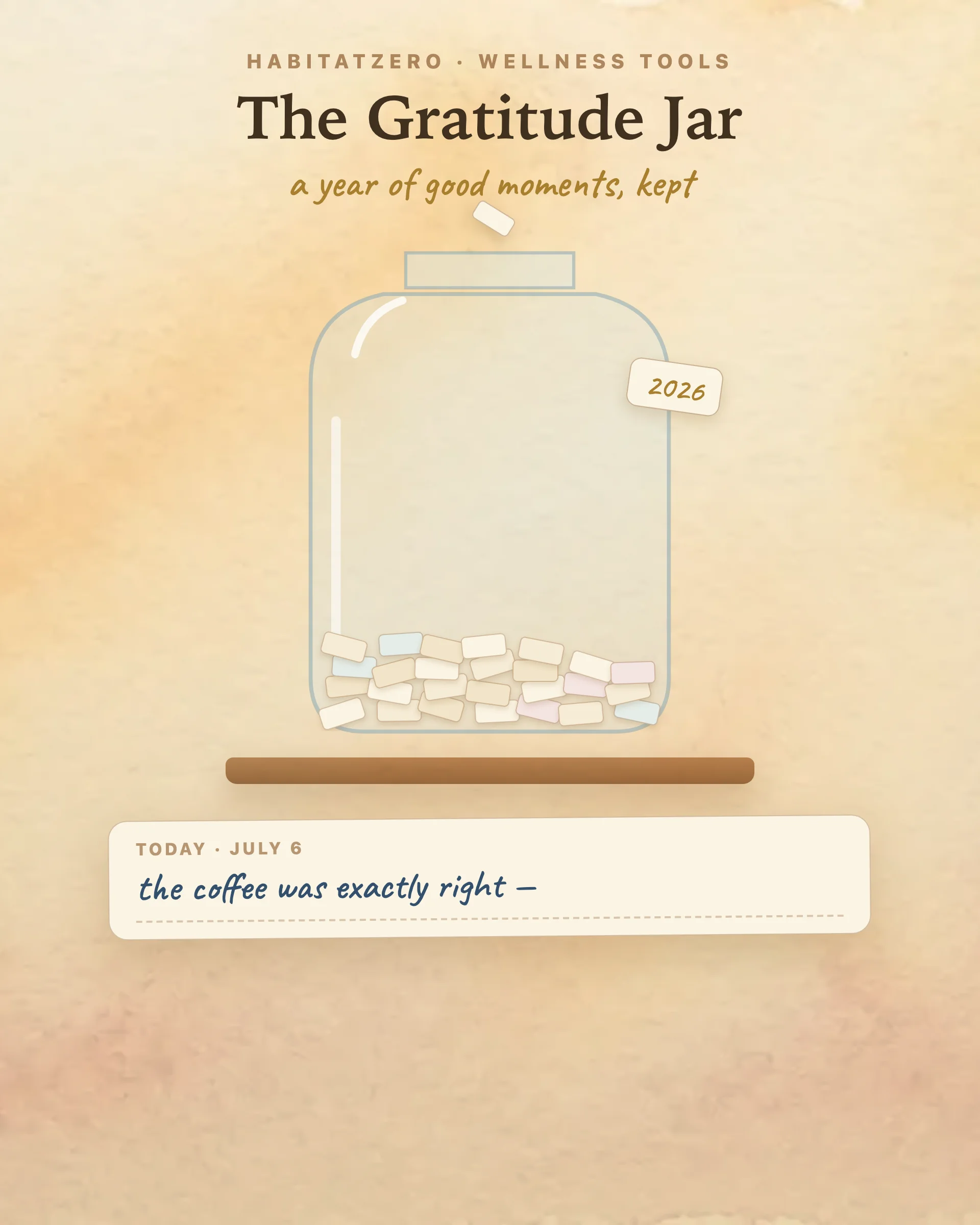
The did-it board. Moments handled, each with what it shows — asked the question in class even though my ears went red → braver than the red ears. Ten of these, in their own handwriting, is a body of evidence about themselves that no bad Tuesday can argue down.
Set it up together; hand it over completely. The page does its work as the teen's own space — a parent who opens the door and then genuinely respects it closed will get further than one who audits the weather file. If you want to multiply the effect, run your own version of the same practice on your own page where they can see you doing it; modeling beats assigning, every time.
And the honest boundary, which this page shares with every teen tool we make: these are self-help worksheets, not therapy. If feeling bad about themselves is interfering with school, sleep, or friendships most days, the strongest move is real support — a school counselor, doctor, or therapist. Any mention of self-harm or crisis means right now: call or text 988 in the US, or your local emergency number. The worksheets will keep; get the people first.
Short structured tools that help a teenager build a steadier relationship with themselves. This page holds four that work together: a values picker in teen language, a thoughts-as-weather file for the loud inner critic, one small brave action per week, and a did-it board of handled moments and what they show.
Set it up together, then hand it over. The page works best as the teen's own space — a parent who opens the door and then respects it closed tends to get further than one who reviews the entries. Doing your own version alongside, on your own page, is the strongest move of all.
It is a practical move borrowed from acceptance and commitment research: instead of arguing with a harsh thought or obeying it, you notice it as an event — a weather front passing through — write it down, and let it be weather. Thoughts lose authority when they stop being read as verdicts, and teens tend to pick this skill up fast.
Because compliments bounce off a teenager who does not believe them, while values give actions a reason that is theirs. A small brave thing chosen because it lines up with what matters to me builds sturdier ground than any amount of being told you're great — the confidence arrives through the doing.
No, and by design. There are no scores, no quizzes about how low or high anything is, and no checklists of symptoms anywhere on this page. It is a practice space, not an assessment — four tools a teen uses, never a measurement taken of them.
Then this page is a supplement, not the response. If feeling bad about themselves is affecting school, sleep, or friendships most days, the right move is professional support — a school counselor, doctor, or therapist. And any mention of self-harm or crisis means right now: call or text 988 in the US, or your local emergency number.
By the team behind Fabulous, the science-based self-care app used by over 30 million people.