Leaves on a StreamEmotional Fitness · ~3 min
About this template · Updated September 2026
Behavioral activation comes from two lines of research. In the 1970s, psychologist Peter Lewinsohn tied depression to a shortage of rewarding experiences in daily life, and his behavioral treatment of depression set out to put those experiences back into people's weeks. Two decades later, Neil Jacobson and his colleagues took cognitive therapy apart in a trial with 150 outpatients who had major depression, and found the full package did no better than its activity part alone. Jacobson, Christopher Martell and Michael Addis then laid that part out as a treatment of its own in their 2001 book Depression in Context. HabitatZero built The Balloon Field on its own, drawing on that published research. None of these researchers designed this page, reviewed it or endorsed it.
Low mood pulls you toward doing less. Plans get canceled, the couch wins, and the call you owe keeps sliding to tomorrow. Each step back makes sense in the moment, since everything costs effort. But doing less also means fewer small rewards, which leaves less to feel good about, which makes the next plan harder still. Behavioral activation breaks that loop from the outside in: you act on a plan small enough for a heavy day, and you let your mood catch up instead of waiting for it.
Two ratings do most of the teaching. Enjoyment is the obvious one. Achievement is the one people forget: paying a bill or folding laundry is rarely fun, yet finishing something on a hard day can still leave you better off than when you started. Rating both keeps the dull, useful things from dropping off your list.
Pick a day, then plan one activity. Tap a suggestion from three groups, for enjoyment, for achievement or for connection, or write your own in a few words. A day holds three plans and the week holds ten, because an overstuffed week is the easiest kind to abandon.
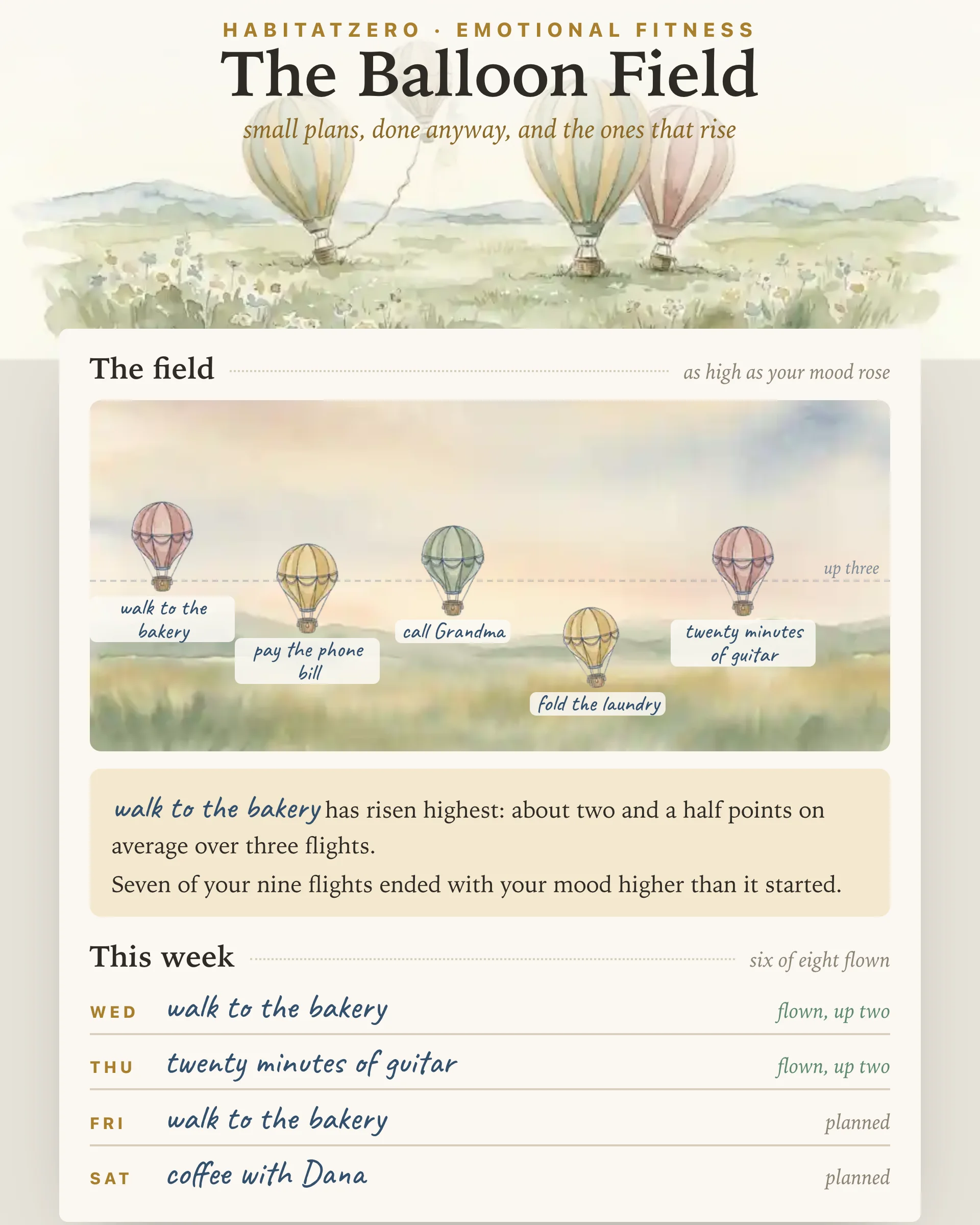
When you have done it, log the flight. Four scales from zero to ten ask for your mood before you started, your mood now, how much it felt like an achievement and how much you enjoyed it. The activity then becomes a painted balloon in the field. It floats as high as your mood rose on average over its last six flights, and one that has not raised your mood yet rests on the grass. Its color shows what it mostly gives you: gold for achievement, rose for enjoyment, sage for some of both.
Under the field, the page reads your flights back to you: which balloon has risen highest, how many flights ended higher than they started, and how often you began at three or lower and rose anyway. Balloons that rise come back as suggestions the next time you plan, so the best of your own list is the first thing you see.
The method has a solid research record. A meta-analysis of sixteen trials of activity scheduling found a large effect compared with control conditions, no meaningful difference from cognitive therapy, and gains that held at follow-up. In the COBRA trial, 440 adults with depression received either behavioral activation from junior mental health workers or cognitive behavioral therapy from trained therapists, and a year later the simpler treatment had done no worse.
Those trials tested a treatment, guided by a trained person over many weeks. This page is practice, not treatment. Balloon heights are your own ratings, a hint rather than a measurement, and a single flight can be skewed by a bad night's sleep or a kind phone call. Mood also tends to lag behind what you do, so give an activity a few flights before you judge it.
If low mood has lasted more than two weeks, or it is getting in the way of work, sleep or the people around you, talk to a doctor or a therapist. Behavioral activation is often part of what they offer, and this page can come along to those sessions. If the low ever turns into hopelessness or thoughts of not wanting to be alive, please do not sit with that alone: call or text 988 in the US, or your local emergency number wherever you are.
Reach for it when low mood has made your days smaller than you want them to be, or as homework between sessions if you already see someone. Start smaller than feels worthwhile. On a heavy day, a shower and clean clothes count as a flight, and a small plan you keep beats a big one you cancel. Be specific about when and where: "walk to the mailbox after lunch" happens more often than "exercise more". Log right away, while you still remember how you felt going in.
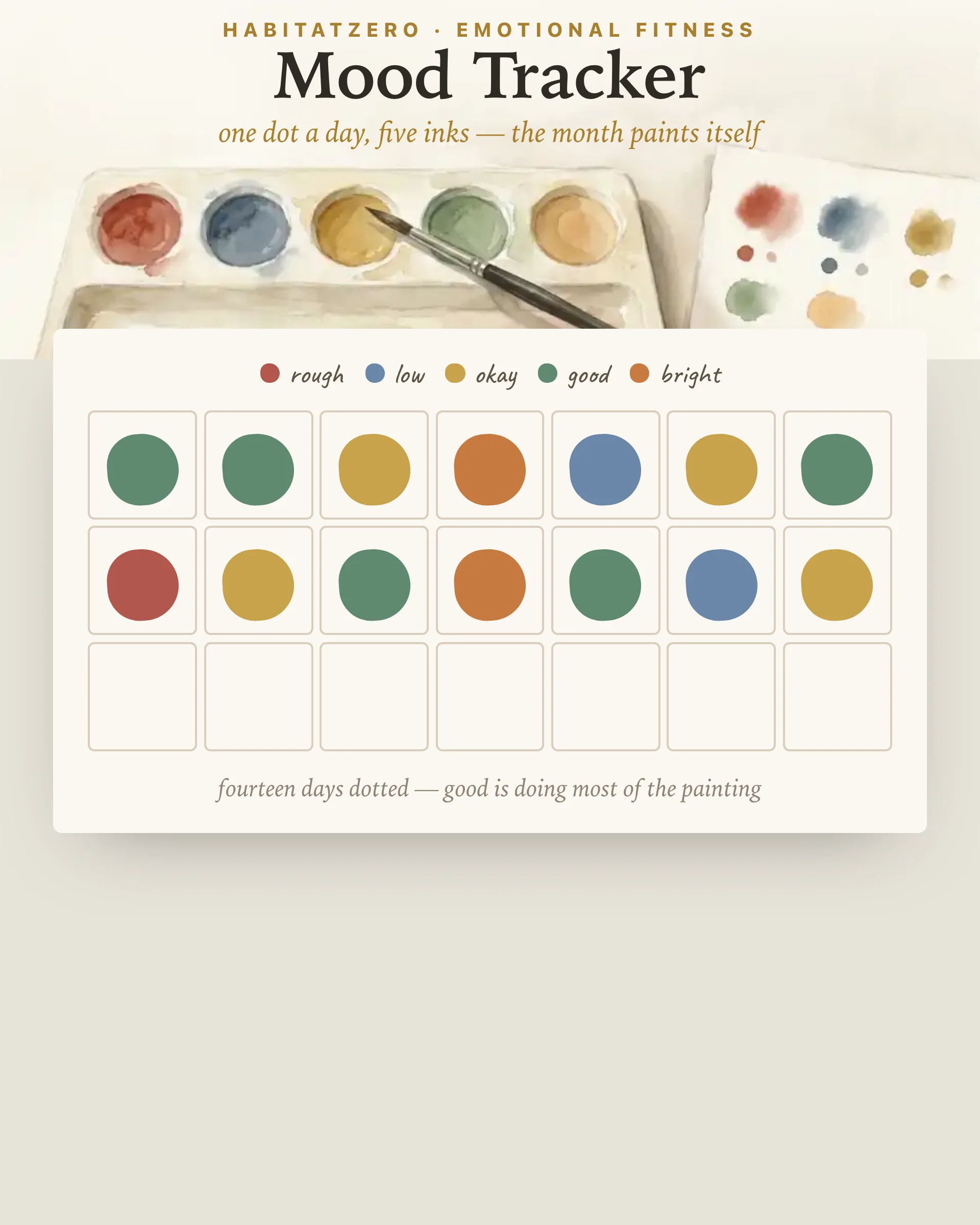
If you want a wider view of your mood between flights, the Mood Tracker paints a month one dot at a time. For the moment you have ten free minutes and no idea what to do with them, The Dopamine Menu keeps a short list ready. And if a thought like "what's the point" keeps grounding your plans before they start, take it through the Thought Record Journal.
A structured approach to low mood that changes what you do first and lets feelings follow. You schedule small activities that bring enjoyment, a sense of achievement or time with people, do them whether or not you feel motivated, and track how each one affects your mood. It grew out of Peter Lewinsohn's research and was built into a full treatment by Neil Jacobson, Christopher Martell and colleagues.
Randomized trials and meta-analyses find that it helps adults with depression, and in direct comparisons it has done about as well as cognitive therapy. This page is a place to practice the planning and rating, not a treatment on its own. If low mood has lasted more than two weeks or gets in the way of daily life, talk to a doctor or therapist.
Good ones are small and specific: a ten-minute walk to the corner, paying one bill, texting a friend back, folding one load of laundry. Mix things you enjoy with things that feel like an achievement and things that connect you with people, since each kind can raise mood in its own way.
A pleasant activities list hands you ideas. This worksheet starts there, with tap-to-add suggestions sorted into three kinds, then puts each idea on a day and records what it did to your mood, so your list sorts itself by what actually works for you.
This one is meant to be filled in on screen, because the useful part happens as you log: it averages your ratings, floats each balloon to its height and writes the readings under the field. The page shows a filled-in example, and you can personalize your own copy in HabitatZero at no cost.
By the team behind Fabulous, the science-based self-care app used by over 30 million people.