ADHD Daily Task OrganizerFocus & ADHD · ~10 min
About this template · Updated September 2026
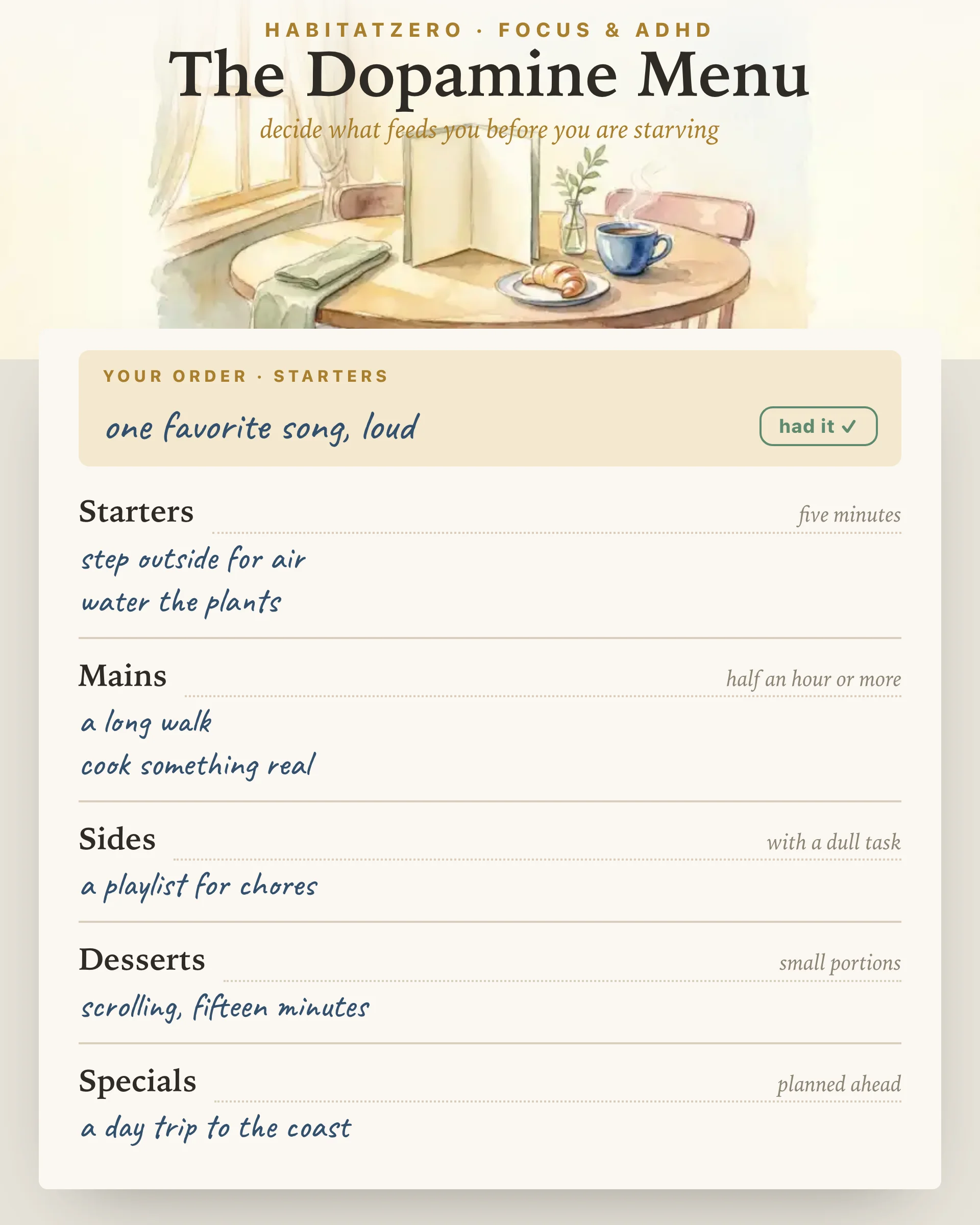
Credit first. The dopamine menu, or dopamenu, was popularized by Jessica McCabe of How to ADHD together with ADHD coach Eric Tivers, and ADDitude's write-up of their approach is the clearest introduction to it. This page is an independent worksheet for practicing the idea and is not affiliated with, endorsed by, or connected to either of them.
The problem it solves is a familiar one. You are flat, restless, under-stimulated, and you know something would help. But working out what would help means listing options, weighing them, and starting one, and that is exactly the kind of thinking a flat brain refuses to do. So the hand goes to the phone, because the phone requires no decision at all. Forty minutes later you feel worse.
A dopamine menu moves the deciding to a better day. You write the list once, while you have the appetite to think about it. When the flat moment comes, you are no longer inventing options. You are ordering from a card.
The restaurant framing is doing real work. It sorts your options by how much room you have, which is the only question you can answer when you are depleted.
Desserts belong on the card. A menu that pretends you never scroll is a menu you will stop trusting by Thursday. The point is to notice when dessert is all you have ordered for a week.
Each course opens with a few suggestions. Tap one and it lands on your menu in handwriting; write your own on the line beneath. Every course holds eight lines and no more, so the card stays something you can read at a glance, and adding a ninth means letting one go.
The part that earns its keep is at the top. When you need something, you say how much room you have by choosing a course, press order for me, and the menu hands you one item from your own list. If it lands wrong, ask for something else. When you have done it, mark it had, and a quiet count of orders served ticks up. That count is the only score the page keeps.
"Dopamine" here is a metaphor, and it is worth being straight about that. Imaging work has linked ADHD to differences in the brain's dopamine reward pathway that track with motivation, which is part of why boring tasks can feel physically hard to start. But no worksheet measures or tops up a neurotransmitter, and nobody should read this menu as a treatment.
What the menu does is older and plainer than its name. Planning rewarding activities in advance, then doing them whether or not the mood agrees, is the core of behavioral activation, a therapy approach with solid evidence in depression. The dopamine menu borrows that move and gives it a friendlier costume. It also fits the general advice for executive function challenges, which is to put the structure outside your head where working memory can't drop it.
Set the table ahead of time. McCabe's example is keeping her guitar on a stand by the couch rather than in its case, so that a main course is as easy to reach as the phone. Do the same for two or three lines on your own menu: shoes by the door, the book on the pillow, the playlist already made.
Then add friction to dessert. Log out, move the app off the first screen, set the timer before you open it. You are not banning anything. You are making the good options as reachable as the easy ones.
Revisit the card when it goes stale. An item you have skipped five times in a row is telling you something; swap it out.
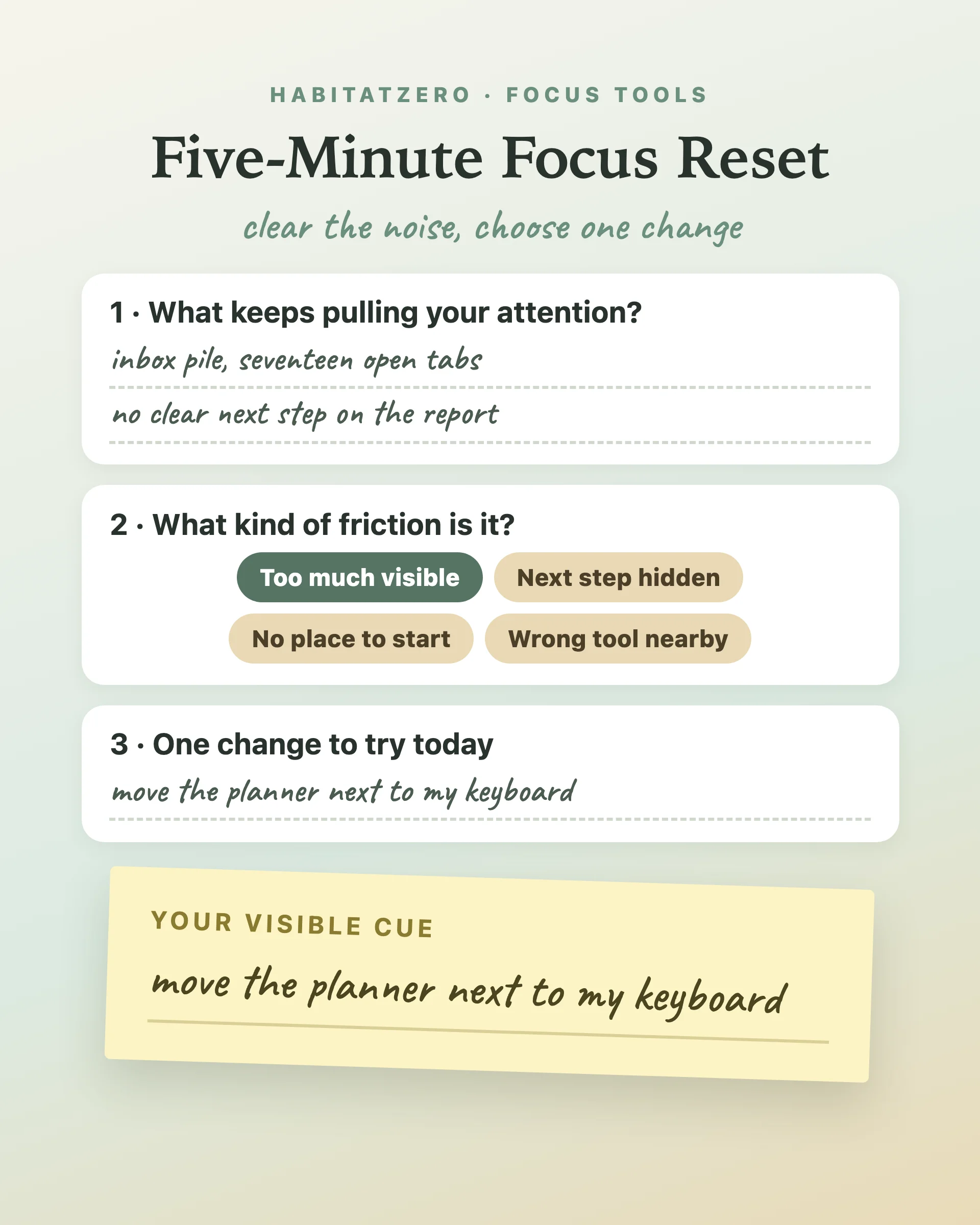
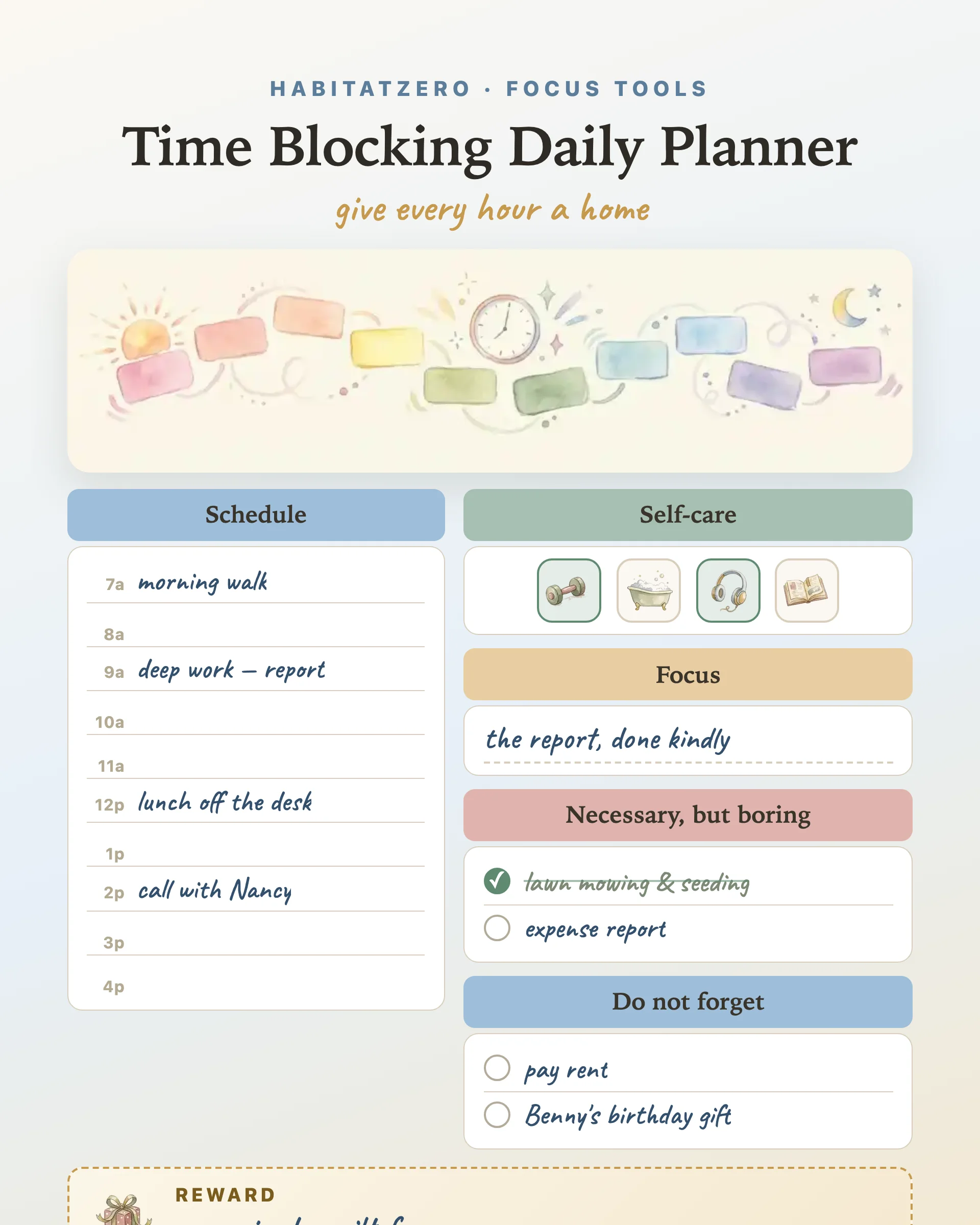
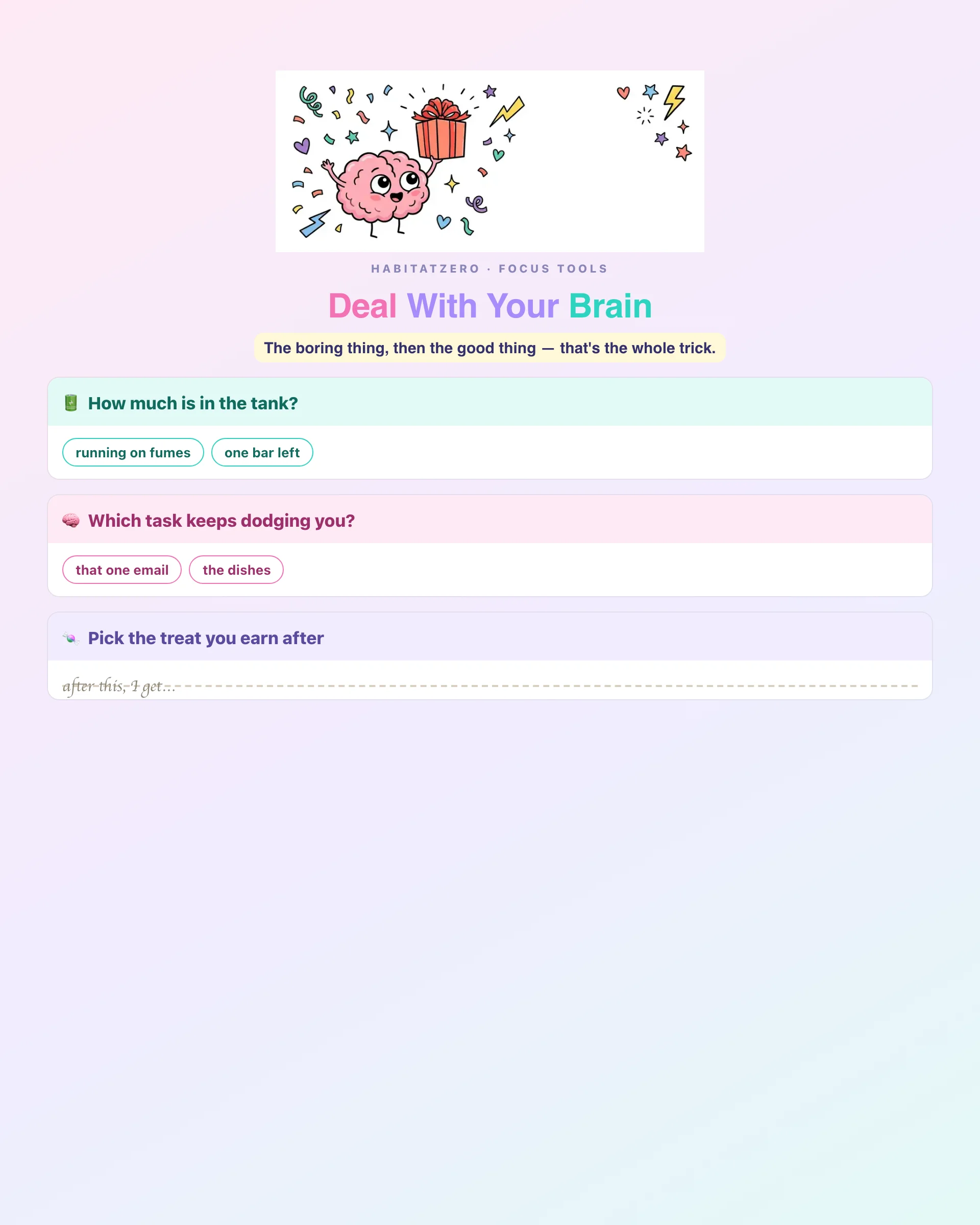
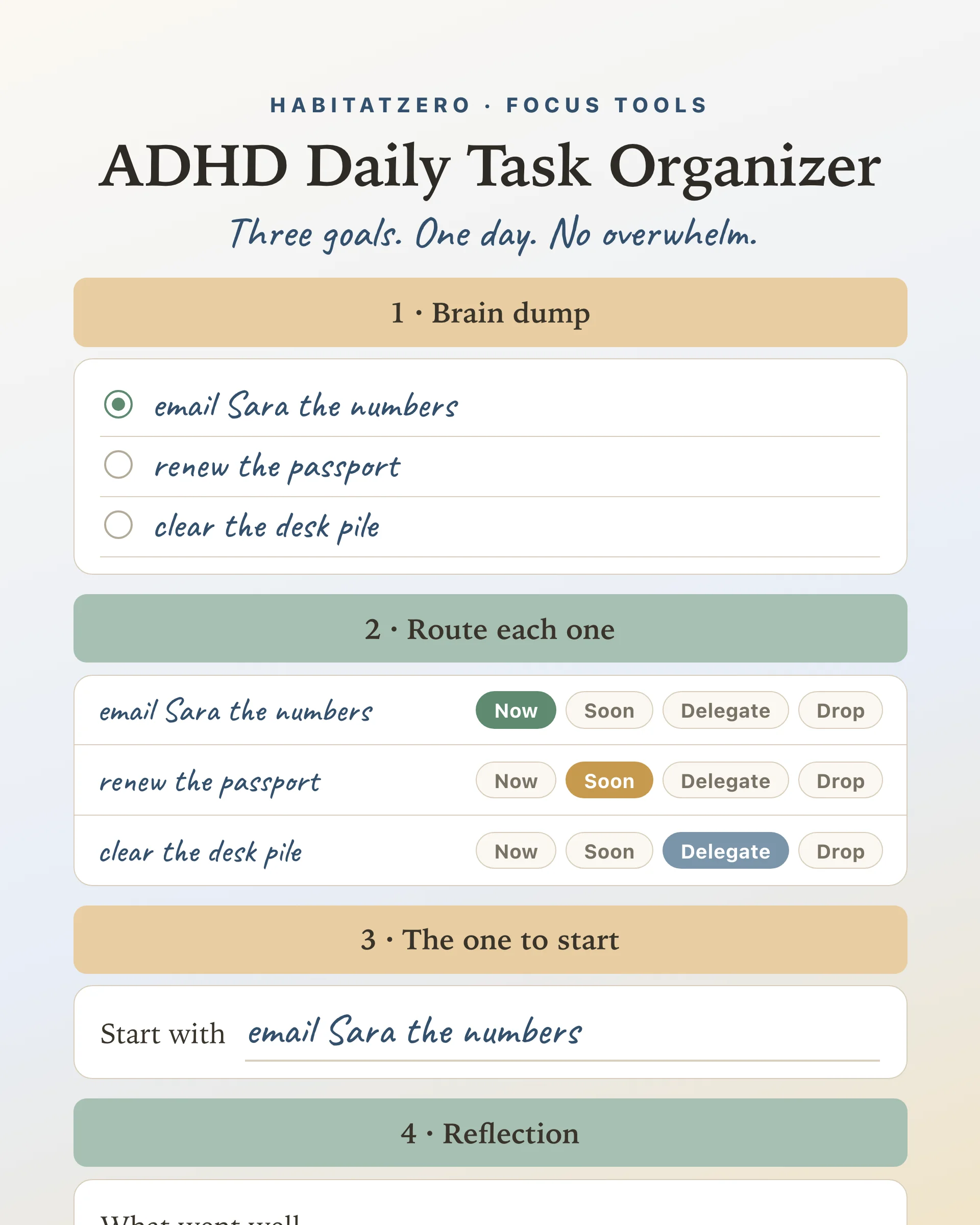
Write the menu on a day with energy to spare. Order from it in the gap between tasks, in the mid-afternoon slump, or whenever you notice you have picked up the phone without deciding to. If the trouble is a specific task you keep circling, Deal With Your Brain is built for that negotiation, and if the day has no shape at all yet, start with the ADHD Daily Task Organizer and use a side from your menu to get through the dull parts.
A menu won't fix a hard week. It will make sure that the next time you need something, the list is already written.
It is a short list of activities that reliably lift your mood or energy, sorted like a restaurant menu by how much time they take. You write it on a good day so that on a flat day the choosing is already done.
The idea was popularized by Jessica McCabe of How to ADHD together with ADHD coach Eric Tivers, who called it a dopamenu. This page is an independent worksheet for practicing the idea and is not affiliated with either of them.
Starters take about five minutes. Mains take half an hour or more and leave you fuller. Sides run alongside a dull task, like a playlist for chores. Desserts are easy to overdo, so they come with a timer. Specials are occasional and planned ahead.
The name is a metaphor, not a measurement. What the menu really does is remove a decision at the moment deciding is hardest, which is close to what therapists call activity scheduling.
The page shows a filled-in preview you can explore. To build your own menu and keep it, personalize it in HabitatZero. It is free.
By the team behind Fabulous, the science-based self-care app used by over 30 million people.