ADHD Daily Task OrganizerFocus & ADHD · ~10 min
About this template · Updated July 2026
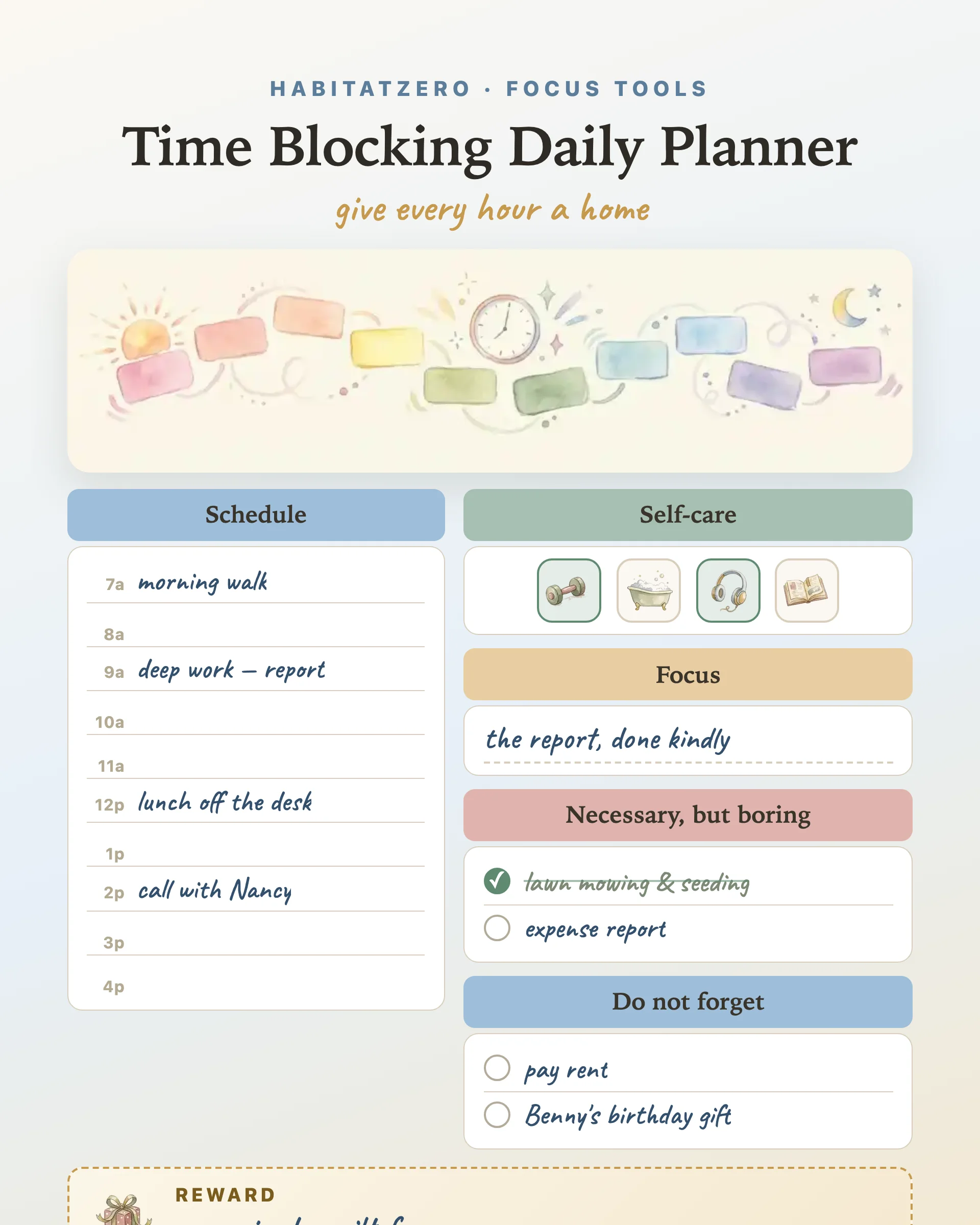
A to-do list tells you what. It never tells you when — which is why lists roll over, week after week, carrying the same items like sediment. Time blocking fixes the missing dimension: every task gets a home on the clock, and suddenly the day has a shape you can see.
This planner is a single interactive page built around that idea, with an hourly schedule down one side and the small supporting casts of a real day — self-care, reminders, people, a reward — down the other.
The schedule runs from 6am to 9pm. You are not supposed to fill it. Write in the blocks that already exist — the standing meeting, the school run, lunch — then place one or two blocks deliberately: the deep-work hour, the walk. Four to six real blocks make a strong day; the empty rows between them are where the day breathes.
The reason this works is almost embarrassingly simple: a task with an appointment stops competing with everything else. "Write the report" on a list fights forty other items for your next free moment. "Report, 9 to 11" fights nothing — at 9, it's just what's happening.
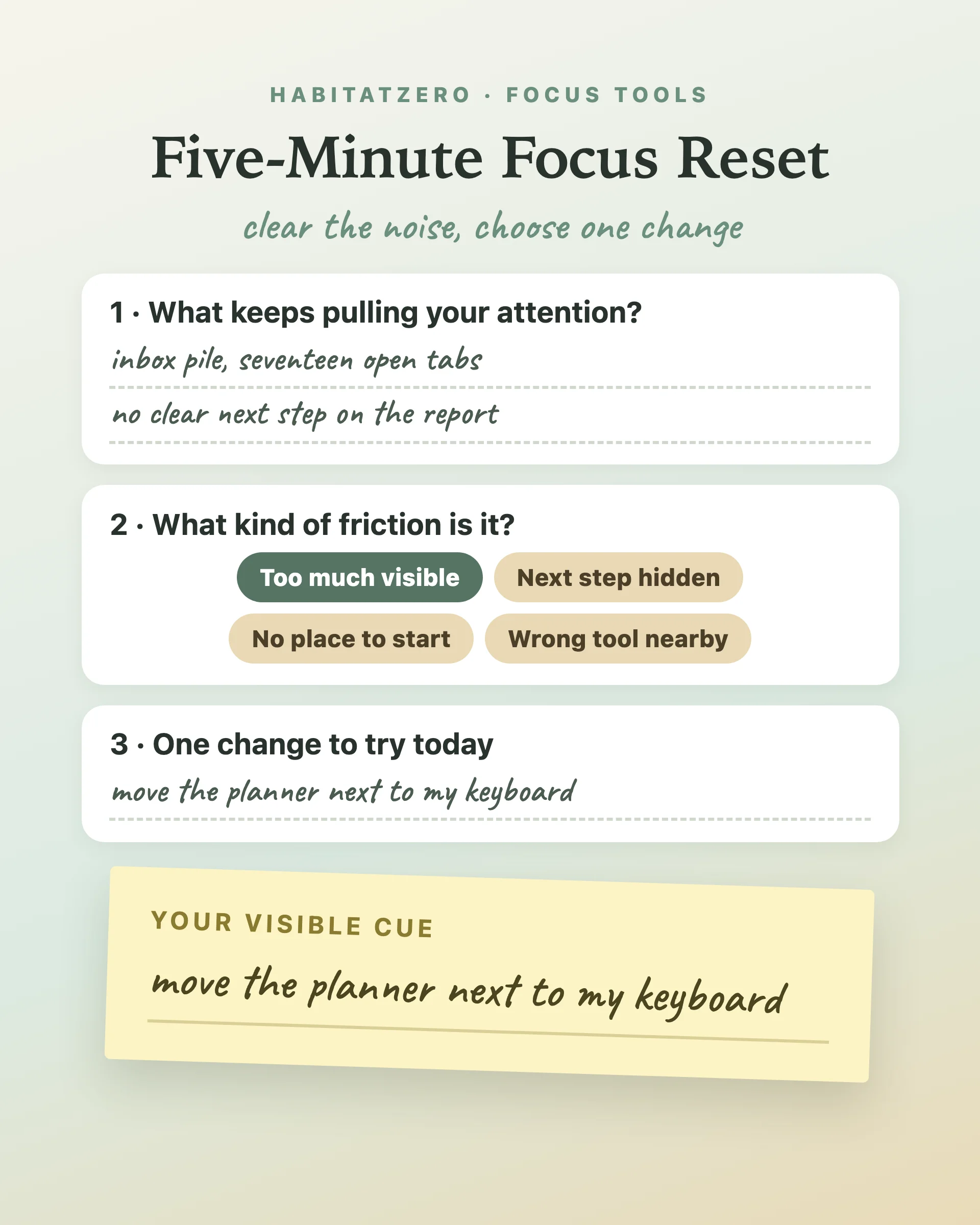
Every day carries one or two tasks that are necessary but genuinely boring — the expense report, the form, the lawn. They're rarely hard; they're just flavorless, so they lose every attention auction to something shinier. Giving them their own labeled box does two things: it stops them from contaminating the rest of the list, and it shrinks them — three lines is the maximum, because more than three boring tasks in one day is a planning error, not a virtue.
If one still won't budge, tap Make it less boring and the planner will suggest a playful two-minute opening move — because the boring task's whole power is the moment before you start it.
The self-care tiles — movement, music, a bath, stillness, a walk — sit at the top of the page on purpose. On a well-run day they're not what's left over after work; they're load-bearing blocks that keep the other blocks upright. Tapping them as they happen builds an honest record of whether the day contained a person or just a worker.
The Do not forget and People to respond to boxes catch the two categories that most reliably slip through hourly plans: tiny obligations with deadlines (rent, the gift) and humans quietly waiting on a reply. Naming the person — not "answer emails" but Nancy — turns a vague guilt into a two-minute block.
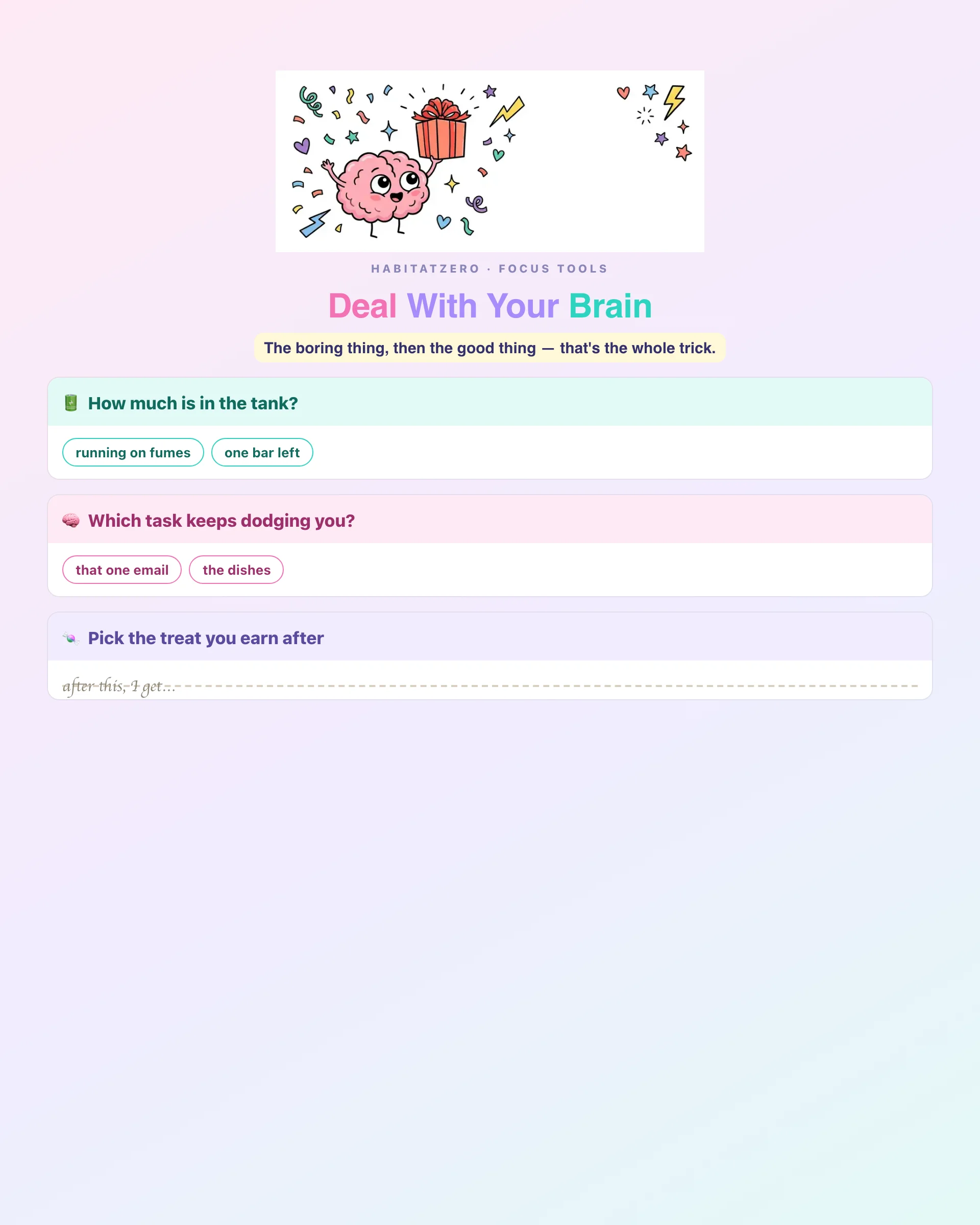
The last box on the page is the reward: the episode, the long shower, the good bread. Write it in the morning, when the day is still a plan. It matters more than it looks — a named reward gives the day's blocks somewhere to land, and it draws a line under the work. Days that end nowhere tend to leak.
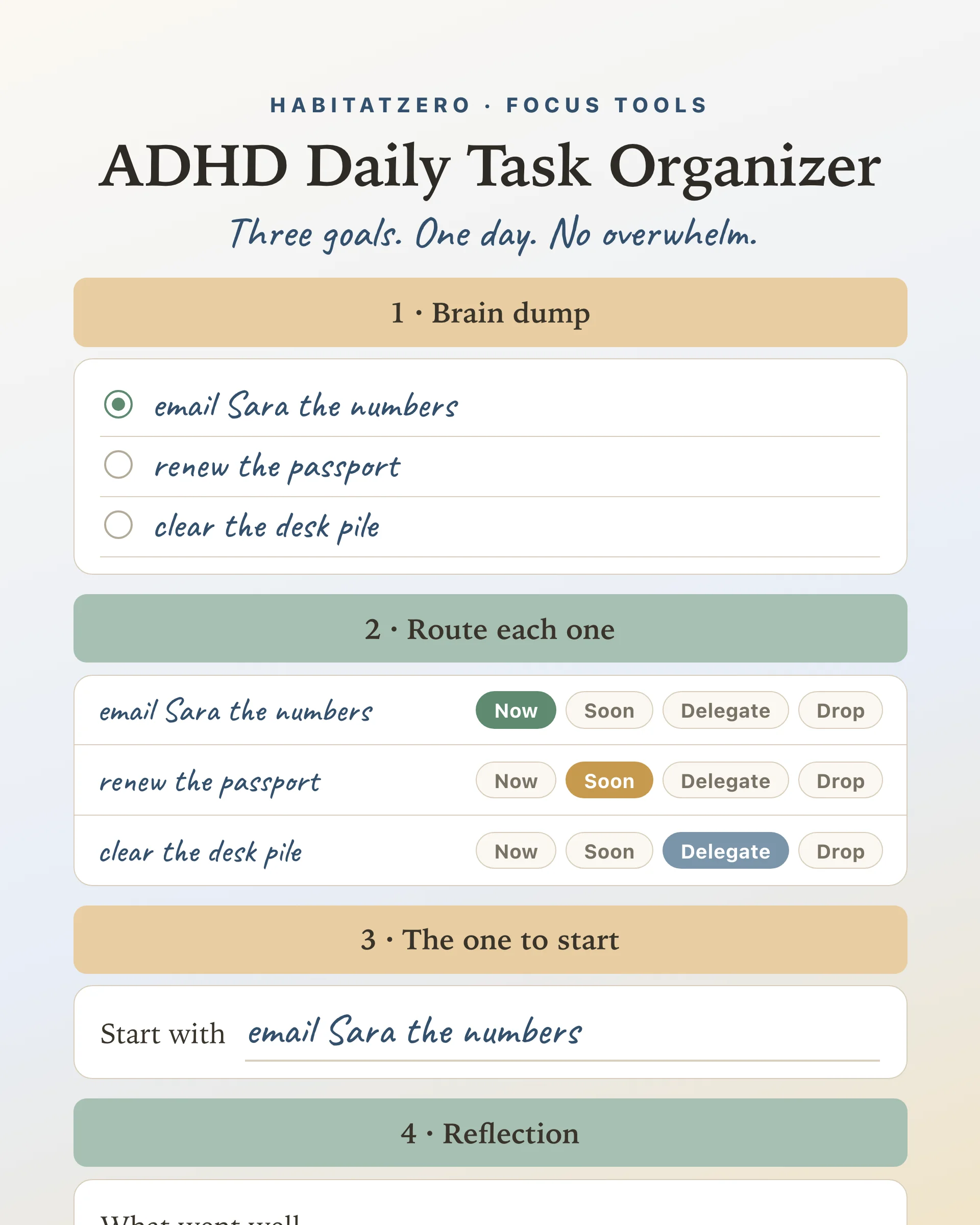
Tomorrow, the page is blank again. That's the point: a daily time-blocking practice isn't about executing one perfect day, it's about getting a little more honest each morning about what a day actually holds. If your list itself is the problem — too many thoughts, no idea where to start — begin with the ADHD Daily Task Organizer and bring the survivors here to be given their hours.
Time blocking means giving each task a home on the clock instead of leaving it on an open-ended list. A list says what; a block says when — and a task with a when is far more likely to happen.
Coarse is fine. Most days need only four to six real blocks — the anchors like meetings, deep work, lunch, and a walk. The empty hours between them are breathing room, not failure.
Blocks are written in pencil, not stone. When something explodes, move the blocks rather than abandoning them — the plan's job is to make the trade-offs visible, not to be obeyed.
Open the template in HabitatZero and every block, tick, and line saves automatically to your private notes and syncs across devices, so yesterday's plan is always there to learn from.
By the team behind Fabulous, the science-based self-care app used by over 30 million people.