Leaves on a StreamEmotional Fitness · ~3 min
About this template · Updated September 2026
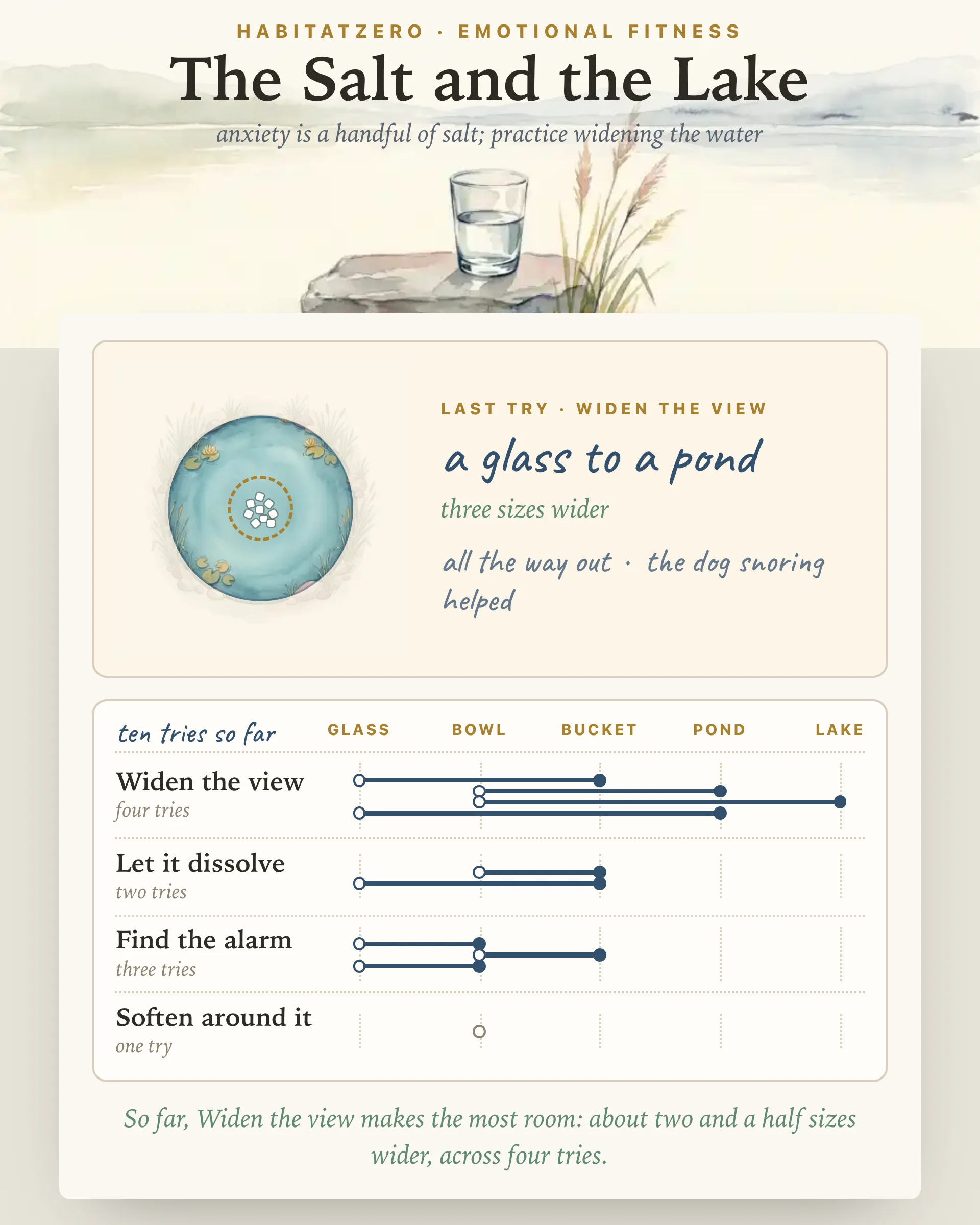
Mindfulness teachers like to retell an old story. Stir a handful of salt into a glass of water and the water is too bitter to drink. Stir the same handful into a lake and you would never taste it. The salt never changed. The amount of water around it did.
Anxiety behaves a lot like that salt. When it spikes, it seems to fill everything: your chest, the next hour, the whole field of your attention. Mindfulness exercises for anxiety rarely make the salt vanish, and it pays to be wary of anything that promises they will. What they can do is widen the water, so the same worry sits in more room.
Each practice aims at a different thing anxiety does.
Find the alarm suits anxiety that lives mostly in the body: the tight chest, the churning stomach, the hands that will not settle. You locate the loudest spot, tap the place and the word that fits it, then watch it for five slow breaths the way you might watch weather move over a hill. The point of calling a sensation tight or buzzing, instead of proof that something is terribly wrong, is to pry the feeling apart from the story glued to it.
Let it dissolve suits anxiety that runs on what-ifs. You rest on your breathing and tap the water once whenever a worry turns up, watch the grain melt, and come back. You never answer the thought or finish it. At the end, the count shows how many thoughts came and went while you solved none of them.
Widen the view suits the moment everything shrinks to one thing. Anxiety narrows attention onto whatever feels threatening; this practice keeps that in view and adds more around it, one ring at a time: your breath, your body, the sounds, the space you are in.
Soften around it suits bracing. Much of what makes anxiety so tiring is the fight against it, the clenched jaw, the hunched shoulders, the breath held high. You name the feeling in one word, find where you are bracing, and loosen that place a little.
Before you begin, read the water. Tap how much room surrounds the anxiety right now, from a glass, where it is all you can taste, to a lake, where it is there and so is everything else. Pick the practice that matches what the anxiety is doing, follow its steps for a minute or three, then read the water again.
Every try lands as a line on a shoreline chart, from where the water started to where it finished, with one row for each practice. After a handful of tries, the page names the practice that has made the most room for you so far and flags any that has left you with less room more often than not. The record holds twenty-four tries, and you can take an old one back to make space.
Research backs mindfulness for anxiety, within limits worth knowing. A review of thirty-nine studies found that mindfulness-based therapy moderately reduced anxiety symptoms, measured as change from the start of treatment to the end, which on its own cannot separate the practice from people simply improving with time. A stricter review that kept only trials with active comparison groups found small to moderate improvements in anxiety from mindfulness meditation programs, and no evidence that meditation outdid other active treatments such as medication, exercise or other behavioral therapies.
Short practices are a smaller lever. A meta-analysis of brief mindfulness training, from a single session up to two weeks, found a small effect on negative feelings such as anxiety, stress and rumination, and that effect shrank close to nothing once the authors corrected for unpublished studies that found no benefit. That is the honest case for this page. Nobody can promise which two-minute practice will help you, so the page keeps track instead of guessing.
Mindfulness carries some risk, too. The National Center for Complementary and Integrative Health reports that in one review about eight percent of participants had a negative effect from meditation, most often anxiety or depression. If turning inward makes the alarm louder, choose a practice that points your attention outward, and stop if it keeps happening.
These exercises are practice, not treatment, and they will not cure an anxiety disorder. When worry is shaping your days, costing you sleep or work, or arriving as panic, bring it to a doctor or therapist. New or severe chest pain, fainting or trouble breathing call for medical care before any practice. And if anxiety ever comes with thoughts of ending your life, call or text 988 in the US, or your local emergency number, right away.
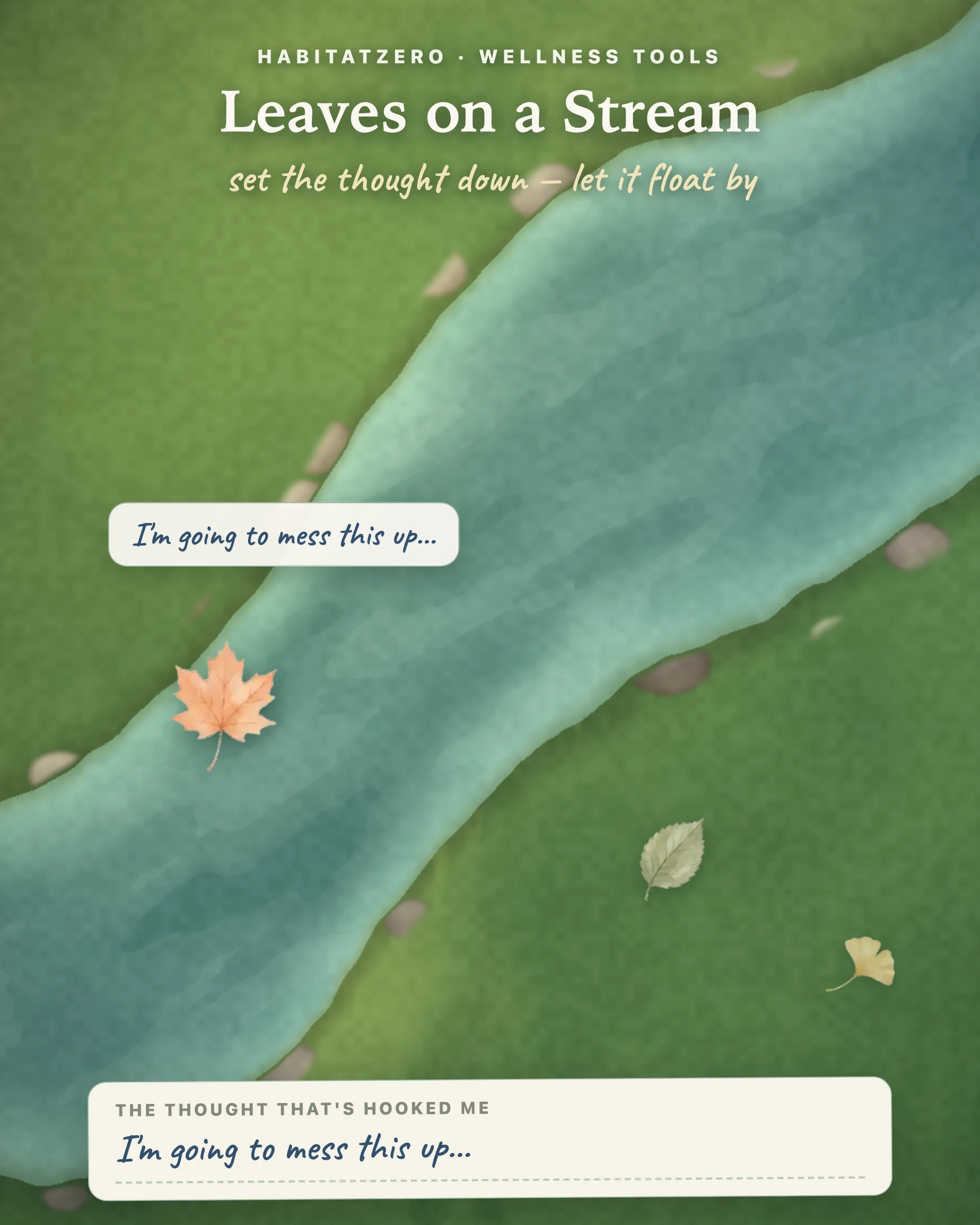
Learn the steps on an ordinary day, while they are easy to follow, then reach for them when anxiety spikes: before a hard phone call, in a waiting room, awake at three in the morning. When one sticky thought is the whole problem, Leaves on a Stream gives it somewhere to float away. When the body needs to move more than it needs watching, try Somatic Exercises for Anxiety. And when two minutes starts to feel short, The Meditation Timer will hold a longer sit.
Short ones that meet the anxiety where it lives. One has you locate the alarm in your body and describe it in plain sensation words. Another notes each what-if with a single tap and lets it go unanswered. A third keeps the worry in view while adding your breath, your body, the sounds and the room around it. The last loosens the spot where you brace against the feeling.
Somewhat, and more with steady practice than with one try. In trials, mindfulness programs lasting several weeks eased anxiety symptoms by a small to moderate amount, while single short sessions showed smaller effects. Treat it as a skill that grows with repetition, not as a replacement for care when anxiety is running your life.
One to three minutes is plenty for each practice here. Brief and frequent is easier to keep up than long and rare, and rehearsing on ordinary days makes the steps familiar enough to find in the middle of a spike.
Occasionally, yes. In one large review of meditation studies, a minority of participants reported unwanted effects, most often more anxiety or depression. If a practice leaves you with less room, switch to one that points attention outward, such as widening the view, and tell a clinician if it keeps happening.
Not to read the practices, since every step is written out on this page. Logging your before and after water and letting the chart work out which practice suits you happens in HabitatZero, which is free.
By the team behind Fabulous, the science-based self-care app used by over 30 million people.