Leaves on a StreamEmotional Fitness · ~3 min
About this template · Updated July 2026
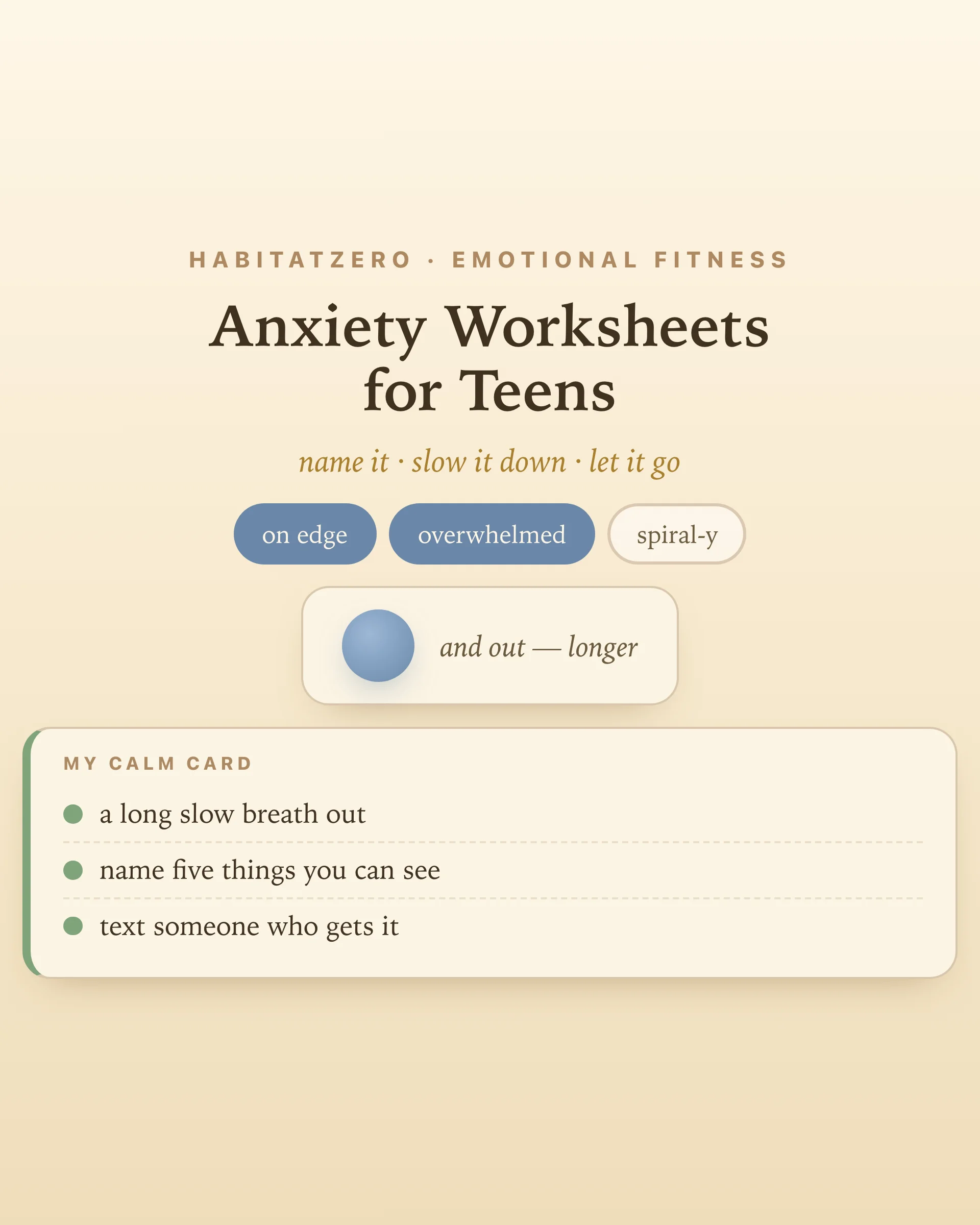
School, friendships, family, the future — being a teenager means a lot of pressure landing at once, and anxiety is a normal response to it. These three short exercises are tools, not treatment: ways to name what is happening, slow it down, and let some of it go. They run in the browser, nothing you write is saved or sent anywhere, and each takes under three minutes.
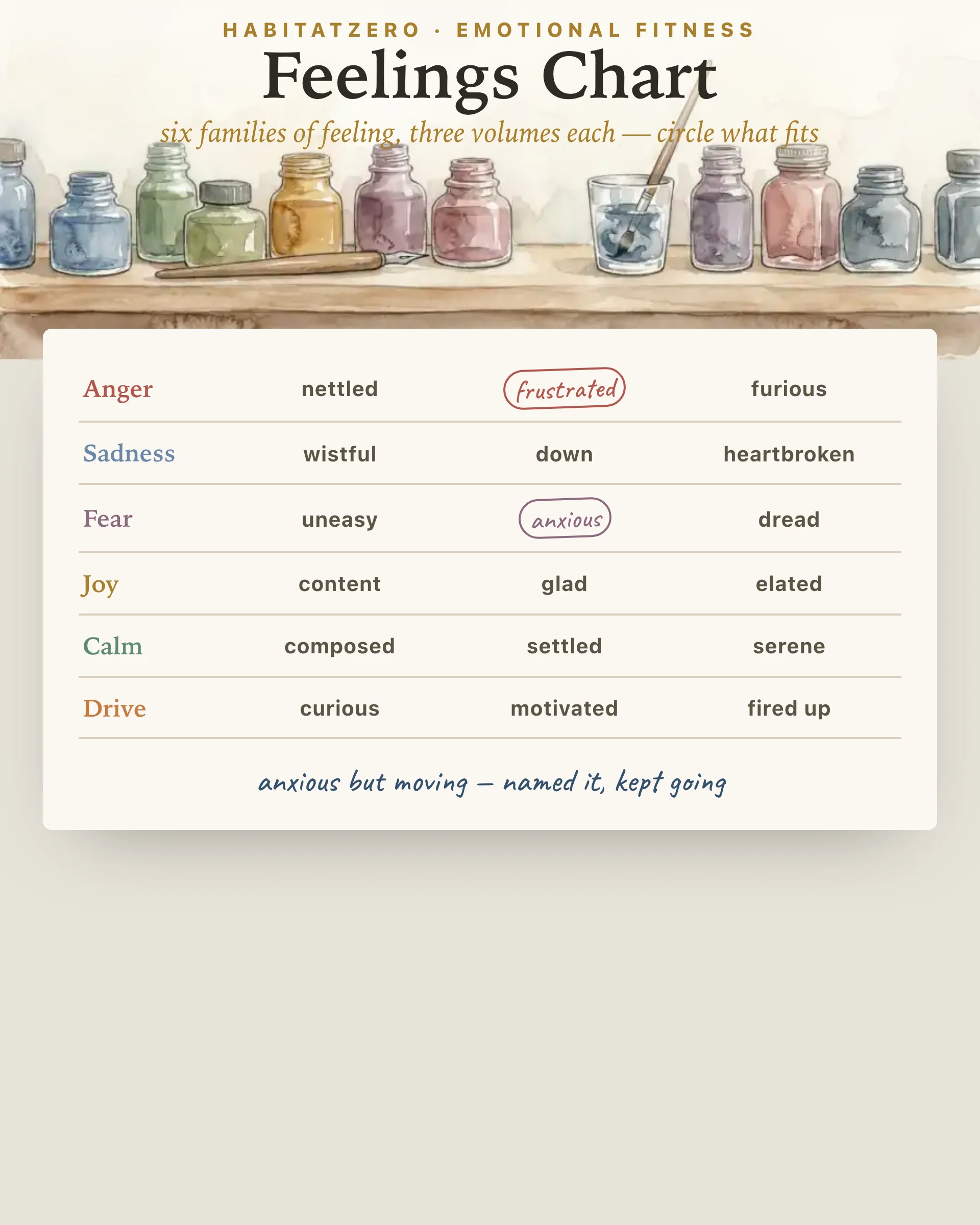
The first exercise is a feelings check-in: a grid of words — on edge, overwhelmed, spiral-y, can't focus, all of the above — and you tap the ones that fit. That's the whole exercise, and it's less trivial than it looks. Neuroscience calls it affect labeling: putting a feeling into words measurably dials down the brain's alarm response, like turning the volume knob just by reading the label on it. A feeling with a name is a thing you're having. A feeling without one is a thing that's having you.
The second exercise is sixty seconds of paced breathing: in for four, out for six, with a circle that grows and shrinks so your body has something to follow. The out-breath is longer on purpose — slow breathing with extended exhales is one of the most reliable ways to nudge the nervous system from alarm toward steady, and it works whether or not you believe in it, which is the best property a tool can have. One minute. About six slow breaths. That's the reset.
If breathing exercises click for you, two neighbors go deeper: box breathing for a squarer, steadier rhythm, and 5-4-3-2-1 grounding for the moments when your head needs to come back to the room.
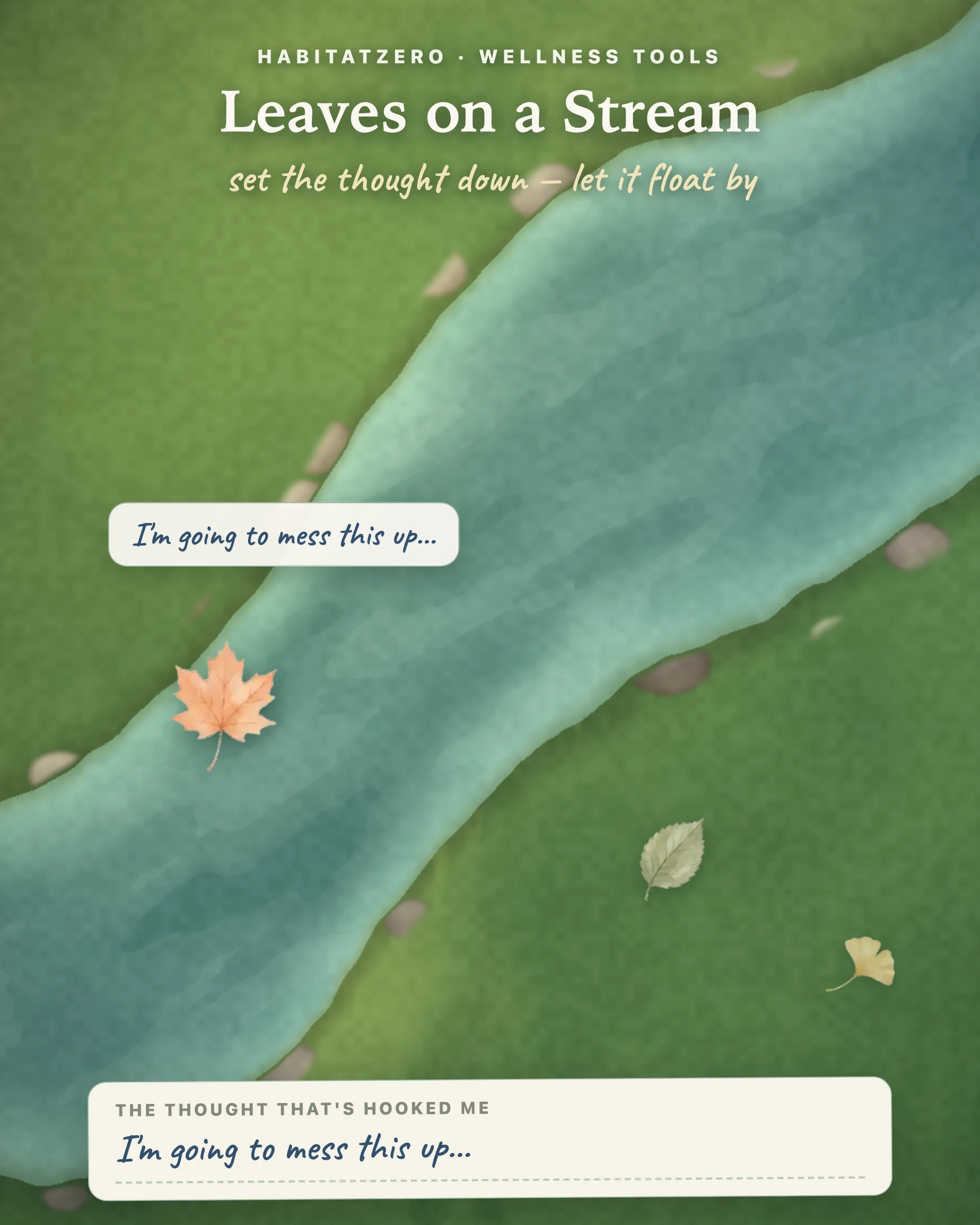
The third exercise is write-and-release: type whatever is circling — the test, the group chat, the thing you said — and release it. The text dissolves. It isn't saved, synced, logged, or sent anywhere; the box stores nothing, on purpose. Private writing only works when it's actually private, so this one is built to forget.
Then, for the days that need it, the calm card: pick your three go-to moves — longer exhales, five things you can see, cold water on the wrists, texting someone who gets it — and download them as a pocket card for your phone. Future-you, mid-spiral, does not want to improvise. Present-you can pack for them.
If you found this page looking for resources for a teen in your life: these exercises work best offered, not assigned. They are designed for a teen to use privately — the write-and-release exercise stores nothing, on purpose. They complement professional support; they do not replace it.
These worksheets are self-help tools, not therapy, and cannot diagnose or treat anxiety. If anxiety is getting in the way of school, sleep, or friendships most days, the strongest move is telling an adult you trust — a parent, school counselor, or doctor. If you are in crisis or thinking about hurting yourself, call or text 988 (US) right now, or reach your local emergency number.
Three short exercises that each take under three minutes: a feelings check-in that helps you name what is happening, a sixty-second paced-breathing reset, and a write-and-release box whose text dissolves instead of being stored. There is also a calm card builder — pick your three go-to moves and download them as a pocket card. They are self-help tools, not therapy.
No. The write-and-release exercise stores nothing, on purpose — the text dissolves when you release it and is never saved to the page or sent anywhere. The feelings you tap and the calm-card moves you pick also stay on your screen only. Closing the page clears everything.
You tap start, and for one minute the circle paces you: expand for a four-count breath in, shrink for a six-count breath out. The exhale is deliberately longer than the inhale. A countdown shows the time remaining, and the reset ends on its own — about six slow breaths.
There is a section on the page written for you. The short version: these exercises work best offered, not assigned, and they are designed for a teen to use privately — which is why the writing exercise stores nothing. They complement professional support; they do not replace it.
Yes — free, in your browser, no signup and no account. The calm card downloads as an image you can keep on your phone. Because nothing is stored, there is nothing to sync; the exercises are simply there whenever the page is.
By the team behind Fabulous, the science-based self-care app used by over 30 million people.