
The Overwhelm Recovery ProtocolWellness & Routines · ~5 min
About this template · Updated November 2026
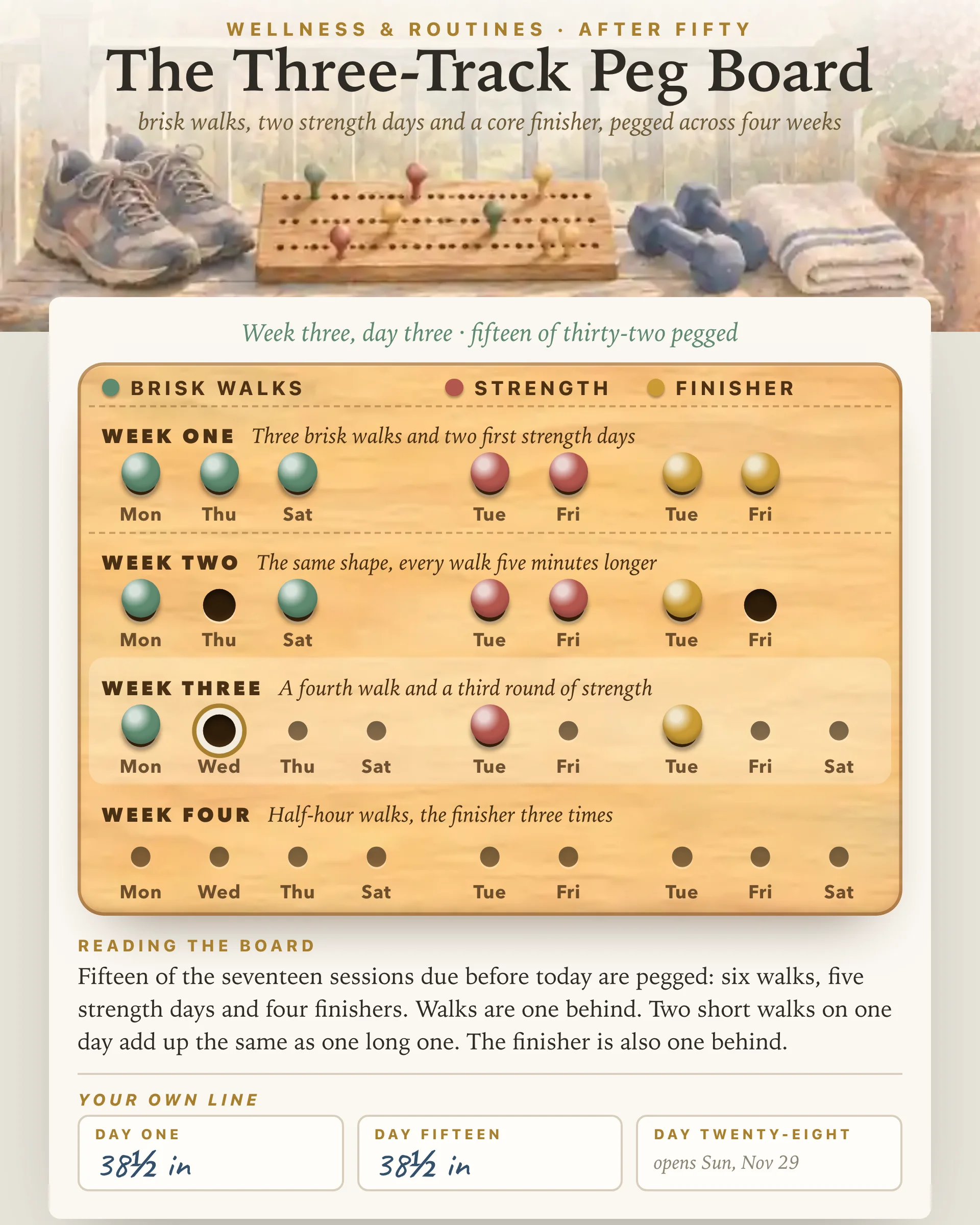
Search for the three best exercises to lose belly fat after 50 and you will find plenty of confident lists. Here is the plain answer first: no exercise takes fat from your middle in particular. What the research does support is a mix of three kinds of movement, kept up for months: brisk walking on most days, strength work twice a week, and a few minutes of core training. This page turns that mix into four weeks you can follow one peg at a time.
With age, fat tends to move as well as grow. In a four-year study that followed women through the menopausal transition, visceral fat, the deep fat packed around the organs, rose significantly only in the women who became postmenopausal, and their daily activity had started to fall a couple of years before. For men and women alike, quieter changes stack up too: fewer active hours, a little less muscle, lighter sleep. It explains why a waist can thicken while the scale barely moves.
No belly exercise works on the spot you care about. In a six-week trial, sedentary adults did seven abdominal exercises five days a week; their abdominal endurance improved, but belly fat, waist circumference and overall body fat stayed where they were. The study was small and its volunteers were eighteen to forty, but the lesson holds: fat comes off the whole body, in an order you do not choose.
The better news concerns the deep fat. A review pooling 117 studies found that exercise and dieting both reduce visceral fat, and that exercise did so even where body weight hardly changed. That is why the scale is a poor judge of a walking habit. Another review compared kinds of training and found that aerobic exercise reduced visceral fat, while resistance training on its own showed no clear effect. So the walks carry the belly side of this plan, and the strength days are there to keep the muscle that makes stairs and grocery bags easy.
Exercise is only part of it. What you eat, how you sleep and plain time all shape a waistline too; this page simply makes the movement steady enough to matter.
Week one asks for an hour and a half in all, week four for about two and three-quarter hours. That is a step toward the World Health Organization's guidance of at least 150 minutes of moderate activity a week plus two days of strength work.
Press start and today becomes day one. The board has three tracks of holes, one row per week, with the weekday printed under every hole and a gold ring around today's. Do the session, tap the hole or the button in the today card, and a peg drops in. A forgotten peg can still go in later, until the four weeks end. A peg tapped twice comes out.
Under the board, a short reading tallies what is due, names any track that is falling behind and says how much of this week is pegged. When several tracks are behind, strength is named first, since it is the only part of the week that works on muscle.
Your own line is optional: a waist reading on day one, day fifteen and day twenty-eight, taken just above the hip bones after an ordinary breath out. The page says plainly whether the tape moved, reminds you that it shifts with breath, meals and the hour, and never sets a target.
If you have had a fall, a dizzy spell or a hip or knee replacement, or you live with a heart or blood pressure condition or pain that lingers, talk with a doctor or physical therapist before your first session. Stop any move that hurts. Keep a sturdy chair, the stair rail or the counter within reach for step-ups, marches and anything else you do standing, and choose the counter finisher on days when getting down to the floor feels unsure.
Use the board when you want a first month, not another list of moves. If you would rather set your own sessions week by week, the Training Consistency Planner is built for that. If walking is the part you enjoy, the Walking Plan for Weight Loss goes further with it, and if the strength days become your favorite, Strength Training for Women Over 50 is a fuller next step. If standing for long is hard, The Full Circle Chair Plan keeps every session in a chair.
No three moves take fat from your middle in particular. If you want a three, make it three kinds of exercise: brisk walking or other steady cardio on most days, strength training twice a week, and a few minutes of core work. In studies, steady aerobic exercise does the most for the deep fat around the organs, strength work keeps the muscle you have, and core work builds a sturdier trunk without trimming it.
Slowly, and from the whole body at once. Regular moderate exercise, strength work, a steady way of eating and enough sleep all play a part, and none of them works on the belly alone. For many women the years around menopause move fat toward the middle, which is one reason a waist can thicken while the scale hardly changes. Give any plan months, not weeks, before you judge it.
Not on their own. In one small trial, young adults did abdominal exercises five days a week for six weeks; their stomach muscles gained endurance, but their belly fat and waist size stayed the same. Core work earns its place for strength and steadiness, which is why this plan keeps it to a five-minute finisher.
Often, yes. A large review of trials found that exercise trimmed the deep fat around the organs even in studies where body weight barely shifted. That is one reason this board counts sessions instead of weighing you. A tape around the waist moves slowly and wobbles from day to day, so read it over a month or more.
Most people over fifty can begin a plan this gentle, but see your doctor or a physical therapist first after a fall, a dizzy spell or a joint replacement, or if you have a heart or blood pressure condition or pain that will not settle. Keep a chair, rail or counter within reach for the standing moves, and stop anything that hurts.
By the team behind Fabulous, the science-based self-care app used by over 30 million people.


