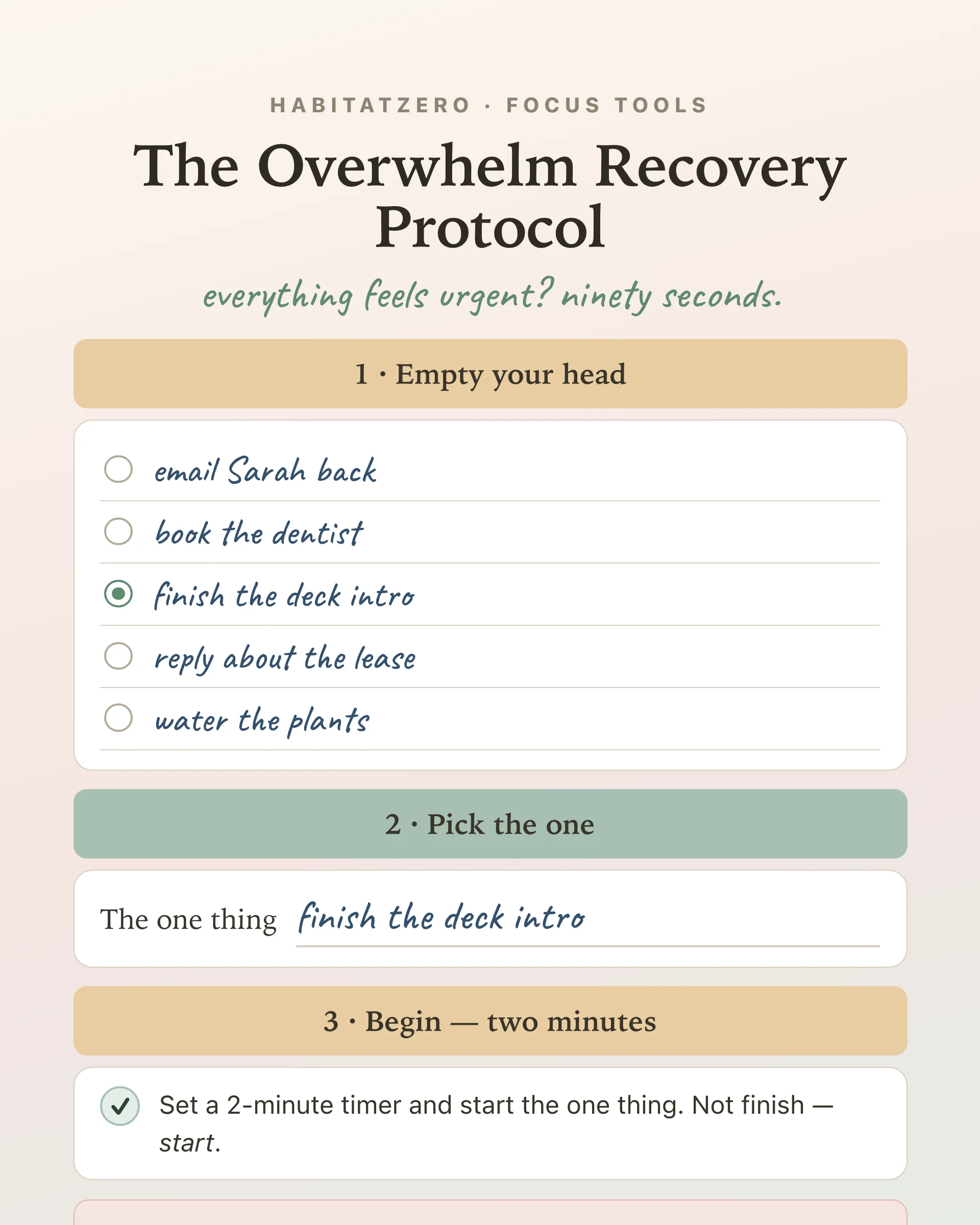
The Overwhelm Recovery ProtocolWellness & Routines · ~5 min
About this template · Updated July 2026
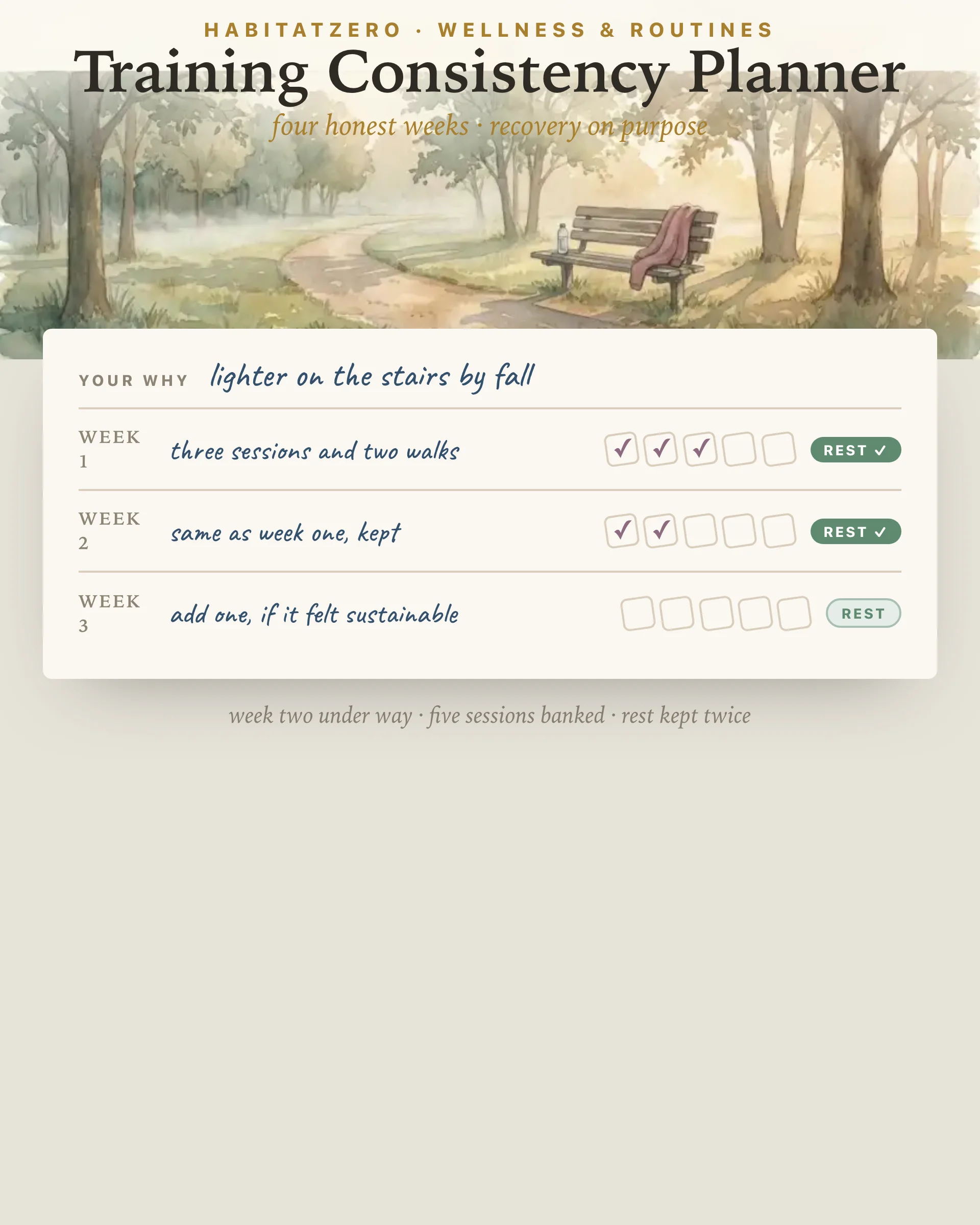
Search for a weight-loss workout plan and you will find two kinds of pages: the ones that promise a transformation in four weeks, and the ones selling you the next plan when the first one collapses. This page is neither, on purpose. It is a planner for the one thing a plan can actually control — whether you keep showing up — built for someone whose goal happens to be weight loss, stated in their own words on the first line.
Here is what the research actually says, because a planner that needs you to believe otherwise is not on your side. Exercise alone, without dietary change, typically produces modest weight loss — meaningful for health, smaller than the ads imply, and highly individual. Reviews of the evidence, including the American College of Sports Medicine's position stand, put worthwhile weight-management effects at roughly 150 to 250 minutes of moderate activity a week, with more helping more — and training is one of the strongest predictors of keeping weight off once it is lost. Meanwhile the fitness, strength and health improvements arrive regardless of what the scale does. So this planner makes no outcome promises. It structures the input — the sessions — because that is the lever that exists.
The block is deliberately small. Your why, written once at the top, in your language — the line you will reread on the morning the alarm loses. Then four weeks, each with a handwritten shape (three sessions and two walks), five session stamps, and one promise most plans forget: REST KEPT, a button you press with pride, because adaptation happens in recovery and the all-out first week is how programs die in the second.
Growth is earned, not scheduled. Week three's placeholder says it plainly: add a session if last week felt sustainable. A plan that grows slower than your enthusiasm is a plan that reaches week four — and week four is proof of a rhythm, not a finale.
No calorie targets, no meal rules, no measurements — not because those things never matter, but because they belong to you and, where health is involved, to professionals who know your situation. A planner that prescribes your body from a template is overreaching; one that gets you moving consistently for a month is doing its actual job.
When the block ends, start the next one at the level the stamps proved. For the week-by-week writing itself, the weekly workout planner shapes individual weeks in more detail, and the daily habit tracker can guard the showing-up habit underneath it all.
Your why. Four honest weeks. Recovery on purpose. The rest is arithmetic that no worksheet should promise for you.
Honestly: no planner can promise that, and the research is clear that exercise on its own usually produces modest weight change — what you eat carries most of the energy-balance story, and bodies vary. What training reliably delivers is fitness, strength, health markers and a large role in keeping weight off once lost. This planner owns the piece that is actually plannable: consistent sessions, week after week.
Public-health guidance points to at least 150 minutes of moderate activity per week, and weight-management research suggests benefits scale with more — roughly 150 to 250 minutes for modest effect. Practically, that is the three-to-five sessions this planner stamps per week, with walks counting fully. Start at three; earn the add.
Because the plans that skip rest do not reach week four. Recovery is when training turns into adaptation, and the all-out first week is the most common reason a program collapses. The REST KEPT promise makes recovery a stamped achievement rather than a guilty absence — which is what keeps the sessions coming.
Start the next block: keep your why or rewrite it, set week one to whatever last block's sustainable level was, and let the stamps accumulate again. Four weeks is long enough to prove a rhythm and short enough to feel finishable — blocks, not resolutions.
The four weeks run free right here in the browser. A HabitatZero account is only needed to keep your stamps and your why across visits, to personalize the sheet, and to print your block.
Yes — a program is a routine repeated across weeks with intent, and that is the shape of the four-week block. Write the routine once, let each week carry its sessions, and print the blank block if you want your workout routine printable. The programming decisions stay yours; the template holds them still.
By the team behind Fabulous, the science-based self-care app used by over 30 million people.