The Overwhelm Recovery ProtocolWellness & Routines · ~5 min
About this template · Updated September 2026
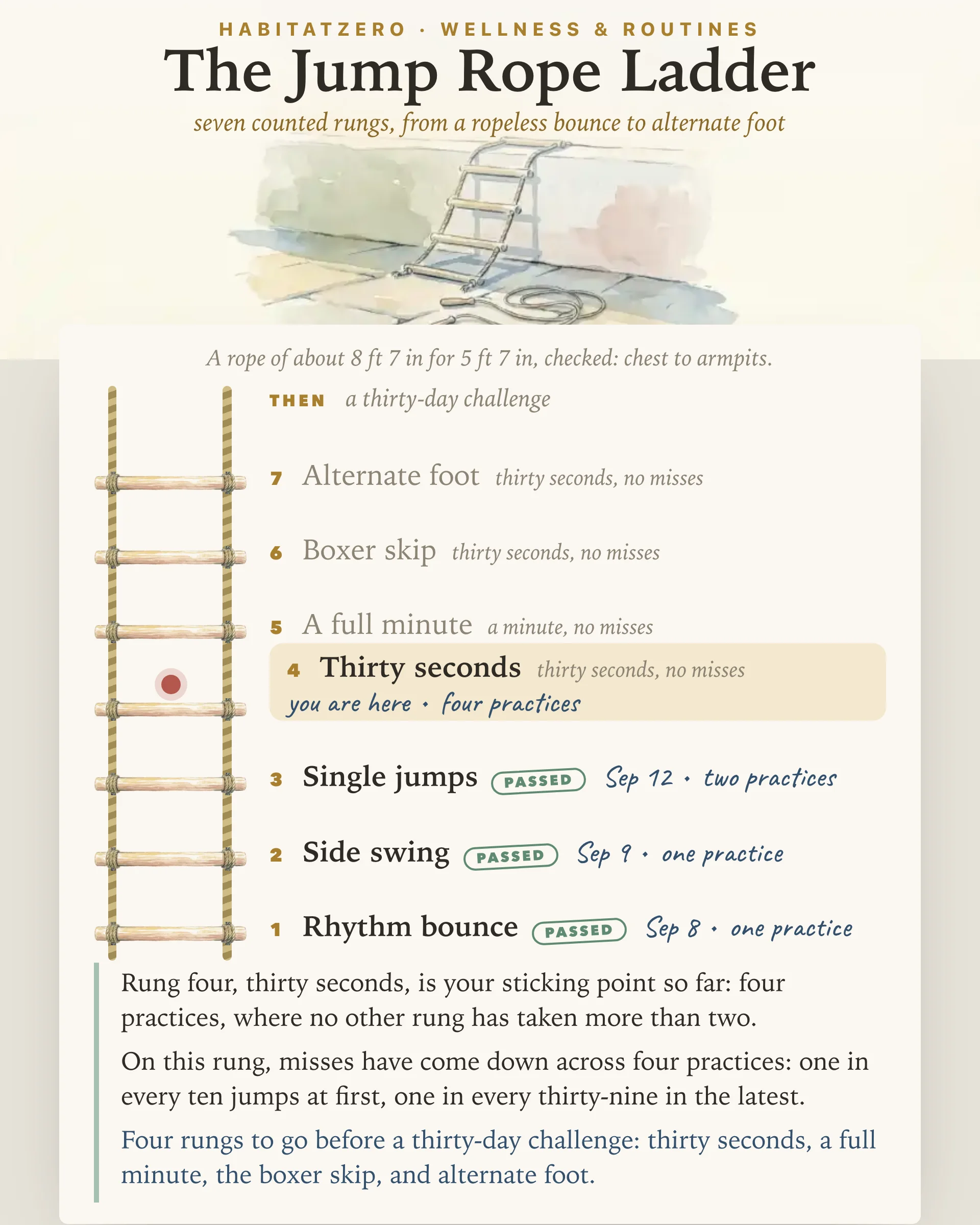
The hard part of jumping rope at the start is timing, not fitness. At an easy pace the rope comes around close to a hundred times a minute, and the whole skill is one small, low hop that meets it each time. This page splits that timing into seven rungs, each with a count that says when it is done, and a round timer keeps early practices short.
The usual starting point for beginners is a rope about three feet longer than you are tall, and Nike's sizing guide adds the check that settles it: stand on the middle of the rope with your feet together, pull it taut, and the ends of the cable should reach about your armpits or the middle of your chest. A rope that stops short of that may never touch the floor and is easier to trip on, while one that reaches higher turns slowly and hides the rhythm. Between two sizes, learn on the longer one.
Four cues hold on every rung. Keep your elbows close to your ribs, hands just in front of your hips. Turn the rope with small circles from the wrists rather than big swings of the arms. Keep the hop low: in Buddy Lee's Jump Rope Training, the basic bounce clears the rope by no more than three-quarters of an inch. And land lightly on the balls of your feet, knees a little bent. After each practice the page asks which cue slipped most, and flags the one that keeps slipping.
The ladder starts without a rope: the rhythm bounce is small hops with your wrists circling as if they held the handles, passed on thirty even bounces. The side swing puts both handles in one hand, and you bounce each time the rope brushes the floor beside you, learning its beat with nothing to trip over; twenty swings on the beat pass it. Single jumps come next, one at a time and then in short strings, as Lee suggests for starting the bounce step, and pass at ten in a row.
The upper rungs are held for time: thirty seconds without a miss, then a full minute. The boxer skip rocks your weight from one foot to the other every two turns, and alternate foot steps over the rope one foot at a time, like a light jog in place. Lee's advice is to master the bounce before the alternate-foot step, which is why that step sits at the top.
The first three rungs use five rounds of twenty seconds on and forty off, the minute rung three rounds of a minute each way, and the rest thirty-second rounds. The timer calls each round, adds a row when it ends, and you type that round's jumps and misses while you rest. The pass is checked against those rows: every rung needs one round with no misses, and on the counted rungs that clean round must also reach the count, so a round full of stumbles never moves the ladder.
The reading names your sticking point, the rung that has taken the most practices, and shows whether your misses are falling, counted as one miss in every so many jumps so long and short practices compare fairly. It also counts the rungs left before a thirty-day challenge, the natural next step once you can hold a clean minute and switch feet.
Jumping rope is hard work even when it is slow. The Compendium of Physical Activities rates a slow two-foot rhythm bounce, under a hundred skips a minute, at 8.3 METs, roughly eight times the energy you spend sitting still. Federal activity guidelines count anything from six METs up as vigorous, which is why the first rounds here last only twenty seconds.
The fitness research is encouraging but narrow. A 2022 systematic review and meta-analysis pooled 21 controlled trials with 1,021 participants and found small to moderate gains in resting heart rate, body fat, cardiorespiratory endurance, strength and jumping, with no clear effect on blood pressure or bone mass. Eighteen of those trials studied groups whose average age was under eighteen, and the shortest program lasted six weeks. It measured fitness rather than the skill itself, so it cannot promise an adult beginner a timeline; your own tally is the fairer measure.
Stop for sharp pain, or for pain that changes how you land, and have it checked if it returns. If you have joint or heart trouble, are pregnant, or have been told to take it easy, ask your clinician before the first round. Supportive athletic shoes and a wooden floor or rubber mat are kinder to your shins than bare concrete.
Open the ladder the day your rope arrives, or before it does, since the first rung needs none. A few short practices a week are plenty at the start. The Workout Calendar shows at a glance which days you practiced, and the 30-Day Habit Tracker helps if a daily session is the aim. After the top rung, the 12-Week Fitness Planner can hold a longer season with the rope in it.
Size the rope, then learn the timing before the jumping. Bounce on the balls of your feet with no rope, swing the rope at your side and bounce each time it brushes the floor, then jump it once at a time and build up to ten in a row. From there, hold the basic bounce for thirty seconds without a miss, then a full minute.
For a beginner, about three feet longer than your height. To check a rope you already own, stand on its middle with your feet together and pull it taut: the ends of the cable should come up to about your armpits or the middle of your chest. Lower than that and it is too short to clear your feet reliably, while a rope that reaches past your armpits turns slowly.
Short rounds with generous rest. The first rungs here use five rounds of twenty seconds of jumping and forty of rest, which comes to less than two minutes of actual jumping. Later rungs move to thirty-second rounds, and the minute rung uses three rounds of a full minute. Tally your jumps and misses as you go, so each practice has a number to beat.
Yes, and it is harder work than it looks. The Compendium of Physical Activities rates even a slow two-foot bounce at 8.3 METs, well above the six-MET line where federal guidelines start counting activity as vigorous. A 2022 meta-analysis of 21 trials found small to moderate gains in endurance and resting heart rate, though most of those trials studied children and teenagers.
This page shows a sample ladder you can read through. Timing your own rounds, tallying them and keeping your climb from one practice to the next happen in HabitatZero, which costs nothing to use.
By the team behind Fabulous, the science-based self-care app used by over 30 million people.