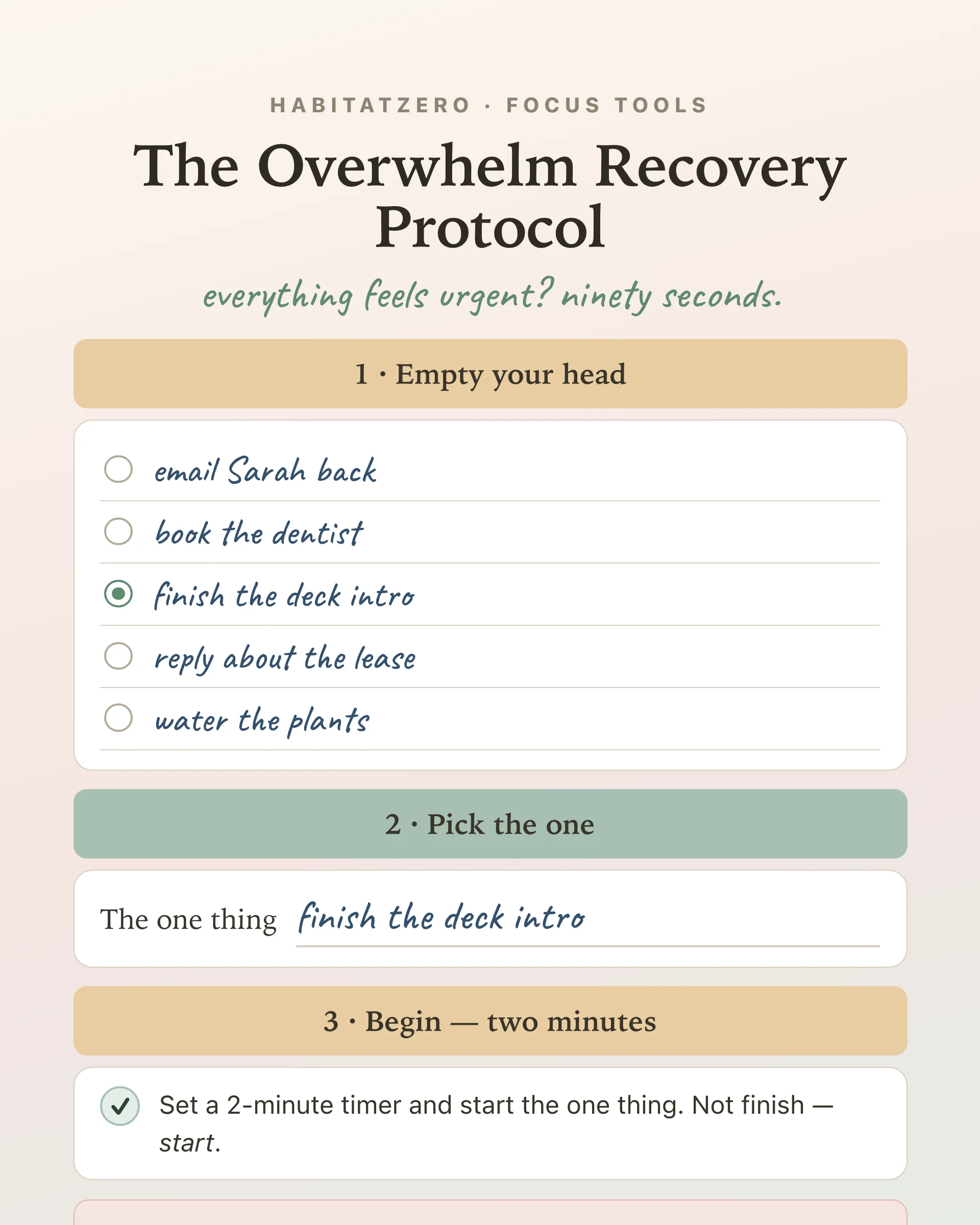
The Overwhelm Recovery ProtocolWellness & Routines · ~5 min
About this template · Updated July 2026
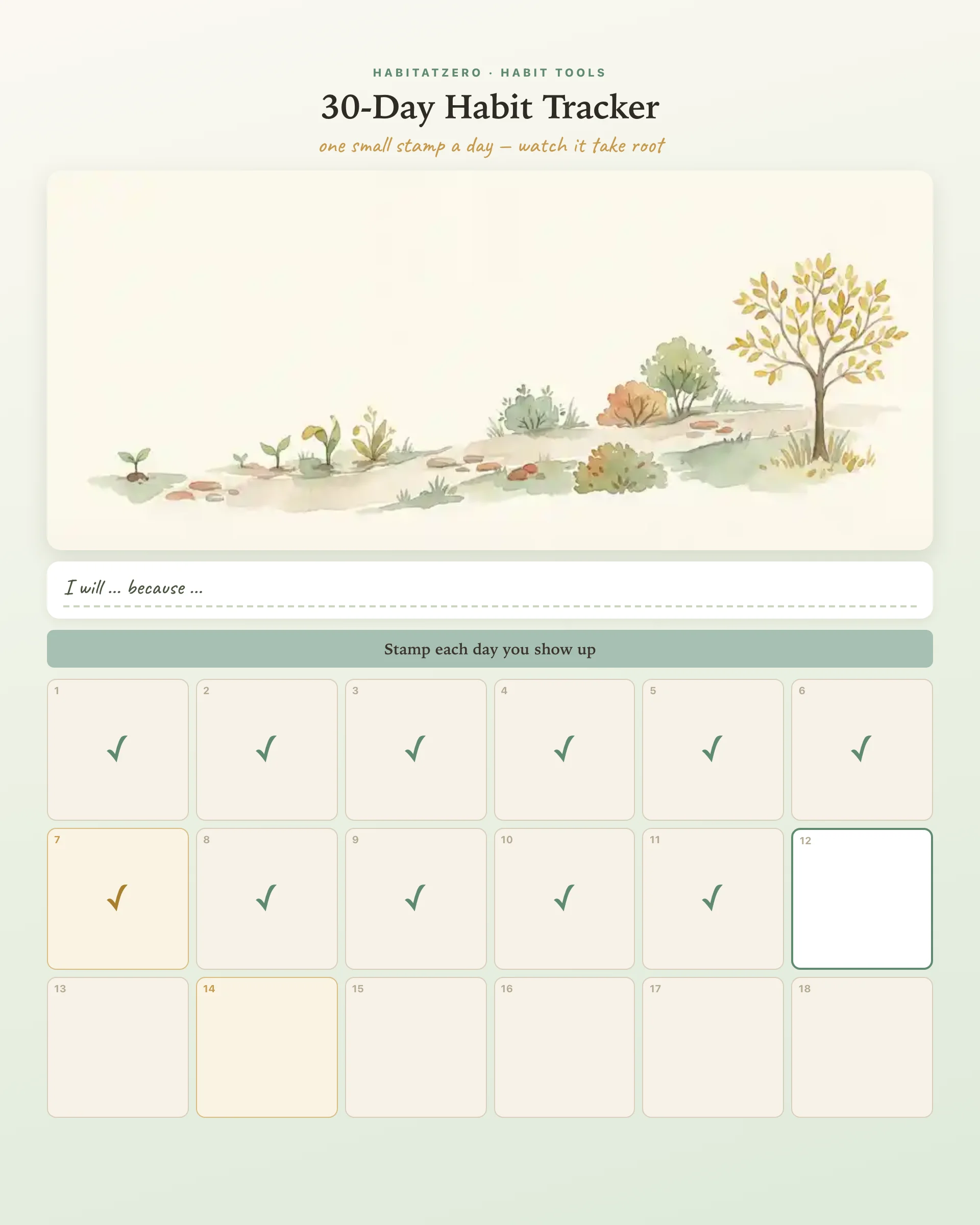
Most habit trackers quietly punish you. Miss two days and the empty squares stare back; the streak is broken, so the story feels over. This tracker tells a different story: a path that grows from seedling to tree, where missed days are part of the landscape and the path keeps going.
You commit to one habit — written as "I will …, because …" — and then the daily work is almost embarrassingly small: stamp the square when you show up.
A habit needs evidence. Each stamp is a small, visible proof that you are the kind of person who does the thing, and the growing path turns thirty scattered days into one continuous picture of progress. That picture matters more than any single day: what builds a habit is the density of days you showed up, not an unbroken chain — in the landmark habit-formation study, missing a single day made no measurable difference to whether the habit stuck (Lally et al., 2010).
The "because" line matters too. On the days when motivation is gone, the reason you wrote on day one is what makes the stamp worth earning.
Choose a habit small enough to do on your worst day. "Drink a glass of water when I wake up" beats "exercise for an hour" — you can scale up later, but only a habit that survives bad days becomes automatic. If getting started is the hard part on any given day, Deal With Your Brain is a five-minute bargaining sheet built for exactly that moment.
Thirty days does not make a habit automatic — research puts the range much wider — but it is long enough to build real momentum and to learn whether the habit fits your life.
Nothing breaks. Missed days are part of the story, and the path keeps going. What matters is the overall density of days you showed up, not a perfect streak.
Track one. A single visible habit gets your full attention, and the tracker is designed around one commitment per month.
Yes — thirty days and a calendar month are the same instrument, and this tracker works either way: start on the first of the month and the grid simply is your monthly habit tracker, or start any day and let the thirty days straddle two months. The month boundary matters less than the streak inside it. When a round ends, one tap on start over clears the grid for the next one — snap or print your finished grid first if you want to keep it.
By the team behind Fabulous, the science-based self-care app used by over 30 million people.