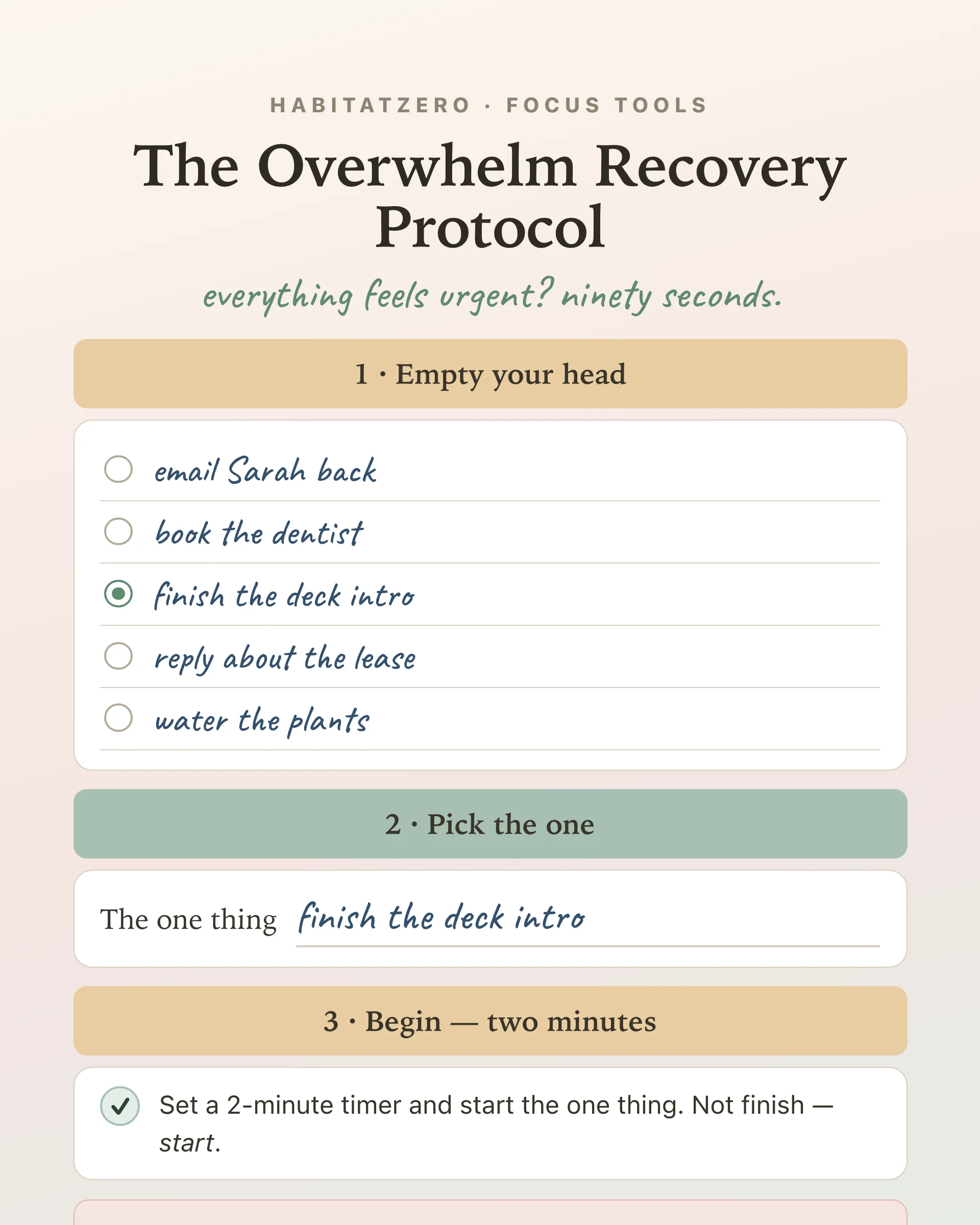
The Overwhelm Recovery ProtocolWellness & Routines · ~5 min
About this template · Updated July 2026
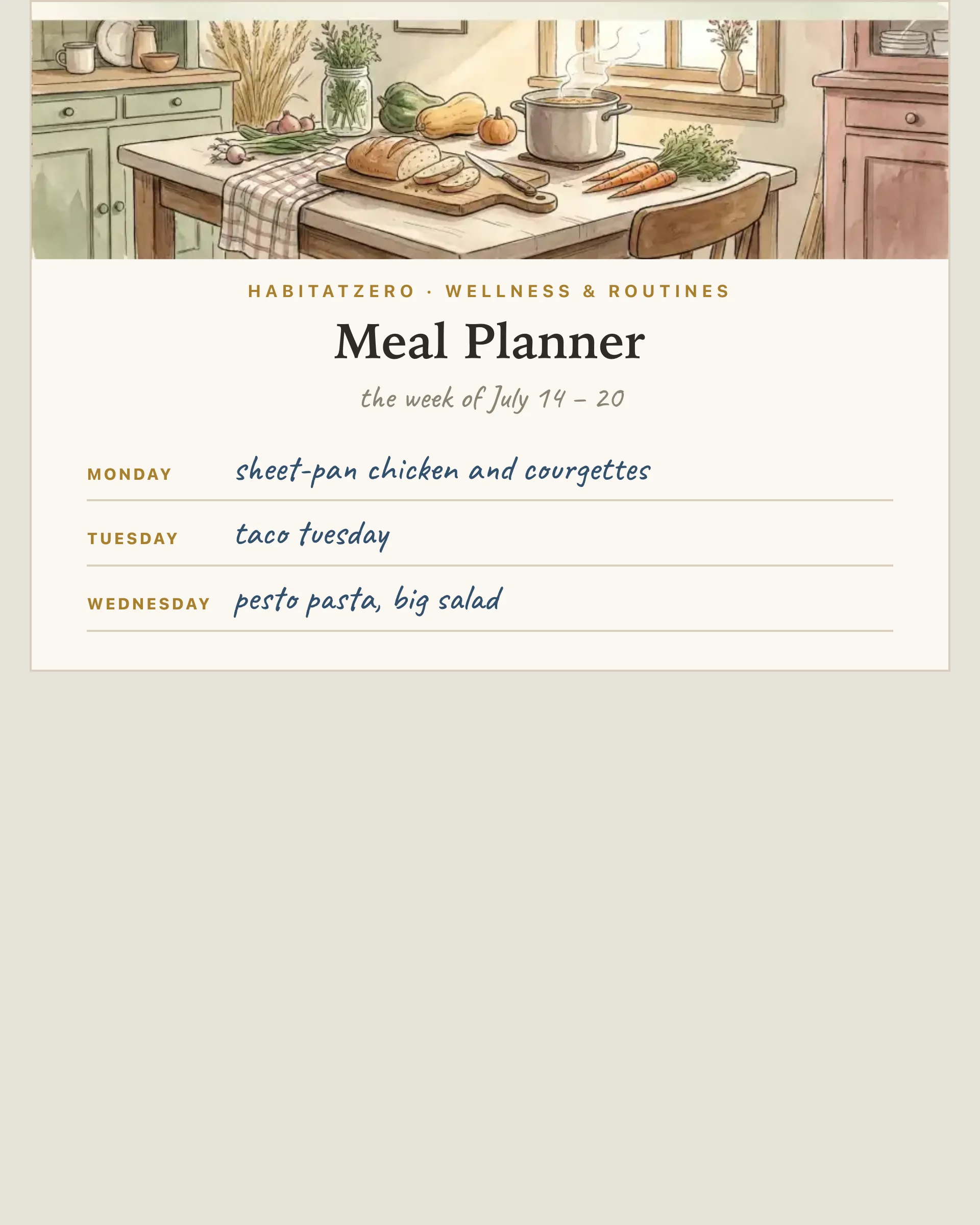
Nobody decides to spend forty minutes a week negotiating dinner — it happens one 5:47pm at a time, in front of an open fridge, with everyone hungry and no one in charge. A meal plan isn't about culinary ambition; it's about moving seven small decisions from the worst possible moment (tired, hungry, tonight) to the best one (calm, caffeinated, Sunday). This page prints that plan — and you type it before you print it.
The page holds Monday through Sunday, one ruled line each, and that restraint is the design. Elaborate meal-planning systems — macros, rotations, color-coded proteins — share a failure mode: they're plans for a person with more evenings than you have. One typed dinner per day survives contact with real weeks, and the psychology is the same one that runs the rest of this printable shelf: decisions made in advance don't tax willpower at the moment of weakness, which is exactly the mechanism implementation intentions exploit — deciding when-and-what ahead of time roughly doubles follow-through. Repeats are allowed. Taco Tuesday is not a rut; it's infrastructure.
Below the week sits a twelve-slot grocery box, and it prints on the same page — because a meal plan and a shopping list are one document pretending to be two. Fill the dinners, then walk the week jotting what each needs. The list that results buys ingredients for decisions already made, which is the whole budget-and-waste trick: a shop without a plan buys aspirations, and aspirations wilt in the crisper drawer. One page on the fridge answers both "what's for dinner" and "what do we need" for the entire week.
Print it planned for the organized weeks, blank for the pen-and-magnet households, or half-and-half — Sunday's typed certainty plus Thursday's penciled improvisation is the honest average.
The meal planner joins its shelf-mates: the printable cleaning checklist runs the home's other recurring negotiation, the printable weekly planner holds the week the dinners happen in, and the printable chore chart delegates the table-setting. In the Fabulous app, the planner can even draft the week for you — describe what's in the fridge and what the household will actually eat, and it proposes seven dinners to accept or overrule.
Plan on Sunday, shop once, and let 5:47pm find the answer already magneted to the fridge.
Yes — free, in your browser, no signup. Type the week and print as many copies as you like; the free page keeps nothing after you leave, so the fridge copy is the record. In the Fabulous app the same planner saves as you go and syncs across devices.
Yes — the dinners and grocery items you type print exactly where you typed them, which a fixed PDF cannot do. Leave any line blank and it prints as a clean rule for the pen. Half-planned weeks are the normal kind.
Because dinner is where the nightly what-do-we-eat negotiation lives, and one decision per day is a plan a real week can keep. Breakfasts and lunches tend to run on autopilot; if yours do not, the day lines have room for a second entry.
Yes — a twelve-slot grocery box prints on the same page, so the plan and the shopping trip travel together. Deciding meals before shopping is the classic budget-and-waste trick: the list buys ingredients for decisions already made, not aspirations.
Yes — tap print and choose Save as PDF in the dialog. One letter or A4 portrait page, light rules, fully legible in black and white.
By the team behind Fabulous, the science-based self-care app used by over 30 million people.