
The Overwhelm Recovery ProtocolWellness & Routines · ~5 min
About this template · Updated November 2026
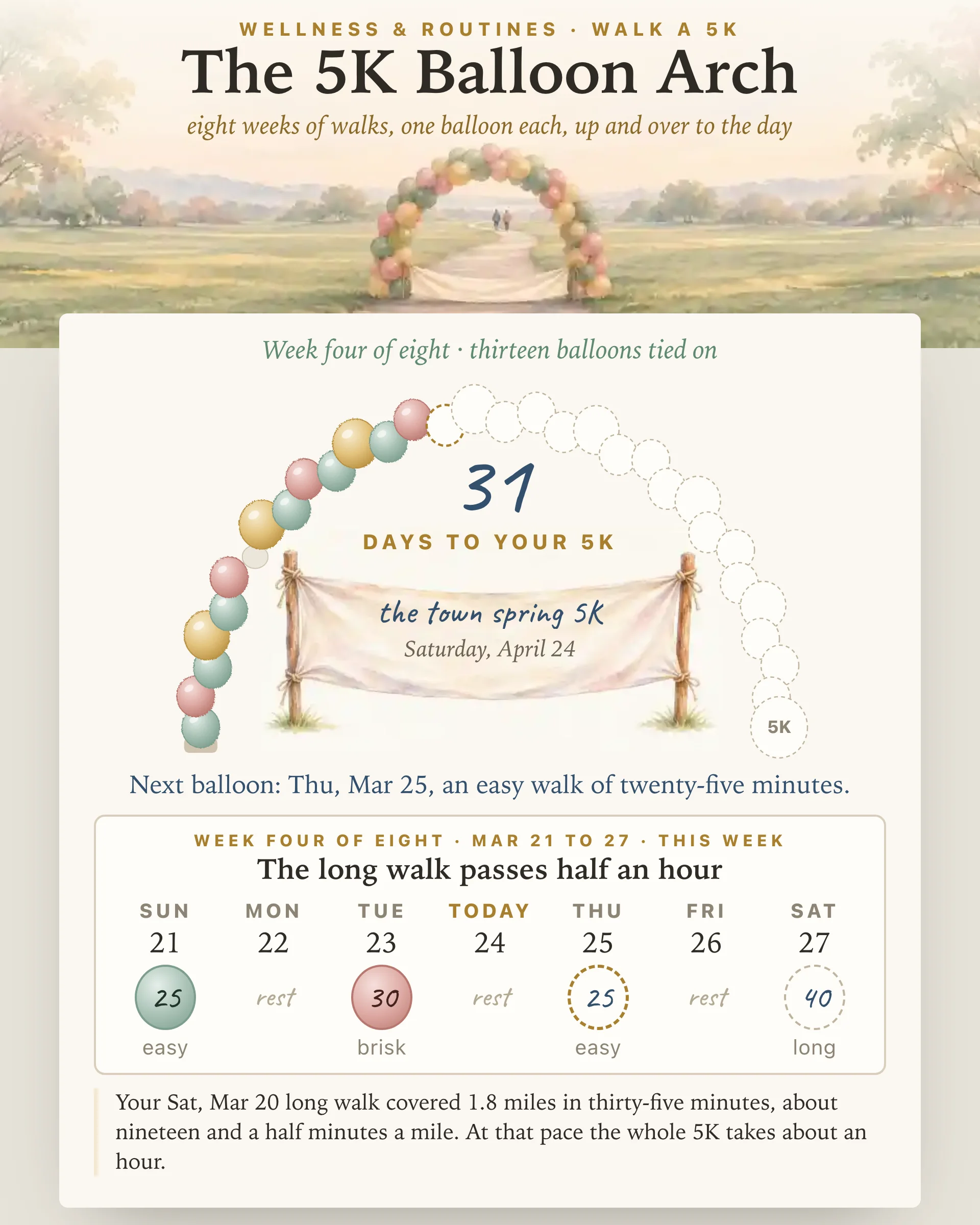
A 5K is 3.1 miles, and walking one is a goal you can circle on a calendar. The date does most of the work, turning a vague plan to walk more into a fixed morning with a start line. This page builds the eight weeks before that morning. You give it the day and how long you can walk comfortably right now, and it lays out every walk between here and there as a balloon on a finish arch. Each walk you finish ties one on.
If you have had a fall, get dizzy spells, have a replaced hip or knee, or live with a heart or blood pressure condition, talk with your doctor or a physical therapist before the longer walks. Stop any walk that hurts, and sit down and get help if you feel chest pain or turn faint.
At an everyday pace, a 5K takes about an hour. A meta-analysis of normal walking speed pooled measurements from more than 23,000 healthy adults and found mean comfortable speeds ranging from 1.43 meters a second, for men in their forties, down to 0.94 for women aged eighty and older. At the first speed a 5K takes just under an hour; at the second, close to an hour and a half. Those speeds came from short measured courses, so treat them as a rough guide. This plan counts time on your feet rather than distance, since a watch is easier to check mid-walk, and builds a long walk of about an hour.
Pick the date of your 5K, or let the page set one eight weeks out if you are still choosing an event. Then say how long you can walk today without stopping, and how many walks, three to five, fit into your week. The plan counts backward from the day, so your longest walk lands exactly a week before it and the 5K closes week eight.
Every walk starts as a dashed pencil outline on the arch. Open its day, set the minutes you really walked, tap how it felt, and tie it on; the balloon fills with its color. A walk from a week already behind you that never got its balloon stays small and gray; the next walk is the one that matters. Two hard walks in one week bring a note that you can repeat that week's long walk instead of stretching it.
If you know how far a long walk went, add the distance. The page works out your pace and how long the whole 5K would take at it. With fewer than eight weeks to go, the plan keeps its first weeks and its final week, so your walks still grow gently, and it says how long your longest walk will be before the day.
The Physical Activity Guidelines for Americans recommend 150 to 300 minutes of moderate activity a week for adults, and they point out that the least active people gain the most from even modest increases. From the twenty-minute start with four walks a week, week seven of this plan adds up to 155 minutes. A meta-analysis of goal-setting interventions found a medium-sized effect on physical activity when people set activity goals, compared with similar people who set none. A 5K with a date on it is exactly that kind of goal.
What none of this shows is that this particular eight-week schedule is the best route to a finish line. No trial has tested it against other plans. It follows the general advice to build gradually, and its minutes are a starting point, not a prescription. If a week leaves you sore or drained, walk it again before moving on.
The buzz at a start line makes it easy to set off too fast, so begin slower than feels right and let the last mile be your quickest. Wear the shoes and clothes you trained in. If you would like to jog part of the distance next time, the Couch to 5K Plan moves from walking to running over nine weeks. To time a route before the day, the Walking Time Calculator shows how long each stretch takes at your own pace, and The Walking Workout Ribbon has timed sessions for the days you want a change from the plan. To find a brisker pace before race day, The Brisk Walking Metronome marks your steps a minute against the brisk line.
Around an hour at an everyday pace of three miles an hour. Quicker walkers finish in forty-five to fifty minutes, and a relaxed pace with a stop or two can take an hour and a half. Every one of those finishes counts the same.
Yes. If you can walk for about ten minutes without stopping, eight weeks of short, regular walks gives you room to build toward the hour a 5K takes. With less time, walk the day at an easy pace and pause whenever you need to.
Easy walks you could chat through, brisk walks with a quicker middle, and one long walk a week that grows to about an hour by week seven. The last week is lighter, so your legs feel fresh on the day itself.
Three to five. Three walks a week is enough to build the long walk, and four or five add more easy and brisk minutes. Keep at least one rest day, and put the long walk on the weekday your 5K falls on.
No. Plenty of 5K events welcome walkers from start to finish, so check the time limit for yours. This plan is walking from the first day to the last.
By the team behind Fabulous, the science-based self-care app used by over 30 million people.


