The Overwhelm Recovery ProtocolWellness & Routines · ~5 min
About this template · Updated July 2026
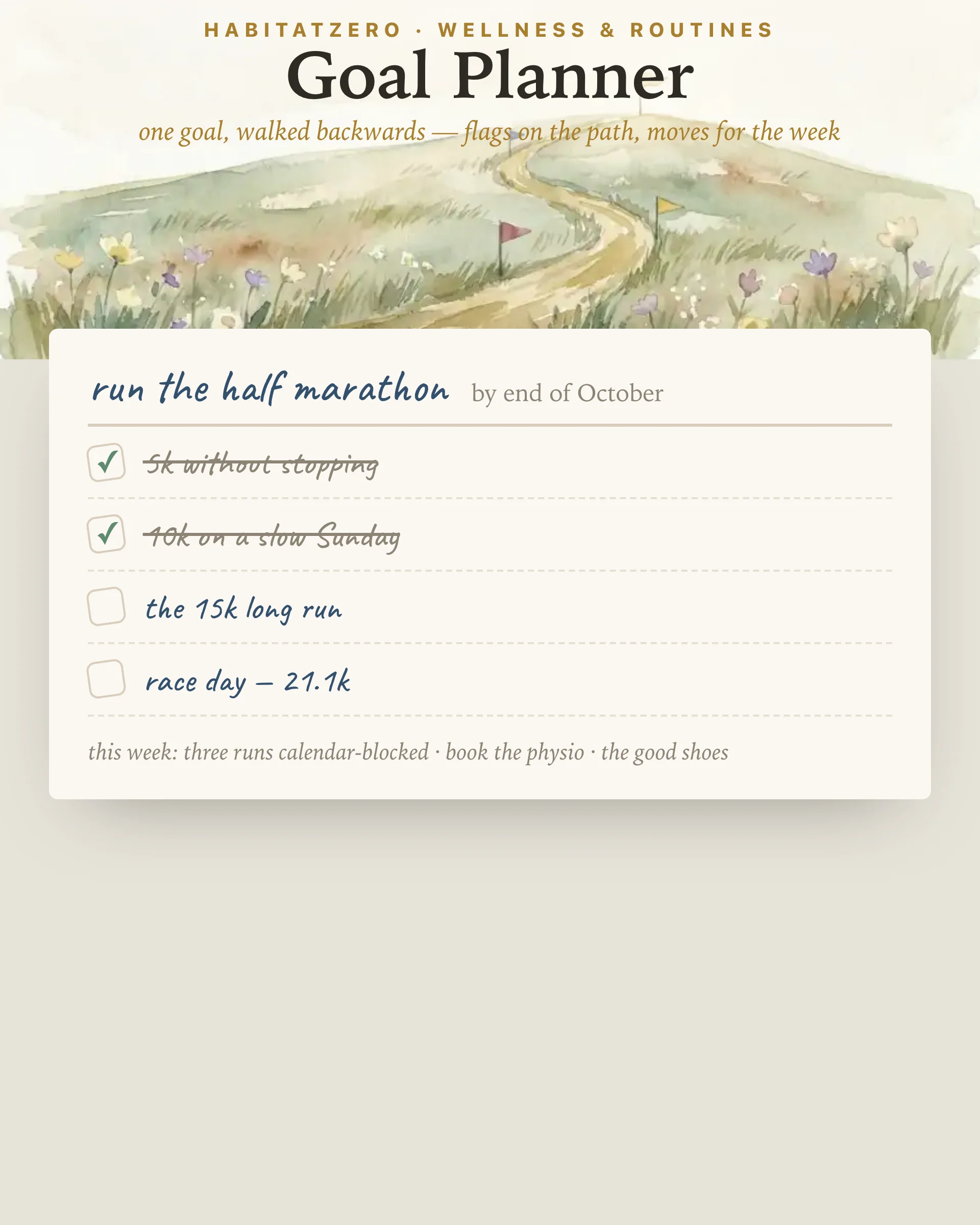
Every January proves the same thing: naming a goal is the easy part. The gap between I want to run a half marathon and a pair of shoes by the door on a rainy Tuesday is where most goals quietly live and die — and it's a planning gap, not a motivation gap. This planner closes it with three moves: one goal, a handful of stampable flags, and exactly three commitments per week.
The planner starts at the end. Name the goal and its rough horizon, then plant three to five milestone flags between here and there — each phrased so it can be stamped with a plain yes: 5k without stopping. First draft finished. First paying customer. Walking backwards from the summit is the oldest planning trick there is, and it works because it converts an ambition into a sequence; Locke and Latham's decades of goal-setting research consistently finds that specific, difficult-but-concrete targets outperform vague do-your-best ones, and a flag you can stamp is specificity you can't fake.
Five flags is the cap. Fewer than three and the space between them is too dark to navigate; more than five and the route turns back into a to-do list.
Under the flags sits the planner's working end: exactly three moves for this week, each stampable, with a fresh-week sweep when Monday comes around. The constraint is deliberate. The old line that a goal without a plan is just a wish survives because it names a real, measured gap — intending something and doing it are different psychological events, and Gollwitzer's work on implementation intentions showed that deciding the concrete what and when of your next actions reliably moves behavior in a way that intention strength alone doesn't. Three named moves are that decision, renewed weekly.
The stamps aren't decoration either. A meta-analysis of 138 progress-monitoring experiments found that prompting people to track their progress reliably increased goal attainment — and that the effect grew when the progress was recorded rather than just noticed. Stamping a flag is recording. The quiet line under the title — 2 of 4 flags stamped · 1 of 3 moves made — is your progress report, always one glance old.
This page holds a single goal, and that's the point of it. If what you're really doing is refining a fuzzy ambition into a workable sentence, start with the SMART Goals Worksheet and bring the finished sentence here. If you're orchestrating a whole season of goals across life areas, the 12 Week Year Planner works at that altitude. And when a weekly move needs to become a daily habit — three runs, calendar-blocked — the Daily Habit Tracker turns it into stamps of its own.
Four minutes to a route. Three moves a week. The wish, retired.
A page that turns one goal into a route: the goal and its horizon at the top, three to five stampable milestone flags along the path, and exactly three committed moves for the current week. Planning here means deciding the sequence, not decorating the ambition.
The old line survives because it names something real: research on goal pursuit finds that intentions alone leave a large gap to action, and that spelling out the when, where, and what of the next steps - what psychologists call implementation intentions - reliably closes part of it. The weekly three-moves section exists precisely to force that spelling out.
Three to five. Fewer and the space between flags is too dark to navigate; more and the route becomes a to-do list. Each flag should be stampable - phrased so a stranger could say whether it happened.
Because three get done. The cap forces the planning decision that matters most: of everything you could do this week, which moves actually advance the route? Progress monitoring research finds that keeping attention on concrete next steps is one of the most reliable helpers of goal attainment.
A SMART worksheet sharpens the wording of a goal; this planner sequences the pursuit of one. They chain naturally: refine the goal there, then bring the finished sentence here and walk it backwards into flags and weekly moves.
One goal per plan is the design. If you are juggling a quarter's worth of ambitions across areas, the 12 Week Year planner on this site is built for that altitude - this page is for the single goal that deserves a real route.
By the team behind Fabulous, the science-based self-care app used by over 30 million people.