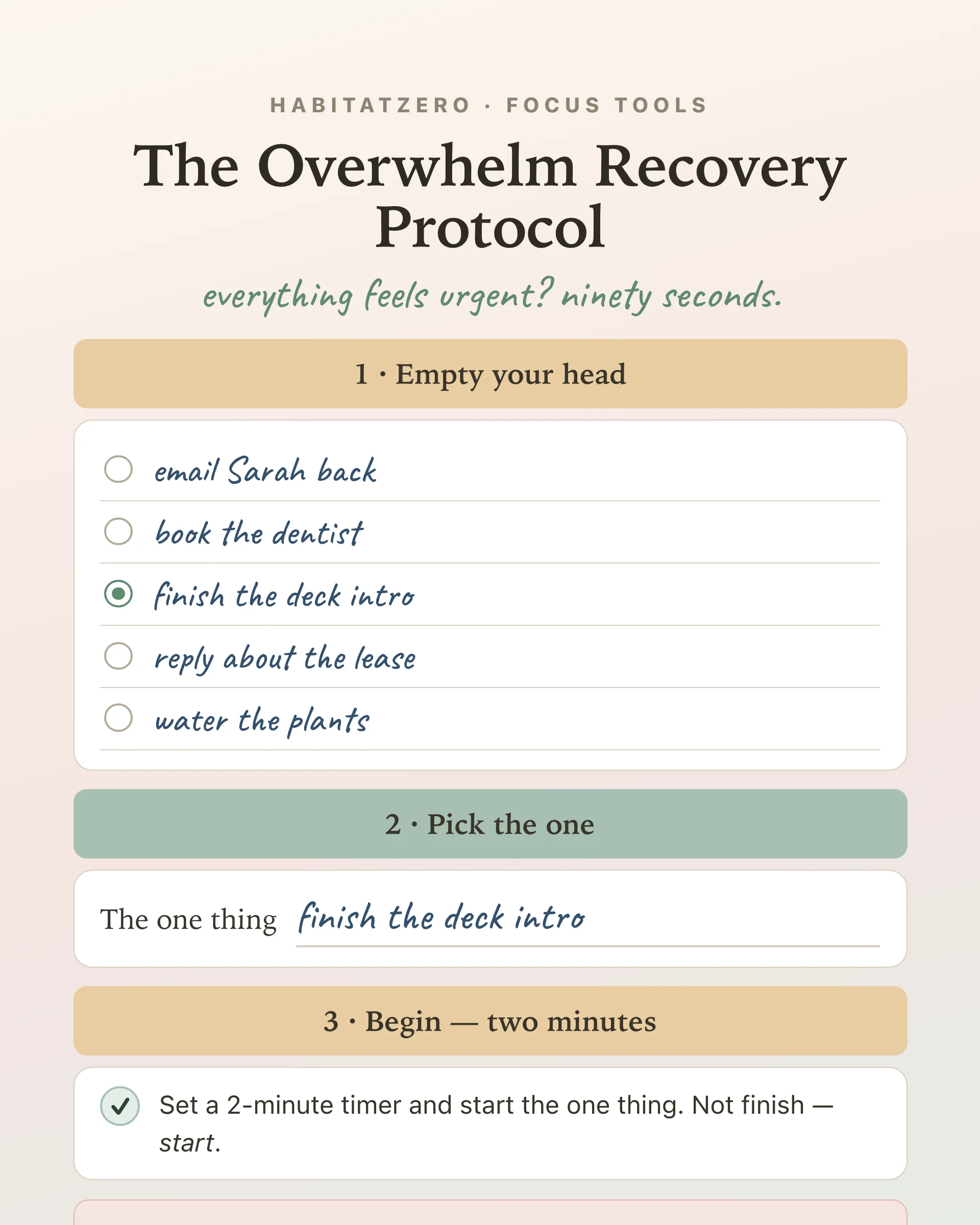
The Overwhelm Recovery ProtocolWellness & Routines · ~5 min
About this template · Updated July 2026
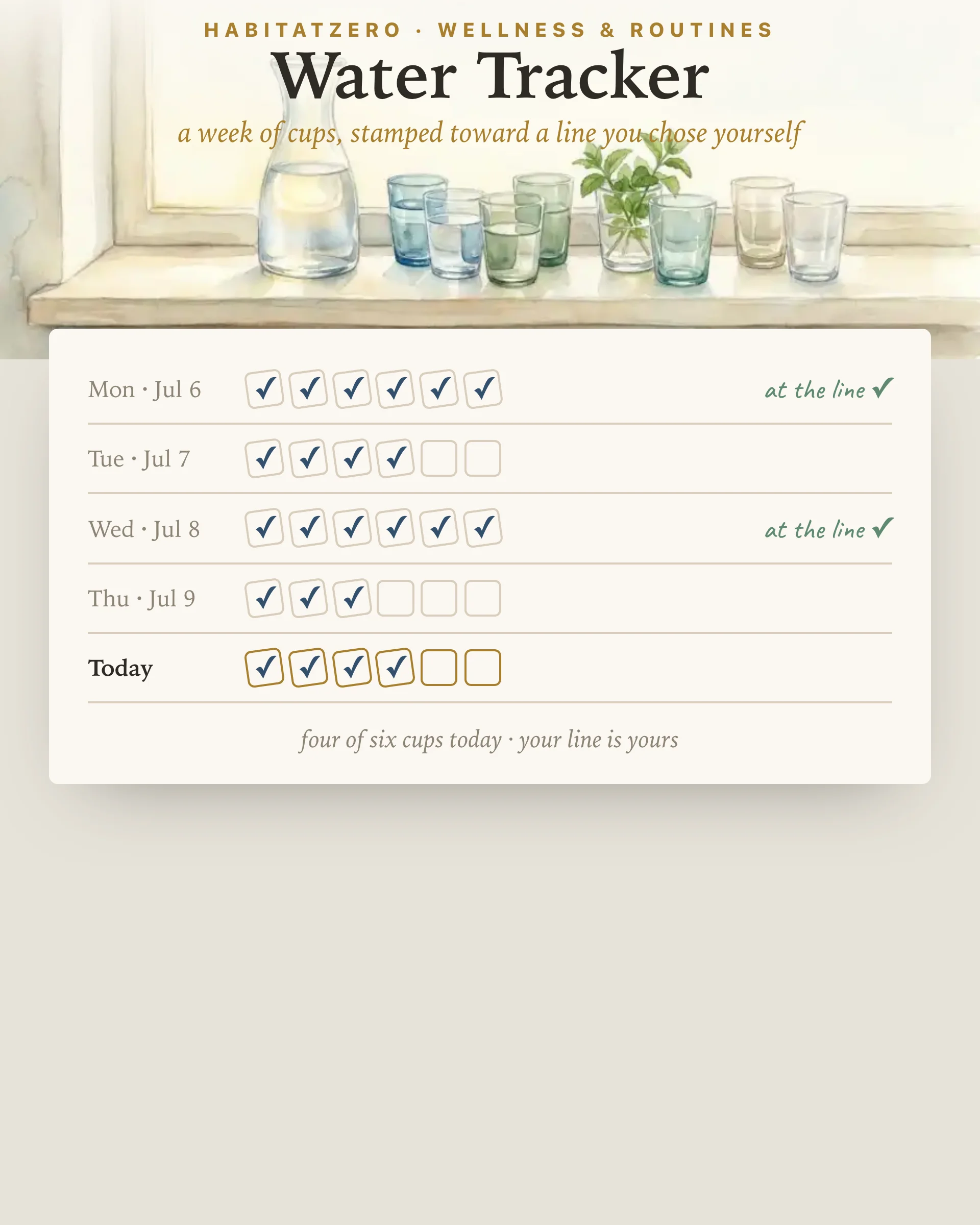
Every water tracker ever printed carries the same ghost: eight glasses a day. It's a fine round number with a fuzzy pedigree, and the actual reference work is far less tidy. When the National Academies set dietary reference intakes for water, they described adequate intakes that vary by person and circumstance, noted that normal drinking behavior — mostly led by thirst — covers most people, and counted water from food and every beverage, not just the virtuous clear kind. Public-health guidance like the CDC's page on water and healthier drinks takes the same shape: drink water instead of sugary drinks, carry a bottle, let the day tell you how much — no universal quota.
So this tracker does something mildly radical for its genre: it doesn't tell you how much to drink.
The sheet has exactly two ideas. First, your daily line — a dial from four to twelve cups that you set and can change any day. Hot week, long runs, big talking days: raise it. Quiet desk week: lower it. The line's job isn't to be correct; it's to be yours, because a target you chose gets tapped and a target you were assigned gets abandoned.
Second, the running week. Seven day-rows, today ringed in gold at the bottom, each row holding your line's worth of cup squares. Finish a cup, tap the next square, and a pen-blue checkmark stamps in with a little spring. Tapped one too many? Tap it again and the fill walks back. Forgot yesterday entirely? Backfill it honestly — the sheet doesn't mind, and the record stays true.
Days that reach the line earn a quiet handwritten at the line ✓ — a nod, not a firework, because the last thing water needs is a performance review. Under the week, one italic sentence keeps the only score that means anything at this scale: four of seven days at the line this week.
Single days lie. One dry Tuesday says nothing about you, and one heroic Saturday fixes nothing. A rolling week is the smallest window where a pattern is real — enough to notice that afternoons are where the cups stop, or that the line you set in January is fantasy in July. The tracker rolls forward on its own: no resets, no archives, no streak to lose. It measures attention, not obedience.
And attention is the actual mechanism. A tracker doesn't hydrate anyone; it keeps the question when did I last drink something? pleasantly unignorable. That's also why the sheet prints clean — day rows, cup squares, your line — for the fridge door or the desk pad, where a paper week and a pen do the same quiet work.
If tracking one small daily thing turns out to suit you, the daily habit tracker runs the same honest game for any habit, ten weeks deep. Water is just the easiest place to start: the cups are already in the cupboard.
There is no single correct number, and this tracker refuses to pretend otherwise. The reference intake work from the National Academies set adequate-intake levels that most people meet by letting thirst lead, with total water coming from all drinks and food together. That is why the daily line here is a dial you set — four to twelve cups — not a rule the sheet enforces.
No — it is the paper-and-pixels version of one. Smart bottles track sips with sensors and an app; this sheet does the same job with one honest tap per cup, costs nothing, never needs charging, and prints cleanly if you would rather keep it on the fridge. If you specifically want hardware, this is not that — but most people wanting a tracker just want the week visible.
Yes. The page ships a print stylesheet that strips the buttons and prints the week clean — day rows, cup squares, and your chosen line — so it works on paper exactly as it reads on screen. Signed-in HabitatZero users also keep the interactive layer: tap-to-stamp cups, honest backfill for yesterday, and the running week that rolls forward on its own.
Because hydration is a rhythm, not a ledger. A running seven days is enough to see the pattern that matters — how many days reached your line — without turning water into another performance metric with streaks to lose. The week rolls forward automatically; there is nothing to reset and no history to feel guilty about.
Whatever vessel you actually drink from — the point is a consistent unit, not a laboratory measure. Tea, sparkling water, and the glass you drink with lunch all count toward fluid intake in practice, so stamp them if they fit your own definition of the line. The tracker measures your attention, and attention is what changes the habit.
By the team behind Fabulous, the science-based self-care app used by over 30 million people.