
The Overwhelm Recovery ProtocolWellness & Routines · ~5 min
About this template · Updated November 2026
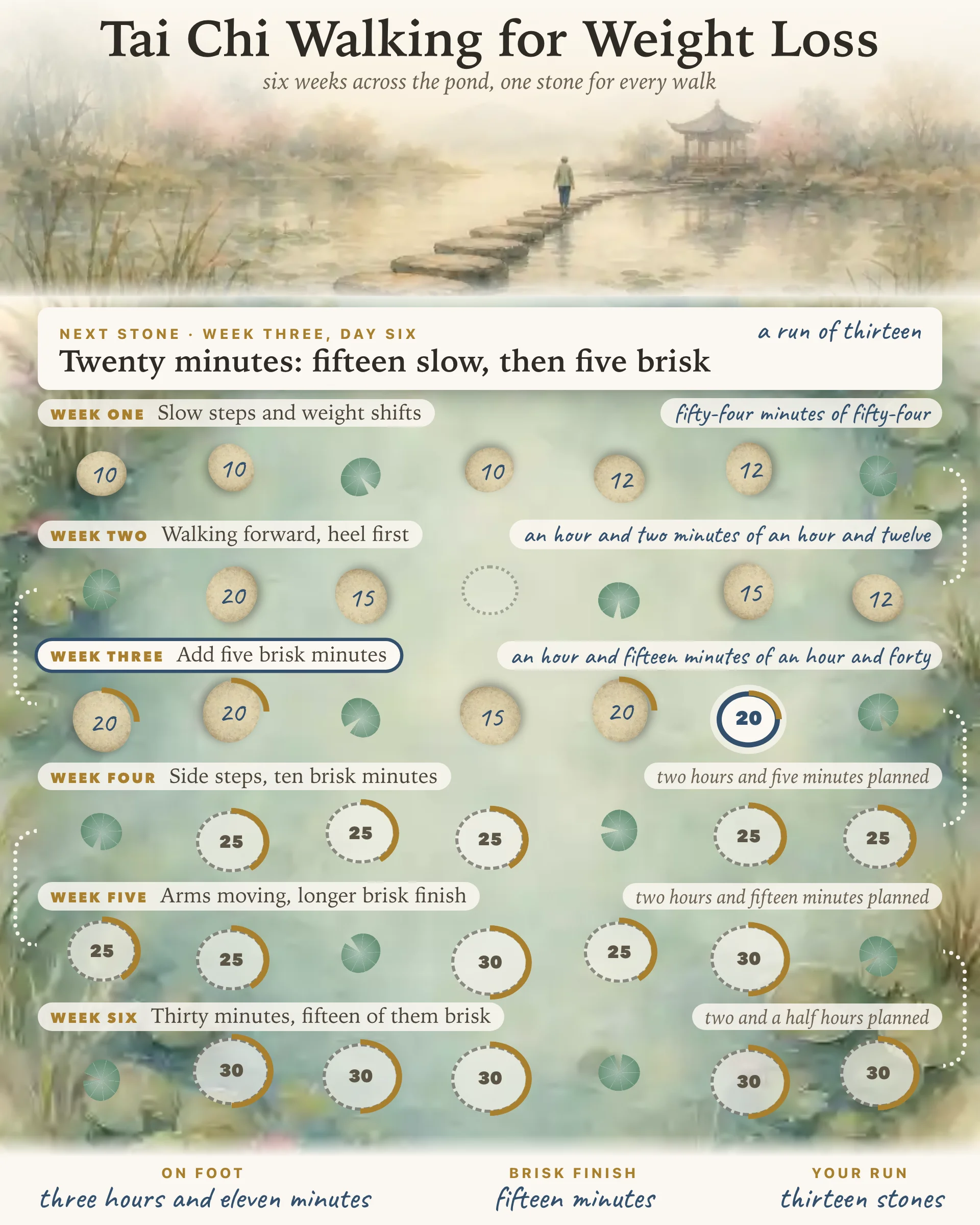
Search for tai chi walking for weight loss and you mostly find follow-along videos and bold claims about a smaller waist within a month. Here is a plainer offer. Slow stepping is a gentle way back into moving, especially if exercise has never felt like it was meant for you, and it gives you a few minutes a day you can actually finish. Then, from week three, each session gains a brisk finish that asks more of your heart and lungs than slow steps can.
You walk five days a week and rest on two. Sessions grow from ten minutes to thirty, and the slow part never goes away.
The plan is drawn as a path across a pond: thirty stones for your sessions and twelve lily pads for your rest days. Bigger stones mean longer sessions, each one shows its minutes, and a gold ring shows how much of it is brisk.
Open the page before you walk and the ringed stone tells you what today asks for. Come back afterward and lay it, nudging the minutes first if the walk ran long or short. Each stretch of the path adds up its own total beside it, against what was planned.
Nothing here is tied to a calendar, so a stretch that takes ten days is still a stretch. The run counts the stones you lay and is forgiving: rest days never touch it, one skipped stone leaves it standing, and only two skips in a row start the count over.
Below the path, you can carry one or two small things alongside each week, such as a vegetable at dinner or going to bed twenty minutes earlier.
The most useful trial tested tai chi rather than tai chi walking. It randomly assigned 543 adults aged fifty or older with central obesity to tai chi, conventional aerobic and strength exercise, or no exercise program for twelve weeks. Compared with no exercise, the tai chi group trimmed a little under an inch from the waist, roughly in line with the conventional group, and lost some body weight, and those changes held at week thirty-eight. The authors note high dropout and no change to diet. A PubMed search for tai chi walking and weight turned up no trial of this exact practice, and this plan itself has never been tested, so nobody can tell you what these six weeks will do for your weight.
Food does most of the arithmetic. The CDC is direct that most weight loss occurs from decreasing calories, while regular activity matters for keeping lost weight off. Sleep seems to count as well. In a laboratory study of ten overweight adults on a reduced-calorie diet, shorter nights left people hungrier and meant less of the weight they lost came from fat. Ten people over two weeks is a hint rather than a rule, but it is a fair reason to protect your bedtime.
The Physical Activity Guidelines for Americans ask adults for 150 to 300 minutes of moderate activity a week, and add that the least active people gain the most from even modest increases. Week six reaches that first figure on paper, though only its brisk half is clearly moderate effort, so treat it as a landmark and not a finish line.
Check with a doctor or physical therapist before your first stone if you have had a fall, dizziness, a joint replacement, a heart or blood pressure condition, or pain. Stop if anything hurts. Keep a sturdy chair or counter within reach for all of the slow steps, and stay beside it for as many weeks as you like.
Start on a week with a clear stretch of floor and a rough idea of when you will walk.
If you would rather stay with slow steps alone, the Tai Chi Walking Plan spends four weeks on them and leaves the pace out. If you want ordinary walking from the first day, with each week rebuilt from what you managed, try the Walking Plan for Weight Loss. And if sleep and energy are what you want to watch, The Weight Loss Journal gives you a page a day for them.
For days you can't get outside, The Indoor Tai Chi Walk lays out a walk for the room you have, and if steadiness is the bigger worry right now, The Counter Walk keeps a hand within reach.
Six weeks is long enough to learn whether this kind of walking suits you, and that answer is worth having whatever the scale says.
It can play a part, though not on its own. Slow stepping is gentle, so this plan adds a brisk finish from week three, and weight also depends on what you eat, how you sleep and the time you give it. No honest plan can promise a number, and this one makes no such promise.
The best evidence is real but modest. In a large trial of adults over fifty carrying extra weight around the middle, twelve weeks of tai chi trimmed waist size by a little under an inch compared with no exercise, in line with aerobic and strength training, and body weight fell too. Diet was left unchanged and many people dropped out, so read it as a helpful start.
People use the phrase loosely. Often it means slow, tai chi style stepping like the early weeks on this page, and sometimes it means a branded walking technique taught under that name. This plan stands apart from any branded method and borrows only the plain idea of moving your weight with care.
This path starts at ten minutes, five days a week, and reaches thirty by week six, with two lily pad rest days every week. From week three the first fifteen minutes stay slow and the rest turns brisk. If a session feels like too much, walk less and record the minutes you really did.
Yes, this one. Every week, stone and minute of the path is laid out on this page at no cost, and all you need is a clear stretch of floor with a counter or wall to reach for.
By the team behind Fabulous, the science-based self-care app used by over 30 million people.


