
The Overwhelm Recovery ProtocolWellness & Routines · ~5 min
About this template · Updated November 2026
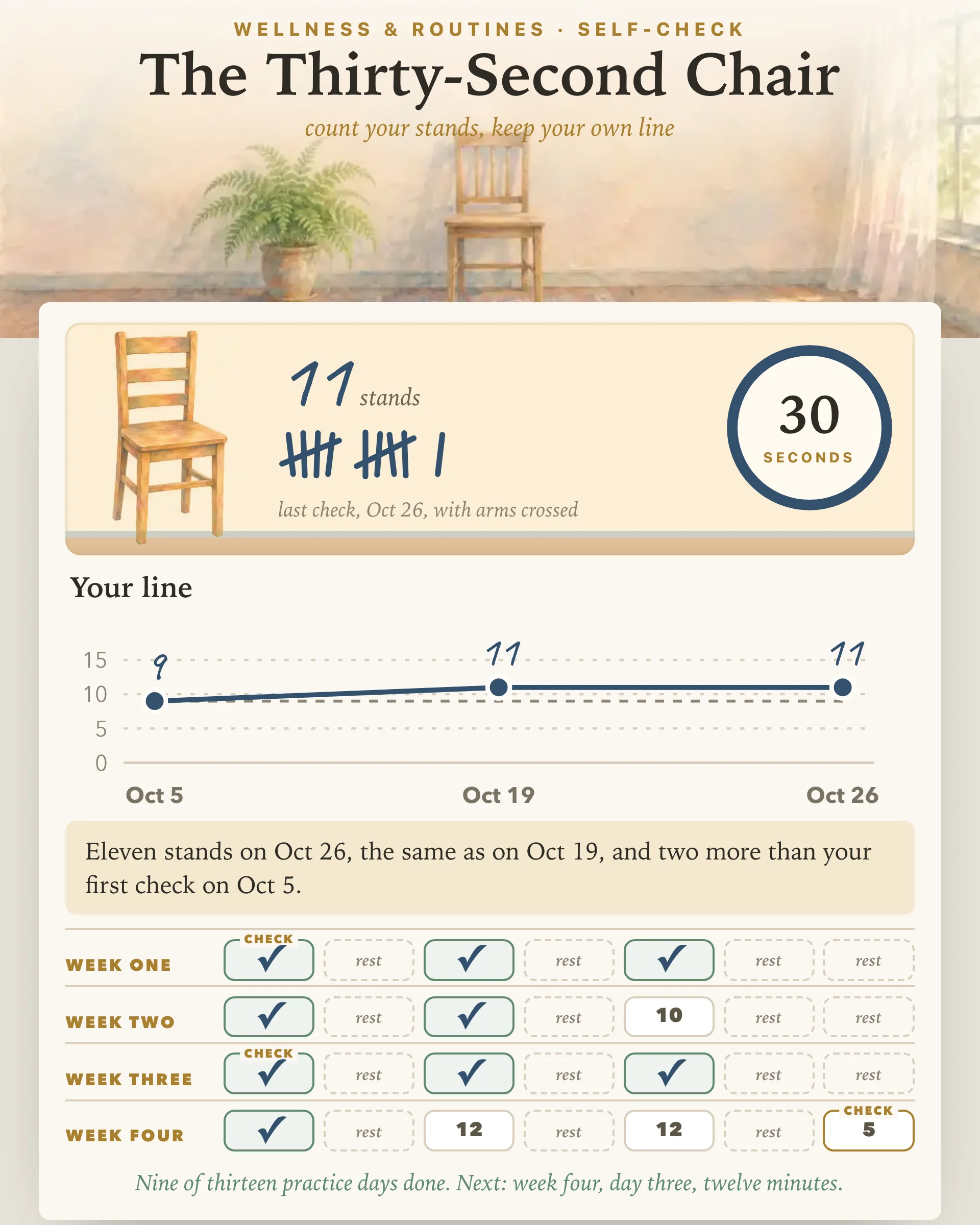
Count how many times you can stand up from a chair in thirty seconds, and you have done the sit to stand test. Getting out of a chair is one of the jobs your legs do most often. This page gives you a timer, a chair to tap, a dated log of your own counts, and four weeks of practice between checks.
The 30 second chair stand test was built at California State University, Fullerton, by Jones, Rikli and Beam, as part of a fitness battery for adults over sixty. In their 1999 study of seventy-six older adults, counts barely moved when people repeated the test a few days later, and they tracked fairly closely with how much each person could press on a leg machine. That makes it a handy stand-in for leg strength, with nothing to buy.
The CDC's 30-Second Chair Stand sheet describes the standard version:
Push the chair against a wall so it cannot slide, and have someone next to you the first time, as the sheet advises. If you cannot rise without pushing on your hands, the clinic version records a zero; here you can choose hands on the seat instead, and those checks get a line of their own.
The CDC sheet lists below-average counts by age and sex. They match the norms Rikli and Jones published after testing more than seven thousand adults aged 60 to 94 in 21 states, where a count under these figures fell in the lowest quarter for that age group:
The CDC puts this chart in a toolkit clinicians use to screen and assess fall risk, where a low count is one clue among several, weighed with other checks and questions about past falls. At home, one number is not a verdict about you: chair height, a stiff knee, a short night or the hour of the day can shift it by a stand or two. So the worksheet sets each check beside your own earlier ones, never against this chart.
Choose arms crossed or hands on the seat and press start; a five-second lead-in lets you settle. During the thirty seconds, the person beside you taps the painted chair at each full stand and a tally mark appears on the wall; on your own, count aloud and set the number afterward. Add the stand you were halfway through, save, and the check lands on your line by date. The reading compares it with your previous check and your first, in plain words, never with a grade or a color.
Three days a week, for ten to twelve minutes, you march in your seat for two minutes, do three slow sets of sit to stand exercise with a minute's rest between them, and finish with ten heel raises holding the kitchen counter. In week one your hands help from the seat; by week four your arms stay crossed and you lower yourself for a count of four. Checks fall on day one, at the start of week three, and on the last day.
A Cochrane review of 108 trials found that exercise programs for people over sixty living at home lowered the rate of falls by about a quarter, and programs built mainly on balance and functional exercises, the group that everyday moves like standing up belong to, did about as well. It does not show that four weeks of chair stands will prevent a fall, or that a higher count means you will not fall. It tested whole programs rather than a single move, and its authors judged most trials at unclear or high risk of bias on at least one point. Build on this plan with The Whole-House Strength Routine or The Balance Ladder, and if standing is hard work today, The Chair Circuit keeps every move seated.
Ask a doctor or physical therapist before your first check if you have had a fall, spells of dizziness, a hip or knee replacement, a heart or blood pressure condition, or pain when you get to your feet. Stop at once if anything hurts or you feel faint, breathless or unsteady. Keep the chair against a wall and a sturdy counter within reach for the heel raises. If getting up keeps growing harder from one check to the next, let your doctor know.
It measures leg strength by counting how many times you can rise fully from a chair and sit back down in thirty seconds with your arms crossed. Researchers at a California university designed it in the 1990s for adults over sixty, and the CDC now includes it in its fall-prevention toolkit for clinicians.
Push a straight-backed chair without armrests against a wall. Sit in the middle, both feet on the floor, arms crossed with your hands on the opposite shoulders. On go, stand up fully and sit down fully, again and again, for thirty seconds. Count each full stand, plus the last one if you were more than halfway up when time ran out.
Published averages drop with age. The CDC chart, drawn from a 1999 study of more than seven thousand older adults, calls fewer than 14 stands for men and 12 for women below average at ages 60 to 64, and fewer than 10 for men and 9 for women at 80 to 84. This worksheet never scores you against that chart; it compares each check with your own earlier ones.
This plan uses three practice days a week for four weeks, ten to twelve minutes each, with rest days between so your legs recover. Each session is three slow sets with a minute of rest, using your hands at first and crossing your arms from week three.
For most people who already get up from a chair on their own, yes, with care: a sturdy chair against a wall, a person beside you the first time, and stopping at once if you feel dizzy, short of breath or any pain. If you have had a fall, a joint replacement, or a heart or blood pressure condition, ask your doctor or physical therapist first.
By the team behind Fabulous, the science-based self-care app used by over 30 million people.


