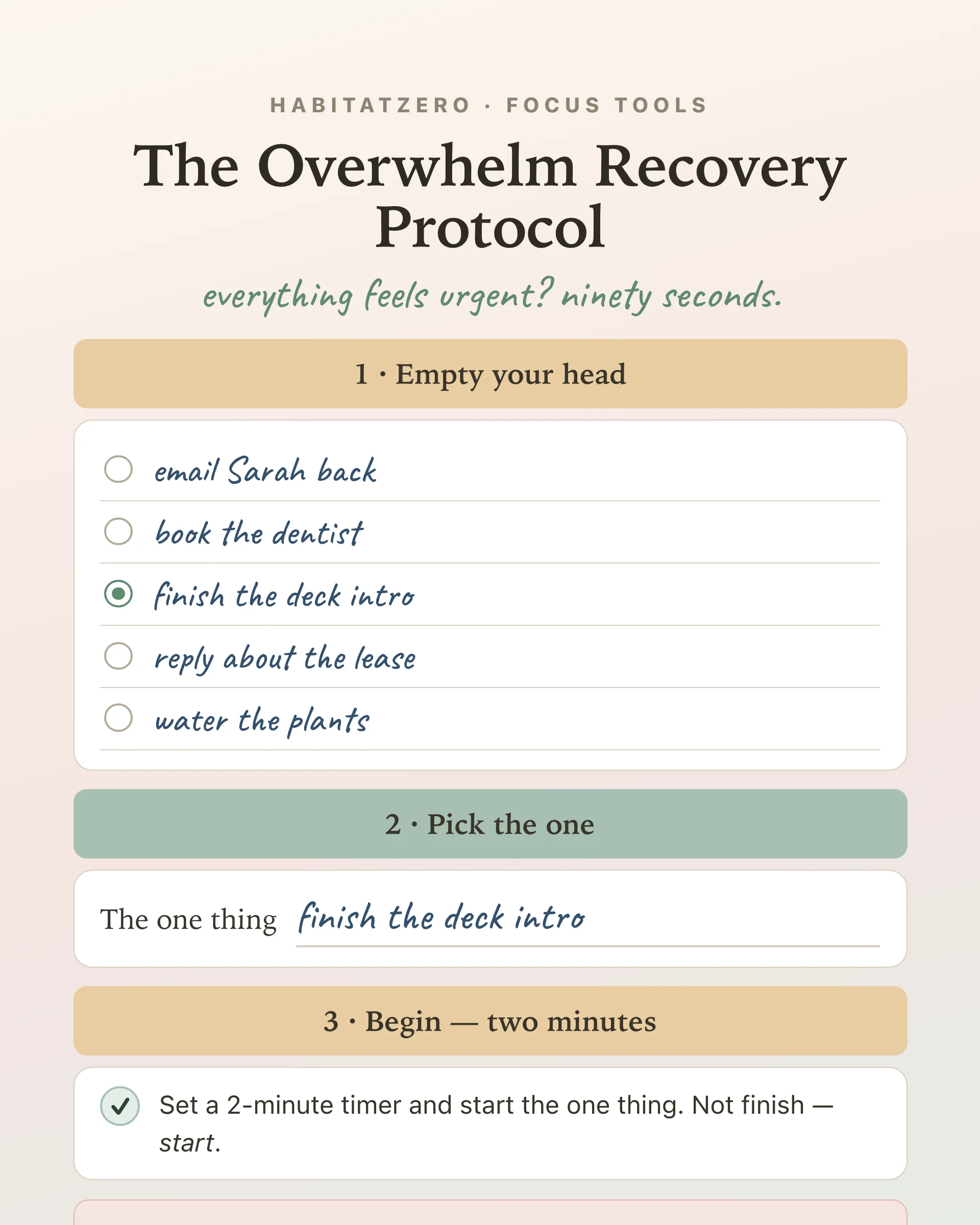
The Overwhelm Recovery ProtocolWellness & Routines · ~5 min
About this template · Updated September 2026
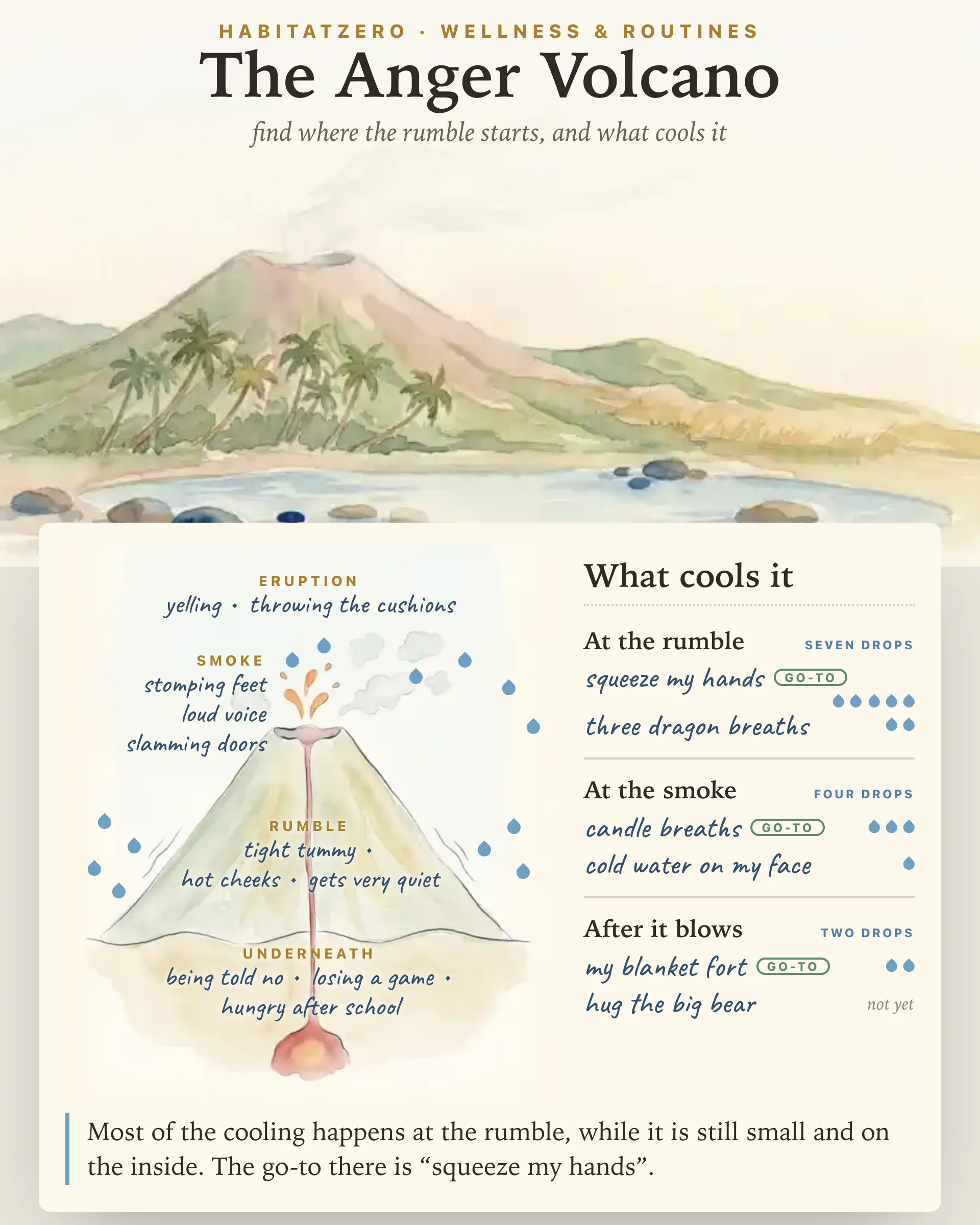
A child's anger almost never comes out of nowhere, even when it looks that way from across the kitchen. It builds. Something heats it up, a rumble starts somewhere inside, the smoke begins to show, and then it all comes out. An anger volcano worksheet gives that build-up a picture your child can point to, and gives you a map of where to step in.
It is made for a parent, teacher or counselor to fill in with a child. You ask and tap, and the words are theirs.
Underneath is what heats it up: being told no, losing a game, having to stop playing. Hunger, tiredness and hurry count as fuel down here too.
The rumble is the first small sign, usually in the body and felt only by your child: a tight tummy, hot cheeks, hands that want to curl into fists. It is the easiest stage to cool, and the one children tend to notice last.
The smoke is when other people can see it coming: a loud voice, stomping feet, a door slammed a little too hard.
The eruption is when it all comes out. Writing it down plainly, without blame, lets you plan for it instead of bracing for it. Anger is a feeling, not a bad behavior, and every volcano erupts now and then.
What works at the rumble rarely works at the top. Early on, small moves do a lot: squeezing both hands, three slow dragon breaths, asking for a break. At the smoke, words stop landing, so choose cool-offs that need no talking, like candle breaths, cold water on the face or a walk to the calm spot. After an eruption, the cool-off is mostly yours to provide: safety, a quieter room, a steady adult close by, and the talking saved for later. Each stage holds three at most, since in a hot moment only a short list gets used.
Tap a part of the volcano to open it, then tap a suggestion worded the way children talk, or type your child's own phrase. It appears in handwriting on the painting.
The part a printout cannot do comes later. Whenever your child uses a cool-off, tap used it beside that move, and a blue drop lands on that stage of the volcano. After a couple of weeks, the drops show where the cooling really happens, which move has become the go-to at each stage, and which ones nobody reaches for. Over time, you hope to see the drops gather lower down, at the rumble, where your child is catching it earlier. There is no score, and a run of eruptions is information, not failure.
A family guide from the American Academy of Pediatrics starts from the idea that everybody gets mad. It describes the same body signals the rumble asks about, a racing heart and a hot face, and suggests breathing deeply, counting to ten, walking away and talking it over with someone afterward.
A meta-analysis of forty studies of cognitive behavioral therapy for anger in children and teenagers found that treatments built on practicing skills did better than ones that only taught about feelings, and that practice between sessions went with better results. This page is not such a program, but it borrows the portable parts: spotting early signs, rehearsing a plan, practicing between hot moments.
The kind of cool-off matters too. A 2024 review pooling 154 studies found that activities that calm the body, such as slow breathing, lowered anger and aggression, while revving-up activities like hitting a bag or going for a run did not help overall. So the suggestions here cool rather than vent.
How you respond matters as well. In a study that followed families from when the children were five until they were eight, John Gottman and colleagues linked the way parents think about and respond to their children's emotions with how well those children regulated emotions later. Coaching the feeling, rather than shaming the behavior, is the everyday version of that.
What the evidence cannot do is turn a worksheet into a verdict. The drops count what your child used, nothing more.
Fill it in together on a calm afternoon, never in the middle of a blow-up. Keep it where you will both see it, and tap used it after the moment has passed. One shared volcano between home and school keeps every adult offering the same cool-offs.
If the smoke and eruption cool-offs need a place to happen, set up a Calm Corner together. For quick everyday check-ins about how big a feeling is, The Feelings Thermometer is lighter to use. For an older child, or for your own temper, The Anger Iceberg looks at the feelings sitting under the anger.
This is a coping practice, not a treatment. If anger comes often or very strongly, if someone gets hurt, or if it arrives alongside other worries such as poor sleep, not wanting to go to school or seeming sad much of the time, talk with your child's pediatrician, school counselor or a child therapist.
It is a way of picturing anger as a volcano that builds before it blows. Underneath sits whatever heats it up, the rumble is the first small sign in the body, the smoke is what other people can see, and the eruption is when it all comes out. Each stage gets its own cool-offs.
Choose a settled moment rather than the middle of an outburst. Go one part at a time from the bottom up, ask your child the question for that part, and let them pick the words. Preschoolers can point while you tap, and older children usually want to choose every word themselves.
Small, quiet moves suit the rumble, such as squeezing both hands, slow breaths or asking for a break. At the smoke, pick moves that need no talking, like candle breaths, cold water on the face or a trip to the calm spot. After an eruption, safety, quiet and a steady adult nearby come first, and the talking can wait.
Talk with your child's pediatrician, school counselor or a child therapist if outbursts are frequent or very intense, if someone gets hurt, or if the anger comes with other worries such as poor sleep, trouble at school or seeming sad much of the time. A worksheet is a coping practice, not a treatment.
Anyone can look through the filled-in example on this page. To build a volcano for your own child and keep the drops as they collect over the weeks, open it in HabitatZero with a free account.
By the team behind Fabulous, the science-based self-care app used by over 30 million people.